I have watched exterior colors shift once morning sun hits the siding and then fades into the softer tones that appear by late afternoon.
A shade that seems balanced on a chip can suddenly feel too cool or too warm when it sits next to roof shingles and landscaping.
I always put a test patch on the actual wall before deciding.
Victorian homes often succeed with these palettes because the colors were picked to work with brick, stone, and wood rather than compete with them.
Looking at how the schemes hold up through different weather helps show which ones will still read well a year from now.
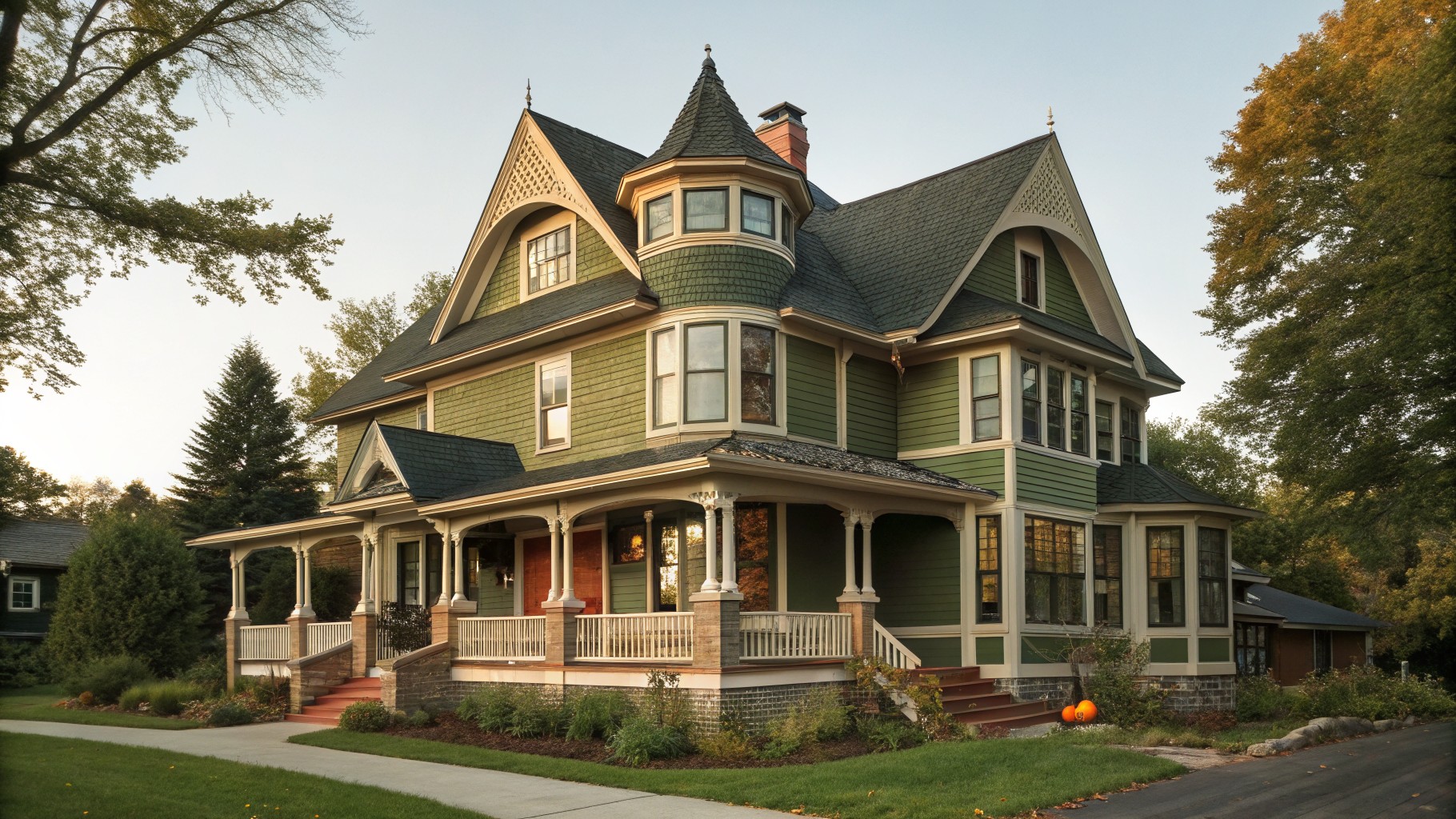
Soft Sage Green Siding
A muted sage green works well for Victorian siding. It reads as a soft, gray-leaning green that feels calm rather than bold. This color looks closest to Sherwin Williams Clary Sage, Benjamin Moore Saybrook Sage, Behr Mossy Green, or Farrow & Ball Lichen.
The shade pairs cleanly with white trim and holds up against darker roofing. It can read cooler in strong light, so test it on a few walls before committing. It suits older homes that need a gentle update without going too bright or too dark.
Soft Pink Victorian Siding

A soft pink works well on Victorian siding because it keeps the look historic without going too bright. This color sits in a muted blush range with some gray in the mix, and it often reads close to Sherwin Williams 0084 Rosy Outlook or Benjamin Moore 2091-60 Pink Whisper.
The gray undertone helps the pink stay calm against dark shutters and a darker roof. It suits older homes that have plenty of trim and detail work, and it pairs best with simple neutrals rather than more color on the accents.
Soft Blue Gray Siding

This house uses a soft blue gray on the siding. The color sits between blue and gray without leaning too hard in either direction, which keeps the whole exterior feeling balanced and calm on a large Victorian.
It has a slight cool undertone that pairs best with a darker roof and lighter trim. Watch how it changes in different light, since it can read a bit more blue on bright days and closer to gray when the sky is overcast. Good matches include Sherwin Williams Rainwashed, Benjamin Moore Wythe Blue, Behr Silver Drop, and Farrow & Ball Stiffkey Blue.
Deep Purple Siding
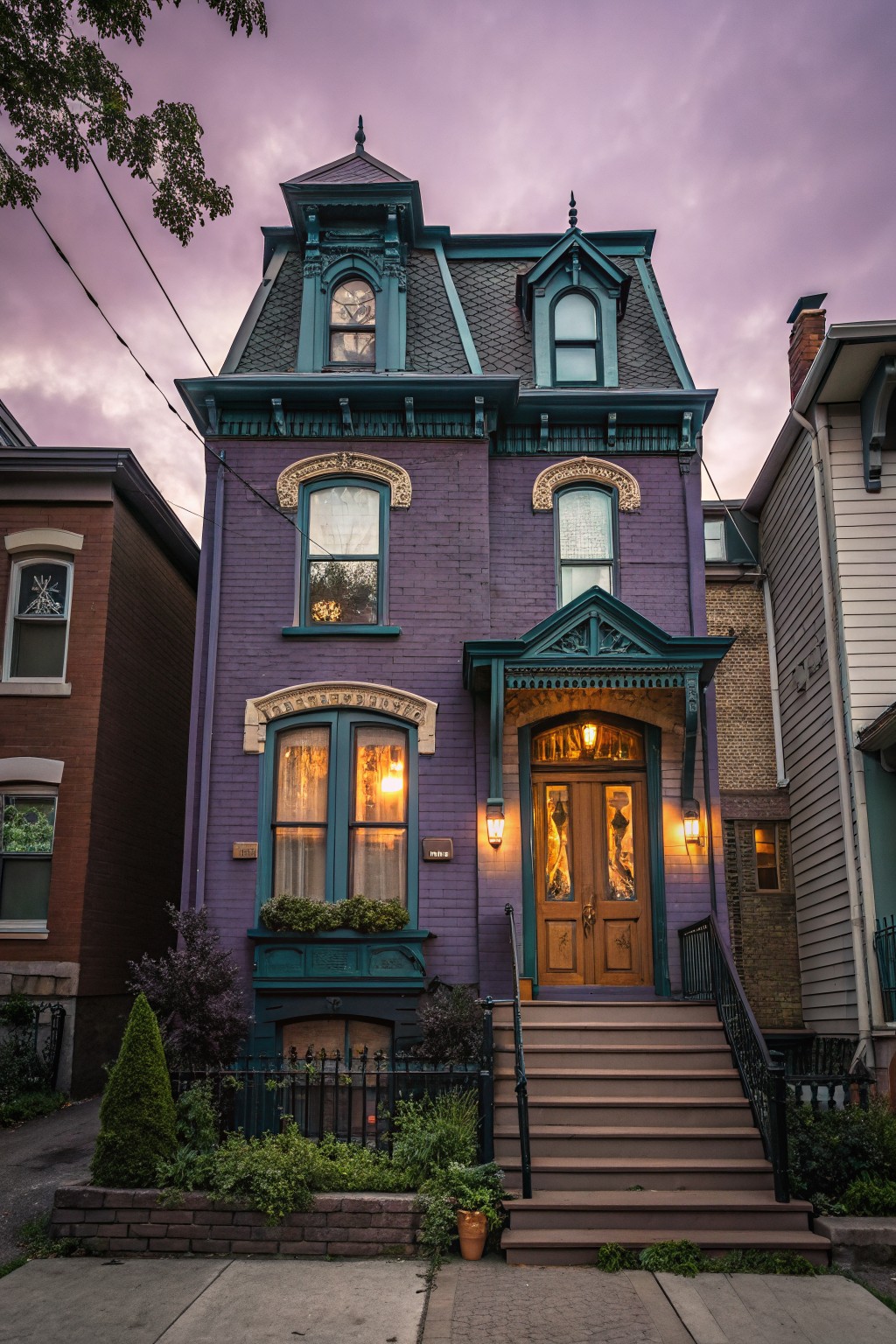
A deep purple like the one covering this house siding gives Victorian homes a strong but classic look. It has enough saturation to feel historic without turning too bright, and the color holds up well on brick surfaces next to darker trim.
This shade carries a slight blue undertone that shows more in the evening. It works best with teal or green accents and pairs nicely with warm wood doors. Try Sherwin Williams Bordeaux, Benjamin Moore Purple Heart, Behr Royal Purple, or Farrow & Ball Brinjal for similar results.
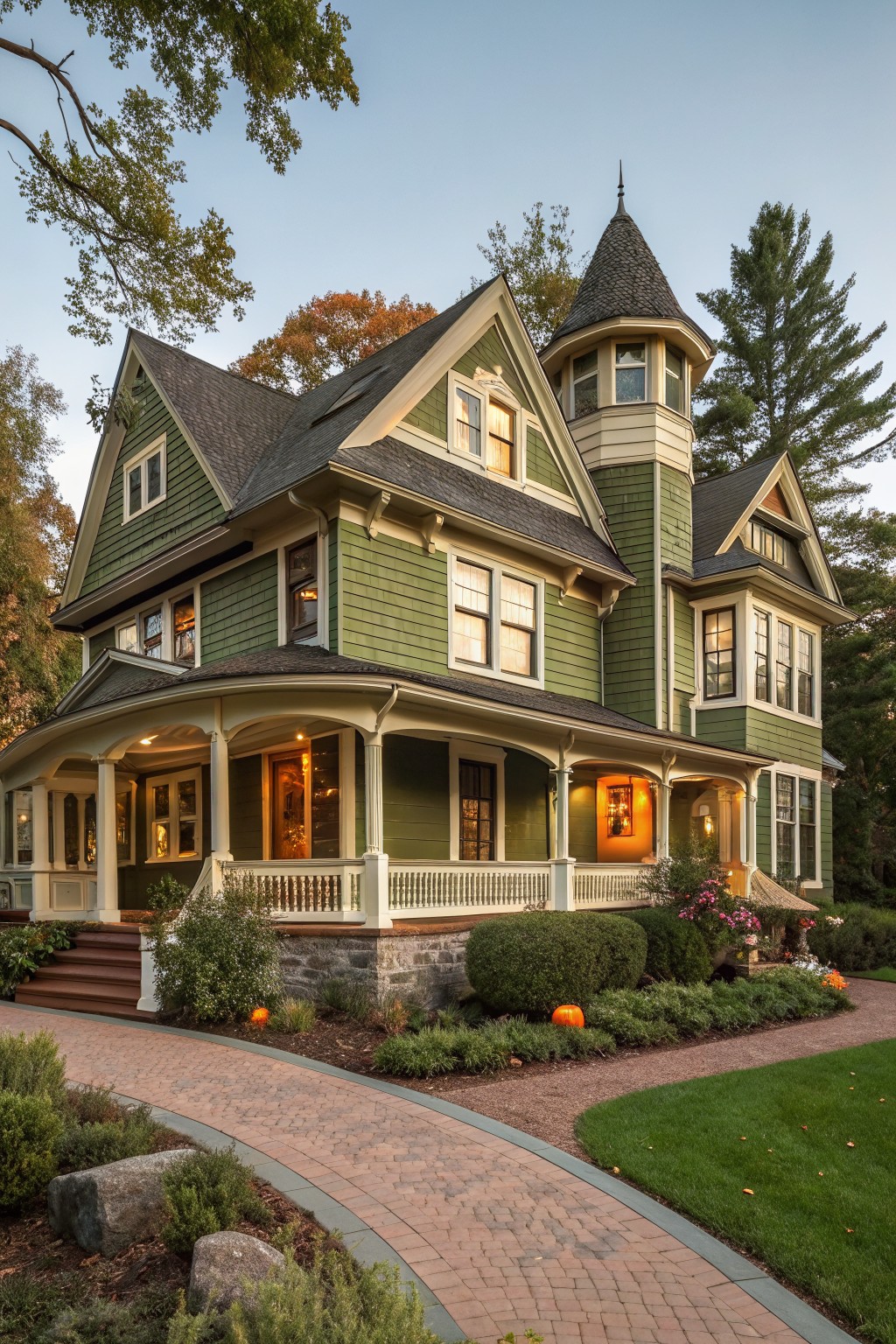
Soft Sage Green Siding with Warm White Trim
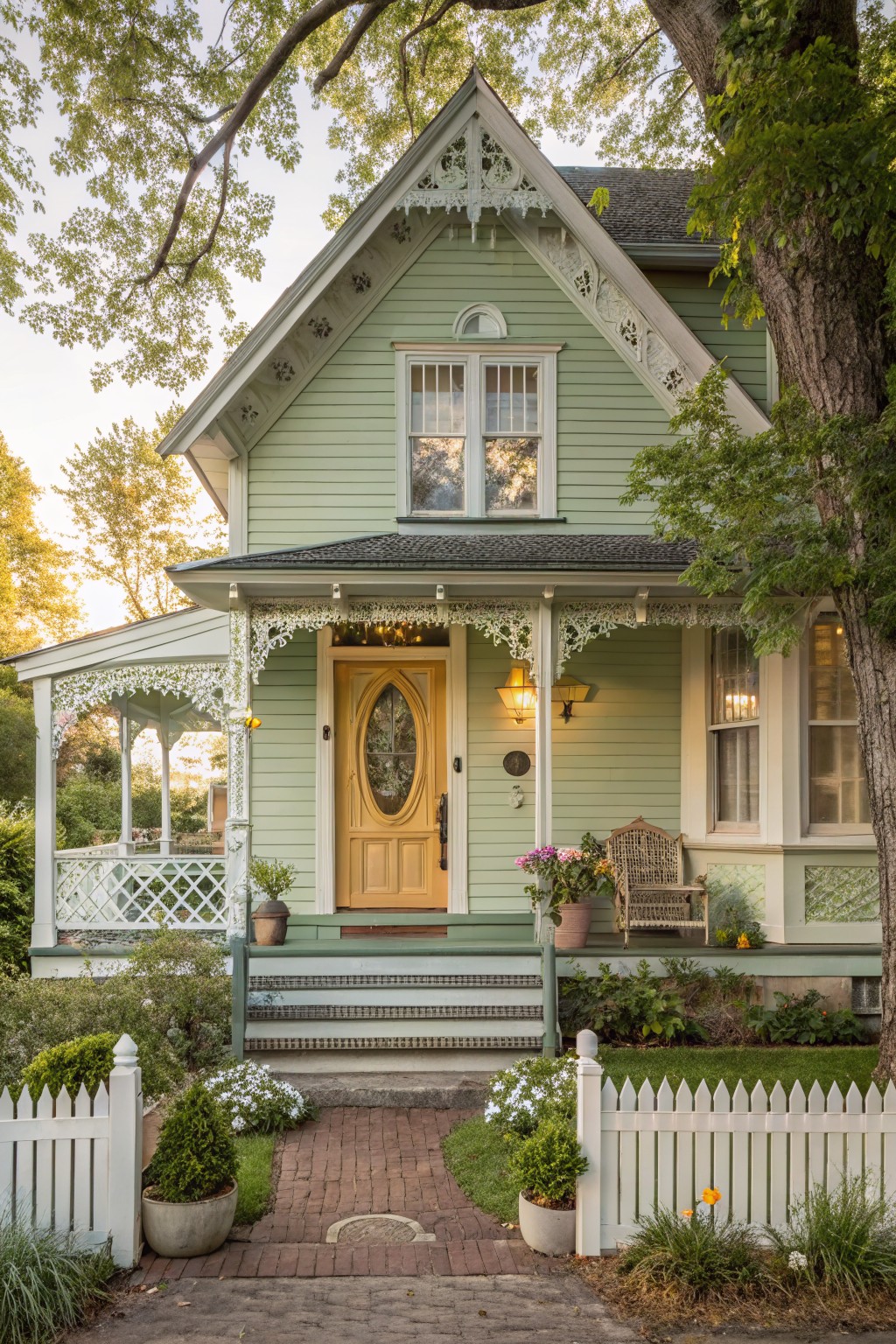
This soft sage green works nicely on older Victorian homes. It sits in that middle ground between gray and green, which helps it feel calm without looking too washed out next to white trim and darker roof shingles.
The color has a cool undertone that shows up more in shade, so it pairs best with warm whites or light creams on the trim. It can look a little flat if the surrounding landscaping is all cool tones, so adding a few warmer plants or a natural wood door helps keep the balance.
Soft Yellow Siding
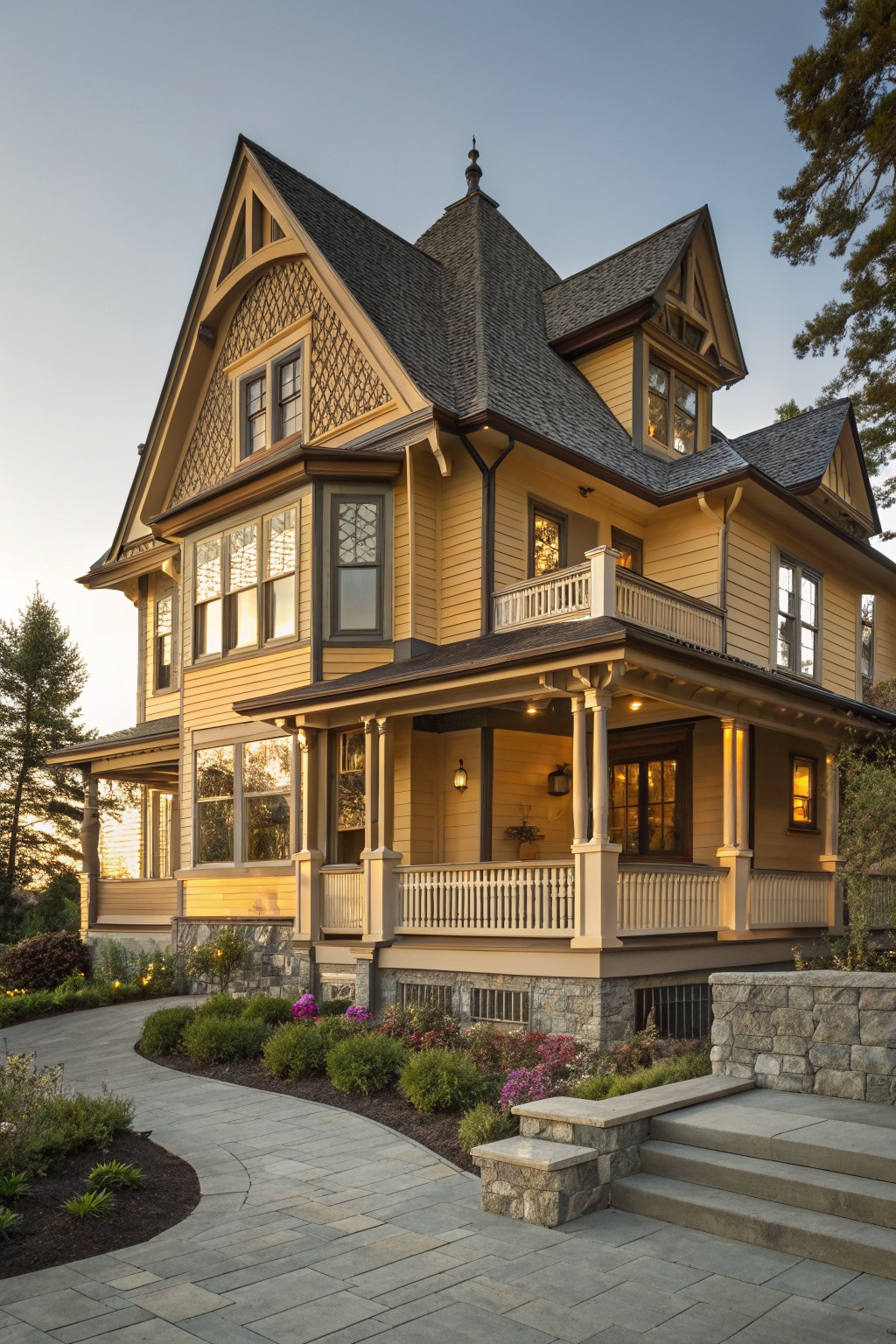
This house uses a warm yellow on the siding that has a soft golden tone. It feels sunny without being too bright and gives the exterior a friendly look that suits Victorian homes well. Colors in this range bring out the shape of the gables and windows while still feeling calm.
The undertone stays warm, which helps it sit nicely next to stone and a dark roof. It can shift a little in different lights, so a test patch on the wall is worth doing before committing. Sherwin Williams Biltmore Gold, Benjamin Moore Hawthorne Yellow, and Behr Sunflower Seed all read close to this shade.
Soft Teal Siding with Metal Roof
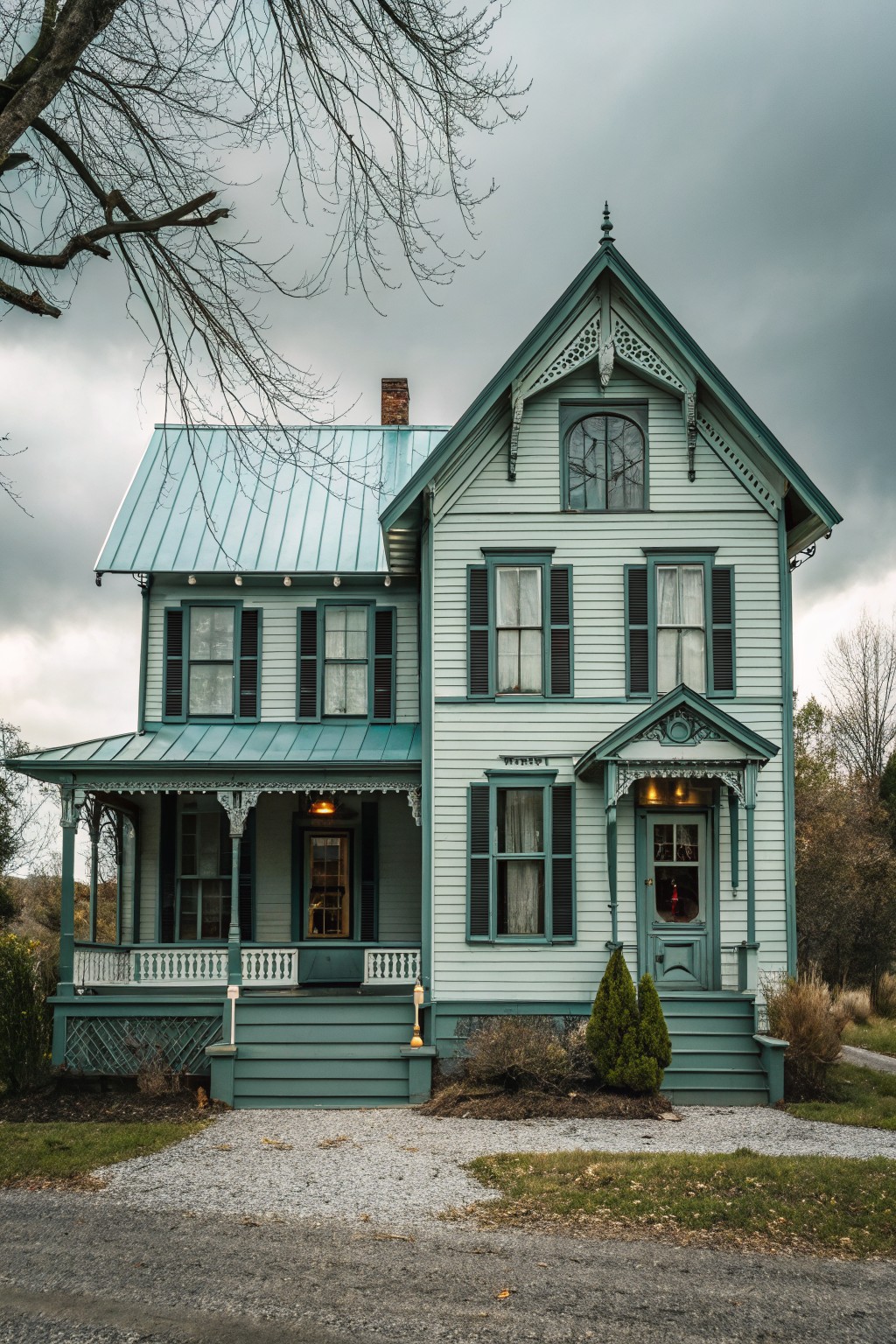
This soft teal color family gives Victorian homes a calm look. It reads closest to Sherwin Williams Rainwashed, Benjamin Moore Saybrook Sage, Behr Mistletoe, or Farrow & Ball Teresa’s Green.
The cool undertone holds steady next to the metal roof. It suits older homes best when kept away from strong yellow light that can push it toward green.
Dark Slate Blue Siding

This deep slate blue on the siding gives the house a strong but calm presence. It sits in that cool blue-gray range that feels classic on older homes without going too bright or too flat. The color holds up well against the roof and the lighter trim.
It has a slight gray lean that keeps it from reading too navy in different light. This shade pairs best with crisp white trim and dark roofing, though it can look heavy if the surrounding masonry or landscaping stays too dark. Try it on homes that already have good architectural detail.
Soft Teal Siding with Off White Accents
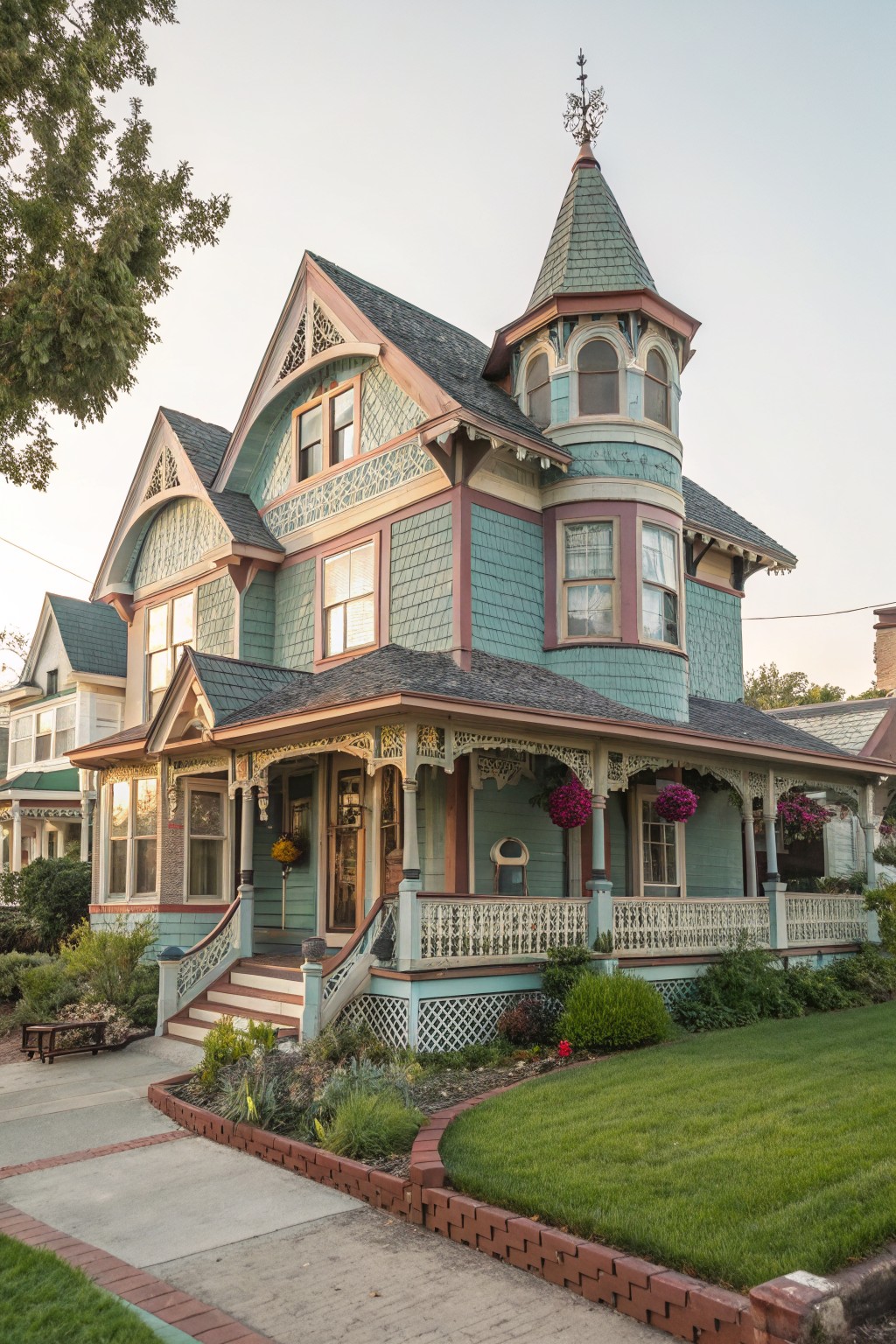
This soft teal green gives Victorian homes a calm, slightly cool look that still feels friendly. The color sits in that middle ground between blue and green, which helps it read as historic without feeling too bold or too faded.
It works best with warm trim colors and a darker roof, since the teal can lean cooler in shade. Pair it with off-white or light gray accents and skip anything too bright on the windows or porch details.
Deep Teal Siding
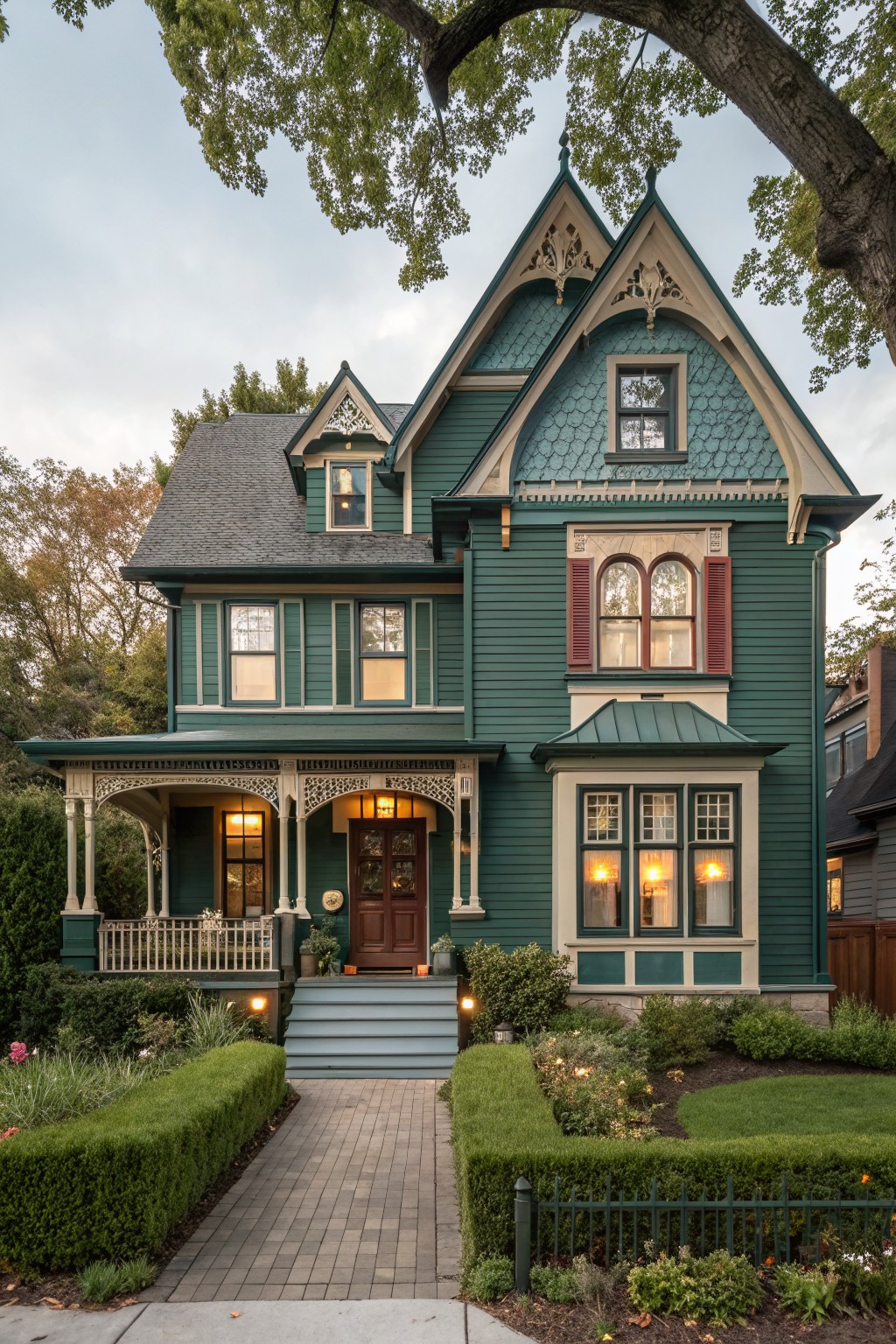
This deep teal green siding gives a Victorian home a solid, traditional feel without looking too dark. It sits in the teal green family and reads as a cool, slightly blue-leaning shade that still feels grounded outdoors. It works especially well on larger homes where you want some color but not something overly bright.
The color holds up nicely against lighter trim and pairs best with a dark roof and simple white or off-white accents. It can look a bit flat if the light is very harsh, so most people use it on homes with decent shade from trees or porches.
Soft Seafoam Siding
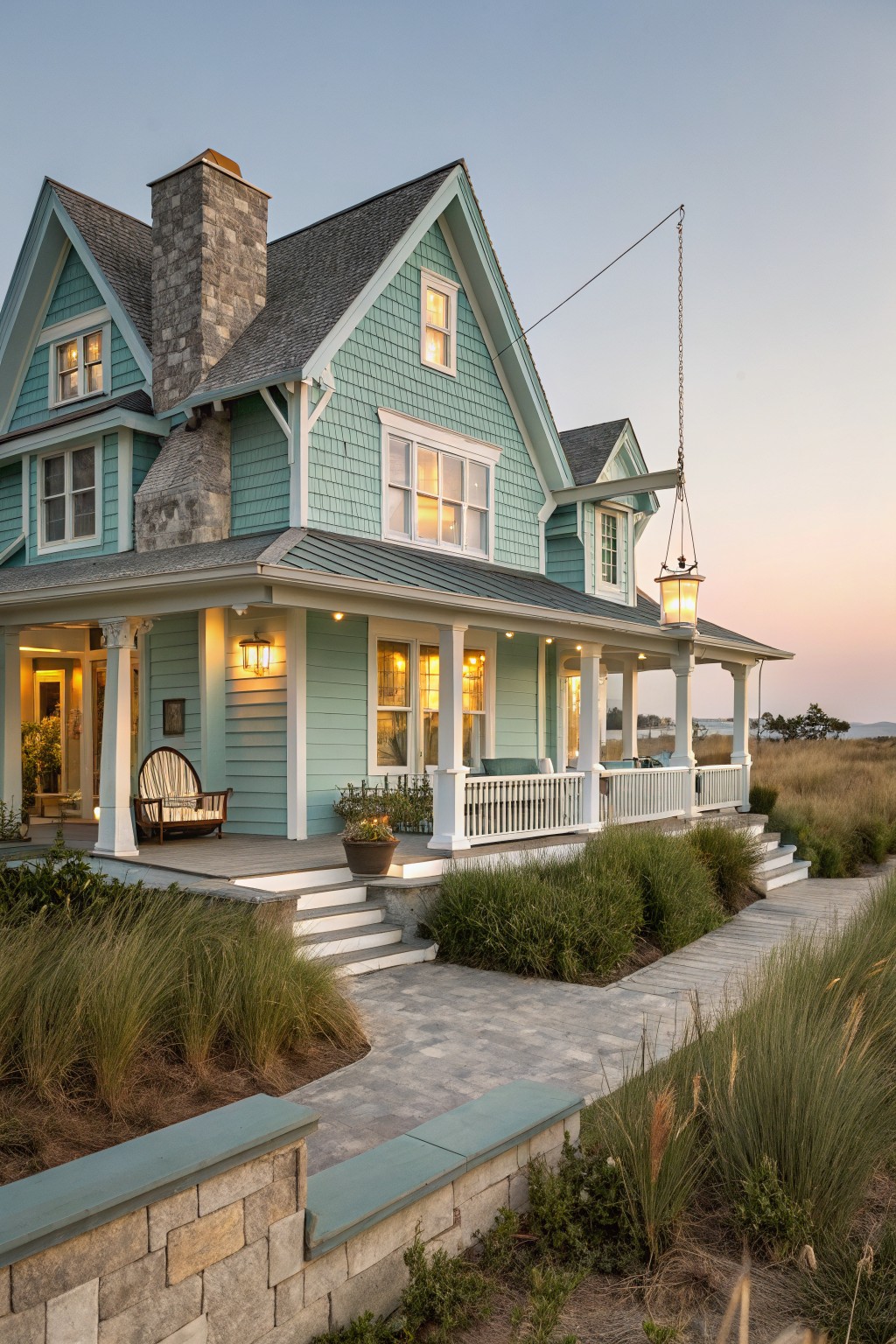
This soft seafoam color on the siding gives a Victorian home a calm, slightly coastal feel that still reads traditional. It sits in that blue-green range and keeps things light without looking washed out.
The color has cool undertones that pair well with white trim and stone foundations. It works best on homes with some architectural detail, though it can look flat if the surrounding landscape is very dry or brown.
Deep green shutters

This deep green on the shutters gives the house a solid, traditional look against the red brick. It is a rich shade that feels grounded and works especially well on older homes where you want the windows to stand out without competing with the brick.
The color has a slight blue undertone that keeps it from turning too warm in sunlight. It pairs cleanly with natural wood doors and light stone trim, though it can look heavy if the surrounding greenery gets too dense.
Deep Blue-Gray Siding

This deep blue-gray siding gives Victorian homes a solid, historic look that still feels calm. It reads as a cool slate blue with gray undertones rather than a bright or true navy. The color holds its own next to stone and dark roofing without turning too heavy.
It pairs best with warm cream or soft yellow trim to keep the house from feeling cold. On homes with lots of detail, the blue-gray helps the shapes stand out without extra contrast. Watch the light though. In full shade it can lean greener than expected.
Creamy Soft Yellow Siding

This pale yellow on the siding gives a Victorian house that classic, friendly look without feeling too bold. It falls into the warm, slightly creamy side of yellow that reads soft outdoors rather than bright.
The color has a gentle warmth that holds up well next to white trim and a darker roof. It suits older homes best when you want something cheerful but still grounded, and it works especially nicely with natural stone or brick accents nearby.
Muted purple siding
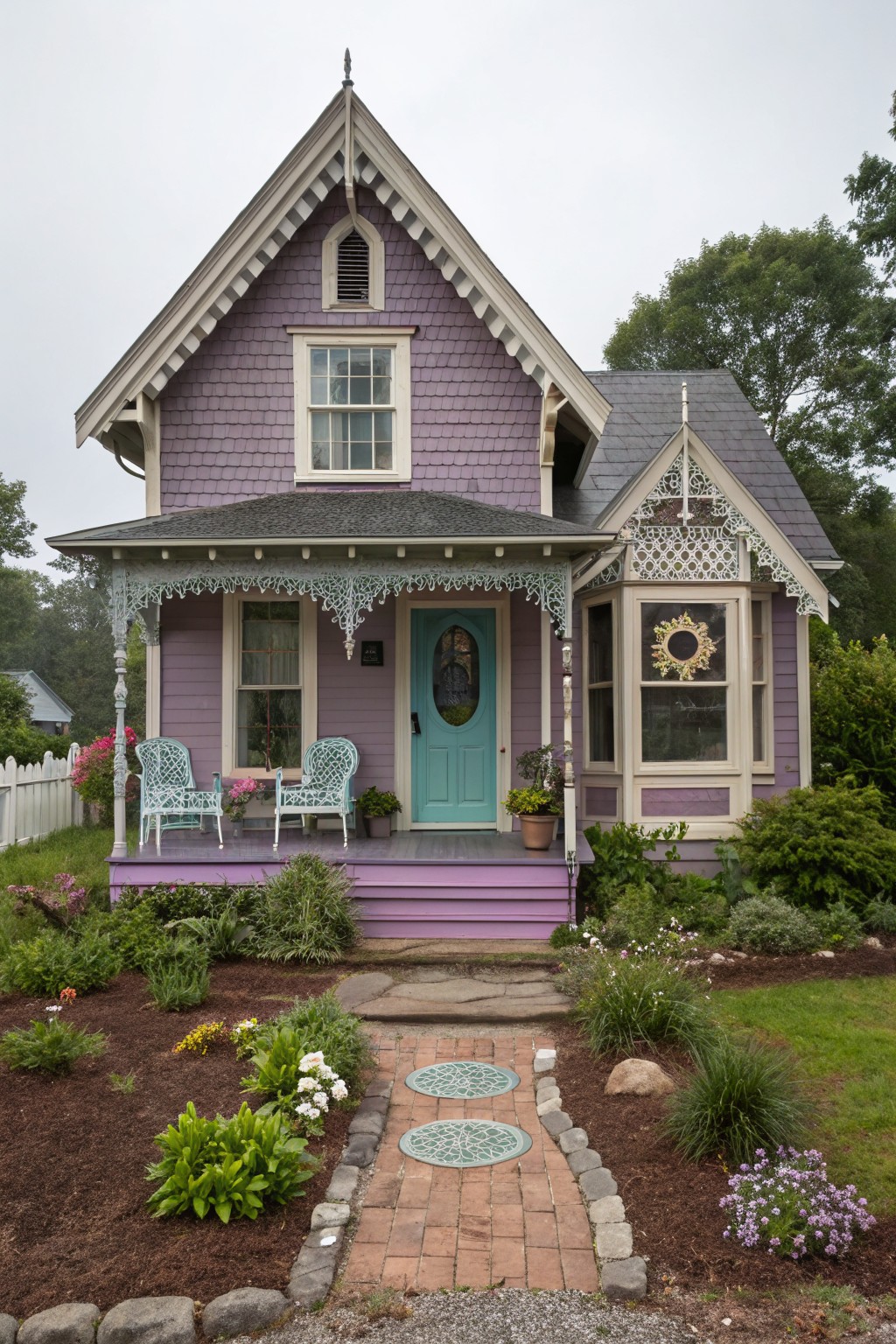
This muted purple works well on older Victorian homes because it adds color without feeling too bright or trendy. It sits in a soft lavender family with cool gray undertones that keep the house looking calm and settled rather than loud.
The shade reads best in natural light and holds up nicely against white trim and a darker roof. It suits homes with traditional details and pairs easily with garden greens and simple landscaping.
Soft Sage Green Siding with Stone Foundation
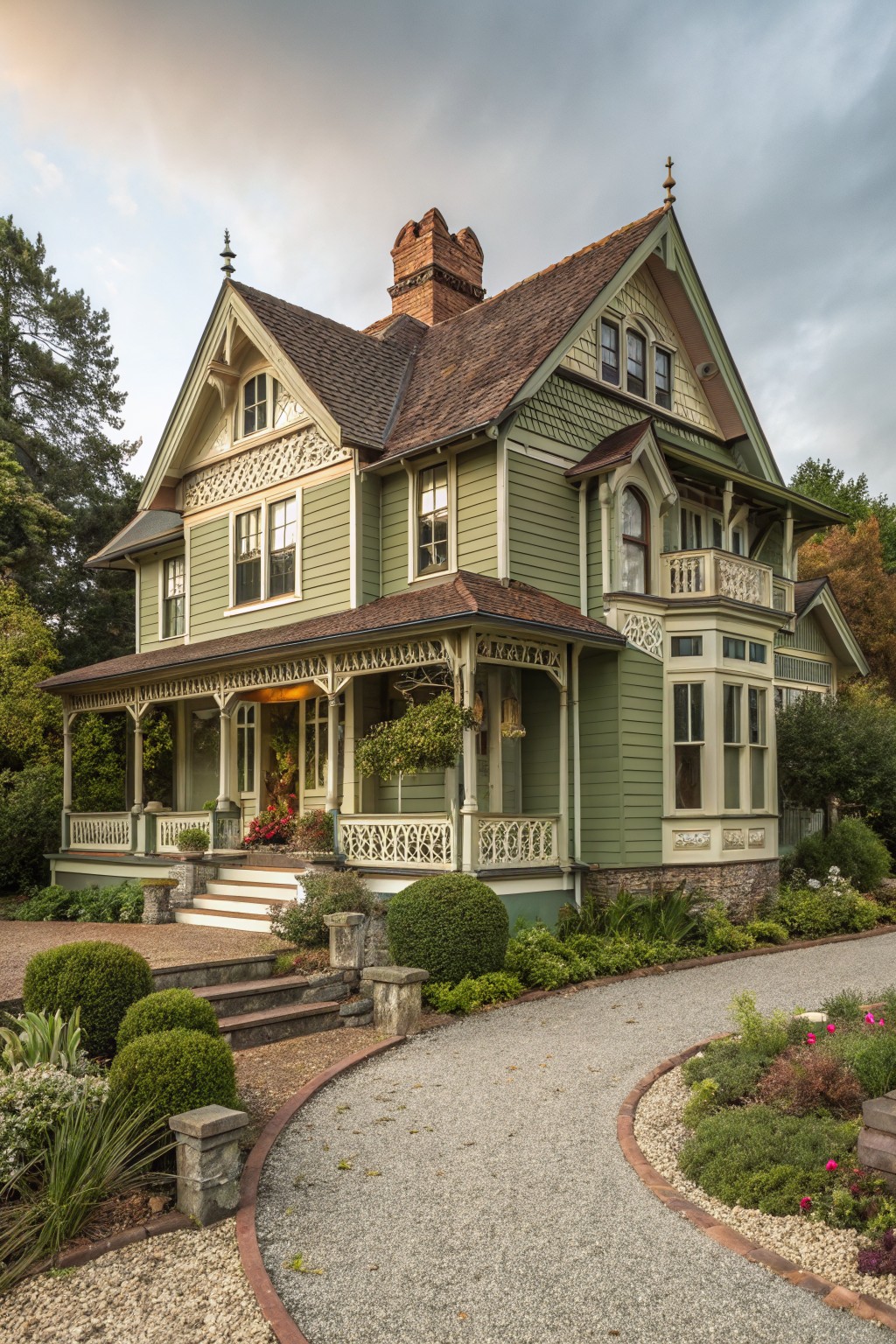
This house uses a soft sage green on the main siding. It is a muted green with a hint of gray that keeps the whole exterior from feeling too bright or too dark.
The color sits well with brown roofing and stone at the base. It works best on Victorian homes when the trim stays light and the roof has some warmth to balance the cool lean in the green. Sherwin Williams Sage, Benjamin Moore Saybrook Sage, Behr Aged Sage, and Farrow & Ball Light Gray Green all land close to this shade.
Soft Green Siding

This Victorian uses a soft sage green on the main siding. It is a muted green with cool undertones that feels calm and balanced on older homes rather than too bright or trendy.
The color sits nicely next to the darker roof and reads evenly in changing light. It works best on homes with simple trim details and pairs well with warm neutrals or soft coral accents, though it can look washed out if the surrounding hardscape is too gray.
Warm Greige Siding
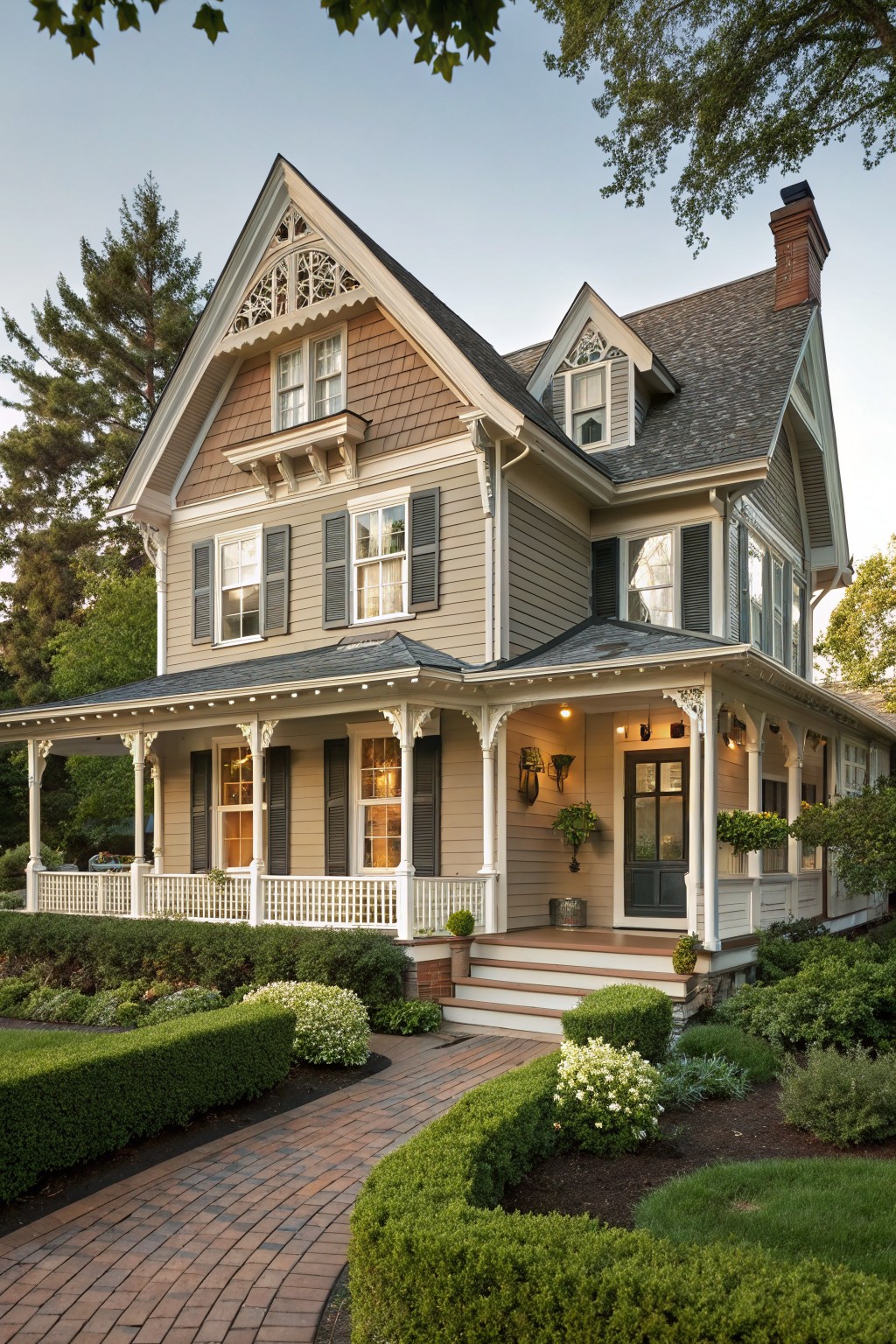
This Victorian house uses a warm greige on the main siding. It reads as a soft gray with just enough beige to keep it from feeling cool or flat next to the roof.
The color sits nicely with white trim and helps the house feel grounded without looking too new. It works well on homes with similar roof tones and brick foundations because the warmth keeps everything connected. Try something close to Sherwin Williams Repose Gray, Benjamin Moore Revere Pewter, Behr Silver Fox, or Farrow & Ball Elephant’s Breath.
Soft Sage Green Siding with Brick Foundation
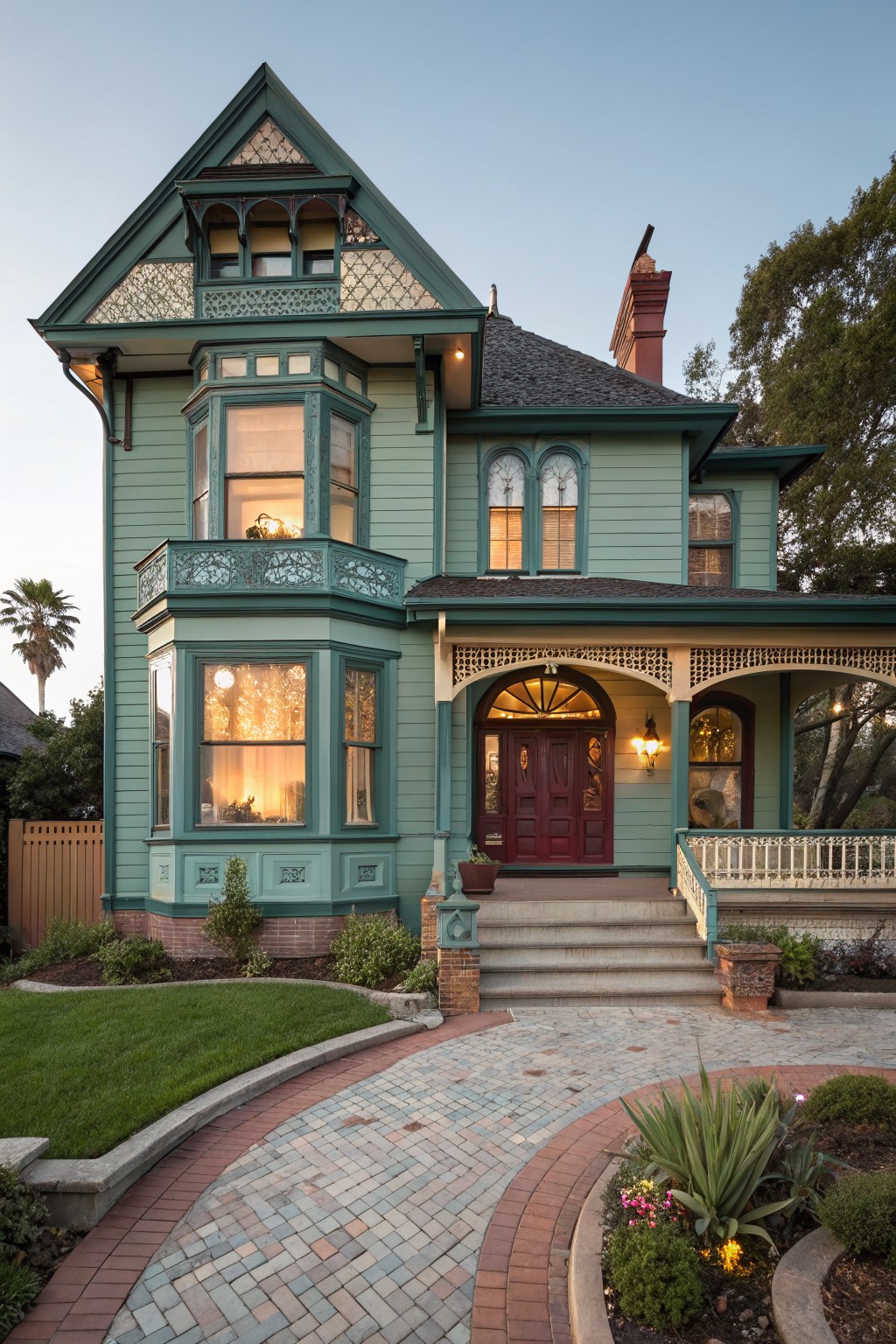
This house uses a soft sage green on the siding. It is a muted green with gray undertones that feels calm and traditional on Victorian homes.
The color sits well next to brick foundations and white trim. It works best on homes with plenty of detail because the tone stays quiet and lets the architecture stand out. Try it with Sherwin Williams Rainwashed, Benjamin Moore Wythe Blue, Behr Aloe Vera, or Farrow & Ball Pigeon.
Soft Sage Green Siding with Gray Undertones
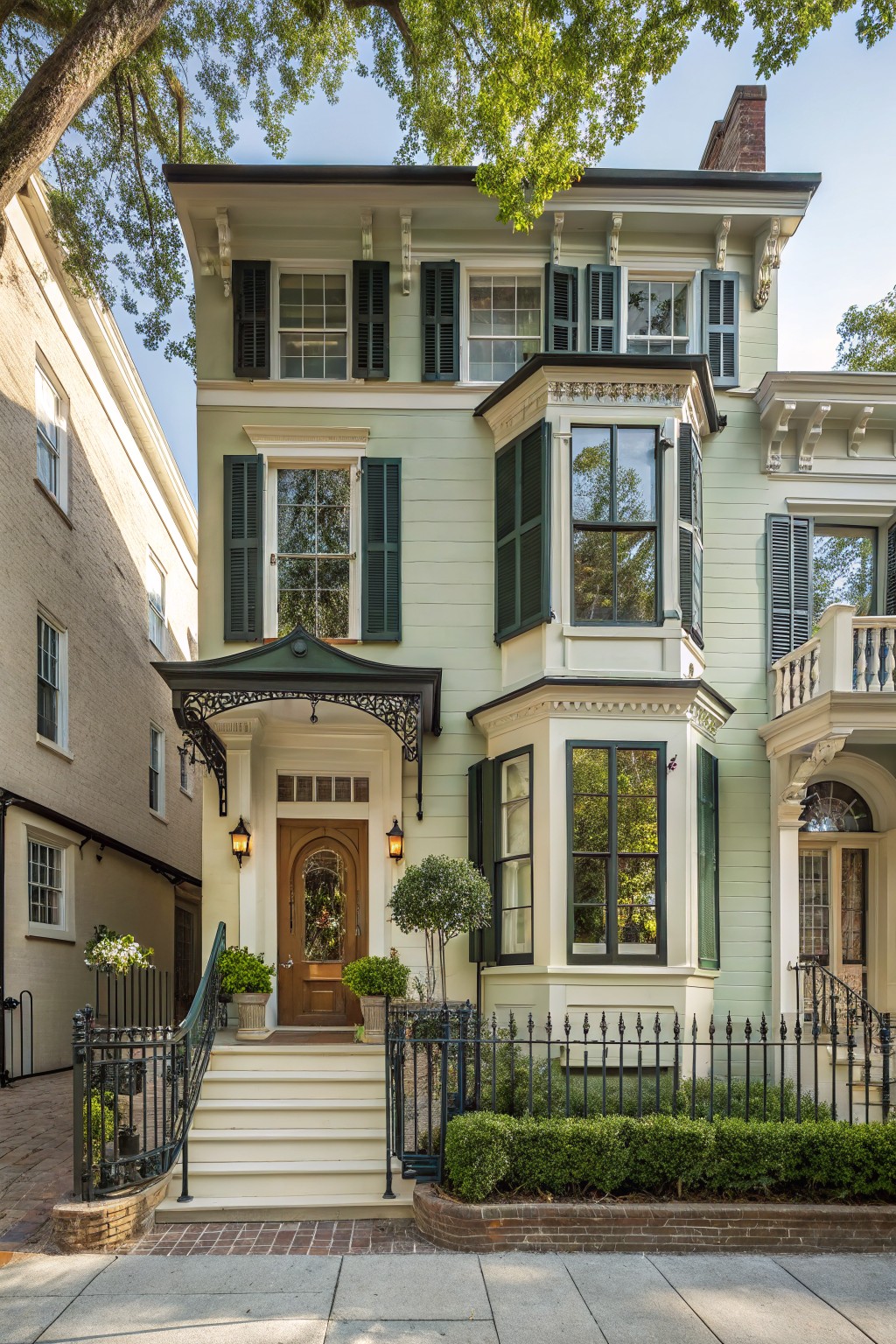
This house uses a soft sage green on the siding. It is a muted gray-green that feels calm and works especially well on older homes where you want color without it feeling too bold.
The shade has cool undertones that pair best with warm white trim. It can look a bit flat in deep shade, so it suits streets with decent sunlight and simple landscaping around the base.
Teal siding on Victorian homes
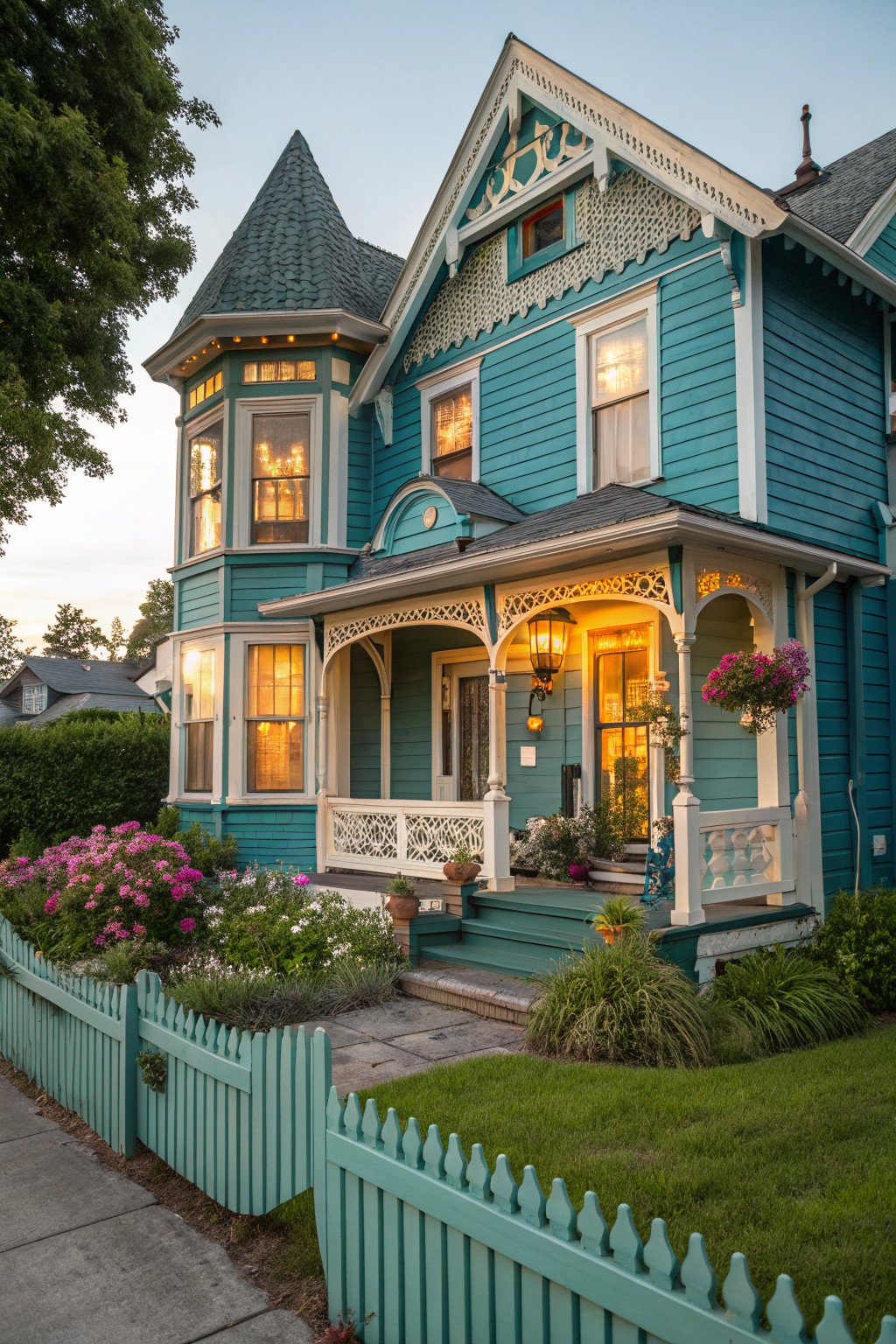
This teal paint color brings a fresh yet historic feel to the exterior. It is a cool blue-green that sits nicely on wood siding and pairs well with white trim. Many older homes used shades like this to add personality without going too bold.
It has a slight green undertone that shows up more in daylight and works best on homes with simple detailing. Good matches include Sherwin Williams Oceanic, Benjamin Moore Caribbean Teal, Behr Tropical Teal, and Farrow & Ball Vardo.
Frequently Asked Questions
Q: How do I test these color schemes on my own house before committing? A: Grab some paint samples in the shades you like and paint them on big boards. Prop the boards against your house at different times of day to see how the light hits them. This shows you what works without wasting time or money on a full paint job.
Q: What if the original colors on my Victorian have faded over time? A: Look for traces under eaves or in old photos to get an idea of the starting point. Then choose similar tones that fit the historic vibe but hold up better today. You can refresh the look without losing the character.
Q: Should I stick to just two colors or add more accents? A: Start with the main body and trim in two shades from one of the schemes. Add a third only on small details like shutters if it feels right for your house.
Q: How often do these paint jobs need touching up? A: Victorian exteriors with multiple colors can show wear faster on the trim. Check them every couple of years and touch up spots that peel or fade. Regular care keeps the whole scheme looking sharp longer.