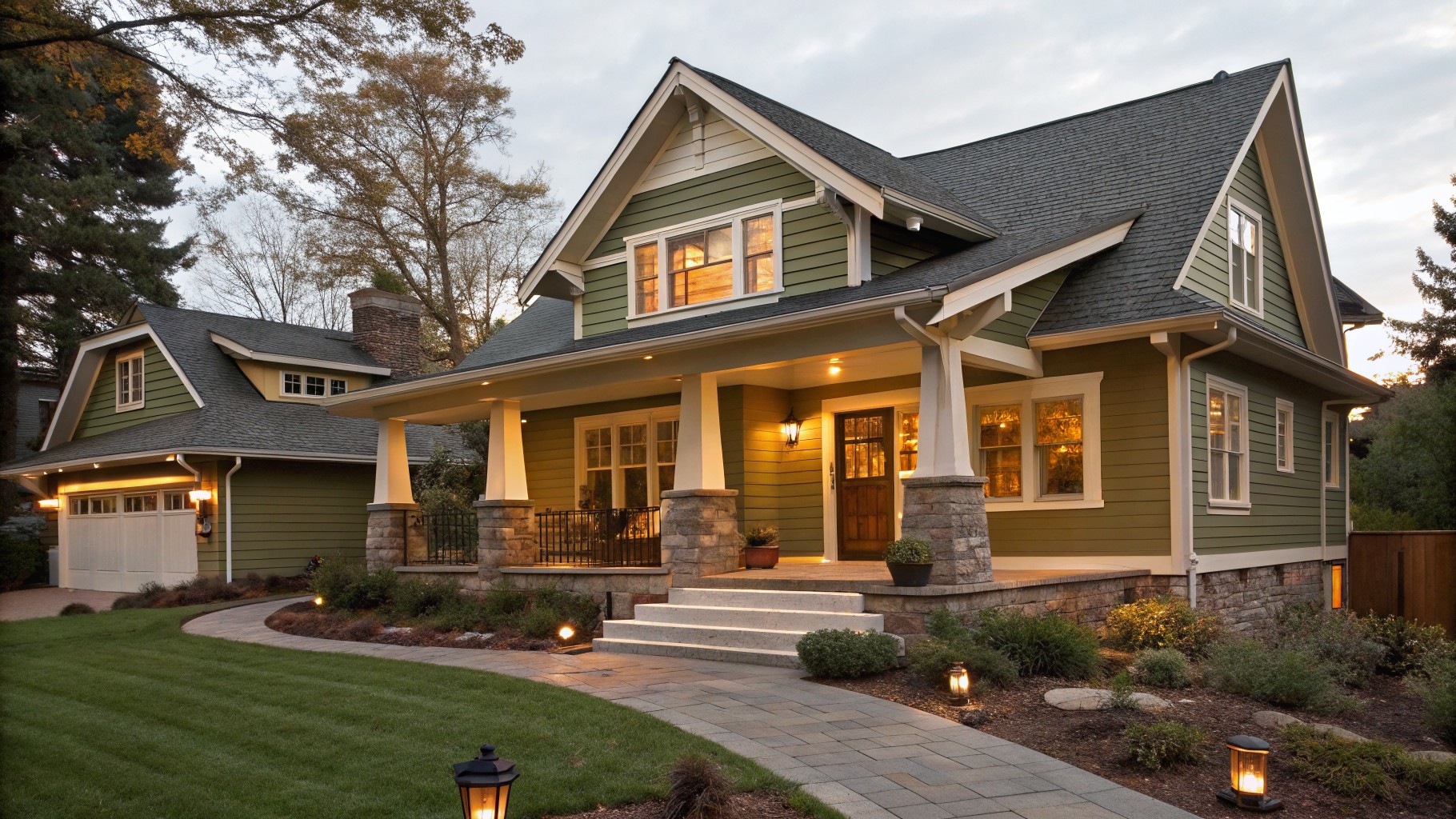
I often watch how a Craftsman home’s siding takes on different tones once the sun hits it from various angles throughout the day.
The colors that sit well next to the roofline and any stone or brick details tend to make the trim and overhangs stand out more clearly.
I usually put a few samples right on the house before deciding because the way they shift with weather and time of day can change everything.
Picking shades that keep some depth even when the light turns flat helps the whole exterior feel more balanced over time.
Testing on site is the only way to know for sure.
Soft Sage Green Siding

This house uses a soft sage green on the siding. It is a muted color with some gray in the mix that feels calm and sits nicely on a Craftsman home without looking too bright.
The color has cool undertones that work well next to stone and wood. It suits homes with natural materials and holds up best in settings with trees or soft light. Good matches include Sherwin Williams Clary Sage, Benjamin Moore Saybrook Sage, Behr Jojoba, and Farrow & Ball Lichen.
Soft Greige Siding

This Craftsman house uses a soft greige on the siding that sits between gray and beige. The color has a warm undertone that keeps the whole exterior feeling grounded without turning too dark or stark.
It pairs easily with stone foundations and wood trim because the neutral stays quiet next to those materials. The same shade works on many Craftsman homes when the roof is dark and you want the siding to feel calm rather than busy.
Soft Blue-Gray Siding
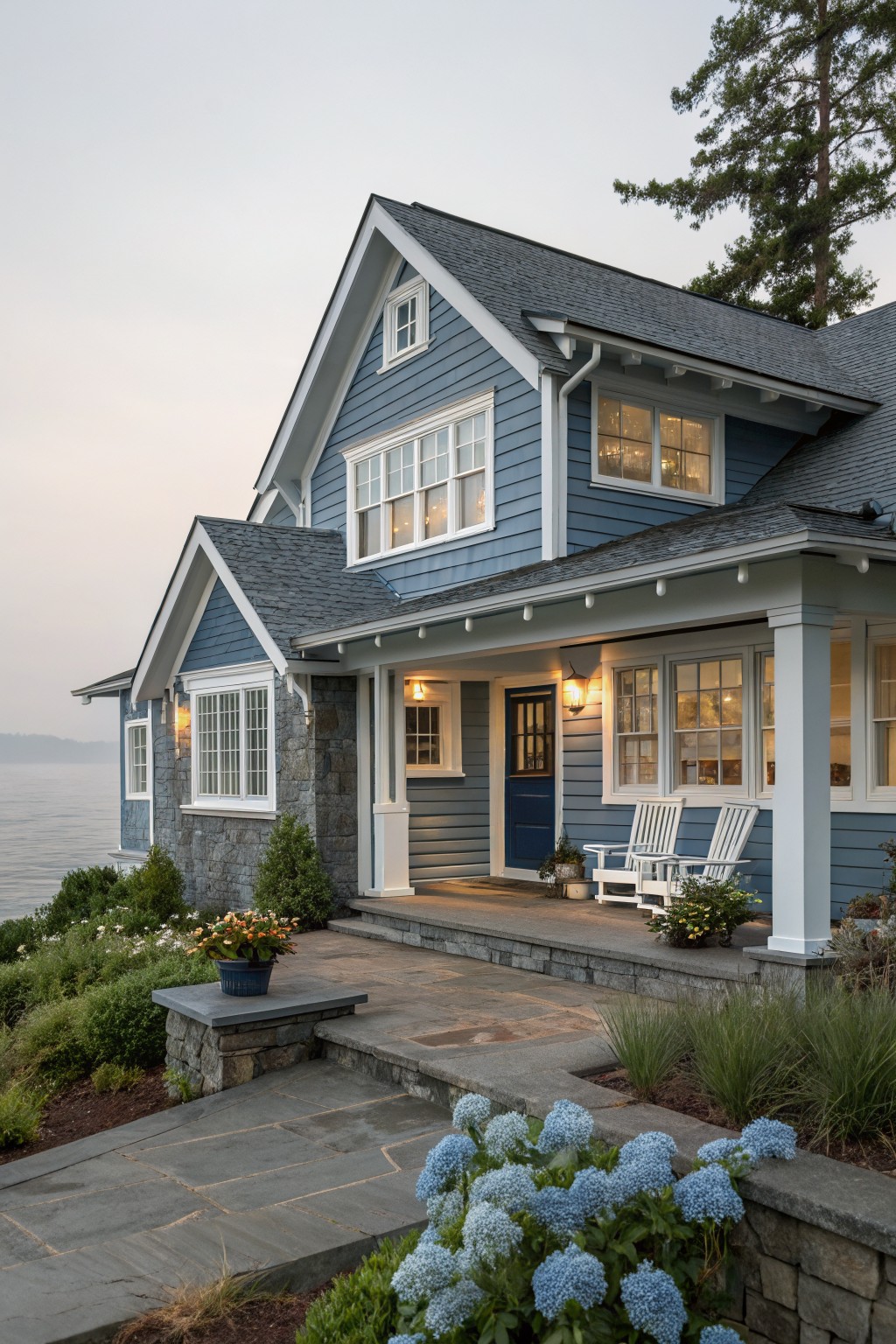
A soft blue-gray siding gives this craftsman home a calm and steady look. The color sits between blue and gray without leaning too far in either direction. It reads closest to Sherwin Williams Rainwashed, Benjamin Moore Wythe Blue, or Behr Soft Periwinkle.
This shade works best when the house has white trim and some stone or natural materials nearby. It stays cool in tone so it pairs cleanly with dark roofing and green landscaping. In strong sun it can look a touch lighter, while shade brings out more of the gray side.
Muted Gray Siding
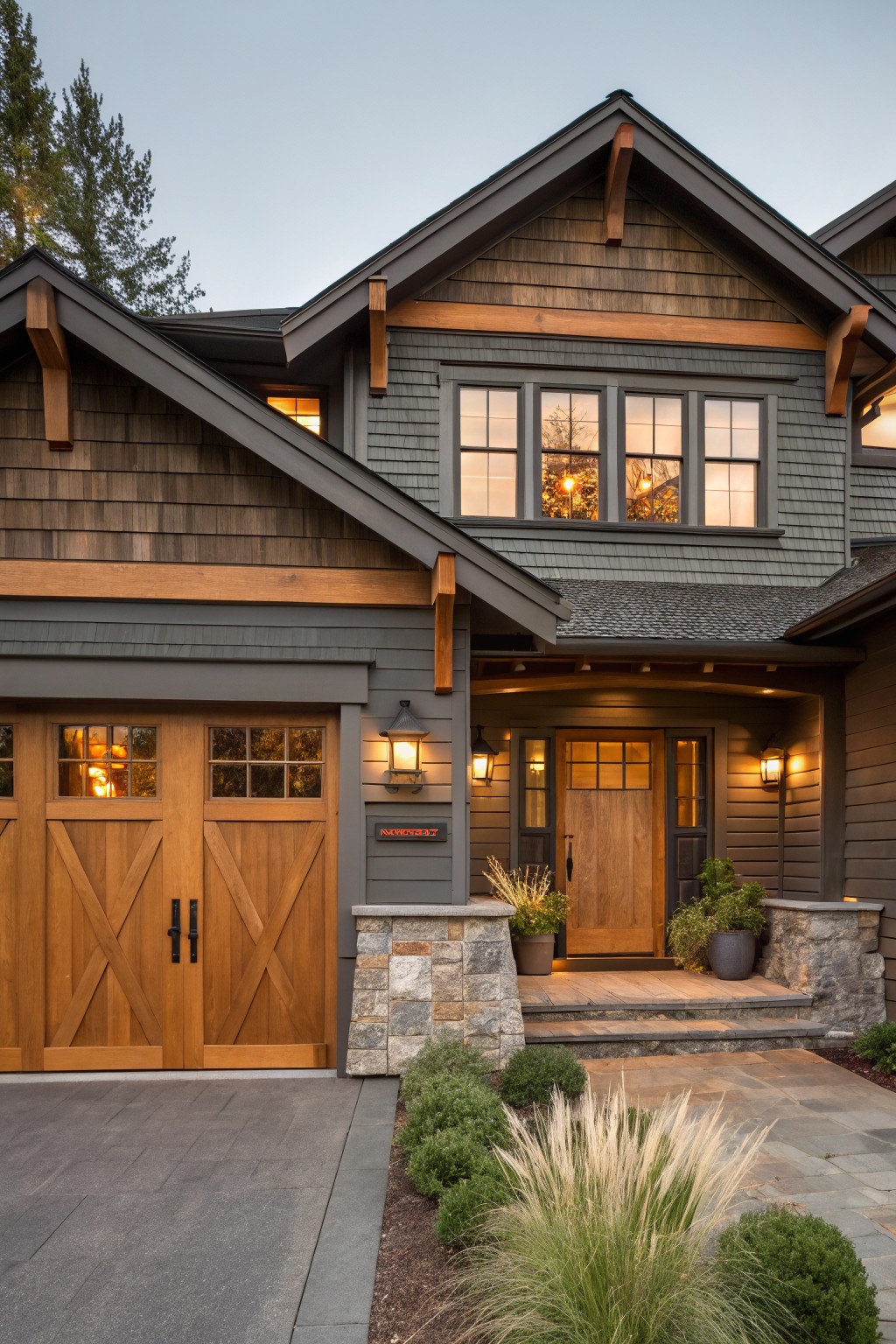
A muted slate gray covers the main siding here and gives the house a calm, steady presence. This kind of gray sits in the middle range, neither too dark nor too light, and it carries a cool undertone that shifts slightly depending on the light. It often reads close to Sherwin Williams Cityscape, Benjamin Moore Coventry Gray, or Behr Silver Bullet.
The gray works well with wood doors and stone bases because it lets those natural textures stand out without competing. It suits Craftsman homes that already have strong architectural lines, though it can start to feel flat if the trim is too close in tone.
Warm Terracotta Siding
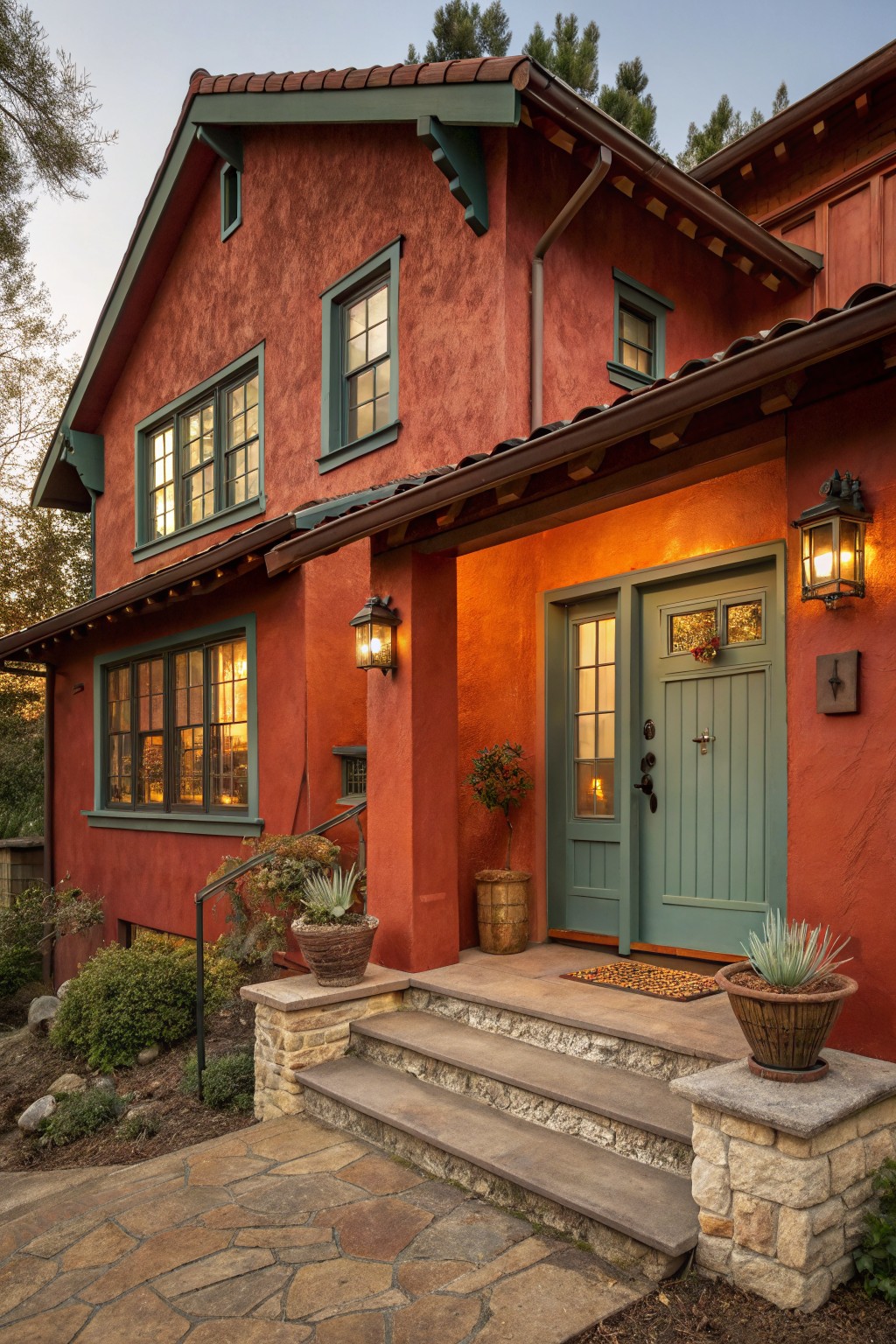
This warm terracotta red on the siding gives the house a solid, grounded look. It falls into that deep red-orange family and works especially well on textured stucco because the color stays rich without turning flat in daylight.
The shade carries a slight orange undertone that holds up next to green trim and stone. It suits craftsman homes with similar roof tones, though it can feel heavy if paired with too much dark masonry.
Light Greige Siding

A soft greige like this works nicely on craftsman siding because it sits between gray and beige without going too cool or too brown. It reads warm enough to feel inviting next to stone and wood but stays neutral enough to let the roof and trim stay in charge.
The color has a light taupe undertone that shows up more as the light changes. It pairs best with warm white trim and a slightly darker gray on the garage door. Sherwin Williams Worldly Gray, Benjamin Moore Edgecomb Gray, and Behr Silver Satin all land close to this look.
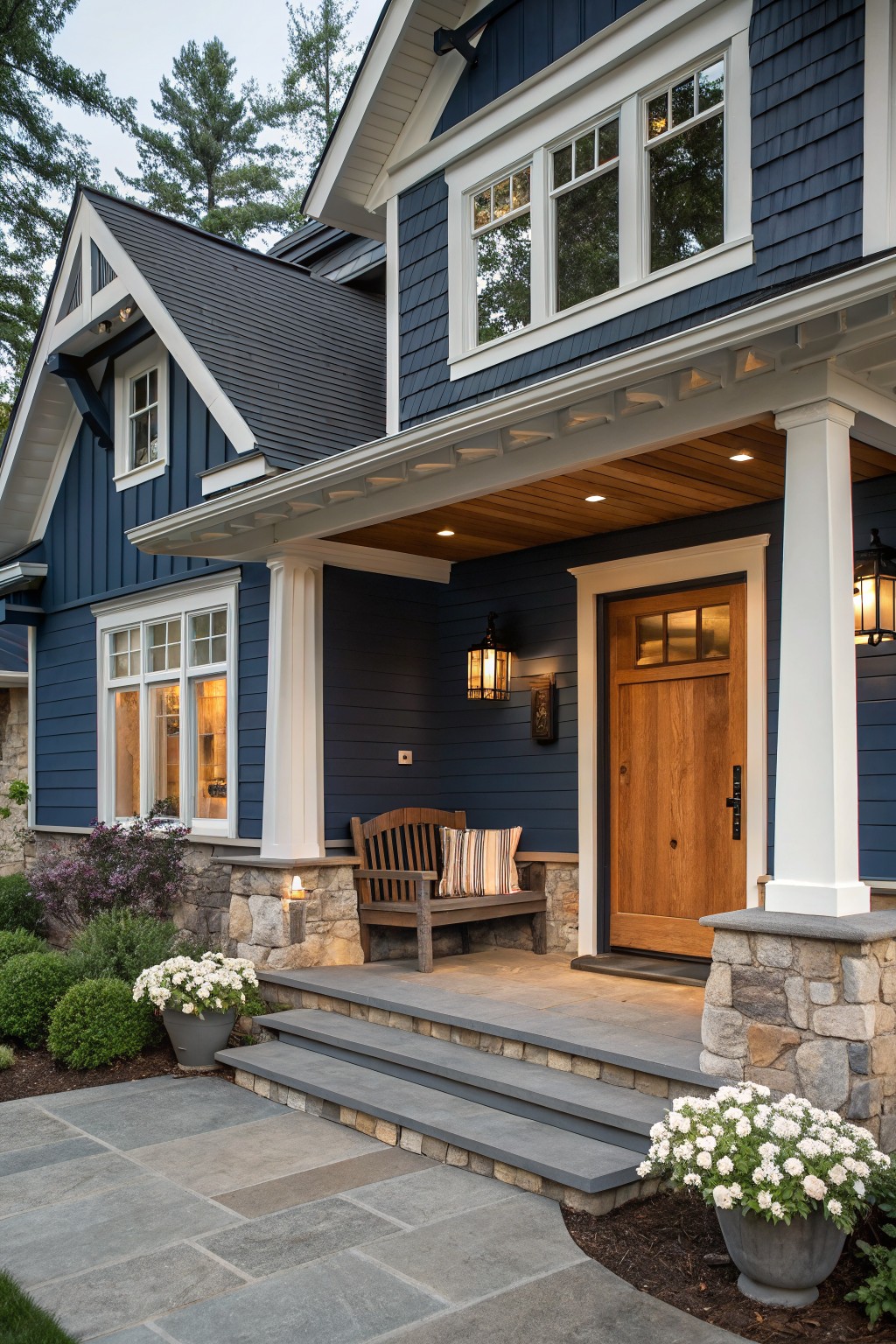
A deep navy blue like this gives Craftsman siding a strong but simple presence. It looks closest to Sherwin Williams Naval, Benjamin Moore Hale Navy, or Behr Midnight Blue, and the cool undertone keeps it from feeling too heavy next to white trim.
The color works best on homes with clear lines and some stone or wood details. It holds its depth in full sun and pairs cleanly with a natural wood door without competing.
Warm Beige Siding

This siding color is a warm beige with gentle yellow undertones. It keeps the house looking bright without turning stark, and the tone helps the wood trim and stone base feel connected rather than separate.
The beige has a soft, slightly creamy feel that works best with natural wood doors and darker accents. It reads warmer in afternoon light and can look a touch cooler in shade, so test it on a large section before committing. Closest matches include Sherwin Williams Accessible Beige, Benjamin Moore Manchester Tan, and Behr Almond Wisp.
Soft Teal Siding
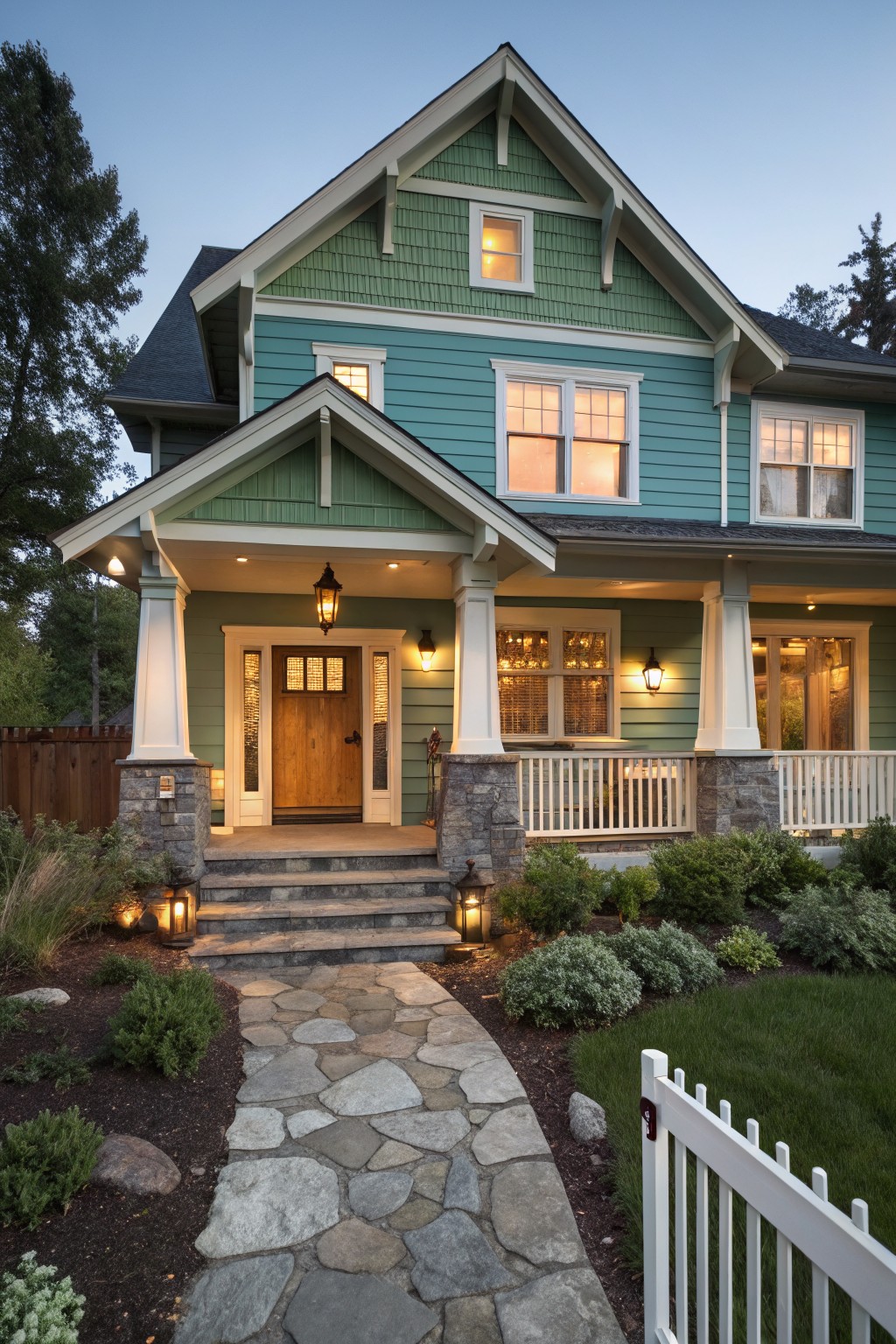
This muted teal reads as a soft blue green on the siding. It sits in a nice middle ground that feels calm rather than bold and gives the house a fresh look without fighting the roof or trim.
The color has a light cool undertone that shows up more in shade. It works best with white trim and natural wood doors on craftsman homes. Try Sherwin Williams Rainwashed, Benjamin Moore Wythe Blue, Behr Seaglass, or Farrow and Ball Green Blue if you want something similar.
Deep Green Siding

A deep green like this gives craftsman homes a solid, grounded look. It sits between olive and forest tones, with enough depth to stand out without feeling too bold against the wood trim and stone.
This color works best on shingle siding where the texture can show through. It pairs naturally with warm browns and grays, though it can look heavier if the trim is too light or the roof is very dark.
Deep Red-Brown Siding
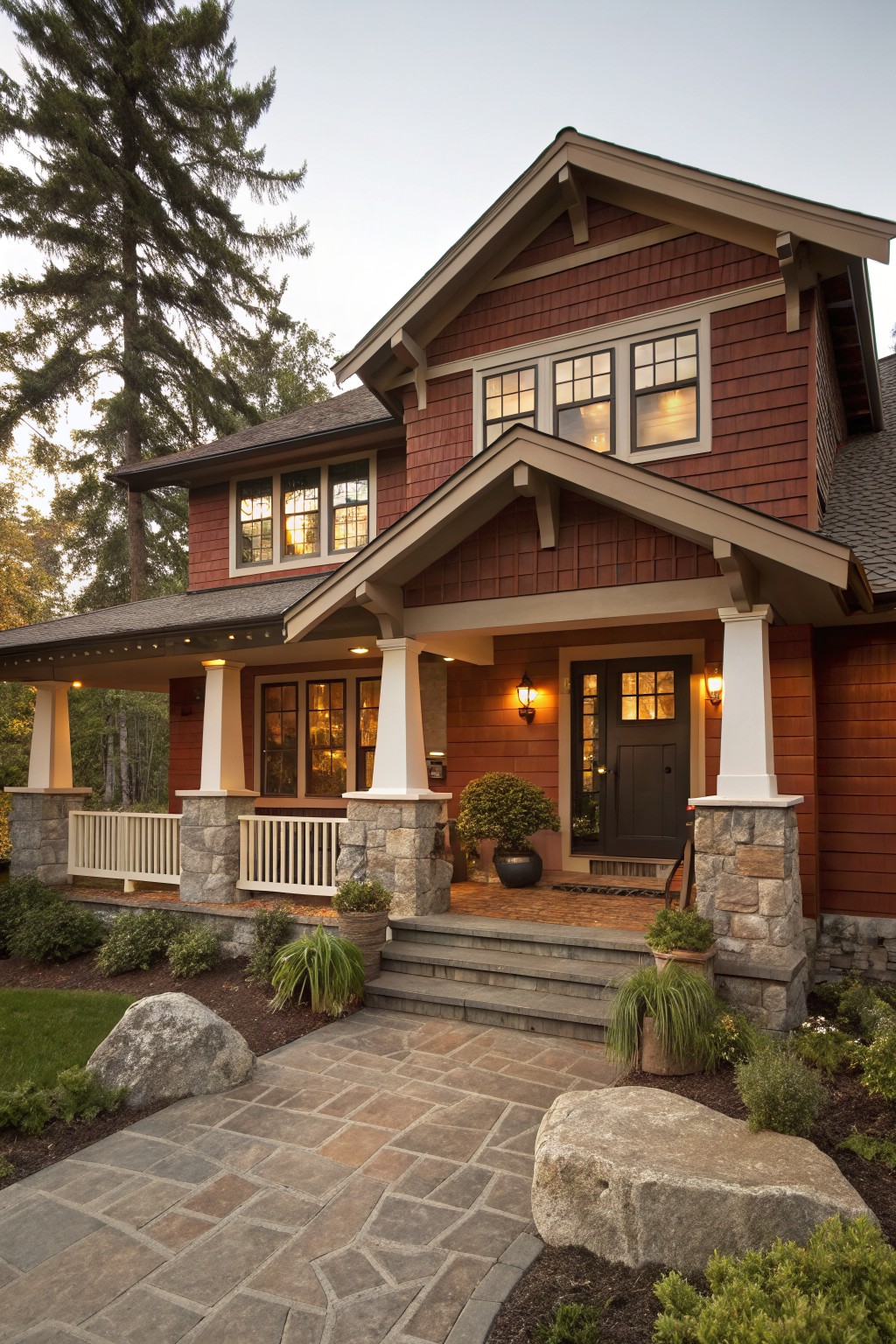
This deep red-brown siding gives a Craftsman house a solid, grounded feel. It is a warm, earthy shade that sits somewhere between brick red and brown, and it works especially well on shingle exteriors. The color looks closest to Sherwin Williams Rookwood Red, Benjamin Moore Heritage Red, Behr Moroccan Red, or Farrow & Ball Red Earth.
The tone stays steady next to stone and light trim without turning too orange or too dark. It suits homes with natural materials and holds up nicely in both sun and shade, though it can read heavier if the trim is not kept light.
Cool Sage Green Siding
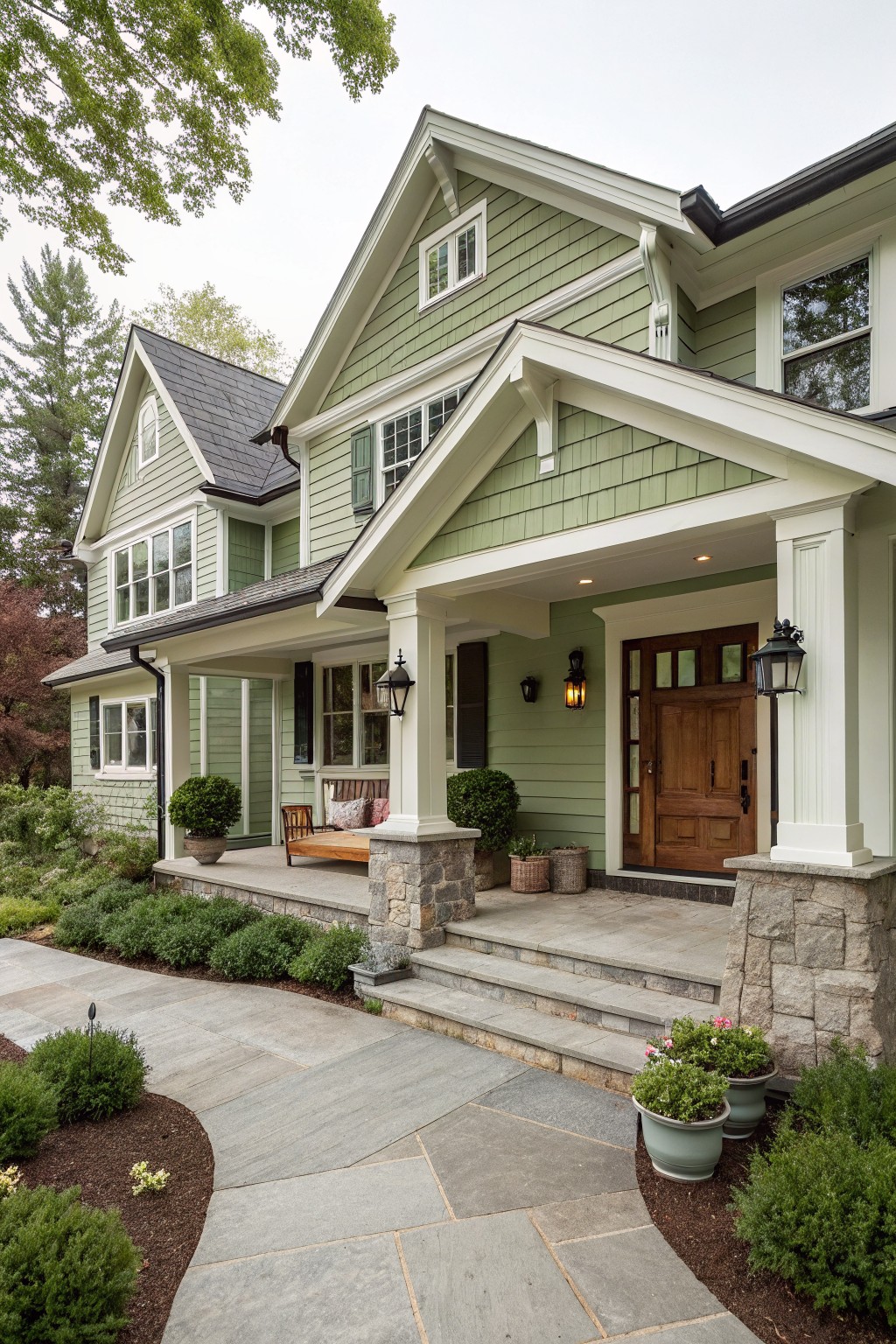
This soft sage green works well on craftsman homes because it sits between gray and green without leaning too far either way. It gives the house a calm look that still feels tied to the surrounding trees and garden. The color reads as a light sage with a cool undertone that keeps the whole exterior from feeling too heavy.
It pairs easily with white trim and stone foundations, though it can look flat if the lighting is very harsh. Many people try Sherwin Williams Clary Sage, Benjamin Moore Saybrook Sage, Behr Quietude, or Farrow & Ball Pigeon when they want something close.
Soft Sage Gray Siding
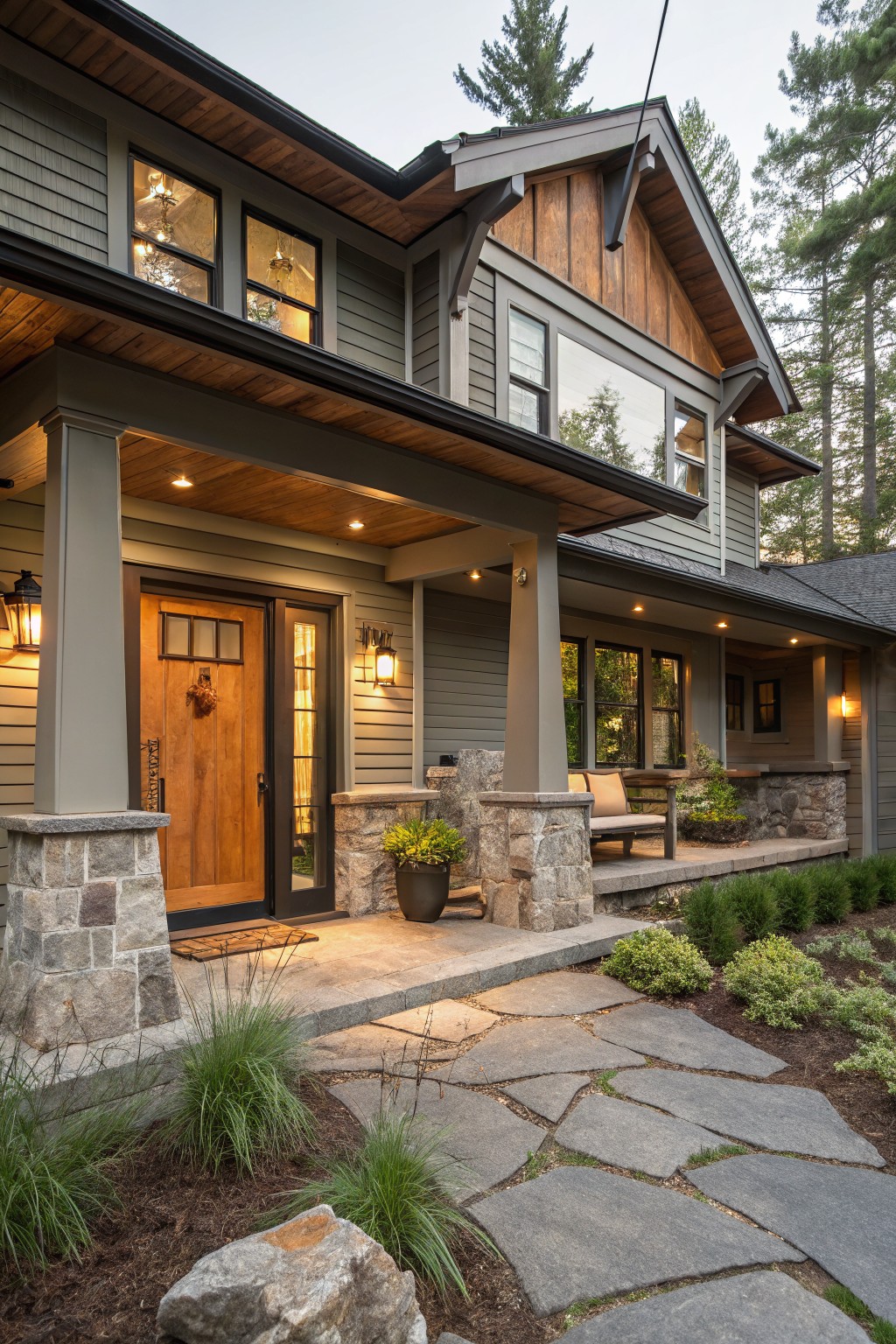
A muted sage gray works nicely on Craftsman siding. This color sits between gray and green without leaning too far in either direction. It looks closest to Sherwin Williams Evergreen Fog or Benjamin Moore Saybrook Sage, with Behr Mossy Shadow as another solid option. The tone stays calm and lets the wood and stone details show up clearly.
It carries a cool undertone that holds steady next to natural materials. This shade suits homes where the siding needs to blend rather than stand out. Pair it with warm wood trim or light stone to keep the look balanced.
Creamy white siding

This siding color is a warm off-white that sits right between true white and a very pale beige. It keeps the whole house feeling light and clean without looking stark against the stone foundation or the dark blue door. Many people reach for this kind of tone because it brightens the exterior while still letting the architectural details stand out.
The undertone leans slightly yellow, so it reads softer in morning light and stays friendly next to natural wood or gray stone. It works well on Craftsman homes that need a calm body color to balance stronger trim or roofing. Try it with warm white trim and a deep navy or charcoal door if you want the same quiet contrast shown here.
Dark Gray Siding
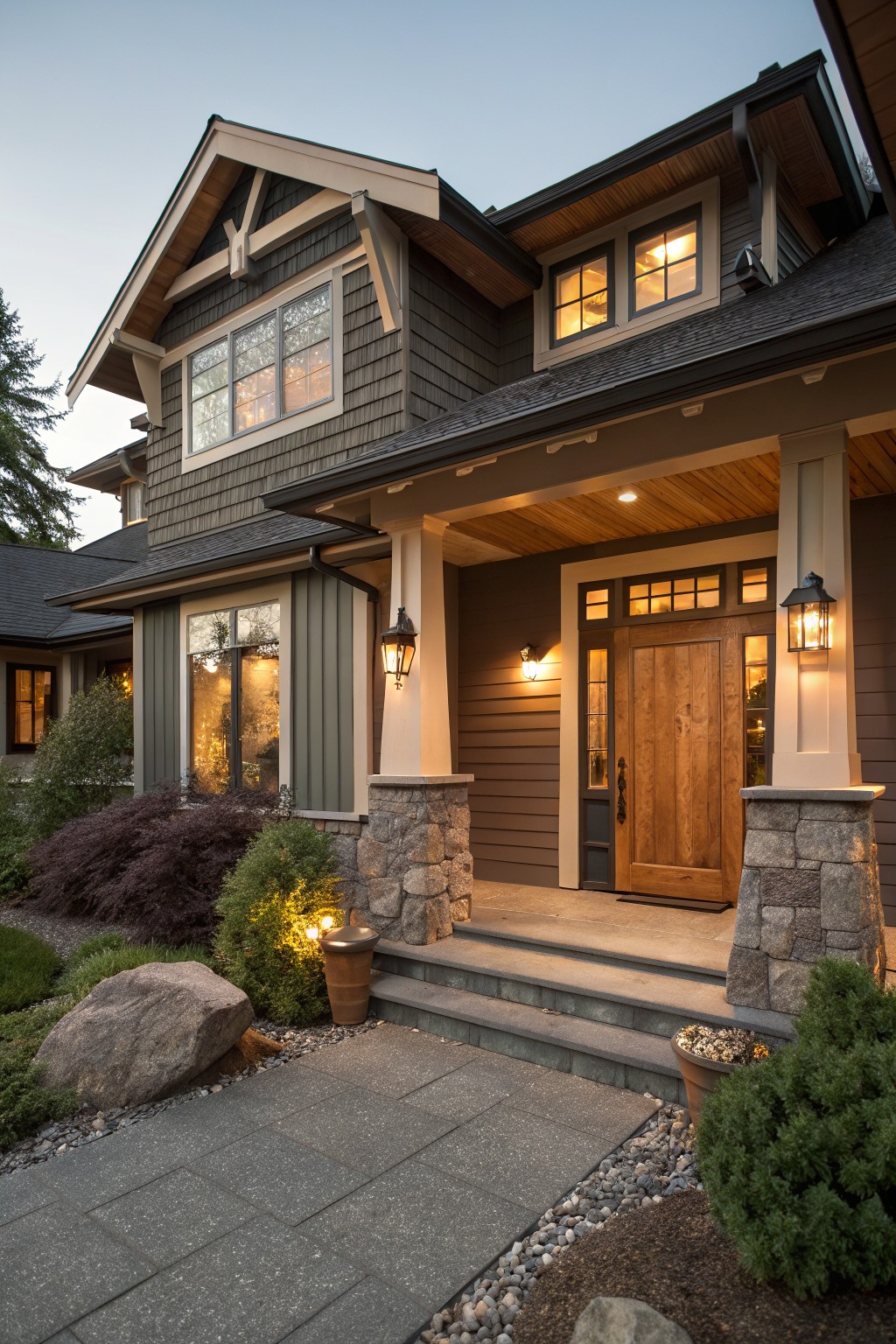
This dark gray siding gives the house a solid, grounded look that fits the craftsman style. It reads as a cool charcoal with enough depth to stand out without turning harsh next to the wood and stone.
The color works best when paired with lighter trim and natural wood doors. It can shift a bit cooler in shade, so testing a sample on the actual wall helps avoid surprises once the full exterior comes together. Popular matches include Sherwin Williams Peppercorn, Benjamin Moore Kendall Charcoal, Behr Black Fox, and Farrow & Ball Railings.
Warm Yellow Siding
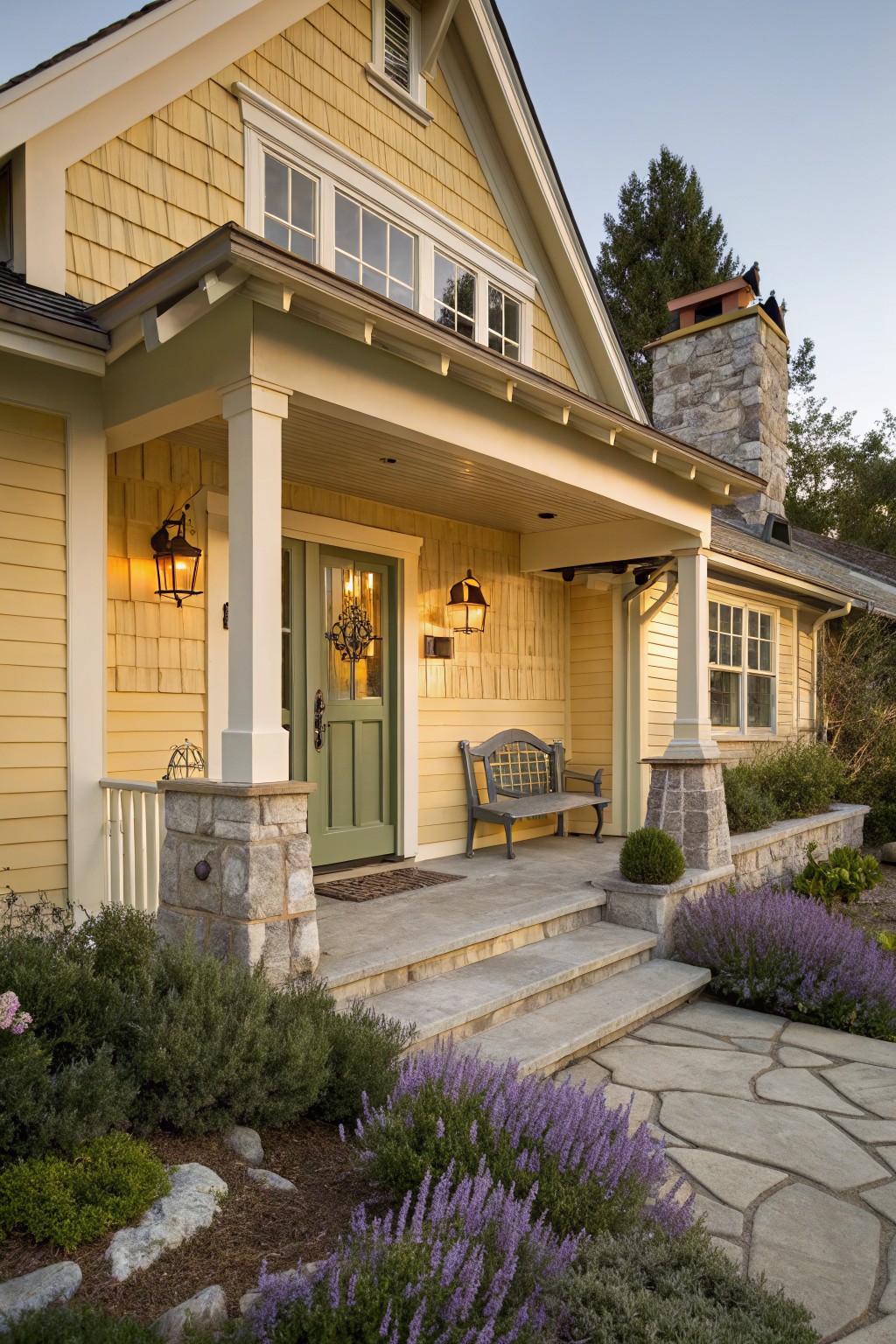
This Craftsman home uses a soft yellow on the siding. It is a warm golden yellow that feels friendly and a little old-fashioned without turning too bright or childish.
The color has a slight cream undertone that helps it sit well with stone and white trim. It works best on homes that already have natural textures around them, though it can look washed out if the light is very cool or gray.
Blue Gray Siding
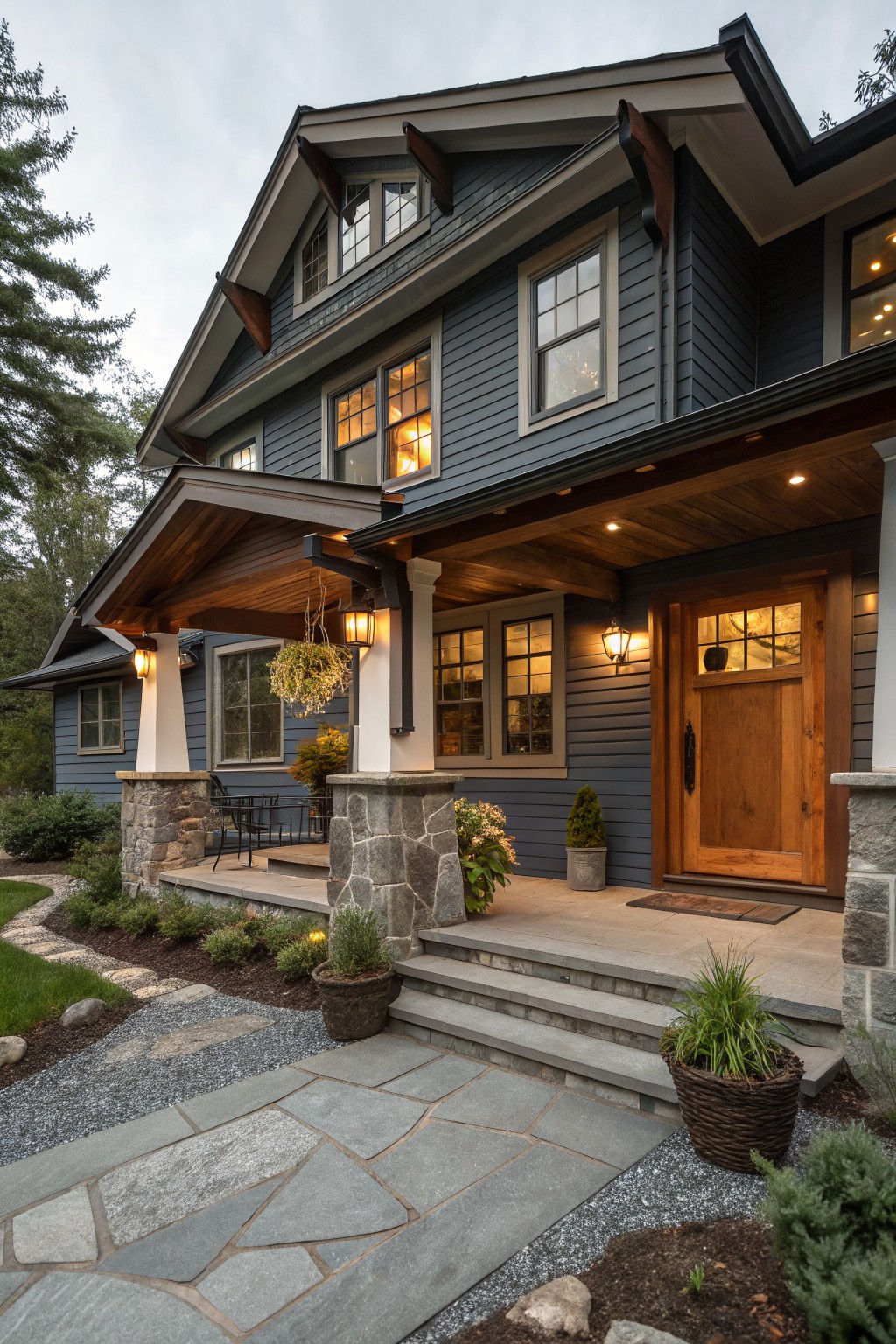
This blue gray siding gives the house a calm and steady look that fits the Craftsman style well. The color sits somewhere between gray and blue with a cool lean, and it holds up nicely against the wood beams and stone foundation.
It works best when the trim stays light and the door stays warm in tone. Watch how it shifts in different light since the cool base can lean a touch greener in shade.
Soft greige trim

This soft greige on the trim and gable ends gives the brick a cleaner look without making the house feel too stark. It sits in a warm neutral range that works with the red tones in the brick and keeps the whole exterior feeling balanced.
The color has a hint of green in its undertone, which helps it settle in with outdoor light and nearby greenery. It pairs well with stone bases and dark wood doors, though it can look a bit flat if the trim is too narrow or the contrast is too low.
Soft Green Siding
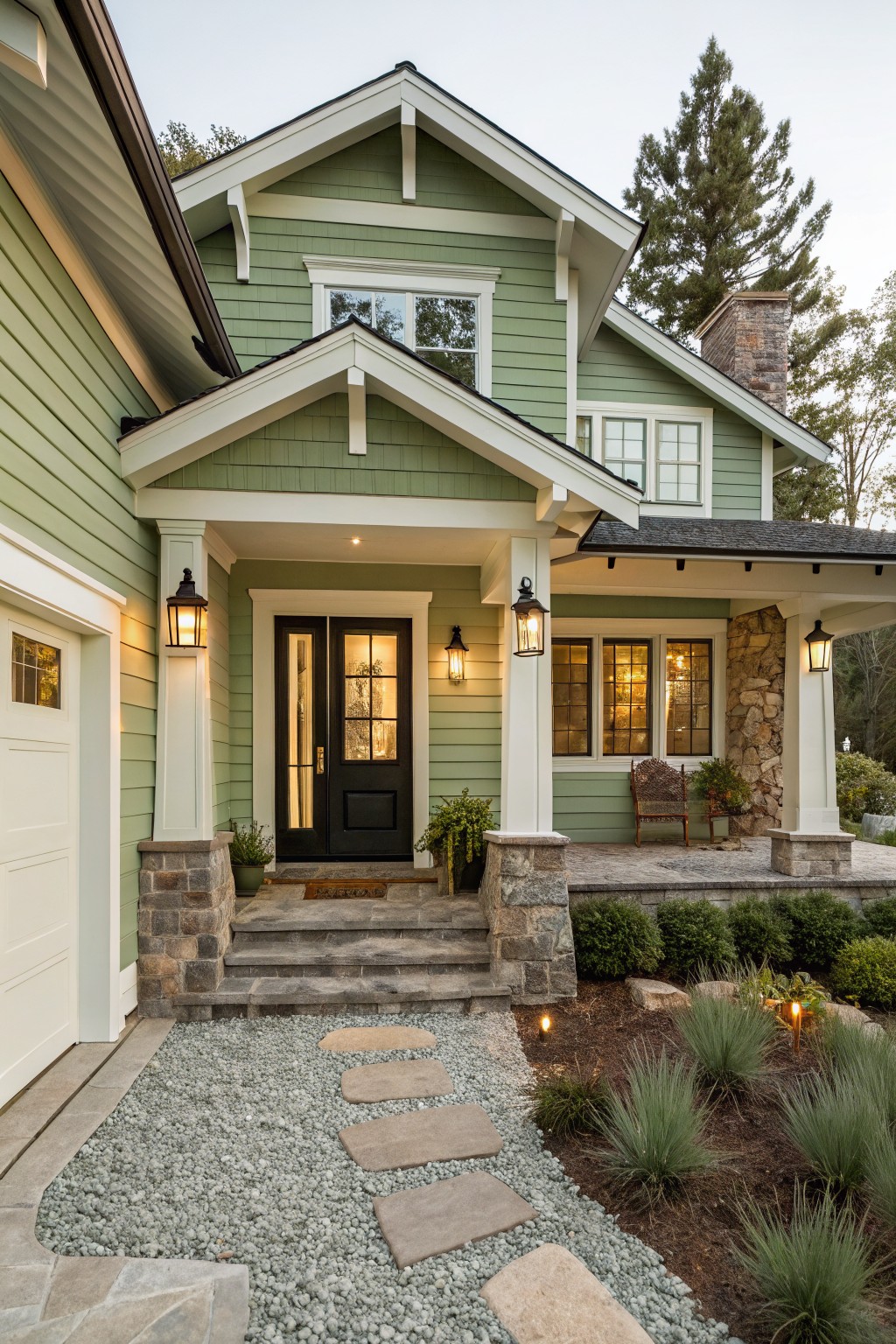
This house uses a soft sage green on the siding that sits between gray and green. It feels calm and works well on craftsman homes because it does not fight the architecture or the natural surroundings.
The color has a muted tone with just enough warmth to keep it from looking too cool next to white trim. It pairs easily with stone and wood accents, though it can shift a bit depending on the light and the roof color nearby.
Warm Brown Siding
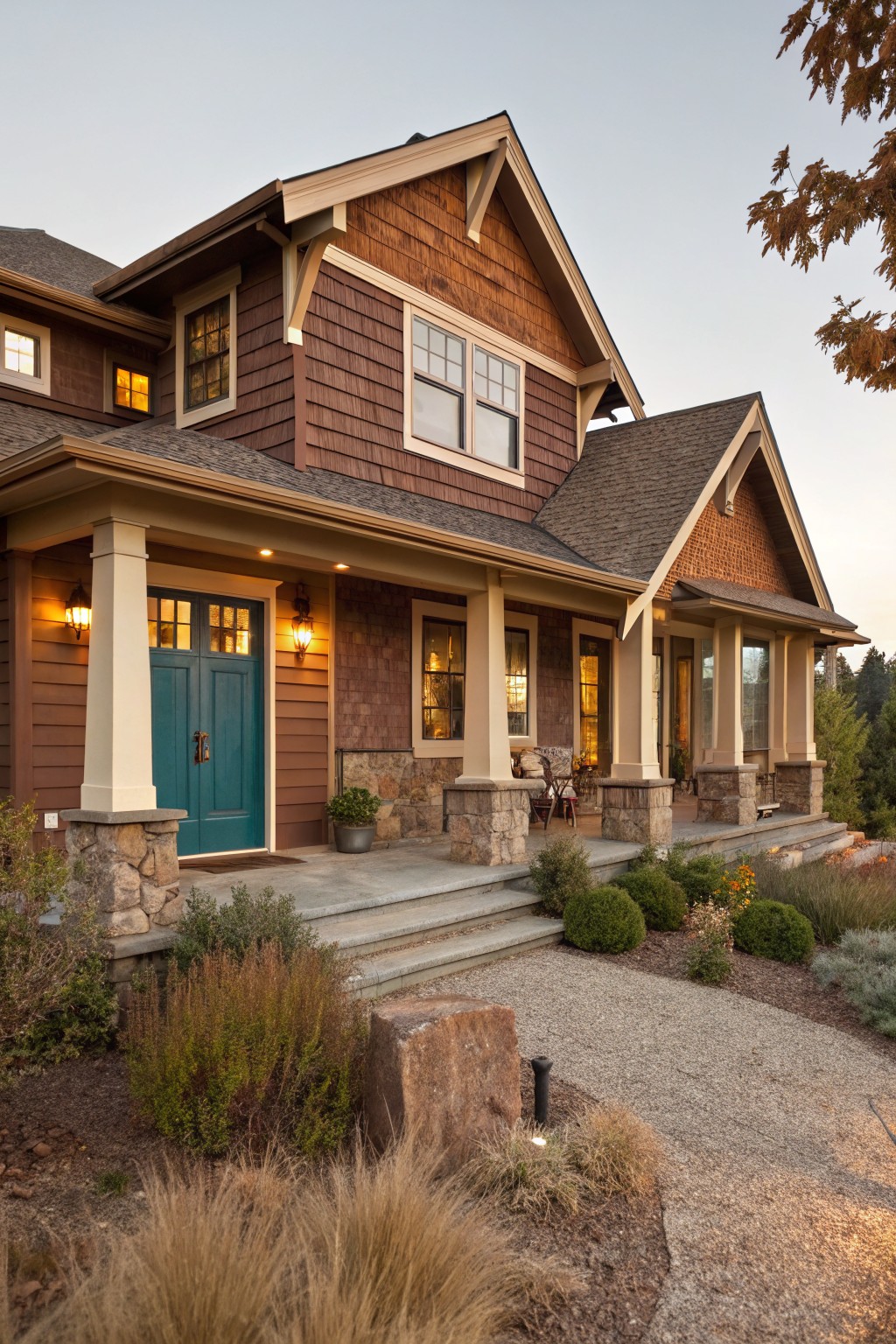
A warm brown siding gives craftsman homes a solid, natural feel. This color family sits somewhere between a soft taupe and a deeper earthy brown, and it reads closest to Sherwin Williams Redwood, Benjamin Moore Brownstone, Behr Saddle Brown, or Farrow & Ball London Stone.
The slight red undertone keeps it from looking flat next to stone and wood trim. It works best on shingled surfaces where the texture can add a bit of depth, though it can look heavy if the surrounding trim is too dark.
Frequently Asked Questions
Q: How do I pick a color for the front door without it clashing with the siding? A: Pick a door color that picks up a shade already in your siding or trim. Test a sample board right on the door in different lights. That way you see how it really plays with the rest of the house.
Q: Should the window trim match the eaves or stand out? A: Let the window trim contrast a bit with the eaves to highlight the windows. Choose a lighter or darker version of your main color. This draws attention to the architecture without going overboard.
Q: What if my Craftsman has a lot of natural wood already? A: Stick with simple paint colors so the wood details stand out. Two shades on the siding and trim will do the trick.