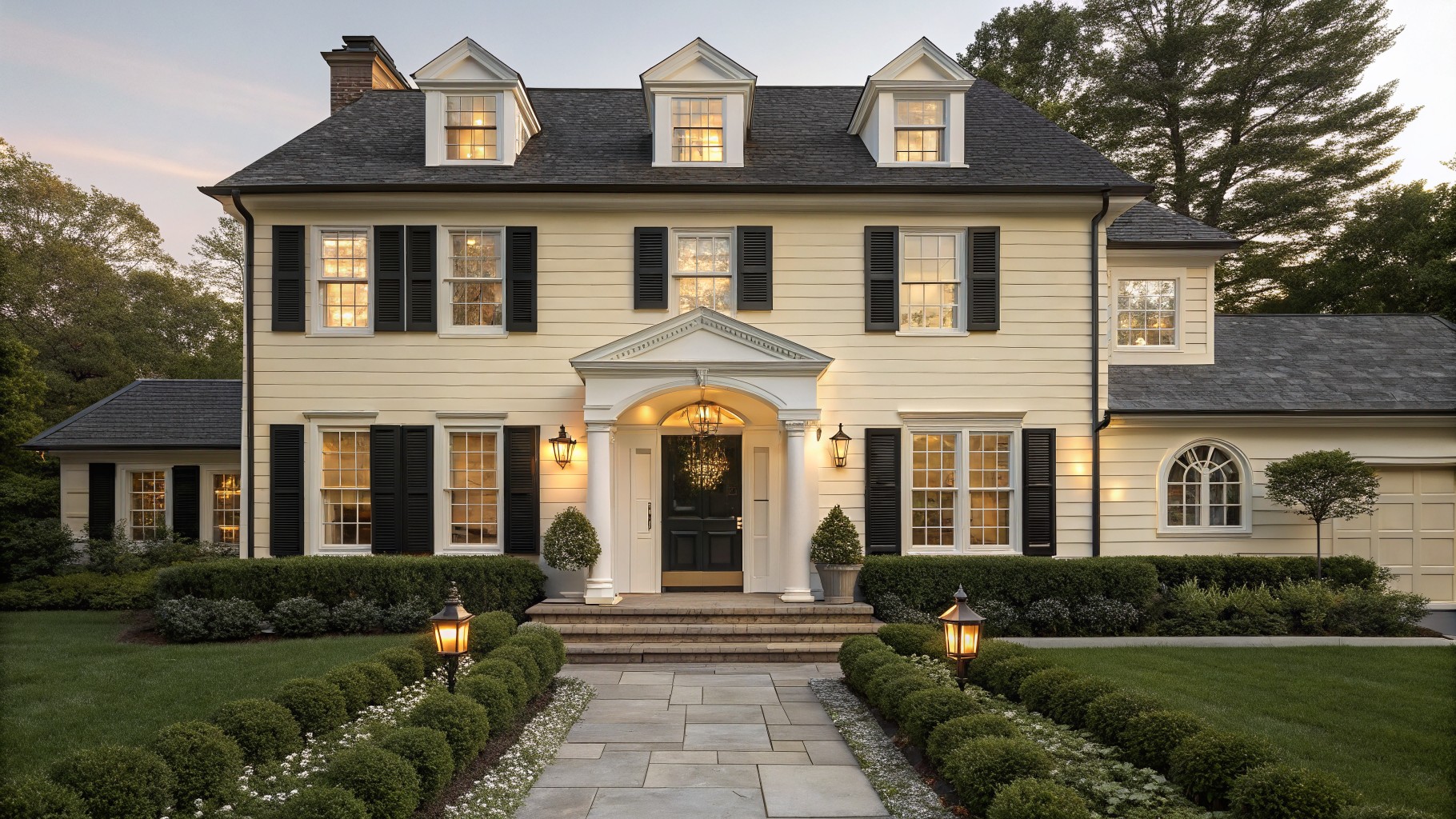
I often walk around my neighborhood and pay attention to which homes stand out because their paint colors work well with the surrounding materials like trim and landscaping.
The way sunlight hits an exterior wall can make a shade look warmer or cooler than it did on the paint chip, so I have learned to check colors at different times of day.
Roofing and any existing brick or stone also influence the final effect more than most people expect when they first pick a palette.
I usually put up a couple of large test patches on the house itself before making a final choice.
Real light changes everything.
Soft Yellow Siding
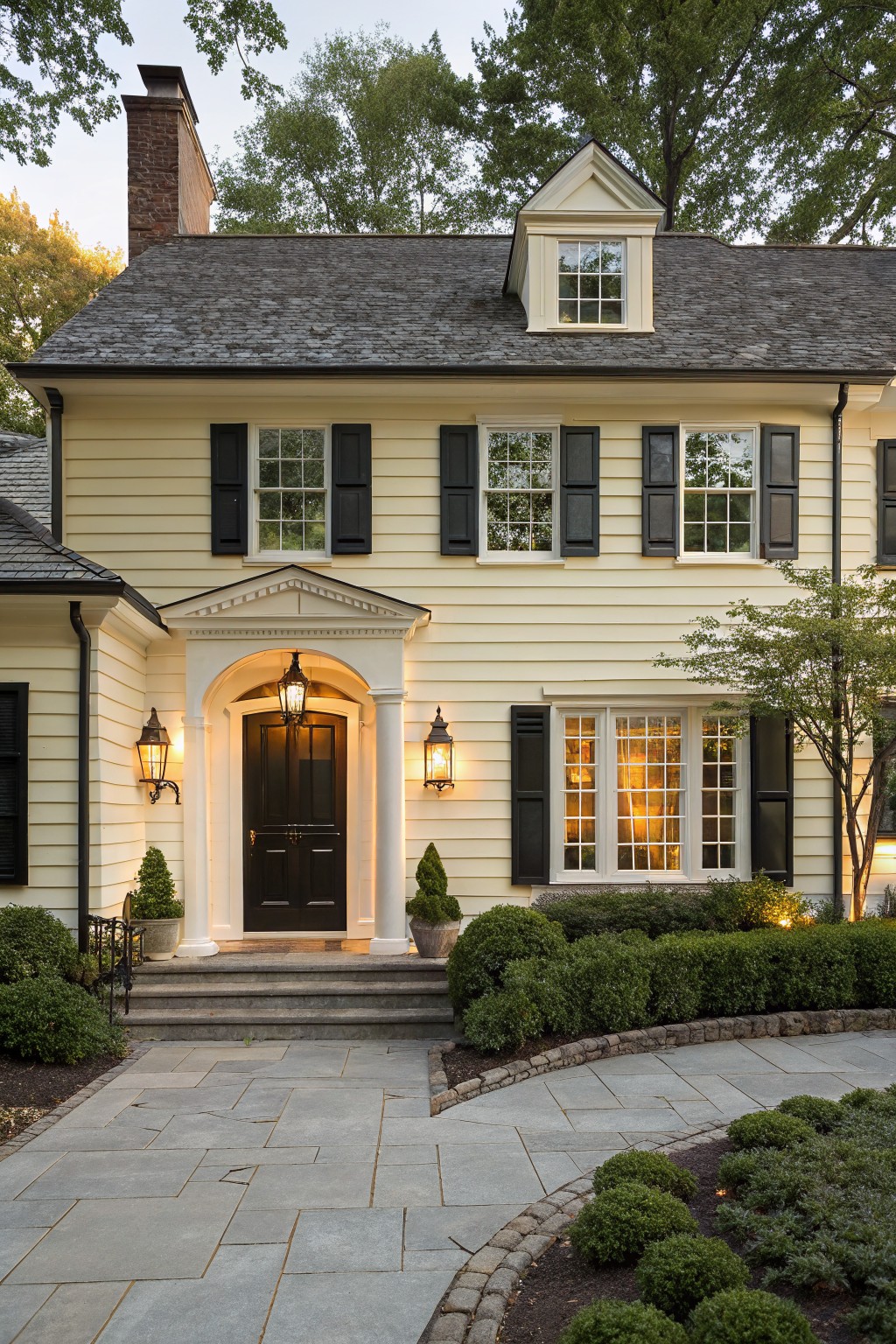
This warm cream siding has a soft yellow tone that feels gentle and a little sunny on the house. It sits in that pale yellow-cream family and gives the exterior a classic look without coming across too bright or bold.
The color has warm undertones that sit nicely against dark trim and stone. It works best on traditional homes where you want something friendly but still quiet. Sherwin Williams Biscuit or Benjamin Moore Linen White would be close matches if you are looking for something similar.
Soft sage green siding
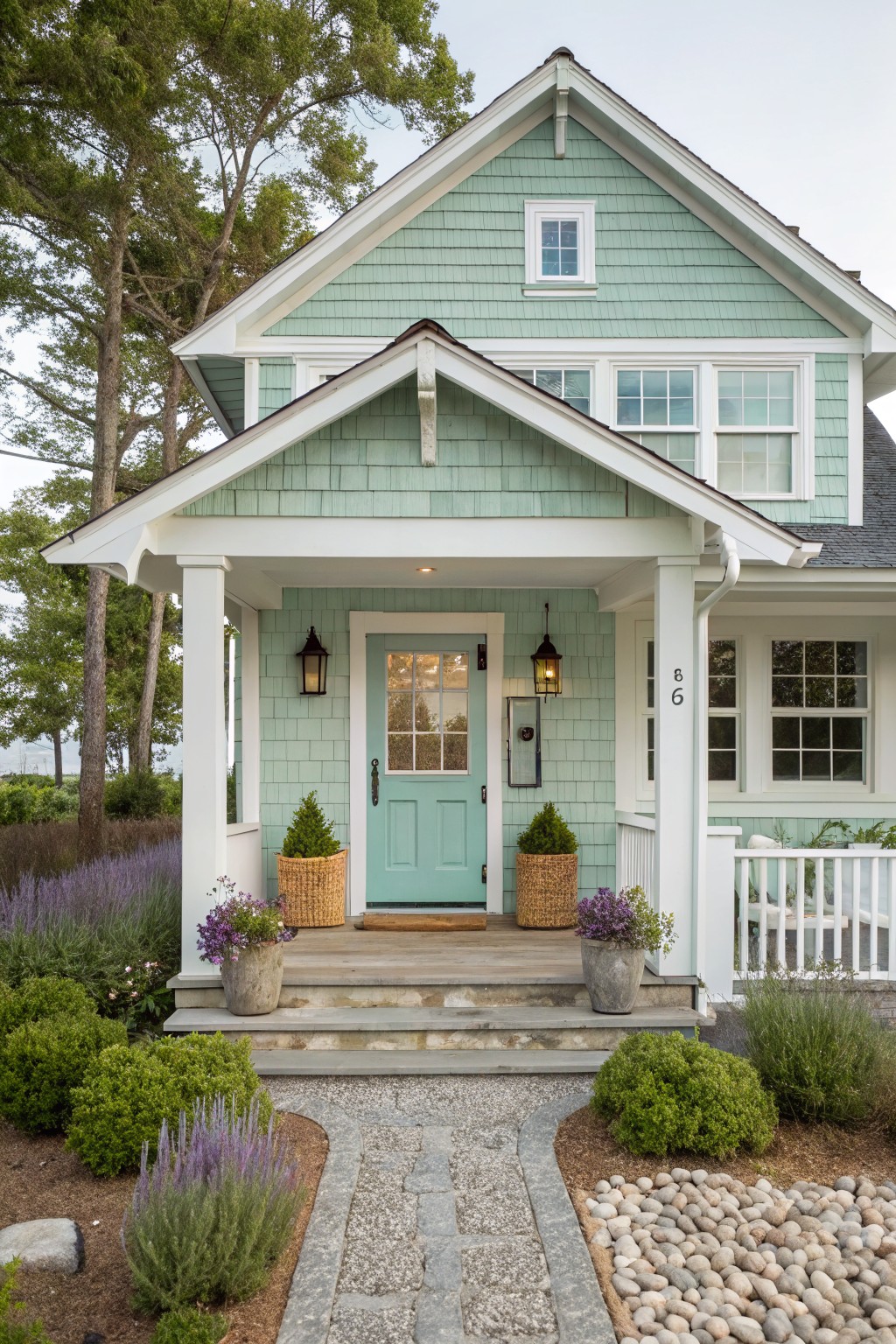
This soft sage green on the siding brings a calm, fresh look to the whole house. It sits in that gentle green family that feels coastal but still works in many neighborhoods.
The color has a slight blue undertone that keeps it from looking too yellow in daylight. It pairs best with crisp white trim and simple wood accents, though it can start to feel washed out if the roof or masonry runs too dark.
Dark Charcoal Siding
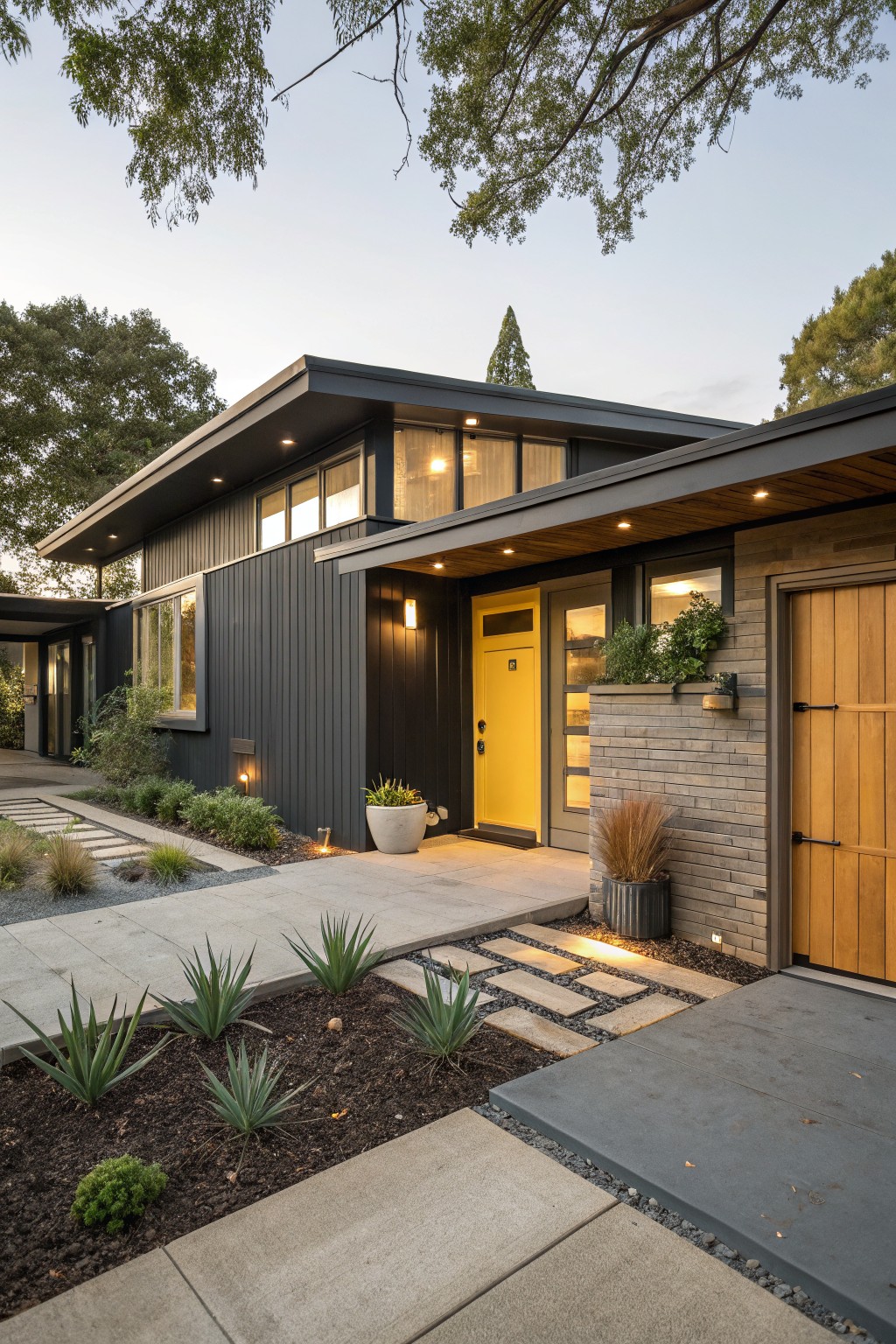
This dark charcoal gray on the siding gives the house a solid, grounded look without feeling heavy. It reads as a deep neutral that works well on modern homes and pairs easily with wood tones and lighter concrete areas around the entry. Colors like Sherwin Williams Iron Ore, Benjamin Moore Kendall Charcoal, or Behr Black Fox come close to this shade.
It has a cool lean that keeps the overall feel crisp rather than muddy. The color holds up best on houses with clean lines and some natural wood or stone nearby, though it can look flat if the lighting stays too dim all day.
Warm beige siding
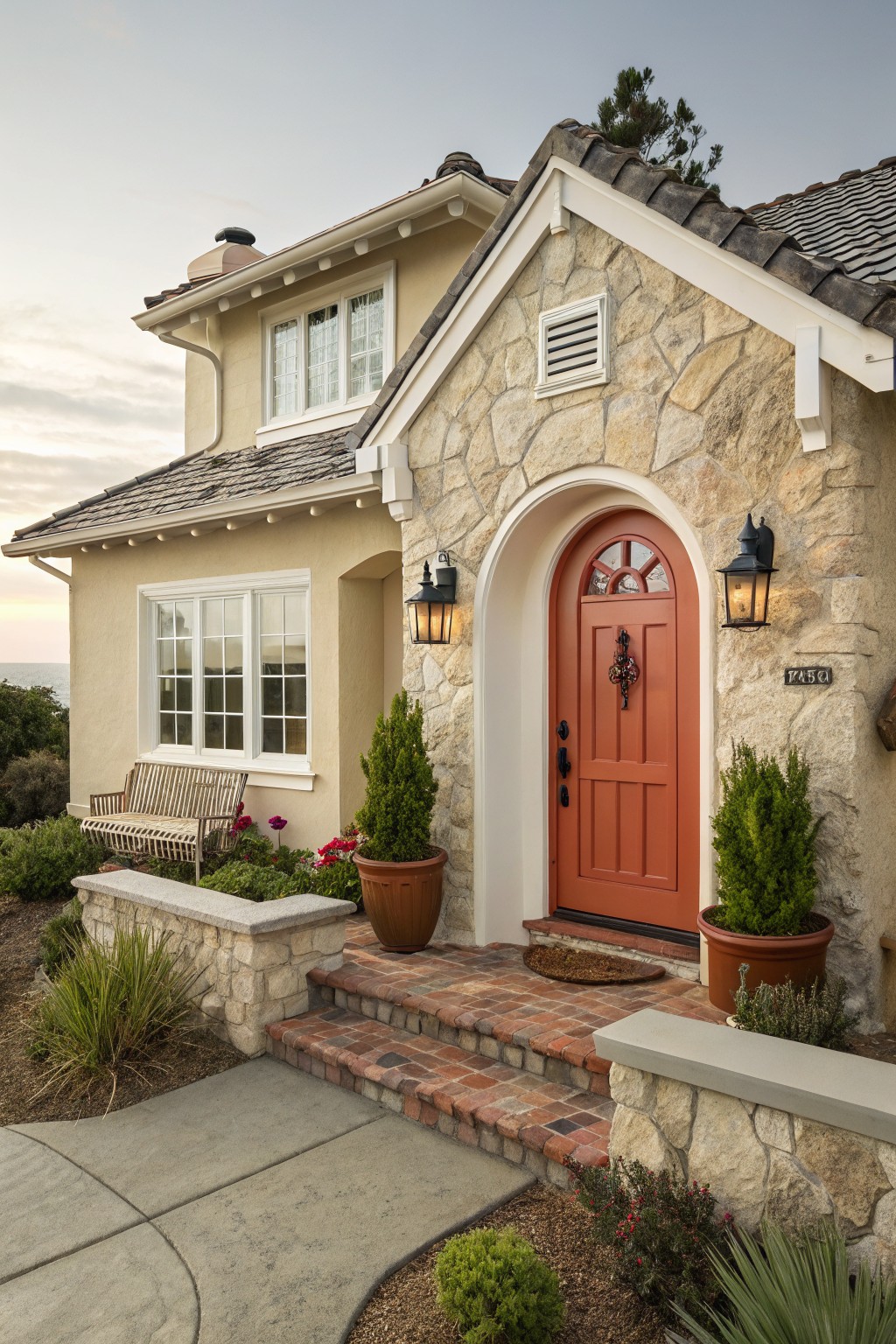
This warm beige paint gives the house a soft, grounded look that feels natural with the surrounding stone. It is a light neutral with some warmth that helps the whole front stay calm and easy to look at.
The color has a mild yellow undertone that reads nicely against the darker roof. It works best on homes with stone or brick details and pairs well with simple white trim or a darker door color.
Warm Terracotta Stucco
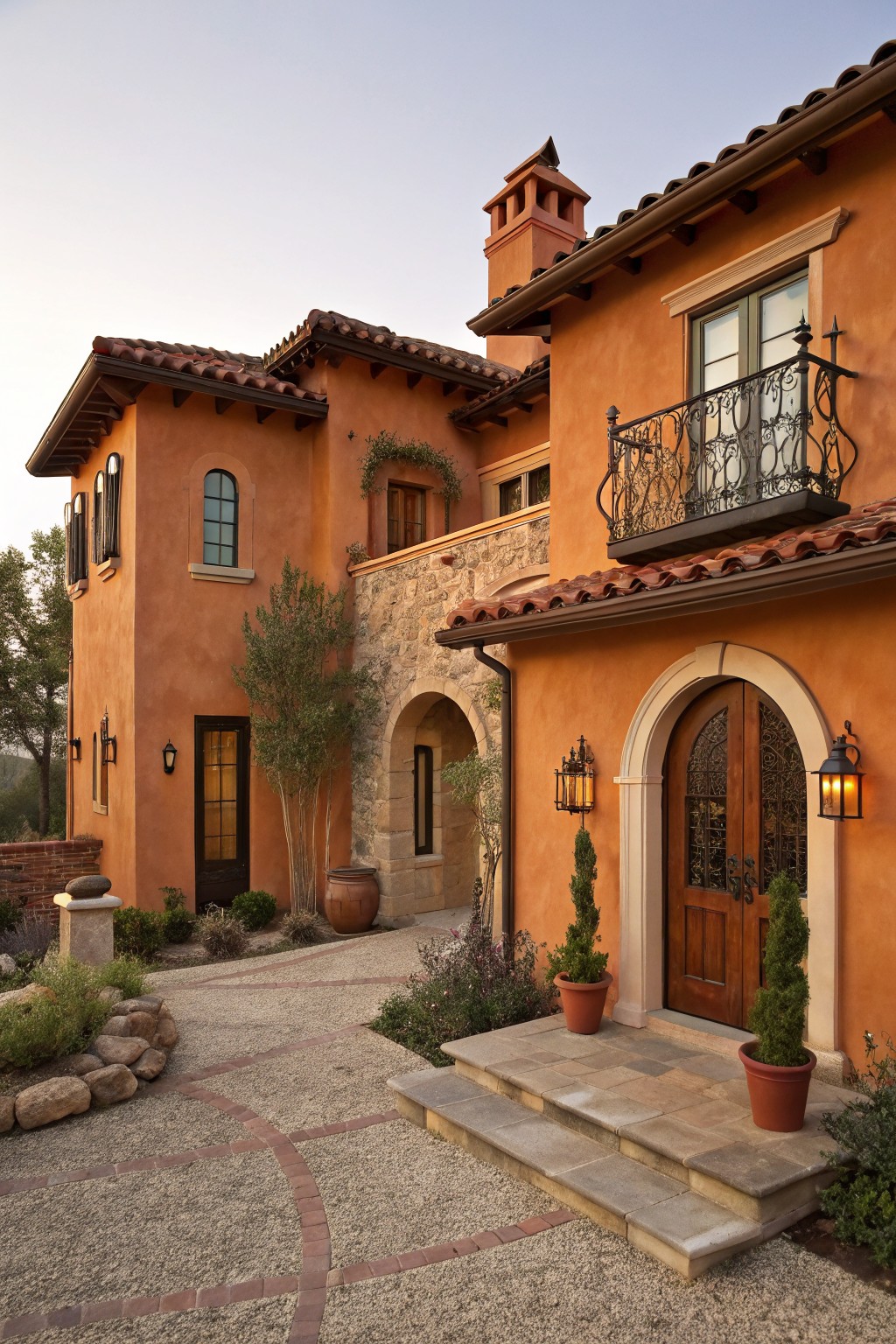
This house uses a warm terracotta on the main walls. It is a soft orange with earthy undertones that feels grounded and easy to live with on the outside of a home.
The color holds up well against stone and a darker roof. It suits Mediterranean or Spanish style homes best and pairs simply with natural wood doors or black metal accents. In bright sun it can lean a bit peachier than expected.
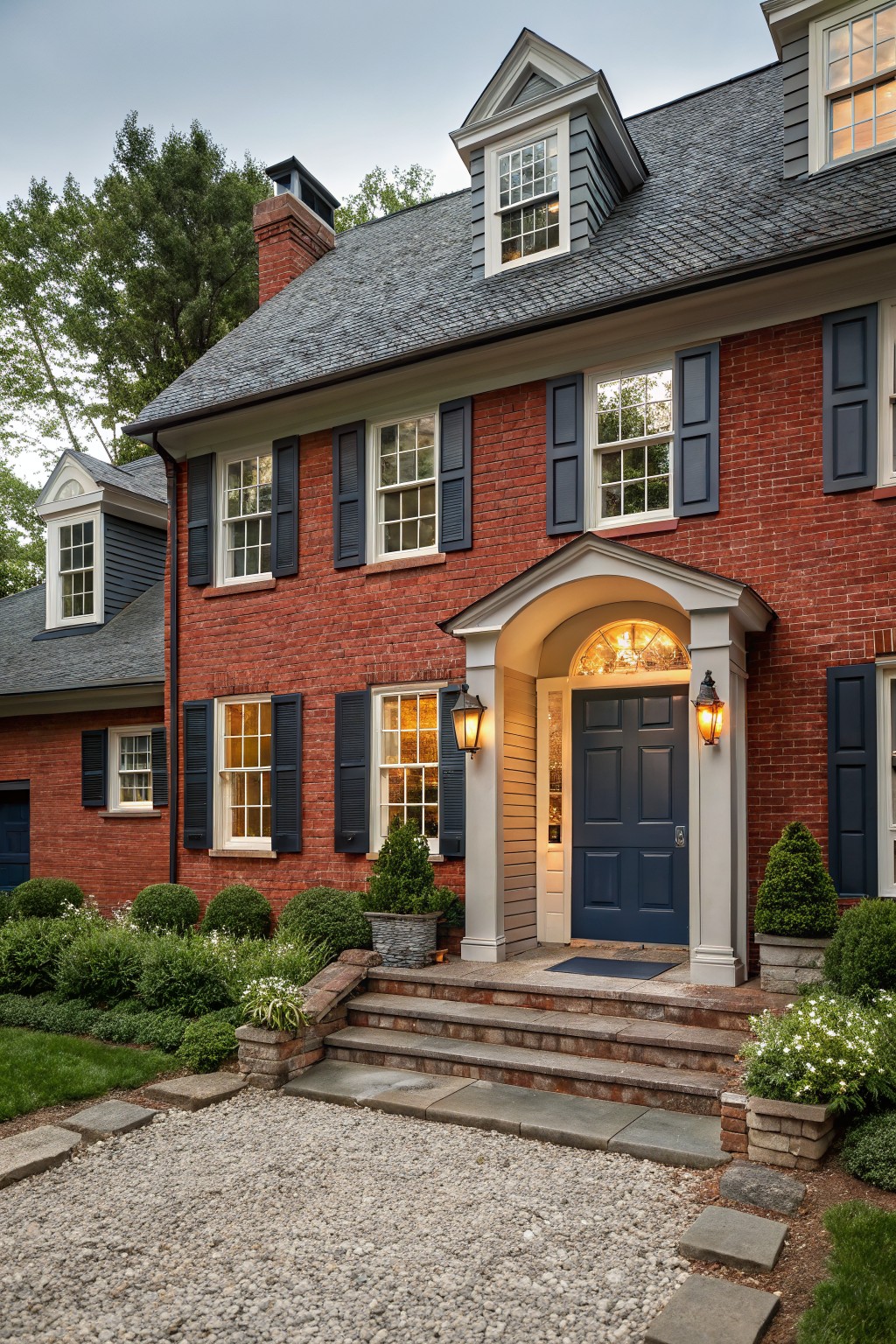
This deep navy blue on the door and shutters gives a house a solid traditional look. It stands out against red brick without feeling too bold or trendy.
The color has a cool undertone that keeps the whole front feeling balanced. It works especially well with white trim and pairs easily with most roof colors and masonry.
Creamy Yellow Cottage Siding

A soft yellow like this one gives the house a gentle, welcoming look. It is a warm, light shade that brightens the exterior without feeling too bold or bright.
This color works best on older homes and pairs well with white trim. It can lean slightly creamy in some lights, so testing a sample on the wall helps avoid surprises next to stone or wood details.
Warm Beige Timber Frame Exterior

This warm beige covers the main exterior walls and gives the house a soft, settled look. It sits nicely between the dark timber framing and the stone base without feeling too stark or too pale.
The color has a gentle warmth that helps the wood tones read richer. It works best on traditional homes and pairs easily with natural stone, dark trim, or plenty of greenery.
Soft Green Siding

This muted sage green on the siding is a good choice when you want color that feels calm rather than loud. It reads as a soft gray-green that sits comfortably next to stone and wood without competing.
The tone has a slight cool lean, so it pairs well with warm white trim and a darker roof. It works on many traditional homes but can look washed out if the light is very harsh or if there is too much bright landscaping right against it.
Dark Gray Siding

This dark gray siding gives the house a solid, grounded look without feeling too heavy. It sits in that in-between space of gray and taupe, which helps it blend with coastal grass and sand while still standing out against lighter trim. Colors like Sherwin Williams Iron Ore, Benjamin Moore Kendall Charcoal, or Behr Night Watch all read very close to what is shown here.
The tone stays fairly cool but picks up a bit of warmth in late-day light. It pairs best with bright white trim and simple wood accents on the porch, though it can start to feel flat if the surrounding landscaping stays too sparse.
Warm Greige Siding

A warm greige makes a good choice for house siding when you want something soft but not too plain. This color sits right between beige and gray and gives the exterior a calm neutral base that works on many styles of homes.
It has a light warm undertone that keeps the house from looking too cool next to white trim. Try it with charcoal roofing or a deep red door like the one shown here. Sherwin Williams Accessible Beige, Benjamin Moore Edgecomb Gray, Behr Creamy Mushroom, and Farrow & Ball Elephant’s Breath all sit close to this shade.
Soft Blue Gray Siding
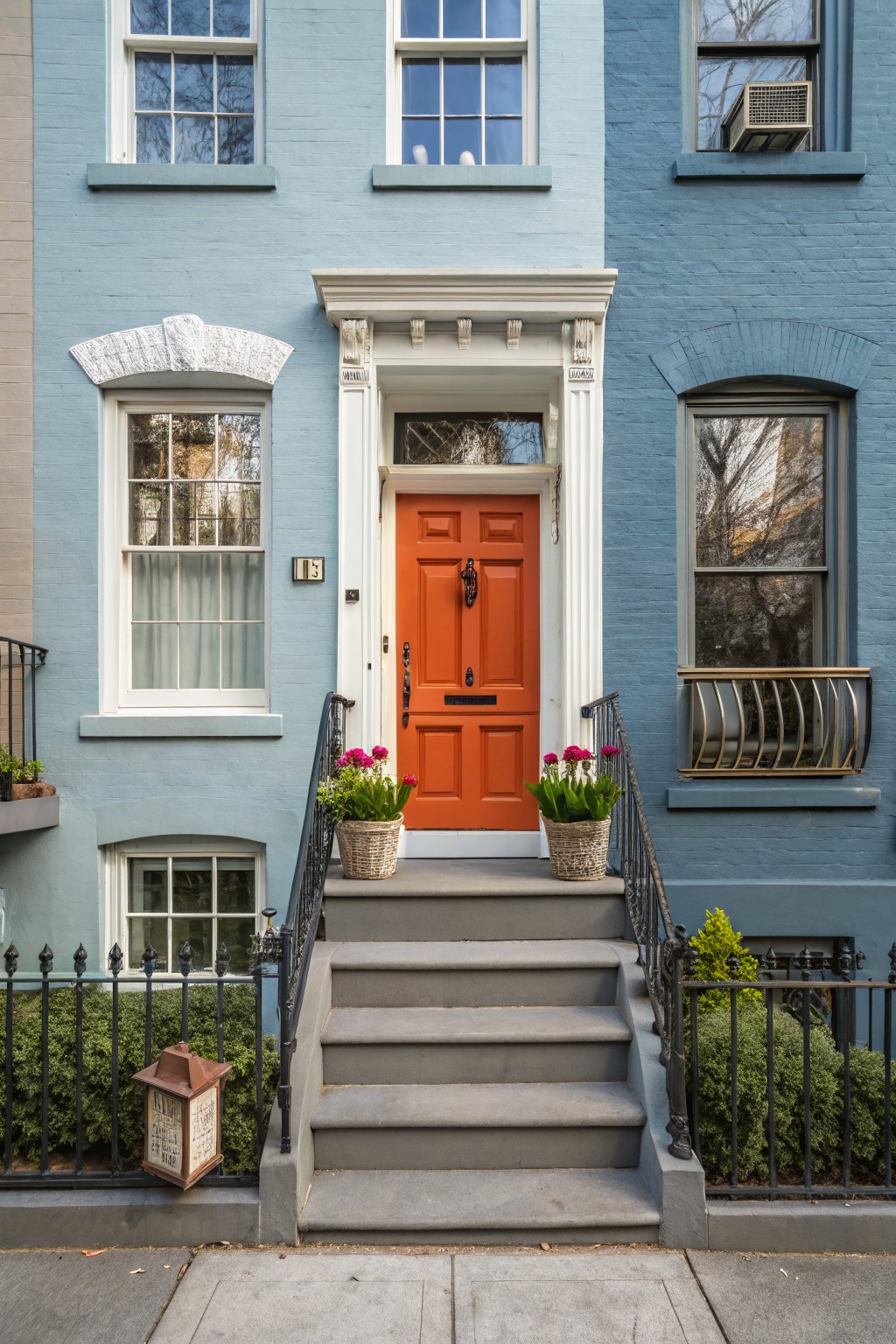
This light blue gray on the siding gives a calm look that feels easy on the eyes. It sits right between blue and gray so it never feels too bright or too flat on an older home.
The color has cool undertones that hold up well next to white trim. It works best on simple exteriors where you want a little color without making the house stand out too much. Sherwin Williams Rainwashed, Benjamin Moore Palladian Blue, Behr Silver Blue, and Farrow & Ball Light Blue all sit close to this shade.
Warm Beige Stone House Siding

A warm beige works well on this house because it sits in a soft neutral range that feels natural next to stone and wood. The color family leans slightly golden rather than cool gray, which keeps the exterior from looking flat in daylight.
It pairs best with dark trim and roofing so the siding does not wash out. Watch the undertone on your own home though, since warm beige can shift toward yellow or pink depending on the light and nearby materials. Likely matches include Sherwin Williams Accessible Beige, Benjamin Moore Grant Beige, Behr Almond Wisp, and Farrow & Ball Skimming Stone.
Creamy Off-White Siding

This house uses a warm off-white on the siding. It reads as a soft cream rather than a bright white, which keeps the whole exterior feeling gentle and lived-in.
The color has a light yellow undertone that sits nicely next to green trim. It works best on older homes and pairs well with natural wood doors or stone paths. Good matches include Sherwin Williams Alabaster, Benjamin Moore Cloud White, Behr Creamy, and Farrow & Ball Pointing.
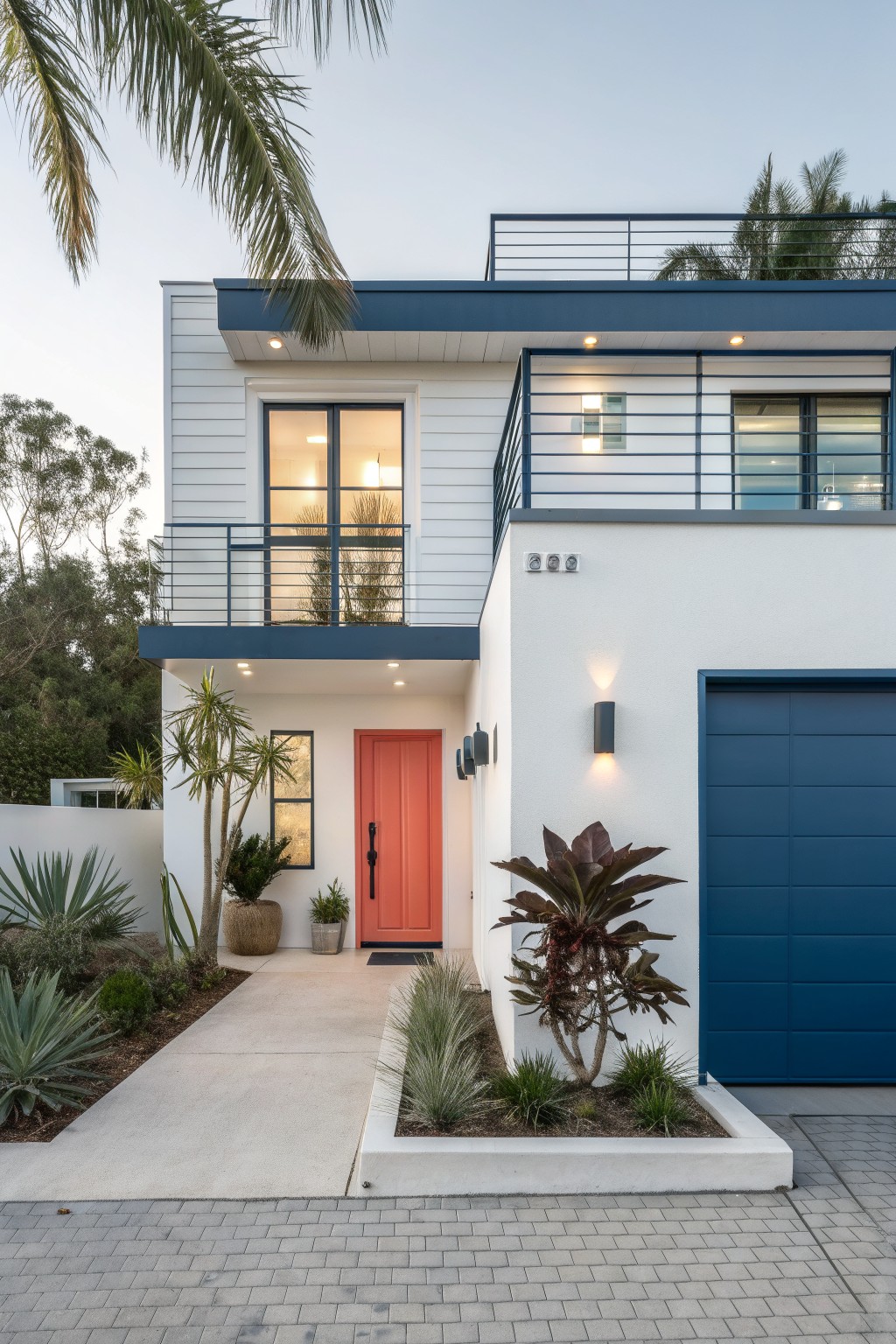
This deep navy blue shows up on the garage door and roofline accents. It is a cool, saturated navy that stands out nicely against the white siding and gives the whole front a simple modern feel.
It has a blue undertone that stays crisp in daylight and works best on flat surfaces like garage doors or trim bands. Pair it with bright white walls and keep other colors minimal so the navy stays the main feature.
Warm Beige Stucco Walls
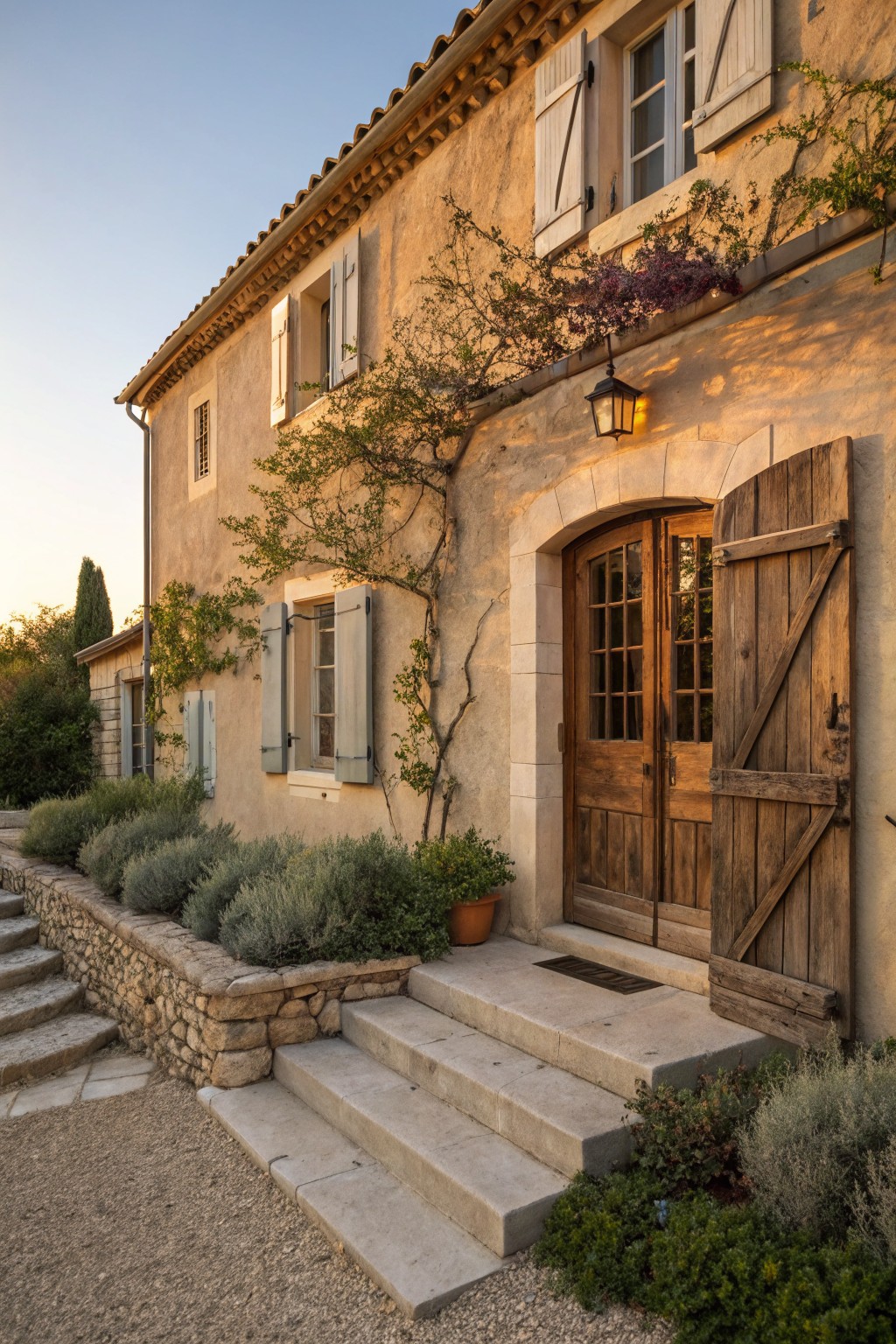
This warm beige stucco has a soft earthy tone that feels natural on an exterior. It sits right in the middle of tan and greige, giving the house a calm, lived-in look without standing out too much.
The color works best on homes with wood accents or stone details because it keeps those materials looking balanced. It would suit a range of styles from Mediterranean to simple farmhouse. Good matches include Sherwin Williams Accessible Beige, Benjamin Moore Manchester Tan, Behr Toasted Barley, and Farrow & Ball Joa’s White.
Soft Green Front Door
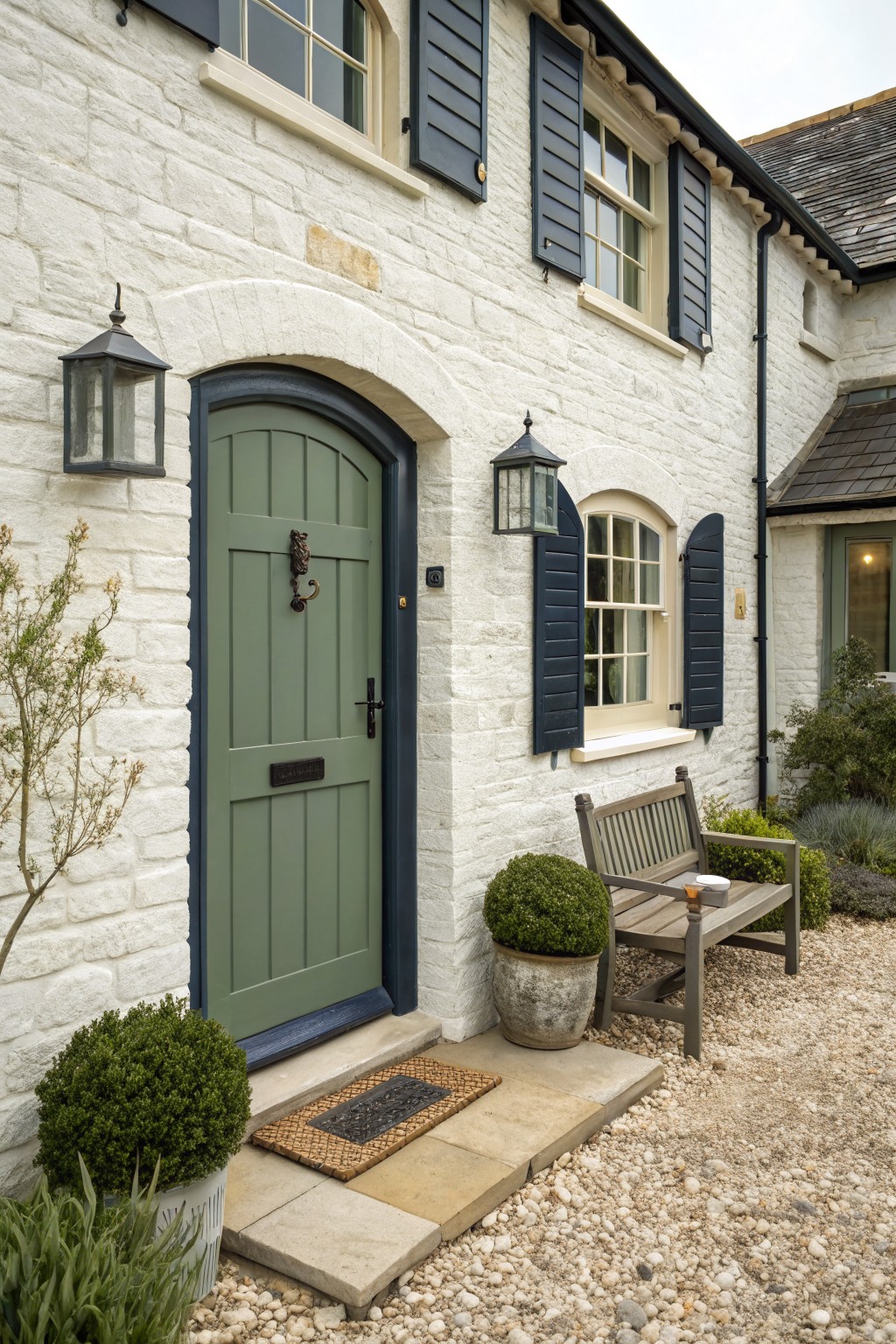
A muted sage green makes a nice choice for a front door on a light stone house. This color sits in that middle range between green and gray, so it feels calm rather than bold and holds up well against bright masonry.
It has cool undertones that keep it from turning yellow in direct sun. Pair it with warm white trim or dark shutters, and it works on both older cottages and simpler homes where you want the door to stand out without fighting the stone.
Barn Red Siding
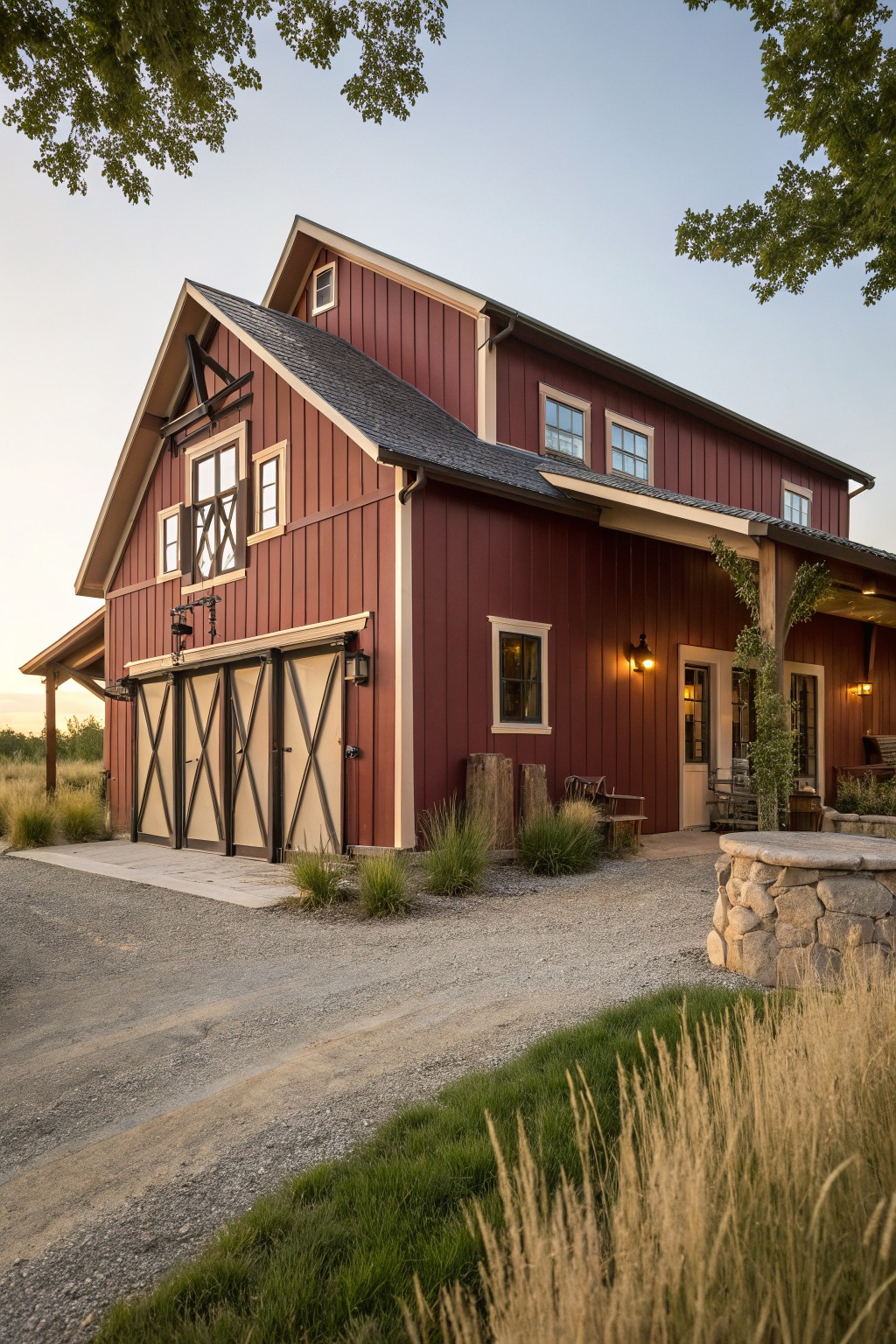
This barn red siding gives the house a solid, traditional look without feeling too bright. It falls into a warm red family with some brown in the undertone, which helps it blend with natural materials around the property. Colors like this often read best on larger homes where the scale can handle the depth. Sherwin Williams Red Barn, Benjamin Moore Heritage Red, and Behr Moroccan Red all sit close to this shade.
The red holds up nicely against lighter trim and stone bases, though it can look heavier if the roof is very dark. It suits older style homes or farmhouse builds where you want something with a bit of history. Pairing it with warm whites or soft grays on the trim keeps the whole thing balanced.
Warm beige exterior walls
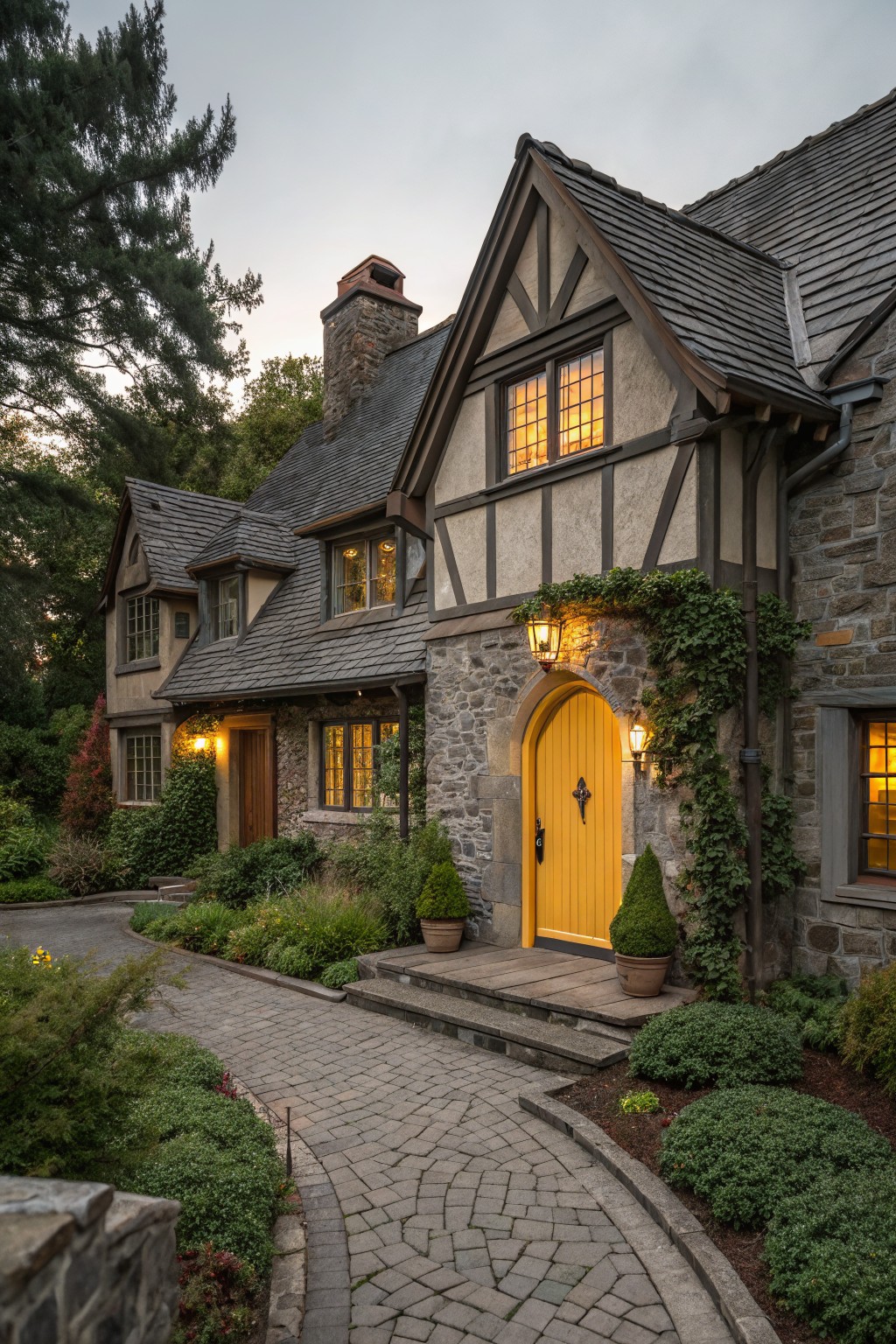
A warm beige like this works well on older homes because it feels soft but still grounded. It sits nicely next to stone and dark timber without looking too stark or too plain. Colors in this range often read a little lighter outside than they do on a paint chip, so it helps to test a larger sample on the actual wall.
This shade has a gentle yellow undertone that keeps it from turning cool or flat next to gray stone. It pairs easily with natural wood doors, dark trim, and simple landscaping. Watch how it shifts in full sun versus shade, since the warmth can look stronger in bright light.
Soft Blue Gray Traditional Siding
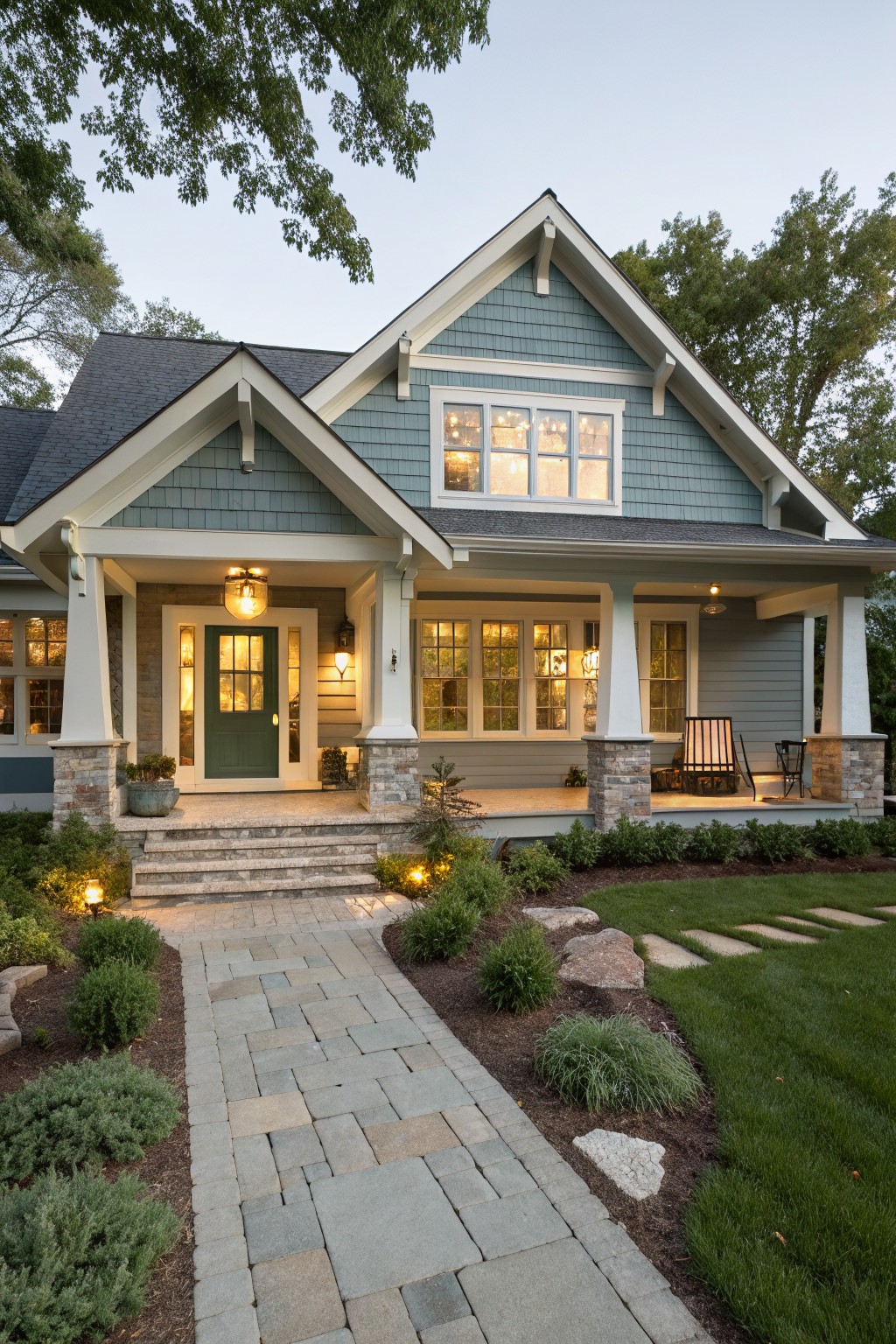
This soft blue gray siding gives the house a calm look without feeling cold. It sits right in that middle ground between blue and green, which makes it easy to live with on the outside of a home.
The color has a slight cool undertone that reads clean next to white trim. It works especially well on traditional styles and pairs nicely with stone or wood accents. Just watch how it shifts in different light before you commit.
Frequently Asked Questions
Q: My house has vinyl siding. Which colors hold up best without showing wear?
A: Go for lighter shades that reflect heat and hide minor scuffs. Dark colors can fade faster in direct sun. Always clean the surface well before you start painting.
Q: How many colors should I use on the whole exterior?
A: Stick to two or three at most. One main body color plus trim and accent keeps things simple. Too many options start to clash from the curb.
Q: What about painting just the front door for quick impact?
A: A bright door color draws the eye right away. Pick one that contrasts with your main house shade for an easy update.