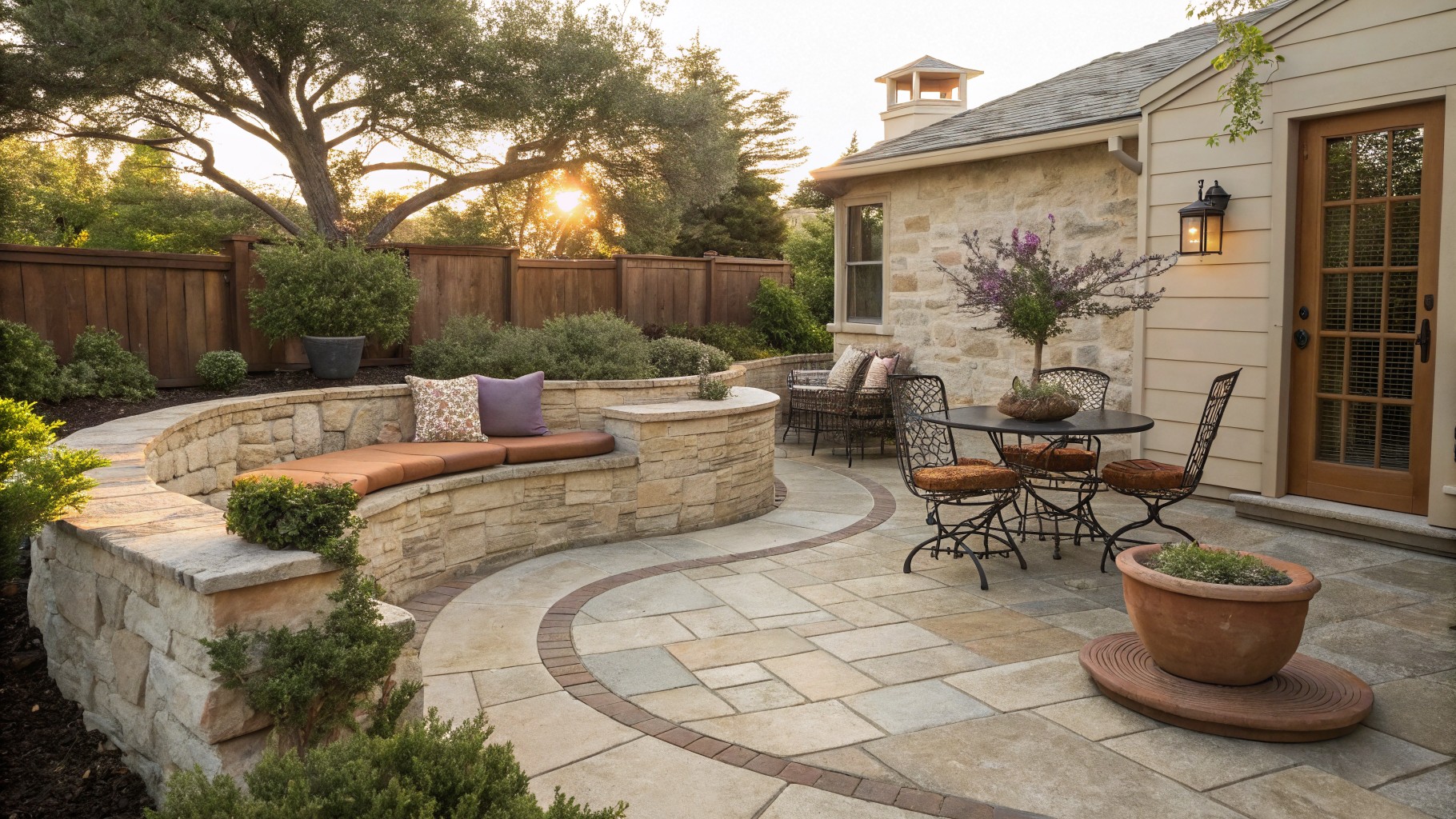
I’ve noticed in so many backyards that stone paths pull everything together right away by guiding where you naturally want to walk. They work best when they follow the yard’s contours instead of forcing straight lines that feel out of place over time. In one project I watched unfold, simple stone edging let the plantings spill over just enough to hide any seams. Stone lasts. These setups remind me to prioritize low walls or steps that frame views and create usable pockets without cluttering the open areas.
Built-In Curved Stone Bench Seating
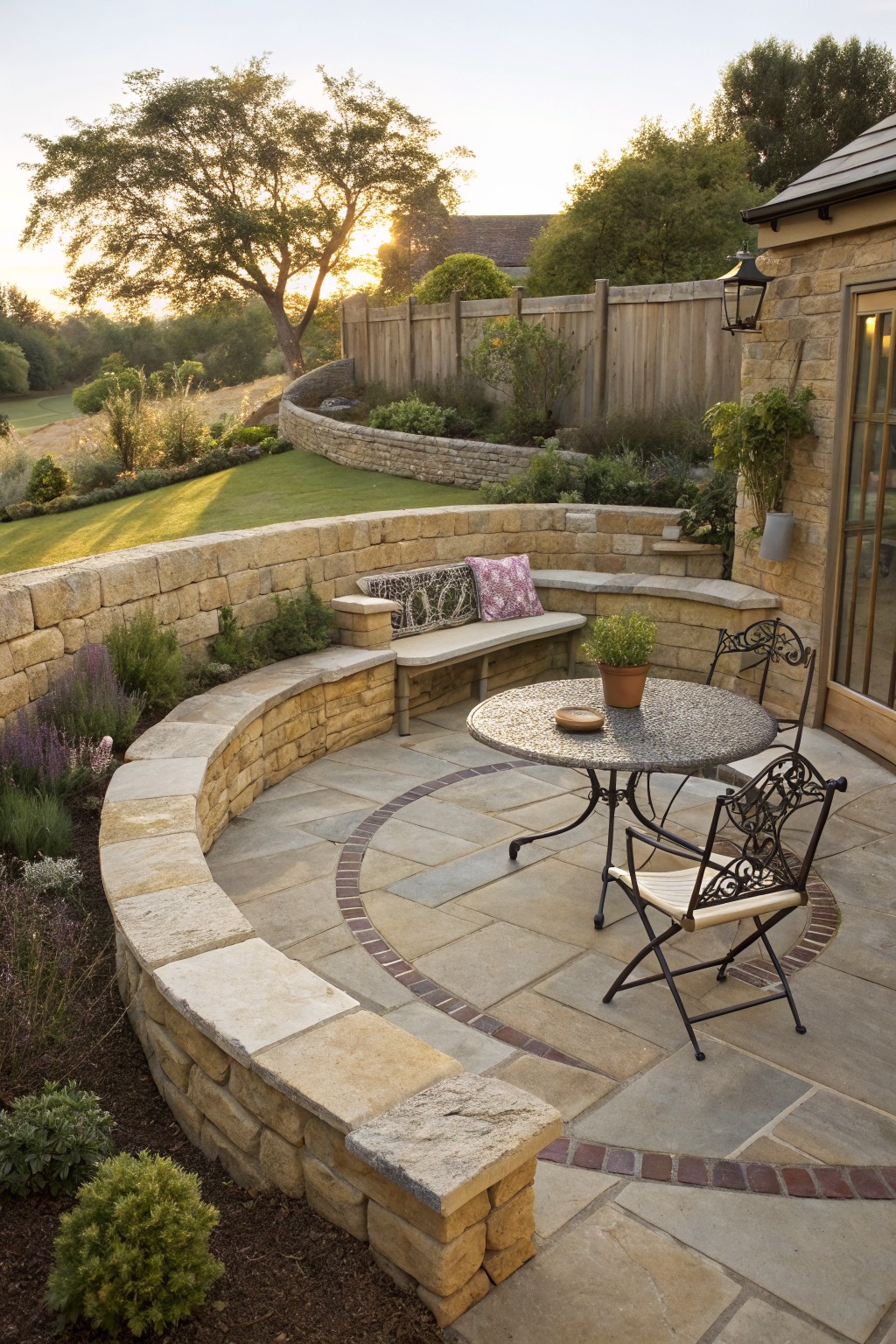
A curving wall of natural stone doubles as a built-in bench in this backyard setup. It wraps around a simple table and chairs to make a tucked-away spot for coffee or a quiet read. The bench keeps things practical while blending right into the yard’s stone paths and plant beds.
This works best on a slope or in a compact garden where you need to turn a retaining wall into something useful. Top the bench with cushions for comfort and pair it with metal garden furniture that won’t overpower the stone. It suits older homes or cottage-style places, but watch the scale so it doesn’t crowd the space.
Stone Fire Pit on a Sloped Patio
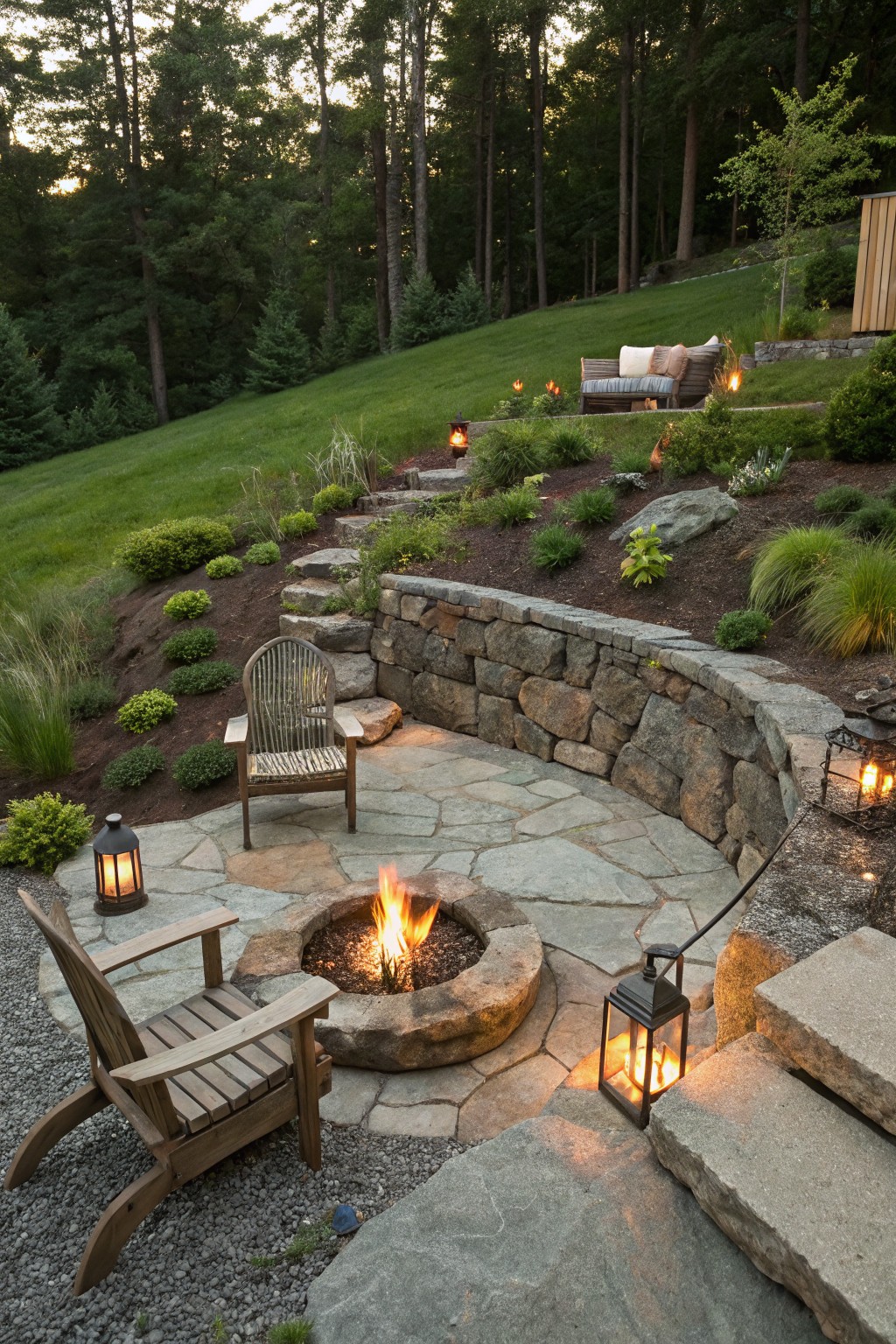
A simple way to make a backyard fire pit work on a hill is to build it right into a curved stone retaining wall. The wall holds back the earth, and flagstone pavers create a flat spot around the pit. It keeps everything level and sturdy. Plus, the rough stone looks right at home with the trees and grass nearby.
This idea fits sloped yards best, especially where you want a cozy spot without big excavation. Pick stones from a local quarry to blend in. Add lanterns along the edge for evenings. Just make sure the wall is built solid, maybe with a pro’s help if the slope is steep.
Stepping Stone Path in Gravel

Big rectangular stone slabs laid out as a path through smooth gravel make for a clean walkway that’s simple to follow. The uneven spacing between the pavers lets the gravel show, which keeps things from looking too busy or forced. It fits right next to the house wall here, with low plants tucked along the edges.
This works best in skinny side yards or back paths where you want low upkeep and a bit of calm. Pair it with a plain bench at the end for sitting. Suits modern homes or any spot needing a practical route without much grass to mow.
Winding Stone Paths in the Garden

Nothing beats a backyard path made from rough-cut flagstone slabs that curve gently through plantings. It pulls your eye along without feeling forced, and the uneven edges blend right into the soil and flowers. Here, one starts near a black iron bench and heads under a rose-covered arbor, making the whole yard feel like an old country garden.
You can add these paths to almost any backyard setup, especially where you want to connect seating to a shed or gate. Source local stone for that natural look, set it on sand or gravel base, and leave spaces for moss or low plants. They hold up well in shade or sun, though watch for weeds in the joints if you skip edging.
Stone Pool Terrace

A stone terrace wrapping around the pool gives you that solid, lasting outdoor spot for lounging. Big slabs with gravel joints and plants tucked along the edges make it blend into the yard without much fuss. Those loungers on top show how easy it is to settle in and enjoy the water.
This setup shines on sloped lots or anywhere you want low upkeep. Pick limestone or travertine for the look, lay it with good drainage so puddles don’t form. It fits homes from casual ranch styles to cleaner modern ones. Skip glossy finishes near the pool to stay safe.
Natural Stone Steps for Sloped Yards

Steep backyards can feel tricky to use. But natural stone steps like these turn that slope into something you actually want to climb. The irregular slabs fit right into the hill, with low stone walls holding back the soil and grasses softening the edges. It keeps things looking wild and settled, not forced.
These work best on hills where you need to connect yard levels without a straight staircase. Pair them with gravel landings or plantings for traction. They’re great for country homes or wooded lots. Just make sure the steps aren’t too uneven, or add handrails if the drop is big.
Stone Pavers with Grass Joints
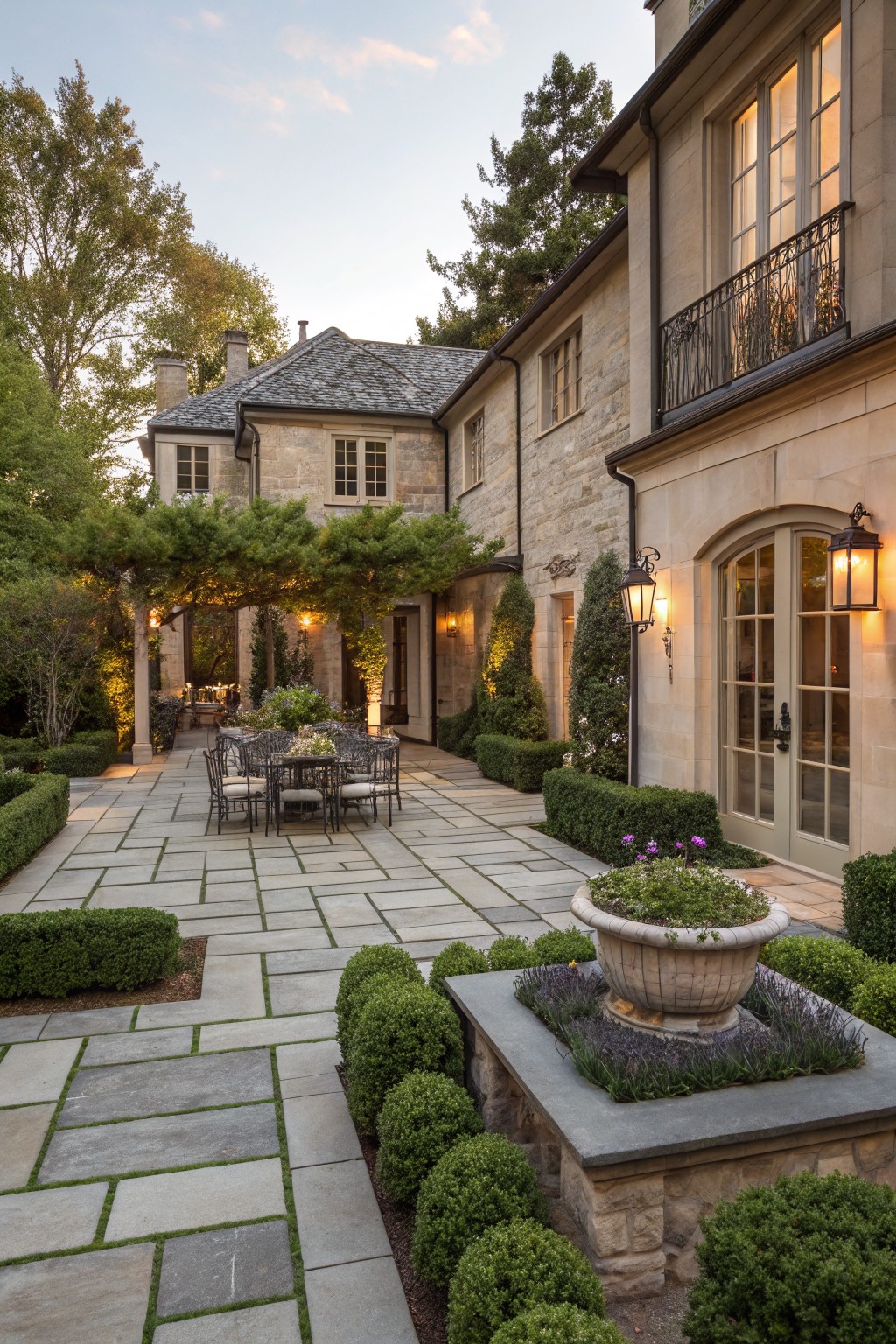
One straightforward way to make a backyard patio feel timeless is laying large stone slabs with grass growing between them. It gives that old European courtyard look without a lot of upkeep. The stone handles foot traffic fine, and the grass keeps it from looking too stark or modern. In this setup, the pavers form clean lines around a dining area, tying right into the house stonework.
You can pull this off in most backyards with decent sun for the grass. Go for bigger slabs if your space is open, smaller ones for tighter spots. It works best on traditional or stone homes, but pair it with simple hedges like boxwoods to keep things neat. Just make sure the grass gets water and trim, or it might thin out over time.
Meandering Stepping Stone Paths

Flat stepping stones laid into gravel make a simple backyard path that pulls you through the garden without rushing. They fit right into the loose gravel bed, edged with low mossy plants that keep everything tidy. A big boulder nearby adds weight and stops it from feeling too busy.
These paths work best in smaller yards or spots with Japanese touches, like near a fence or bench. Space the stones uneven so feet land natural. Go for light gray slabs on dark gravel. It stays low fuss year round. Just rake the stones smooth now and then.
Gravel-Jointed Stone Pathways
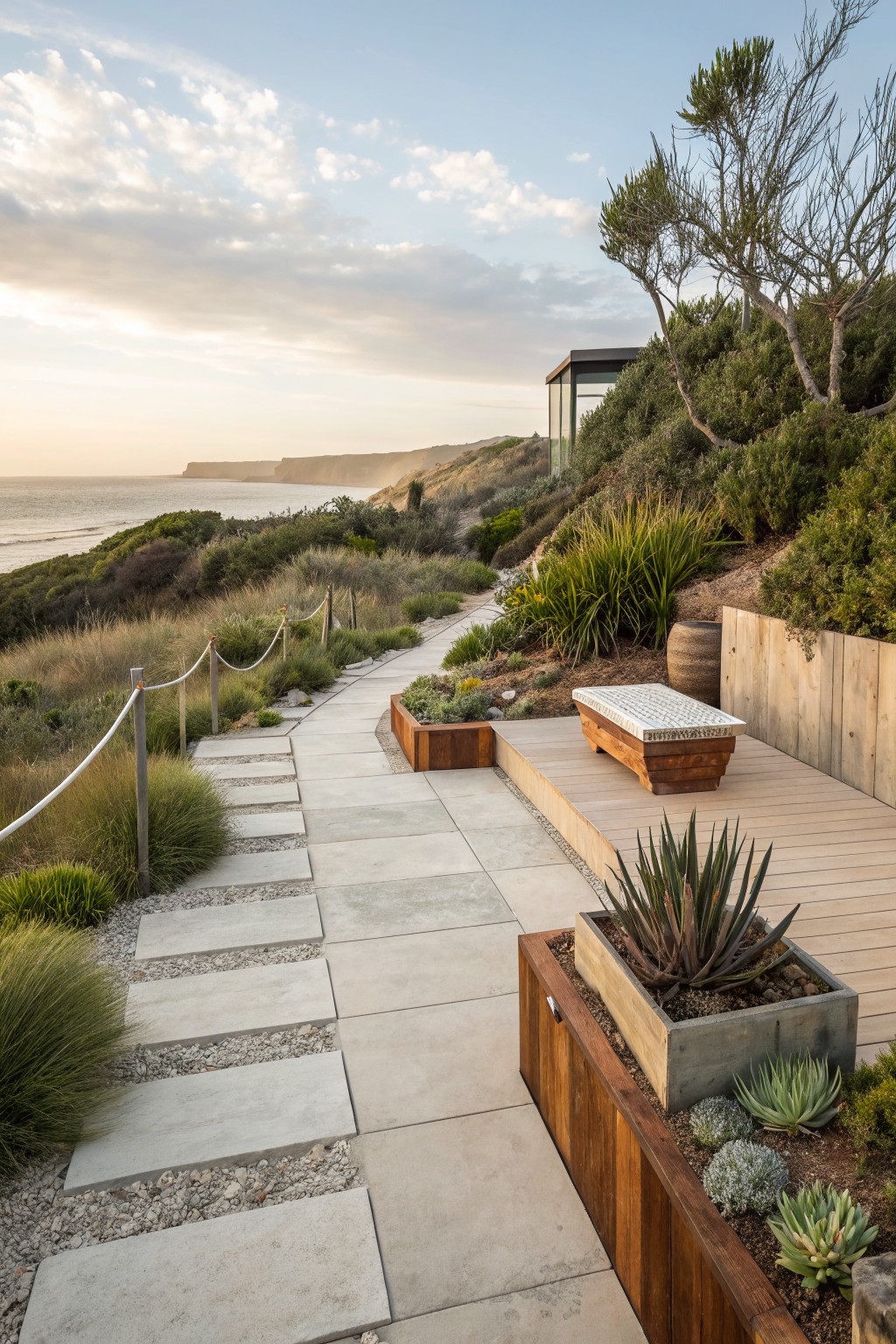
Big stone slabs set with gravel between them make a simple path that winds through a yard. This setup looks rugged and natural, especially on slopes near the coast. The pale slabs stand out against green plants without overpowering the view. Gravel fills the gaps nicely, keeping things permeable for rain runoff.
Use this idea for backyard paths heading to a seating spot or down a hill. It suits dry gardens with tough plants like agaves in timber-edged beds. Go easy on the slab size if your space is small. Keeps maintenance low year round.
Terraced Stone Steps for Sloped Backyards
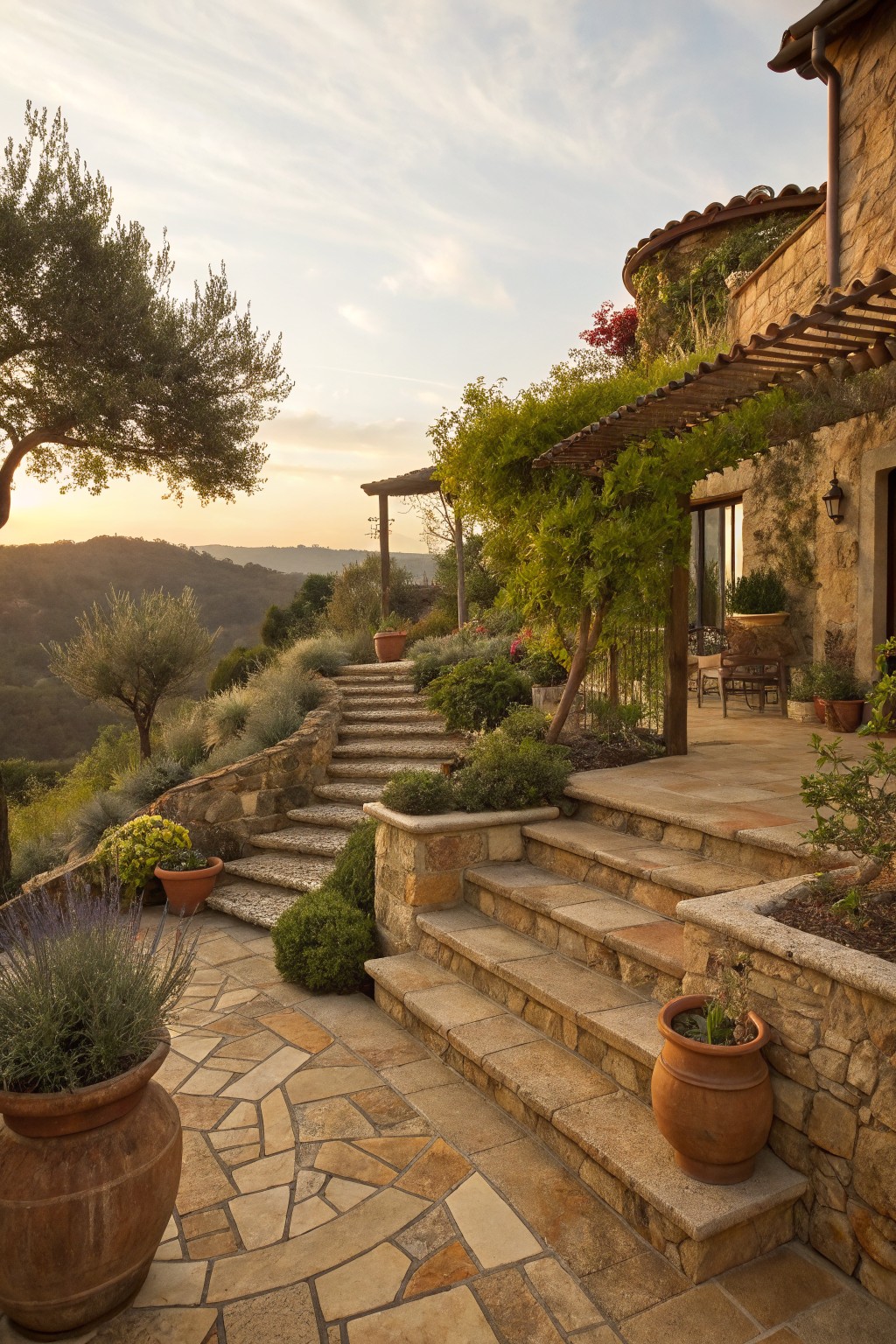
Wide stone steps like these turn a tricky hillside into an easy walk up to your patio or terrace. The irregular flagstone treads fit together naturally, almost like they grew there, and the low retaining walls keep soil in place without looking forced. It’s a simple way to handle slope that feels steady underfoot and blends with the yard.
You can use this in any backyard that drops away from the house. Build the steps broad enough for two people, add a few plants like lavender or grasses along the edges for softness, and keep the stone local if you can. Watch the rise between steps so it’s not too steep. Works best where you want low upkeep.
Winding Stone Paths Through Tall Grasses

A backyard path like this one uses rough-cut stone slabs laid in a loose, curving line. It cuts right through clumps of tall grasses and low perennials without any straight edges. What stands out is how natural it looks. The path just follows the ground’s shape, blending into the planting so you forget it’s built at all.
You can pull this off in most backyards with decent sun. Pick stones from a local quarry for that real fit, and plant around them with tough grasses like miscanthus or little bluestem. It suits sloped spots especially well. Keep the gravel between stones simple. One large boulder nearby adds weight without trying too hard.
Rustic Stone Fireplace on a Raised Patio
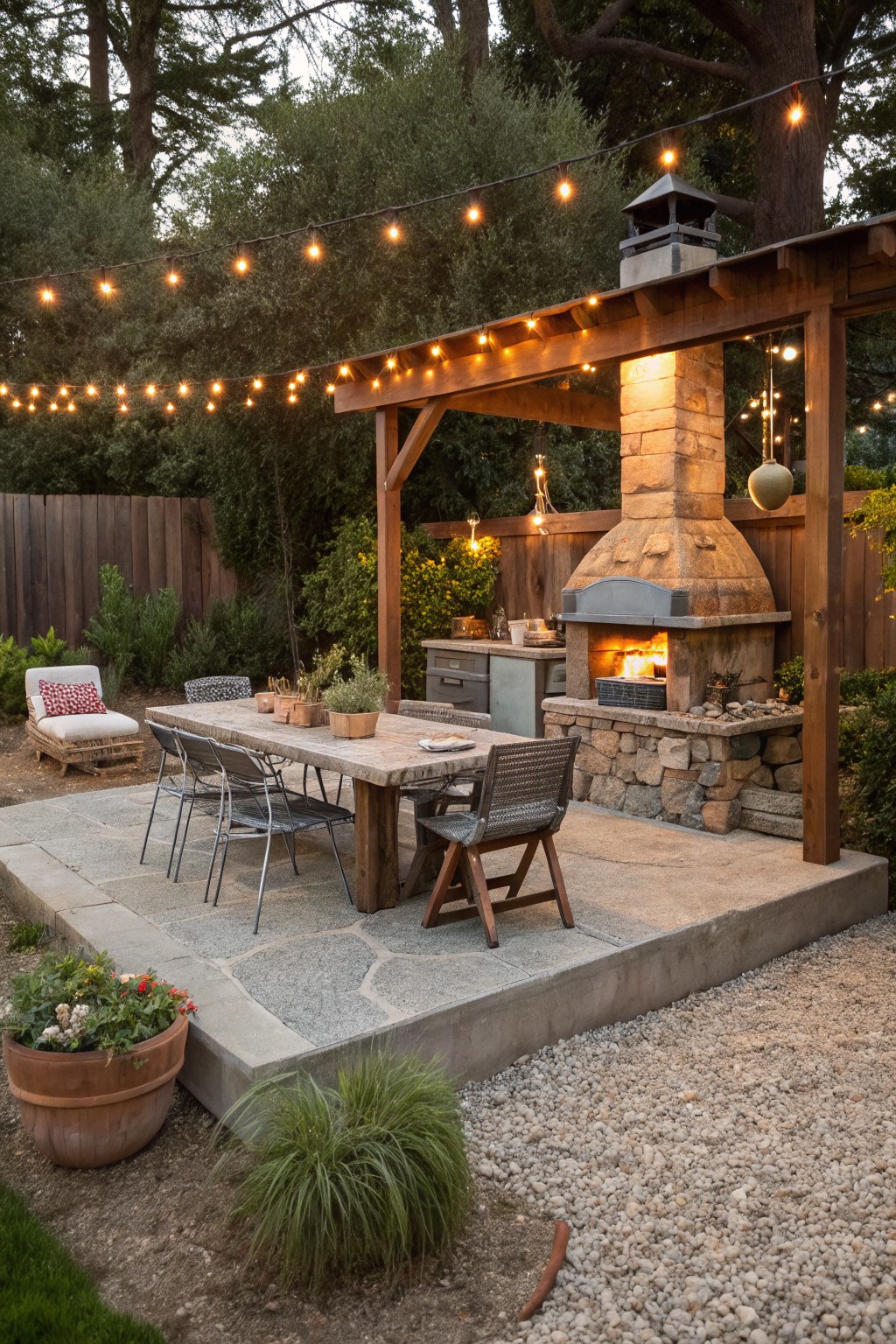
A stone fireplace like this one turns a simple backyard patio into the main hangout spot. Built tall with a chimney and that curved hood, it holds real wood fire for cooking or just warmth. The raised stone platform keeps everything level and ties into the natural rock look around it.
Put one in if you’ve got room for a dining setup nearby. It suits sloped yards or wooded lots best, where the stone blends right in. Add pergola cover and string lights up top… evenings feel magical without much fuss. Skip if your space is too tight, though.
Outdoor Stone Fireplace on the Patio
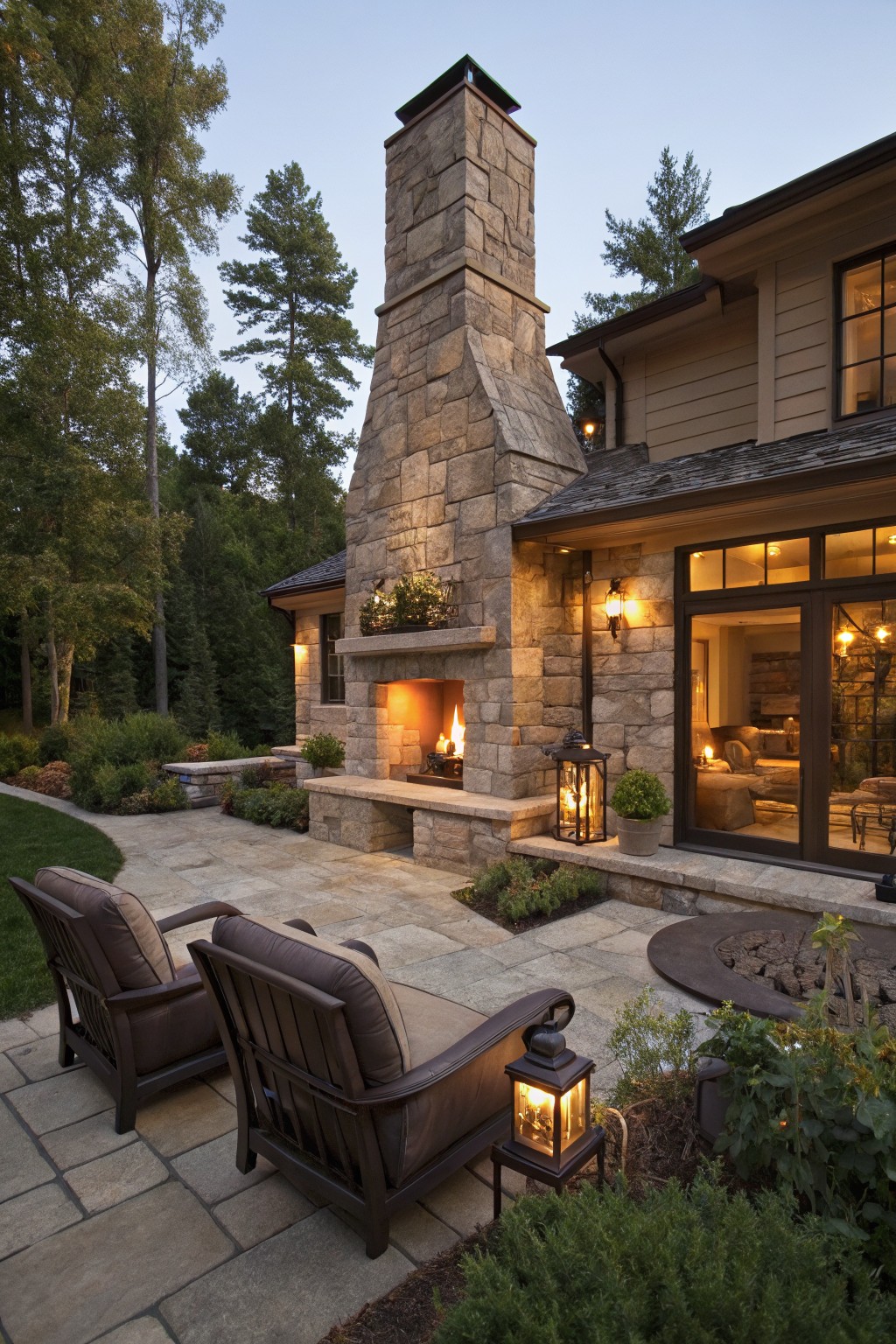
A solid stone fireplace built right into the house chimney makes for a natural gathering spot in the backyard. It pulls the indoor fire outdoors without much extra work, and that tall chimney keeps things feeling sturdy and classic. Add a couple of chairs facing it, and you’ve got a place everyone heads to on cool evenings.
This setup shines on patios next to the house, especially with pavers underfoot and lanterns nearby for light. It suits homes backed by trees or gardens… just make sure the stone matches your siding so it blends right in. Keeps the whole yard timeless without overdoing it.
Stone Pathways Set in Grass
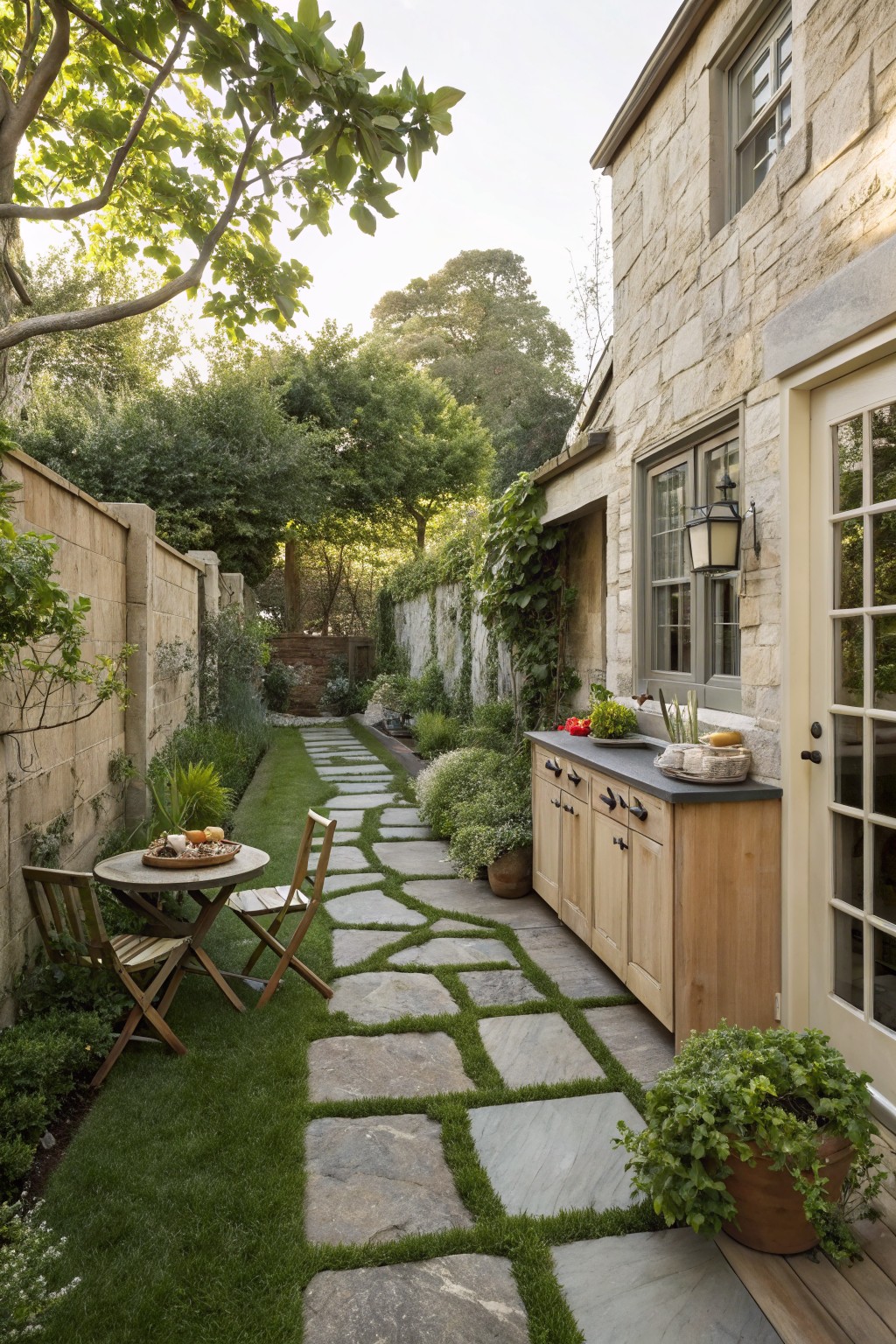
One easy way to make a backyard path feel timeless is to set rough stone slabs right into the grass. The stones guide your steps without taking over the yard. Gaps between them let grass grow in, so the path blends with the garden around it. Along a stone house like this, it looks right at home and keeps things low fuss.
These paths work best in narrow side yards or along fences where you want access without paving everything. Pick slabs in sizes that fit your stride, and space them so grass fills the joints naturally. They suit older homes or cottages, especially with some plants tucked along the edges. Just mow around the stones now and then.
Stone Pavers with Pebble Joints
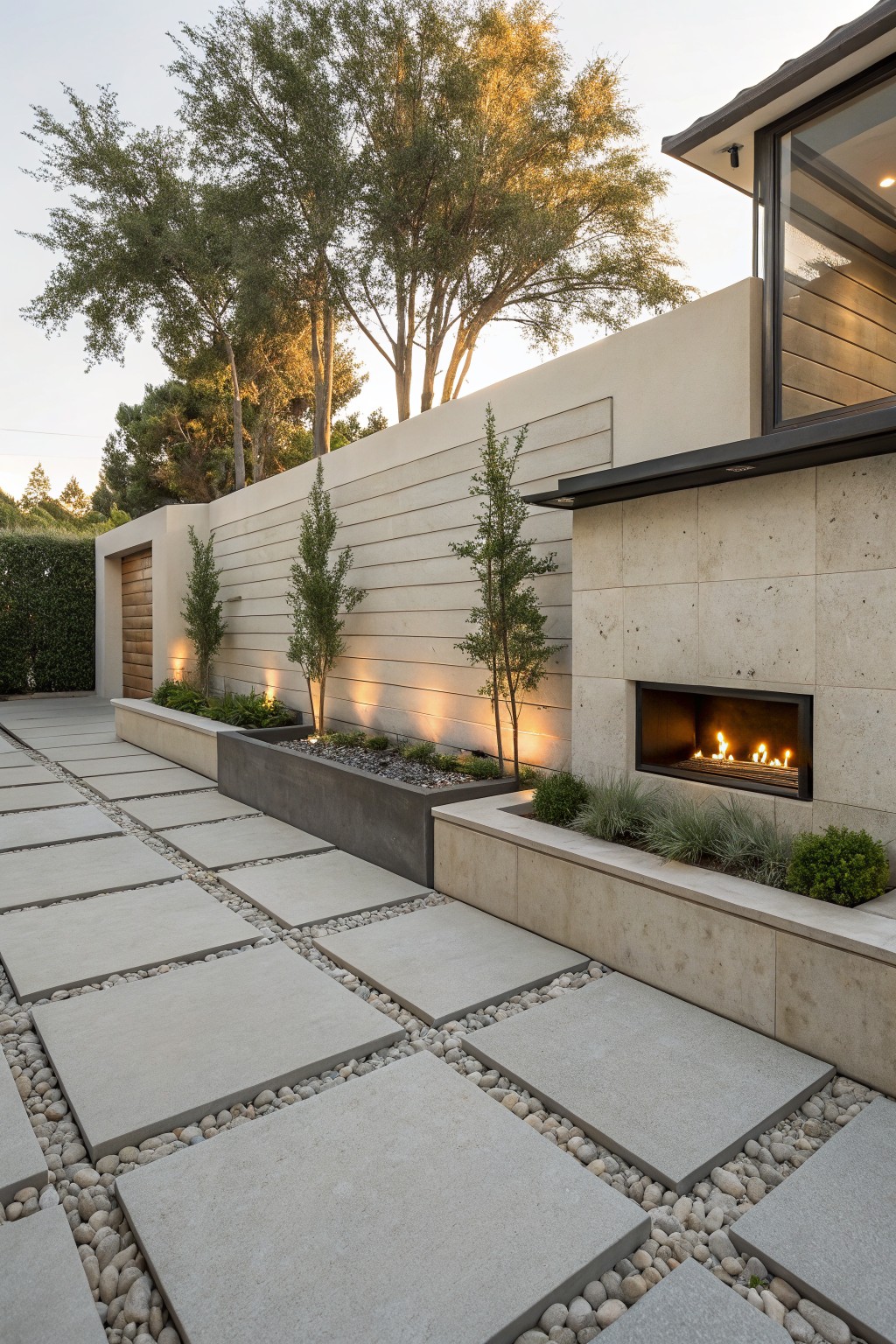
One straightforward way to give a backyard patio a clean, lasting look is to lay large stone pavers with pebbles filling the joints. You see it here in this setup, where wide gray slabs form the main walking surface and the pebbles add subtle texture without much upkeep. It keeps things open and modern while handling foot traffic well.
This works best in smaller courtyards or along house walls, where you want a simple path that ties into the architecture. Go for light-colored stones in sunny spots to reflect heat, and keep the pebbles uniform so they don’t shift. Skip it if your yard floods often, since water can wash them out.
Stone Paths Through Perennial Borders
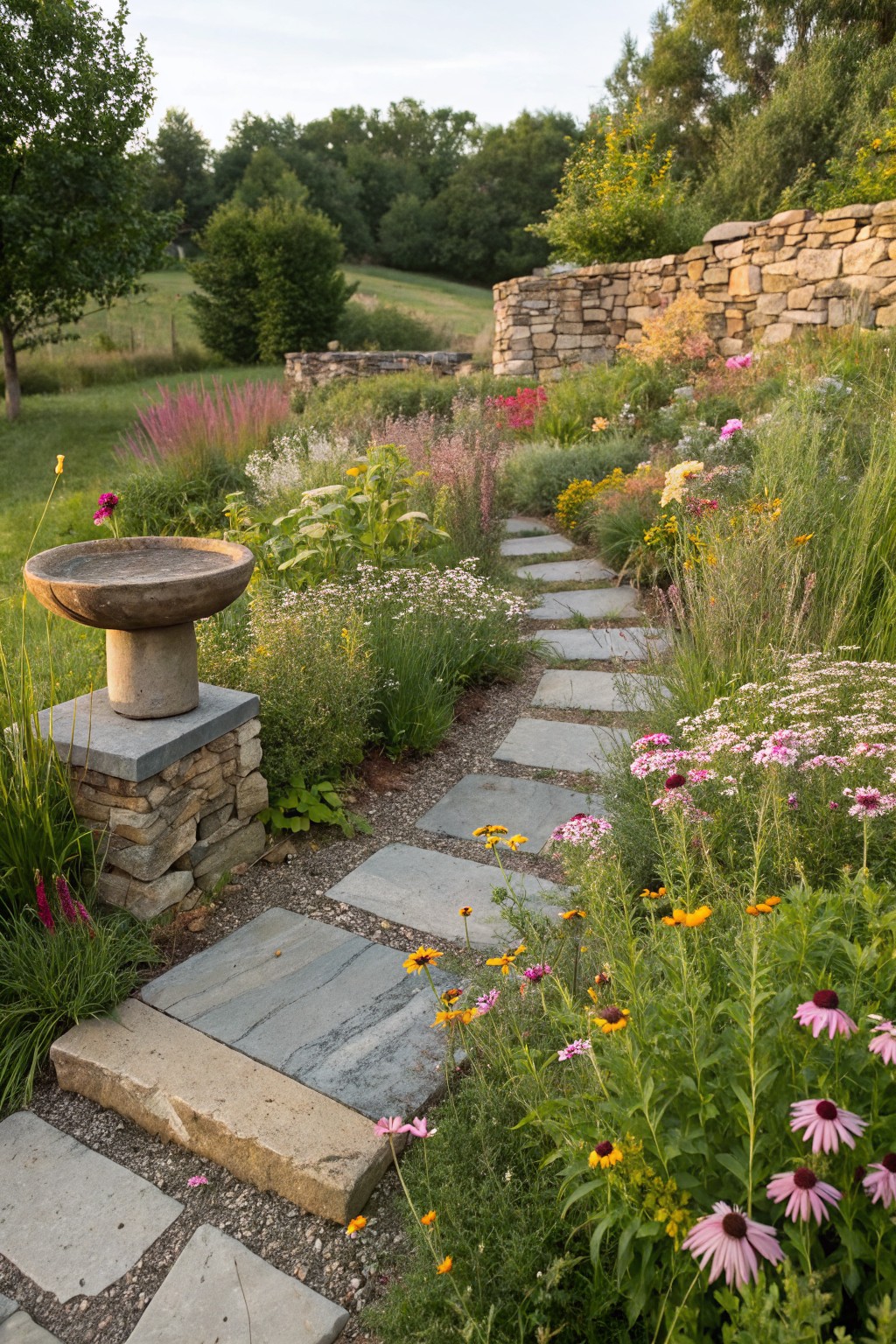
A winding path made from rough-cut stone slabs cuts through thick plantings of perennials and grasses. That stone birdbath off to one side draws the eye just right without overpowering things. It’s a look that stays fresh year after year… the path invites you to wander while the flowers do their thing around it.
This works best along a backyard border or up a gentle slope where you want some structure but not too much. Pick slabs in different sizes for a natural feel, and fill in with easy bloomers like coneflowers, black-eyed Susans, and tall phlox. Keep the edges loose so it doesn’t look forced. Suits older homes or cottages with room to grow a bit wild.
Pebble Paths for Small Backyards
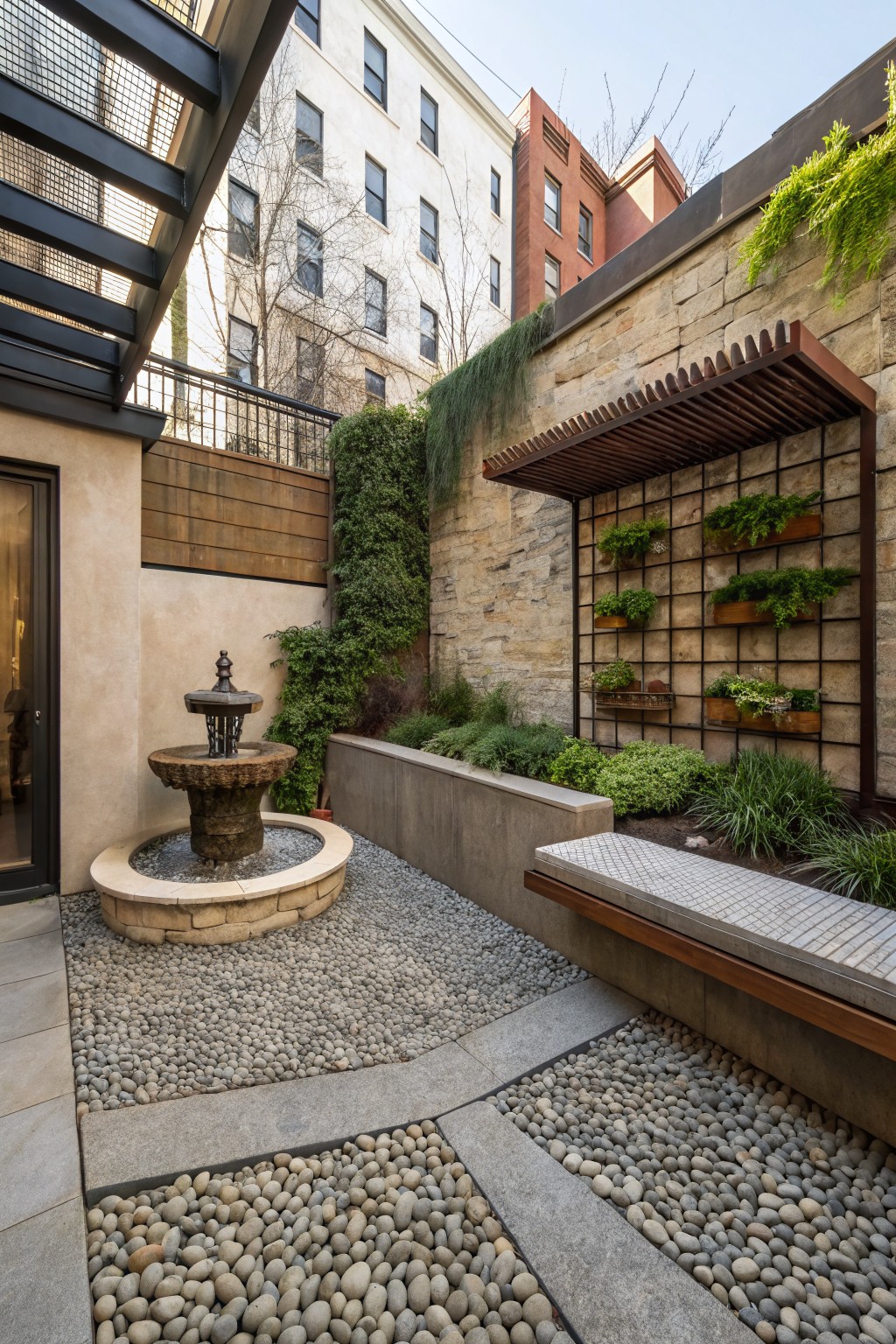
Smooth pebbles make great paths and ground cover in tight backyard spaces. They fill in around a central fountain and lead to a bench without much upkeep. The light gray tones pick up the stone walls and keep things feeling open and steady.
You can rake them into simple patterns or just spread over fabric for drainage. They suit city lots or any spot too shady for grass. Stick to rounded river rocks so no one twists an ankle.
Stone Pathways with Mossy Edges

One timeless way to guide people through a backyard is with irregular stone slabs set into the ground. Here moss creeps right up along the edges, mixing with ferns and low plants to make the path feel like part of the woods. Those wooden benches up ahead just invite a sit-down. It’s low-key and keeps things natural.
This works best on a slope or in a shady spot where moss thrives anyway. Pick flat-ish local stones so they’re easy to walk on, and space them unevenly for that handmade look. Skip gravel fill if you want the green to fill in. Suits older homes with wooded lots… or any yard aiming for quiet paths over showy ones.
Outdoor Stone Fireplace
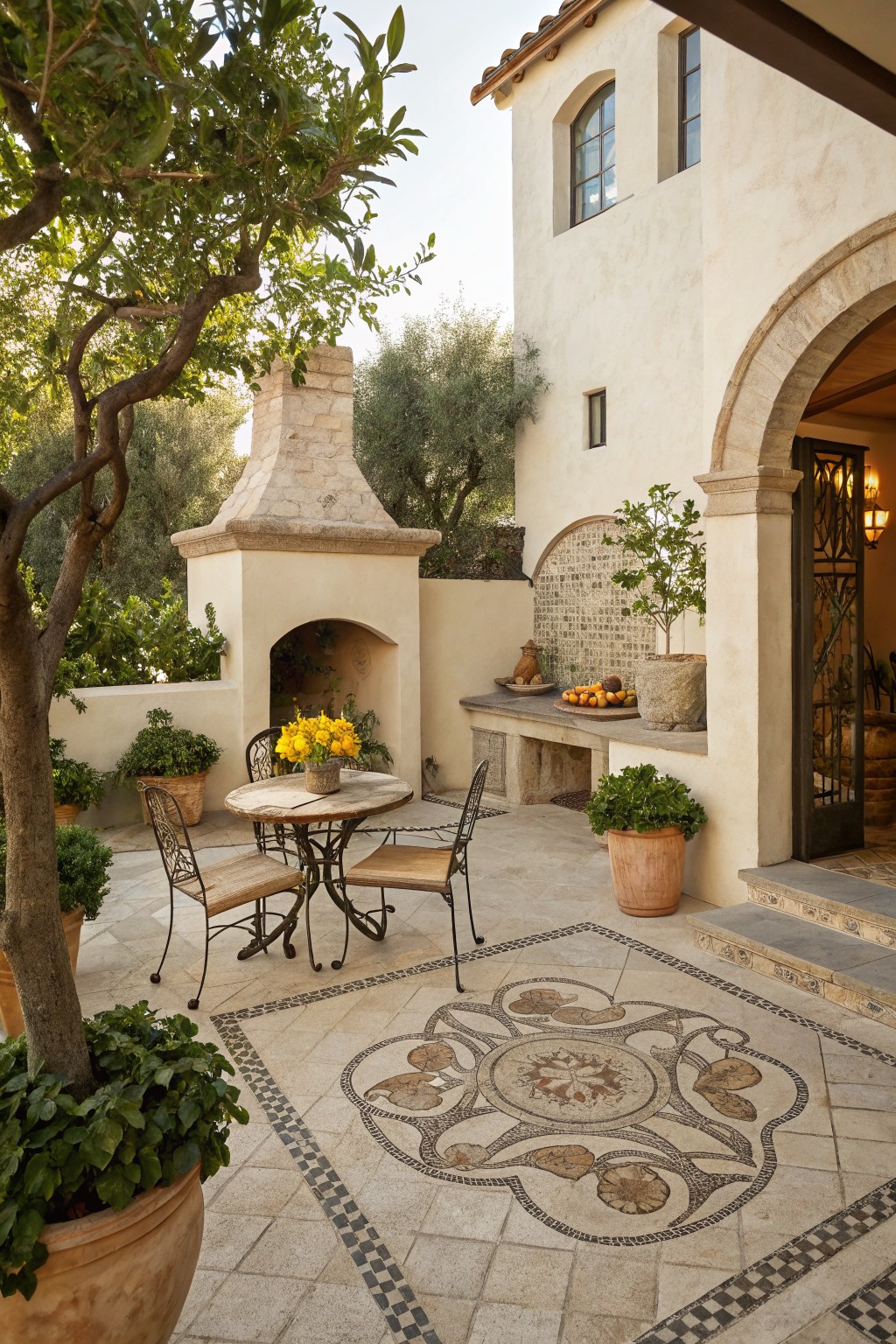
A built-in stone fireplace makes any backyard patio feel more like home. You see it here tucked into a stucco wall with a simple arched opening. The rough stone texture stands out against the smooth walls and pulls the space together for casual evenings.
Put one along an exterior wall where it gets some shelter from wind. It suits warmer climates or covered patios best, paired with basic seating and potted plants. Stone keeps the look sturdy year after year… just make sure the base sits on solid ground.
Stepping Stone Path Over a Stream
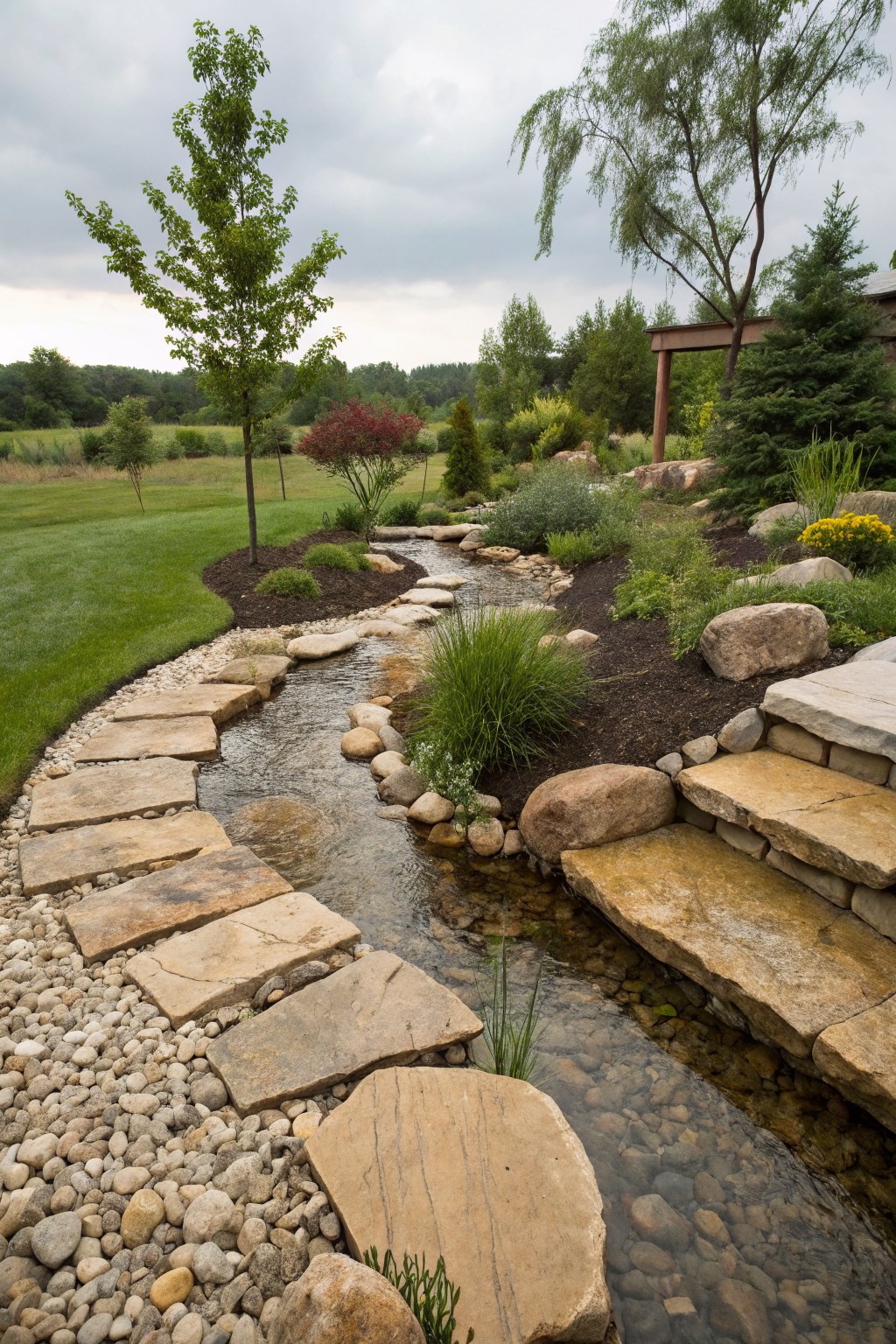
A simple way to add interest to a backyard is with flat stones laid as steps right across a shallow stream. The water runs gently between them, edged with pebbles and a few rocks, while grasses soften the sides. It feels natural and pulls you along the path without taking up much room.
This idea fits yards with enough space for the stream bed, maybe 4 to 6 feet wide. Source stones from a local quarry to match your area, and run a small pump to keep water moving. Plant low grasses nearby so it stays easy to walk and looks good year round. Just watch for slippery spots after rain.
Stone Retaining Walls with Recessed Lighting
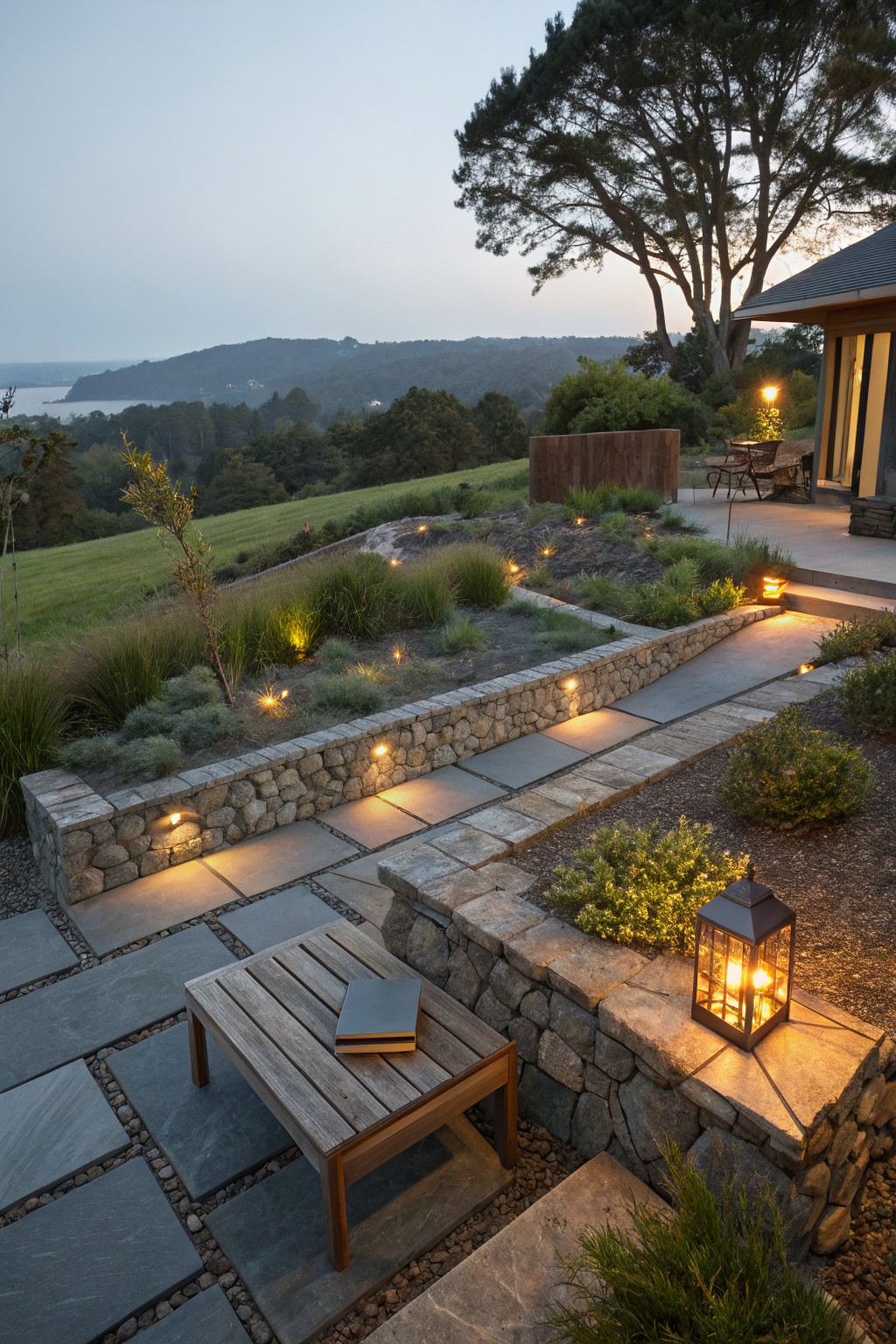
One simple way to handle a sloped backyard is with stone retaining walls that double as path guides. Here, rough fieldstone walls hold back the hill while small recessed lights tucked into the mortar cast a soft glow along the slate paver steps. It turns a tricky terrain into an easy walk at night, without overpowering the natural look.
These walls work best on hillsides where you need both structure and style. Pair them with low-growing plants in the beds above to keep the focus on the stone and lights. They’re practical for homes with views, since the setup stays low-key and lets the landscape shine. Just make sure the wiring is done right for outdoor use.
Frequently Asked Questions
Q: Can I pull off these stone ideas without hiring pros?
A: You can handle plenty on your own, like edging beds or laying gravel paths. Rent a tamper for flat surfaces and work in sections to stay sane. Save the paycheck for big retaining walls.
Q: How do I stop weeds from ruining my new stone setup?
A: Roll out landscape fabric first, then pile on the stones tight. Sweep sand into the cracks to lock everything down. Spot-pull invaders weekly before they spread.
Q: Do these timeless stone looks work in small yards?
A: They fit perfect, just scale down to borders or a single focal boulder. Stack stones vertically to grab height without eating space. Your yard feels bigger right away.
Q: What’s the quickest way to clean dirty stone paths?
A: Blast them with a garden hose on high pressure every few months. Scrub stubborn spots with a stiff brush and mild soap. Dry rocks gleam like new… timeless magic.