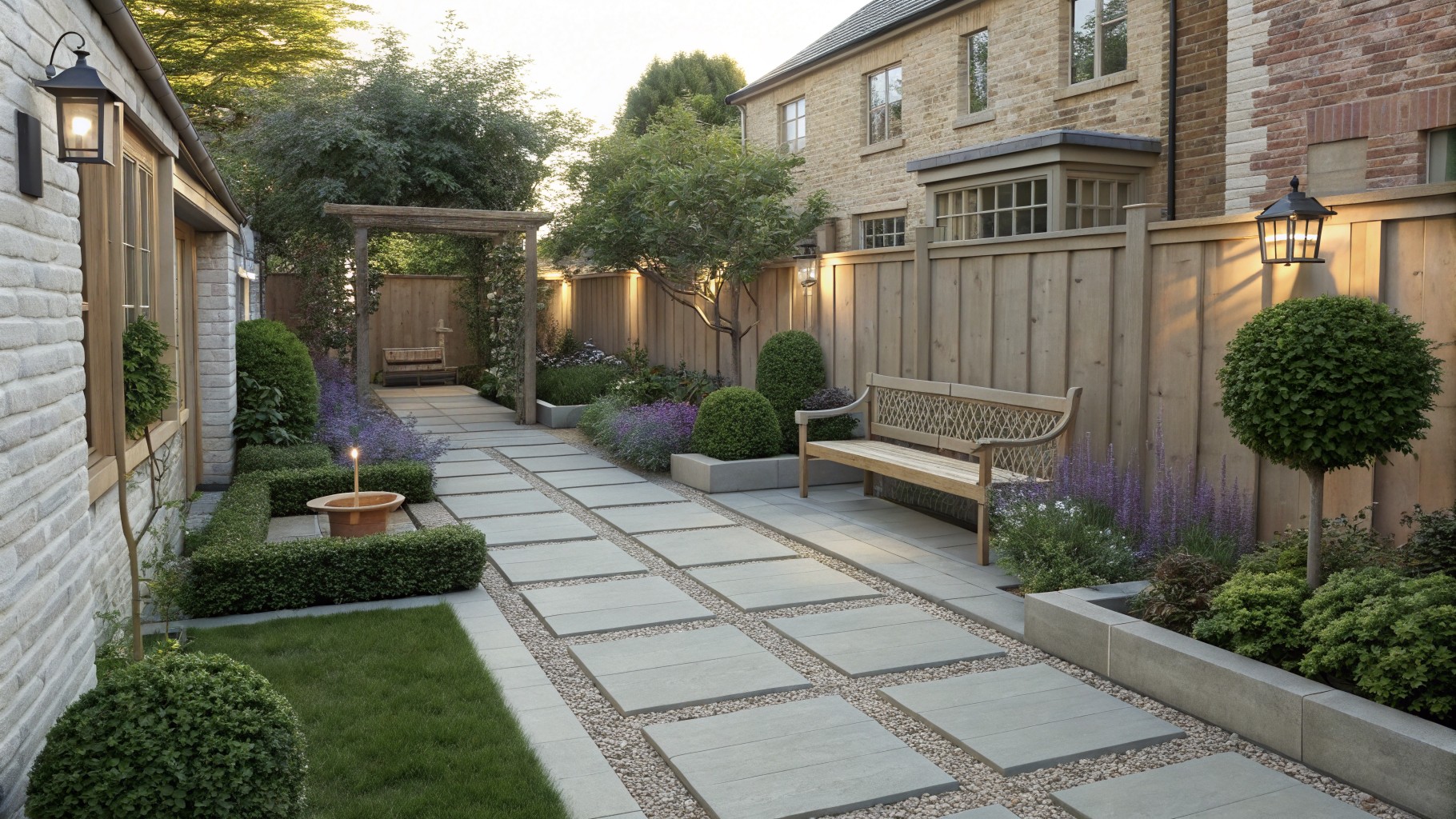
I’ve spent enough time reshaping my own backyard to know that paths set the rhythm for everything else, weaving through plantings and defining quiet spots without overwhelming them.
Pavers turn those routes into something reliable, holding firm against roots pushing up or winter freezes that buckle looser materials.
The ones with subtle curves often work best in my view, since they respect the yard’s natural flow instead of fighting it.
They last.
A handful of these designs make me think about testing wider borders in shadier areas, where edging keeps mulch from spilling over.
Paver Walkway with Gravel Joints
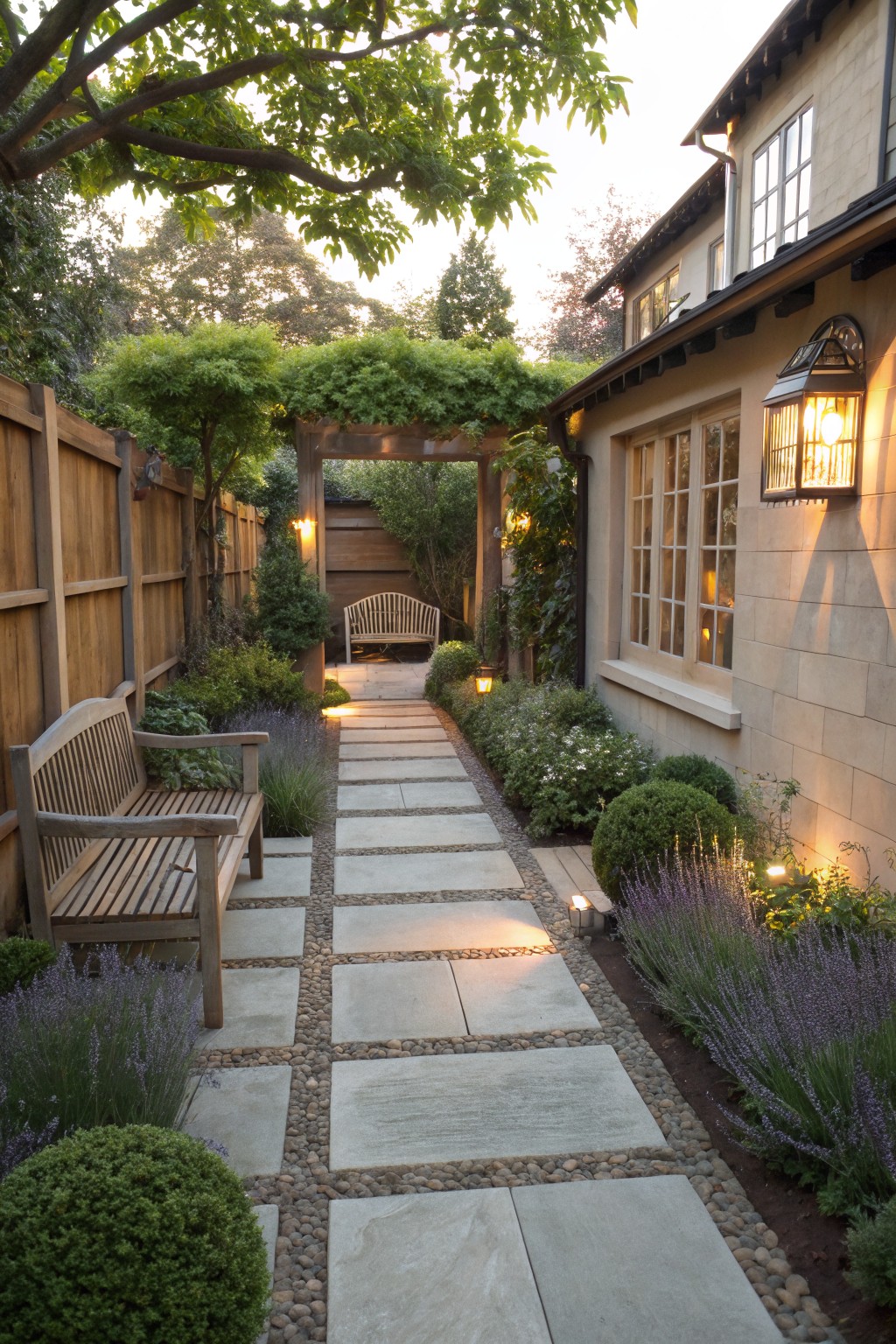
A simple way to get a polished path is to lay large rectangular pavers with gravel or small pebbles filling the joints. This setup looks clean and modern but still feels natural in a garden. No grout means better drainage and less upkeep too. Here the path runs straight through plantings, pulling your eye back to a bench under an arbor.
It works best in narrow side yards or as a connector to outdoor seating spots. Pair it with low growers like lavender or boxwood along the edges for soft borders. Skip it on steep slopes though. Drainage gravel underneath keeps things stable over time.
Large Pavers Set in Gravel

One simple way to get a polished backyard path is laying oversized concrete pavers directly into a bed of small gravel. No grout lines or tight edges needed. The gray slabs here create a smooth walkway that winds up the slope, with grasses and agaves tucked in around them. The gravel fills the gaps nicely and lets water drain right through.
This setup suits modern homes on hillsides or anywhere you want low upkeep. Pair it with metal planters for plants like those blue agaves, and add low lights along the edges for evenings. Skip finer gravel if you hate sweeping stones around. It holds up well and looks sharp year-round.
Winding Stone Path to Beach Access
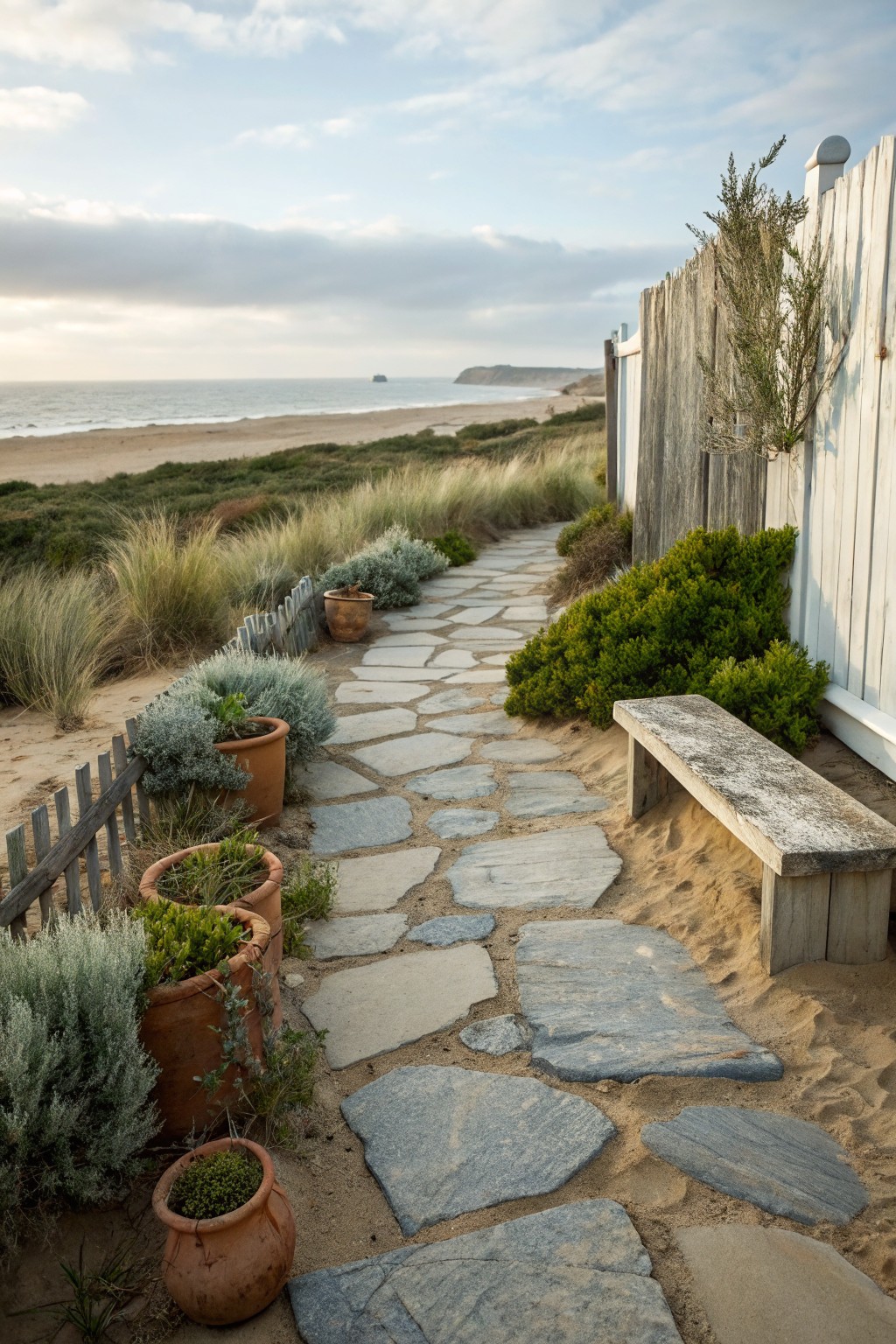
A path like this uses rough gray flagstones set right into the sand and grass. It leads from the yard straight toward the ocean dunes, with simple terracotta pots of silvery plants tucked along the edges. What makes it work so well is how the uneven stones match the natural beach vibe. No straight lines or perfect edges. Just a practical walk that pulls you outside without trying too hard.
You can do this in any backyard that drops toward water or a low spot. Pick flagstones in mixed sizes for that loose feel, leave gaps for water to drain through. Line it with pots of tough coastal plants like lavender or beach grass. Suits sandy yards best, keeps mud off your shoes, and gives a clear route without mowing everything flat.
Herringbone Brick Paths for Formal Gardens
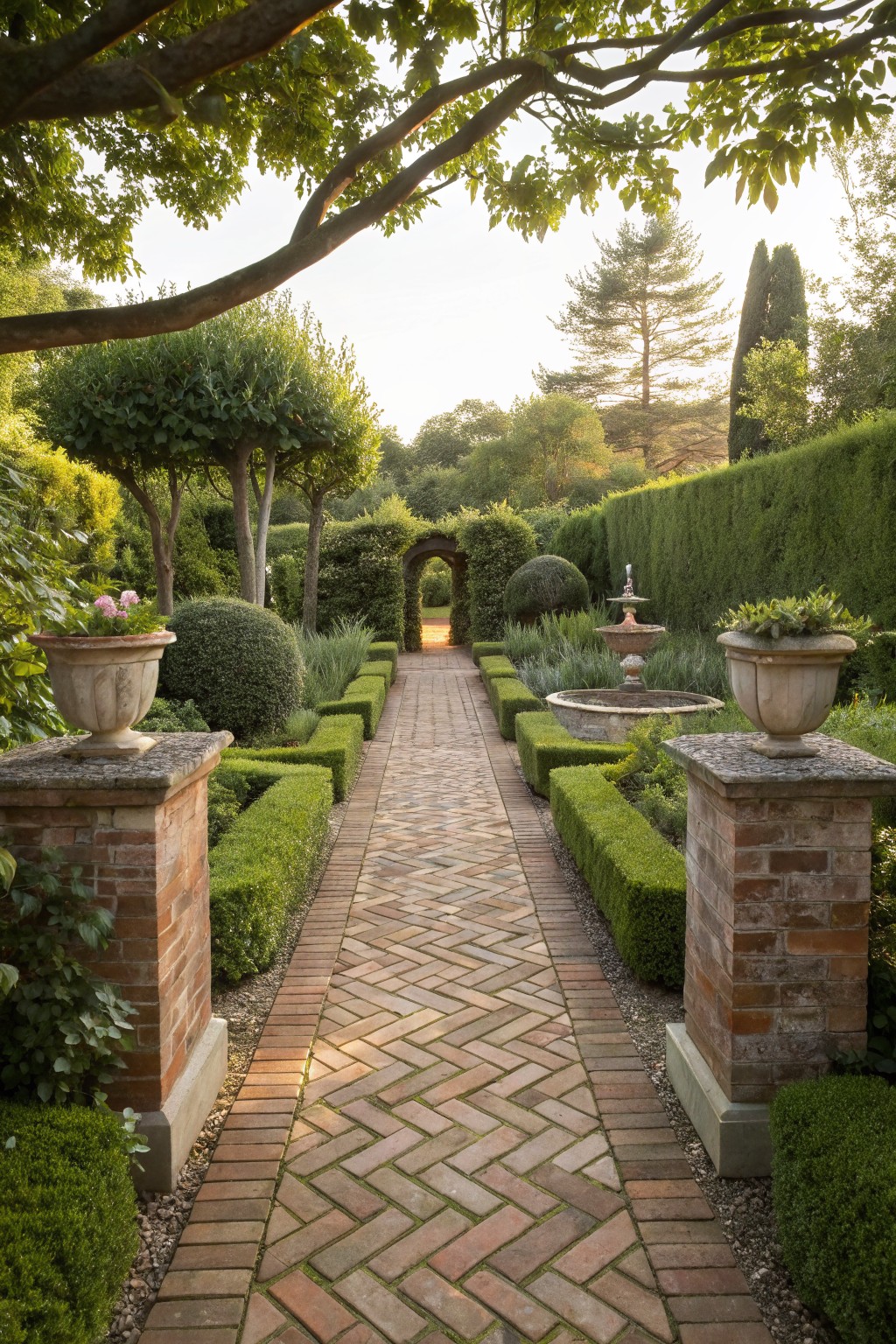
A simple herringbone brick path like this one runs straight through boxwood hedges and past a stone fountain. The angled pavers catch the light just right and give the whole garden a tidy, pulled-together feel. It’s that old-school garden look that makes a backyard feel more like a proper estate without much fuss.
Lay these paths where you want to connect seating areas or lead to a back gate. They suit cottage homes or any spot with room for low hedges along the sides. Go with softer red bricks to blend in, and plan for edging to keep weeds out… otherwise it can get messy quick.
Paver Paths with Grass Inlays
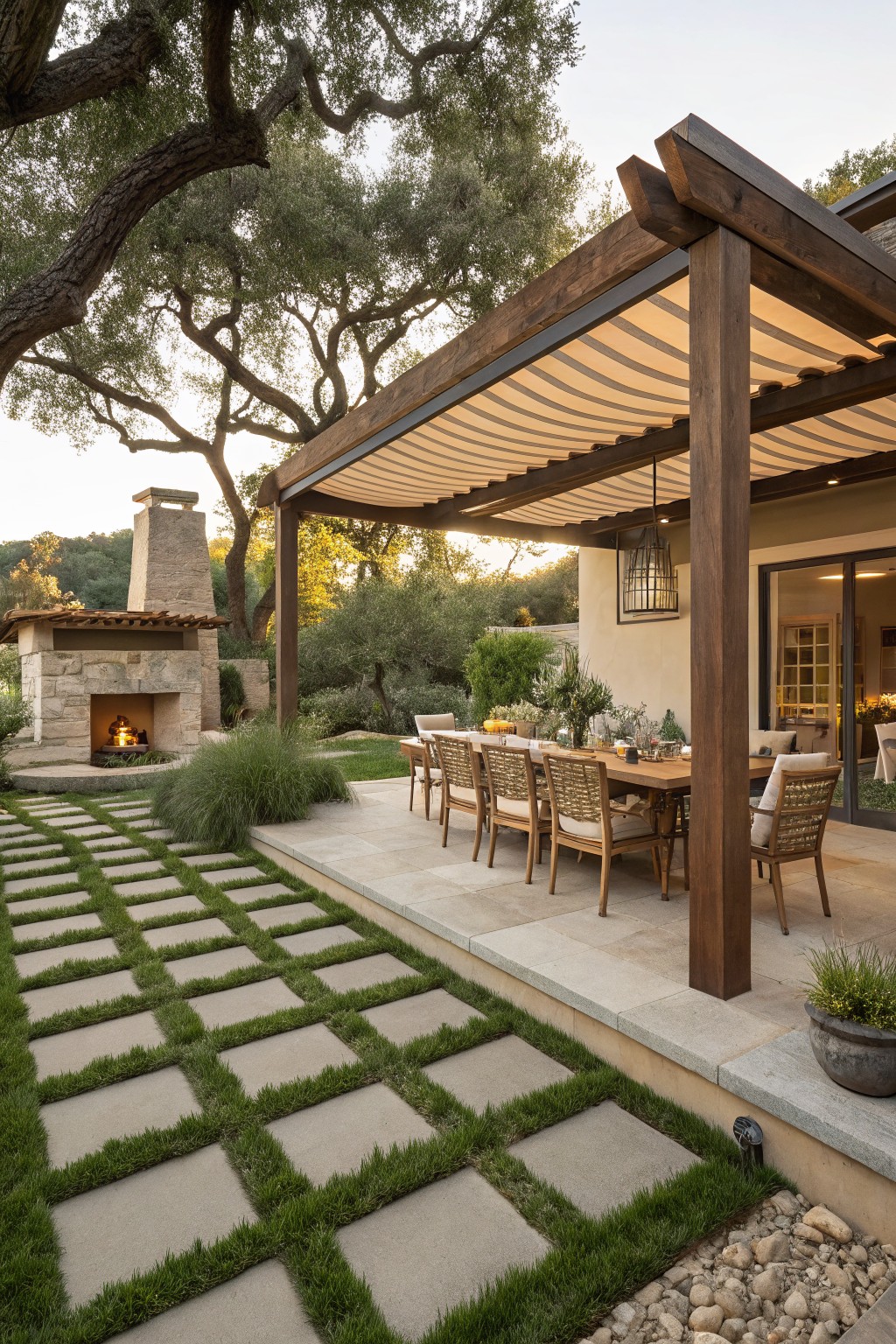
Big square pavers laid out with grass growing between them make a walkway that feels both structured and easygoing. You get that polished look from the stone without it dominating the yard. The green strips keep moisture in the soil and let grass spread naturally around the edges.
These paths work best leading from the lawn to a patio or outdoor seating area. They’re simple to install on level ground, just set the pavers in sand and let grass fill the gaps. Suits casual backyards that mix hard surfaces with plants. Skip them on slopes where water might pool.
Winding Stone Path Through Prairie Plants

A simple winding path like this one uses irregular gray stone pavers laid in gravel to guide you through tall grasses and colorful flowers. It keeps things neat and walkable but lets the plants take center stage, creating that easy flow from one garden spot to another. Those black-eyed Susans and pampas-like grasses add movement without much upkeep.
Try this in a bigger backyard where you want to connect a patio to farther beds or a fire pit. It suits homes with open yards and works best with drought-tolerant plants that fill in over time. Just make sure the pavers are set firm so they stay even underfoot… no tripping on loose stones.
Paver Path in a Narrow Yard
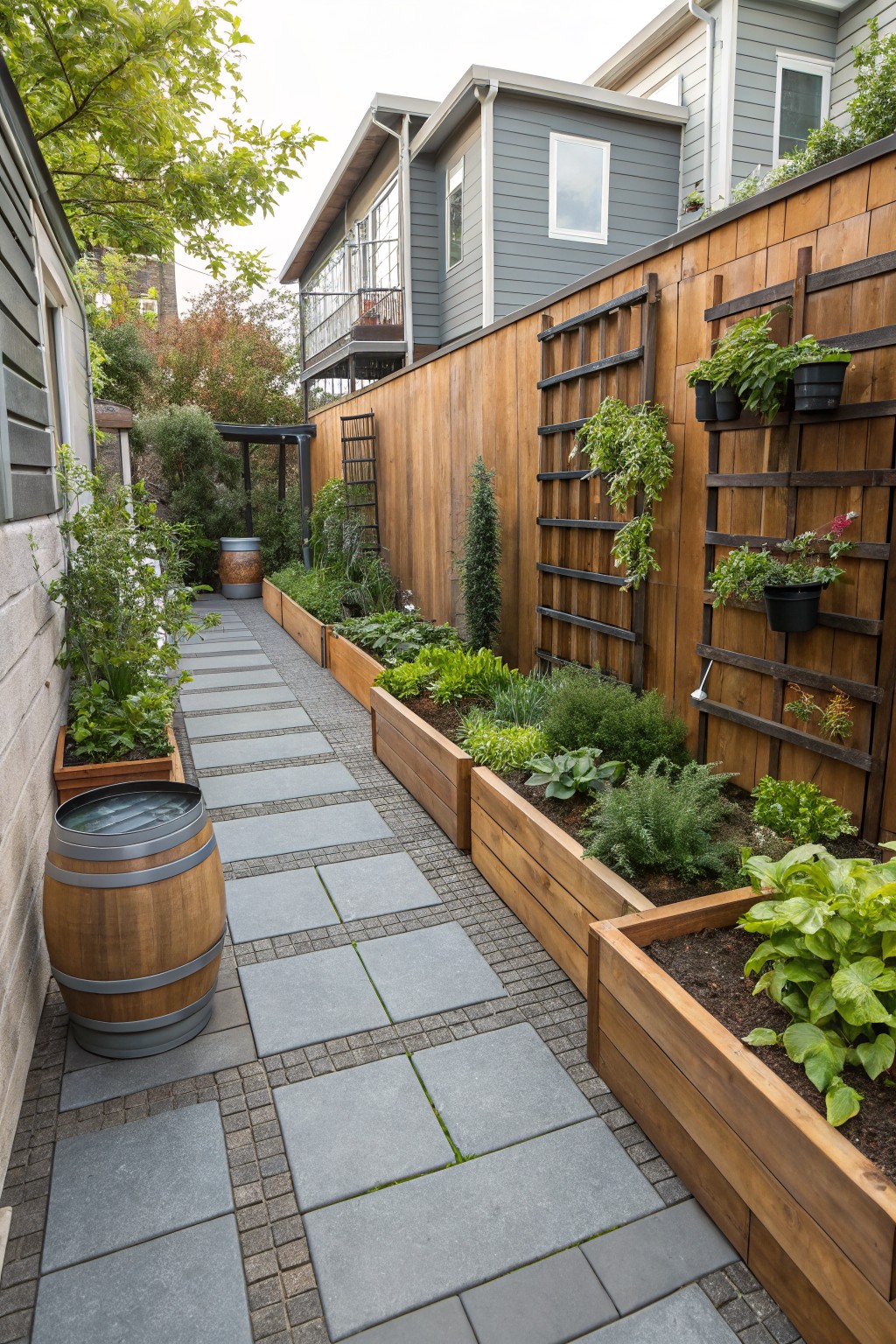
A simple paver walkway like this turns a tight side yard or backyard alley into something useful and pretty. The gray stone pavers laid in a stepping pattern guide you right through, while raised wooden beds full of greens and herbs keep it from feeling like just empty space. Those vertical planters on the fence add height without taking up room. It’s practical for picking veggies or flowers as you go.
This setup works best in skinny spots where you want a low-key path that doesn’t dominate. Use it behind a house or along a fence line, pairing concrete pavers with affordable cedar beds. Keep plants soft and bushy to frame the stones. Watch the scale though. Too-wide pavers might crowd things. Good for city lots or rentals too.
Terracotta Paver Paths
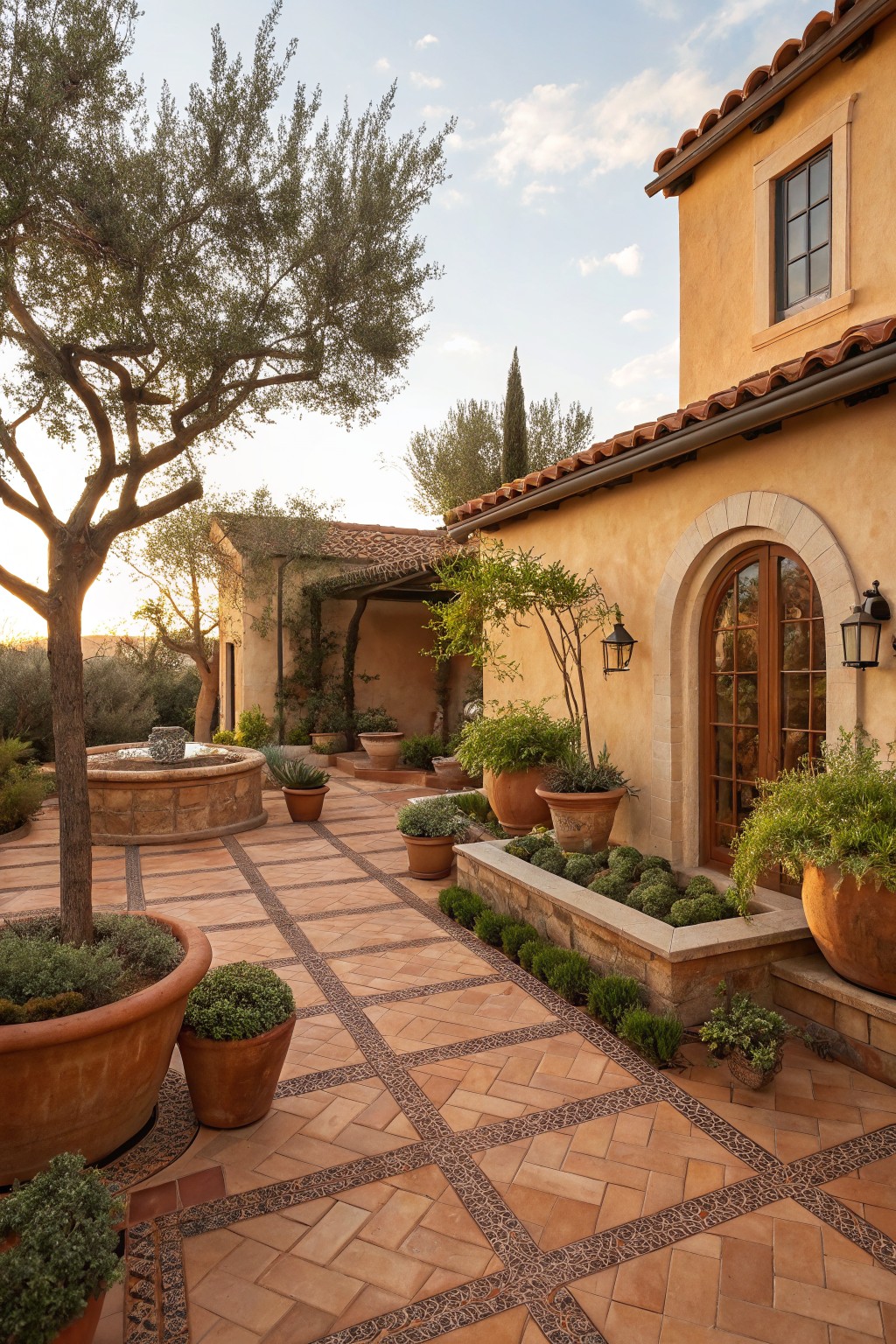
Terracotta pavers laid in a woven pattern make a simple backyard path feel more finished and old-world. The warm orange tones pick up on the house stucco and roof tiles, tying everything together without much effort. Around a central fountain like this, the paths guide your eye and foot traffic naturally.
These work best in sunny spots where you want low upkeep and some texture underfoot. Lay them around seating areas or planters on a flat yard, and keep the pattern consistent to avoid looking busy. They suit Mediterranean-style homes or any dry climate garden, but seal them yearly to fend off weeds.
Winding Stone Path in a Zen Garden
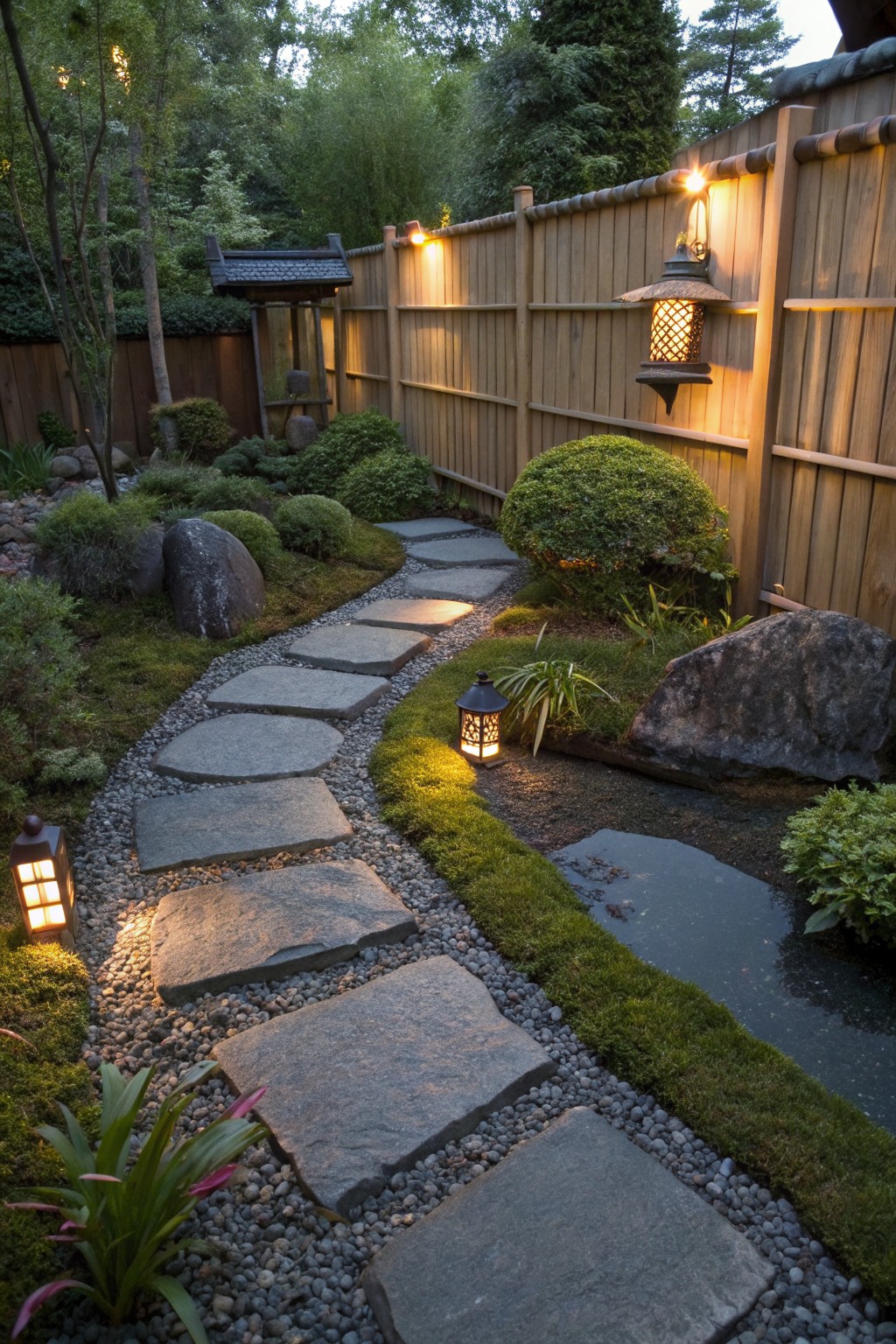
A simple winding path like this one uses irregular flagstone pavers to create a calm, natural walkway through the backyard. The stones are set just far enough apart to slow your steps, with gravel filling the gaps and edging the sides for a clean look. Small lanterns and boulders add to the peaceful Japanese garden vibe without much fuss.
This setup works best in smaller yards where you want to guide people through plantings rather than straight across. Go for sturdy, uneven stones on a gravel base to handle rain well, and keep plants low around the edges. It’s low upkeep once established… just right for folks who like their gardens looking tidy but not too fussy.
Poolside Paver Paths with Pebble Joints
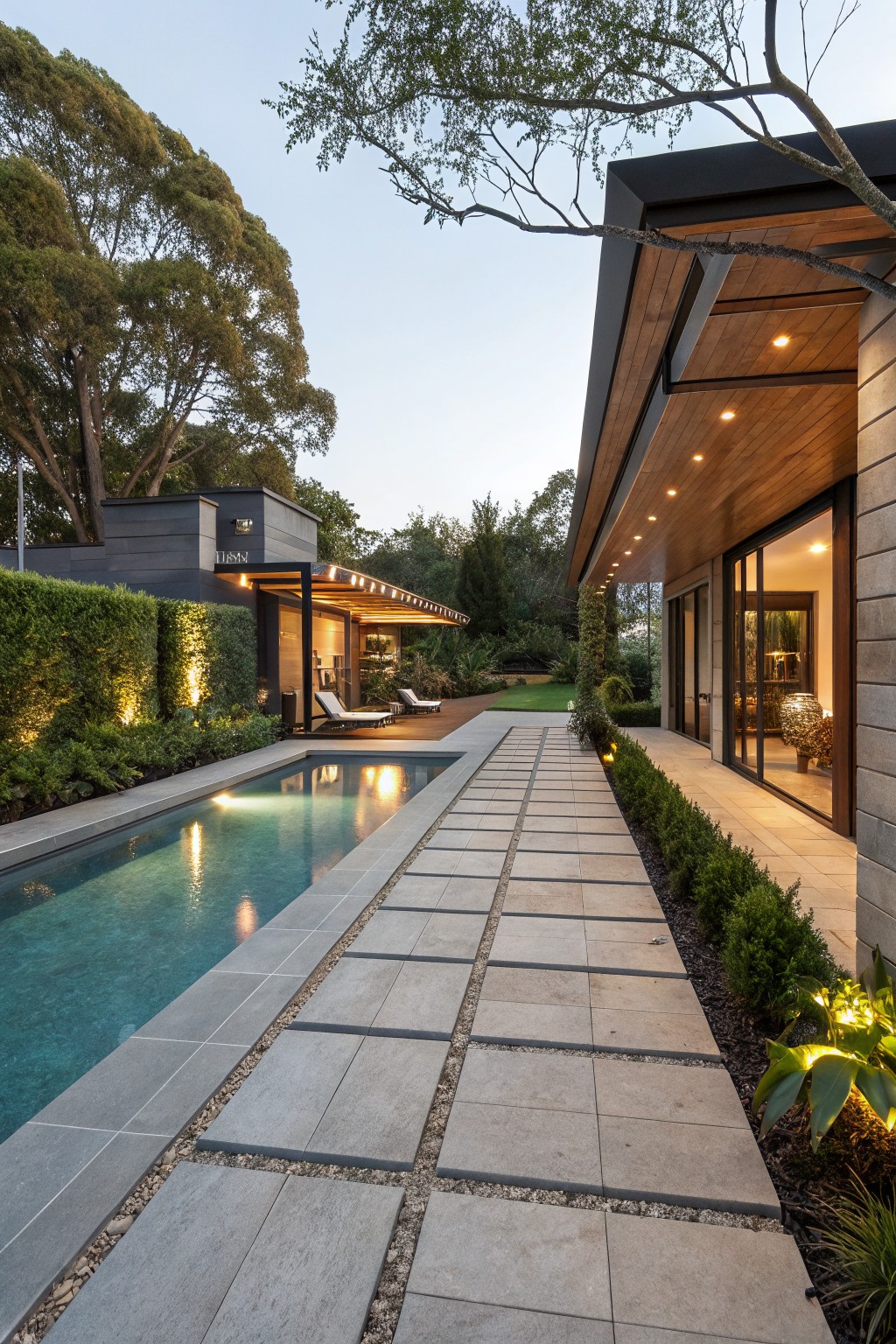
Large grey pavers laid with gaps filled by small white pebbles make a simple, sharp walkway right along the pool edge. The pebbles catch the light nicely at dusk and keep things from looking too stark. It ties the path into the garden without extra plants crowding the way.
This works best in backyards with slim pools or tight spaces where you need a straight shot to walk around. Suits modern houses that already lean clean and simple. Go for pavers at least two feet square so the look stays bold, and pick pebbles that match your stone color a little for less upkeep over time.
Winding Stone Paths in Cottage Gardens
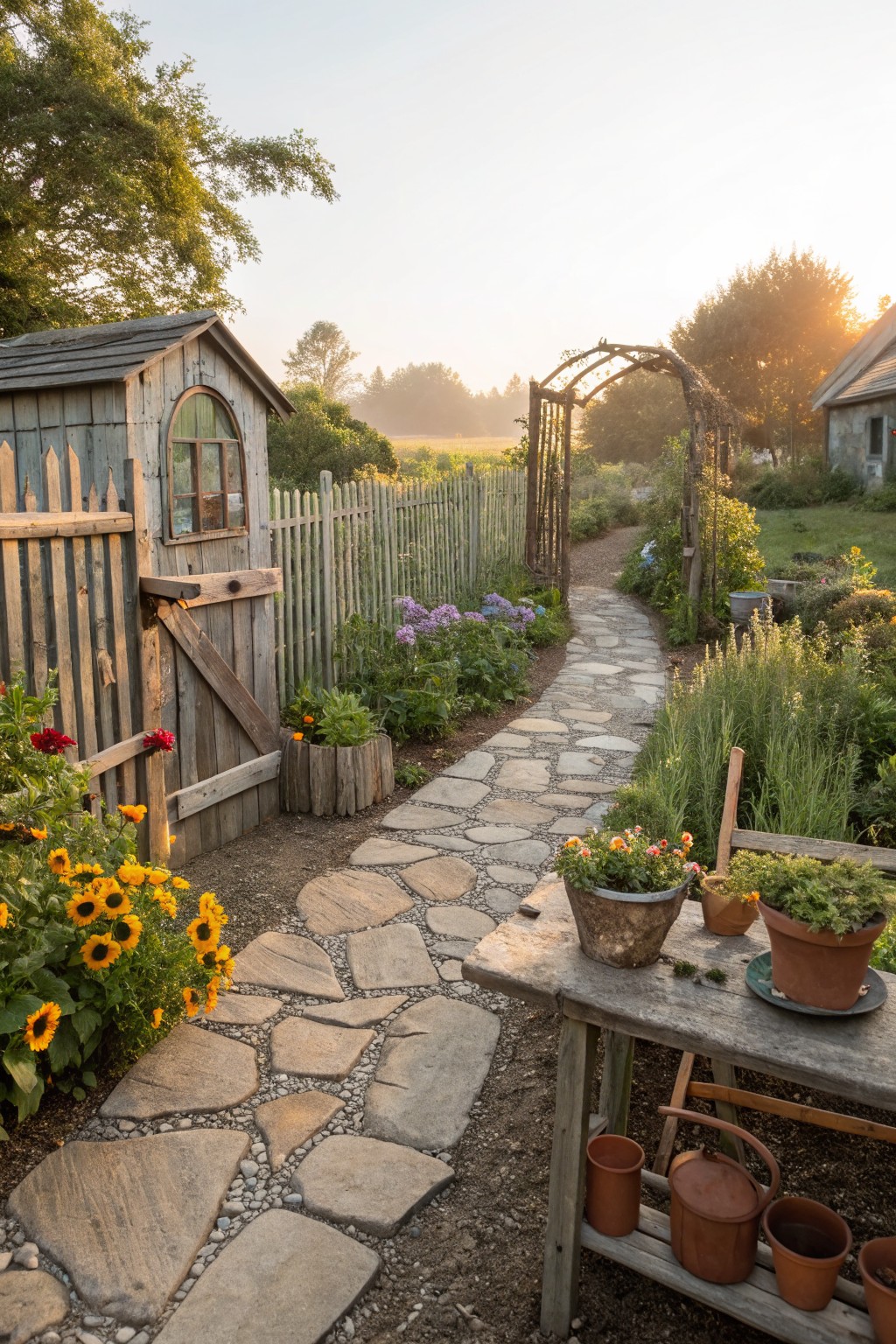
A simple winding path like this one, pieced together from irregular flagstones, makes walking through a backyard garden feel easy and inviting. It stands out because the stones fit the rustic vibe without looking too perfect or forced. Flowers and herbs spill right up to the edges, so the path guides you along without overpowering the plants.
You can use this in any backyard with room for curves and beds. Start with larger flat stones for the main trail, fill gaps with gravel, and edge lightly with low plants. It suits older homes or rural spots best. Just keep the stones level to avoid trips.
Stepping Stone Paver Paths
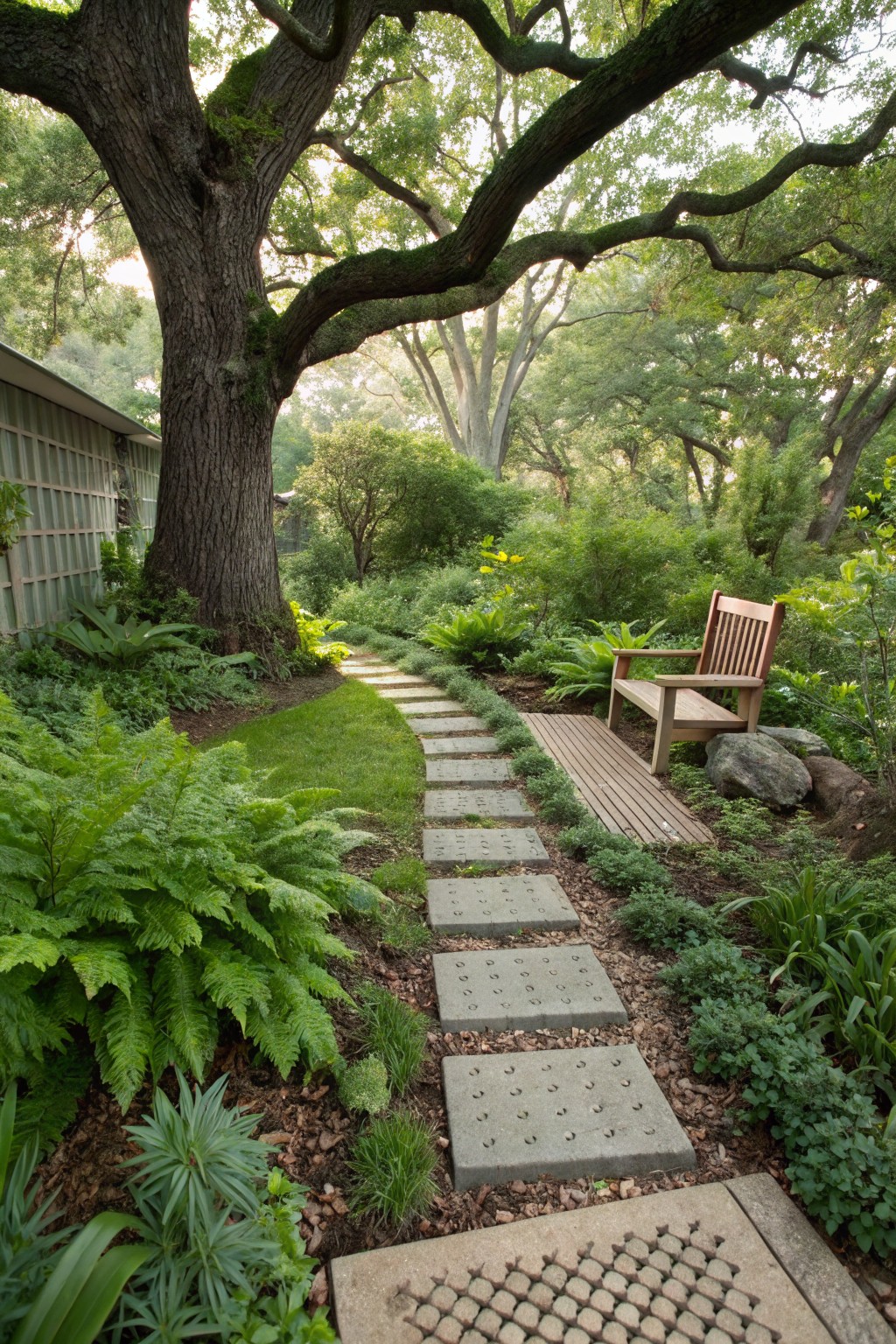
A simple stepping stone path like this one uses square concrete pavers set into the lawn and mulch. The pavers have those little dots that give them a bit of texture and let water drain right through. It pulls your eye along through the ferns and plants without mowing everything down to make room.
These paths fit best in backyard gardens with some shade from big trees. They’re low fuss to install, just dig spots for the stones and fill around with gravel or soil. Keep steps about two feet apart so it’s easy to walk, and edge them with low plants that won’t flop over the path.
Narrow Side Yard Paver Path
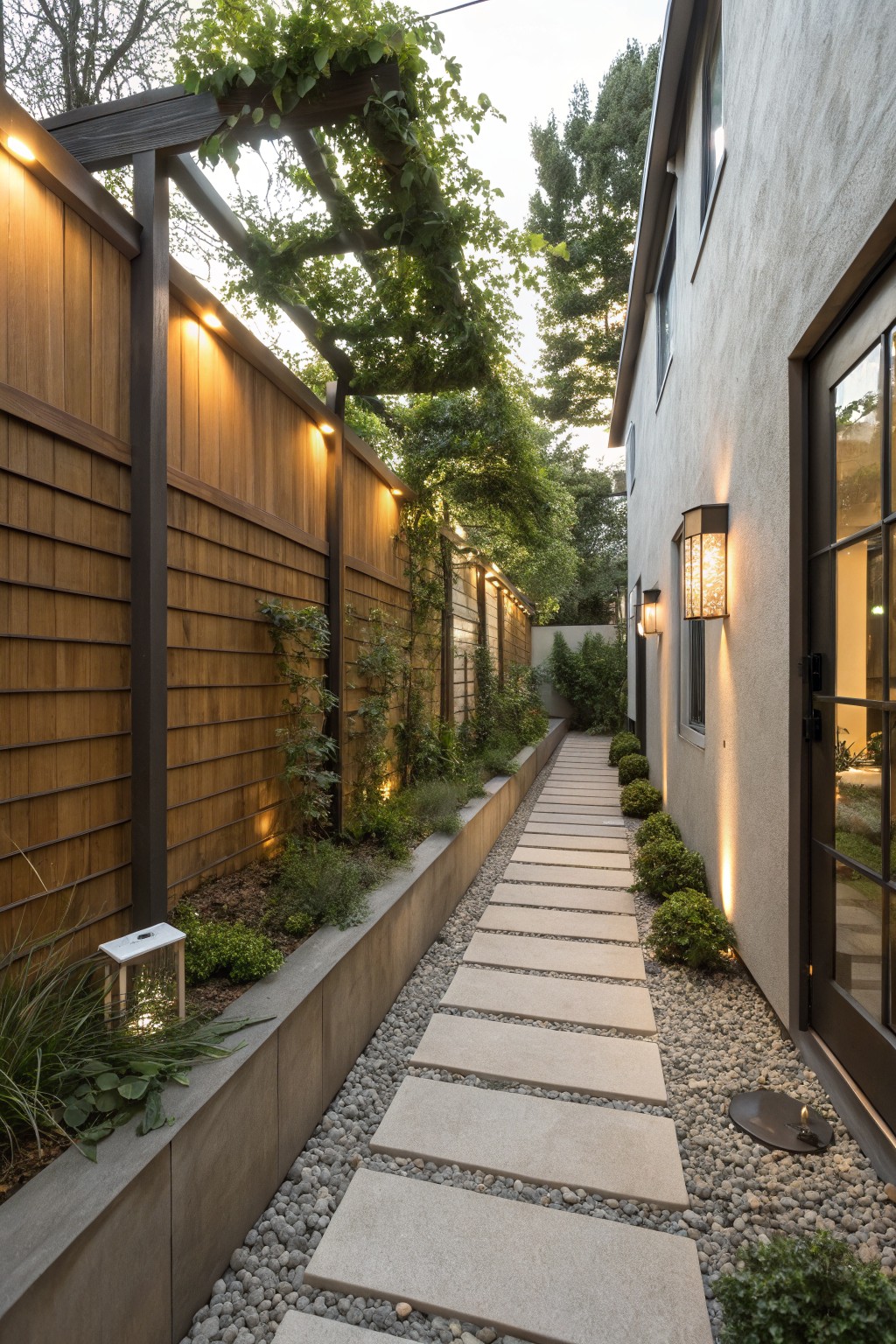
A simple path like this turns a skinny side yard into an easy walkway. Large rectangular pavers set right into gravel make it feel open and modern. No mud after rain. The raised beds on one side hold plants without crowding the way.
Use this in tight spots between your house and fence. Go for pale stone pavers that match light gravel. Keep beds low, about knee high, with tough greenery like grasses. Add spots of light along the fence for nighttime. It suits most any backyard setup… just watch the slope for drainage.
Hexagonal Paver Garden Path
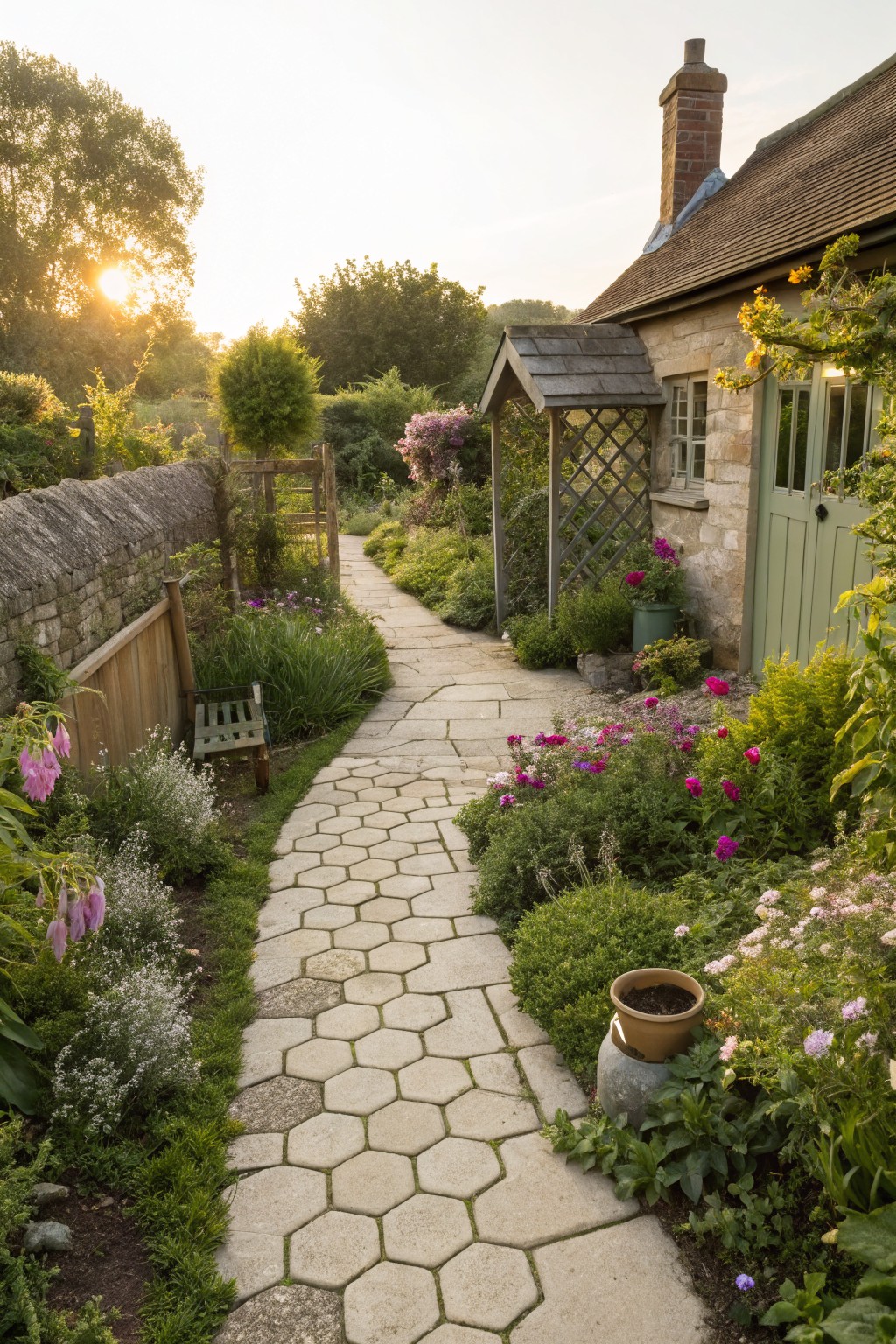
One straightforward landscaping idea is laying a curving path with hexagonal stone pavers. These fit together neatly without grout lines showing much, and they let you follow the garden’s natural shape instead of forcing straight lines. Flowers hang over the edges here, softening everything and making the walk part of the planting.
You can pull this off in smaller backyards where you want to connect a gate to a patio or shed. Pick light-colored pavers to brighten shady spots, and plant perennials along both sides for year-round color. Just space the stones tight so weeds don’t creep in, and sweep them clean now and then.
Paver Path with Pebble Dividers
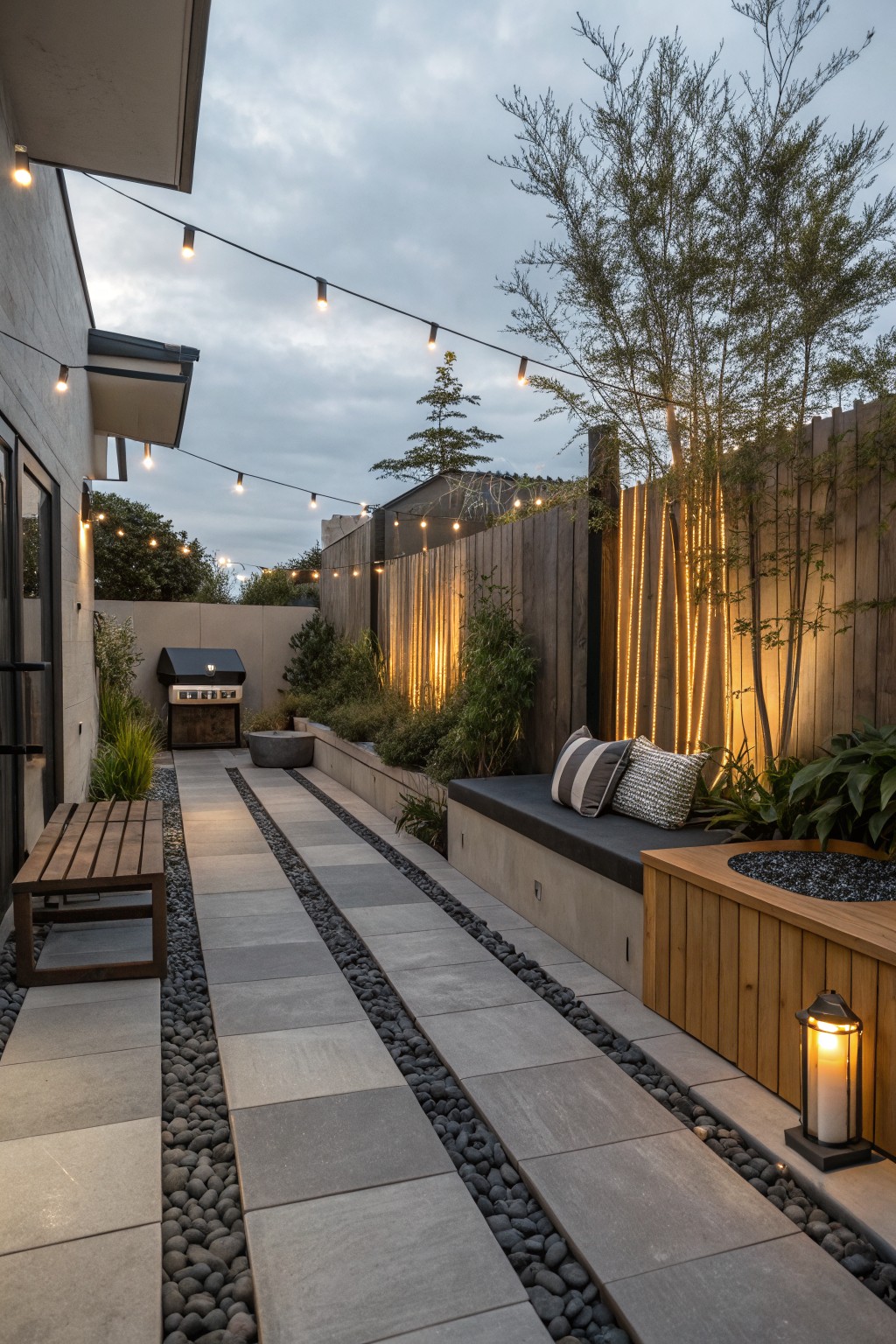
A straightforward way to guide foot traffic through a skinny backyard is to lay large concrete pavers in a row, with strips of smooth pebbles running between them. This setup makes the path feel intentional and clean, especially when edged with low plants and simple wood benches. The pebbles add a bit of texture without much upkeep, and they let water drain right through.
It works great in narrow side yards or along fences where you want to connect the house to a grill area or seating spot. Go for gray pavers if your house has a modern edge, and keep the pebbles dark to avoid a busy look. Just make sure the path is wide enough for two people, around four feet or so.
Winding Paver Paths in Garden Alleys
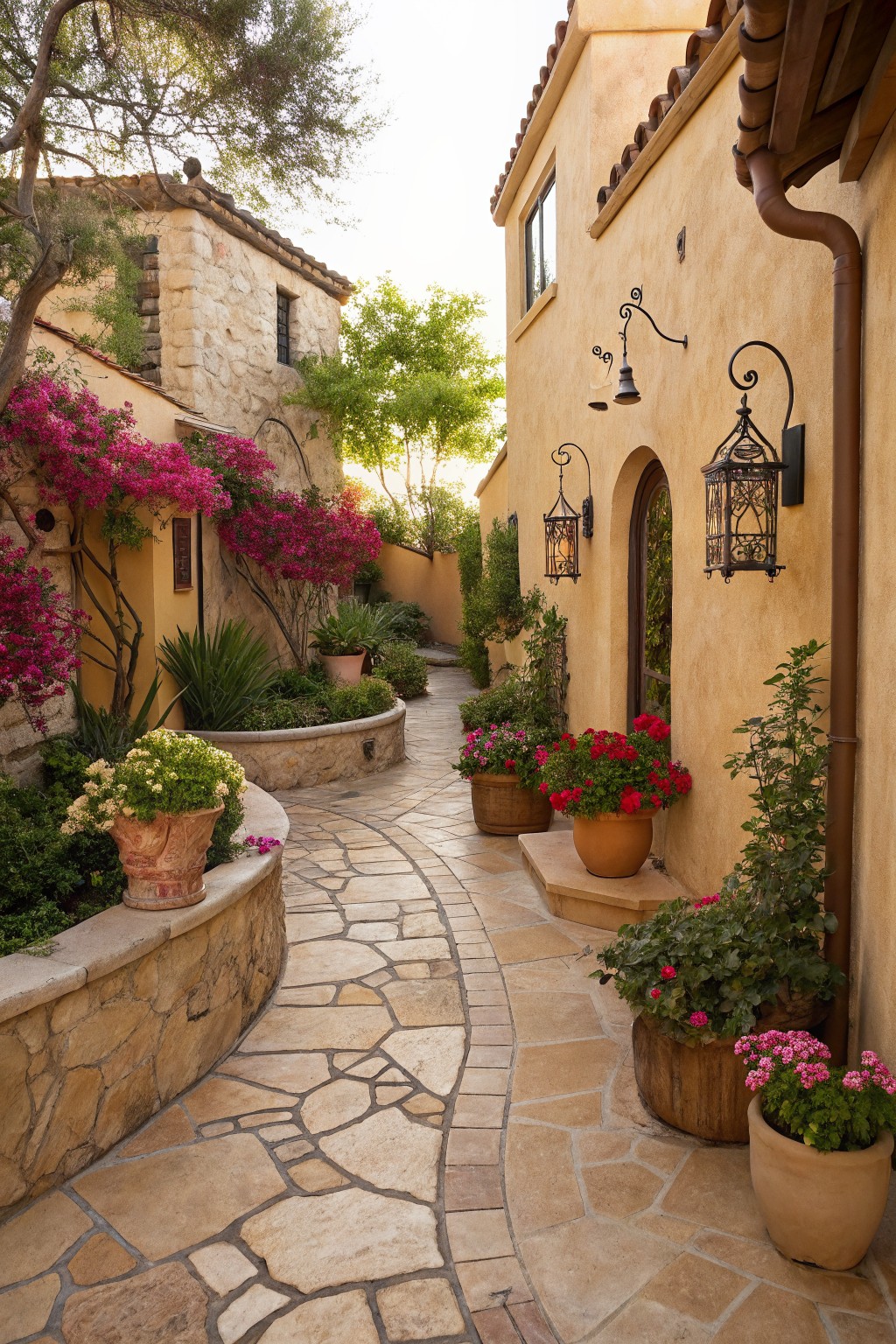
A simple winding path like this uses irregular stone pavers to create a smooth walk through a narrow garden space. The mix of stone sizes fits right in with the rough walls and plants around it. It pulls you along without feeling too straight or formal.
These paths work great in tight backyards or along house sides where you want to connect areas. Lay the pavers in a gentle curve and tuck terracotta pots with flowers right up to the edges. They suit warmer spots with bougainvillea or similar climbers. Just keep the stones level so no one trips.
Straight Paver Path with Black Pebble Edges
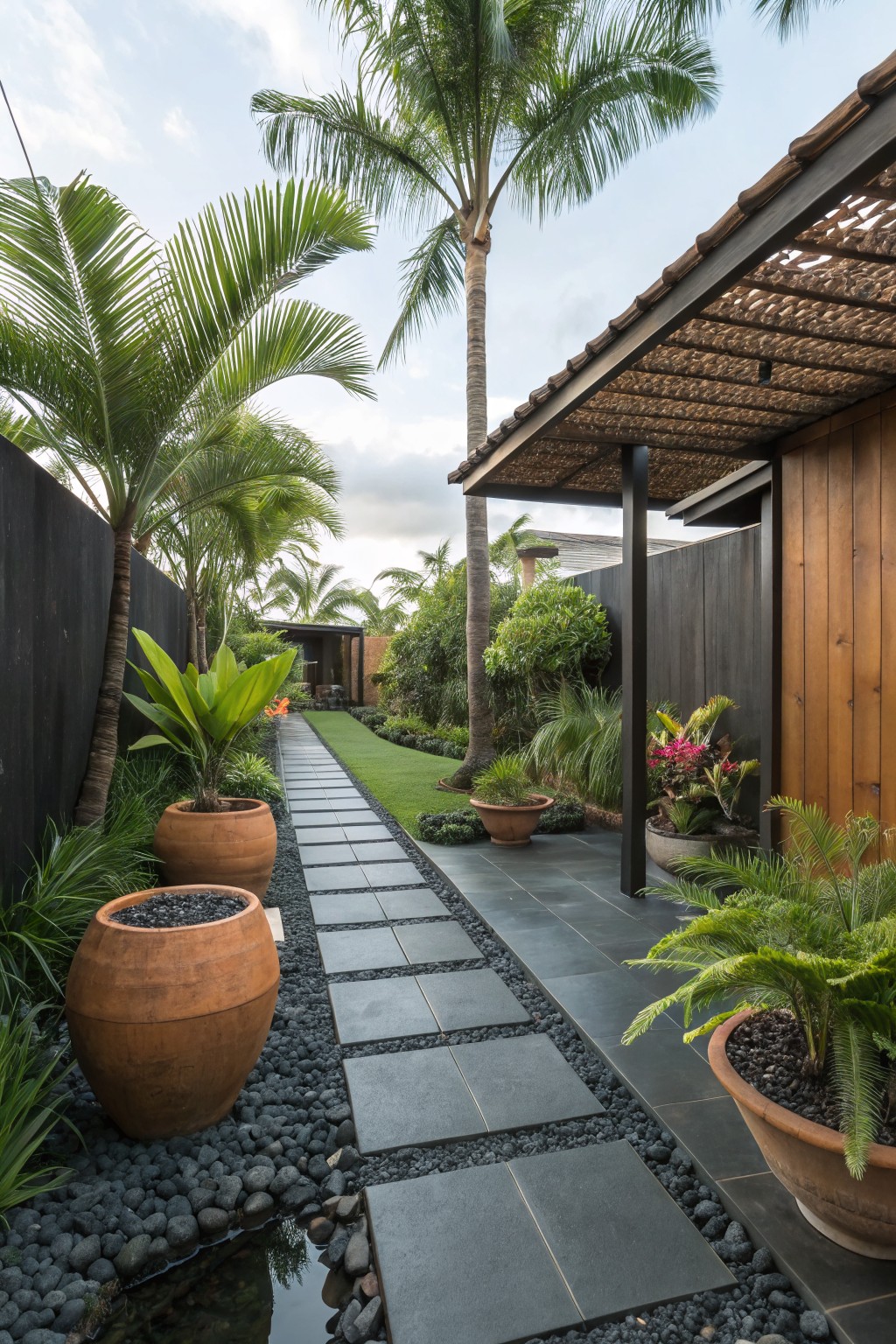
A simple straight path like this one uses dark stone pavers set into black pebbles. It cuts clean through thick tropical planting and keeps the walk easy on the eyes. Those large terracotta pots along the sides add some weight without crowding the line.
This setup works great in backyards with lots of green growth. Lay the pavers close together on a gravel base for stability, then fill the edges with smooth black stones to hold everything in place. It suits warmer spots where you want low upkeep and a path that doesn’t fight the plants.
Rugged Paver Path Through Boulders
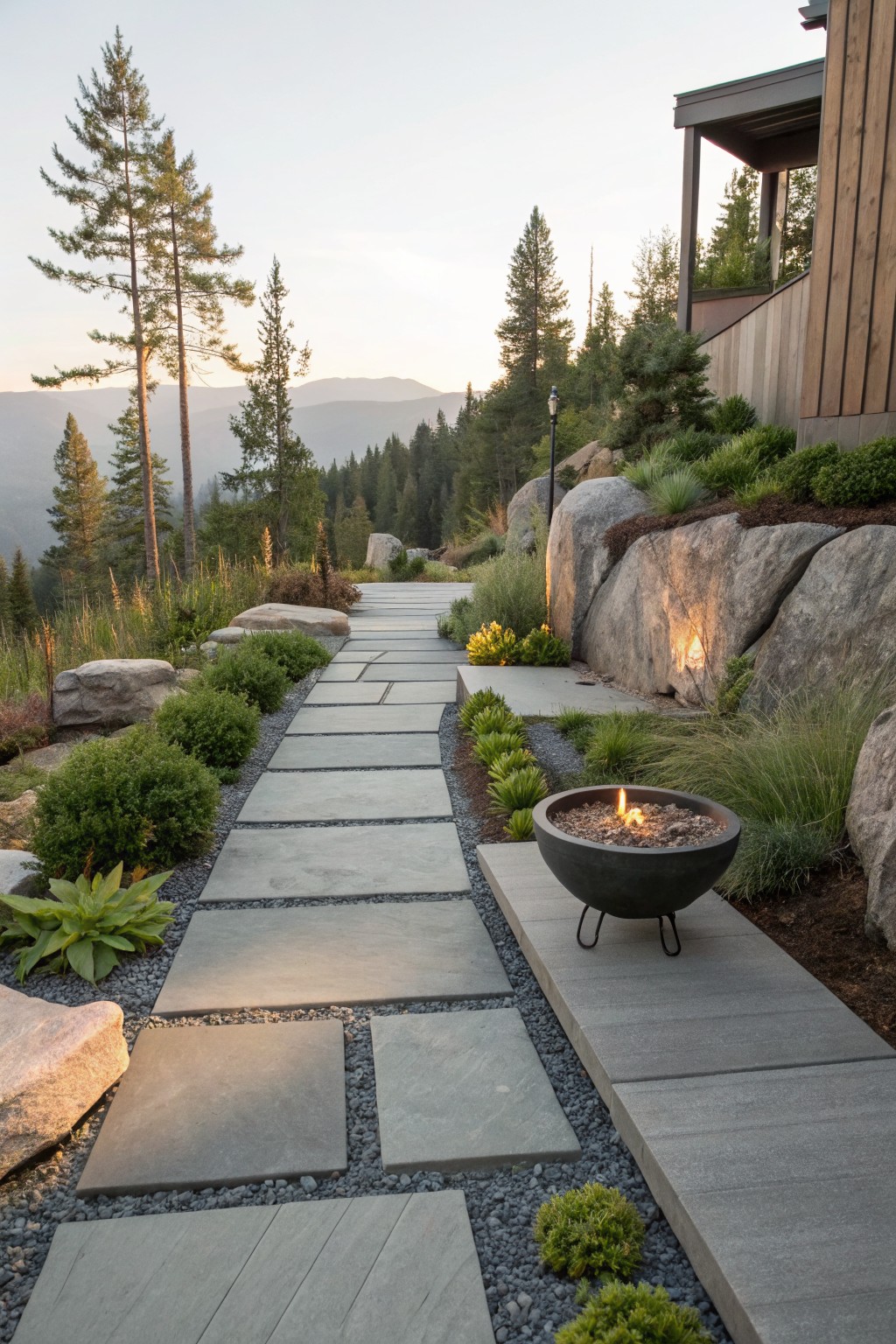
Large rectangular stone pavers laid flat in gravel make a clean walkway that fits right into a rocky yard. The path curves gently past big boulders, with low plants tucked in the edges. It keeps things looking wild and natural while giving you a solid surface to walk on.
This setup suits sloped backyards or spots with natural stone outcrops. Source pavers in slate or similar rough-cut stone, space them loosely, and fill gaps with pea gravel. Add a simple fire bowl nearby for evenings. Skip it if your yard is too flat. It stays low fuss once planted.
Winding Paver Paths Through Backyard Gardens

A winding path like this one uses irregular stone pavers to guide you right through the heart of a flower-filled yard. The uneven stones fit together casually, almost like they grew there with the roses climbing the fence and the tall perennials edging the sides. Lanterns hung along the way light it up softly in the evening… makes the whole garden feel alive and easy to wander.
These paths work great in cozy backyards where straight lines would feel too stiff. Lay the pavers in a loose curve to connect seating spots or hidden garden corners. They’re low upkeep if set in sand, and they suit older homes with that cottage charm. Just keep plants trimmed back so feet stay dry after rain.
Paver Paths Set in Gravel

One straightforward way to make a backyard path feel natural and easy to maintain is setting large rectangular pavers right into gravel or sand. In this setup, the wide gray slabs create clear steps without a lot of grout or edging that needs upkeep. The gravel fills the gaps and borders, letting water drain fast and blending the path into sandy or dune-like yards. Grasses planted along the sides add that soft, beachy look without much trimming.
This works best in coastal backyards or spots with loose soil where you want a path that doesn’t fight the landscape. Go for bigger pavers, maybe 2 feet wide, spaced a bit apart for a stepping-stone feel. Pair them with tough native plants like dune grass to hold soil and keep weeds down. Skip it in wet clay areas, though. The gravel might shift too much there.
Curved Paver Paths Through Lawn

One simple way to guide foot traffic in a backyard is with large paver stones set right into the grass. Here they curve gently from a stone patio past garden beds to a built-in bench, keeping things neat without covering the whole yard in hardscape. The path feels natural but polished, especially with the even spacing between stones.
This works best in yards with room for lawn play alongside walking routes. Pick pavers in a neutral gray or stone tone that blends with your grass, and lay them so toes don’t catch on edges. It suits family homes where you want low upkeep paths leading to a fire pit or seating without losing that green feel.
Patterned Paver Walkways
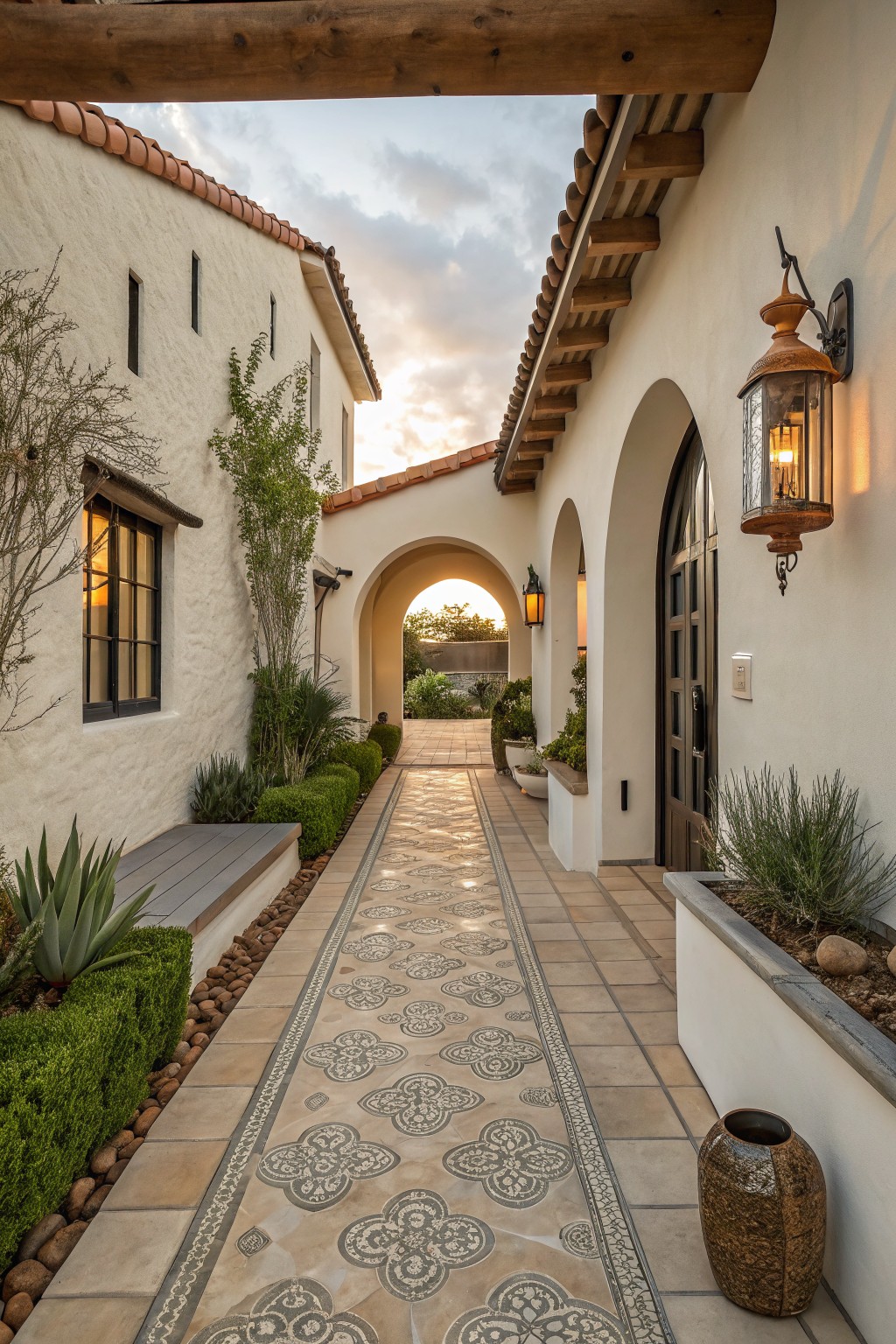
A straight walkway lined with large gray tiles featuring subtle floral patterns pulls everything together here. The tiles sit flush in gravel-edged beds, giving the path a clean look while the plants stay tidy on either side. It’s practical for foot traffic and adds a bit of pattern without overwhelming the space.
These work best in backyards with stucco walls or arched openings, like in warmer climates. Lay the pavers end to end for a formal feel, or mix sizes for something looser. Keep plants low around them, maybe agaves or clipped shrubs. Scale them right though. Big tiles shine in wider yards but can crowd narrow spots.
Winding Stone Paver Path
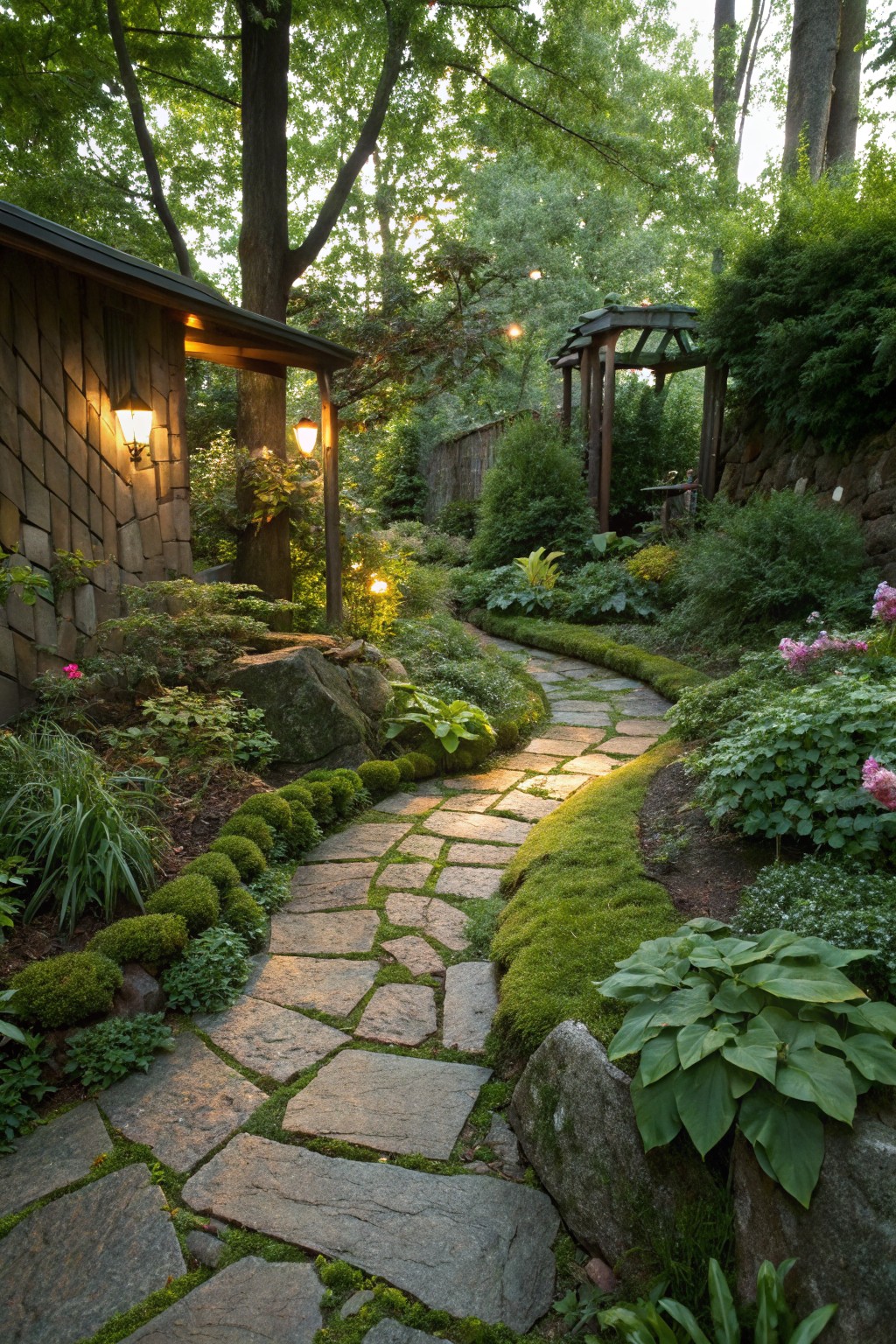
A simple winding path like this uses irregular stone pavers laid in a loose curve through the backyard. Moss fills the gaps between stones, and low boxwoods line the edges. It pulls your eye along without feeling too rigid, blending right into the plants and rocks around it.
This setup works best in shady spots with some slope, where straight paths would look forced. Pick flagstones in soft grays or earth tones, and add groundcovers that spread on their own. Skip it if your yard gets full sun, since moss might not thrive there.
Black Paver Path with Pebble Joints

Large black pavers laid in a simple grid make up this backyard path. The pebbles packed into the joints between them add a bit of texture without much upkeep. Ground-level lights tucked along one edge keep it visible after dark, and the whole thing feels steady underfoot.
This setup works best in narrow side yards or as a walkway to a patio. It suits modern homes with clean lines, especially where you want something low-maintenance that lets plants take center stage. Go for bigger pavers to cut down on cuts, and make sure the pebbles are small enough to stay put.
Frequently Asked Questions
Q: Can I lay pavers over grass without digging it up first?
A: Rip up the grass and dig down at least four inches everywhere. Pack in gravel for drainage, then add sand on top. Skip this and your path sinks fast.
Q: What’s the easiest fix if my pavers wobble after rain?
A: Lift the loose ones, add more sand underneath, and tamp down hard. Sweep polymeric sand into joints to bind everything. Check slopes too, water loves to push things around.
Q: Do pavers stay weed-free on their own?
A: Seal the joints with polymeric sand right after laying. It hardens and blocks seeds from sprouting. Spot-pull any strays early, hose off the rest.
Q: How do I cut pavers for tight spots?
A: Rent a wet saw from the hardware store, it slices clean. Mark your line, score first if using a chisel. Wear goggles, dust flies everywhere.