I’ve reshaped a few backyards over the years, and the best ones always hinge on a layout that lets plants fill in naturally without overwhelming the paths or open areas. Pathways catch your attention first because they carve out flow through the space, while simple edging holds it all together as the seasons layer on growth. In my own yard, I skipped detailed borders at the start once, and it turned into a tangle that took seasons to fix. That taught me how those quiet structures make daily use feel effortless. You’ll spot ideas here that build on those real-world basics, easy to tweak for your home’s style and how your soil behaves.
Pergola-Covered Outdoor Lounge

A pergola like this one makes a natural spot for kicking back in the backyard. With its open lattice roof letting in dappled light during the day and glowing softly at night, it turns a simple seating area into something you actually use. The low daybed keeps things relaxed, no fussy furniture needed.
Put one near the house for easy access from inside. It suits modern homes or any yard with clean lines and wood accents. Go for a black frame to match fences, and skip heavy plants overhead… just let the structure do its job.
Natural Stone Garden Paths

A winding path like this one uses irregular flagstone slabs laid in a casual pattern. Moss fills the cracks, and plants like lavender hug the edges. It pulls you right through the garden without feeling stiff or forced. Folks love how it mixes hard stone with soft greenery for that easy backyard stroll.
Try it in smaller yards to make them feel bigger and more welcoming. Pick stones in earthy tones that match your house siding. Edge with perennials that won’t flop over too much… lavender or salvia work year after year. Suits traditional homes or cottages best, but watch the weeds if you skip edging.
Pergola-Shaded Lounge by the Plunge Pool
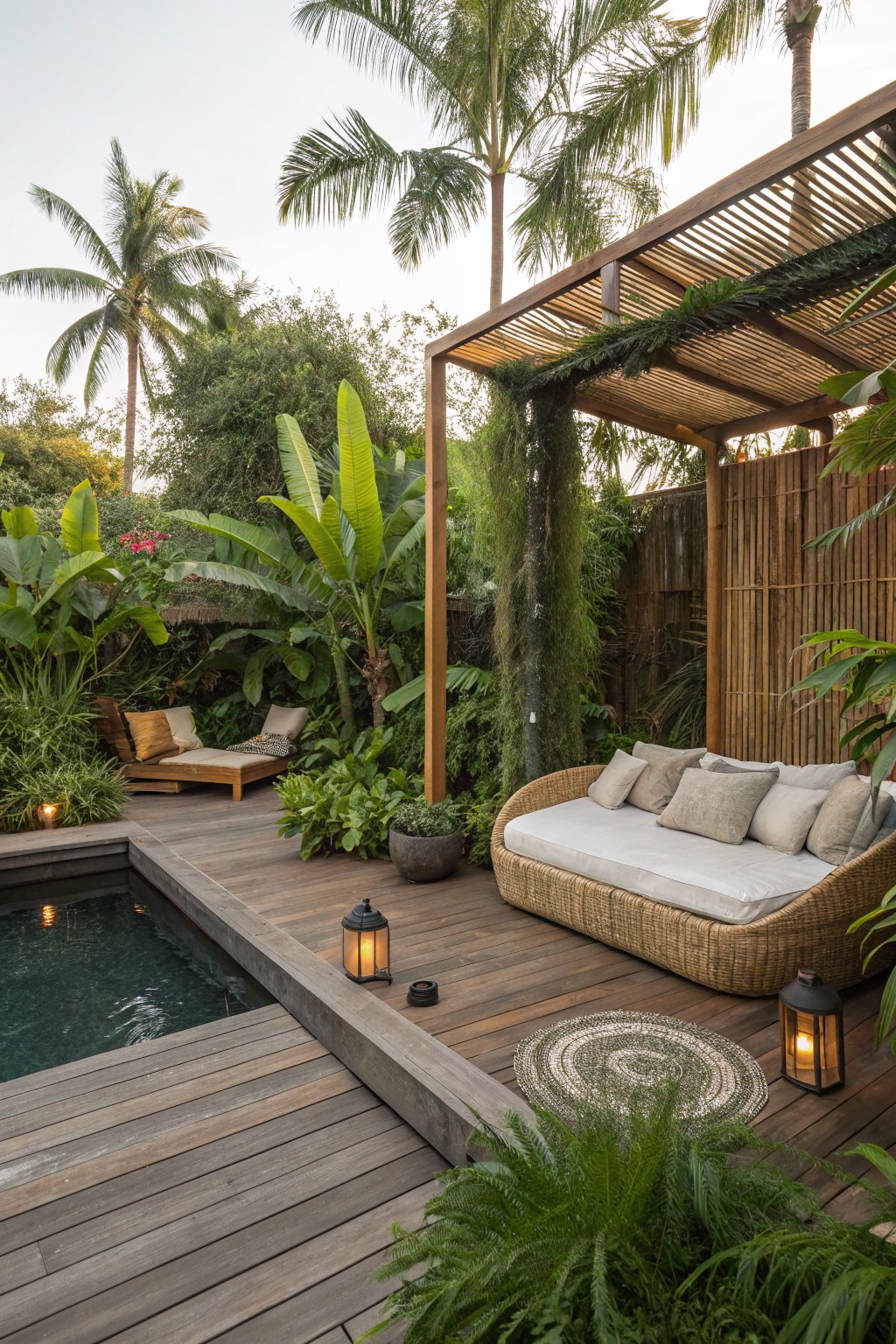
A wooden pergola draped in vines shelters a big rattan daybed just steps from a sleek little pool. That combo makes the deck feel like a private spot to stretch out, read, or nap without baking in the sun. The dark water and soft lanterns at night keep it usable morning to evening.
This works best in hot spots where you want shade without walls closing things in. Pick sturdy tropical plants around the edges for privacy, and go with natural wood decking that ages nicely. It suits smaller yards too. Just make sure the pool’s easy to maintain.
Winding Stone Paths in Dry Gardens
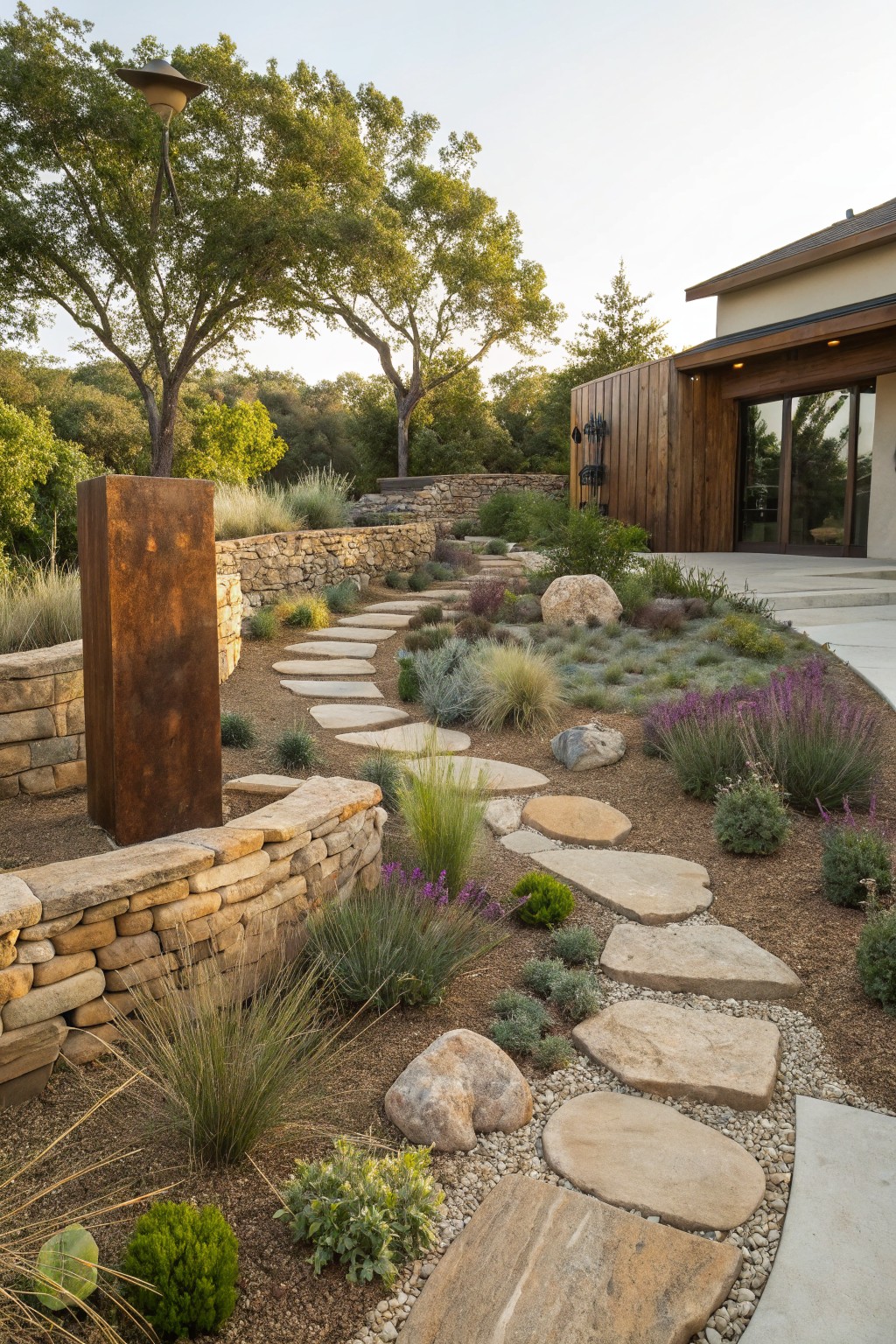
A gentle path like this uses big flat stones laid right into gravel mulch. It winds through tough plants such as grasses, lavender bushes, and low shrubs that handle drought just fine. Boulders and low stone walls edge it all, keeping things neat without much fuss. What stands out is how natural it feels. No straight lines or fussy mowing.
Put one in your backyard if it’s sunny and dry. Start with irregular local stones spaced for easy steps, then fill around with gravel and add water-wise plants. It leads nicely to a patio or door, suits modern or rustic homes, and stays pretty with little work. Just watch weeds in the gravel.
Formal Boxwood Pool Garden

Rows of clipped boxwoods line both sides of a long rectangular pool in this setup. They form neat borders that run straight down the center path, giving the whole yard a balanced, old-world garden look. The pool acts like a mirror, making the space feel deeper and more put-together.
This works best in bigger backyards with room for symmetry. Plant boxwoods about two feet high for clean edging along stone paths, and keep them sheared a couple times a year. It suits classic homes or ones with stone details… just make sure you have enough sun for the pool area to stay inviting.
Compact Pool Deck with Waterfall Edge
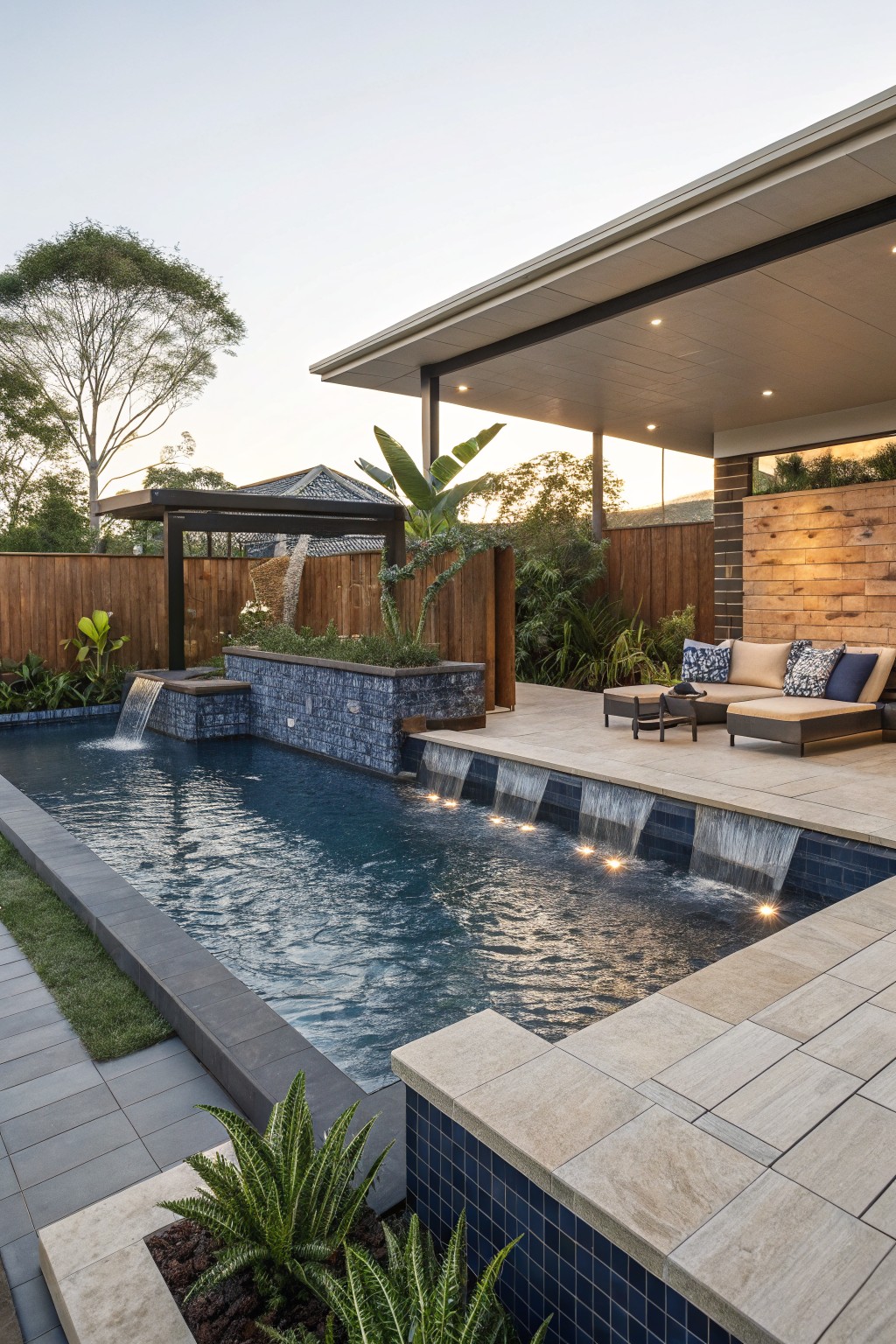
A narrow lap pool hugs right up to a raised stone deck here, with water spilling over blue mosaic tiles straight from the deck level. That simple waterfall effect turns the whole spot into an easy outdoor hangout, especially with loungers pulled close. It keeps things feeling resort-like but fits in a regular backyard without dominating the space.
This works great for homes with limited yard room, like suburban lots or modern builds with clean lines. Build the deck in light travertine or similar pavers, line the pool edge with tiles for the flow, and tuck in a few palms or succulents nearby. Watch the maintenance on the water feature though. Pumps need checking to keep it running smooth.
Terraced Retaining Walls for Sloped Backyards
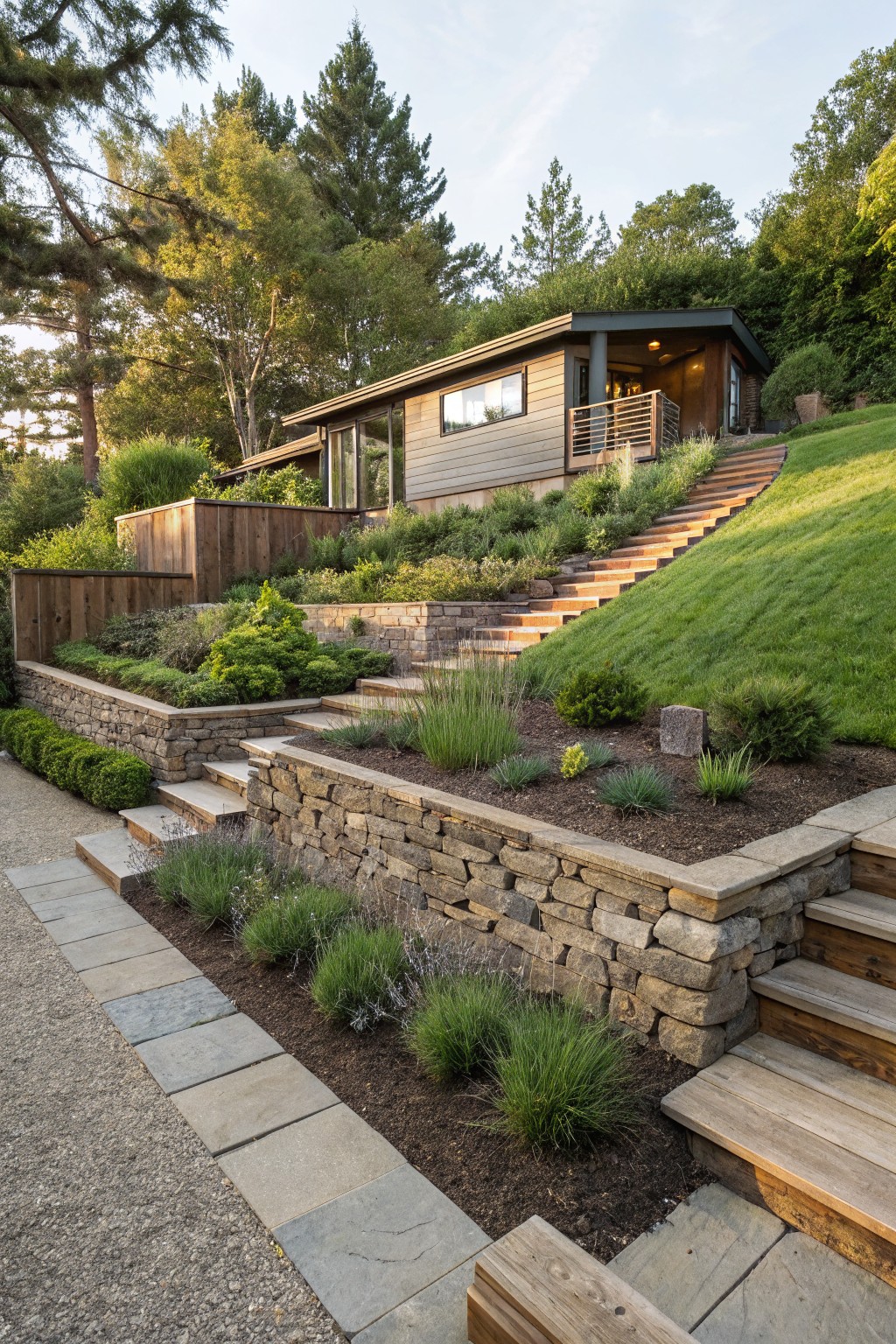
Sloped backyards often sit unused because they’re hard to reach or mow. Terraced retaining walls fix that by carving out flat planting beds and paths right into the hill. In this setup, rugged stone walls hold back the soil while grasses and shrubs fill the pockets, and simple wooden stairs link one level to the next. It turns a tough spot into something walkable and green.
These walls work best on moderate slopes where you want low upkeep. Pick stone that matches your area’s rock, like fieldstone here, and keep plants drought tough. Add stairs early in the plan so they flow with the walls. It’s practical for any backyard size, especially if you’re tying the garden to a house up top.
Winding Boardwalk Paths in Dune Gardens
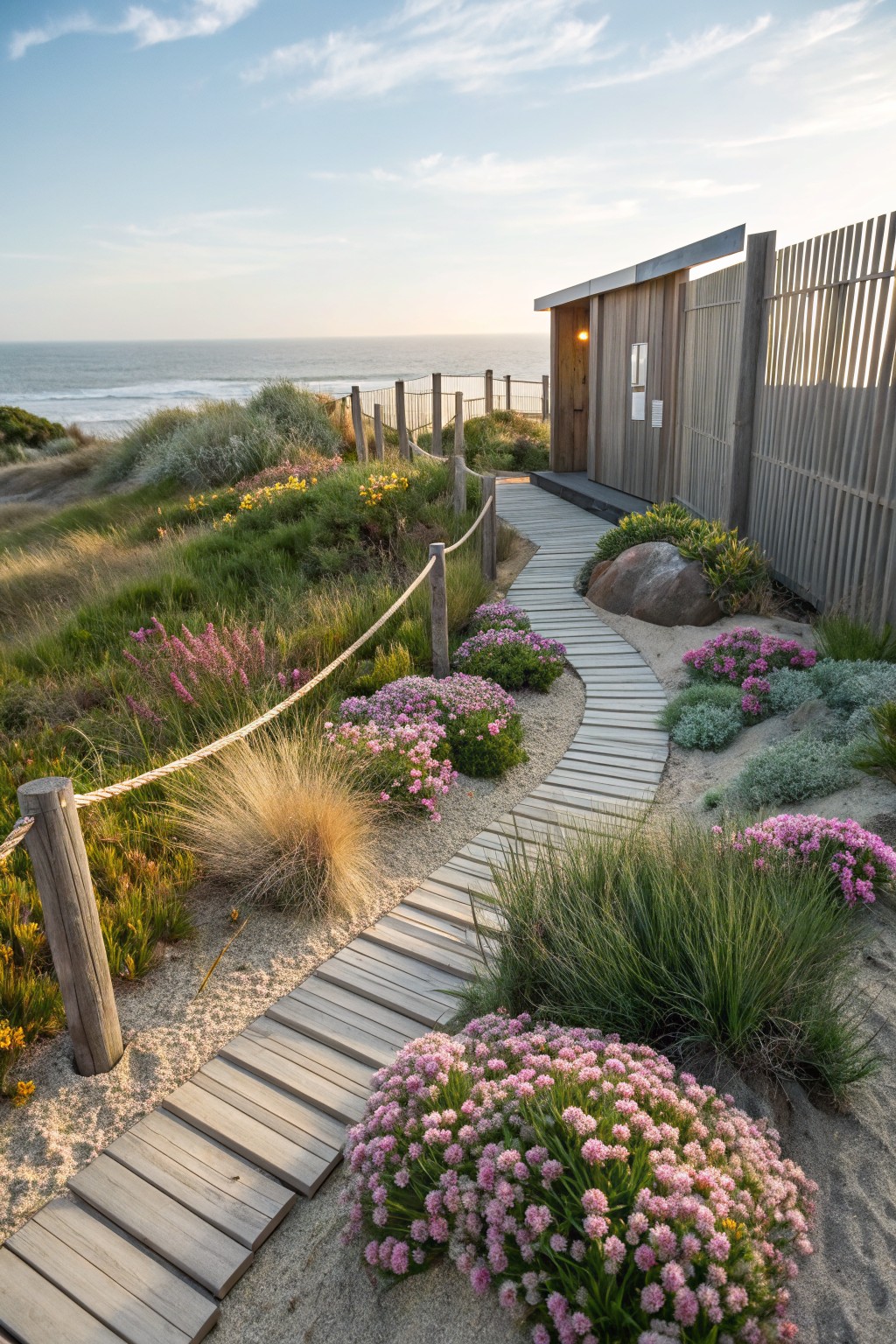
Wooden boardwalk paths like this one make a lot of sense in sandy or coastal yards. They wind gently through low grasses and flower clusters, keeping feet out of the dirt while letting plants spread naturally. You get easy access without trampling the ground, and the simple planks fit right into a beachy look.
Try this in front yards near dunes or backyards with loose soil. Pick native plants like sea thrift and dune grass that hug the path edges. It works best for casual homes by the water, but watch the wood for rot in wet spots. Raise it just enough off the ground.
Raised Bed Gardens with Gravel Paths

Raised bed gardens like this one keep everything neat and reachable. The wooden beds hold herbs, veggies, and flowers in straight rows, while the gravel path gives you room to walk without compacting the soil. It’s a practical way to grow your own food without the mess of digging up the whole yard.
This works best in smaller backyards or sloped spots where you want control over the dirt. Build the beds from untreated cedar for longevity, fill with good soil, and plant low-growers along the edges. Gravel drains fast. Keeps weeds down too. Just watch for rabbits… they love it as much as you will.
Winding Stone Paths in Woodland Gardens
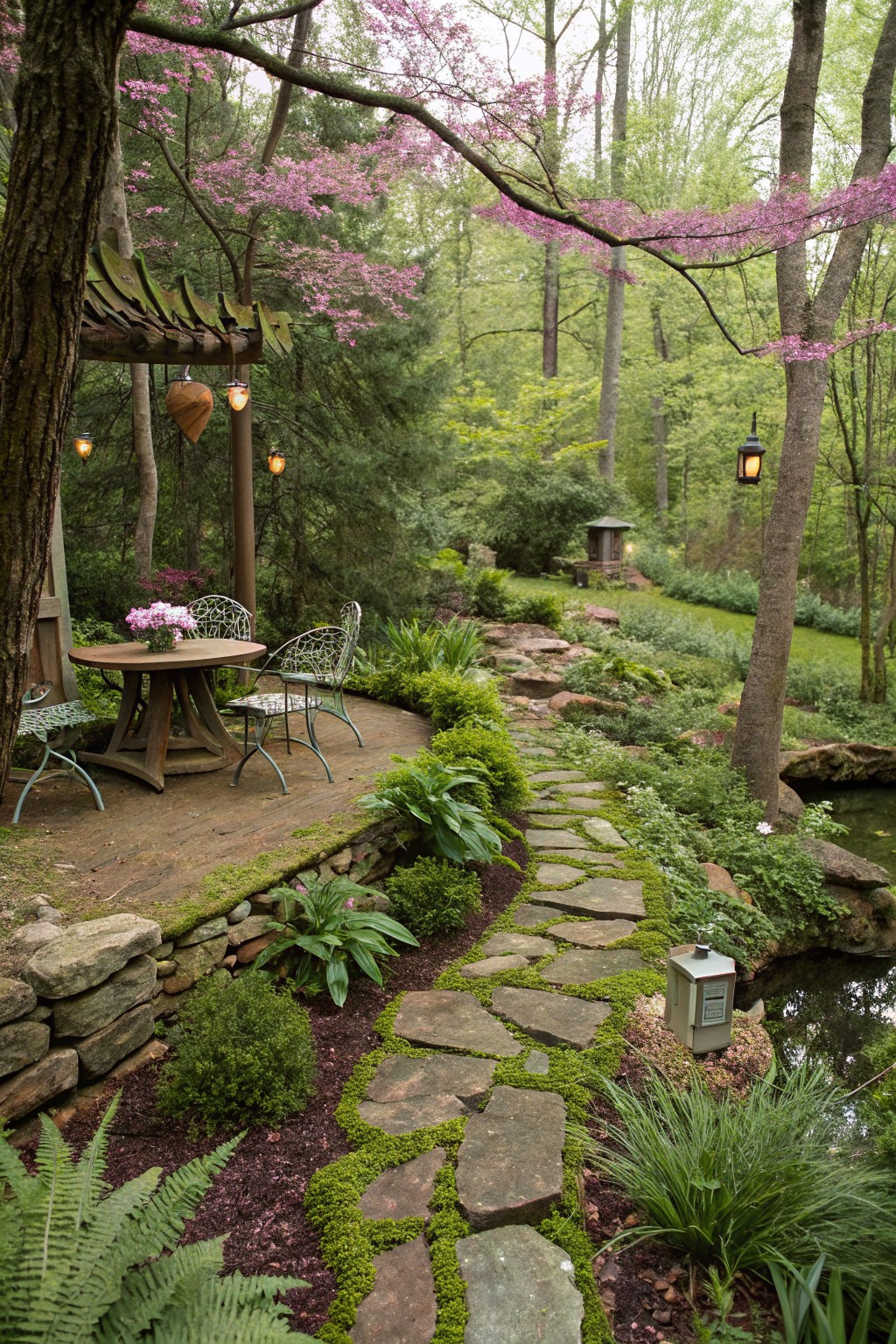
A good garden path doesn’t need to be straight or perfect. Here you see flat stones laid in a casual curve, with moss and low plants filling the gaps. It pulls the eye along toward a little pond at the end, making the yard feel deeper and more alive. The pink flowering trees overhead add just enough color without overwhelming things.
Try this in shadier backyard spots where grass struggles. Pick irregular flagstones, set them on a thin gravel bed, and let nature creep in between. It suits sloped lots or wooded edges best, keeping feet dry while blending hard paths into soft plantings. Skip it on flat sunny lawns, though, where mulch paths might do better.
Stone Path Leading to a Central Fire Pit
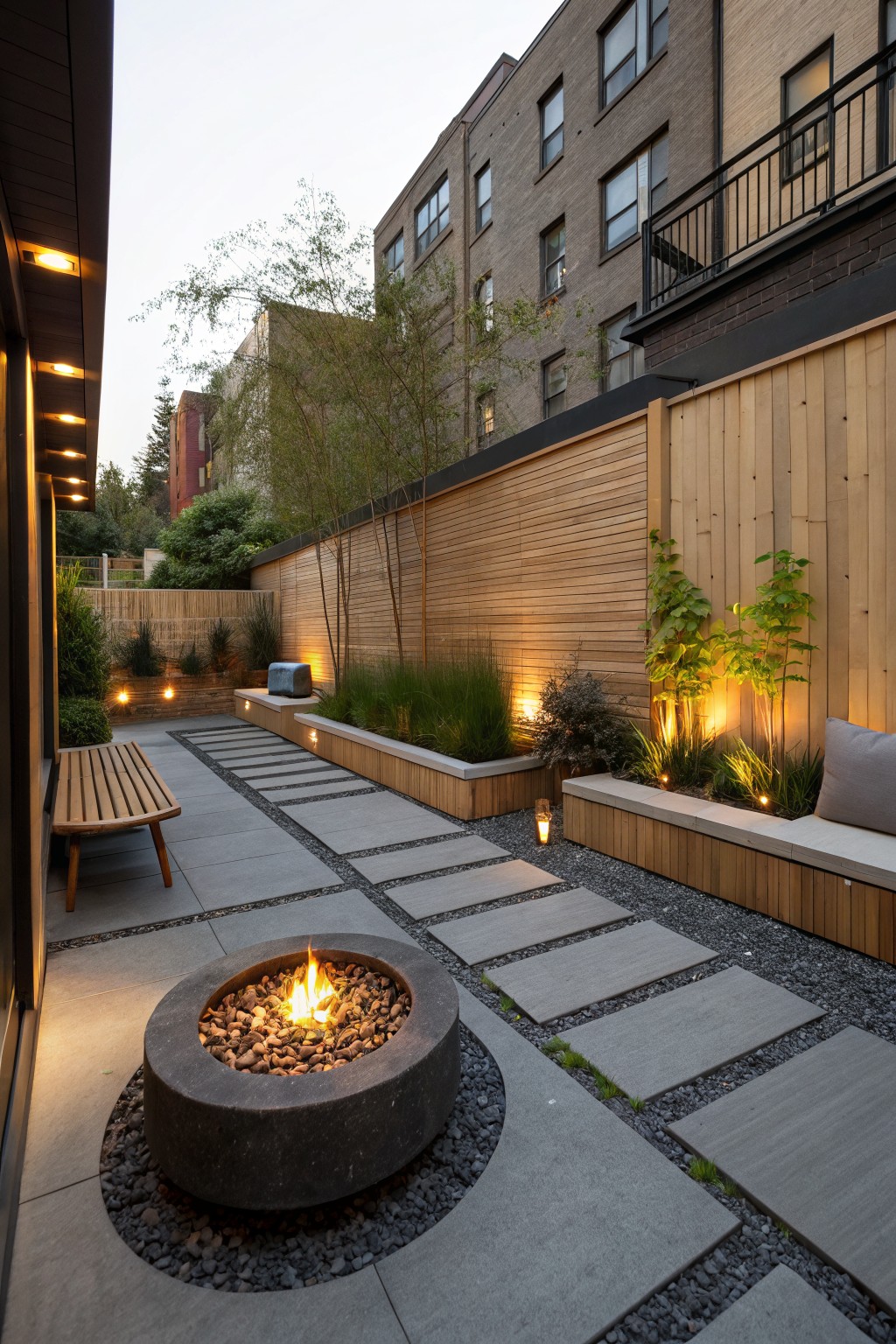
A straight path of wide gray slabs runs right down the middle of this narrow backyard patio, ending at a round stone fire pit with a steady gas flame. It gives the space direction and pulls people in naturally. The setup feels calm and ready for evenings, with wooden benches on either side and soft lights highlighting the grasses and trees.
This works best in skinny urban yards where you want to make every inch count. Lay the pavers over gravel for easy drainage, position the fire pit dead center, and build simple bench planters from cedar. Skip fussy details. It suits modern homes or rentals, and the linear look keeps it from feeling crowded.
Winding Gravel Paths in Meadow Gardens

A gravel path like this one winds gently through tall grasses and blooming wildflowers, such as those big pink coneflowers. It turns a plain backyard into something exploratory and relaxed, without much upkeep. Native plants handle themselves, drawing bees and butterflies while keeping things colorful from summer into fall.
This works best in bigger yards or spots with some sun, maybe near a small outbuilding or fence line. Start by marking a natural curve, add landscape fabric and gravel, then plant perennials and grasses around the edges. Tuck in a bench halfway along. Skip it if your space is too small or shady, though. It fits casual homes looking for that meadow feel.
Zen-Inspired Stepping Stone Paths
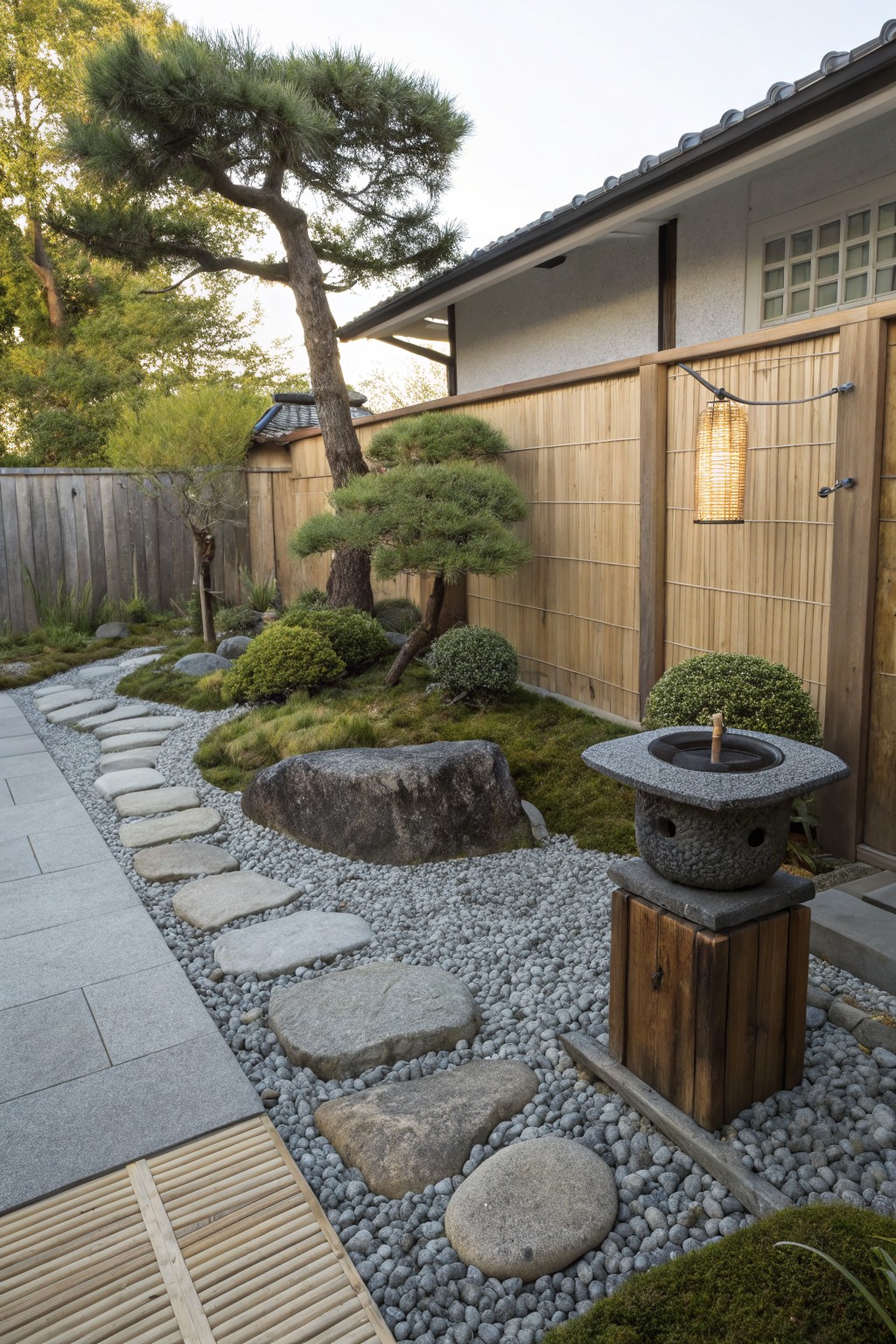
Stepping stone paths like this one make a backyard feel peaceful and purposeful. They wind through gravel and low mossy plants, pulling your eye along without crowding the space. The irregular stones give it a natural flow that fits right into a simple garden setup.
You can add one in any size yard, especially if you want low upkeep. Set the stones into pea gravel with some moss or ground cover between, and flank them with rocks or small trees. It suits homes with Asian influences or just a calm vibe, but skip it if your yard gets heavy foot traffic.
Built-In Outdoor Kitchen Setup

A built-in grill and counter area like this turns a plain patio into a real cooking spot. Tucked against a brick wall with a stainless steel hood overhead, it keeps everything handy for grilling burgers or veggies. The wooden pergola adds shade without closing things in. Folks go for this because it makes backyard meals straightforward, no hauling gear around.
Put one in if you have a flat patio spot near the house. Concrete counters hold up to weather, and storage drawers keep tools close. It fits most homes with some yard space, especially for casual family dinners. Watch the placement for wind and smoke flow.
Winding Paths Through Native Grasses

A simple concrete path curves through tall stands of native grasses and wildflowers in this yard setup. It pulls you along without feeling forced. The grasses sway around the edges, mixing hard path with soft planting for that easy, lived-in look. Folks like how it turns a plain yard into something you want to explore on foot.
Try this on bigger lots or gentle slopes where you have room for plants to grow up around the path. Go with tough natives like switchgrass or little bluestem that handle sun and dry spells. Tuck in a bench now and then. It fits ranch homes or modern farmhouses best. Just keep the path wide enough to walk comfortably.
Pergola-Covered Outdoor Lounge Area
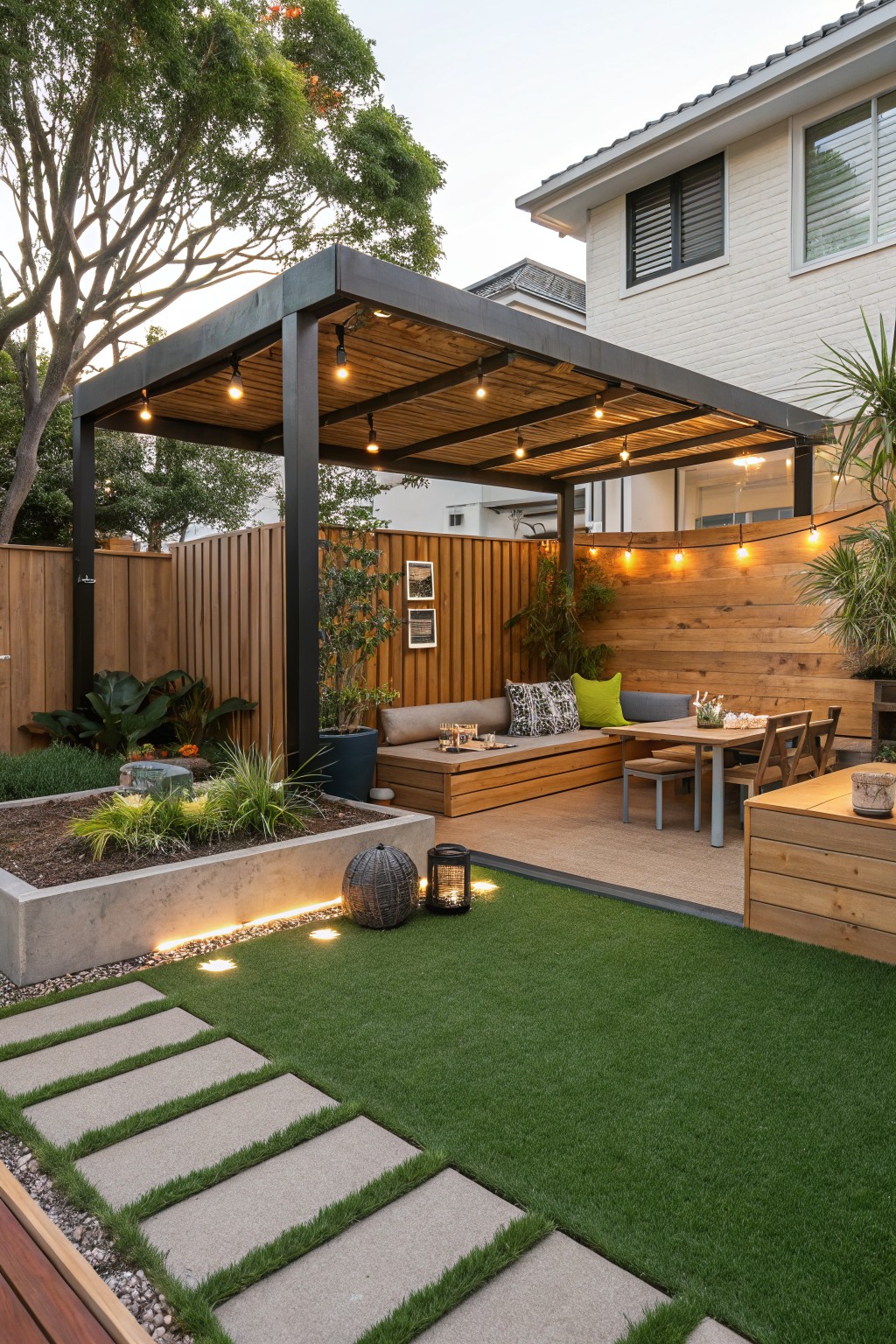
A simple black steel pergola like this one turns a basic backyard patio into a real hangout spot. It provides shade during the day and frames the space nicely with those warm string lights at night. The built-in wooden bench and table keep everything handy for casual meals or chats with friends.
This works great in yards that aren’t huge, especially next to a house with clean lines. Go for steel posts if you want something strong that won’t rot, and pair it with wood elements for that cozy feel. Just make sure the roof slats let in enough light, or it might feel too cave-like.
Terraced Stone Garden on a Slope
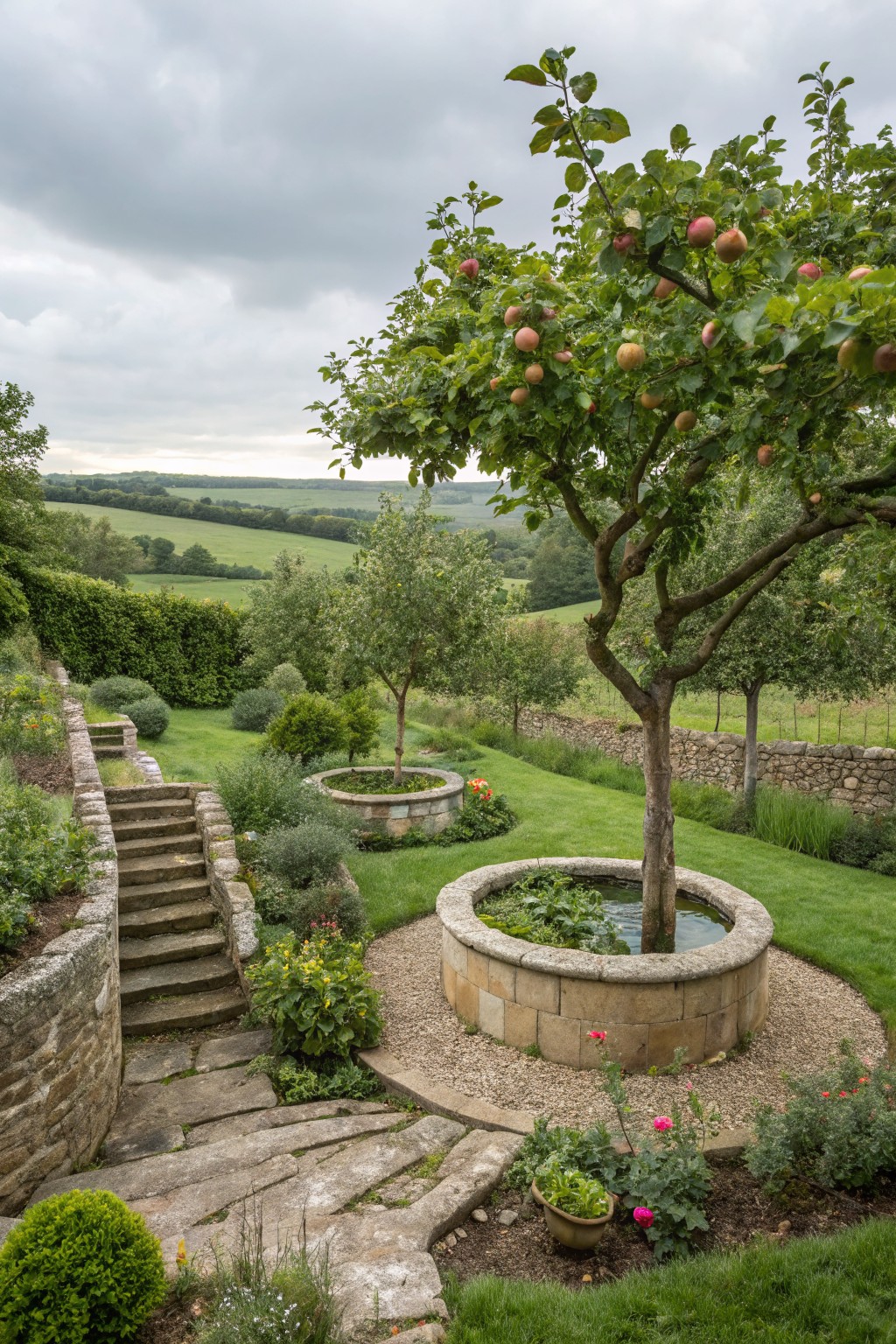
Sloped backyards can be tricky. But this setup turns the drop into levels with sturdy stone retaining walls and wide steps. A big circular stone basin in the center holds a tree and some water plants. It pulls your eye right down the path. Apple trees nearby add height and a bit of fruit without crowding things. The mix keeps it neat but full of life.
You can pull this off in any yard with a gentle hill. Start with local stone for walls that match your house. Keep paths gravel or grass for easy walking. Plant edibles like apples or pears for low upkeep. It works best in cooler spots where stone stays put. Just check drainage so water doesn’t pool.
Glowing Steps in Tiered Gardens
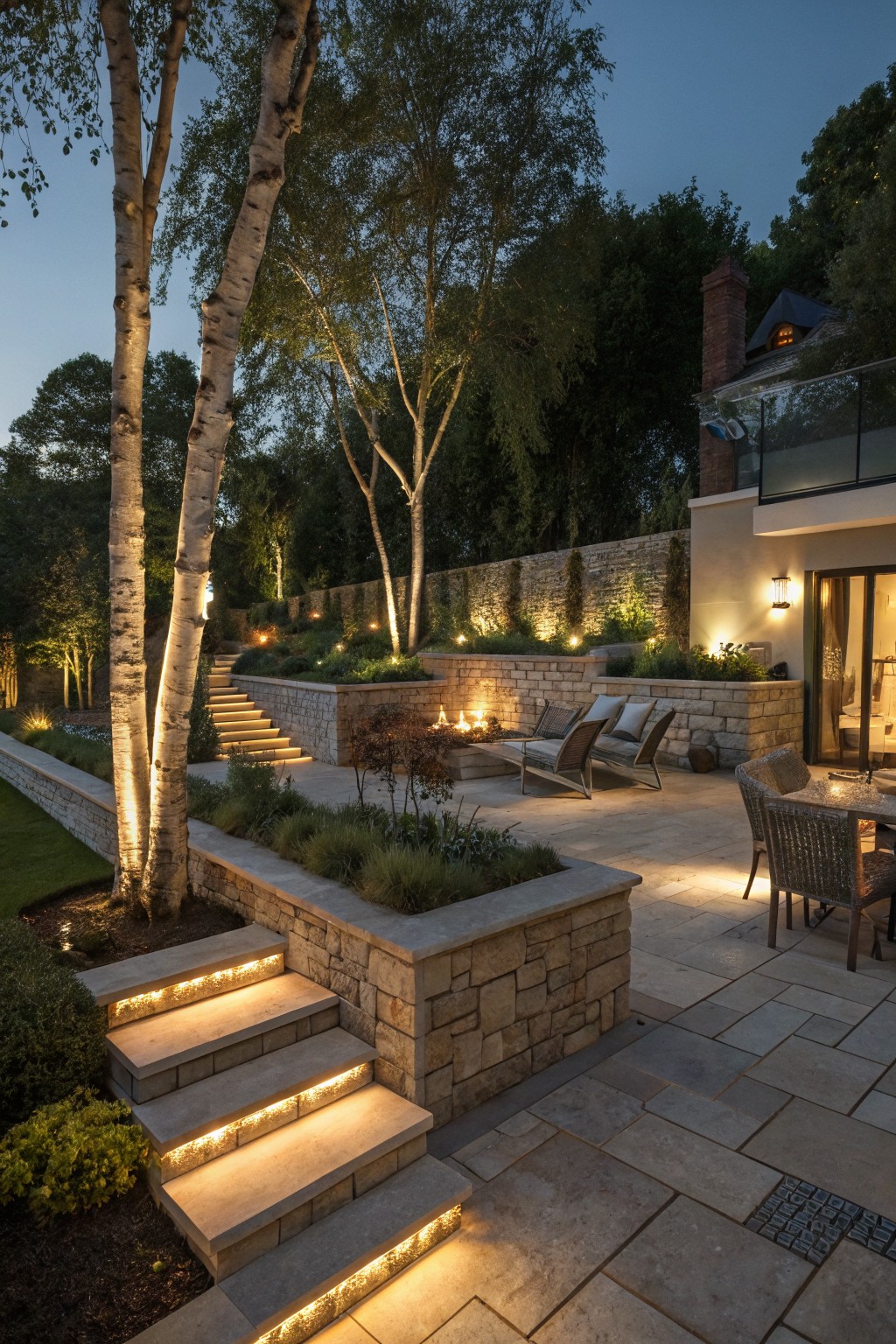
One simple way to handle a sloped backyard is building tiered stone walls with steps that light up at night. Those LED strips tucked under each step tread make the path easy to follow after dark. No fumbling around. The warm glow picks out the stone texture and nearby plants without overpowering the space.
This setup works best on hillsides where you want usable levels for planting or seating. Pair it with low boxwoods or grasses in the beds to keep maintenance down. Just hire a pro for the wiring to avoid water issues. It turns a tricky yard into something you actually use year-round.
Winding Stone Paths Edged in Boxwood
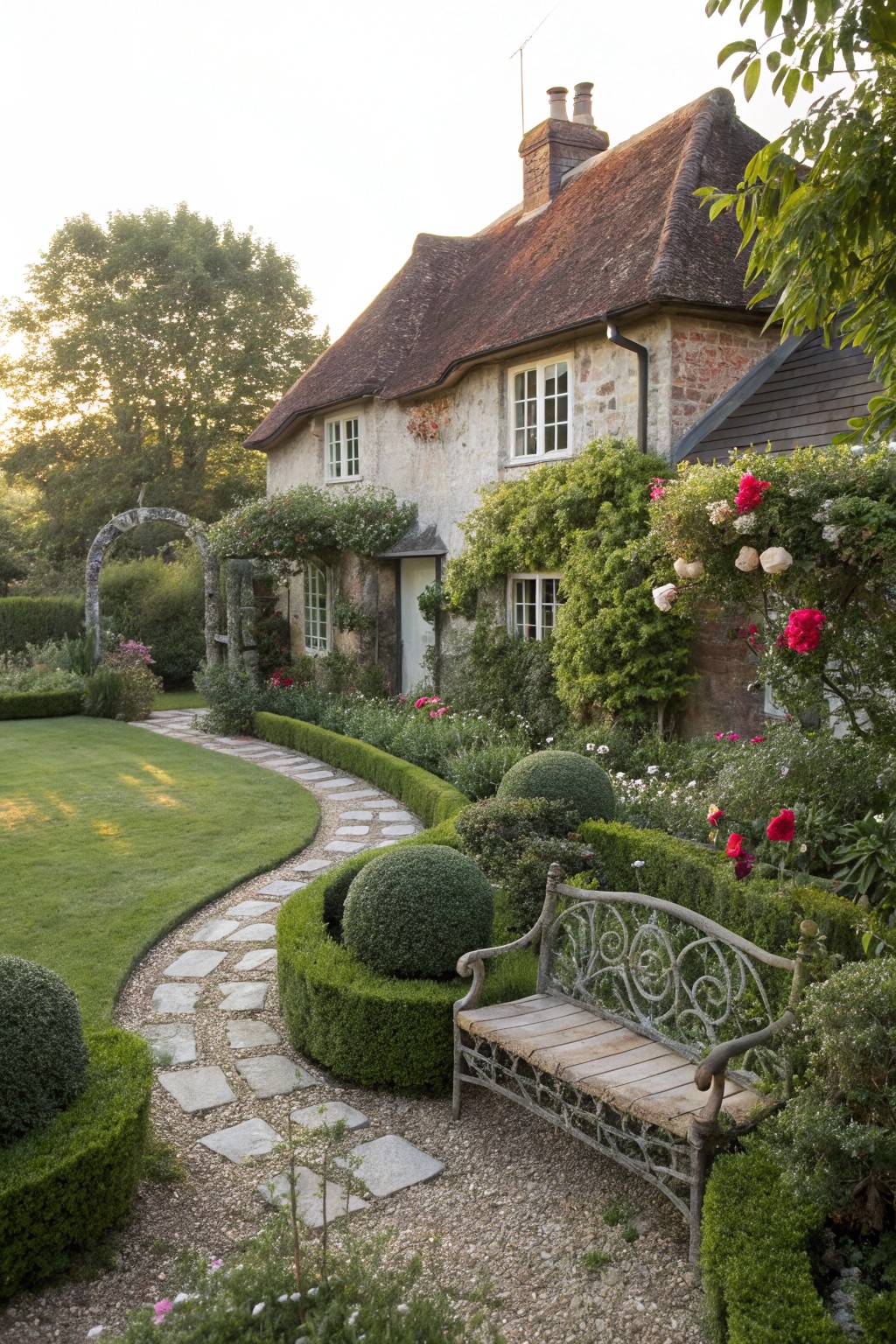
A simple winding path like this one uses flat stones set into gravel, with low boxwood hedges trimmed into neat rounds along both sides. It guides you through the garden in a natural way, without straight lines that can feel too stiff. The boxwoods keep everything tidy, and a few roses add color without much fuss.
This works well in backyards near older homes or cottages, where you want that English garden feel. Lay the path wide enough for two people, about four feet, and keep the boxwoods under three feet tall for easy trimming. It suits sloped yards too, since the curves follow the ground nicely. Just make sure the gravel drains well to avoid mud.
Raised Deck with Built-In Bench Seating

One simple way to make a backyard feel more like an extra room is a raised wooden deck with benches built right in. Here the platform sits up a few steps from the lawn, with low cushions and pillows making it cozy for hanging out. The wood tones blend with the fence and pergola overhead, keeping things calm and connected to the garden around it.
This setup works best in yards with some slope or where you want to define a lounge spot separate from the grass. Use durable outdoor wood or composite for the deck and benches, add drain holes to handle rain, and pick cushions that store easily. It’s great for smaller backyards too, since it saves space on loose furniture.
Linear Fireplace for Patio Gatherings
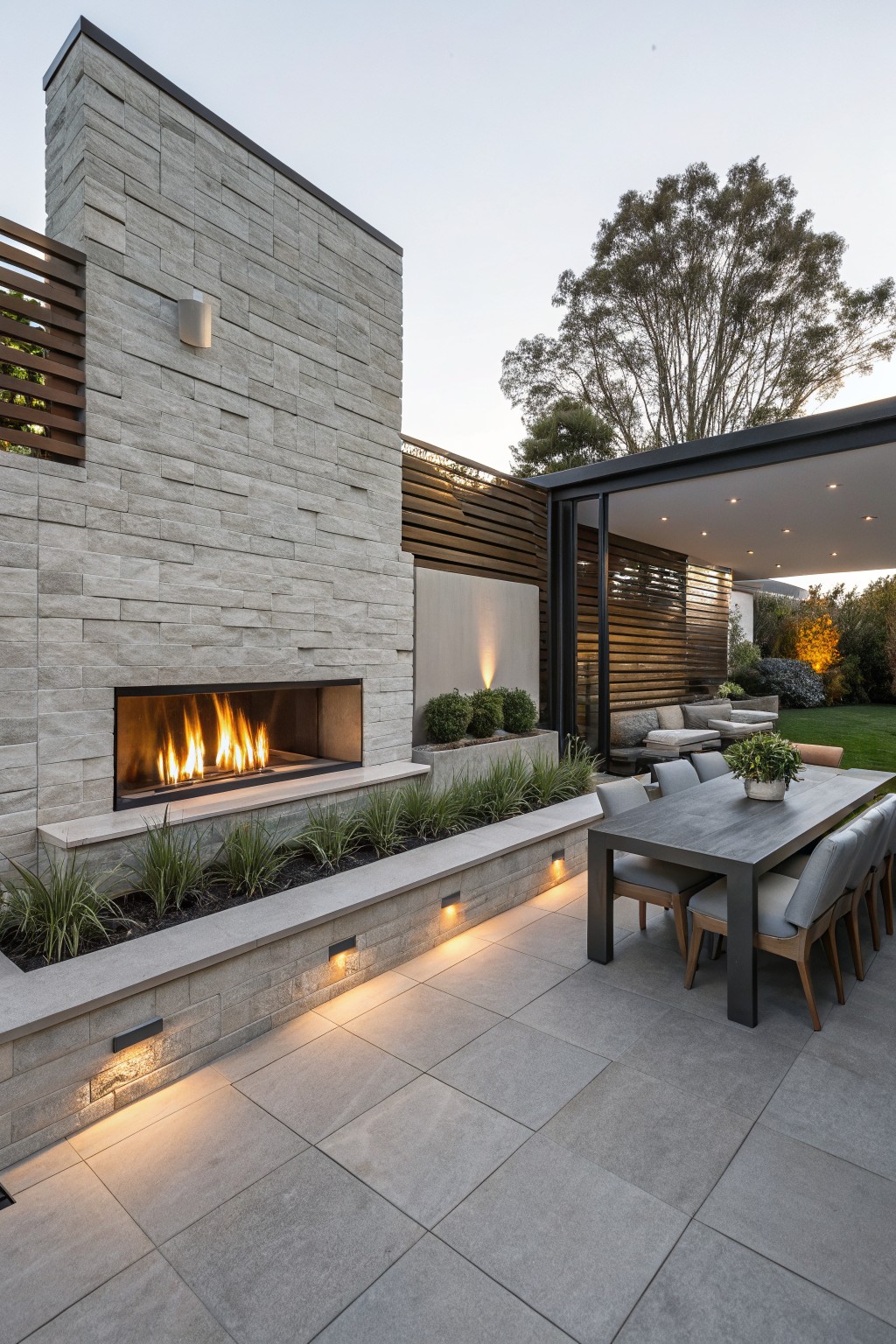
A long linear fireplace built right into the wall makes this outdoor space feel like an extension of the house. The steady row of flames gives off real warmth without taking up floor room. It pulls the dining table and chairs into one natural spot for eating or hanging out.
Try this in a backyard patio that gets some evening use. It suits clean modern looks or updated traditional yards. Just make sure the surround is non-flammable and the gas line is pro-installed.
Frequently Asked Questions
Q: My backyard is super small. Which ideas from the article work best there?
A: Grab the vertical garden or container cluster setups. They pack in color and greenery without eating up floor space. Tuck them against fences or walls for instant impact.
Q: How do I pick plants that actually survive in my climate?
A: Check your hardiness zone first, then swap in local natives from the article’s suggestions. They thrive with less fuss and water. Your yard stays lush longer that way.
Q: Can I DIY most of these without fancy tools?
A: Yes, grab basics like a shovel, gloves, and mulch. Start with the gravel paths or herb gardens, they come together in a weekend.
Q: What’s the quickest fix for a boring lawn area?
A: Lay stepping stones through the grass. It breaks up the green monotony and guides foot traffic naturally.