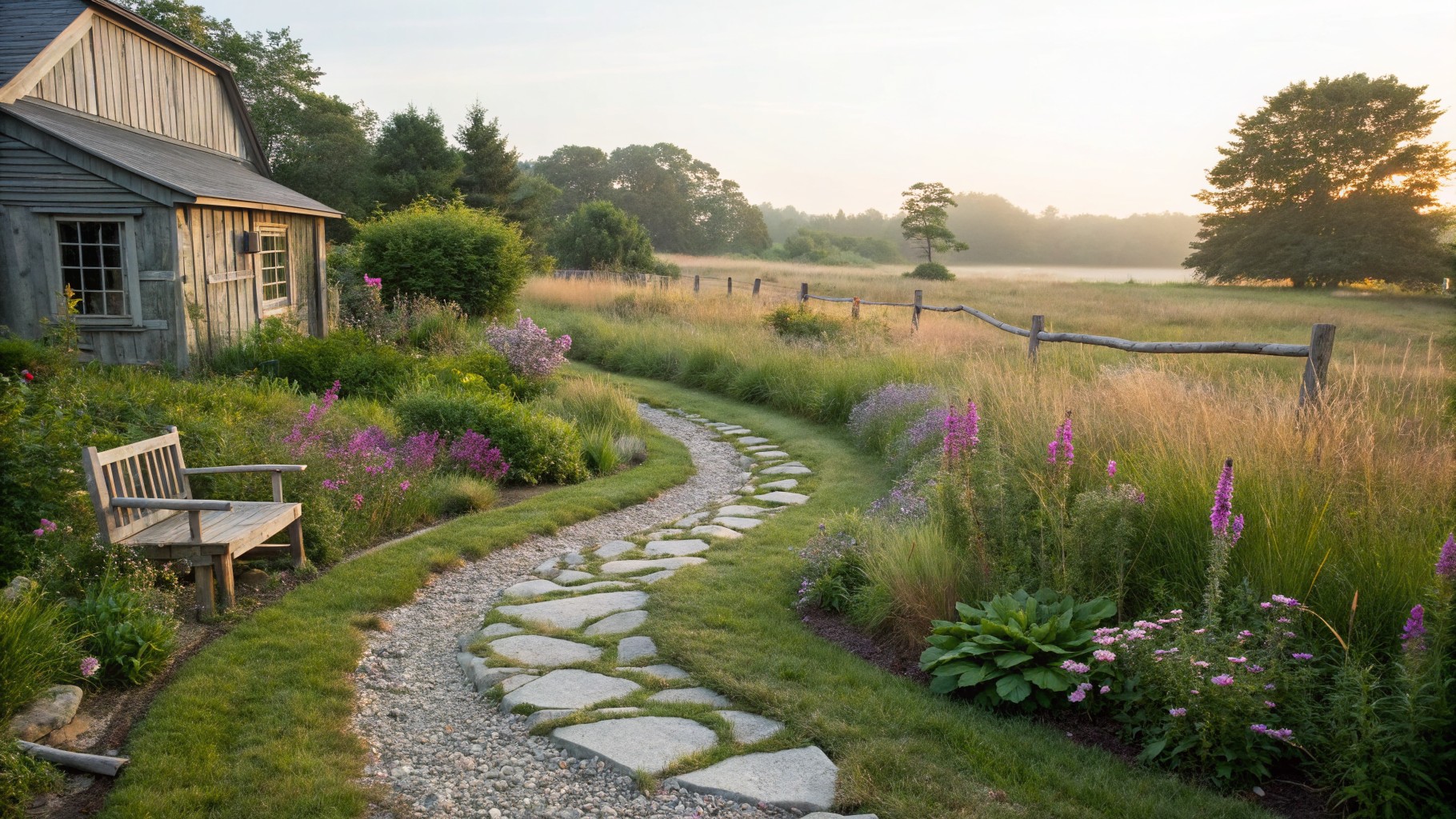
I’ve tinkered with my backyard layout for a couple seasons now, and the key takeaway is that strong pathways and planting zones make the space feel put-together even as plants mature unevenly over time. People tend to notice those clean edges along borders first, since they hold everything in place without calling attention to themselves. Simple structures like that guide how you use the yard day to day, from grilling spots to quiet corners. Gravel paths with low shrubs work best in my book. These ideas build on basics like that, so pick a couple to test and watch your backyard shift into something practical and yours.
Simple Curved Flagstone Walkway
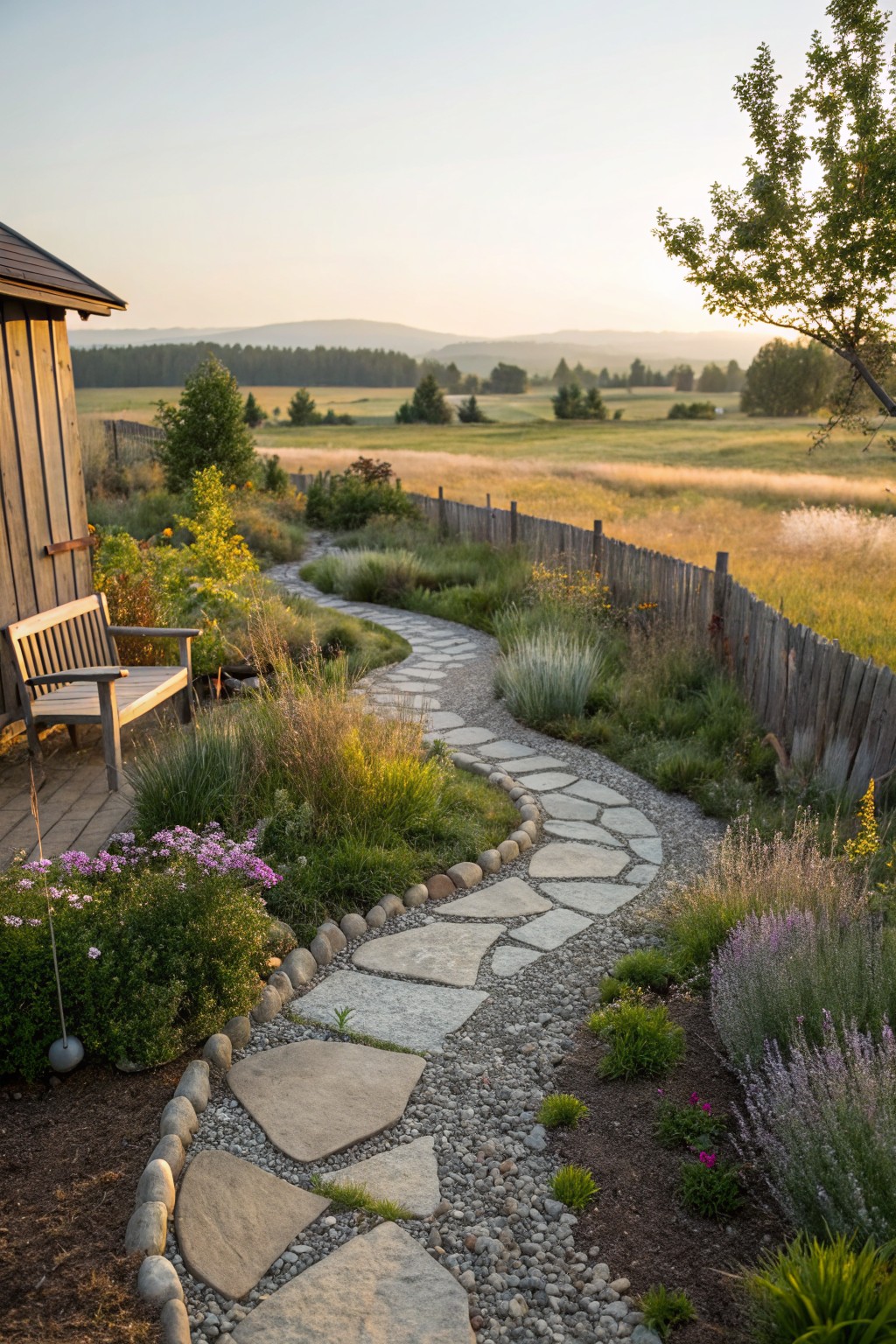
A curving path made from irregular flagstone slabs set into gravel stands out here because it feels organic, not forced. It winds softly through tall grasses and low flowers, drawing your eye toward the open fields beyond without overpowering the plants. That gentle bend keeps things interesting. You end up wanting to walk it.
For beginners, start with a gravel base in your backyard border, drop in the stones where they fit naturally, then edge with rocks or plants. It works best along a fence line or house side where you have room for perennials to spill over. Once the grasses fill in… low upkeep. Skip straight lines if you want that relaxed yard feel.
Create a Simple Fire Pit Patio
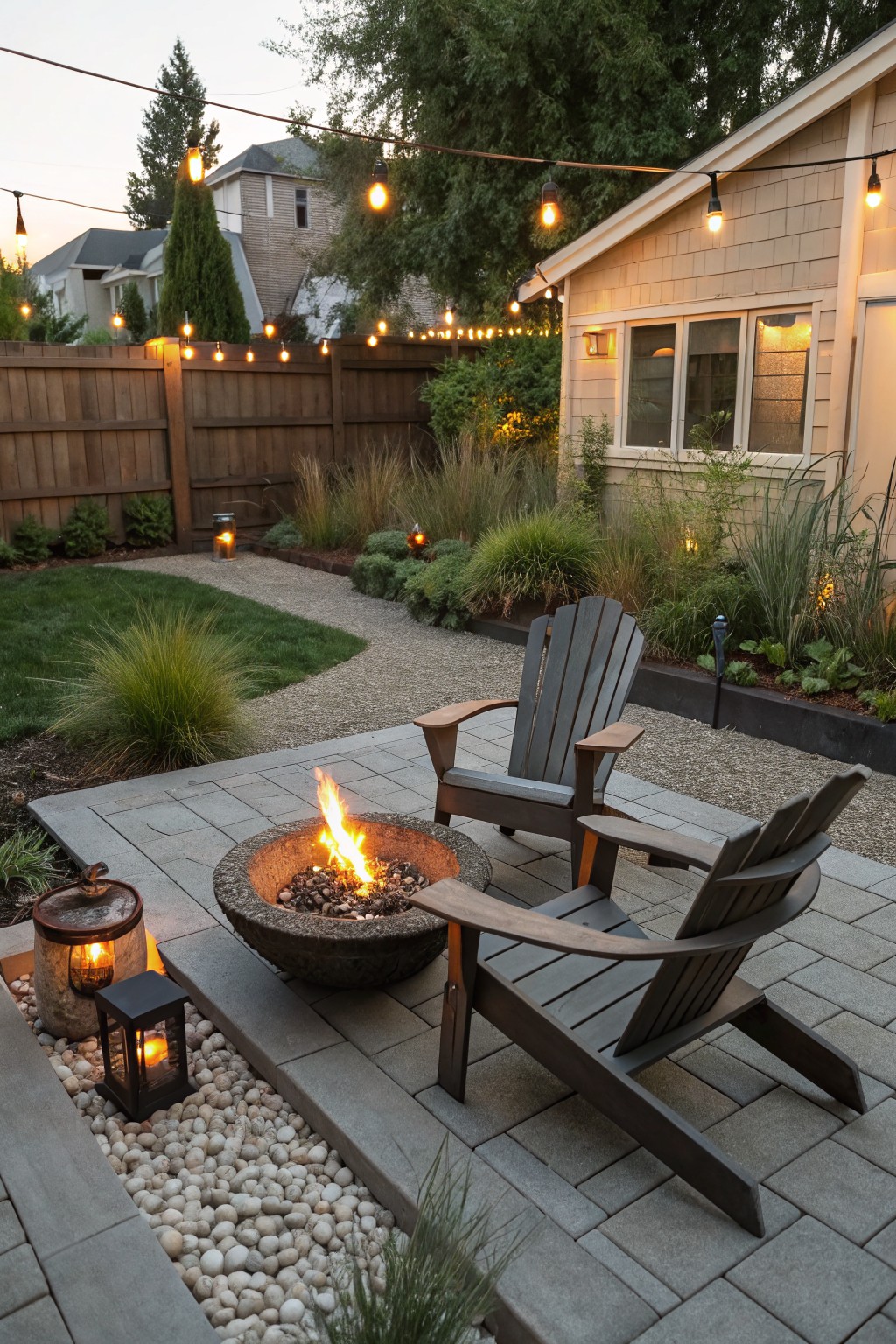
A fire pit right in the middle of a patio makes for an easy spot to gather in the evenings. Here, gray paver tiles form the base, with two Adirondack chairs pulled up close. String lights overhead and a few lanterns add just enough glow without overdoing it. It’s straightforward and pulls people together around the flames.
You can pull this off on a weekend with basic pavers, a portable fire bowl, and affordable chairs. It suits smaller backyards where you want low-effort outdoor time. Keep plants nearby for some green, but watch spacing so folks don’t feel crowded. Works year-round in mild spots.
DIY Vertical Herb Garden on a Fence
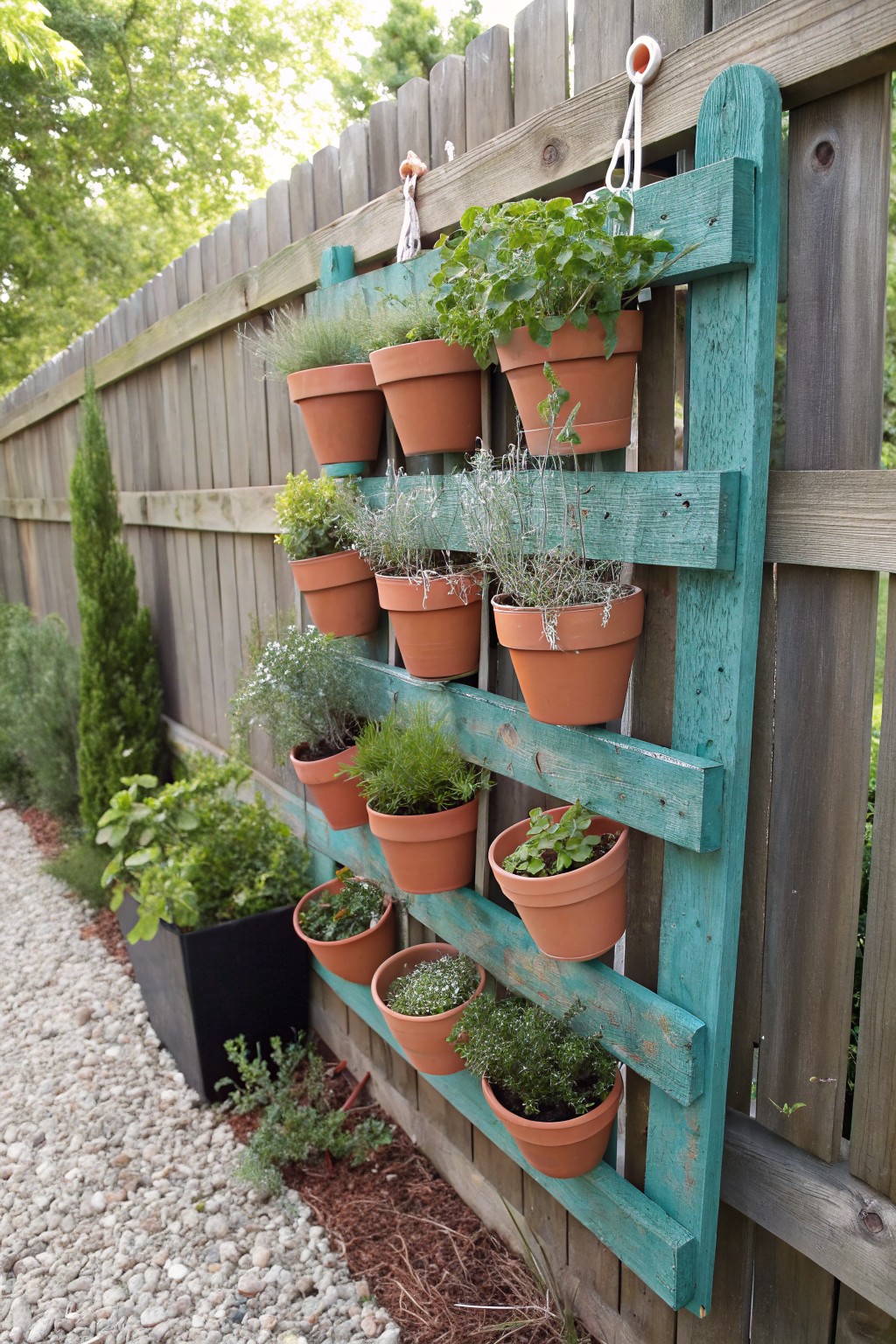
One simple way to add fresh herbs right where you need them is by turning an old pallet or ladder into a vertical planter. Mount it on a backyard fence like this one, with terracotta pots tucked into the rungs. It saves ground space and gives that fence a useful job. Herbs like basil, lavender, and thyme thrive here, and the pop of green makes the yard feel fuller without much effort.
This works best in small backyards or along plain fences where you want some life. Grab a sturdy pallet, paint it if you like that turquoise shade, and screw in pot holders or just balance the pots secure. It’s beginner-friendly since no fancy tools are needed, just check drainage so roots stay happy. Great for cooking herbs close to the kitchen door.
Create a Winding Brick Garden Path
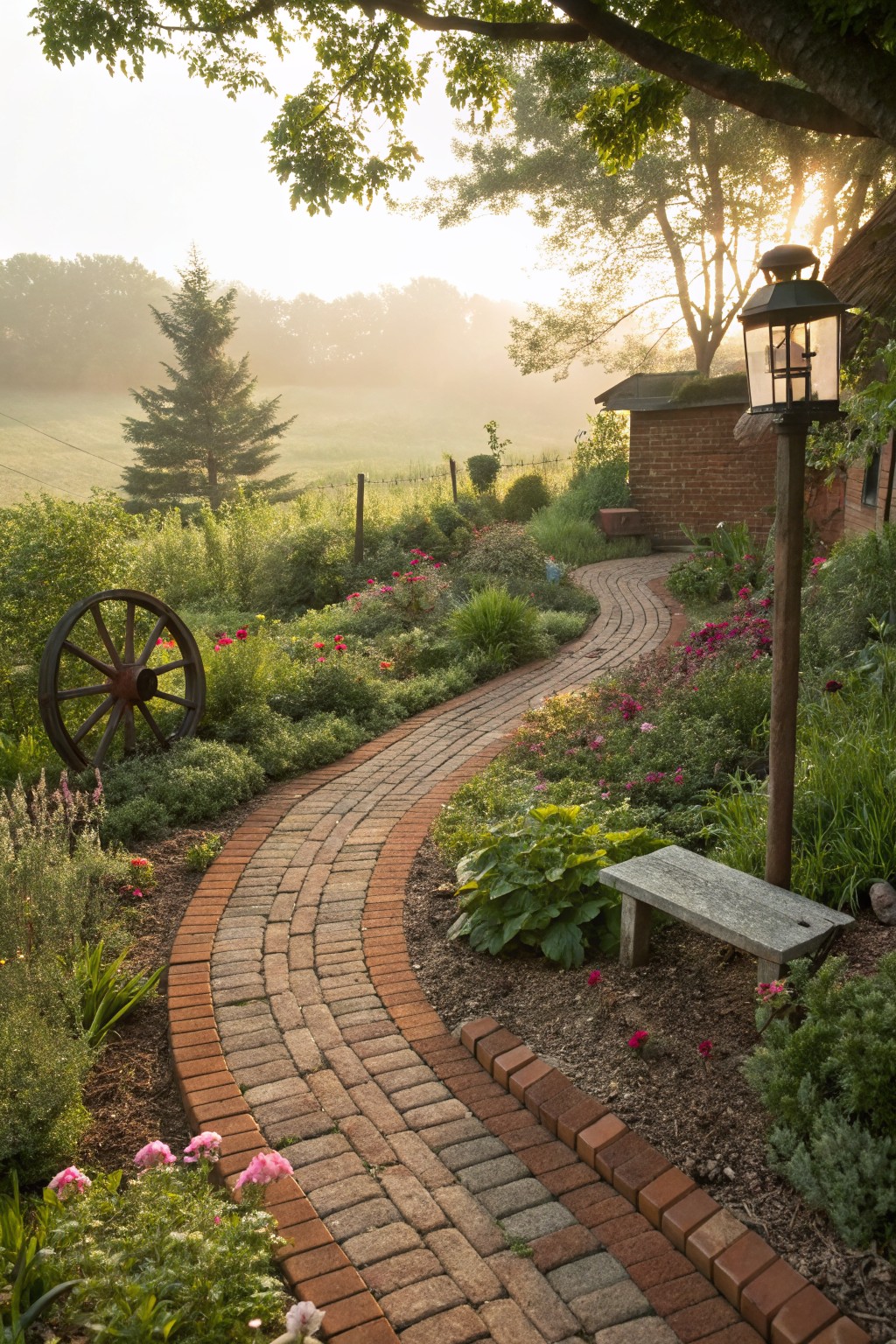
A simple winding path made from bricks gives your backyard garden that cozy, cottage feel without much fuss. It draws the eye through the plants and flowers, making even a small space feel bigger and more inviting. Notice how the curve softens everything. And those low plants hugging the edges? They keep it all looking full and natural.
Lay it out where you want a gentle stroll, maybe from the patio to a seating spot. Use affordable pavers or reclaimed bricks for an easy weekend project. It works great in sunny spots with mixed perennials. Just edge it with mulch to hold things in place. Avoid straight lines if you can. The bend makes walking more fun.
Gravel Paths with Boulder Edges
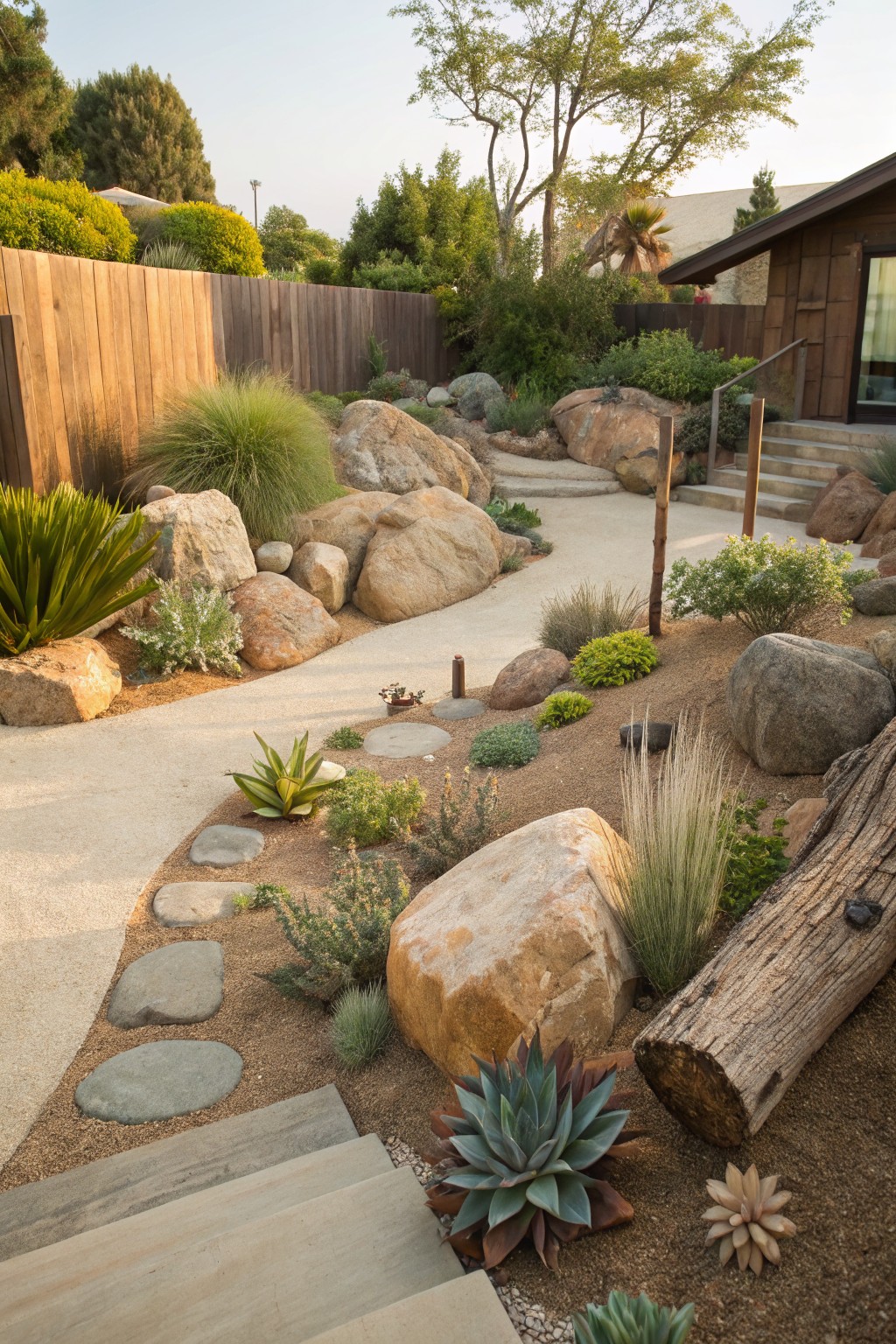
A gravel path like this winds gently through the backyard, edged by big boulders and low-water plants such as agave and grasses. It feels natural and rugged without much upkeep. The pale gravel sets off the rocks nicely, and everything blends right into the slope leading to the house steps.
This works great for beginners in sunny, dry spots or anywhere you want less mowing. Start by marking your path, drop in gravel over landscape fabric, then roll boulders along the sides for definition. Tuck in a few succulents or feather grass. It suits sloped yards especially… holds soil and drains fast. Just watch the boulder sizes so they’re not too heavy to move alone.
Build Terraced Planters for Sloped Yards
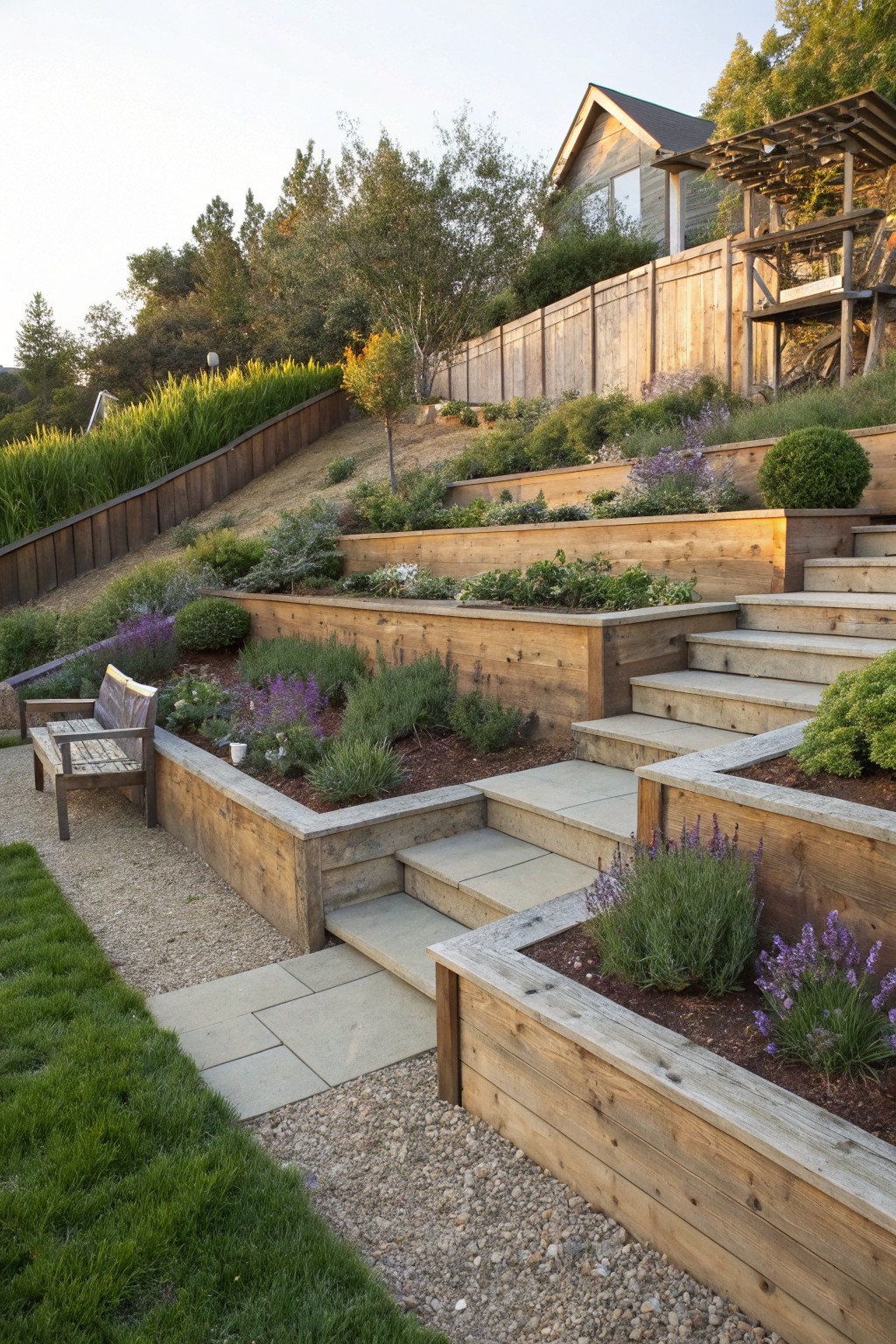
Sloped backyards can be tricky. They often end up as wasted space that erodes or just looks messy. One straightforward fix is terraced planters made from wood. You stack them up the hill like steps, filling each level with soil and plants. It holds everything in place and gives you flat spots for growing things. In this setup, lavender and grasses fill the beds nicely, with a simple bench tucked in for sitting.
These work great for beginners because you can build them yourself using basic lumber and screws. Cut the wood to fit your slope, line them with landscape fabric for drainage, then add plants that like similar conditions across the tiers. They suit most yards with a gentle to medium hill. Just make sure the wood is treated for outdoors, or it won’t last. Add steps between levels for easy walking.
Pergola for Outdoor Dining
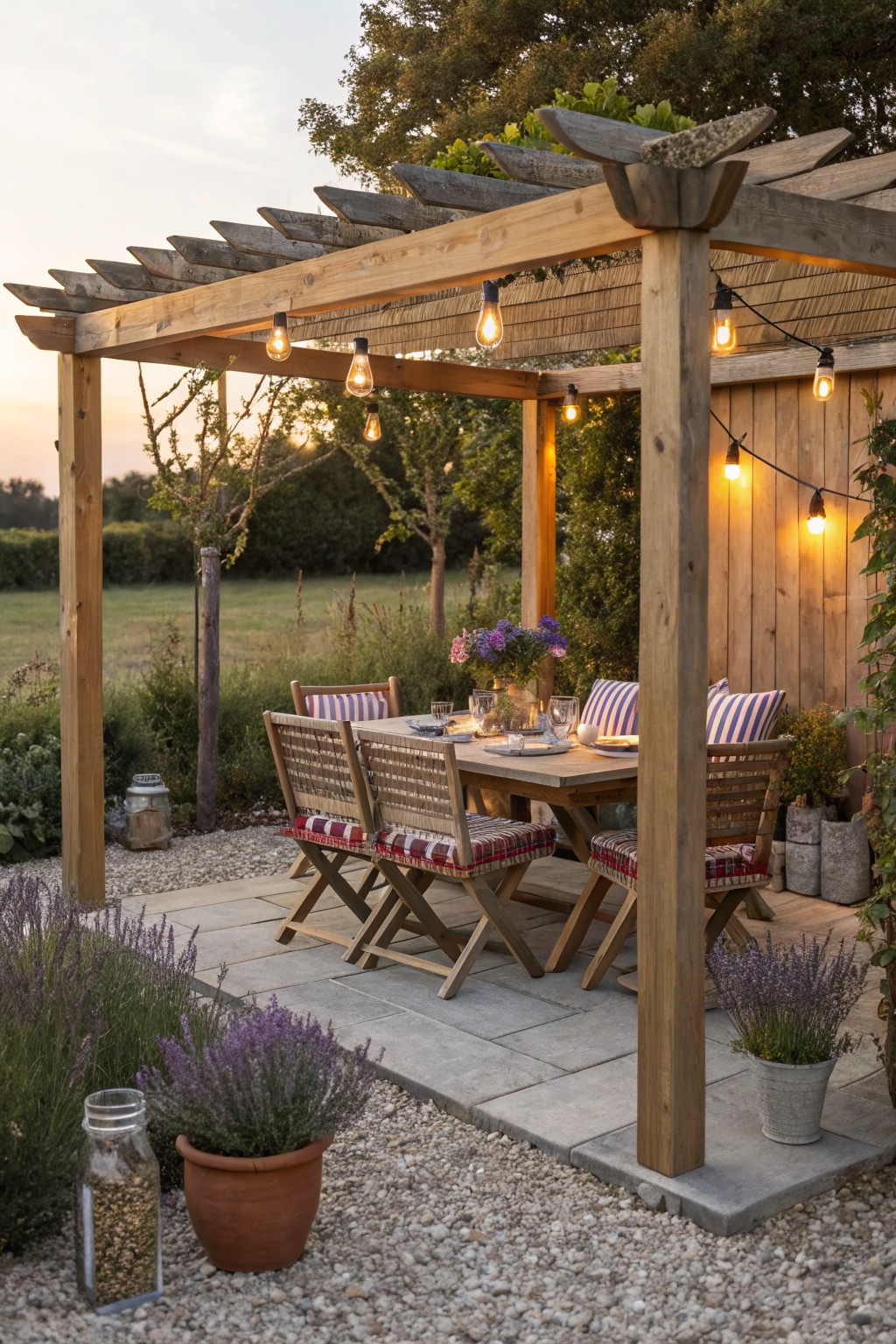
A wooden pergola like this one makes a basic patio feel like an extra room outside. It frames the dining table nicely and lets you eat outdoors without full sun beating down. Those hanging bulb lights add a soft glow for evenings, turning meals into something special without much fuss.
It’s easy for beginners to put together using simple posts and beams from a lumber yard. Place it right over your table and chairs on a stone or gravel base, then run string lights along the top. Suits most backyards, especially if you want shade that plants can climb over time. Just check it’s sturdy against wind.
Build a Simple Rock Waterfall
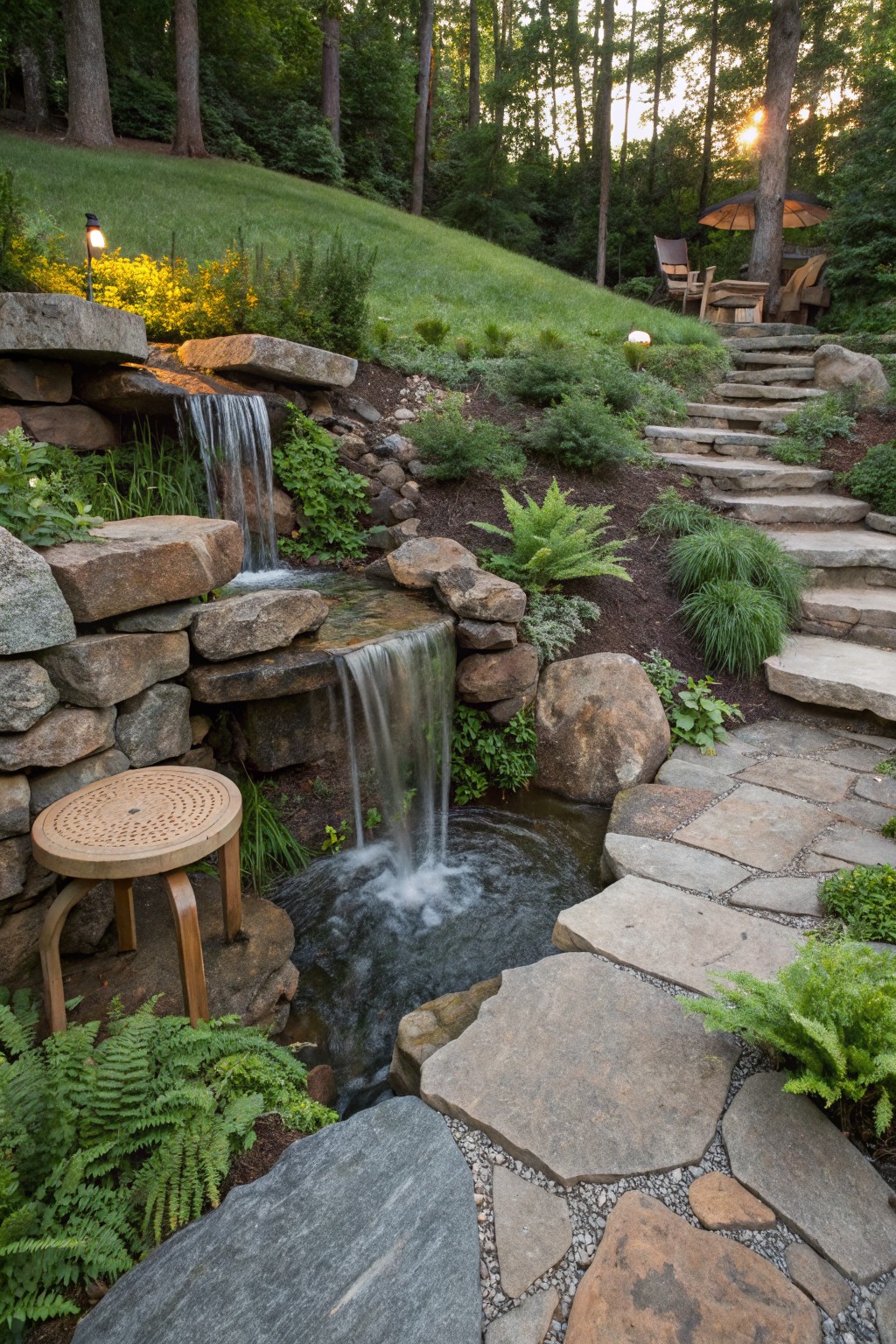
Nothing beats a backyard waterfall for turning a plain slope into something special. Water tumbling over stacked fieldstone grabs your eye right away and fills the air with a nice soothing sound. Plants like ferns tucked around the rocks make it look natural, not forced.
This works great on any hillside yard where water runoff is an issue. Stack local rocks into tiers, add a small pump in the pond at the bottom, and run steps alongside for access. Keep it under three feet tall if you’re just starting out. It suits most backyards, especially wooded ones.
Create a Cozy Chiminea Fire Pit Area
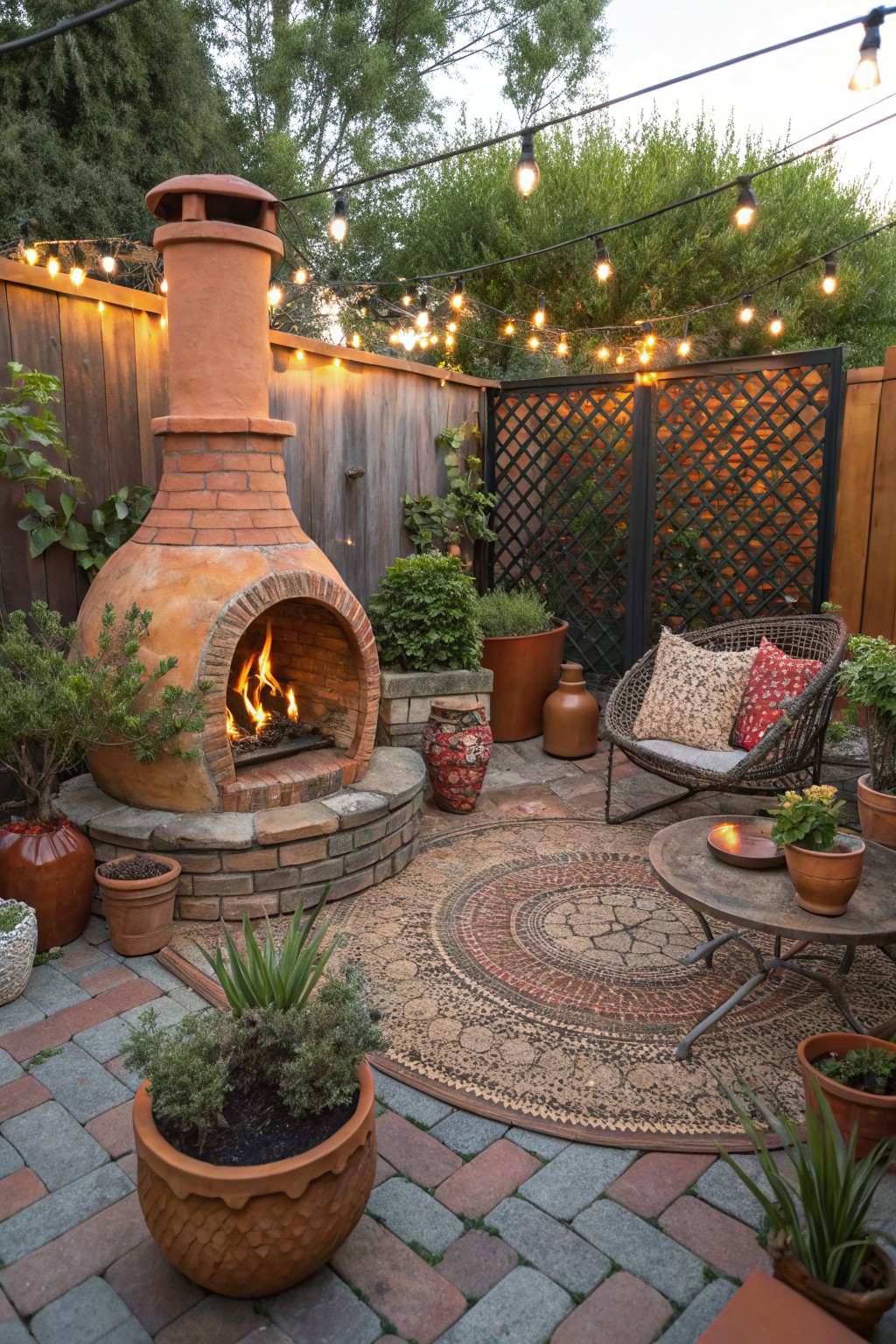
A chiminea fire pit pulls together a backyard patio into something really welcoming. That rounded terracotta shape with its open fire draws folks in for chats or quiet nights. It’s low fuss too. No big build needed. Just set it down and light up.
Put yours on a simple stone base in a corner spot. Add a couple chairs, maybe a rug underneath, and string lights overhead for evenings. Potted plants around the edges keep it from feeling bare. This setup fits small yards best. Watch the wind though. Keep it away from dry spots.
Easy Pallet Seating for Backyard Lounging
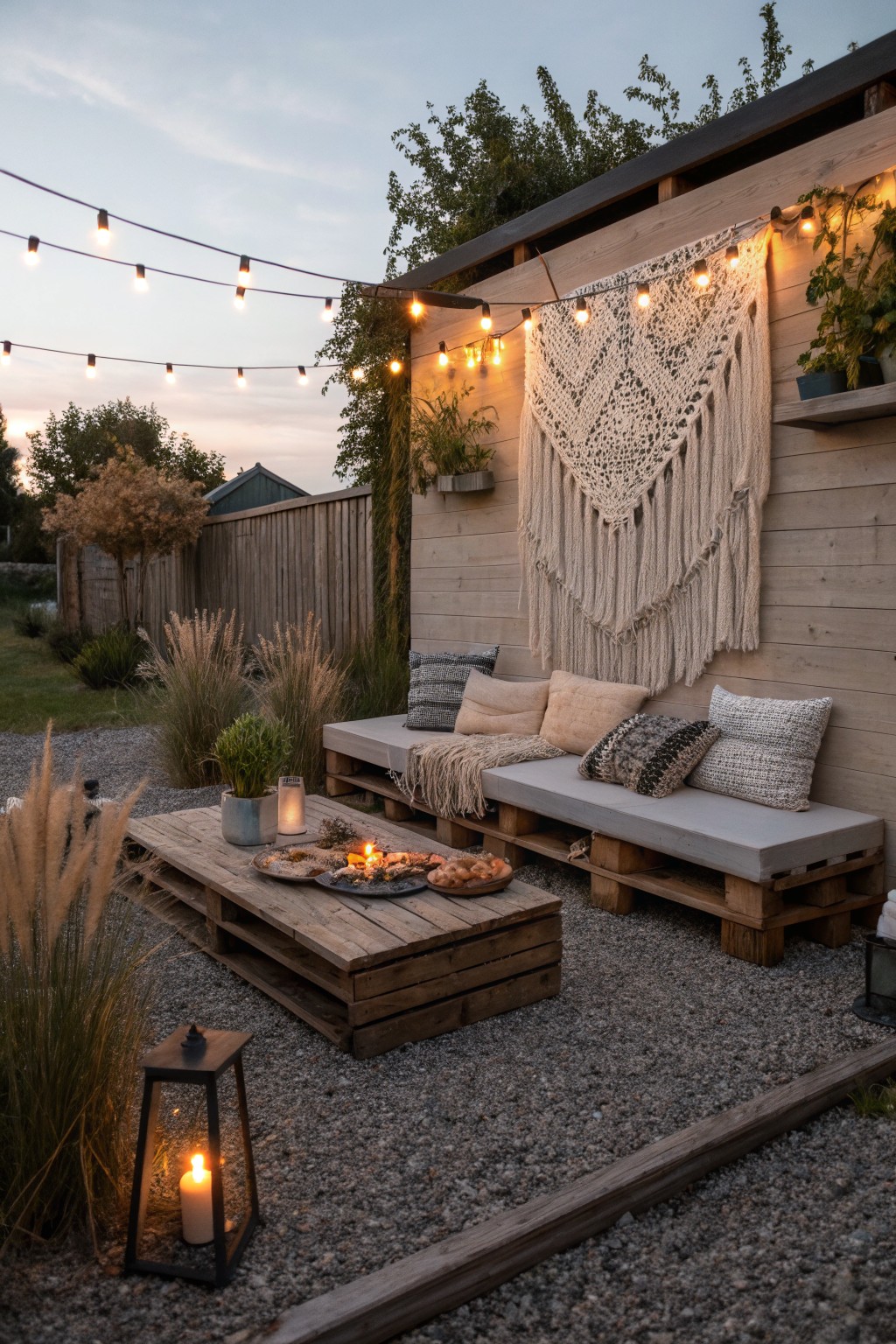
Pallet benches and tables make a great starting point for anyone new to backyard setups. They’re cheap to get from warehouses or online, and you just stack a few together for sturdy seating. Add some cushions and throws like you see here, and it turns into a spot that’s comfy for evenings outside. Folks like it because it’s simple, no fancy tools needed, and it fits right into a casual yard vibe.
Put this in a corner near a fence or shed wall to keep things snug. Gravel underfoot works well to drain water and stay low maintenance. It’s perfect for small backyards… just seal the wood first so it lasts through weather. Watch the height, though. Stack pallets even and top with a solid board if you want it smoother.
DIY Backyard Sandbox Play Area
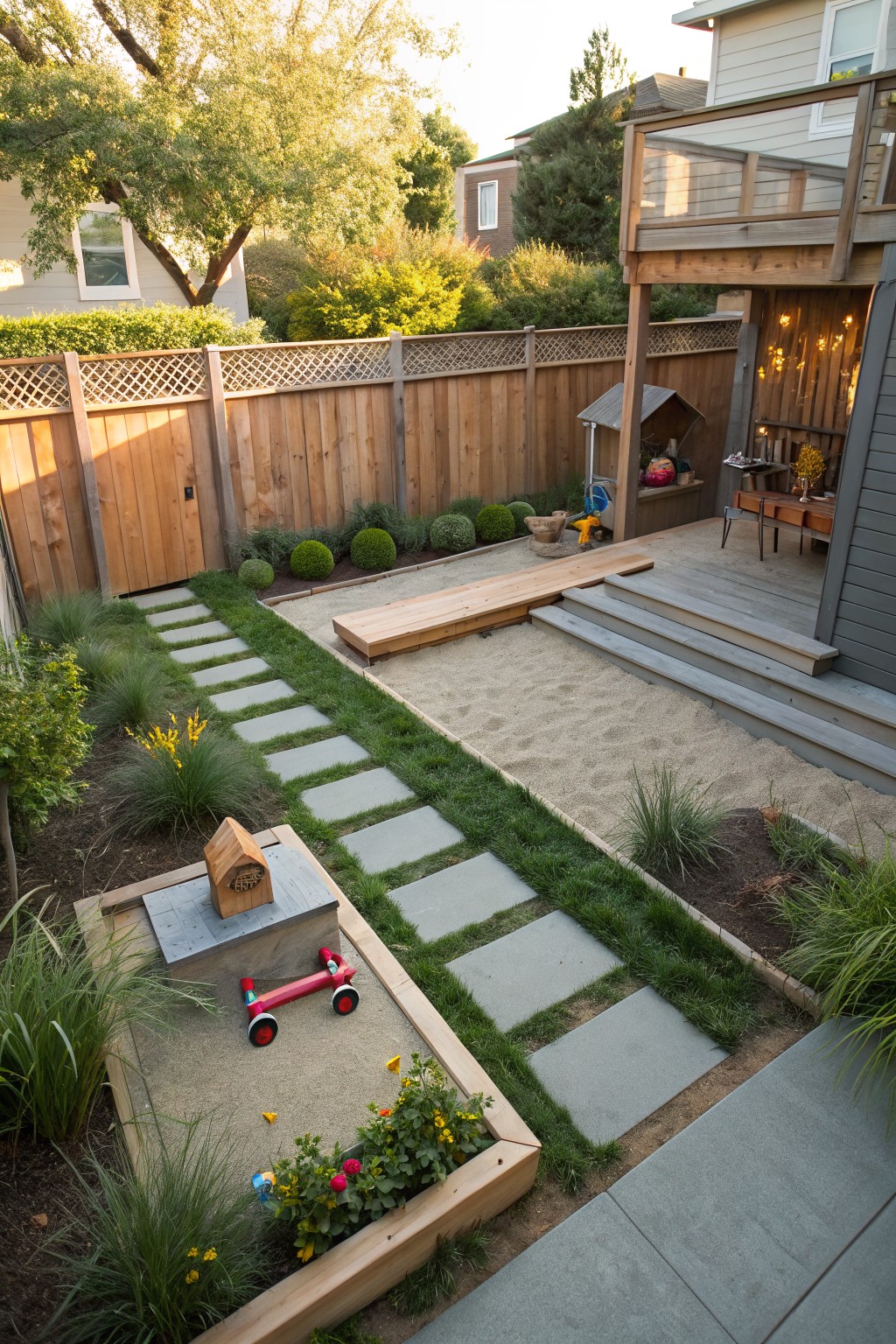
A simple sandbox like this one fits right into the yard with its wooden frame and play sand inside. You can see the red toy car parked there, and little flowers tucked around the edges. What makes it nice is how it turns a basic play spot into something that blends with the grass and paths. Kids get their fun zone. The rest of the yard stays open for walking or sitting.
To pull this off at home, grab some untreated cedar boards to build a low frame about knee-high. Line the bottom with landscape fabric, then fill with washed play sand. Plant low grasses or annuals along the outside to keep it looking tidy. It works best in smaller backyards where you want contained play without big structures. Just rake the sand now and then. Easy for beginners.
Frame a Path with Espaliered Fruit Trees
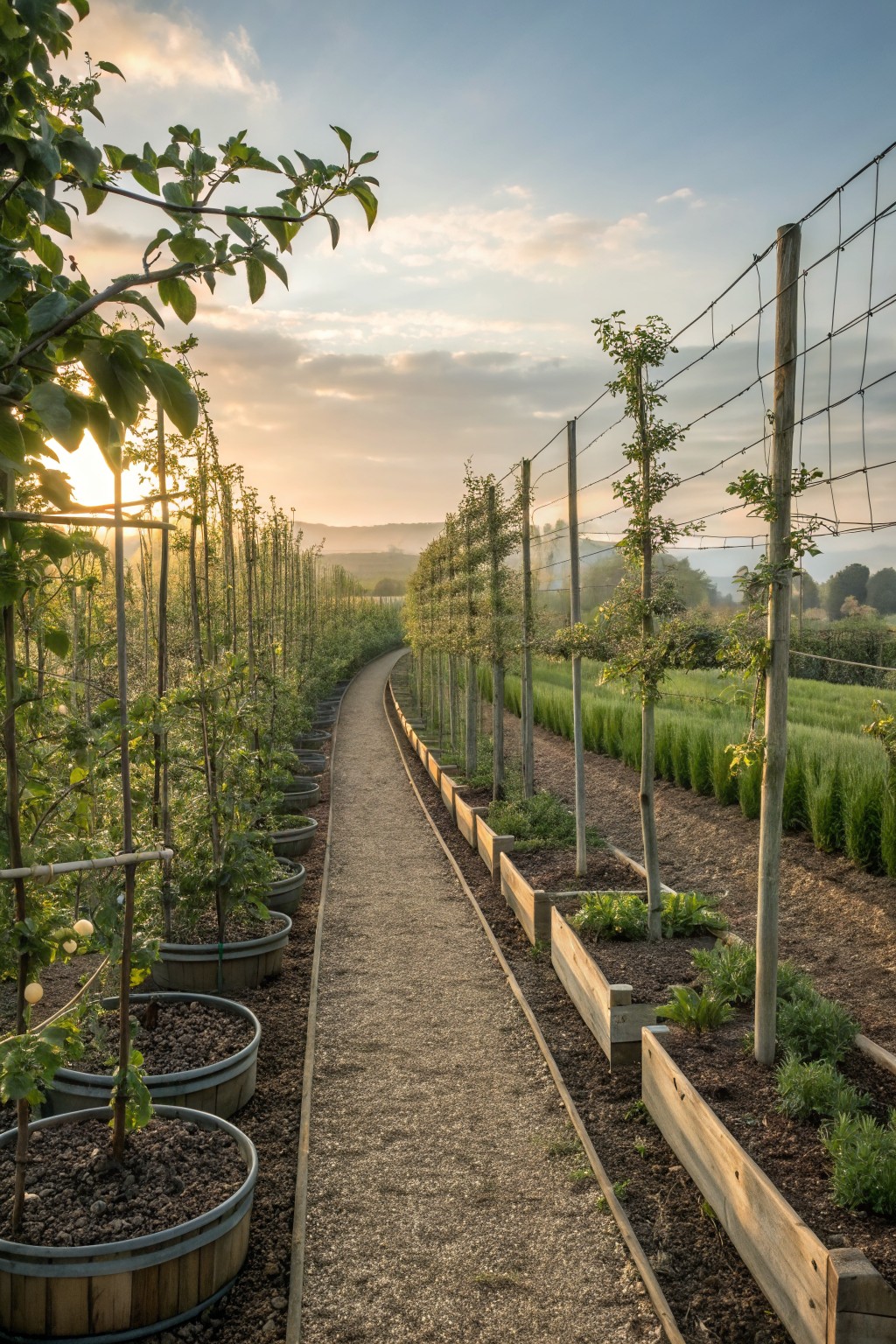
One simple way to add structure to a backyard walkway is lining it with young fruit trees trained flat on wires. Here, apple trees grow along both sides of a gravel path, some in big wooden barrels and others tied to posts. It turns a plain trail into something productive and shaded over time, without needing a huge orchard space.
This works best in skinny side yards or along fences where you want privacy and fruit too. Pick disease-resistant varieties like apples or pears that take to espalier easily. Use barrels for pots if your soil is poor… just keep them watered and prune branches flat each year.
Stack Wooden Crates for Tiered Plant Displays

One easy way to make a small balcony feel full of life is stacking wooden crates into tiers for your plants. You see them here holding herbs, trailing ivy, and small pots, creating levels that draw the eye up without taking much floor space. It’s practical too. Crates are cheap or free from stores, and they give that rustic look that fits right into a casual outdoor spot.
Just grab a few sturdy wooden crates, line them with plastic if needed for drainage, and stack two or three high against a wall or railing. Fill with soil and crowd in easy growers like lavender, basil, or succulents. This works best on sunny balconies or patios where you want privacy and green without a big yard. Keep an eye on weight near edges, though.
Tall Grasses Along a Retaining Wall
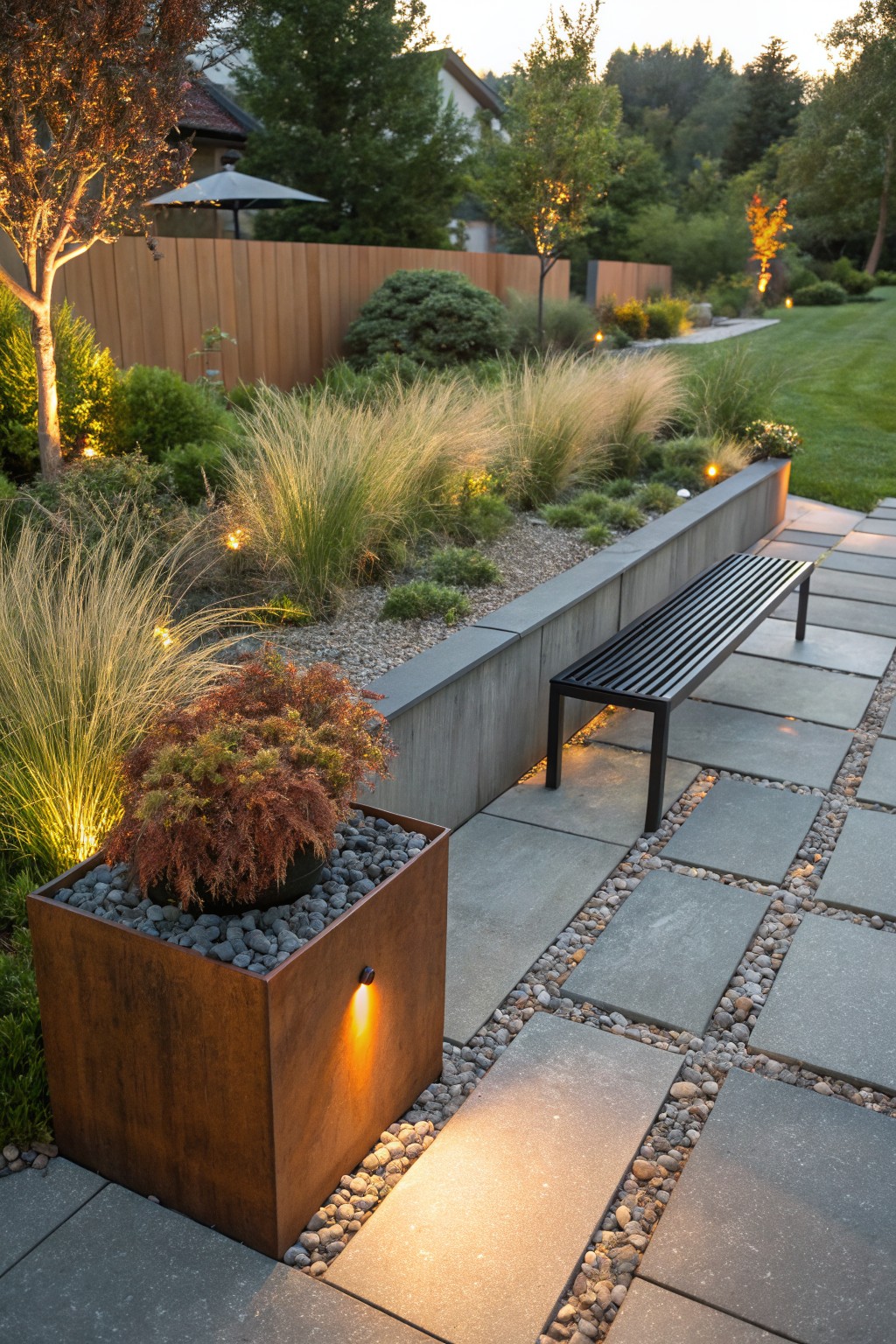
Tall ornamental grasses planted right along a simple concrete retaining wall make a yard feel put-together fast. They add height and that nice swaying movement without needing constant trimming. In this spot, the grasses mix with some low shrubs and gravel mulch, softening the hard wall while keeping things modern and clean.
This works best in backyards with slopes or level changes, where you want to hide the wall or create separation from neighbors. Pick easy kinds like miscanthus or fountain grass, space them a couple feet apart in a row, and top with pebbles for less weeding. A bench nearby turns it into a spot to sit and enjoy.
Simple Flagstone Garden Path
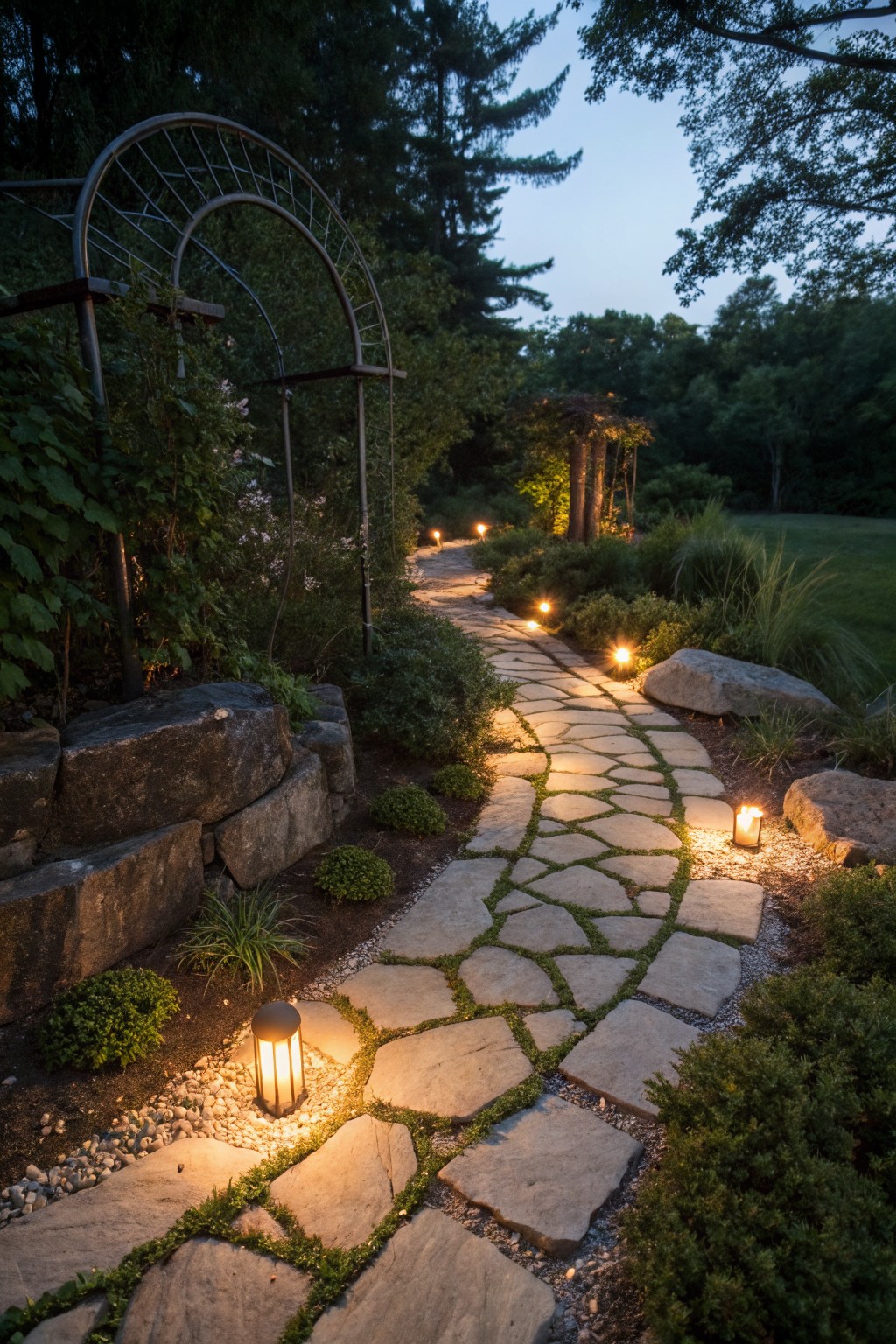
A flagstone path like this winds gently through the yard, using uneven stones set right into the ground with moss filling the gaps. What makes it nice is the soft glow from those low lanterns along the way. It turns a basic walkway into something you actually want to stroll on after dark, without much upkeep once it’s in.
To pull this off yourself, start with a gravel base in a shallow trench, then fit the stones close together so they stay put. Drop in battery or solar lanterns every few feet for light, and let low plants creep in naturally. It fits sloped spots or back gardens best, and beginners can handle it in a weekend… just keep the path wide enough for two people.
Timber Walkways with Pebble Inserts
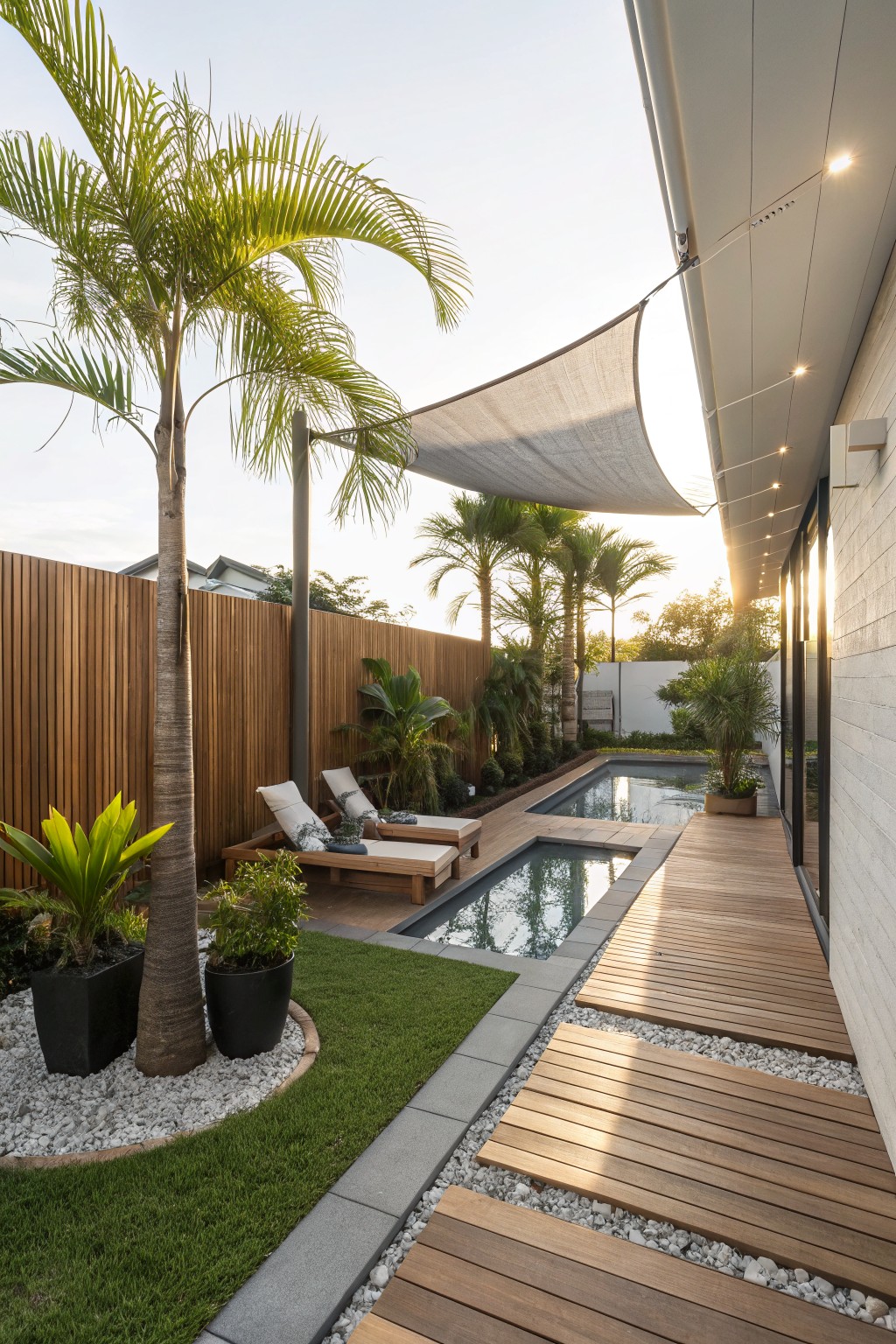
One easy way to define paths in your backyard is laying flat timber slabs with pebbles filling the gaps between them. It creates a clean line that leads right to key spots like a pool or seating area. Folks like it because it feels modern but not fussy, and the pebbles help with drainage so water doesn’t pool up.
This works best in narrow yards or along fences where you want to keep things open. Start by marking your path, add a gravel base, drop in the pebbles, then set the wood pieces. Use treated timber that holds up outside. Skip it if your yard floods a lot… go for solid pavers instead.
Rustic Hay Bale Lounge Area
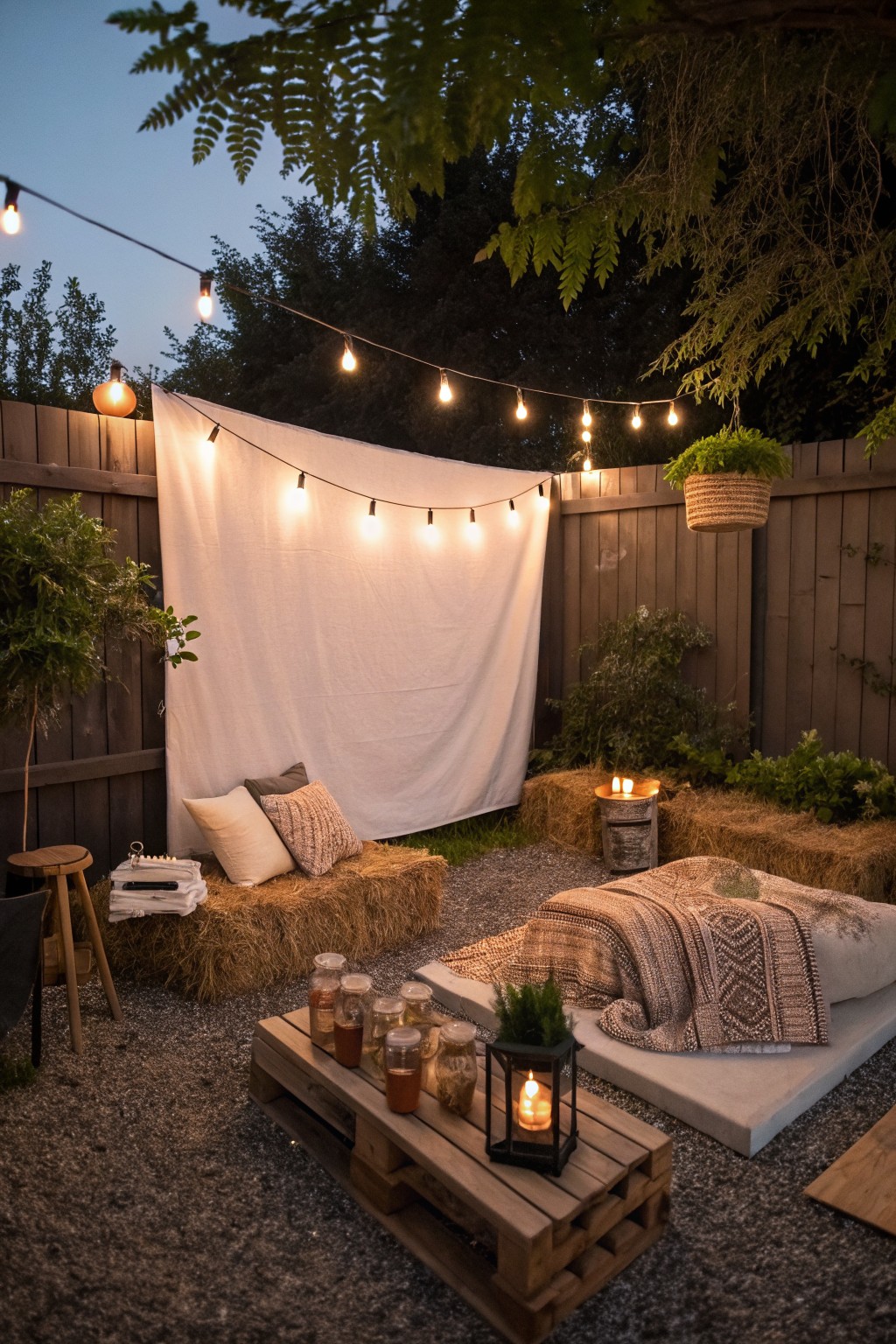
Hay bales make for easy, low-cost seating in a backyard spot like this. Stack a few for chairs and add pillows for comfort. A simple pallet table holds drinks in jars, and lanterns keep things lit without much fuss. It’s a relaxed way to gather friends on a budget.
This works best in a tucked-away corner with a fence for privacy. Drape a sheet nearby for movie nights if you want. Just swap hay for wood benches if allergies are an issue, or if it might rain.
Create a Winding Rock Stream
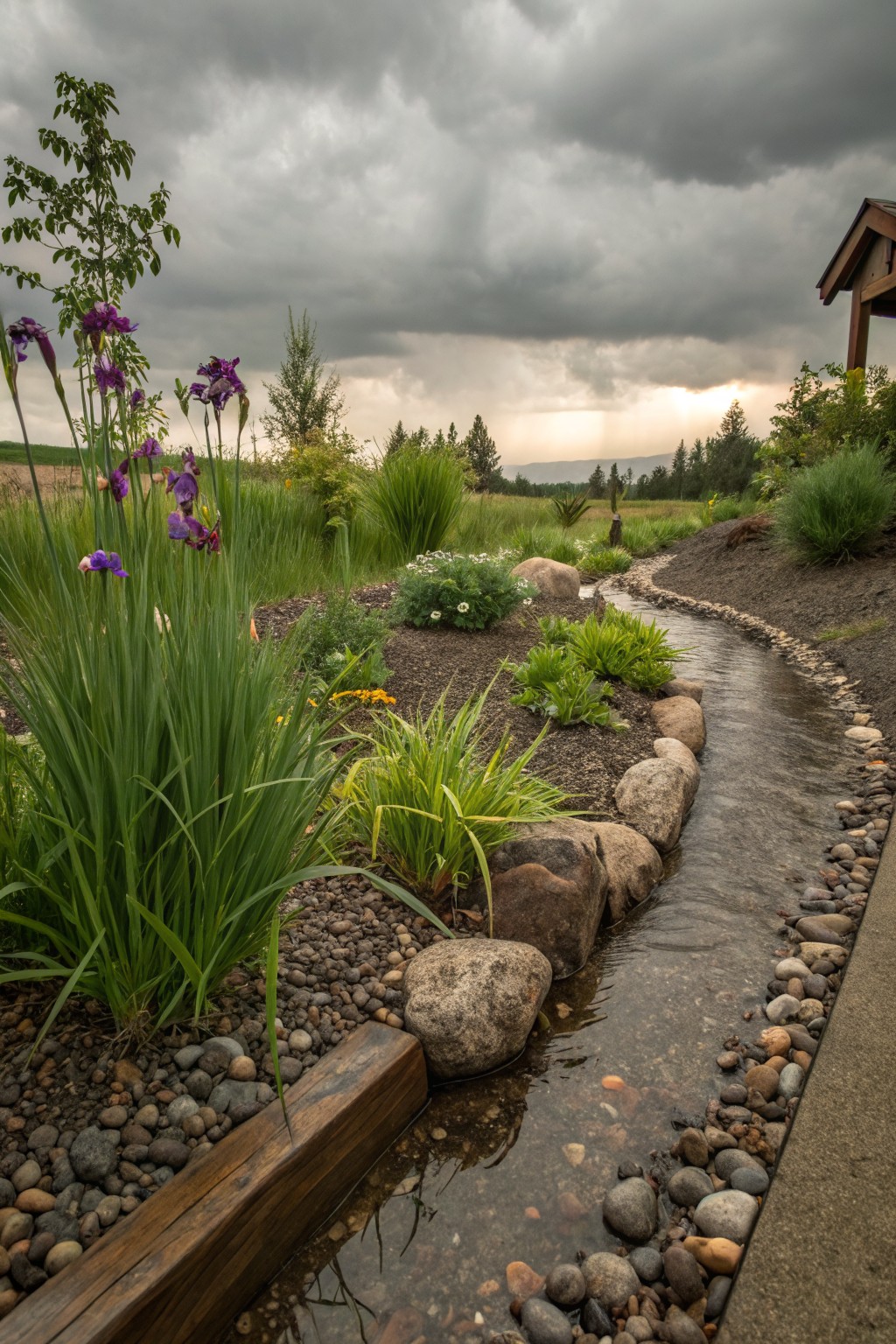
A winding stream bed like this one adds a natural flow to your backyard without much fuss. You just dig a shallow trench and line it with rocks and gravel. Purple irises and tall grasses along the edges make it look alive, and it pulls the eye through the yard nicely.
To pull this off as a beginner, start with a garden hose to mark the path, then lay down landscape fabric to keep weeds out. Fill with pebbles and bigger stones for the banks. It suits sloped spots best, or anywhere you want low-water interest. Keep plants native if you can. Easy to do in a weekend.
Build a Woven Branch Garden Arch
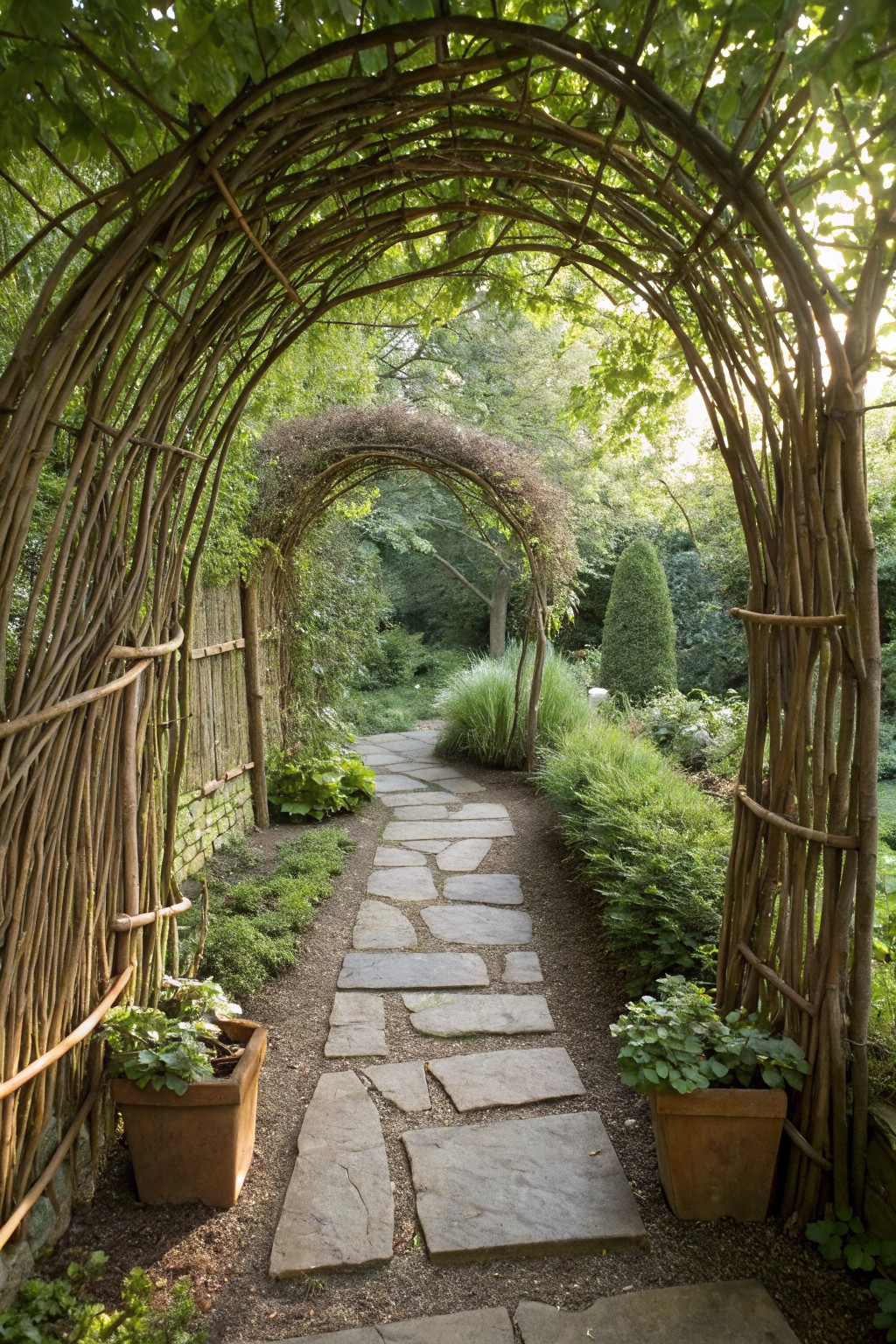
A woven branch arch like this one turns a simple backyard path into something special. It uses fresh willow or flexible twigs that you bend and lash together right over your walkway. The green growth softens everything around it and makes the garden feel deeper, more private. Folks like it because it’s cheap and grows with the yard over time.
To try this at home, pick long supple branches from a local source or your own trees. Weave them into an arch shape about seven feet tall and wide enough for walking. Set it where your path starts, maybe near the patio or fence. It works great in small yards or cottage gardens. Just keep an eye on the base so it stays sturdy through seasons. Add stone pavers underneath like here for that clean walk.
Frequently Asked Questions
Q: How much should I budget for these beginner projects?
A: Aim for $20 to $100 per idea by hitting up thrift stores or using what you already own. Pick gravel paths or potted plants to stretch your dollars further. You get a fresh yard without emptying your wallet.
Q: What basic tools do I need to start?
A: Grab a shovel, work gloves, and a sturdy rake from your garage. That covers 90 percent of the jobs here. Rent anything bigger for one day if a project calls for it.
Q: My yard gets mostly shade. Will these ideas still work?
A: Swap sun lovers for hostas or ferns that thrive in low light. Build simple shade gardens with rocks and mulch for easy color. They transform dark spots into cozy hangouts.
Q: How do I keep weeds from taking over right away?
A: Lay down wet newspaper or cardboard before adding mulch. It smothers weeds naturally as it breaks down. And refresh the mulch layer once a year to stay ahead.