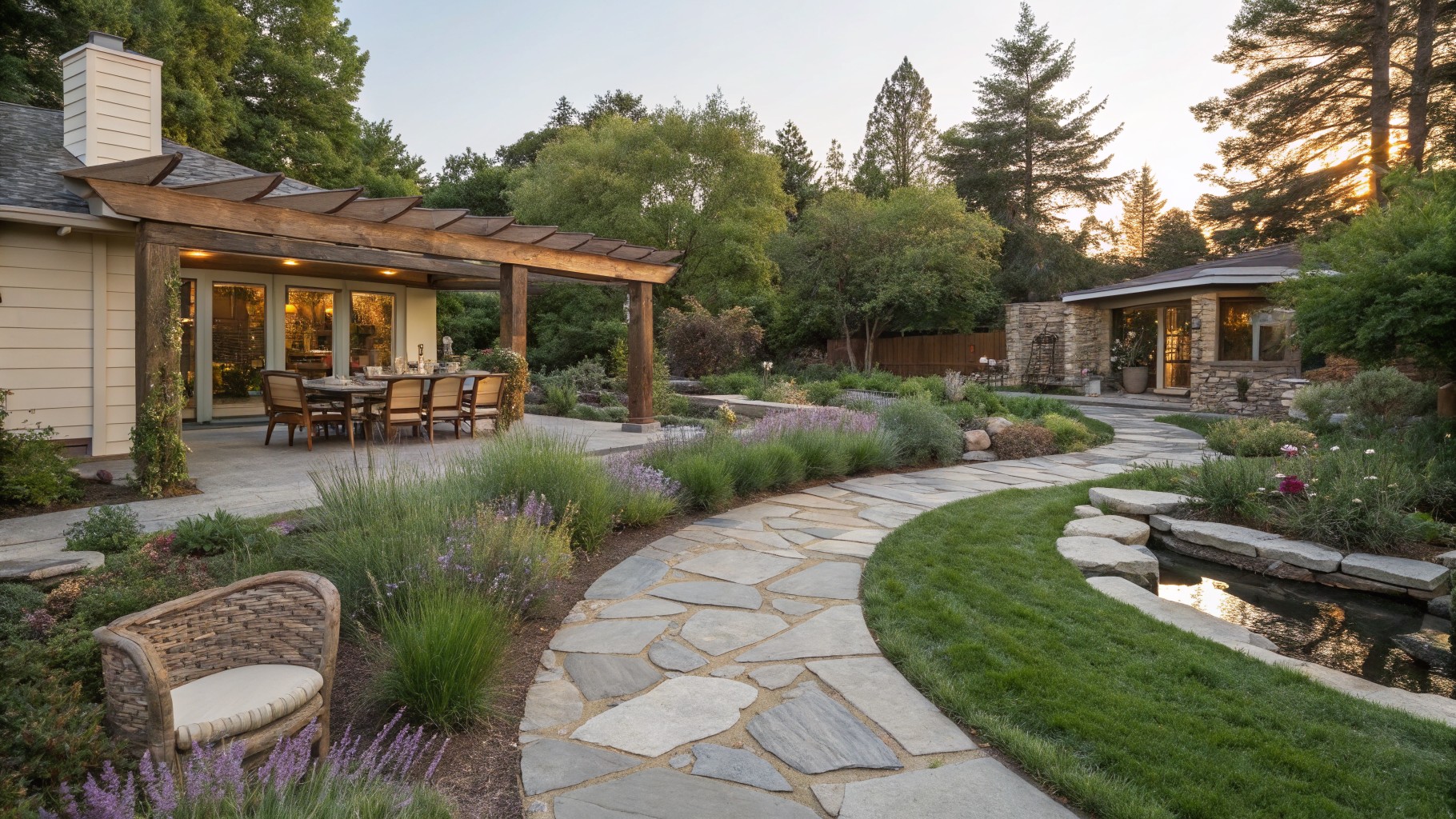
I’ve noticed that open backyards really shine when the landscaping sets up a natural flow, guiding your steps along curving pathways and layered plantings without any rigid lines. You tend to spot those pathways first, the way they weave softly between low edging and taller drifts of greenery that mature into something effortless over the years. In my last yard project, I let some native grasses fill in along the edges, and it suddenly made the whole space feel connected rather than chopped up. These setups work best with thoughtful planting structures that repeat forms and heights, creating depth that pulls you through from the house to the back fence. A few stand out as ones worth mapping onto your own layout.
Meandering Stone Paths with Lavender Borders

A simple way to add flow to your backyard is a winding path made from rough-cut stone slabs set into gravel. Here, it curves gently through borders of tall lavender and soft grasses, leading your eye right to a small pond without feeling forced. The irregularity of the stones keeps it looking natural, like it grew there alongside the plants.
This works best in open sunny yards where you want low upkeep. Edge the path with drought-loving lavender or similar perennials, and let them spill over a bit. Skip straight lines. It suits casual homes blending house and garden, but watch the stones don’t get too slick if it’s damp.
Tiered Stone Steps for Sloped Yards
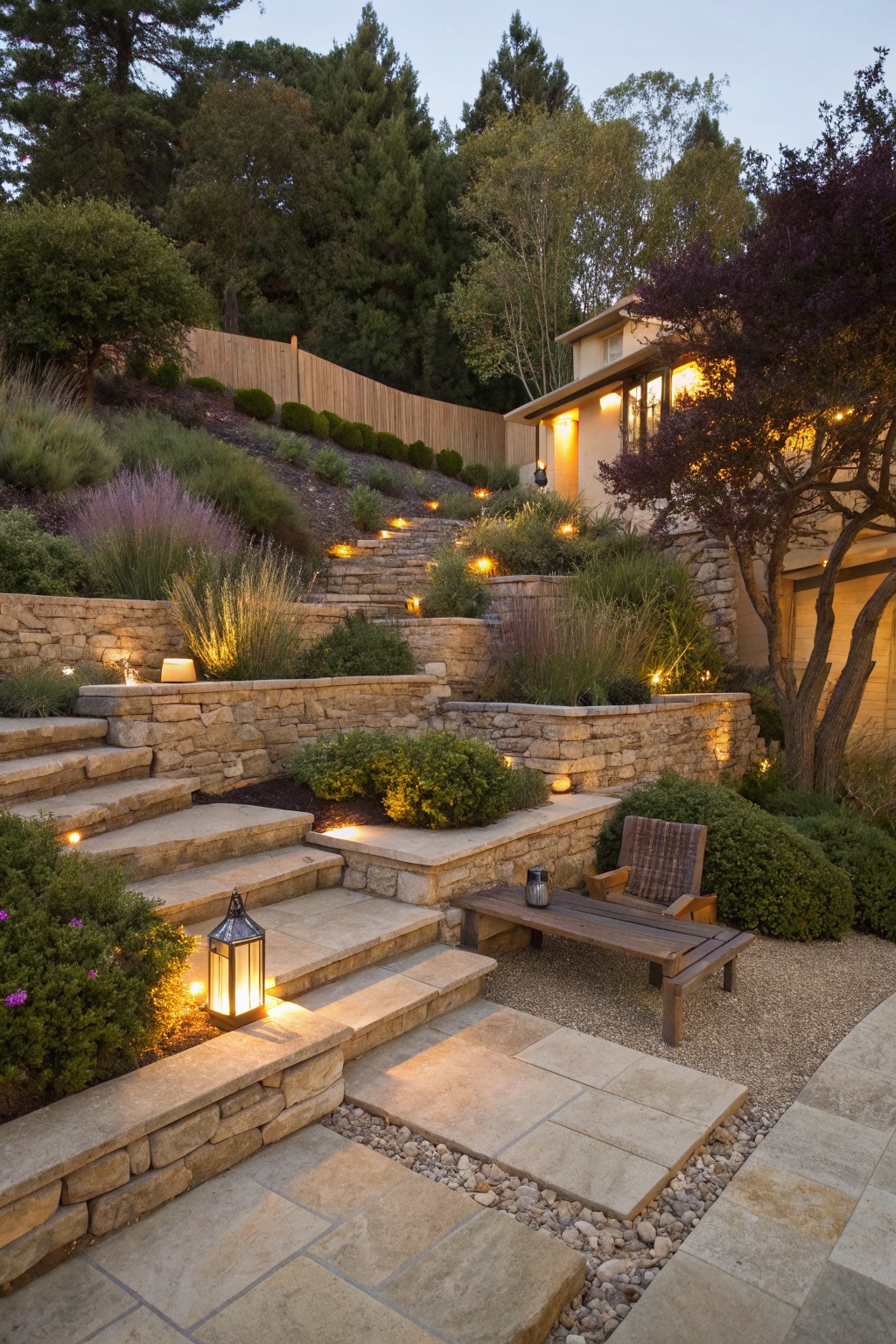
Sloped backyards often feel wasted space until you add tiered stone steps like this. The rough-cut walls create flat planting beds while the steps climb in easy curves. Tucked-in lights make it safe and pretty after dark, turning a hill into a path you actually use.
This setup suits any backyard with a drop, from small city lots to bigger properties. Pick stone that matches your area for a natural look, fill beds with low-water plants, and add a lantern or bench at the base. Steep slopes need shorter steps. Just watch drainage so water doesn’t pool.
Winding Gravel Paths with Stone Edges

A curving gravel path edged with rounded stones is a straightforward way to add movement to an open backyard. It draws you along gently through the grass and plantings, making the space feel connected and alive. Those simple wooden chairs along the way show how it leads right to spots for sitting.
This works best in bigger yards with natural slopes or fields nearby. Lay down landscape fabric first, then gravel over it, and set stones to hold the edges. Skip it in small lots… it needs room to breathe.
Stepping Stone Path Through Gravel Beds

A simple way to guide people through the backyard is with wide concrete stepping stones set right into gravel beds. Here the path runs alongside raised plantings full of succulents and tough grasses. It keeps the walk natural and open. No fussy lawn to mow. The gravel lets water drain fast and ties the hard path to the soft plants.
This works best in sunny yards where you want low water use. It suits modern homes or any spot with a patio nearby. Add a few round boulders along the edge for interest. Pick plants that handle your climate. One thing. Keep the stones level so no one trips.
Curved Benches Around a Garden Fountain

One nice way to set up outdoor seating is with built-in benches that curve right around a central fountain. Like here, where the benches follow the fountain’s shape and tie into a brick path. It pulls everything together into one easy spot for sitting, without needing extra chairs cluttering things up. The water adds a bit of sound too, which keeps the area feeling alive.
This works best in a side courtyard or tucked backyard nook, especially next to the house where you can step right out a door. Use simple cushions on the benches and some low plants nearby. It suits homes with a casual Mediterranean look, or anywhere you want seating that blends into the yard. Just make sure the fountain isn’t too big, or it might overpower the space.
Long Narrow Reflecting Pool
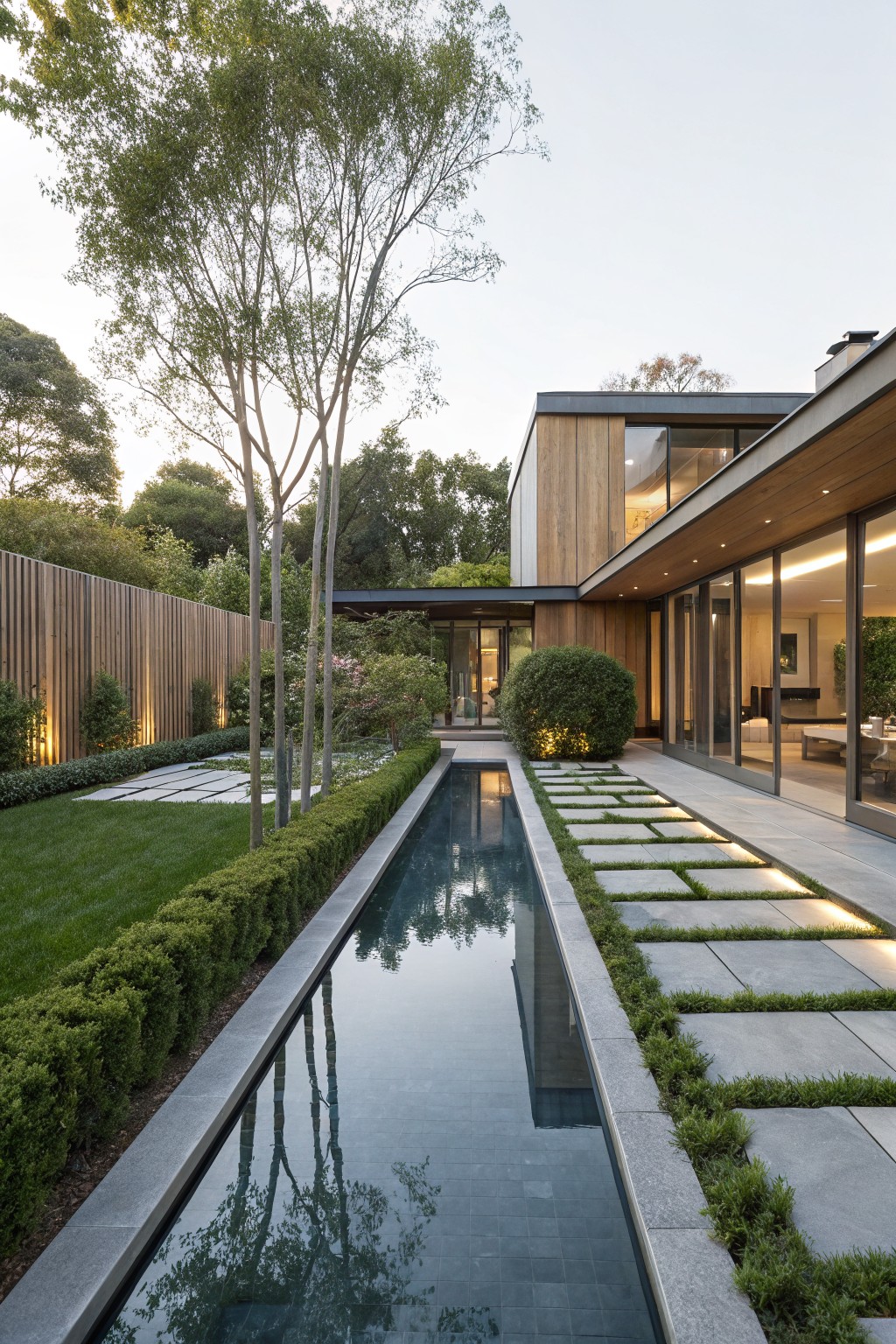
A long narrow reflecting pool like this one runs right alongside a simple stone path. It pulls the eye through the yard with that smooth water flow, and the reflections of trees and sky make it feel deeper and more alive. Low boxwood hedges on both sides keep everything crisp without taking over.
This works best in longer backyards where you want to connect the house to the garden. Go with dark pool tiles and wide pavers for easy upkeep. It suits modern homes but could fit others too, just scale it to your space and add plants that lean over the edge for a natural touch.
Winding Stone Paths Through Lush Plantings

One simple way to guide people through a backyard garden is with a winding path made from flat, irregular stones set into mulch or gravel. It feels natural, like you’re just strolling along a forest trail, and it keeps feet out of the dirt. Here, the path curves gently past big boulders and low plants like hostas and ferns, drawing you toward a shaded seating spot without feeling forced.
This works best in sloped or wooded yards where you want to connect different areas without a straight, obvious walkway. Lay the stones loosely spaced so grass or mulch fills in between, and edge them with tough groundcovers. It suits casual homes with some wildness around the edges. Just make sure the stones are stable so no one twists an ankle.
Curved Pool and Winding Path
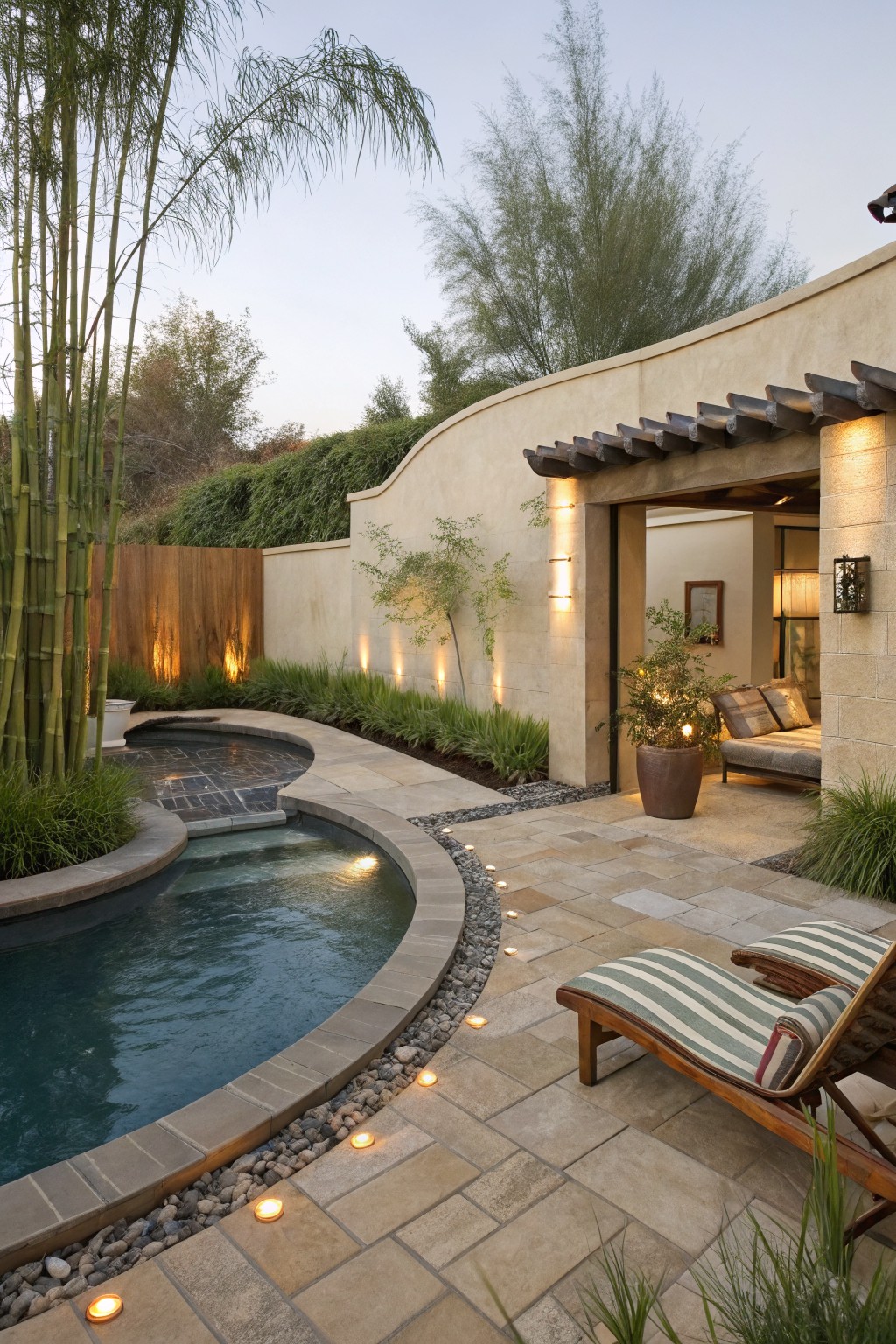
Nothing beats a backyard where the pool and path curve together like they’re part of the same stream. Here the dark pool edges sweep around softly, with the stone path hugging close and river rocks lining both sides. Bamboo stands tall nearby, and low plants fill the gaps. It pulls your eye right through the space in a relaxed way.
Try this in a sunny yard with room for loungers at the end of the path. Stone pavers like these handle pool splash well and stay cool-ish underfoot. It fits homes with a bit of modern or resort feel, especially if you have tall privacy plants. Watch the scale though, curves can overwhelm a tiny lot.
Curved Fire Pit Patio on a Slope
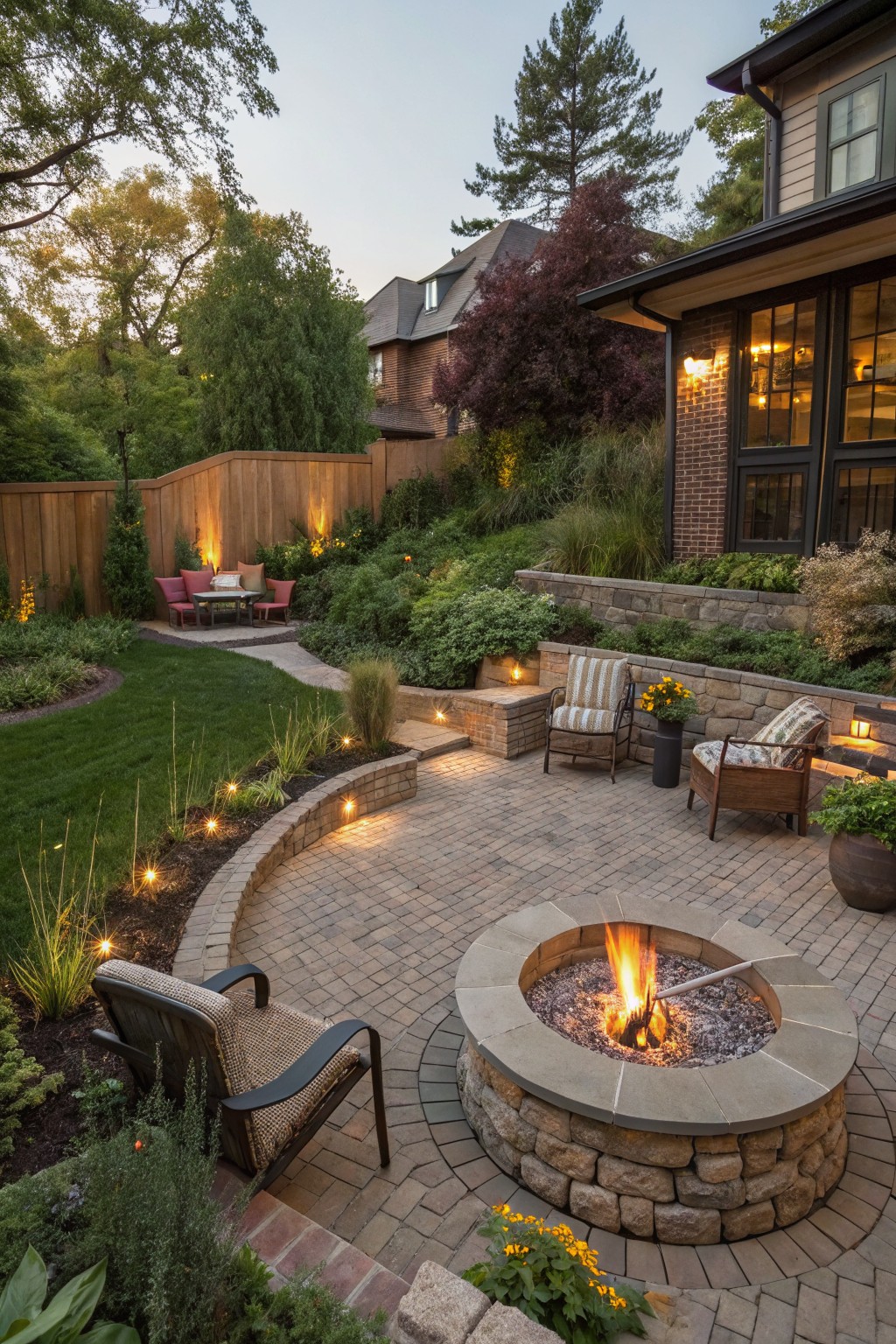
A curved brick paver patio wrapping around a stone fire pit works great when your backyard has a gentle slope. It follows the land’s natural shape instead of forcing flat levels everywhere. You get that cozy gathering spot right where the yard dips, with chairs tucked in close and low lights dotting the edge for evenings.
This setup suits average suburban yards with some trees and shrubs. Build low retaining walls from the same stone to hold back soil and add steps if needed. Keep plantings soft around the edges so the patio feels open. Just watch the drainage around the fire pit to avoid puddles after rain.
Winding Boardwalk Paths in Coastal Yards
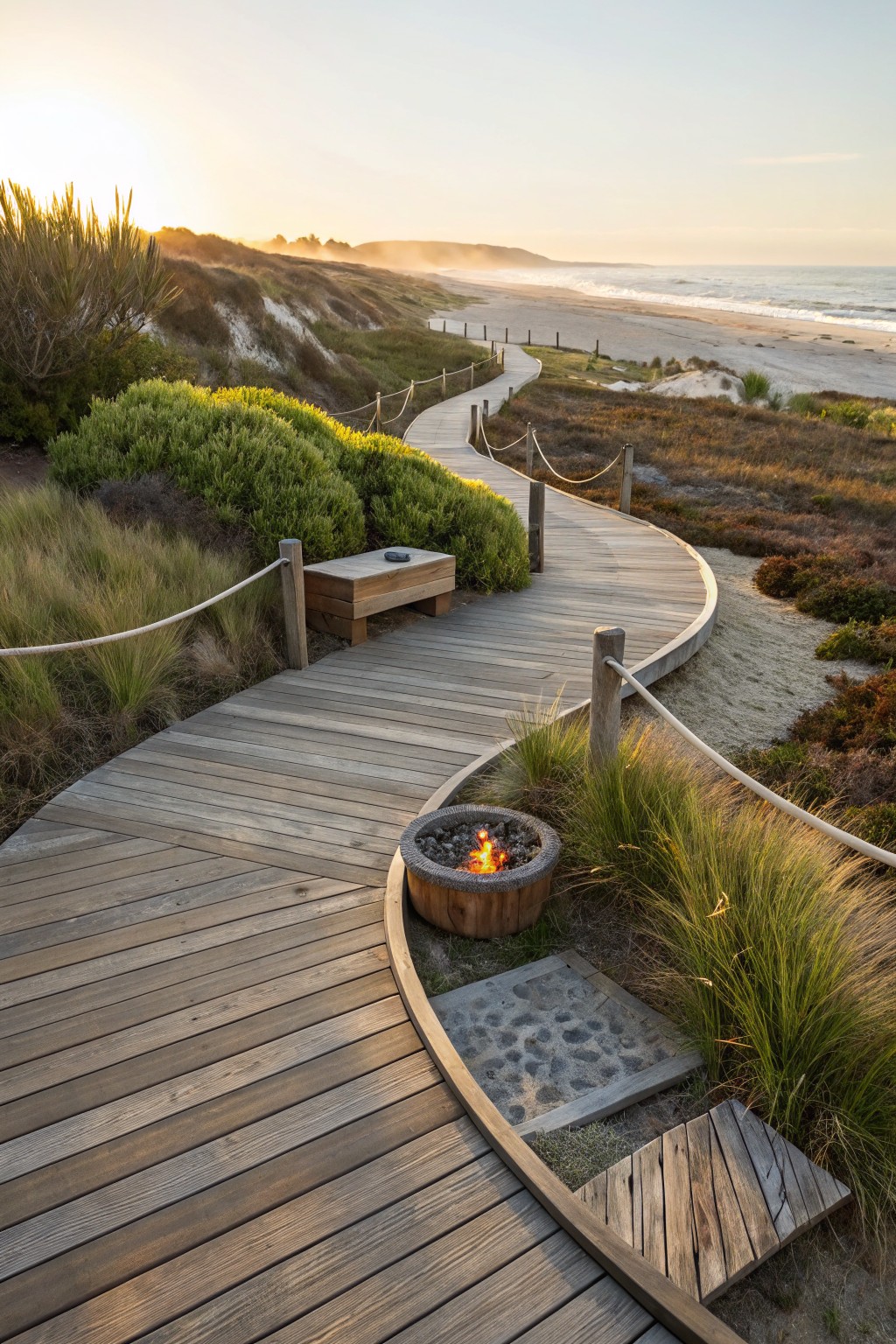
A wooden boardwalk like this winds right through the dunes and native grasses. It protects the ground from foot traffic while pulling you toward the beach with that easy curve. Folks love how it blends the yard into the landscape. No harsh lines. Just a natural path that fits.
Put one in if you have a sloped lot near water or dry plants that shouldn’t get trampled. Weathered cedar or similar holds up best. Toss in a bench halfway. Or that fire pit setup nearby. Works for bigger backyards… keeps things open and low fuss.
Winding Stepping Stone Path in Gravel
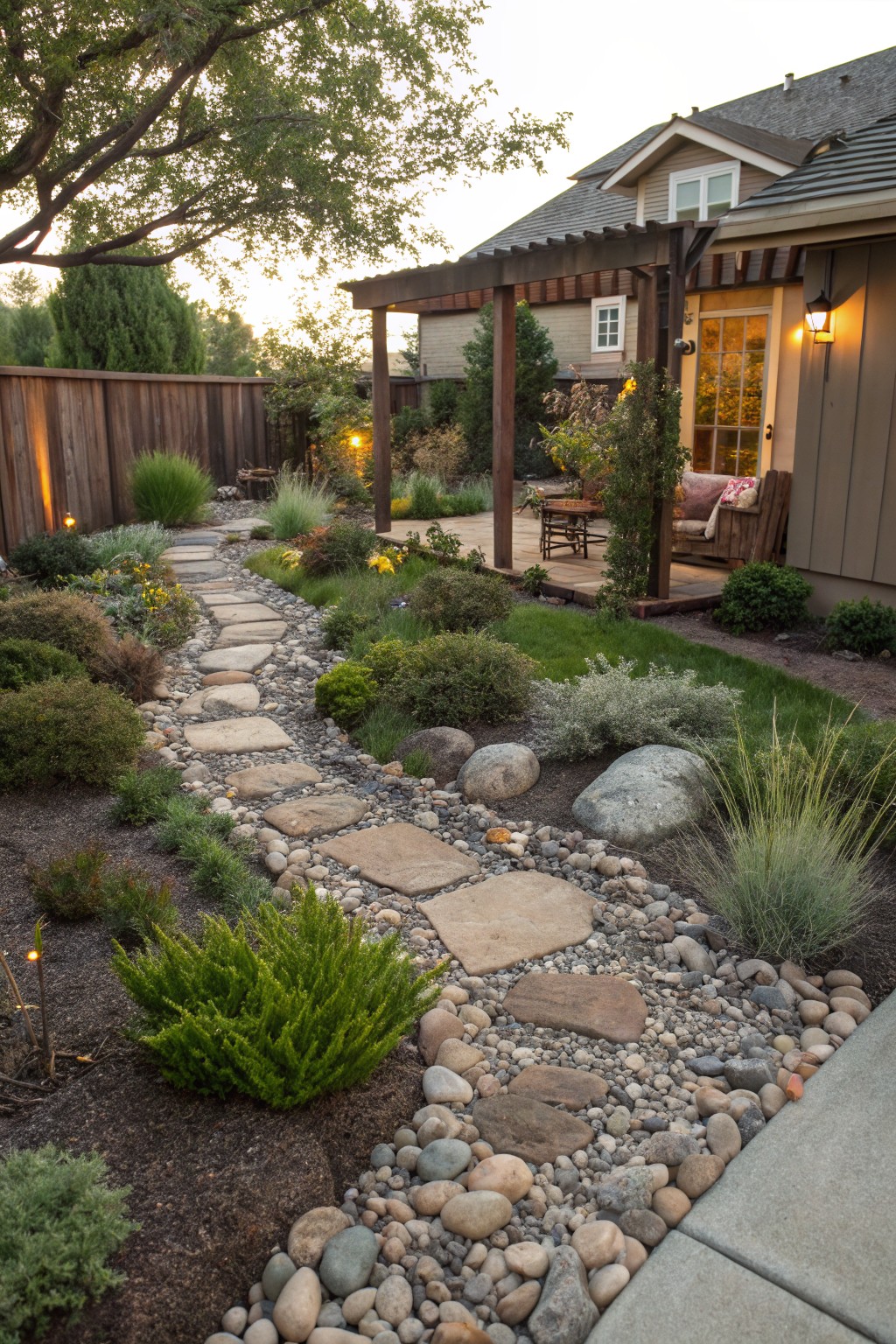
A simple way to guide people through your backyard is with a winding path of flat stepping stones set right into a bed of smooth river gravel. It looks like a natural dry creek that invites you to stroll along without feeling too formal or rigid. The stones are spaced just right for easy steps, and the gravel softens everything around them.
This setup works best in open yards where you want low upkeep and a relaxed vibe. Line the edges with tough grasses and low shrubs to keep weeds down, and add a few big boulders for interest. It suits most any backyard size, especially leading from the lawn to a patio area, but skip it if your yard floods often.
Meandering Stone Paths in the Lawn
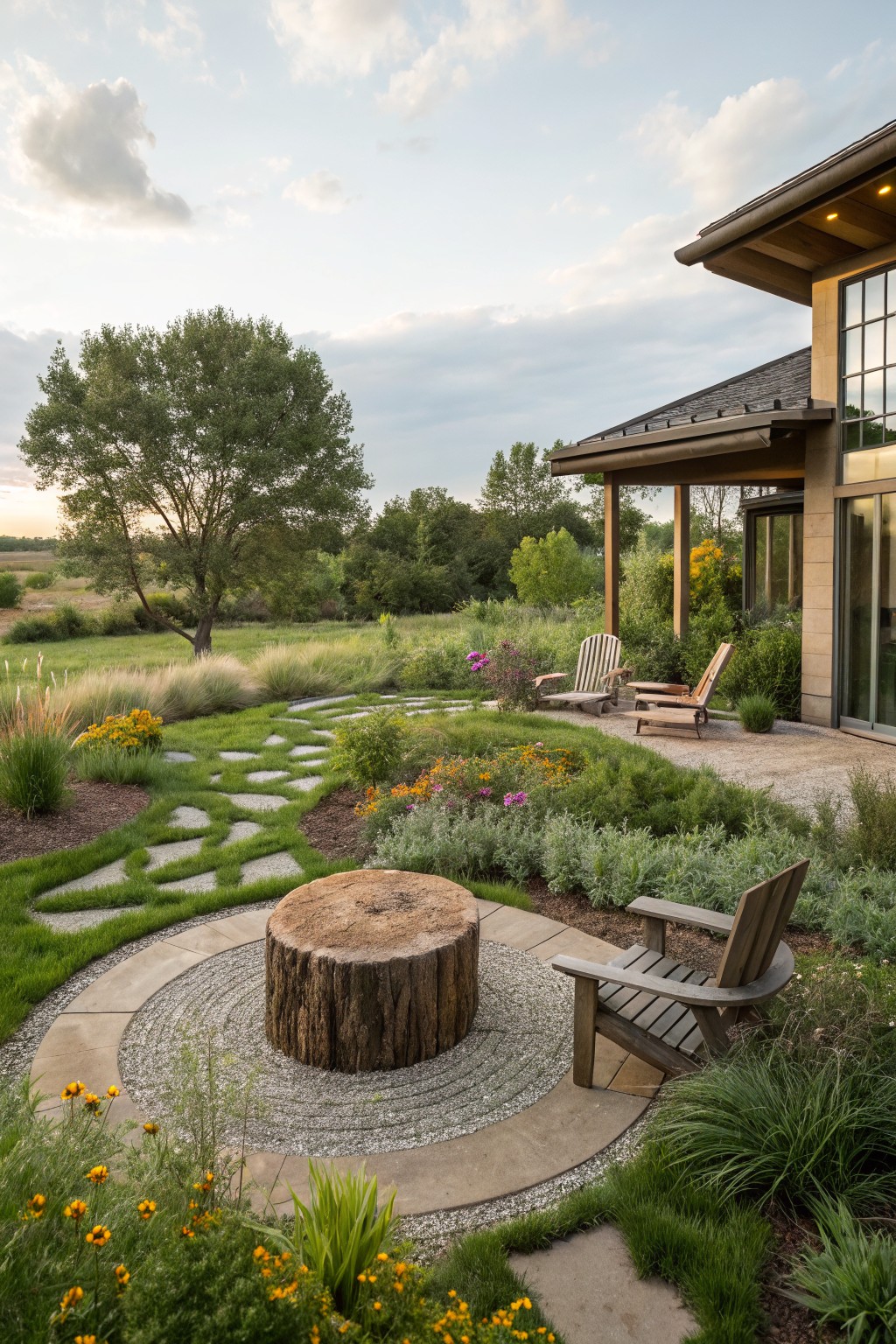
One simple way to guide people through a backyard without hard lines is with irregular stepping stones set right into the grass. They wind gently from the patio area past flower beds and tall grasses, making the space feel open and natural. No straight sidewalks here. Just a path that follows the lay of the land.
These paths work best in larger yards where you want to keep that meadow-like feel. Lay flat stones about two feet apart so grass fills in between, and curve them toward seating spots or the house door. They suit casual homes with native plants. Skip them if your yard floods often, since water can loosen the stones over time.
Winding Gravel Paths with Wood Steps
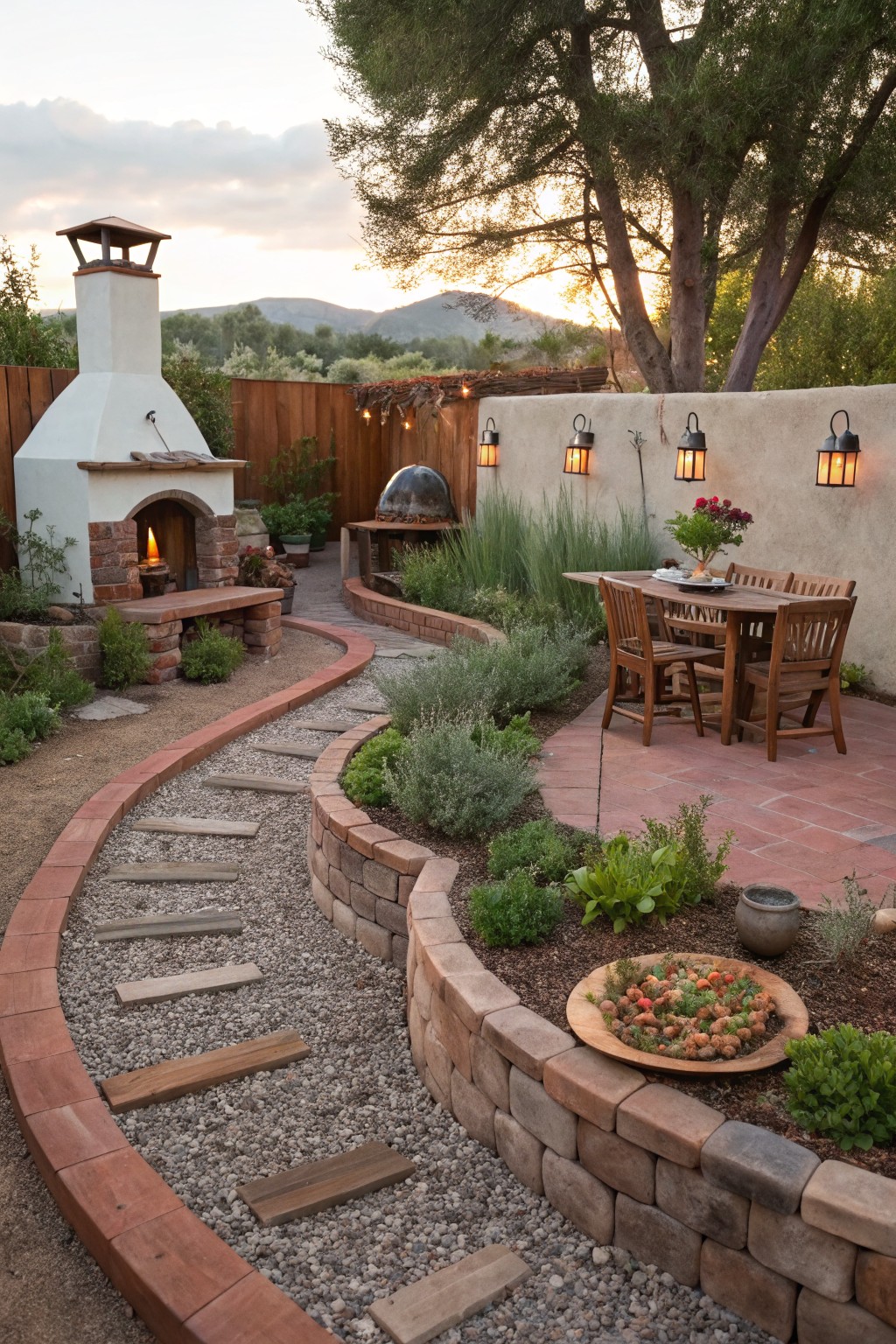
One easy way to add natural flow to your backyard is a winding path like this one. It’s mostly gravel with flat wood steps placed just right, edged by low brick curbs and raised stone walls filled with plants. The curve pulls you from the fire pit bench right over to the outdoor dining table without feeling forced. It keeps the space open but guides foot traffic nicely through the garden beds.
Try this in sloped yards or any spot with uneven ground. Gravel drains well and stays low fuss. Space the wood steps where dirt would get muddy, and plant soft herbs or grasses along the edges to soften it up. Skip it if your yard floods a lot… go paved instead. Fits most homes wanting that casual garden feel.
Winding Stone Paths Up a Slope

A simple winding path made from flat stones works wonders in sloped backyards. Here it curves past a small rock pond with a gentle waterfall and koi, while low lights mark the way at dusk. That natural curve draws you uphill without any rush, blending right into the plants and grass.
Put one in if your yard has a hill you want to make usable. Start with wide enough stones for easy walking, edge with gravel or low plants, and add solar lights for evenings. It fits wooded lots or spots near a house like this cedar one. Keep steps gradual to avoid slips.
Winding Gravel Paths for Natural Flow
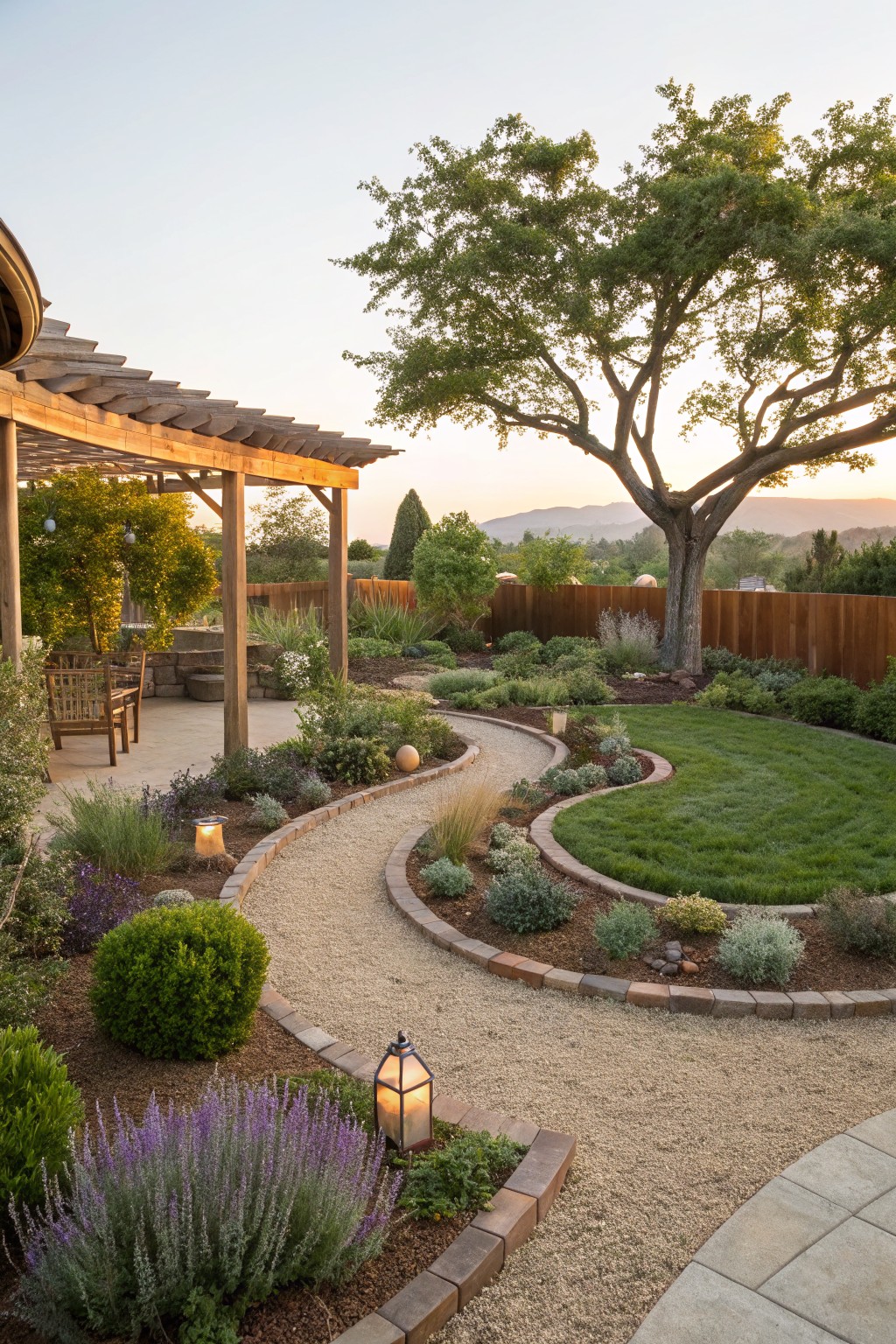
A winding gravel path like this one takes you gently through the garden, curving around beds of lavender and grasses instead of marching straight ahead. It slows things down a bit. Makes the backyard feel deeper and more relaxed, especially with those brick edges keeping everything neat without looking too fussy.
You can pull this off in most open yards by laying down gravel over a simple base, then shaping the path to follow your planting beds. It suits sloped or level ground about the same. Pair it with tough plants that don’t need much water, and add a lantern here and there for evenings. Just keep the curves wide enough to walk comfortably.
Winding Paths for Natural Garden Flow
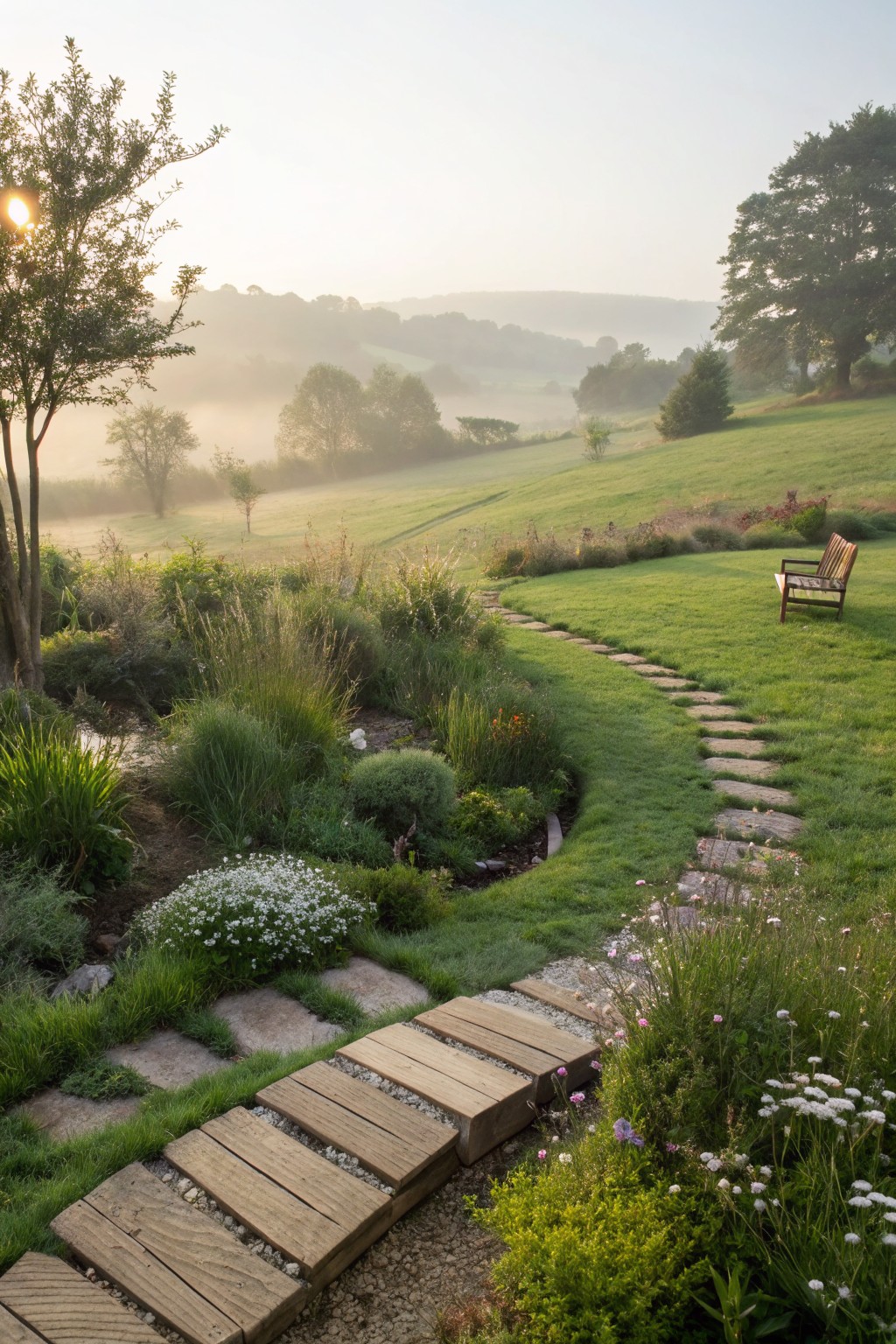
A simple winding path like this one makes your backyard feel alive and easy to wander. Stone slabs and wooden planks curve gently through tall grasses and low flowers, pulling you along without any straight lines. It works because it mixes hard surfaces with soft plants, so the garden looks and feels connected.
Try this in open yards with a little slope. Use local stone for steps and weathered wood for bridges, then plant perennials along the edges for year-round color. It suits bigger spaces best… just make sure the wood drains well to last. A bench at the end gives a spot to pause.
Outdoor Kitchen Under a Pergola
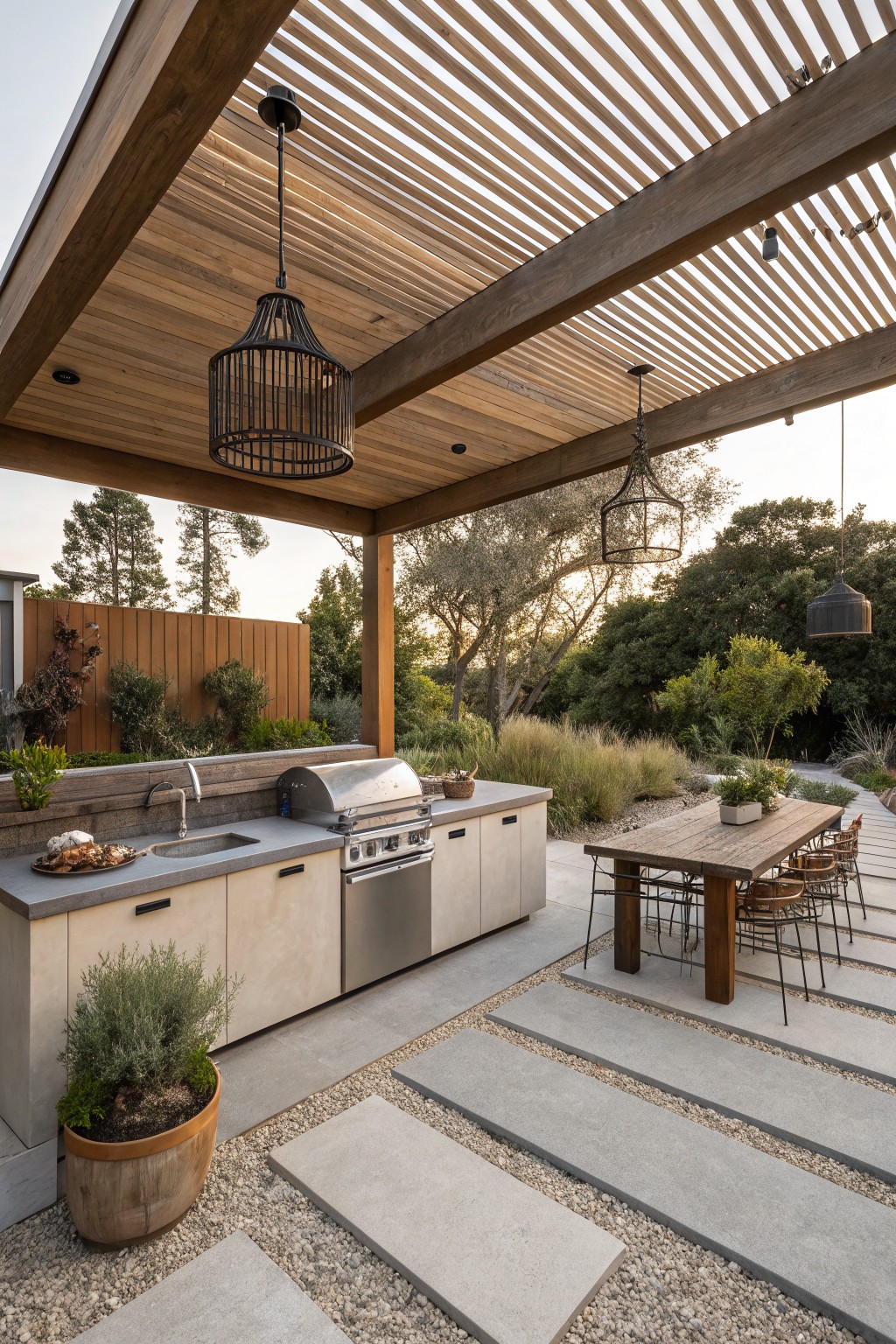
Tucking an outdoor kitchen under a simple wood pergola gives you a spot for cooking that’s out of the worst sun but still open to the breeze. Here the built-in grill and sink sit right on a clean counter, with slats overhead filtering light nicely. It turns backyard meals into something easy and natural, without feeling too shut in.
This works best in yards that get afternoon shade from trees already. Go for light-toned wood on the pergola to match the surroundings, and keep the kitchen compact so it flows to a table nearby. Skip it if your spot’s too windy. Fits homes with a casual vibe, especially where you grill a lot.
Meandering Paver Paths to Patio Zones
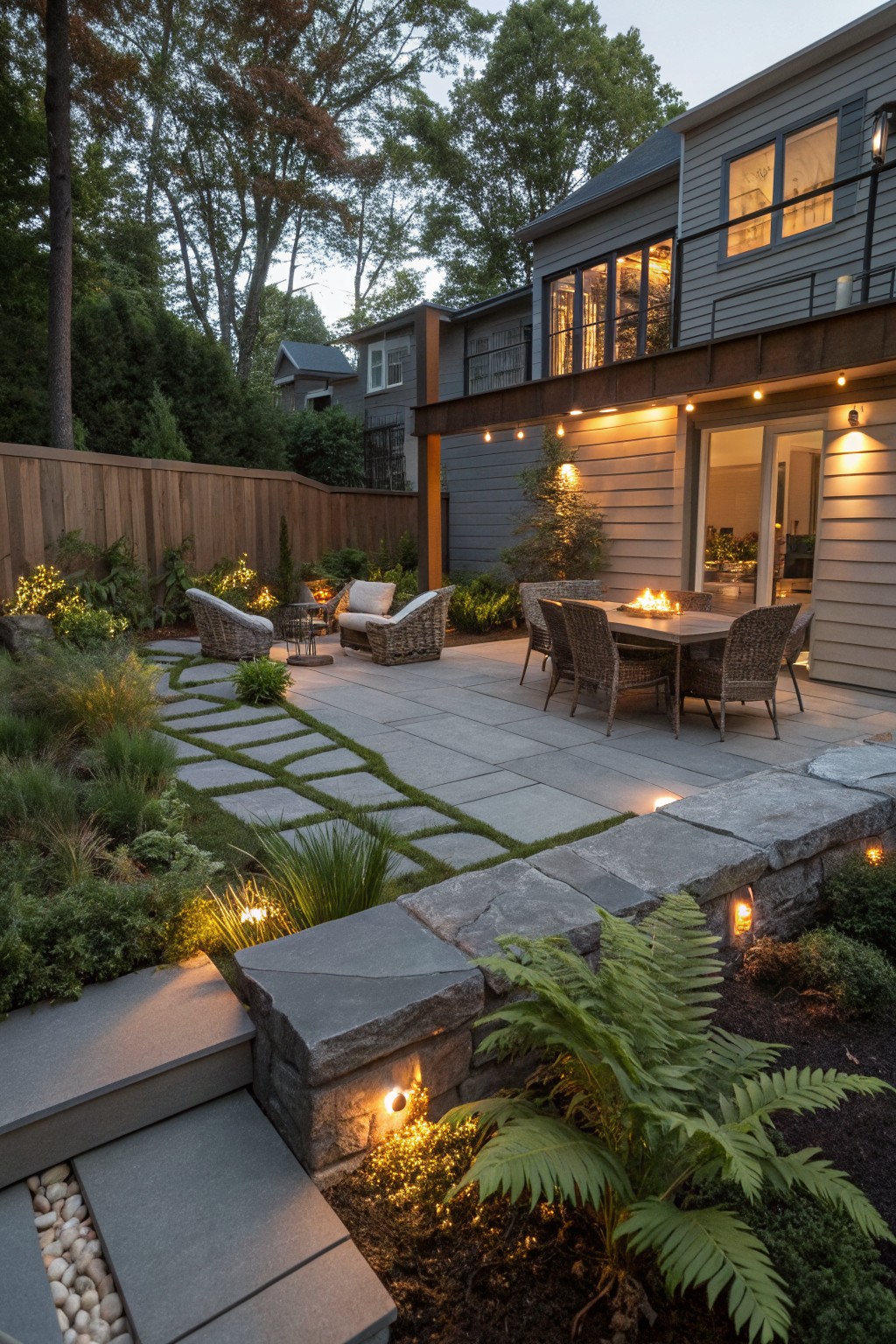
One smart way to guide people through a backyard is with a winding stone path like this one. It starts narrow at the garden edge, widens toward the main patio, and has bits of grass tucked between the pavers. That softens the look and makes the whole space feel connected, instead of chopped up into sections. The path pulls your eye right to the dining table and lounge chairs without feeling forced.
These paths work great in open or slightly sloped yards where you want easy access to seating areas. Pick flat-laid pavers in a neutral gray to match modern homes, and plant tough grasses or ferns alongside. Keep the joints simple with moss or gravel if grass gets too much upkeep. It suits homes with a clean exterior like this gray-sided one.
Sloped Paths with Stepping Stones
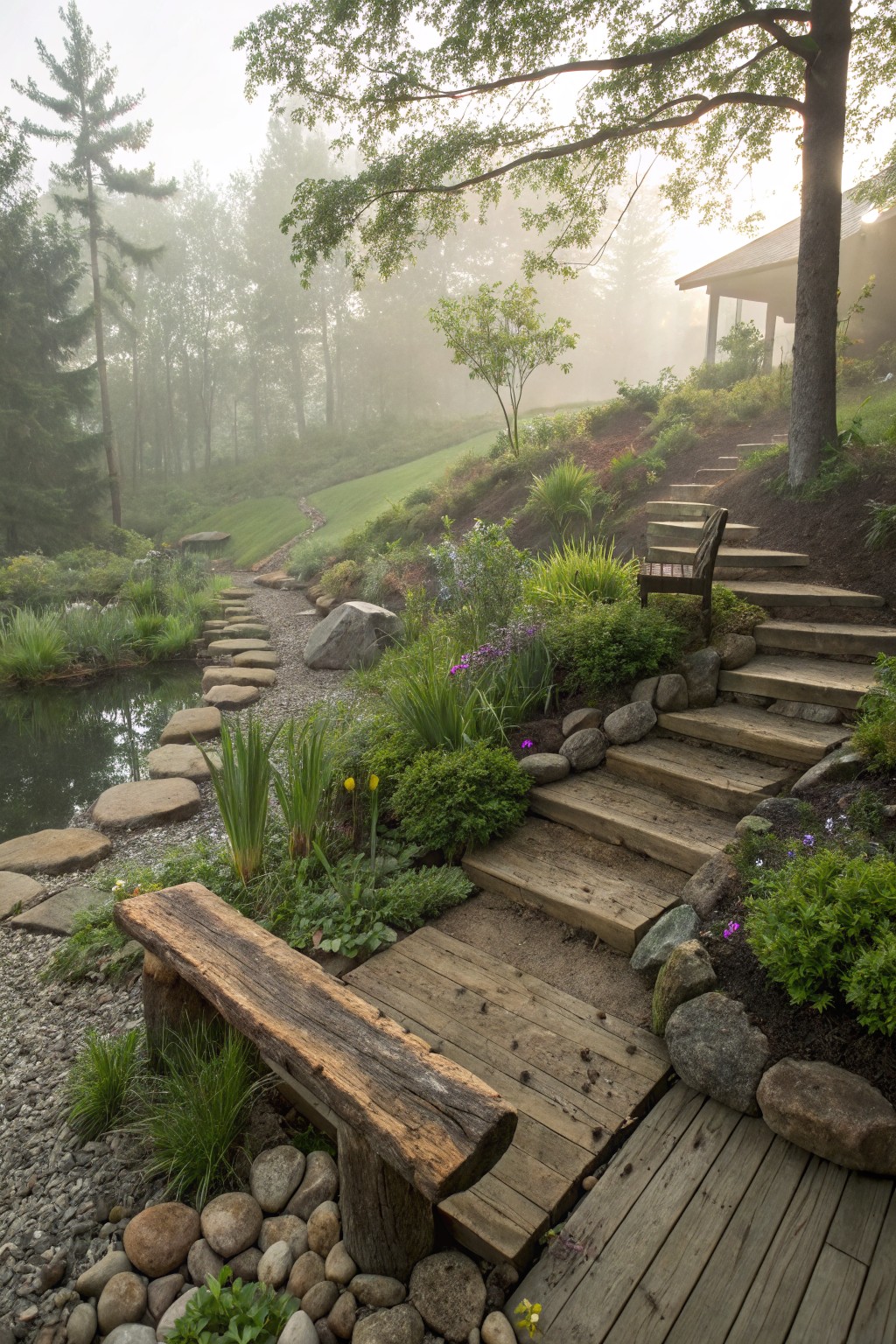
One simple way to handle a backyard slope is with flat stepping stones laid in a loose path. They guide you right along the ground, past a little pond and up through plantings, without any straight lines or big retaining walls. That loose arrangement just pulls your eye forward in a natural way, especially when the stones sit in gravel or edge a water feature.
These paths work best in open yards where you want to connect levels without much fuss. Pick rough local stone for the flats and weathered wood for any steps higher up. It suits wooded spots or casual gardens. Keep plants tucked close so nothing feels too bare, but watch the spacing so feet don’t slip on wet days.
Curved Stone Paths for Natural Backyard Flow

A simple curved stone path like this one winds gently through garden beds and gravel right up to the pergola deck. It pulls your eye along without feeling forced. The mix of flat pavers, pea gravel in between, and low edging plants keeps things loose and easy on the feet. That natural line makes the whole yard feel bigger and more connected.
You can pull this off in most backyards with some slope or open lawn space. Lay irregular stone slabs in a gravel base for drainage, then tuck in hostas or grasses along the edges. Small solar lights along the way work at night. It suits family yards where you want a practical route to seating that doesn’t shout.
Frequently Asked Questions
Q: How do I pick plants that create that smooth natural flow in my open backyard?
A: Go for natives like ornamental grasses and perennials that sway in the breeze. Mix heights and textures so they blend without sharp edges. Plant in drifts for a wild, effortless vibe.
Q: Can these ideas work in a small backyard, or do I need tons of space?
A: Sure, scale it down with a few meandering paths and clustered blooms. Focus on vertical elements like tall flowers to open up the feel. It tricks the eye into seeing more room.
Q: What’s a simple way to add paths without messing up the open, natural look?
A: Lay down flat stones or wood chips in gentle curves that follow the yard’s contours. Tuck low-growing groundcovers around them.
Q: How do I stop weeds from taking over my flowing landscape?
A: Layer thick mulch right after planting to smother weeds early. Pull any stragglers by hand weekly at first. Native plants crowd out invaders over time.