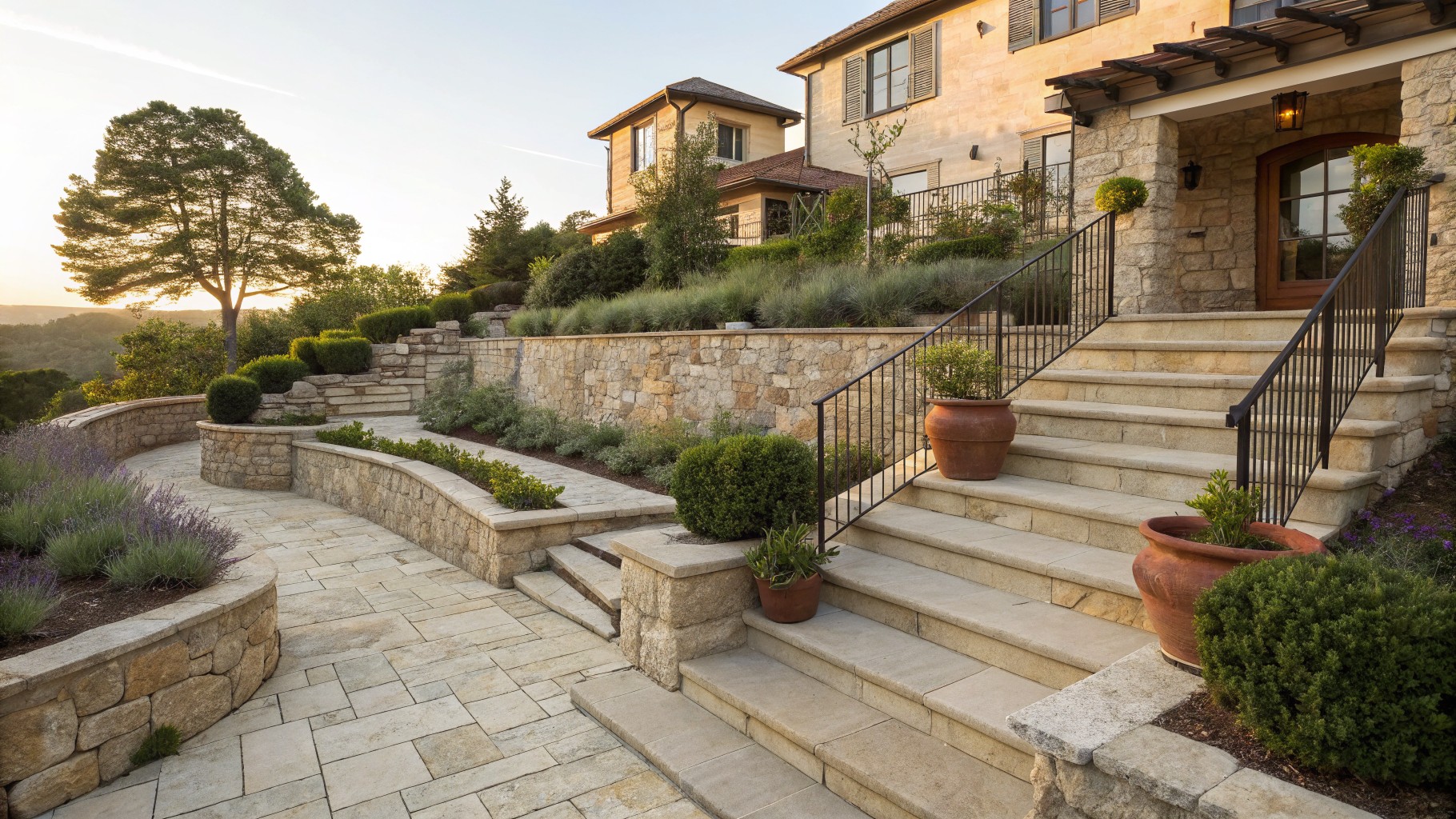
I’ve dealt with my share of sloped backyards, where the tilt turns every path into a slip hazard and leaves soil washing away from new plantings.
What usually grabs people first is how poorly edged retaining walls or haphazard steps make the whole yard feel unstable and unfinished.
Good layouts fix that by layering terraces, curving walkways, and sturdy borders that let everything grow in together over time.
A few of these approaches use native plants and simple gravel to tame erosion without much upkeep.
The stepped planters caught my eye most; I’d build those next time around.
Terraced Stone Walls for Sloped Backyards

Slopes can be tricky in a backyard. They erode easy and leave little flat space for plants or sitting. One solid fix is terraced stone walls. These stack up natural stone to create level beds at each step. In this setup, the walls hold back soil while framing spots for lavender and boxwoods. It turns a tough hill into neat garden layers that look right at home.
You can pull this off on most any hillside, especially if your yard has a rustic feel. Use local stone for that blended-in look, and mix in stairs right into the walls for easy access up top. Go with tough plants that don’t need much water. Keep walls under three feet high unless you add reinforcement. It works great behind a house like this one, making the drop feel planned instead of wild.
Terraced Rusted Planters on Slopes
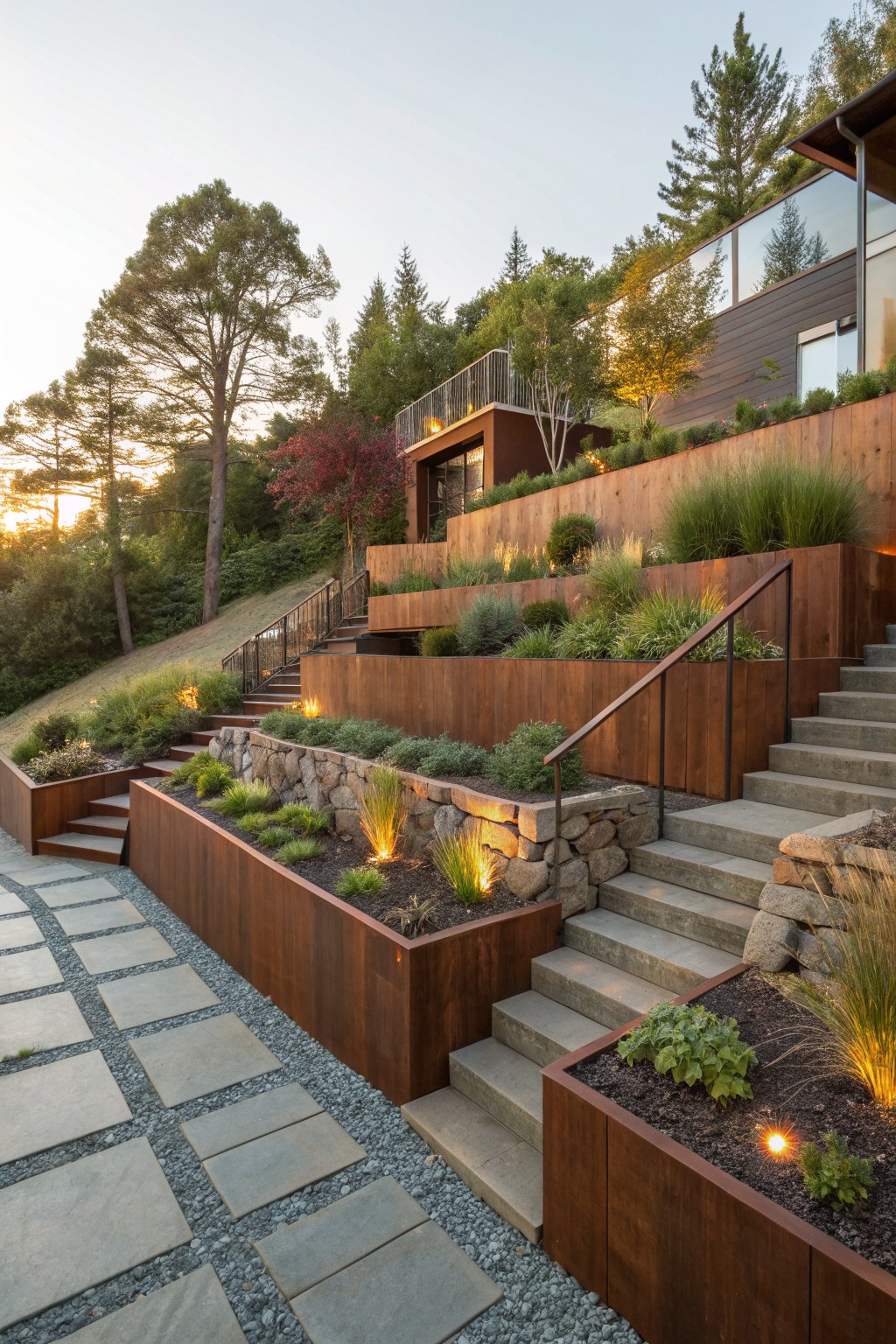
Slopes can make backyards tough to use. These terraced planters built from rusted metal fix that. They stack up in levels to hold back soil and make flat spots for plants. Steps weave right through them so you can get up the hill without slipping around. The warm rusty color blends with dirt and wood tones. It keeps things sturdy but not too blocky.
Put this setup on hills with a good 20-foot drop. Fill beds with tough grasses and shrubs that don’t mind dry spots. Concrete steps keep costs down. Add low lights in the beds for nights. It suits wooded lots or modern houses. Watch the drainage though. Poor setup leads to washouts.
Terraced Stone Walls for Sloped Yards
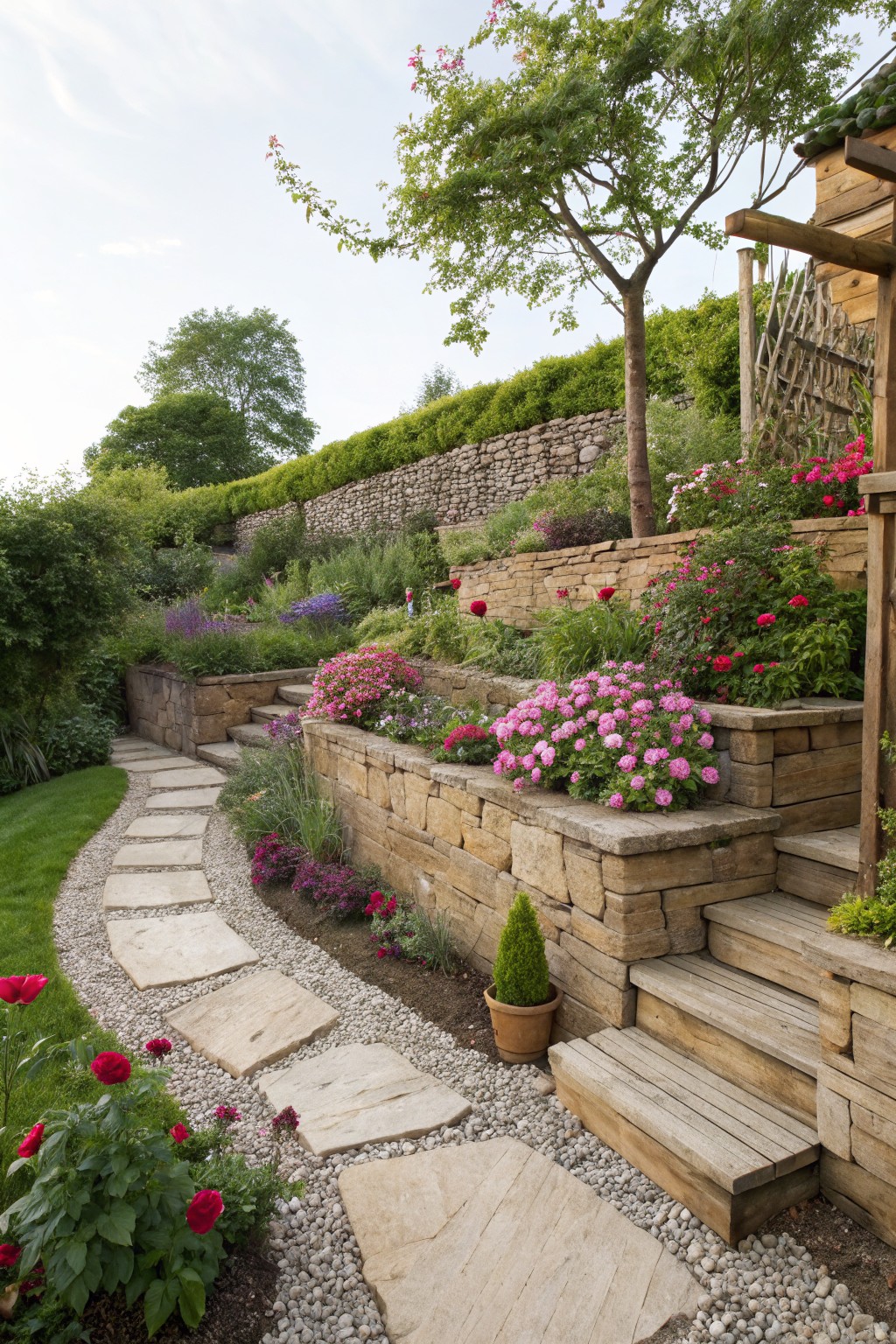
Slopes can make backyards tricky to use, but terraced stone walls fix that by carving out flat spots for planting. You see it here with sturdy sandstone blocks stacked into levels, each one holding back soil and framing flower beds full of pinks and reds. It keeps everything from washing away in rain and turns a hillside into neat garden rooms.
These walls work best on moderate slopes where you want low upkeep and year-round structure. Pair them with a gravel path or wood steps for easy walking, like the curve of slabs leading up here. Just make sure to add drainage behind the stones so water doesn’t pool. Fits most homes with a yard hill, especially if you like colorful borders without mowing everything.
Terraced Stone Steps for Sloped Yards
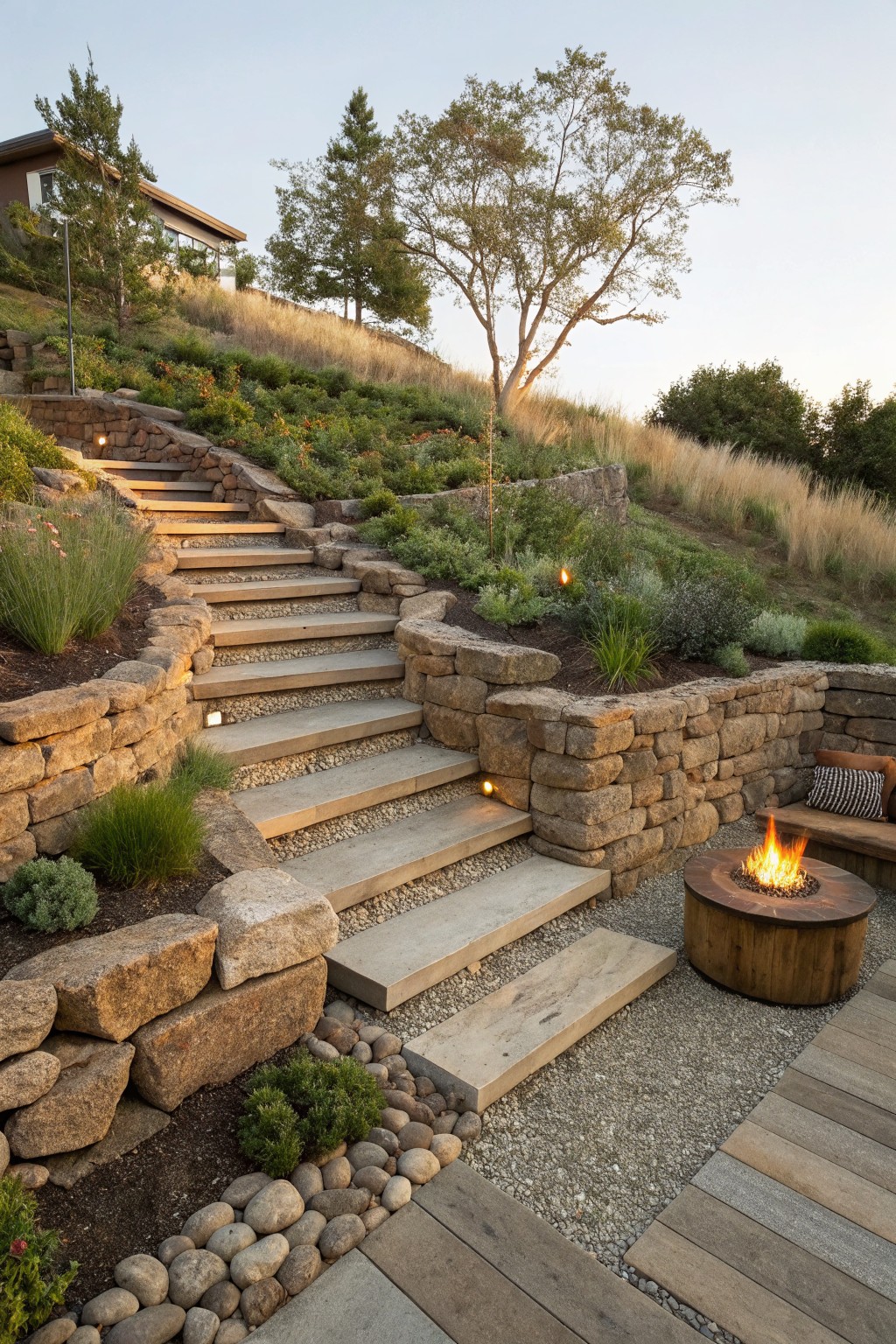
Sloped backyards often feel unusable, but terraced stone steps like these turn the hill into a practical path. Wide treads with gravel risers make climbing easy and safe. The retaining walls hold back soil while letting plants spill over for a softer edge.
These steps work best on moderate to steep slopes where you need access to upper levels. Build them with rugged local stone to blend in. Add a fire pit landing at the base… it gives you a spot to relax right away. Just plan for good drainage under the treads.
Tiered Concrete Retaining Walls
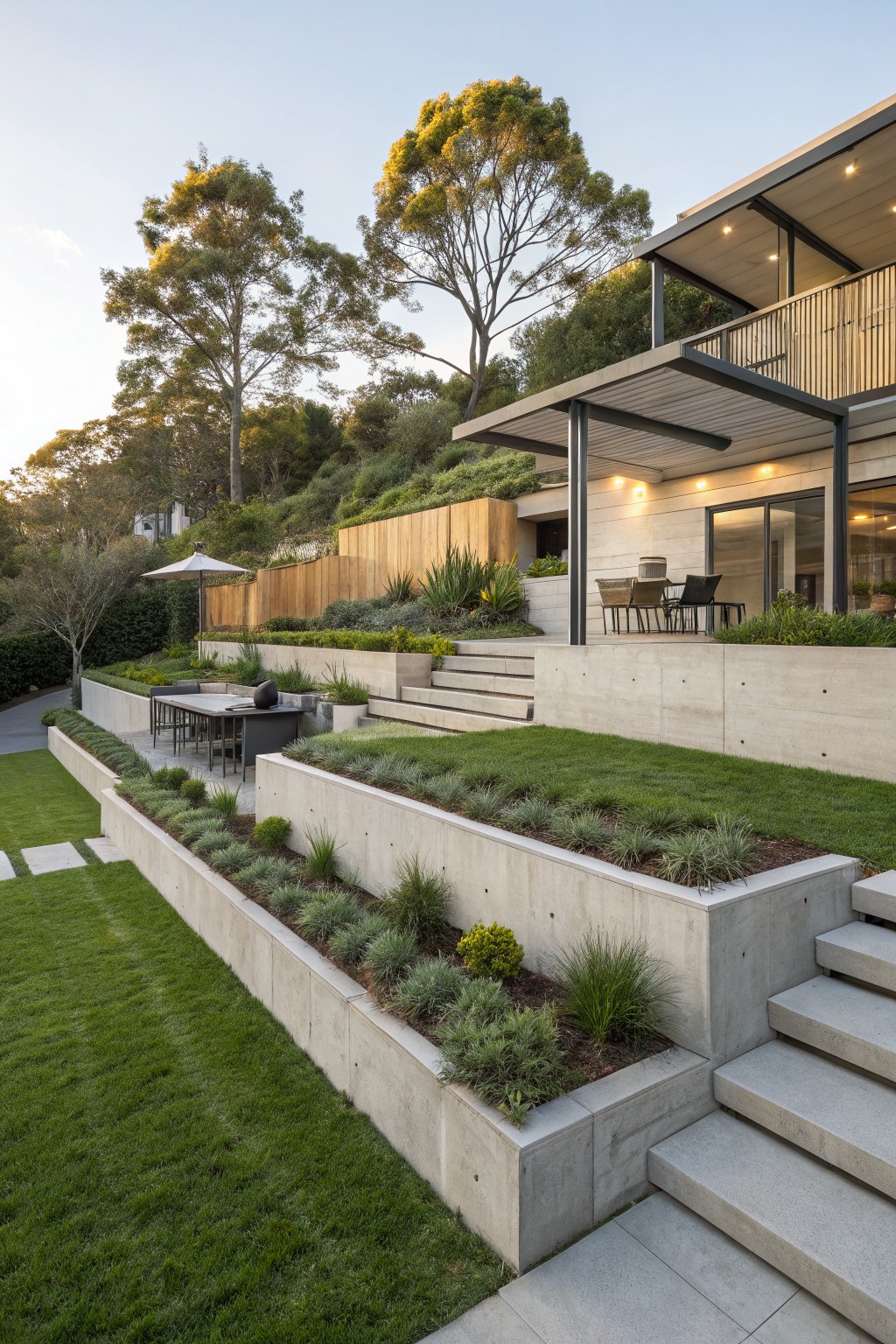
Sloped backyards can feel tricky to use, but tiered concrete retaining walls make them workable. These sturdy walls stack up levels of grass and planting beds, turning a steep drop into flat spots for lounging or growing plants. The concrete holds everything steady while plants in the tops soften the edges.
This setup fits homes on hills with a clean, modern feel. Build the walls about two to three feet high per tier, and add wide steps to link them. Just check local codes for wall height, and build in drainage to keep soil from shifting over time.
Terraced Stone Walls for Sloped Yards
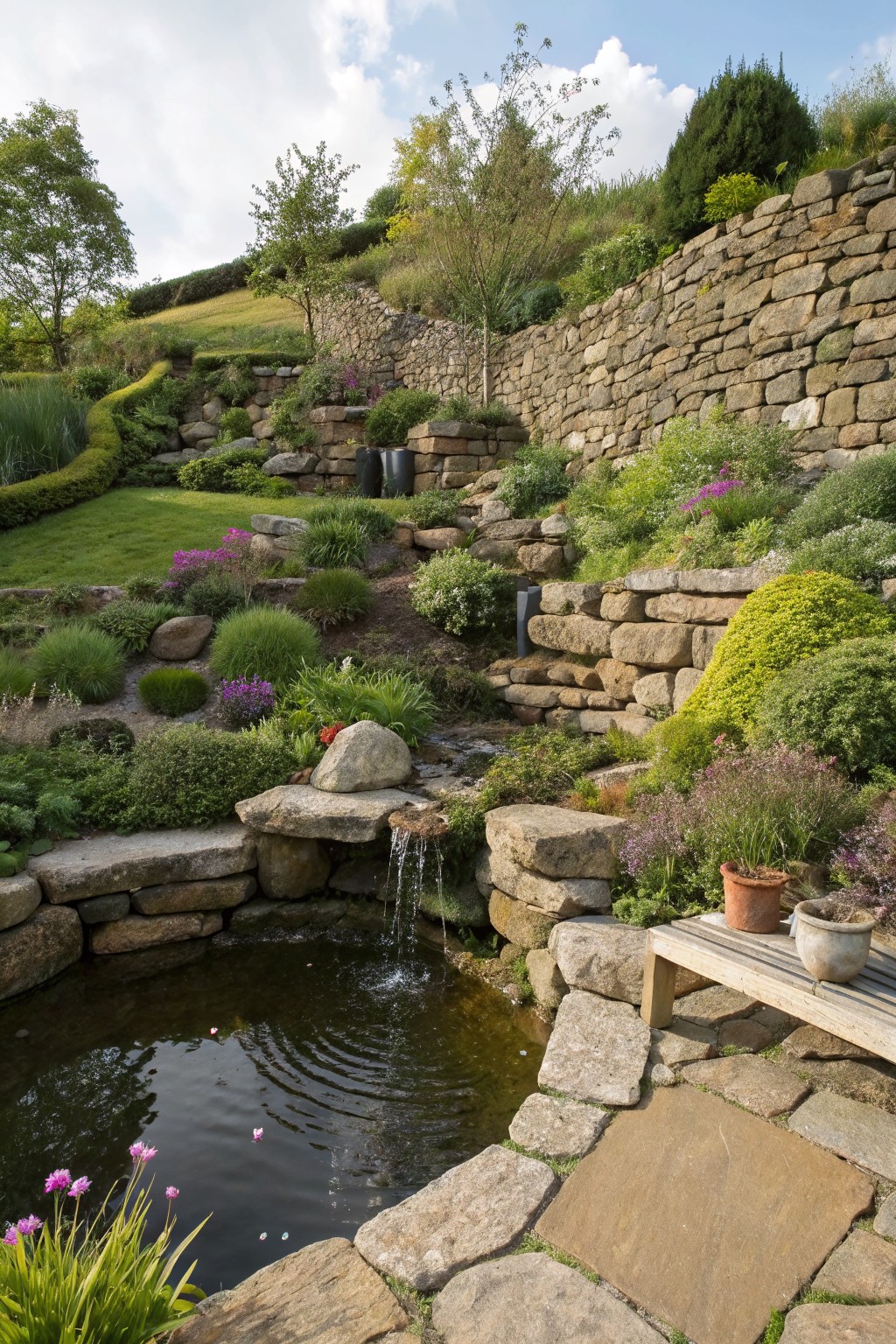
Slopes can make a backyard tough to use but terracing with natural stone walls fixes that quick. These dry-stacked walls create flat levels for planting and walking. In this setup a small pond sits at the bottom with water tumbling down from higher terraces. Plants fill the gaps making it all blend right in.
Go for this in yards with decent soil that drains well. Local fieldstone keeps costs down and looks at home. Plant tough perennials and grasses that hug the rocks. Just check your wall bases stay solid against runoff… a little gravel backfill helps.
Tiered Raised Beds for Sloped Yards
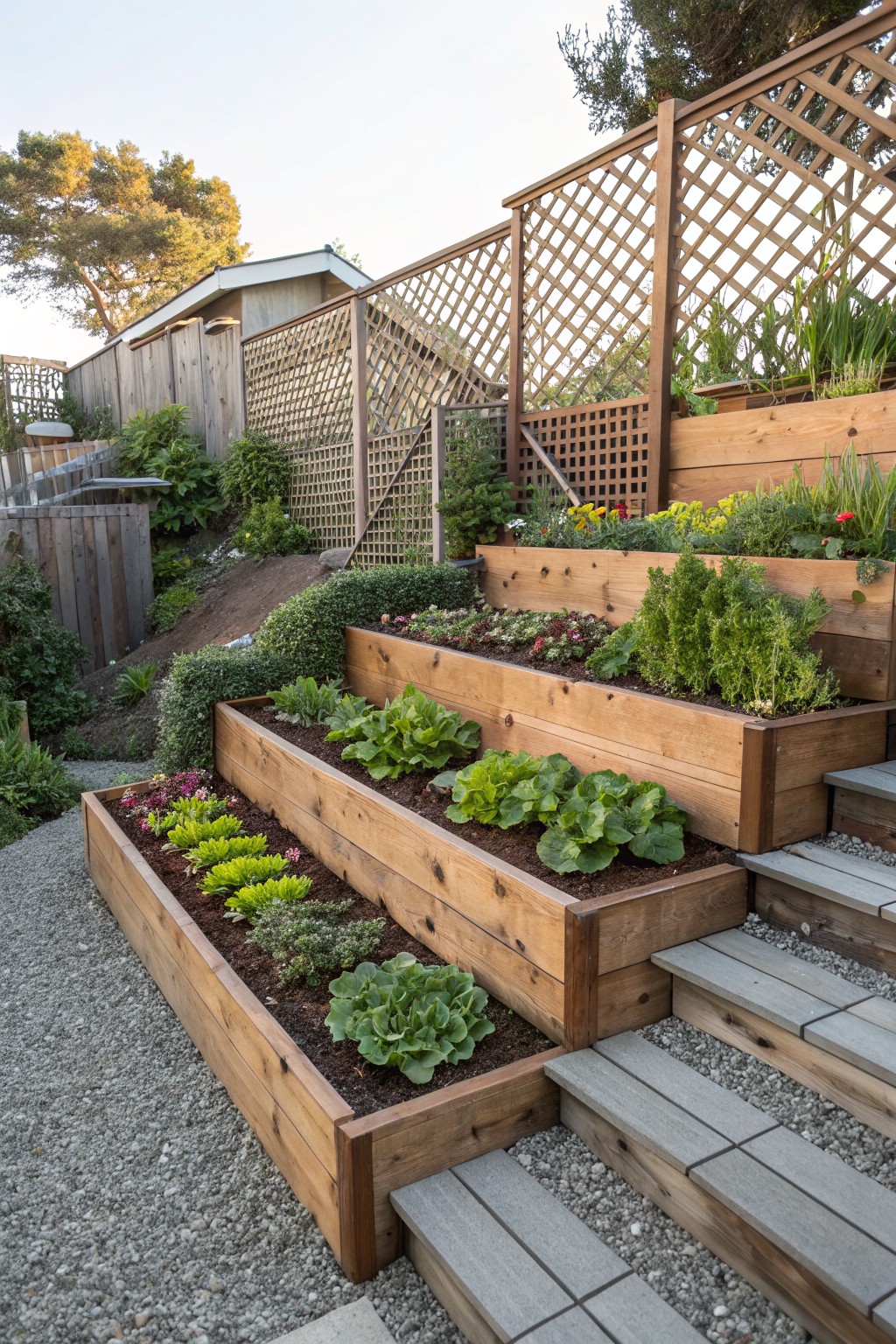
Slopes often leave backyard space unused or hard to reach. Tiered raised beds fix that by turning the hill into flat planting levels. These wooden boxes stacked three high grow greens like lettuce and herbs without much digging into the slope. It keeps soil in place and gives you room to garden right where the ground drops.
Stack the beds to match your steps so everything flows together. Good for veggies or flowers on moderate slopes. Go with untreated cedar for the wood, it holds up outdoors. Watch the drainage though, add gravel at the bottom of each bed.
Tiered Decks for Sloped Backyards
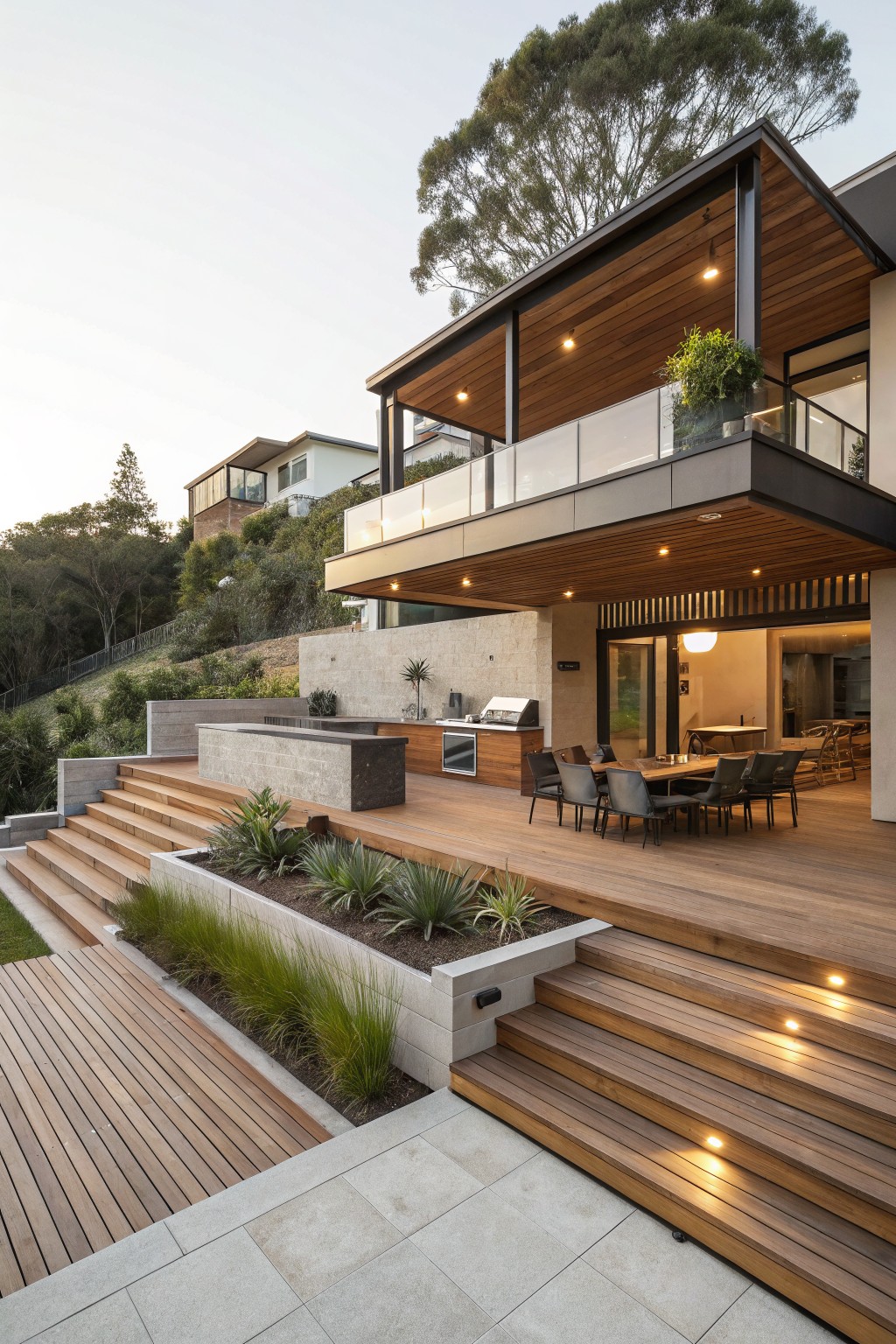
Building a tiered wooden deck is a solid fix for uneven ground behind the house. It turns a tricky slope into flat spots for eating outdoors or just hanging out. Here, wide steps connect the levels smoothly, and low lights tucked into the treads make it safe after dark.
This setup fits homes tucked into hills where straight ground is hard to come by. Go with durable wood that weathers well, add simple planters along the edges for green interest, and keep the design open to the view. Watch the engineering though. Slopes need strong support to hold furniture and people.
Stone Retaining Walls on Slopes

Slopes can be tough to work with in a backyard. But stacking natural stone into curved retaining walls like this turns the problem into a feature. The walls create flat terraces for plants and paths, while a winding walkway connects everything without feeling forced. Grasses and flowers tucked along the edges soften the stone and add some color without much upkeep.
This works best on moderate hills where you want low-maintenance yard space. Pick stones that match your area’s rock, maybe limestone or fieldstone, and keep plantings simple like tall grasses or perennials. It suits homes with a casual, natural vibe… just watch the drainage so water doesn’t pool behind the walls.
Terraced Stone Walls for Sloped Backyards

Sloped yards can feel like a headache until you see how simple stone retaining walls turn them into something usable. Here, rough basalt walls stack up the hillside, carving out flat spots for a pool and deck right at the base. They hold back the earth without looking forced, and the wood stairs between levels make it easy to move around. It’s a practical fix that blends right into a natural setting.
This setup works best on steeper hills where you want low-maintenance levels for lounging or a pool. Pick local stone to keep costs down and match the landscape. Just make sure to plan for good drainage behind the walls, or water buildup could cause shifts over time. It suits modern homes on hillsides, giving you outdoor space without flattening everything.
Stone Steps Winding Up a Slope
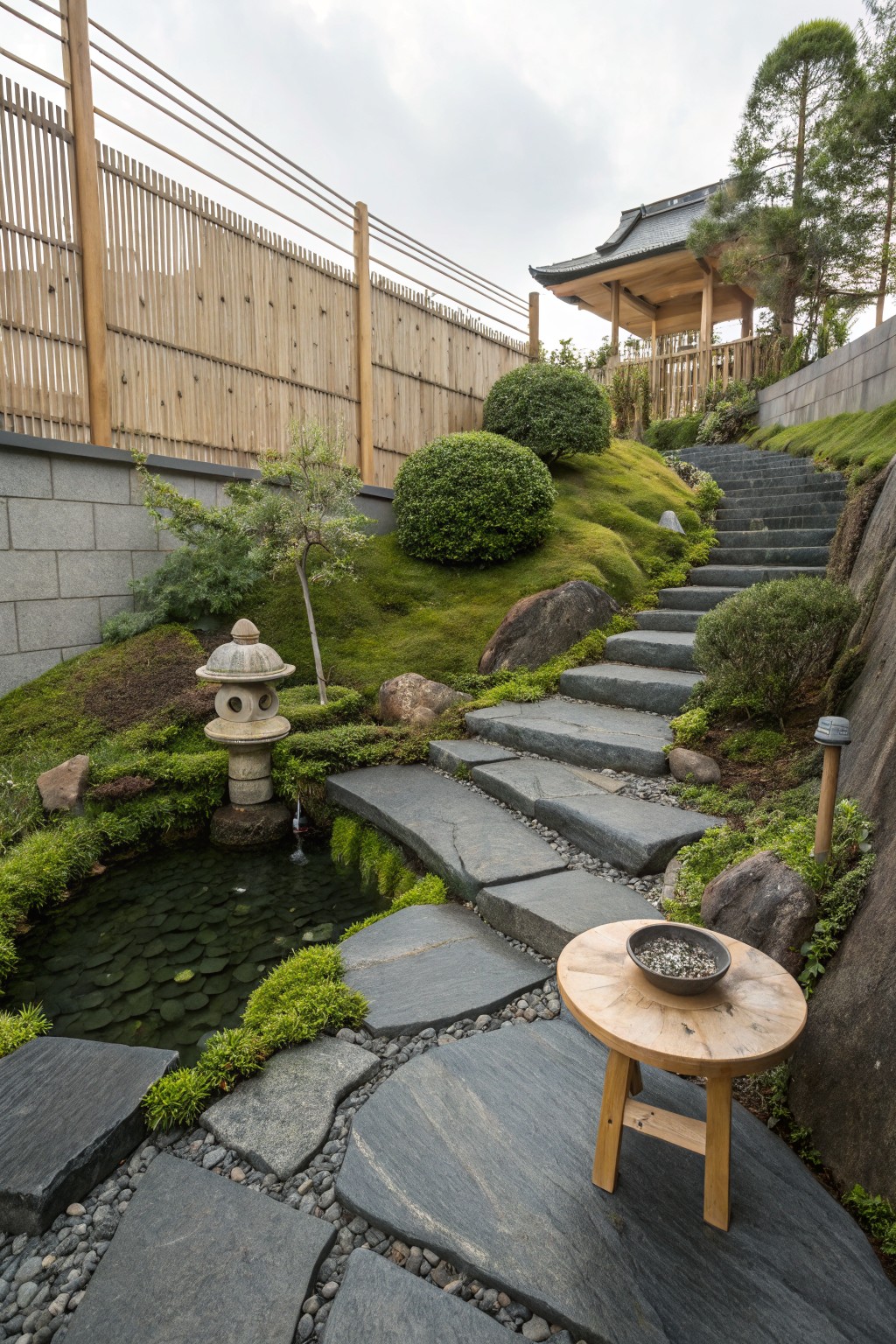
Big irregular slabs of slate make perfect steps for a backyard hill. Set them right into the mossy ground with rocks tucked around the edges. It turns a tricky slope into something you actually want to walk up. The green moss softens everything. No harsh lines.
Try this where your yard drops off steep. It works best with some shade for the moss to thrive. Add a lantern or small pond nearby like in the photo. Just check drainage so water doesn’t pool. Stable steps mean no slips after rain.
Terraced Stone Steps for Sloping Backyards
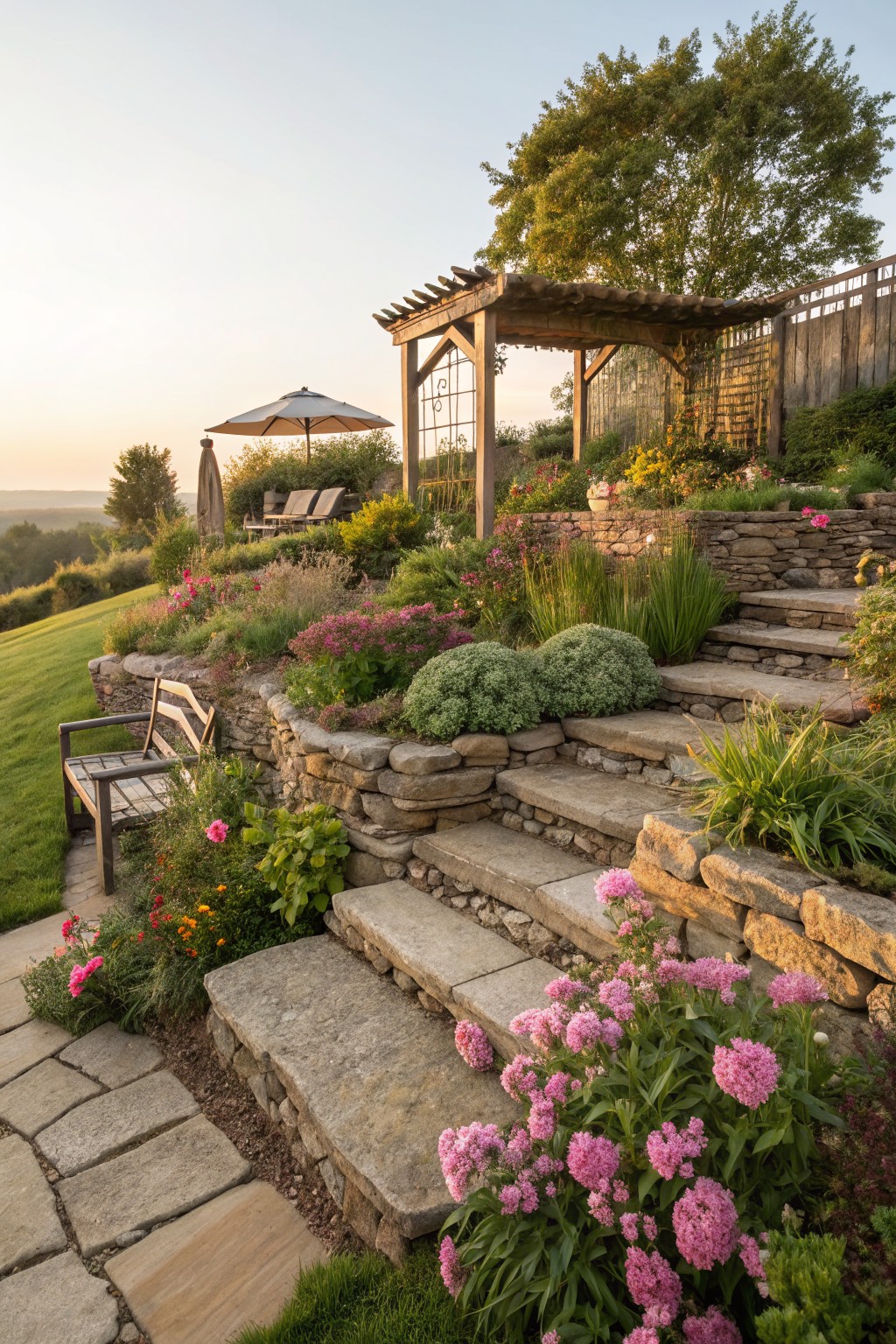
Wide stone steps like these make a steep slope feel manageable and pretty at the same time. They follow the natural contour of the hill, with dry-stacked retaining walls on either side that hold back the soil. Pink flowers and green shrubs spill over the edges, softening those rugged stones. It’s a simple way to turn what could be a muddy path into something you actually want to walk up every day.
This setup works best on moderate backyard slopes where you need to connect different levels, like from the lawn to a patio or seating area. Use local fieldstone for a natural look that blends in, and pick tough perennials that don’t mind some shade or dry spots. Just make sure the steps are wide enough, at least three feet, so they feel safe. Skip it on super steep drops, though, where you’d need railings or switchbacks instead.
Terraced Beds and Steps for Sloping Yards

Slopes in backyards can be tricky. They make it hard to plant or just walk around without slipping. One good fix is building terraced beds with steps right into them. Like these black wood planters stacked up the hill, filled with tough grasses and agaves. The levels turn the slant into usable space. And those LED strips along the edges light it up at night. Makes the whole area feel planned out and safe.
You can do this on moderate slopes behind most homes. Use rot-resistant timber or metal for the beds. Keep plants low-water ones that won’t mind the drainage. Add steps wide enough for feet. It works best where you want a modern look with some privacy from fences. Watch the soil so it doesn’t wash out. Simple upkeep too.
Tiered Grass Seating on Slopes
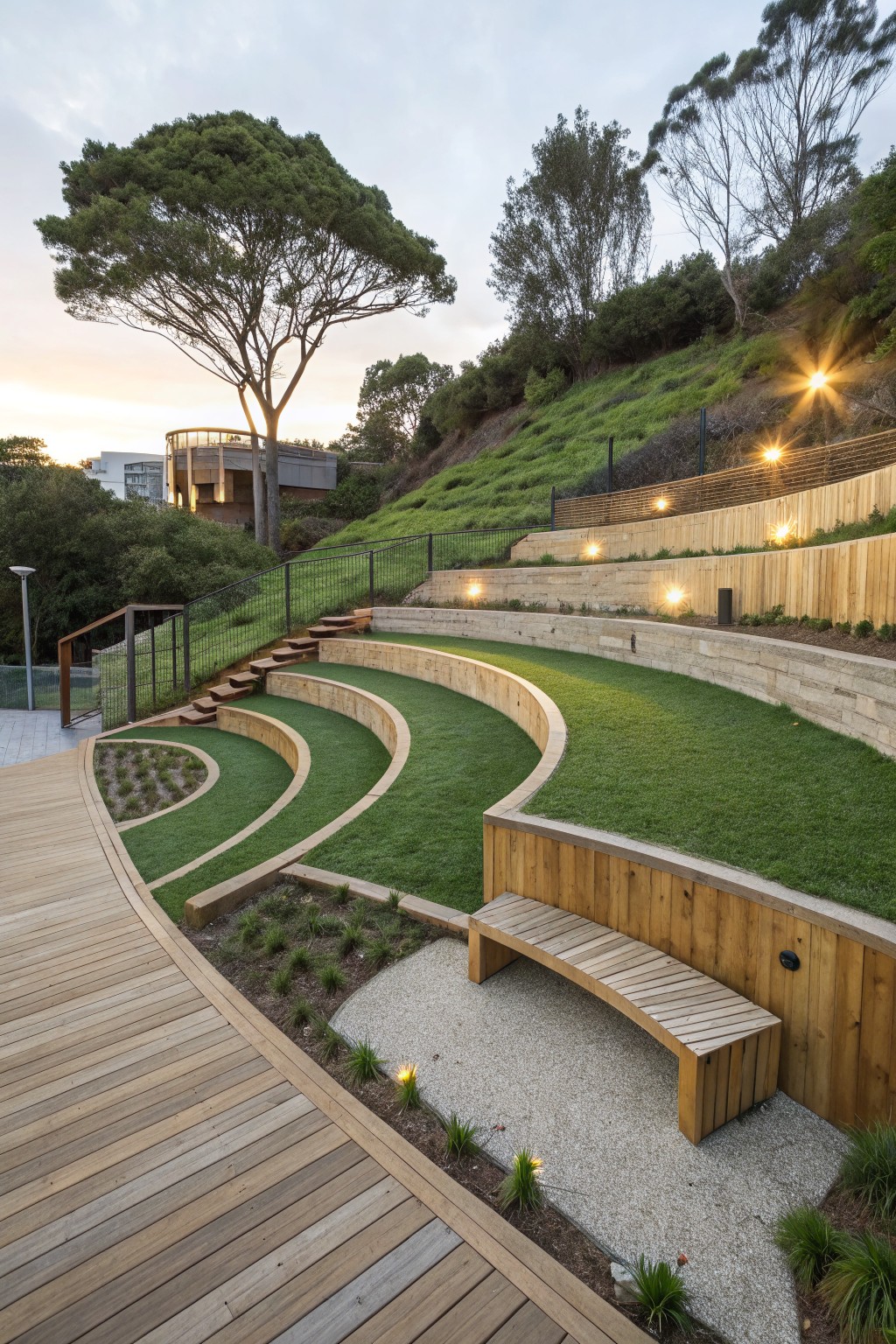
Slopes often sit empty because they’re tough to use. But tiered grass seating changes that. Here timber walls form curved rows that hold back soil and create wide steps covered in lawn. It turns a tricky hill into spots for relaxing or small gatherings. The wood blends right in, and the grass keeps it simple and green.
This works best on backyards with a 10 to 20 foot drop where you want low-key outdoor space. Build the terraces wide enough for chairs or just sitting. Add steps on one side for easy access, and plant low stuff along the edges. Watch drainage so water doesn’t pool. A few lights make it usable at night too.
Tiered Steps and Fountain for Sloped Backyards

Slopes can make backyards tricky, but tiered stone steps like these turn the problem into a feature. They create flat spots for seating right at the base, with a simple round fountain tucked into the curve. The water adds a nice sound without taking up extra room, and plants along the edges soften everything up. It’s practical for uneven ground and feels natural, not forced.
This setup works best on moderate hills where you want some outdoor living without a full retaining wall. Pair it with a stucco house or Mediterranean style, using local stone for the steps to blend in. Keep drainage in mind around the fountain, and add a few pots for color. It’s low fuss once built, and that table setup shows how easy it is to use right away.
Terraced Stone Walls for Sloped Backyards

Slopes can be tricky in a backyard. They erode easy and make walking a chore. One solid fix is terraced stone walls like these. Built from natural fieldstone, they stack up into flat planting beds and paths. Steps cut right into the walls let you move up levels without slipping. Plants tuck in between the stones, like lavender and low shrubs, so it all looks grown-in, not forced.
This setup works best on moderate hills where you want garden space instead of grass. Pair it with gravel paths and a simple bench for spots to sit. It suits homes with a rustic or modern edge. Just make sure the walls drain well to avoid pooling water behind them. Local stone keeps costs down and fits the site.
Raised Bed Terracing for Sloped Yards
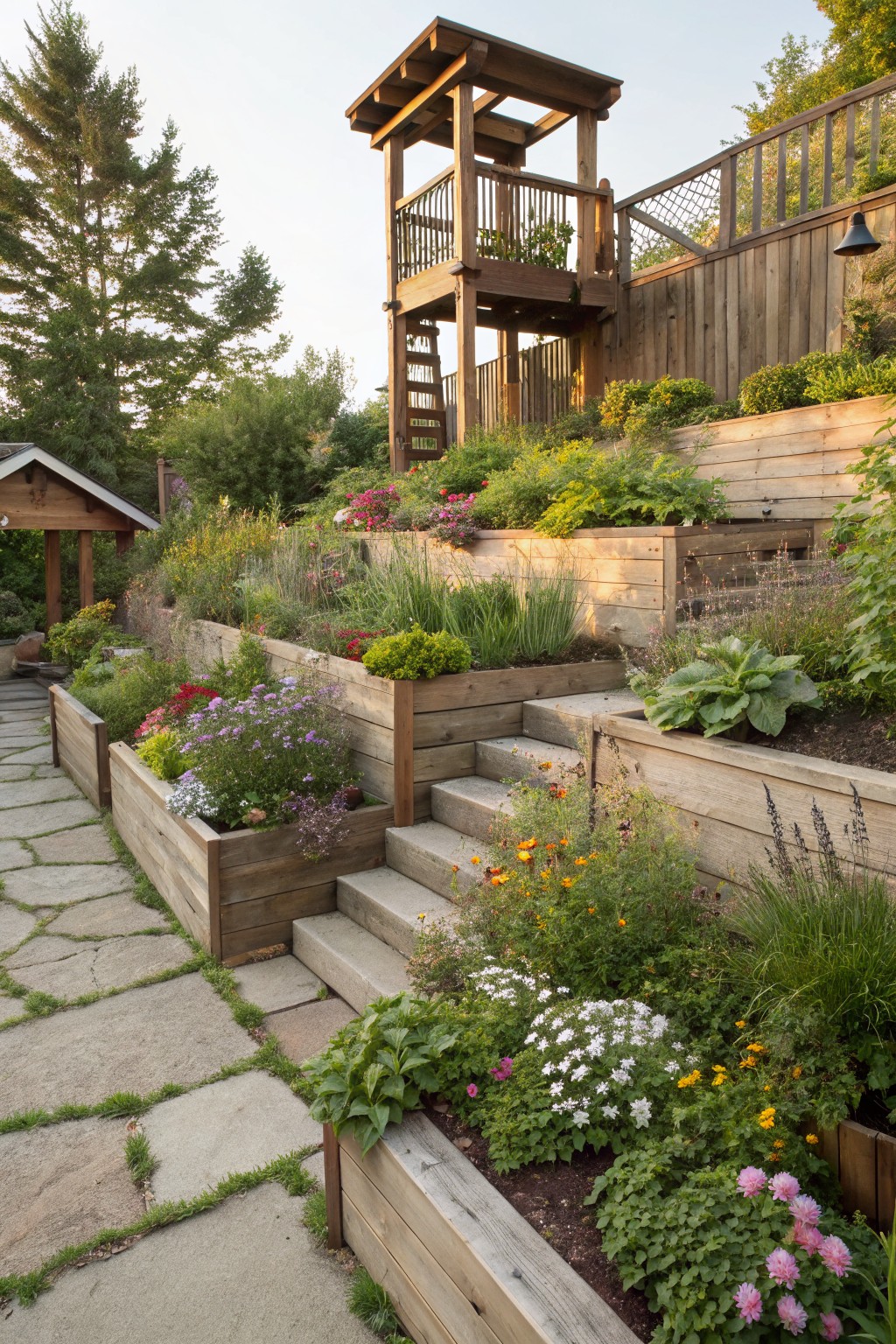
Raised bed terracing takes a hilly backyard and makes it usable. You stack wooden planters in levels across the slope, each one holding soil and plants. It creates flat growing areas where none existed before. Steps between levels let you move around easily, and the timber blends with the plants for a natural look.
This setup suits yards with a steady drop, especially if you want to garden without fighting erosion. Go for untreated cedar to last longer outdoors. Build wider beds at the base for stability, and mix in perennials for low upkeep. Watch the water flow so no spot stays too soggy.
Stone Steps for Sloped Backyards
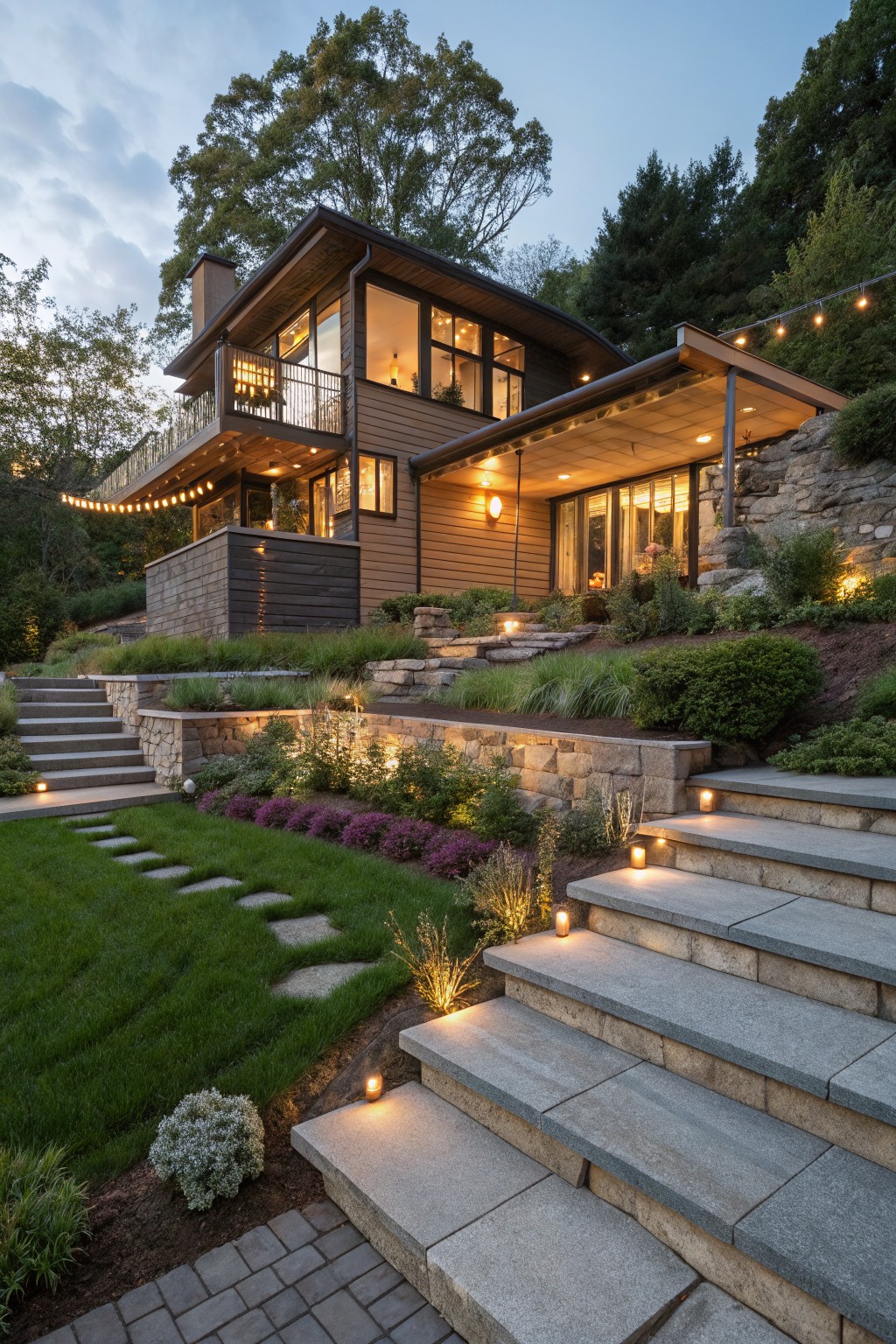
Wide stone steps like these turn a tough backyard slope into something you can actually use. They provide steady footing up the hill, and the low retaining walls beside them hold back the dirt without looking forced. A few grasses and plants along the edges keep it from feeling too stark.
This idea fits homes tucked into hillsides, especially where you want yard access from multiple levels. Pick bluestone or local rock to blend with the site, and add simple lanterns on the treads for night walks. Just make sure the steps are wide enough… no one wants to feel squeezed going uphill.
Timber Terraced Planters on Slopes
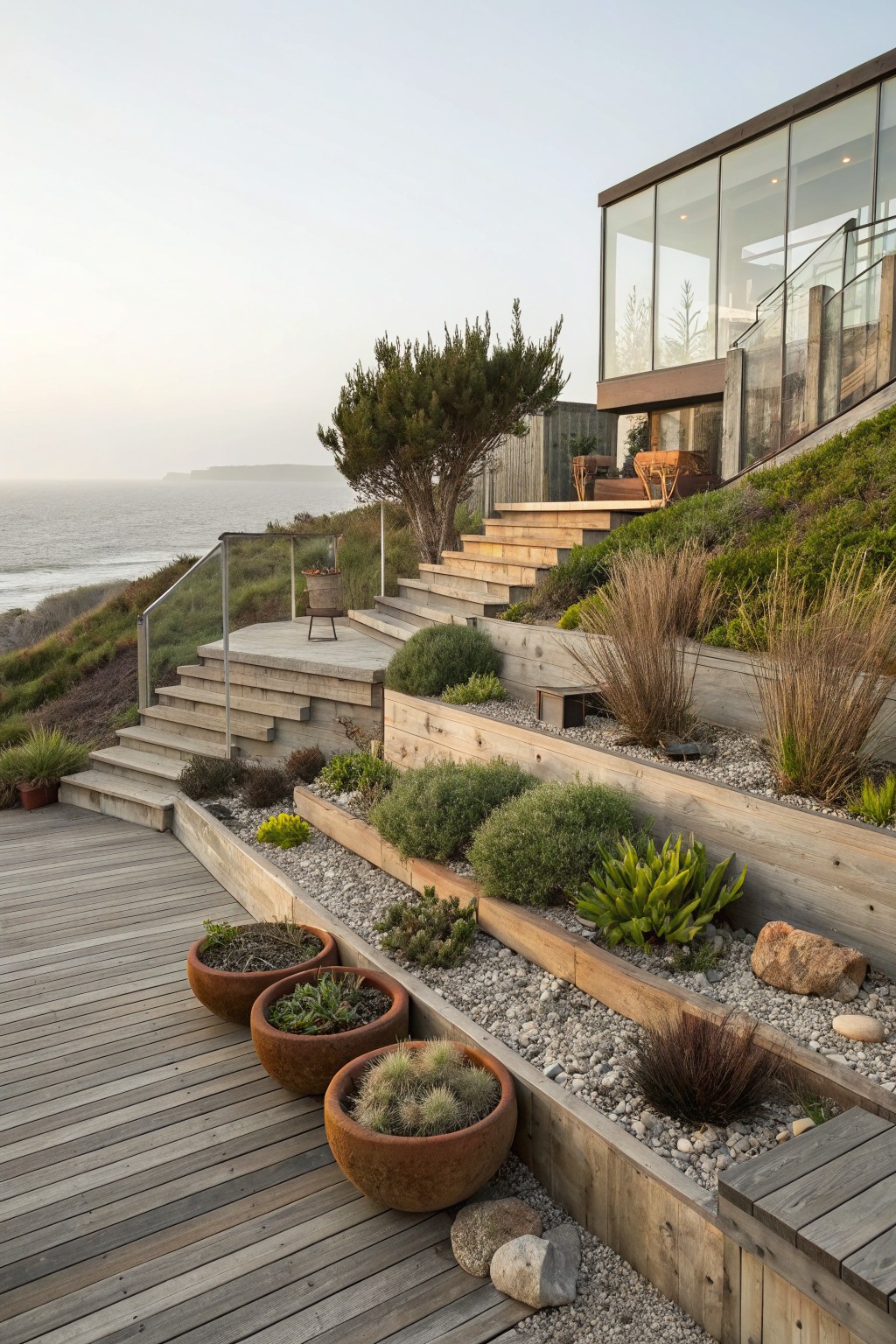
Slopes can make backyards tricky but timber terraced planters turn that problem into neat levels of planting space. You see these sturdy wooden beds holding back soil while letting grasses and low shrubs spill over the edges. It keeps everything from washing away in rain and gives you flat spots to walk or sit. The wood weathers to a soft gray that blends right into the landscape.
These work best on moderate slopes where you want low upkeep. Stack two or three tiers with gravel mulch between plants like sedums or grasses. Add wide steps between levels for easy access. Skip this if your slope is super steep. It suits coastal spots or anywhere erosion is an issue.
Terraced Stone Retaining Walls

Slopes make backyards tough to use. Terraced stone retaining walls fix that by cutting the hill into flat steps. You get planting pockets on each level plus room for paths or seating below. Stone holds up well outdoors and looks natural as it ages.
These walls suit yards with a good drop, maybe 10 feet or more. Pick local stone like sandstone for a warm tone that blends in. Build in curves for a softer flow, and add steps that match. Just check local codes and get drainage right behind each wall to avoid problems later.
Frequently Asked Questions
Q: What’s the first step before picking one of these slope ideas?
A: Walk your yard right after rain and watch the water paths. This shows you drainage problems upfront. Tackle those with swales or berms so nothing washes out later.
Q: Can I build terraces without calling in heavy equipment?
A: Dig by hand or rent a small skid steer for slopes under five feet drop. Stack landscape timbers or stones, then backfill with soil. You finish in a weekend and gain usable flat space fast.
Q: How do I choose plants that stick on a slope?
A: Pick natives with tough roots like fescue grass or junipers. They grab soil and fight erosion. Space them close at first…
Q: Won’t all this work just erode after a season?
A: Lay thick mulch or gravel right away to hold everything. Water deeply but rarely so roots dig in strong. Replant gaps early next spring if needed.