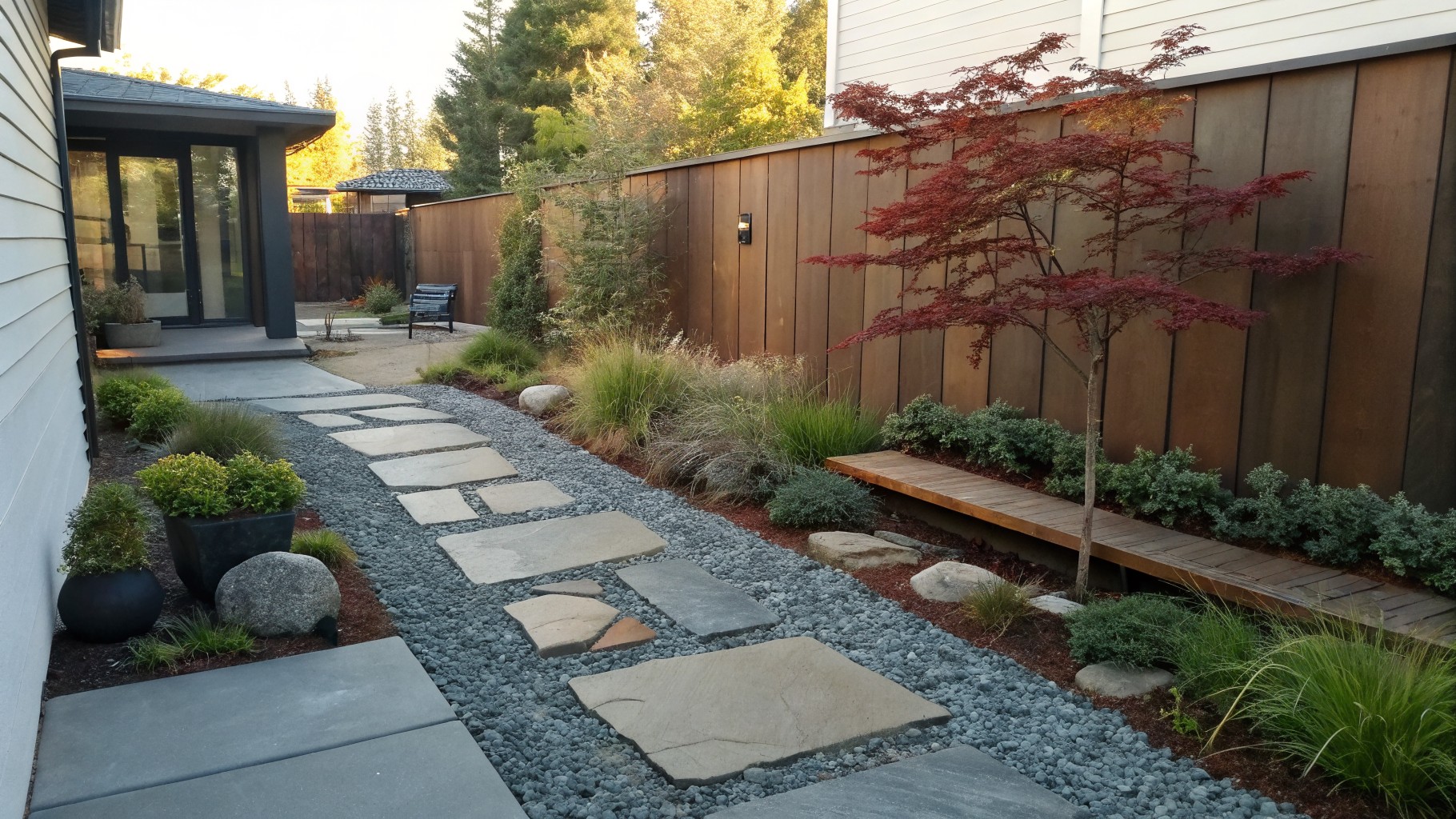
I’ve noticed in my own backyard that rocks bring a subtle texture and contrast that softens the usual grass-and-shrubs routine, especially around pathways and planting beds. They help shape the layout over time, anchoring plants as they fill in and keeping edges crisp without constant upkeep. A simple dry riverbed I added years ago still guides foot traffic naturally, proving how these elements hold up in real use. Folks usually spot the rocks first when they visit, since they ground the whole scene and make bolder plantings pop. Several ideas like these are practical enough to test in your yard, tweaking for your soil or slope.
Stone and Gravel Pathway for Backyards
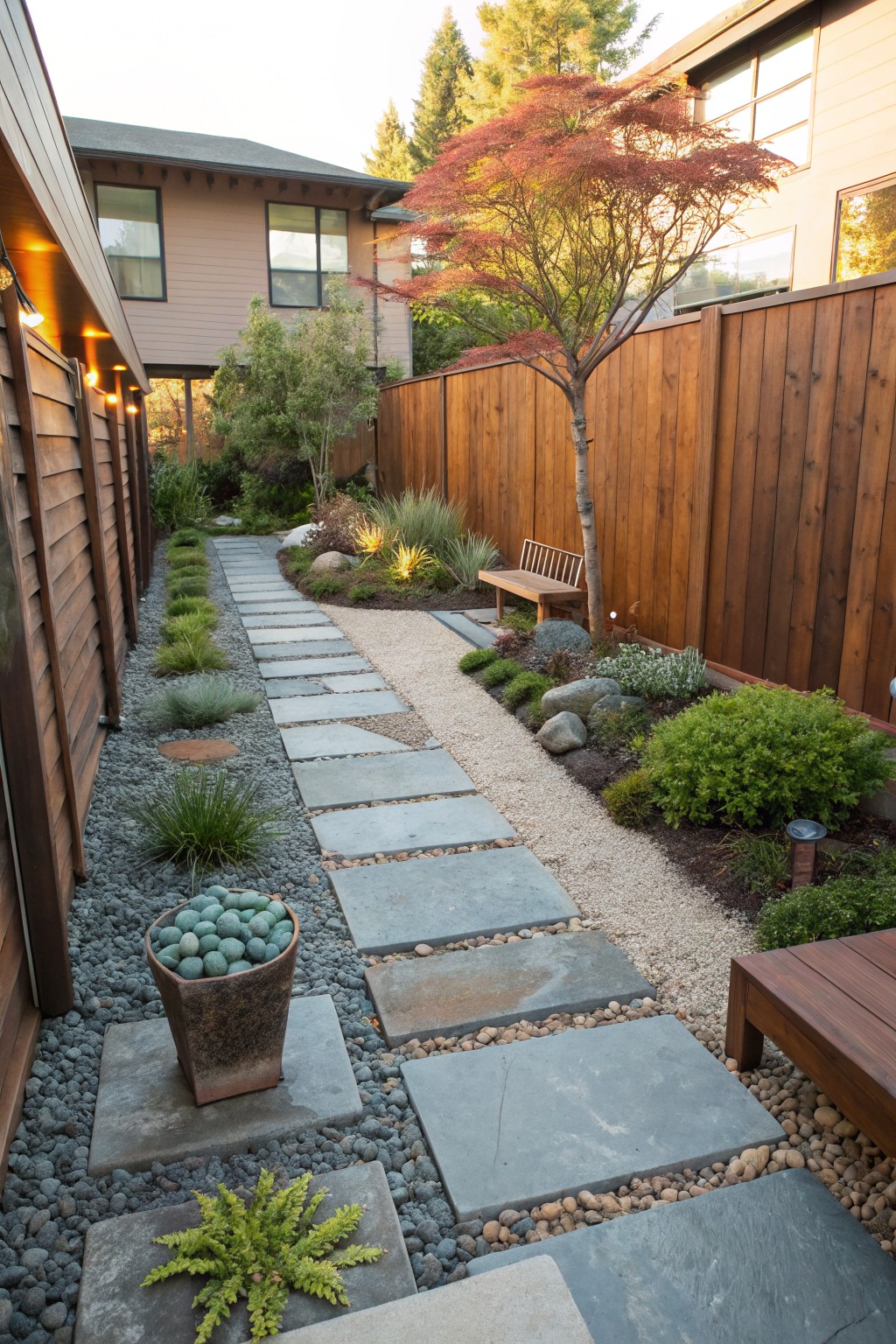
A path like this uses big irregular stone slabs set right into gravel beds. The gravel fills the gaps and spills around the edges with small rocks mixed in. It gives the whole yard a textured look that’s rough but calm. No fussy mowing needed along the way.
This works best in skinny side yards or to connect patio to gate. Pick stones that match your house siding, like these slate ones against wood fences. Go for gravel in a couple sizes so it doesn’t shift too much. Fits modern homes or any spot wanting low-care paths.
Curved Stone Paths with Rock Edging

A simple way to guide folks through a backyard is with a curved path made from irregular flagstones. Here, low dry-stacked rock walls run alongside it, holding back soil for flower beds packed with lavender and other purple bloomers. The rough texture of the rocks stands out against the soft plants and green lawn. It feels natural, not too fussy.
This works best in gently sloped yards where you want to connect the house to a sitting spot, like that bench by the door. Pick stones that match your local area for less upkeep. Add low plants that spill over the edges… they soften the rocks without hiding them. Suits cottage gardens or older homes with stone siding. Just keep the path wide enough to walk comfortably.
Raked Gravel Paths in Zen Gardens

White gravel raked into swirling patterns makes a simple path that feels peaceful and textured. Big rocks sit nearby with moss around the edges. That mix of smooth gravel, rough stones, and low green plants gives strong contrast. No flowers needed. It just works.
Try this in a narrow side yard or backyard corner. Edge with stone or wood to hold the gravel in. Pick fine white pebbles for easy raking. Larger rocks add weight… keep them uneven. Suits any home style but shines with Asian touches like a lantern.
Terraced Stone Steps for Sloped Yards
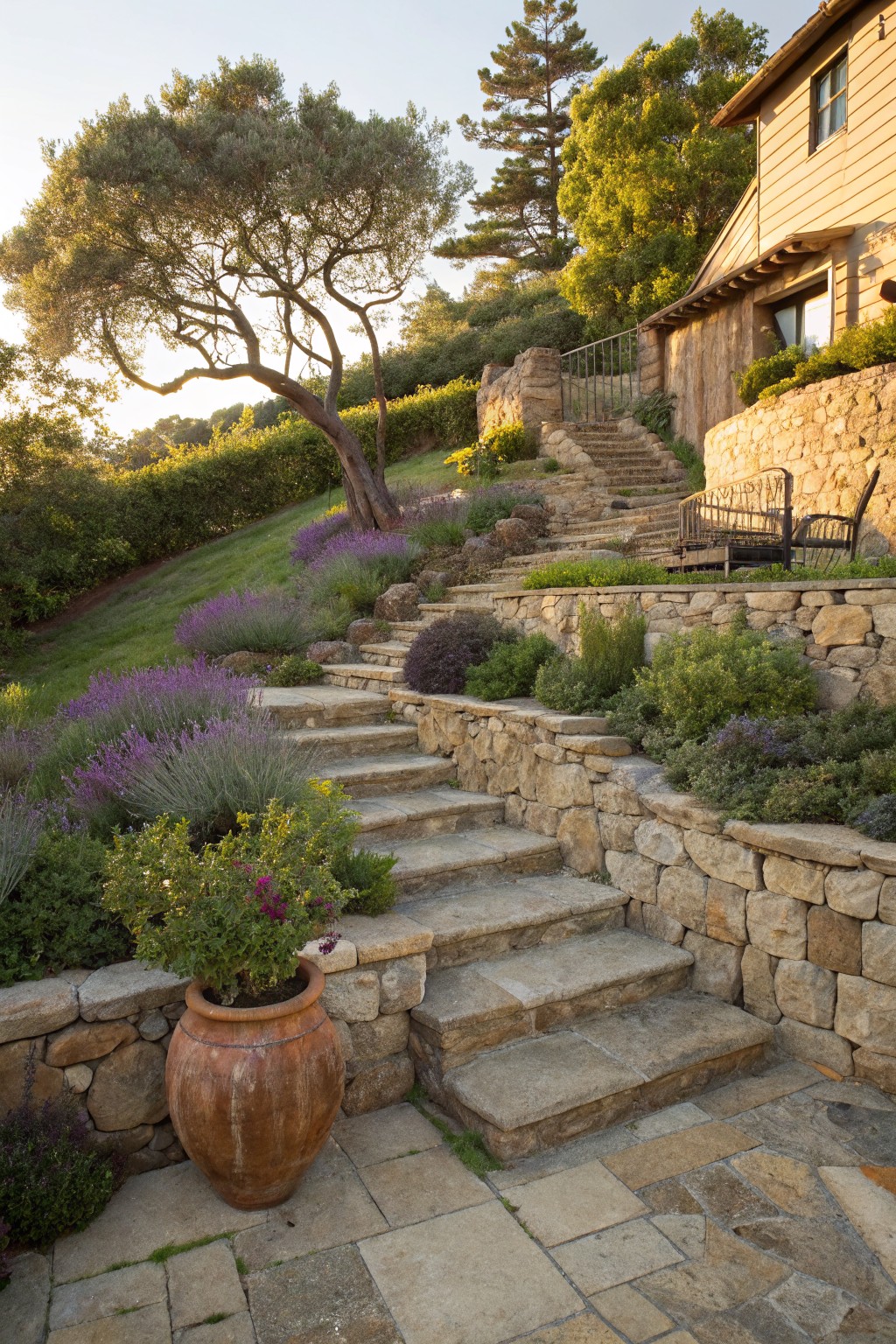
Slopes in backyards often go to waste. But terraced steps made from rugged local stone change that fast. They create flat spots for plants and paths while the rough texture of the rocks blends right into the hill. Here, wide steps lead up through levels of lavender, making the whole area feel natural and walkable.
This setup works best on sunny, dry slopes where drought-tolerant plants like lavender thrive in the wall pockets. Pick stones that match your region’s look to keep it low-key. A big terracotta pot at the base adds a simple focal point. Watch the drainage though, or water will pool behind the walls.
Stone Walkway with Pebble Joints
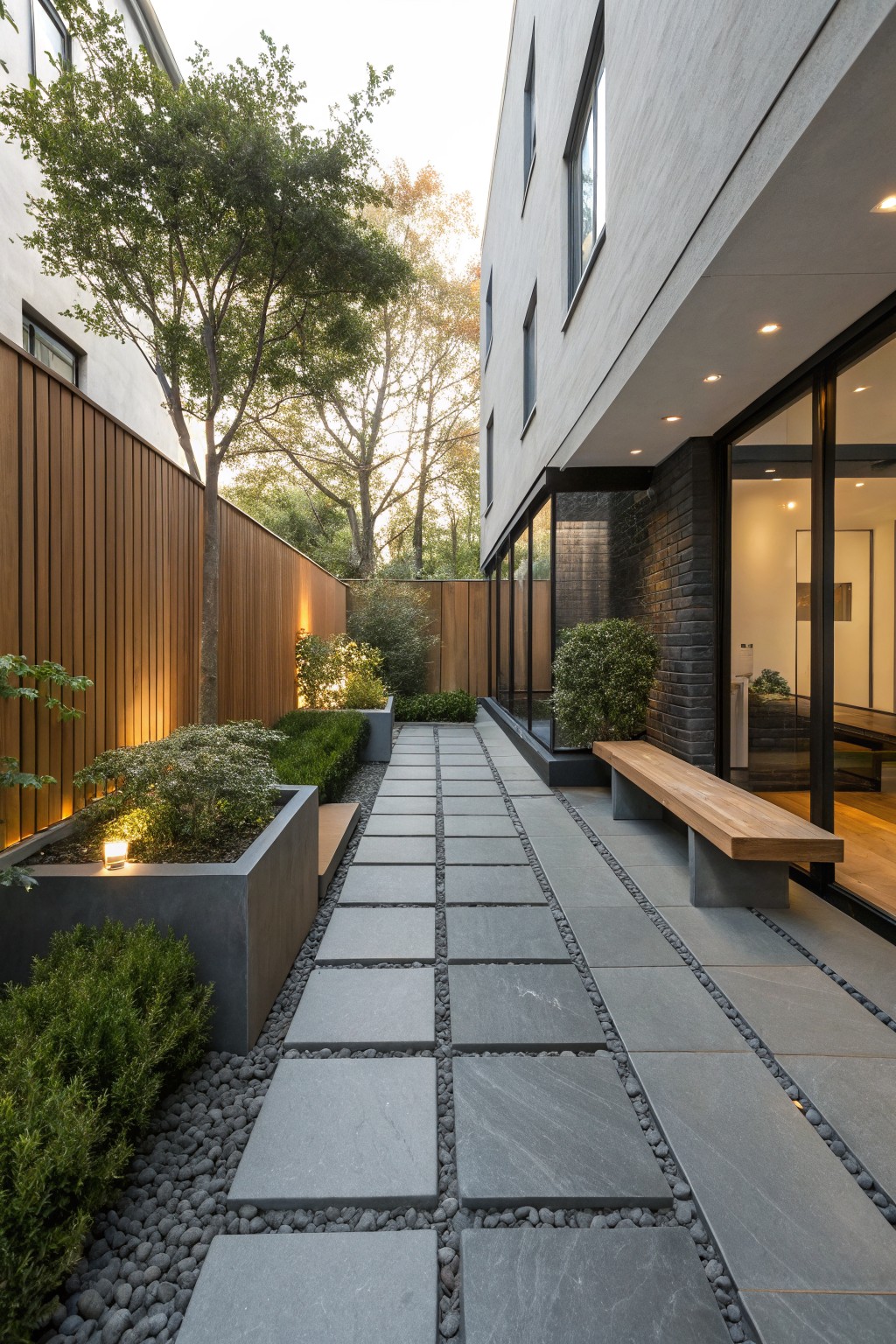
A straightforward path like this uses big slate slabs set into gravel beds, with pebbles filling the spaces between. The dark stones pop against the light rocks, and it gives that calm, low-fuss garden look. Plants tucked along the edge keep it from feeling bare, but the real draw is how the pebbles add texture without any mowing or edging chores.
You can pull this off in skinny side yards or short walks to the patio. Lay the stones loose on a gravel base for drainage, pour in small rounded pebbles for the joints, and maybe add a low boxwood or two. It suits modern homes or rentals… just watch for shifting if your soil moves a lot.
Rock Borders Along a Garden Path
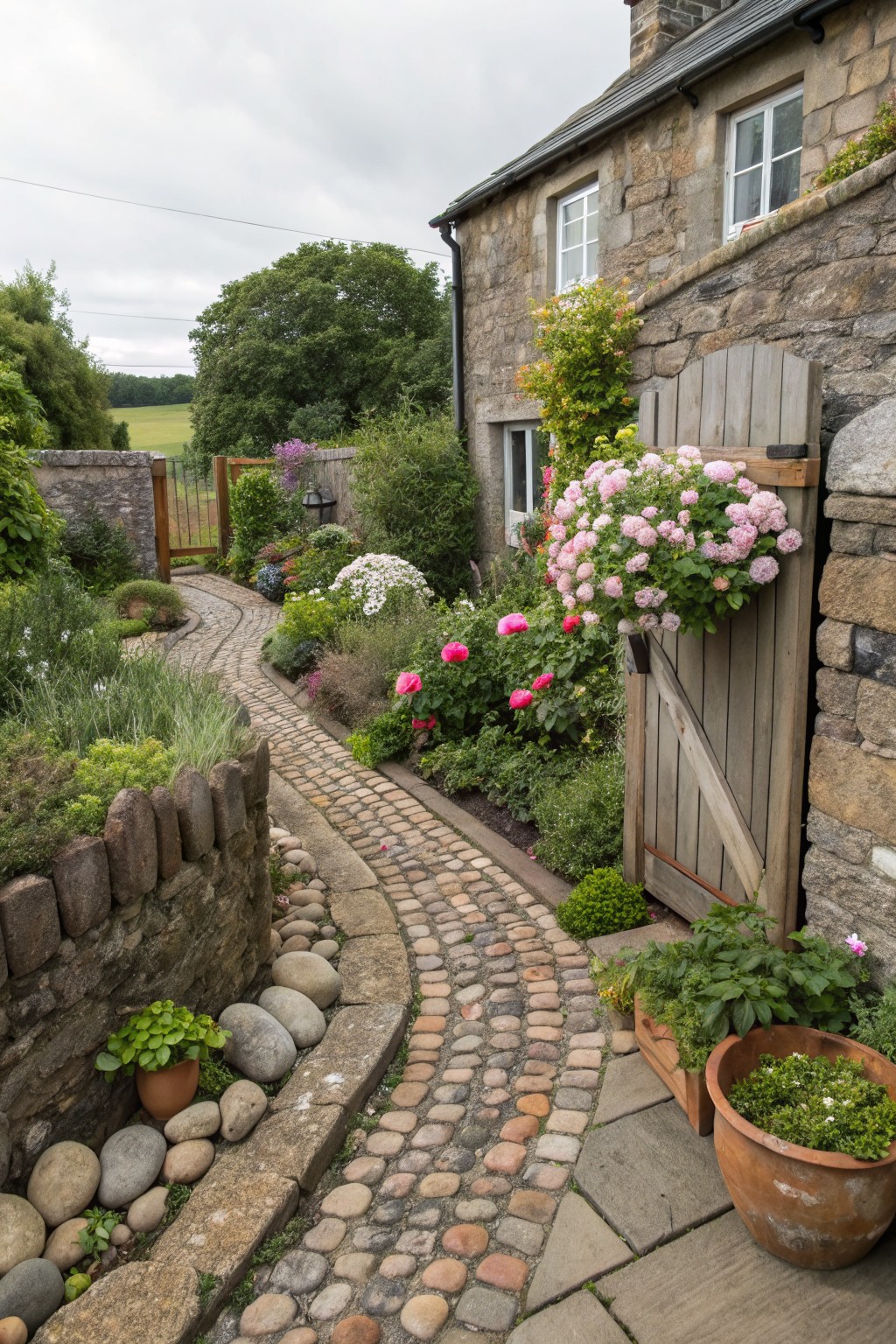
A simple way to add texture in your backyard is to line a winding path with rocks. Here you see reddish-brown cobblestones curving through the garden, edged by smooth rounded stones and low walls. Those rocks give a rugged feel that stands out against the billowy pink roses and green plants spilling over. It keeps the path clear while letting everything else look a bit wild.
This works best in smaller yards or cottage gardens where you want some structure without too much fuss. Pick rocks in natural colors to blend with your stone house or fence. Layer them loosely against the path edge, maybe two or three deep. Avoid super smooth river rocks if your area’s rainy. They shift easy.
Simple Stone Paths with Gravel and Rock Edges

One easy way to add texture in a backyard is to edge stone paths with gravel and rocks. Here you see wide slabs set into the ground, with smooth white pebbles and larger stones right along the sides. It keeps things clean and low fuss, while the mix of sizes gives some visual interest without much planting.
This works best in sunny, dry spots like entry paths or around patios. Pair it with a few big pots or a tree nearby, and it fits homes with that warm stucco look. Skip it in wet areas though. Water can shift the gravel around.
Stone Steps and Walls on Sloped Yards

Slopes can be tricky in a backyard. But stacking fieldstone into low retaining walls and steps turns that problem into a path that feels part of the land. The rough texture of the rocks stands out against the soft ferns and groundcovers tucked alongside. Path lights tucked into the steps add a glow that guides you up safely come evening.
This works best on wooded lots where you want to keep things natural. Source rocks from nearby to match your soil and save on hauling. Plant low stuff like sedges in the wall pockets… it softens the edges without much upkeep. Skip it on super-steep drops, though. You’d need an engineer there.
Winding Boulder Path to a Quiet Bench
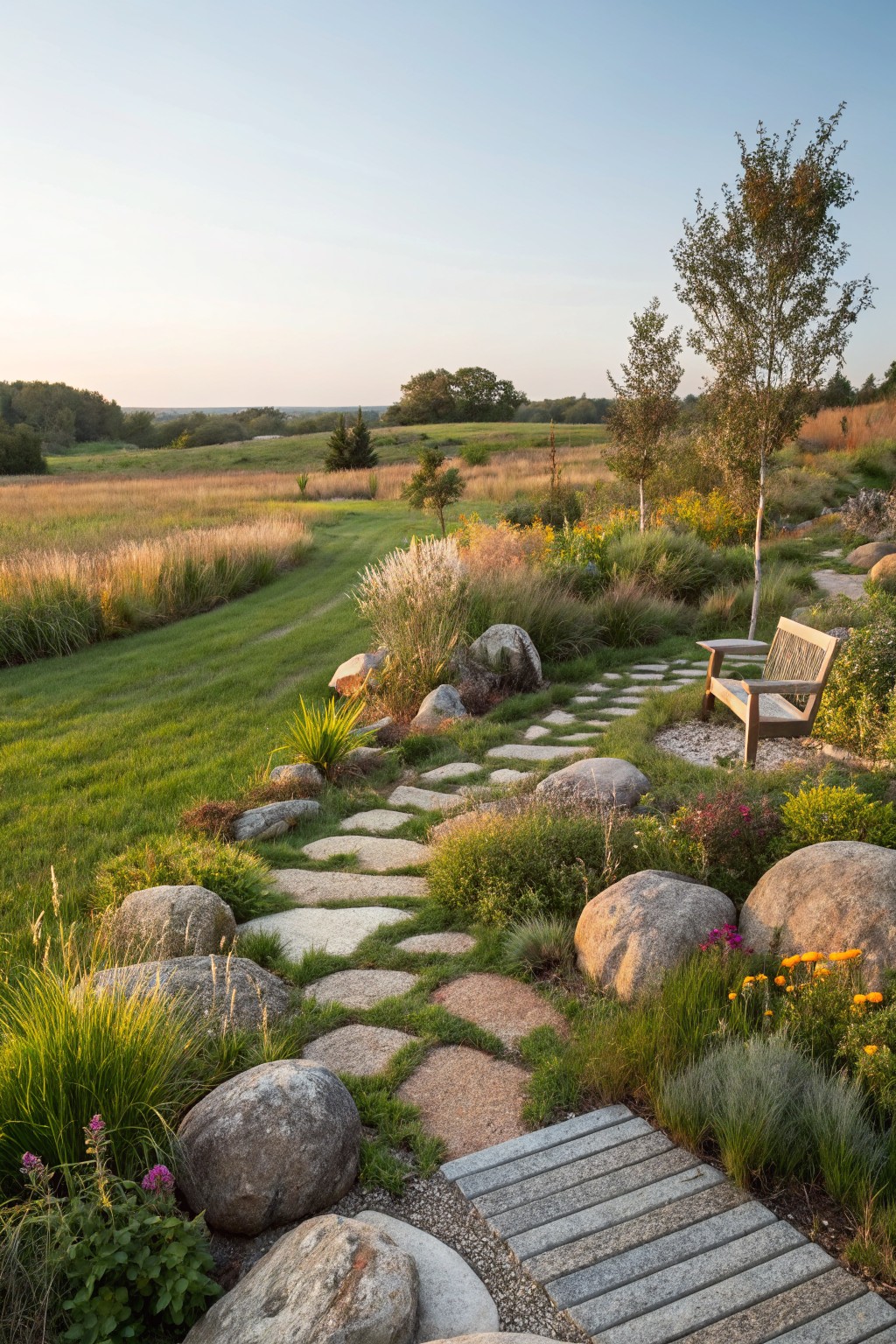
Big boulders clustered along a simple stepping stone path make this backyard trail feel natural and easy to follow. The rocks give solid texture next to the soft grasses and flowers. It pulls you right through the garden without any fuss.
Try this in a bigger yard where you want low-key movement from lawn to wilder areas. Hunt for rounded fieldstone boulders that match your soil. Keep plantings loose around them, maybe some tall switchgrass. Ends up at a bench spot like this one… perfect for evening sits.
Gravel Between Pavers for Clean Texture
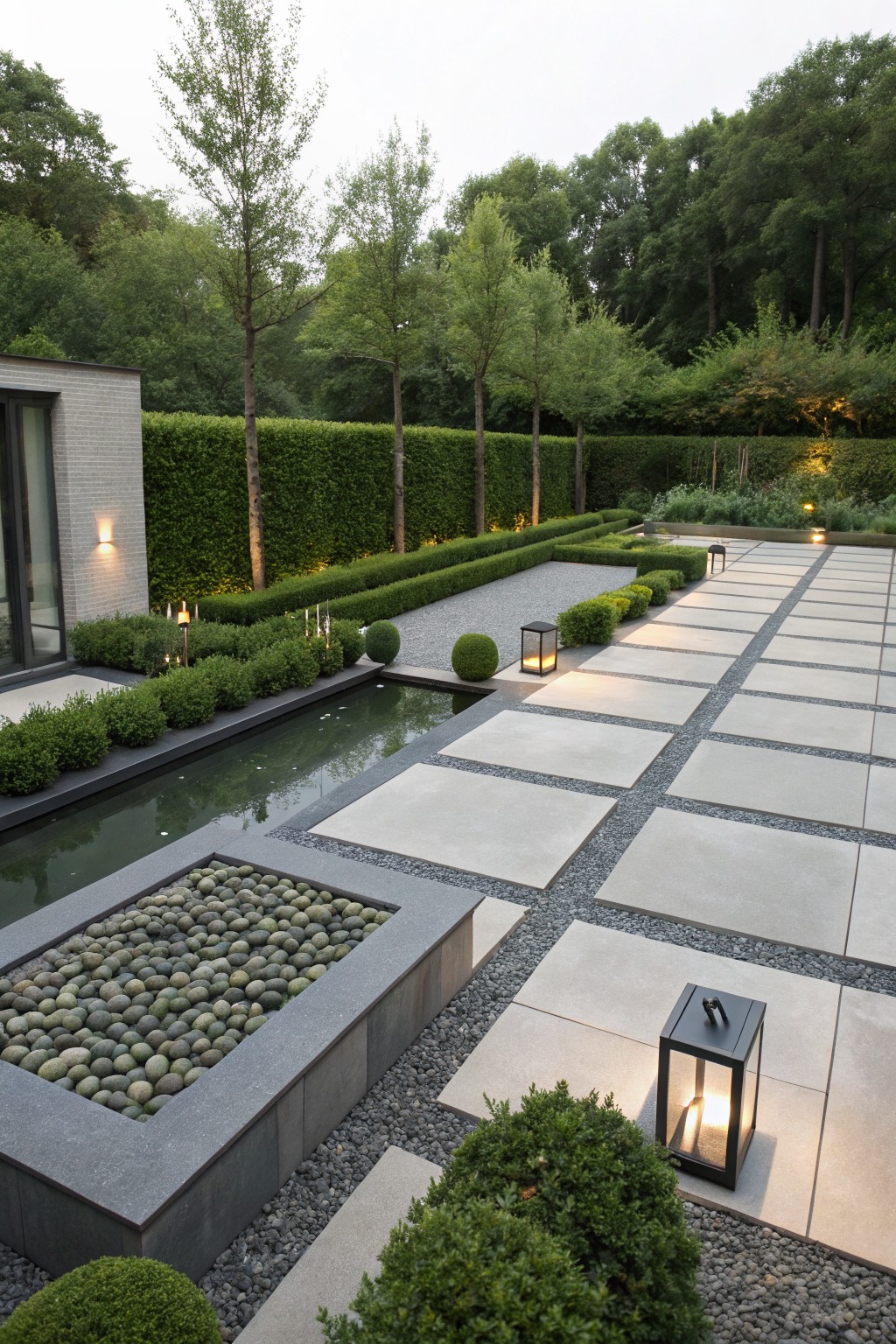
Big stone slabs laid out with gravel filling the gaps make a simple path that looks sharp and modern. The rocks in the gravel catch light and add subtle interest without much upkeep. It keeps things open while tying into nearby features like a water channel.
This works best in sleek backyards where you want lines to guide the eye. Lay it along a walkway to a patio or pool edge. Skip it in super curvy spots… gravel shifts too easy there. Suits homes with clean architecture.
Sloped Path with Wood Steps in Gravel

One simple way to handle a backyard slope is to build a path with thick wooden steps set right into dark gravel. The wood gives you solid footing while the gravel fills around it, creating clean lines without a lot of extra edging. Flanking the steps with agaves and a few big rocks adds texture that stands out against the black pebbles. It keeps things low-maintenance too, especially in dry spots.
This setup works best for modern homes or desert yards where you want to cut down on watering. Just make sure the wood is treated for outdoors, and keep the gravel at least three inches deep so it doesn’t shift. Skip it on super-steep slopes though… you’d need retaining walls there.
Rock-Lined Fire Pit Circle
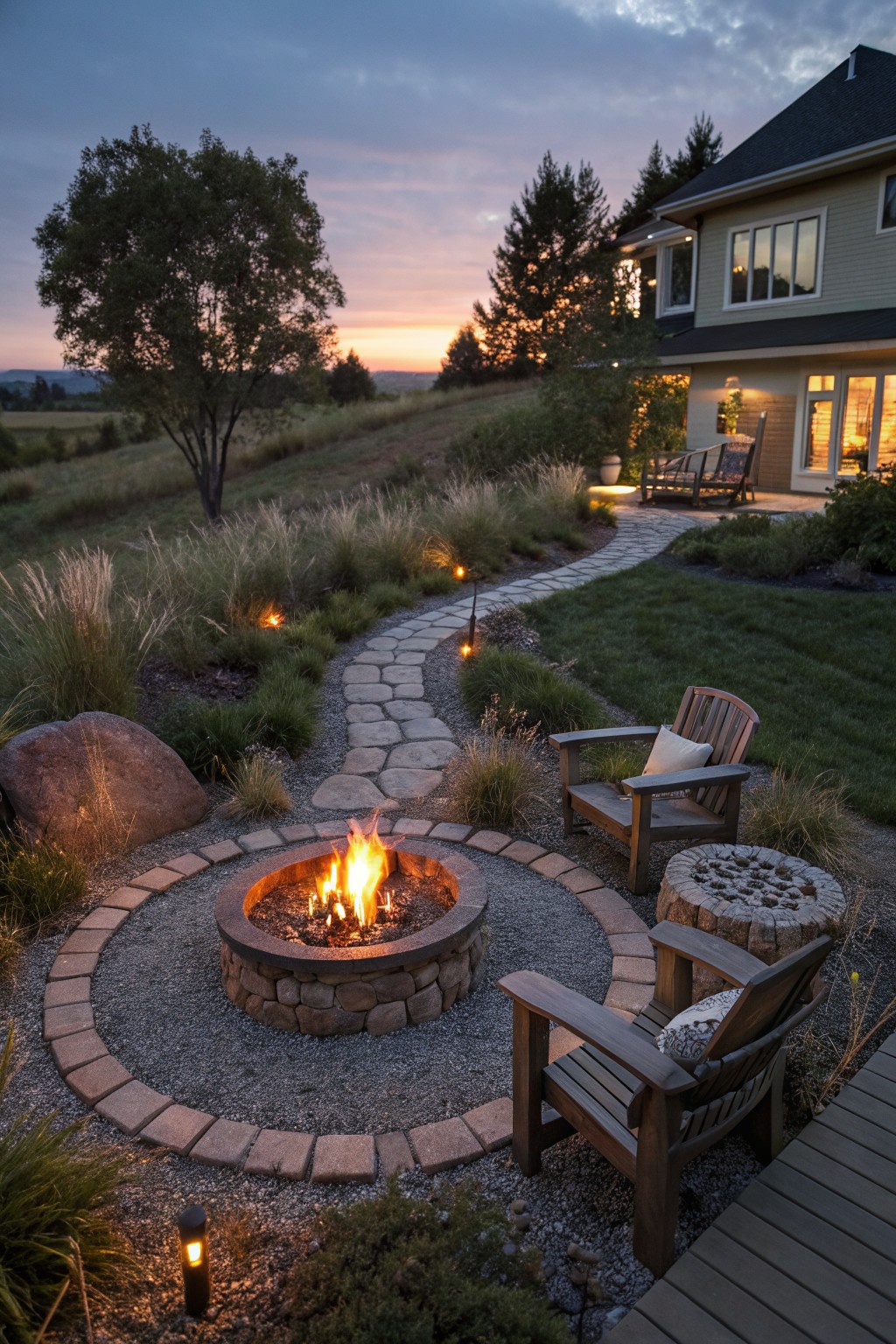
A simple way to pull together a backyard gathering spot is with a fire pit ringed in stacked stone and filled with gravel. That rough texture from the rocks contrasts nicely with the smooth pavers and soft grasses around it. The big boulder nearby adds to the natural feel without much effort. Folks like this because it creates a clear zone for chairs and talks around the flames, even as the light fades.
You can set this up in most backyards, especially ones with some slope or open lawn. Pick stones that match your local area for an easy fit, and keep the gravel loose for drainage. It works well with a deck or patio nearby, but watch the wind if trees are close. Add path lights along the way in.
Terraced Stone Steps for Sloped Yards

Sloped backyards can be tricky to navigate. These terraced stone steps solve that with wide, sturdy treads set into natural-looking retaining walls. The rough texture of the stone fits right into the landscape. Low lights tucked into the walls light the way at dusk without overpowering the yard.
You can pull this off on any hillside lot, especially where you want to connect lower patio areas to an upper deck or house. Pick stone that matches your region’s rocks for a seamless feel. Plant low shrubs along the edges to soften things. Just make sure the steps meet building codes for rise and run.
Stepping Stone Path with Pebble Borders
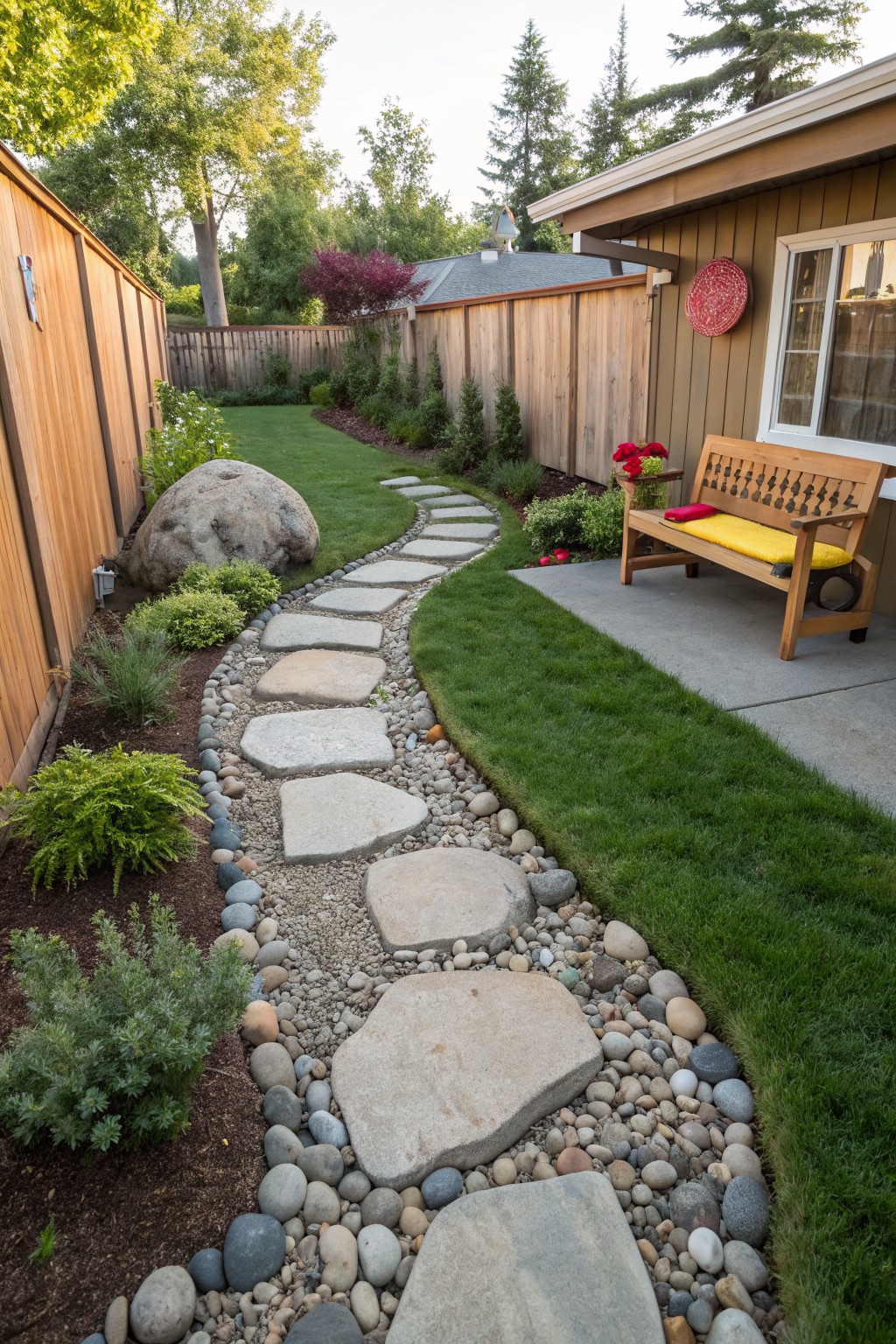
A simple curving path made from irregular flat stones works well in a backyard lawn. Pebbles fill the edges, tucked with low plants for a soft border. That setup adds texture from the rocks and keeps grass in play. It feels natural. No big paving job needed.
Put one in to connect your gate to the patio or seating spot. It fits most yards, even narrow ones along a fence. Go for rounded river rocks in the border, they drain fine and stay put. Watch the spacing on stones so you don’t rush the steps.
Stone-Based Outdoor Bar
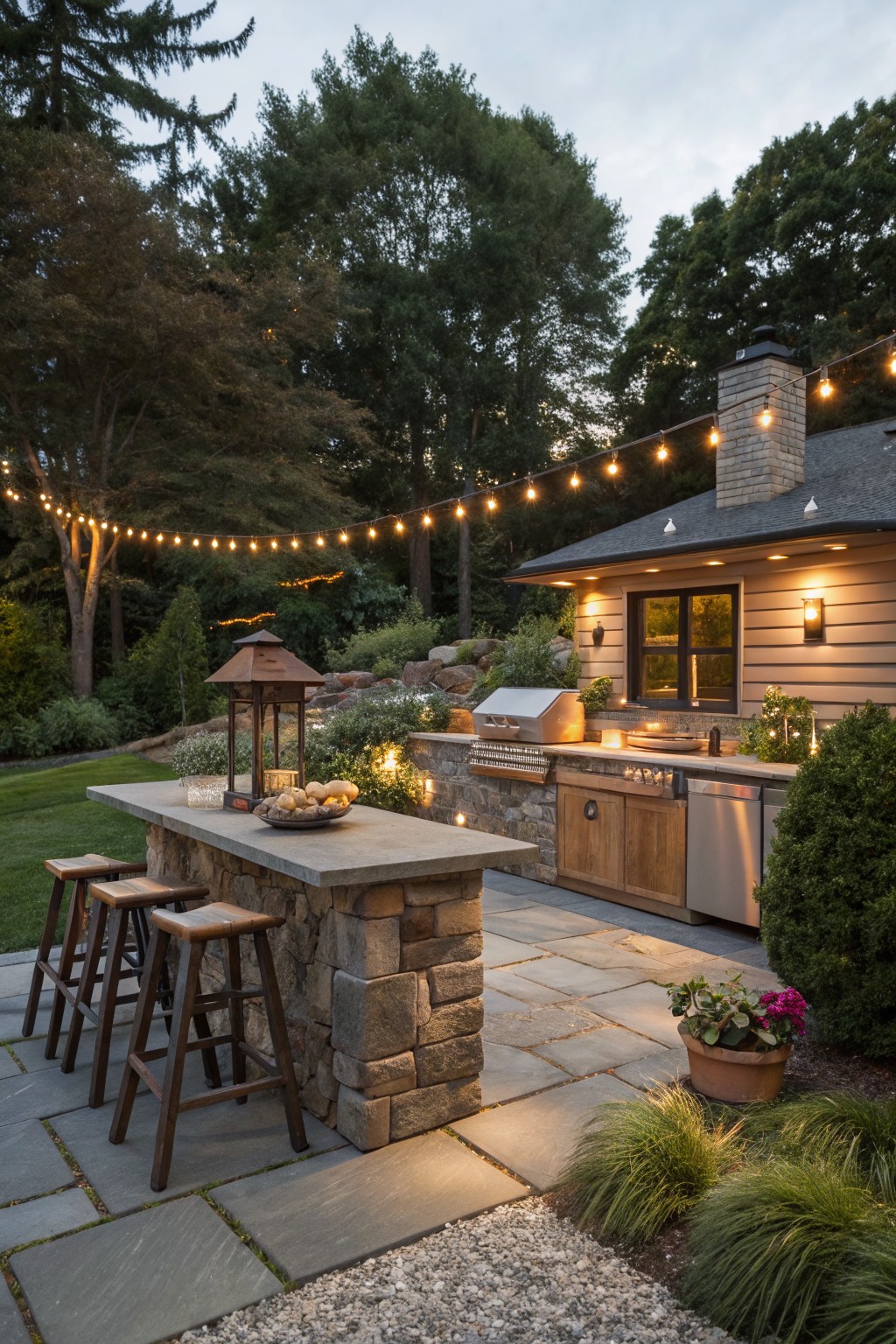
A simple way to add function to your backyard is building an outdoor bar right on a base of stacked natural stone. The rough rocks give solid support under a smooth concrete top, and they pick up on the textures already in the landscape like nearby boulders and walls. It keeps things sturdy without looking too built-up or out of place.
This works best on gently sloped yards where you can use the stone to level things out naturally. Hunt for fieldstone or whatever’s local to blend right in, then top it with a basic counter and a few stools. Just make sure the stones are set firm so it holds up to grilling nights and guests leaning in.
Rock-Lined Backyard Stream
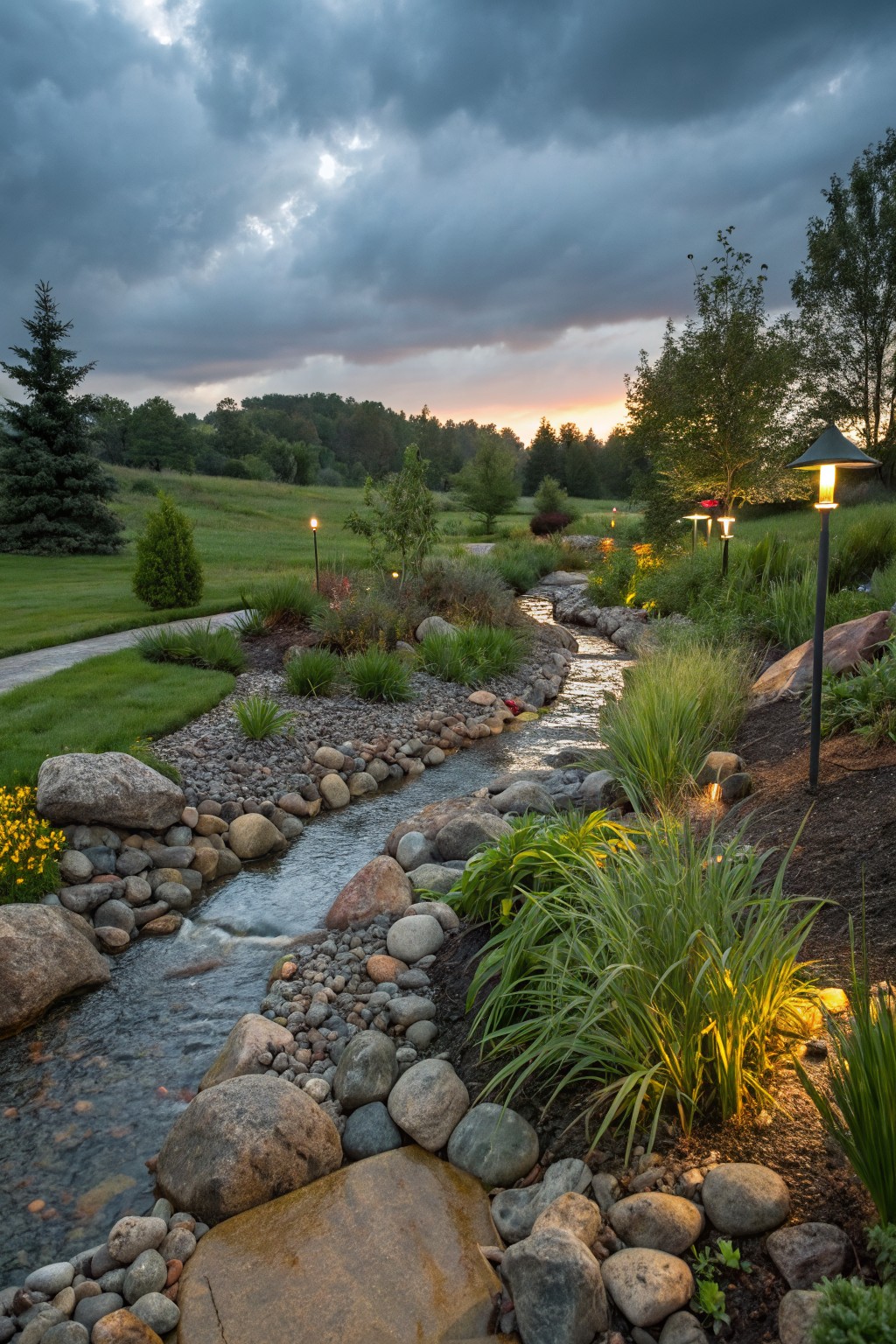
A simple stream like this brings life to any yard without much fuss. Bigger boulders anchor the edges while smaller rounded stones fill in, creating that rough natural texture rocks do so well. Water trickles over them just right, making the whole thing feel alive and drawing you through the garden.
Put one in along a walkway or through a planting bed. It works on gentle slopes best, but level ground is fine too. Mix in tough grasses and low shrubs that won’t mind the wet spots. Lights tucked in the rocks make it shine at night. Just plan for a pump to keep water moving.
Pebble Edges Around Tiled Paths
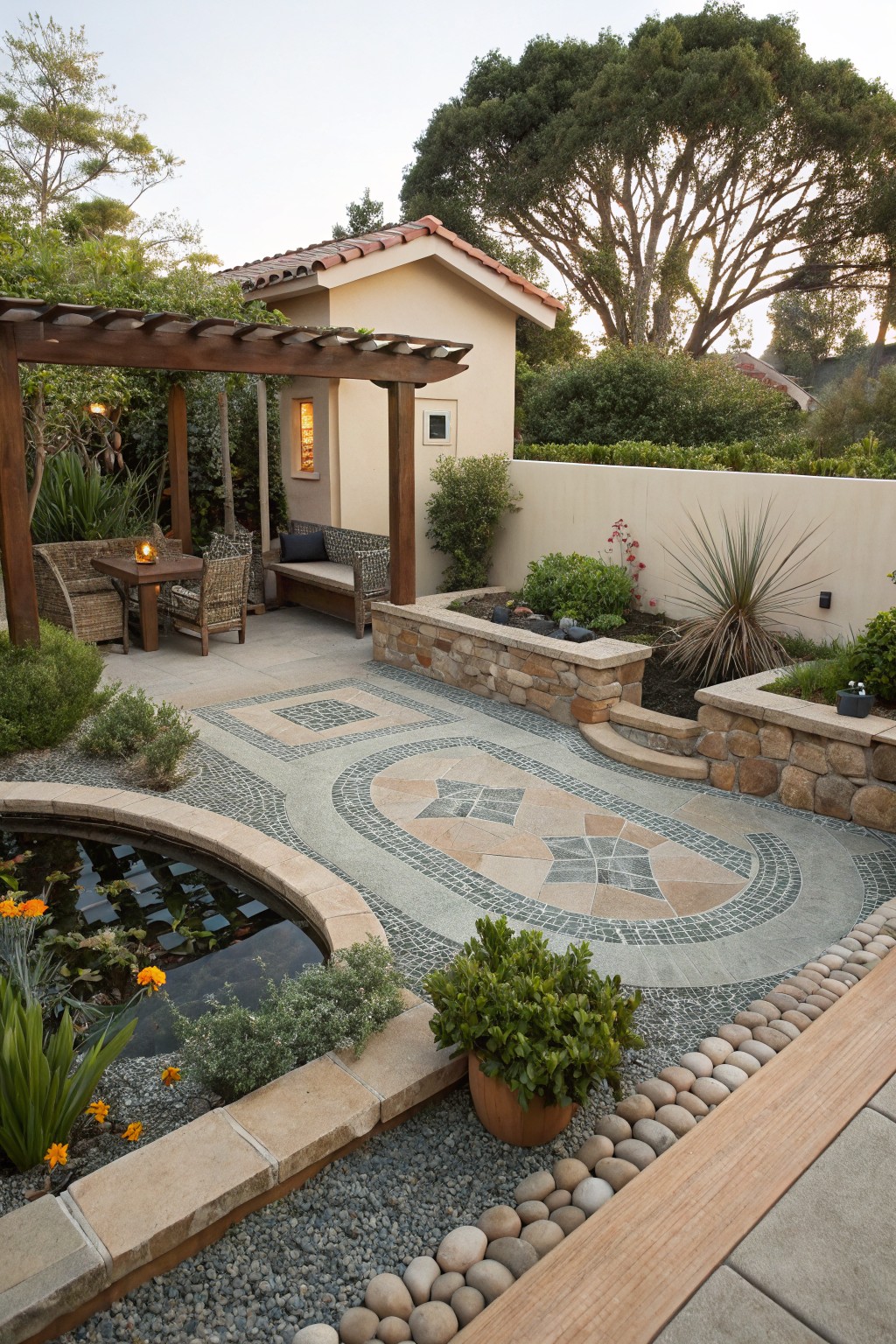
Smooth pebbles work great as a simple border along garden paths. In this backyard, they line a curved mosaic tile walkway that loops by a small pond. The rounded rocks pick up on the nearby gravel mulch and stone walls. That mix gives real texture without much upkeep. It breaks up the hard surfaces nicely.
Try this edging wherever you have concrete paths or patios. It suits sloped yards or dry climates best since pebbles let water drain fast. Just keep the rocks uniform in size or the look gets busy. Pair them with low plants along the edge for a finished feel.
Winding Flagstone Paths with Boulder Edges
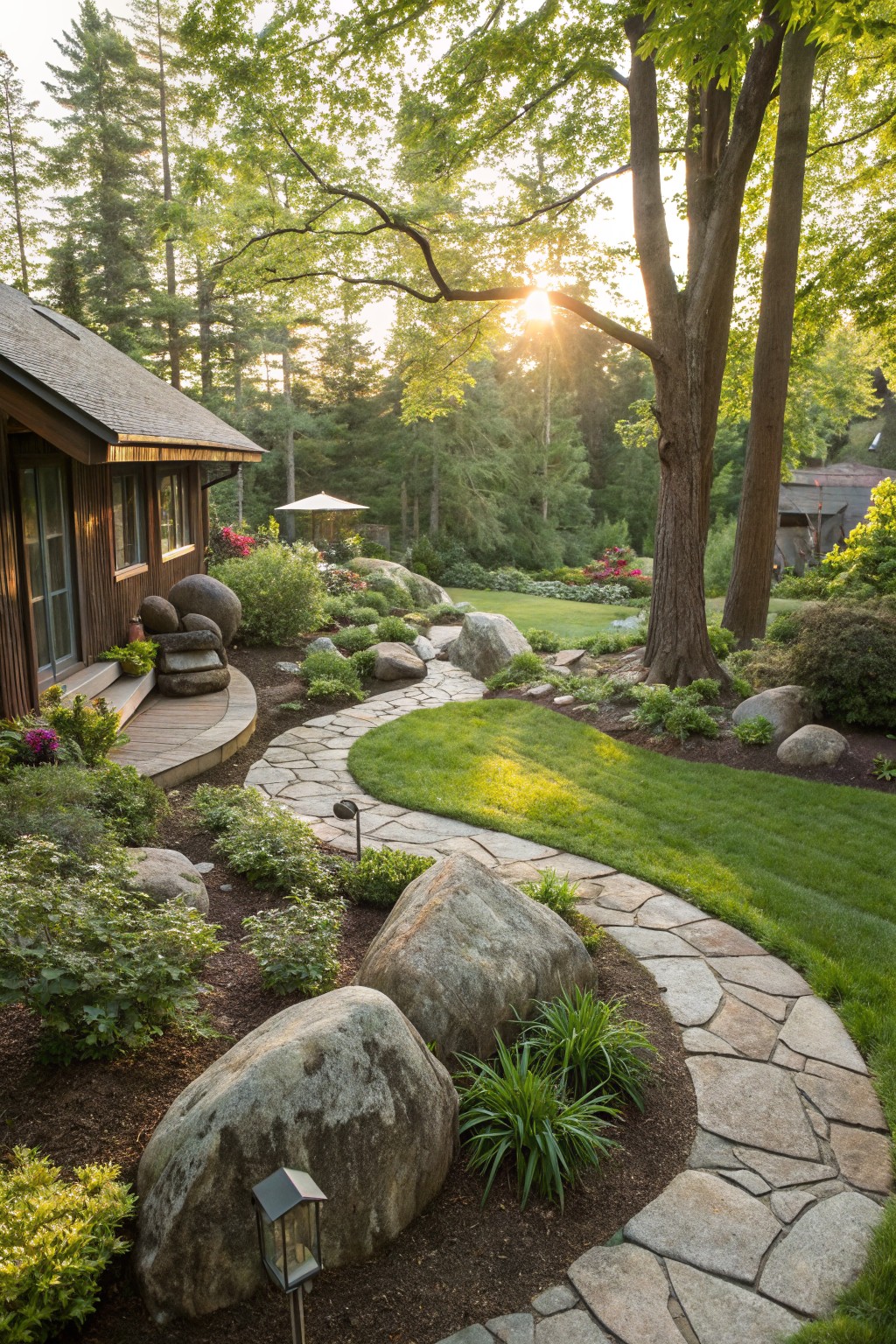
A simple winding flagstone path like this one really pulls the eye through the yard. Large boulders tucked along the edges add rough texture that plays off the smooth stones and soft grass. Low plants fill in around them, keeping things natural without much fuss.
This works best in bigger backyards where you want to guide foot traffic without straight lines. Hunt for boulders at local quarries to match your area’s stone. Tuck in tough shrubs or grasses that won’t mind the shade from nearby trees. It suits wooded lots or cabins, but watch the scale, bigger rocks need space.
Circular Gravel and Paver Fire Pit Path
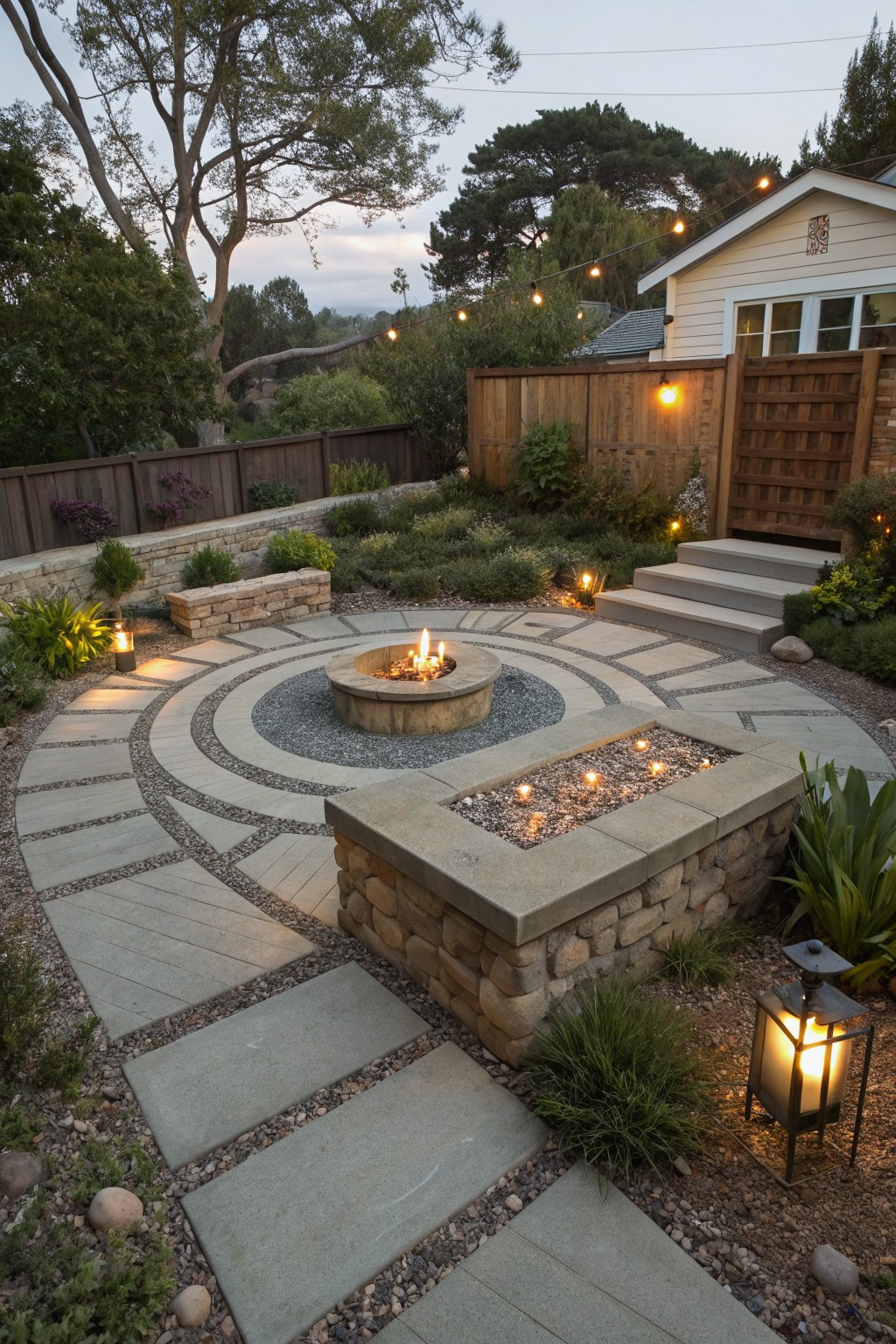
One simple way to add interest to a backyard gathering spot is a circular path of wide concrete pavers set in gravel around a central fire pit. The light gravel fills the gaps between the gray slabs, giving texture that contrasts nicely with the smooth stones. It draws the eye without overwhelming the space, and the round shape makes it feel open for seating or walking around.
This layout fits most backyards, especially ones with a patio edge near the house. Use it to zone off a cozy fire area, maybe 10 to 15 feet across. Go for larger gravel to stay put better, and edge the whole thing with low plants or a short wall. Just sweep the path now and then to keep it tidy.
Winding Stone Paths Through Garden Plantings
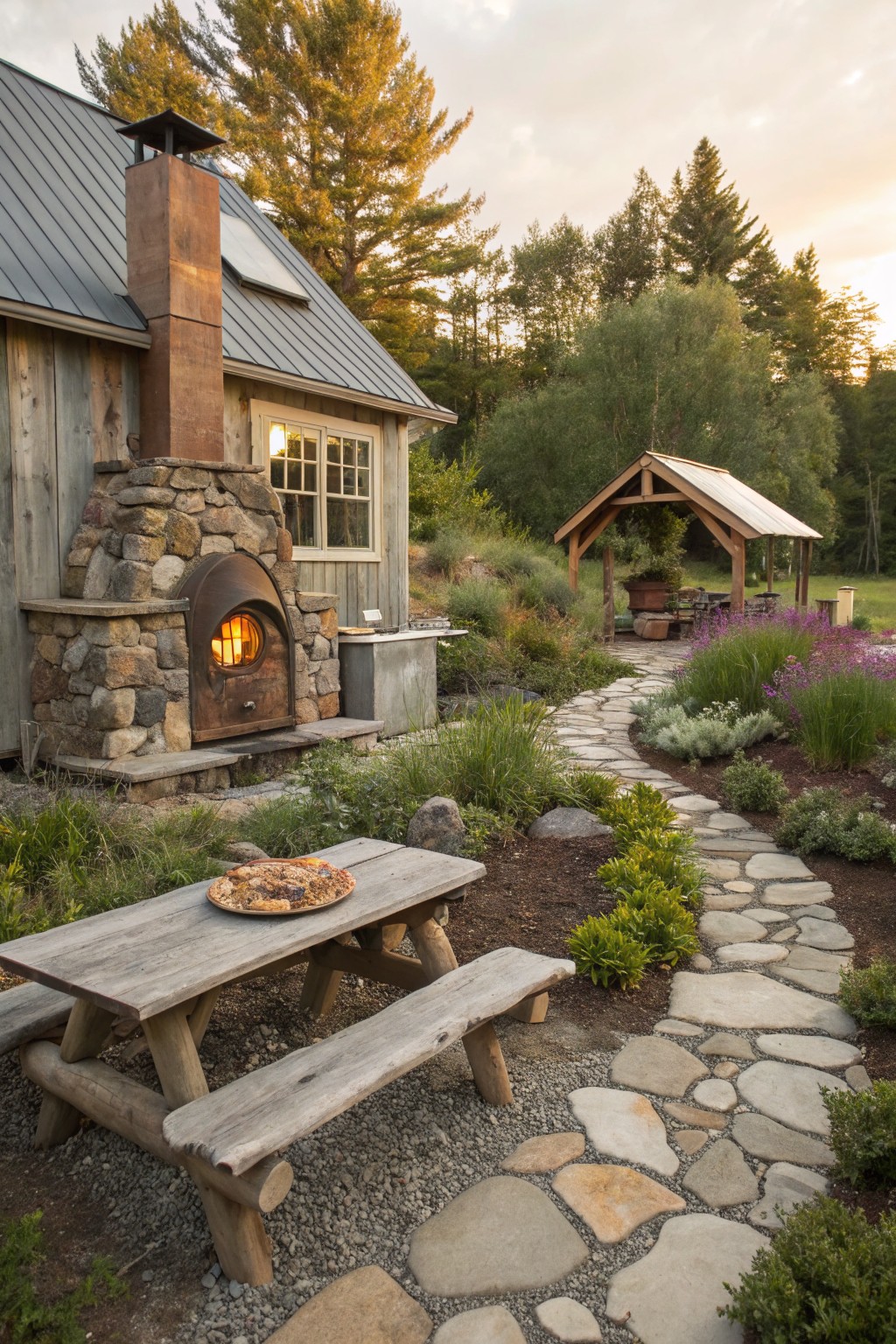
A simple winding path made from flat, irregular stones works well here to guide you through the backyard plantings. The rocks sit right into the soil with gravel in between, creating texture that stands out against the bushes and grasses. It keeps things feeling casual and tied to the land, especially near built-in features like that stone oven.
Lay these paths where you want a low-key trail from the house to seating or a fire area. They’re good for sloped spots or cottage yards since the stones don’t need perfect leveling. Fill gaps with small gravel to let plants creep in, but set the big stones firm first. Avoid super smooth flagstone if you want that rough contrast.
Stepping Stone Path with Gravel Edges

A simple way to guide foot traffic through the backyard is with wide concrete stepping stones set into a strip of grass and white pebbles. The light gray slabs stand out against the green turf and bright rocks, creating clean lines and subtle texture without covering the whole yard in pavement. Those low ground lights along the path add a practical glow at dusk.
This works best in side yards or leading to a patio door, especially on modern homes with clean lines. Go for stones at least two feet wide so they feel stable, and pair the gravel with drought-tolerant grasses to keep upkeep low. Skip tiny pebbles though. They track inside too easily.
Stone Path with Gravel Fill
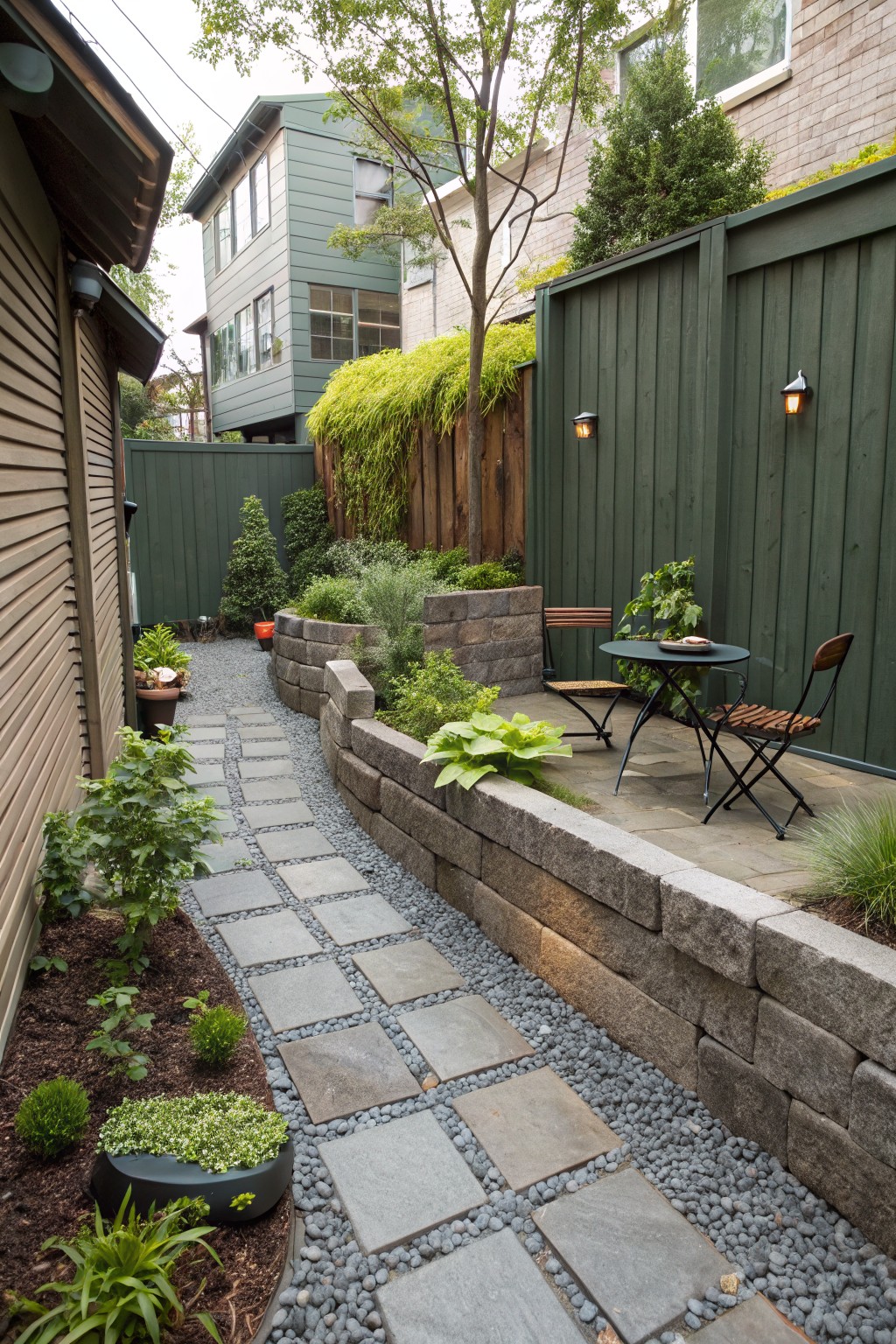
Big stone slabs set into a gravel bed make a clean path that winds right through a narrow backyard. The smooth stones stand out against the pebbly gravel, giving real texture without much fuss. It pulls the eye along nicely, and the low retaining walls planted up keep everything tucked in tight.
This works best in skinny yards or sloped spots where you need to guide foot traffic. Lay the stones loose in the gravel so water drains easy, no mortar needed. Go for darker pebbles if your fence is green… adds that quiet contrast. Skip it on super flat ground, though. Might feel too rustic there.
Frequently Asked Questions
Q: How do I stop weeds from popping up in my rock beds?
A: Lay down landscape fabric before adding rocks. Cut holes only for plants you want. Top it with a couple inches of rocks to block light.
Q: Will rocks slide around on a sloped yard?
A: Build small retaining walls with larger stones at the base. Fill gaps with gravel for grip. Your setup stays put.
Q: Where do I find rocks that actually match my backyard vibe?
A: Scout local quarries or riverbeds for natural tones that blend with your soil and plants. Grab a few samples first and test them in sunlight…
Q: Can I mix rocks with grass without it looking messy?
A: Edge the rock areas cleanly with metal or stone borders. Mow right up to the line. Clean lines make it sharp.