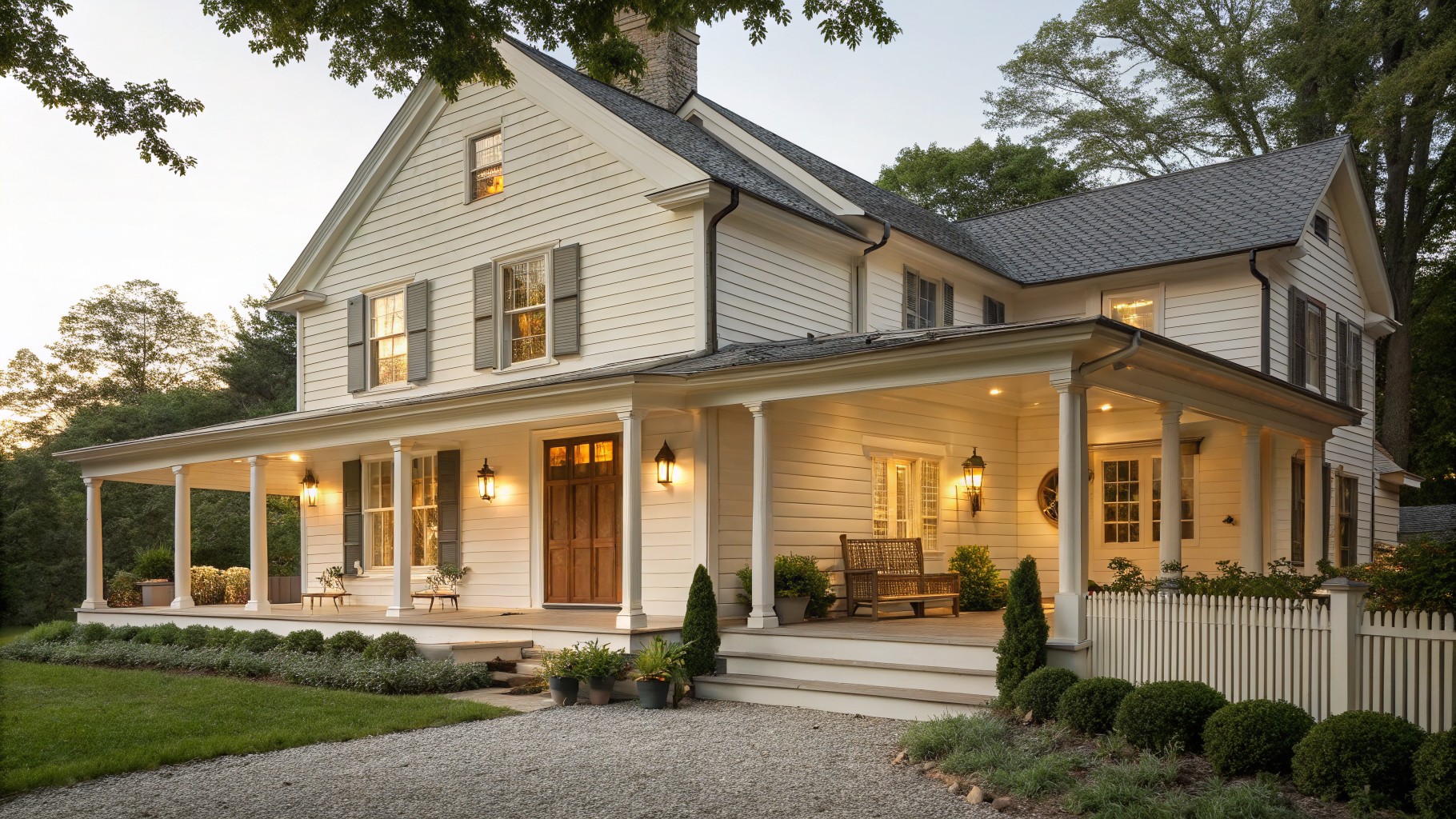
I have spent time watching how exterior shades hold up once the sun moves across the house and the light shifts from morning to dusk.
The right color needs to sit comfortably next to roofing materials and any stone or brick that already exists on the property while also working with the surrounding landscaping.
Testing samples on the actual siding makes all the difference.
Landscaping and trim colors can pull a shade in unexpected directions throughout the seasons and change how the whole house feels from a distance.
I usually start by checking how a few options look from the road at different times of day before making a final choice.
Soft Butter Yellow Siding
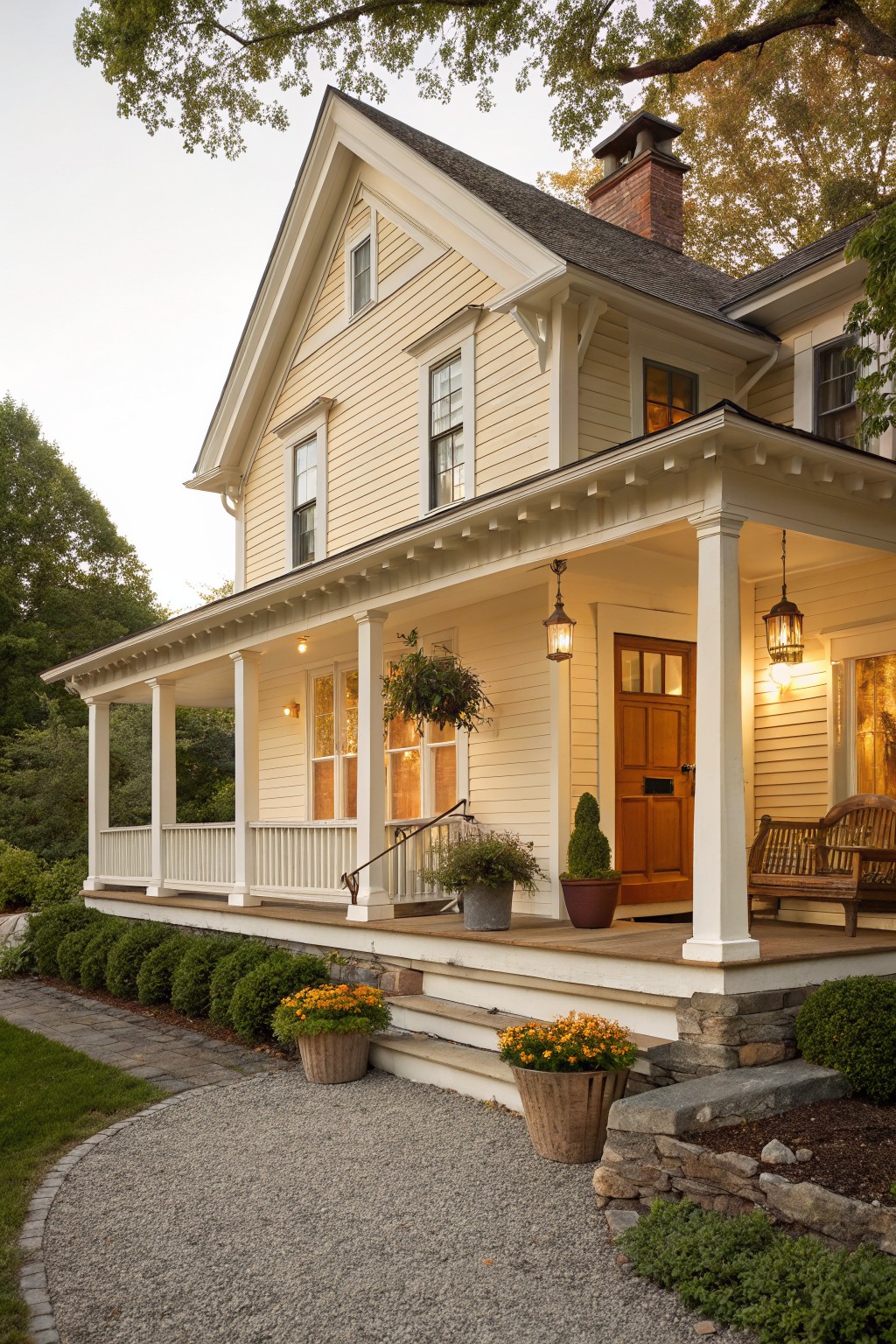
This soft butter yellow works well on farmhouse siding because it feels warm without being too bold. The color sits somewhere between cream and pale yellow, giving the house a gentle glow that pairs nicely with white trim and natural wood elements. It has enough depth to hold its own against stone foundations and dark roofing while still reading light and friendly from the road.
The undertone leans warm, so it looks best in settings with plenty of sun. It works especially nicely on older homes or new builds trying to capture that same lived-in feel. Watch how it shifts in shade though, since it can pick up a bit more gold in strong afternoon light. Pair it with crisp white trim and avoid anything too gray or cool nearby.
Warm Beige Siding
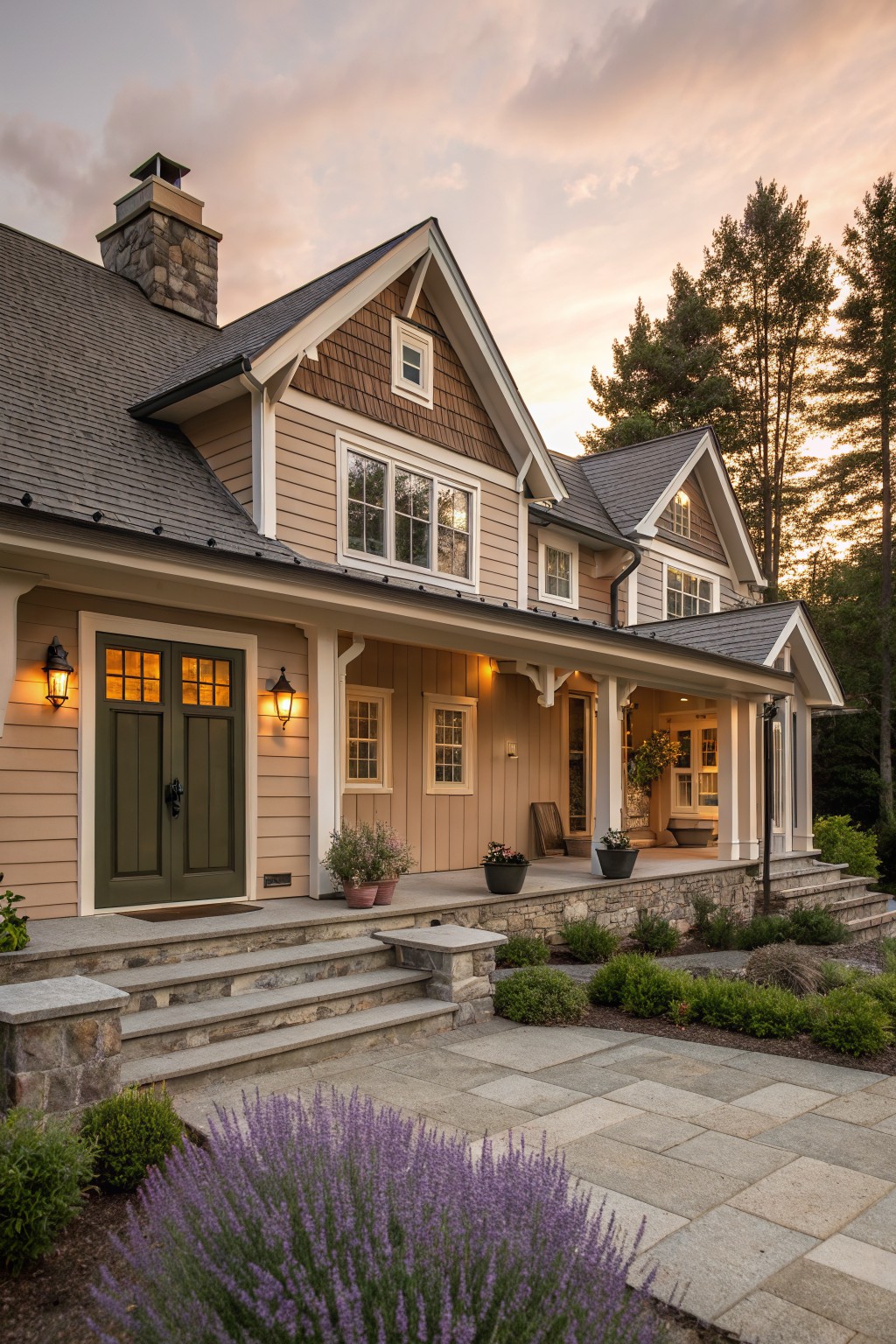
This warm beige siding brings a simple, lived-in look to the house that fits right in with rustic farmhouse style. It has enough color to feel grounded but stays soft enough that it does not overpower the rest of the exterior.
The shade sits somewhere between tan and light greige, so it picks up a bit of warmth from the sun and still looks calm next to white trim. It works well on homes with dark roofs or stone details, and pairing it with green doors or black hardware keeps the whole thing feeling balanced and welcoming.
Soft Sage Siding
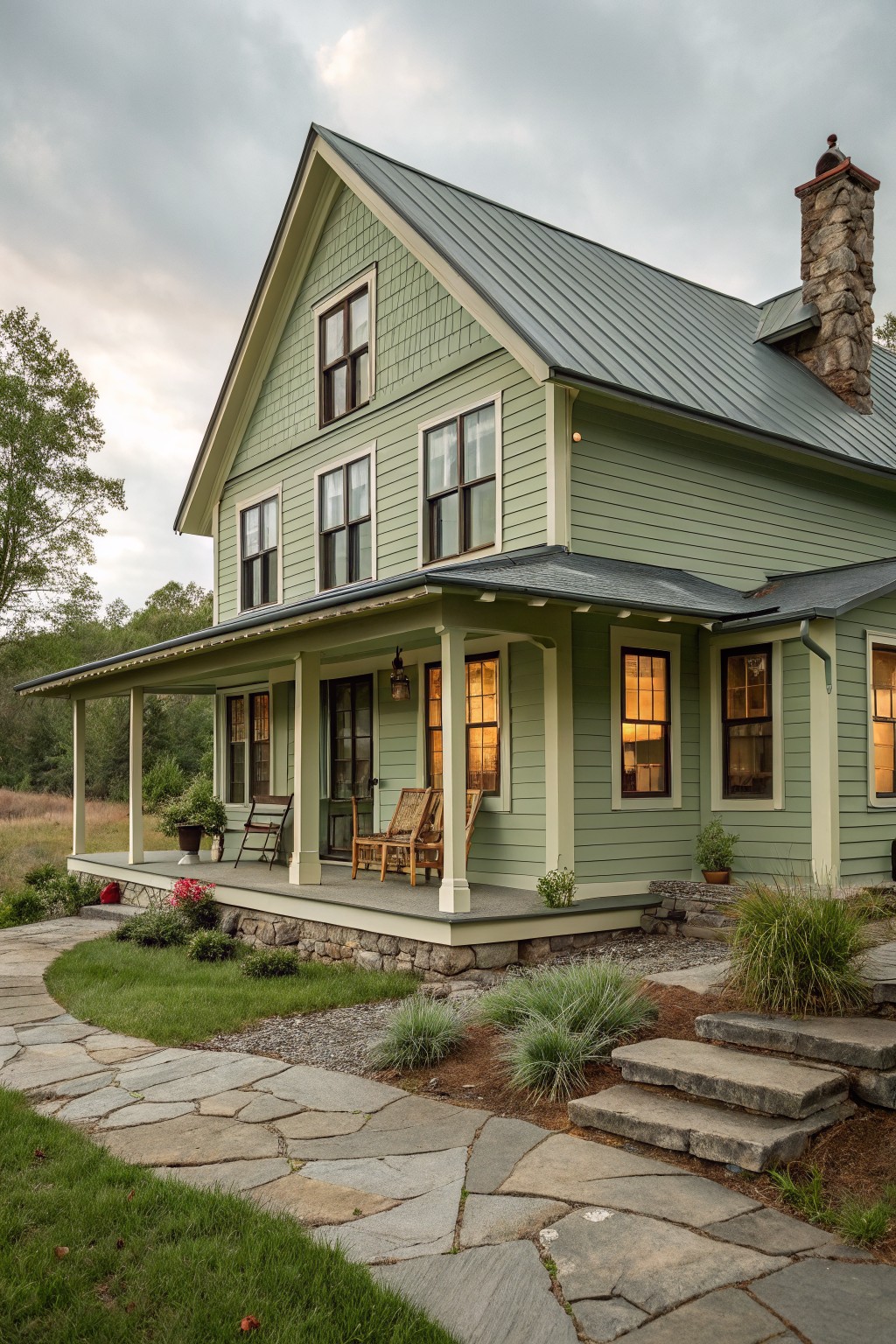
This soft sage green gives the house a calm, settled look that fits right into a rustic farmhouse setting. It has enough gray in it to feel quiet rather than bright, and it sits comfortably against the stone base and metal roof.
The color holds up well in changing light and pairs naturally with wood, stone, and simple trim. It works best on homes that already have natural materials around them, though it can look a bit flat if the trim is too stark or the roof is very dark.
Muted Sage Green Siding
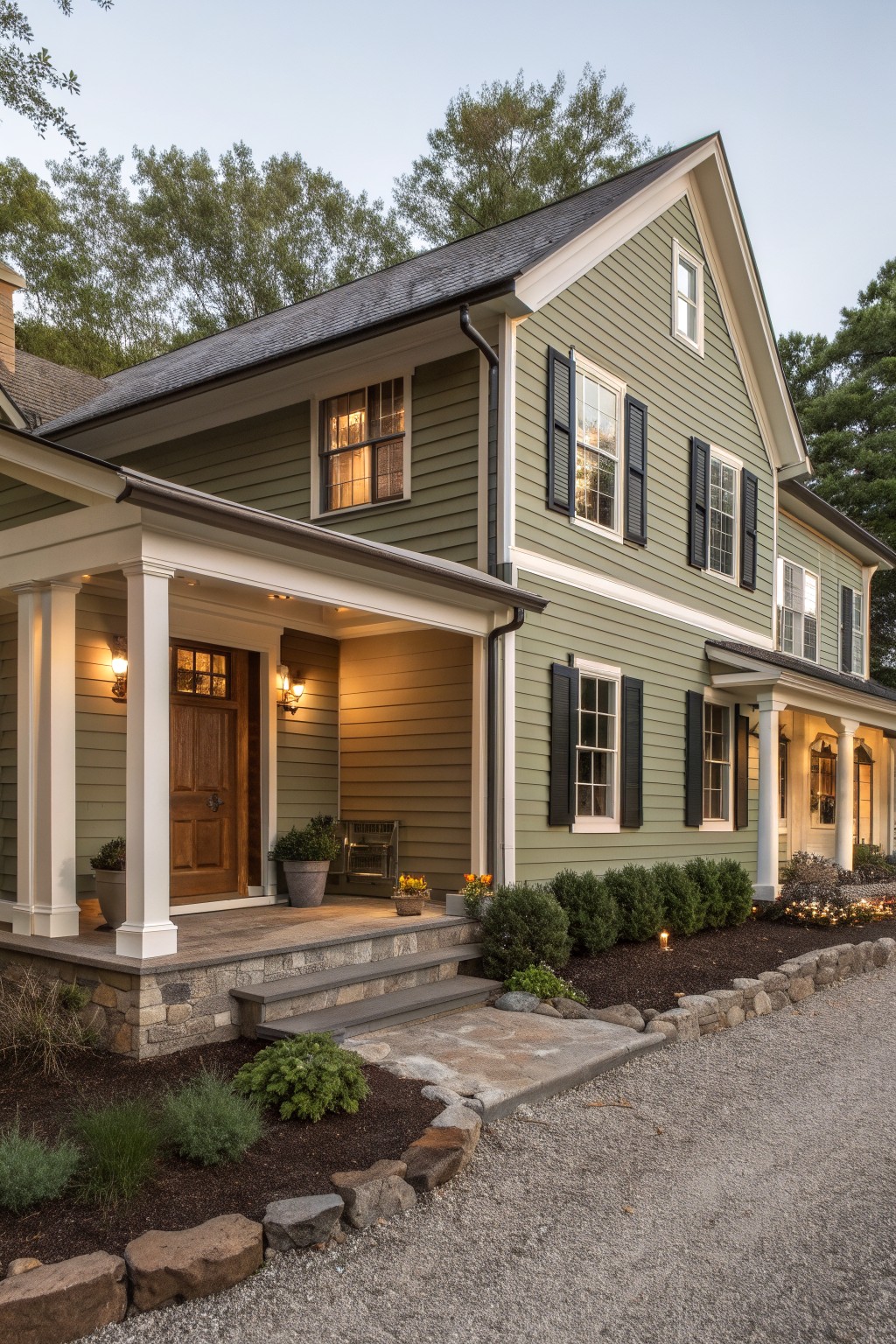
This muted sage green on the siding brings a calm, earthy feel to a farmhouse without looking too bold. It sits somewhere between gray and green, so it blends easily with natural surroundings and still gives the house some character. Colors like this work especially well on older homes where you want the exterior to feel settled rather than brand new.
It has a soft, slightly cool undertone that reads nicely in both morning and late-day light. Pair it with warm white trim and a darker roof to keep the look balanced. It also looks good next to stone or wood details, though it can feel flat if the trim is too bright or the landscaping is very sparse. Good matches include Sherwin Williams Evergreen Fog, Benjamin Moore Saybrook Sage, Behr Aged Sage, and Farrow & Ball Sage Green.
Soft Blue Gray Siding
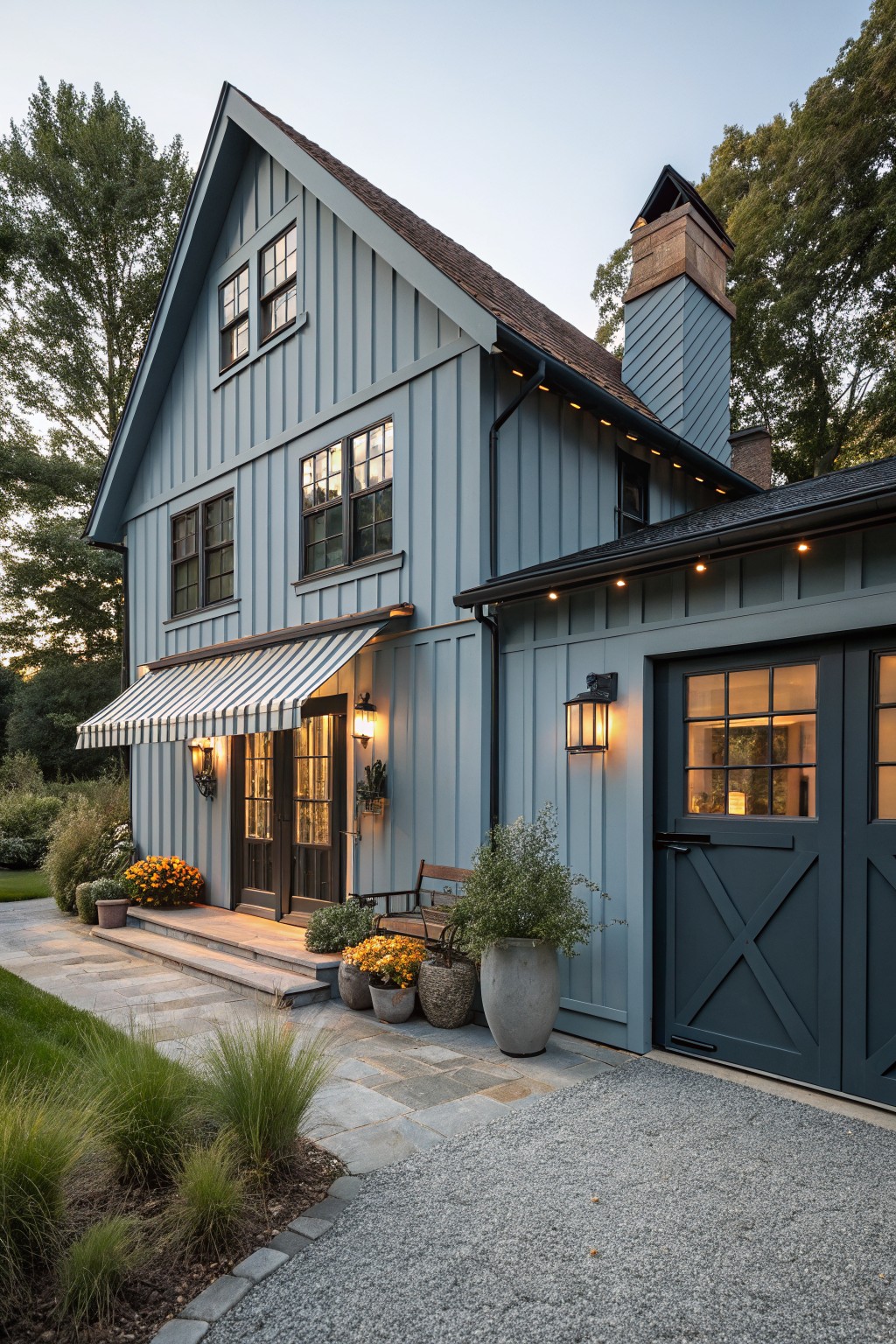
This house shows a soft blue gray on the main siding. It is a cool, muted color that feels calm and a little old fashioned without looking washed out or too bright.
The gray undertone helps it blend with the darker roof and trim. It works best on farmhouse exteriors that already have some wood or stone nearby, and it stays looking clean even when the light shifts later in the day.
Weathered Sage Green Siding
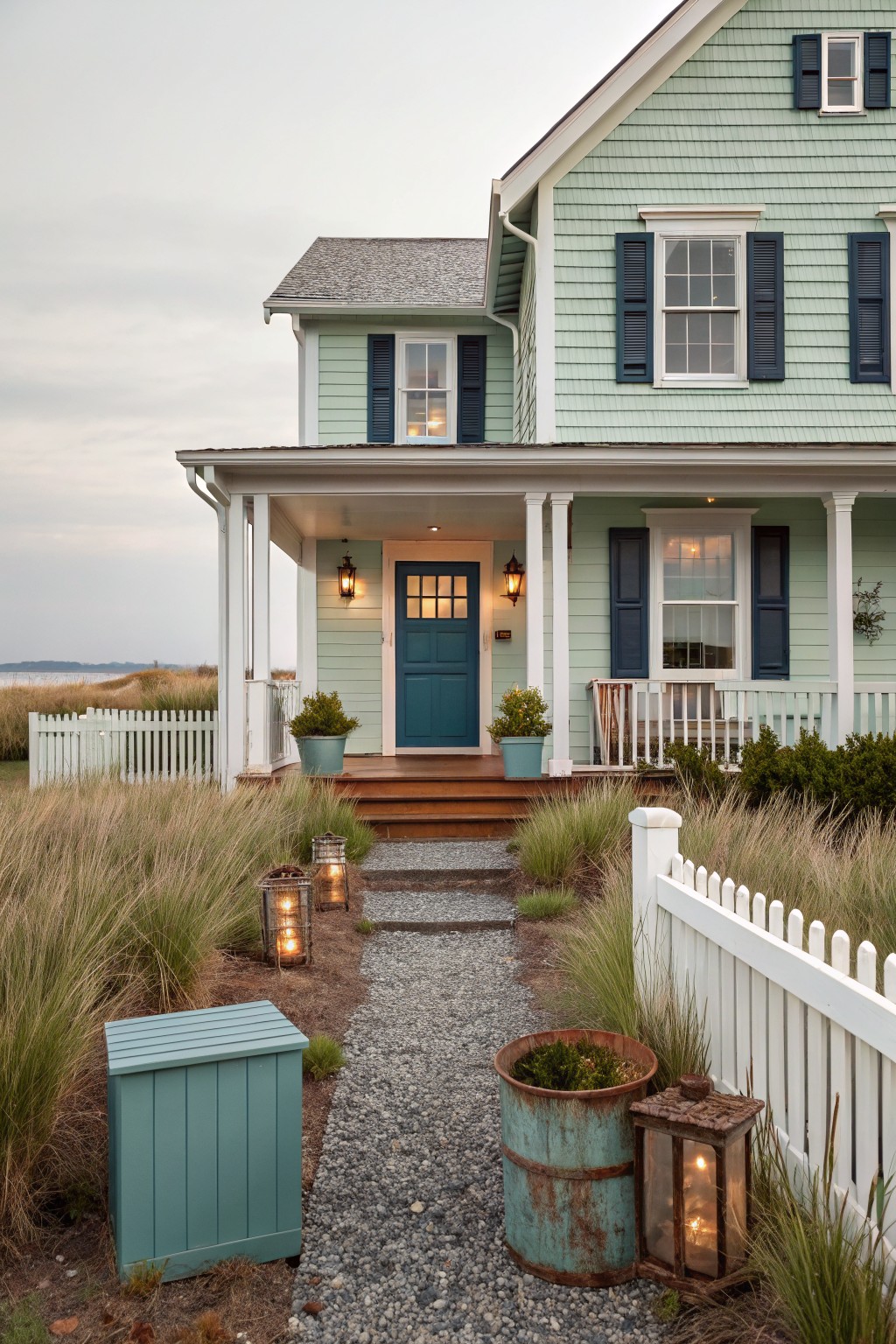
This soft sage green works nicely on a rustic farmhouse because it feels calm and a bit weathered without trying too hard. It sits somewhere between green and gray, which helps it blend with the outdoors while still standing out against white trim.
The color has a muted tone that holds up well in changing light. It looks good with natural wood steps and simple gravel paths, and it pairs best with crisp white or off-white trim to keep the whole look clean.
Muted Blue Siding
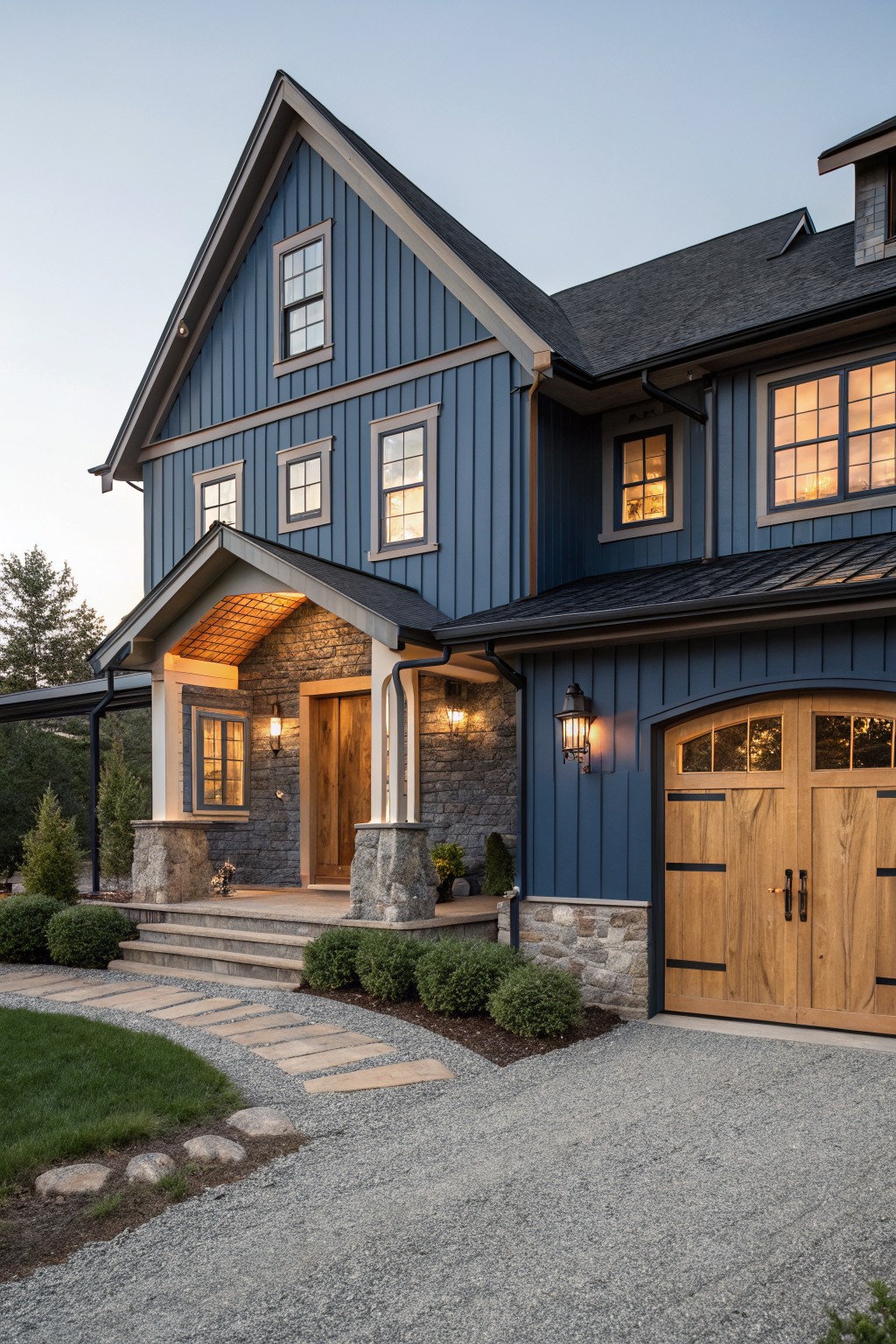
This slate blue siding gives the house a quiet, grounded look that fits right into a rustic farmhouse setting. It has enough depth to feel substantial without turning too dark or heavy on a large exterior.
The gray undertones keep it from feeling too bright in daylight and help it sit nicely next to stone and wood. It works especially well with natural materials like the ones shown here and holds up nicely against a dark roof.
Earthy Sage Green Siding
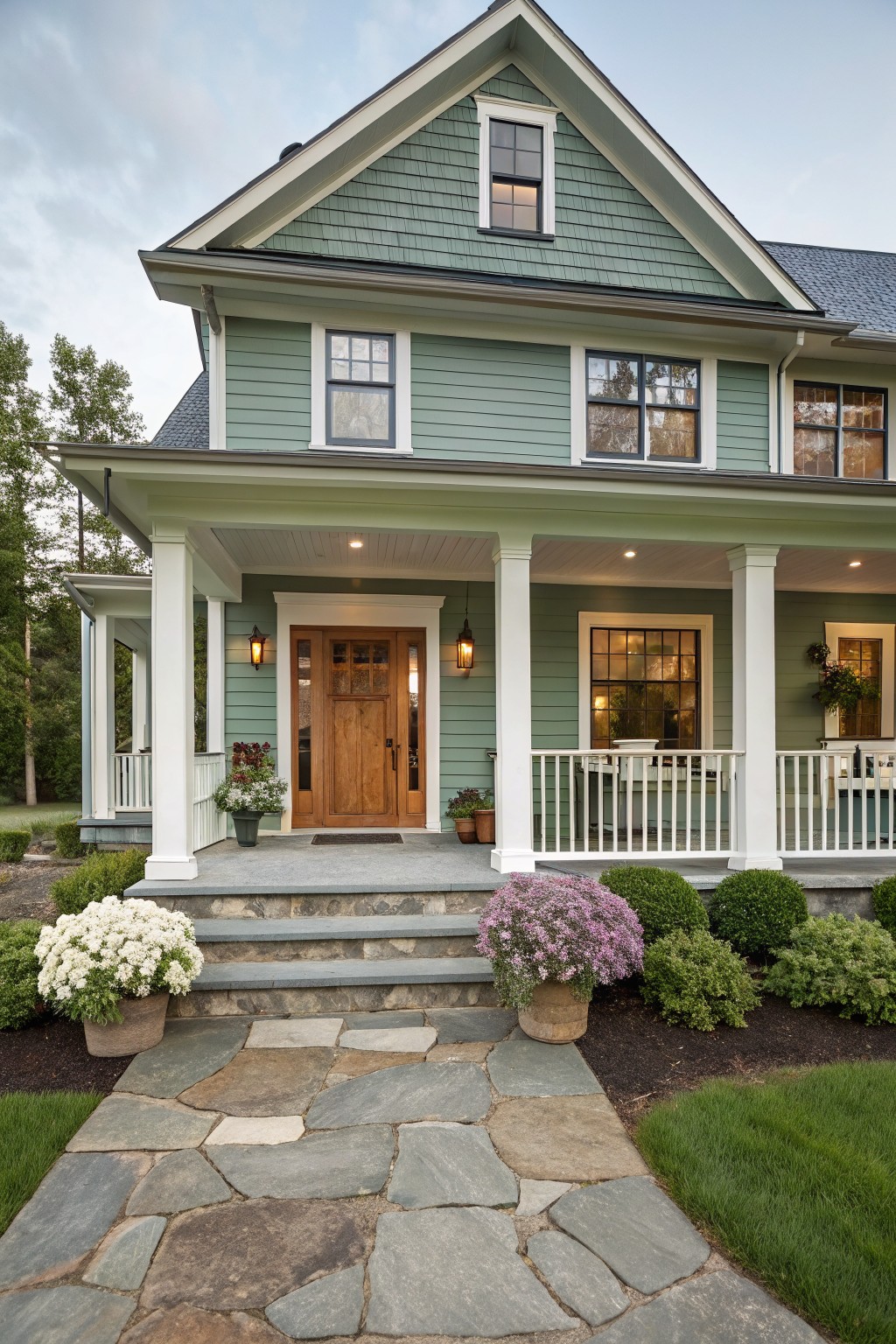
This soft sage green gives the house a calm, lived-in look that fits right into a rustic farmhouse setting. It sits somewhere between green and gray, which helps it feel quiet rather than loud next to the roof and stone.
The color works best with white trim and natural wood doors because those keep it from feeling flat. It also blends easily with garden greens and stone paths, though it can look a little dull if the surrounding landscaping gets too dark or overgrown.
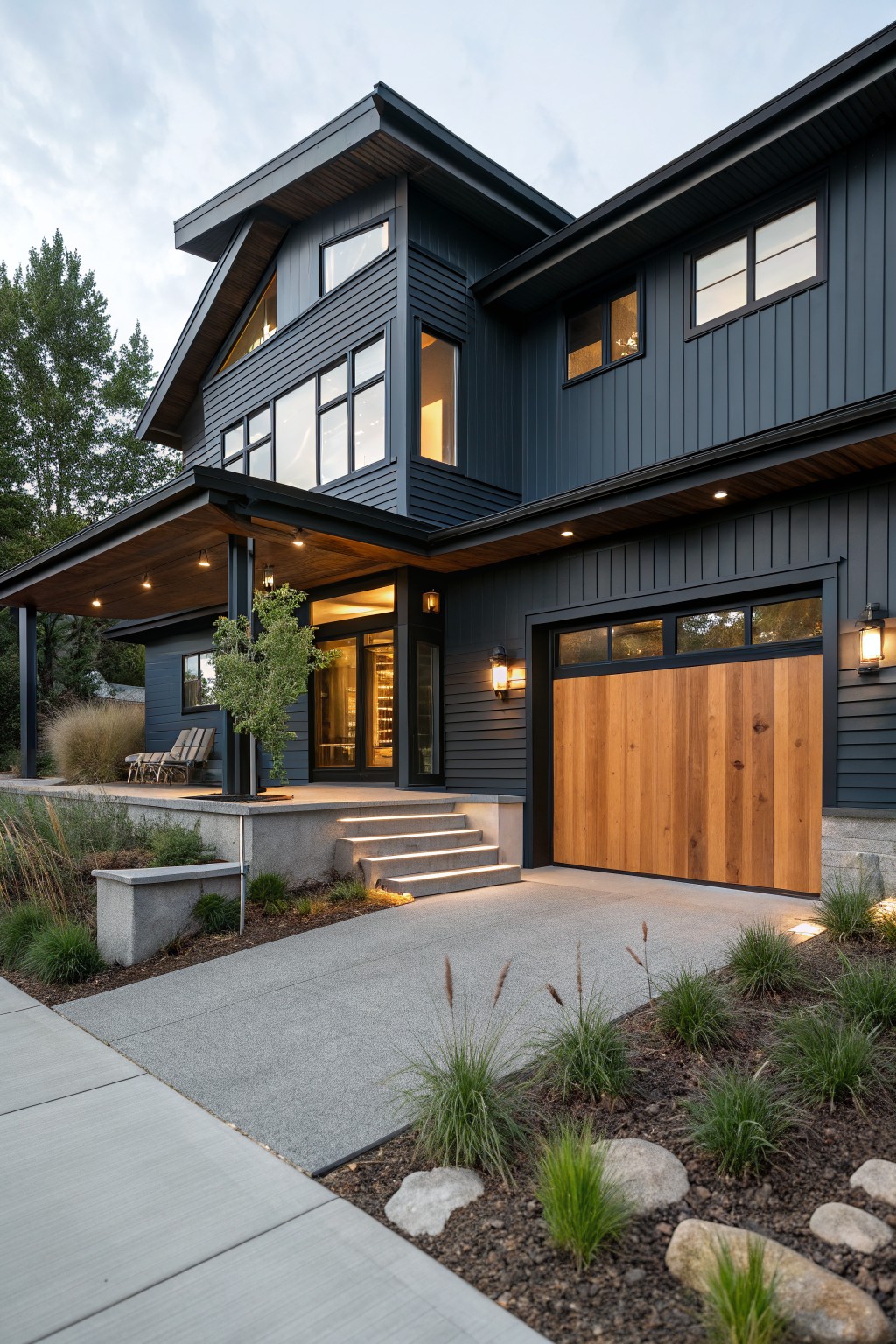
This deep navy blue-gray siding brings a solid, grounded feel to a rustic farmhouse without making it look heavy. It sits somewhere between a true navy and a soft charcoal, which helps it read as both classic and a little updated.
The color works best when paired with natural wood tones and simple trim. It can lean cooler in bright sun, so testing a sample on the actual wall helps avoid surprises once it is up on the whole house.
Rustic Red Siding
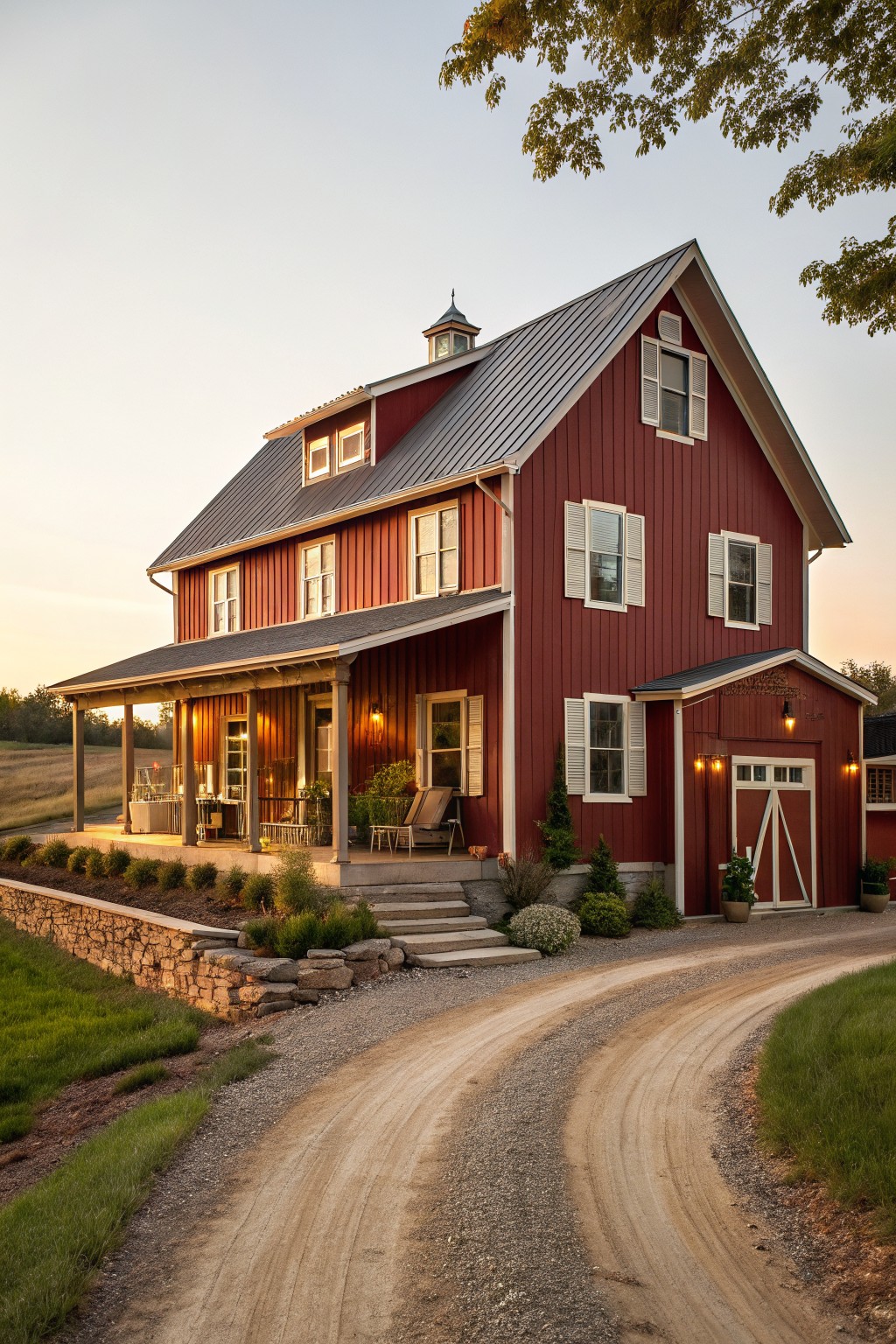
This deep barn red gives a farmhouse that solid, grounded look right from the start. It feels warm without being too bright and works especially well on larger surfaces like siding. The color comes closest to Sherwin Williams Barn Red or Benjamin Moore Heritage Red.
It has a slight earthy undertone that pairs nicely with white trim and a dark roof. The red holds up outdoors without looking harsh, though it can shift a bit warmer in late afternoon light. It suits traditional farmhouses best and looks good against stone or gravel.
Warm Greige Siding
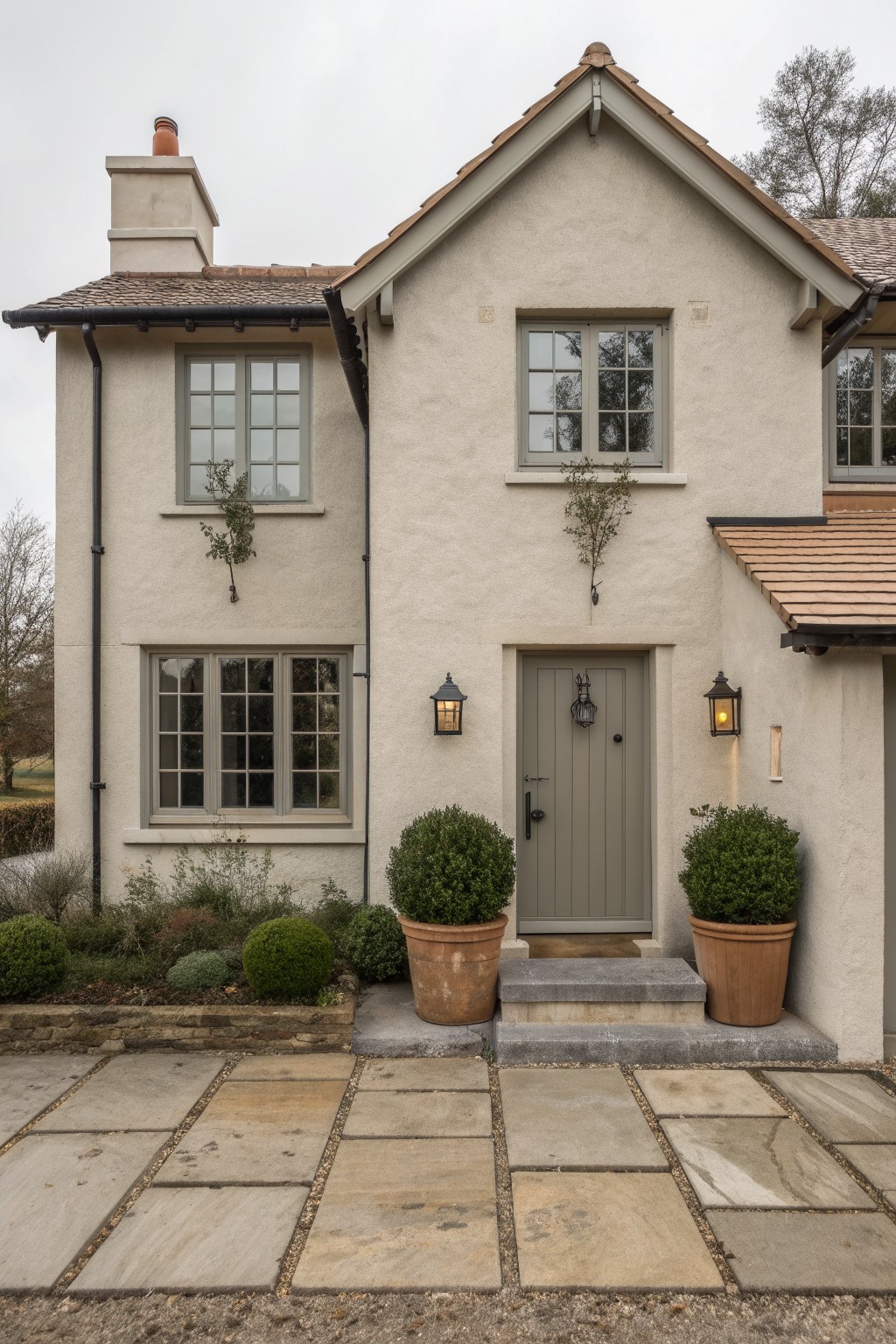
This soft greige paint on the exterior walls gives the house a calm, lived-in look that feels right for a rustic farmhouse. It has enough warmth to keep the whole place from feeling cold, yet it still reads as a neutral that works with most roof and stone colors.
The color sits somewhere between beige and gray, so it changes a little depending on the light. It pairs easily with natural wood doors, stone details, and simple landscaping without needing a lot of extra contrast.
Warm Brown Wood Siding
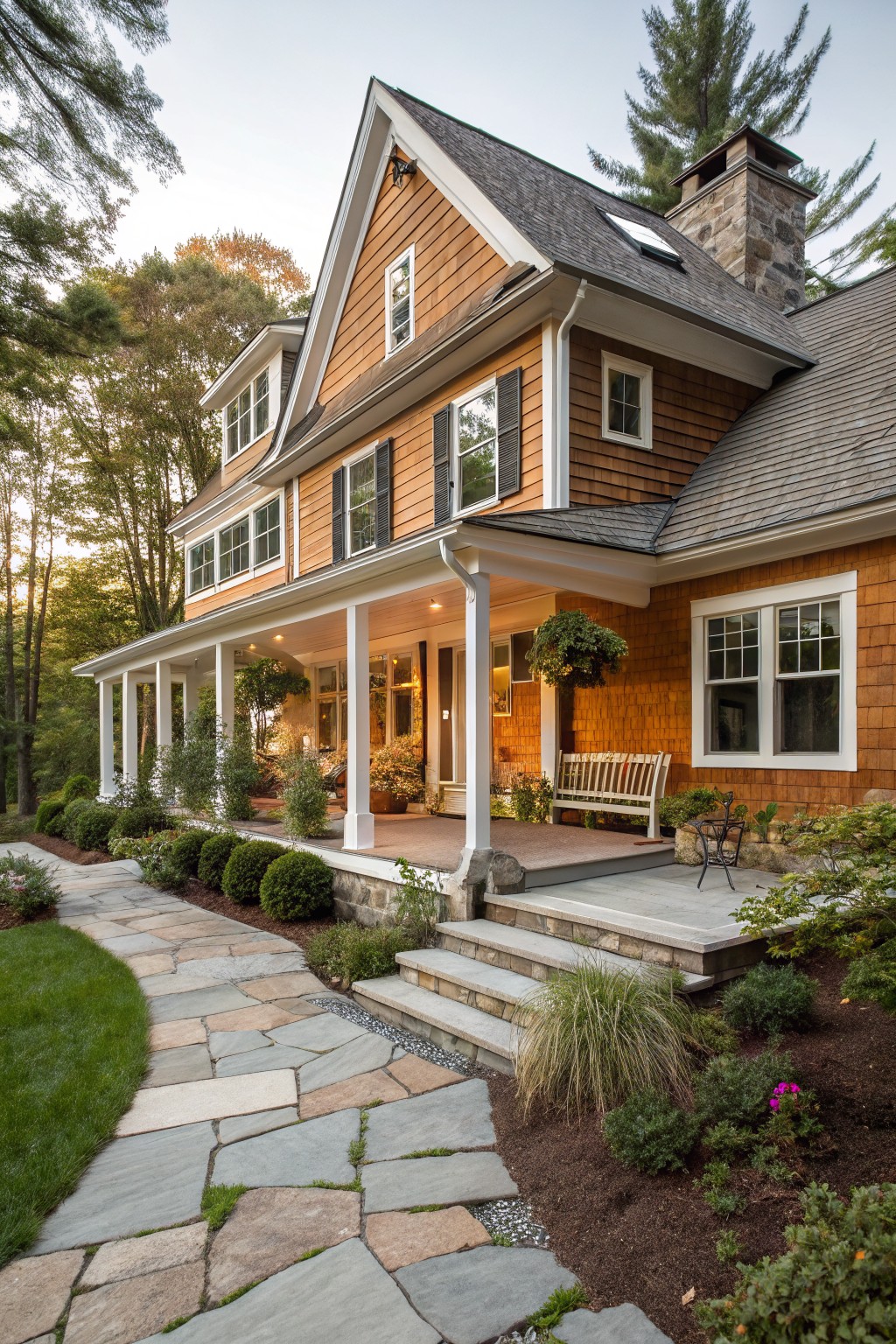
This warm brown siding brings a simple, grounded look to a rustic farmhouse. It has a soft golden undertone that feels natural next to stone and white trim without trying too hard.
It works especially well on homes with plenty of wood and greenery around. Just keep an eye on how it reads in full sun since the tone can shift warmer than expected on larger surfaces.
Warm Golden Yellow Siding
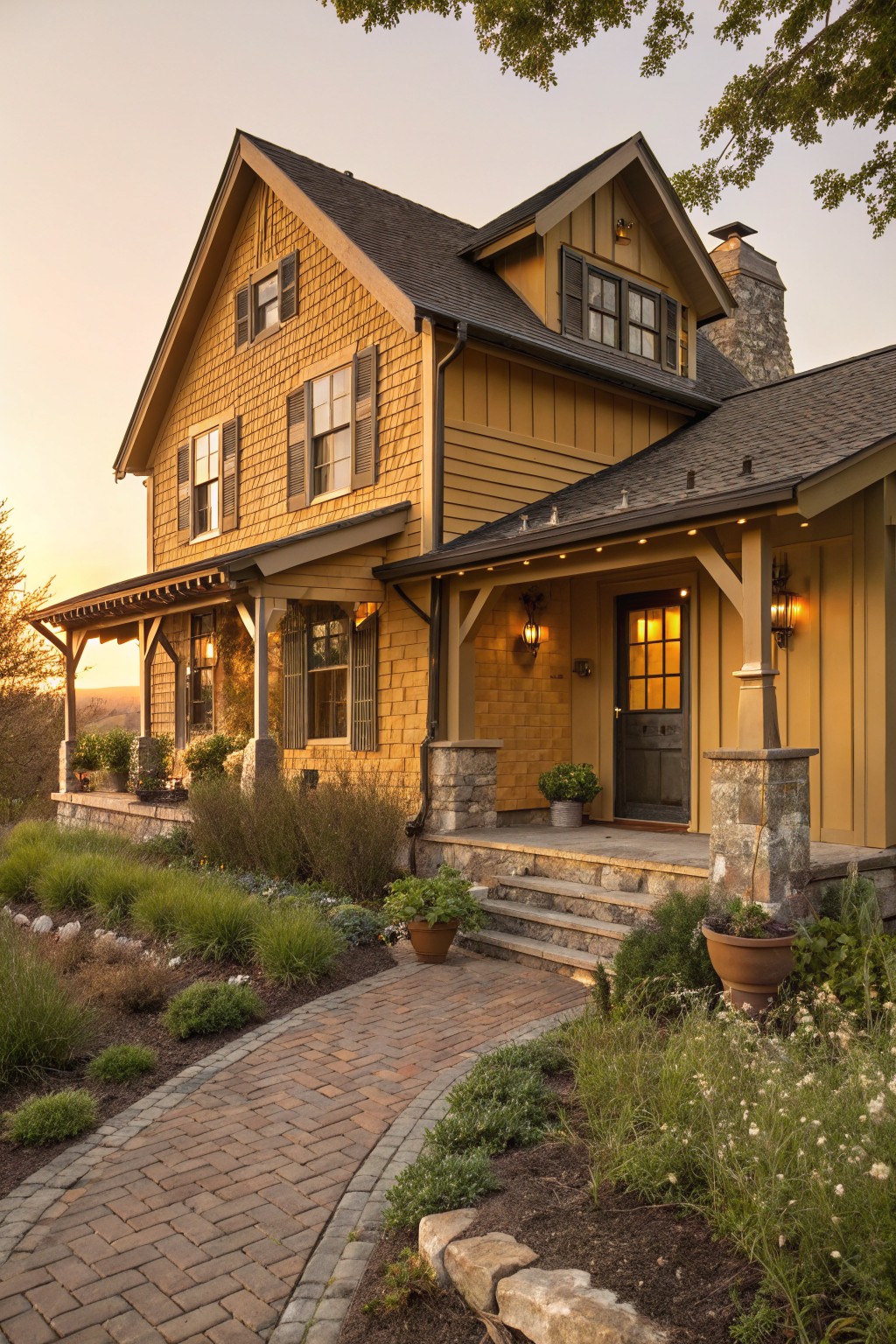
This warm golden yellow brings a sunny but grounded look to the whole house. It feels like a soft mustard that stays earthy instead of jumping out as too bright.
The color has a slight orange undertone that helps it blend with stone and wood trim. It works well on farmhouses with natural materials and pairs best with dark roofs and simple landscaping.
Classic Greige Siding
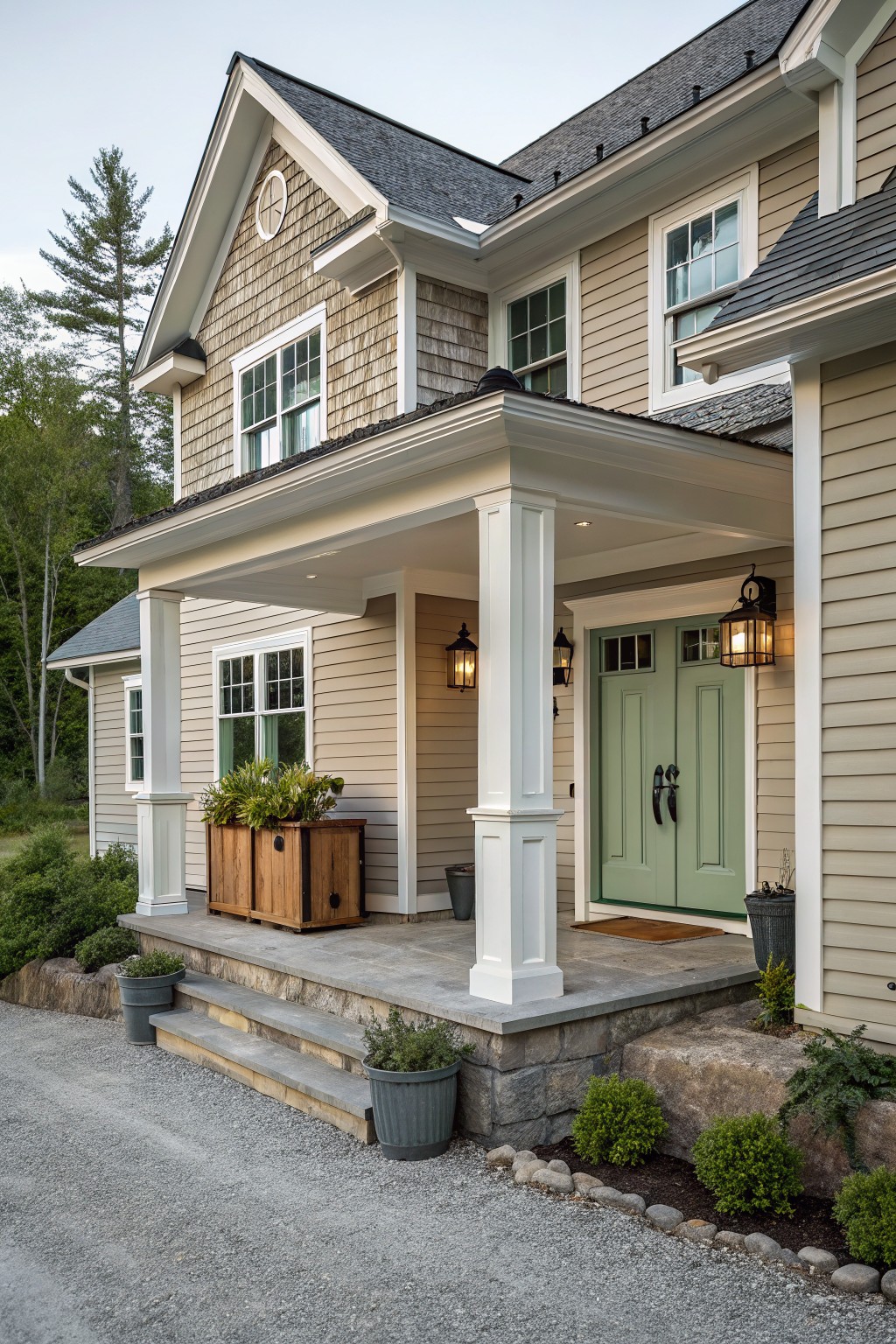
This siding color is a soft greige that sits right in the middle between warm beige and light gray. It gives the house a calm, settled look that feels right for a rustic farmhouse without going too yellow or too cool.
The gray undertone keeps it from feeling flat next to the white trim and stone base. It works well with natural wood accents and deeper door colors like the green shown here. Just watch how it shifts in full sun versus shade before you commit.
Soft teal siding
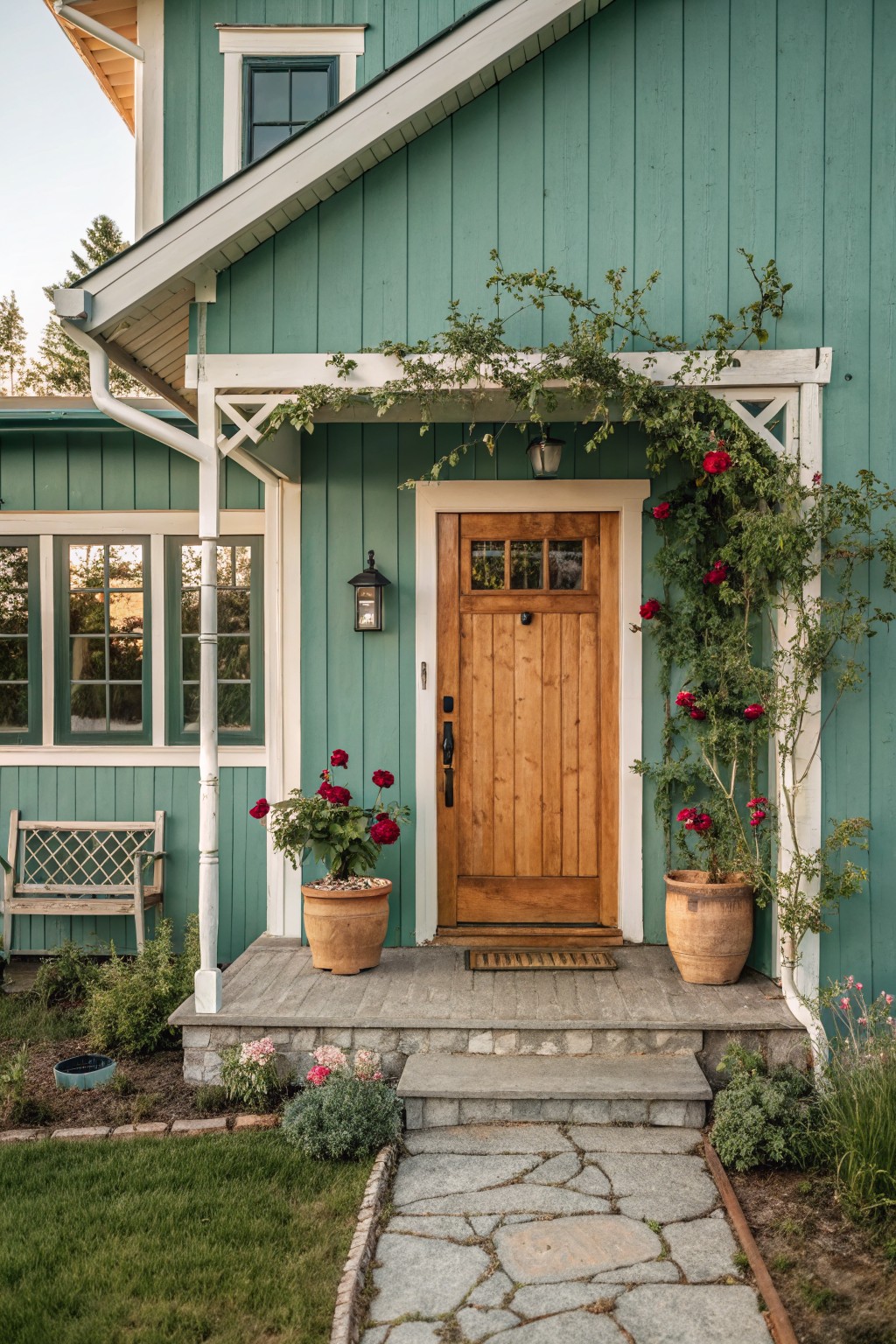
A soft teal green gives this rustic farmhouse a calm and welcoming look. The color family sits somewhere between green and blue, and it reads very close to Benjamin Moore Wythe Blue or Sherwin Williams Breezeway. Behr Seaglass and a lighter take on Farrow & Ball Vardo would land in the same range.
The slight blue undertone helps the paint stay friendly next to white trim and a natural wood door. It suits older homes that already have some texture and works especially well when the roof and stone are on the neutral side. Just test a sample on the actual wall because teal can shift toward green in morning light and pick up more blue later in the day.
Light Warm Greige Siding
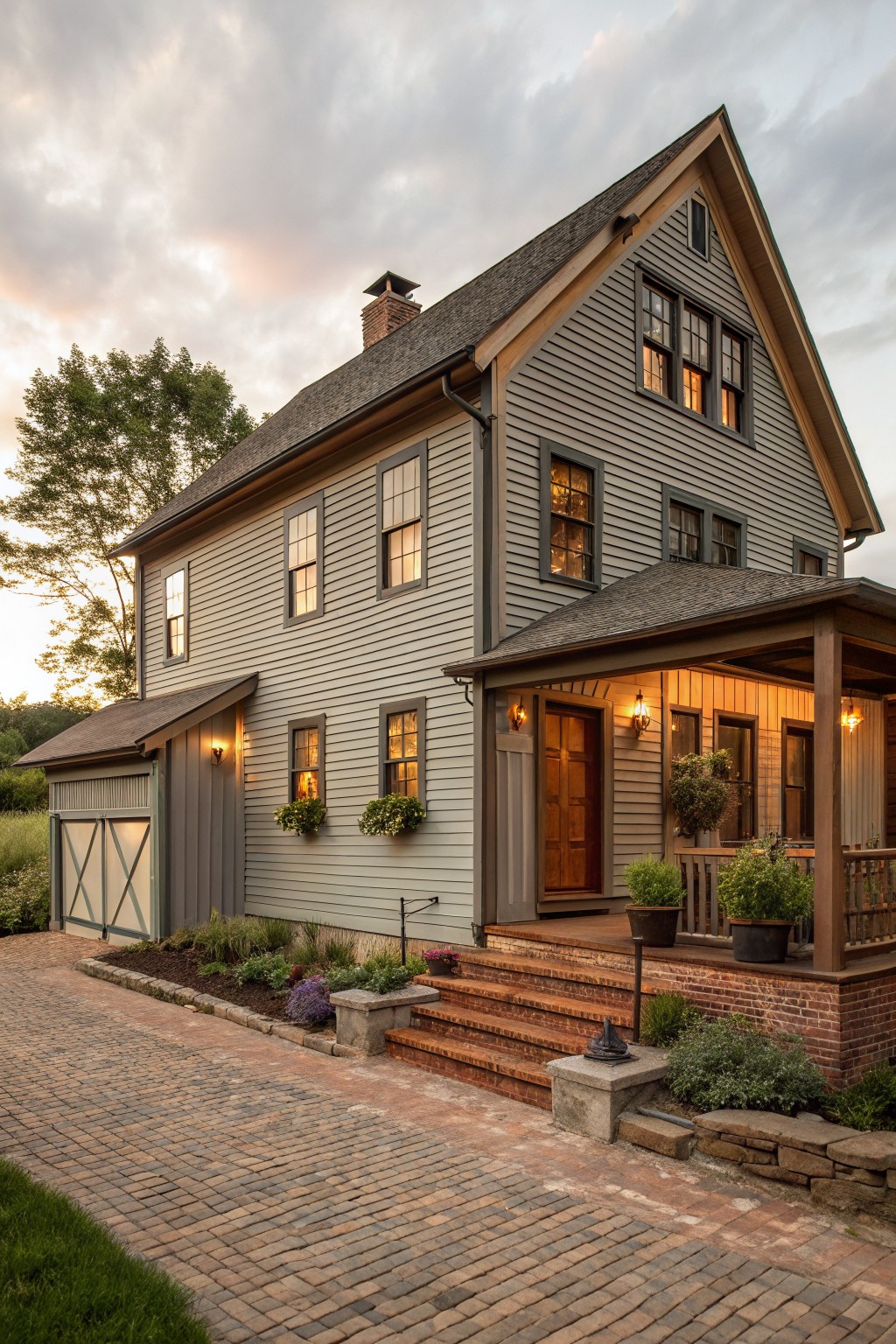
This light warm gray on the siding gives a farmhouse that settled, comfortable look without trying too hard. It falls right in the greige family and reads closest to Sherwin Williams Repose Gray, Benjamin Moore Edgecomb Gray, or Behr Silver Gray.
The color has a soft beige undertone that keeps it from turning cold next to brick and wood. It works best on homes with simple trim and natural materials, though it can start to look flat if the roof or accents are too dark.
Earthy Barn Red Siding
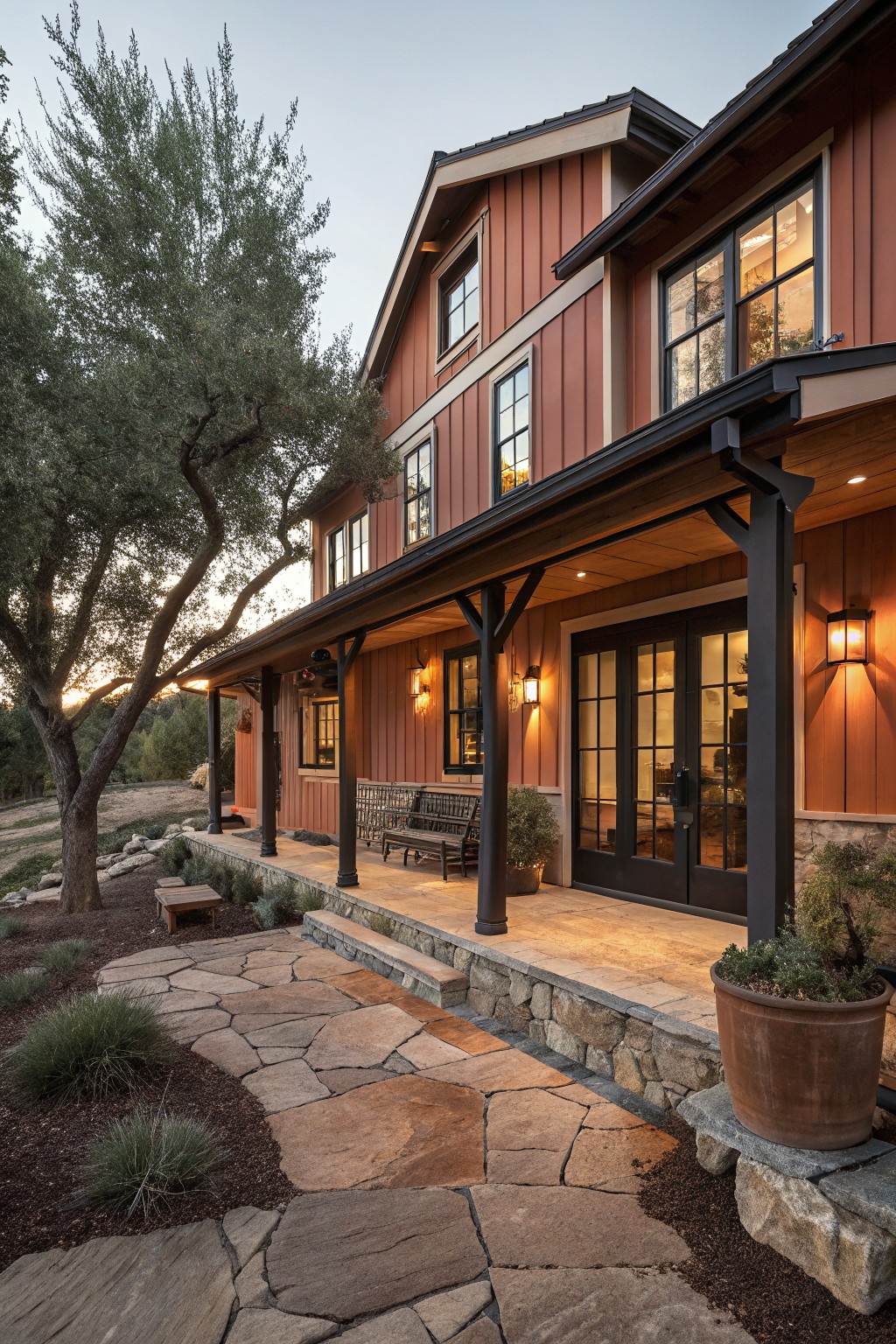
This warm red-brown paint on the siding is what gives the house its cozy farmhouse look. It sits in that earthy red family that feels lived in rather than bold, and it works nicely against the dark trim and stone base. Colors like this hold up well outside because they pick up on the natural tones around them instead of fighting them.
It has a slight orange undertone that shows more in the sun and softens toward evening. Pair it with black or dark brown windows and warm wood accents if you want the same grounded feel. Just watch how it shifts next to any cool gray stone, since the contrast can make the red read a little brighter than expected.
Muted Sage Green Siding
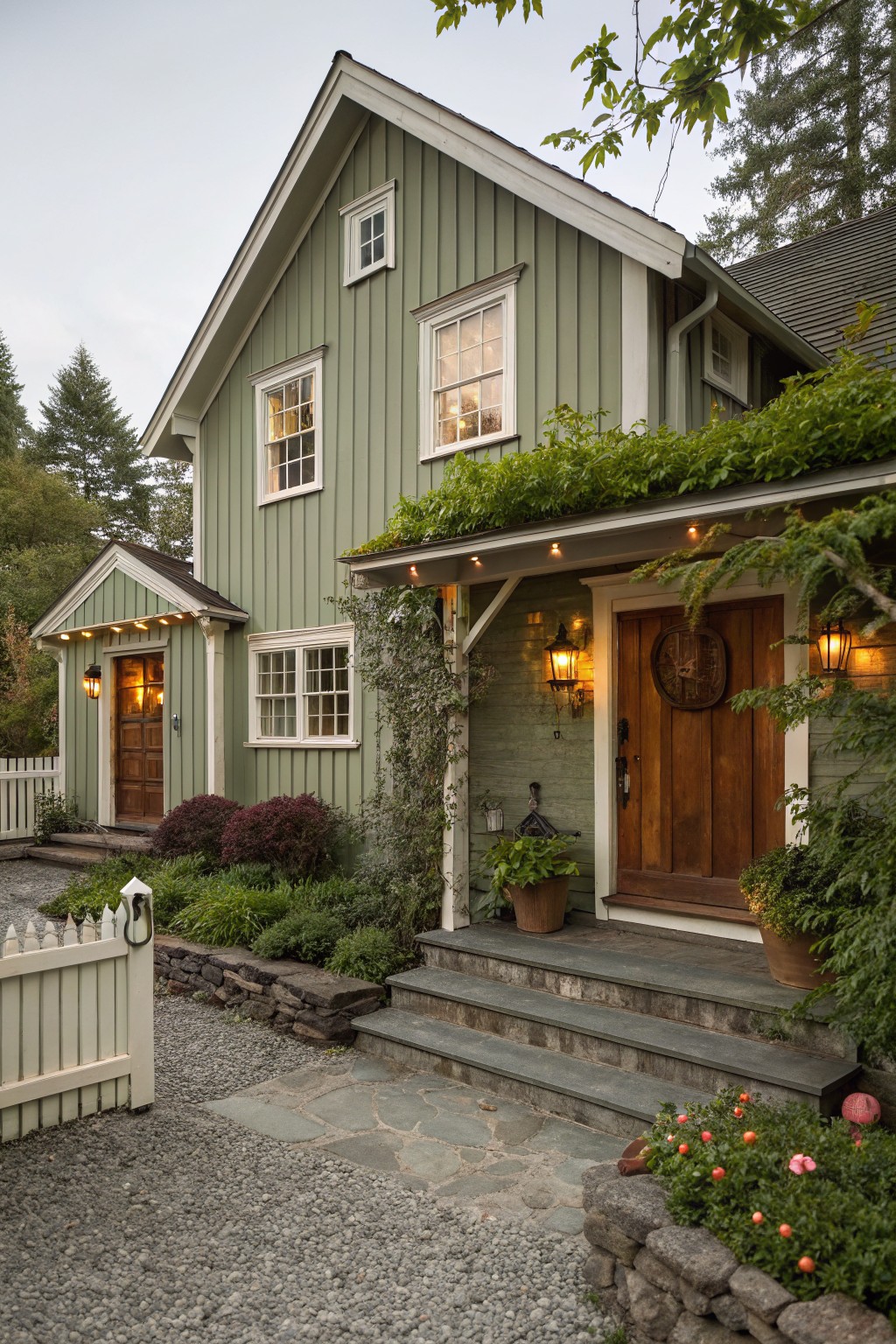
A muted sage green like the one on this house siding gives a farmhouse a quiet, settled look. It sits somewhere between green and gray, which keeps it from feeling too bright or too dark on the exterior. This shade reads closest to Sherwin Williams Evergreen Fog, Benjamin Moore Soft Fern, Behr Aged Sage, or Farrow & Ball Lichen.
It works best with white trim and natural wood doors since those keep the green from turning too cool. The color suits older homes in wooded or rural settings, but it can lose its softness if the roof and masonry pull too warm.
Frequently Asked Questions
Q: How do I know which of these colors will look right on my house once it’s up? A: Paint a big sample board and lean it against your siding for a few days. Walk around at morning and evening light to see the shifts. That quick check saves a lot of regret later.
Q: What if I want to keep some trim white but still hit that cozy farmhouse feel? A: Pick a soft off-white that leans warm instead of stark. It pairs nicely with the deeper rustic shades without fighting them. Your whole exterior stays inviting rather than cold.
Q: Do these colors need special primer or extra coats? A: A good exterior primer always helps the paint grip and last longer on old wood or siding. Two solid top coats give better coverage than trying to stretch one.