I have noticed that exterior colors rarely stay the same once they are up on the house and exposed to real sunlight.
What reads as a strong shade in the store often softens against your existing brick or siding in ways you do not expect.
Testing matters.
The right tone can tie the whole facade together when it sits next to the roof and surrounding trees.
I usually watch how a sample looks at different hours before making the final choice.
Muted Sage Green Siding
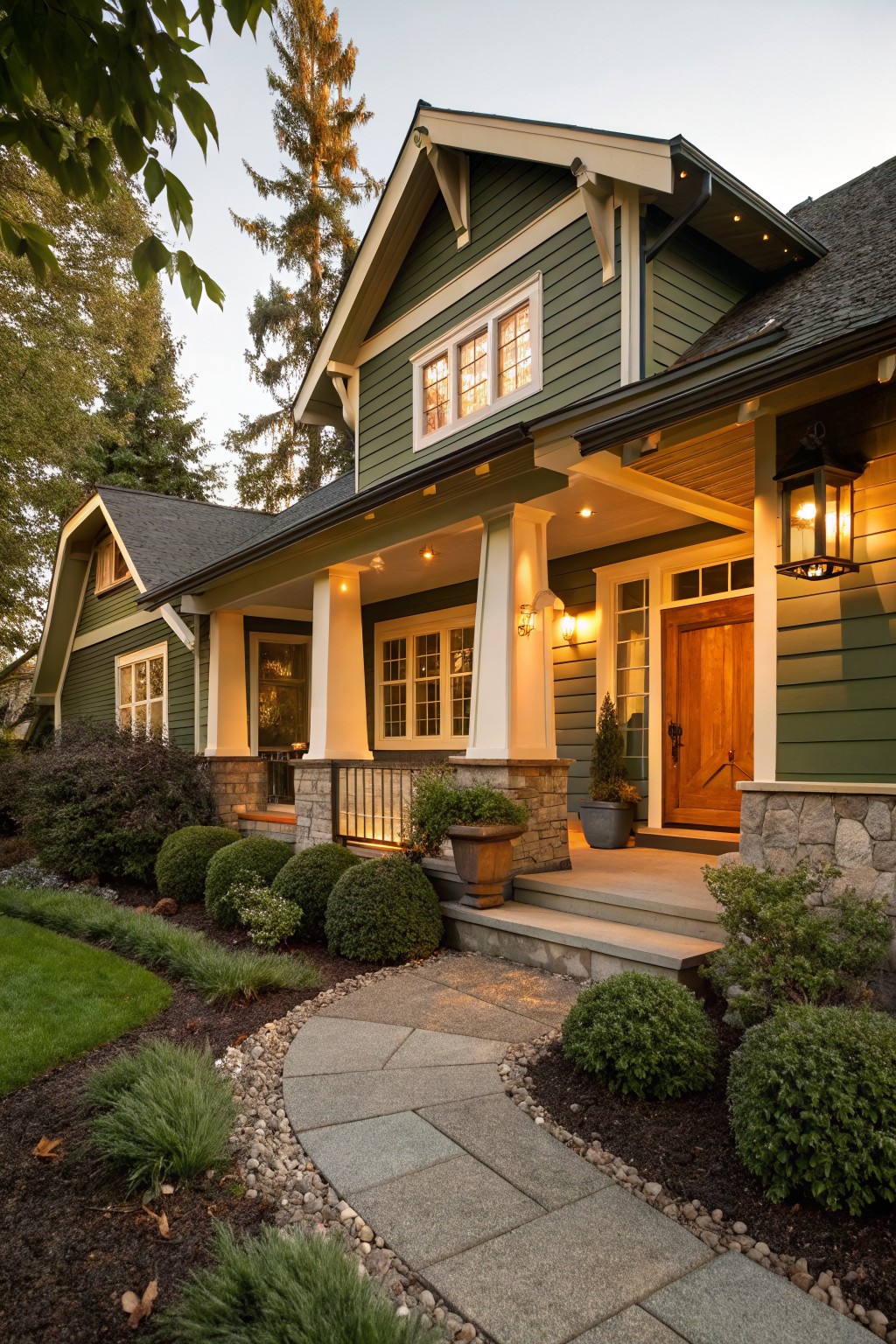
This muted sage green on the siding gives the house a calm and steady look. It sits right in that middle ground between green and gray, so it feels natural rather than bold or loud. Many people like it because it ages well and does not fight with the roof or the surrounding trees.
The color has a soft cool undertone that keeps it from feeling too yellow in bright sun. It pairs easily with white trim and stone bases, though it can look a bit flat if the light is very harsh. Try it on homes that already have some natural wood or dark roofing to help the green settle in.
Dark Blue Gray Siding
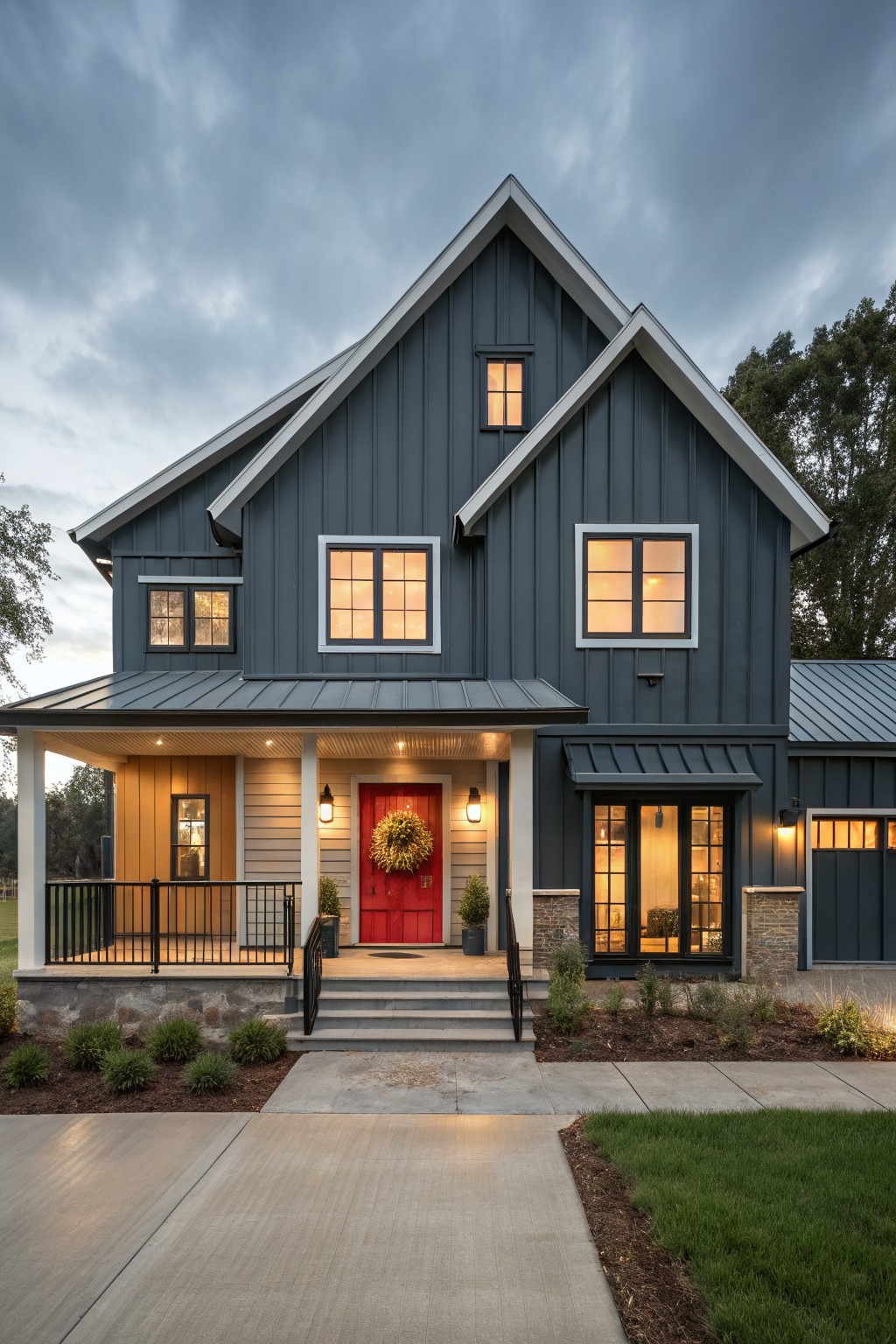
A deep blue gray like this one gives a house real presence without going full black. It feels solid and a bit moody, which works especially well on larger homes where you want the color to hold its own against the sky and roof.
This shade has cool undertones that pair cleanly with white trim and dark windows. It looks best on homes with simple lines and holds up nicely in changing light, though it can read a little flat if the house gets no direct sun at all. Good matches include Sherwin Williams Naval, Benjamin Moore Hale Navy, and Behr Midnight Blue.
Soft Sage Green Siding

A soft sage green works well on exterior siding when you want something a little different from the usual neutrals. This color sits between green and blue, giving the house a calm look that still feels fresh. It pairs nicely with white trim and darker accents without fighting them.
The shade holds up in both sun and shade because the undertone stays cool rather than turning yellow. It suits older homes or cottages best, especially when the roof is dark and the landscaping stays simple. Just keep the trim clean and bright so the green does not feel muddy.
Creamy White Trim On Brick
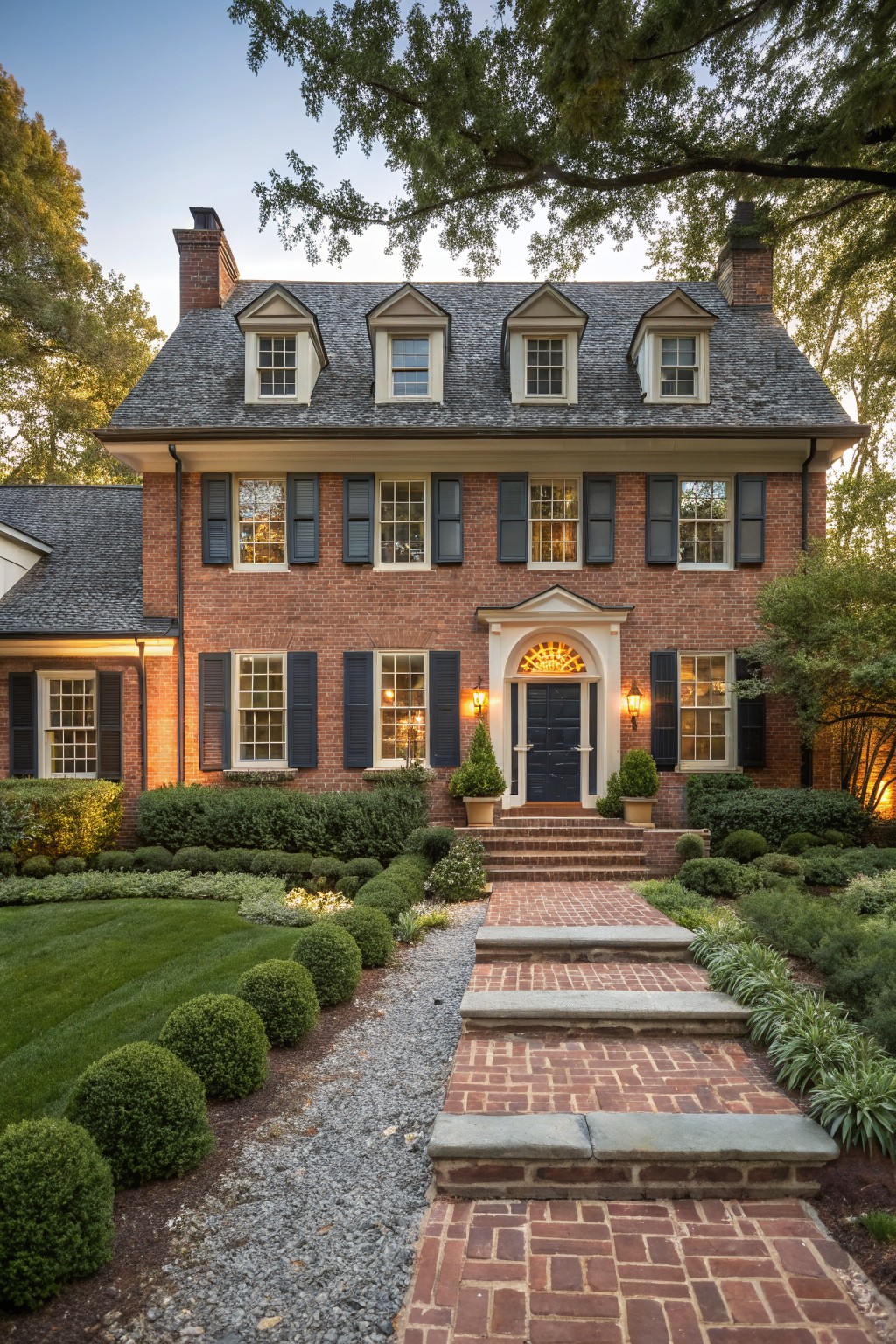
This house uses a creamy white on the trim, doorway surround, and window frames. It is a warm off-white that softens the red brick without making the whole front look stark. The color has a slight yellow undertone that keeps the brick looking rich instead of cold.
It pairs well with dark shutters and a simple dark door. The same shade works on most traditional brick homes, especially when the roof is a dark gray or black. Just test it in full sun first since warm whites can shift a bit outdoors.
Bold Yellow Siding
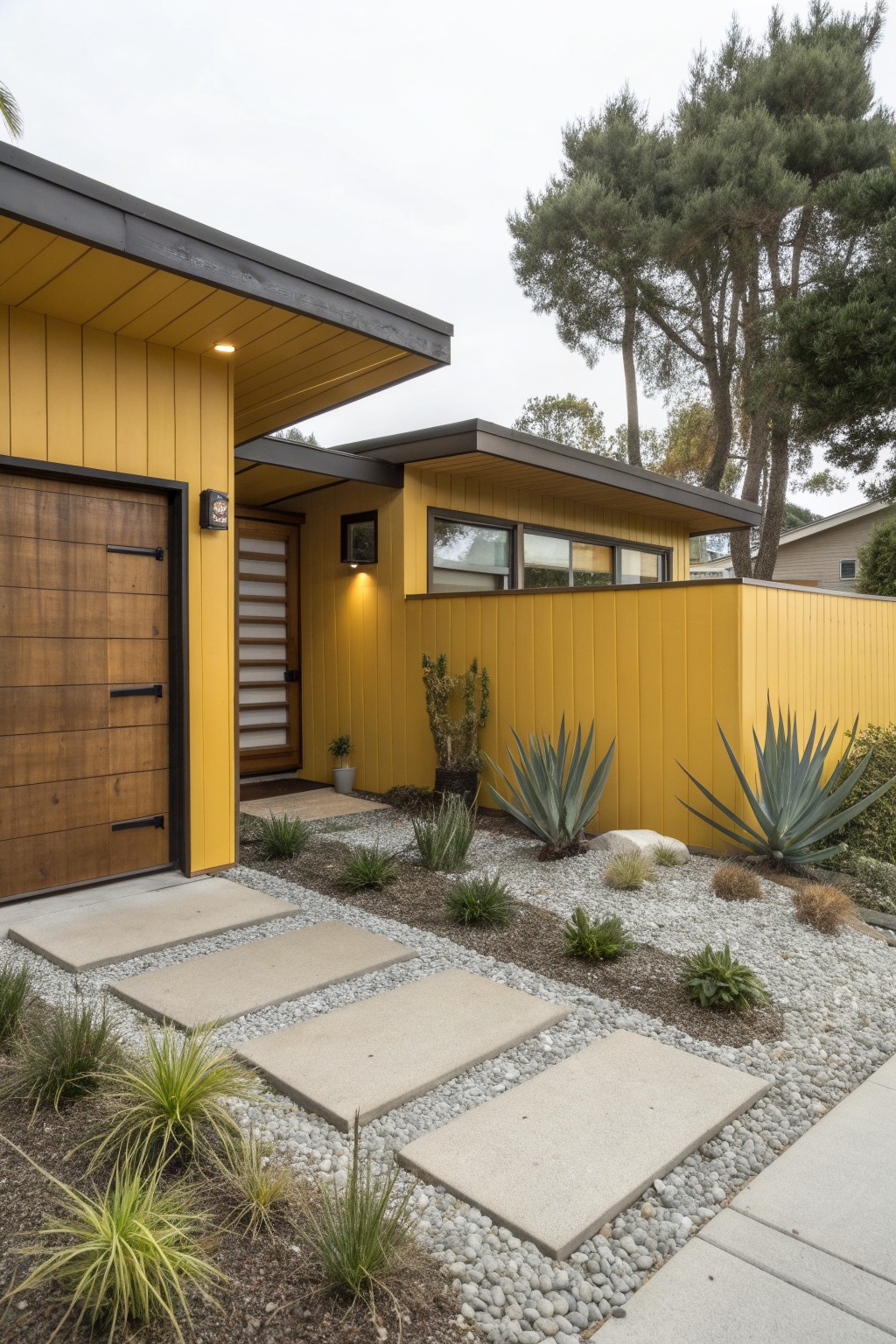
A bold golden yellow like this brings a lot of life to an exterior without needing much else. It sits in that warm, saturated range that feels cheerful but still grounded, especially when paired with dark trim and natural wood accents. Colors in this family often read closest to Sherwin Williams Goldfinch, Benjamin Moore Yellow Jacket, or Behr Sunflower.
The warmth in the yellow helps it hold up nicely against greenery and gravel paths, though it can look a bit harsh in very bright sun if the undertone leans too orange. It works best on modern or midcentury homes where the shape of the house can carry some of the boldness. Dark roofing and simple black or brown doors keep it from feeling too loud.
Deep Red Siding
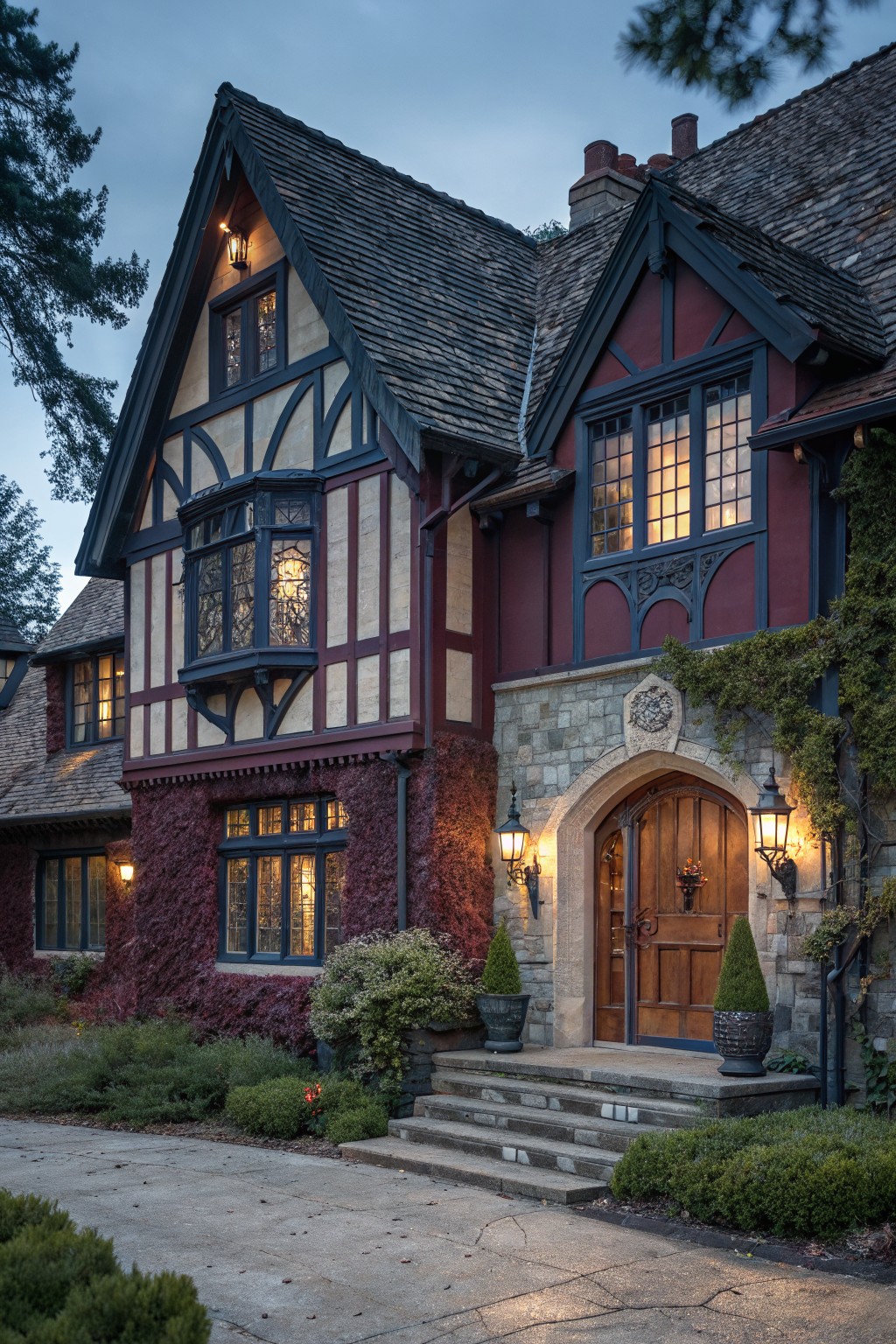
This house uses a deep burgundy red across the main siding. It is a warm, saturated color that gives the facade weight and presence without looking harsh.
The red sits nicely against the stone base and dark trim. It works best on traditional homes with similar architectural details and pairs well with natural wood doors or copper accents. Watch how it shifts in different light before committing.
Warm Terracotta Siding
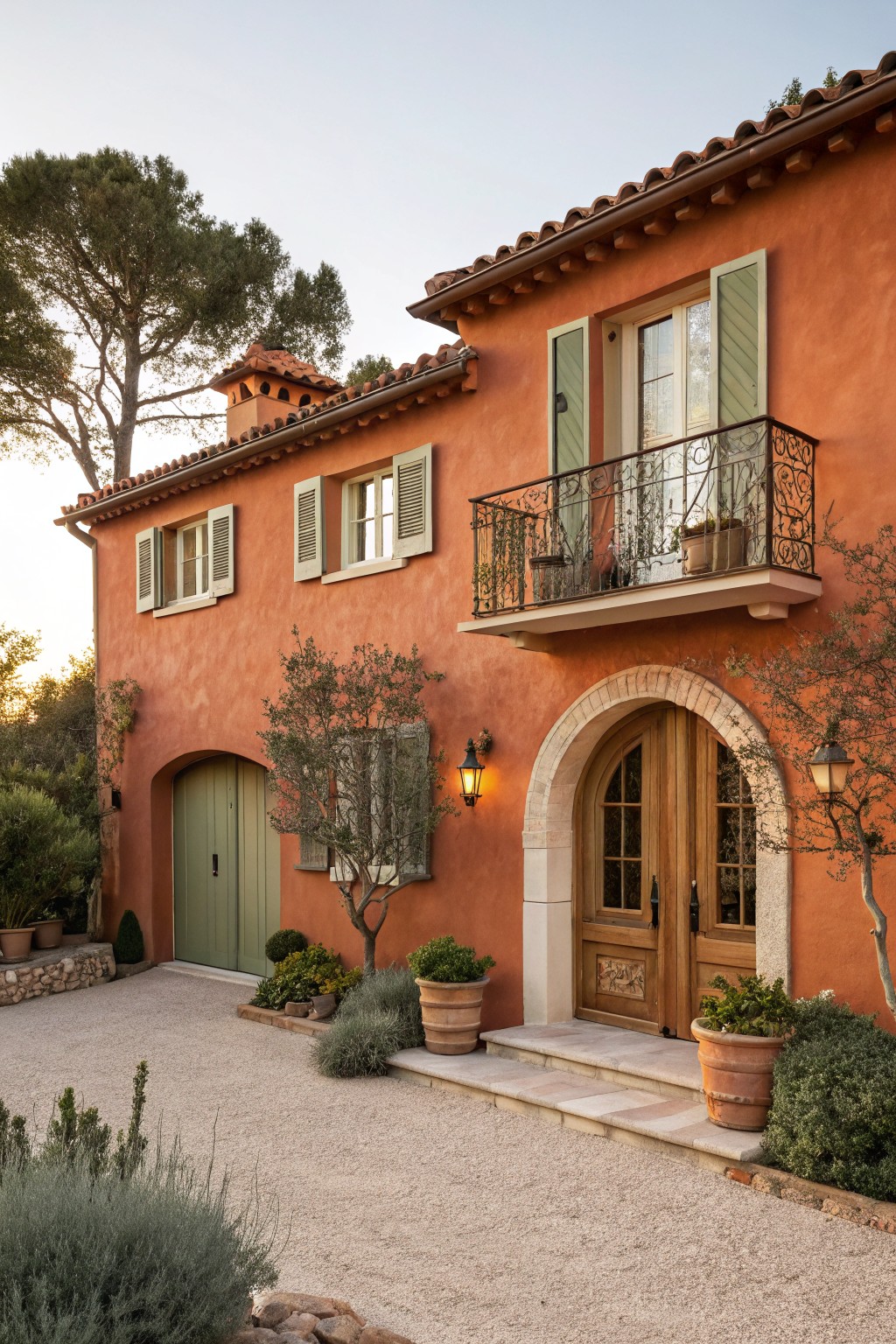
This warm terracotta orange gives an exterior a grounded and inviting look. It sits in that earthy orange-red family and feels especially good on stucco or plaster surfaces. It reads very close to Sherwin Williams Baked Clay, Benjamin Moore Moroccan Spice, and Behr Canyon Clay.
The color has soft golden undertones that keep it from turning too pink or flat in daylight. It works best with natural wood doors and simple stone accents. Just make sure the surrounding landscaping has enough green to balance the warmth.
Dark Blue Siding
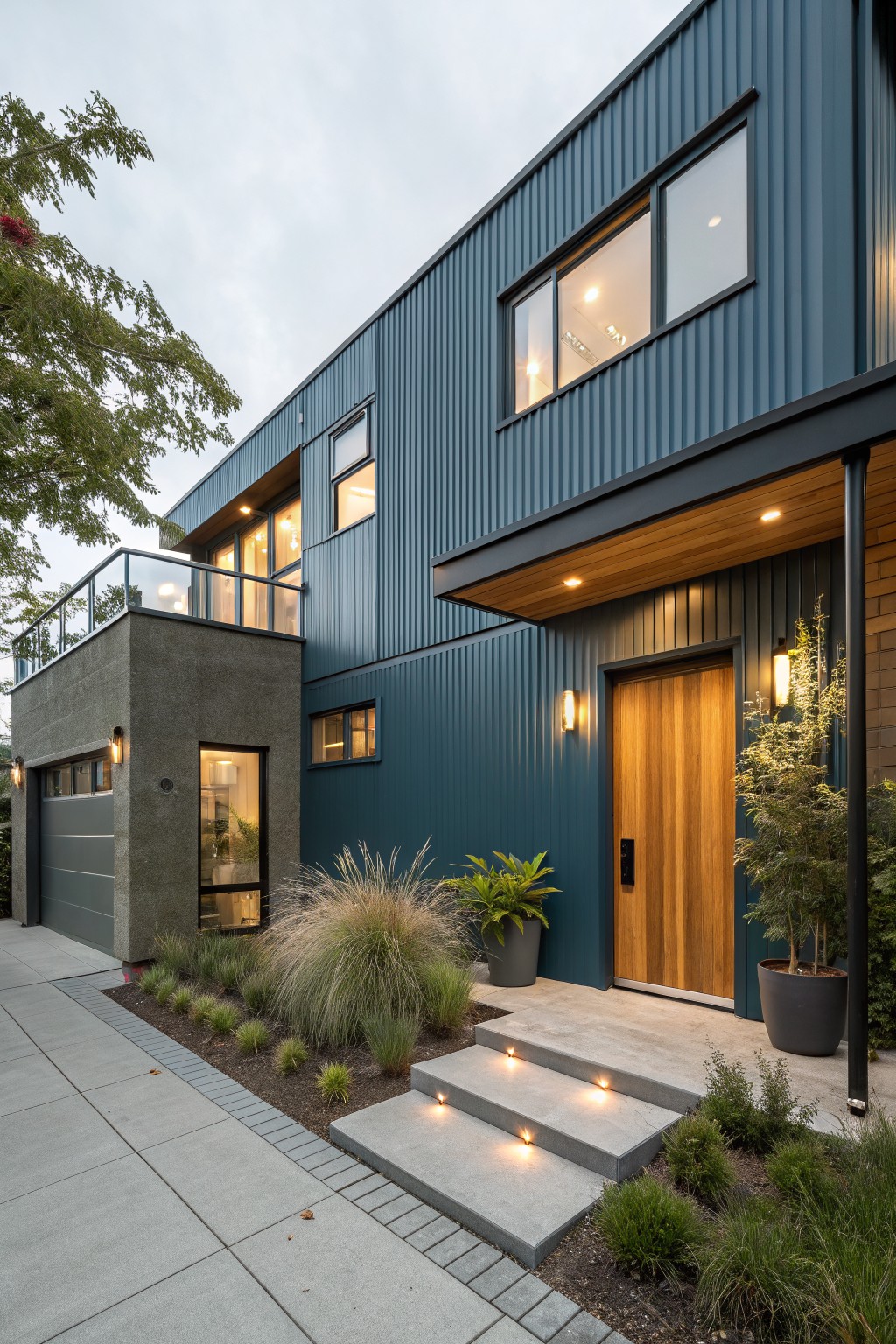
This deep blue siding brings a strong but simple look to the outside of a house. It sits in that cool blue family with a touch of teal in the undertone, which keeps it from feeling flat or too stark against most roofs and trim.
The color holds up well in changing light and pairs easily with warm wood doors or concrete steps. Just watch how it shifts toward green in full sun, and test a sample on the wall before committing to the whole facade.
Soft Pink Siding
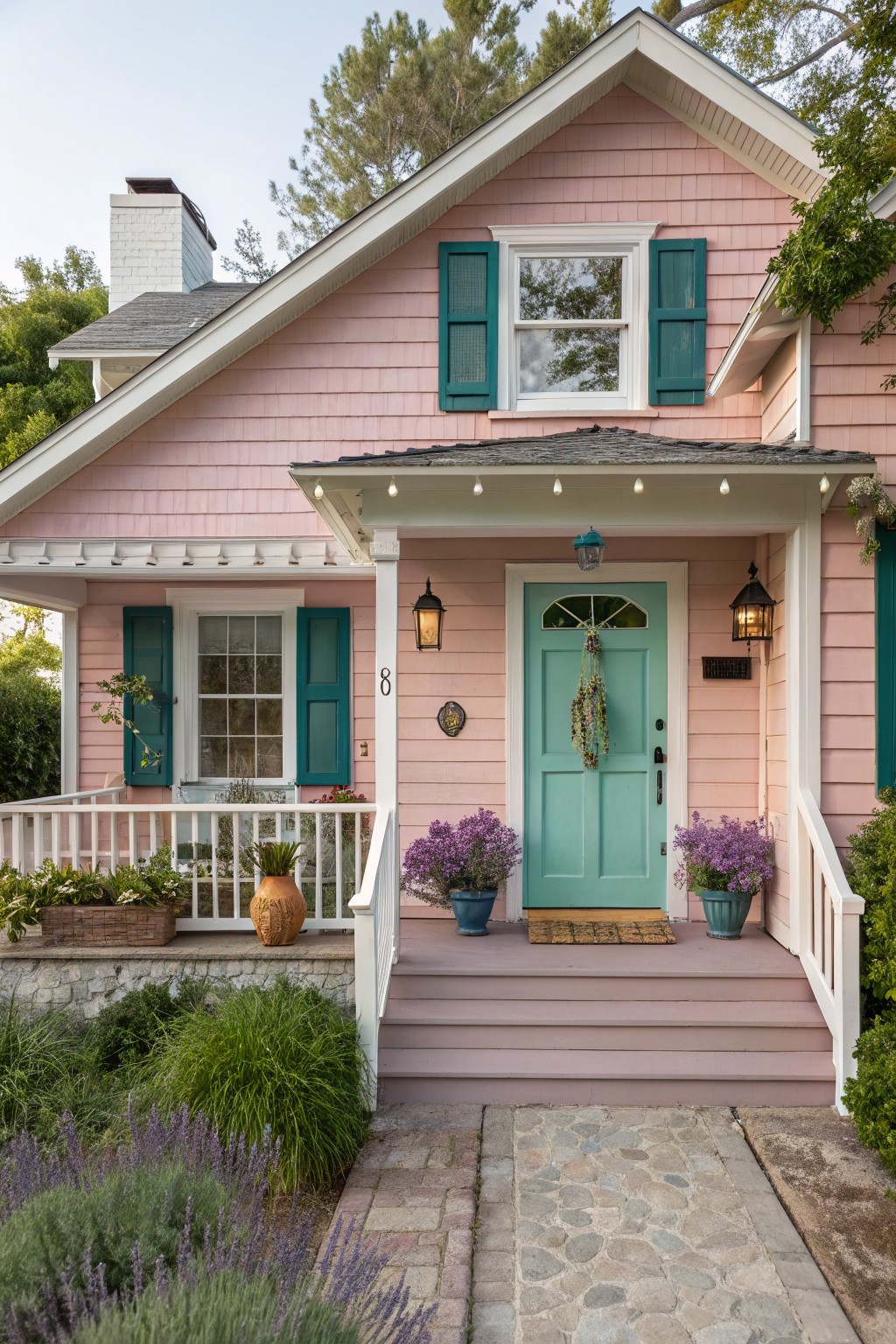
This soft pink works well on house siding because it gives a gentle lift without feeling loud. It is a muted blush shade with just enough warmth to keep the whole exterior from looking too sweet or flat.
The color sits nicely against white trim and pairs with simple greenery or stone details. It suits older homes or cottages best and holds up in natural light without shifting too much toward gray or purple.
Deep Black Siding
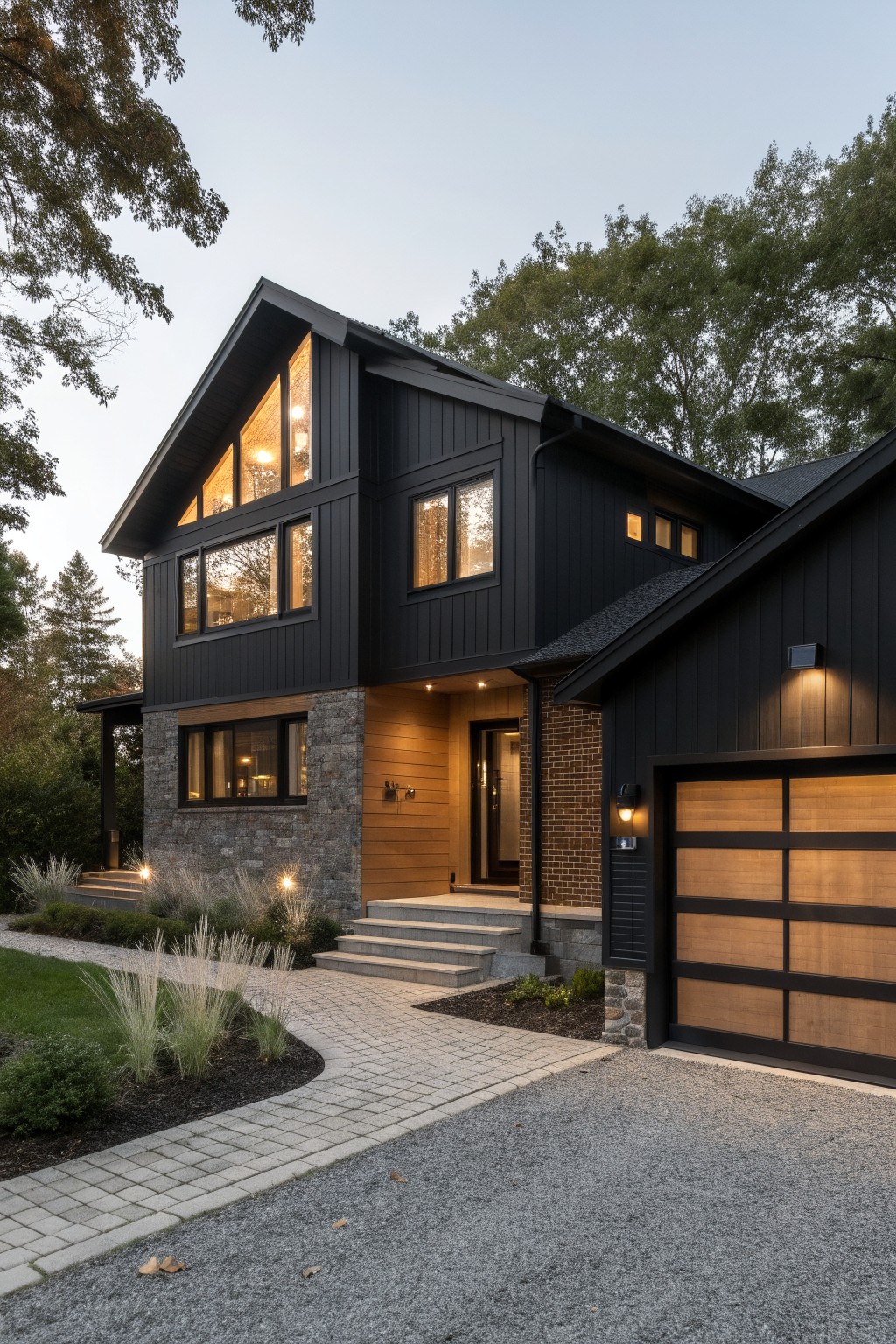
A deep black paint on the siding gives this house a strong modern look. This color family reads as a true black with a matte finish that keeps the whole facade feeling grounded. It looks closest to Sherwin Williams Tricorn Black or Benjamin Moore Black, with Behr Deep Onyx and Farrow & Ball Pitch Black as other close options.
The color sits nicely next to wood and brick because it lets those materials show up clearly. It works best on homes that already have some natural texture or lighter accents to stop the black from feeling too heavy.
Sage Green Siding With Brick Foundation

This muted sage green on the house siding sits right between gray and green. It gives the exterior a calm look without feeling flat or too bold.
The color has a light cool undertone that works nicely with white trim and brick at the base. It suits traditional homes and holds up well next to garden greens or darker accents like a deep green door.
Sage Green Siding With Stone Accents
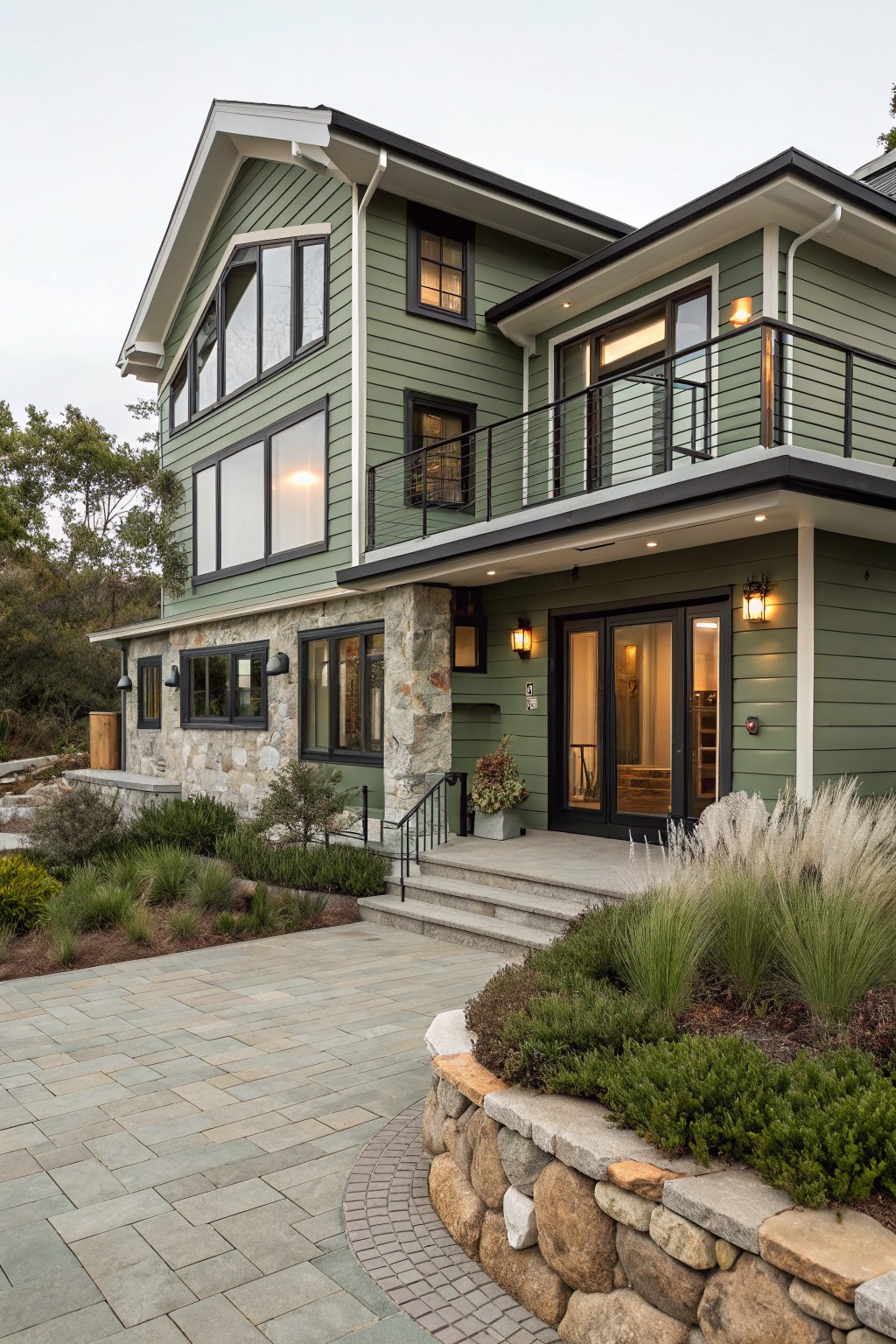
This muted sage green on the house siding gives a calm and grounded feel to the exterior. It sits between green and gray, which helps it blend with natural surroundings without looking too bold or too plain.
The color has a slight cool undertone that works well with dark window frames and stone. It suits homes that want a fresh update while still feeling connected to the landscape.
Deep Barn Red Siding
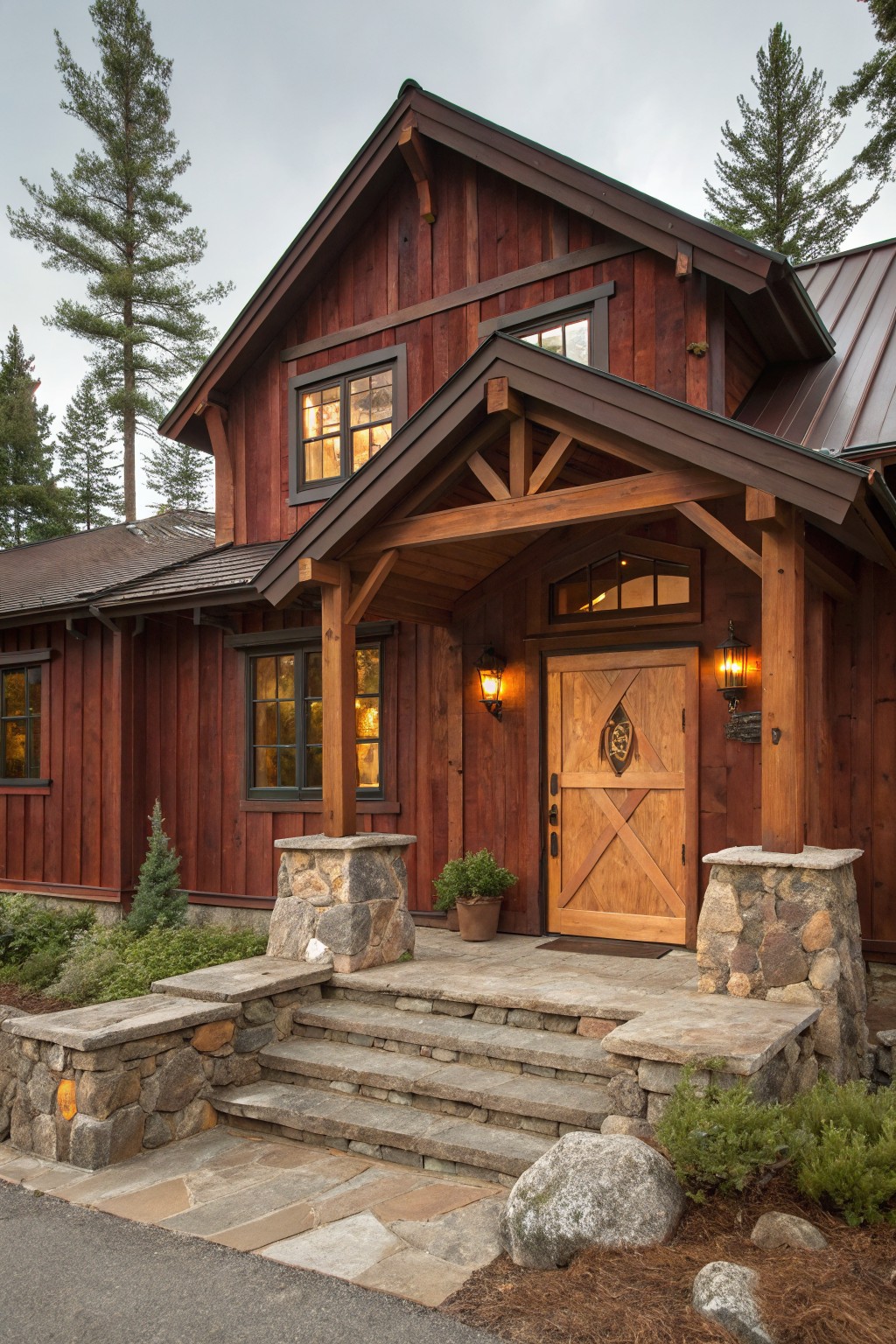
A deep barn red gives this wood siding a strong, grounded look that still feels welcoming. The color has a warm tone that sits nicely against the natural stone and dark trim, and it holds up well outdoors without fading into the background too quickly.
This shade carries a touch of brown in the undertone, which keeps it from reading too bright or harsh in different light. It works best on traditional or rustic homes, and it pairs cleanly with dark roofing, wood doors, and stone foundations. Try it if you want the exterior to feel solid and lasting rather than trendy.
Moody Dark Purple Gray Siding

This deep purple gray siding gives a house real presence without going full black. It sits in the dark neutral family but leans slightly cool with violet undertones that show up more in certain lights.
The color works especially well on older homes with lots of trim and detail. It holds its own next to dark roofing and green landscaping, and it looks best with lighter window frames or warm wood doors to keep the whole look from feeling too heavy.
Warm Beige Stucco

This warm sandy beige works well on stucco because it picks up the sunlight and feels soft rather than stark. It has a gentle yellow undertone that keeps the house from looking too cool or gray, especially next to terracotta roof tiles.
The color pairs nicely with stone details and dark metal accents without fighting them. It suits older homes or Mediterranean styles and holds up outside as long as you stay away from anything too pink or orange in the mix. Best matches are Sherwin Williams Accessible Beige, Benjamin Moore Manchester Tan, Behr Sand Dune, or Farrow & Ball String.
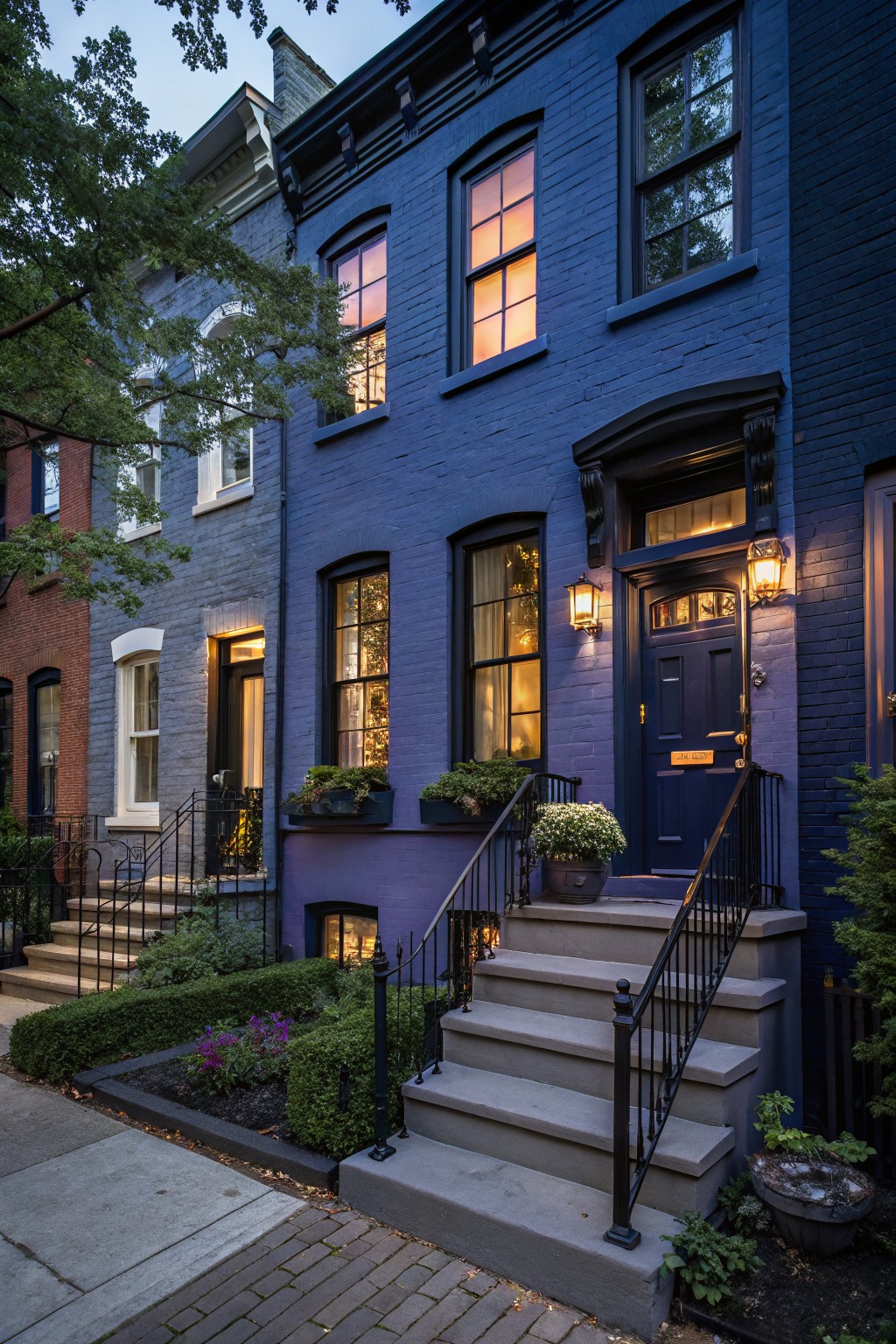
A deep navy blue on brick gives an older home a strong but simple presence. This shade sits between blue and almost black, which helps it hold up well against changing light and makes the whole facade feel more solid without looking harsh.
It has a cool undertone that pairs nicely with warm white trim or natural stone details. On homes with similar architecture it reads traditional, though it can also work on more modern builds if the windows and doors stay dark. Watch the finish though, since a flat or matte version will show dirt faster on lower sections near the ground.
Soft White Brick Exteriors

A soft white on brick gives the house a clean and bright look without going stark. This color family reads as a warm white and seems closest to Sherwin Williams Alabaster or Benjamin Moore White Dove.
It pairs well with darker trim and roofing because the warmth keeps the brick from feeling cold. Just watch the finish. Too much sheen can make the texture stand out more than you want on an older home.
Dark Charcoal Siding
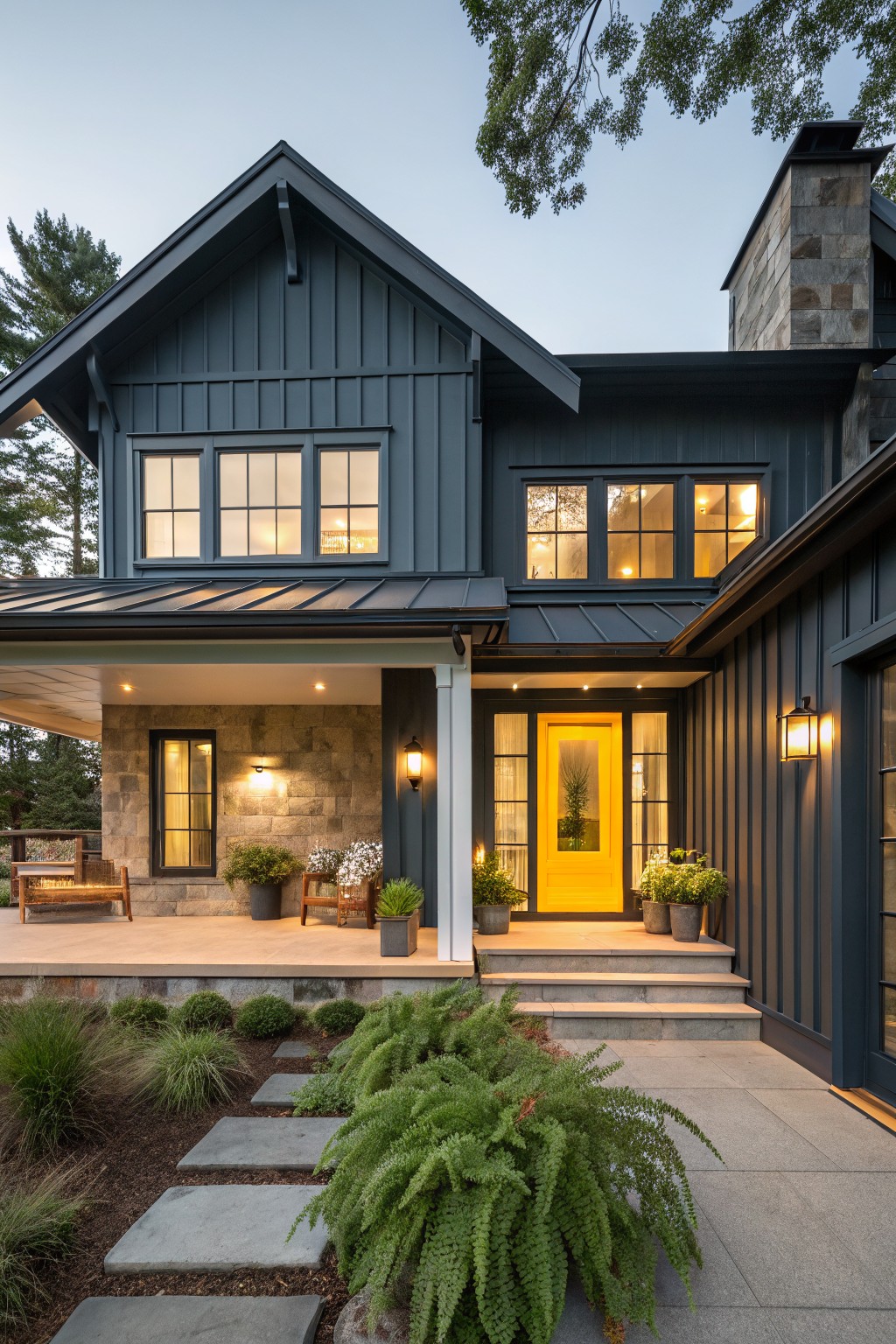
This deep charcoal gray siding gives the house a strong, grounded look without feeling too heavy. It sits somewhere between a true black and a cool slate, which helps it read as modern yet still classic on many home styles. I’d place it near Sherwin Williams Iron Ore, Benjamin Moore Kendall Charcoal, or Behr Dark Shadow.
The color has a slight blue undertone that shows up more in morning light and pairs well with stone and warm wood accents. It works best on homes with simple trim and a bright door or two for contrast. Just watch how it shifts once the sun moves, since darker shades can look almost black by late afternoon.
Frequently Asked Questions
Q: How do I test a bold color before committing to the whole house?
A: Grab sample pots and paint large boards or sections of siding. Check them at different times of day to see how light hits the shade. This avoids surprises once the full coat goes on.
Q: What should I do with shutters and trim when the main color is this dramatic?
A: Keep them in a crisp contrast like white or charcoal. It frames the bold choice without competing. Paint them last so you can adjust if the main shade shifts a bit once dry.
Q: Will rain and sun wear down a bright exterior paint faster than a neutral one?
A: Use a quality exterior formula with built-in UV blockers. Clean the surfaces well first and apply two solid coats. Touch up any chips right away to stretch the life of the job.