I spent last summer repainting my front porch and noticed how much the color changed depending on whether it was cloudy or the sun was directly overhead.
That experience taught me to always check samples against the roof shingles and any stone accents before committing to a full gallon.
Many people overlook how landscaping can influence the final look, making a cool gray appear too stark next to green shrubs.
I usually pick a few options and paint large boards to prop against the house for a week or two.
It makes all the difference.
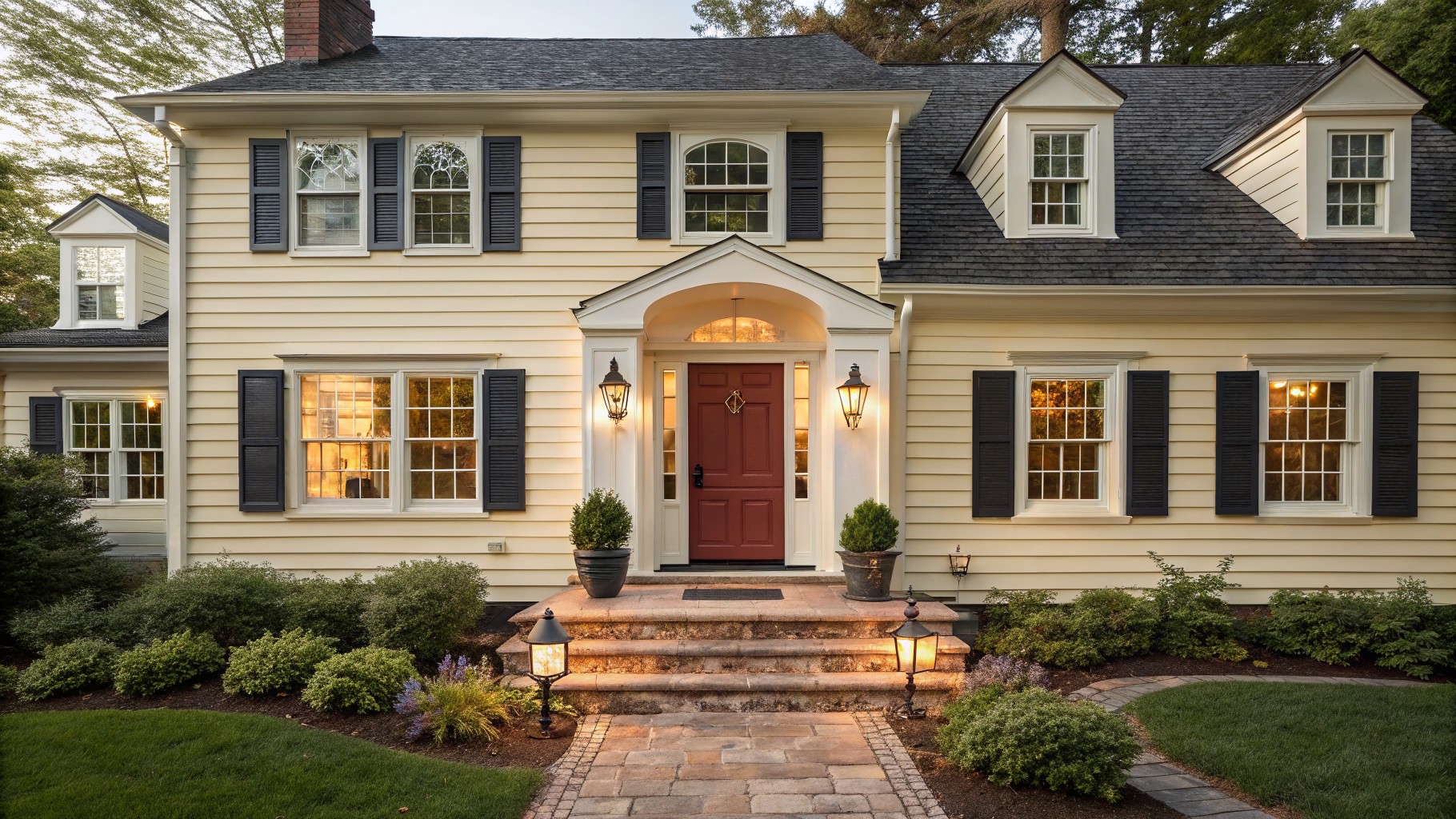
Soft Warm Cream Siding

A soft warm cream works well on this house because it gives the siding a gentle glow without feeling too bright or stark. The color sits in a pale yellow family that feels classic and easy to live with on older homes.
It has a light buttery undertone that pairs nicely with white trim and holds up in both sun and shade. Try something close to Sherwin Williams Creamy or Benjamin Moore White Dove tinted a touch warmer.
Warm Greige With Brick Accents
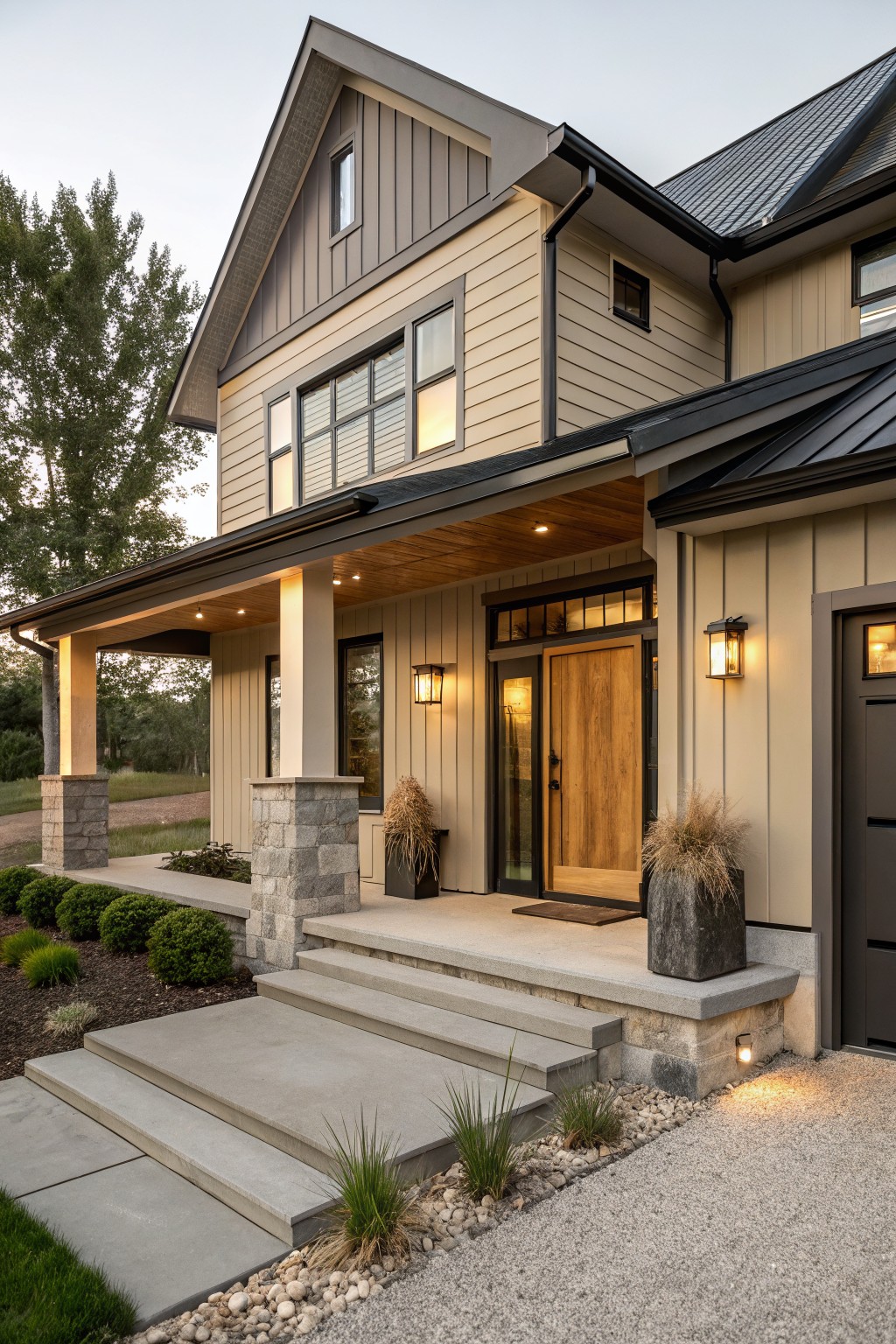
This house uses a soft greige on the main siding that sits between warm beige and light gray. It gives the exterior a clean, updated look that still feels welcoming and not too stark.
The color has a gentle warm undertone that works well with stone foundations and natural wood accents. It holds up nicely against dark roofs and trim without looking flat. Good matches to consider are Sherwin Williams Accessible Beige, Benjamin Moore Revere Pewter, or Behr Silver Strand.
Dark Charcoal Gray Siding

This dark charcoal gray gives the whole house a clean modern feel without looking too stark. It sits somewhere between black and gray, which makes it easy to live with on larger surfaces like siding.
The color has a soft warm undertone that keeps it from feeling cold next to wood tones. It works best on homes with simple lines and pairs well with natural wood doors or trim. A few brands that come close are Sherwin Williams Iron Ore, Benjamin Moore Kendall Charcoal, or Behr Midnight.
Soft Gray Siding
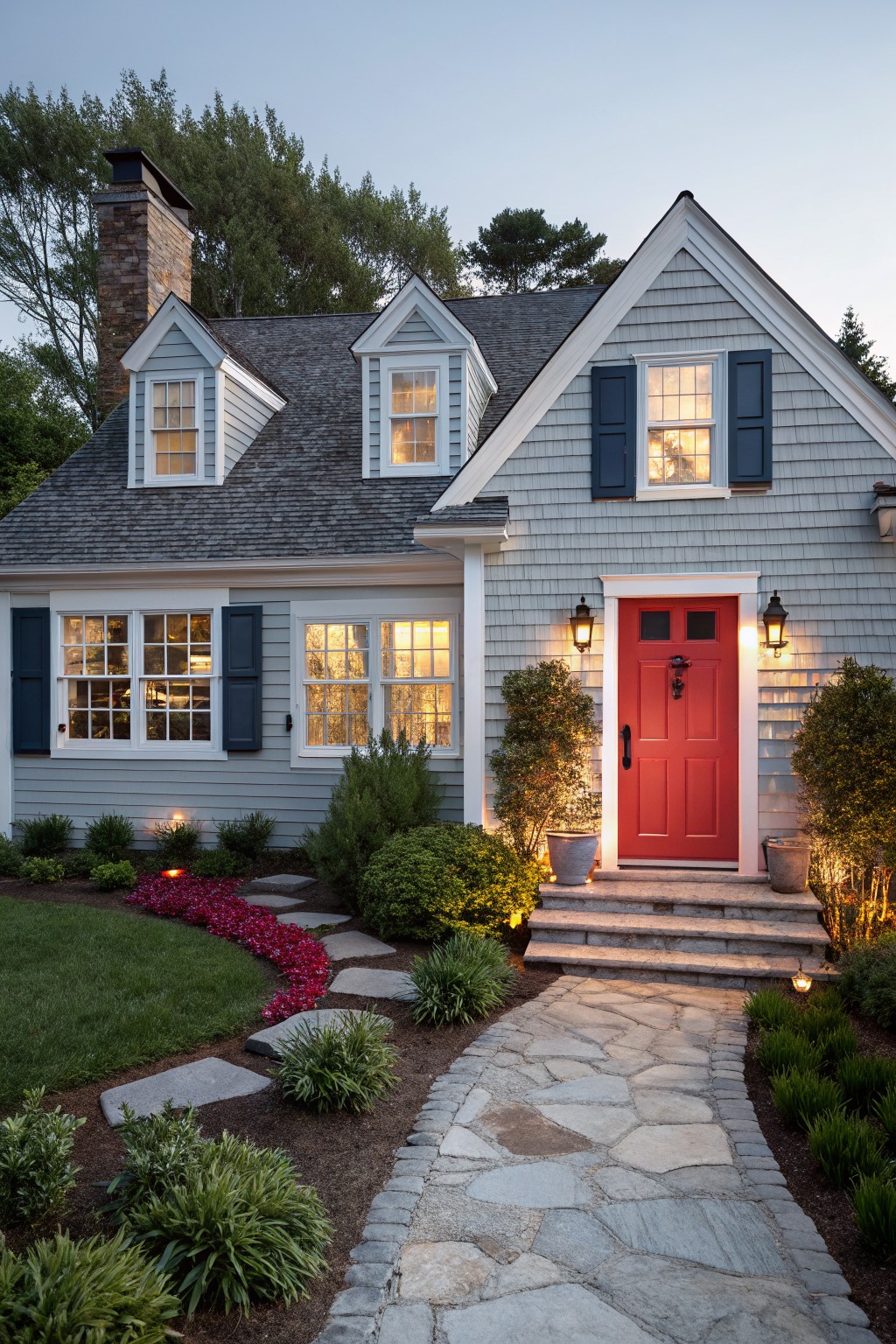
A soft blue gray works nicely on house siding because it feels calm and lets the rest of the exterior breathe. This color sits somewhere between a true gray and a very pale blue, which keeps it from looking too flat or cold against most roof colors and stone.
It tends to show a cool undertone in morning light but warms up a little by afternoon. White trim helps it stay crisp, while darker shutters or a bold door give it contrast without fighting the main color. Test a couple of samples on your own siding first since the gray can shift more than you expect once it covers a full wall.
Warm Terracotta Stucco

This warm terracotta color on the house has that soft orange-red tone that feels grounded and easy to live with. It sits in the middle of the earthy spectrum, not too bright and not too brown, which is why it gives stucco homes such a natural look without trying too hard.
The color has a slight warmth that holds up well next to wood and stone. It works best on homes with clay roofs or simple landscaping, and it tends to look better in bright light than in shade.
Creamy White Siding

This house uses a creamy white on the brick exterior that feels warm and soft rather than bright or stark. The color has a light warmth that helps the whole place look settled and inviting without trying too hard.
It works especially well with darker trim and roofing because the slight cream tone keeps the white from feeling cold next to those deeper shades. This kind of paint suits traditional homes and holds up nicely when there is greenery or stone around the foundation.
Warm Yellow Siding

This warm yellow paint brings a bright, friendly feel to the whole house. It has a golden undertone that keeps the color from looking too pale or washed out, and it works especially well on homes with simple lines and some traditional details.
The color sits nicely against a dark roof and white trim, which helps it read clean rather than overwhelming. Sherwin Williams Butter Up, Benjamin Moore Goldenrod, or Behr Sunny Disposition would all be close matches depending on the exact light on your lot.
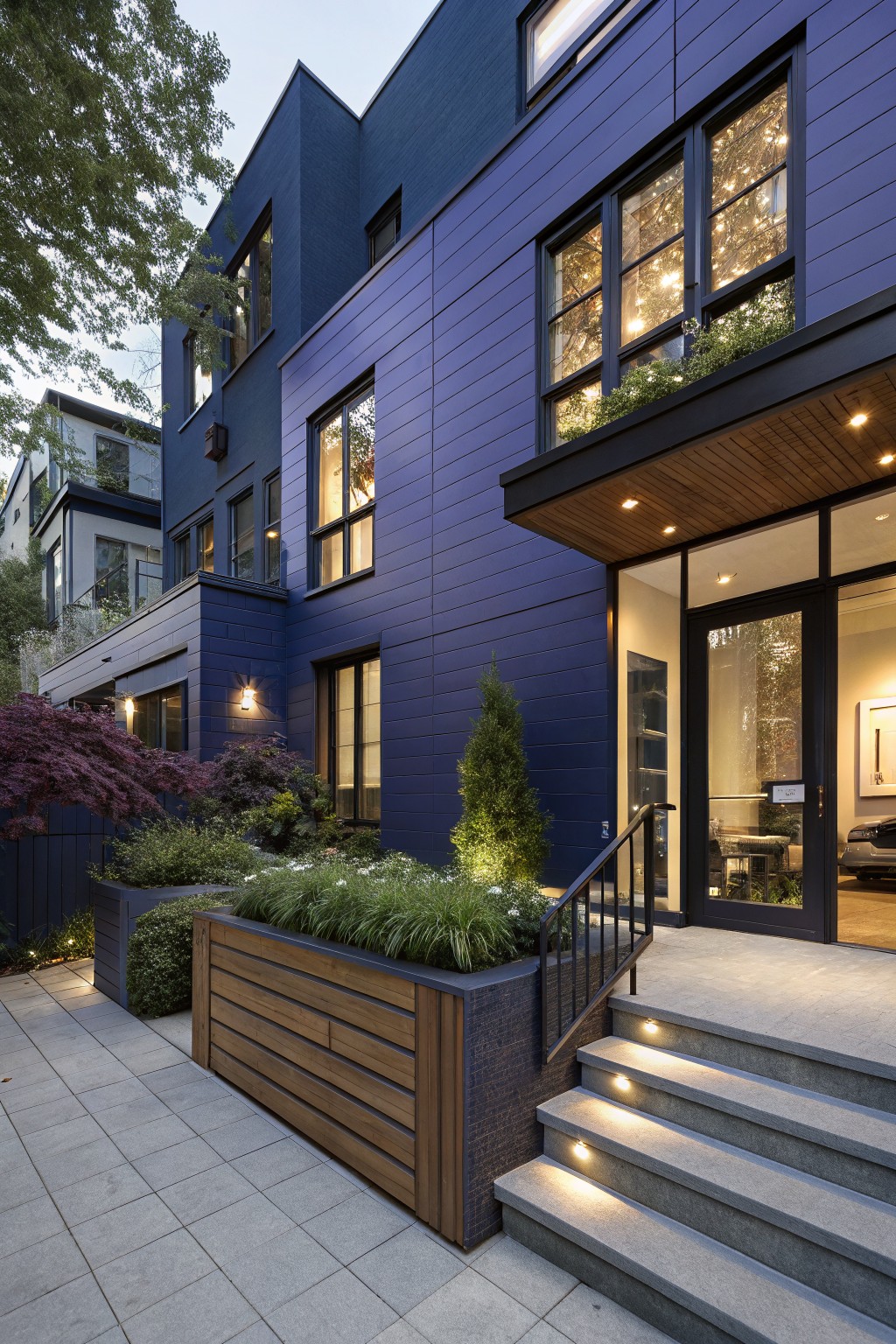
A deep navy blue like this gives a house real presence without looking heavy. It has a cool undertone that reads clean against black windows and trim, and it holds up well in both sun and shade.
This color sits closest to Sherwin Williams Naval or Benjamin Moore Hale Navy. It works best on homes with simple lines and pairs easily with wood details or light stone. Just make sure the trim stays crisp so the blue does not feel flat.
Muted Sage Green Siding
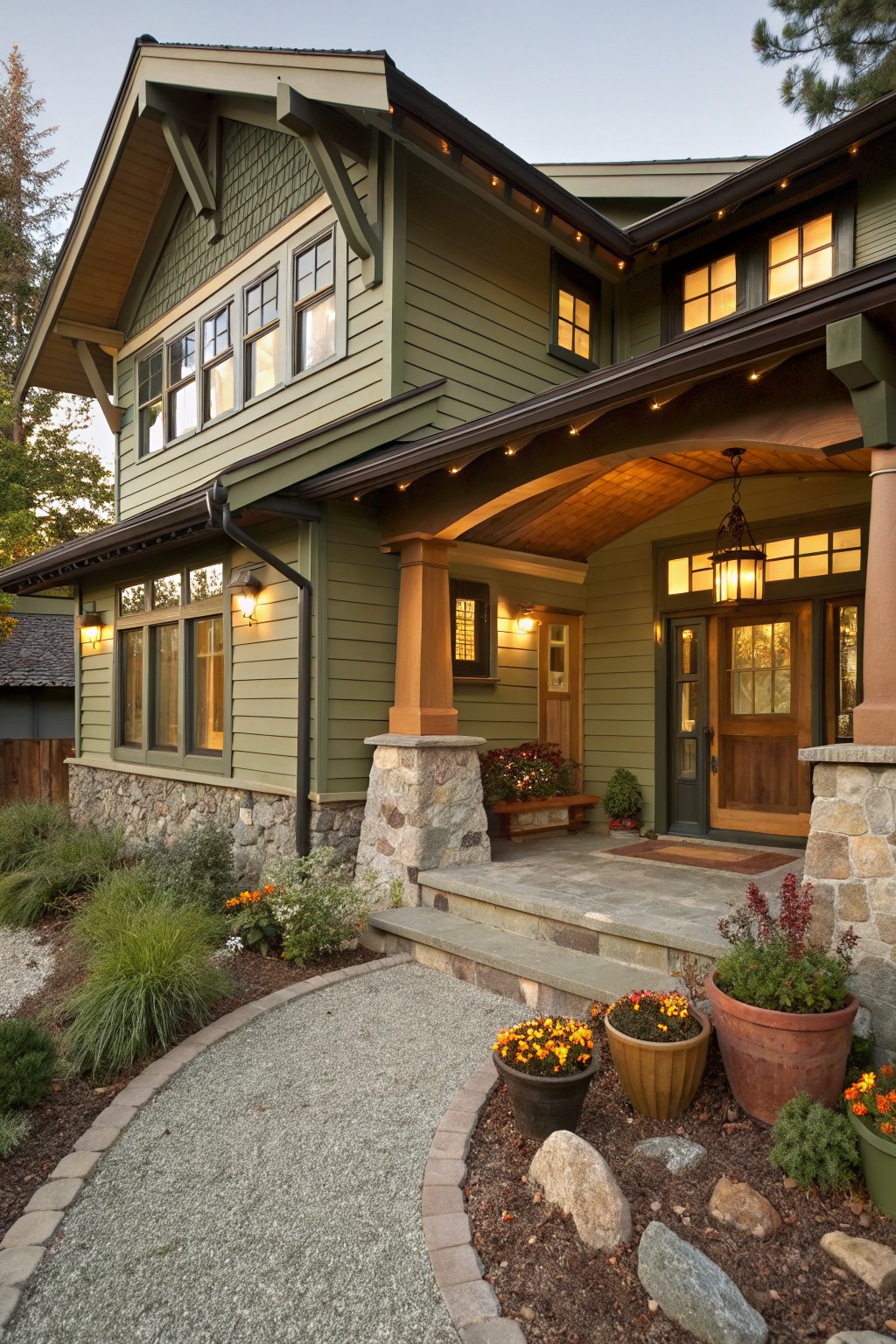
A muted sage green works well on this house because it sits nicely between warm and cool without feeling too bold. The color has a soft gray undertone that keeps it from looking too bright outside. It pairs easily with natural materials like stone and wood, which is why it gives the exterior a calm and settled look.
This shade works best on homes with similar earthy details or in settings with plenty of trees and greenery. Watch how it shifts in different light since the gray base can lean cooler in shade and warmer in sun. Good matches include Sherwin Williams Clary Sage, Benjamin Moore Soft Fern, Behr Mossy Rock, or Farrow & Ball French Gray.
Greige Siding With Brick Foundation

This house shows a soft greige that blends beige and gray in a way that feels calm and lived in. It works well on the main walls because it sits nicely against the brick base and dark trim without looking too stark or too plain. Colors like this often read as Sherwin Williams Accessible Beige or Benjamin Moore Collingwood, and they can also lean close to Behr Greige or Farrow and Ball Elephant’s Breath depending on the light.
The tone has a slight warm cast that keeps the house from feeling cold next to stone and wood. It pairs best with natural materials like brick or timber and holds up nicely on homes with both sun and shade. Just watch how it shifts in strong afternoon light before committing to the full exterior.
Soft peach siding
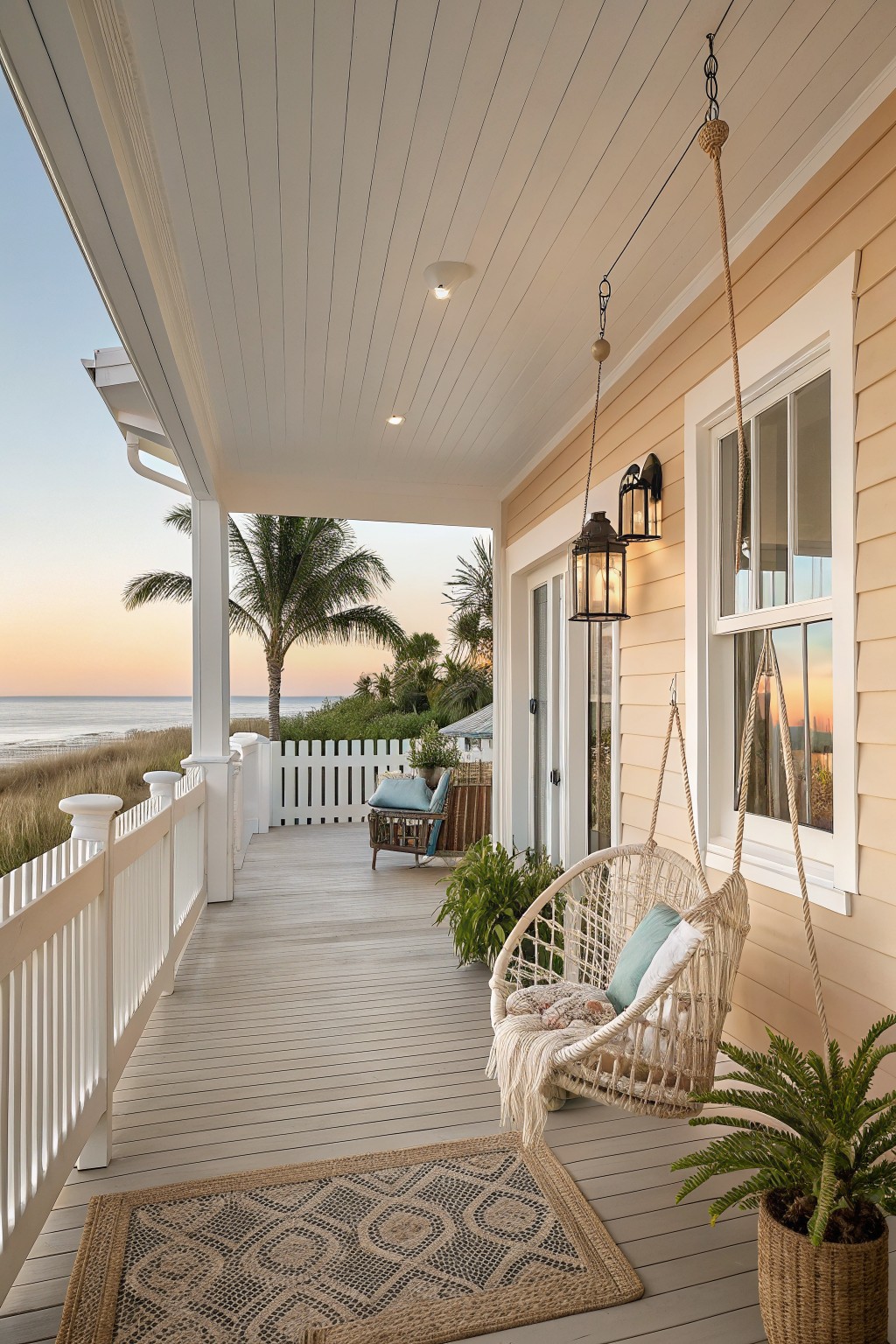
This siding color is a soft warm peach beige. It gives the house a gentle, lived-in look that feels right at home near the water. The shade sits somewhere between a light tan and a pale peach, which is why it reads so nicely against white trim and natural wood accents.
It has a mild warm undertone that shows up more in the afternoon light. This kind of color works best on homes with simple trim and some greenery nearby. It pairs cleanly with white windows and doors but can start to feel too sweet if you add too many other warm tones around it.
Dusty Rose Siding

A soft dusty rose gives older homes a gentle color that still feels warm and welcoming from the street. The tone sits between pink and gray so it avoids looking too sweet while adding just enough interest to the siding.
This shade has a bit of warmth that helps it sit nicely next to wood trim and stone foundations. It works well on homes with lots of detail because the color stays quiet enough to let the architecture show through. Matches like Sherwin Williams Rosy Brown, Benjamin Moore Mauve Mist, or Behr Dusty Rose all lean close to what shows up here.
Warm Greige With Wood And Stone Accents
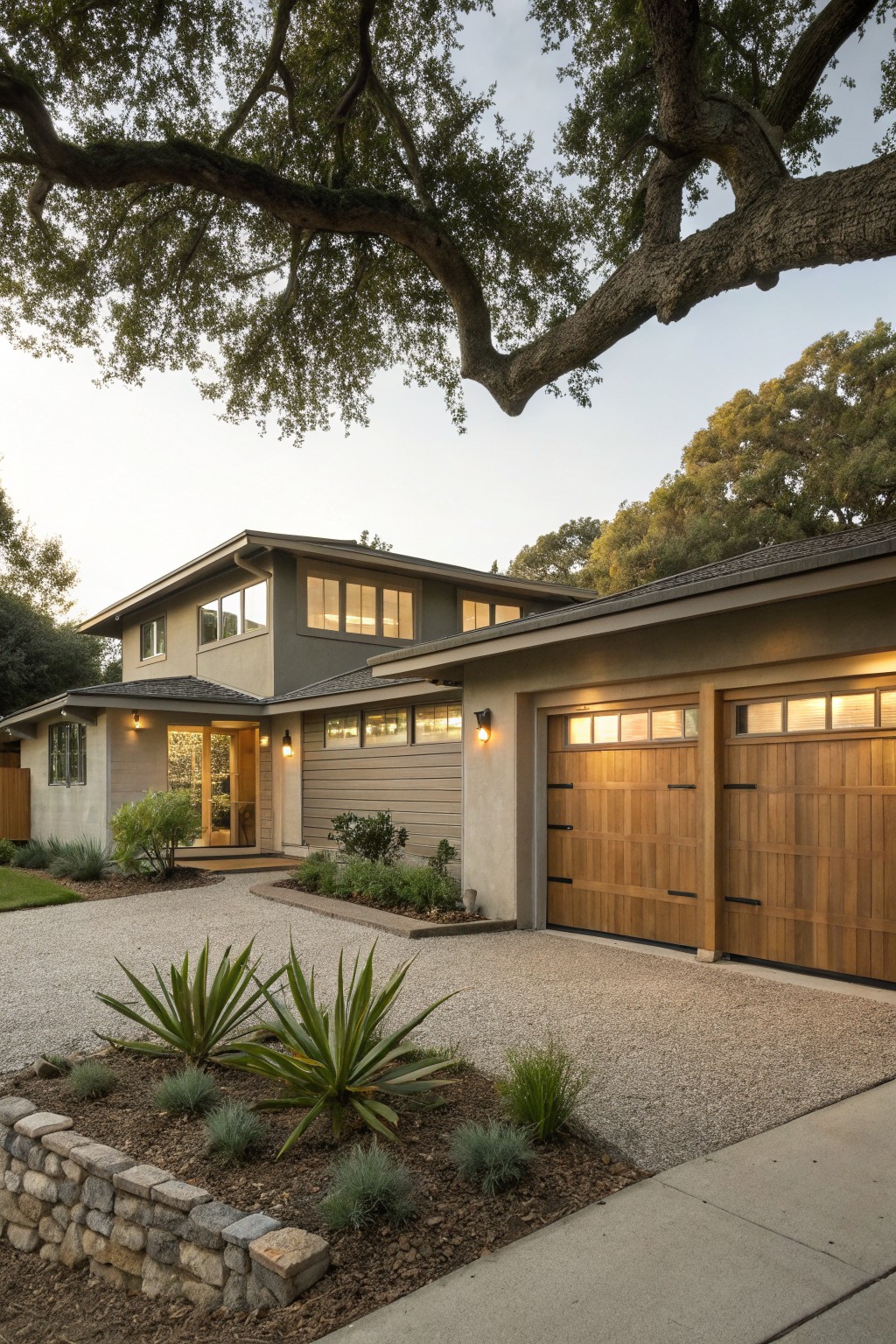
This house uses a warm greige on the main siding. It sits right between gray and beige, giving the exterior a calm, grounded look that feels current without being stark.
The color has a light warm undertone that plays nicely with wood tones and stone. It holds up well in different lighting but can lean a little more gray on bright days, so testing a sample on the actual wall is worth the extra step. Good matches include Sherwin Williams Accessible Beige, Benjamin Moore Edgecomb Gray, Behr Silver Fox, and Farrow & Ball Elephant’s Breath.
Soft Blue Gray Siding
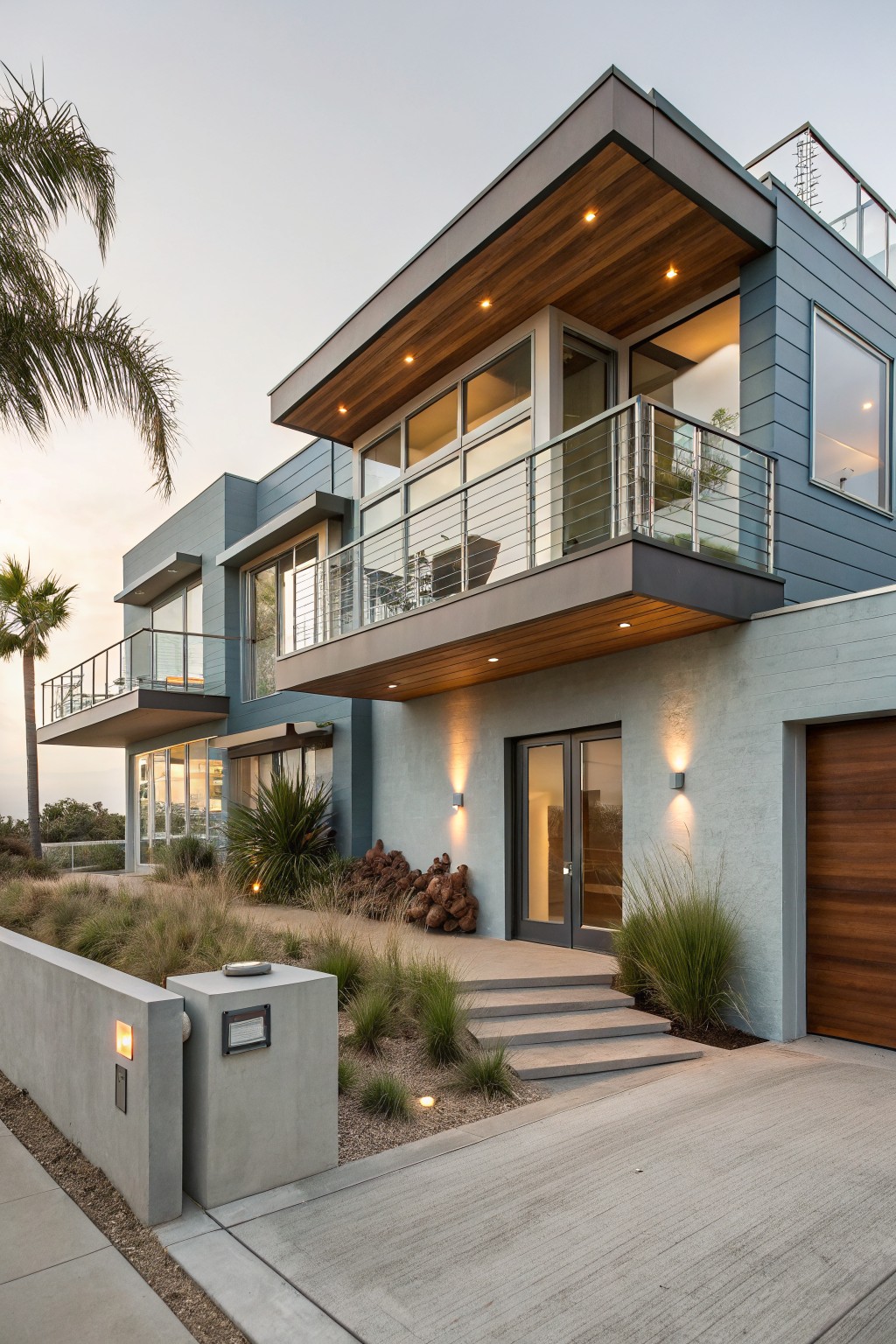
This muted blue gray works well for modern house siding because it feels calm and current at the same time. It has a cool base with just enough gray to keep it from looking too bright or beachy. The color reads close to Sherwin Williams Rainwashed, Benjamin Moore Harbor Gray, and Behr Silver Strand.
It pairs easily with wood ceilings and concrete areas since the gray tone does not fight natural textures. The shade holds up best on homes with clean lines and simple landscaping. In strong sun it can shift slightly cooler, so testing a large sample on the actual wall helps avoid surprises.
Warm Red Brick Exteriors
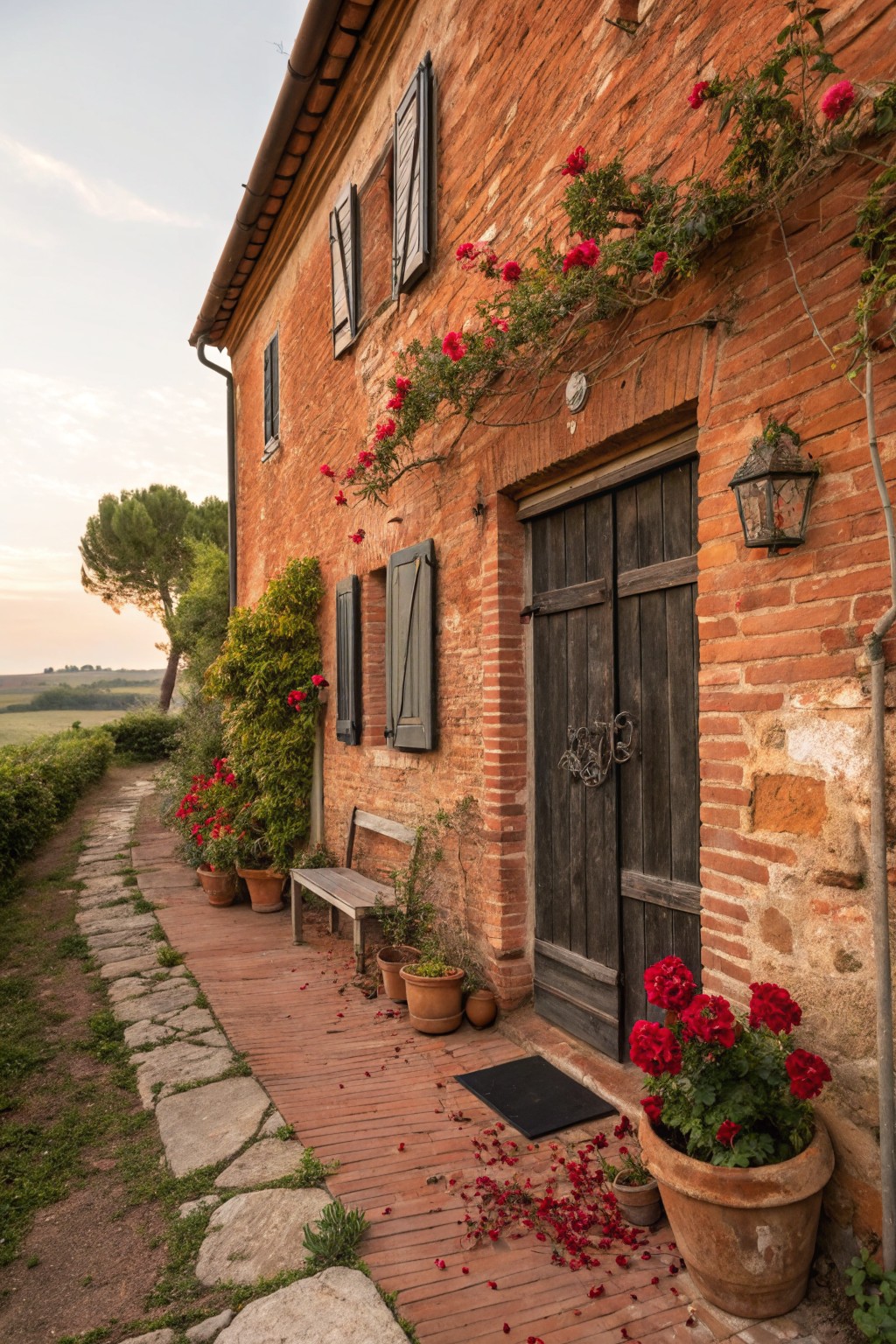
This warm red brick brings a solid, earthy feel to the outside of a house. It leans a little toward terracotta rather than a pure bright red, and it looks closest to Sherwin Williams Red Brick or Benjamin Moore HC-49.
The color holds up nicely next to stone and wood, but it can look a touch orange in strong sunlight. Keep the trim light and let the brick do most of the work.
Soft White Siding
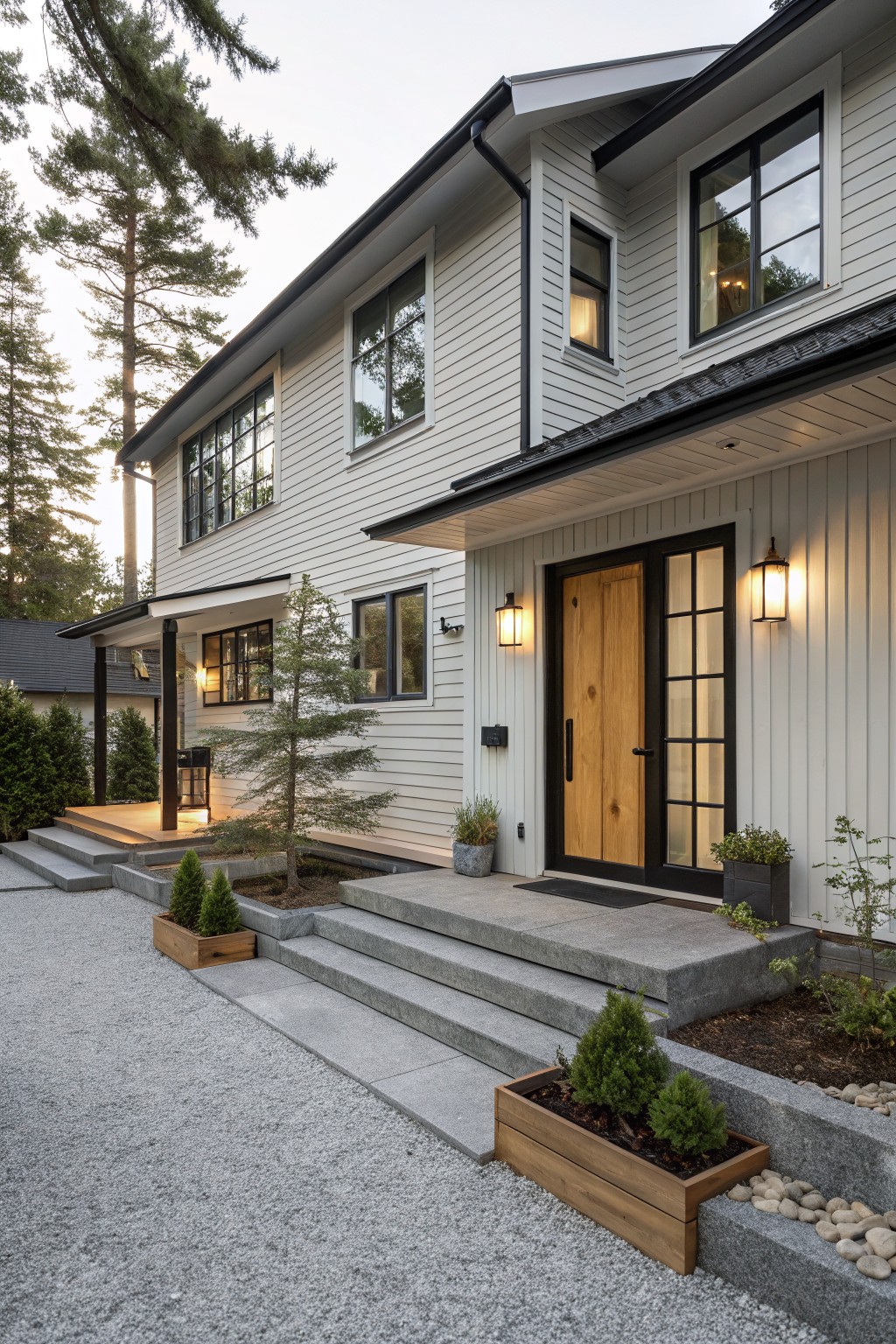
This house uses a soft white on the siding that sits in the light neutral family. It reads clean and bright without turning stark, and it looks closest to Benjamin Moore Simply White or Sherwin Williams Alabaster.
The color has a mild warm undertone that helps it blend with wood accents and dark trim. It works well on many homes because it stays fresh year round and does not fight with natural materials around the base of the house.
Warm White Stucco
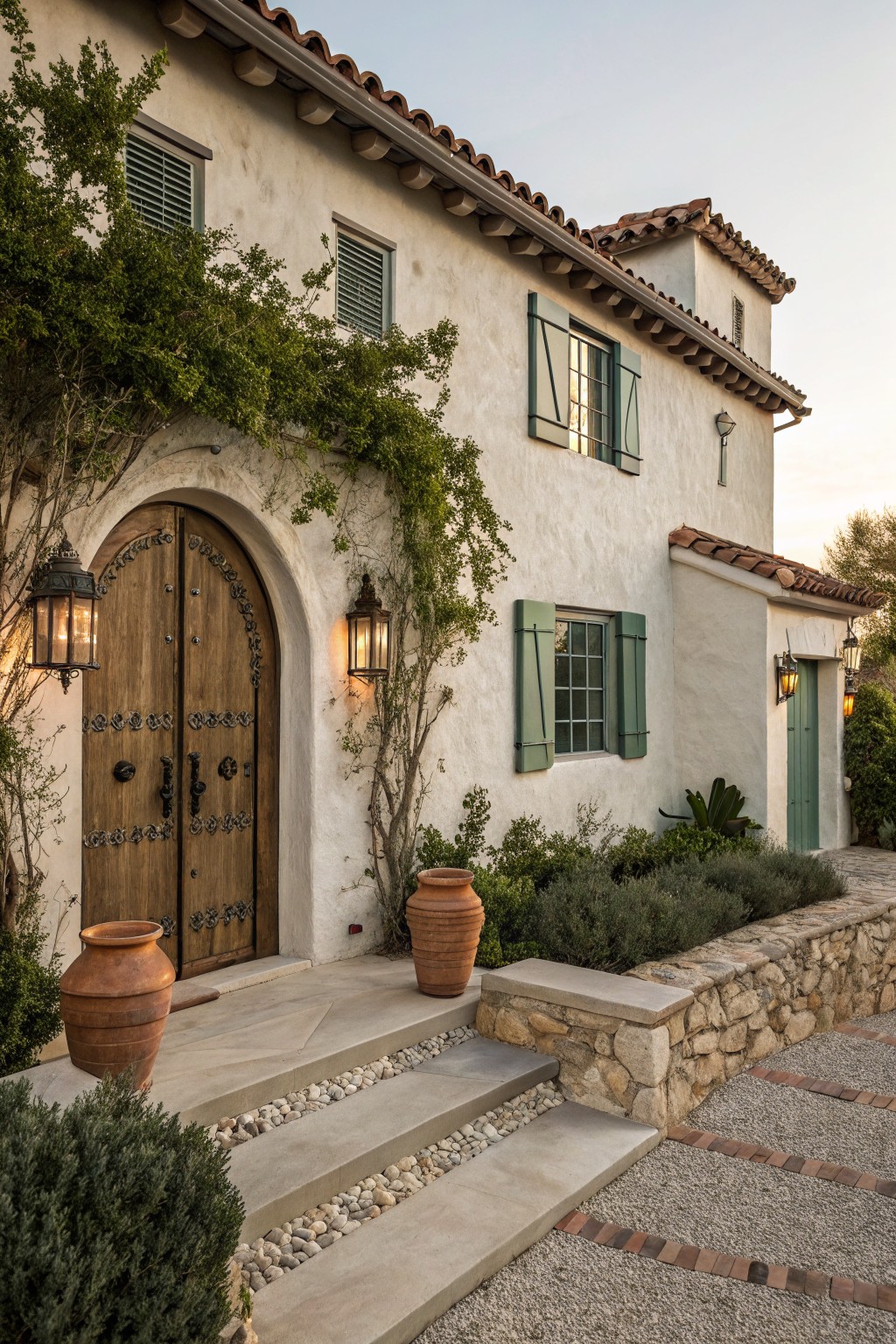
This stucco has a warm off-white tone that feels soft and inviting on the outside. It sits right between a true white and a light beige, which helps it look clean without turning harsh in sunlight.
The color pairs nicely with stone bases and natural wood doors since the slight warmth keeps everything balanced. It works best on homes with simple architecture where you want the siding to feel calm rather than bright.
A Muted Blue Front Door
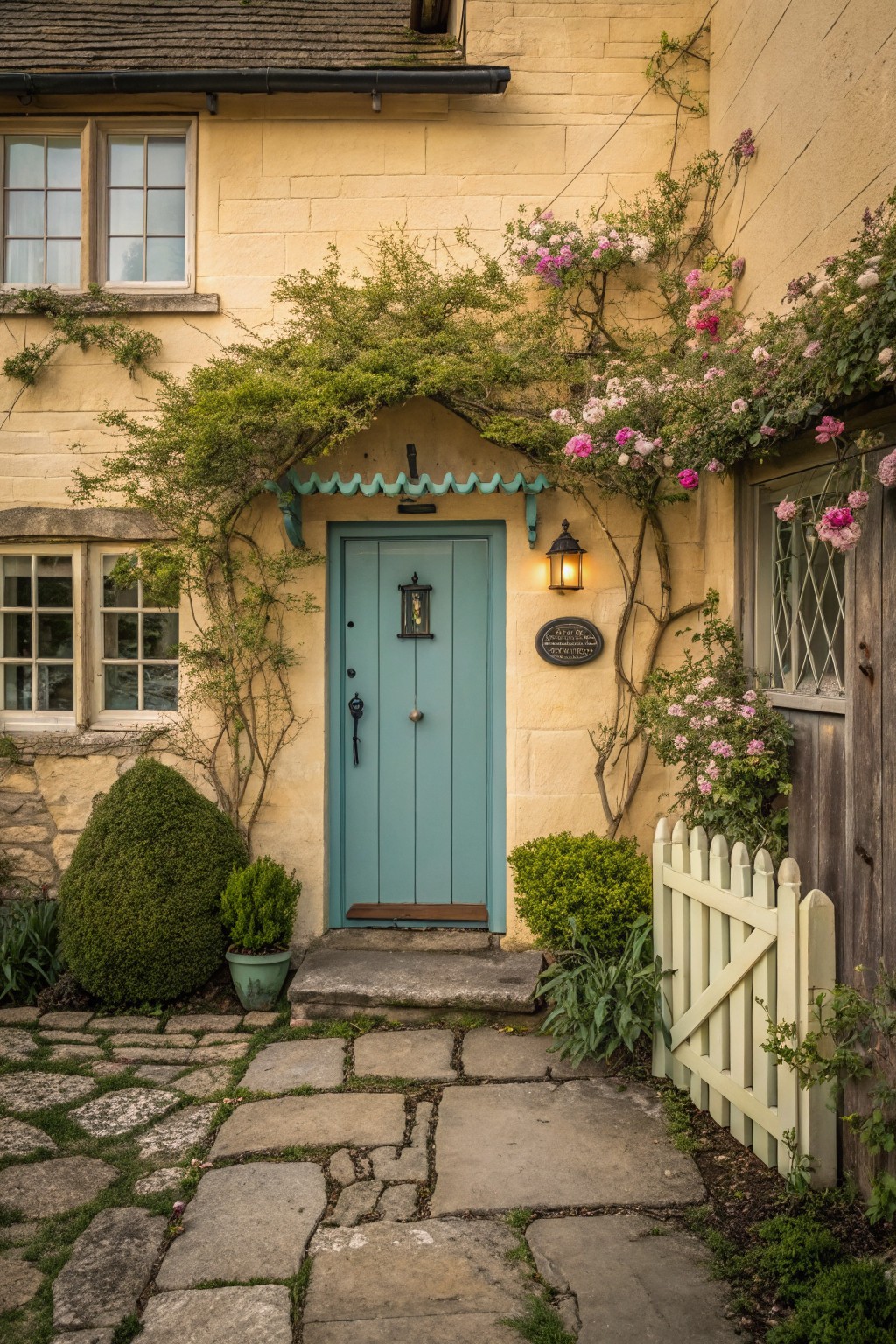
This soft teal blue door color brings a quiet freshness to the house without feeling too bold. It has a gentle green undertone that keeps it from looking flat next to the warm stone walls.
The shade works especially well on older homes because it adds a bit of personality while still feeling timeless. Try it with warm white trim or simple black hardware and it stays easy to live with over time.
Deep Black Siding

This deep black siding gives the house a bold, modern feel without trying too hard. It reads as a true matte black with just a hint of cool undertone that helps it sit nicely against the stone base and wood details.
It works best on homes with simple lines where you want the shape to stand out more than the color itself. Pair it with natural wood or light stone so it does not feel too heavy, and test a sample on the wall first since black can shift depending on the light.
Soft Green Siding
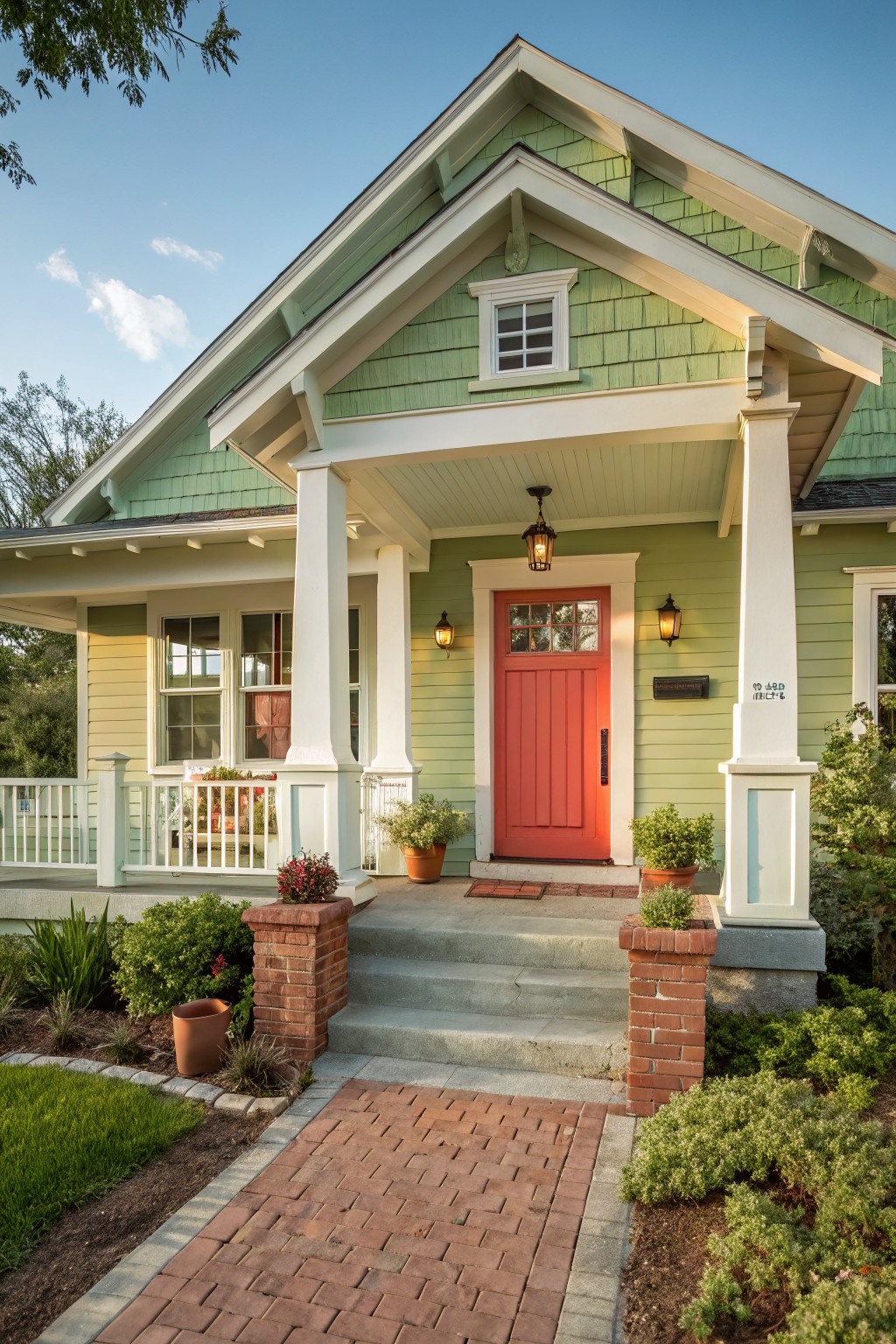
A soft sage green on the siding gives a house that quiet, easy look many people like. It sits somewhere between gray and green, so it feels calm rather than bright. This kind of color works because it stays friendly next to most roof colors and landscaping without fighting them. It reads very close to Sherwin Williams Rainwashed, Benjamin Moore Saybrook Sage, or Behr Aloe Vera.
The slight gray in the mix helps it hold up better in full sun and keeps the house from looking too sweet. White trim makes it look crisp, and it can suit both older homes and simpler ones. Just watch how it shifts at different times of day before you commit.
Frequently Asked Questions
Q: How do I know which paint color will look good on my house?
A: Hold sample boards up to the siding and step back to see the full effect. Walk around the yard and check from the street too. Different angles often reveal surprises in how the color reads.
Q: Do I have to repaint everything at once?
A: Focus on the front first if your budget is tight. The sides and back can wait since curb appeal starts with the street view.
Q: What trim color pairs well with most of these paint shades?
A: Stick with a clean white or warm gray for the trim. These neutrals let your main color shine without competing. Add a pop of color on the door to draw the eye in.