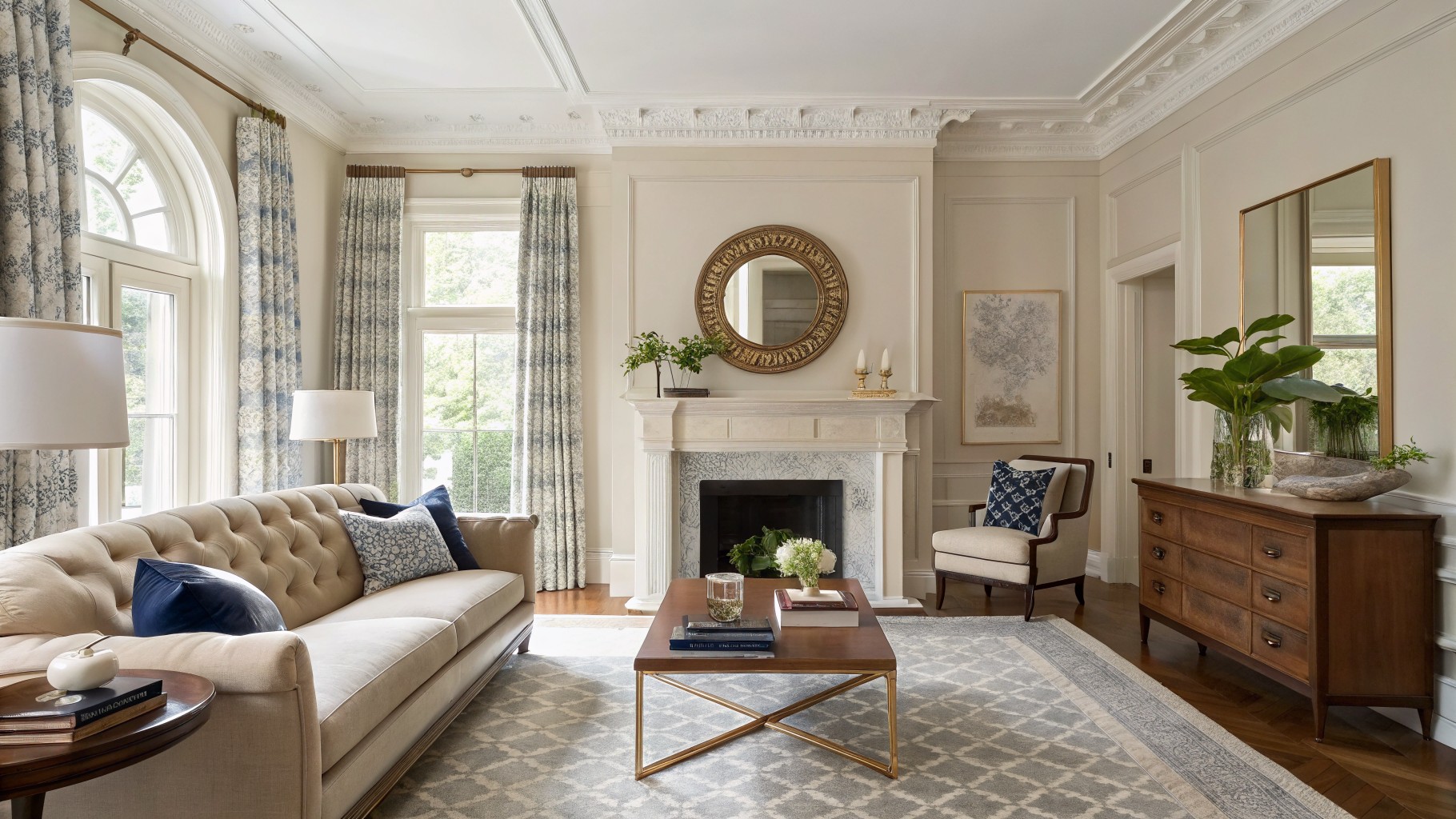
I’ve repainted my living room walls more times than I care to count, chasing that effortless elegance for family nights and casual get-togethers.
Real room light exposes how colors shift from crisp morning glow to softer evening warmth, often highlighting undertones you miss in the store.
A sage green I tried once held up surprisingly well under our skylight, deepening just enough without going dull.
The ones that fail usually clash with nearby upholstery or fade against strong sunlight pouring through windows.
Samples from shades like these show their true potential right on your walls.
Warm Beige Walls
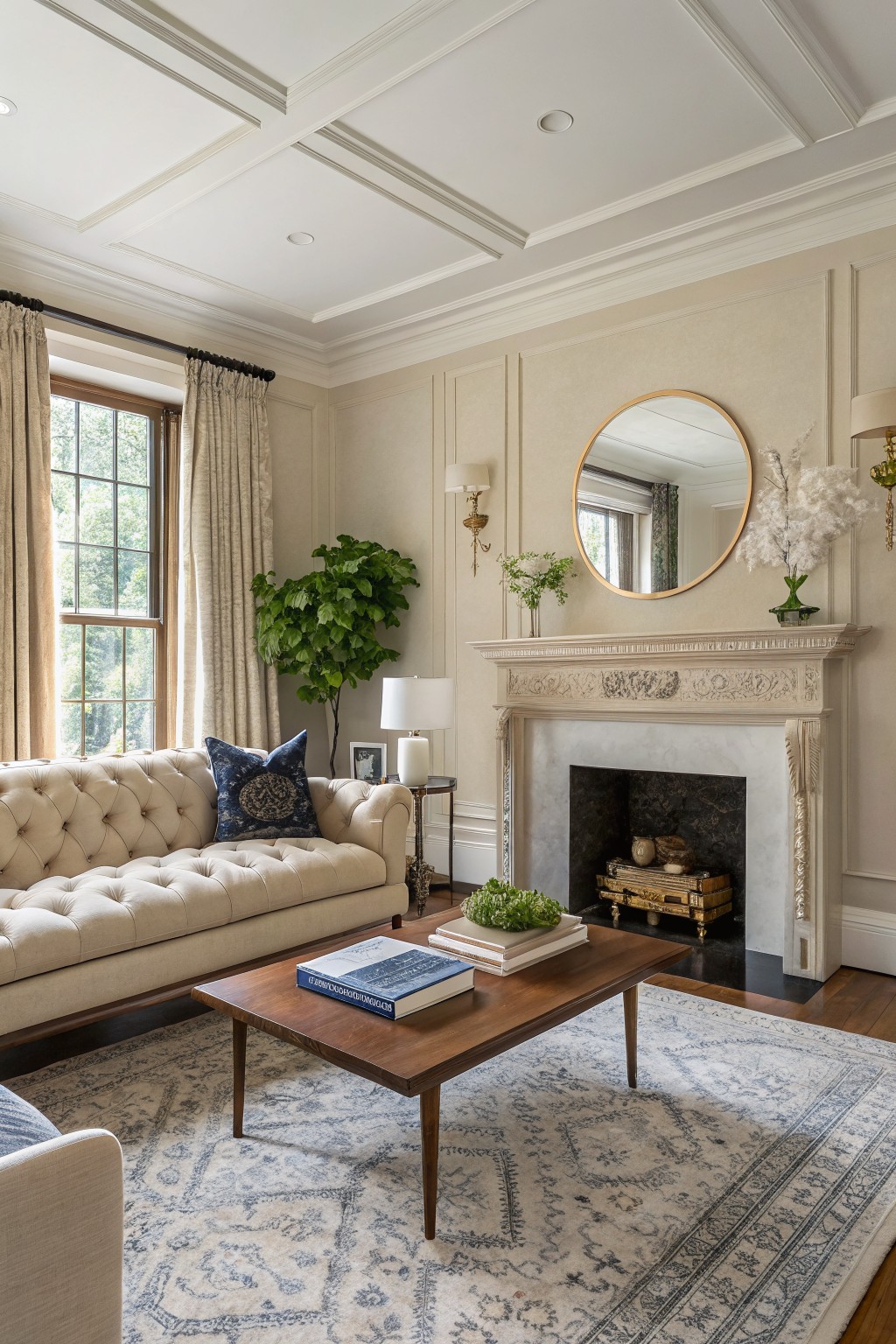
This living room shows off warm beige walls that feel just right for everyday living. It looks closest to Sherwin Williams Accessible Beige or Benjamin Moore Edgecomb Gray, maybe even Behr’s Wheat Bread. That kind of color stays neutral without going cold. It lets the wood furniture and creamy sofa stand out nice and easy.
The warm undertones keep it from looking flat next to the fireplace stone or dark wood floors. Natural light from the big windows makes it glow a bit. Try it in spaces with mixed metals or blue accents. Just test samples, since it can shift in dimmer rooms.
Pale Mint Walls
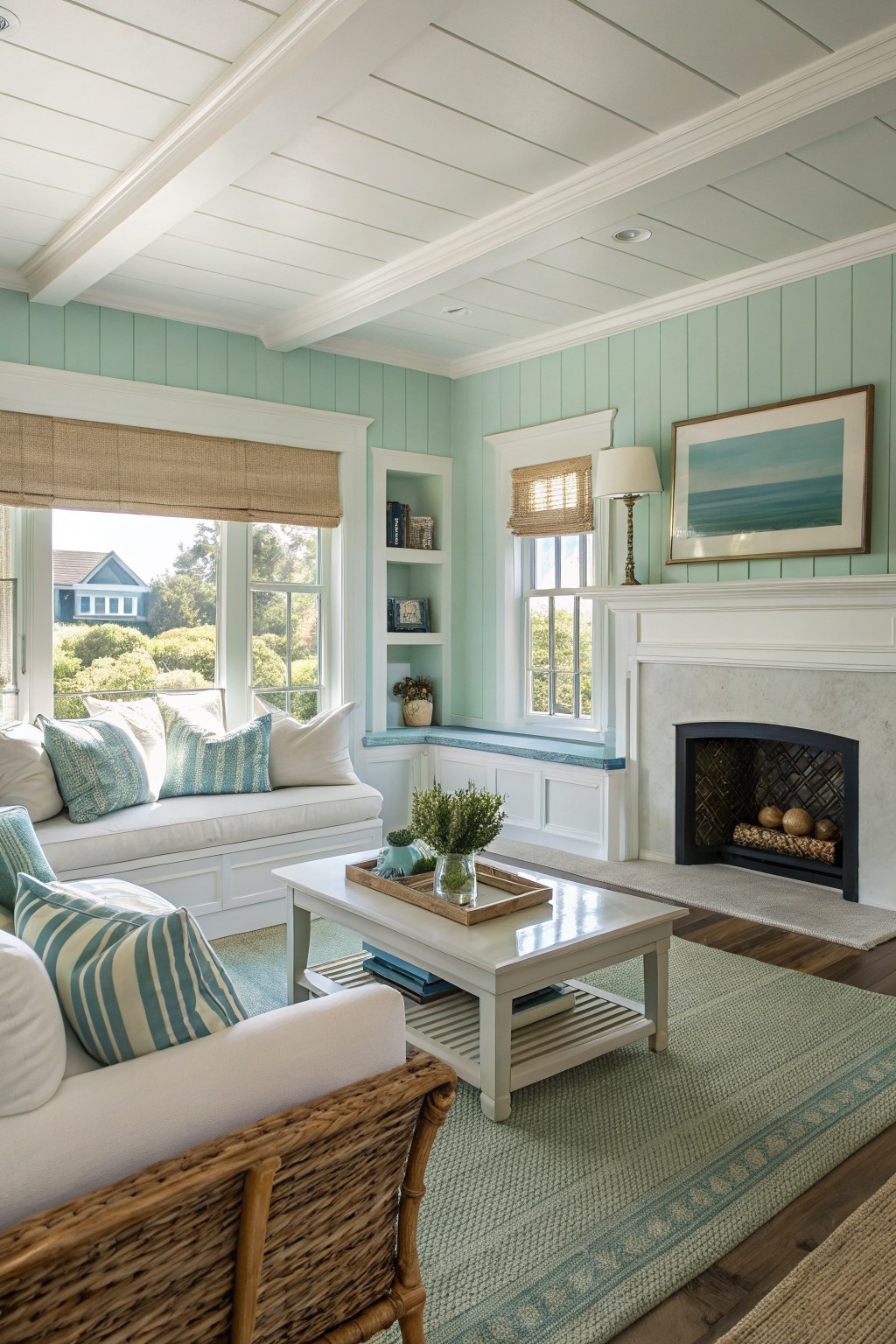
The walls in this living room pull off a pale mint green that looks closest to Sherwin-Williams Sea Salt SW 6204 or Benjamin Moore Palladian Blue HC-144. It’s a soft blue-green that’s easy on the eyes, not too bright or dark. What makes it nice is how it stays fresh next to white trim and wood details, giving the room that calm coastal feel without trying too hard.
This shade picks up a cool undertone in good light, which keeps it from looking flat. It works best in sunny spaces like this one with big windows. Go with white cabinets and natural fibers on the seats to let it breathe… just watch it doesn’t read too gray in dimmer rooms.
Deep Emerald Green Walls
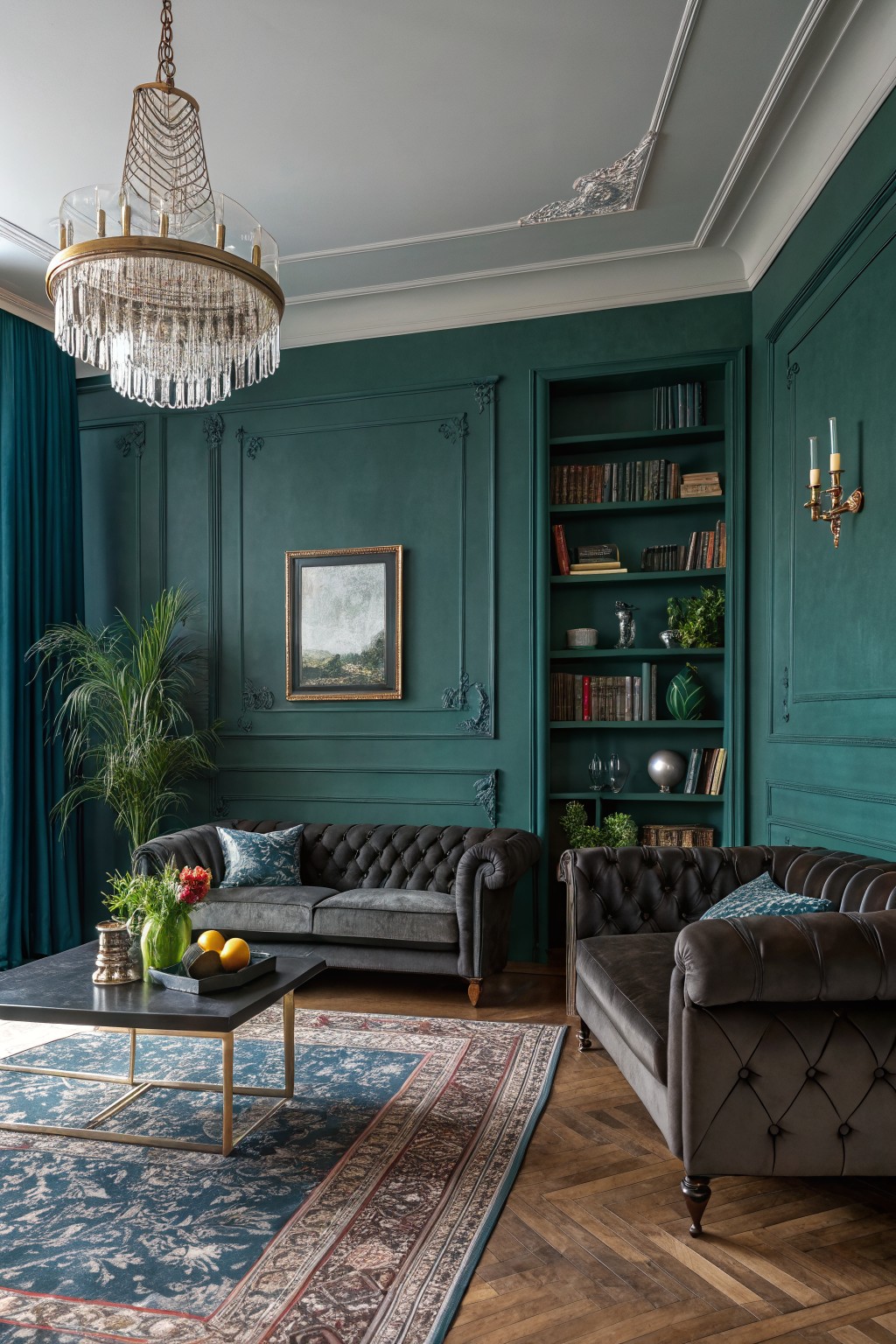
This living room uses a deep emerald green on the walls that feels rich and grounded. It looks closest to Sherwin-Williams Pewter Green or Benjamin Moore Caldwell Green, with Farrow & Ball Studio Green reading pretty similar too. What stands out is how jewel-toned it is without going too dark, pulling the eye right into the space around those velvet sofas.
The blue undertones keep it from feeling flat next to wood floors and brass details. It shines in medium to low light, especially with gold accents like the chandelier. Pair it with textured fabrics and plants for balance, but test samples first in your own room. North light might cool it down a bit.
Blush Pink Walls
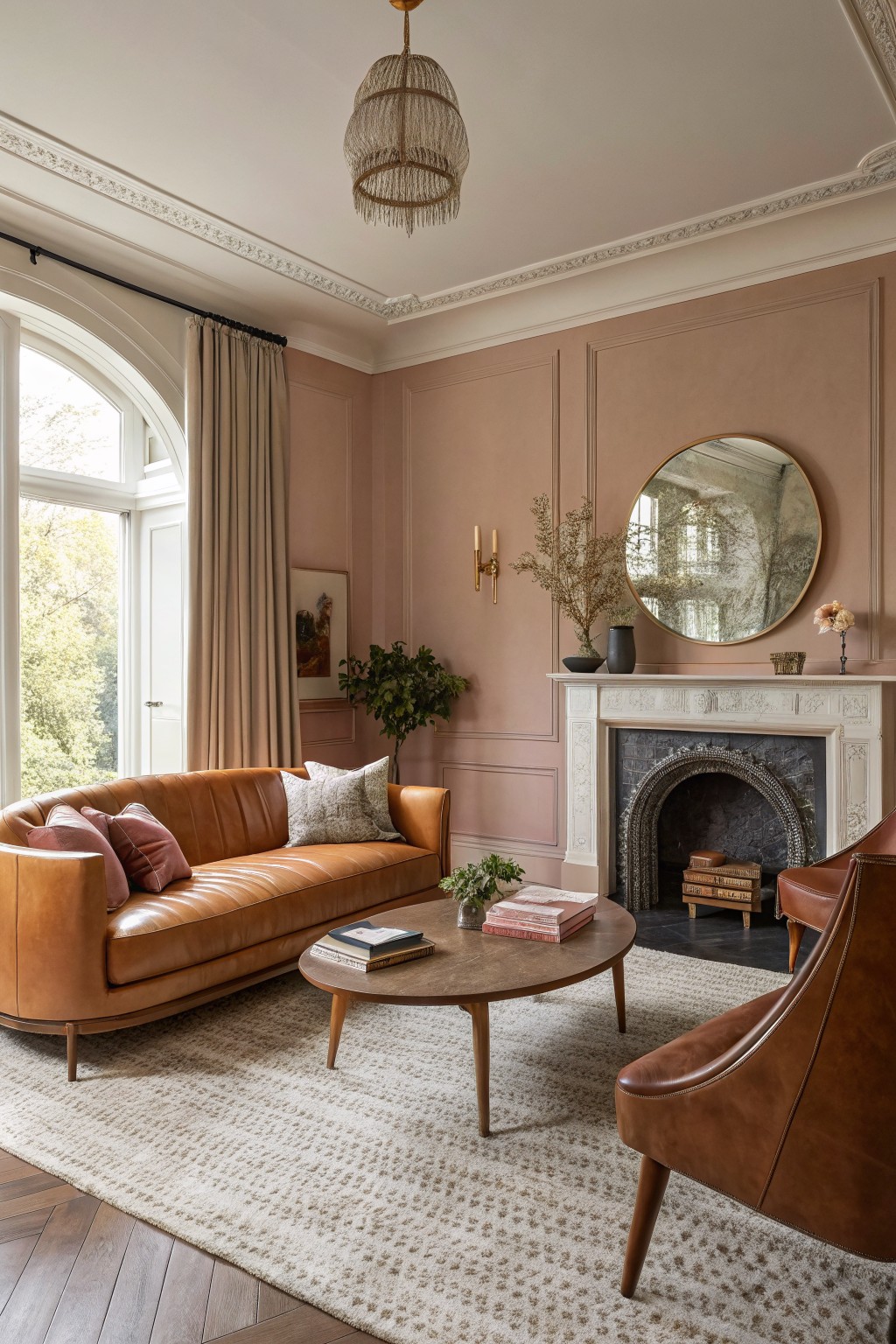
These walls pull off a soft blush pink that’s warm and easy on the eyes. It’s that gentle pink family with a hint of beige, looking closest to Benjamin Moore’s First Light or Sherwin Williams’ Rosé, maybe even Farrow & Ball’s Pink Ground. Folks like it because it makes a room feel lived-in without shouting, especially next to tan leather like the sofa here.
The undertone stays peachy in good light from the windows, keeping wood floors and marble fireplaces looking rich. Pair it with neutrals or soft greens on shelves. It works best in spaces with some sun. Watch the trim though. Go bright white or it can dull down.
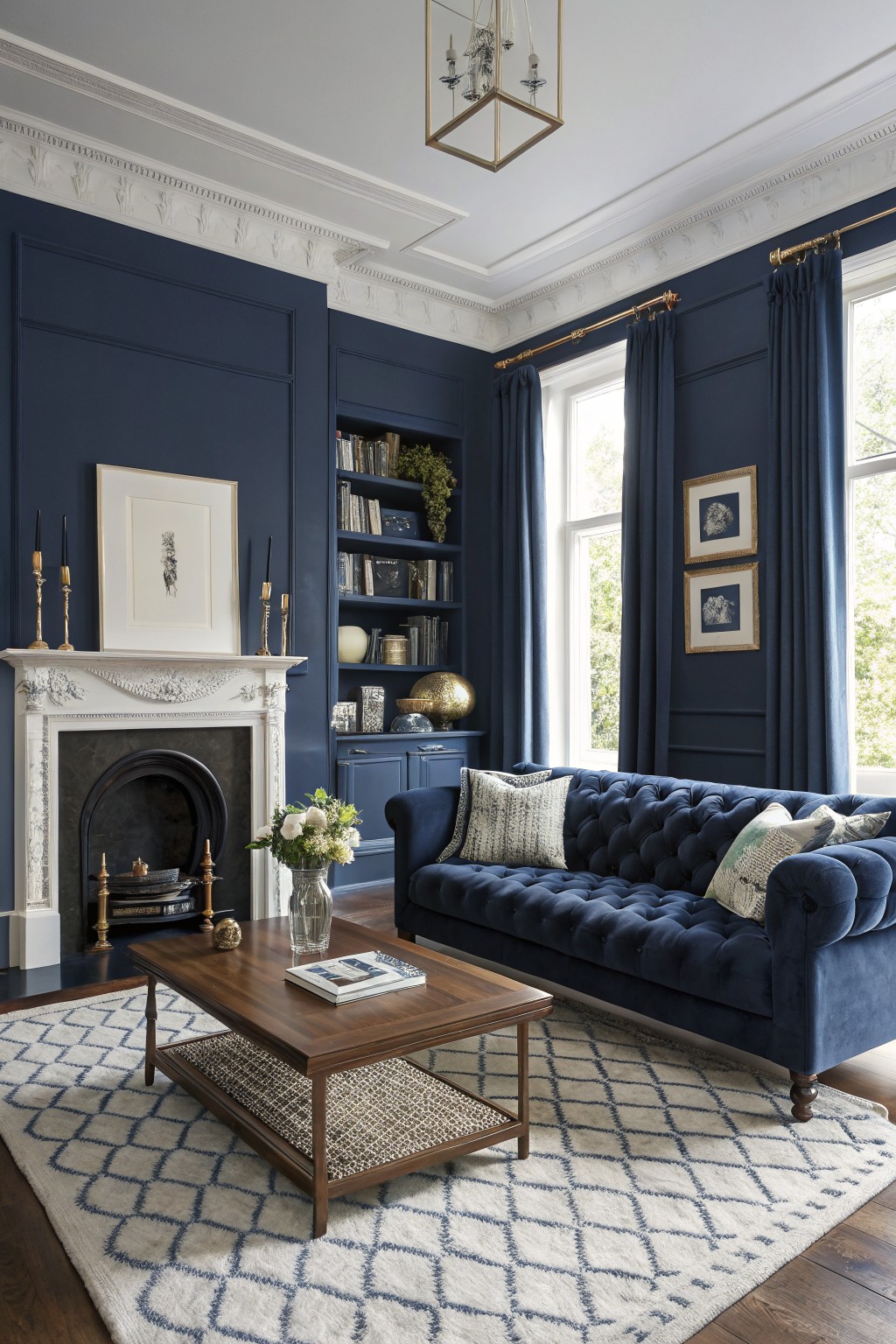
This living room uses a deep navy blue on the paneled walls that reads rich and moody. It looks closest to Farrow & Ball’s Hague Blue, or maybe Sherwin-Williams Naval or Benjamin Moore’s Hale Navy. What I like about it is how the color makes everything else pop without overwhelming the space. It’s got that elegant feel for gatherings, but still cozy enough for everyday.
The undertone stays cool, so it pairs nicely with warm woods like the coffee table here and brass accents. Natural light from the windows keeps it from going too dark. Try it in a room with some white trim or a light rug to balance things out. Just watch the lighting, or it might feel cave-like at night.
Sage Green Walls
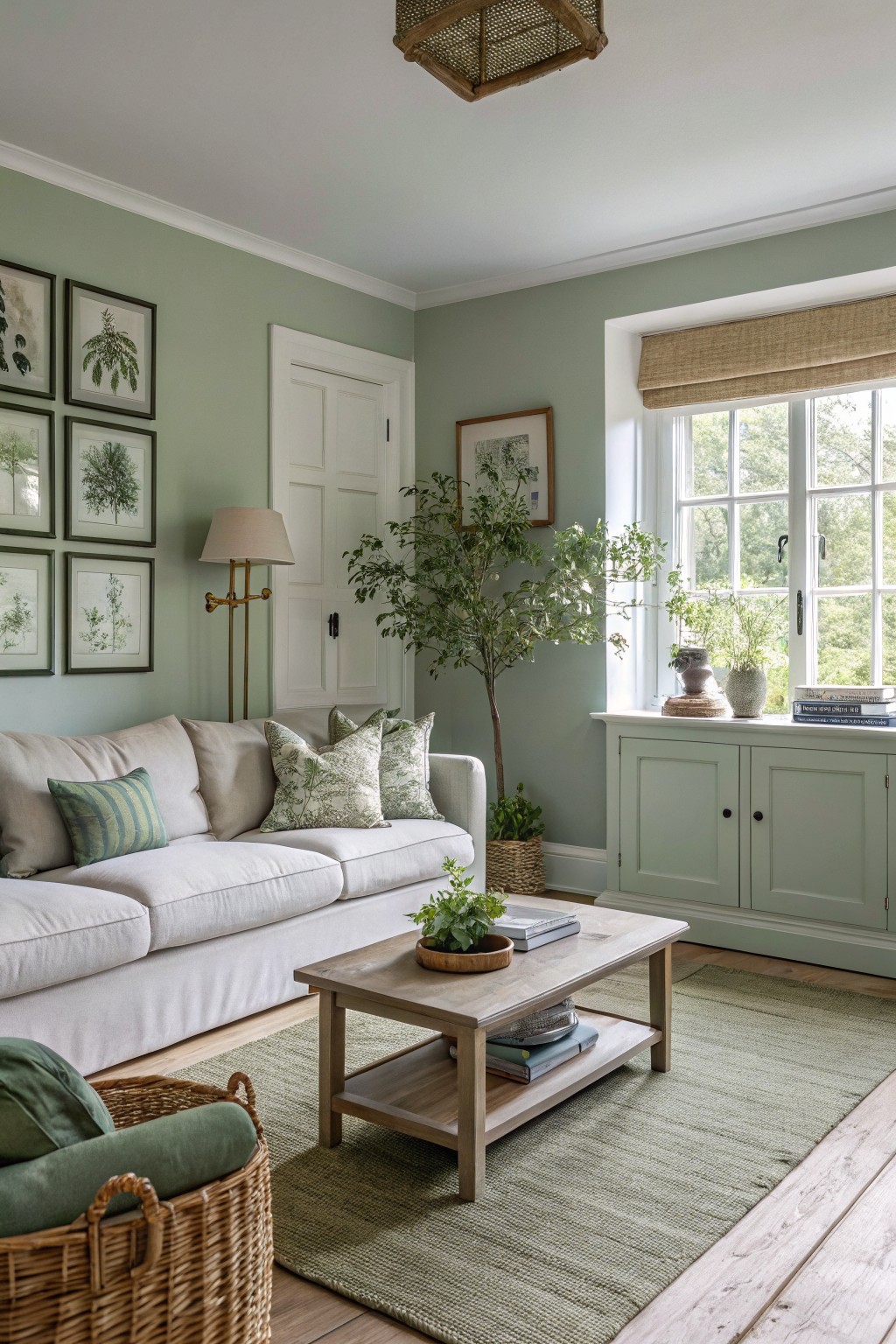
This living room paint is a soft sage green that seems closest to Sherwin-Williams Sea Salt or Benjamin Moore October Mist, maybe even Farrow & Ball French Gray. It’s got that gentle green-gray tone that’s calming but still fresh. Folks like it because it makes a space feel lived-in and easy, especially next to wood floors and white trim like you see here.
The gray undertone keeps it from going too yellow or minty. It shines in rooms with decent natural light, where the green peeks through nicely. Go with creamy fabrics and plants to keep things cozy. Watch for north-facing light though. It can pull cooler.
Soft Greige Walls
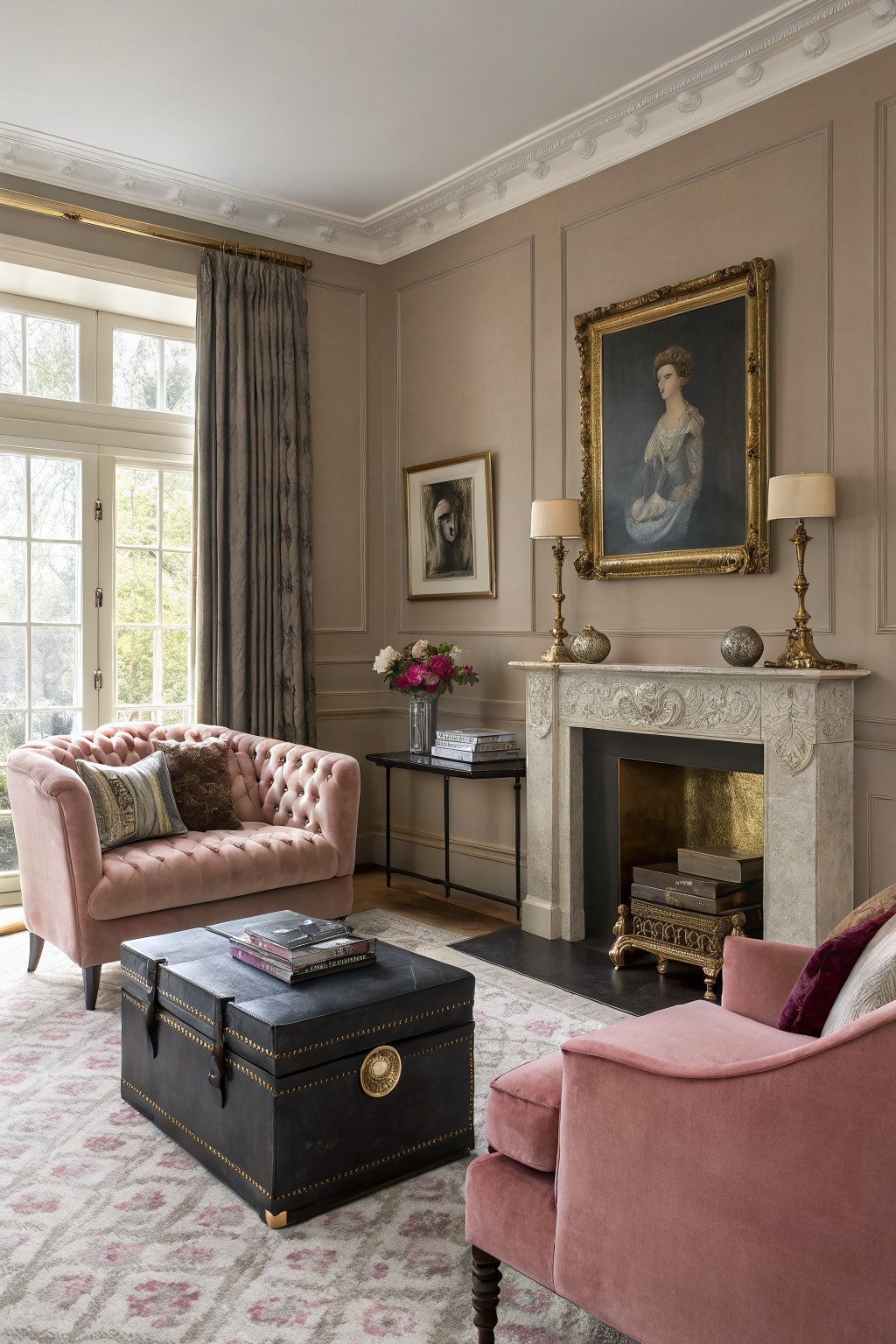
Those walls show a gentle greige, the kind that leans warm and cozy. It comes closest to Benjamin Moore Revere Pewter or Sherwin-Williams Accessible Beige, maybe Farrow & Ball Skimming Stone too. Folks go for this color because it makes old details like the carved fireplace stand out nice, without stealing the show from your furniture.
Warm beige undertones help it read right in morning light from big windows. It pairs easy with pinks or aged brass. Just test it in your room first, since it can pull a bit gray in low light.
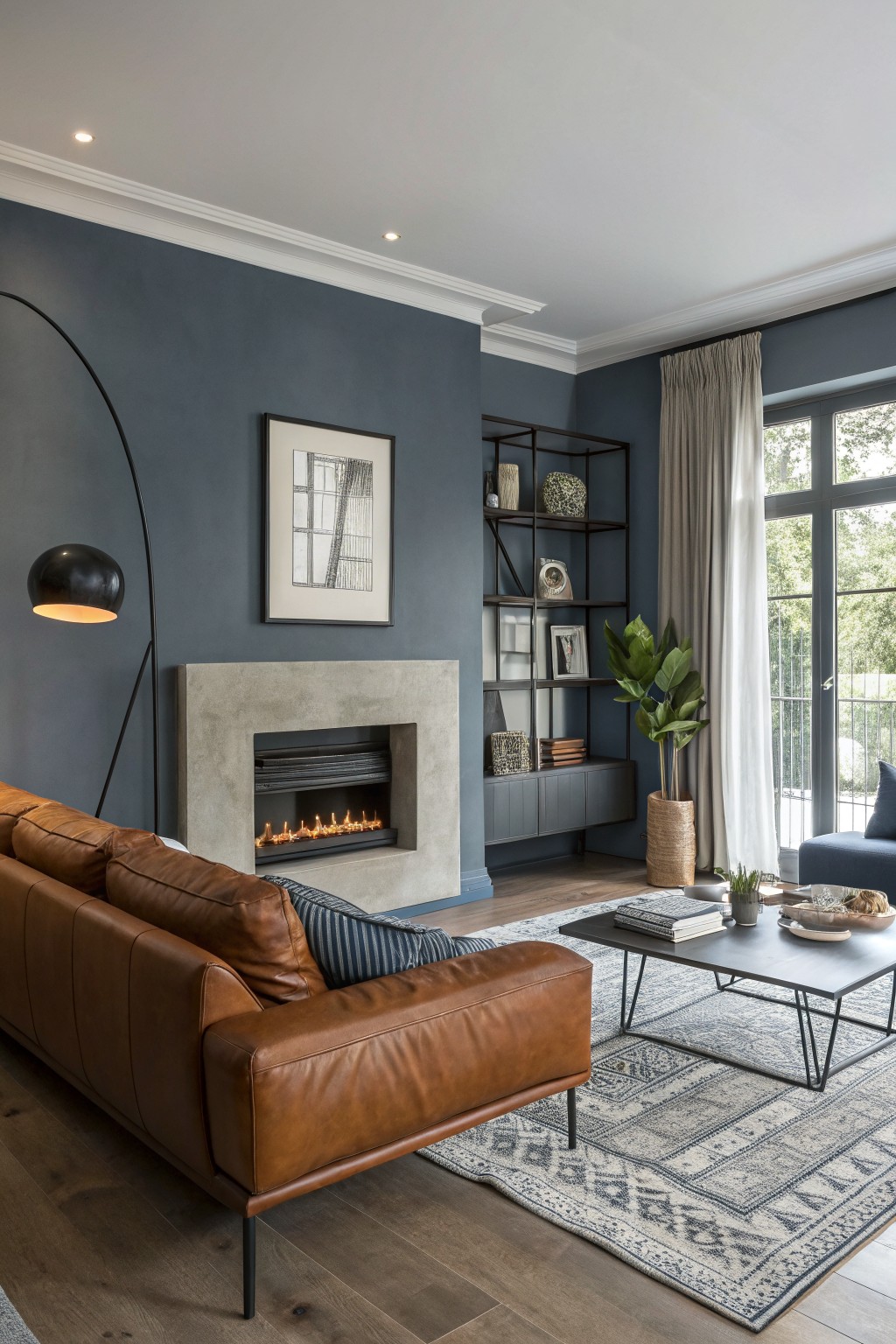
This living room goes with a deep navy blue on the walls. It looks closest to Sherwin-Williams Naval or Benjamin Moore’s Hale Navy, maybe even Farrow & Ball’s Hague Blue. That kind of color gives the space a cozy, pulled-together feel. It’s not stark. Just rich enough to make everything else pop a little.
The cool gray undertones keep it from going too blue. It sits nice next to wood floors and that tan leather sofa. Rooms with plenty of window light handle it best. Pair with neutrals or plants to lighten things up. Smaller spots? Test it first.
Pale Yellow Walls
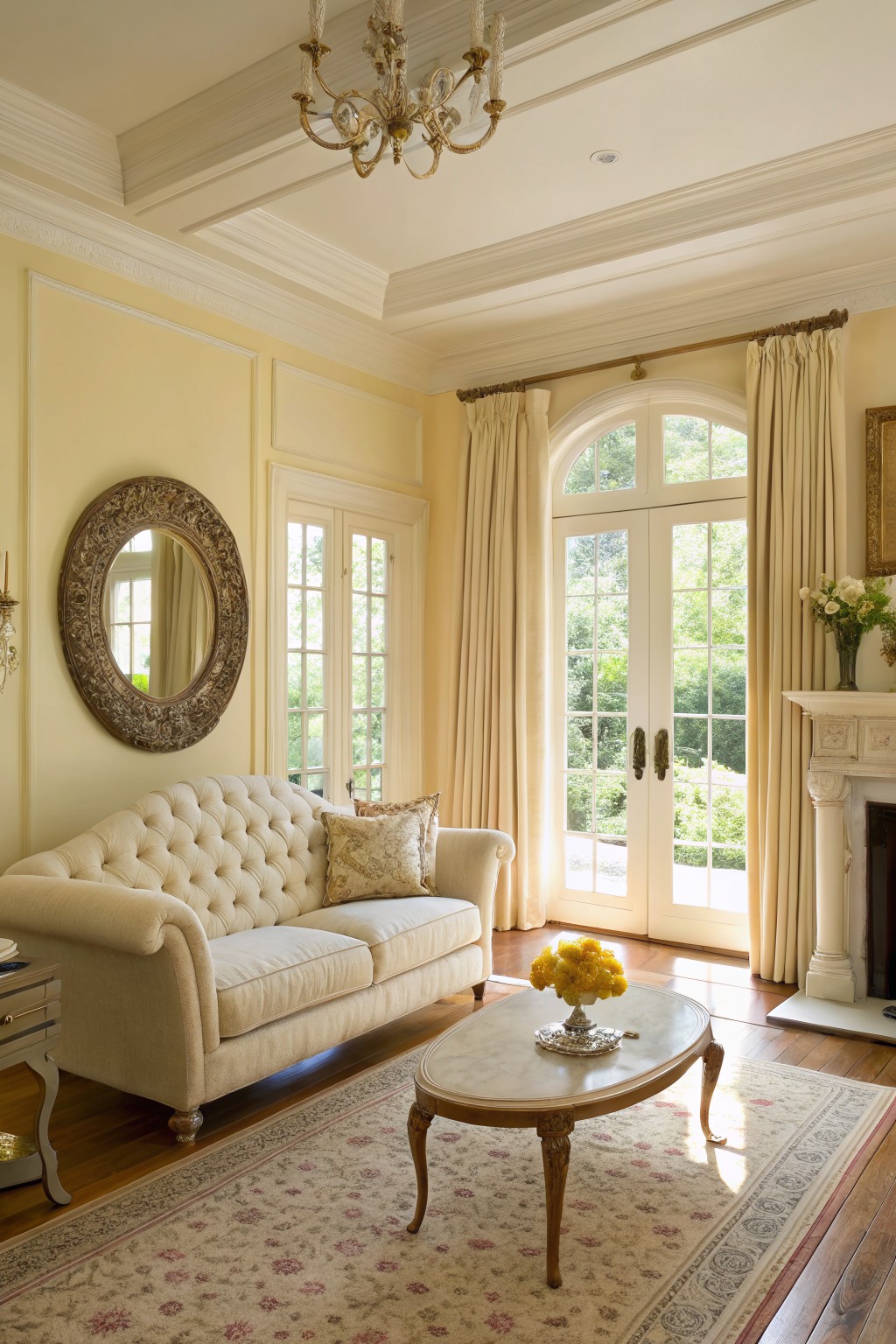
This living room goes with a pale yellow on the walls. It looks closest to Sherwin-Williams Pale Yellow 6107 or Benjamin Moore Pale Yellow 202, maybe Behr’s Lemon Drop too. It’s that soft buttery kind of yellow, warm without being brash. Folks like it because it brightens things up gently, especially next to cream sofas and wood floors like you see here.
Golden undertones keep it from going flat in mixed light. It suits sunny spots best, where it warms up the trim and gilded pieces without overpowering. Stick to ivory throws and natural woods with it… just check your sample in the afternoon light first.
Deep Teal Walls
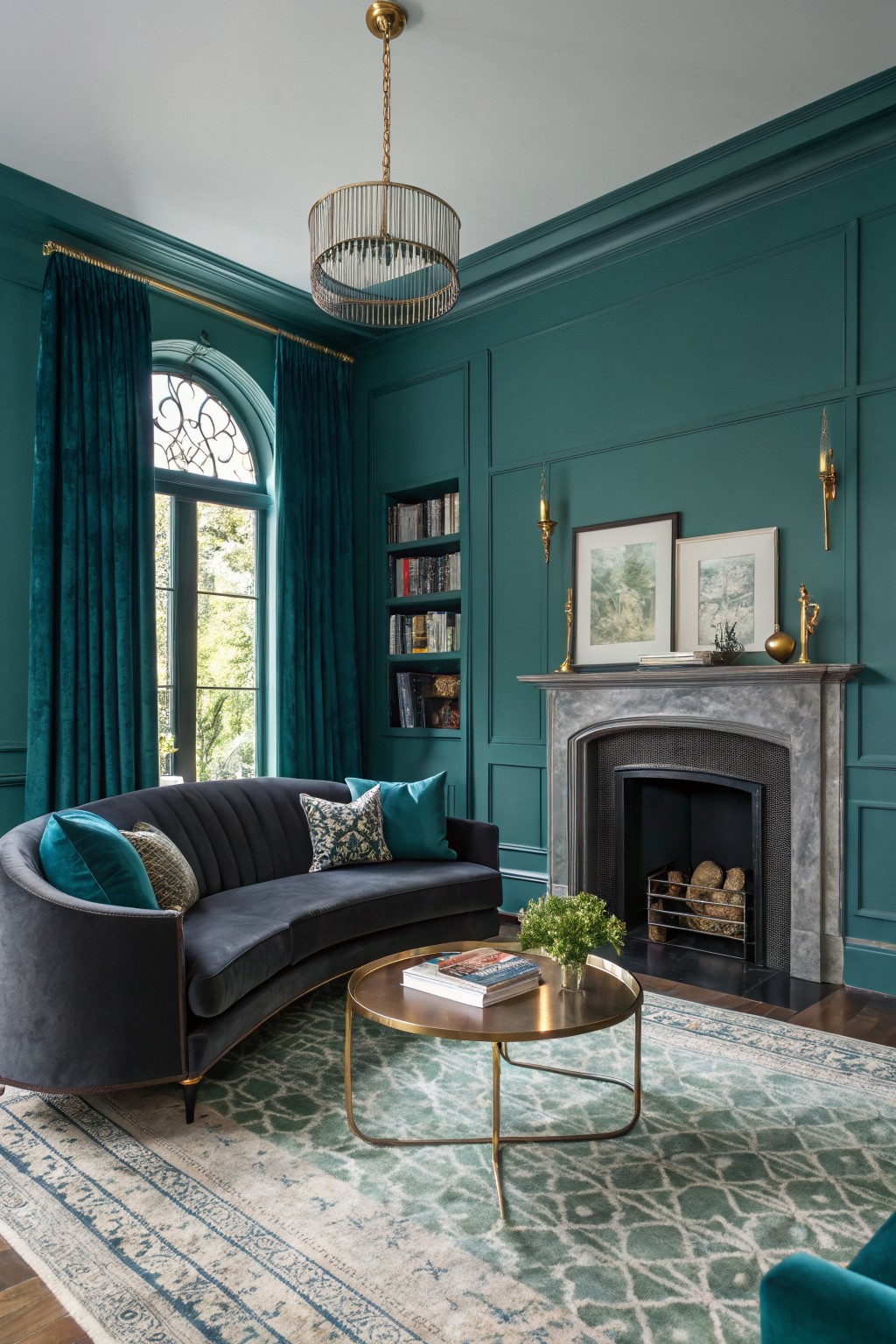
This living room uses a deep teal on the walls that seems closest to Farrow & Ball’s Inchyra Blue, Sherwin-Williams Retreat, or Benjamin Moore’s Borrowed Blue. It’s a moody blue-green shade, not too bright but full enough to make the space feel special. Folks like it because it turns a plain room into something elegant without trying too hard.
The undertone leans cool with a hint of green, which works well next to stone fireplaces and wood floors like you see here. It pairs nicely with brass lights and velvet pieces. Best in spots with good window light, though. In dimmer rooms, test a sample first.
Warm Agreeable Greige Walls
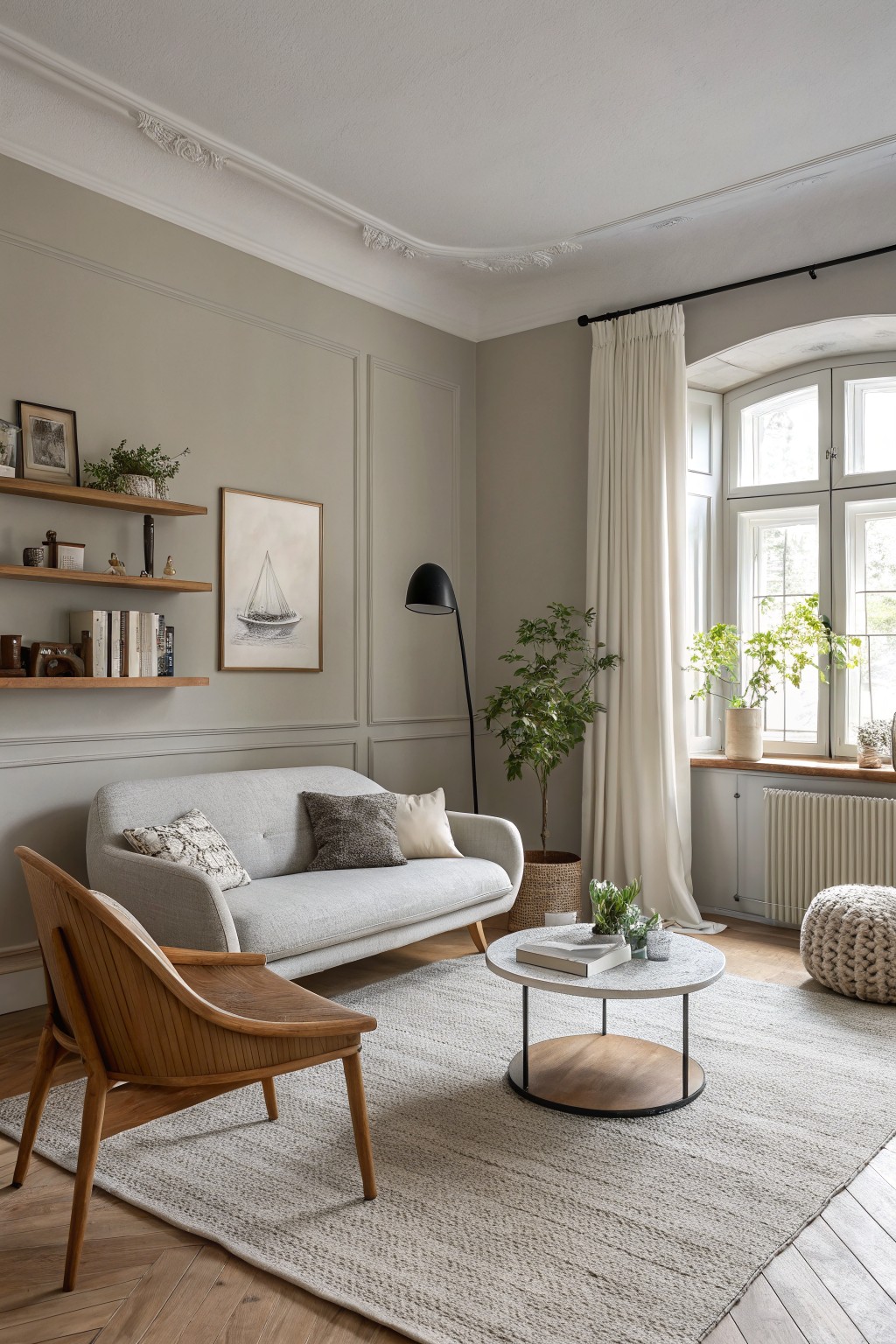
This living room shows off a soft greige on the walls. It seems closest to Sherwin-Williams Agreeable Gray or Benjamin Moore Revere Pewter. Or maybe Farrow & Ball Skimming Stone. That warm neutral family gives a calm base that doesn’t fight the wood tones around it.
The subtle beige undertone warms things up in good light, like from those big windows. It pairs easy with oak floors and light trim. Just watch it in dim spots. Might read grayer there.
Warm Terracotta Walls
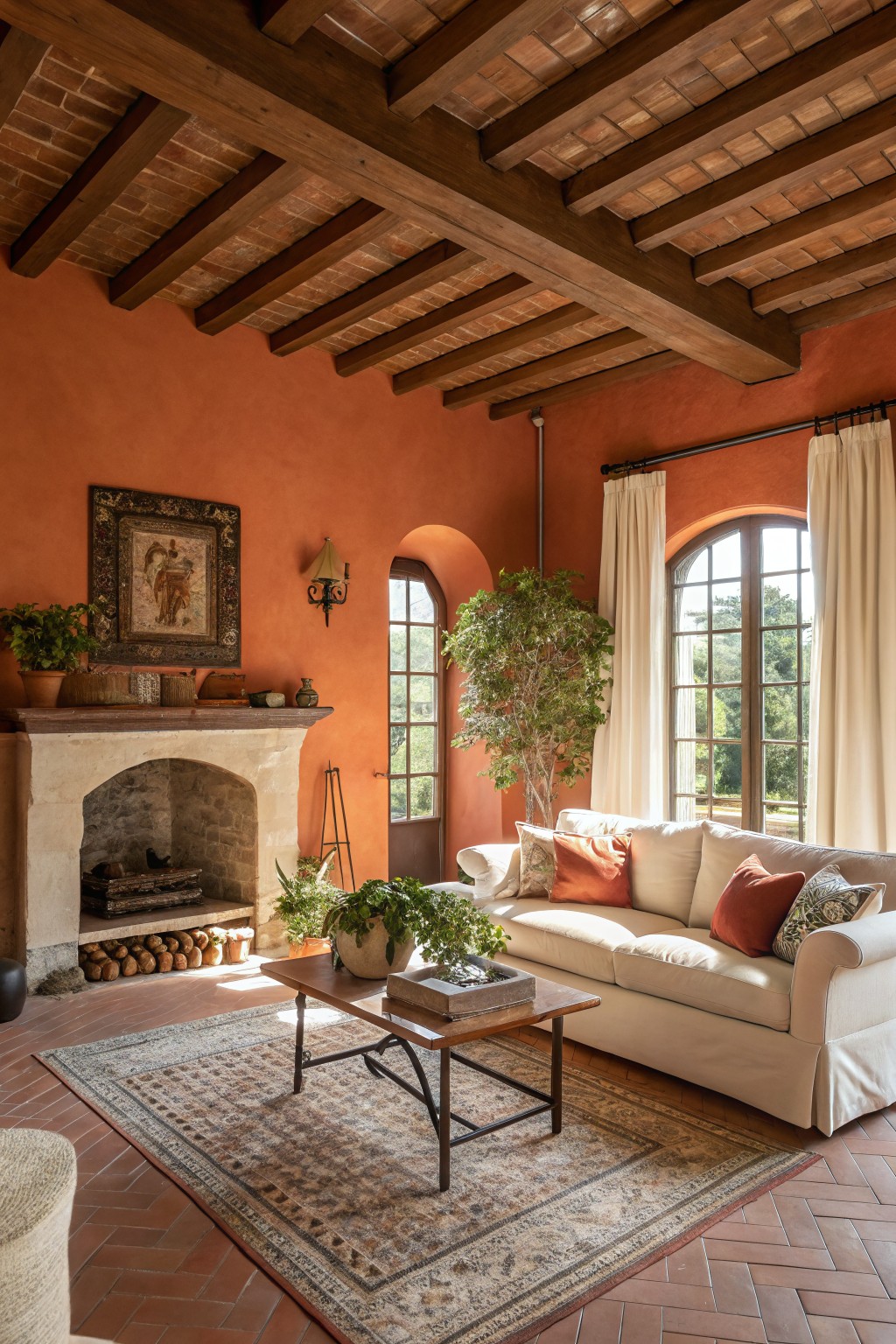
This living room goes with a warm terracotta paint on the walls. It seems closest to Sherwin Williams Spiced Cider or Benjamin Moore Potters Clay, maybe even Farrow & Ball Red Earth. That soft orange earth tone feels grounded and easy, especially next to the exposed wood beams and terracotta floors. It’s the kind of color folks pick when they want cozy without going too bold.
Warm red undertones show up nicely in bright light from those big windows. It pairs well with off-white sofas and potted plants. Stick to rooms with natural wood or stone details… it’ll keep the whole look tied together without much fuss.
Deep Charcoal Gray Walls
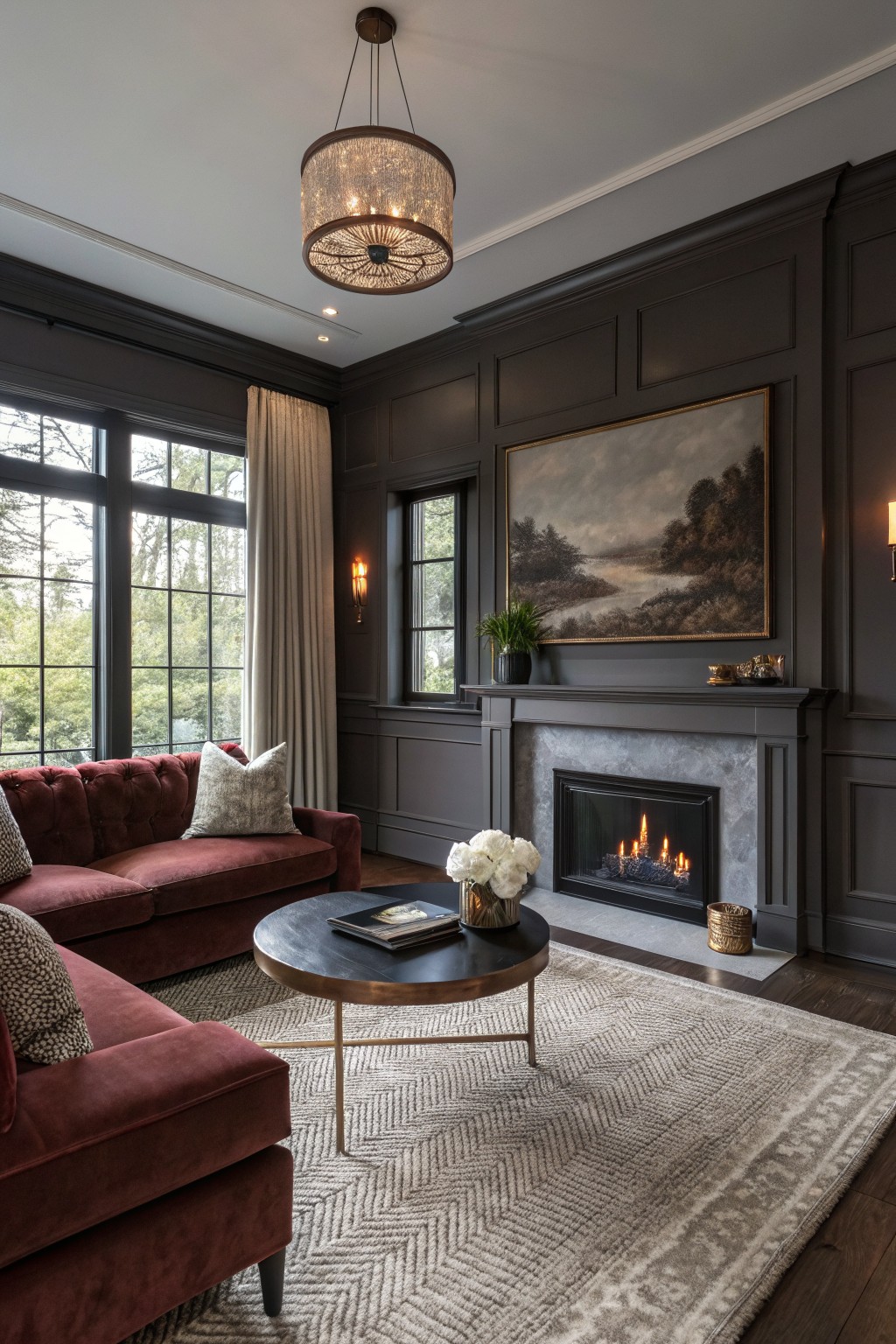
This living room uses a deep charcoal gray on the paneled walls. It reads close to Sherwin-Williams Iron Ore or Benjamin Moore Kendall Charcoal, maybe even Farrow & Ball Down Pipe. That kind of color pulls the space together nicely. It feels moody but still lets the red sofa and fireplace stand out.
The gray has cool undertones that play well against warm wood floors and brass accents. It suits rooms with big windows for light. Just watch it doesn’t get too shadowy in low-light spots… pair it with velvets or soft rugs to keep things comfortable.
Soft Sage Green Walls
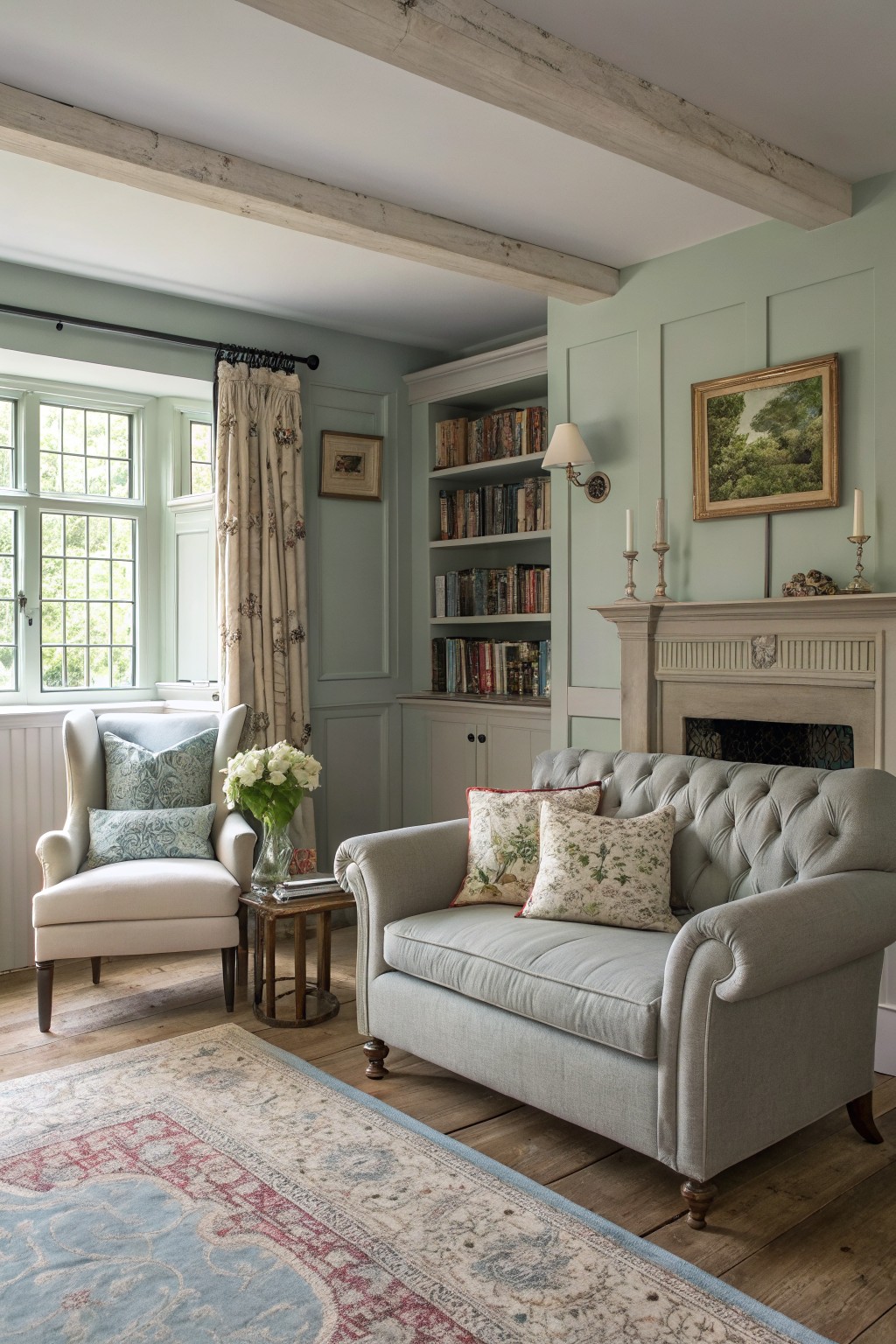
This pale sage green on the walls brings a fresh yet settled look to the living room. It reads closest to Sherwin-Williams Sea Salt or Benjamin Moore Saybrook Sage, maybe Farrow & Ball French Gray too. Folks like it because it feels light and easy, especially next to wood trim and cream upholstery like you see here.
The undertone leans cool with a bit of gray, so it stays calm in bright natural light from the windows. It works well in older homes with beams or stone fireplaces. Just pair it with beiges and soft woods to keep things grounded… avoid anything too bold that might clash.
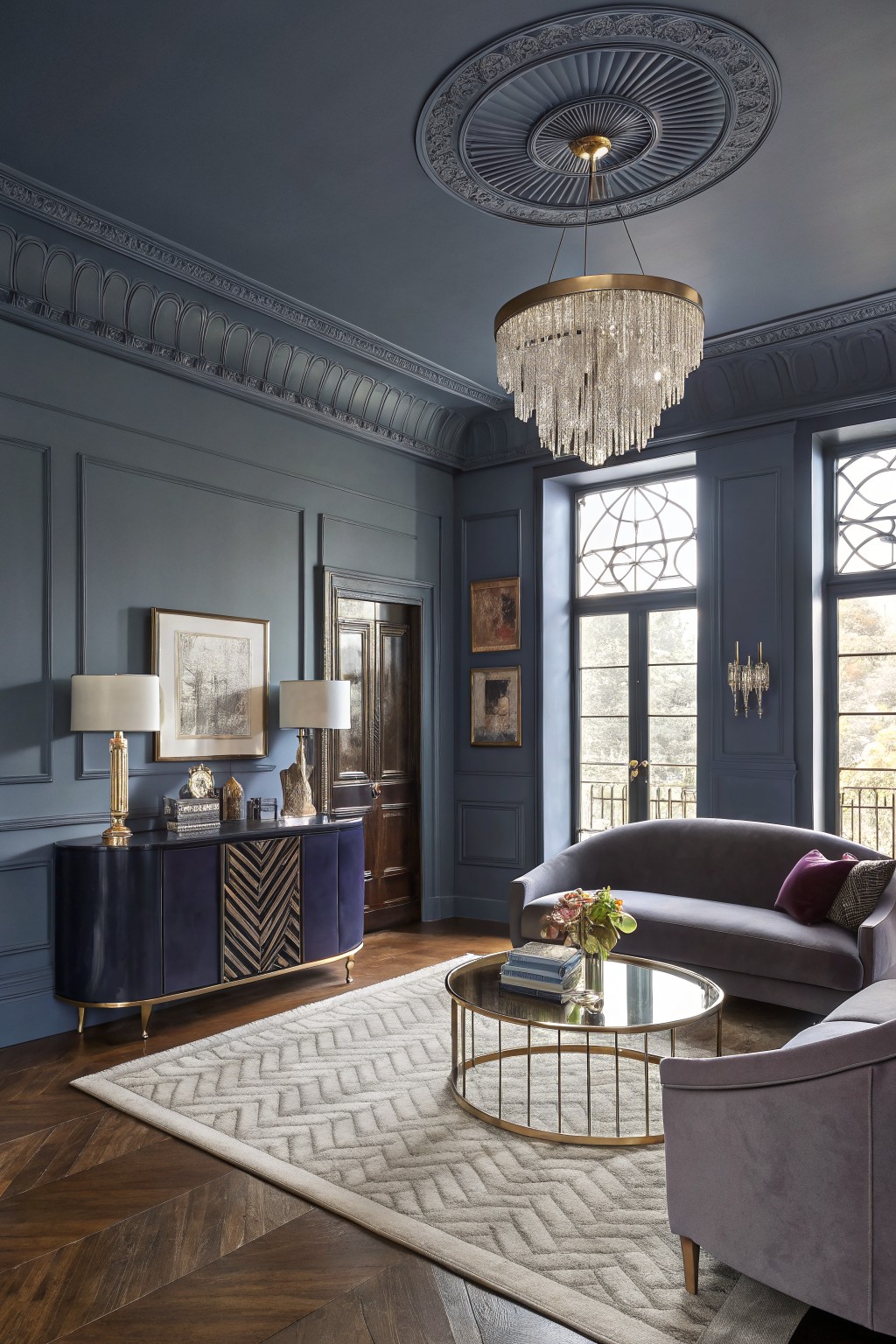
This living room goes with a deep navy paint on the walls. It looks closest to Sherwin-Williams Naval or Benjamin Moore Hale Navy, maybe Farrow & Ball Hague Blue. That rich blue family feels elegant and pulls the room together without being stark.
Cool gray undertones make it sit well against warm wood floors and gold details. Good for spaces with plenty of window light. Watch it in dim rooms though… might need lamps to keep things lively. Velvets and brass play right off it.
Warm White Walls
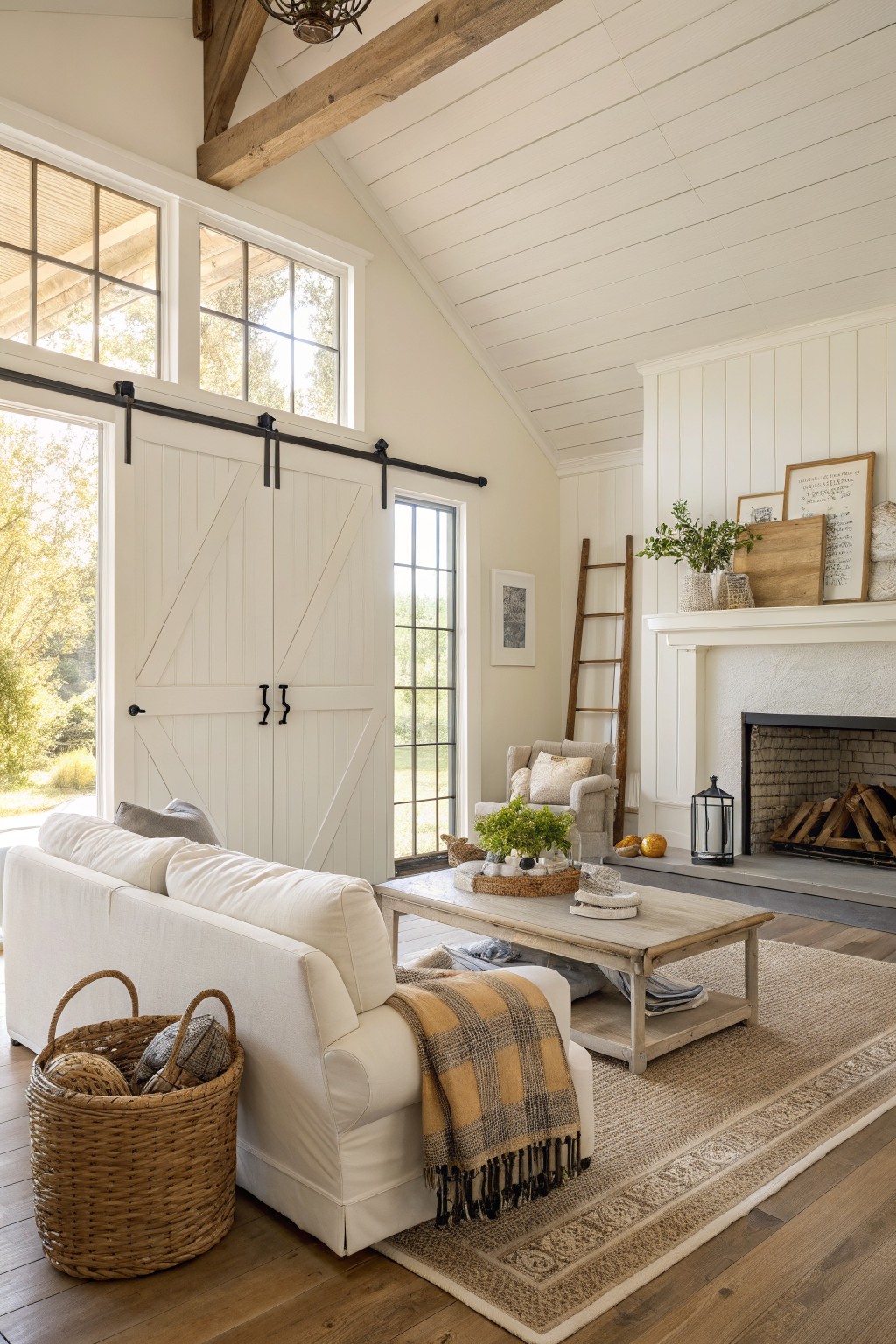
This living room goes with a soft warm white paint on the walls and trim. It reads very close to Sherwin-Williams Alabaster or Benjamin Moore White Dove, maybe even Behr Swiss Coffee. It’s the kind of white that stays bright but picks up a little creaminess from nearby wood, making everything feel easy and lived-in.
The warm undertone keeps it from going too cool in mixed light. It works great around fireplaces or big windows like these, and pairs well with oak floors or rattan accents. Just test it in your space first… wood can pull different shades out of white.
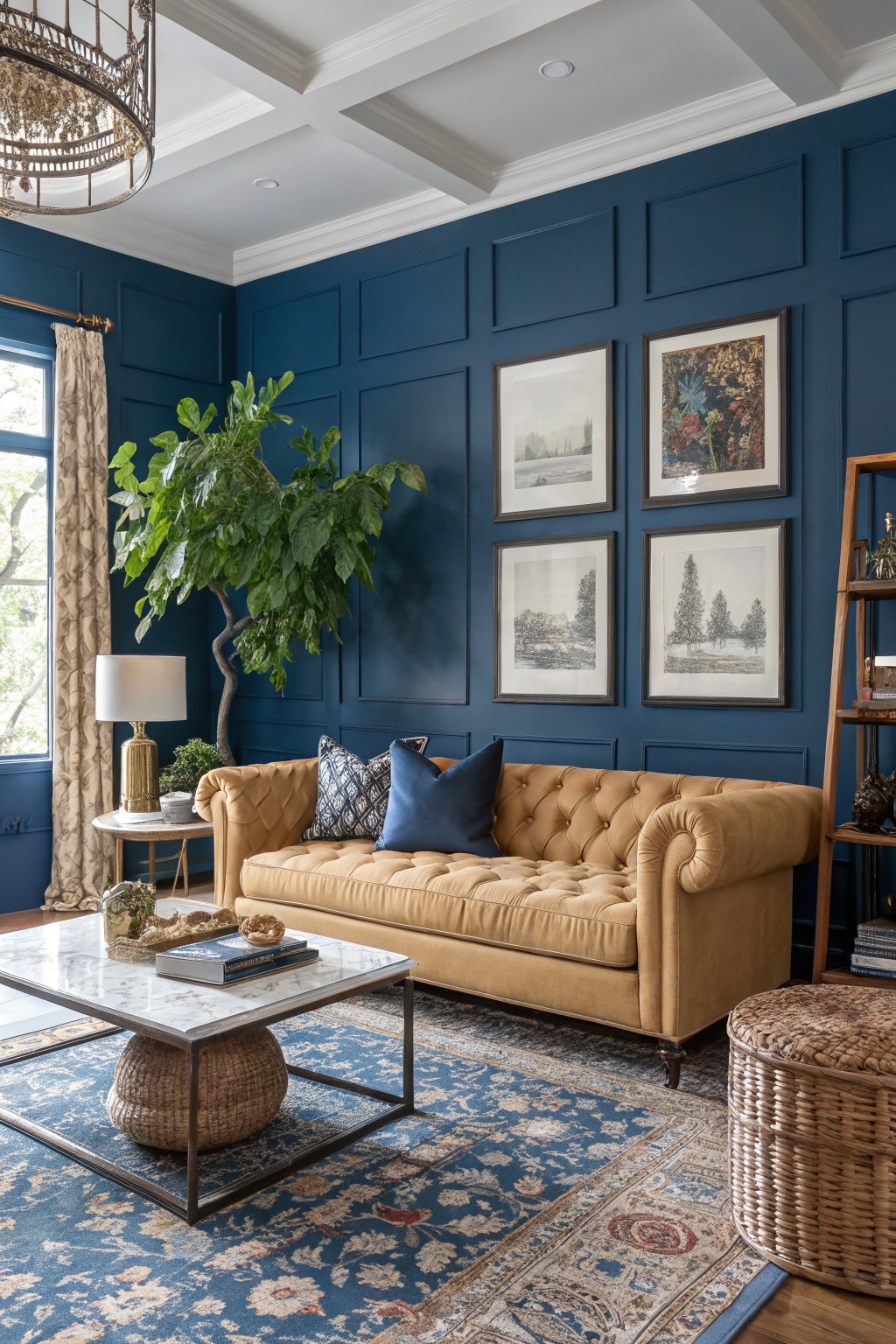
Deep navy blue walls like these make a living room feel pulled together and a bit fancy. It looks closest to Sherwin-Williams Naval or Benjamin Moore Hale Navy, maybe even Farrow & Ball Hague Blue. People go for this shade because it wraps the room in a cozy depth, especially with paneling to add some texture.
The cool undertone keeps it from going too heavy. Natural light from the windows helps it read brighter. Pair with warm tans on the sofa or brass lamps, and it stays welcoming. Just test samples first, since navies can shift in low light.
Pale Lavender Walls
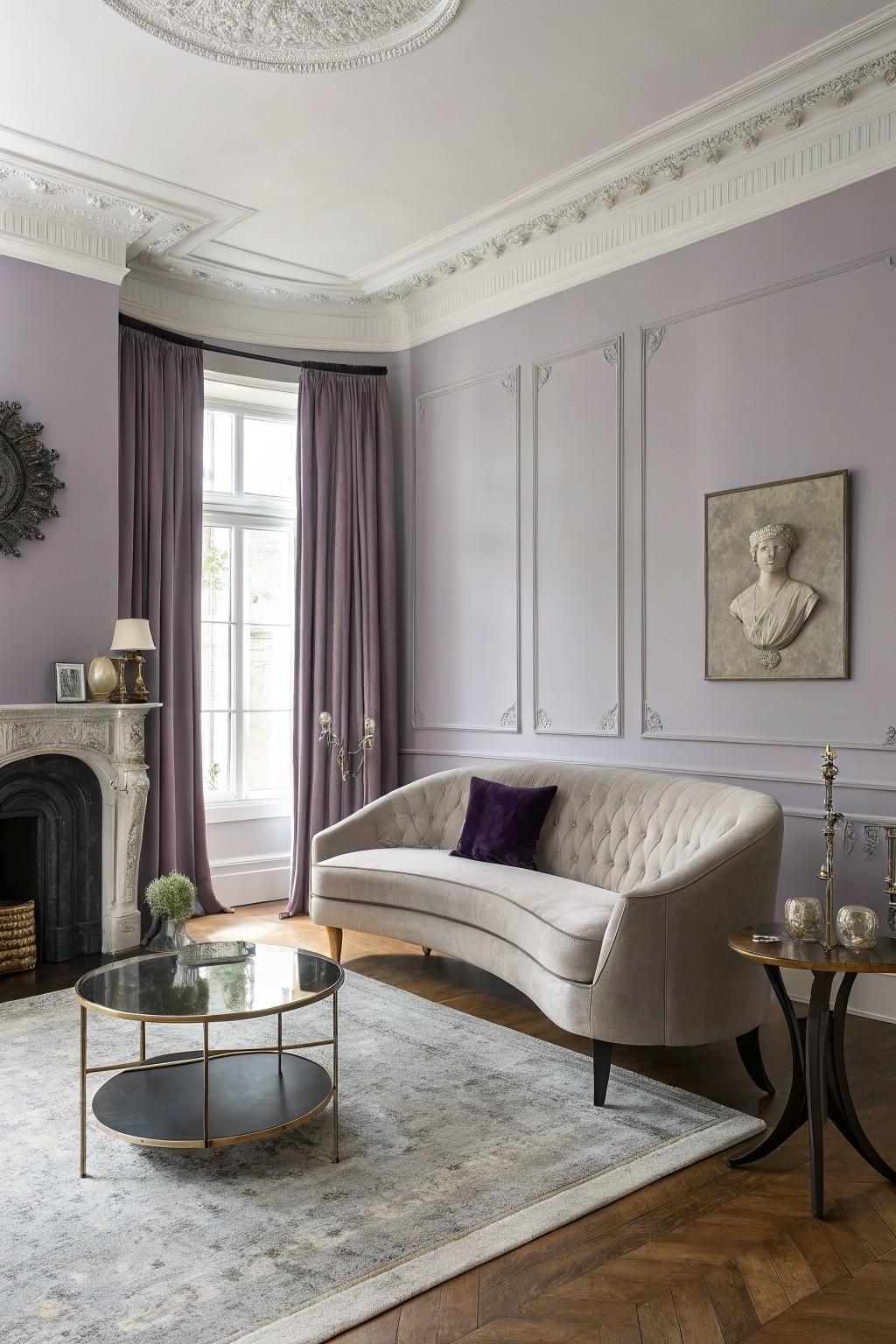
This living room paint is a pale lavender from the soft purple family. It looks closest to Sherwin-Williams Lilac Hush or Benjamin Moore October Mist, maybe Behr’s Dreamy Lilac too. That gentle shade gives the room a quiet elegance. It’s not stark white but adds just a hint of color that feels fresh.
The gray undertone keeps it cool and versatile, especially next to the parquet floors and marble fireplace here. It shines in bright spaces with some window light. Go for cream furniture and gold touches to warm it up. North light might dull it a bit, so test samples first.
Deep Green Walls
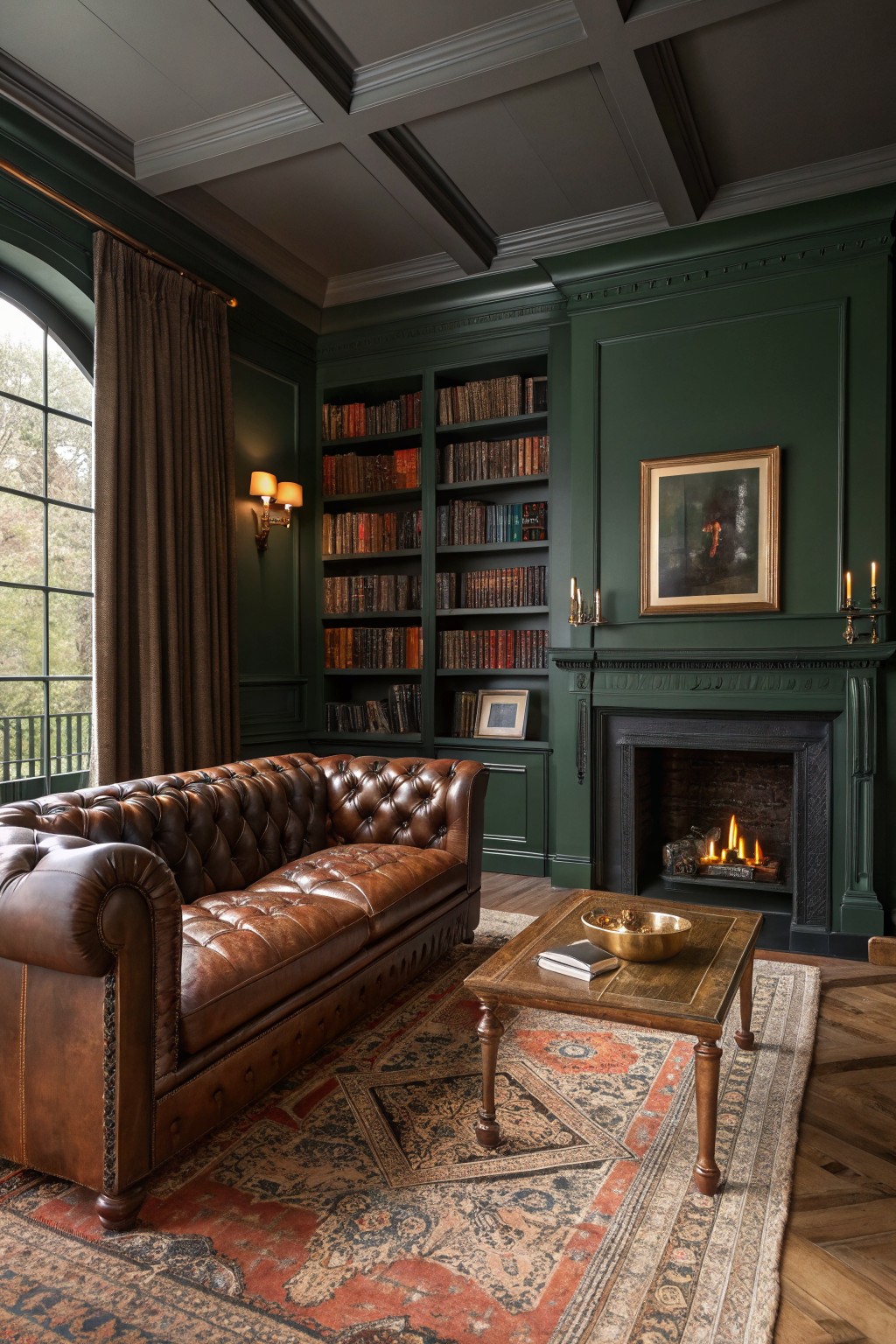
This living room pulls off a deep green paint that seems closest to Farrow & Ball Studio Green. You could also go with Benjamin Moore Black Forest Green or Sherwin-Williams Pewter Green. It’s the kind of rich, almost blackish green that feels elegant and lived-in right away.
That warm undertone keeps it from going cold, especially next to wood floors and a leather sofa. It shines in spaces with big windows letting in tree-filtered light. Just watch it doesn’t overwhelm small rooms… stick to brass lamps or a lit fireplace to balance things out.
Frequently Asked Questions
Got a question about picking the perfect paint? Check these out.
Q: How do I test these colors in my actual living room before buying a gallon? A: Grab small sample pots of your top three picks and paint big swatches on poster board or directly on the wall in a few spots.
Let them dry fully, then move the boards around the room at different times of day to see how the light hits them. You’ll spot the real winner fast.
Q: My room has low light. Which of these colors will brighten it up without feeling fake? A: Go for soft warms like creamy beiges or pale taupes from the list. They bounce light around gently and keep things cozy.
Q: What if my furniture is dark? Will these paints clash? A: Pair them with deeper wall tones like moody grays or rich charcoals. The contrast pulls everything together nicely… dark pieces pop against them.
Q: Do I paint the ceiling the same color as the walls? And yes, try it with these elegant shades. It makes small rooms feel taller and wraps the space in warmth.