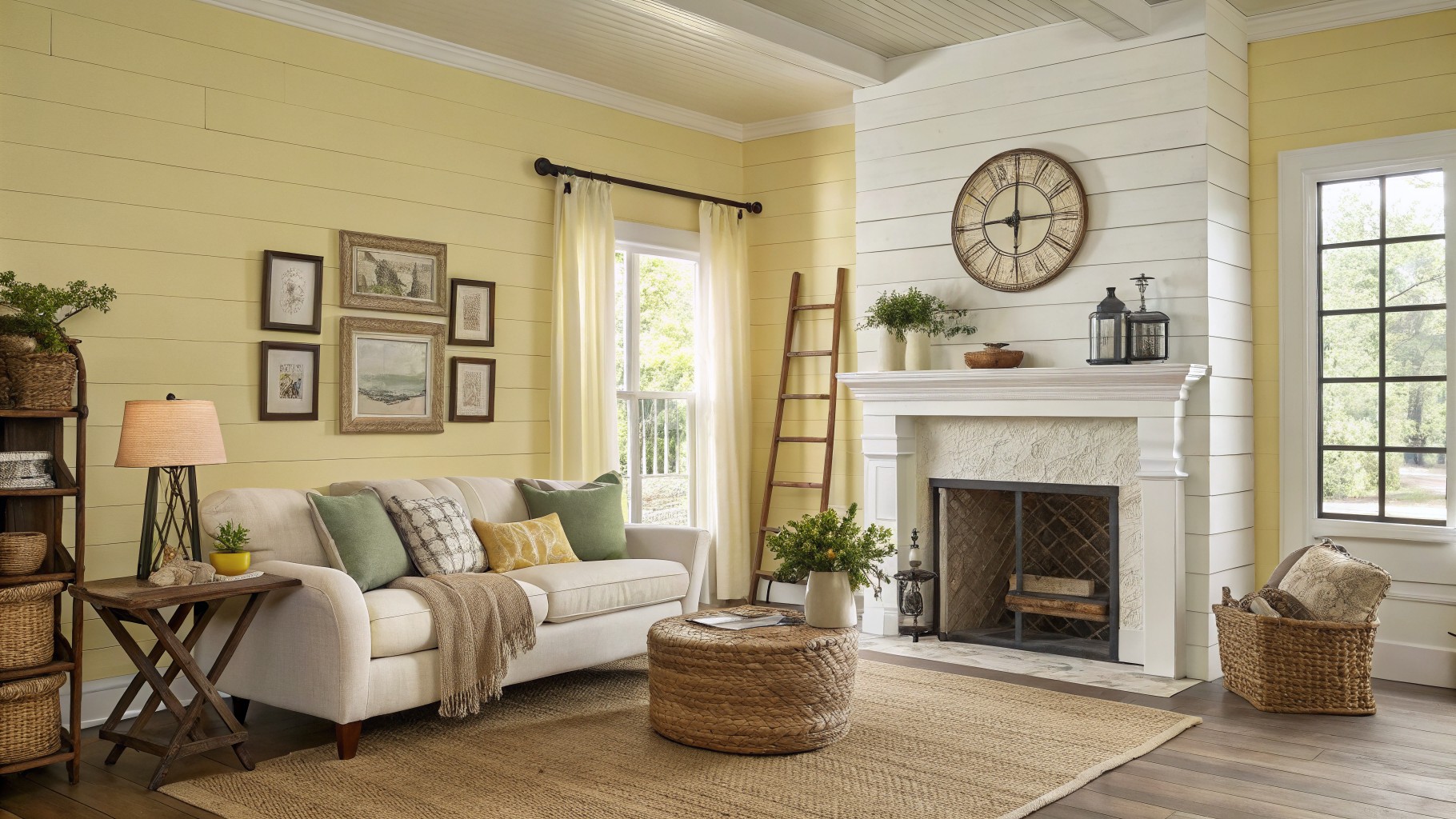
I’ve painted a few rooms in my old farmhouse over the years, and nothing transforms the rustic vibe quite like the right cozy shade on the walls.
Colors shift dramatically depending on the time of day and your room’s natural light, sometimes bringing out unexpected warmth or washing out entirely against aged wood beams. Undertones matter most here.
One gray-beige I tried at first felt too cool in my north-facing living room until I layered in some warm textiles, and then it settled right in.
Several options worth sampling on your actual walls stand out for that reliable farmhouse charm.
Pale Butter Yellow Walls
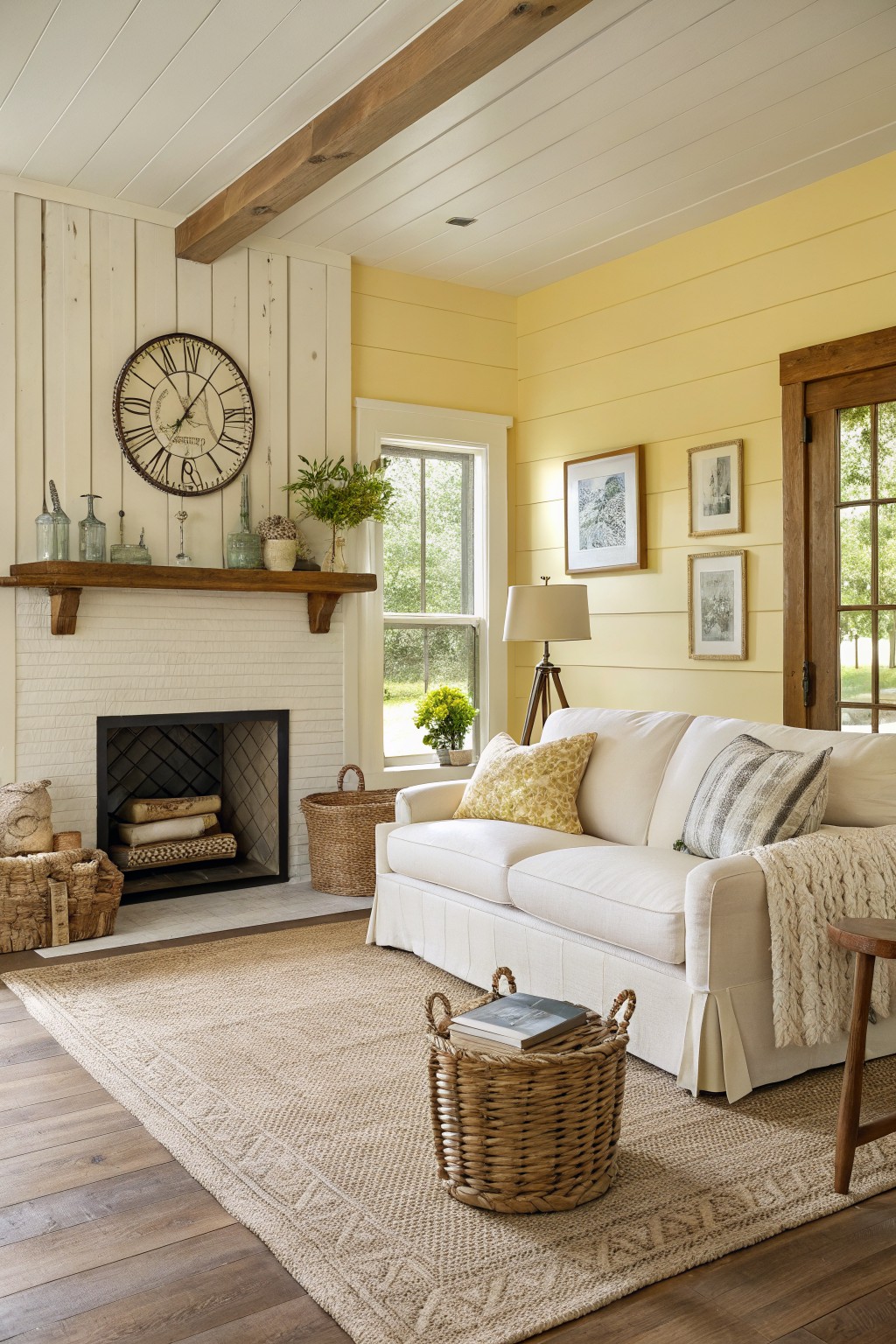
This pale butter yellow on the shiplap walls reads very close to Sherwin Williams Greek Villa or Benjamin Moore Pale Yellow. It’s a gentle warm yellow that stays soft, not screaming for attention. Folks like it because it keeps a farmhouse room feeling light and airy while warming up all the wood trim and beams around it.
That subtle golden undertone glows best in rooms with good natural light, like this sunny living space. Pair it with crisp whites on the brick fireplace or cream sofas, and it just settles right in. Watch for north-facing spots though, where it might lean cooler.
Soft Sage Cabinets
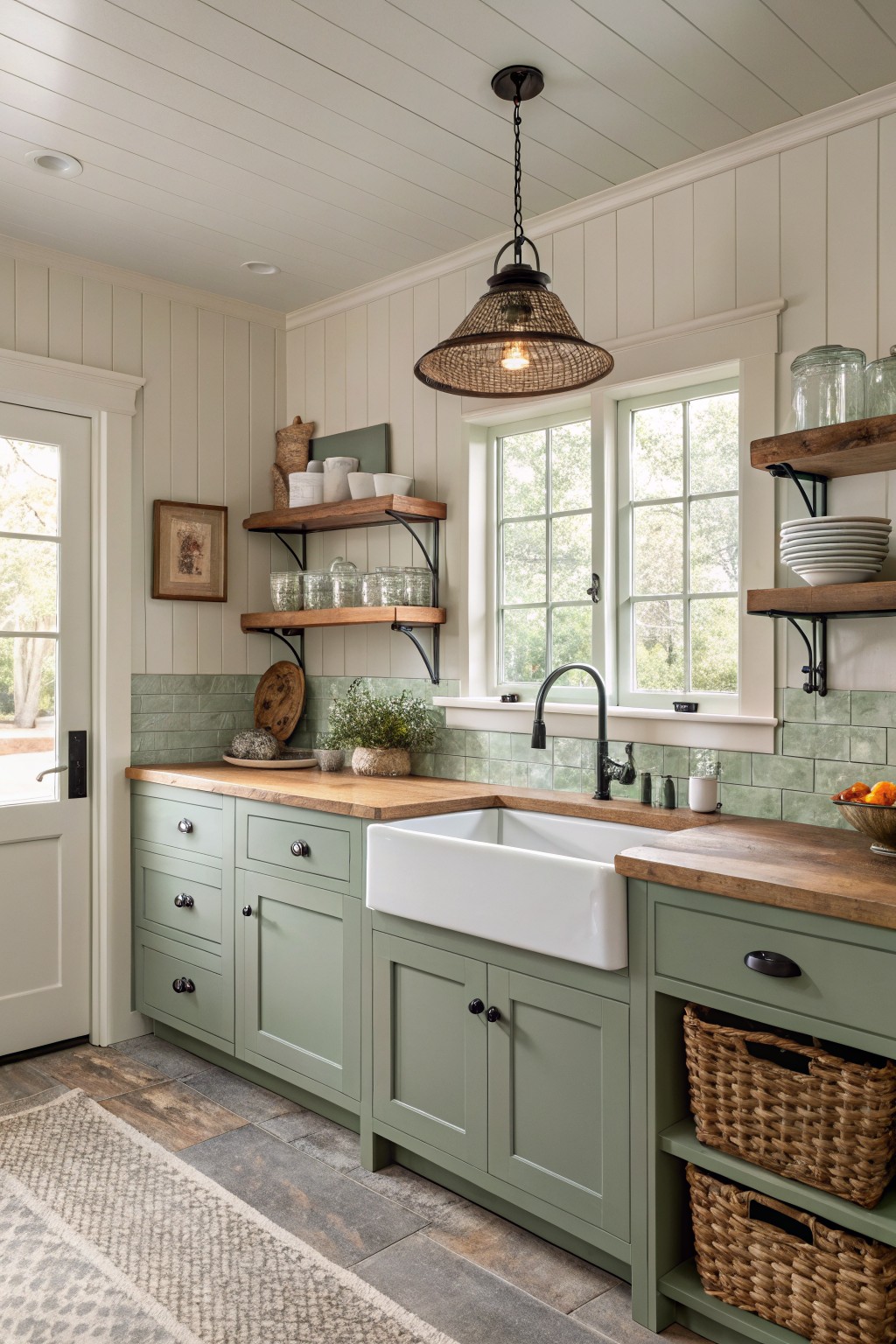
Those lower cabinets show off a soft sage green that’s perfect for a farmhouse kitchen. It looks closest to Sherwin-Williams Retreat or Benjamin Moore’s Saybrook Sage HC-114, maybe Behr’s Silver Sage too. This muted green has a gentle gray undertone that feels calm and easygoing. People go for it because it adds just a hint of color next to all that wood and white shiplap, keeping things cozy without trying too hard.
In good window light, the sage stays fresh and not too dark. It pairs nicely with warm wood counters and creamy walls like this setup. Watch for overly warm bulbs though. They can make it read yellower than you want.
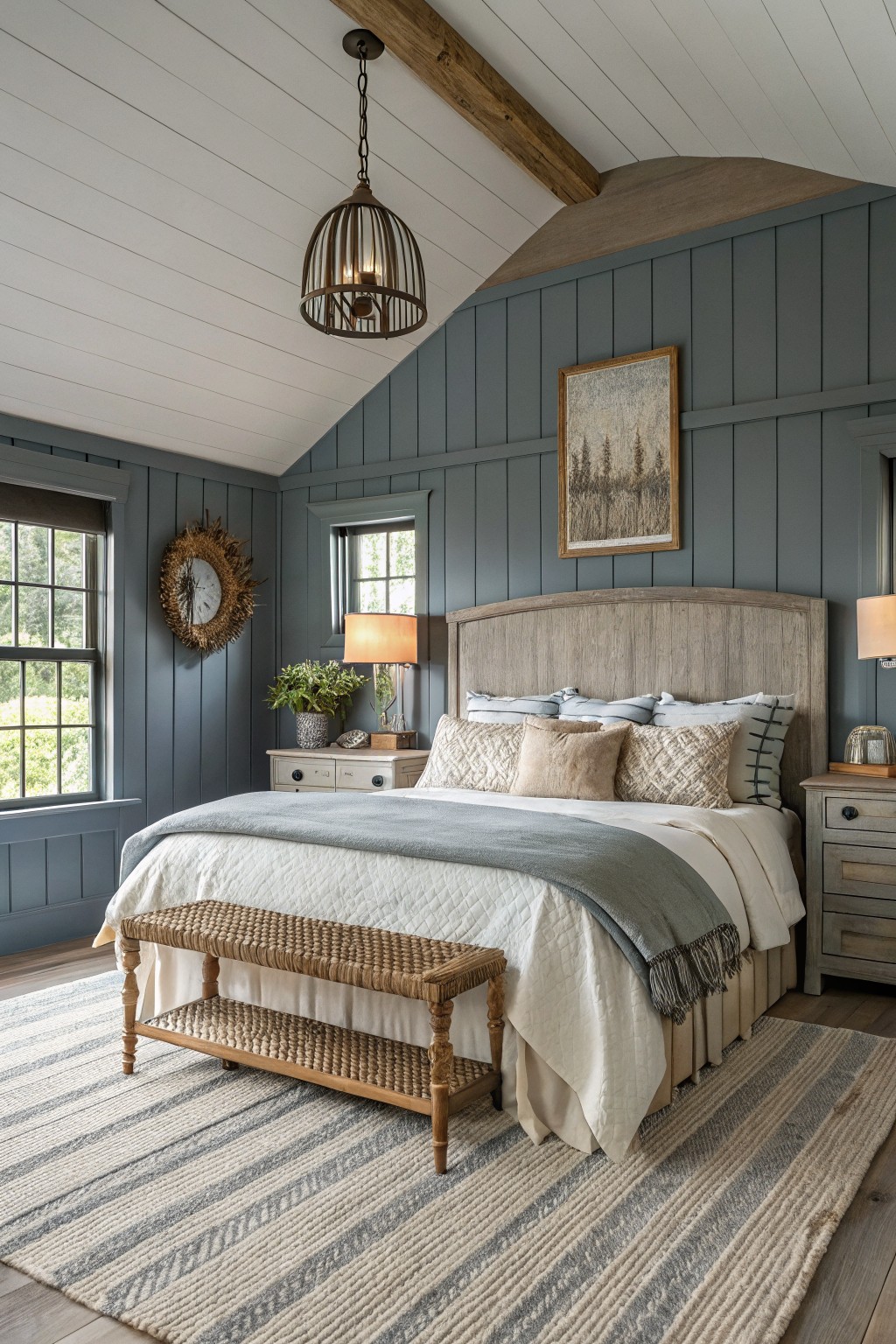
Those walls catch your eye right away with their soft navy blue-gray shade. It reads very close to Sherwin-Williams Naval (SW 6244) or Benjamin Moore Wythe Blue (HC-143), maybe Behr’s Nightwatch too. This kind of color brings a calm, lived-in vibe to farmhouse rooms. Folks like it because it hugs the wood tones without overwhelming them, like on that paneled headboard and beams.
The cool gray undertones keep it from going too blue on a bright day. It shines in bedrooms with windows letting in light. Go with white bedding and oak nightstands to play it up. Just test samples first. Dark corners can make it moody.
Warm Off-White Walls
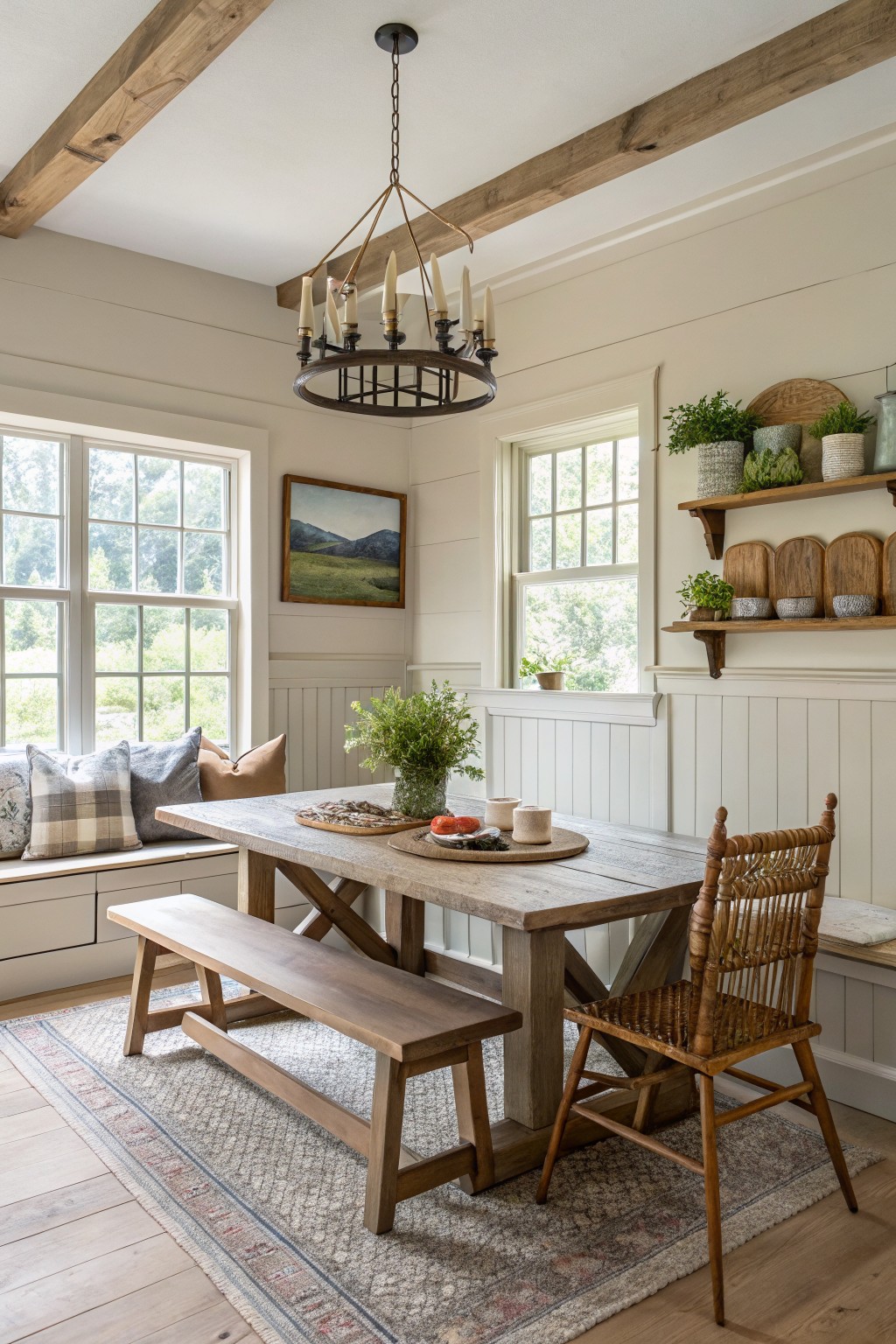
This warm off-white on the walls reads very close to Sherwin-Williams Alabaster or Benjamin Moore’s White Dove. It’s that gentle neutral with just enough creaminess to feel cozy without going yellow. Folks love it in farmhouse spots because it makes all the wood beams and furniture pop right out, keeping things light and airy.
The undertone leans warm, so it plays nice in rooms with lots of natural light from big windows. Pair it with natural wood tables and benches like you see here, maybe some woven chairs. Avoid cool grays nearby, or it might look dingy. Works great in dining nooks or kitchens.
Soft Sage Walls
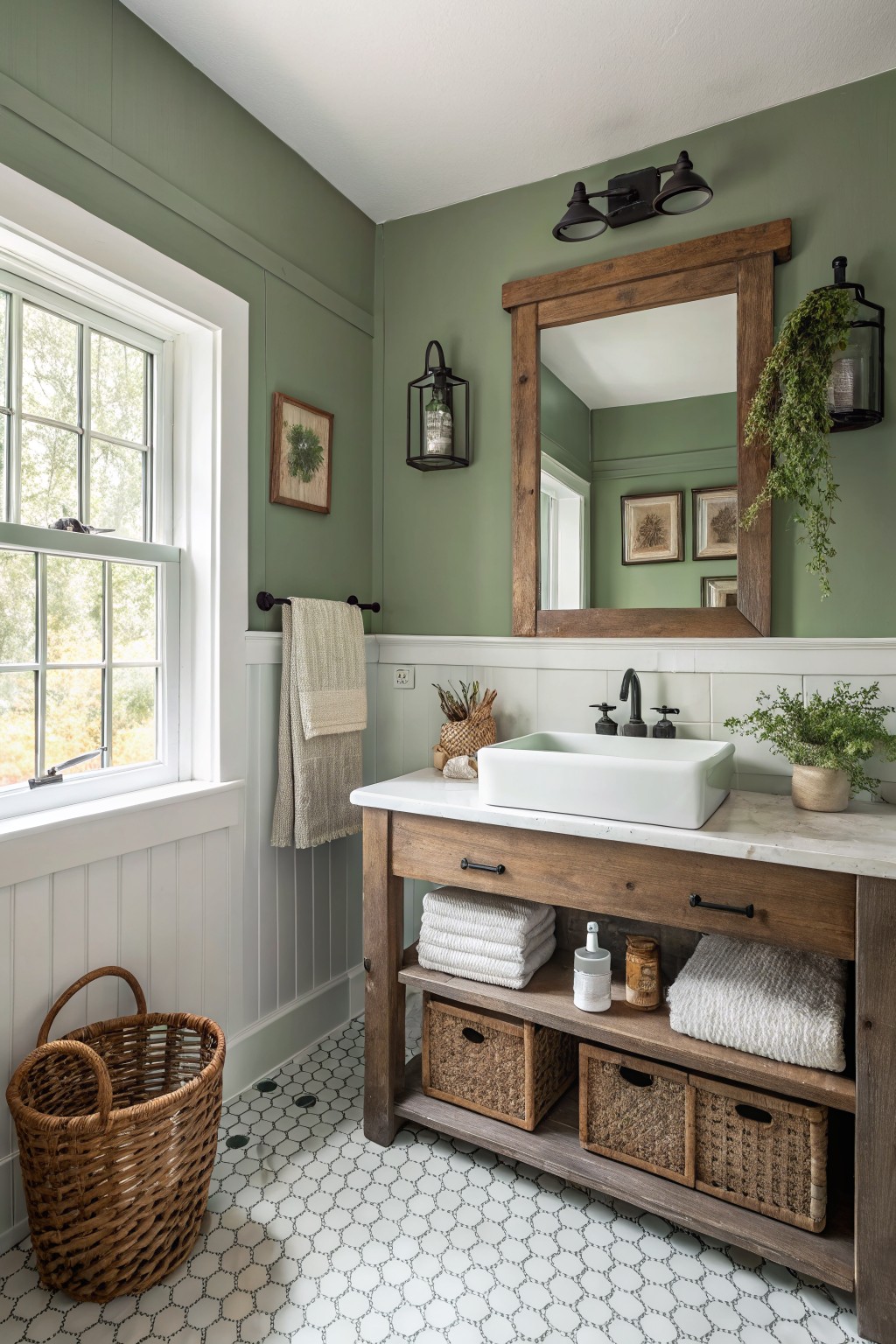
This room pulls off a soft sage green on the walls that seems closest to Sherwin Williams Retreat or Benjamin Moore October Mist. It’s a gentle green in the sage family, muted enough to feel cozy and not overpowering. Folks like it for how it nods to nature while keeping a farmhouse space feeling lived-in and calm.
That warm undertone plays right off the wood vanity and white wainscoting here. It shines in rooms with good window light, pairing easy with brass or black hardware and woven baskets. Just test it first if your space gets mostly artificial light… might need a touch more yellow to stay true.
Soft Warm Beige Walls
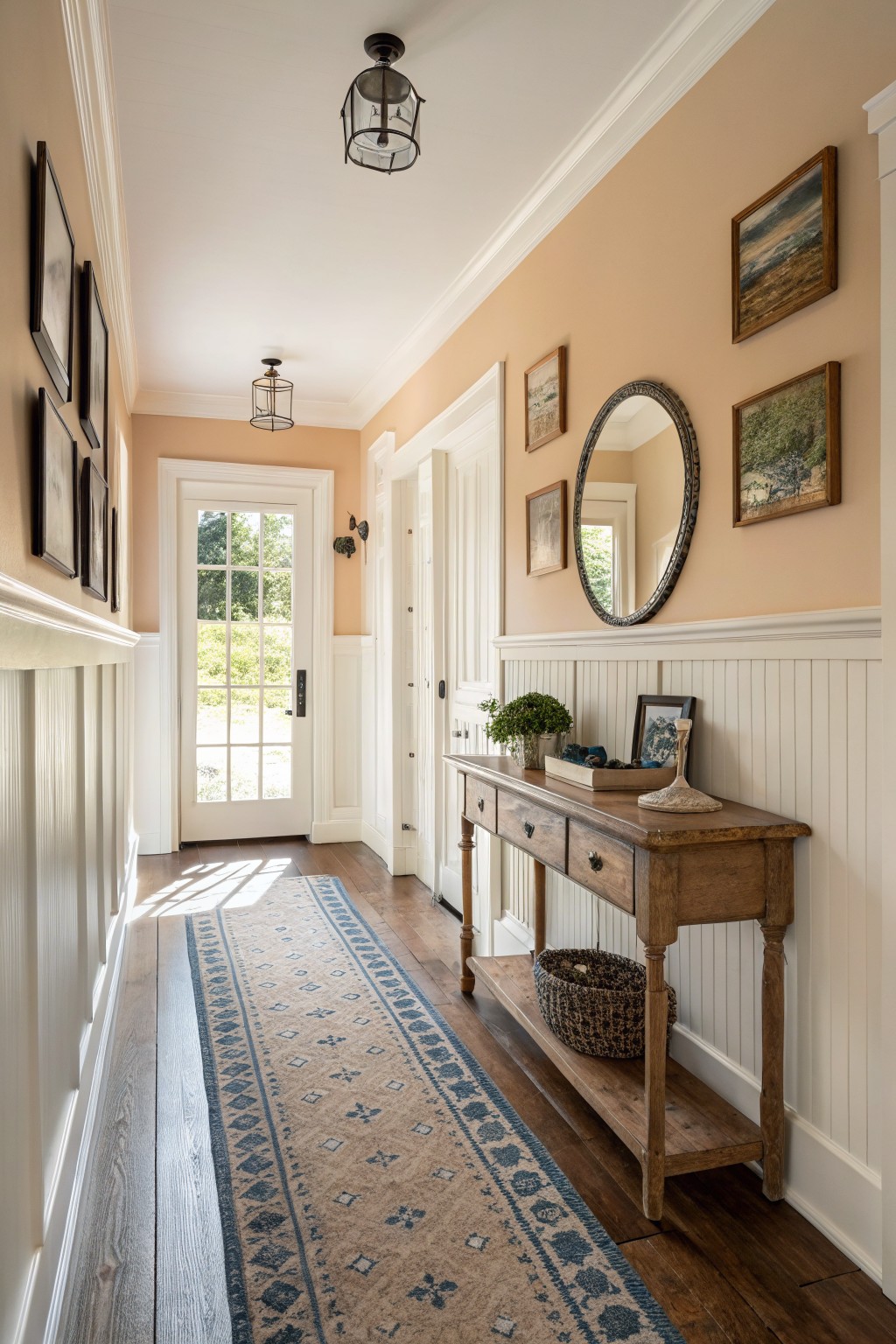
This hallway uses a soft warm beige on the walls that seems closest to Sherwin-Williams Alabaster or Benjamin Moore Edgecomb Gray. It’s a gentle neutral with just enough warmth to feel cozy in a farmhouse home. Folks like it because it doesn’t overpower the wood floors or that rustic table. Keeps things light and inviting.
Those warm undertones show up best in natural light coming through the door. It works well next to white trim and beadboard. Try it in entryways or long halls. Watch it can look a bit flat under too many recessed lights though.
Pale Yellow Walls
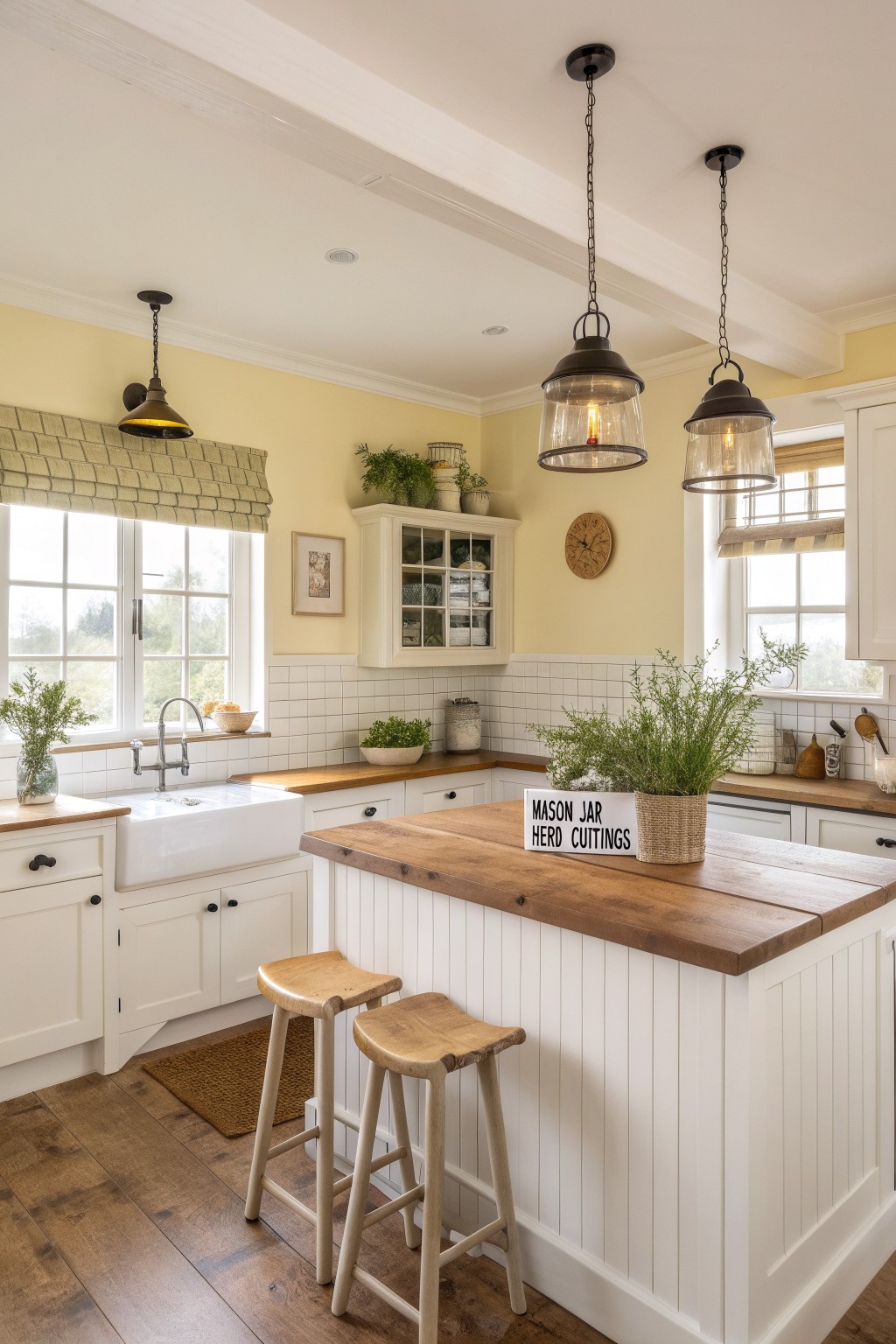
This kitchen pulls off a soft pale yellow on the walls that seems closest to Sherwin-Williams Greek Villa or Benjamin Moore Cloud White. It’s that easy warm yellow family, not stark or brassy. Folks like it because it adds just enough glow to make a farmhouse space feel lived-in and sunny, especially next to crisp white cabinets.
The creamy undertone keeps it from going cold. Pairs great with wood like that island top and floors here. It shines in rooms with good windows, but might read flatter under dim bulbs, so sample it in your light.
Warm Greige Walls
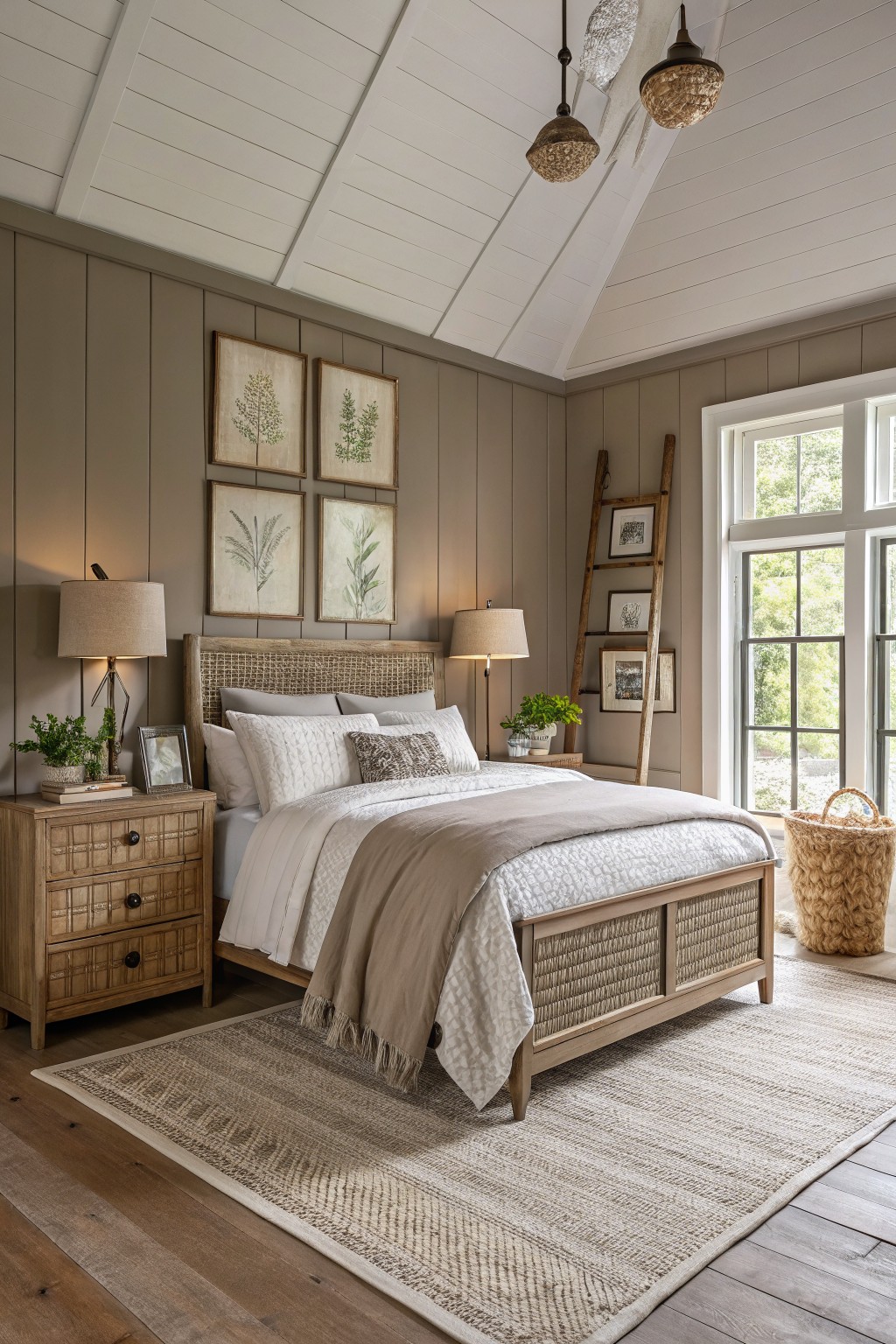
Those walls here pull off a warm greige that seems closest to Sherwin Williams Agreeable Gray or Benjamin Moore Edgecomb Gray, maybe even Behr’s Silhouette. It’s a soft neutral with just enough warmth to feel cozy, not stark.
Warm brown undertones keep it from looking cold next to wood furniture or rattan. It works best in bedrooms with good natural light. Stick to crisp white ceilings and you’ll see how it lets the wood tones shine.
Deep Teal Walls
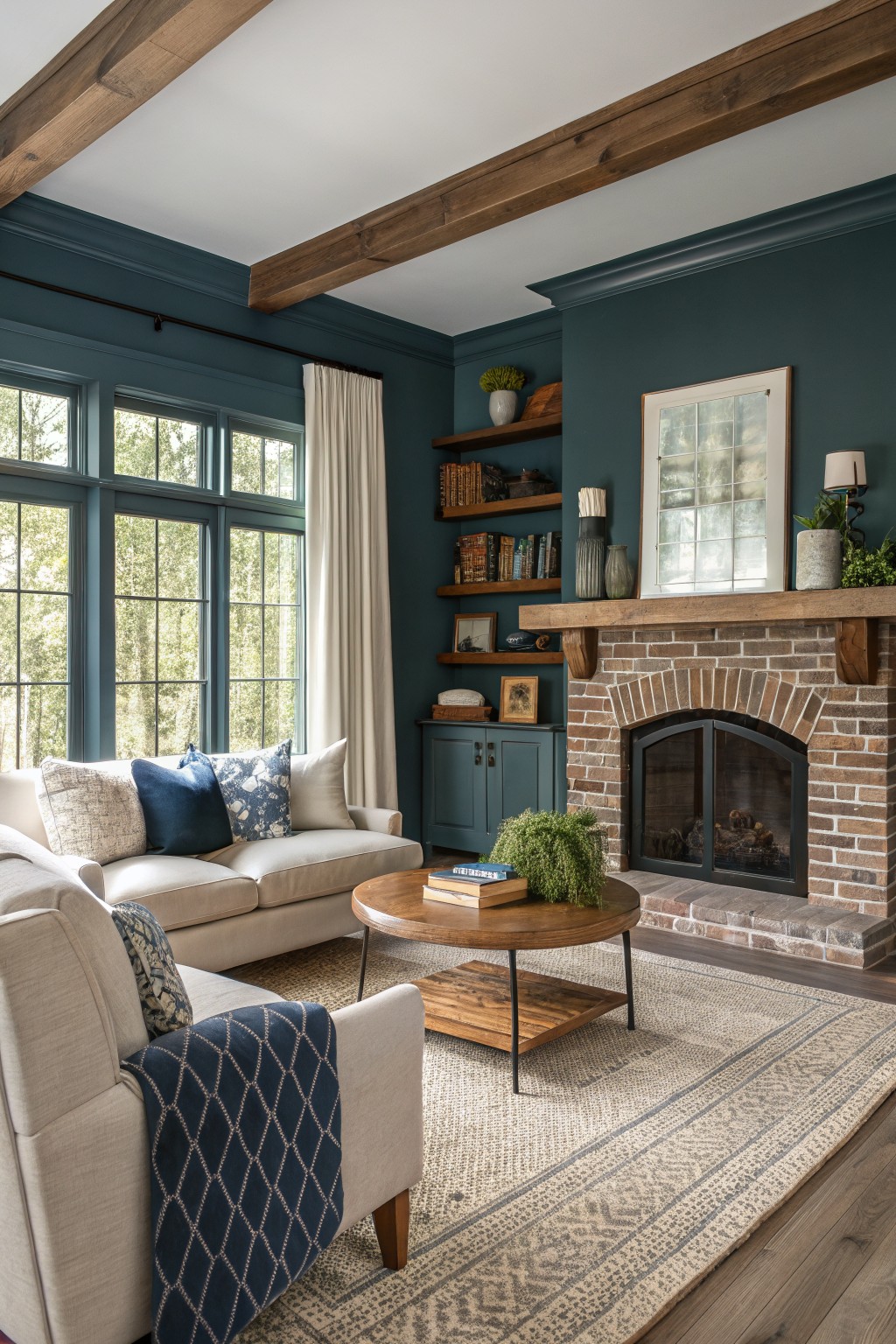
Those walls catch your eye right away with their deep teal shade. It looks closest to Sherwin Williams Naval or Benjamin Moore Hale Navy, maybe with a touch more green undertone. Folks go for this color because it wraps the room in coziness, letting the wood beams overhead and brick fireplace stand out nice and strong.
The blue-green lean makes it forgiving in natural light from big windows like these. It pairs easy with cream sofas and woven rugs for farmhouse style. Stick to warm bulbs inside though, or it might read cooler than you want.
Pale Sage Walls
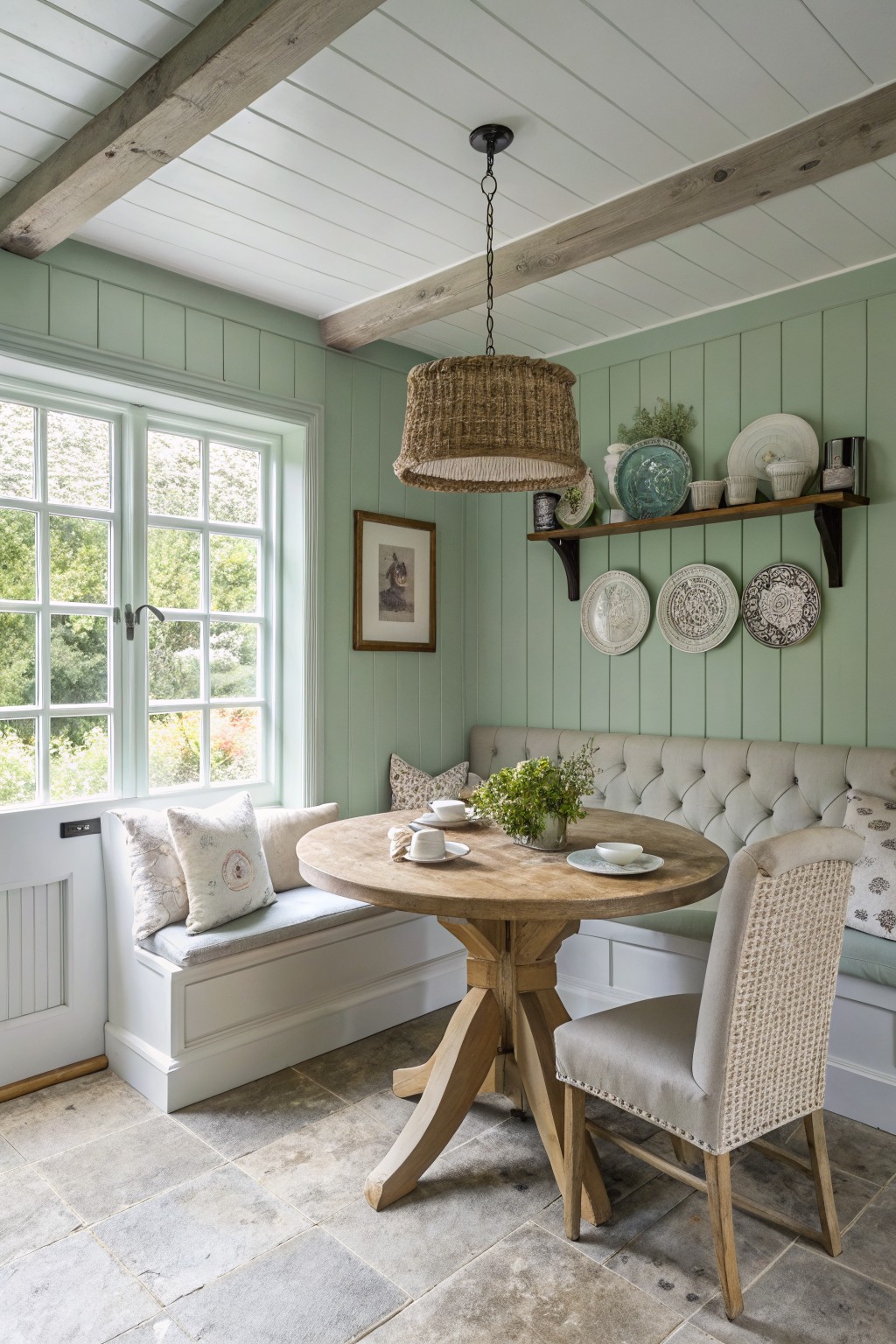
This pale sage green on the paneled walls reads very close to Sherwin-Williams Clary Sage or Benjamin Moore Saybrook Sage. It’s a muted green that’s calm and easygoing, perfect for bringing some rustic charm without overwhelming the space. Folks like it because it lets wood tones and simple furnishings shine.
That grayish undertone keeps it from going too yellow in warm light. Works best in sunny breakfast nooks like this one, paired with creamy cushions and oak tables. Just test it first if your room faces north.
Soft Greige Walls
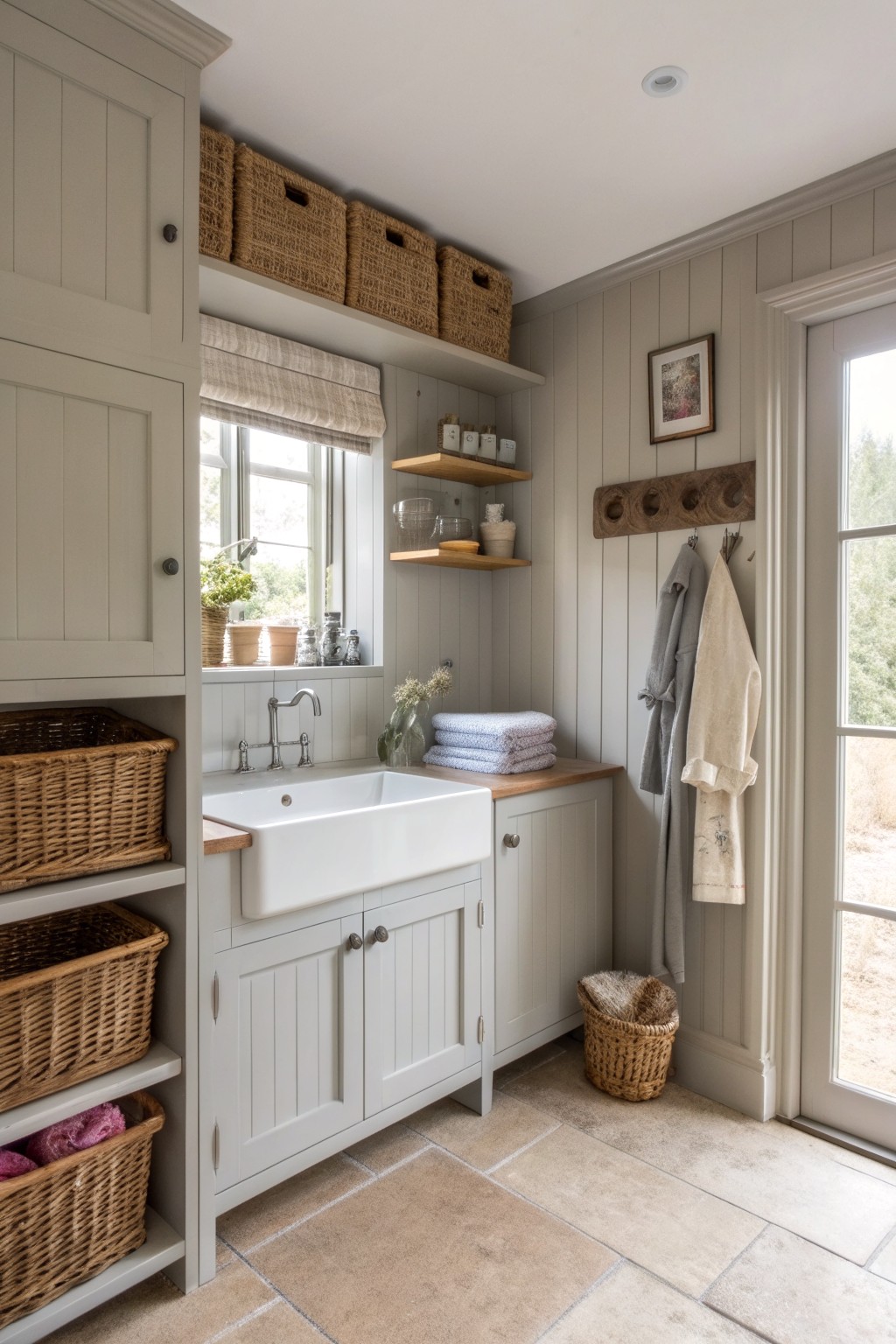
This soft greige on the walls seems closest to Sherwin-Williams Agreeable Gray, Benjamin Moore Revere Pewter, or Farrow & Ball Skimming Stone. It’s a warm neutral that sits right between gray and beige, giving that easy farmhouse coziness without going too dark or stark. What makes it nice is how it plays up wood tones and baskets around the room.
With its subtle warm undertone, it holds up well next to creamy cabinets and a white sink, especially where light filters in from windows. Works best in laundry spaces or kitchens with lots of natural wood. Steer clear if your lighting is mostly artificial though. It can pull cooler.
Soft Blush Pink Walls
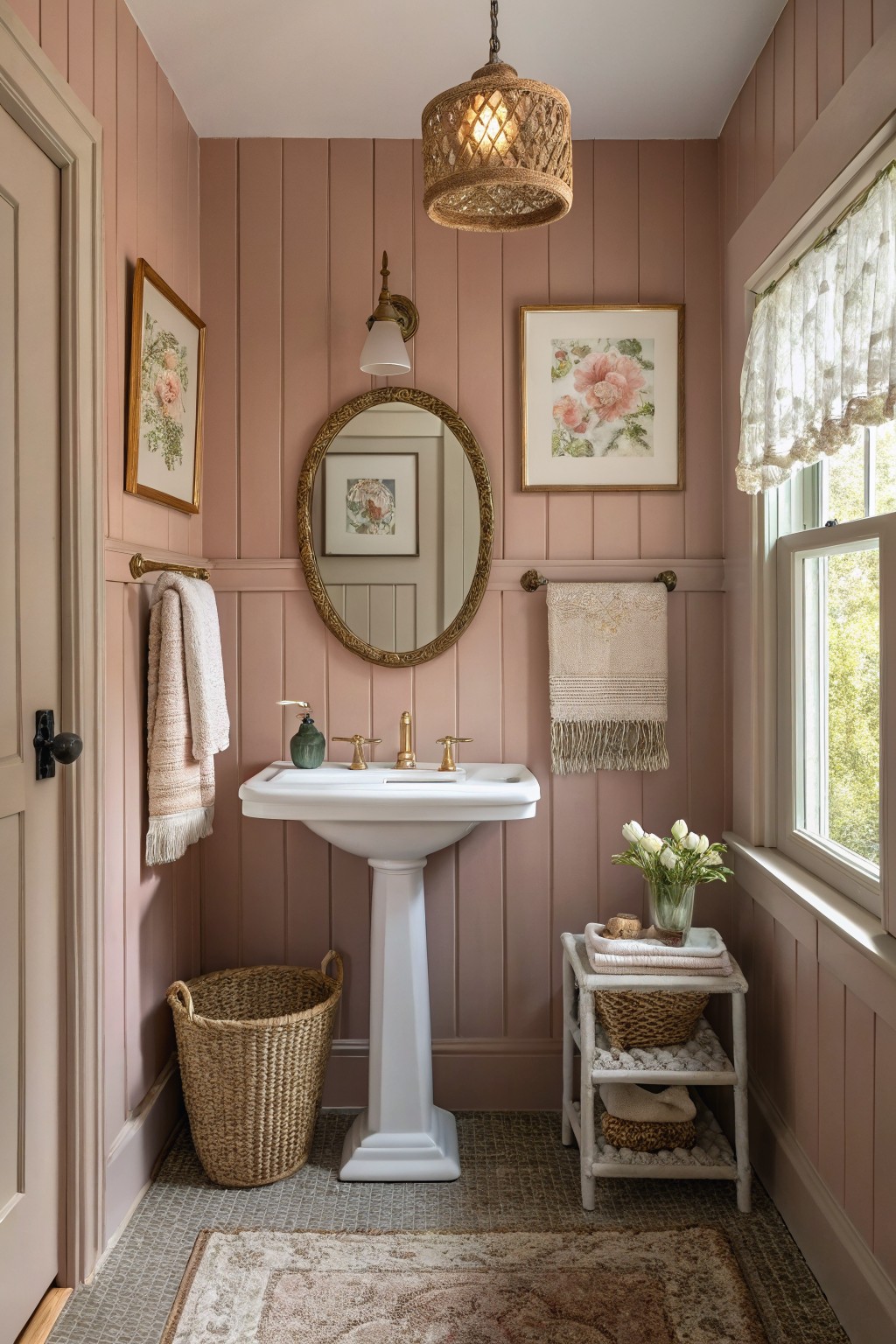
This soft blush pink covers the shiplap walls here, giving off a cozy farmhouse feel without going too bold. It reads very close to Sherwin-Williams Rosé or Benjamin Moore Head Over Heels, maybe even Farrow & Ball Setting Plaster on the warmer side. Folks like it because it warms up a small space like this powder room, making everything feel snug and lived-in next to the white pedestal sink and wood tones.
The undertone leans peachy-warm, which plays nice in natural window light and keeps brass fixtures from looking cold. Pair it with creamy whites or light woods for that rustic charm, but test it first in your room. It can pull a bit more pink in low light, so watch that if your bath stays dim.
Muted Sage Cabinets
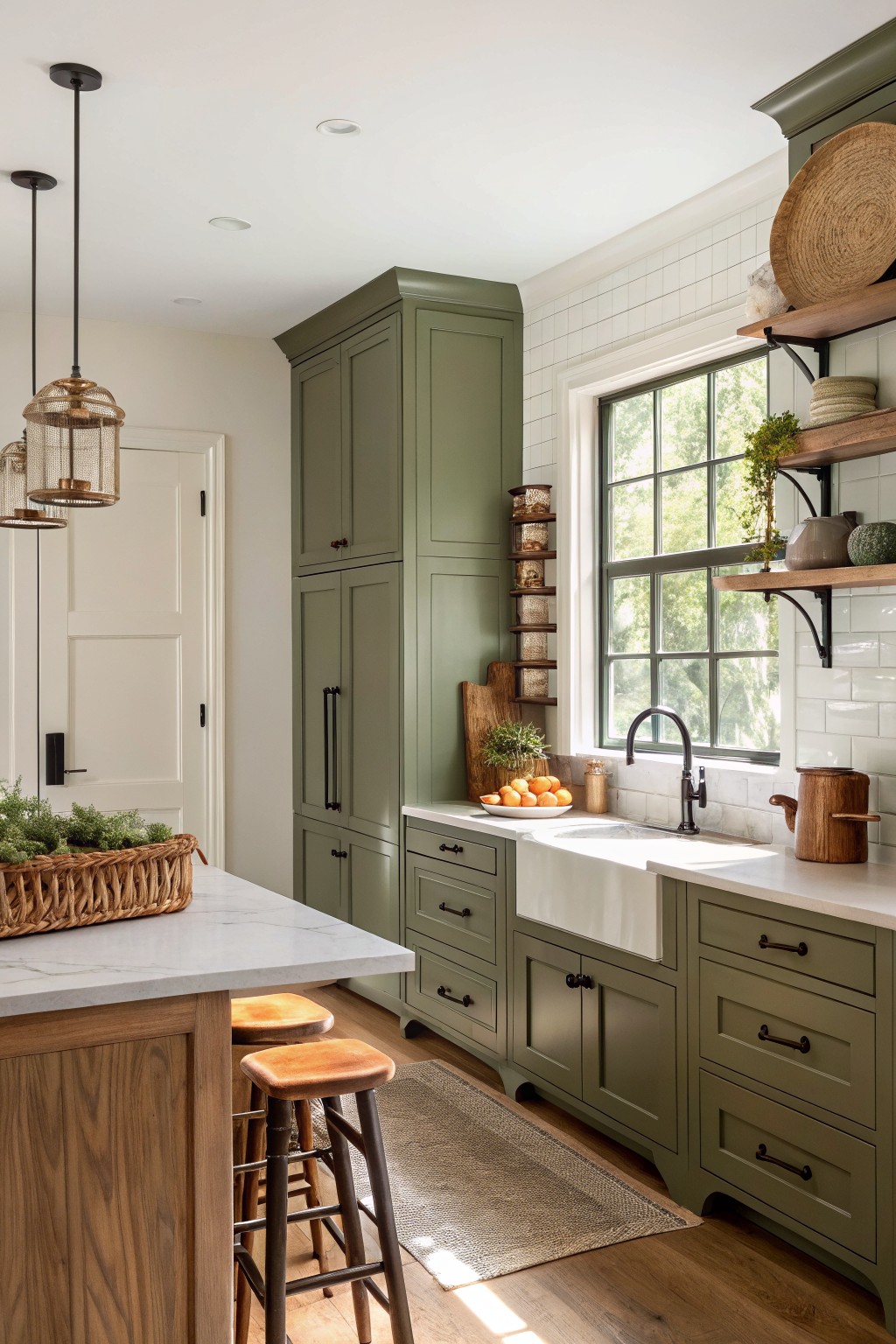
This kitchen pulls off a muted sage green on the cabinets that reads super cozy for farmhouse style. It looks closest to Sherwin-Williams Pewter Green or Benjamin Moore Saybrook Sage, maybe even Behr’s Back to Nature. That soft green-gray mix keeps things fresh without going too bold. Folks like it because it nods to nature while letting wood tones and white tile shine right alongside.
The undertone leans warm and earthy, especially next to the oak island and black hardware. It works best in rooms with good natural light, like this sunny spot by the window. Pair it with creamy walls and woven baskets for that lived-in rustic feel, but watch it doesn’t dull out under too many recessed lights.
Warm Beige Walls
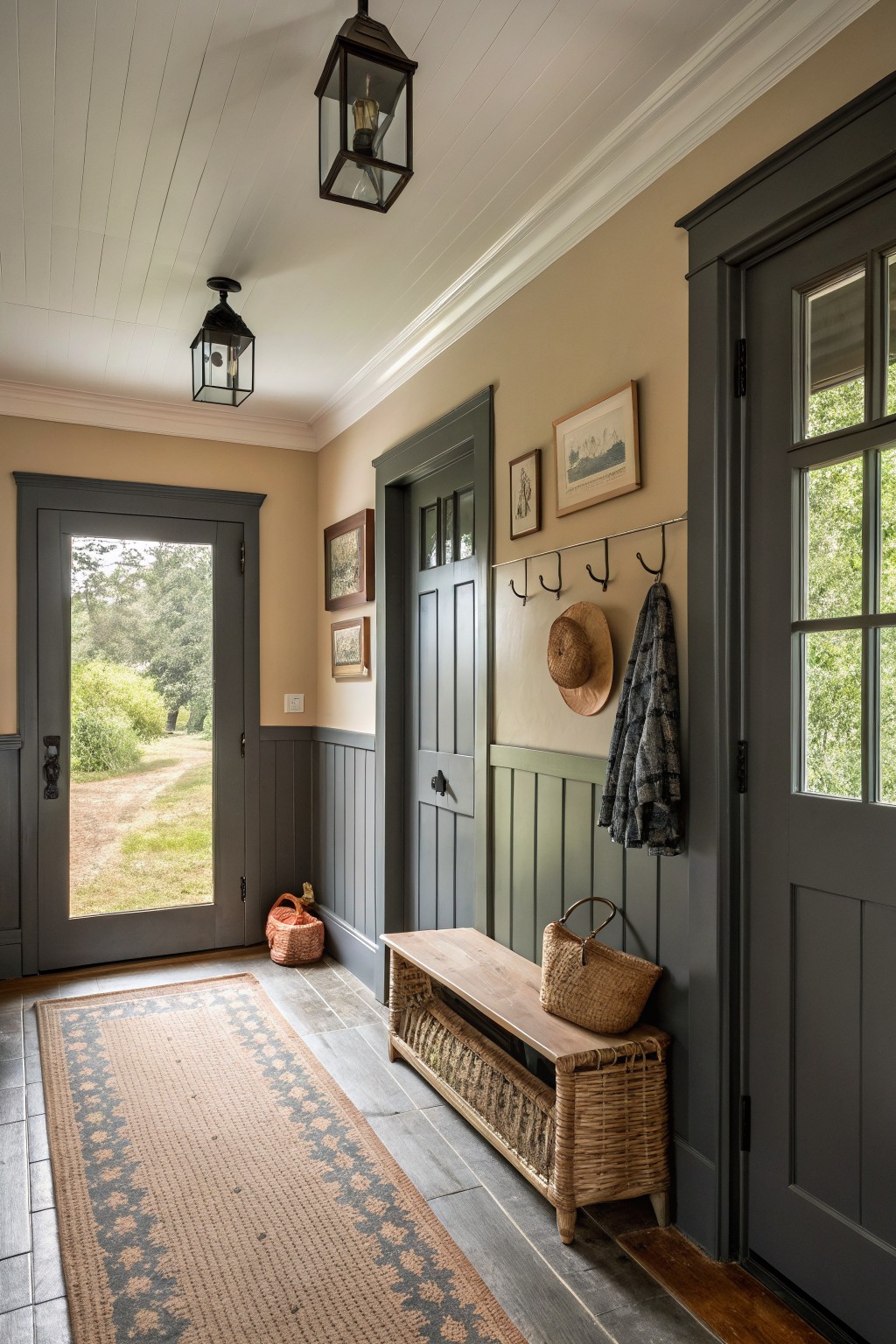
This warm beige on the upper walls looks closest to Sherwin-Williams Accessible Beige or Benjamin Moore Edgecomb Gray. Or maybe Behr’s Wheat Bread. It’s a soft neutral that brightens the room without feeling stark. Folks like it because it lets wood floors and baskets stand out nice.
That warm undertone plays well with the dark gray wainscoting below. Natural light from the doors makes it glow just right. Try it in entryways or hallways where you want cozy but not closed in.
Pale Blue Walls
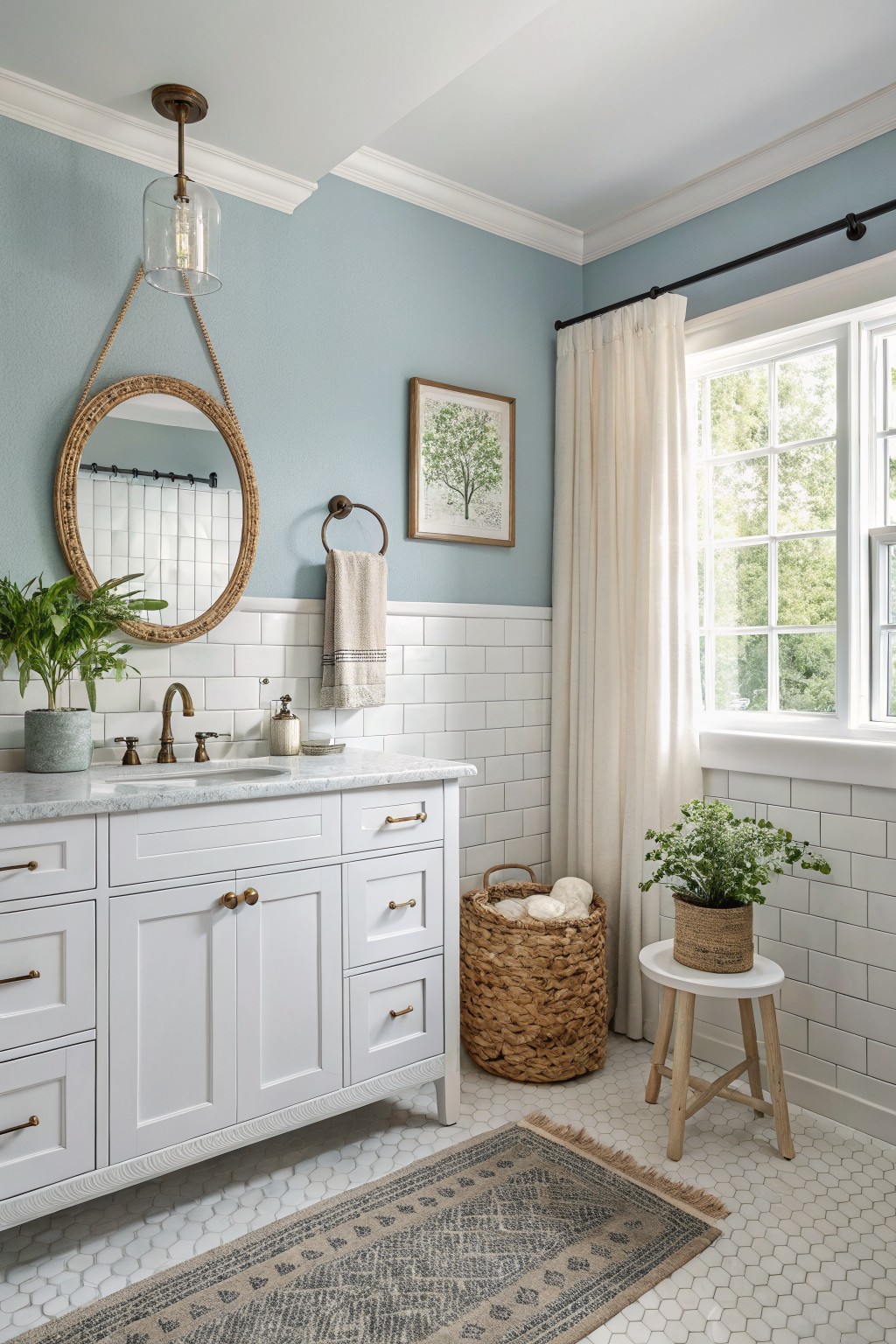
This pale blue on the walls seems closest to Sherwin-Williams Sea Salt or Benjamin Moore Palladian Blue, maybe even Behr’s Blue Whisper. It’s a light color from the cool blue family with just enough green undertone to feel calm and farmhouse-friendly. Folks like it because it brightens up white tile and cabinetry without overpowering the room.
That cool tone shines in spaces with plenty of window light, like this bathroom setup. It goes well with brass hardware, woven baskets, and wood stools. In dimmer spots it might lean gray, so grab a sample first.
Soft Terracotta Walls
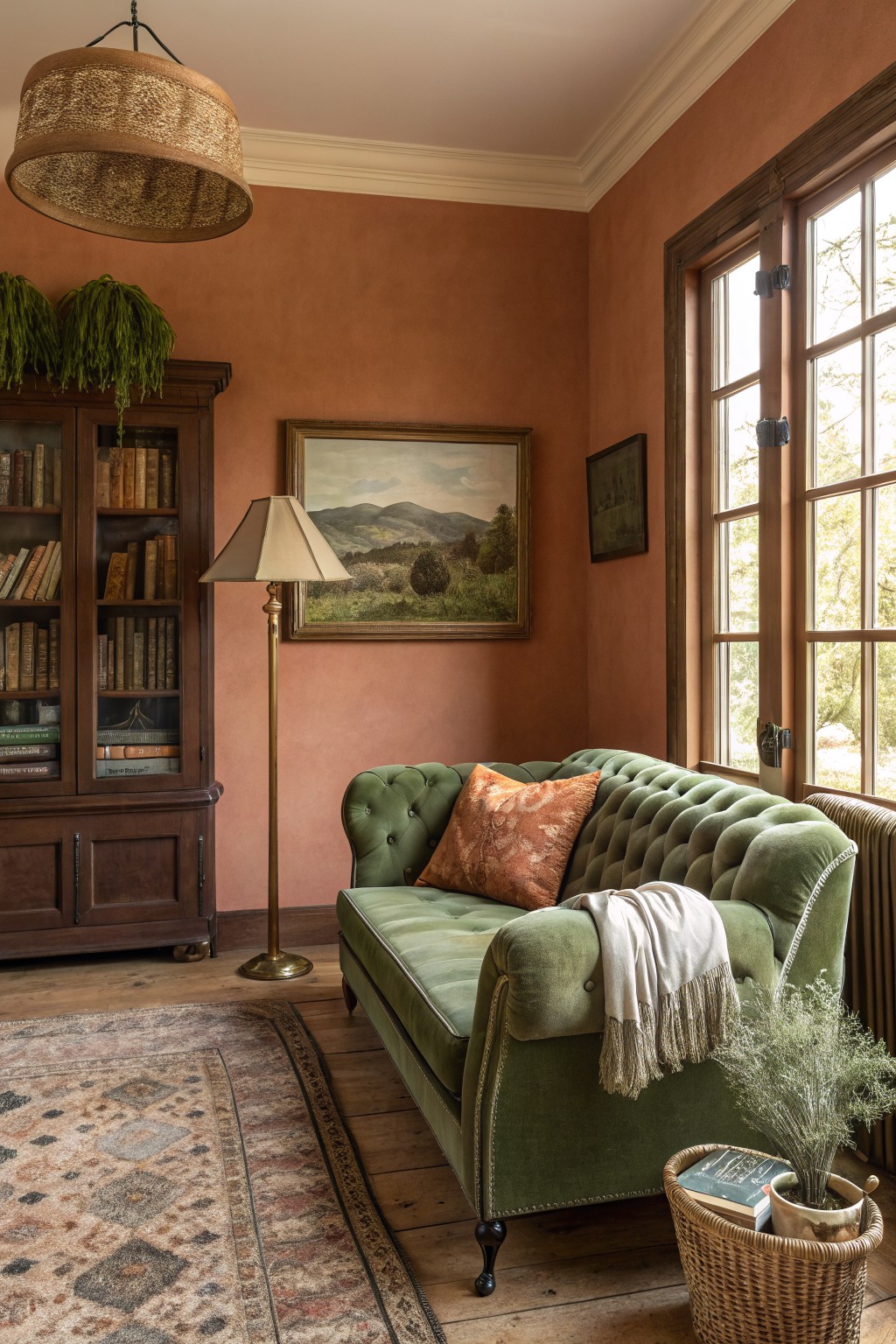
Those walls show a soft terracotta that looks closest to Sherwin Williams Terracotta 2154-30, Benjamin Moore Potter’s Clay HC-78, or Farrow & Ball Red Earth. It’s a warm earthy pink-orange, muted enough for everyday living. What draws people to it in farmhouse setups is how it settles in cozy, mixing rustic feel with a gentle glow next to wood furniture.
Warm peachy undertones make it read richer in afternoon light, like here by the windows. It works best around oak floors and green upholstery, say on a tufted sofa. Just test it first in your space. Shadows can pull it cooler.
Soft Blue Ceilings
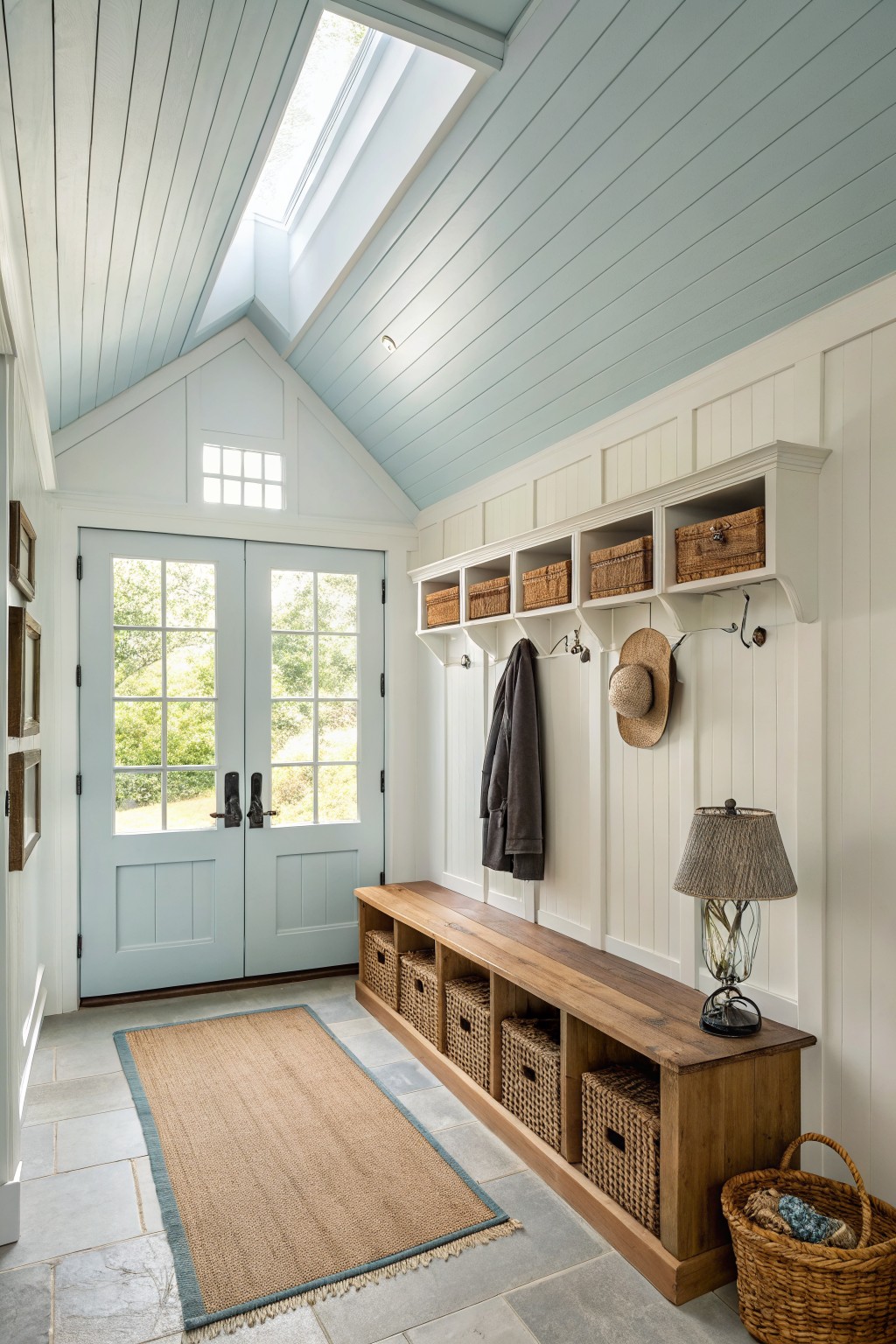
This pale blue shiplap ceiling seems closest to Sherwin Williams Rainwashed or Benjamin Moore Palladian Blue. It’s a gentle cool blue that lifts the whole entry space without overwhelming it. Folks like how it nods to coastal farmhouse vibes while staying cozy next to all that wood.
The undertone stays clean and airy in bright light, like from a skylight here. It pairs easy with white trim, oak benches, and woven baskets. Try it in mudrooms or hallways where you need a bit of color up high.
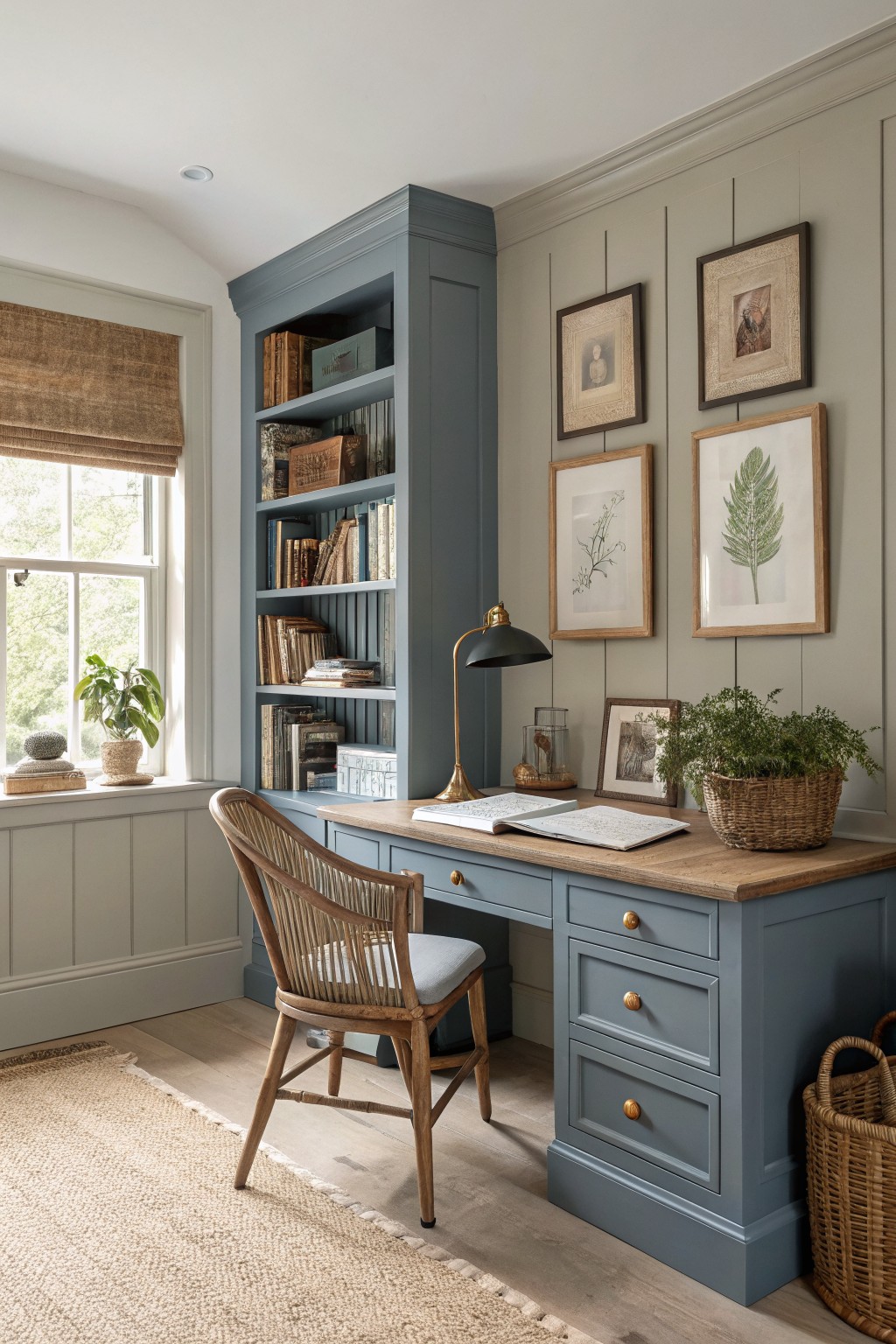
This deep navy blue on the bookcase and desk cabinets reads very close to Sherwin-Williams Naval or Benjamin Moore’s Hale Navy. It’s that kind of rich, moody blue that brings a touch of sophistication to a simple farmhouse room without overpowering everything else. Folks like it because it makes wood tones pop, like the oak desk top here.
The gray undertones keep it from going too bright. It works best in rooms with good natural light, paired against pale greige walls or warm woods. Just watch it doesn’t feel too heavy in a small space… lighten up with plants or baskets nearby.
Warm Greige Bedroom Walls
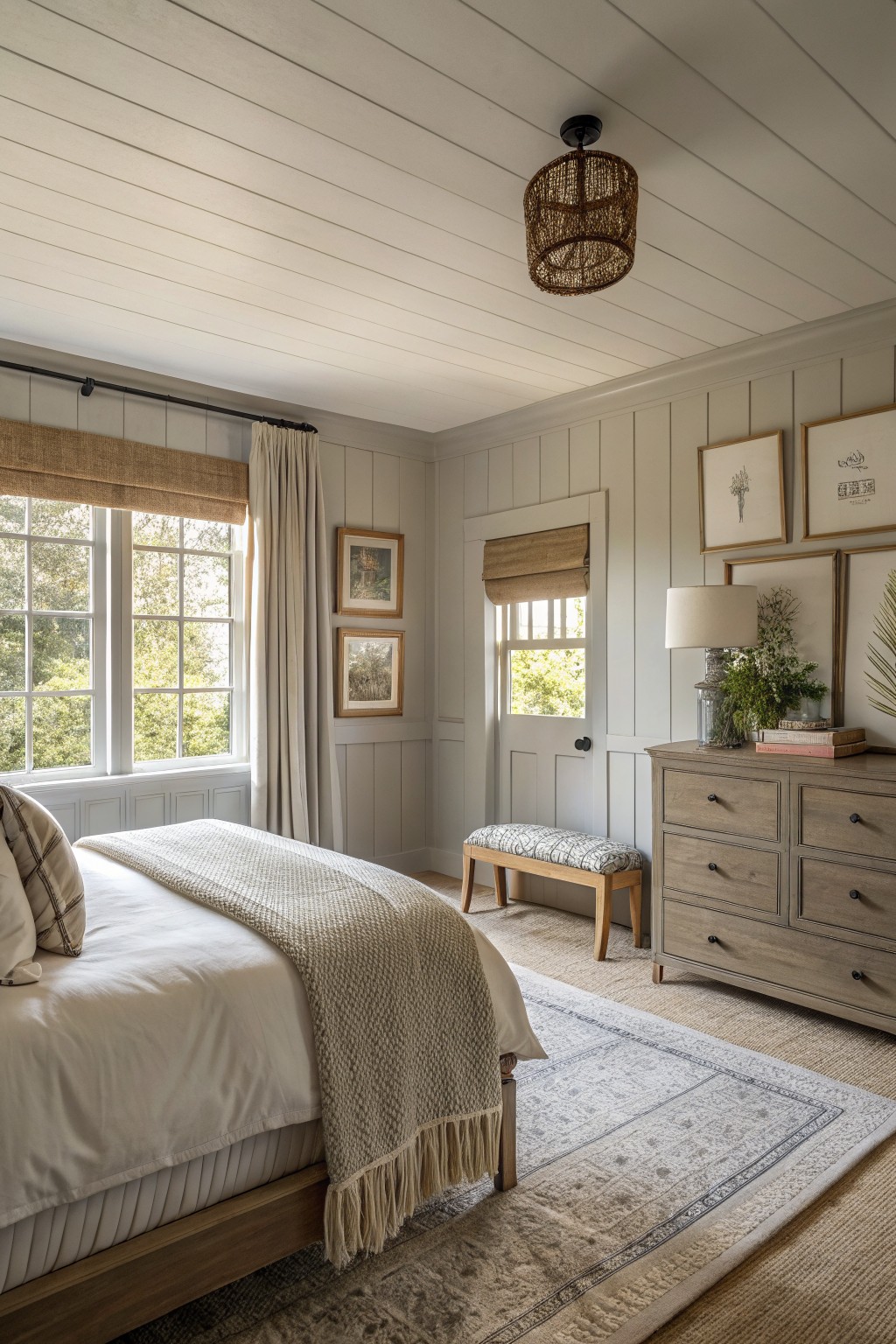
You can’t go wrong with a soft greige like the one on these walls. It reads very close to Sherwin-Williams Repose Gray or Benjamin Moore Edgecomb Gray, maybe Behr’s Silver Drop too. This neutral sits warm enough to cozy up a farmhouse bedroom, but light enough not to shrink the space.
Those subtle warm undertones play nice with natural wood pieces and morning light coming through big windows. Just watch it doesn’t pull too beige in low light… stick to rooms with good windows, and layer in textured throws for that lived-in feel.
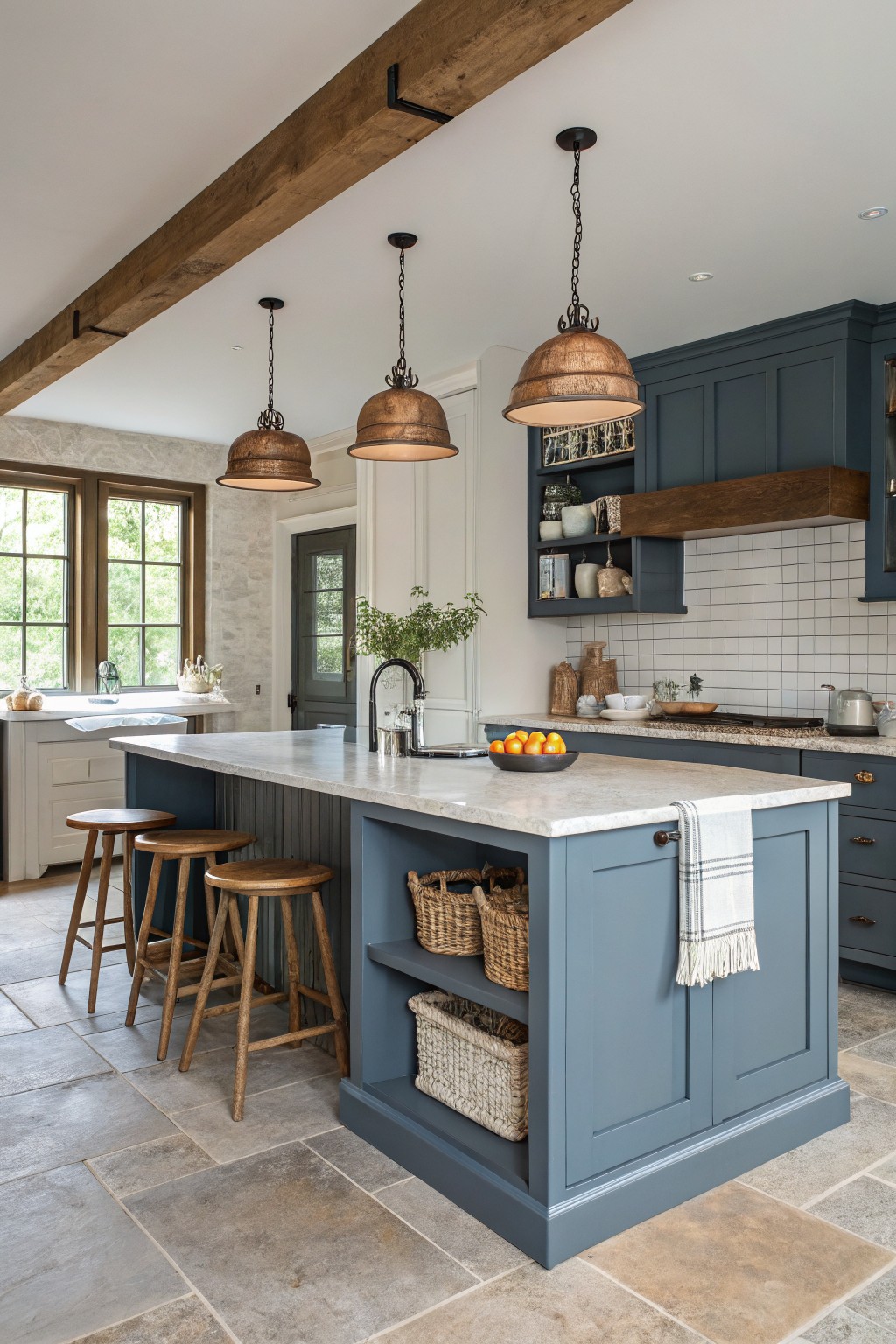
This deep navy shows up strong on the kitchen island and cabinets. It looks closest to Sherwin-Williams Naval or Benjamin Moore Hale Navy, maybe even Farrow & Ball Hague Blue. It’s the kind of rich blue that adds real coziness to a farmhouse setup, especially when you have wood beams overhead like this.
That navy sits well with a gray undertone, so it doesn’t go too blue in different lights. Works best in kitchens with good natural window light. Go for it alongside crisp white tile and warm woods on stools or floors, but keep wall paint light or it’ll close in the room.
Frequently Asked Questions
Q: How do I test these cozy farmhouse colors in my home before committing to a full can?
A: Pick up sample sizes from the paint store and slap them on pieces of foam board. Move the boards around your room to catch morning light, afternoon glow, and evening lamps. You’ll spot the true vibe that way.
Q: Which colors hide everyday smudges best in a kitchen or entryway?
A: Lean toward those warm greiges and soft taupes. They blend fingerprints and scuffs right in. Whites show every mark too fast.
Q: Do these paints play nice with lots of wood beams or cabinets?
A: They sure do. The earthy tones echo natural wood grains without clashing. Just wipe down the wood first for a fresh contrast.
Q: Should I paint trim the same color as the walls for that farmhouse look?
A: Try a slightly deeper shade on trim to add subtle depth. It frames everything nicely. Step back after the first coat dries to check the flow.