I’ve painted enough rooms to know that a color’s true character only shows up once it’s on the walls under your own lights.
I once chose a soft taupe thinking it would ground my space, but it warmed up surprisingly in the morning sun and felt just right by evening.
Modern shades succeed when they balance cool and warm tones without pulling too gray or muddy in real life.
Some fail because they look flat up close or shift harshly from room to room.
Sample a few on poster board first.
Soft Greige Walls
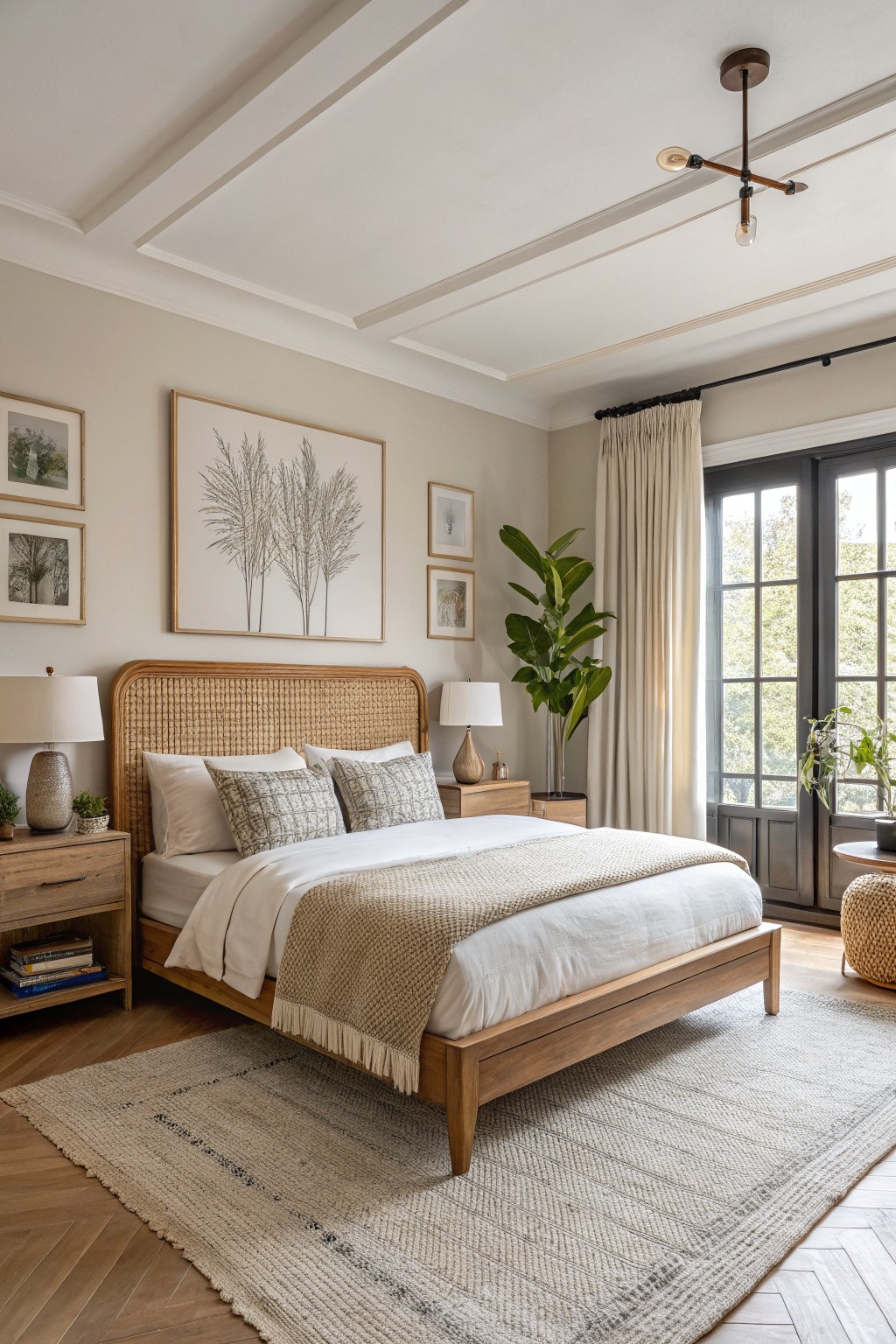
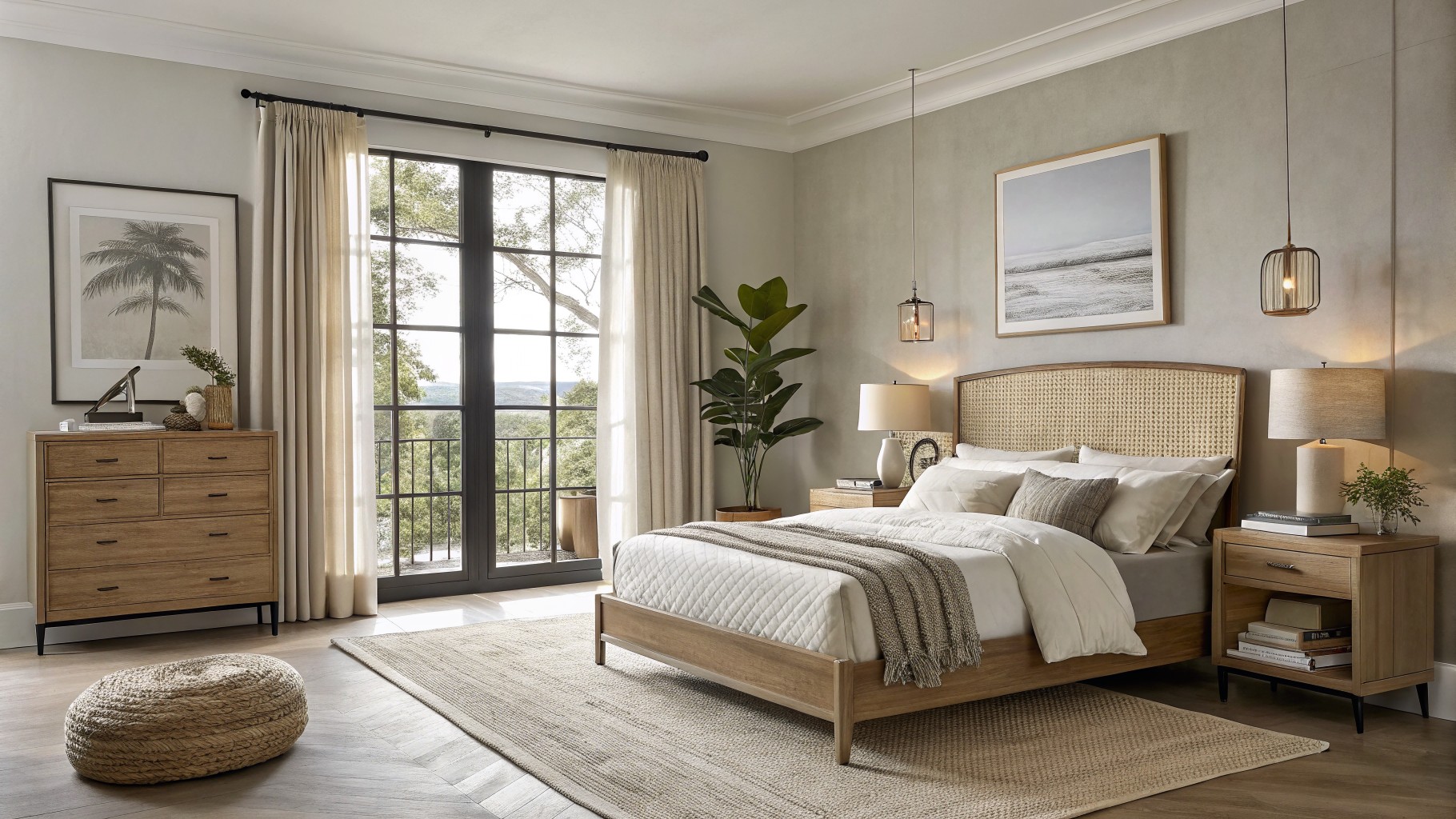
Those walls catch your eye right away with their soft greige tone. It looks closest to Sherwin-Williams Accessible Beige or Benjamin Moore Edgecomb Gray, maybe Behr’s Silver Shadow too. It’s that easy warm neutral that feels light but not stark, perfect for keeping a bedroom restful.
The warm undertone plays well off the oak floors and wood bed frame you see here. Rooms with plenty of natural light make it read even better. Stick to natural materials like rattan or plants alongside it, and skip anything too cool toned.
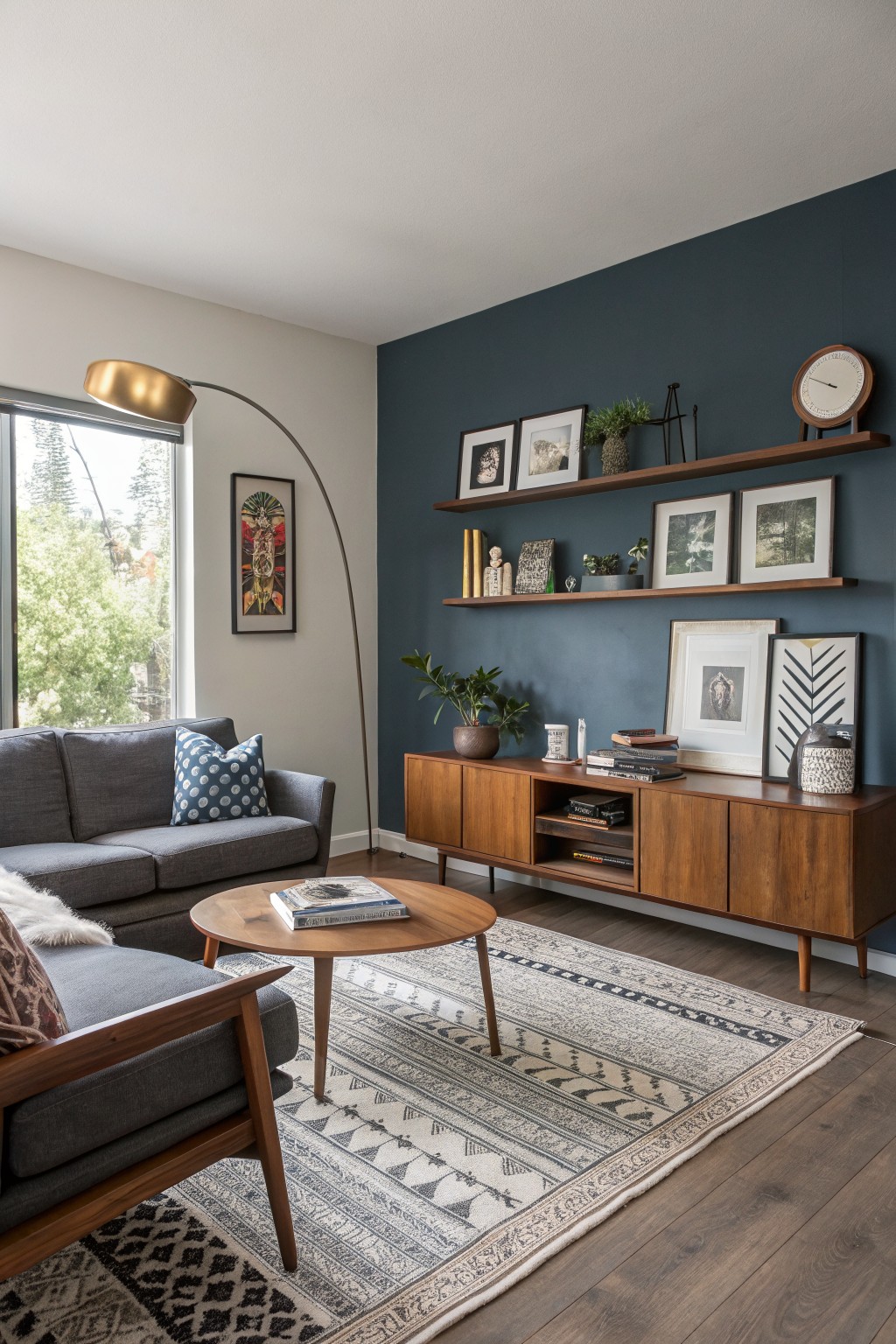
That deep navy paint on the accent wall reads very close to Sherwin-Williams Naval or Benjamin Moore’s Hale Navy, maybe even Farrow & Ball’s Hague Blue. It’s a moody blue with just enough cool undertone to feel modern and fresh. People go for it because it adds real punch without overwhelming the room, especially next to lighter walls.
In this setup, the navy sits great against warm wood furniture and that mid-century credenza. It works best in rooms with good natural light, like near big windows, so it doesn’t go too cave-like. Pair it with neutrals and plants to keep things airy… and watch for overly dark trim that might muddy it up.
Soft Gray Kitchen Cabinets
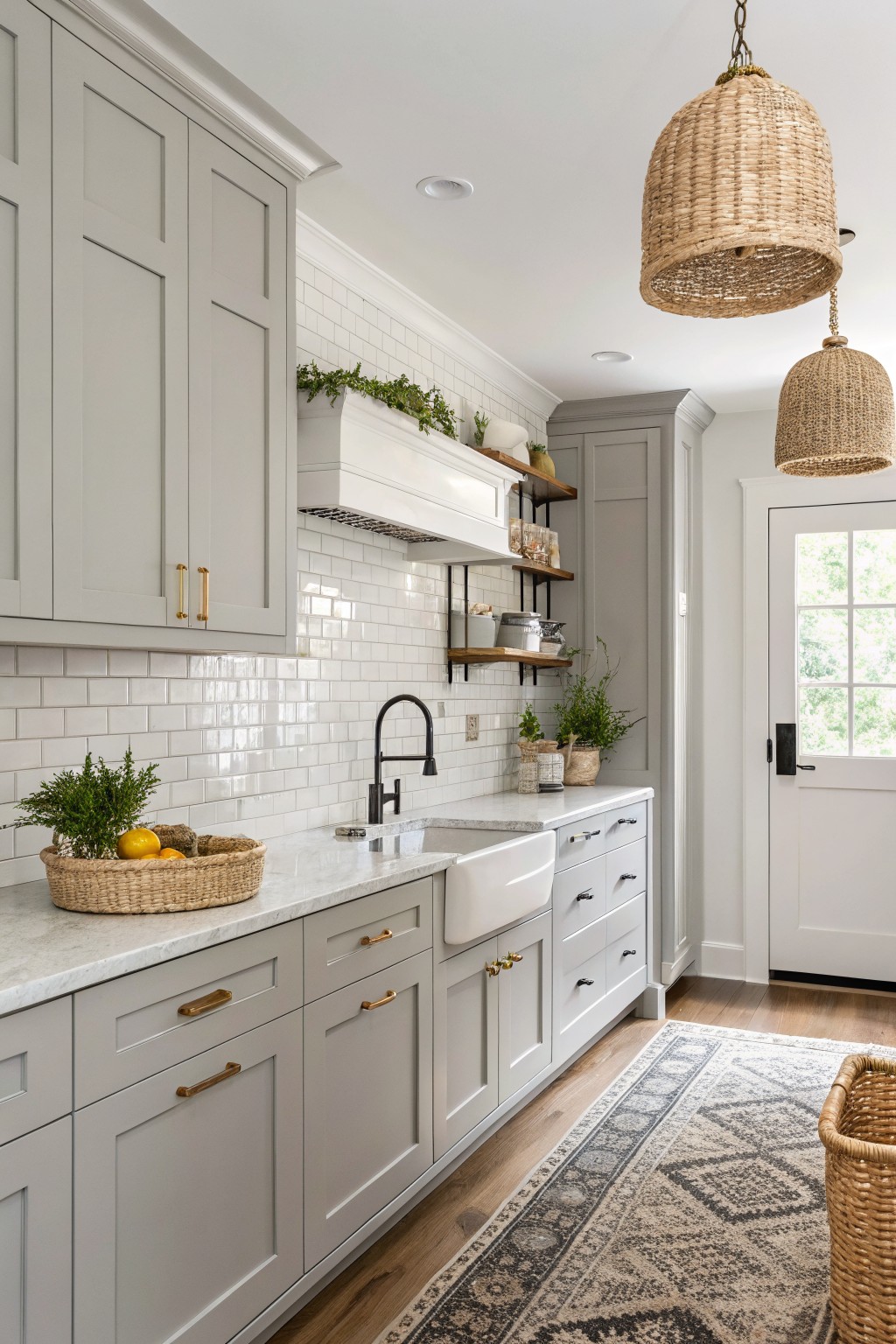
This kitchen’s cabinets show off a soft light gray that reads very close to Sherwin-Williams Repose Gray or Benjamin Moore Gray Owl. Maybe Behr’s Silver Drop too. It’s the kind of easy gray that feels fresh but not stark, and it just settles right into a busy room like this.
That subtle warmth in the undertone keeps it from looking cold next to the wood floors and white tile. Pairs nicely with black fixtures or brass hardware. Stick to spaces with decent light, though… it can read flatter in dim spots.
Deep Green Walls
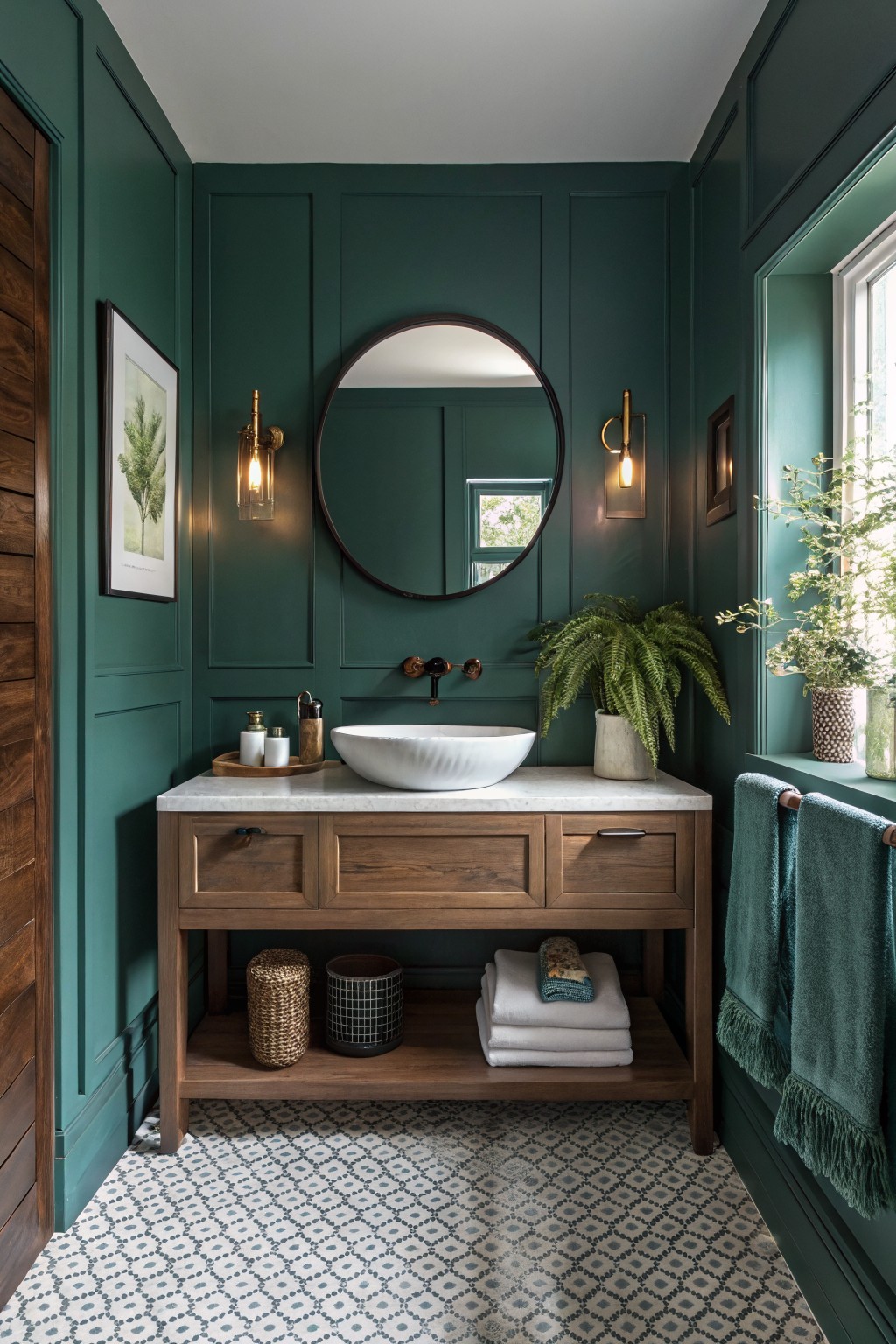
This powder room pulls off a deep green paint on the walls that’s rich and a little moody. It reads close to Farrow & Ball Studio Green, Sherwin-Williams Pewter Green, or Benjamin Moore Guilford Green. Folks like it because it makes even a tiny space feel wrapped up and calm. The wood vanity pops right against it.
That blue undertone keeps the green from feeling flat or too forest-like. It works best with warm lights and simple whites, like the sink here. Add some plants… and it livens up nicely.
Pale Aqua Shiplap Walls
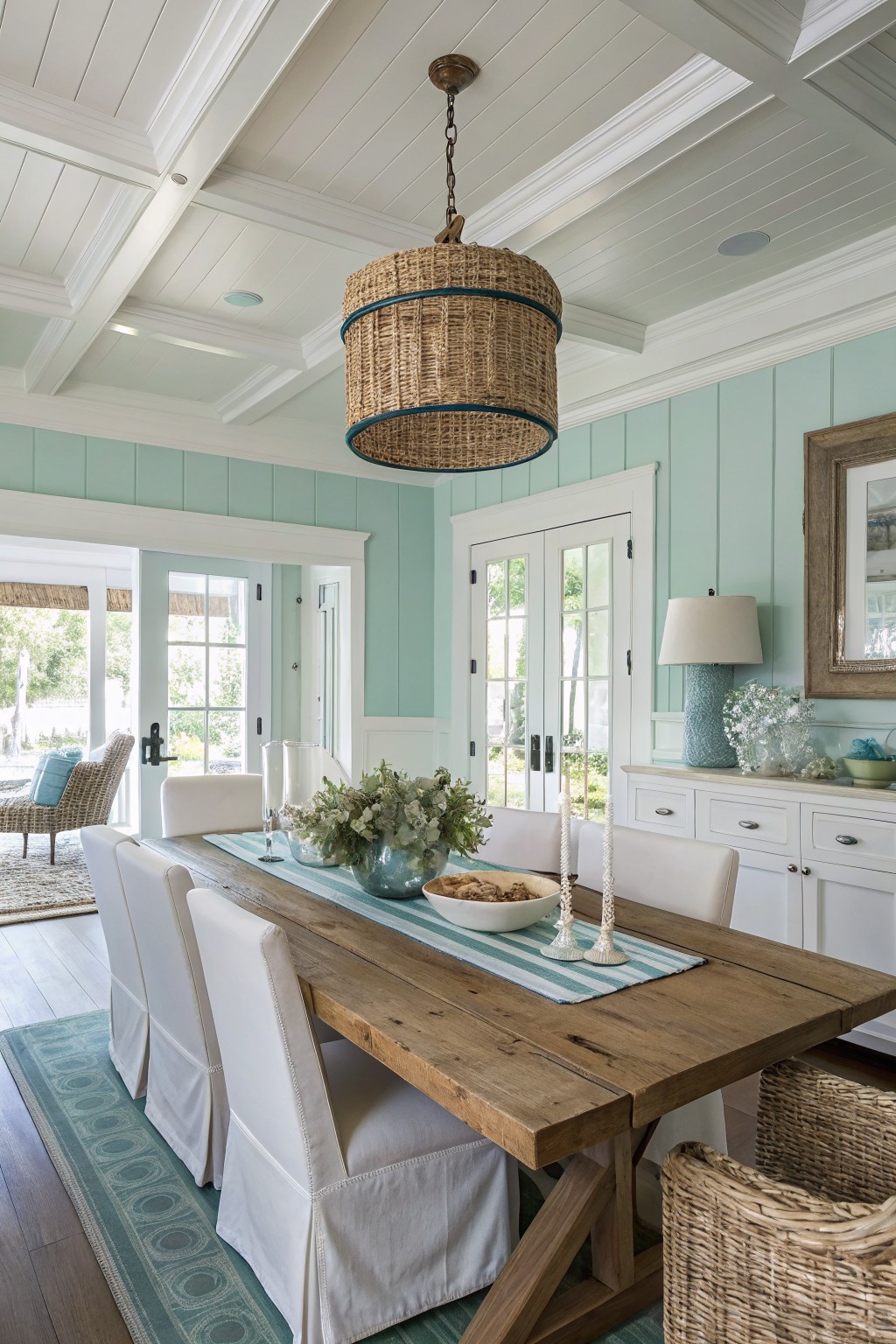
Those walls catch your eye right away with their pale aqua shade. It reads very close to Sherwin-Williams Sea Salt SW 6204 or Benjamin Moore Palladian Blue HC-144. A cool blue-green like this keeps things fresh without going too bright. Folks like it because it nods to coastal spots but works just about anywhere indoors.
The undertone stays cool and crisp next to all that natural wood and white trim. It shines best in rooms with good natural light, like this dining space opening to outdoors. Pair it with slipcovered chairs or baskets for that easy feel. Just test samples first. Light can shift it greener or bluer.
Warm Greige Entryway Walls
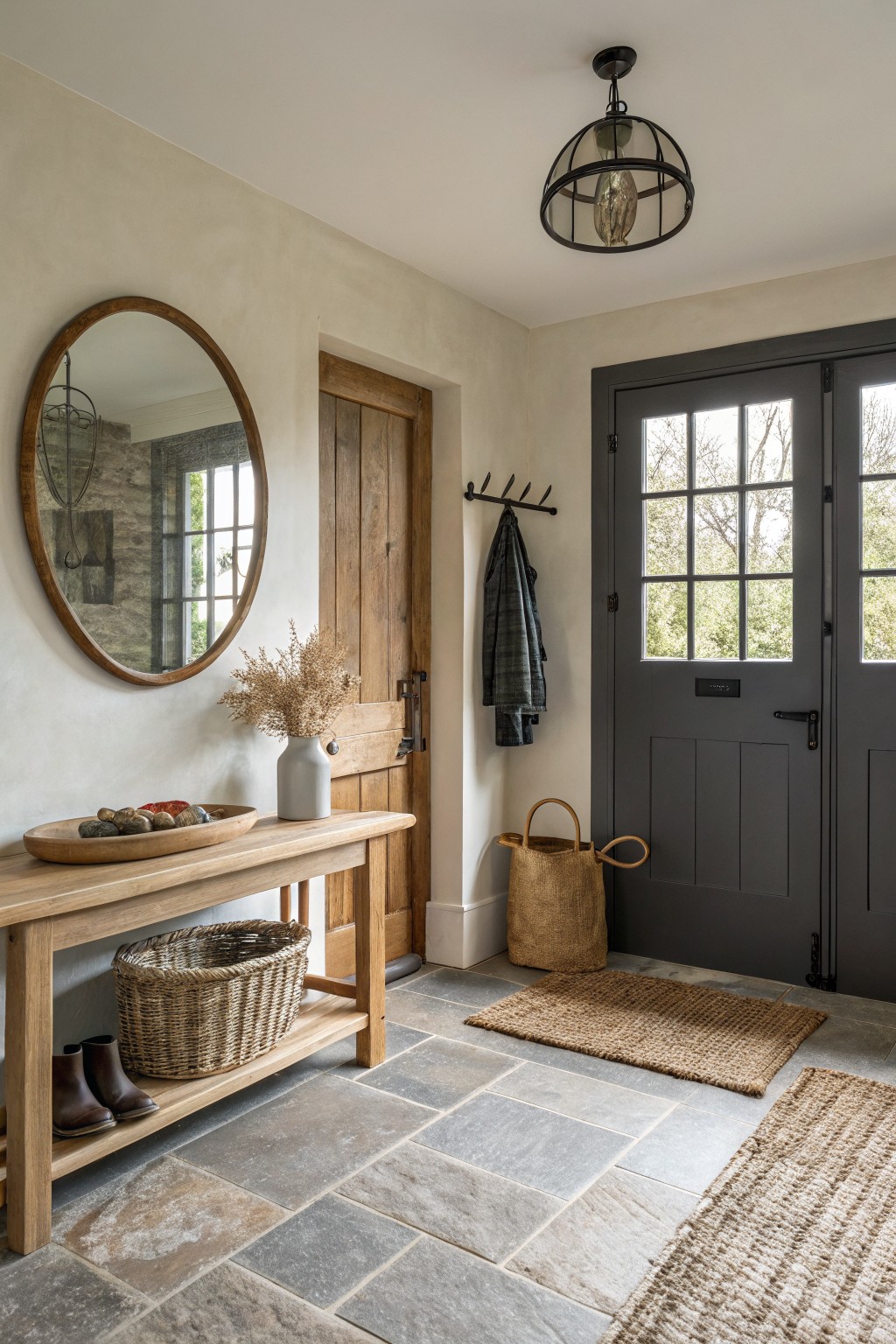
The walls here pull off a soft greige that’s warm without going yellow. It looks closest to Sherwin-Williams Agreeable Gray, or maybe Benjamin Moore Edgecomb Gray and Farrow & Ball Skimming Stone. People like this shade because it sits quiet but makes wood trim and stone floors stand out nice. Entryways like this one show how it keeps things feeling homey.
Warm beige undertones give it life, especially with good window light. It works best paired with dark doors or black hooks, and raw textures too. Just test it in your space first, lighting can shift the gray a bit.
Soft Blush Pink Walls
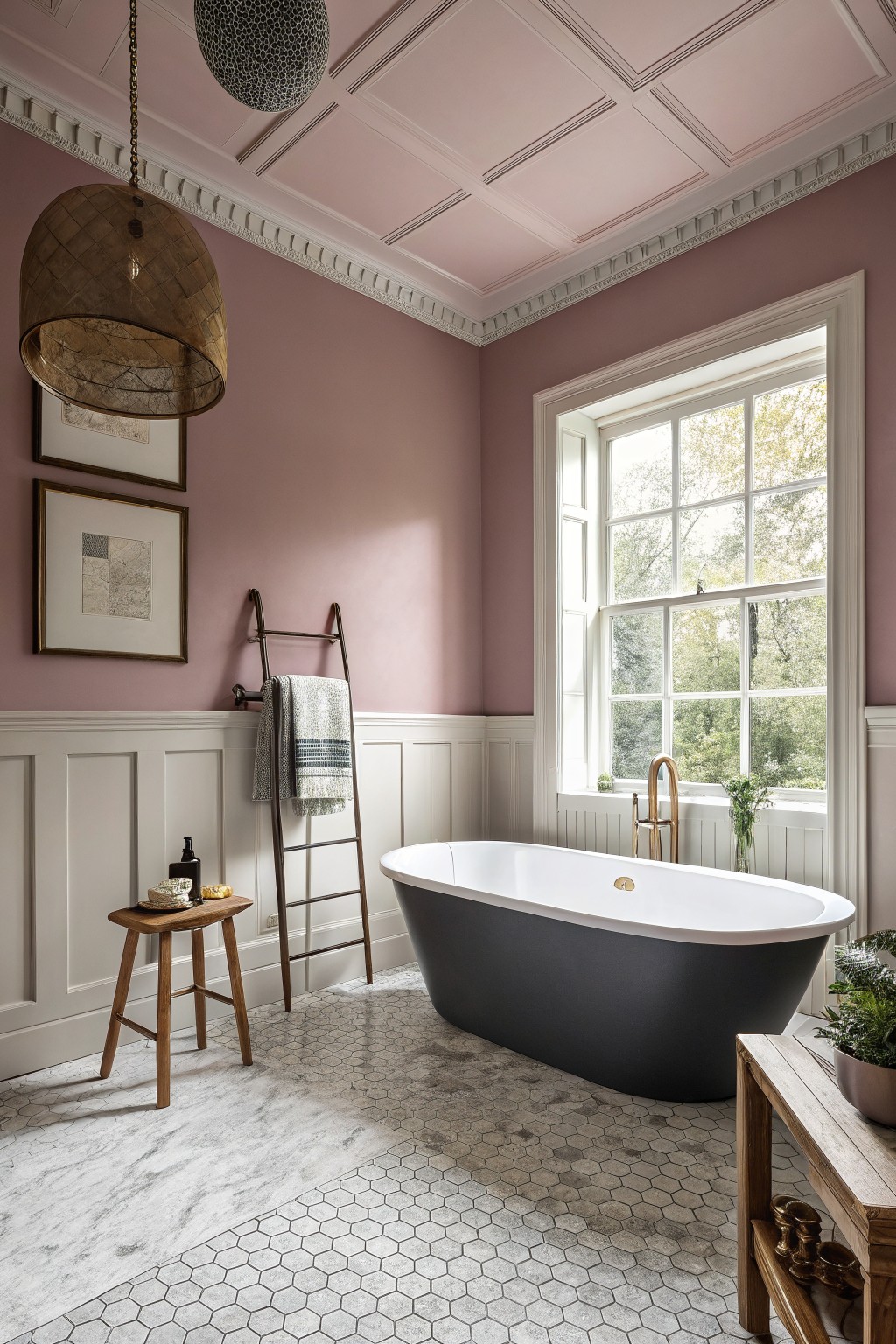
This soft blush pink covers the walls and ceiling here. It looks closest to Farrow & Ball’s Setting Plaster, or maybe Benjamin Moore’s First Light. Or Sherwin-Williams Rosé. Gentle color like that. Not too bold. Makes a bathroom feel calm without being boring.
Warm undertone picks up the wood stool and brass bits nicely. Good natural light helps it read right. White trim keeps things crisp. Steer clear of too much black if the room’s small… might close it in.
Sage Green Cabinets
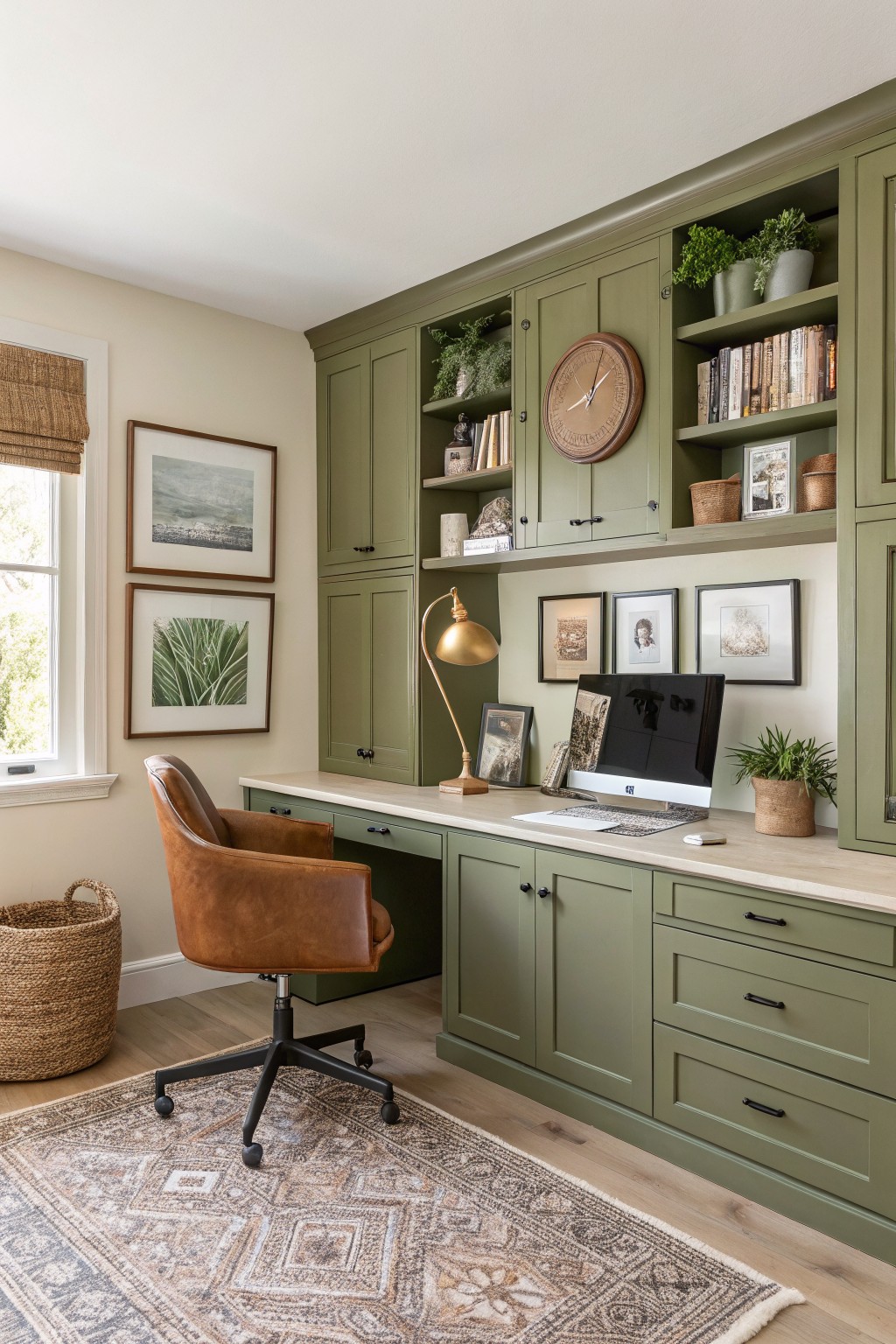
This soft sage green on the cabinets gives the whole office a calm, grounded feel. It looks closest to Sherwin-Williams Clary Sage (SW 6178), Benjamin Moore Saybrook Sage (HC-114), or Farrow & Ball Calke Green. Folks like it because it’s not too bright, just enough green to nod to nature while keeping things modern and easy to live with.
The color picks up a warm gray undertone, especially next to the wood desk and cream walls. It shines in spaces with natural light from windows. Pair it with tan leather or woven baskets… avoids feeling cold. Watch for north-facing rooms where it might read a touch cooler.
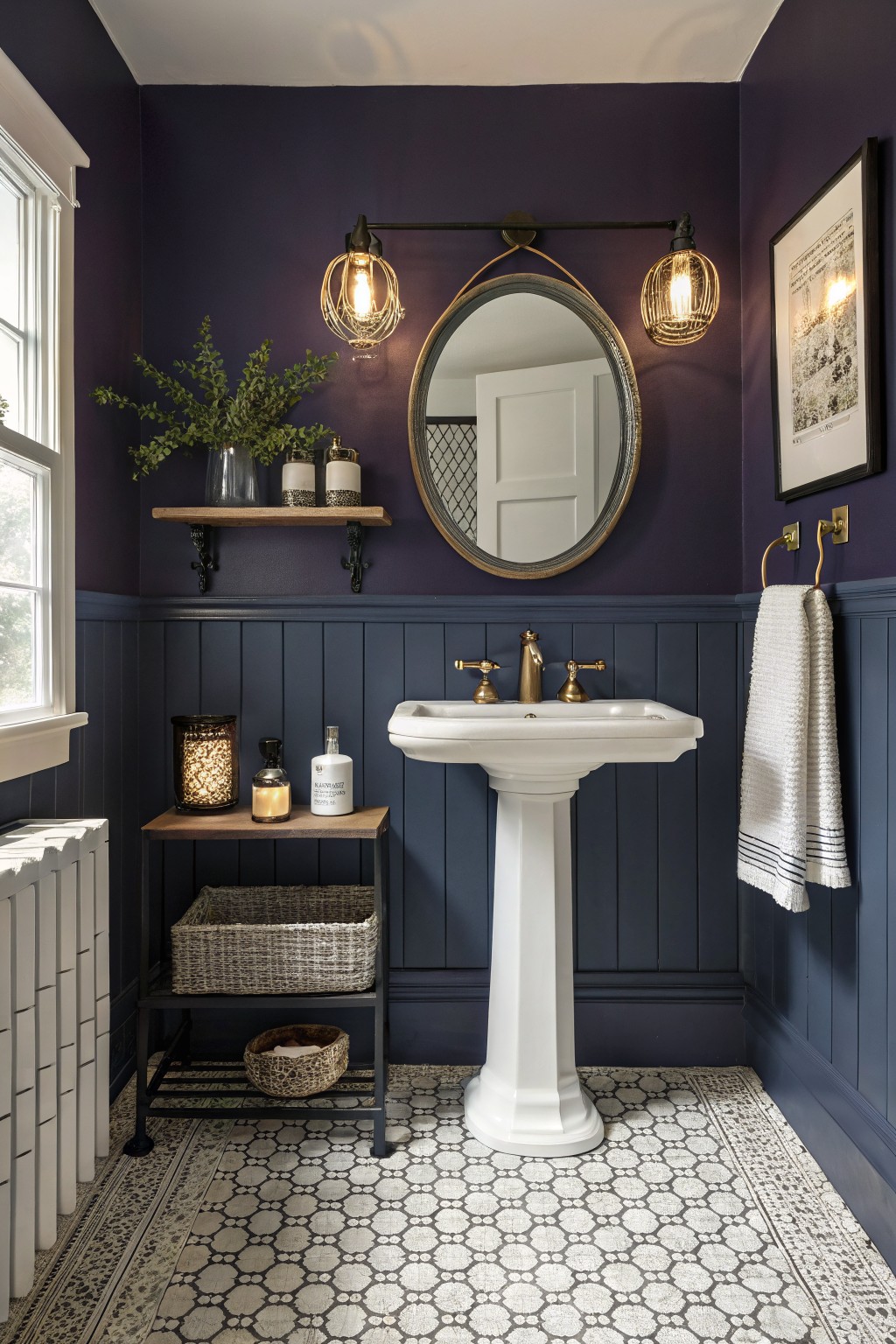
This powder room uses a deep navy blue on the walls and wainscoting. It looks closest to Sherwin-Williams Naval or Benjamin Moore’s Hale Navy, maybe even Farrow & Ball’s Hague Blue. That rich tone wraps the space in a cozy feel. It’s moody but not overwhelming, especially next to the white sink.
The color has cool undertones that pick up a hint of purple in softer light. It shines in small rooms like this one, where a window keeps it from feeling cave-like. Brass lights and fixtures play off it nicely. Just test samples first. North-facing spots might need a warmer match.
Sage Green Kitchen Cabinets
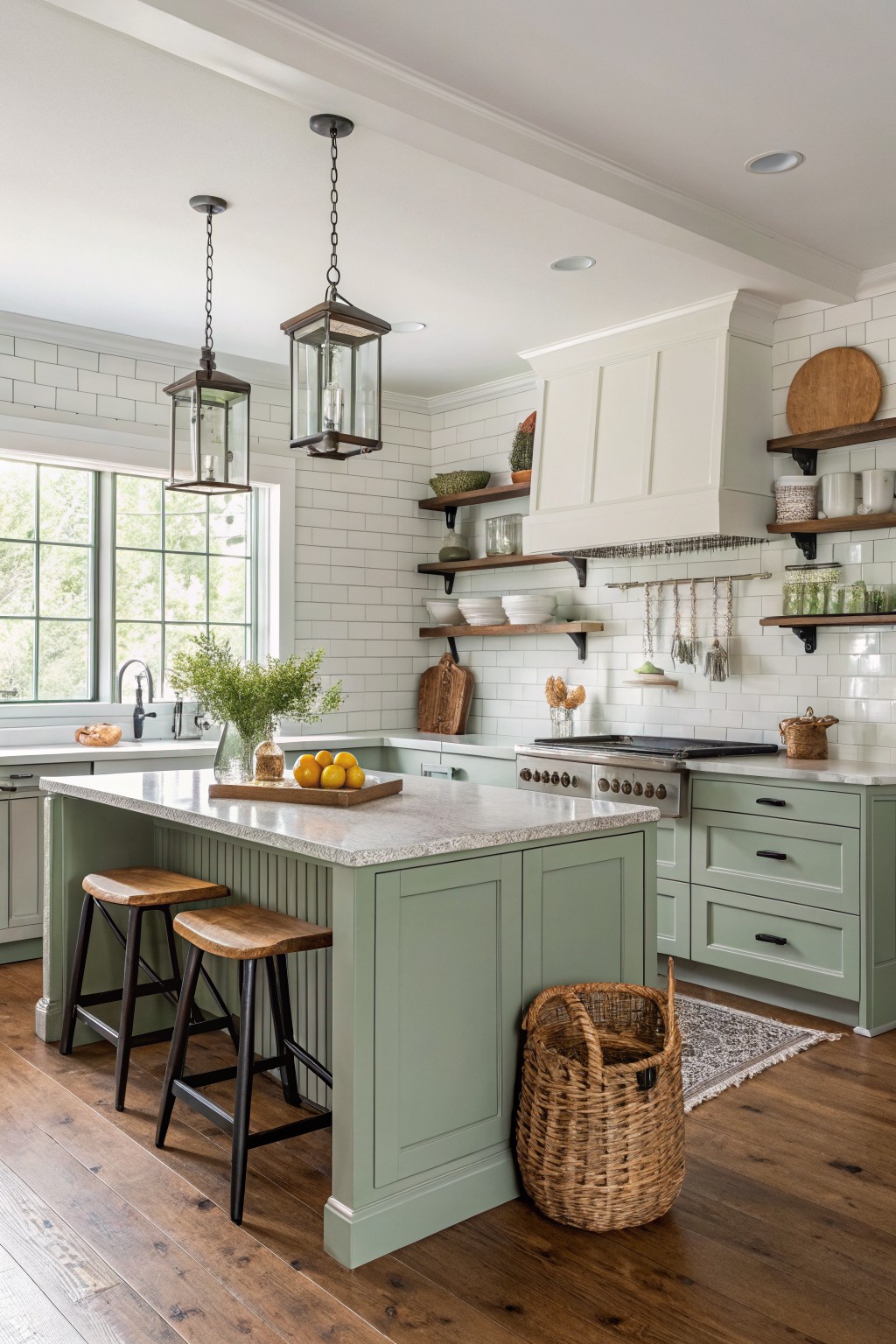
That soft sage green on the cabinets here gives the kitchen a calm, updated feel. It looks closest to Sherwin-Williams Retreat or Benjamin Moore Saybrook Sage, maybe Behr’s Sagebrush too. It’s from the muted green family, not too bright, just enough color to notice against all the white.
The gray undertone keeps it from going too yellow in warm light, which works great next to wood floors and those white tiles. Try it in kitchens with lots of natural window light. White uppers and brass pulls make it pop without overwhelming.
Charcoal Gray Walls
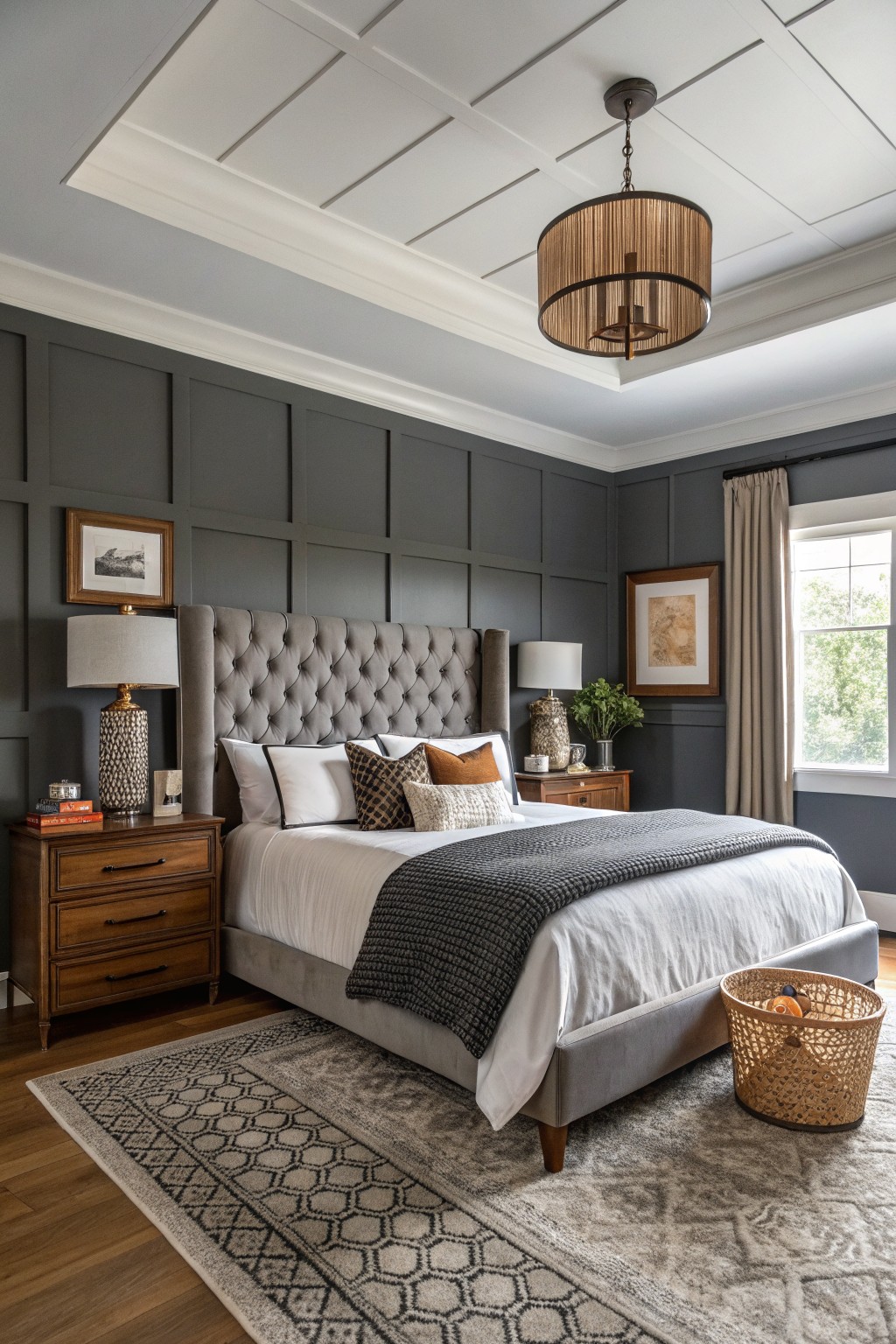
You see this charcoal gray paint on the paneled walls here, pulling the bedroom together nicely. It looks closest to Sherwin-Williams Iron Ore or Benjamin Moore Kendall Charcoal, maybe even Farrow & Ball Down Pipe. Folks like it because it’s dark enough for that cozy mood but stays sleek with the right light.
A subtle warm undertone makes it play well off wood pieces like the nightstands. Stick it in rooms with windows so it doesn’t feel too heavy. White trim and textured bedding keep everything fresh… no big surprises there.
Soft Pale Yellow Walls
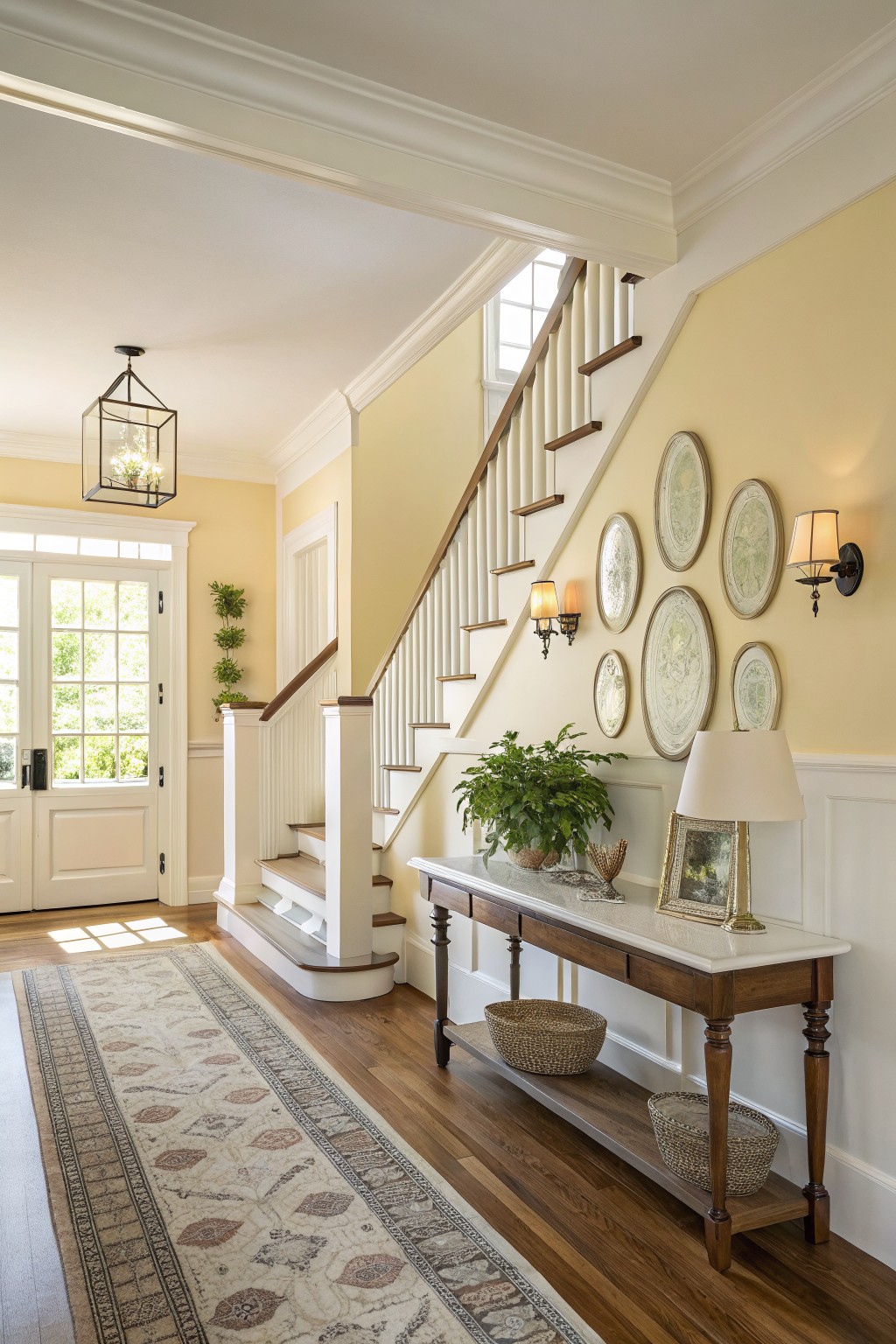
This soft pale yellow on the walls looks closest to Sherwin-Williams Greek Villa or Benjamin Moore Cloud White, maybe Behr Rice Pudding too. It’s a warm neutral yellow that’s light enough to open up a hallway or entry but has just enough color to feel cozy. You notice how it sits nicely against the white trim and wood floors without washing out.
That yellow undertone keeps it from going too creamy in bright light. It works best in spaces with some sun, like this foyer near windows. Pair it with natural wood pieces and greenery for balance, and skip anything too cool toned or it’ll clash a bit.
Soft Seafoam Walls
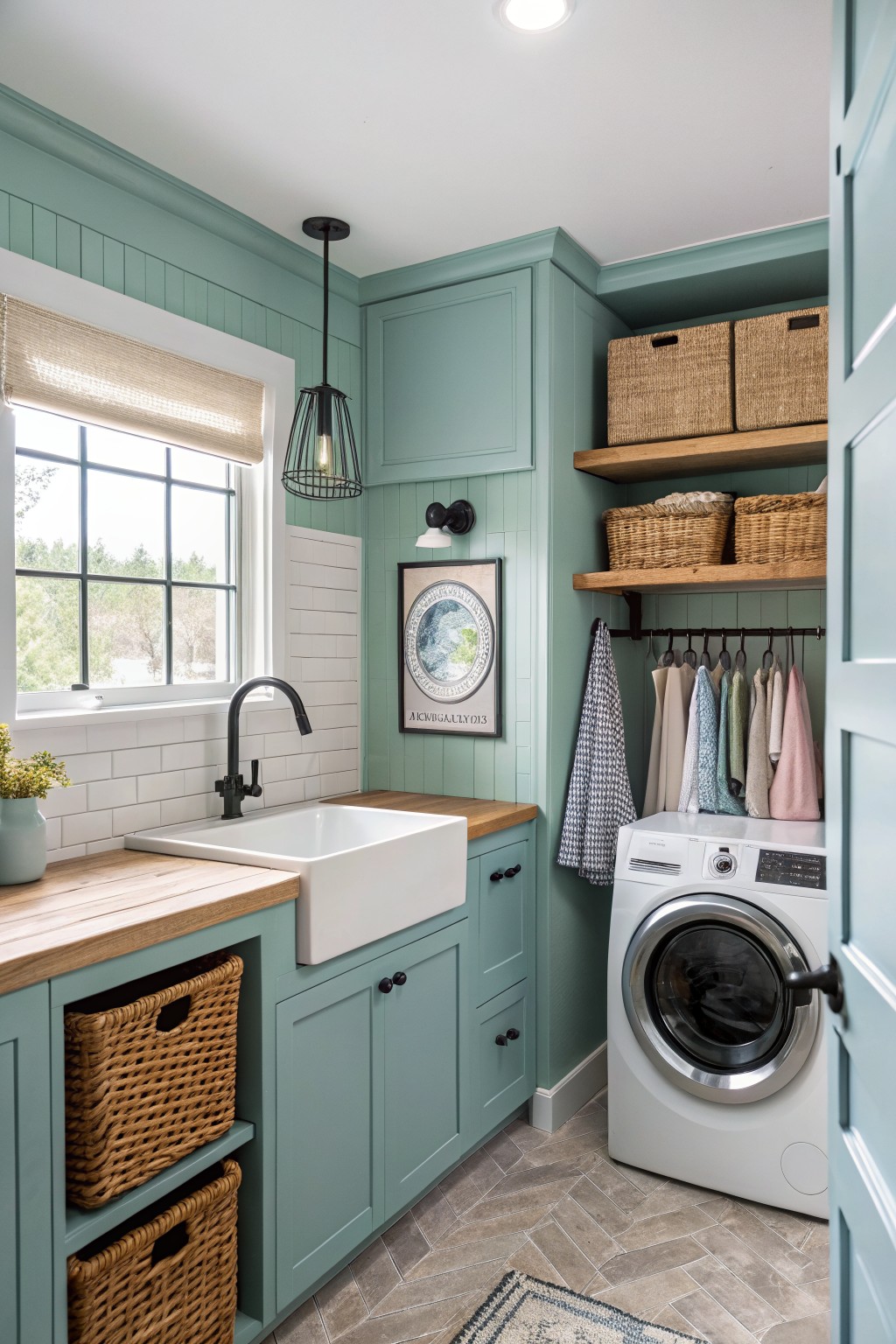
This soft seafoam green covers the walls and cabinets in a way that feels fresh and easygoing. It reads very close to Sherwin-Williams Sea Salt, or Benjamin Moore Palladian Blue, even Behr’s Silver Sage. That muted blue-green tone keeps things calm, especially in a workhorse spot like a laundry room.
The cool gray undertones make it forgiving under different lights, and it plays right off wood shelves and wicker baskets. Stick it in kitchens or baths with white sinks and natural wood. Just watch it next to anything too yellow… might pull a bit green.
Deep Warm Red Walls
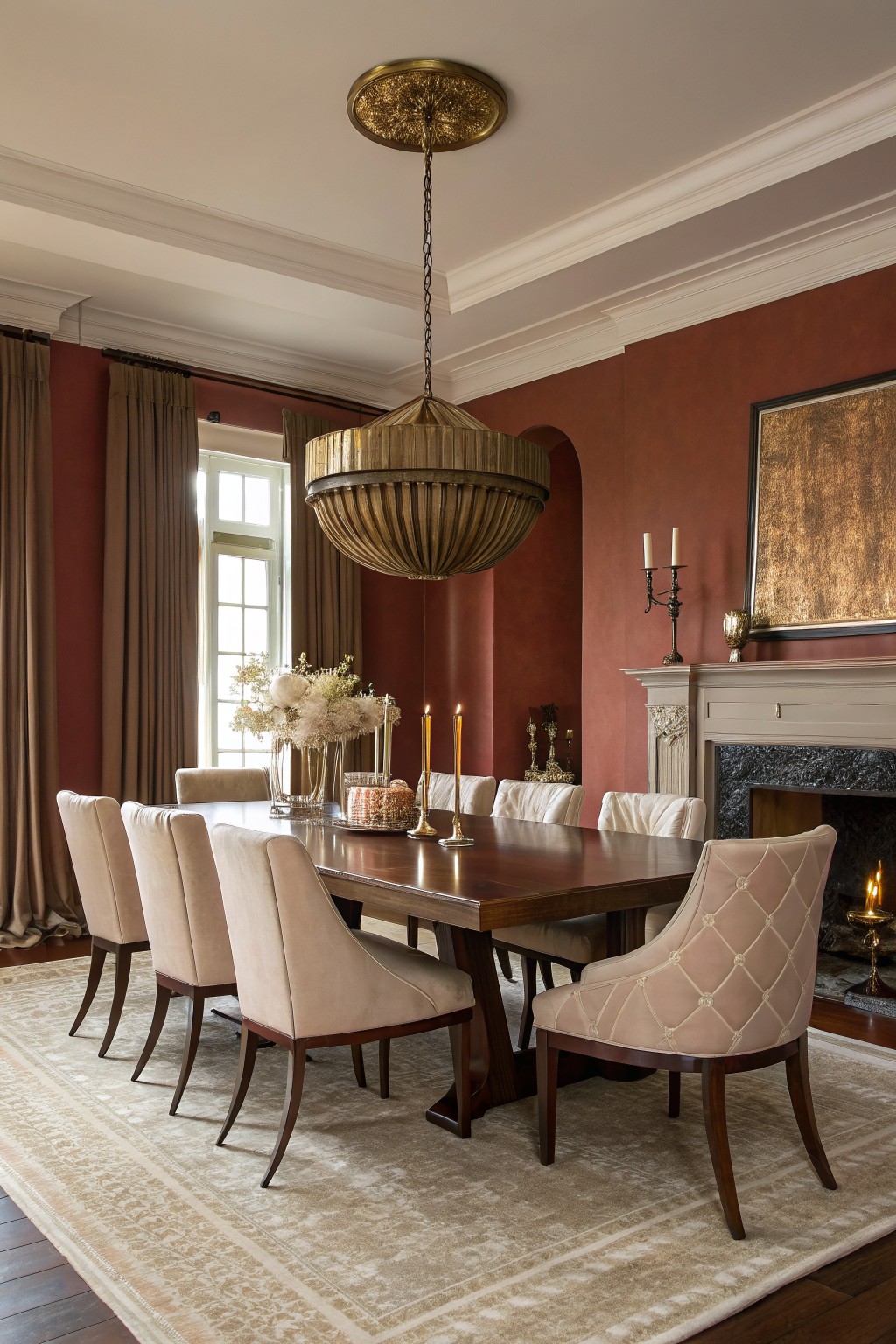
This dining room pulls off a deep warm red on the walls that seems closest to Sherwin-Williams Rookwood Red or Farrow & Ball Rectory Red. Maybe Benjamin Moore’s Moroccan Spice too. It’s got that cozy, earthy vibe without going too bright or garish. Folks like it because it wraps the space in richness, especially around a wood table like this one.
The warm brown undertones keep it from feeling cold, and it plays nice with creamy chairs and gold accents. Best in rooms with a fireplace or good natural light from windows. Pair it with beiges on the floor to keep things grounded. Just test samples first, since it can shift a bit in low light.
Pale Mint Green Walls
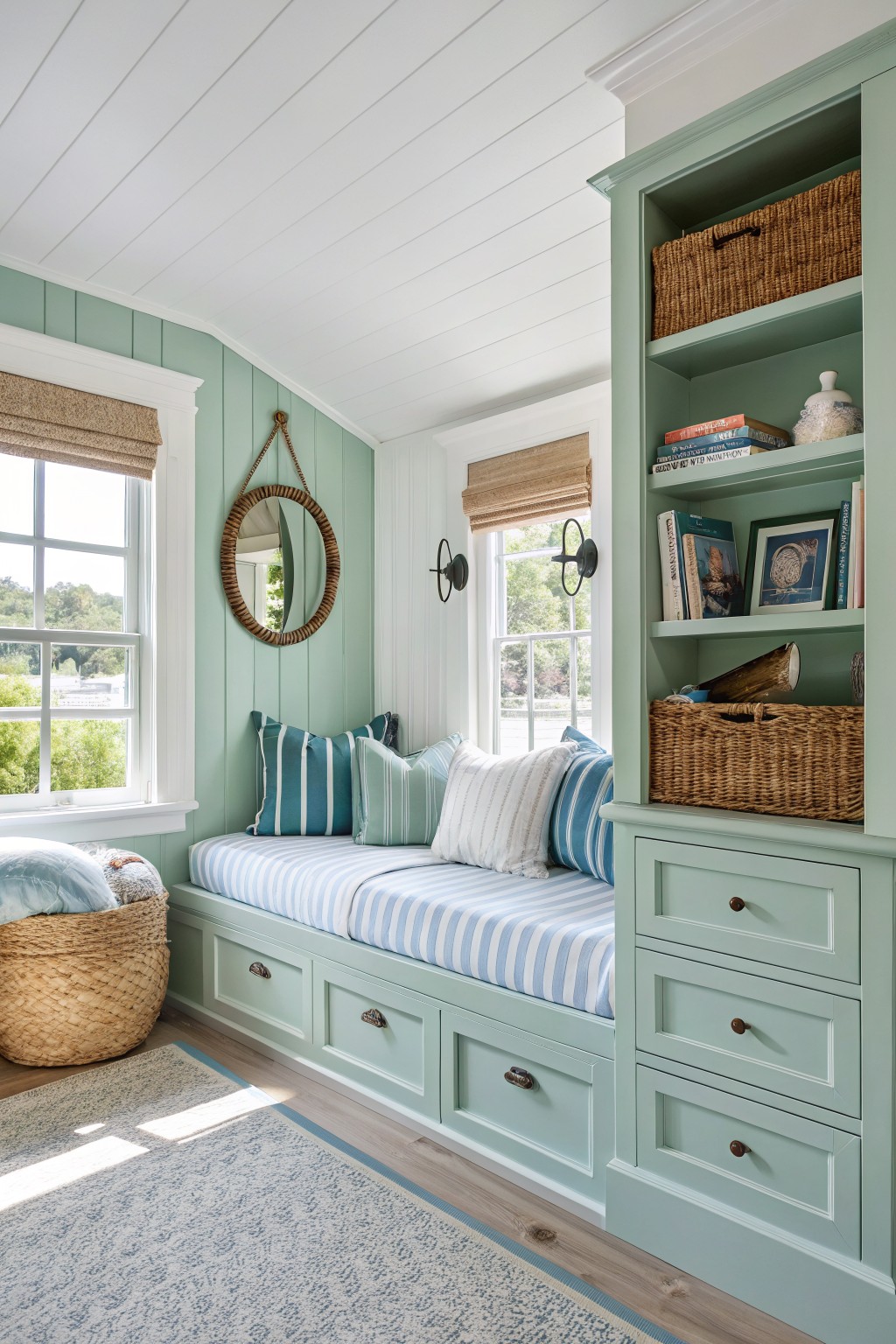
This pale mint green on the walls and built-ins seems closest to Sherwin-Williams Sea Salt (SW 6204) or Benjamin Moore Palladian Blue (HC-144). It’s a soft, cool green that stays light and airy. People go for it in small spaces because it makes everything feel open and beachy, especially next to white trim like you see here.
Cool blue undertones help it read fresh in natural light. It works best in sunny rooms or nooks with pillows and wood accents. Pair with stripes or baskets, but test samples first. Can lean too aqua in dim spots.
Soft Lilac Walls
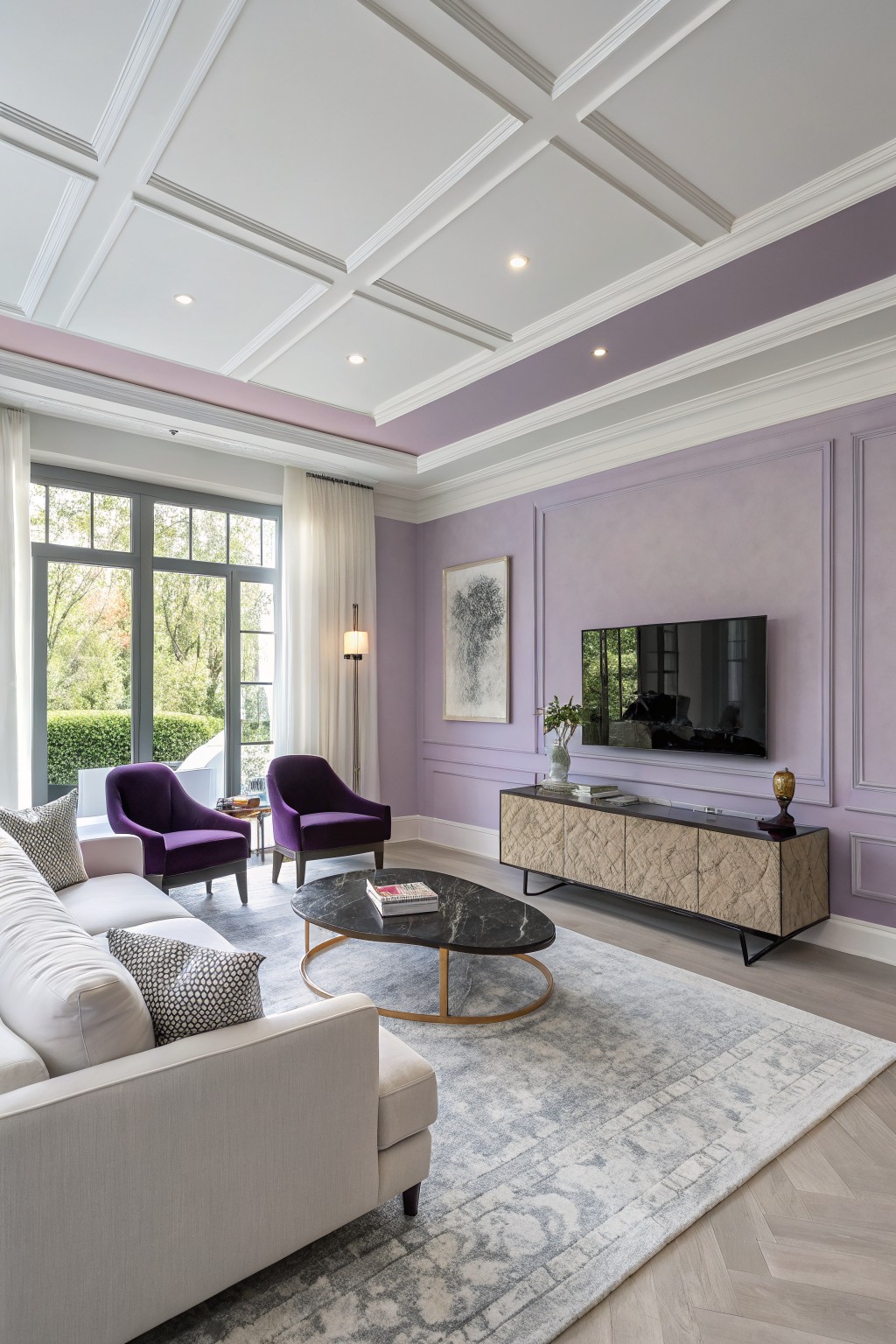
This room’s walls show off a pale lilac paint, the kind that sits in the soft purple family. It looks closest to Sherwin-Williams Lilac Lane or Benjamin Moore First Light, maybe even Behr’s Wishful Lavender. Not a bright violet. More like a quiet wash of color that keeps things feeling open and current.
That grayish undertone keeps it from turning too pink in warm light. I see it working well on bigger walls like in a living room, next to oak floors or white trim. Go easy with purple furniture though, or it might feel matchy.
Deep Green Cabinets
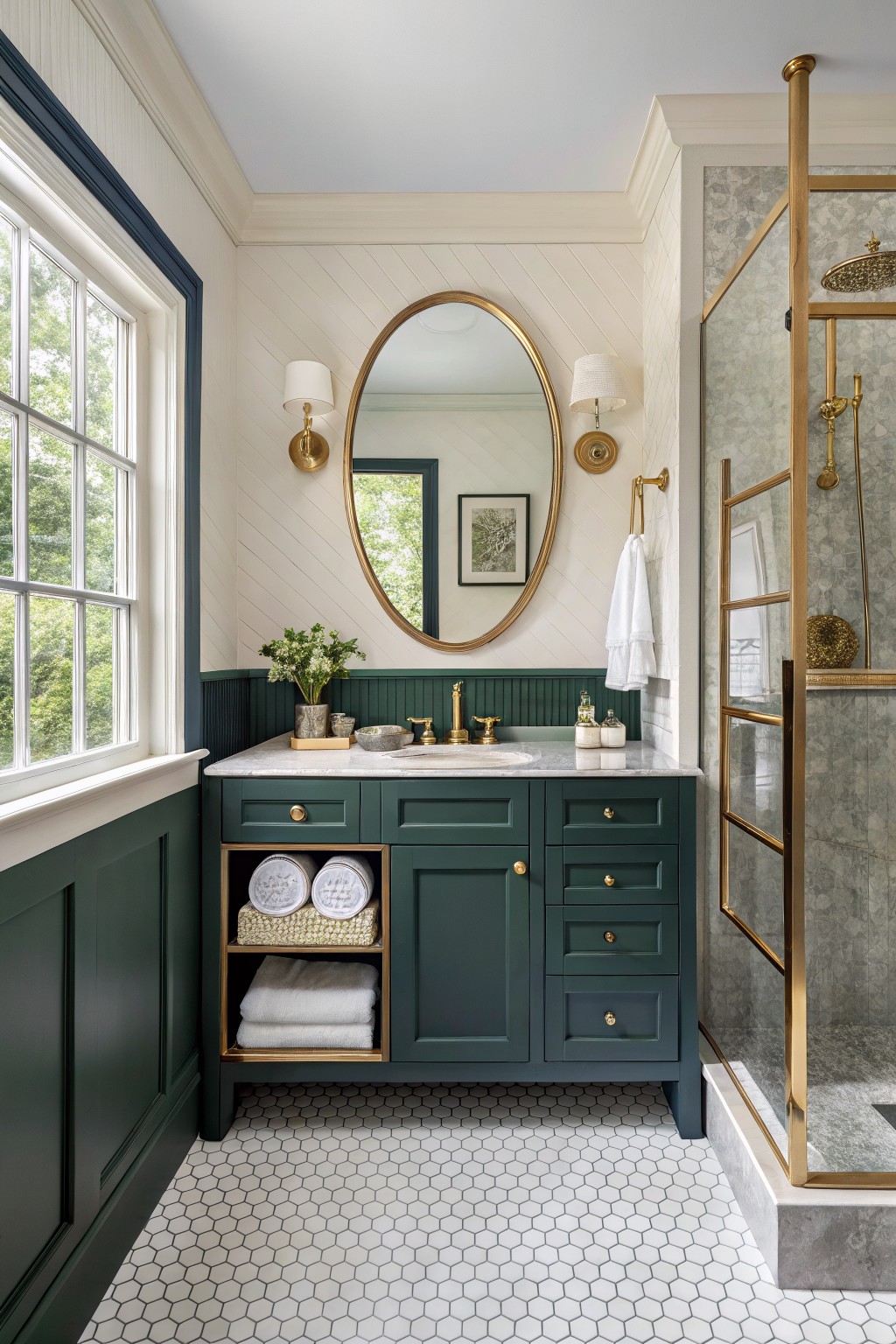
That deep green on the cabinets here pulls off a rich, moody look without going too dark. It seems closest to Sherwin-Williams Pewter Green or Benjamin Moore Black Forest Green, maybe even Farrow & Ball Studio Green. Folks like it because it stands up to white shiplap walls and keeps the room feeling fresh, especially next to all that brass.
The color has cool gray undertones that play nice in bathrooms like this one, with hex tile floors and a big window letting in light. Pair it with gold fixtures or white towels to keep things balanced. Just test it in your space first, since it can shift a bit under different bulbs.
Pale Sage Walls
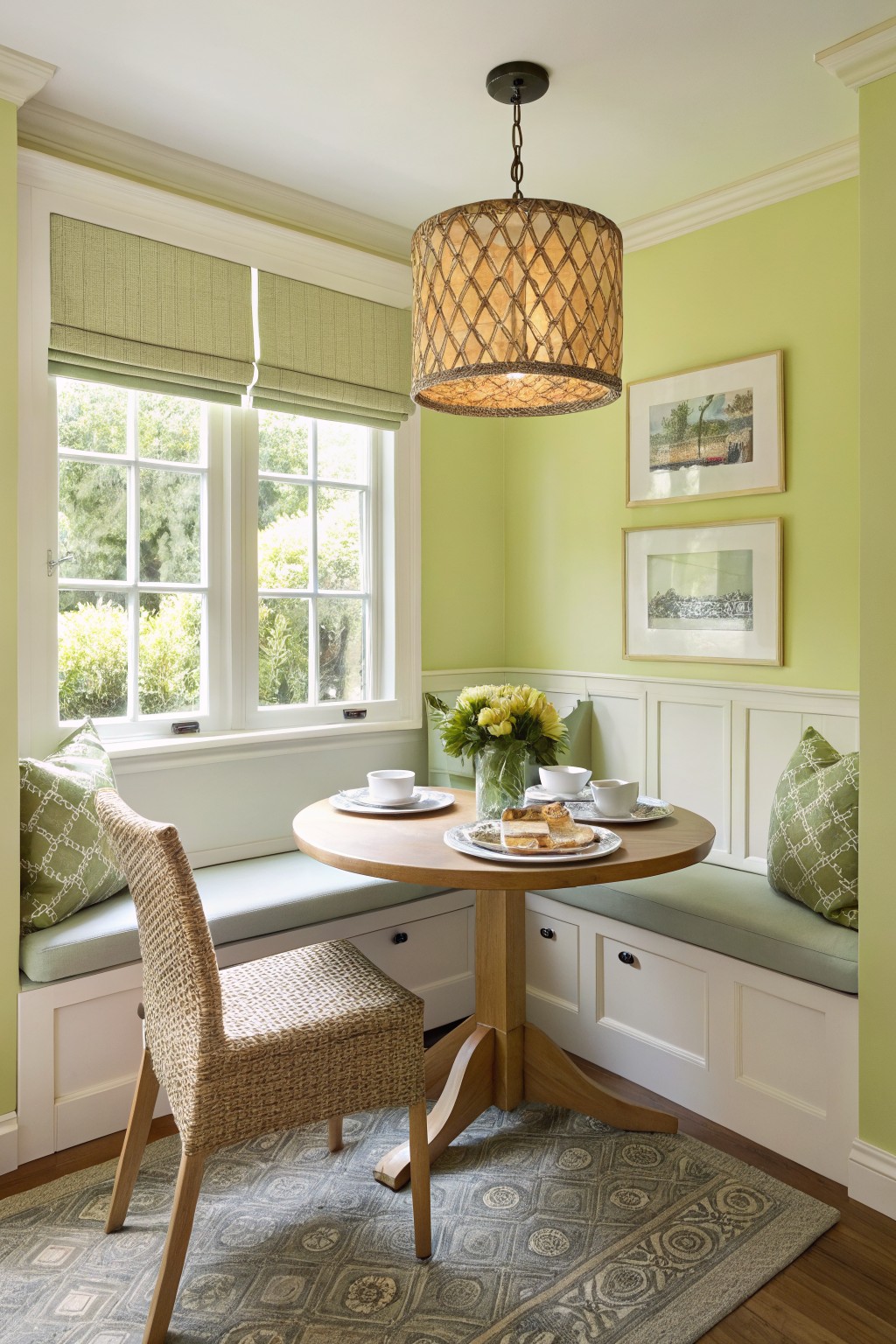
This cozy corner uses a pale sage green on the walls that feels fresh and easygoing. It seems closest to Sherwin-Williams Clary Sage or Benjamin Moore Saybrook Sage, maybe Behr Silver Sage too. Folks like it because it lightens up the space nicely, especially next to all that white trim and wood.
The color has a soft yellow undertone that keeps it warm in good light. It works best in breakfast nooks like this or sunny kitchens. Pair it with natural wood furniture and green fabrics. Watch it in dim rooms though… it can pull a little cooler.
Soft Blue-Gray Walls
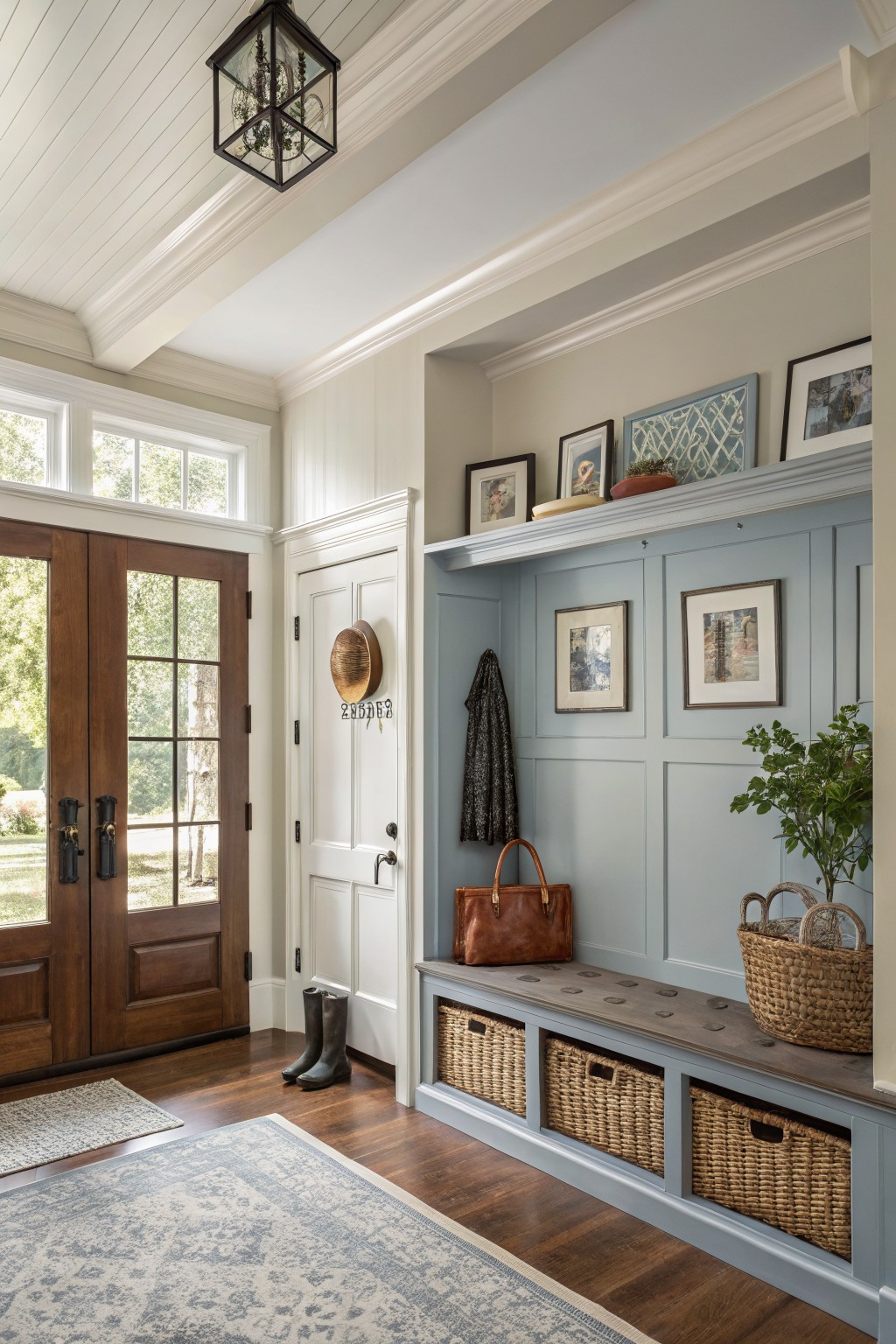
This soft blue-gray on the paneled walls comes across closest to Sherwin-Williams Rainwashed or Benjamin Moore Palladian Blue. It’s a light, cool-toned shade that feels calm without going too icy. Folks like it because it keeps things fresh next to wood floors and trim, adding just enough color to notice.
The gray undertone helps it stay versatile in morning light or shadier spots. Pair it with natural wood or baskets for that cozy mudroom feel, but test samples first since it can read greener on some walls. Works best in entryways where you want subtle interest.
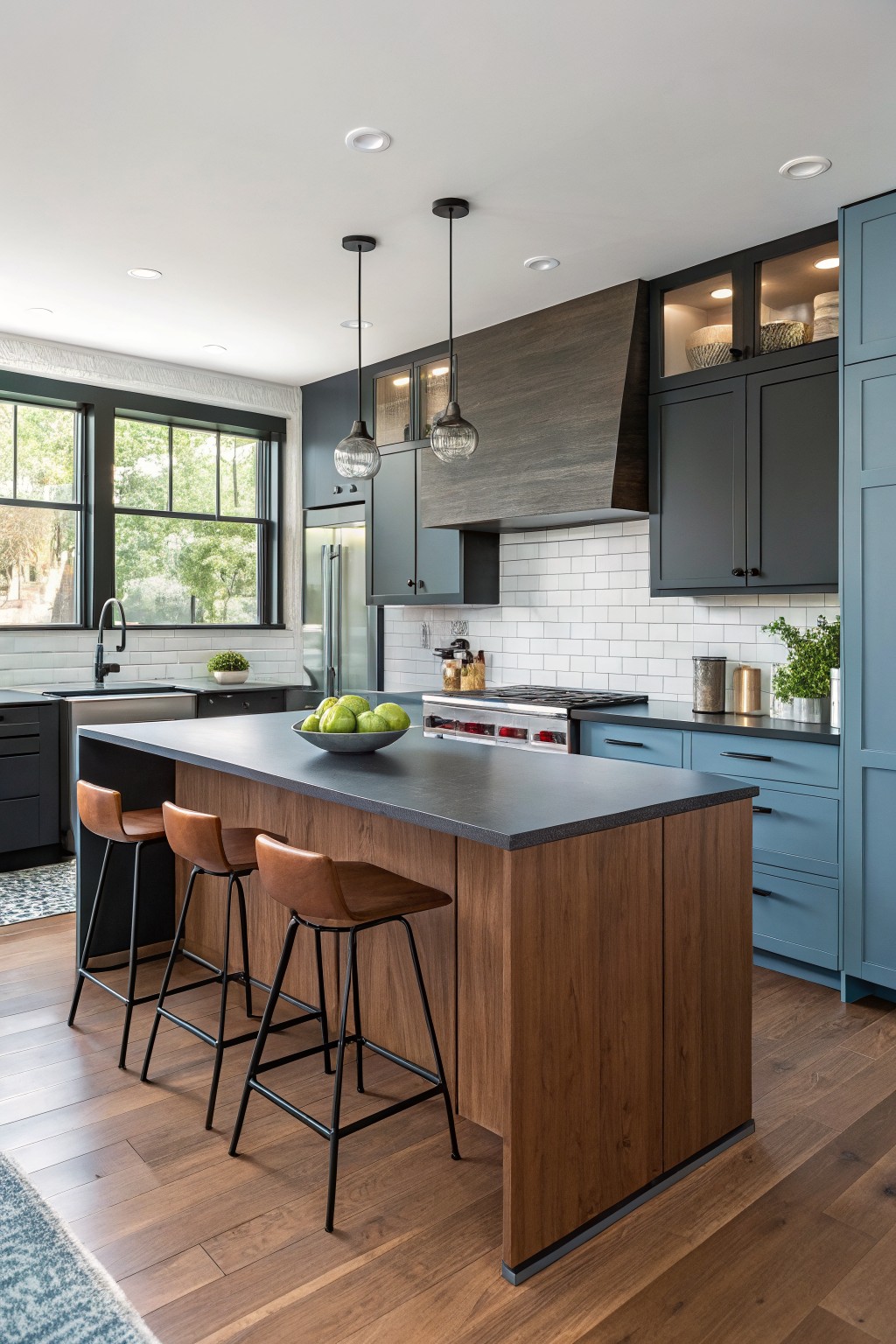
These cabinets pull off a deep navy blue that looks closest to Sherwin-Williams Naval or Benjamin Moore’s Hale Navy. Maybe Behr’s Blue Peppercorn too. It’s the kind of rich blue that feels modern and grounded at the same time. Folks like it because it stands up to wood tones and keeps a kitchen from looking too plain.
The cool undertones play nice with the walnut island and white subway tile backsplash you see here. It shines best in rooms with good window light. Go for matte finish on cabinets to avoid fingerprints, and mix in some brass pulls if you want a little warmth.
Warm Terracotta Walls
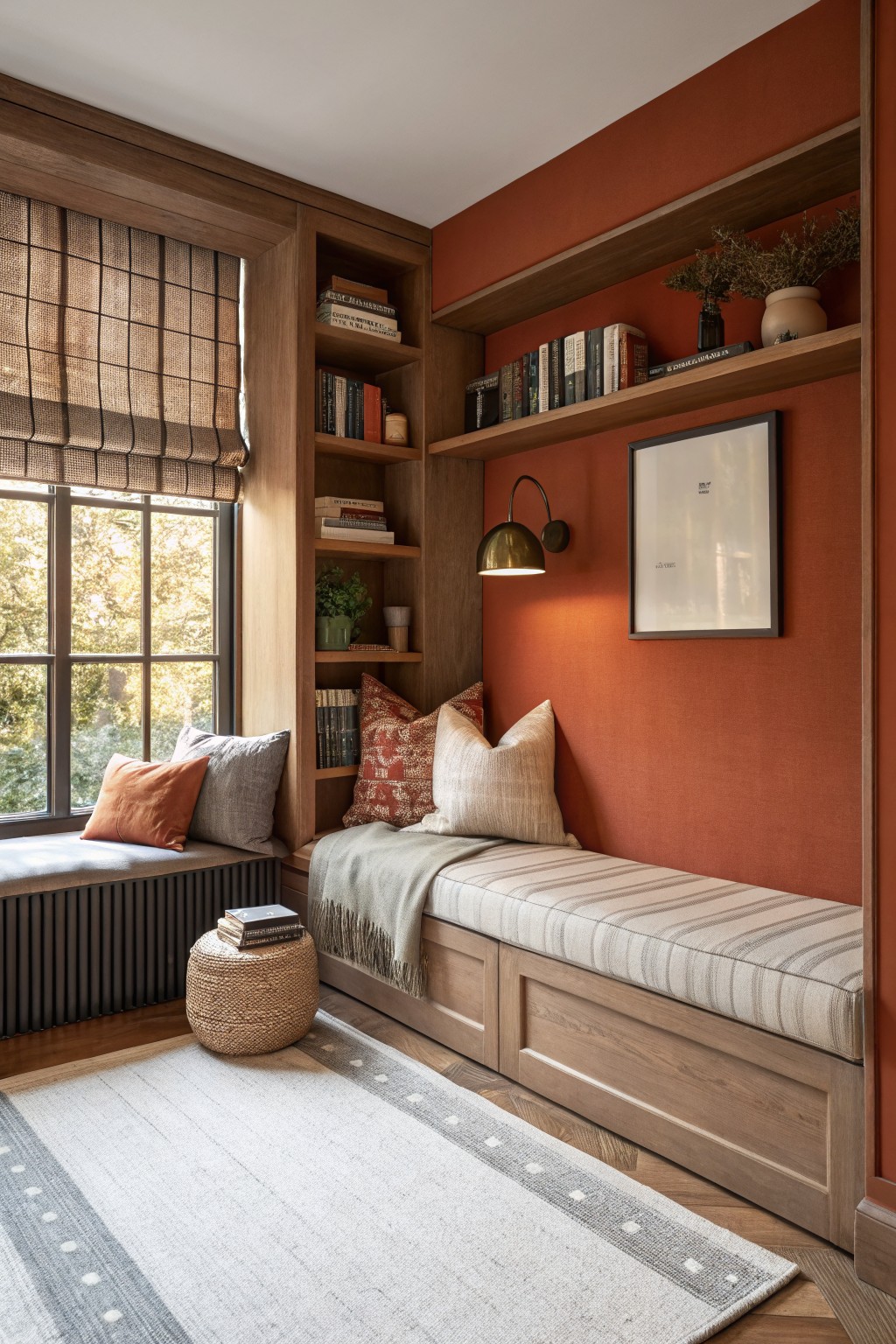
This terracotta paint color on the main wall pulls from that warm orange-red family. It seems closest to Sherwin-Williams Rustic Red or Benjamin Moore Caliente, maybe Behr’s Terracotta Pot too. What I like about it is how it stays grounded and inviting, without shouting. Makes a simple corner like this one feel special right away.
The warm red undertones keep it from going brassy. It sits nice next to wood shelves and natural fabrics. Use it in a home office or reading spot where you get decent light. Pair with soft neutrals on pillows and throws, and it just works.
Frequently Asked Questions
Q: How do I test these paint colors at home before buying a gallon? A: Grab sample pots of your top picks. Slap big swatches straight on the walls. Walk by them morning and evening to catch the light shifts.
Q: My north-facing room stays dim. Which colors keep it from feeling cave-like? A: Lean toward the warmer grays and soft taupes. They lift the mood without fighting the shadows.
Q: Will these sleek colors clash with my wood furniture? A: They pair great with warm woods. And that contrast gives your space real punch. Test a sample next to your pieces anyway.
Q: How do I paint trim to go with these modern walls? A: Go crisp white on the trim. It frames the colors cleanly.