I’ve noticed how wall paint shifts moods in a room depending on the time of day and the light filtering through windows.
I tried a warm terracotta once that looked vibrant at noon but dulled to rust under my north-facing bulbs.
Colors succeed when they layer together without overwhelming the space or clashing with existing pieces.
Pairing unexpected shades can refresh things if you account for those real-life shifts.
Test bolder ones in your own light.
Soft Mint Green Walls

This pale mint green on the shiplap walls looks closest to Sherwin-Williams Sea Salt or Benjamin Moore’s Saybrook Sage. It’s a cool, easy green that feels fresh without being too bold. Folks like it because it brightens a room while keeping things calm, especially around white trim and wood accents.
That blue-green undertone shows up best in good natural light, like near windows. Pair it with crisp whites and striped fabrics for a coastal vibe, or warm woods to balance the coolness. Just test samples first, since it can read grayer in dimmer spots.

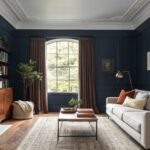
This setup goes with a deep navy on the paneled walls. It seems closest to Sherwin-Williams Naval or Benjamin Moore Hale Navy, maybe even Farrow & Ball Hague Blue. That moody blue family feels rich but not heavy. People go for it when they want walls that pull a dining space together and let wood tones shine.
The cool undertone keeps it crisp next to warm oak cabinets and leather chairs. It works best in rooms with good overhead light like this one. Steer clear of pairing too much black though. That can muddy things up a bit.
Soft Blue-Green Walls
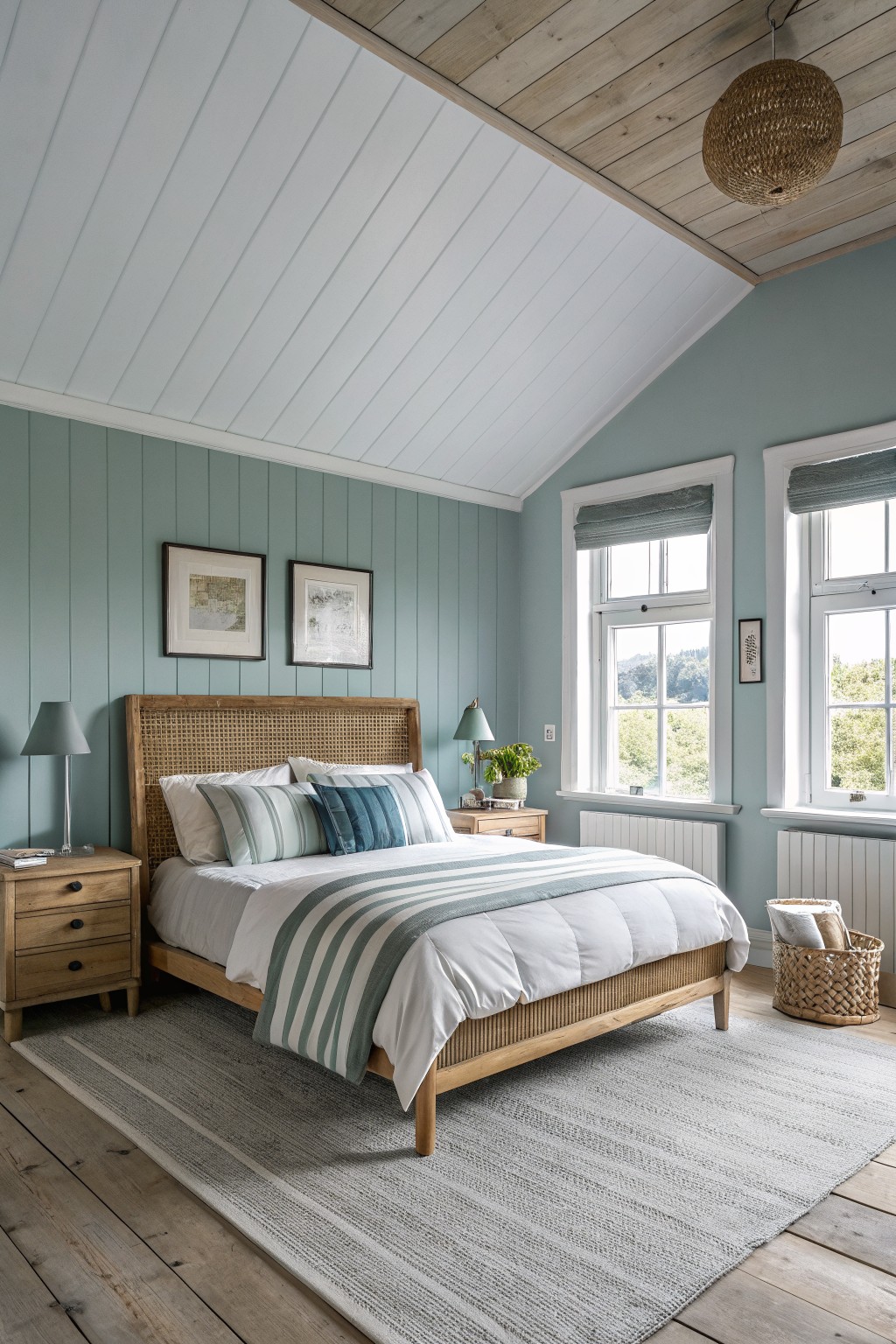
This bedroom uses a soft blue-green on the shiplap walls. It looks closest to Sherwin-Williams Sea Salt or Benjamin Moore Palladian Blue, maybe Farrow & Ball Skylight too. That kind of muted cool tone feels fresh and easy on the eyes. It lets the natural wood bed and floors stand out without competing.
Cool undertones like this shine in spaces with good window light. Stick to white trim and striped linens to keep it simple. North-facing rooms handle it best. Just watch it doesn’t read too gray in dim spots.
Soft Sage Cabinets

This kitchen pulls off a muted sage green on the cabinets that reads warm and easygoing. It looks closest to Sherwin-Williams Sagebrush or Benjamin Moore Guilford Green, with that nice grayed-down green vibe. Folks like it because it keeps things fresh without overpowering the white tile walls or wood shelves.
The color has a subtle warm undertone that plays well in natural light from big windows. Pair it with black hardware and copper accents like here, or keep it simple with brass. It suits kitchens best, especially older homes where you want green without going too bold. Just test in your space first, since lighting shifts it a bit.
Deep Teal Walls

This powder room uses a deep teal on the upper walls that looks closest to Sherwin-Williams Oceanside or Benjamin Moore Wythe Blue. Maybe Farrow & Ball Inchyra Blue too. It’s a rich blue-green with some texture that gives a small space real punch without overwhelming it.
The color has a cool undertone that plays nice against white wainscoting below and pops with the black vanity. Natural light from the window and skylight keeps it from feeling too dark. Try it in bathrooms or offices, paired with brass accents and marble. Just test samples if your room faces north.
Blush Pink Walls
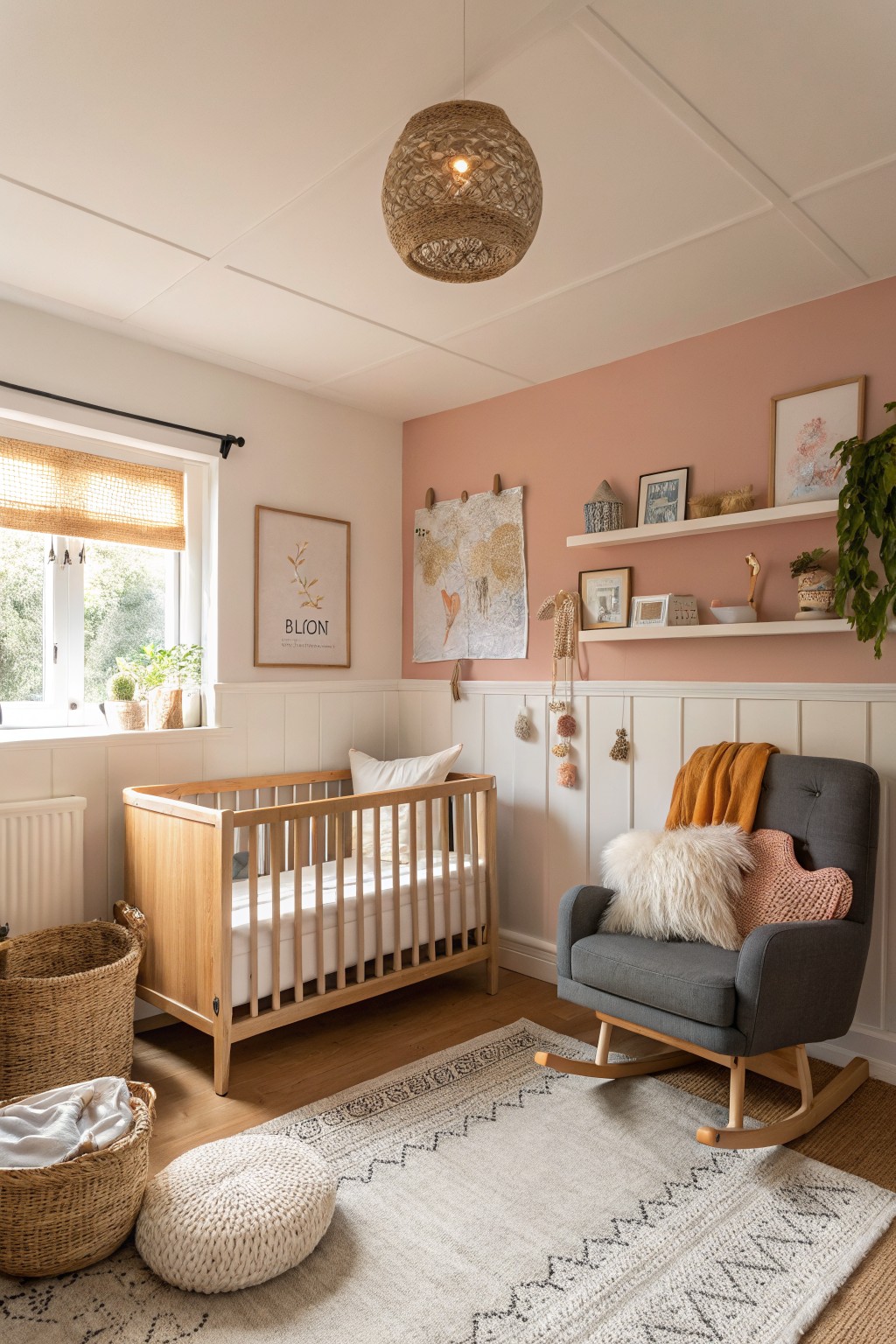
This nursery pulls off a soft blush pink on the upper walls that feels just right. It looks closest to Sherwin-Williams Rosy Cheeks or Benjamin Moore First Light, maybe Behr Dreamy Pink too. That gentle pink adds a bit of warmth in a quiet way, without shouting. Folks like it because it keeps things calm and happy, especially around babies.
The warm undertone picks up nicely on wood tones from the crib and floor. Pair it with clean white wainscoting like here, and some plants or baskets. It shines in morning light from a window. Skip if your space is super dark, though. Might read flat.
Warm Terracotta Walls

That terracotta paint on the accent wall stands out right away. It’s an earthy red in the warm terracotta family, closest to Sherwin-Williams Moroccan Spice or Benjamin Moore Potters Clay. Folks like it because it adds real coziness without going too bold, especially next to light woods and creams.
The warm orange undertones keep it from feeling heavy. It works best in sunny living rooms where the light can bring it alive. Stick with neutral sofas and plants alongside, and trim in soft gray to tie it in.
Soft Seafoam Green Walls

This soft seafoam green on the walls seems closest to Sherwin-Williams Sea Salt, or maybe Benjamin Moore Palladian Blue or Behr Breezeway. It’s a pale green-blue that’s cool and easygoing, the kind that makes a bathroom feel open and calm right away. You notice how it plays nice with white tile without overpowering.
That blue-green undertone shines in spaces with plenty of daylight. It pairs well with white trim and wood stools like you see here, but watch it can look a touch gray in dimmer spots. Good pick for coastal or fresh updates.
Soft Pale Yellow Walls
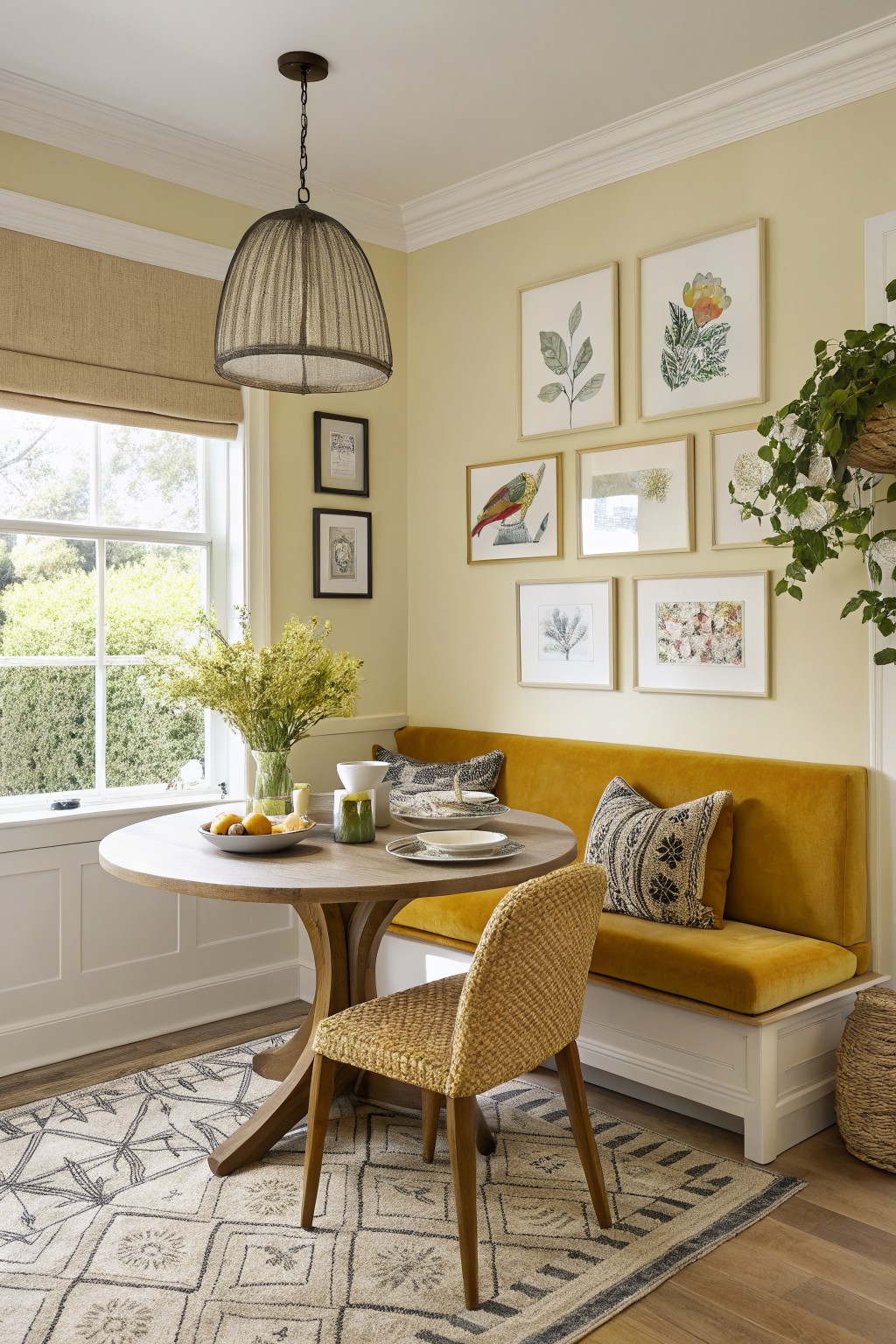
Those walls show off a soft pale yellow that feels sunny yet subtle. It comes across closest to Sherwin-Williams Honeydew or Benjamin Moore Pale Yellow HC-3. Behr’s Lemon Glow reads similar too. Folks go for this shade because it lightens up a room nicely, especially with sunlight pouring in like it does here by the window.
The warm undertone keeps it from looking stark. It sits well against wood tables and rattan chairs. Try it in a breakfast nook or sunlit dining spot. Mustard pillows on a velvet bench play right into it… keeps everything cohesive without overpowering.
Warm Terracotta Office Walls

This setup shows off a warm terracotta wall color. It seems closest to Sherwin Williams Moroccan Spice, Farrow & Ball Red Earth, or Benjamin Moore Potters Clay. That deep red-orange family feels rich and grounded. Folks like it because it plays so well with wood furniture, giving the room a cozy, lived-in look right away.
The undertones lean warm with plenty of brown mixed in. It shines in rooms with natural window light, like this office corner. Go for it with leather seating and woven rugs. Just test it first if your space is small. It can read darker up close.
Pale Blue Cabinets
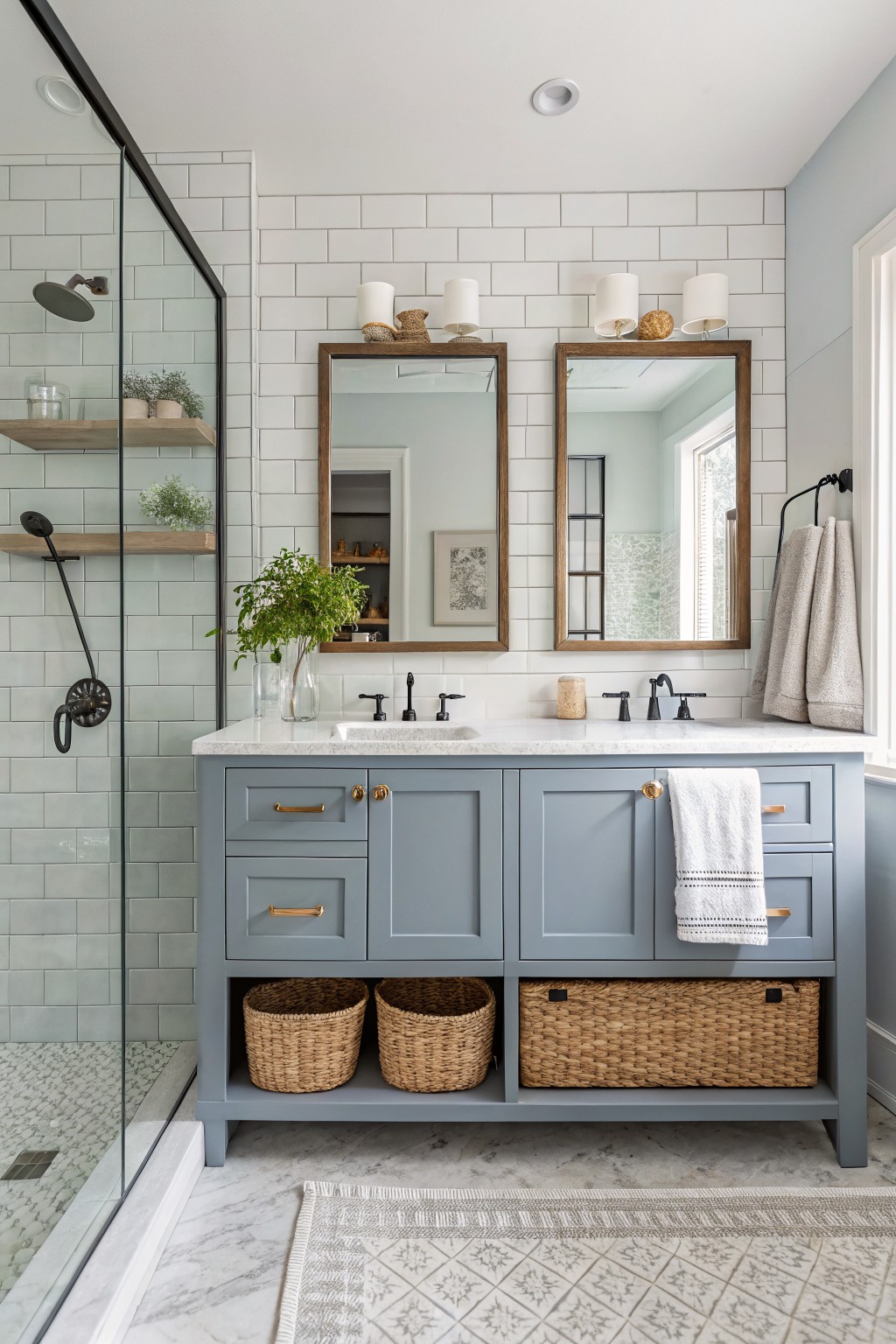
The cabinets in this bathroom vanity are a pale blue that looks closest to Sherwin-Williams Rainwashed or Benjamin Moore’s Palladian Blue. It’s the kind of soft blue with a hint of gray that feels fresh but stays calm. Folks like it because it adds just enough color to a mostly white room without taking over.
That gray undertone helps it play nice in morning light, keeping things airy next to all the tile and wood accents. Pair it with brass pulls and white quartz for a clean setup. In dimmer spots it might lean cooler, so test a sample first.
Soft Sage Green Walls
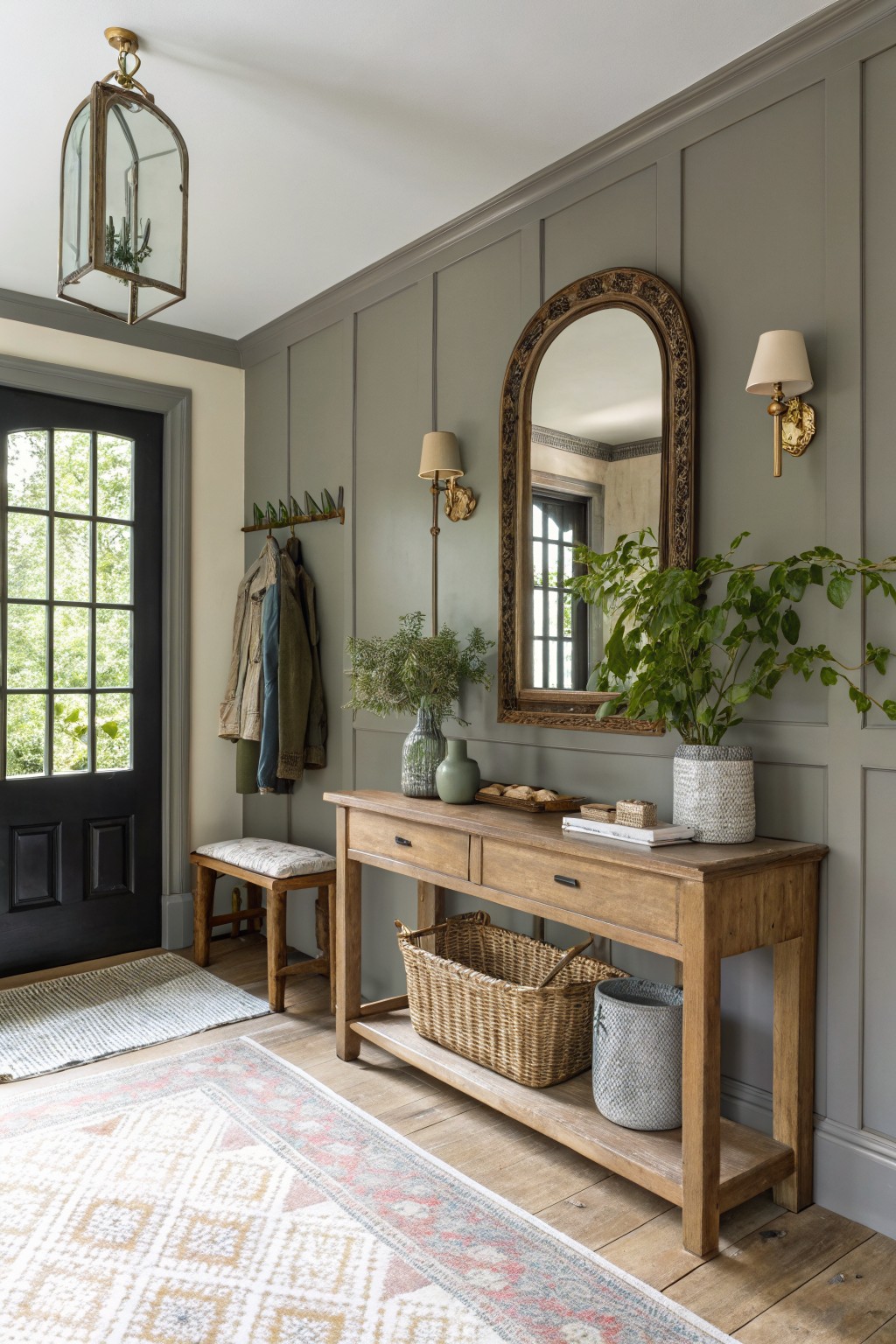
This entryway pulls off a soft sage green on the walls that feels just right. It looks closest to Sherwin-Williams Clary Sage or Benjamin Moore Saybrook Sage HC-114, with Farrow & Ball French Gray No. 18 reading pretty similar too. That muted green-gray tone keeps things calm without going too dark or cool. Folks like it because it makes wood furniture pop nicely, like that console table here.
The undertone leans warm and earthy, so it works best in spaces with natural light coming through windows. Pair it with black doors or brass accents for contrast, but watch it doesn’t dull down next to stark white trim. In an entry like this, it just settles everything in place.
Pale Sage Walls
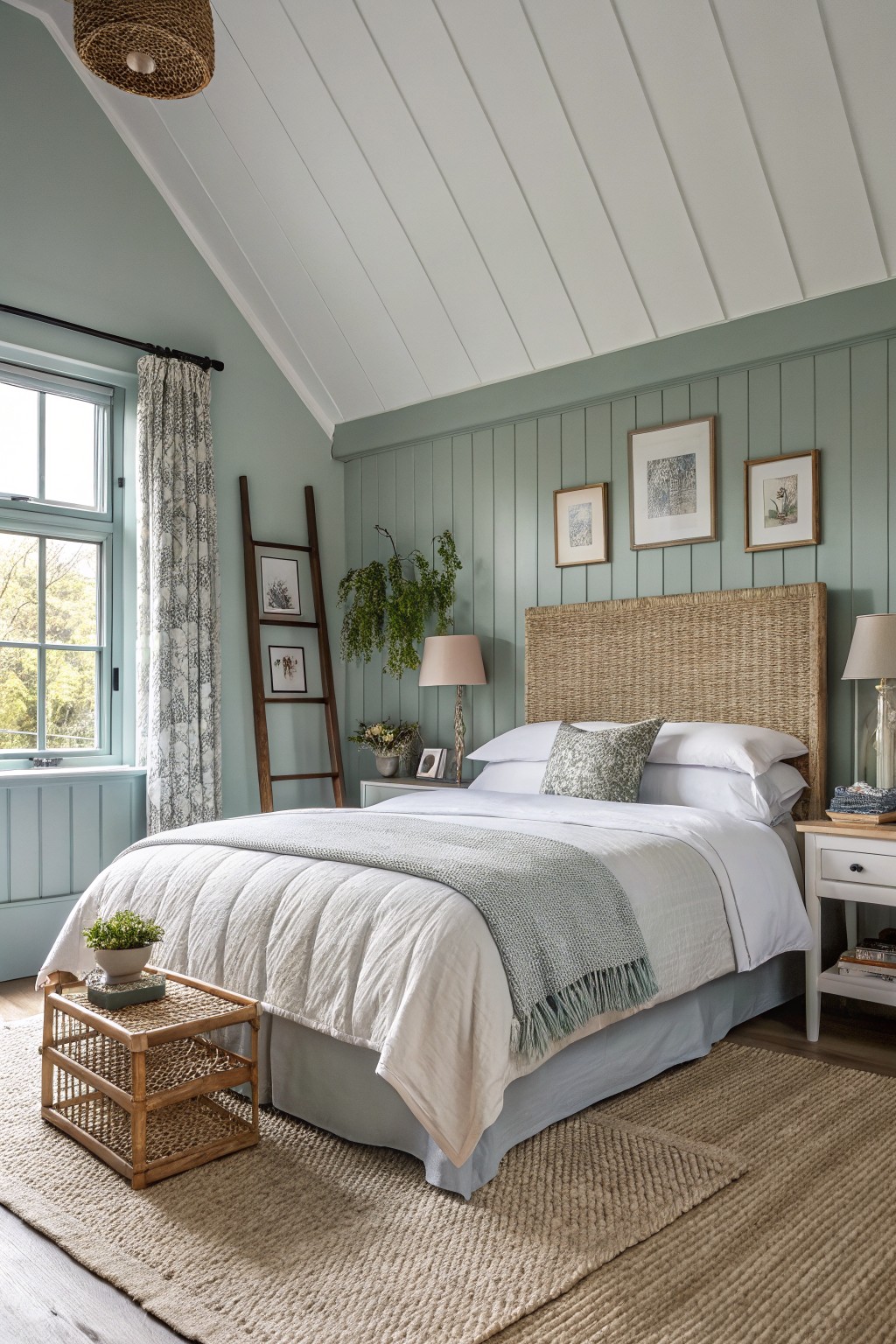
The walls in this room show off a pale sage green, the kind that’s soft and easy on the eyes. It looks closest to Sherwin-Williams Sea Salt or Benjamin Moore October Mist, maybe Farrow & Ball French Gray too. What I like about it is how it feels fresh without being too bold. It lets wood pieces and white trim stand out nice.
That cool gray undertone keeps it from going too yellow in warm light. It works best in bedrooms or spaces with natural wood accents, like the rattan headboard here. Pair it with creamy whites and avoid anything too stark… keeps the room cozy.
Deep Green Kitchen Cabinets
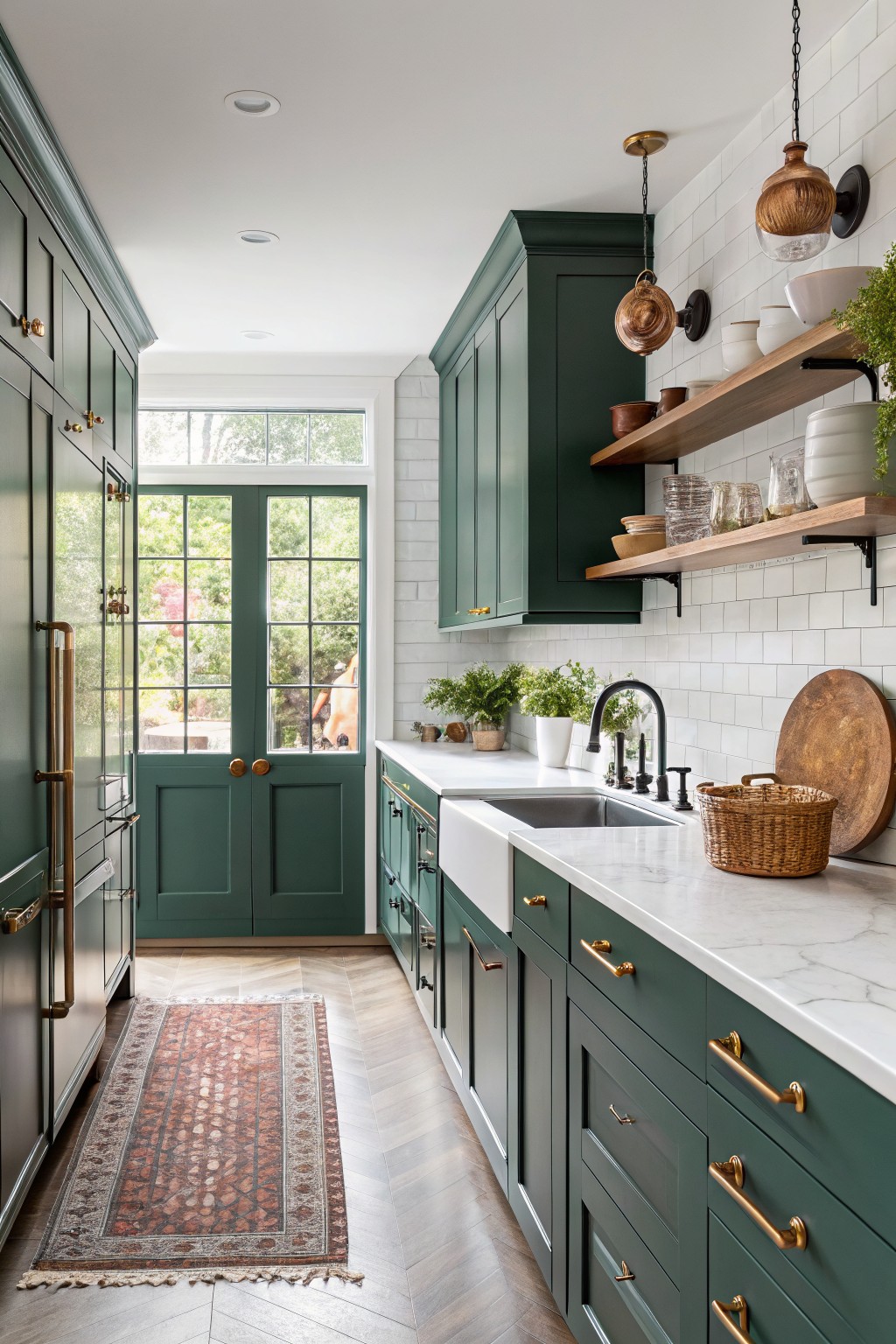
This kitchen uses a deep hunter green paint on the cabinets, and it looks closest to Farrow & Ball Studio Green or Sherwin-Williams Pewter Green. Benjamin Moore’s Black Forest Green comes pretty near too. It’s that kind of rich, earthy green with a bit of blue undertone that makes a small space feel cozy without closing it in. Folks like it because it stands up to everyday use and looks right at home next to brass hardware.
The color picks up warmth from nearby wood floors and plants, so it stays lively even on cloudy days. Pair it with white subway tile and light counters like here to let it shine. Just test samples in your light first. Greens can shift cooler in north-facing rooms.
Deep Green Walls
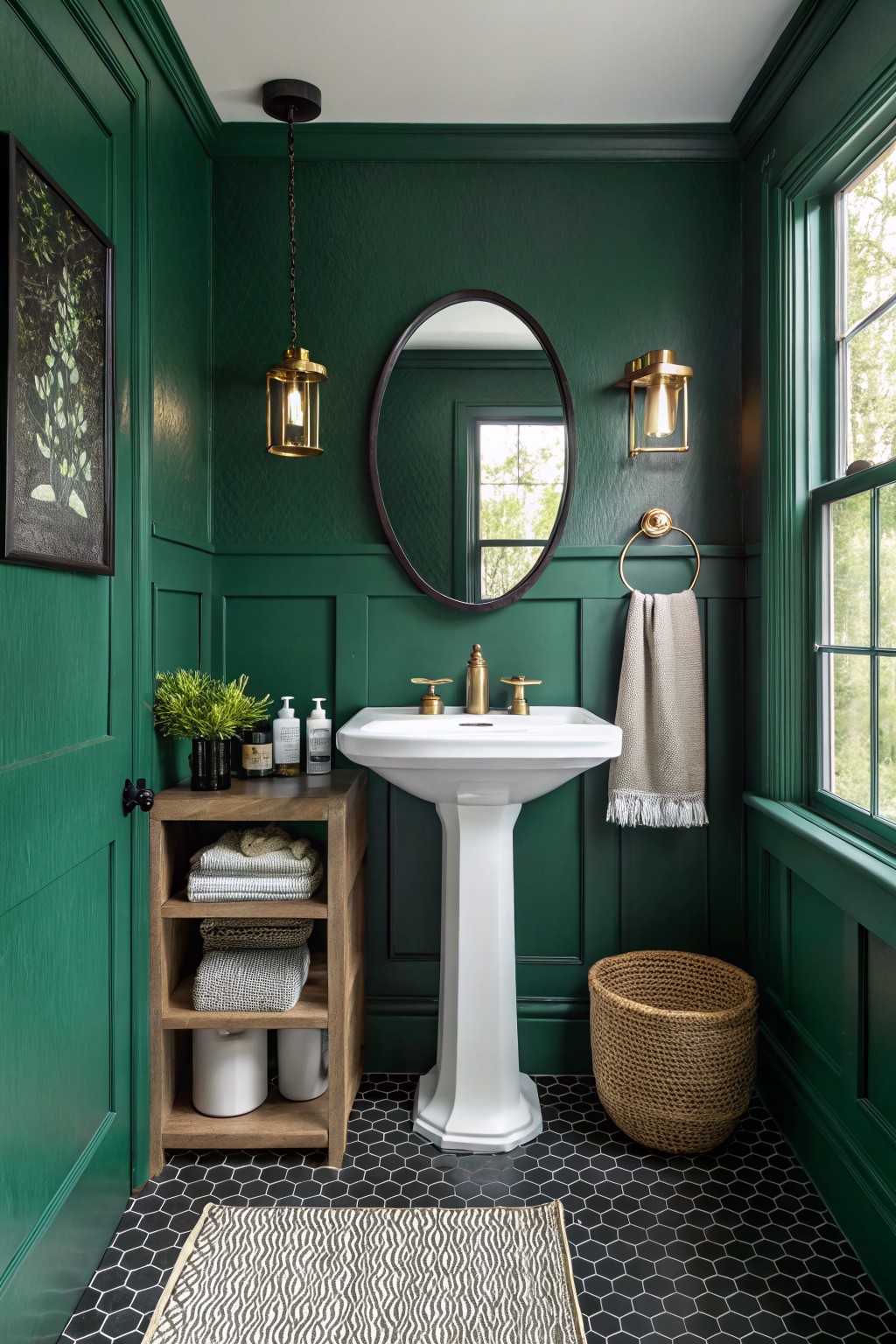
This deep green paint covers the walls and wainscoting here, and it reads closest to Sherwin-Williams Pewter Green or Benjamin Moore Guilford Green. Maybe Farrow & Ball Studio Green too. It’s a rich, jewel-like green that feels cozy without being too dark. In a small powder room like this, it turns the space into something special, almost like a little jewel box.
The undertone leans warm, which works nicely next to the black hex tiles and gold lights. Pair it with crisp white sinks or natural wood shelves to keep things balanced. It shines best with some natural light from a window. Just test samples first, since greens can shift in different lighting.
Warm Greige Walls

Those walls read like a classic warm greige. Think something close to Sherwin Williams Agreeable Gray or Benjamin Moore Revere Pewter. It’s that easy neutral with just enough beige to keep things cozy, not stark. Folks like it because it plays well day or night, making rooms feel bigger without going cold.
The warm undertone picks up on wood floors and leather furniture like you see here by the fireplace. Pair it with creamy trim and it’ll keep everything looking fresh. Steer clear of super bright whites though. They can make the greige look dingy.
Soft Pale Yellow Breakfast Nook Walls
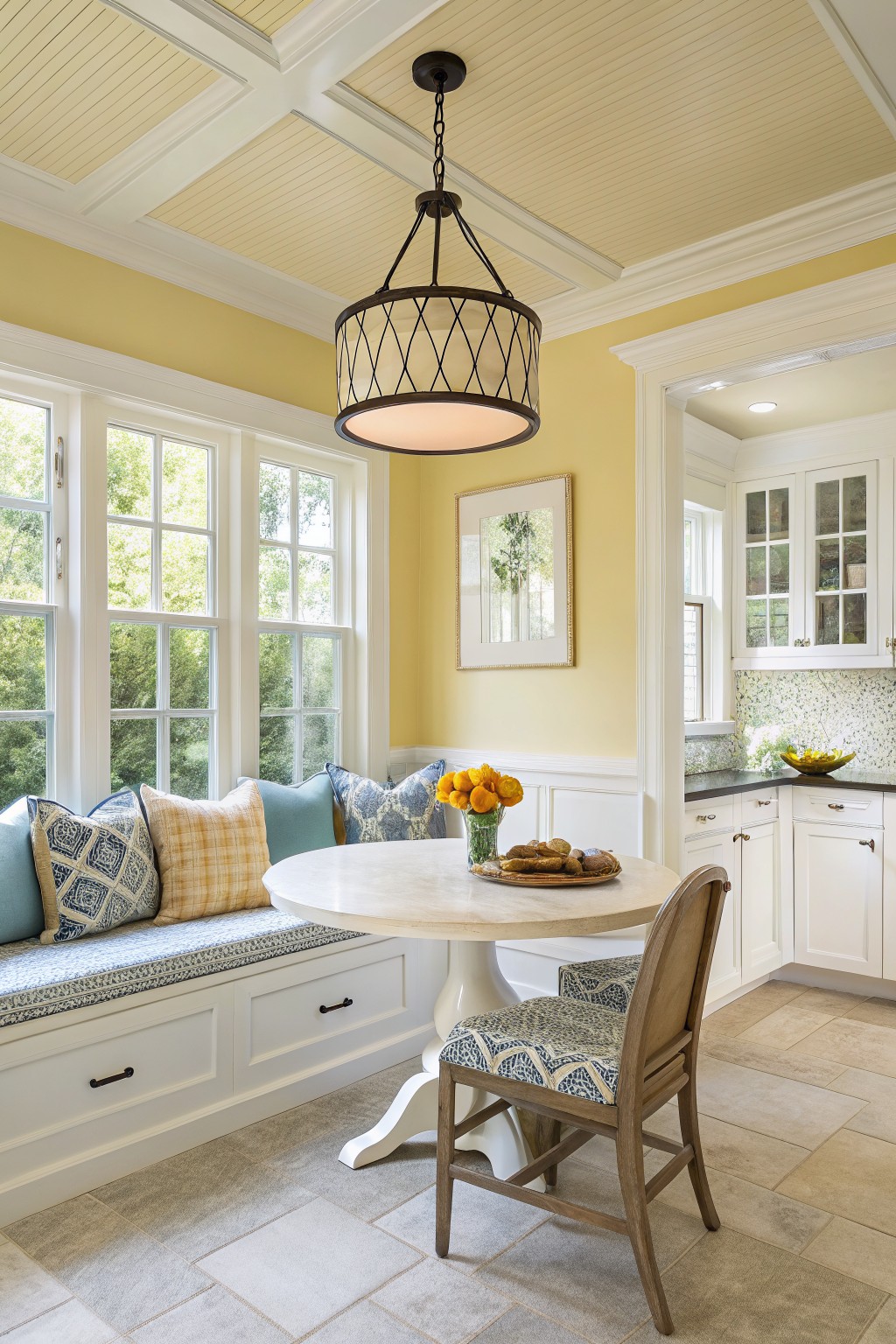
This cozy breakfast nook shows off soft pale yellow walls that give the room a gentle, sunny lift. It pulls closest to Sherwin-Williams Creamy or Benjamin Moore Pale Yellow, maybe even Farrow & Ball Dayroom Yellow. Folks go for shades like this because they brighten things up naturally, especially around all those windows letting in green views.
The warm buttery undertone sits just right next to white trim and wood cabinets. Try it in kitchens or nooks with good light. Pair with blues on cushions or fabrics to keep it from going too one-note, and steer clear of dim spaces where it might read flat.
Soft Greige Walls

Those walls in this bedroom use a soft greige that seems closest to Sherwin-Williams Agreeable Gray or Benjamin Moore Revere Pewter, maybe even Farrow & Ball Skimming Stone. It’s a warm neutral right in that sweet spot between gray and beige. People go for it because it keeps things calm and lets other pieces like the wood floors stand out nice.
Warm undertones make it forgiving in mixed lighting, and it suits bedrooms or studies best. Pair it with gold touches or velvet furniture for some interest. Steer clear if your room stays dim all day.
Soft Blue-Green Mudroom Walls
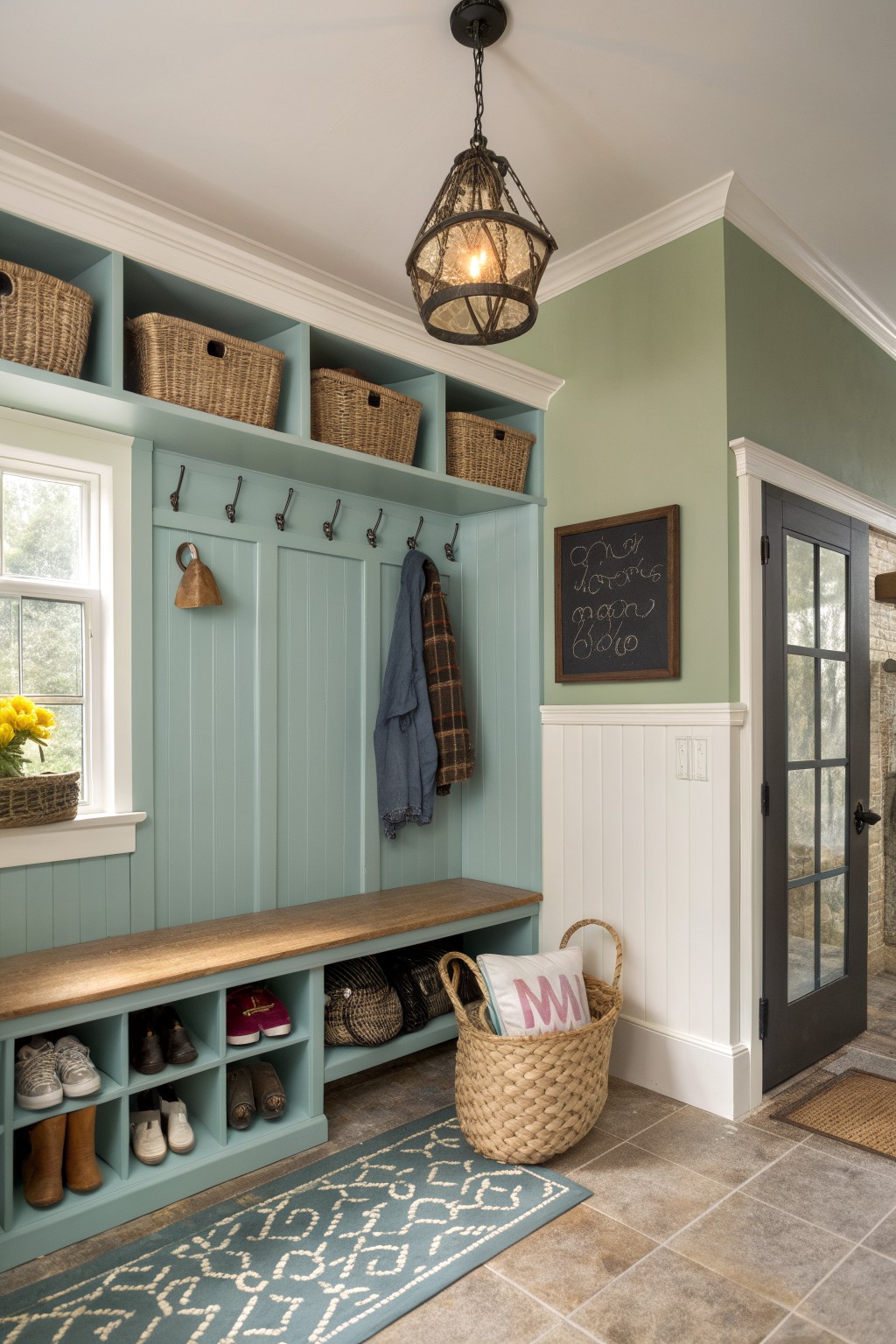
Those paneled walls in this mudroom are painted a soft blue-green. It looks closest to Benjamin Moore Palladian Blue, or maybe Sherwin-Williams Rainwashed and Behr Breezeway. It’s a light, cool shade that feels fresh and easygoing, especially on beadboard like this.
The cool undertones keep it from turning too minty in different lights. It plays nice with the natural wood bench and white trim around the room. Try it in entryways or laundry spaces where you want calm without fuss. Just make sure there’s decent window light nearby.
Pale Sage Ceiling

That pale sage green painted on the ceiling catches your eye right away. It has the feel of Sherwin-Williams Sea Salt or Benjamin Moore Saybrook Sage, maybe Behr’s Silver Drop too. Light green with a soft gray lean, not too yellow or blue. Folks like it because it lifts the space without overwhelming, especially over white walls.
The subtle gray undertone works best in rooms with decent light, like this dining area next to windows. It sits pretty against shiplap and wood furniture, keeps everything calm and fresh. Just test it first, since it can shift cooler in low light.
Deep Charcoal Gray Accent Wall

This setup uses a deep charcoal gray on one wall, giving the room a strong backdrop without going full dark. It’s a cool-toned neutral that sits nicely against white walls and wood floors. Folks like it because it adds some edge to everyday living rooms, making art and lamps pop right there.
The gray has a subtle blue undertone, especially in natural light from the windows. I’d say it reads closest to Sherwin-Williams Iron Ore or Benjamin Moore Kendall Charcoal, maybe Behr’s Black Sapphire too. Pair it with warm pillows or plants to keep it cozy. Watch for north-facing rooms though, it might feel heavier there.
Frequently Asked Questions
Q: How do I test these combos in my actual room before painting? A: Snag big sample cards from the paint store and tape them to your walls at eye level. Walk by them morning, noon, and night to see how light shifts the hues. Pick the one that energizes you every time.
Q: Will bold combos like navy and mustard work in a small space? A: Go for it on just one or two walls to add punch without shrinking the room. Pair a dark shade with crisp white trim to keep air flowing. Light floors help balance the drama.
Q: What if my furniture doesn’t match these wall ideas? A: Pull a hint of color from your rug or curtains into the walls. Let the rest contrast, it keeps eyes moving and the room alive.
Q: In what order do I paint a two- or three-color combo? A: Start with the biggest wall or ceiling color first, it sets the mood. Hit accents next, then trim last for clean edges. Freshen brushes between colors to avoid muddy blends.