I have watched plenty of exterior colors change once they hit real sunlight and sit next to roof shingles or stone.
A soft coastal tone can look steady in the morning but shift warmer or cooler as the day moves and shadows lengthen across the siding.
I always test samples directly on the house because undertones behave differently against trim and landscaping than they do on a paint chip.
Samples reveal the truth.
The shades that hold up best tend to keep their calm quality even when rain or evening light alters how they read from the street.
Soft Sage Green Siding
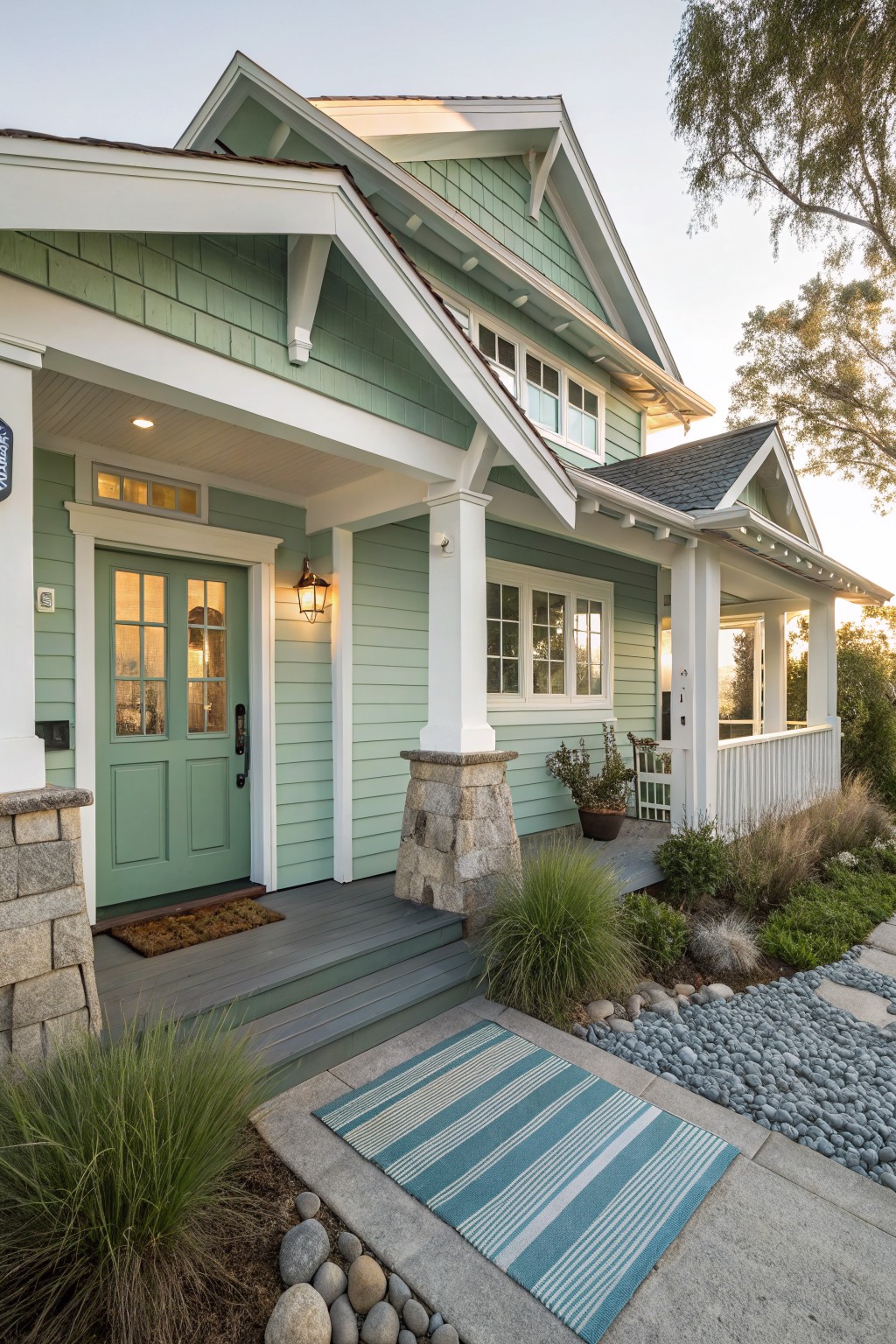
This soft sage green works well on coastal homes because it feels light and relaxed without fading into the background. It has a gentle cool tone that sits nicely against white trim and stone details.
The color holds up in bright sun but can pick up more blue in shade, so it suits houses with plenty of natural light. Pair it with gray decking or simple white railings to keep the look clean and breezy.
Soft Gray Siding

This soft gray siding gives a house that easy coastal feel without trying too hard. It sits in a light neutral gray family and looks closest to Sherwin Williams Repose Gray or Benjamin Moore Stonington Gray. Many people like it because the color stays calm next to white trim and darker doors.
The slight cool undertone helps it blend with greenery and stone paths outside. It works best on shingle or clapboard homes where you want something relaxed that still feels put together. Just watch how it shifts in strong afternoon light before you commit.
Soft Blue Gray Siding
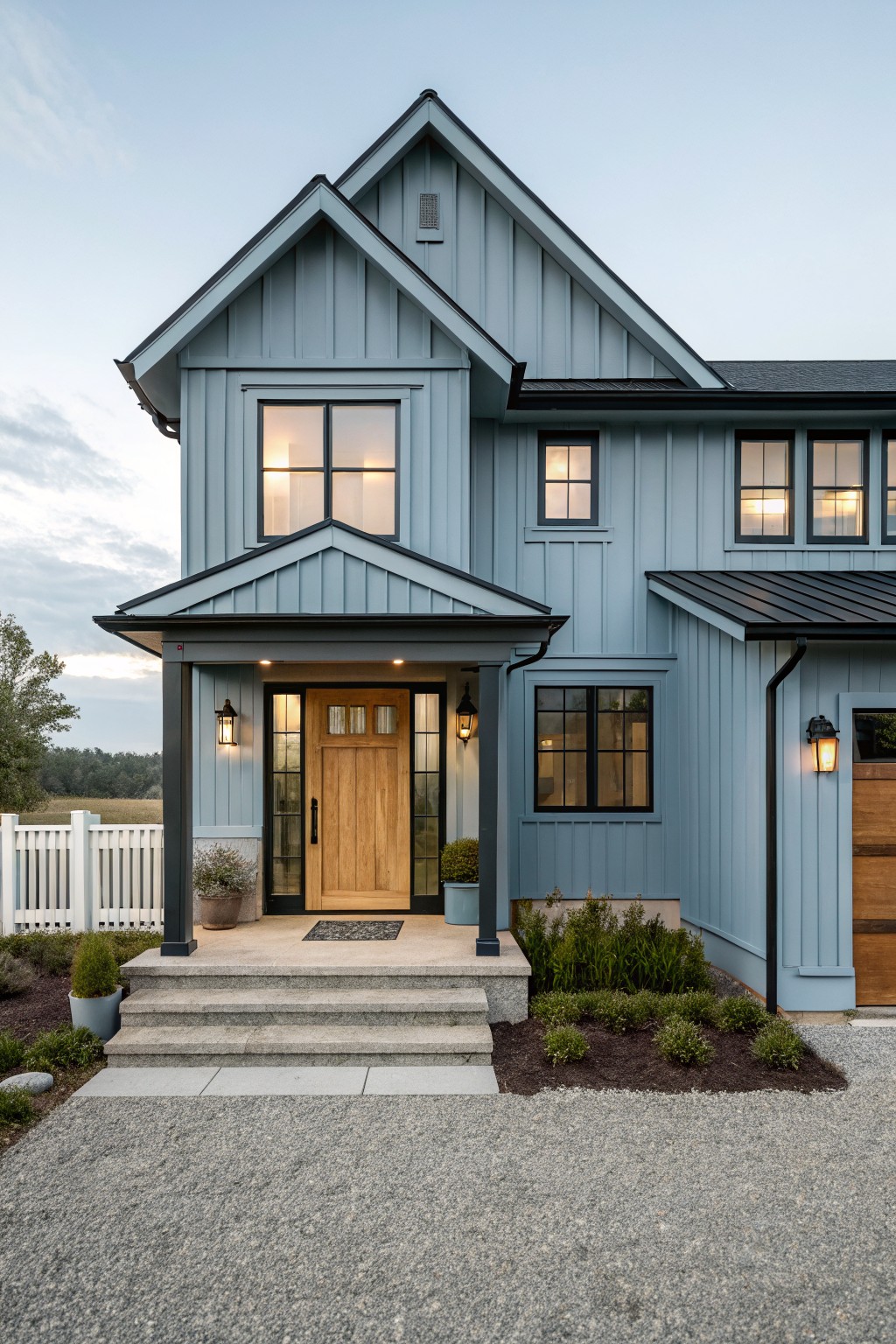
This soft blue gray gives the house a calm coastal look that feels relaxed and easy. It sits somewhere between blue and gray without leaning too far in either direction. You see similar shades from Sherwin Williams Rainwashed, Benjamin Moore Wythe Blue, Behr Ocean Mist, and Farrow & Ball Borrowed Light.
The cool undertone keeps it feeling fresh next to dark windows and trim. It works best on homes with simple details and some natural wood, since the blue gray lets those warmer touches stand out without competing. Just watch how it shifts in different light, since it can read more gray on overcast days.
Soft Pink Siding

This soft pink on the house siding has a warm, gentle tone that works well for a coastal setting. It feels light without going too pale and gives the exterior a relaxed look that still reads as cheerful. Colors like this sit nicely next to white trim and natural wood accents.
It has a hint of peach in the undertone, which keeps it from feeling too cool in morning or evening light. Pair it with crisp white windows and a darker door to balance the softness, and it suits homes near the water or in neighborhoods that lean toward a breezy style. Watch the finish though, since a flat paint can make it look chalky while a satin brings out the warmth.
Crisp White Brick Siding
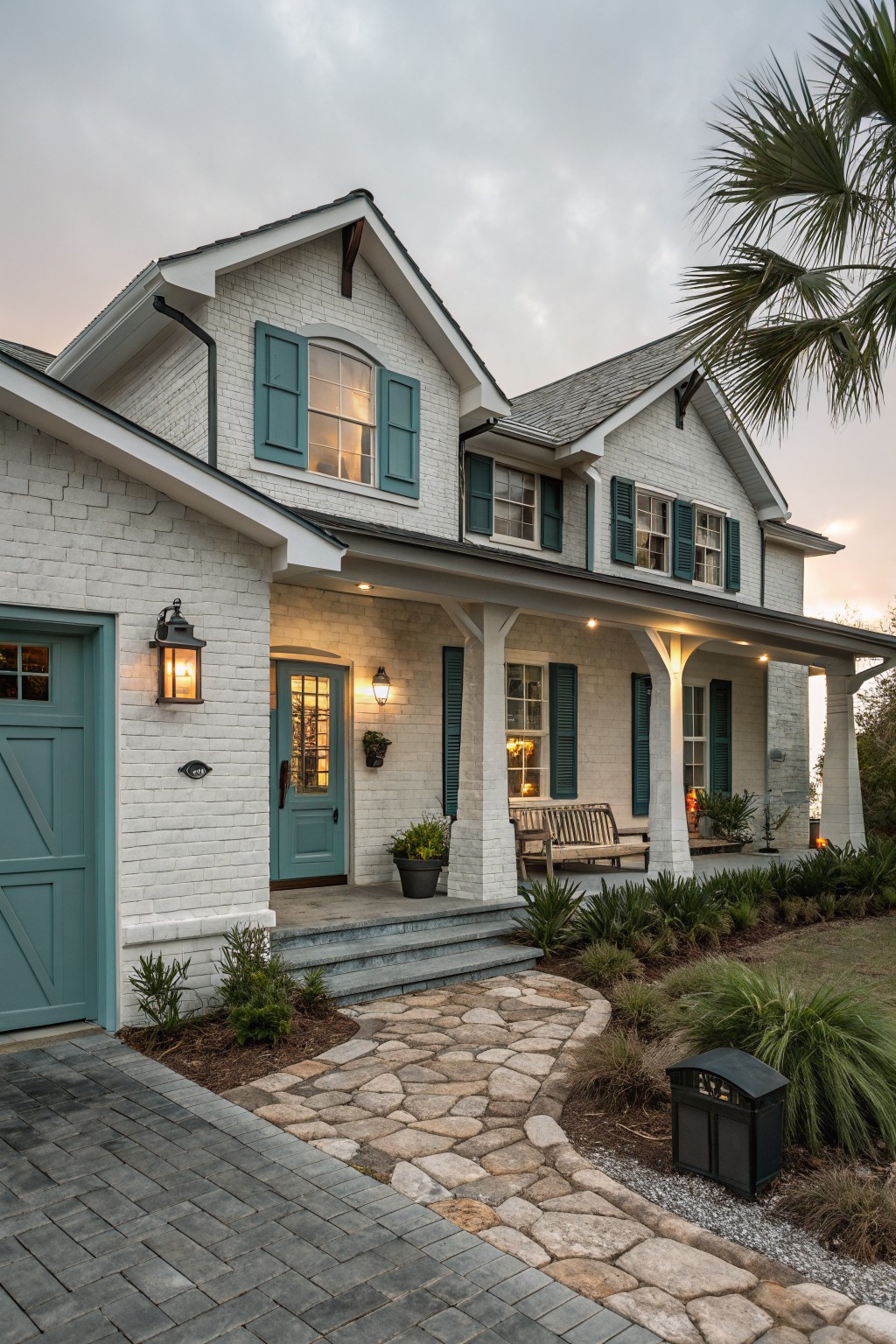
A crisp white is a solid choice for brick on a coastal home. It keeps the whole exterior feeling light and simple while still showing off the texture of the brick underneath.
This shade has a cool lean that pairs easily with stone paths and natural greens around the yard. It works best on homes that get decent sunlight, since it can look a bit stark in heavy shade.
Soft Warm Gray Siding
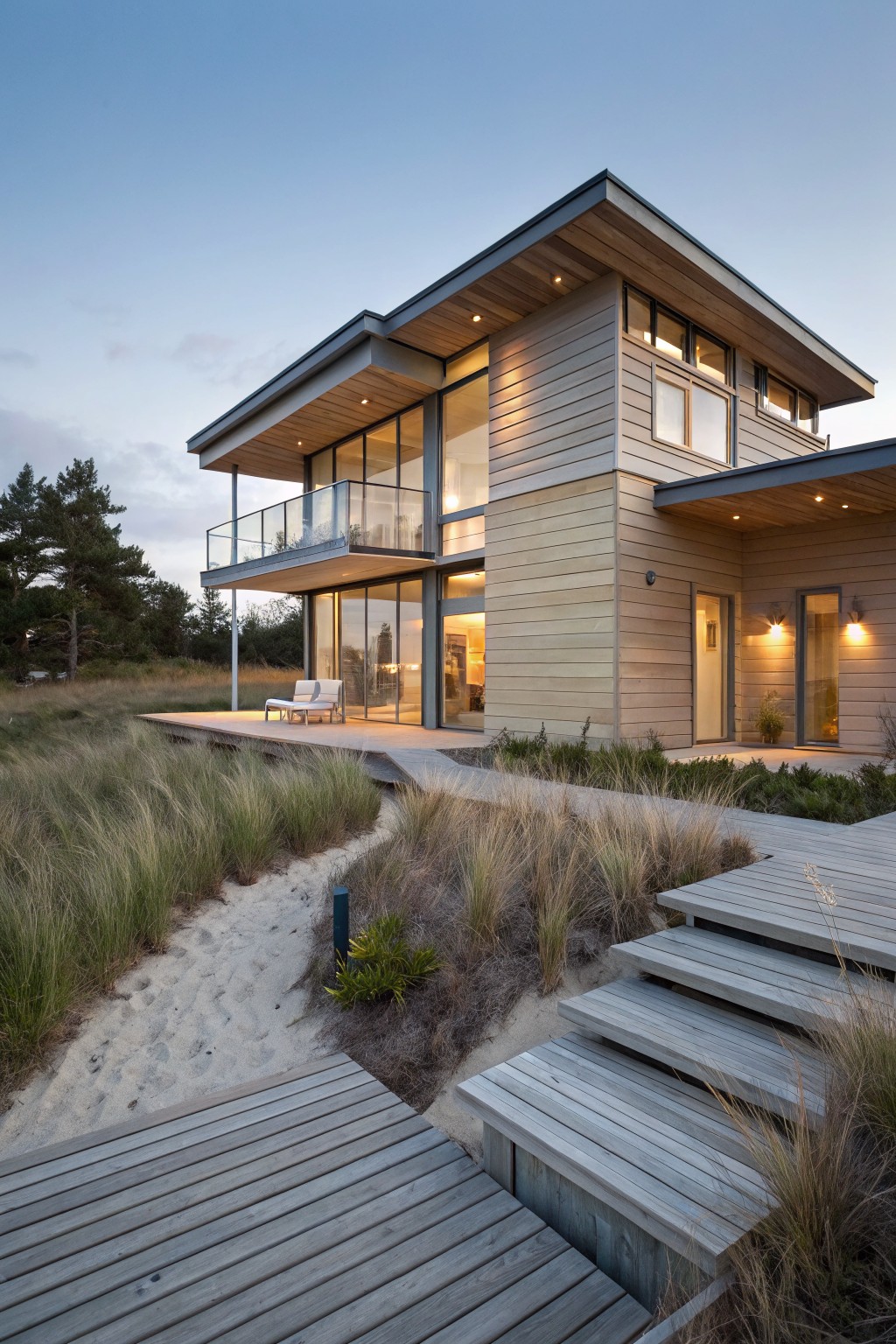
This siding color is a soft warm gray that works well for a relaxed coastal look. It sits somewhere between gray and beige, giving the house a quiet presence without standing out too much against the sand and grass. Colors like Sherwin Williams Repose Gray or Benjamin Moore Edgecomb Gray capture that same feel, and Behr Silver Gray is another close option if you want something a bit lighter.
The warmth in the undertone helps the color stay friendly next to natural wood decks and trim. It tends to look best on homes with clean lines and simple landscaping, though it can start to feel flat if the surrounding greenery is too sparse or if you pair it with very cool blue tones.
Coastal Sage Gray Green Siding
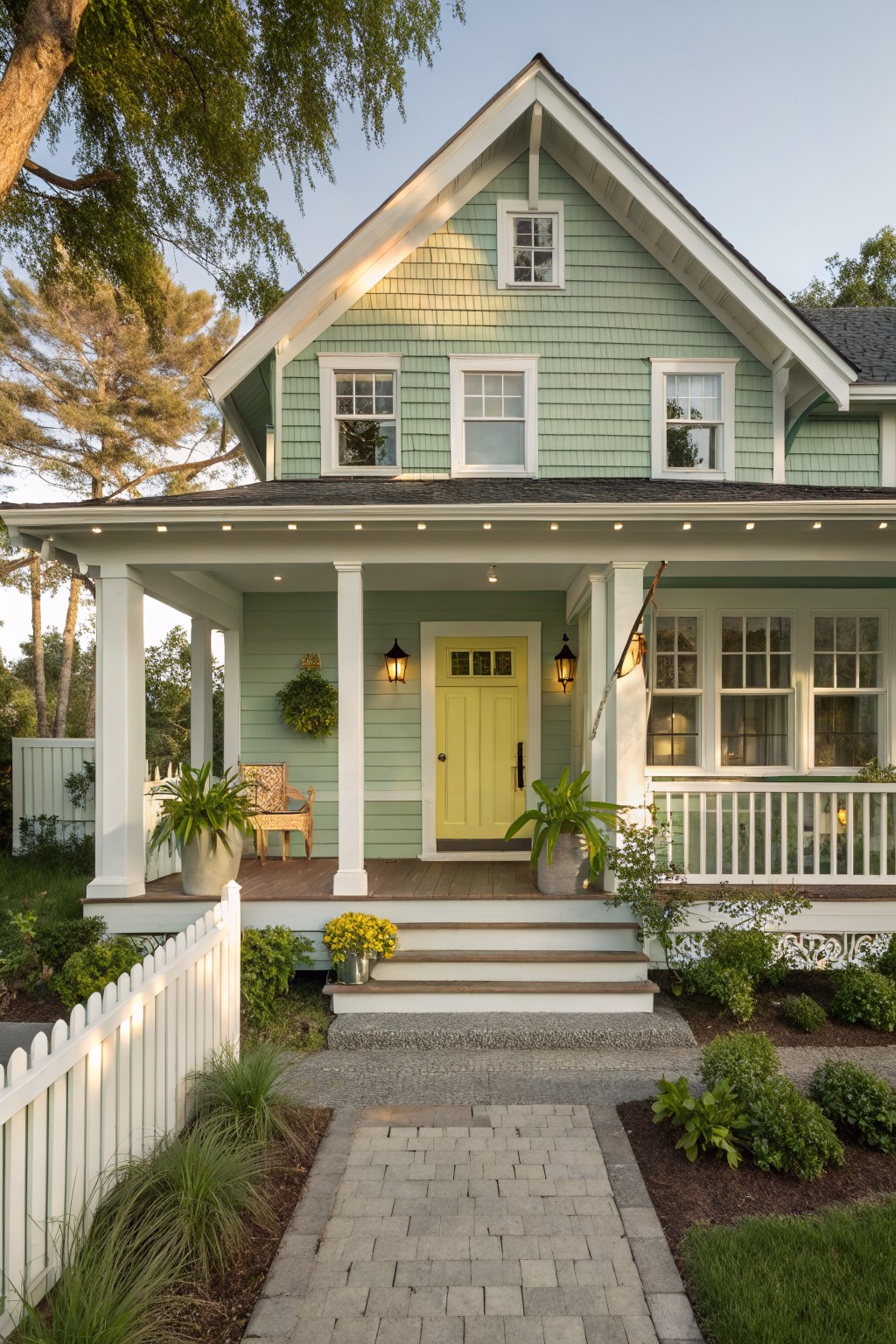
A soft sage green works well on coastal homes because it feels calm without disappearing into the landscape. This color sits somewhere between gray and green, giving the house a relaxed look that still reads as intentional. It pairs nicely with white trim and natural wood accents, which keeps the whole exterior from feeling too heavy.
The undertone here leans slightly blue, so it holds up nicely in bright sunlight and looks a little cooler in the shade. I would try something close to Sherwin Williams Sea Salt, Benjamin Moore Saybrook Sage, or Behr Aloe Vera if you want a similar feel. Just test a few samples on the actual siding first, since greens can shift more than you expect once they are up.
Warm Sandy Beige Siding
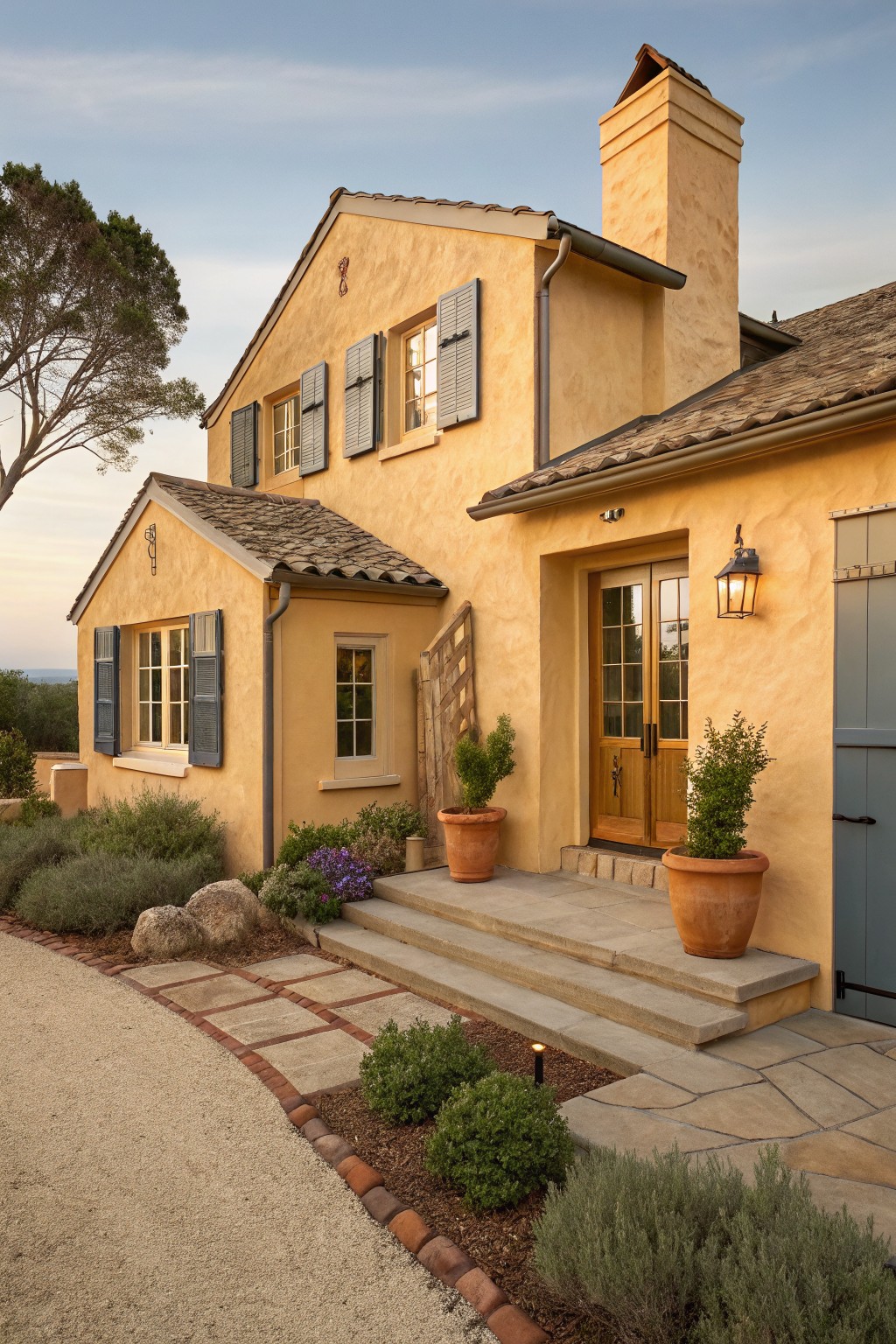
This warm sandy beige gives the house a relaxed coastal look that feels easy and lived in. It sits somewhere between soft yellow and light tan, with enough warmth to keep the stucco from looking flat or too cool next to the roof tiles.
The color holds up nicely in bright light and pairs well with natural wood doors and simple stone details. Just make sure the undertone stays consistent across all sides of the house, since it can shift toward pink or green depending on the light and nearby landscaping.
Soft teal siding

This soft teal siding gives the house a light coastal look that feels easy and relaxed. It leans more green than blue and has a gentle cool tone that keeps the whole exterior feeling open.
It works best with crisp white trim and pairs well with darker shingles on the roof. Just watch that it does not pick up too much yellow from nearby greenery or it can shift warmer than expected.
Soft Blue Green Siding
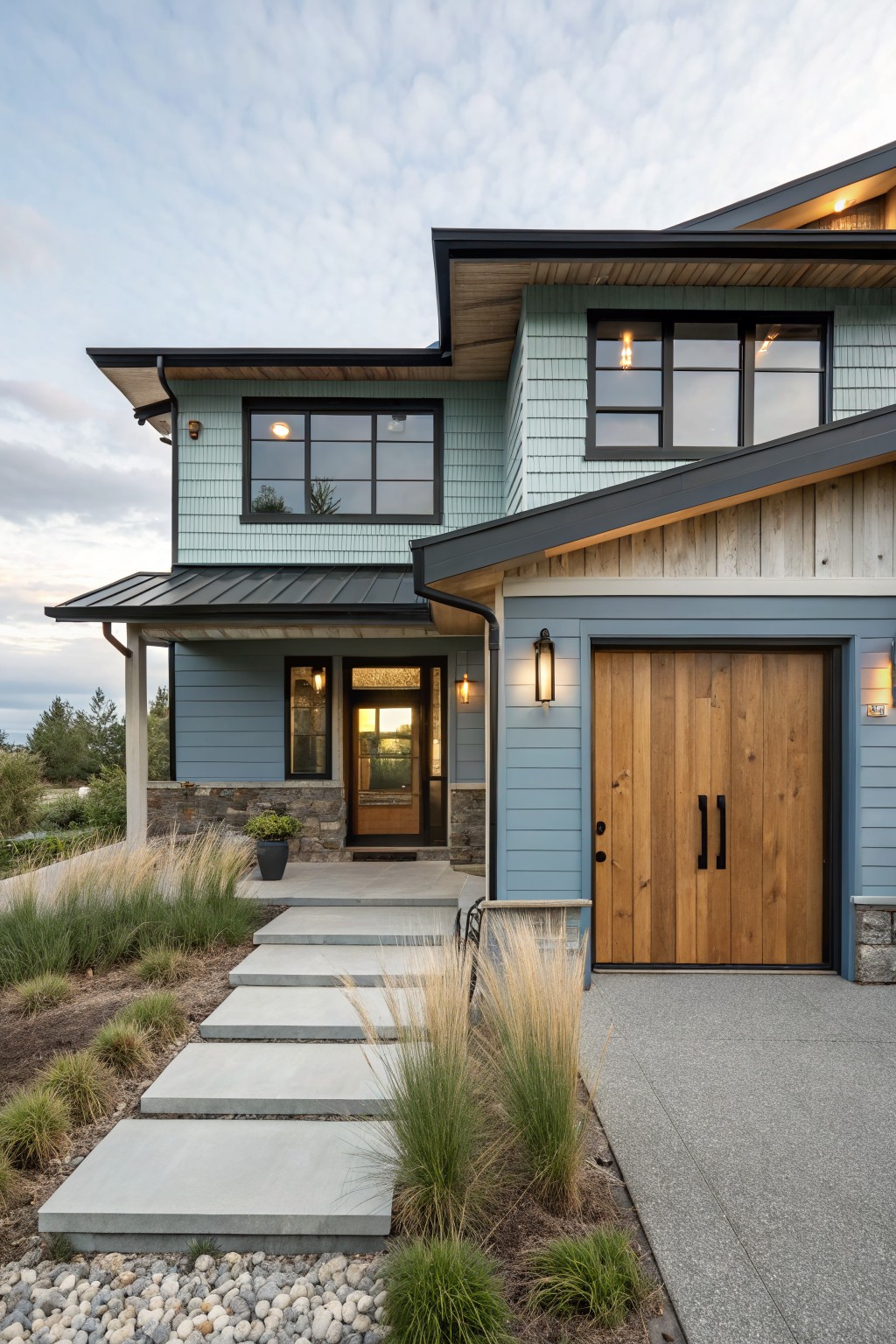
This siding color is a soft blue green that feels calm and easy. It has a bit of gray in the mix which keeps it from looking too bright outside.
It pairs nicely with wood doors and darker trim. This kind of shade works best on homes near the water where you want something that blends with the surroundings. Try something close to Sherwin Williams Rainwashed or Benjamin Moore Wythe Blue if you want a similar look.
Soft Blue Green Doors
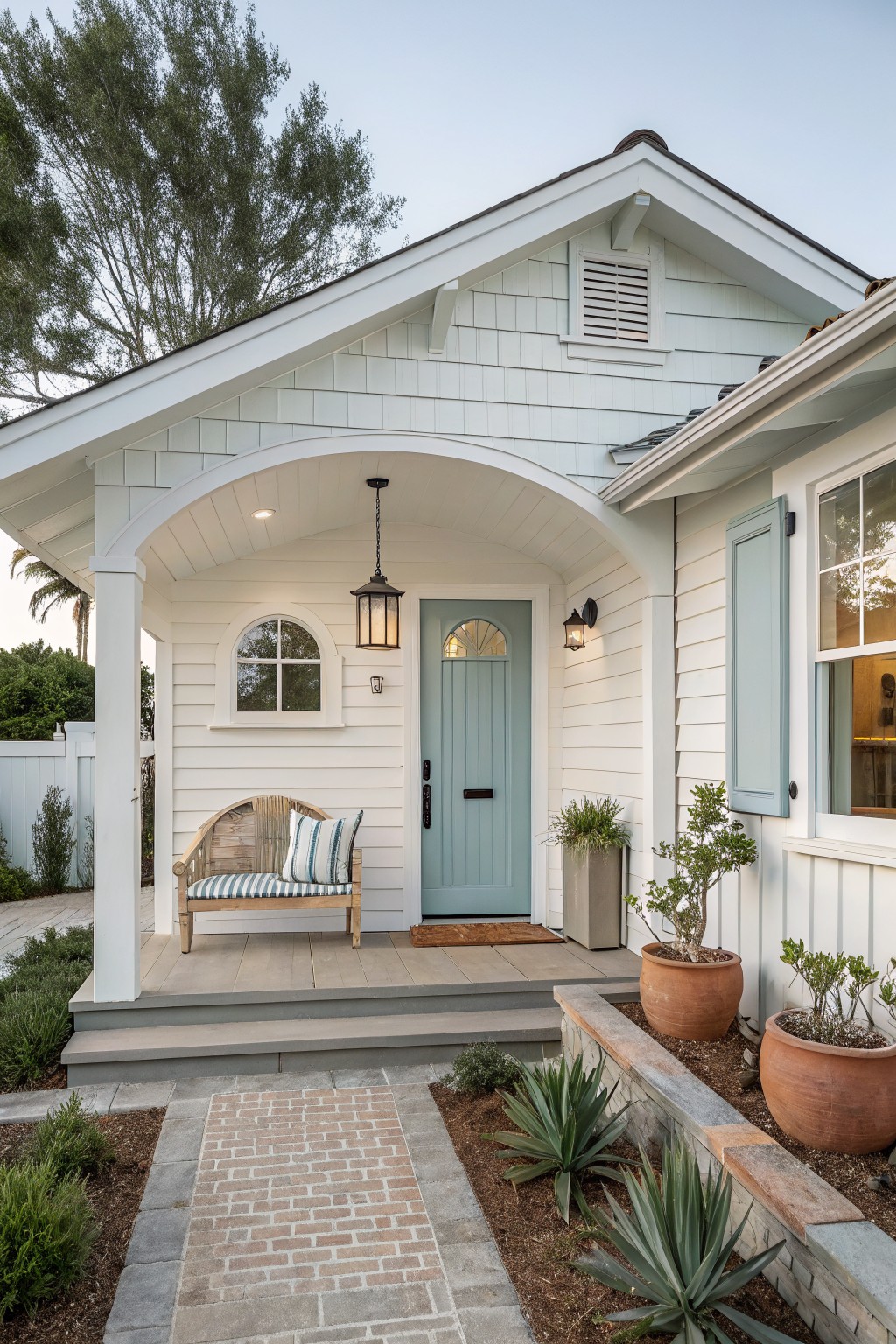
This soft blue green feels like a natural fit for coastal homes. It sits in that gentle space between blue and green without leaning too hard in either direction, which keeps the whole exterior looking relaxed and welcoming.
The color has a light gray undertone that helps it stay calm next to white siding. It works especially well on doors and shutters, and pairs easily with wood tones or simple stone details. Try Sherwin Williams Rainwashed, Benjamin Moore Palladian Blue, or Behr Soft Aqua if you want something close.
Muted Coastal Blue Gray Siding
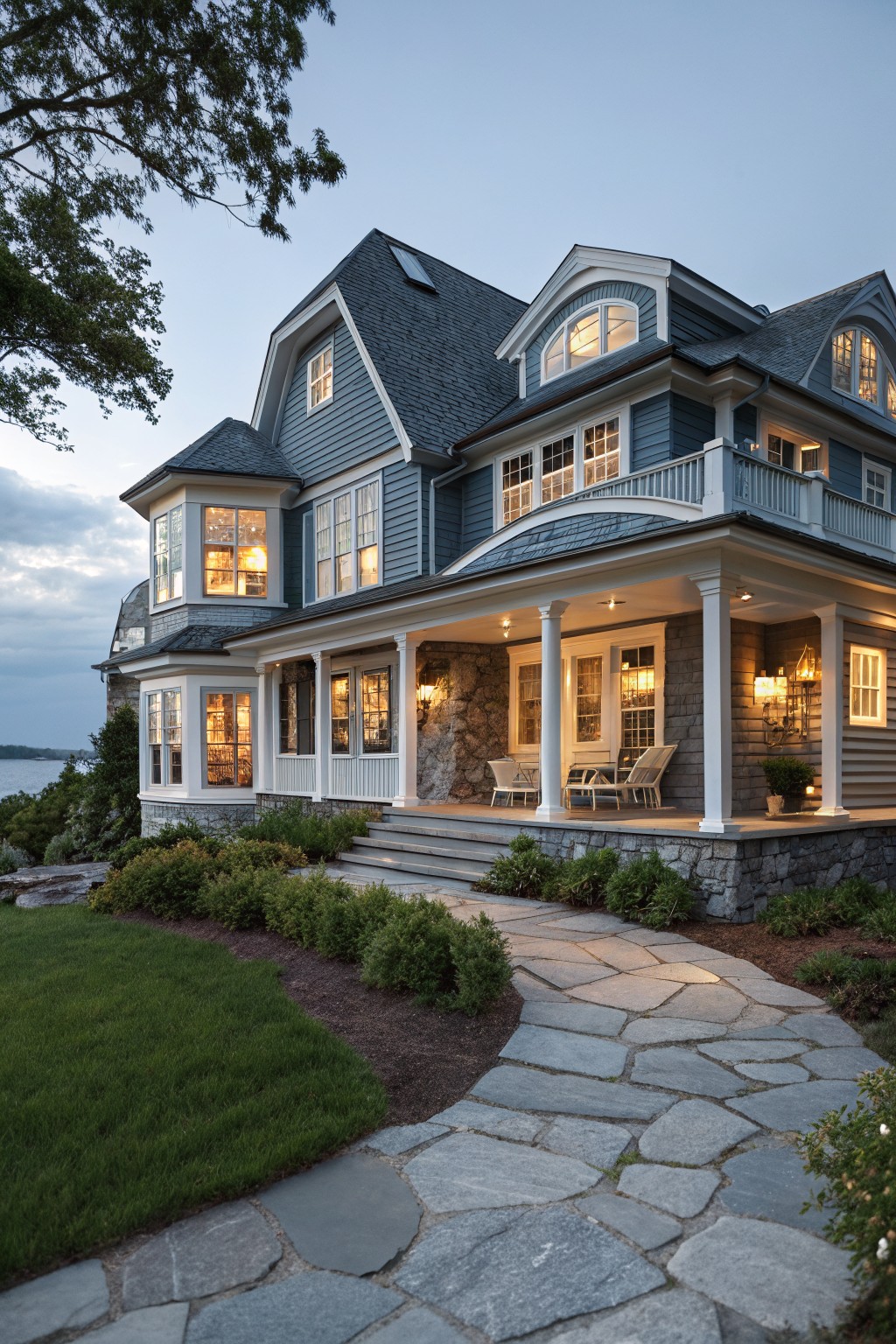
This soft blue gray on the siding gives the house a calm coastal feel that still looks like a real home. It has a muted tone with some gray mixed in, and it looks closest to Sherwin Williams Silver Strand or Benjamin Moore Harbor Gray. The color works because it feels fresh without being too bright or too dark.
It carries cool undertones that show up more in shade and can lean a little greener in strong sun. White trim helps keep it clean, and it sits well with stone or wood accents at the base. Just test a large sample first, since the gray can shift more than you expect once the whole house is painted.
Muted Sage Green Siding
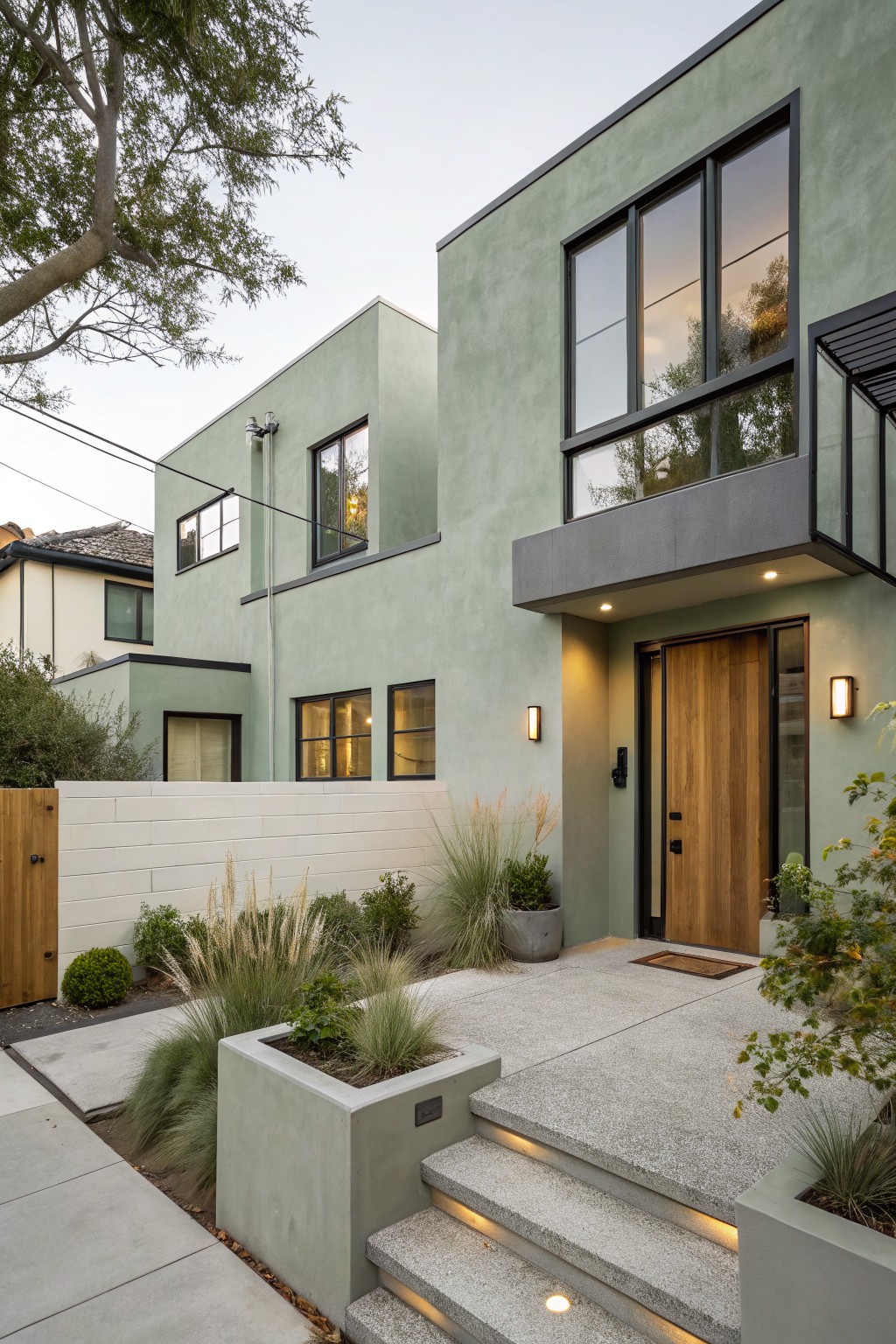
This muted sage green gives a house that relaxed coastal feel without trying too hard. It sits somewhere between gray and green, with a soft cool undertone that keeps the whole exterior calm. Similar shades show up as Sherwin Williams Rainwashed, Benjamin Moore Saybrook Sage, Behr Aloe Vera, or Farrow & Ball French Gray.
The color looks especially good next to natural wood doors and black window frames. It holds up in strong daylight but can start to feel a little washed out if there is not enough contrast from trim or landscaping around it.
Soft Seafoam Green Siding
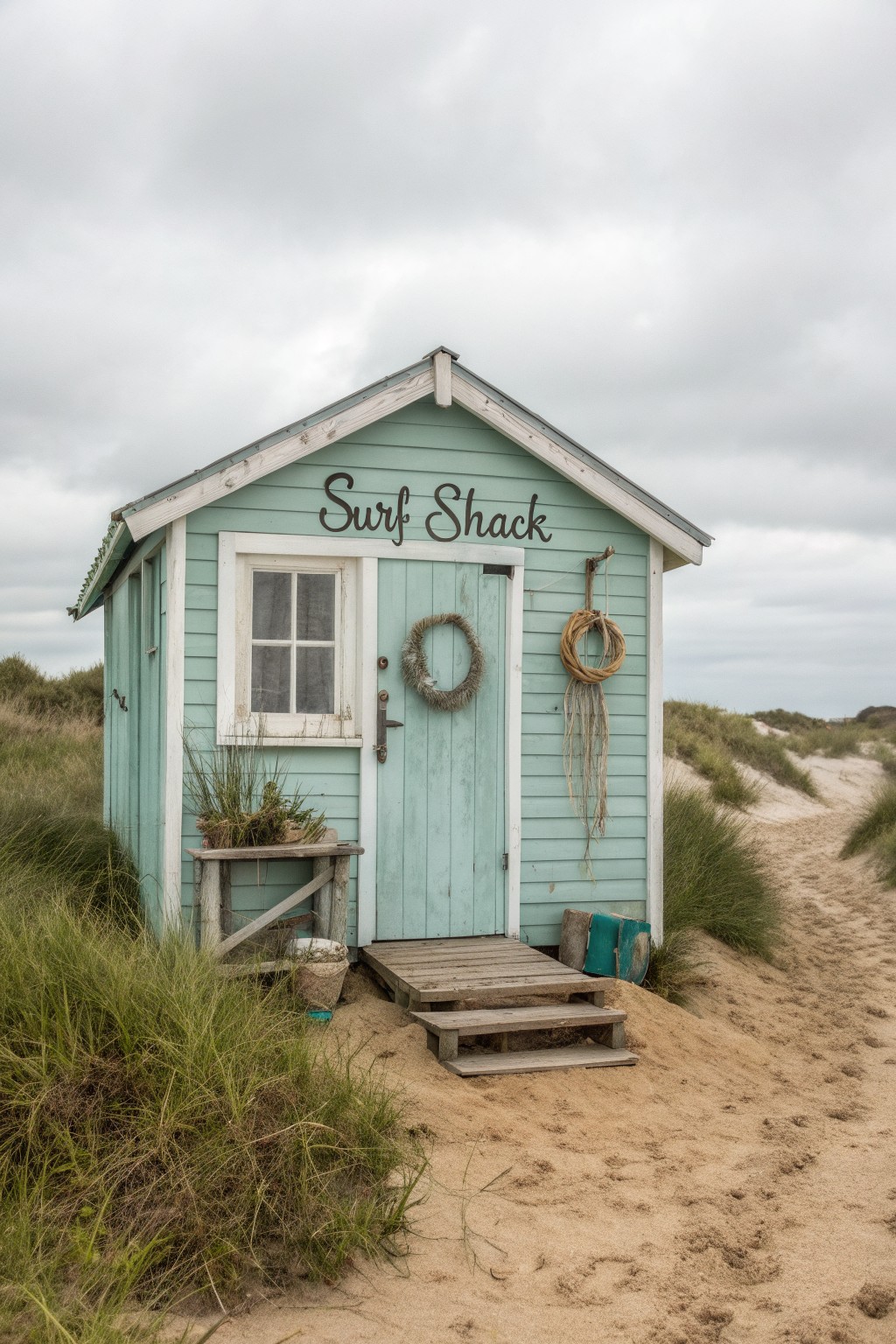
A soft seafoam green like this brings a quiet coastal feel to an exterior. The color sits between green and blue with just enough gray in it to keep the whole thing calm rather than bright. It works especially well on simple wood siding where the finish shows a little texture from the weather.
This shade has a gentle cool undertone that pairs easily with white trim and weathered wood. It looks good near sand and dune grass without fighting the natural surroundings. Try it on a small outbuilding or the main house if you want something relaxed that still feels fresh. Close matches include Sherwin Williams Sea Salt, Benjamin Moore Ocean Air, Behr Aqua Foam, and Farrow & Ball Teresa’s Green.
Soft Pink Stucco
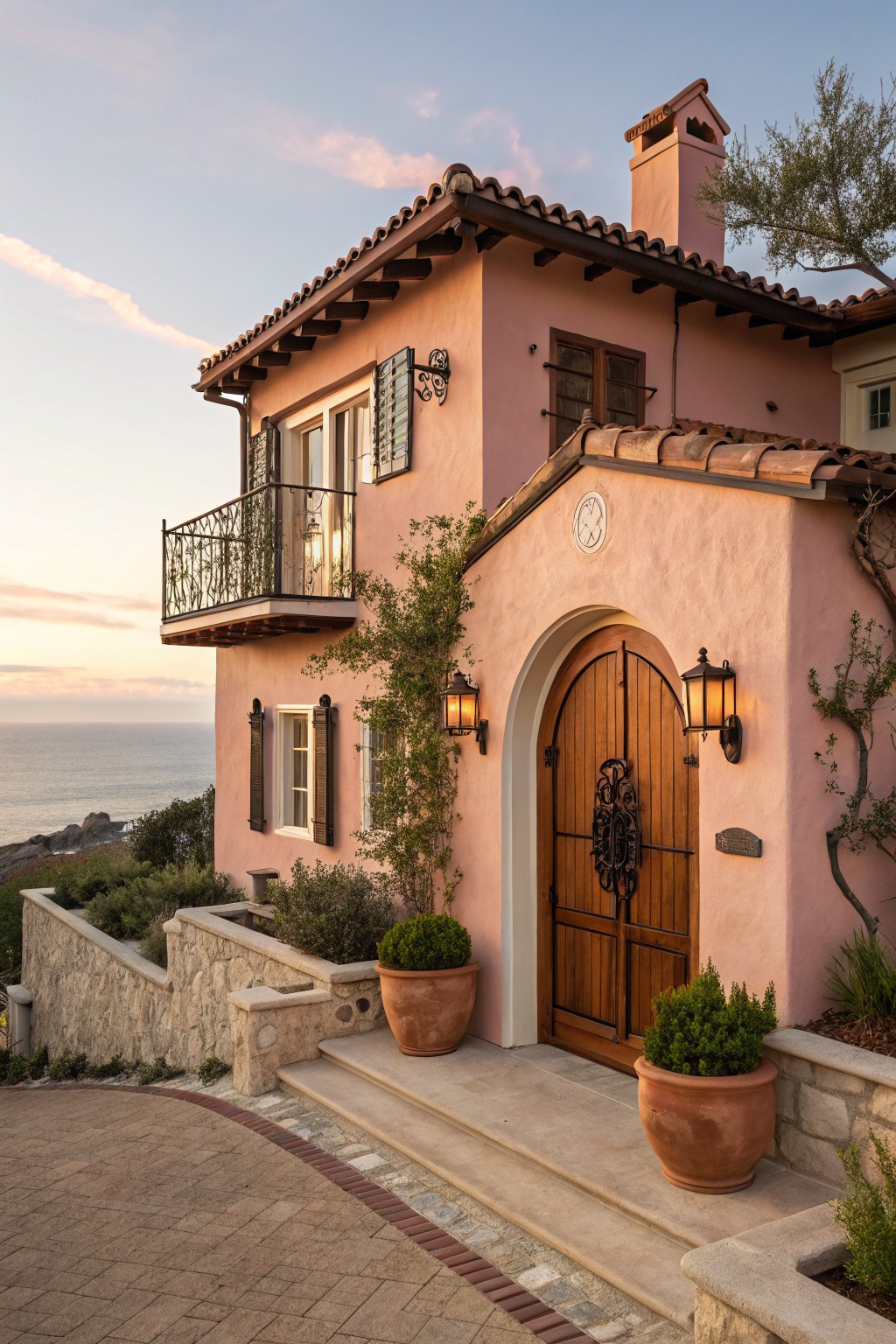
This soft pink stucco color gives the house a quiet warmth that fits right into a coastal setting. It is a muted peach pink with gentle orange undertones that keep it from looking too sweet or washed out in daylight.
The color sits close to Sherwin Williams Rosy Outlook, Benjamin Moore Pink Damask, and Behr Peach Souffle. It works best with natural wood doors and simple stone details, though it can start to feel flat if the trim is too bright white.
Soft Seafoam Siding
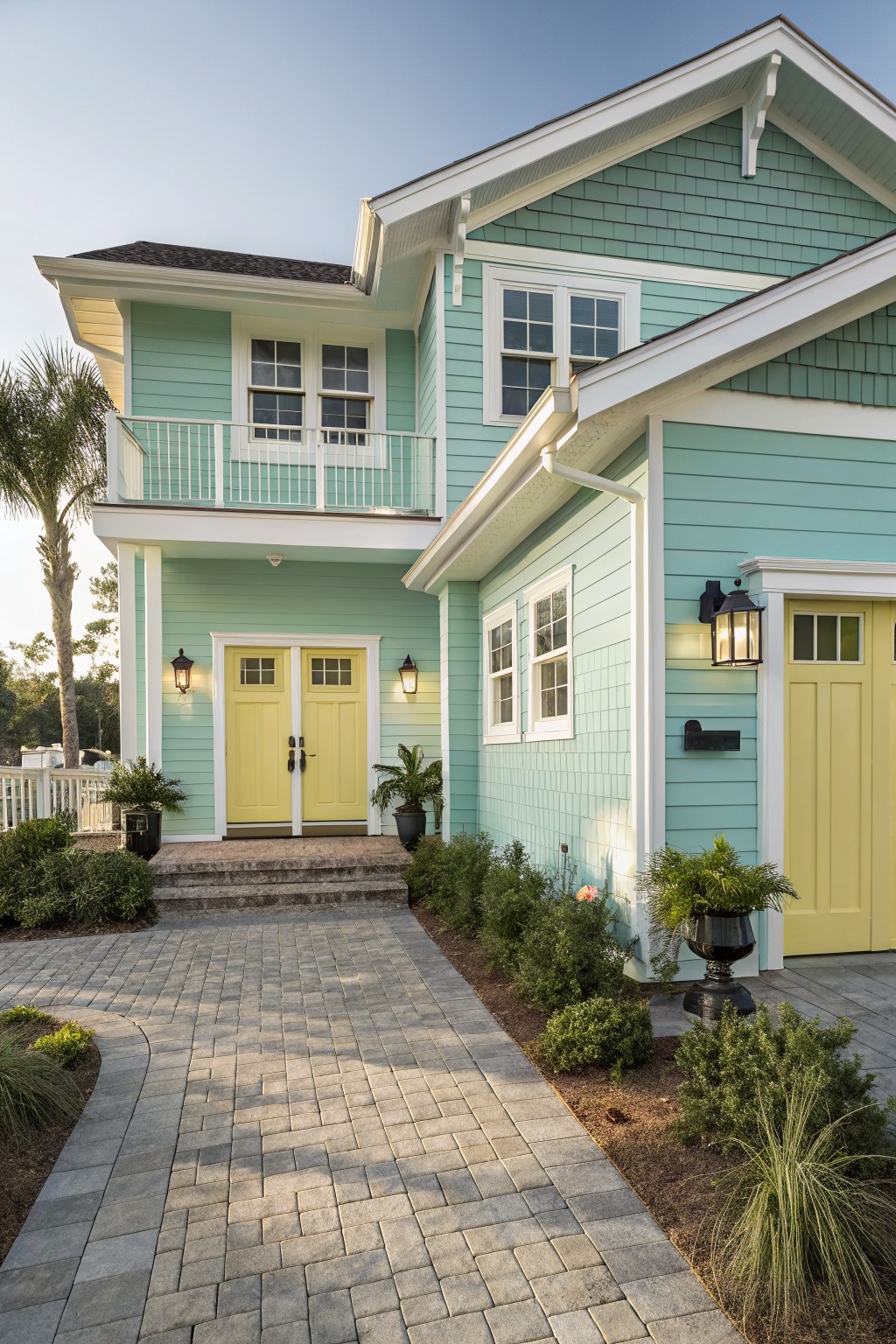
This soft seafoam color on the siding is a light blue-green that gives a calm coastal feel without looking too bold. It sits somewhere between green and aqua and works well on houses that need a bit of freshness. It seems closest to Sherwin Williams Sea Salt, Benjamin Moore Palladian Blue, or Behr Icy Morn.
The cool undertone keeps the house looking clean next to white trim. It pairs nicely with simple landscaping and does not fight with roof colors in the gray or charcoal range. Just test it in different lights first, since it can pick up more gray when the sky is overcast.
Muted Blue Gray Siding
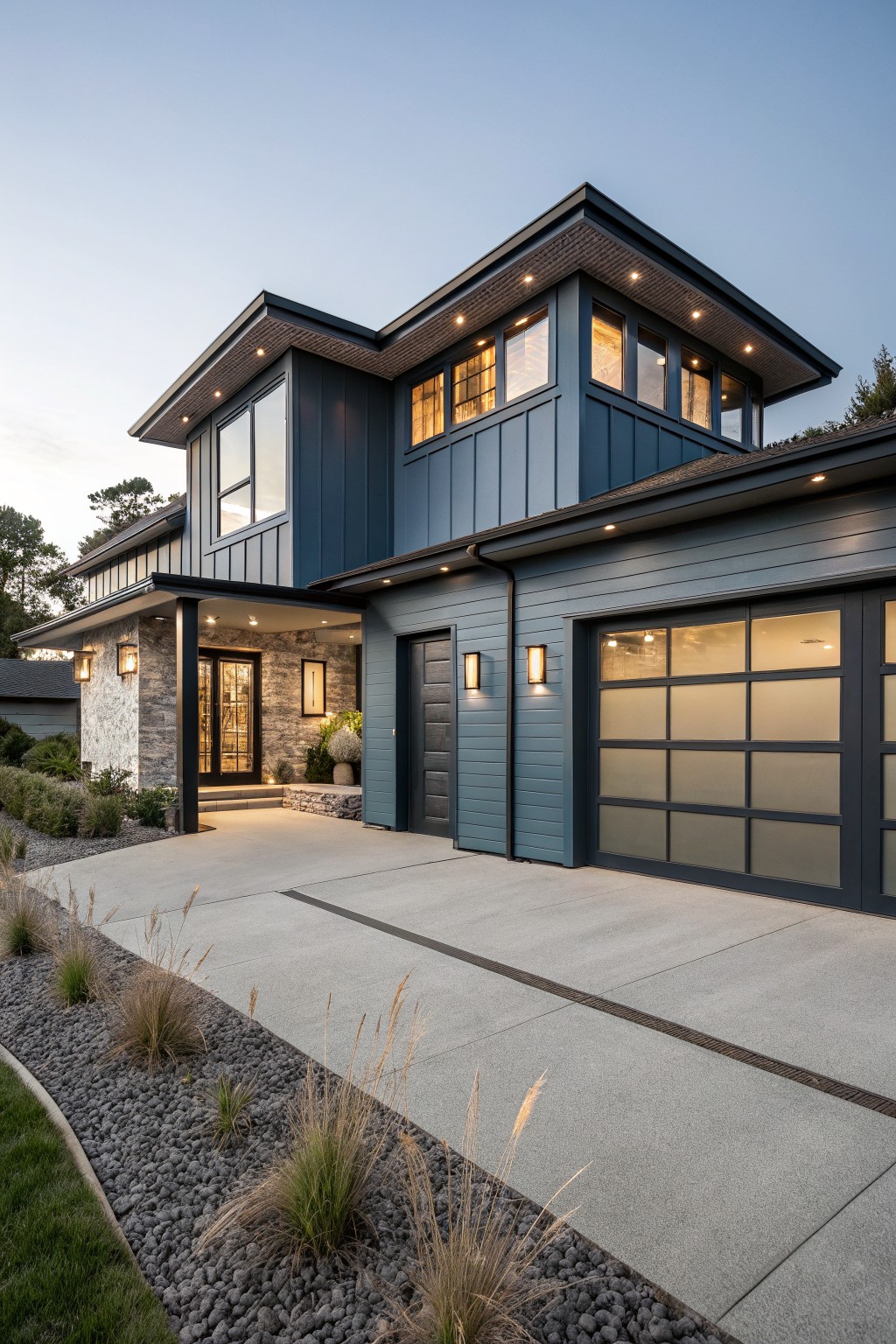
This blue gray siding color has a cool, slightly muted tone that feels right for a coastal setting. It sits between a soft gray and a true blue, giving the house a calm look without turning too dark or heavy.
The undertone stays steady in changing light and works well with dark trim and stone details. Pair it with warm white or light gray accents to keep the exterior from feeling flat. Colors like Sherwin Williams Rock Bottom, Benjamin Moore Storm, Behr Evening Shadow, or Farrow & Ball Blue Gray all land close to this shade.
Creamy white siding
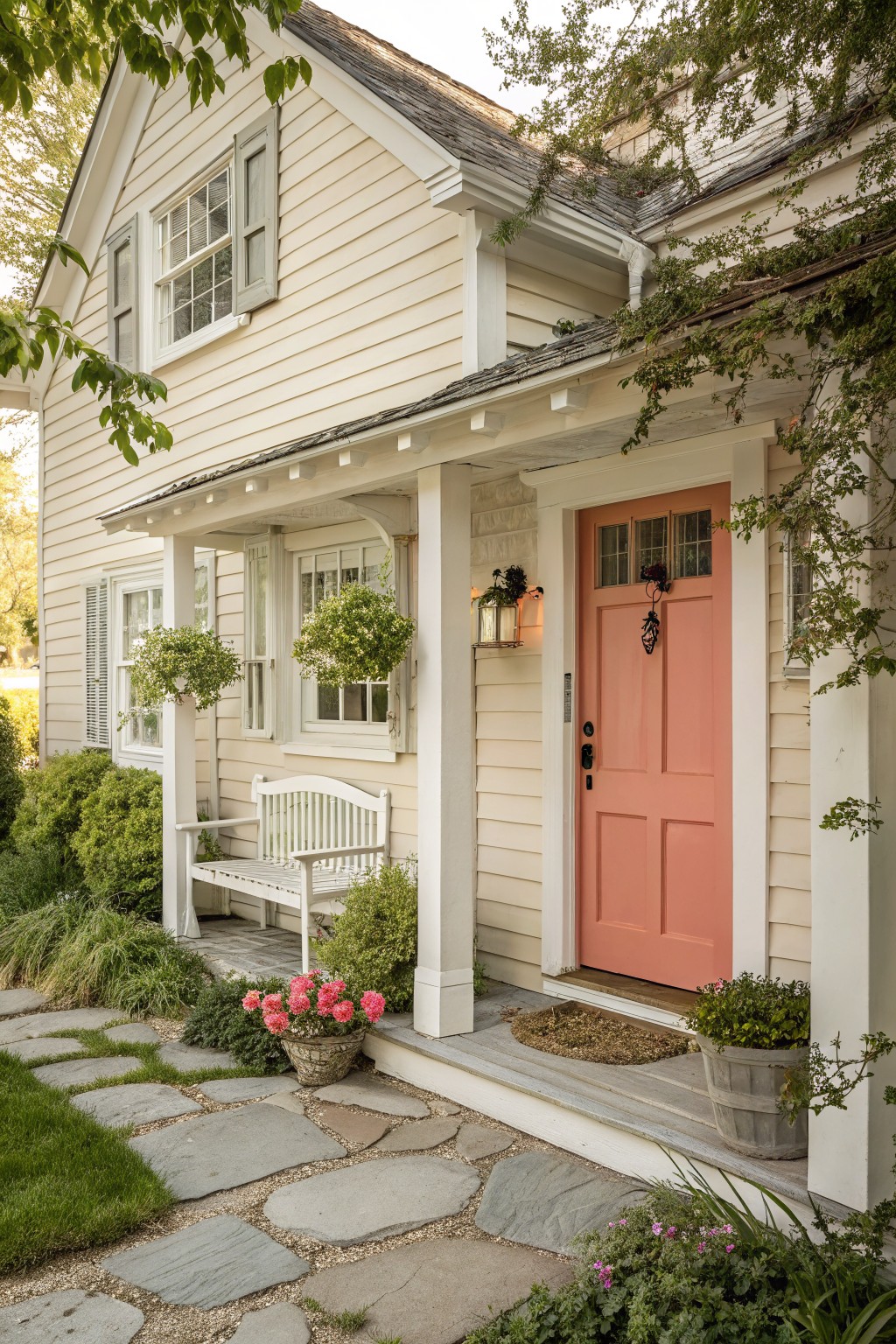
This creamy white siding is a warm off-white that feels soft and welcoming on a coastal home. It has gentle yellow undertones that keep the color from looking stark, especially next to dark shingles and natural greenery.
It pairs nicely with white trim and almost any accent color on the door. The shade works best on older homes or cottages where you want a relaxed beach look without going too bright or cool.
Deep Blue Siding

This deep blue siding brings a calm coastal feel to the whole house. It sits somewhere between navy and slate, with a soft gray undertone that keeps it from looking too dark or harsh on an exterior.
The color pairs nicely with white trim and warm wood doors. It also works well against stone foundations since the blue stays steady even when the light changes throughout the day.
Light Sage Green Siding
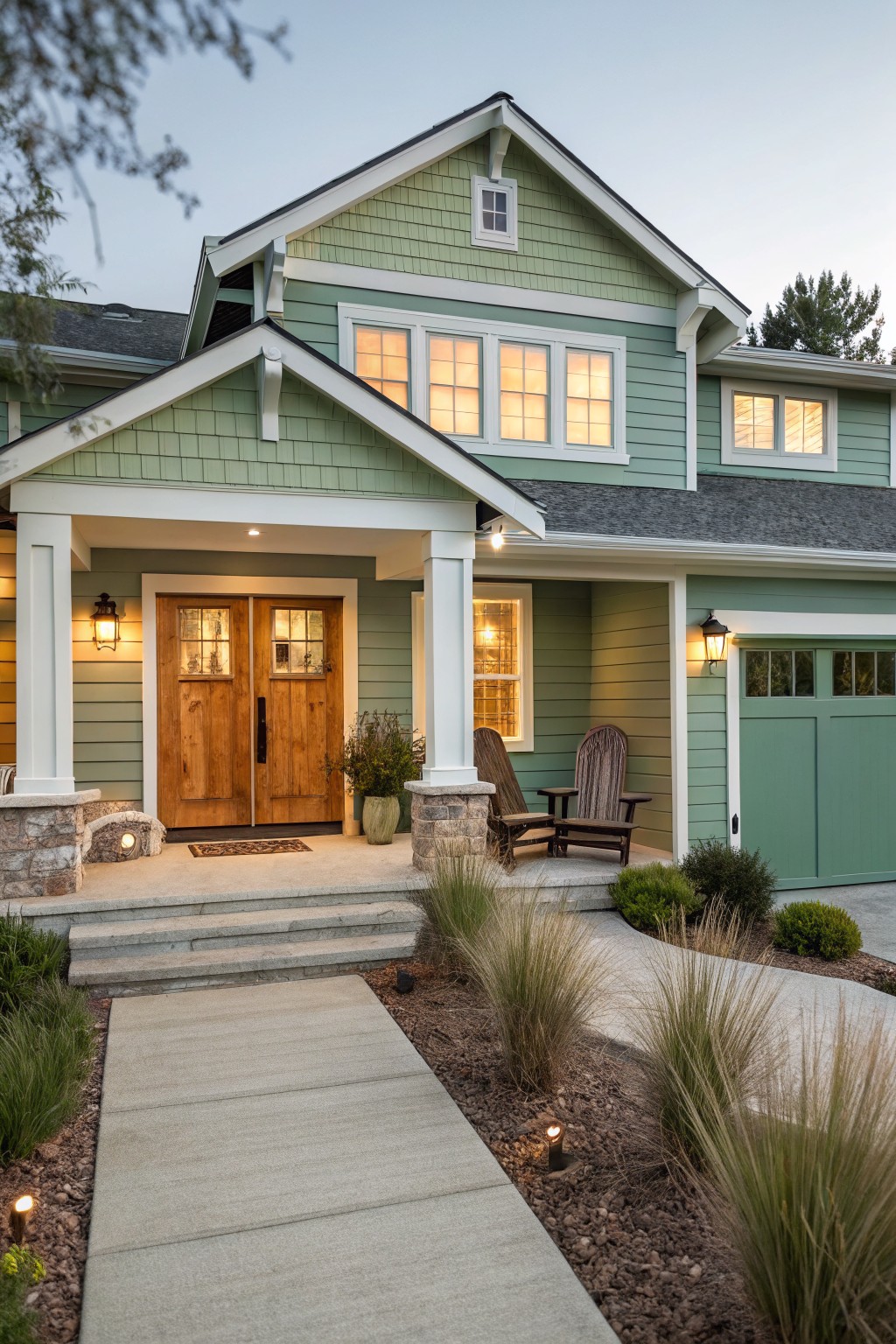
This soft sage green on the siding gives the house a calm coastal look without trying too hard. It is a light muted green with some gray in it, which helps it feel relaxed next to the white trim and wood accents.
The color works best on homes that want a gentle connection to the outdoors. It pairs well with natural wood doors and stone details, and it tends to stay soft even in changing light.
Coastal Blue Green Siding
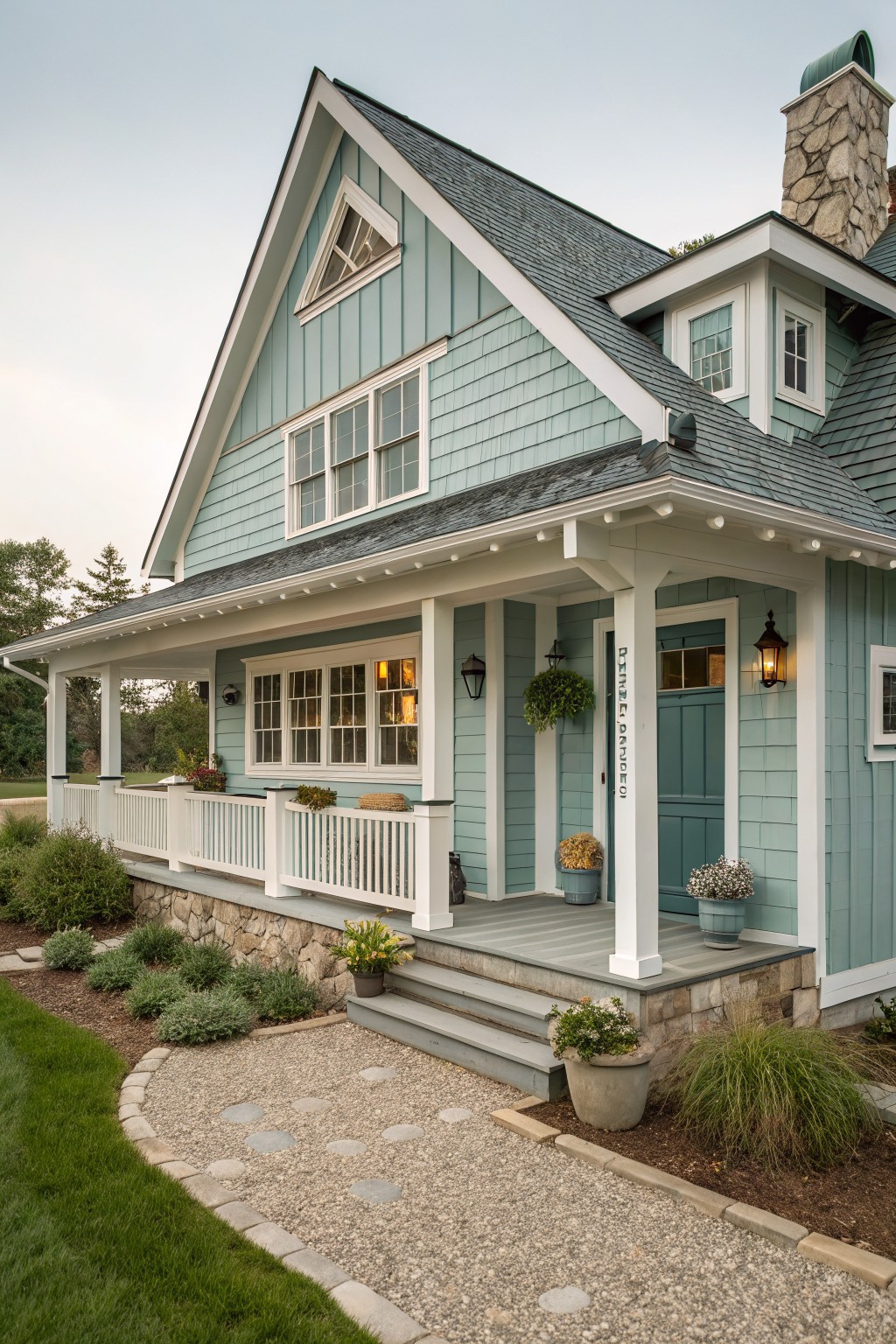
This light blue green gives a house that easy coastal look without going too bright. It feels calm and a little fresh, which works well when you want the exterior to blend with the outdoors rather than stand out.
The color has cool undertones that sit nicely next to white trim and gray roofing. It also plays well with stone foundations, so the whole house feels balanced instead of flat.
Soft Blue Siding

This light blue paint gives the house a calm coastal feel without going too bold. It leans slightly cool with a touch of gray, so it reads soft rather than bright and holds up well next to the white walls.
The color works best on siding or upper sections where it can catch the light. It pairs easily with white trim and lets brighter accents like the turquoise doors stand out without fighting them.
Timeless Sage Green Siding
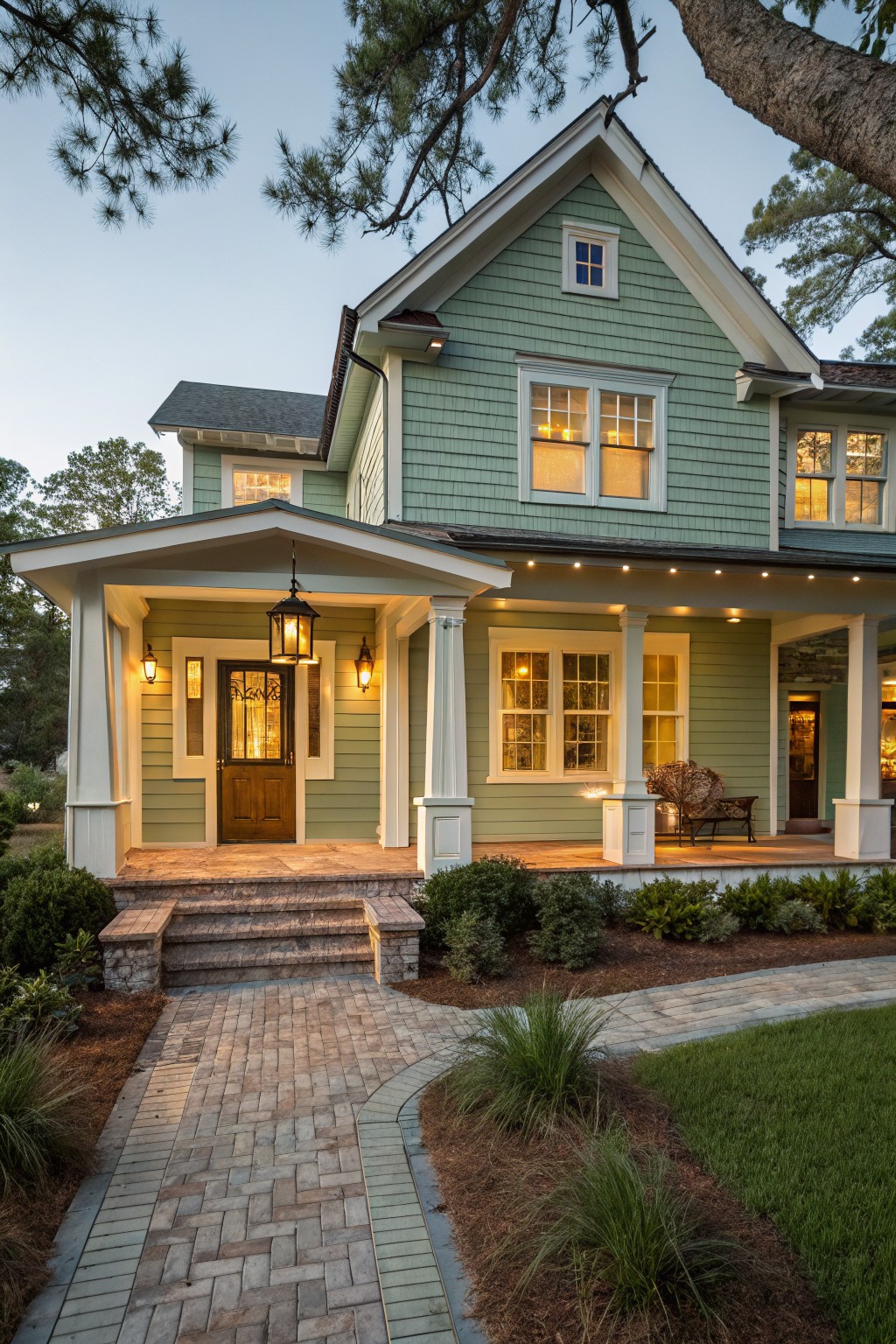
This soft sage green on the siding gives a house that easy coastal look without feeling too bright. It sits in a gentle middle ground between gray and green, which keeps the whole exterior feeling relaxed and a bit timeless.
The color has cool undertones that show up more in afternoon light, so it pairs best with crisp white trim and natural wood doors. It works well on homes that already have some greenery around them, though it can look a little flat if the landscaping is too sparse.
Frequently Asked Questions
Q: Which color from the list holds up best if my house gets hit with strong afternoon sun?
A: Pick a pale sand or light driftwood tone. These lighter shades bounce back the heat and keep the surface from baking too much. They also show less fading after a couple of summers.
Q: What if I want to use one of these paints just on the front door instead of the whole house?
A: A breezy blue like sea glass works great on a door. It gives the entry a fresh pop while the rest of the house stays neutral. Just make sure the door gets a good primer first so the color stays true.
Q: How do I know if these shades will match my weathered wood deck?
A: Test a couple of samples right on the siding next to the deck. The soft greens and taupes from the list blend nicely with grayed wood. Stick to one color family so nothing fights for attention.