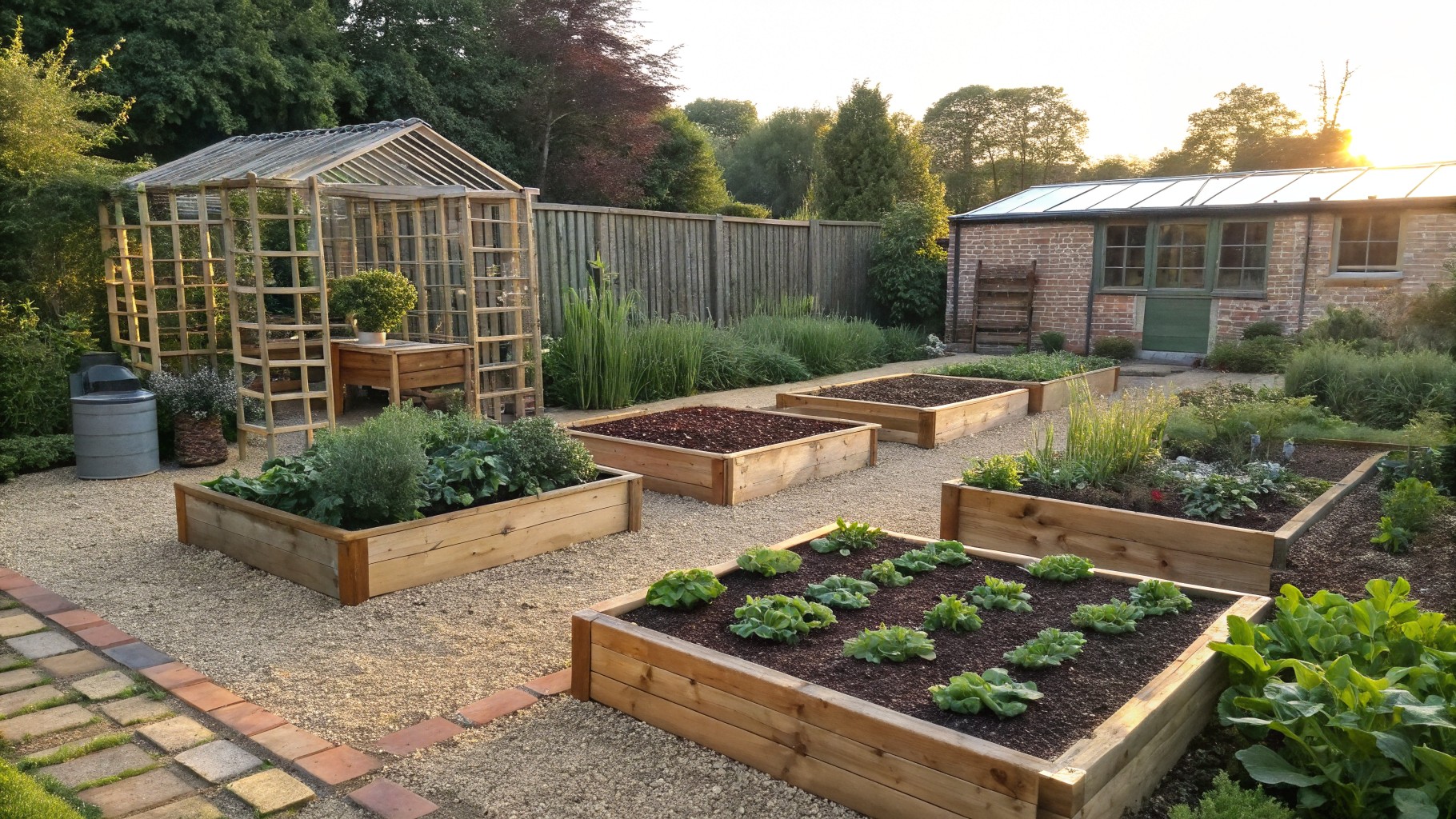
I’ve learned over years of squeezing vegetable gardens into my backyard that true organization starts with thoughtful bed layouts and pathways you can actually navigate without muddy boots everywhere.
What catches the eye first in these setups is usually the clean lines of raised beds edged with simple stones or logs, which prevent sprawl as plants grow tall and bushy.
I tend to prioritize ideas with gravel paths because they handle wheelbarrows well and dry out fast after rain, making the space usable from spring through fall.
Chaos creeps in fast without them.
Some of these approaches, like zoning herbs near the kitchen door or using vertical supports for vining crops, are the ones I keep adapting year after year.
Organized Raised Bed Vegetable Garden
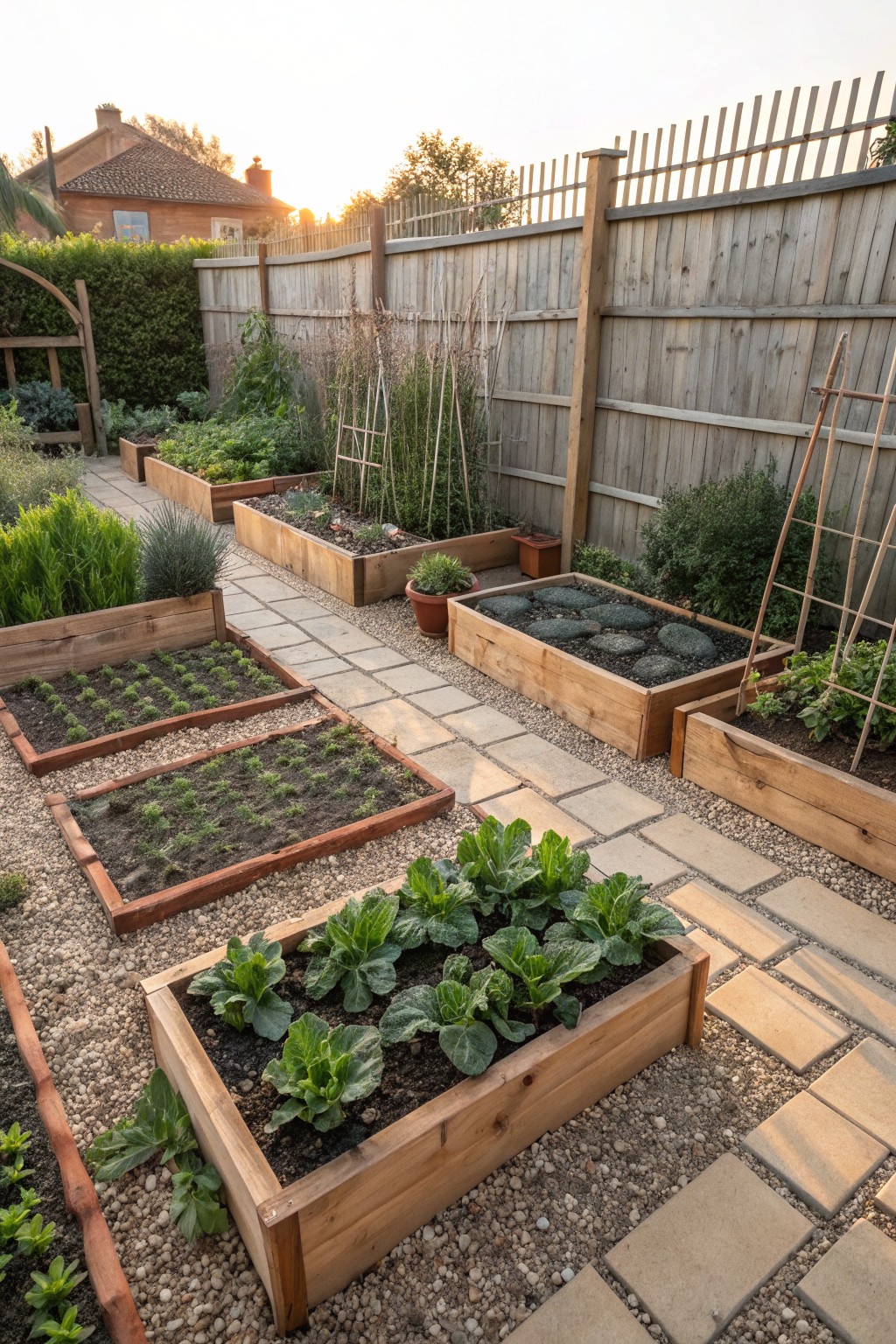
Raised beds like these keep a vegetable garden looking sharp and make tending plants a lot easier. The wooden frames hold soil in place, lift everything up for better drainage, and let you reach crops without bending too much. Gravel between the beds fills the walkways nicely, so you stay clean and don’t track mud inside.
This works best in smaller backyards where space feels tight. Use cedar or untreated pine for the beds to avoid chemicals leaching into the soil. Arrange them in a simple grid with stone pavers for paths… plant lettuces or brassicas first since they grow quick. Just watch for weeds popping up in the gravel.
Stone Terraced Beds for Sloped Vegetable Gardens
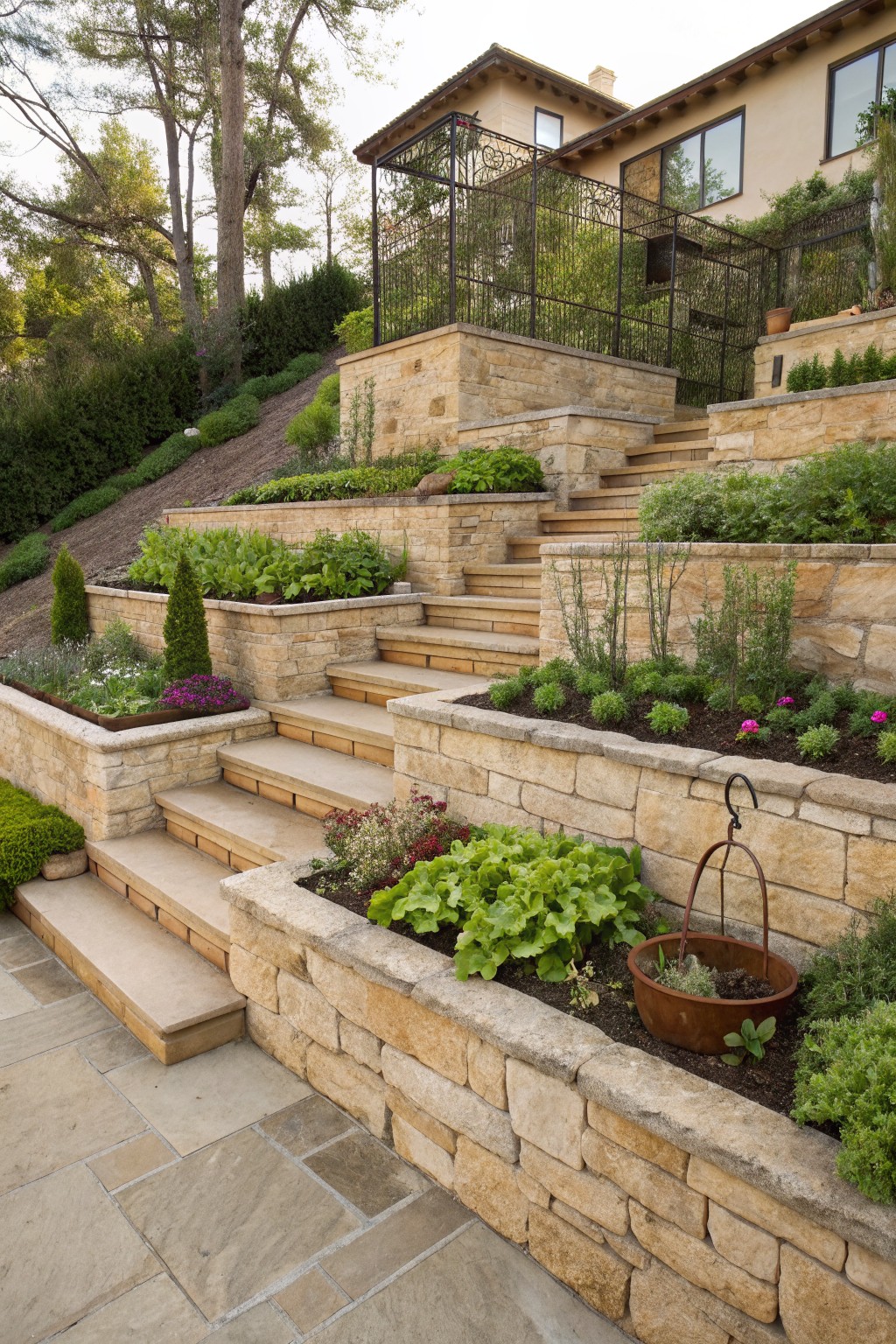
Slopes can make backyard gardening tricky. But turning stone retaining walls into terraced raised beds solves that. You fill the walls with soil and plant right in them, like herbs and veggies tucked into the stone levels. It keeps everything organized, stops erosion, and gives you flat planting spots where there were none. The stairs between levels make it easy to tend the garden without scrambling up the hill.
This setup works best on moderate slopes behind a house. Pair it with a stone house for a natural tie-in, or use it to soften a plain yard. Go for drought-tolerant plants like rosemary or lavender up top, greens below. Just make sure the walls drain well so roots don’t rot. It’s practical for small harvests without taking extra space.
Linear Raised Planters Along a Walkway
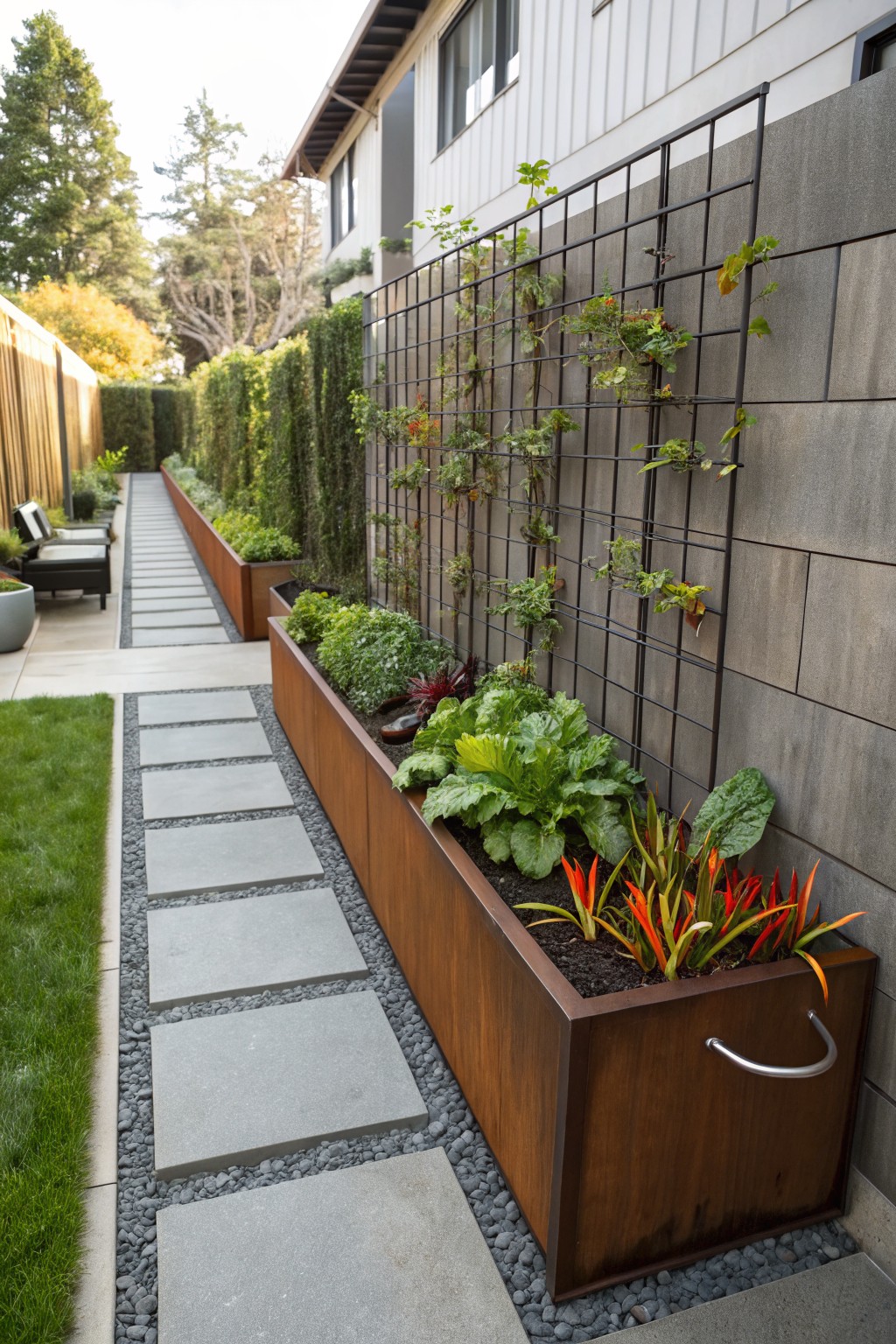
One straightforward way to fit a vegetable garden into a tight backyard space is with long, narrow raised planters running right beside a path. These corten steel troughs keep everything contained and easy to reach, so you can tend your beets, chard, and herbs without stepping into the beds. It gives the garden a clean, organized look that doesn’t take over the yard.
This setup works best in side yards or along fences where you want some produce without sprawling chaos. Line them up parallel to gravel or stone stepping stones, add a simple trellis for climbers on the back wall, and you’re set. Just pick sturdy metal or wood that ages well outdoors… nothing too fancy needed.
Raised Brick Beds for Veggies
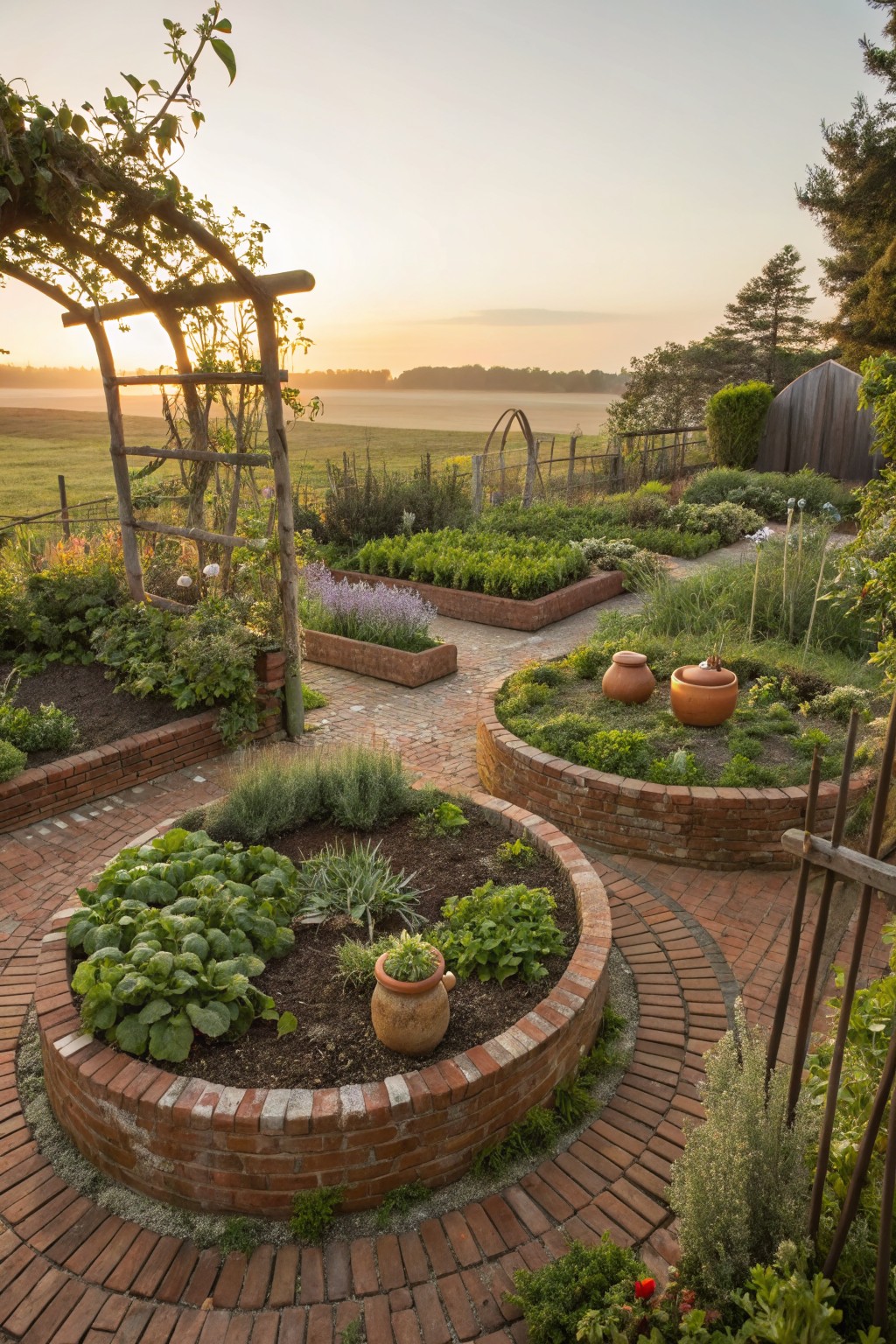
Raised beds made from brick keep a vegetable garden looking neat and contained. Here the mix of square and round shapes creates little zones for different plants like herbs and greens. Paths wind right through, so you can reach everything without stepping in the dirt. It’s practical but still has a cozy garden feel.
These work best in smaller backyards or spots with poor soil. Stack the bricks a foot or so high for easy picking, and fill with good compost. Add a simple arch for climbers if you have room. Just watch that the bricks don’t shift on slopes.
Raised Beds for Tidy Vegetable Patches
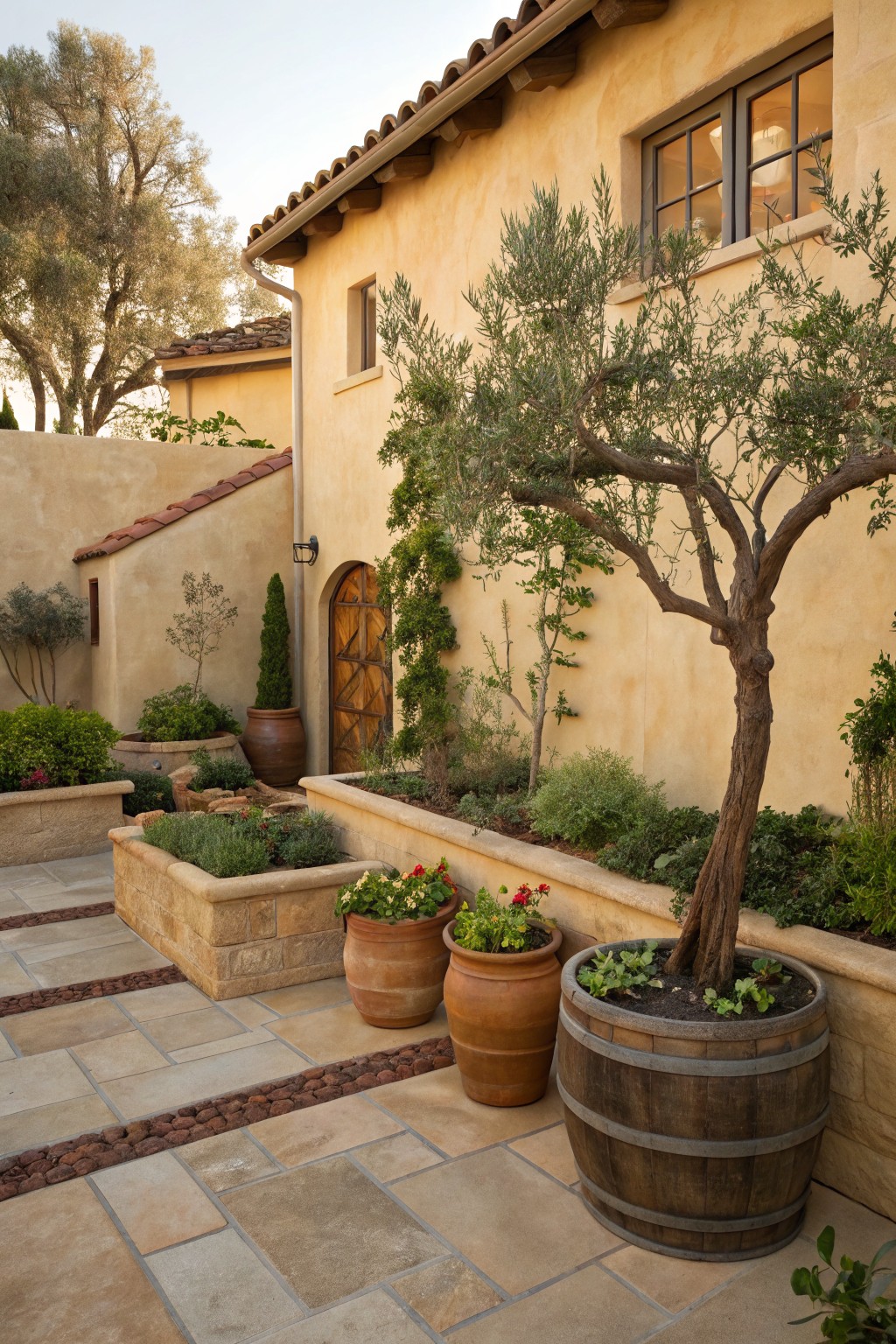
Raised beds like these keep a backyard vegetable garden looking neat and easy to tend. The stone edging gives them a solid shape that matches the house walls, and filling them with herbs and greens makes everything feel put together. No sprawling mess here. Just clean lines that make weeding and harvesting simple.
You can set these up against a wall or in a corner patio spot, especially in smaller yards. They work well with a few big pots nearby for extra plants. Stone or wood edges hold up over time, but pick low ones if you want to reach in without bending too much. Fits right into sunny, walled gardens.
Formal Parterre Vegetable Garden
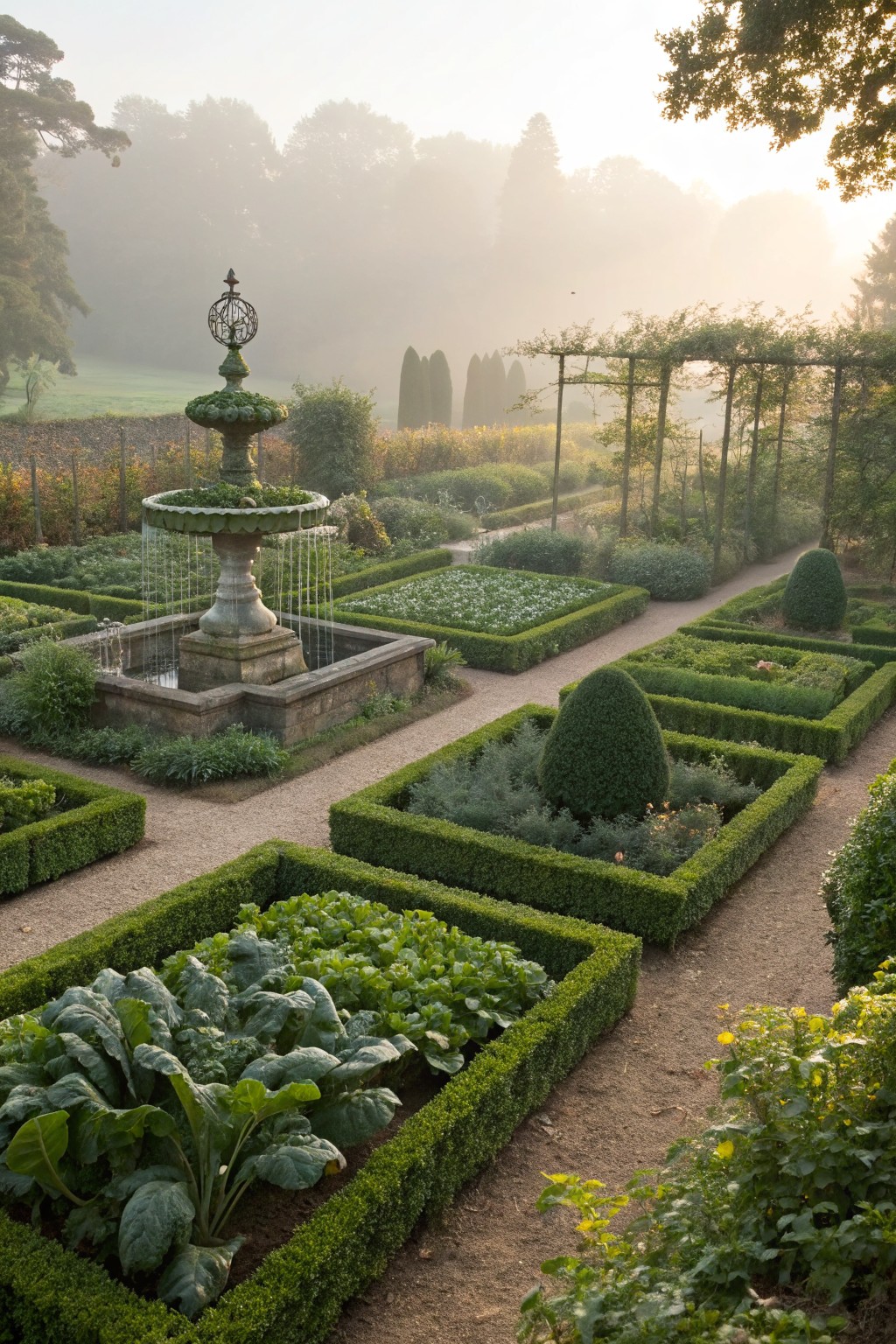
One way to keep a backyard veggie patch looking sharp is with a classic parterre layout. Tight boxwood hedges form neat squares around the growing beds, like the ones filled with greens and herbs here. A stone fountain sits right in the middle, giving the whole setup a bit of old-world charm without much fuss. It turns what could be a messy plot into something orderly and pretty to walk through.
This works best in a sunny spot with decent space, maybe 20 by 20 feet or so. Start by marking out your beds with gravel paths for easy access. Plant low boxwoods along the edges, they stay green year-round and handle clipping well. Keep veggies like kale or lettuce inside the frames. Suits traditional homes or cottages. Just watch the watering, formal spots dry out faster.
Raised Beds on a Sandy Coastal Path
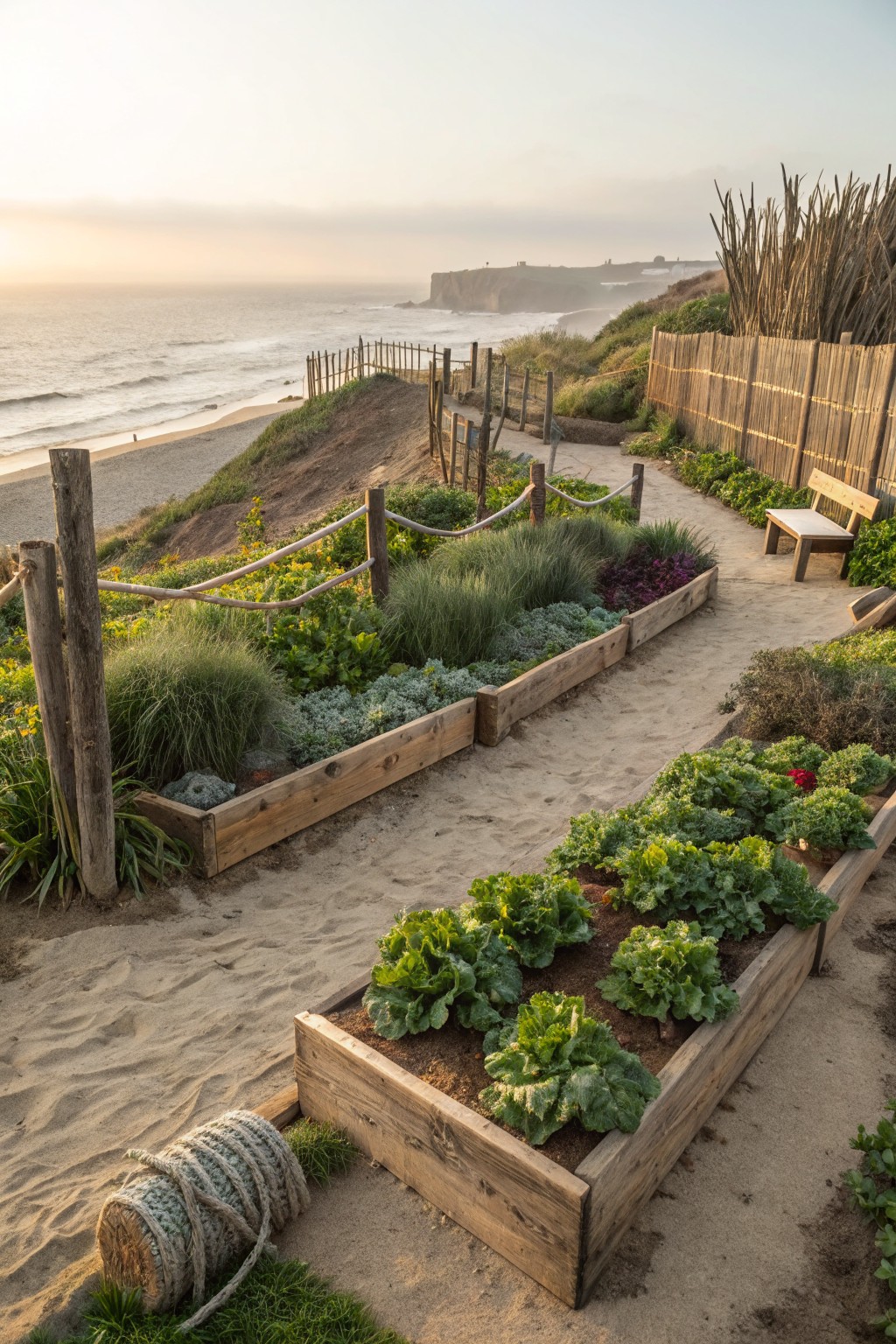
Raised wooden beds like these turn a tricky sandy spot into a real vegetable garden. They’re lined up along a simple path, full of greens and lettuce that look healthy and contained. The wood fits right in with the beachy fences and posts, keeping the whole area feeling organized even on a slope near the ocean.
This works best in coastal backyards or anywhere the ground is too loose for digging. Stack the beds a foot or so high, mix in compost for the soil, and space them for easy walking between. Watch for wind though… it can dry things out fast.
Vertical Planters for Narrow Alleys
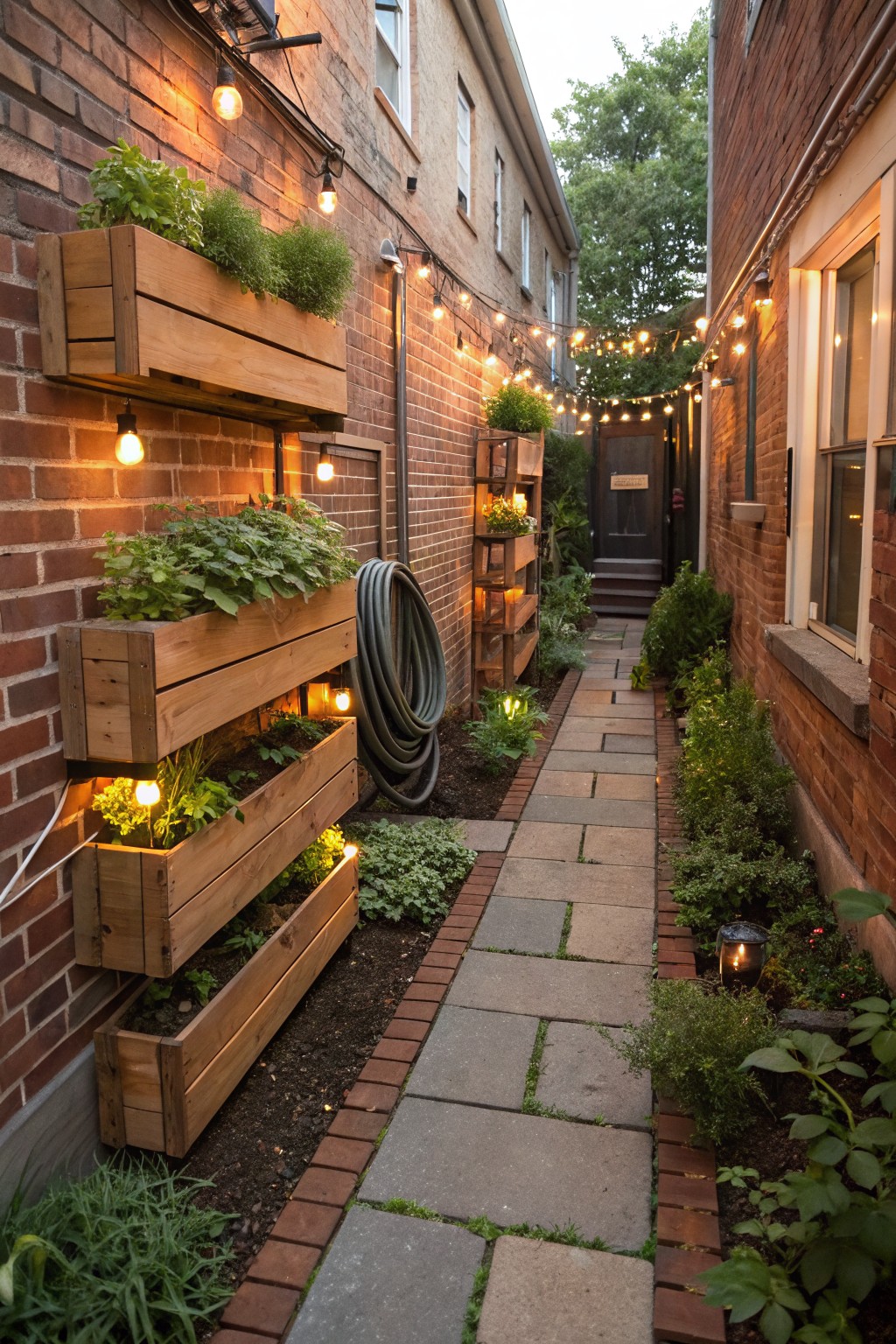
Narrow backyards or side alleys often feel wasted, but stacking wooden planters right on the brick wall changes that. These simple crates hold herbs, greens, and small veggies in neat rows, keeping the ground clear for a stone path. It looks tidy and pulls the garden up where space allows.
Try this in row houses or urban lots with just a few feet of width. Mount the boxes securely with brackets, fill with good soil, and add drip irrigation if you want low upkeep. Watch the drainage though. Wet walls lead to trouble.
Organized Raised Bed Vegetable Garden
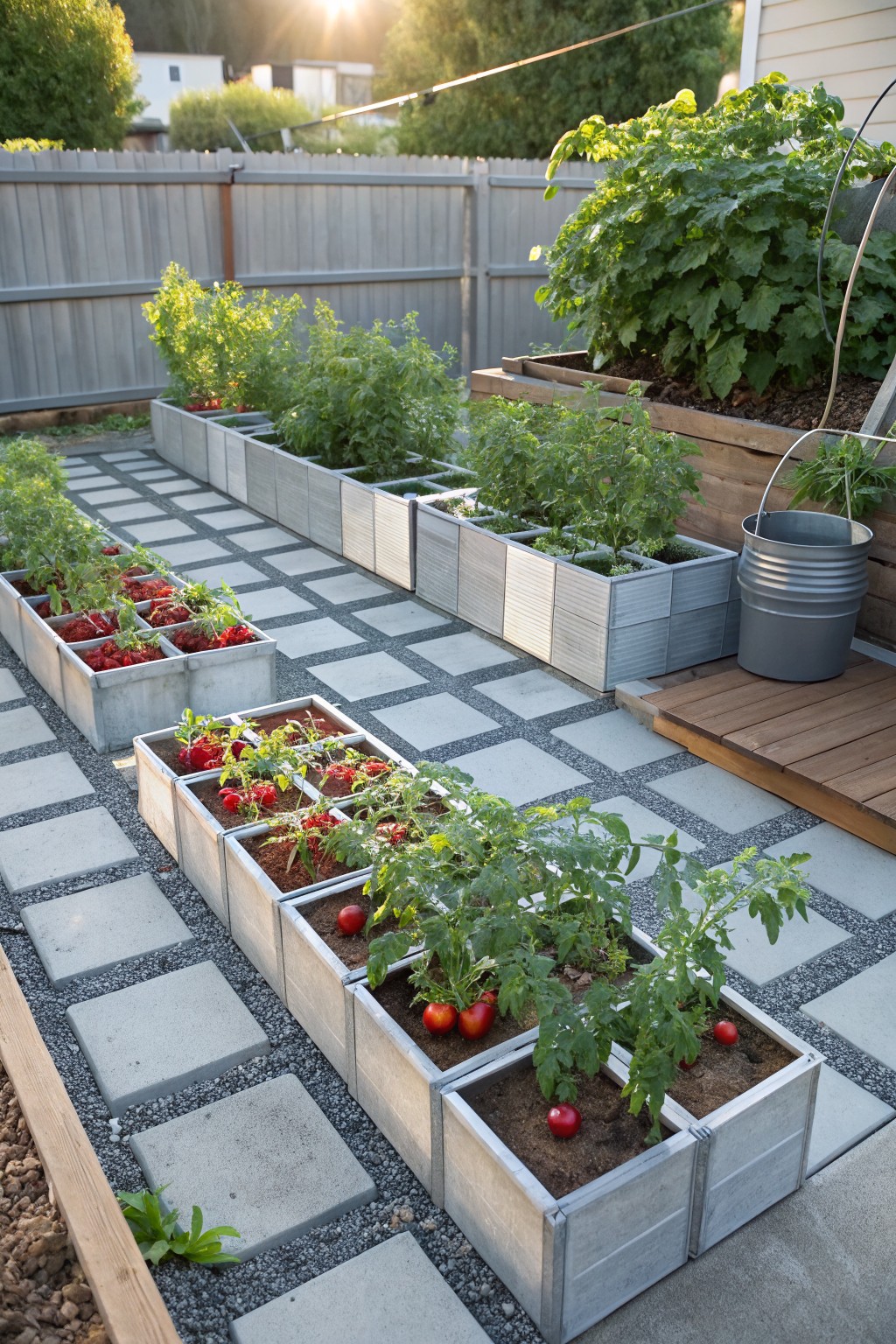
One straightforward way to keep a backyard veggie patch looking neat is lining up matching raised beds along a path. Here, galvanized metal planters hold tomato plants and a few herbs, all in tidy rows that make harvesting simple. The uniform look stops things from getting messy as plants grow, and the beds lift everything off the ground for better drainage.
This works well in smaller yards or along a side walkway where space is tight. Set the beds end to end on gravel or pavers, space them for easy walking between. Pick sturdy metal ones that won’t rot… they’re low upkeep and suit sunny spots with decent soil underneath.
Raised Stone Beds for Organized Veggies

Raised beds made from natural stone give this vegetable garden a clean, sturdy look. The walls hold back soil on the slope and create neat rectangles for planting herbs, greens, and veggies. Stone like this blends right into the yard, and it lasts without much upkeep.
These work best in hilly backyards where flat ground is hard to come by. Stack local rocks for the walls, fill with good dirt, and space beds with gravel paths for easy walking. Skip fancy finishes… just let the stone do its thing. Add a few pots nearby if you want extra herbs.
Curved Steel Raised Beds for Veggie Gardens

Raised beds with those wavy corten steel edges make a vegetable garden feel put together without looking too stiff. The curves create a natural path that winds through the plants, like marigolds and greens tucked right in. It keeps everything organized and easy to reach.
You can build these in any backyard size since they hug the space nicely. Fill them with soil and veggies, add gravel between for paths. The steel rusts to a nice patina over time… just make sure it’s rated for ground contact. Works best where you want low upkeep and a bit of modern edge.
Raised Beds Line a Backyard Path
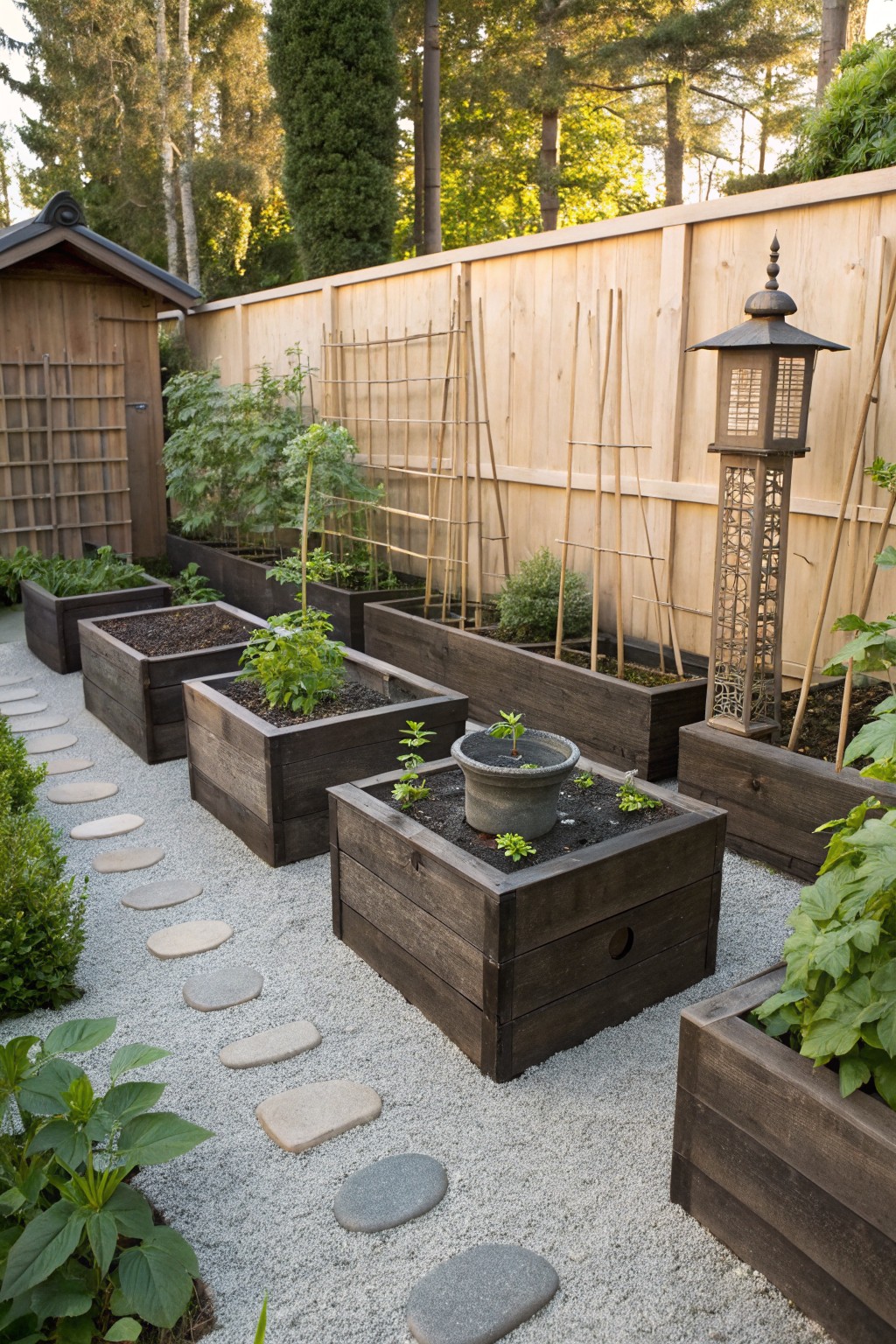
One straightforward way to keep a vegetable garden feeling organized is lining up matching raised wooden beds along a simple path. Here the beds are all the same size and shape, filled with young plants like herbs and veggies on bamboo stakes. That repetition gives the space a clean rhythm without much effort. The gravel path with flat stepping stones leads you right through, making it easy to tend everything.
This setup works best in smaller backyards where you want to grow food but keep things tidy. Line the beds against a fence or shed to save room, and space them just wide enough for walking. Go for untreated wood that ages nicely, and watch the path gravel doesn’t wash away in heavy rain. It’s practical for beginners too.
Stone Spiral Centerpiece in the Vegetable Garden

A simple stone spiral right in the middle of your veggie beds can pull the whole garden together. Here, smooth rocks form curving paths with bits of green tucked in between, surrounded by tidy raised wooden planters. It adds a calm focal point without taking up much space. Folks like it because it turns a practical plot into something you actually want to wander through.
Try this in a backyard corner with decent sun. Stack local stones low for easy building, then fill the curves with creeping thyme or lettuce. It suits sloped yards best, where stone walls already help with levels. Skip it if your space is super tight… paths need room to breathe.
Wheeled Raised Beds for Easy Vegetable Gardening

Wheeled raised beds like these make a backyard vegetable garden feel put together without much fuss. The cedar frames with green corner accents hold lettuce, herbs, and other greens in neat rows. You can roll them around the patio for better sun or to make space when needed. It’s a practical setup that keeps plants off the ground and dirt out of your outdoor areas.
These work best on paver patios or decks where you want mobility. They’re good for smaller yards or renters who might move things later. Just pick sturdy casters that handle the weight when full of soil. Watch for wood rot over time, though. A simple coat of sealant helps.
Raised Brick Beds Organize Courtyard Veggies

Raised brick beds make a vegetable garden feel put-together right away. They hug the walls and paths here, holding herbs, greens, and a few flowers in clean shapes that don’t sprawl everywhere. That small orange tree pops up in the middle for some real payoff too. The setup stays low-key but productive.
Try this in smaller backyards or sunny patios near the house. Match the brick to your walls if you can. Keep beds about knee-high for easy picking. It suits warmer spots where you want edibles close by, without the mess of ground-level rows.
Raised Beds with Stone Paths

One straightforward way to keep a veggie garden feeling organized is lining up raised wooden beds in neat rows, with stone paths running right between them. Those paths give you easy access to every plant without compacting the soil or tracking mud everywhere. In this setup, the beds hold young greens and peppers, and the gravel edging keeps it all contained nicely.
You can pull this off in most backyards, especially if space is tight. Aim for beds about 4 feet wide so you can reach the middle from either side, and make paths 18 to 24 inches across for wheelbarrows. Pair it with a simple shed or greenhouse nearby… it turns a basic plot into something practical and pretty at dusk with a few lights.
Linear Raised Beds in a Greenhouse
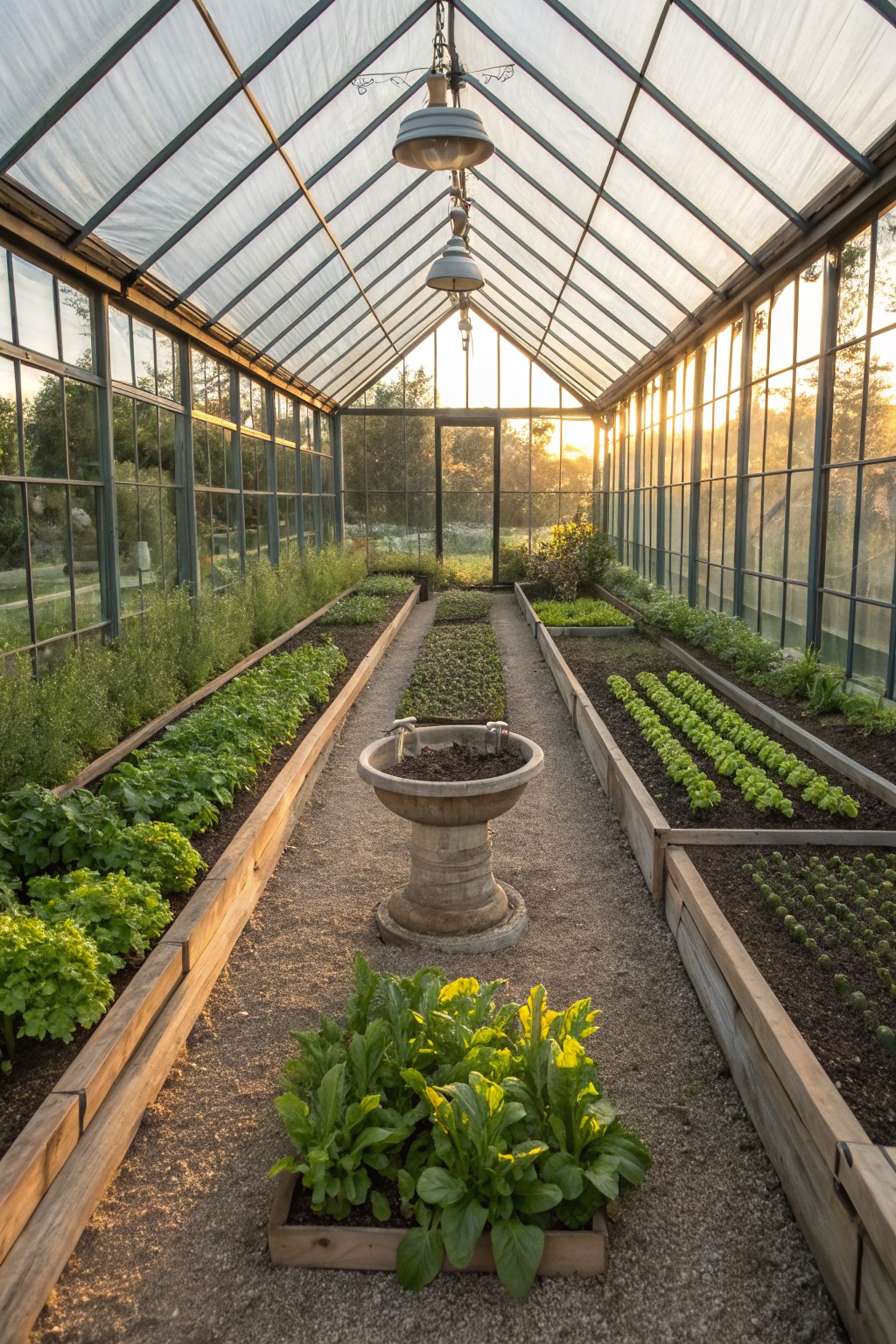
One straightforward way to keep a vegetable garden feeling put together is lining up wooden raised beds along both sides of a central path. This setup shows how the beds hold neat rows of greens, herbs, and young plants, all easy to reach without stepping into the soil. That central gravel walkway keeps everything accessible, and a simple stone fountain right in the middle adds a bit of calm without getting in the way.
You can pull this off in a backyard greenhouse or even a sunny covered spot against a fence. It works best for smaller spaces where you want max growing room and no mud tracking inside. Just make sure the beds are about knee-high for easy tending, and space the path wide enough for a wheelbarrow… about three feet does it.
Raised Beds Next to the Outdoor Kitchen
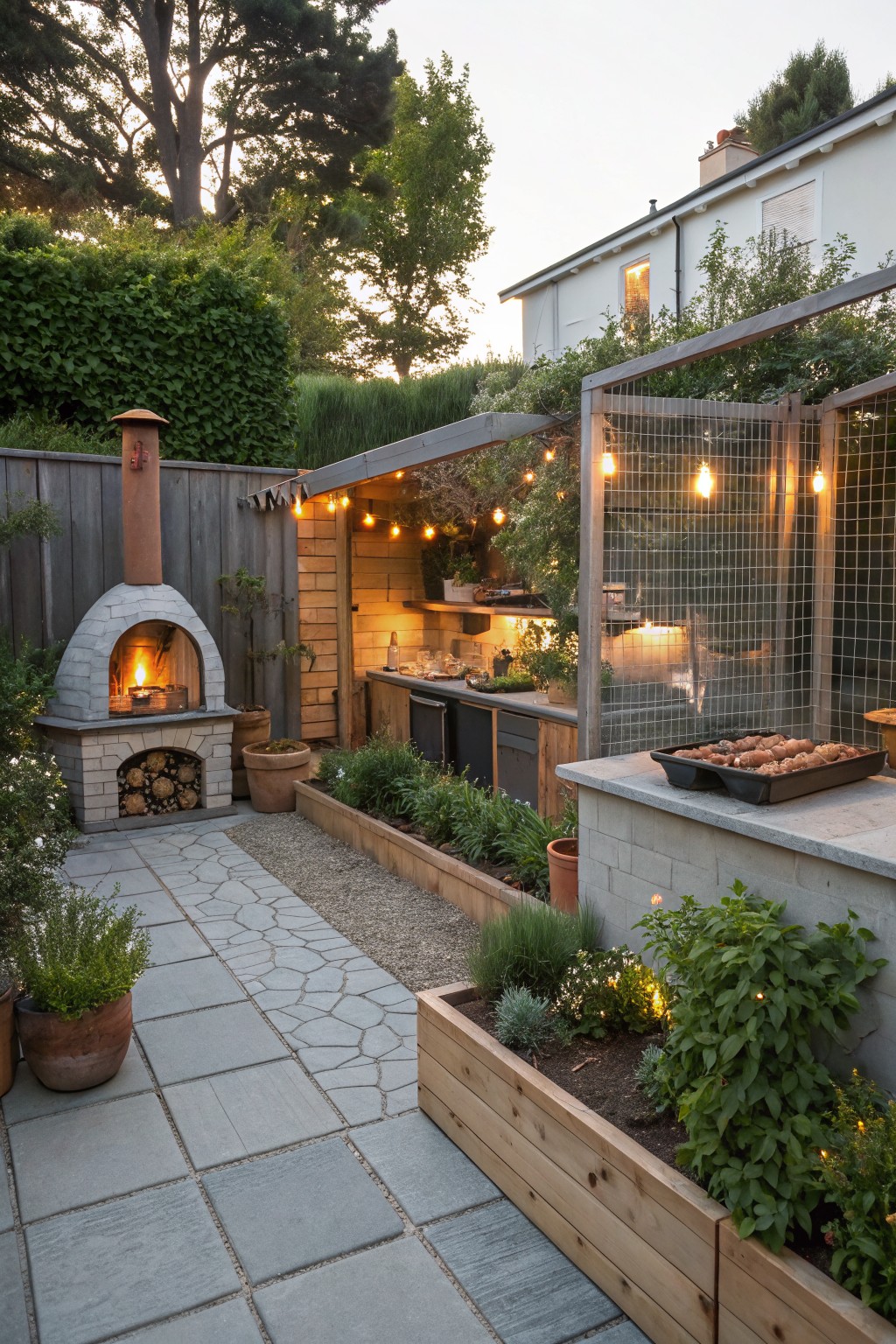
One straightforward way to keep a backyard vegetable garden feeling organized is to tuck raised wooden beds right up against your outdoor kitchen or patio edge. In this setup, the beds line the space neatly, holding herbs and greens that are easy to grab while cooking. It keeps everything contained and off the main walking areas, so the garden stays tidy even as plants grow.
These beds work great in smaller yards where you want fresh produce close at hand without taking over the whole space. Build them low to match counter height if you can, and fill with shallow-rooted veggies like basil or lettuces. Just make sure the wood is treated for outdoors, and keep the path clear for easy access.
Metal Raised Beds for Veggie Gardens
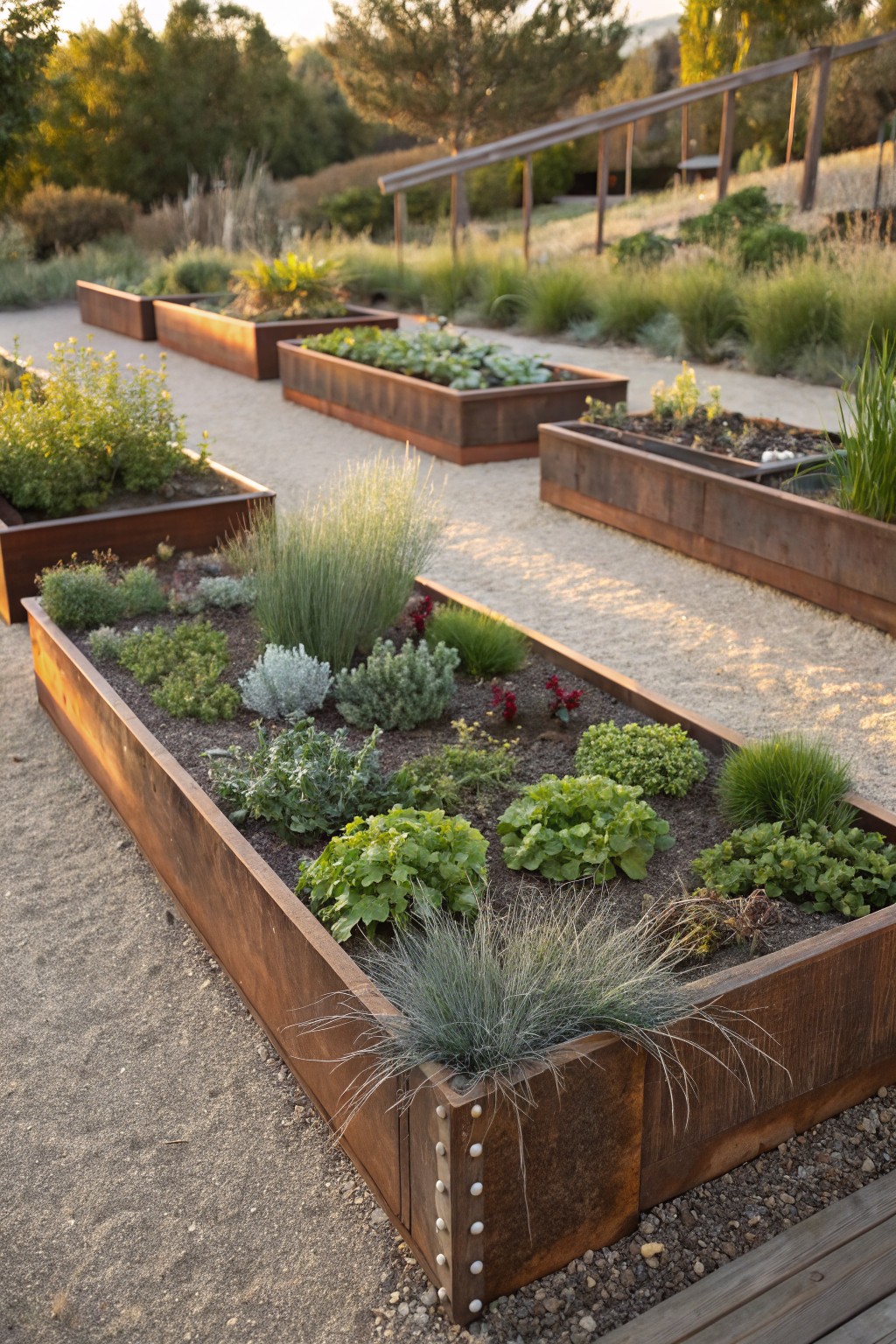
Raised beds like these made from corten steel keep your vegetable garden looking sharp and contained. The rusty patina fits right into a natural backyard setting, and the straight lines make rows of herbs, greens, and grasses feel orderly without much fuss. Gravel paths in between let you get around easily for weeding or picking.
They’re practical for spots with rocky soil or slopes, since you fill them with good dirt on top. Works best in modern-rustic yards where you want low upkeep… just line them up along a walkway. Go for thicker metal so they last, and keep plants from spilling over the edges.
Frequently Asked Questions
Q: How do I stop weeds from wrecking my organized veggie layout?
A: Cover bare soil with a thick layer of straw mulch as soon as you plant.
It blocks light to weeds and holds in moisture so plants thrive.
Top it up in spring.
Q: My yard slopes. Will raised beds work for that neat garden feel?
A: Build them level with simple wood or stone frames to fight erosion.
Group tall plants in the back and low ones up front.
You harvest without bending over much.
Q: What if pests show up in my fancy landscaped beds?
A: Plant marigolds and nasturtiums right alongside your veggies.
They repel bugs naturally and add color pops.
Check leaves daily and squish any aphids you spot.
Q: How do I edge paths so they stay crisp all season?
A: Line them with flat stones or bricks sunk halfway into the dirt.
Rake gravel inside to fill gaps.
And sweep edges weekly.