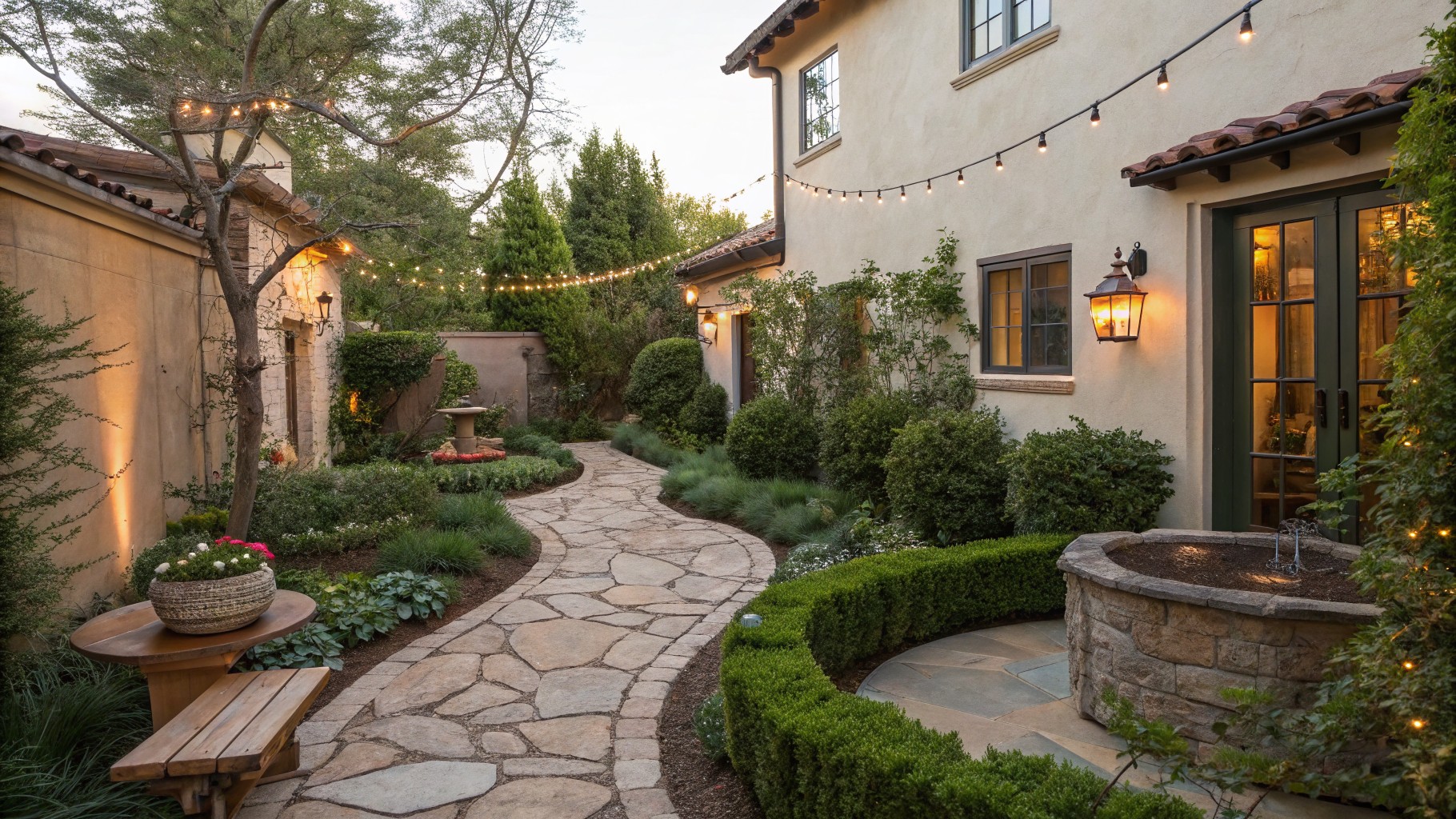
I’ve spent enough time digging in my own backyard to know that lush gardens start with a layout that lets plants fill in naturally over time.
People notice the structure right away, whether it’s winding paths that draw you deeper or layered beds that build height from the edges inward.
Edging keeps it all from spilling over into chaos.
In my yard, simple stone borders around vegetable patches made the greenery feel purposeful instead of random.
These ideas give you real ways to shape that over time, ones worth mapping onto your space before you plant.
Winding Stone Path with Boxwood Edges
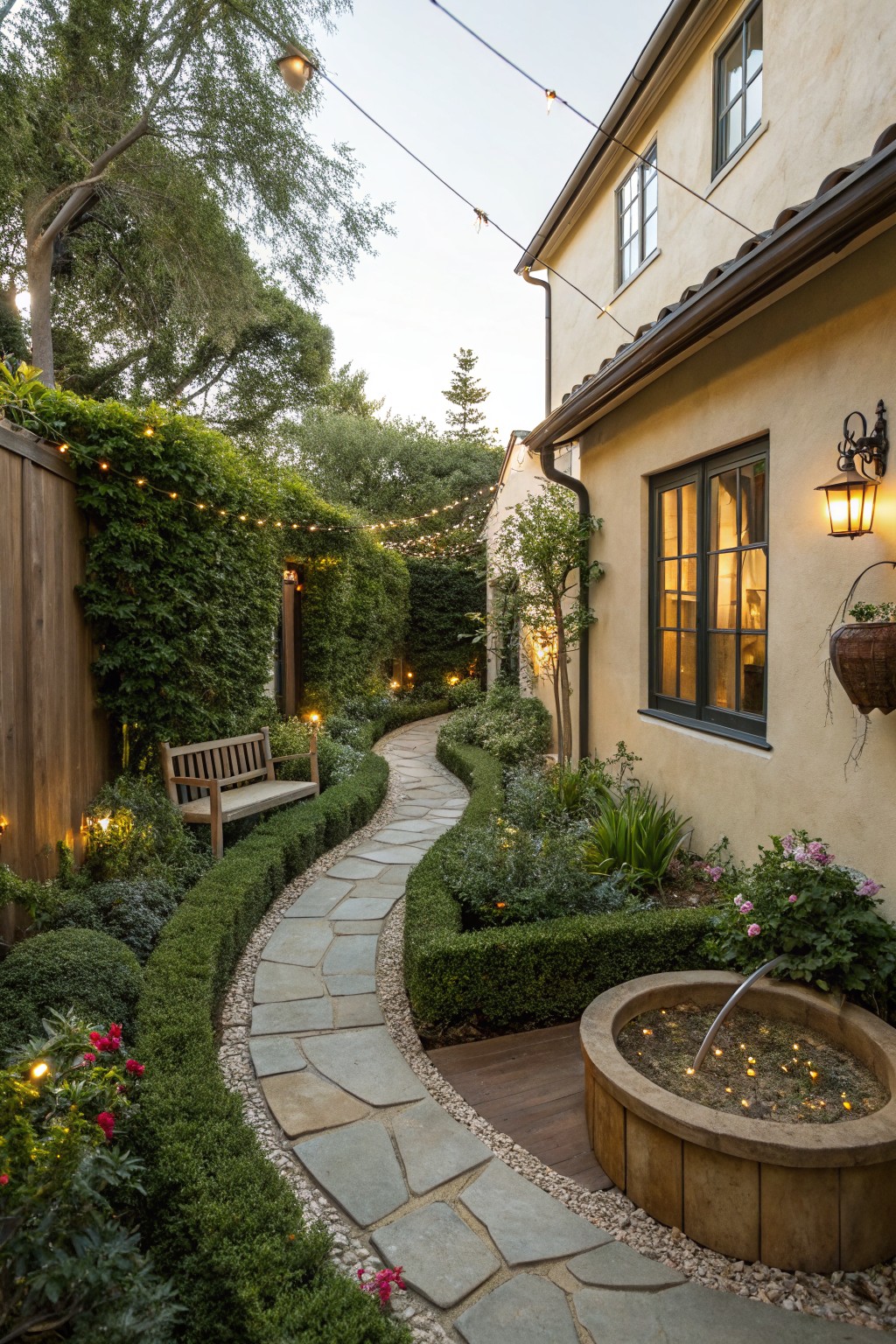
A simple winding path like this one uses rough-cut stone slabs set in gravel, with boxwood hedges trimmed sharp along both sides. It pulls you through the garden in a natural curve, instead of a straight shot. The hedges keep everything neat and contained, while the path feels easy underfoot.
This works best in narrow side yards or to connect backyard spots, like from the house to a bench or gate. It suits homes with a bit of formal style, maybe Mediterranean or cottage gardens. Just keep those boxwoods clipped a couple times a year, or they start to fuzz out.
Terraced Stone Walls for Sloped Backyards
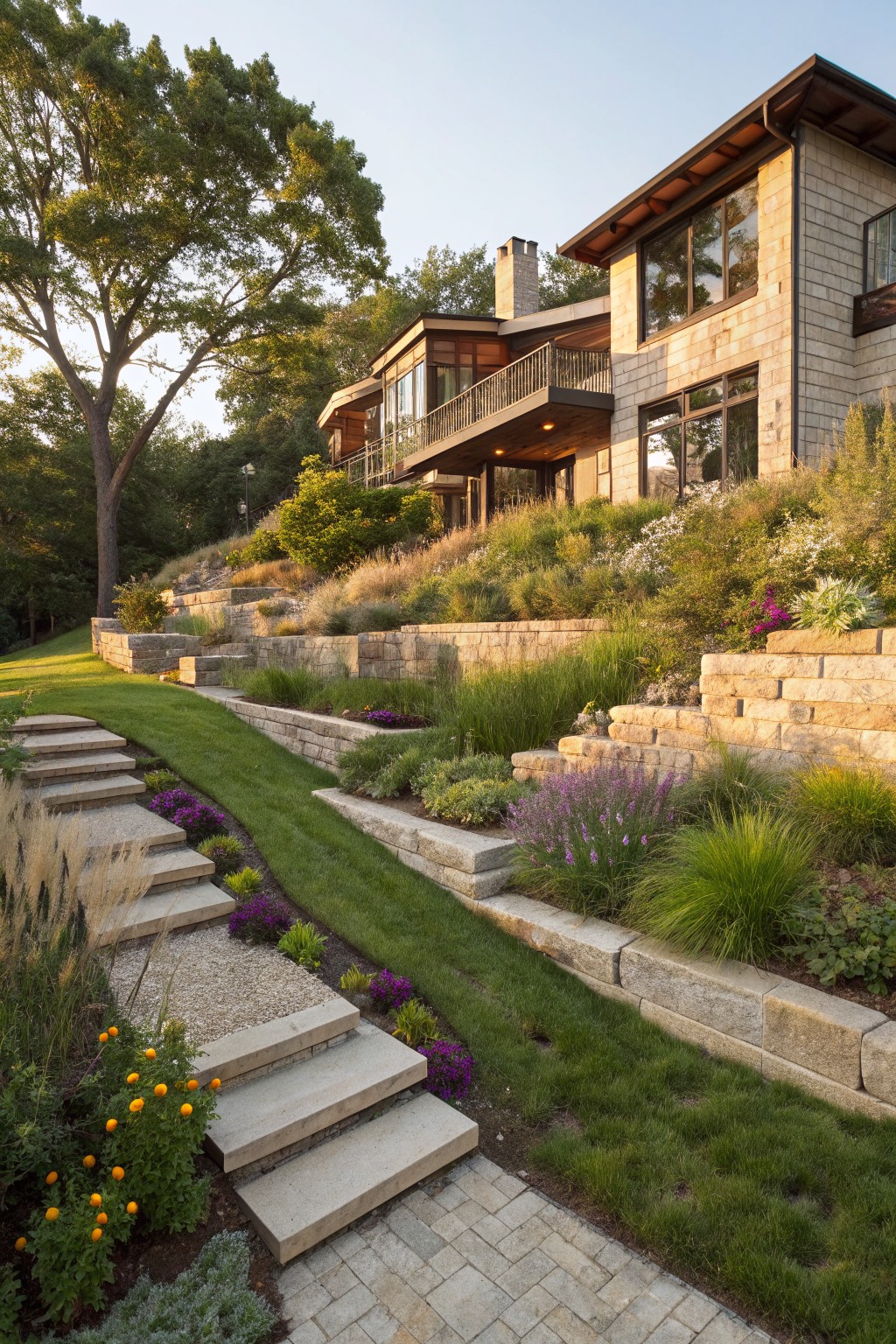
Sloped yards often sit empty because they’re hard to use. Terraced stone walls fix that by carving out level spots for plants and paths. Here wide steps run between the walls, edged with tall grasses and low flowers that soften the stone and guide you up the hill toward the house.
This idea fits backyards on any incline, especially where you want low upkeep and a natural flow. Pair rough-cut stone with native plants for easy care. Steep drops need pro engineering to hold soil steady.
Narrow Reflecting Pool with Boxwood Hedges
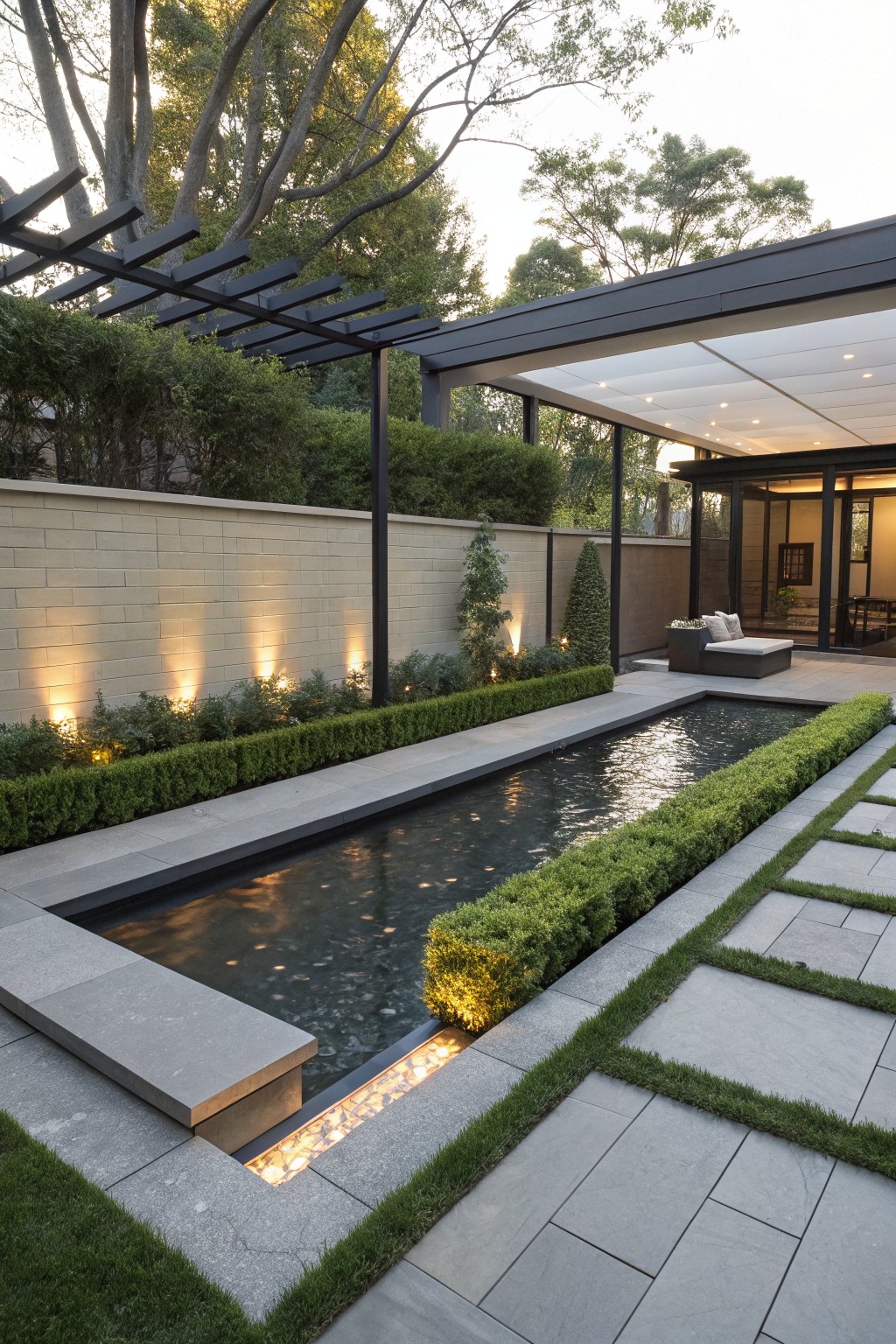
A long, skinny reflecting pool runs down the center of this backyard, edged tight with clipped boxwood hedges. The water mirrors the sky and trees above, while underwater lights give it a soft glow come evening. Boxwoods keep things neat and green year-round without much fuss. It’s a simple way to add structure and a bit of calm to an outdoor space.
This works best in a courtyard-style yard or along a fence line where you want a strong line of sight. Keep the pool shallow and narrow to save on water and maintenance. Plant the hedges low, about knee-high, and flank the paths with wider stone pavers. It suits modern homes with clean lines… just watch the pool edges for algae in shady spots.
Curved Brick Paths Through Flower Gardens
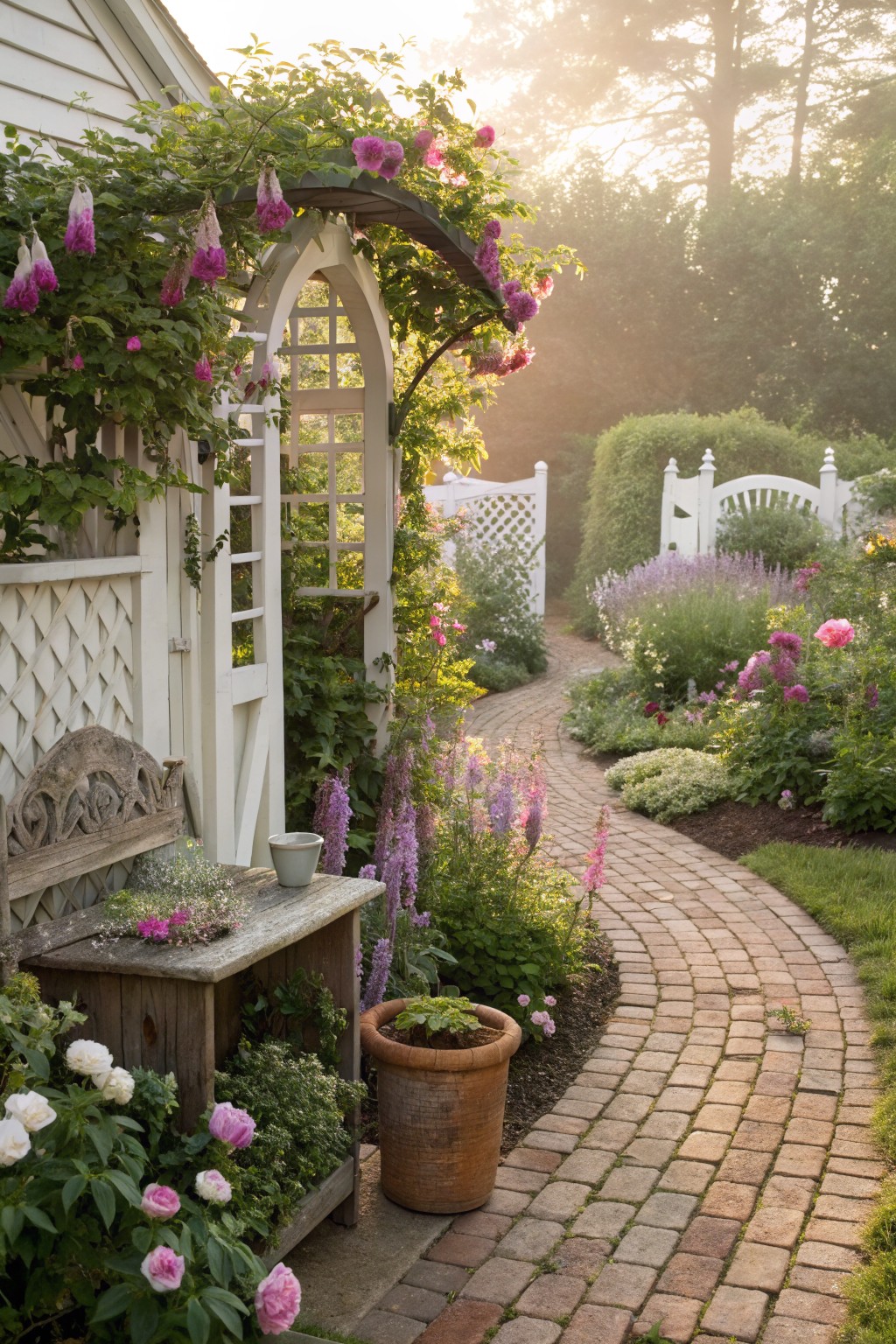
A curved brick path like this one winds gently through borders packed with perennials and roses. It turns a plain backyard into something you want to wander, giving the garden a cozy cottage feel without much fuss. The path pulls your eye forward, past layers of pink blooms and tall foxgloves.
These paths work best in side yards or smaller backyards where you want to connect house to gate. Use old-style bricks for that worn look, and plant soft edges with lavender or delphiniums to hide any straight lines. Keep the curve loose… watch the width so it’s walkable for two.
Vertical Garden Walls for Patio Privacy

One smart way to make a backyard patio feel like its own little world is with tall wooden vertical garden walls. These walls, built from simple wood frames stuffed with plants like ferns and trailing greens, create a lush backdrop that blocks views and adds tons of greenery. Around the round table and chairs here, it turns basic outdoor seating into something cozy and alive.
You can build these using reclaimed wood or pallets, filling the pockets with soil and tough plants that don’t need much fuss. They suit small urban yards or spots next to fences best, giving privacy without crowding the space. Watch for good drainage so the wood lasts.
Winding Stone Paths in Woodland Gardens

One simple way to add charm to a backyard is with a winding path made from flat stepping stones set into soft moss and low plants. It pulls you right through the garden without feeling too formal. Here, the irregular stones fit naturally among hostas and ferns, making the space feel like an extension of the surrounding trees.
This kind of path works best in shaded spots where grass struggles. Lay the stones loosely with moss or ground covers filling the gaps… keeps weeds down and adds that lush look. It’s great for smaller yards or wooded lots, just make sure the stones are stable so no one twists an ankle.
Formal Boxwood Parterre Gardens
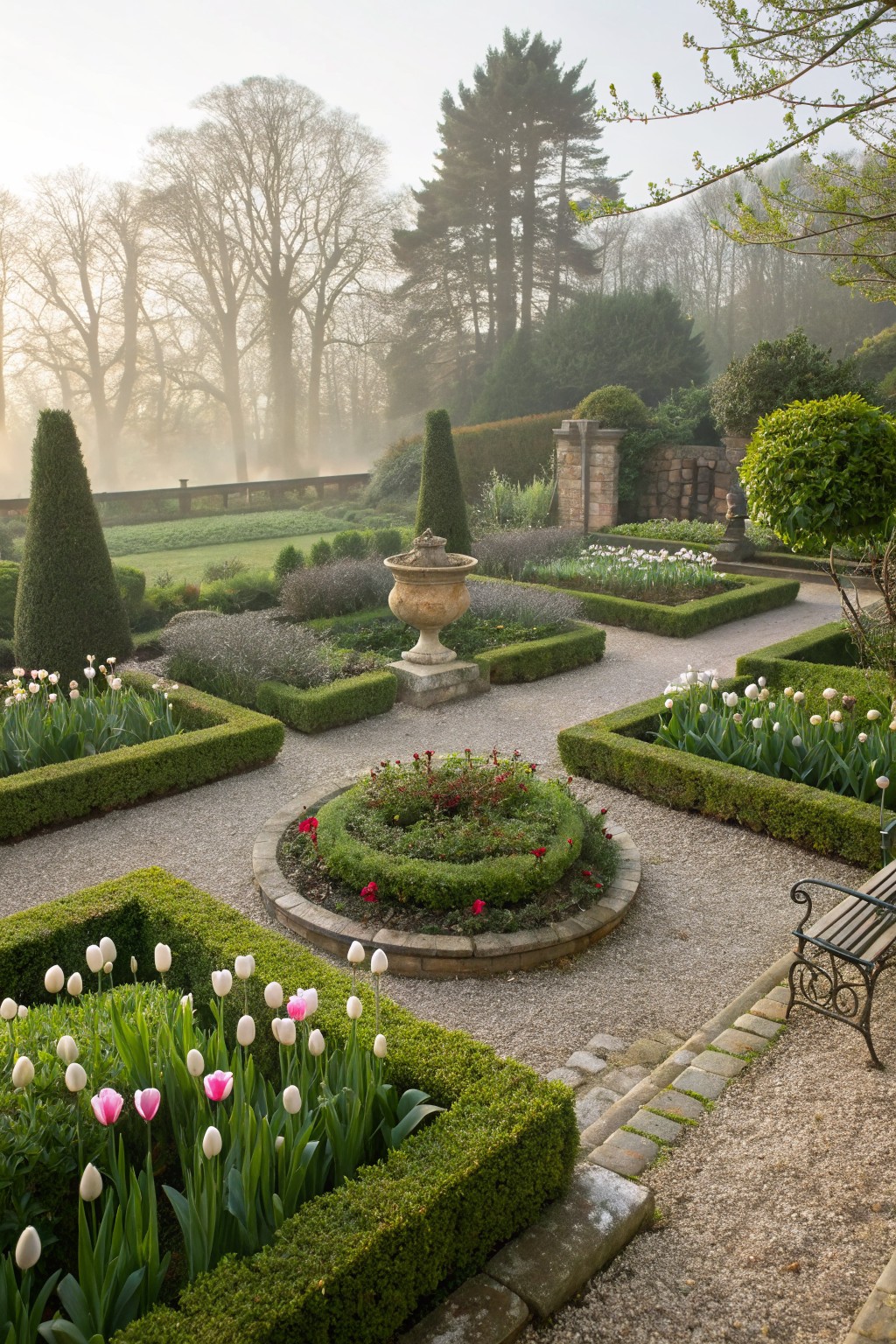
A formal parterre garden lays out boxwood hedges in tight geometric shapes to frame flower beds and gravel paths. It brings order to a backyard, making even a simple yard feel like part of an old estate. Tulips blooming in the squares add easy color that follows the structure.
This setup suits bigger backyards with room for paths and beds. Trim the boxwoods a couple times a year to hold the lines. Fill beds with bulbs or herbs for low upkeep… it pairs well with stone walls or a house in traditional style. Just skip it if your space is too small or shady.
Poolside Raised Planters
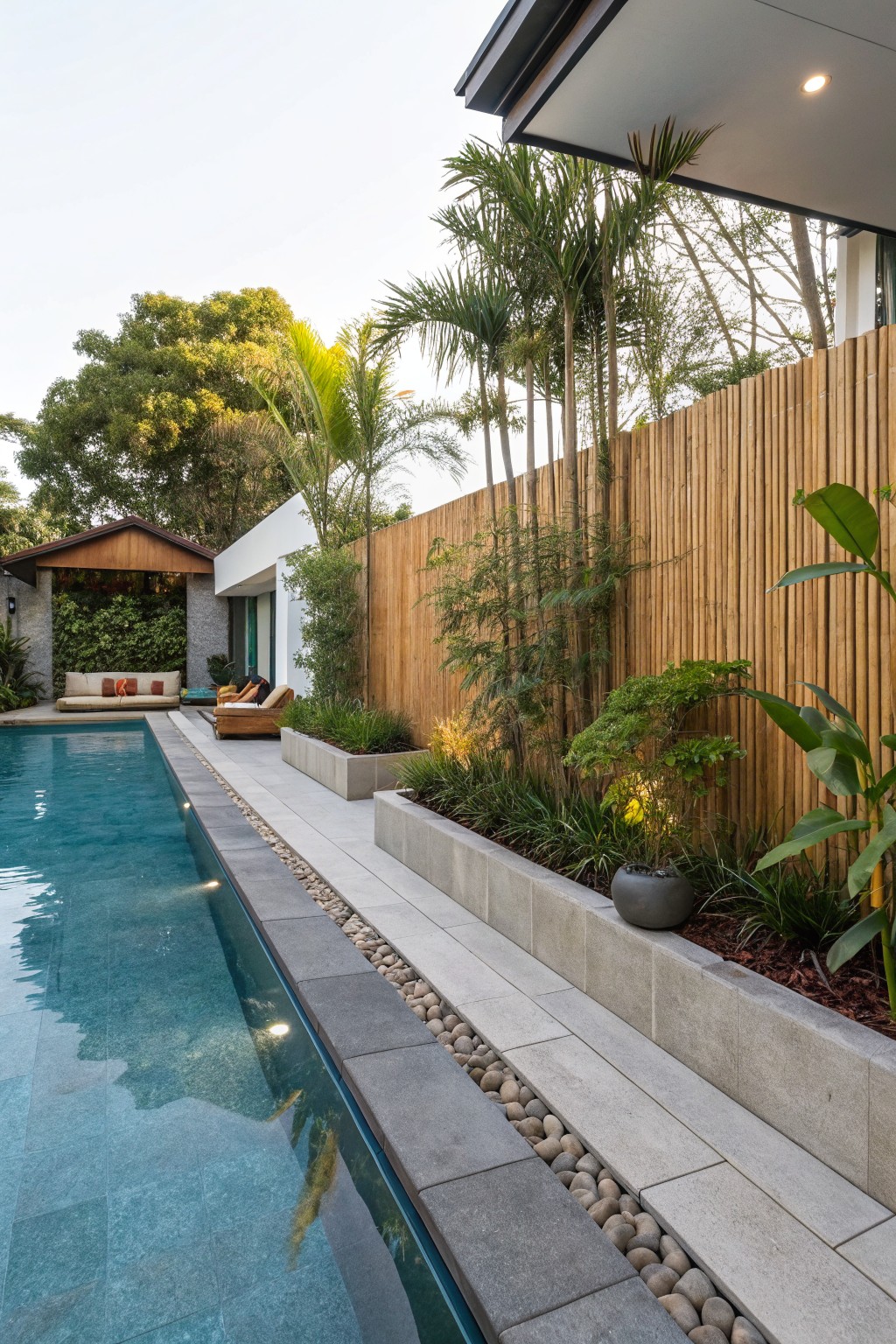
Raised concrete planters like these work great right along the edge of a pool. They let you tuck in plenty of greenery without crowding the walking space around the water. The clean white boxes here hold grasses and low shrubs that spill over just enough to soften the hard lines of the pool and deck.
You can pull this off in most backyards with a long pool or even a patio edge. Pick tough plants that handle sun and splash, like ferns or sedges. Just make sure the boxes drain well so roots don’t rot. It keeps things low-maintenance but looks full and resort-like.
Winding Paths Through Raised Garden Beds

One simple way to make a backyard garden feel more like a stroll is a curving path that winds right through the planting beds. Here you see a brick path edged by wooden raised beds, with some old barrels cut down to hold plants too. It pulls you along naturally, letting you check on veggies or flowers up close without trampling anything.
This setup works great in smaller yards where you want to fit more growing space without it feeling cramped. Use affordable bricks or pavers for the path and scrap wood for the beds, keeping costs low. Just make sure the path is wide enough to walk comfortably, maybe two feet or so, and slope it gently if your yard has any tilt.
Winding Stone Paths in Desert Yards

A simple winding path like this one draws you naturally through the yard. Made from flat stones set in gravel, it curves gently around big boulders and spiky agaves. That setup keeps things low-maintenance in dry spots, and the rocks add weight without needing grass or watering.
Use it to connect your patio to the rest of the backyard. It suits southwestern homes or any arid lot where soil is tough. Just make sure the path slopes a bit for drainage, and pick boulders that match your local stone. Plants like agave fill in without fuss.
Garden Path Lined with Raised Beds

A simple brick path edged by tall wooden raised beds turns a narrow yard strip into a proper garden walk. The beds keep plants tidy and off the ground. They frame the path nicely so you feel like you’re strolling through lush greenery instead of squeezing past it.
This works best in side yards or between fences and the house. Stack the beds two high if you want more planting room. Go for rot-resistant wood and mix in herbs plus flowers that bloom all season. String lights overhead make it usable at night too.
Winding Dry Creek Bed Path
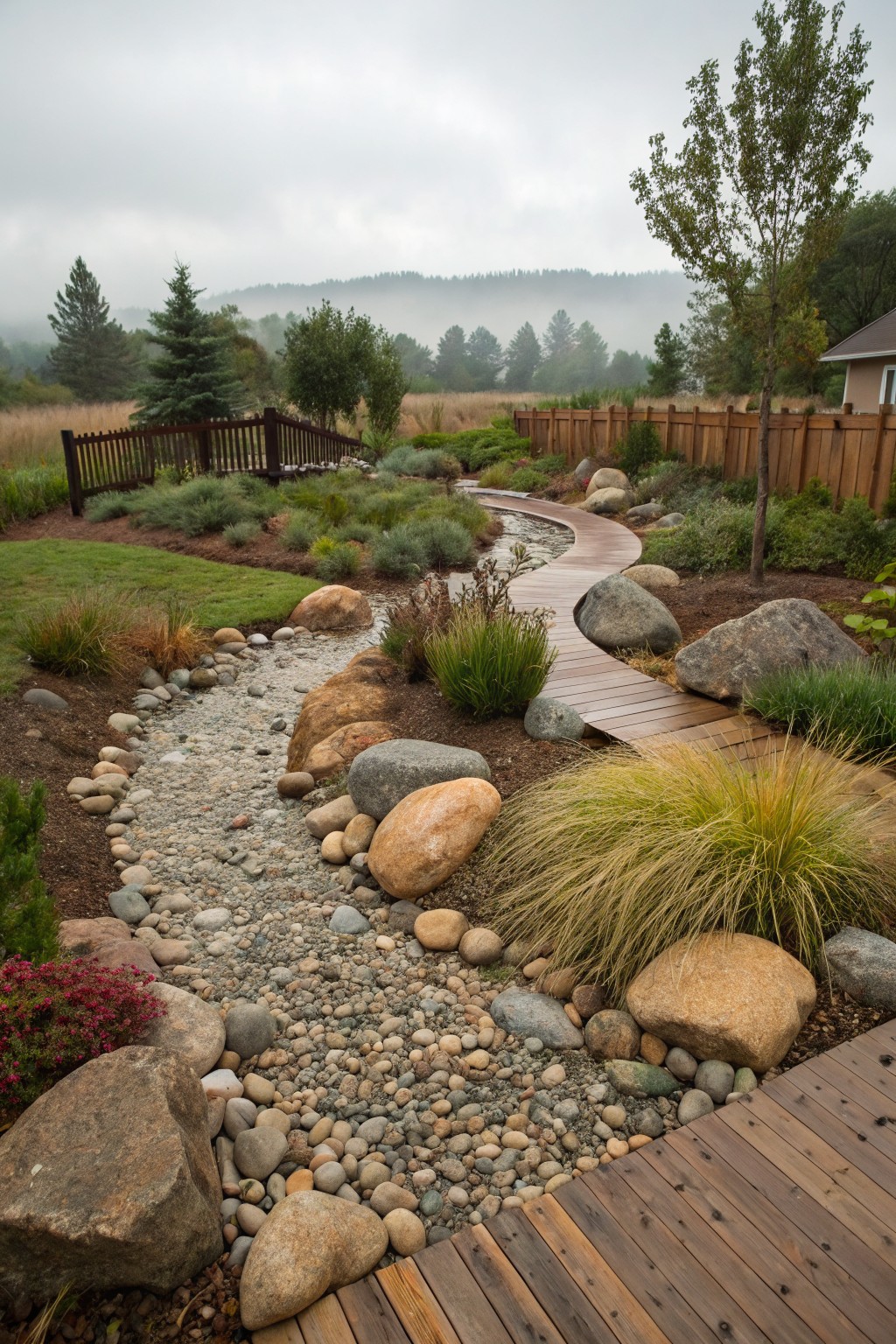
One simple way to add movement to a backyard garden is a dry creek bed path. It uses river rocks and big boulders to look like a natural stream winding through the plants. Paired with a wooden boardwalk right alongside, it makes the space easy to walk without getting muddy. Folks like this because it handles water runoff well and feels wild yet tidy.
You can fit this into sloped yards or spots that flood a bit. Start by digging a shallow trench, line it with landscape fabric, then layer in pebbles and set boulders to curve around grasses and low shrubs. Keep the boardwalk flush with the ground for smooth steps. It works best in bigger yards… smaller ones might feel crowded.
Wide Lit Steps Through Tall Grasses

Wide concrete steps like these turn a steep backyard slope into something you actually want to climb. The lights tucked under each tread glow softly at dusk, guiding the way without overpowering the scene. Tall grasses and low flowers hug the edges, keeping it from feeling stark or too rigid.
This setup suits sloped lots where flat space is short. Pick durable stone or precast concrete treads, add low-voltage step lights for safety. Flank with easy-care perennials like pampas grass or fountain grass… they grow fast and need little fuss. Best for backyards with some sun, but watch for wet spots that could make steps slippery.
Wooden Boardwalk Paths Through Dune Grasses

A wooden boardwalk like this cuts a clean path right through tall dune grasses and sand. It fits the natural beach setting without looking forced. The grasses sway around it, giving that lush, easy green look people want in a backyard garden. Plus, the path leads nicely to a small shaded spot without trampling the plants.
You can pull this off in coastal yards or anywhere with loose soil. Pick native grasses for low upkeep, and raise the boards a bit to handle water or drift. It works best where you want access without messing up the wild vibe. Just keep the plants tough enough for wind and salt.
Pergola Fire Pit Lounge
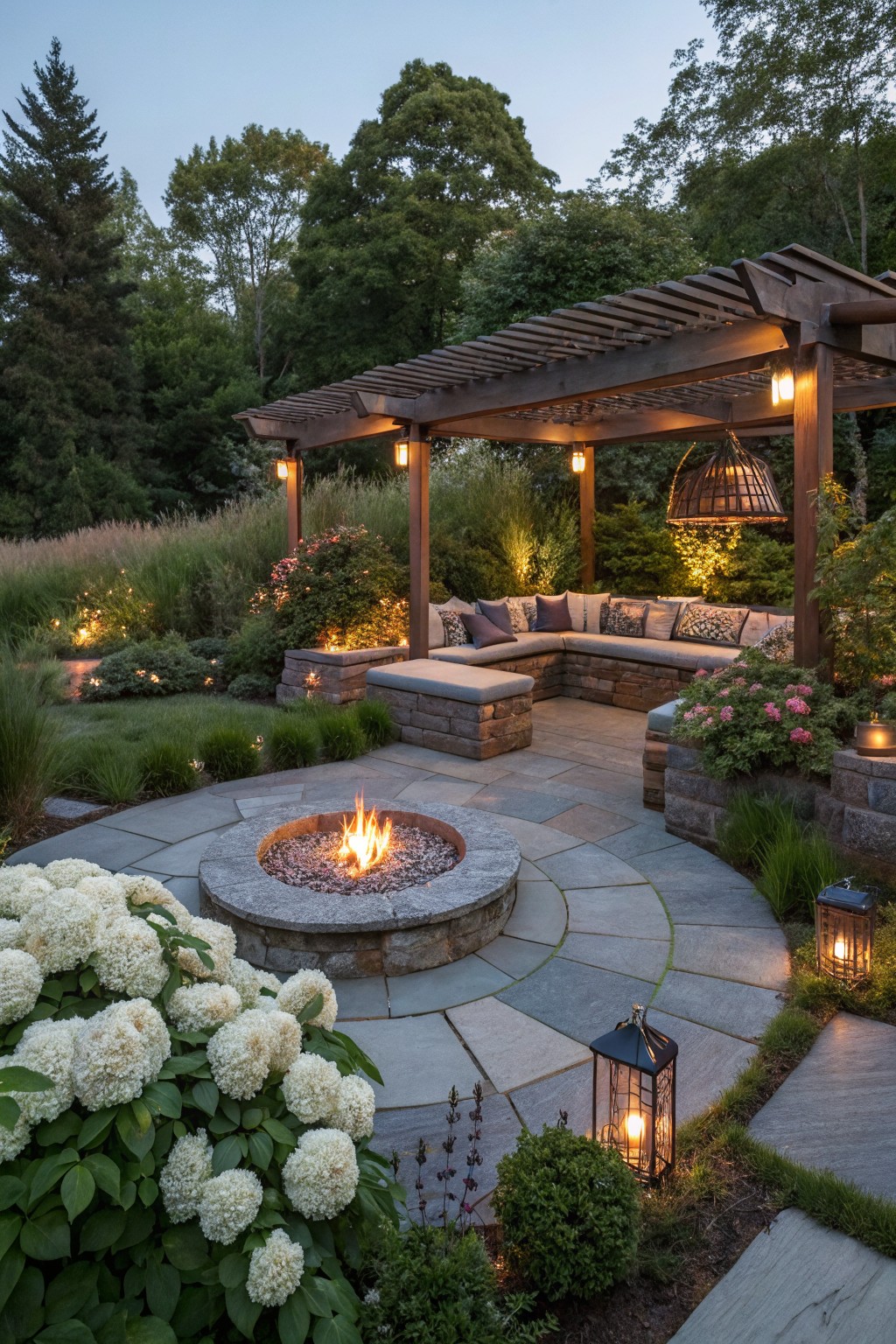
A simple wooden pergola shelters a curved stone patio where built-in benches wrap around a central gas fire pit. This layout pulls the backyard into a natural hangout spot. The open slats let in sky and breeze while framing the seating just enough to feel intentional.
It works best in partly wooded yards where you want evening gatherings without building walls. Go for low stone walls under the benches to tie into the ground. Add cushions and lanterns for comfort. Skip it if your space is too open. The fire keeps it usable year-round.
Narrow Garden Path with Stepping Stones
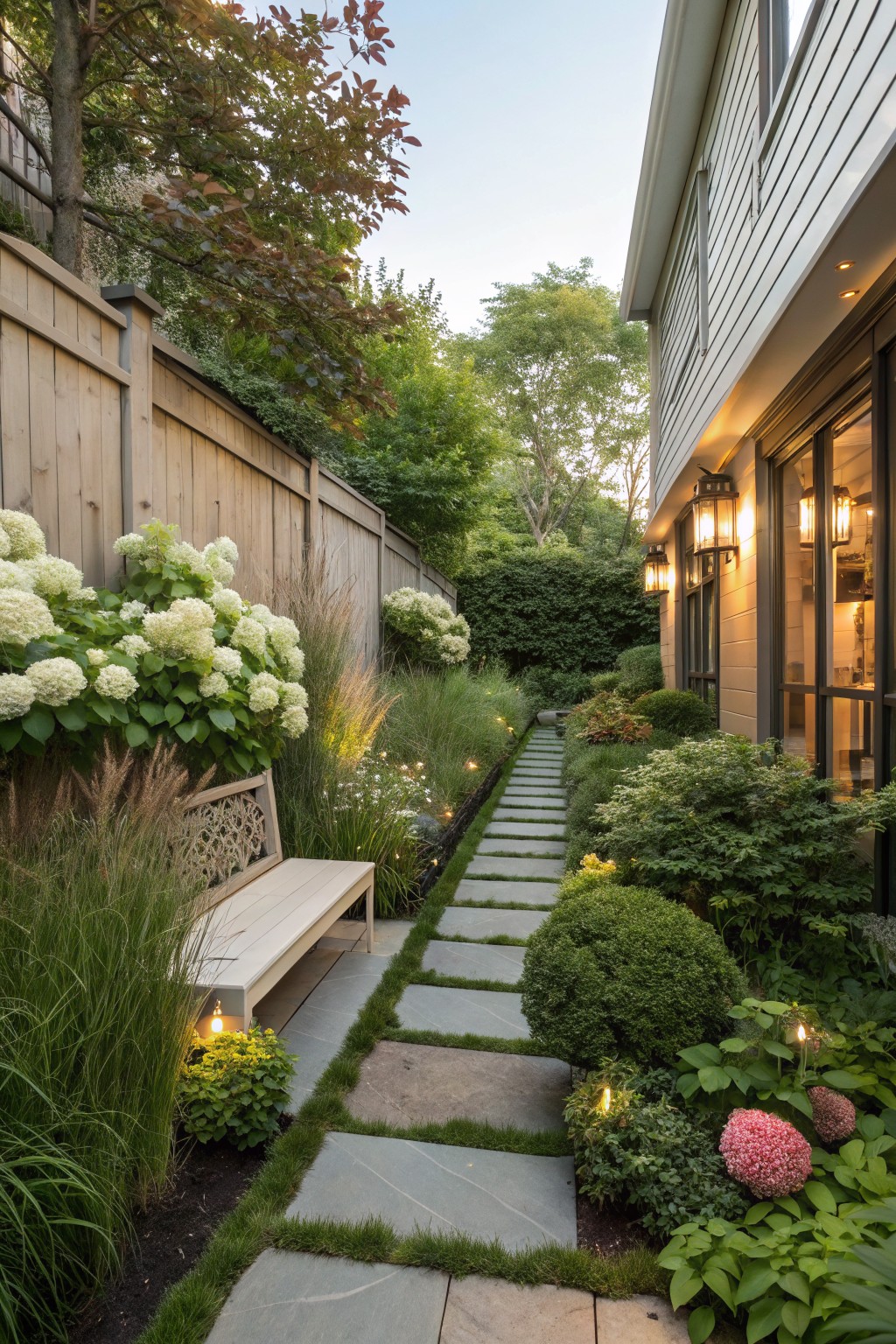
One easy way to make a skinny side yard or backyard feel like a real destination is a simple path of rough stone pavers set in grass. Here, the wide, uneven steps wind between tall grasses and big white hydrangea blooms, pulling you right along toward the house. That mix of hard path and soft plants adds just enough structure without feeling too fussy. The bench tucked in along the way gives a spot to pause, and low lights along the edges make it nice at dusk.
This setup works best in tight spaces where you want privacy from neighbors but still some access to the house. Use local stone that blends with your soil, and plant tough perennials like switchgrass or hydrangeas that fill in over time. Keep the path at least three feet wide for walking, and watch the scale, bigger stones suit longer runs. It keeps maintenance low once established, just some trimming now and then.
Courtyard Patio with Central Fountain
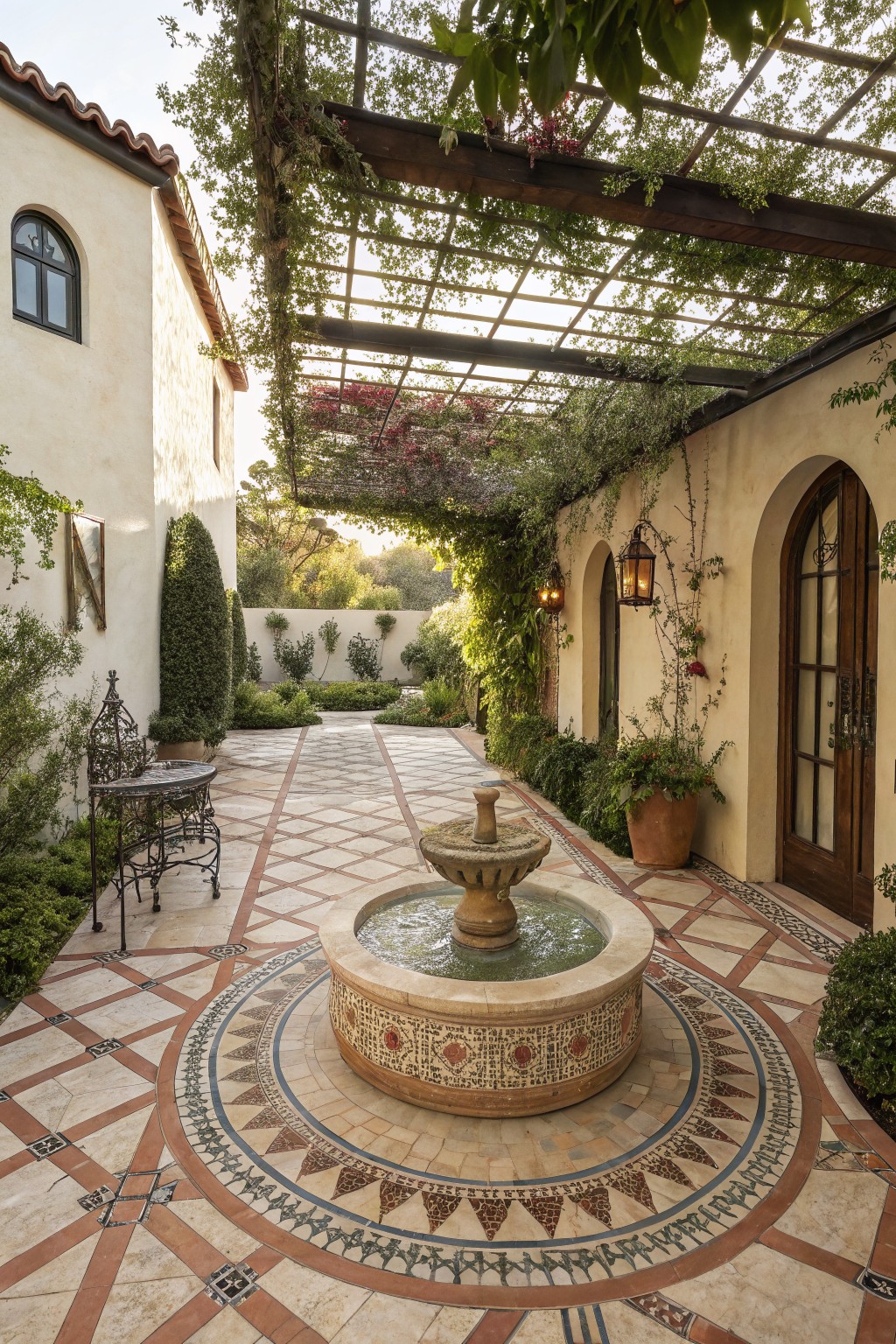
A central fountain makes a simple yet striking heart for any courtyard patio. Here it’s set right in the middle of patterned tile flooring that draws your eye around the space. The water adds a soft sound and movement that pulls everything together without much effort. It’s especially nice how the ornate basin sits low and wide, leaving room for plants and seating nearby.
This setup works best in smaller enclosed yards or against house walls where you want a calm gathering spot. Go for a stone or terracotta fountain that matches your tile or stucco. Keep paths clear around it and add a bistro table off to the side for coffee. Just make sure the plumbing is straightforward, and pick low-water plants to keep maintenance easy.
Raised Bed Gardens with Stone Walls
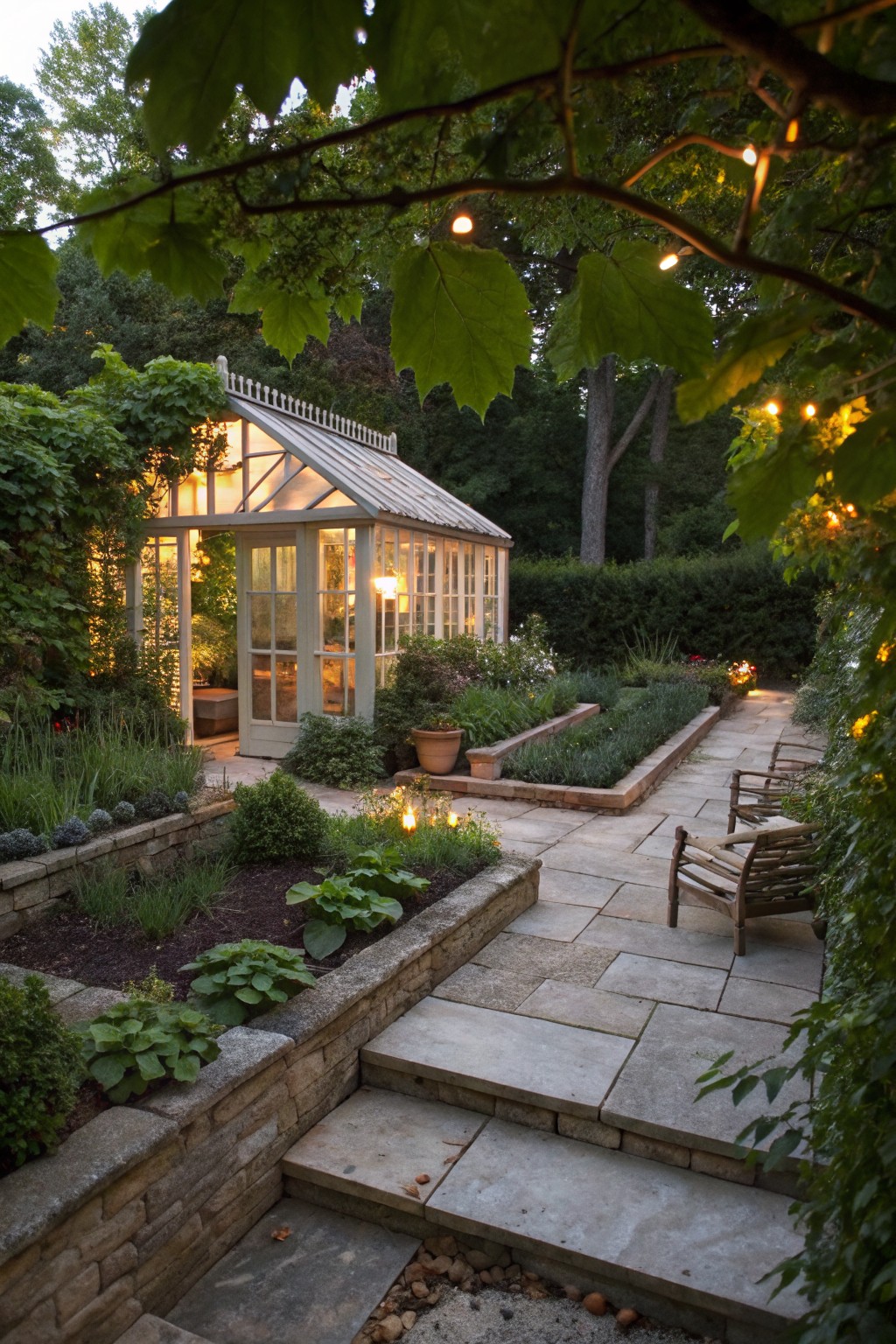
Raised beds like these make gardening straightforward and keep plants from spilling everywhere. The stone walls hold back soil nicely, especially on a slight slope, and create clean lines that look good year round. A simple flagstone path winds through, so you can tend everything without stepping in the dirt. It turns a backyard corner into real growing space.
This works best in yards with some grade, where the walls double as steps up to the beds. Fill them with veggies, herbs, or perennials that suit your sun. Pair with a nearby greenhouse if you want to extend the season. Just make sure the stones match your house stone for a pulled together feel.
Natural Backyard Pond Waterfall
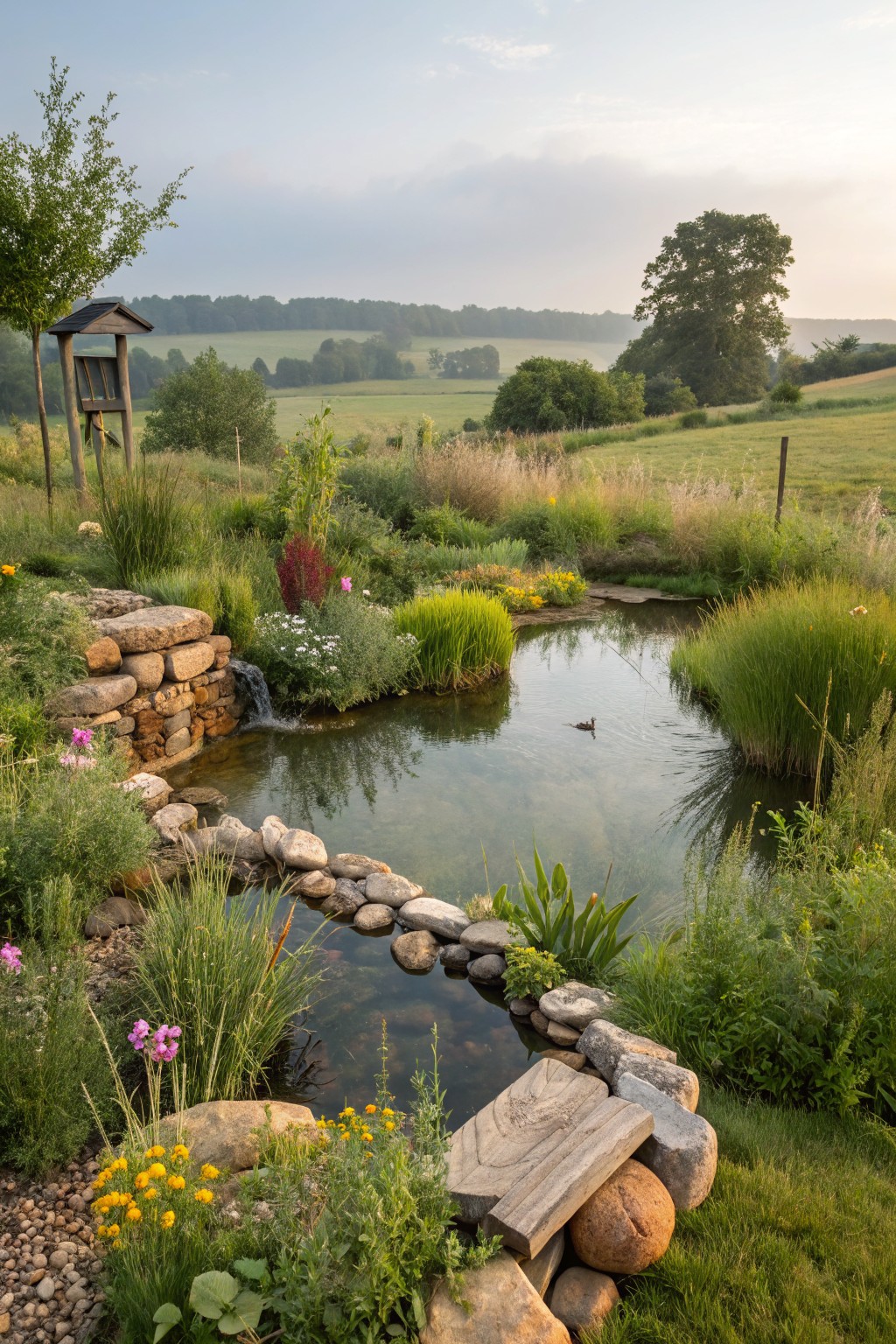
A small pond like this, with a simple stone waterfall feeding into it, turns a plain yard spot into something alive. The rocks stack naturally for the water to tumble over, and the mix of tall grasses and flowers around the edge keeps it lush. That duck swimming shows how it pulls in wildlife right away.
It works best where you have a gentle slope for the water to run. Use fieldstones or whatever’s local to build the falls and edging – no mortar needed if you pack them tight. Plant water-loving perennials and sedges for low upkeep greenery. Just watch the pump doesn’t clog with leaves.
Raised Steel Planters Define Garden Edges
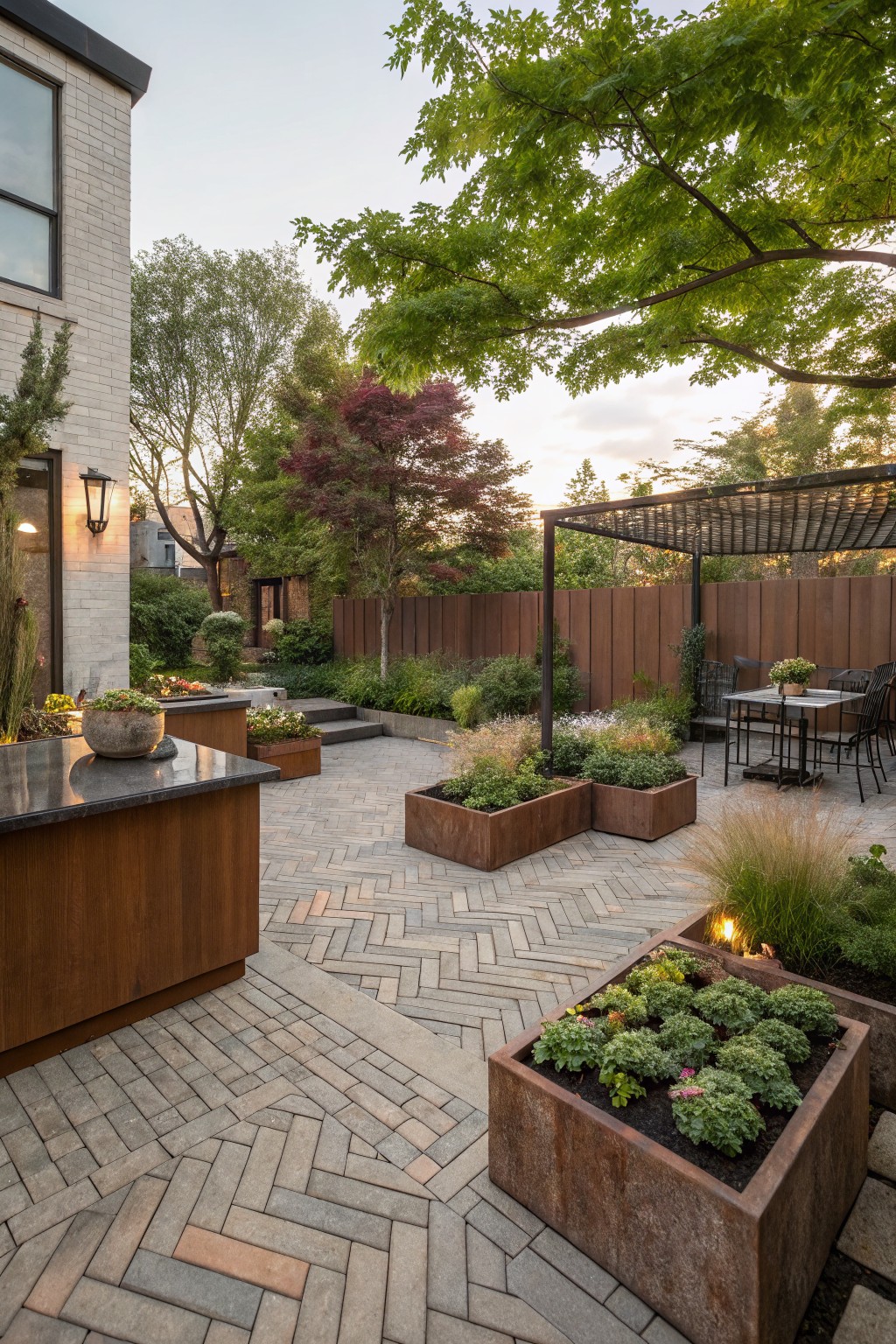
One simple way to organize a backyard garden is with raised steel planters like these corten boxes. They give a clean edge to paths and patios without much upkeep. The rusty patina fits right in with natural greenery, and plants like kale or grasses fill them out nicely for that lush look.
Place them along paver walkways or next to an outdoor kitchen to separate seating from garden beds. This works best in modern or transitional yards where you want structure but not fussy borders. Just make sure the metal won’t rust through too fast in wet climates, and pick tough plants that handle full sun.
Terraced Slopes with Stone Walls
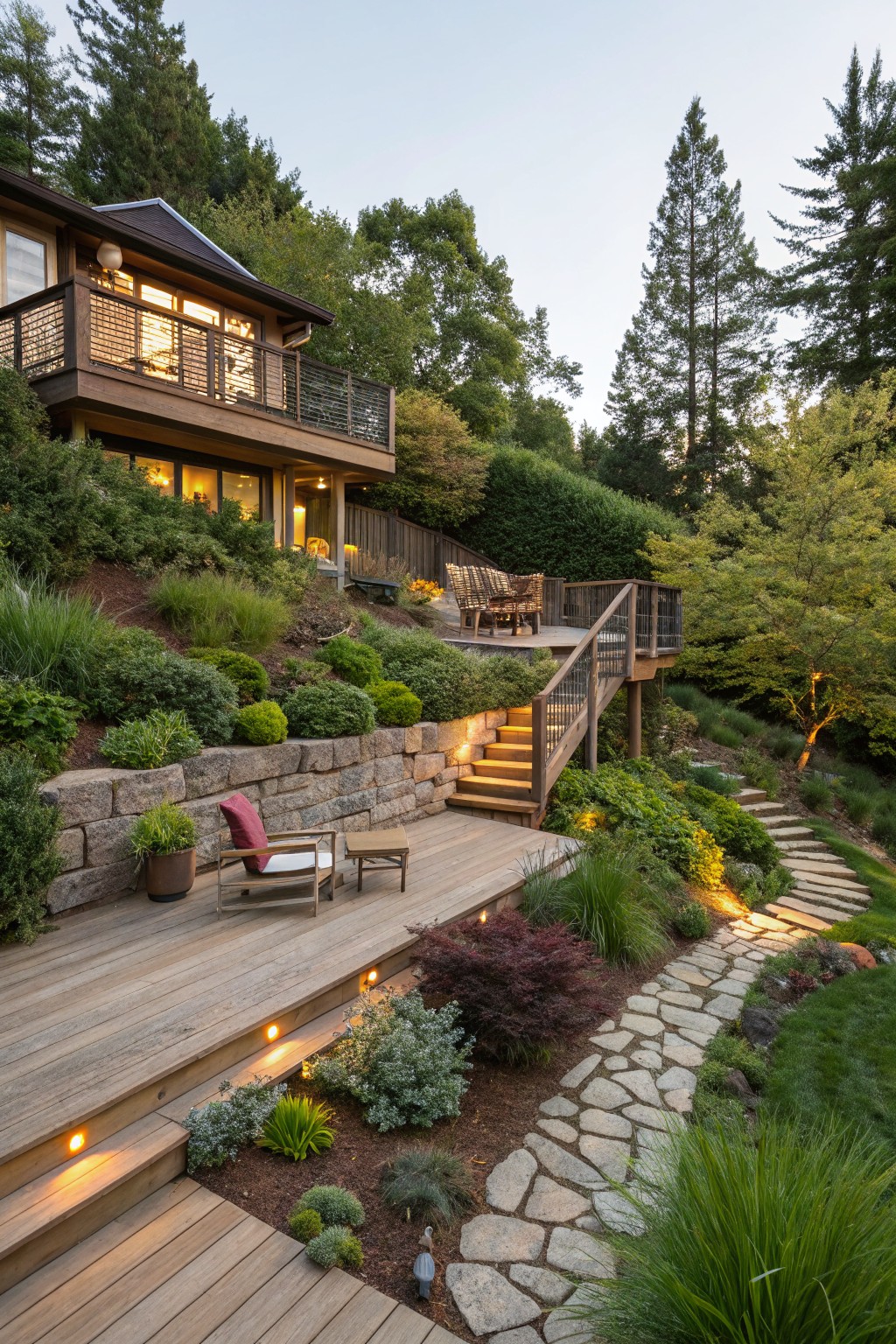
Slopes can be tough in a backyard. They make it hard to plant or just sit outside without sliding down. This setup uses sturdy stone retaining walls to create flat terraces. That turns a steep hill into steps of usable garden space. Wood decks fit right in at the top levels, blending with the plants below. It’s a practical way to add greenery without fighting the land.
You can try this on any hilly lot, especially where trees already grow. Stack low stone walls two or three feet high, fill with soil for shrubs and grasses, then add steps or paths between. Wood platforms work best up high near the house. Keep drainage in mind so water doesn’t pool. It suits wooded spots like this one, keeping things low fuss over time.
Frequently Asked Questions
Q: My backyard gets mostly shade. Which ideas still work well?
A: Go for the woodland garden setups with ferns, hostas, and astilbe. They love low light and create that lush feel fast. Mix in moss for ground cover that spreads easily.
Q: How do I keep all this greenery looking good without daily work?
A: Choose low-maintenance plants like daylilies and black-eyed Susans. Water deeply once or twice a week, then let nature take over. Deadhead spent blooms to keep things tidy.
Q: What’s a cheap way to get started on one of these gardens?
A: Grab seeds or divisions from friends for perennials that come back yearly. Skip fancy edging and use logs or stones you already have. That lush look builds quick without breaking the bank.
Q: But my soil is rocky and awful. Can I still pull this off?
A: Dig in organic matter like leaves or compost to loosen it up right away. Raised beds skip the bad soil altogether if you want faster results. Plants root deep and reward you with green growth.