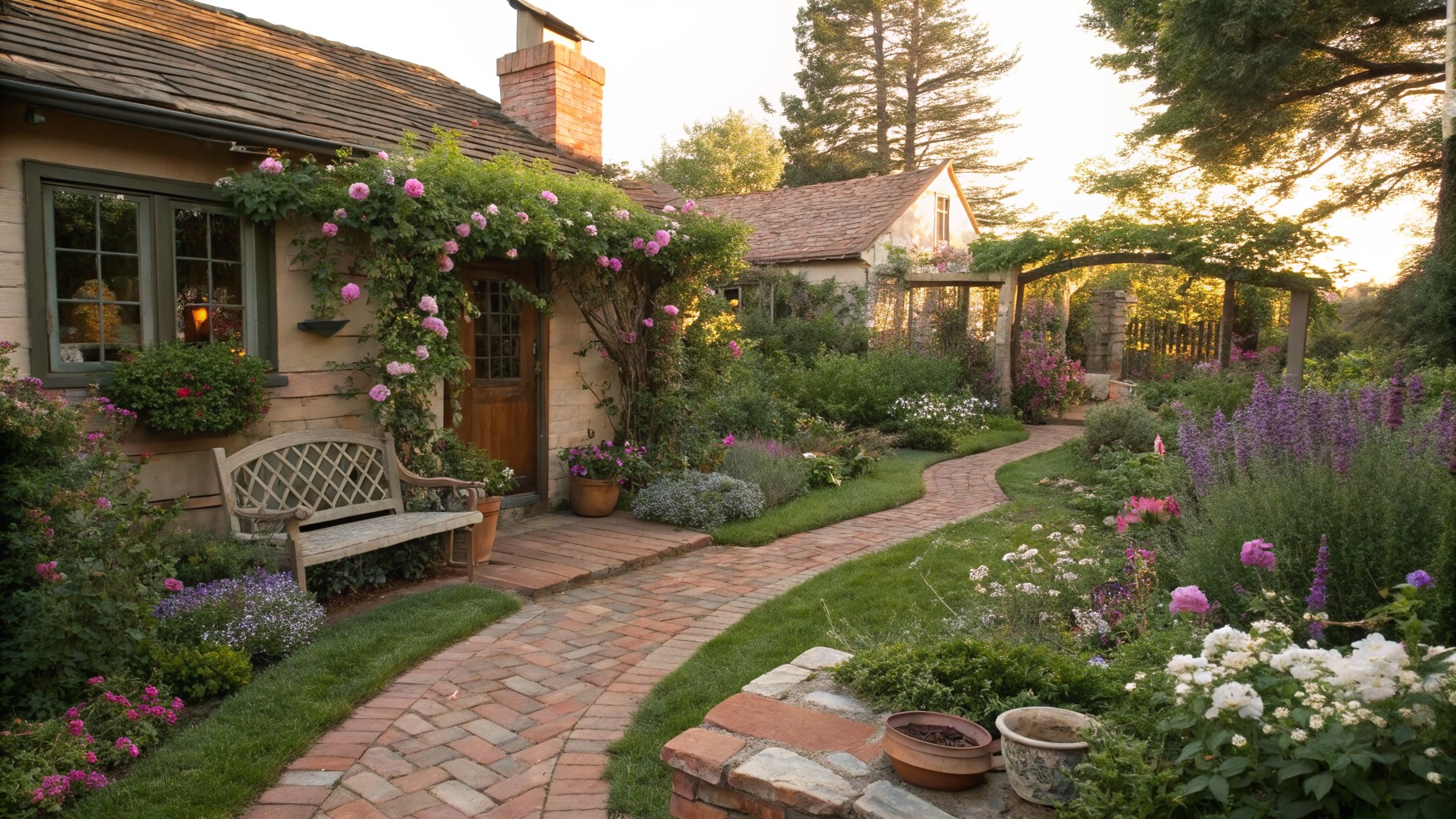
I’ve spent years tinkering in my backyard, and nothing shapes a flower garden better than a layout that accounts for how plants fill out over time. Thoughtful edging keeps beds crisp while pathways pull you through without overwhelming the blooms. I finally got it right last spring by layering low growers against taller perennials, turning a plain corner into something with real depth. People spot the color pops first from the patio. A handful of these setups are practical enough to tweak for your own yard and watch them mature.
Winding Brick Paths in Flower Gardens

A simple winding brick path like this one pulls you right into the garden. It curves gently through tall foxgloves, lavender bushes, and roses spilling over from an arched trellis above. That setup makes the whole backyard feel like a cozy cottage walk instead of just a straight shot to the house.
You can pull this off in most any backyard with a bit of length to play with. Lay down old bricks or pavers in a soft curve, then fill the borders with perennials that come up year after year. Tuck in a bench along the way… it gives a spot to pause. Keeps things low fuss once it’s going.
Casual Stepping Stone Garden Path

One easy way to guide people through a backyard garden is with large flagstone steppers set right into gravel. They wind gently past tall grasses and lavender clumps, keeping things loose and natural. No straight lines or fussy edging. It pulls your eye along without overpowering the plants.
This works best in sunny, dry yards where you want low upkeep. Lay the stones a boot-length apart on leveled gravel, then tuck in tough perennials around them. Fits modern houses with clean lines… just watch the spacing so no one trips. A wooden bench nearby makes a nice pause spot.
Terracotta Urns Along a Garden Path

Large terracotta urns make a backyard path feel more defined and interesting. Placed right along the stone walkway amid gravel and low plants like lavender, they add height without much planting work. Some are empty for a sculptural look. Others hold greenery. It’s a straightforward way to break up flat ground.
This setup fits dry sunny yards or spaces near a house entrance. Group a few urns loosely, not in stiff rows. Skip super tall flowers inside them if you want low upkeep. It suits older homes with stucco or tile roofs pretty well.
Garden Path Lined with Flowers
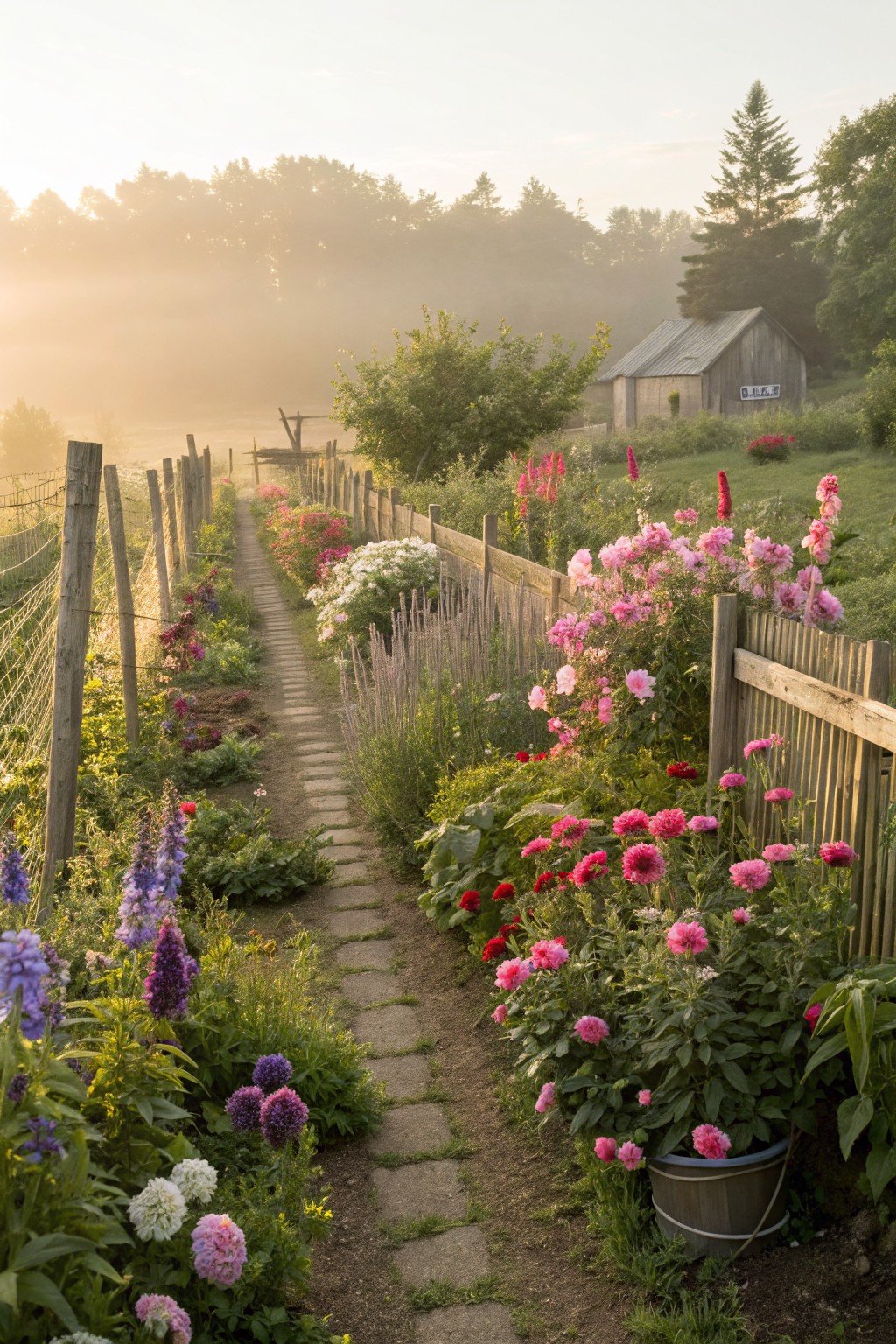
A stone path like this one cuts right through the middle of a backyard garden. Flowers spill over on both sides, mostly pinks and purples from roses and delphiniums, all held back by a simple wooden fence. It turns a plain walk into something you actually want to take, especially on a quiet morning.
This setup works best in yards with room for a straight or gently curving path, maybe 20 feet or so. Plant perennials along the edges for color that comes back year after year. Keep the fence rustic to match old sheds or barns nearby… just watch that the plants don’t creep too far onto the path itself.
Boxwood Parterres for Flower Gardens
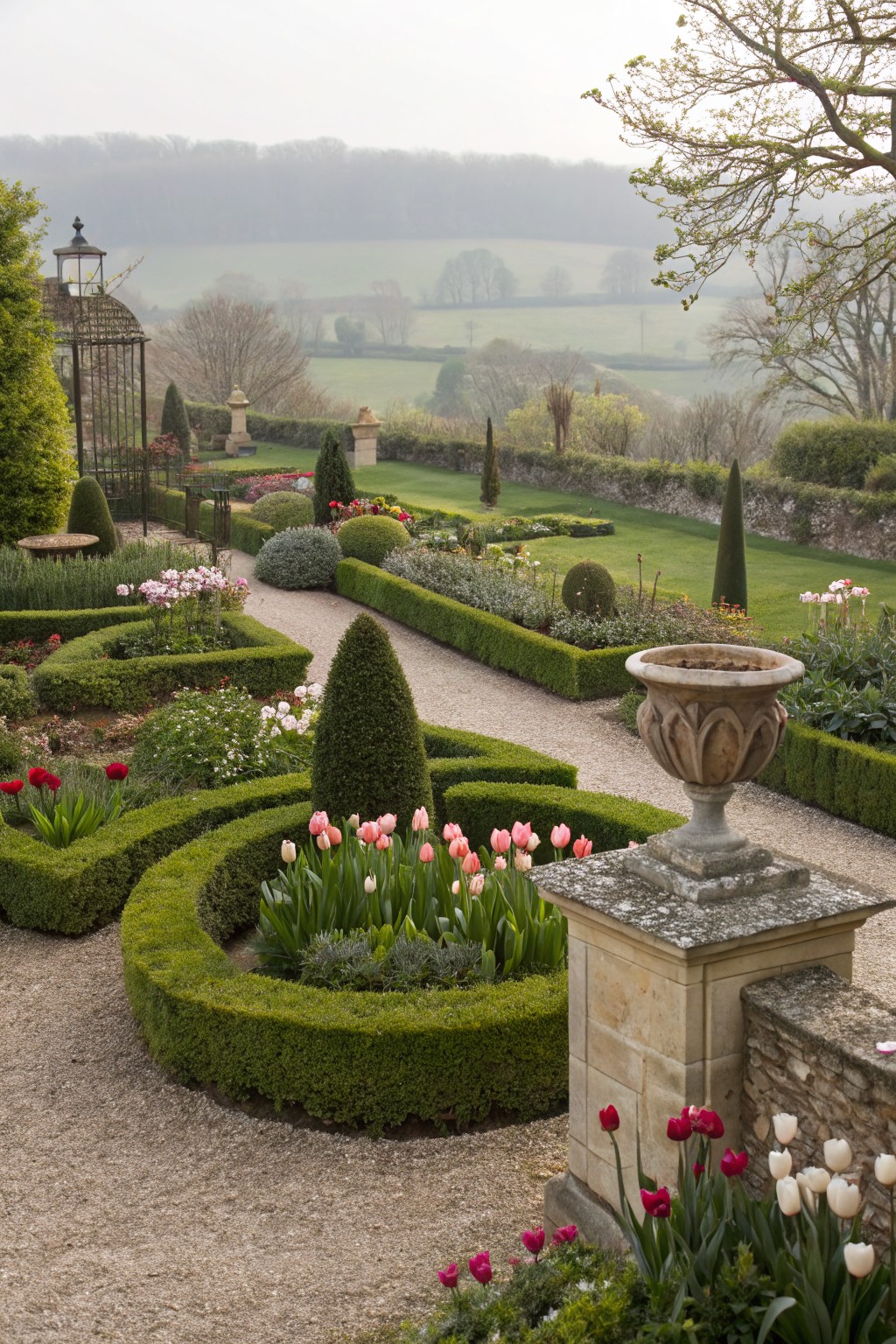
Boxwood parterres give a backyard flower garden that classic, organized look without feeling stiff. You see it here with the hedges clipped into smooth curves and boxes that frame tulip beds and lead your eye along gravel paths. It works because the green shapes stay solid year-round, while seasonal flowers like pink and white tulips pop right in the middle. Keeps things neat but alive with color.
These setups suit bigger yards where you have room for patterns, especially around a traditional house. Start with low boxwoods you can shape over time, add mulch in beds to cut down weeding, and use gravel paths for easy walking. Watch the scale though…too small and it looks fussy. Trim twice a year to hold the lines.
Terraced Stone Walls for Sloped Yards
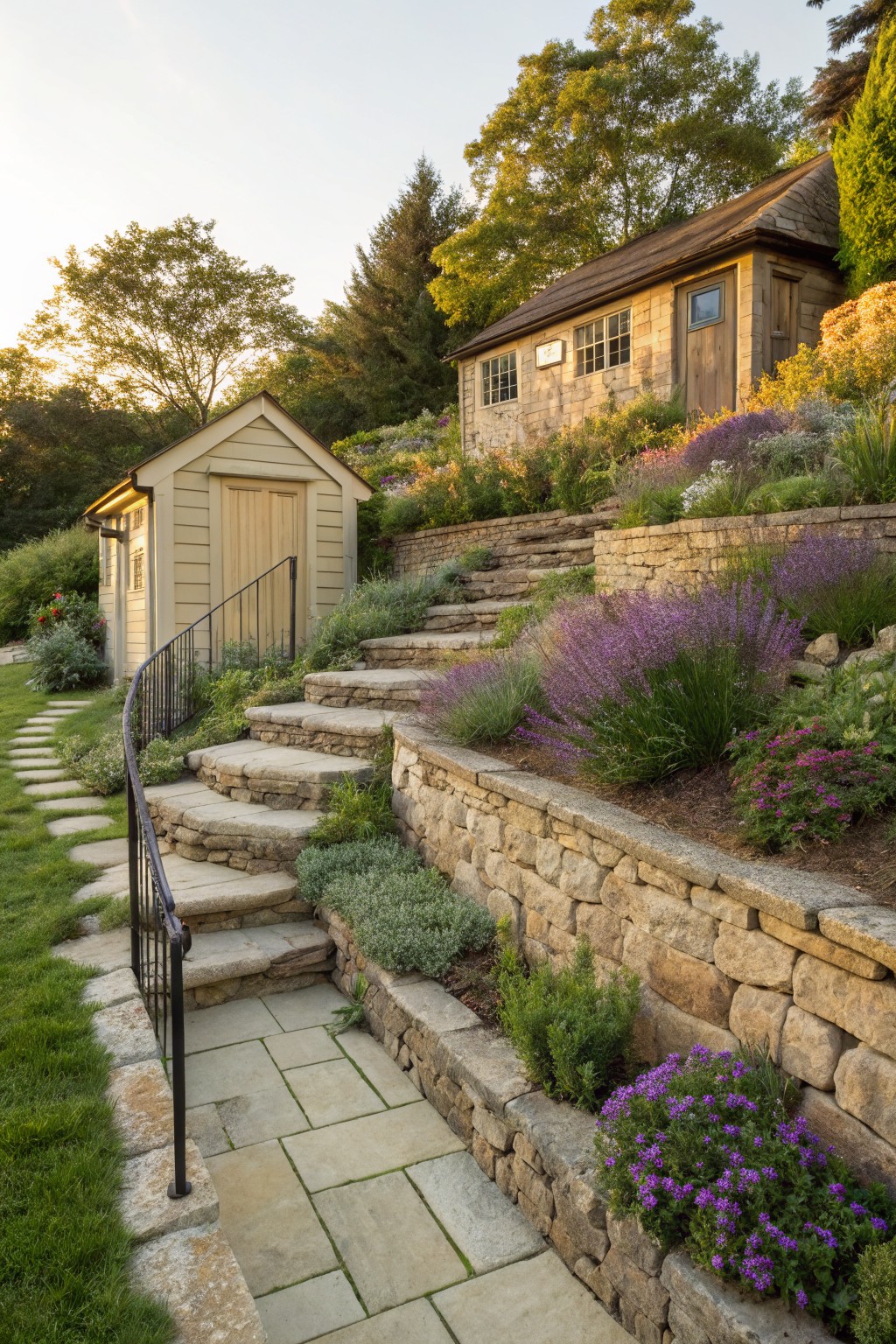
Sloped backyards can be tough to work with. But stone retaining walls like these turn the challenge into something pretty and useful. They create flat terraces for flower beds, holding back soil while letting plants spill over the edges. Lavender bushes and perennials fill the spaces, giving color and texture that softens the stone.
You can use this in any hilly yard, especially where you want low-maintenance planting. Start with wide enough walls to support steps or paths. Pick local stone for a natural fit, and plant drought-tolerant stuff like lavender up top. It keeps erosion down… and makes the slope feel like part of the garden.
Winding Stone Path Through Flower Beds
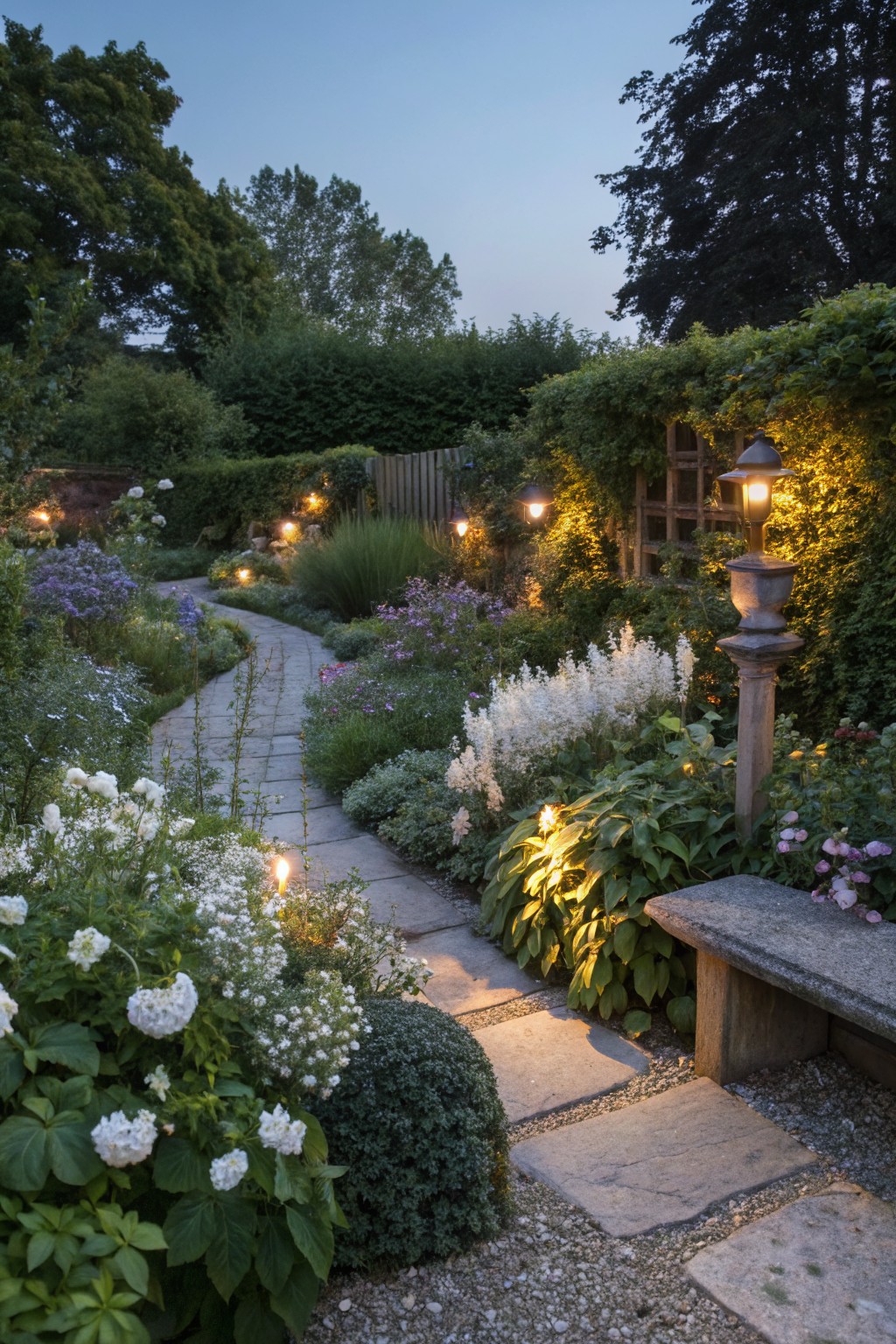
A winding stone path like this one makes your backyard garden feel bigger and more inviting. It curves gently through tall borders of white blooms and softer purples, pulling you along without feeling too straight or formal. The low lanterns tucked into the beds add just enough light at dusk to highlight the plants, turning a simple walk into something special.
You can pull this off in most any backyard by laying irregular stone pavers over gravel for good drainage. Plant perennials like hydrangeas and astilbe along the edges for year-after-year color. It suits cottage-style homes best… keeps things low fuss once established. Just watch the path width, around three feet, so it’s comfy for two.
Vertical Flower Planters on Walls

One smart way to add flowers to a tight backyard spot is stacking wooden planters right on the wall. These boxes, filled with marigolds and trailing greens, turn a plain brick alley into something lush and welcoming. It makes use of vertical space you might otherwise ignore, and the mix of colors keeps it lively without taking up ground room.
This setup works great in narrow side yards or between buildings, especially for city homes with limited land. Mount the planters securely, make sure they drain well to avoid rot, and pick tough bloomers like geraniums. Add string lights overhead for evenings… simple and pretty.
Winding Wooden Boardwalk Path
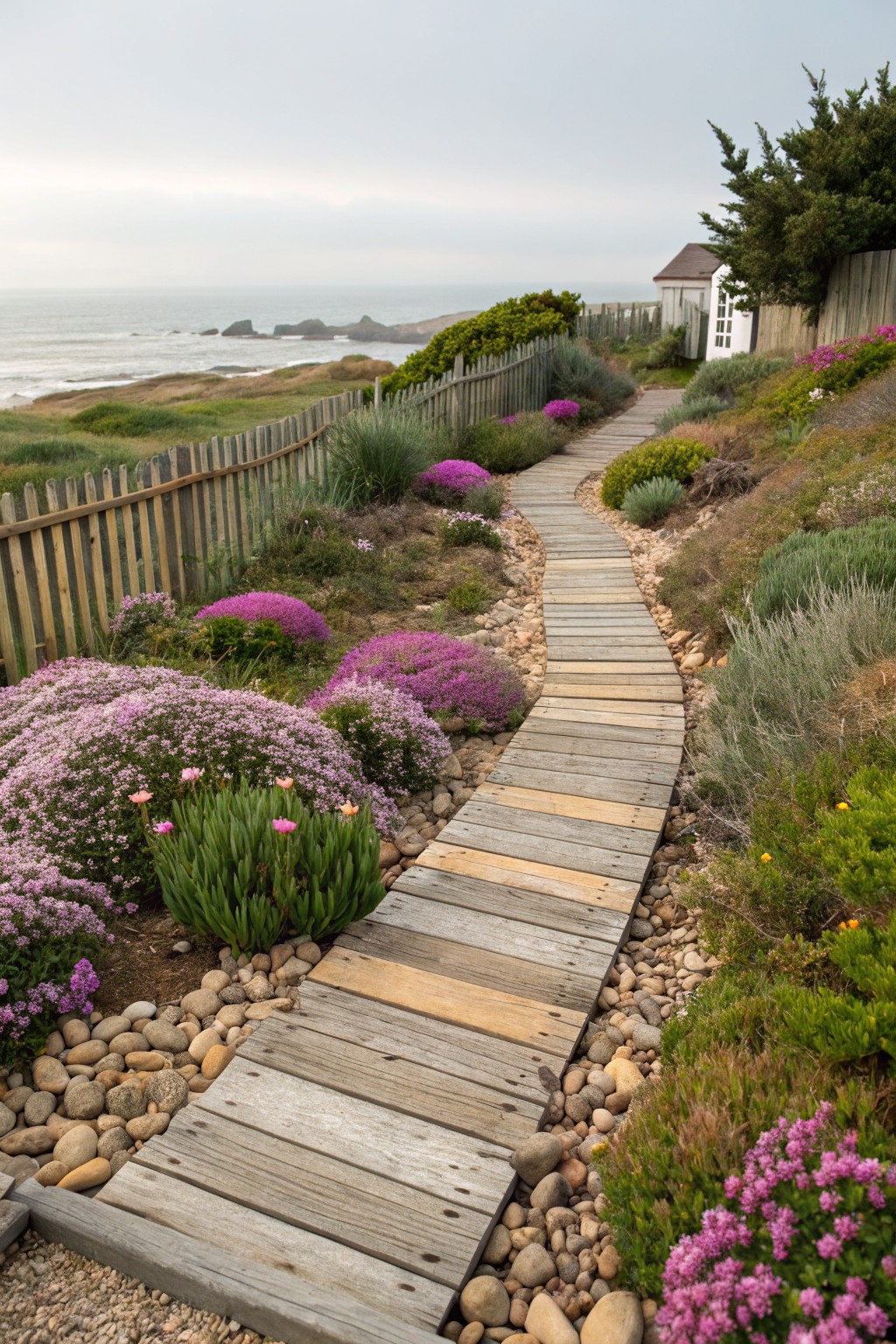
A weathered wooden boardwalk snakes through this backyard garden, cutting a clear line amid low pink flowers and tough succulents. It gives the space a coastal trail feel without much upkeep, and the gentle curve invites you to wander instead of rushing through.
Try this in sloped yards or spots with rocky soil where grass won’t grow. Source old deck boards for an instant patina, lay them over gravel for drainage, and flank with pebbles plus spillover plants like ice plant or lavender. Suits dry areas best… keeps mud off your shoes too.
Terraced Gardens with Curved Brick Walls

Sloped yards can be tough to garden. But curved brick walls make terraced beds that follow the land’s natural shape. You get flat planting areas stacked up the hill. Flowers spill over the edges. A winding path connects it all. That black metal table sits right at the base. Nice spot for morning coffee.
This works best on moderate slopes behind a house. Build the walls sturdy so they hold soil back for years. Fill beds with tough perennials like black-eyed Susans and lavender. It fits cottage gardens or older homes with some rustic charm. Skip it on steep drops. Hire help for the heavy lifting.
Raised Beds for Small Backyard Gardens
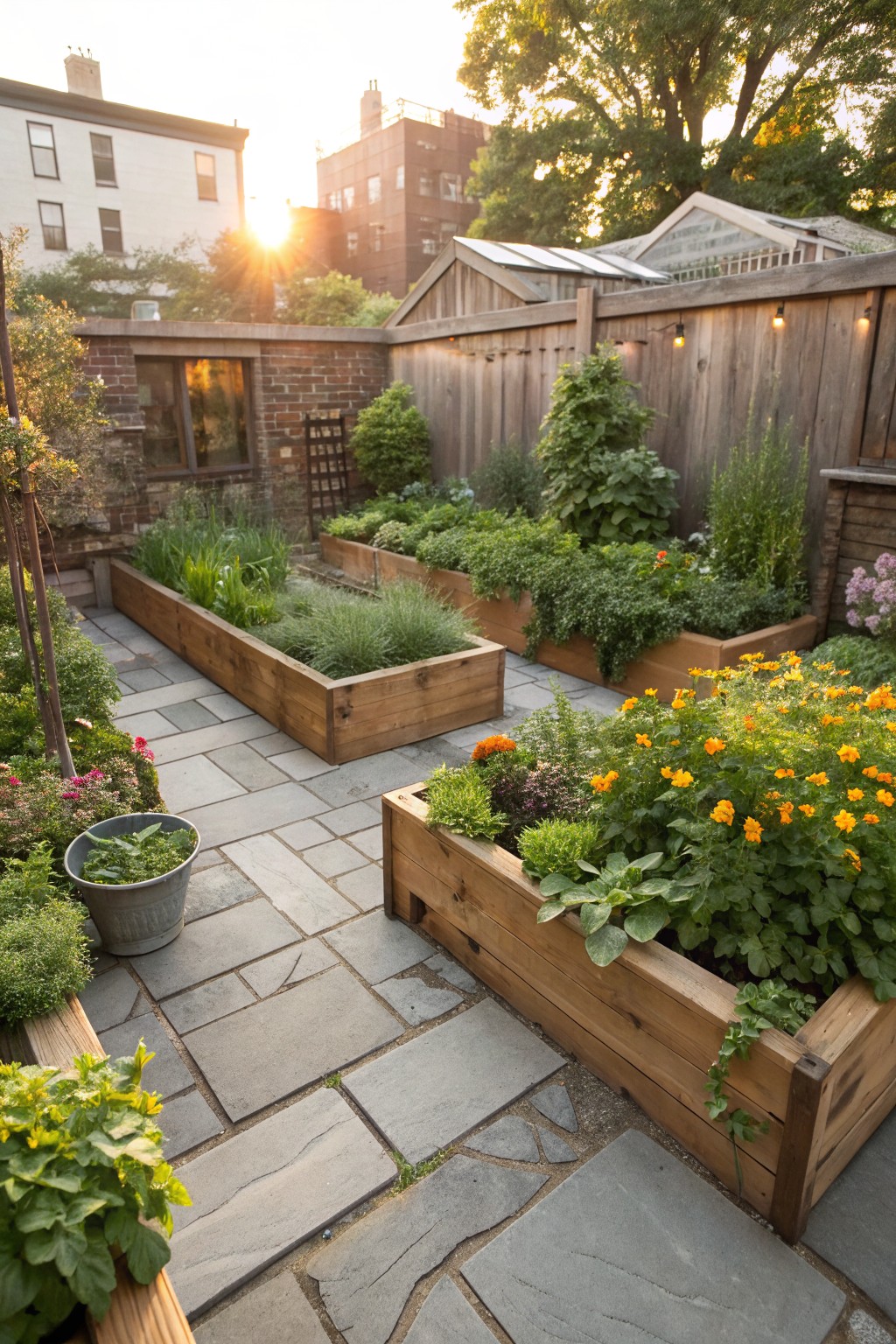
Raised beds like these make gardening simple in a tight yard. Wooden frames hold the soil up off the ground, so you can plant herbs, greens, and flowers without muddy paths or sore backs. Here the beds line a stone walkway, keeping everything neat and reachable. It’s straightforward and turns a plain backyard into something useful.
This idea fits city lots or any spot with poor soil. Stack the beds two feet high, use rot-resistant wood, and mix in perennials for low upkeep. Just keep them watered in dry spells. Works on most budgets too.
Terracotta Pots Next to Stone Steps
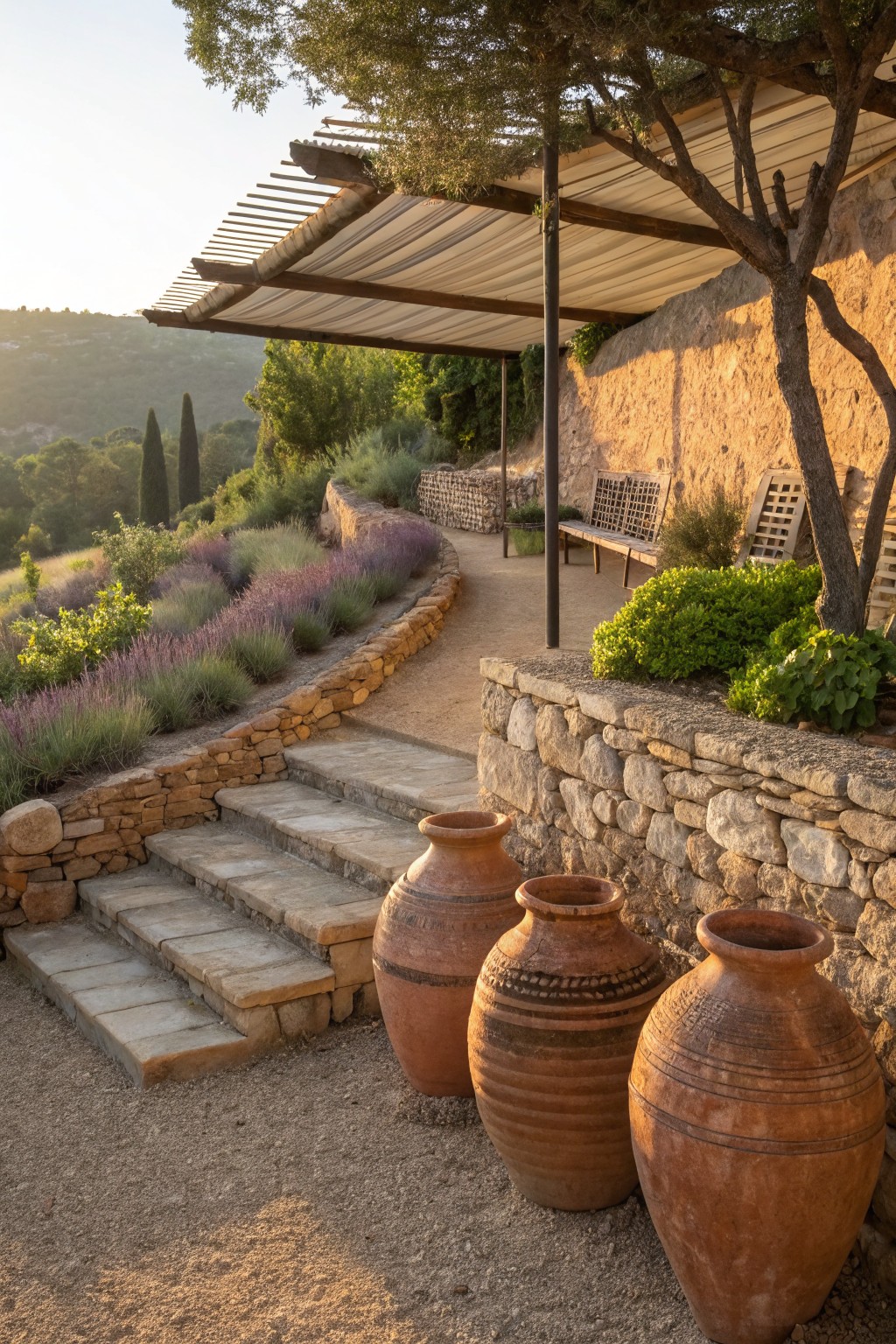
Big terracotta pots like these make a simple but strong statement in a backyard garden. Placed right at the base of stone steps against a rough wall, they add scale and texture without much effort. The warm clay tones echo the stone and gravel, pulling everything together in a relaxed Mediterranean way.
Put them where paths meet or near seating areas to guide the eye and create little moments of interest. They suit sloped yards or dry gardens best, since the pots handle sun and hold up over time. Fill with lavender or leave empty… either way, they stay low fuss.
Winding Stone Steps for Sloped Yards
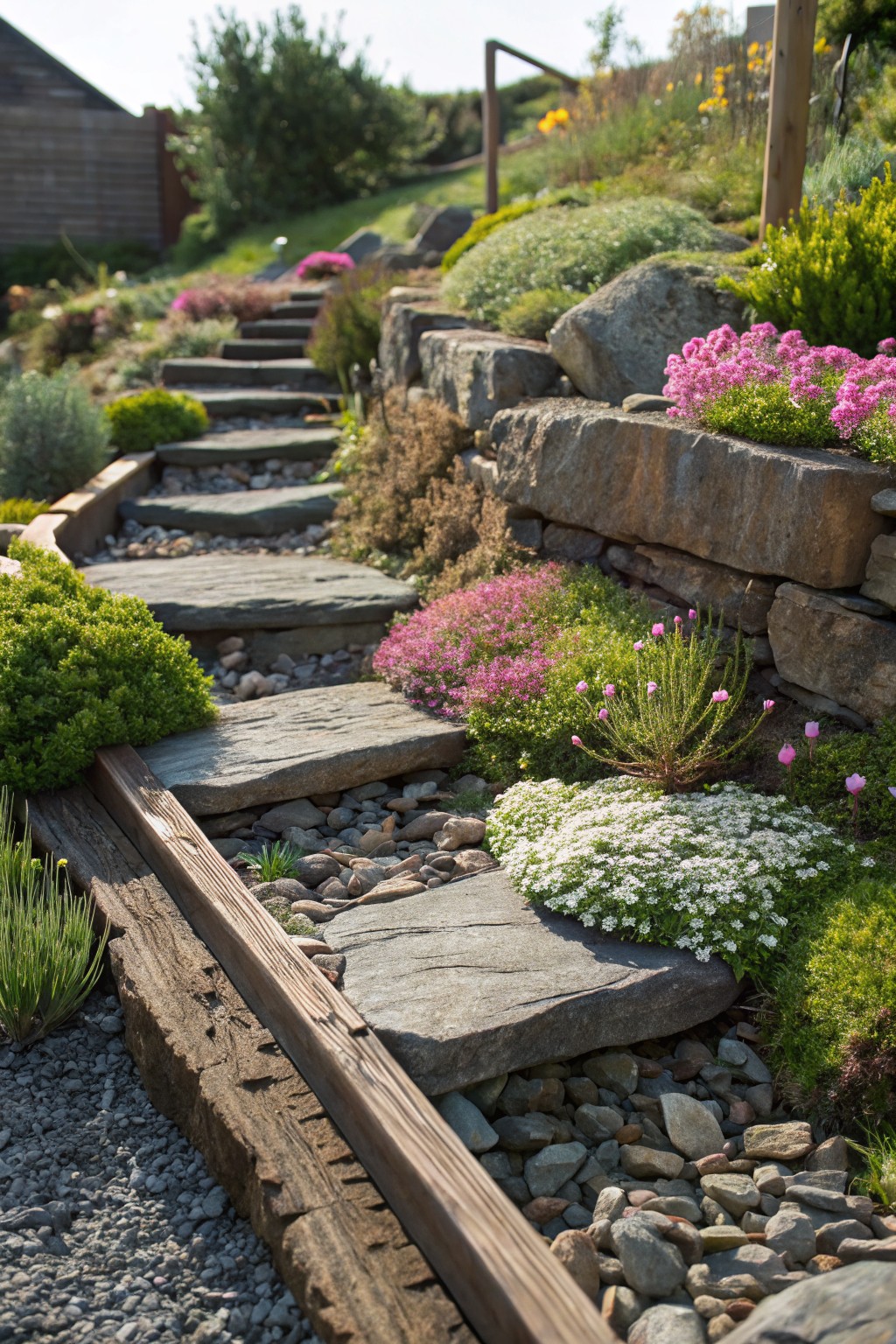
A simple way to handle a backyard slope is with irregular stone steps that wind gently up the hill. These steps mix right into rock retaining walls, where low plants like pink heather and white groundcover tuck into the crevices. It keeps the path feeling natural, not forced, and makes climbing easy without big drops.
This setup works best on hillsides with some sun, using tough plants that don’t need much water. Add gravel between steps for drainage, and a wood edge along one side for safety. It fits most homes with a yard drop, turning a tricky spot into a pretty walk you actually use.
Winding Gravel Paths in Flower Gardens

A winding gravel path like this one cuts right through the heart of a backyard flower garden. It pulls you along past tall grasses swaying in the breeze and bursts of yellow black-eyed Susans mixed with pink flower spikes. What makes it work so well is how the curve slows you down. You notice the plants up close instead of just walking straight through.
Lay one down in a side yard or along a fence line where space allows some meandering. Gravel stays put with simple edging and lets water drain fast. Pair it with perennials that grow tall in the middle and spill lower at the edges. It fits most homes without much upkeep. Just rake it now and then.
Narrow Pool with Flower Borders
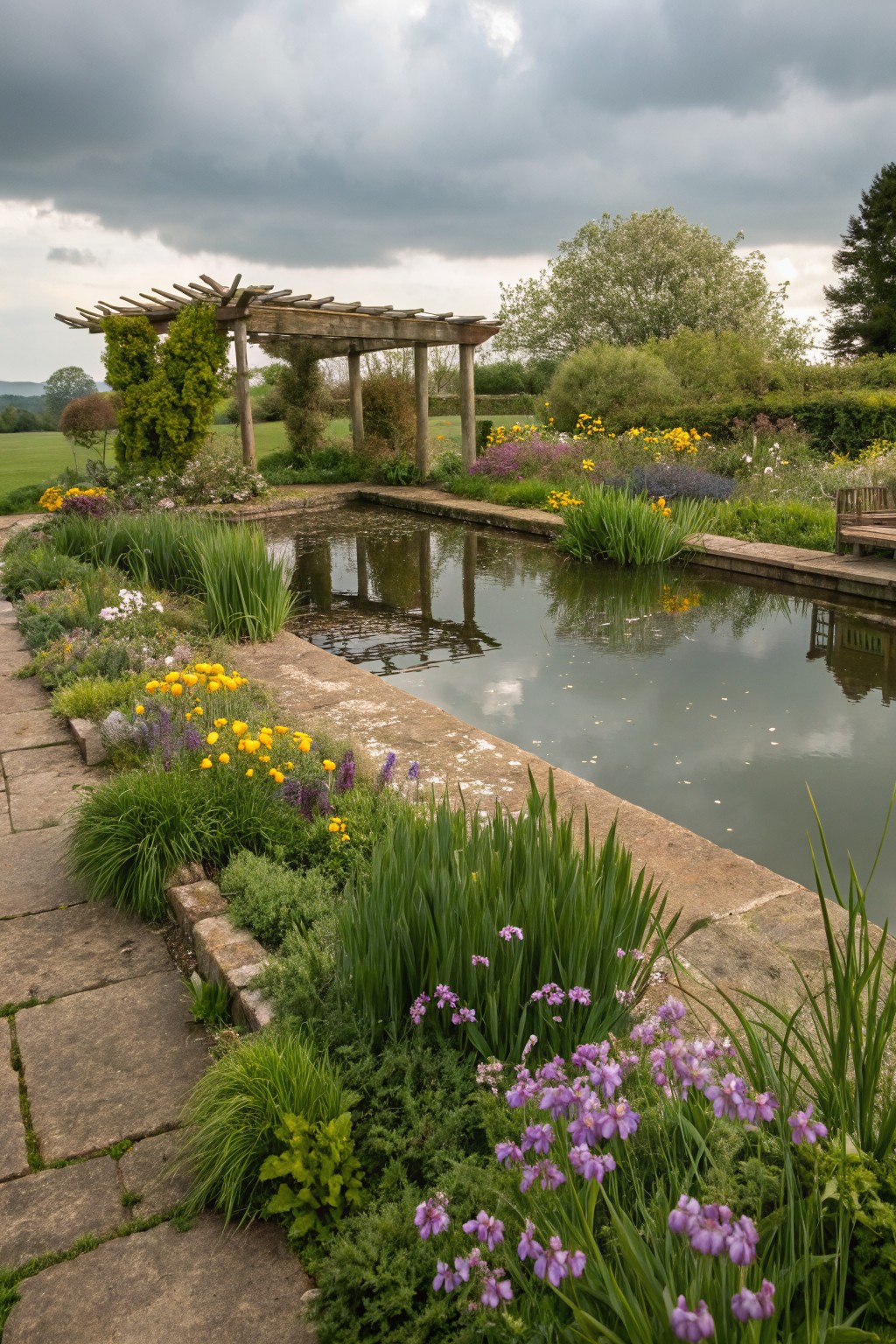
A simple narrow pool like this runs right through the middle of a backyard garden. Stone edges keep it neat, while flowers spill over one side. Yellow blooms and tall purple spikes catch the eye, and the water mirrors them all. It stretches the view and quiets things down a bit.
This idea fits long skinny yards or spots needing structure. Line it with easy perennials that flop gracefully, like irises or coreopsis. Skip fussy annuals. A plain stone path on the other side lets you walk close without crowding the plants.
Terraced Raised Beds for Sloped Backyards
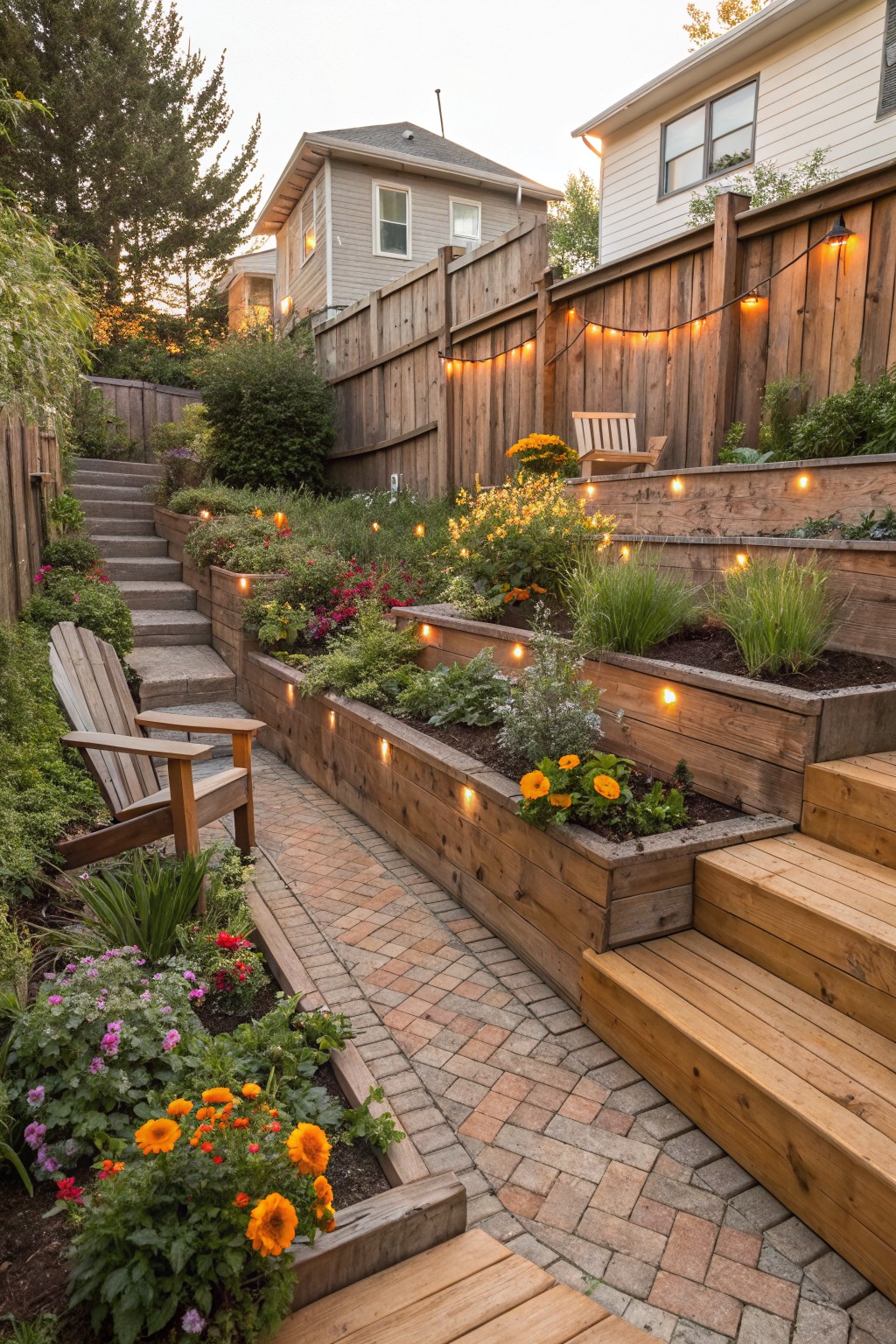
Sloped yards often sit empty or get mowed down to nothing. Terraced raised beds fix that by stacking wood planters right into the hill. They hold soil steady for flowers and low herbs, creating flat spots where none existed. Those little built-in lights along the edges make the whole setup glow at dusk.
Use cedar or pressure-treated wood for beds two to three feet high. They suit city lots with steep drops or rural spots needing structure. Line the insides with plastic sheeting first… keeps everything from washing out in rain. A simple brick path winding through pulls it all together without much fuss.
Curved Brick Garden Paths
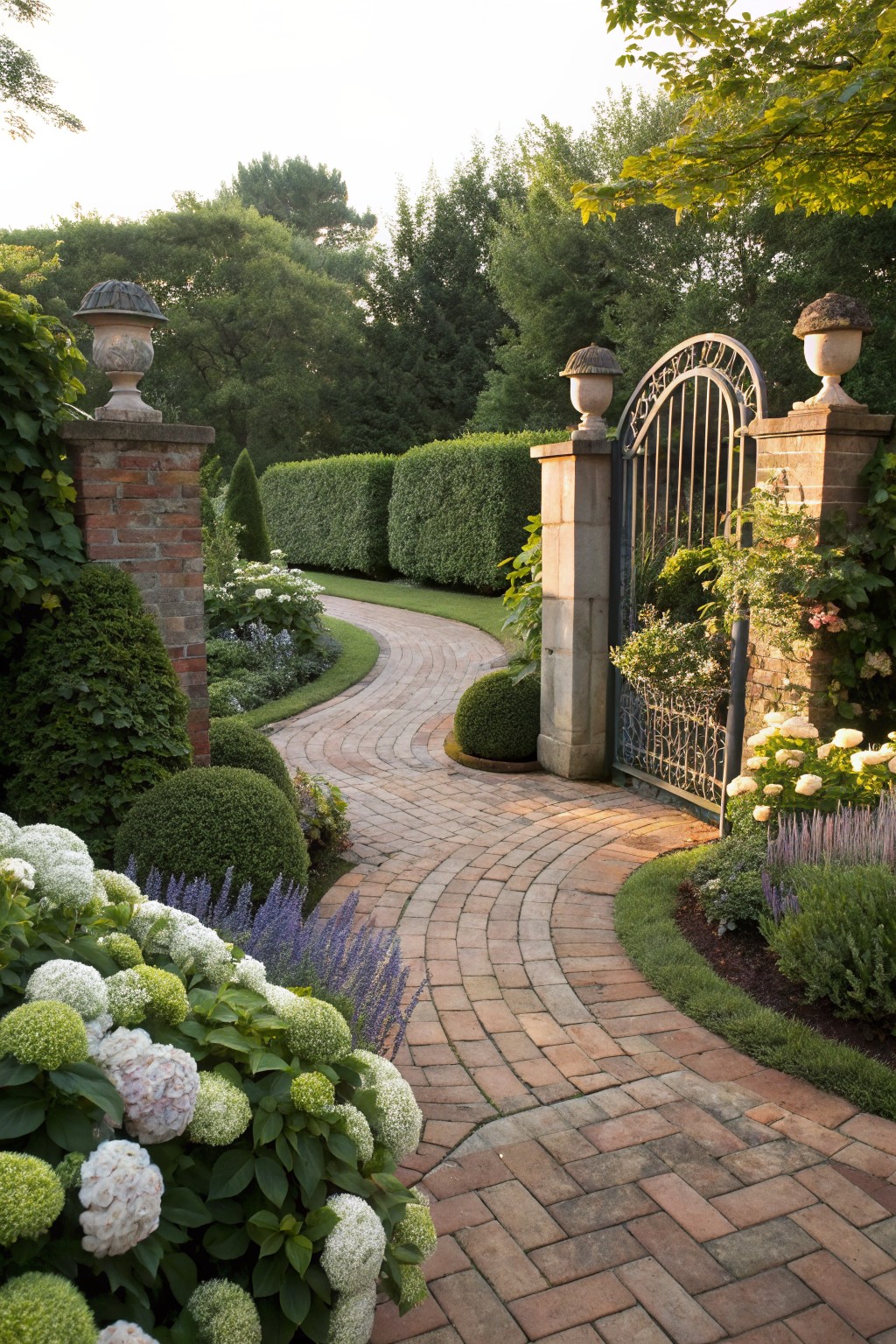
A curved brick path like this one winds gently through flower beds, making your backyard garden feel more welcoming and full of surprises. The soft bend keeps things interesting as you walk, with big white hydrangeas and spikes of lavender brushing the edges. It turns a simple stroll into something special without much fuss.
You can add one in most backyards that have room for a few feet of width. Lay the bricks in a loose pattern on sand for easy drainage, then plant low shrubs or perennials along the sides to hold it in place. It suits older homes or cottage styles best… just avoid super steep slopes where the curve might trip folks up.
Tropical Plants Along Backyard Fences
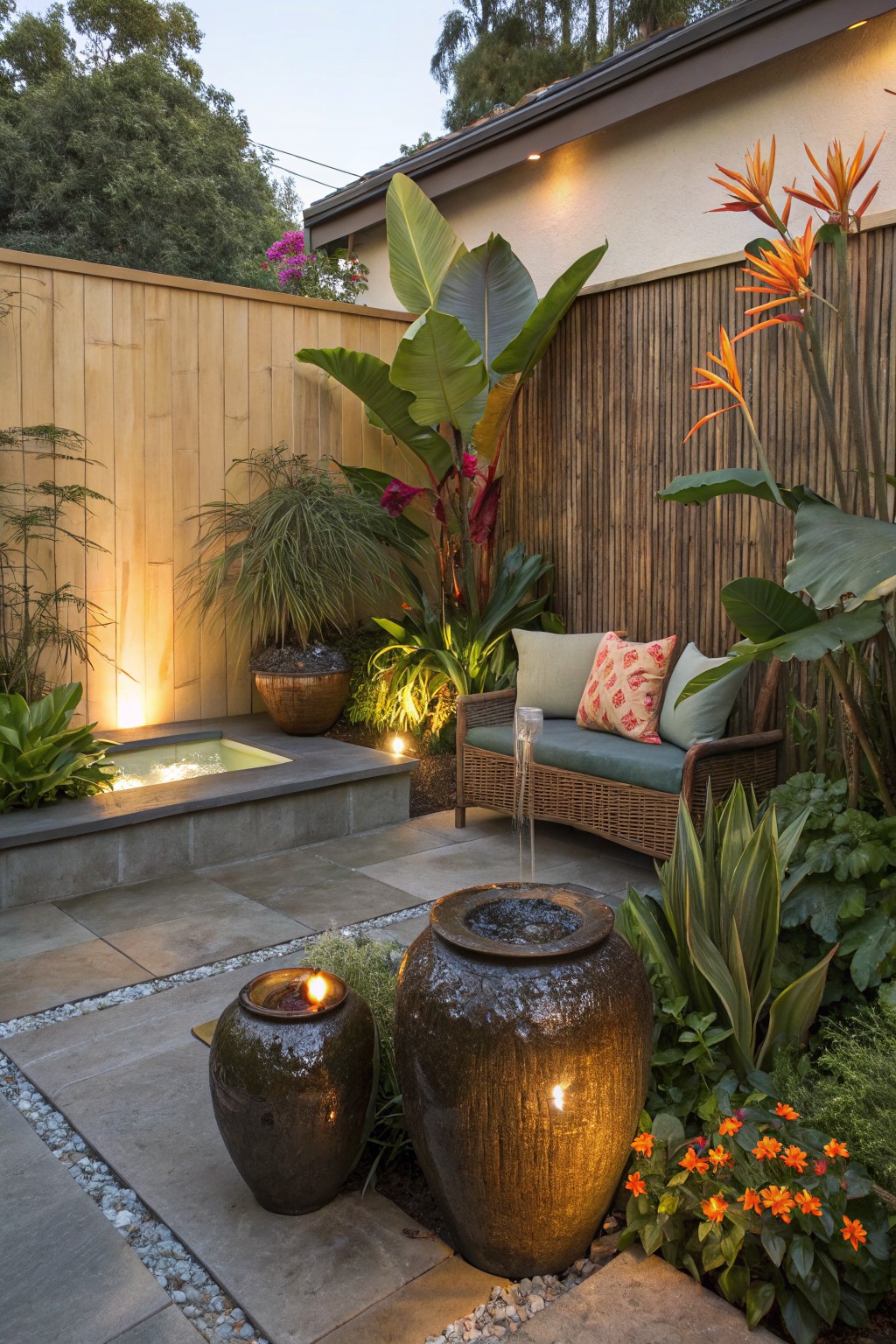
Tall tropical plants planted tight against a backyard fence make for quick privacy and a lot of green drama. In this setup, huge banana leaves and spiky bird of paradise reach well above the wood slats, blocking views while softening the fence line. The orange flowers add pops of color too. It gives the patio space a resort feel without much effort.
Try this in warmer spots where these plants grow fast. Space them a foot or so from the fence, layer shorter stuff underneath, and mulch well. Small yards love it since the height comes naturally. Just watch for overcrowding… trim back now and then.
Winding Stepping Stone Path Through Flower Beds
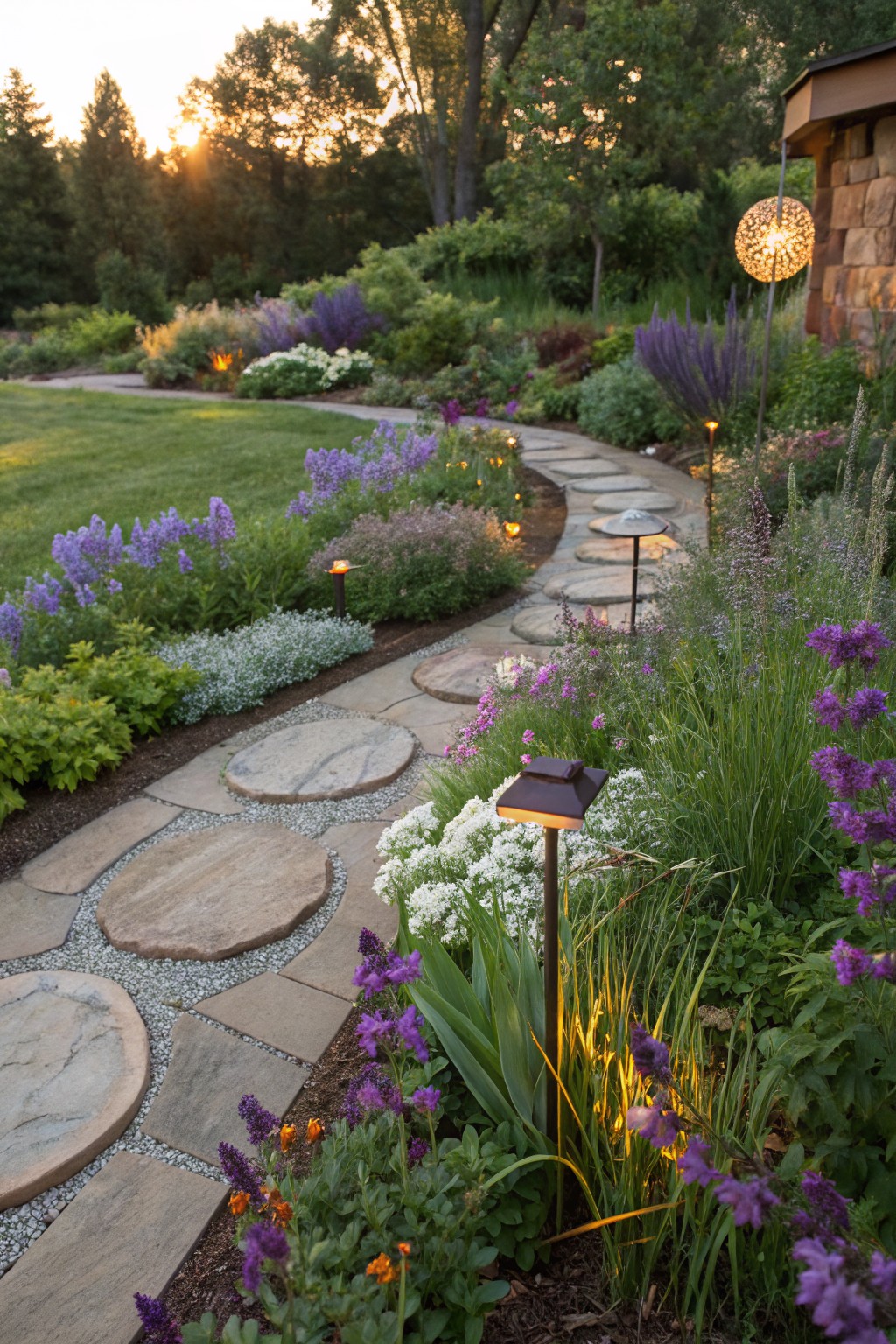
A simple winding path made from large round stone pavers set into gravel creates this easy garden walkway. It curves gently through tall borders of purple salvia, lavender, and white blooms, keeping the focus on the plants instead of straight lines. Low path lights tucked along the edges light it up nicely at dusk, making the space feel welcoming without too much fuss.
This works best in backyard gardens with some slope or curves already, where you want to squeeze in more flowers. Lay the stones loose for drainage, edge with low plants to hide gravel, and pick perennials that come back each year. It suits casual homes… just watch the gravel doesn’t wander onto the lawn.
Frequently Asked Questions
Q: How do I pick flowers that bloom from spring through fall?
A: Layer in early bloomers like tulips, mid-season stars such as daylilies, and late ones like asters.
This keeps color going strong without much fuss. Group them by height so nothing blocks the show.
Q: What if my backyard gets mostly shade?
A: Go for hostas, impatiens, and ferns that thrive without full sun. Plant them under trees or along north-facing walls. Add mulch to hold moisture and cut down on weeds.
Q: How do I keep weeds out of my new flower bed?
A: Lay down landscape fabric before planting, then top it with a thick layer of mulch. Pull any strays by hand weekly at first. Weeds lose the battle fast this way.
Q: Can beginners pull off these garden ideas without killing everything?
A: Start with tough perennials like coneflowers and black-eyed Susans, they bounce back from mistakes. Water deeply but infrequently to build strong roots. And watch your plants grow confidence right alongside yours.