Small backyards with tight layouts tend to get ignored because they never seem to offer enough room for anything that feels intentional.
I have noticed that the ones that end up working best are the ones planned around how people will actually move through them rather than just how they look from a window.
That shift in thinking changed what I tried first in my own space.
Focusing on simple fixes for awkward corners or narrow patios often reveals options that stay useful through different seasons without needing constant upkeep.
Some of those choices end up being the ones I test and adjust over time once I see how the light and foot traffic really play out.
Bench Seating Along The Wall Fits Narrow Yards

A long bench set right against the house wall turns a tight side yard into usable space without blocking the path. It keeps the seating out of the way while still giving you a place to sit and relax.
This approach works especially well in narrow backyards or awkward corners where a full table and chairs would feel cramped. Pick a simple wooden bench that blends with the house and add a few cushions for comfort. Just make sure the walkway stays clear so the space still feels open.
Pergola with Vines Creates Shade Overhead
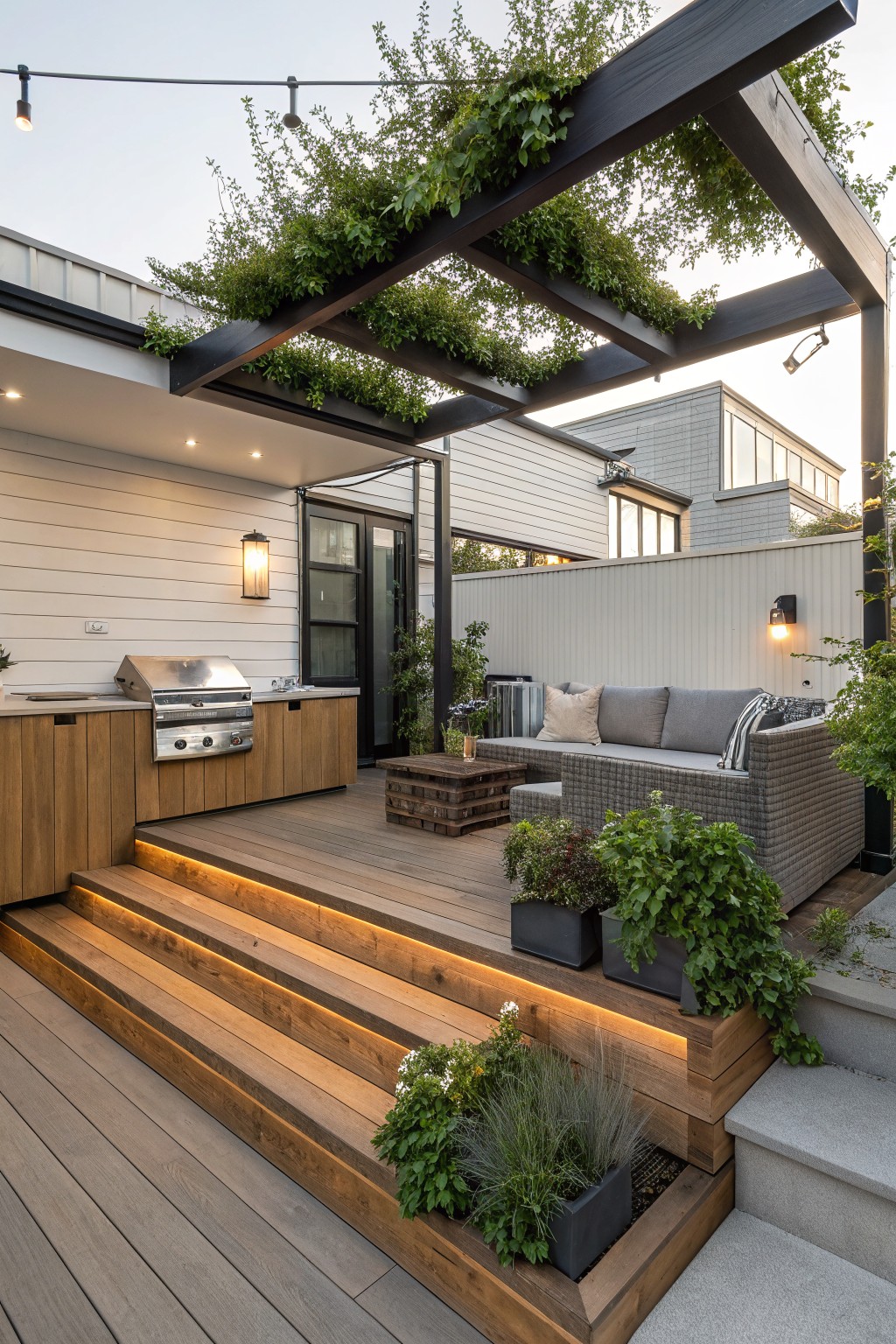
A pergola with climbing plants gives a small backyard some much needed cover without eating into floor space. The structure adds height and greenery while still keeping the area feeling open below. It works especially well when the yard is tight or surrounded by fences.
Place the pergola over the main seating spot so it shades the sofa and table during the day. Keep the planting simple with one or two vines that grow quickly along the beams. This setup suits most decks or patios and helps the space feel more finished without extra furniture.
Use a Fire Pit to Zone a Compact Patio
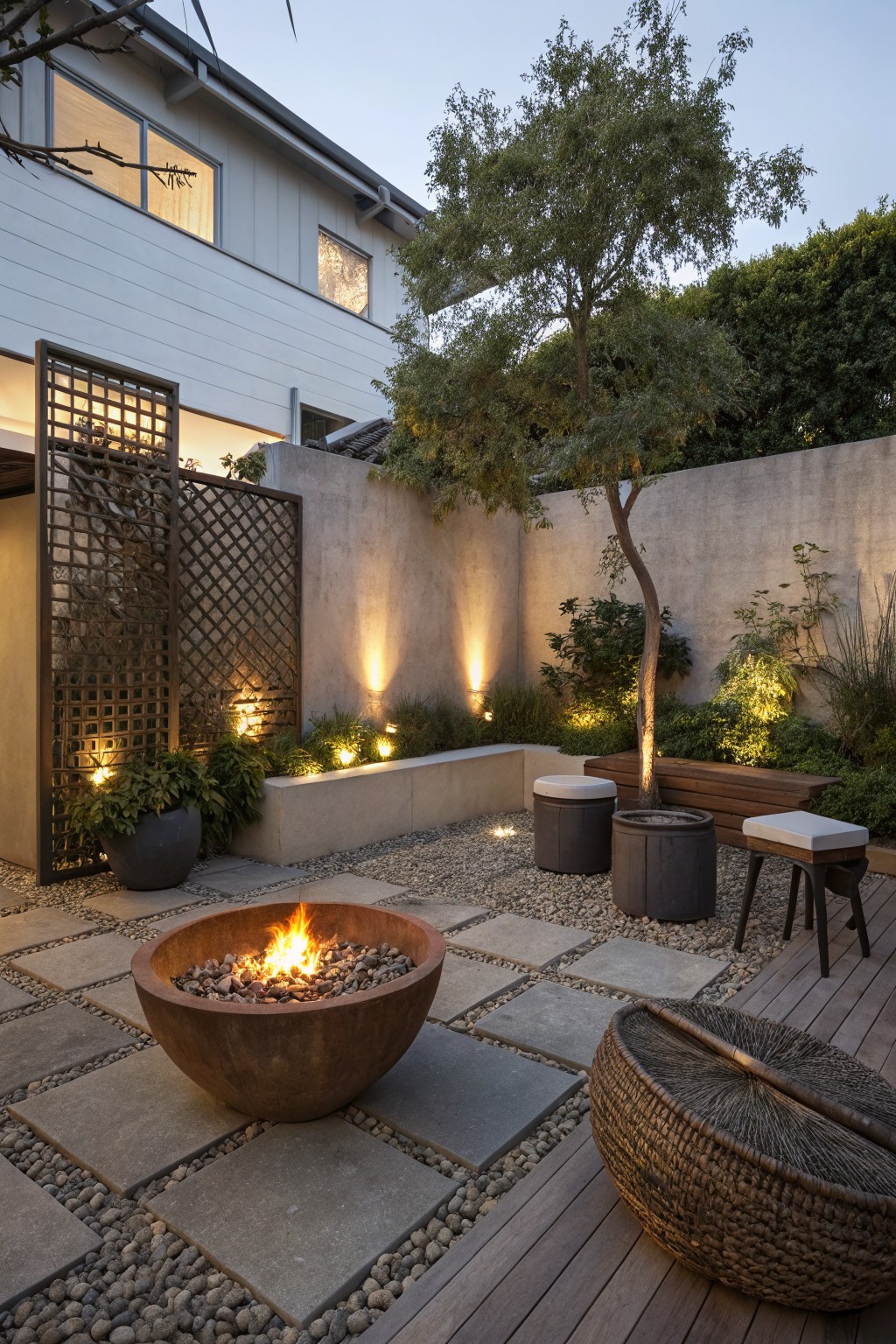
A fire pit helps turn a small backyard into a space that actually gets used. It creates a natural spot for people to gather without needing a lot of extra furniture or structures.
Place it on pavers or gravel near the edge of a deck so the two areas feel connected but still separate. This setup works especially well in enclosed yards where walls already provide privacy.
Add Artificial Turf for Quick Green Space
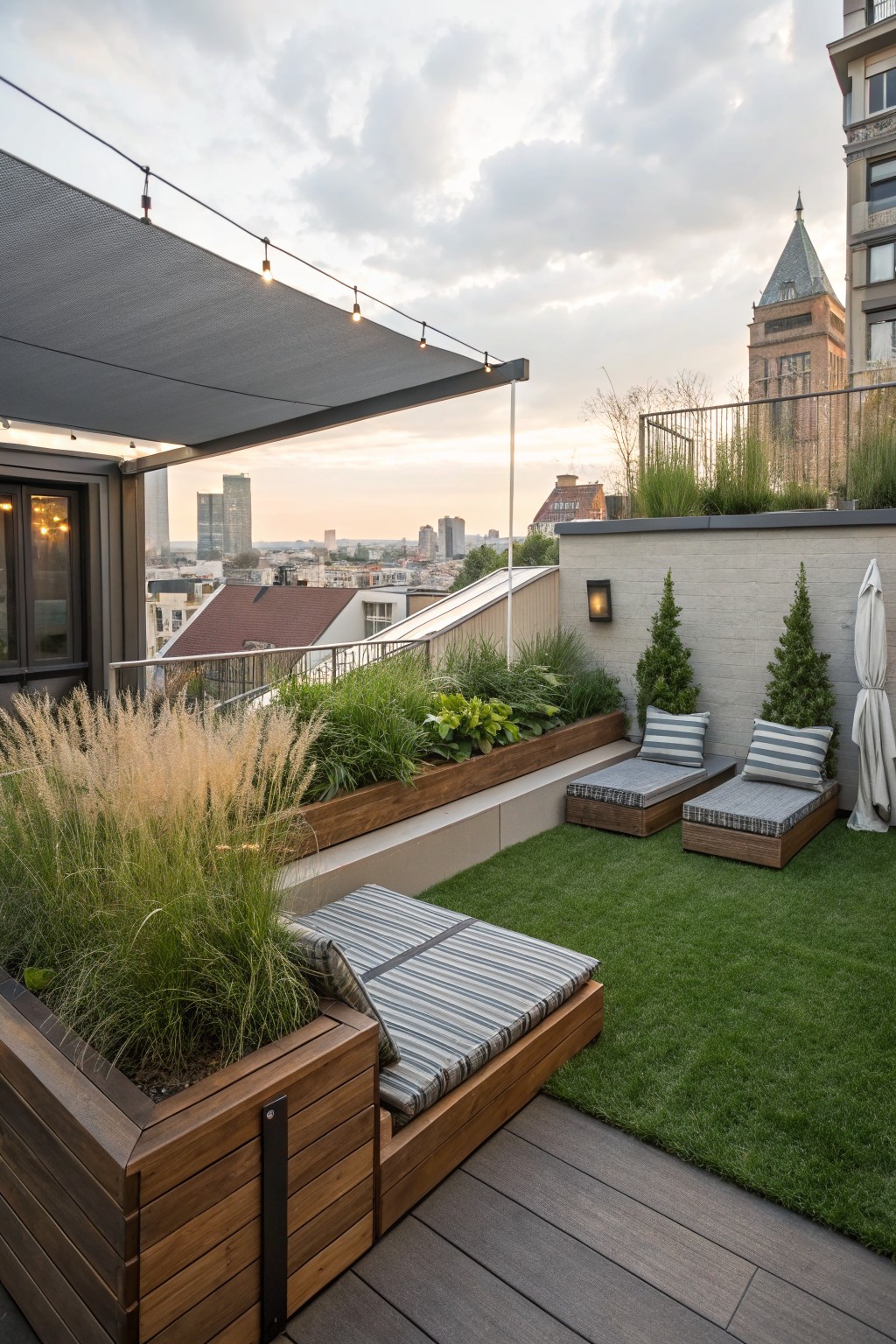
One simple way to soften a small rooftop or patio is to add a section of artificial turf. It creates a lawn-like spot without the weight or upkeep of real grass, which helps in tight urban layouts where soil depth and drainage are limited.
This works best on rooftops or paved areas where you want a casual seating zone. Keep the turf area modest, place it next to raised planters, and pair it with low lounge seating so the space feels usable without crowding the rest of the deck.
Built-In Bench Seating For Small Patios

A built-in bench along the edge of a patio gives you seating without using up extra floor space. In tight layouts it keeps the middle open and turns what might feel like a leftover corner into an actual place to sit and eat.
This approach works best on narrow decks or small backyards where every inch counts. Use a simple cushion on top and add a folding table that can be stored away when you need more room to move around.
Add Shade with an Overhead Awning
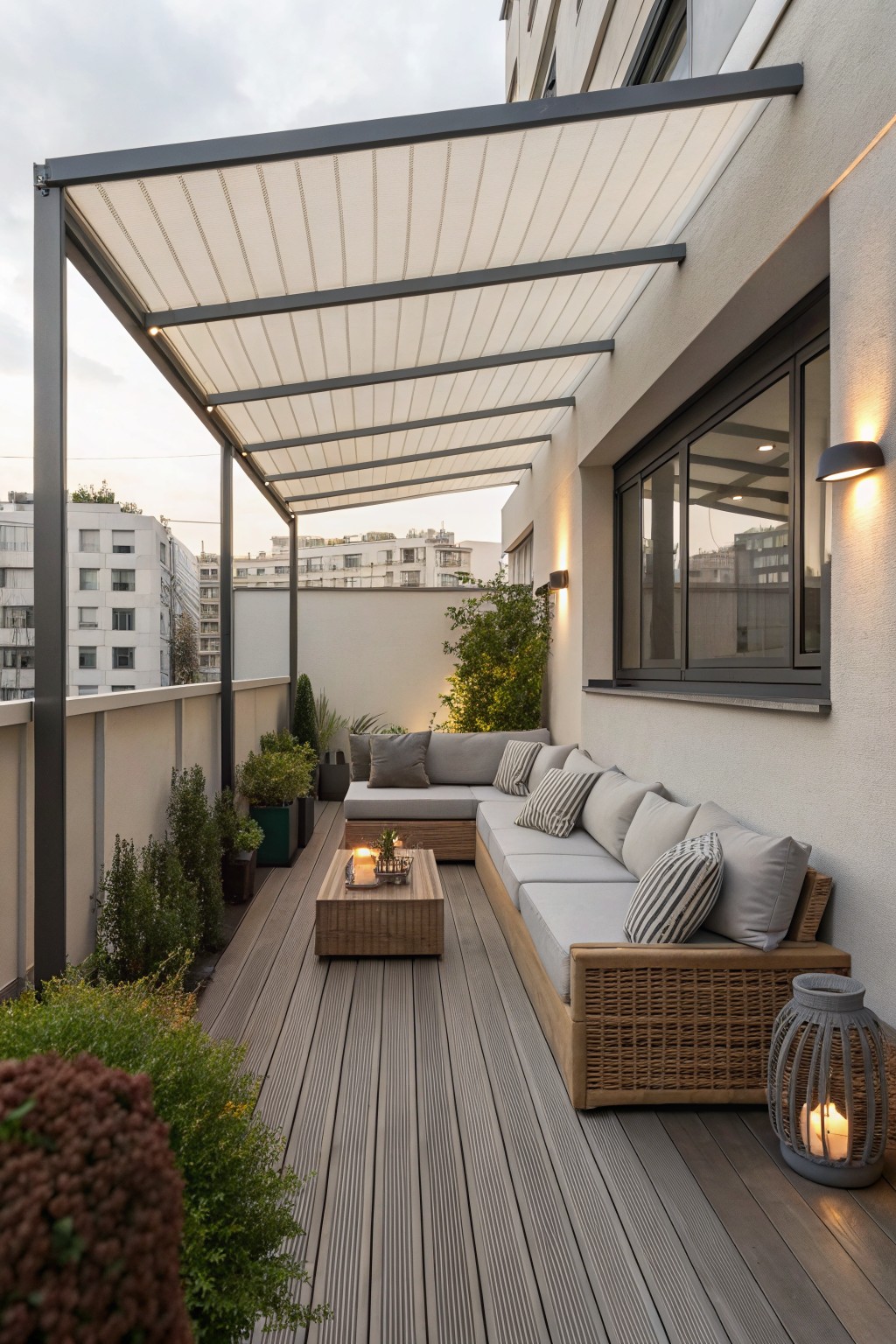
A simple overhead awning can turn a narrow patio into a space you actually use. It blocks sun without taking up floor area, which matters when the layout is already tight.
This approach works best on balconies or side yards where walls run long and straight. Mount the frame high, keep the fabric light, and the seating can stay low and built-in along one side.
Stepping Stones Create Flow In Small Gardens

A path made of flat stepping stones set in gravel gives a small backyard a clear sense of direction. It turns an awkward corner or narrow strip into something you can walk through instead of just look at from the edge.
This setup works best when the stones are spaced unevenly and plants are allowed to grow close to the edges. It suits tight layouts where you want to reach a water feature or a quiet spot without paving over the whole area.
Add a Raised Planter Along the Pool
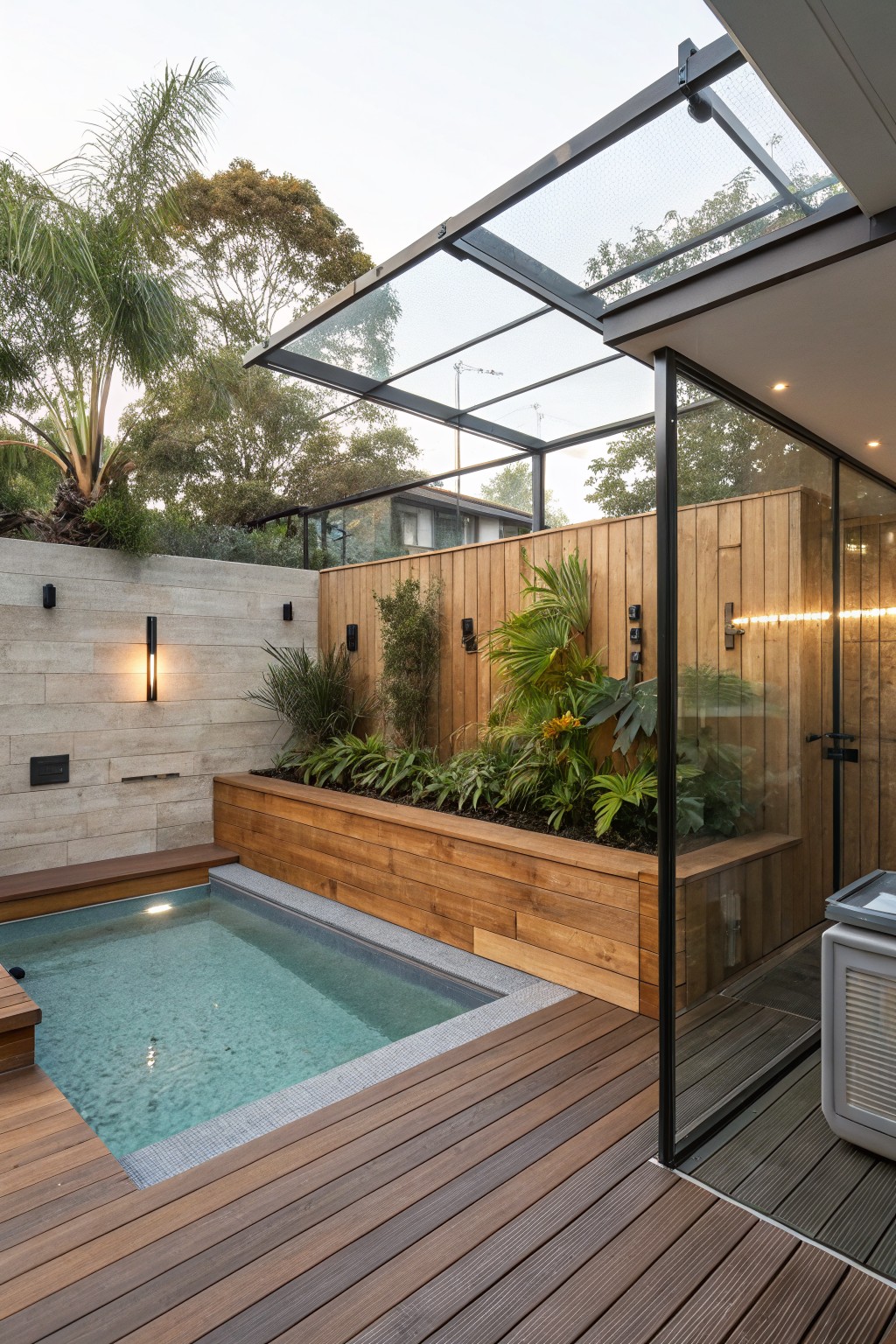
A raised planter works well in small backyards because it adds plants without taking up deck space. The wooden box sits right at the edge of the pool and deck, so the greenery feels close but the walking area stays open and usable.
This setup suits tight urban yards where you want some softness around the water. Keep the planter at a comfortable height for maintenance and choose plants that can handle the local light. The wood ties in with the deck so the whole area feels connected rather than cluttered.
Add a Compact Bistro Set to Narrow Courtyards
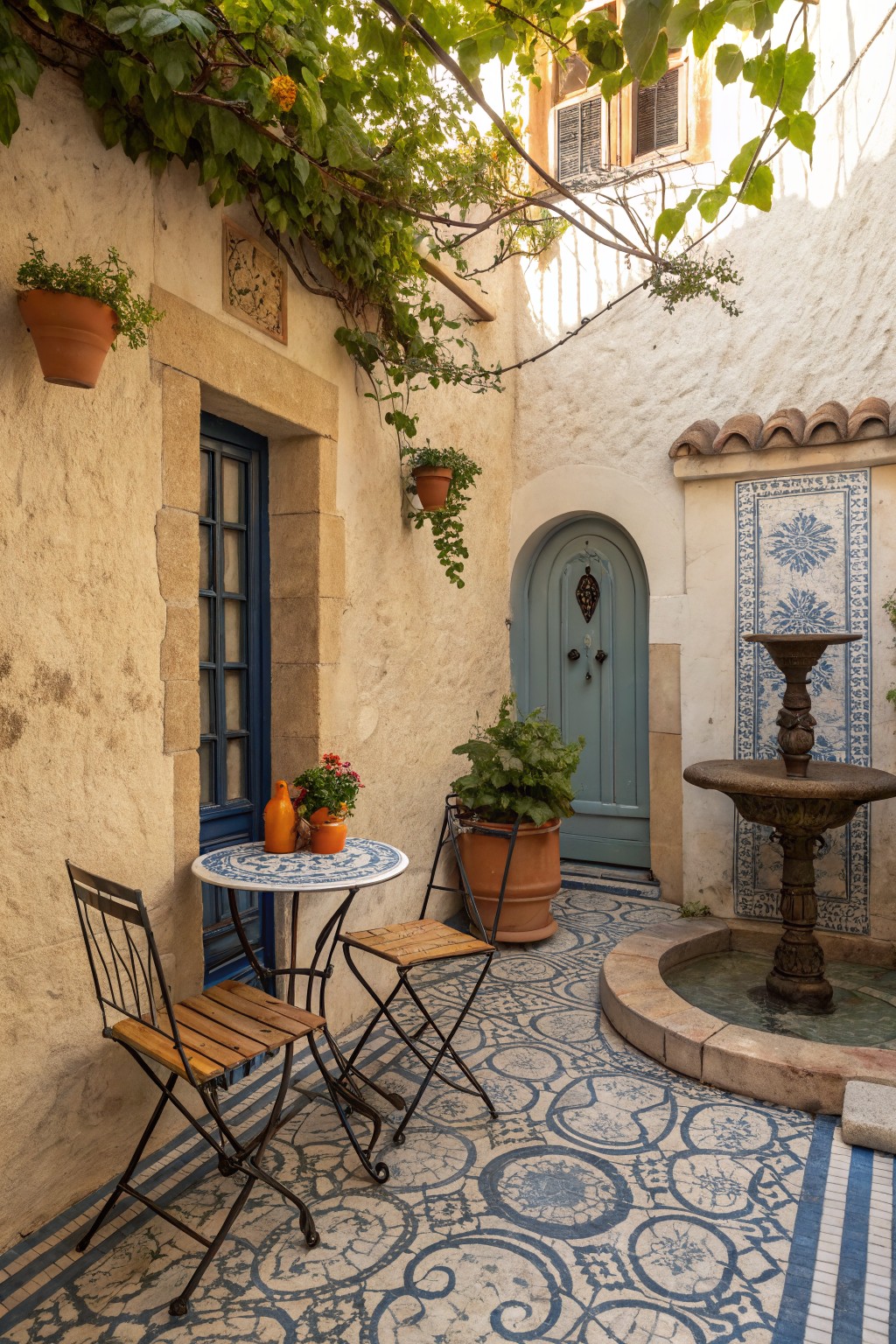
A small round table and a pair of simple chairs can make a tight outdoor corner feel usable instead of wasted. The setup stays light so the space does not feel crowded, and it gives you a spot for coffee or a quick meal without taking over the whole area.
This approach works best in small homes or older properties where the courtyard is long and narrow. Lightweight frames and foldable stools help when you need to clear the path or rearrange for guests.
Raised Beds On Wheels

Putting garden beds on wheels makes a lot of sense in a small backyard. You can shift them around when you need more space on the patio or move them into better sun as the seasons change. The simple wooden crates stacked in tiers show how easy it is to create height without eating up floor space.
This works best along a fence or house wall where a fixed bed would feel cramped. Add casters to the bottom of a few crates, stack them in a staggered way, and you have a flexible setup that can grow herbs, greens, or flowers. It suits tiny yards or awkward corners where a traditional garden would not fit.
Line Up Cabinets And Appliances In A Small Corner

A straight run of cabinets along one or two walls can turn an awkward backyard spot into a working outdoor kitchen. The grill, sink, and fridge stay together so you do not lose floor space to separate pieces.
This layout suits narrow side yards or small patios that sit against a house or fence. Keep the counter depth modest and add a couple of stools only if there is room to pull them back without blocking the walkway.
Mount A Vertical Planter On The Fence

Vertical planters work well in small backyards because they turn unused wall space into growing room. Instead of crowding the ground with pots or beds, you can stack plants upward along a fence or side wall and still keep the floor clear for walking or seating.
A simple wooden frame with staggered boxes does the job and can hold a mix of herbs, flowers, or trailing plants. This setup fits best along property lines or against plain fences where you need privacy or color but lack width for a traditional garden bed.
Anchor Seating Around A Large Tree
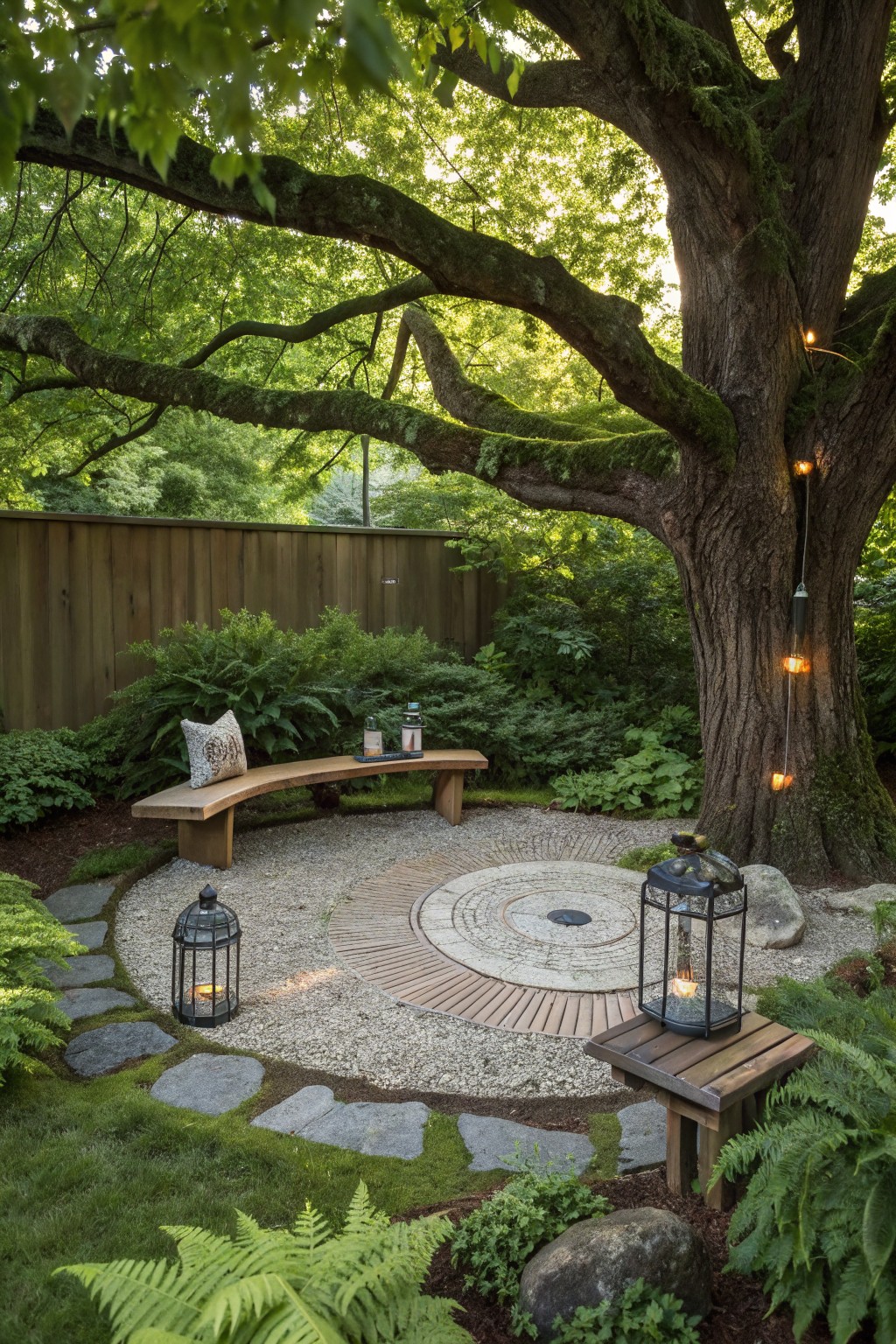
A big tree can actually help shape a small backyard instead of getting in the way. Placing a curved bench and a simple gravel base beneath the branches turns an awkward shaded spot into a usable seating area without needing much floor space or heavy construction.
This setup works well in tight yards where grass struggles to grow. Keep the design low and open so the tree still feels like the main feature, and add a few lanterns if you want the spot to work after dark.
Hang Chairs to Keep Narrow Yards Open
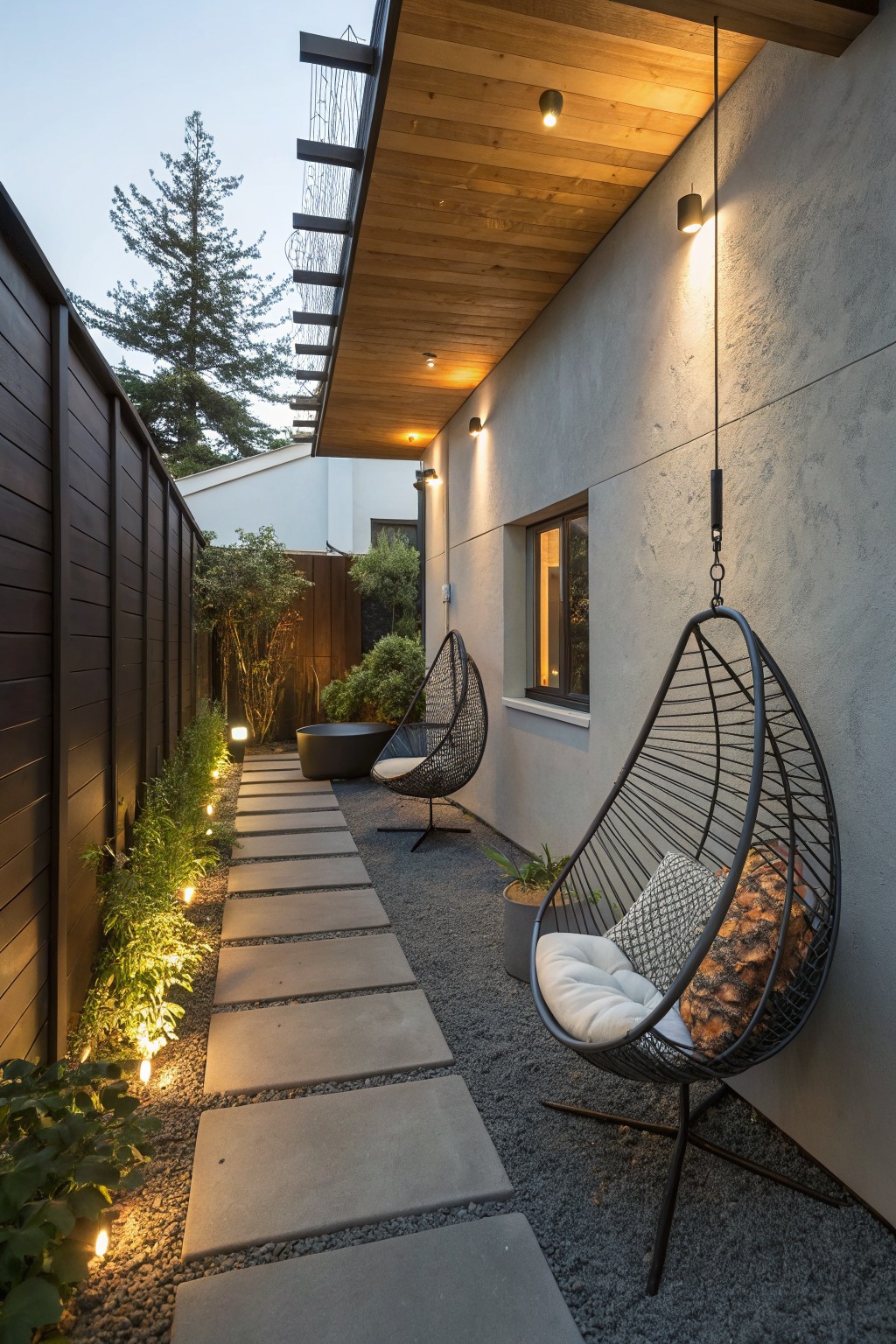
Hanging chairs make a lot of sense in a tight side yard or narrow backyard. They lift the seating off the ground so the path stays clear and the space does not feel crowded.
This setup works best along a long, slim lot where floor space is limited. A simple row of pavers keeps the walkway practical, while the chairs tuck in without blocking movement. Just make sure the structure overhead can handle the weight.
Built-In Bench Seating With Storage

A built-in bench along a fence or wall gives you seating without losing floor space in a small yard. The drawers underneath hold cushions, garden tools, or kids toys so nothing clutters the patio when it is not in use.
This setup works best in narrow backyards or corner areas where freestanding chairs would block walking paths. Keep the bench depth around 18 inches so it feels comfortable but does not crowd the rest of the space.
Add A Cover Over Your Patio Seating
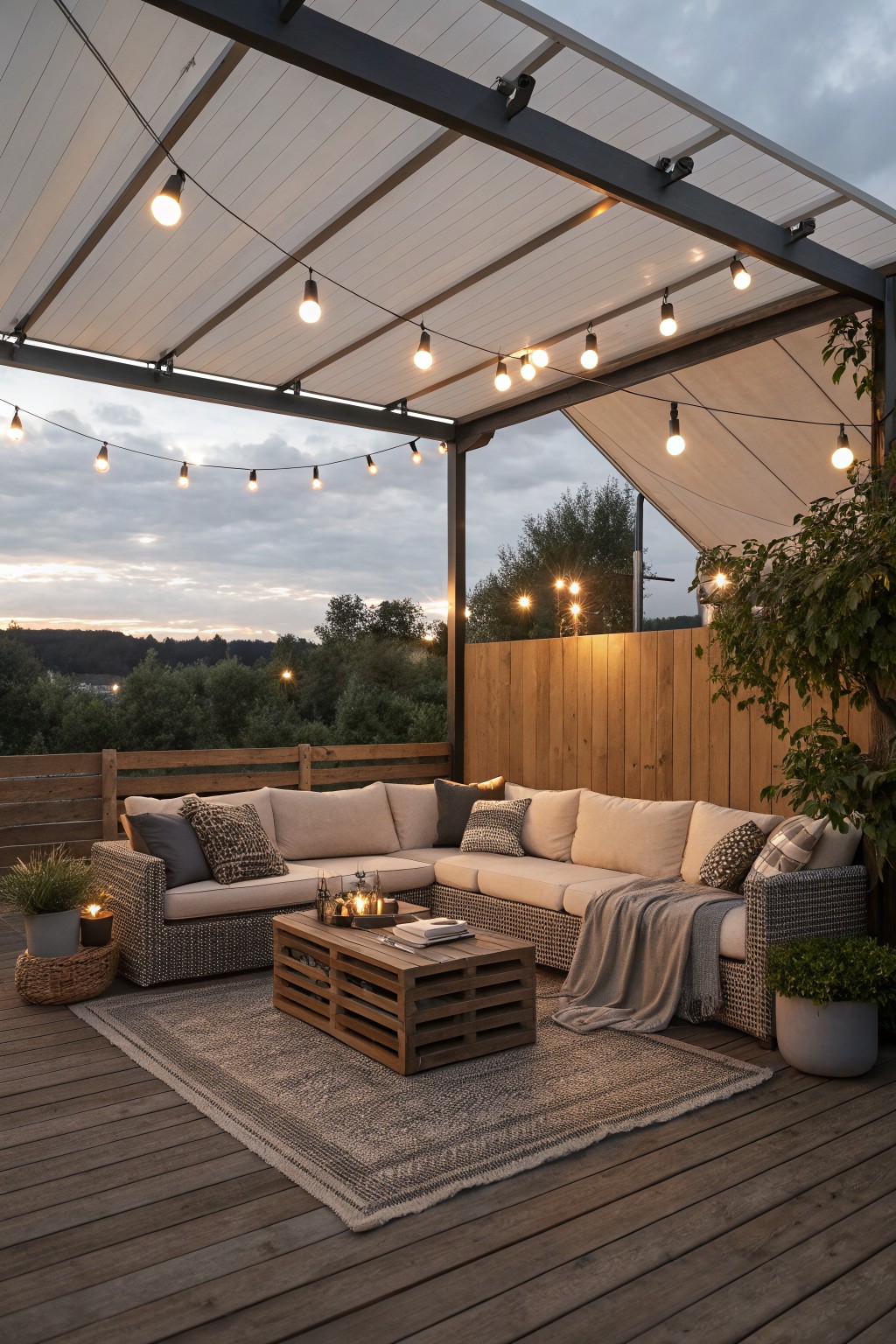
A covered structure makes a small backyard patio much more practical. It gives shade during the day and protection from light rain, so the space stays usable longer into the evening or on cooler days.
Place a large sectional underneath and add simple string lights along the beams. This works best on decks that sit against a fence or wall, where the cover can tie into the existing structure without taking up extra room.
Create a Narrow Water Channel in Tight Side Yards

Many small backyards leave a long strip of space between the house and the fence that feels wasted. A slim water channel turns that awkward area into something useful and calm without crowding the rest of the yard.
Keep the channel narrow and line it with stones so water stays contained and the edges stay tidy. Low lights placed along the bottom make the space feel inviting after dark and work well on townhomes or lots where the side yard is the only outdoor room you have.
Stepping Stones Set In Gravel
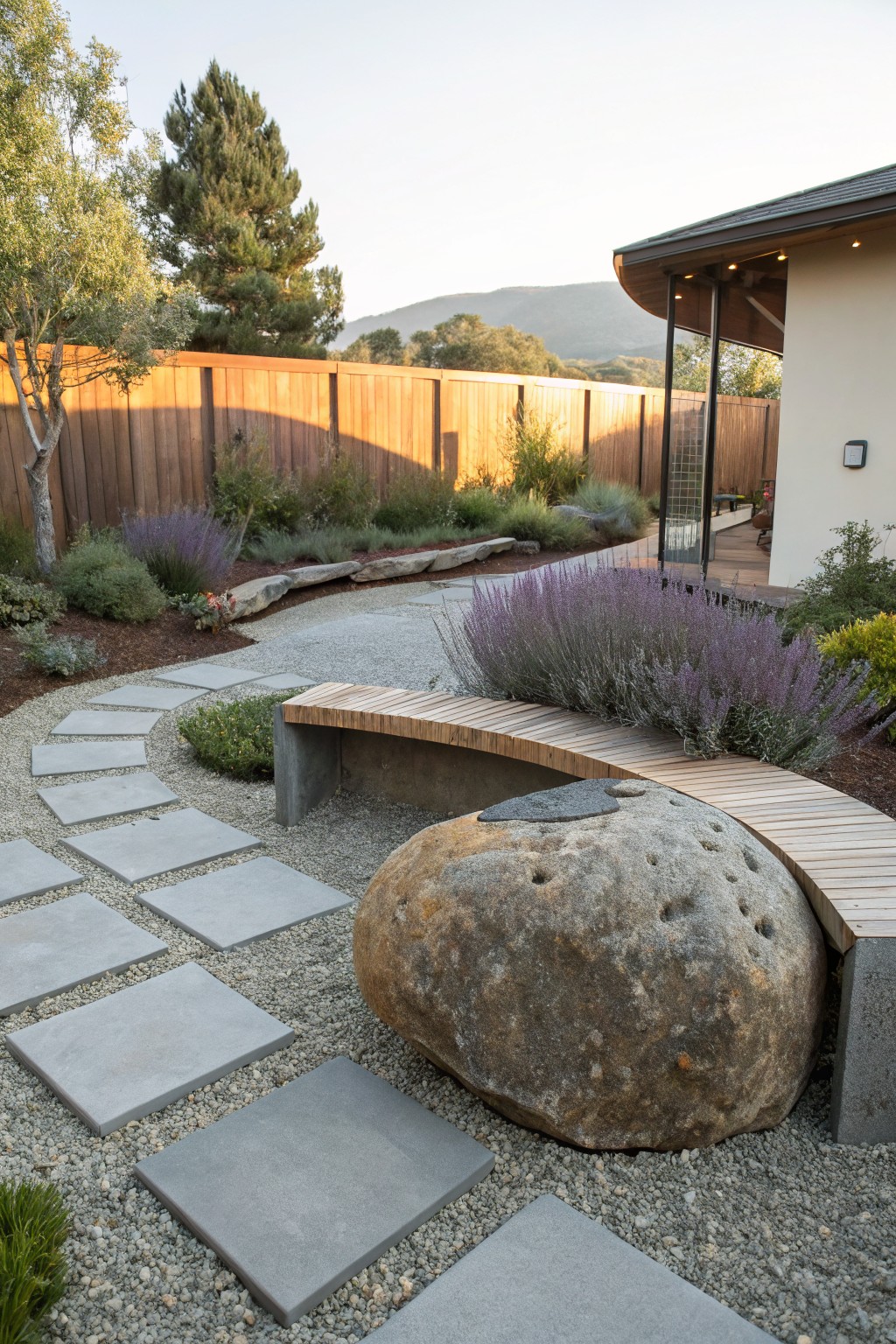
Large stepping stones placed in gravel give a small backyard a clear walking route without covering the whole ground in solid paving. The loose gravel helps with drainage and keeps the space feeling open even when the yard is narrow or oddly shaped.
This approach works well along fences or around existing plants because the stones can be arranged in a gentle curve. It suits homes where you want a low-maintenance surface that still feels like a garden rather than a patio.
Create A Fire Pit Zone With Built-In Seating
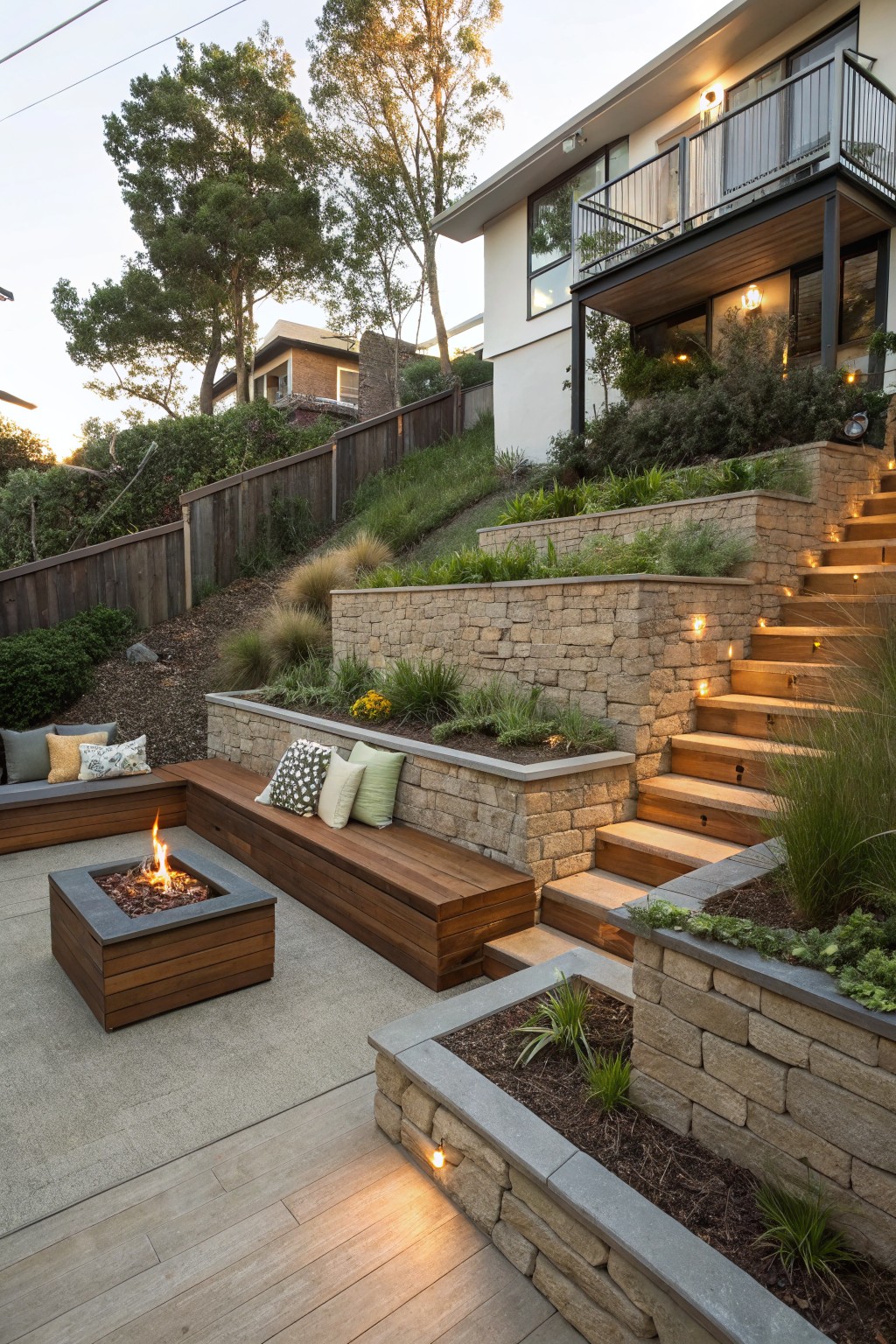
A fire pit with seating built right into the edge of the patio makes good use of limited space. The bench becomes part of the layout instead of something added later, so the area feels finished even when it is small.
This setup works best on sloped yards where retaining walls already create a flat spot. Keep the bench low and the fire pit centered so people can gather without crowding the rest of the patio.
Geometric Hedge Beds Help Define Small Yards
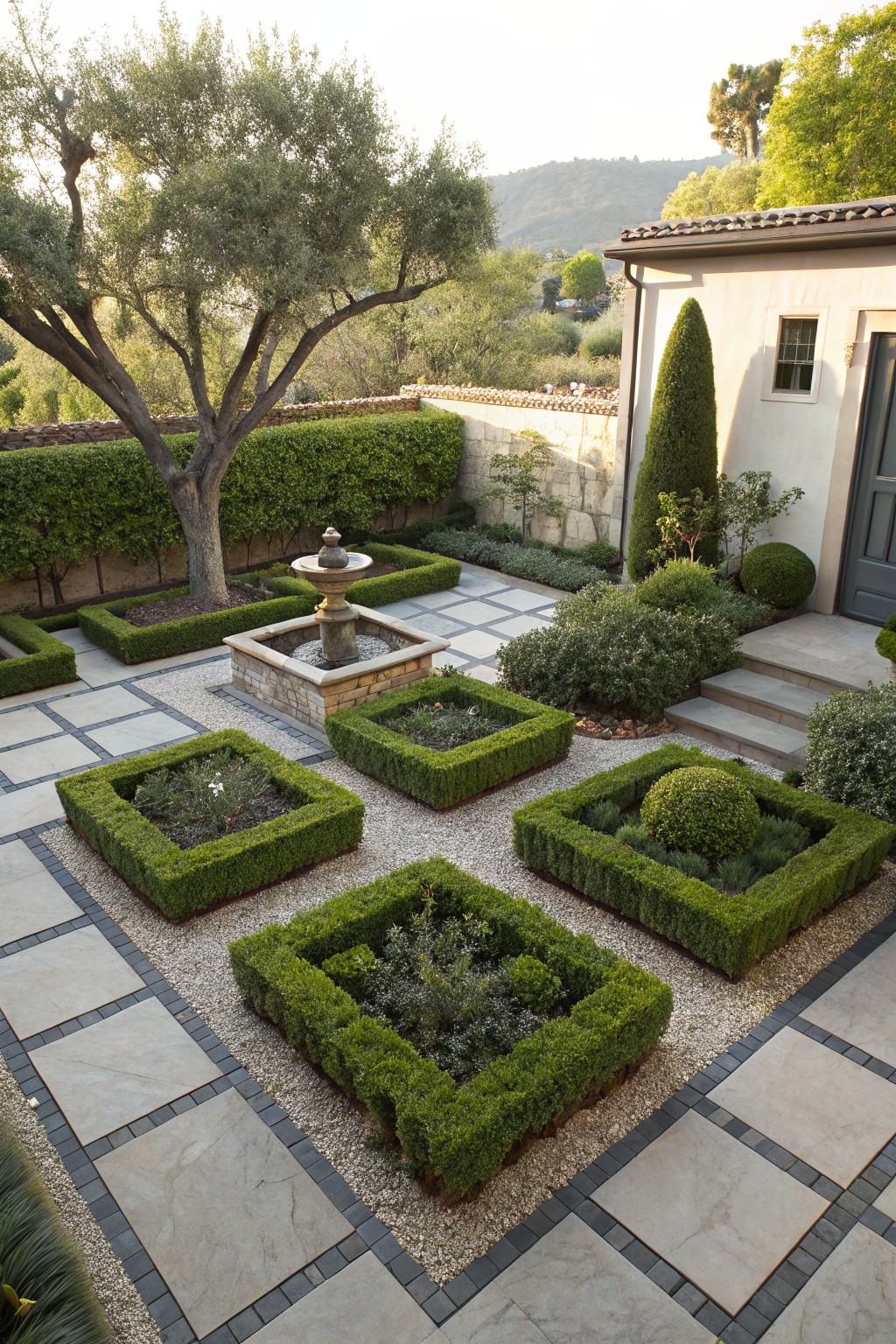
Many small backyards look scattered because there is no clear structure holding them together. Low, clipped hedges around square or rectangular beds give the space order without needing a lot of room.
This layout works especially well in narrow side yards or awkward corners. Fill the beds with simple plants and use gravel between them to keep maintenance low and the design feeling intentional.
Set Up a Projector Screen for Evening Use
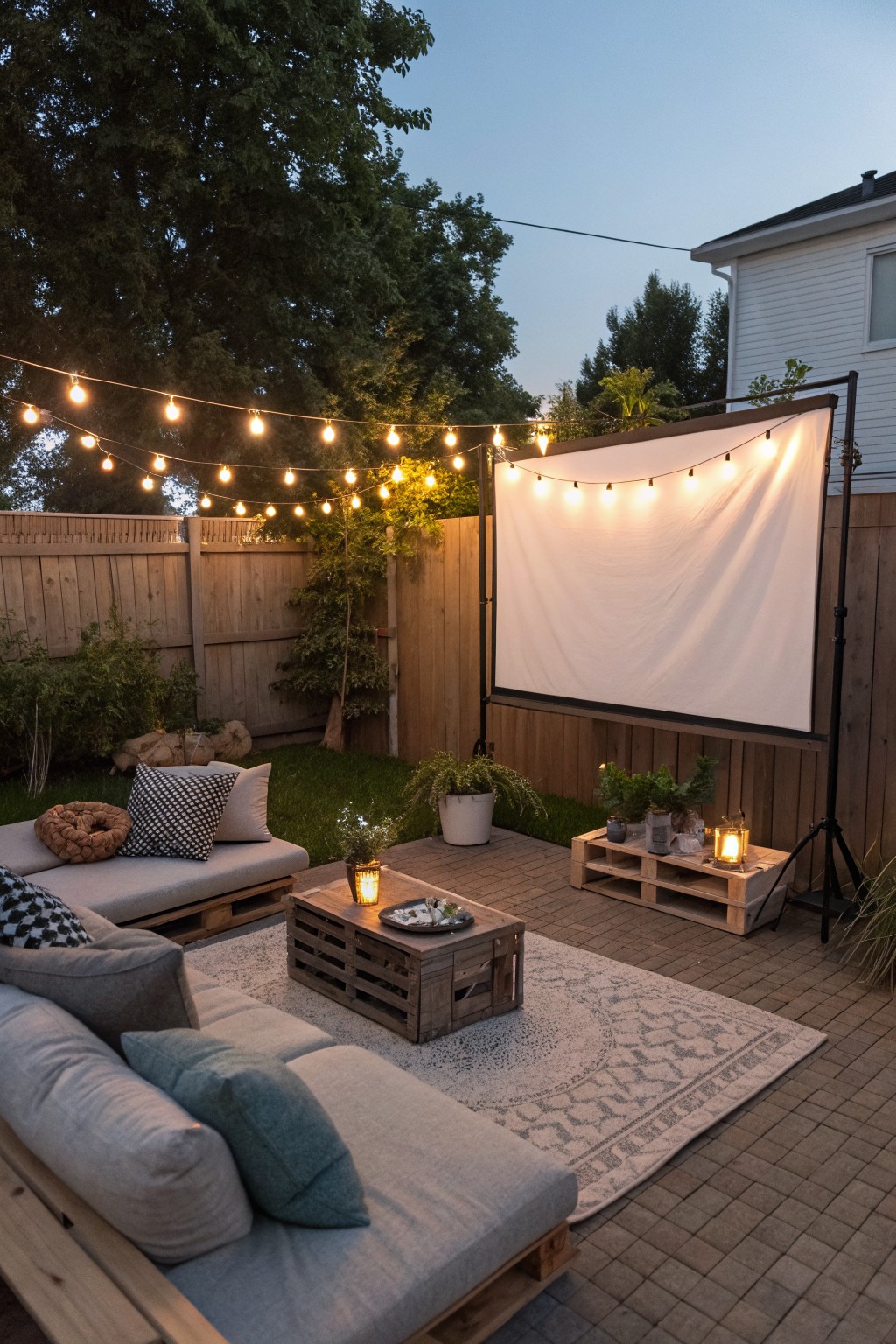
A projector screen can give a small backyard a clear purpose after dark without crowding the space. It turns an ordinary patio into a spot for movies or games, and the screen itself takes up almost no floor area when not in use.
Mount the screen on a simple frame against a fence or wall, then run string lights along the top edge so the area stays usable once the sun drops. This setup works best in narrow yards or corner patios where you need one zone to handle different activities throughout the day.
Concrete Tables And Benches Work In Tight Yards
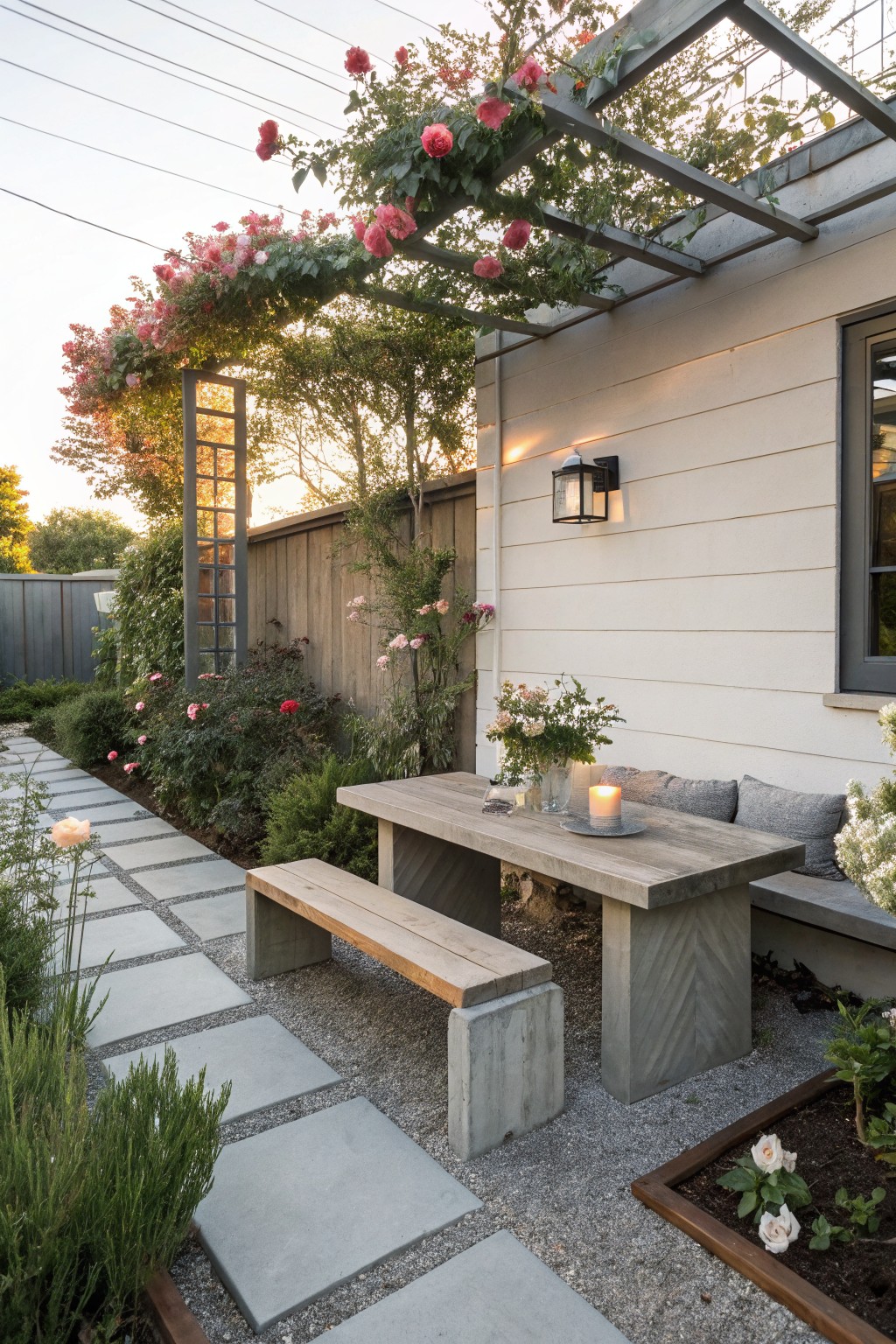
A solid concrete table with a simple bench next to it can turn a narrow strip of yard into a usable dining spot. It stays put through weather and does not need extra furniture that takes up room.
This setup works best along a house wall or in a side yard where space is limited. Keep the ground as gravel or pavers and add a few cushions on a built-in ledge if you want more seating without crowding the area.
Frequently Asked Questions
Q: My patio is barely eight feet wide. How can I add seating without blocking the door?
A: Tuck a slim bench against the longest wall and leave the center open for walking through. Stack a couple of lightweight stools nearby that you can pull out when friends drop by. This keeps the path clear while giving you spots to sit.
Q: Those corner ideas sound clever but what if mine gets almost no sun?
A: Choose shade-loving plants like ferns or hostas and mount a mirror on the opposite fence to bounce what light you have. A small water feature in that same corner adds movement and cools the air without needing much room.
Q: I rent so I cannot build anything permanent. Which ideas still work?
A: Focus on movable pots grouped by height and a few hanging planters from the railing. Roll out an outdoor rug to define the space and swap in string lights that come down in minutes when you move.