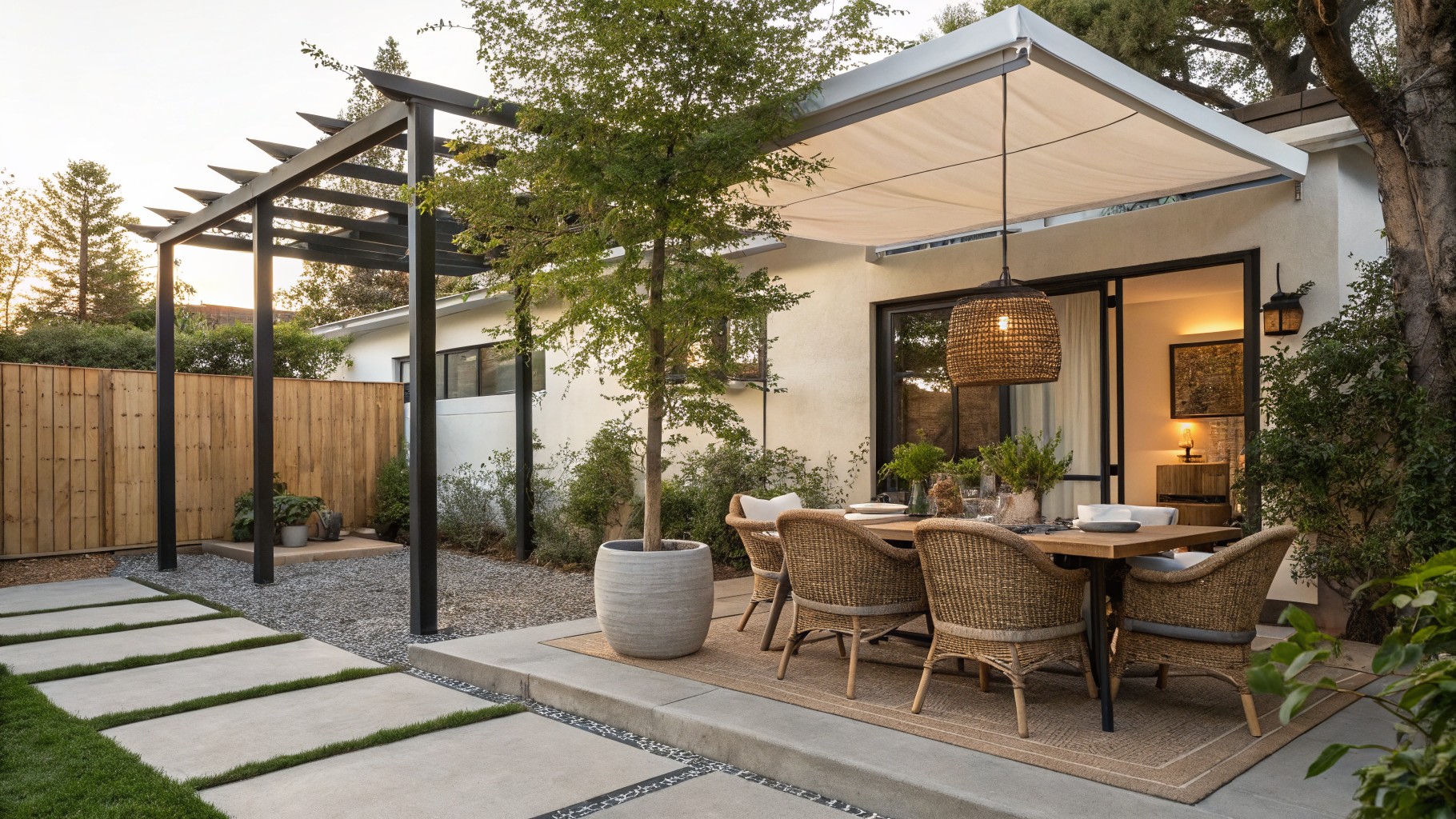
I’ve found that small backyards often feel more usable once a pergola creates a defined spot for sitting or eating without taking over the whole space.
When planning one myself, I tend to focus first on how the structure will handle sun angles at different times of day so the area underneath stays comfortable rather than just looking good in photos.
Some setups end up blocking movement more than they help.
Vines can add the right amount of cover over a season or two if the posts are placed with walking paths in mind from the start.
I usually test a basic frame idea with temporary shade before building anything permanent to see what actually works in my yard.
Add a Fabric Canopy to Your Pergola
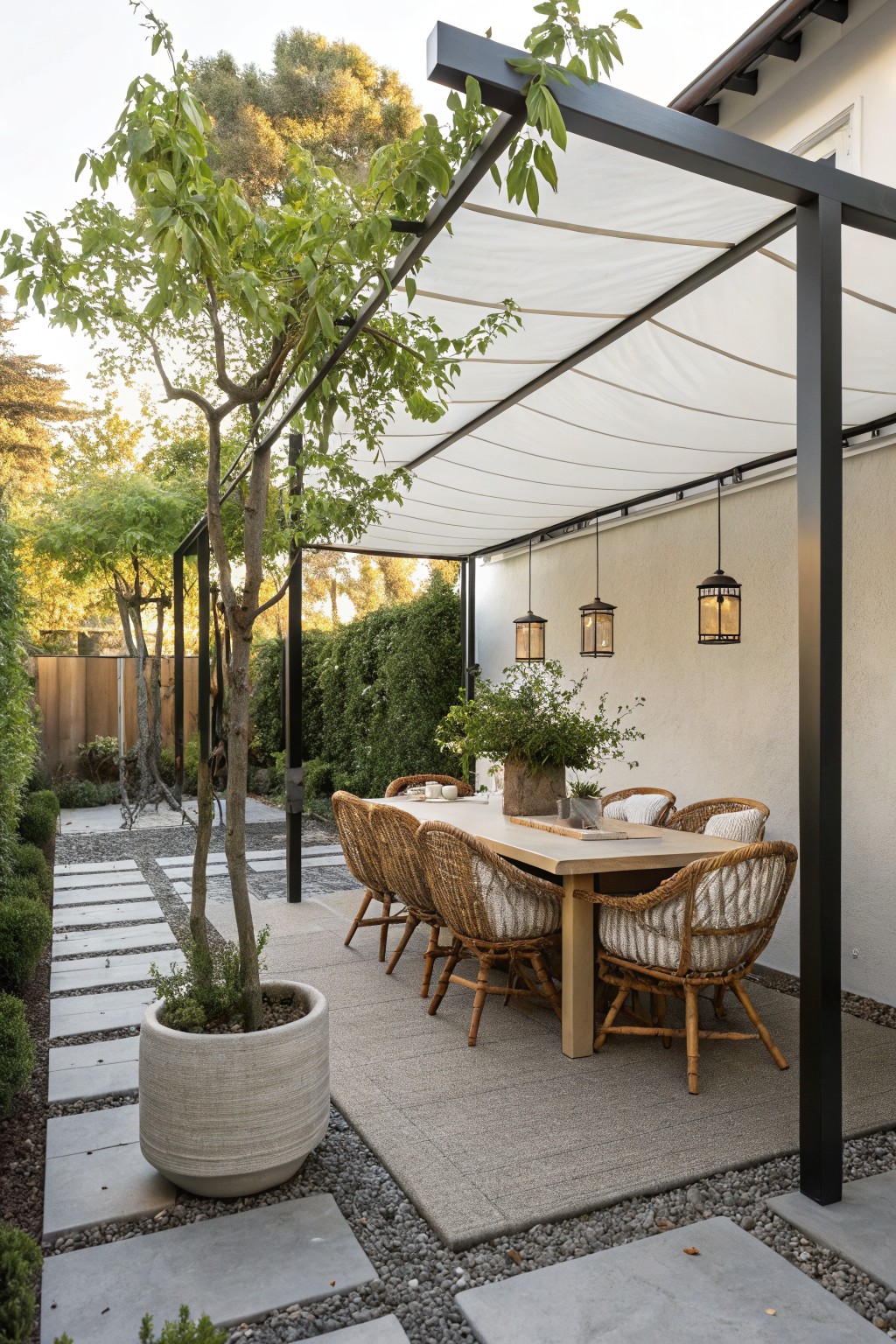
A fabric canopy over a pergola gives you shade without making the space feel closed in. It filters the sun while still letting some light through, which works well for dining areas that get direct afternoon exposure.
This approach suits small backyards where you want a simple overhead cover that can be adjusted or replaced later. Keep the frame light and pair it with hanging lights if you plan to use the table in the evening.
Grow Vines Over A Pergola For Shade
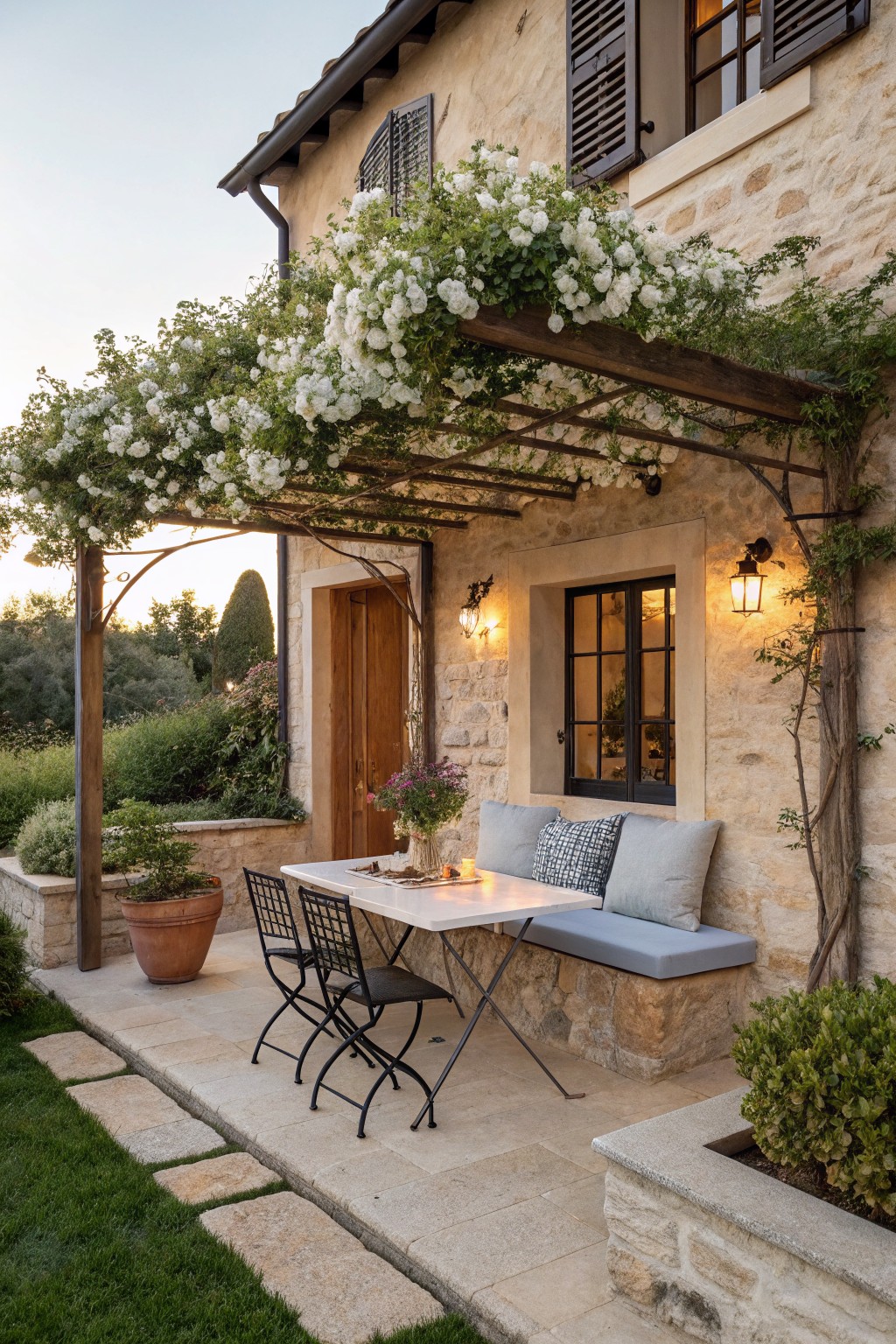
A pergola with vines overhead gives steady shade and cuts the need for big umbrellas or heavy awnings. The plants soften the wood frame and turn a simple patio into a spot that feels more settled.
This setup works best on small paved areas right beside the house where you want to eat outside without full sun. Pick strong climbers that match your climate and give the frame extra support as the vines fill in.
Pergola Shade Over an Outdoor Kitchen
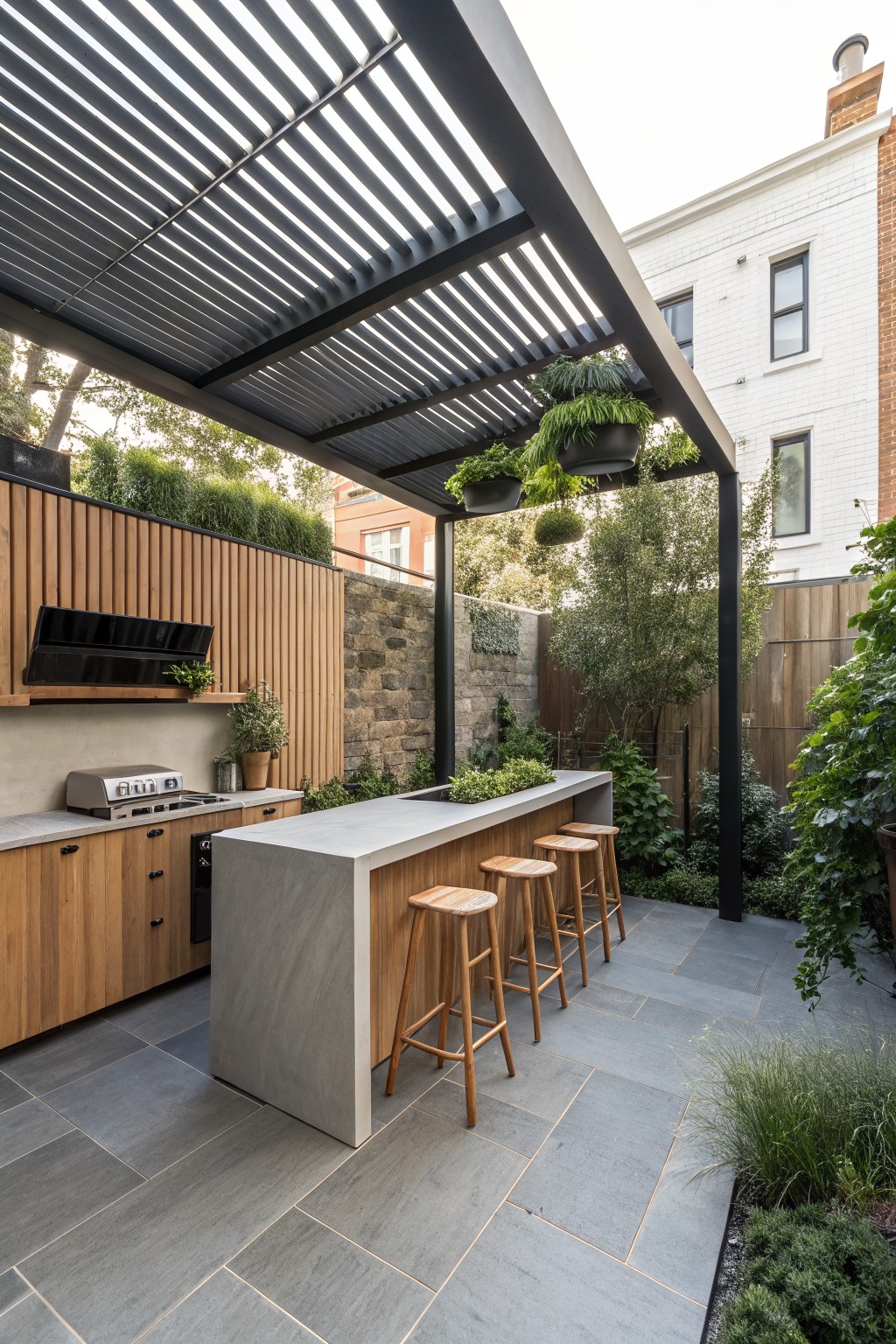
Running a pergola directly over an outdoor kitchen gives steady shade while keeping the cooking area open to the rest of the yard. The slatted roof blocks harsh sun without making the space feel closed in, so the counter stays comfortable for prep and meals.
This works especially well in small or narrow backyards where you need both cooking space and seating in the same spot. Keep the slats spaced for some light and airflow, and make sure the structure lines up with the island so stools can tuck in easily underneath.
Pergolas That Shade Outdoor Dining Areas
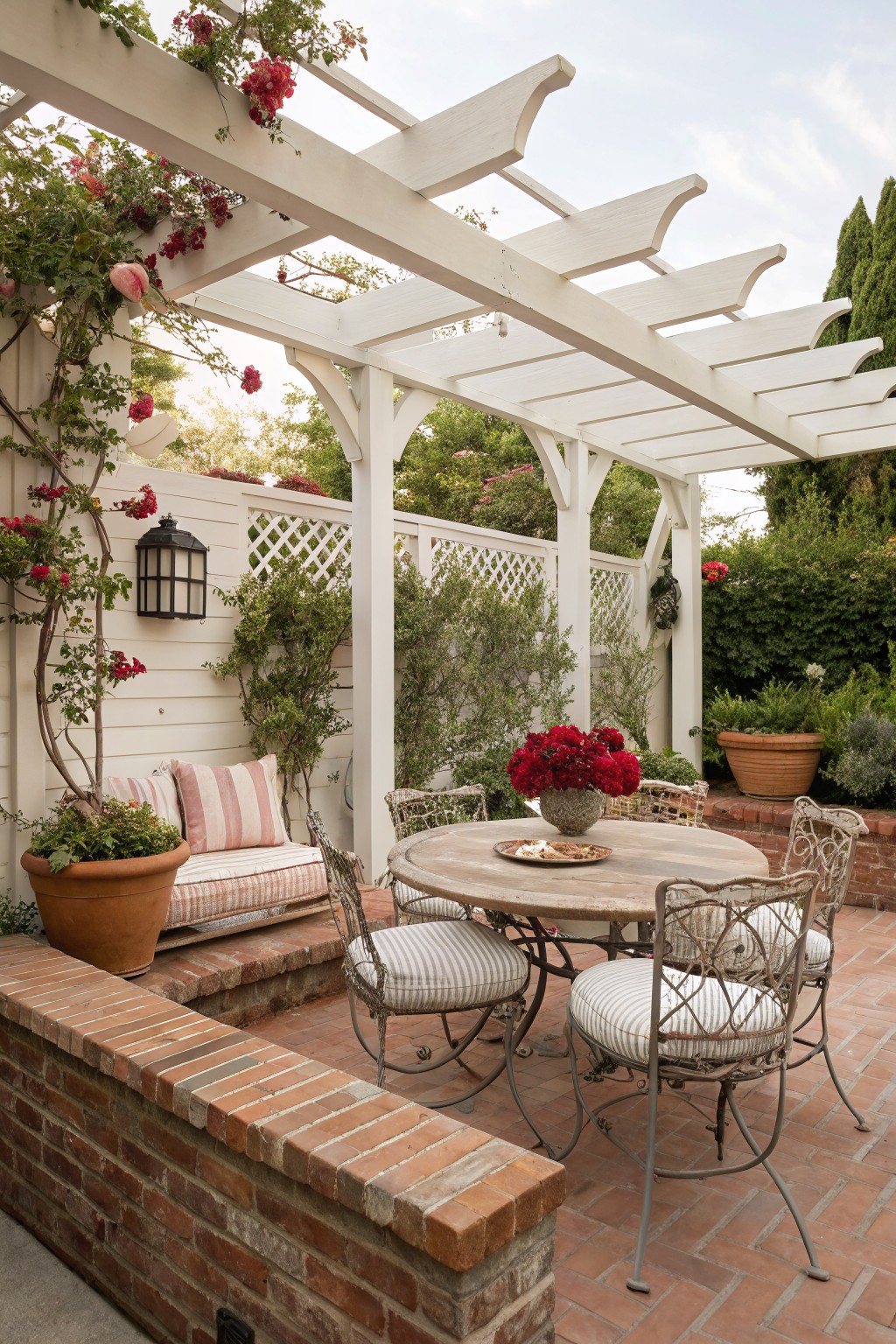
A pergola gives you shade over a dining table without making the backyard feel boxed in. It works especially well in smaller spaces where a full roof would block too much light.
Place the structure over a brick or paved patio and keep the table centered underneath. Vines can grow along the beams for extra cover, but the basic frame alone is often enough to make the area usable during the day.
Pergola Shade Over Deck Dining
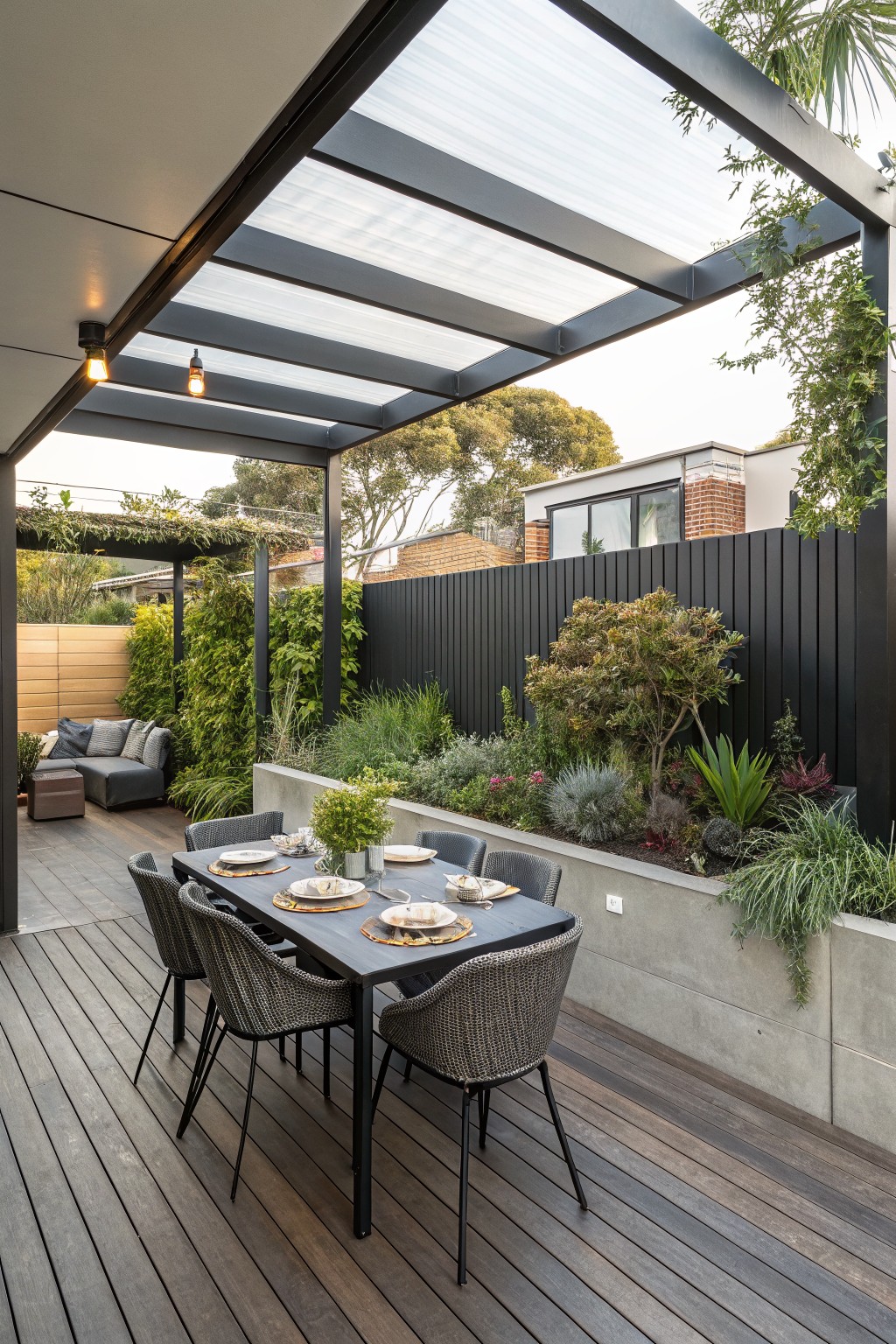
A pergola with a partly open roof works well when you want shade over a dining table but still need some light to reach the space. It keeps the area usable during the day without making it feel closed in.
This setup suits smaller backyards where the deck is the main outdoor spot. Keep the pergola simple, match the frame color to the fencing or house trim, and add seating that stays in place so the table is always ready for meals.
Pergolas That Let Vines Provide The Shade
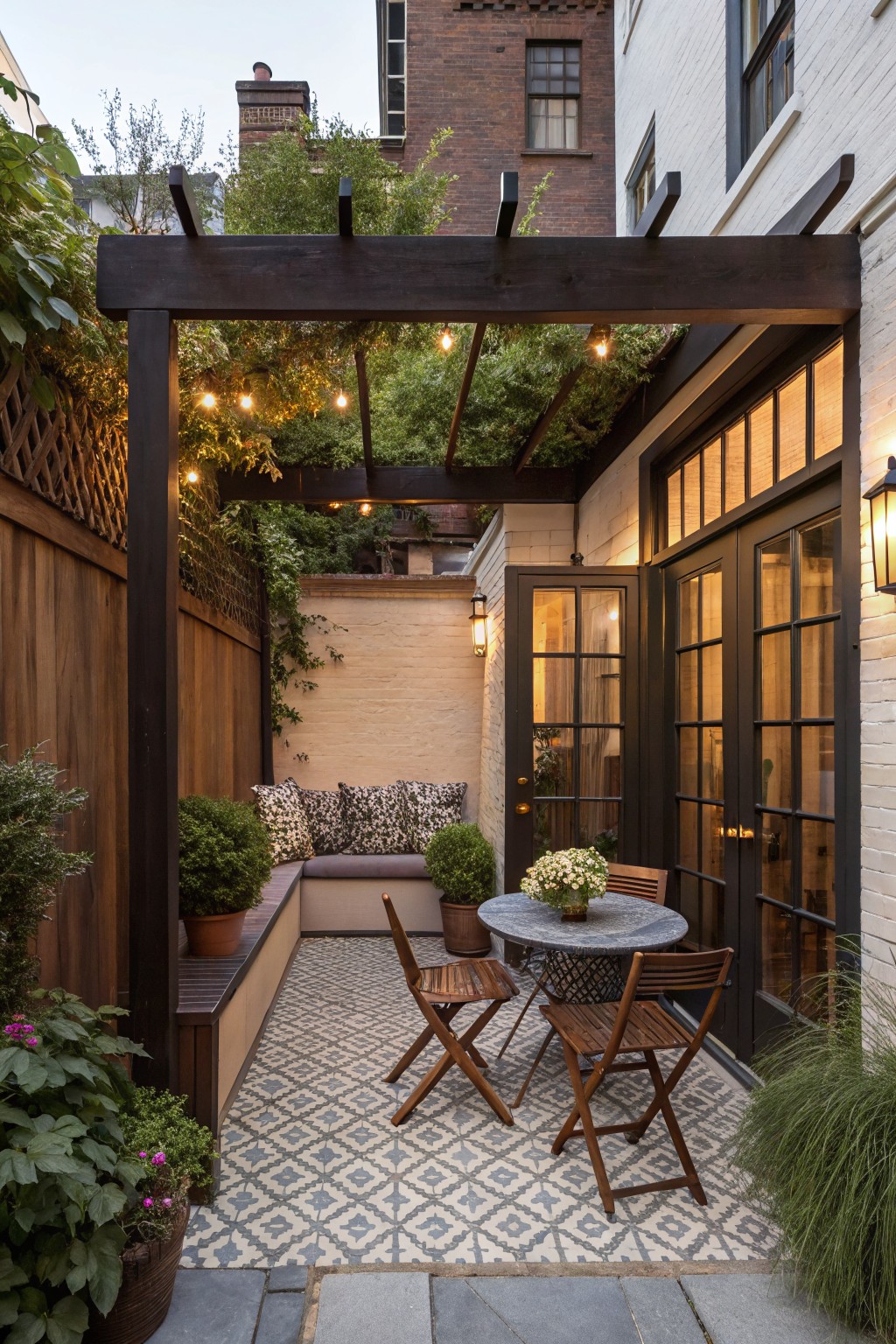
A pergola works nicely in a small backyard when you let vines grow across the top. It gives some cover from the sun without making the space feel closed in, and the plants add a bit of softness that a solid roof never could.
This setup suits compact yards where you want both a dining table and a little lounge area. Keep the furniture simple so it can move around, and make sure the vines have something solid to climb on from the start.
Pergola Over the Dining Table
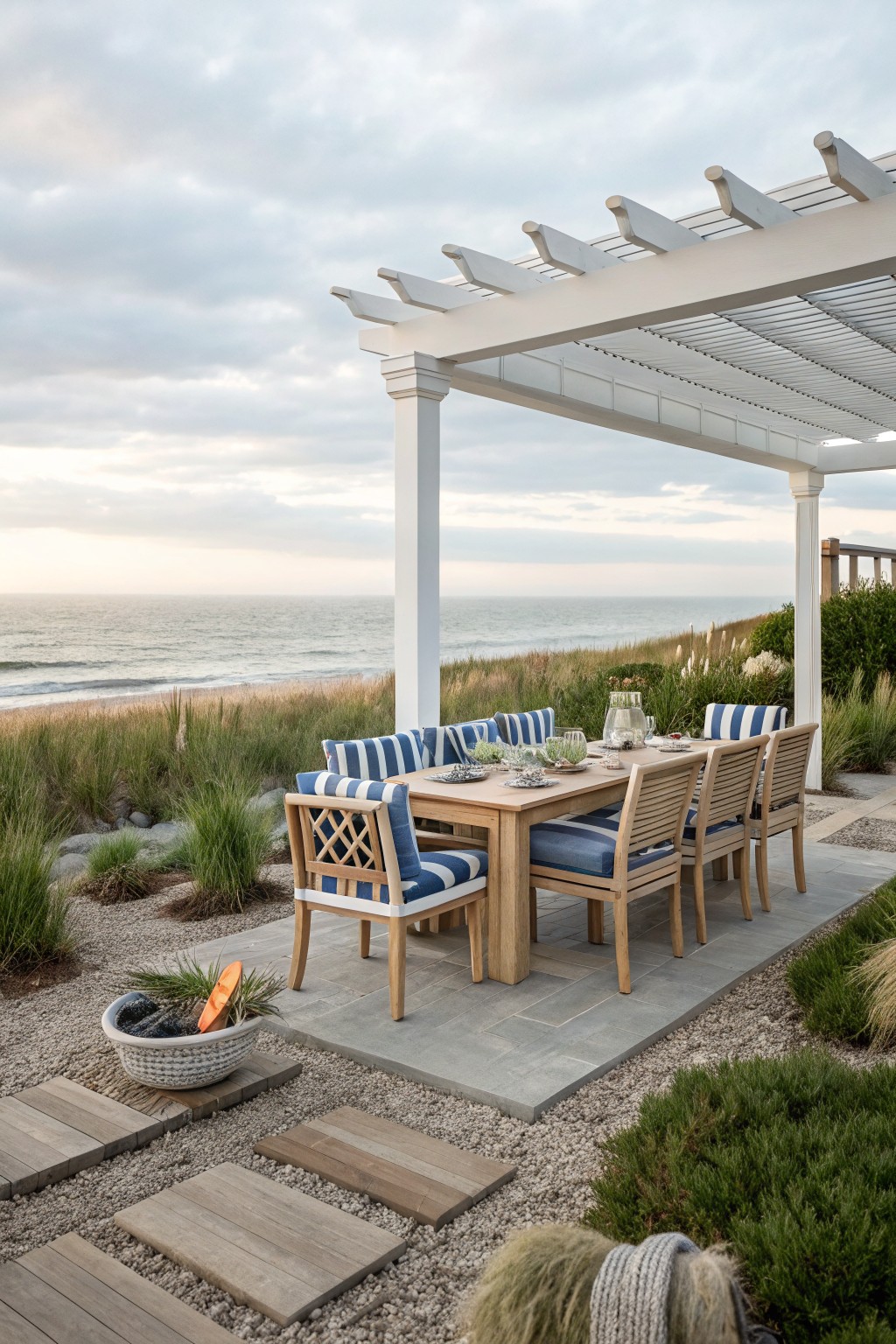
A pergola placed right over the table gives a small backyard a clear dining spot without closing it in. The open top still lets in some light while cutting down on direct sun during meals.
This setup works best on a simple patio where the rest of the yard stays open. Keep the frame light and the furniture practical so the space feels easy to use every day rather than reserved for special occasions.
Add Lighting Under Your Pergola
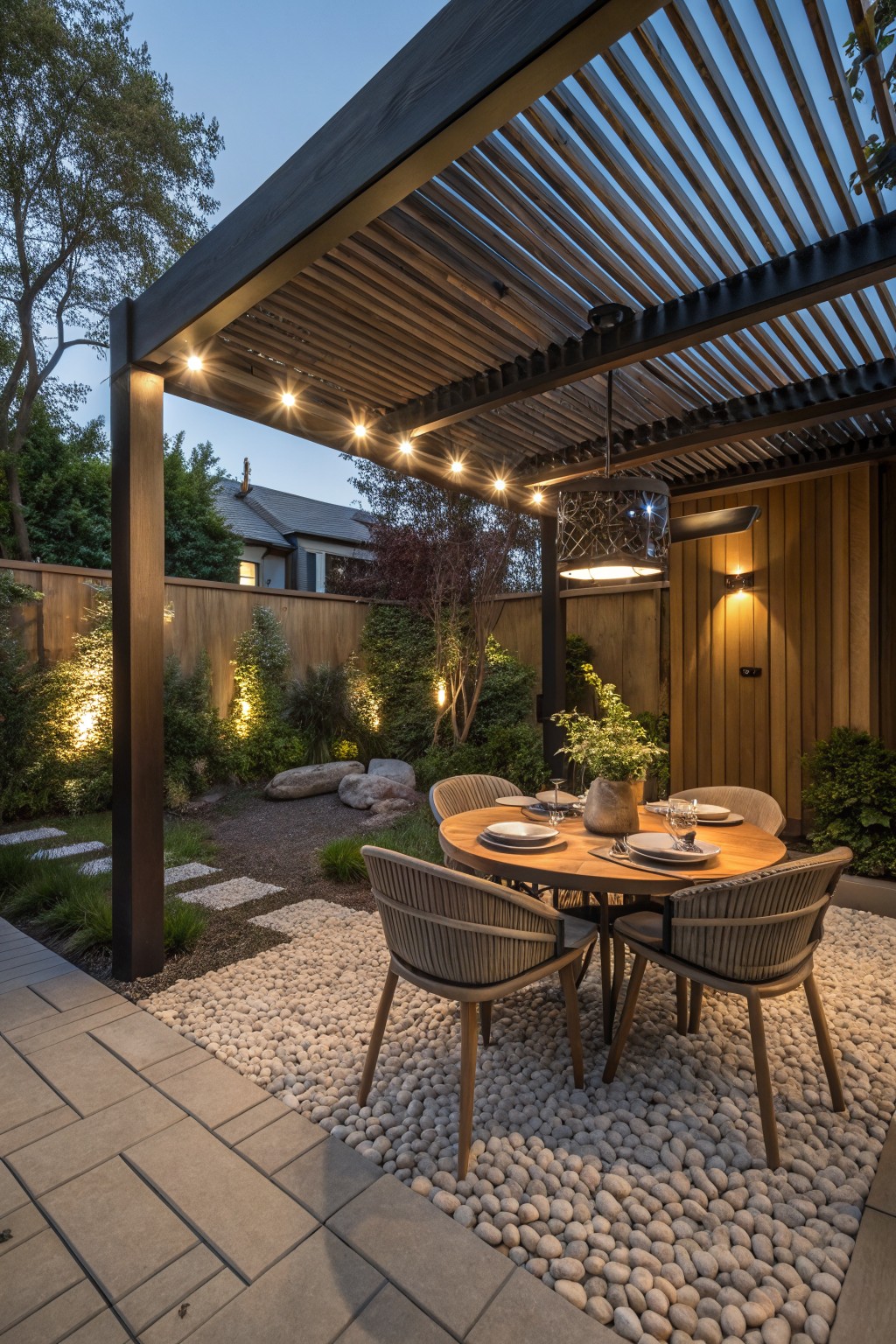
String lights along the beams and a single pendant fixture give the dining area a gentle glow once the sun goes down. This setup keeps the space usable without adding extra lamps or floor fixtures that take up room.
It works especially well in smaller yards where the pergola already defines the seating zone. Run the lights along the main supports so they point downward toward the table, and keep the bulbs warm rather than cool so the whole corner feels inviting after dark.
Grow Vines Over a Pergola for Shaded Dining
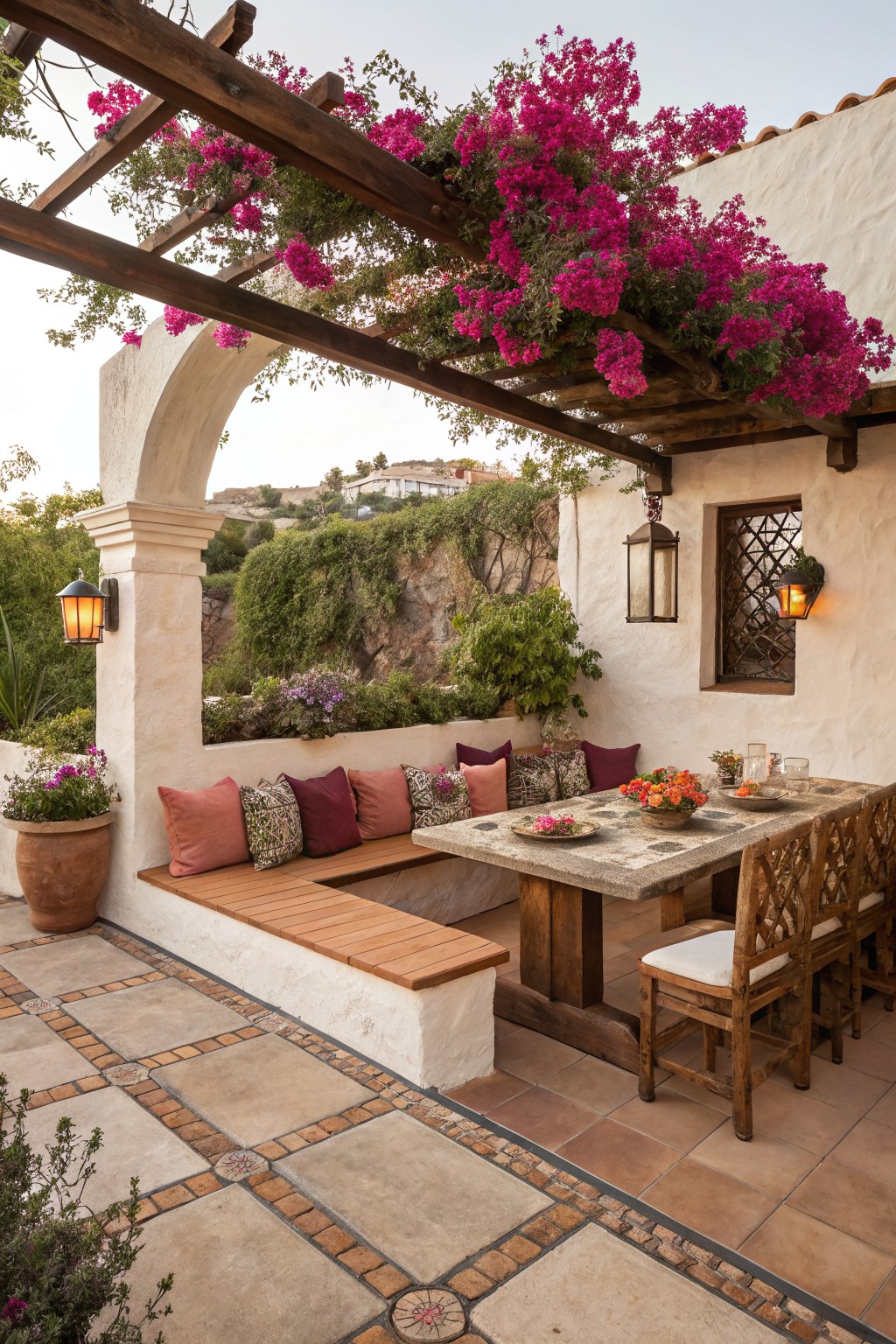
A pergola with climbing vines overhead gives you shade that feels natural instead of heavy. The vines filter sunlight and add color through the season, which makes sitting outside more comfortable even on warm days. This approach works well when the pergola sits over a dining table and some kind of seating.
It suits small yards that need a clear dining spot without adding a full roof. Choose a sturdy frame that can handle the weight once the vines fill in, and keep the table and chairs close to the house so meals stay easy to manage.
Pergola Shade Over a Compact Deck Area
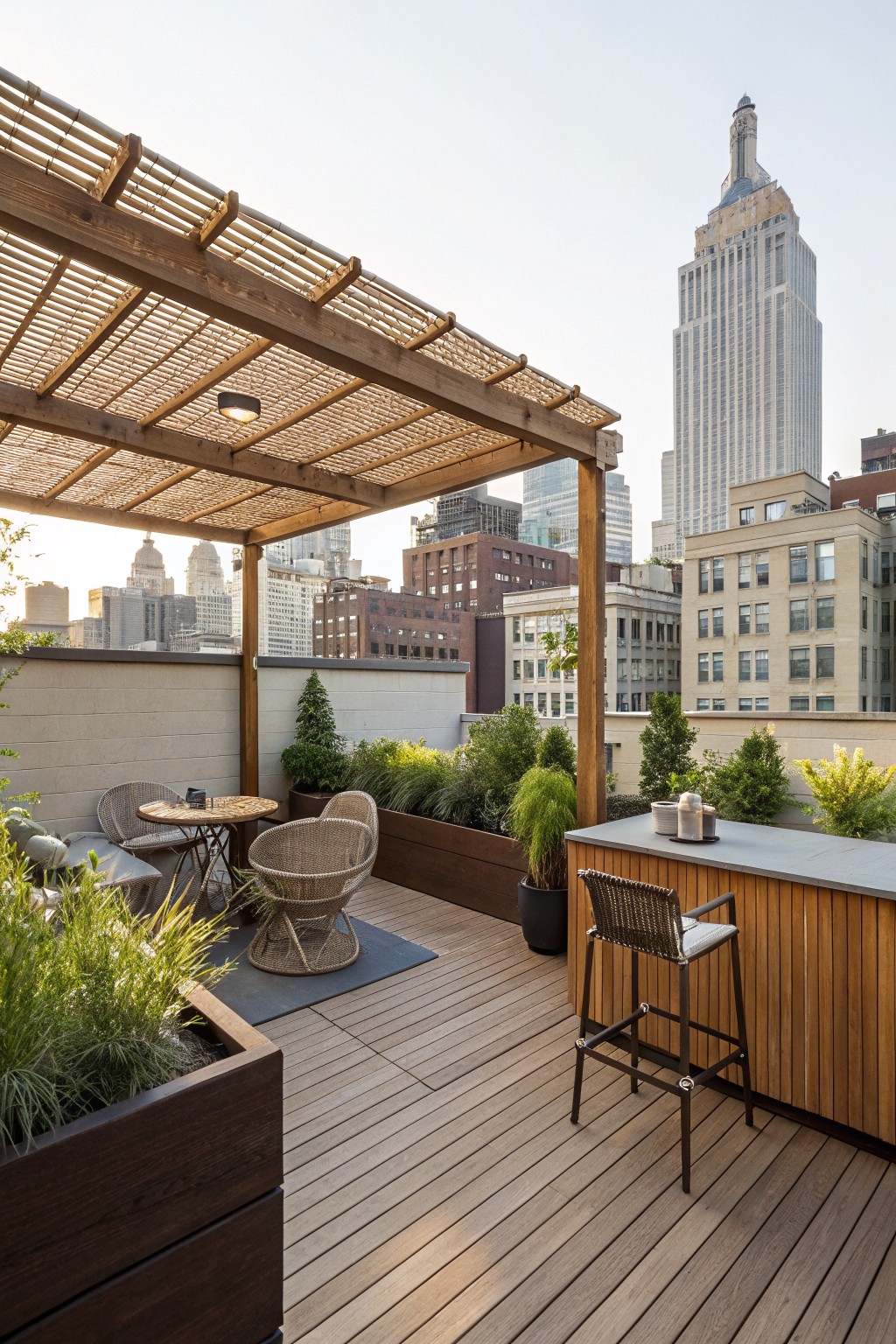
A pergola gives just enough cover to make a small deck usable during the day. The open slats cut the sun without closing the space in, so it still feels like you are outside.
This setup works best on rooftops or narrow yards where you need one clear zone for seating and dining. Keep the furniture simple and add a bar or side surface nearby so the area can handle both meals and casual use without crowding the rest of the deck.
Lattice Pergola for Filtered Shade
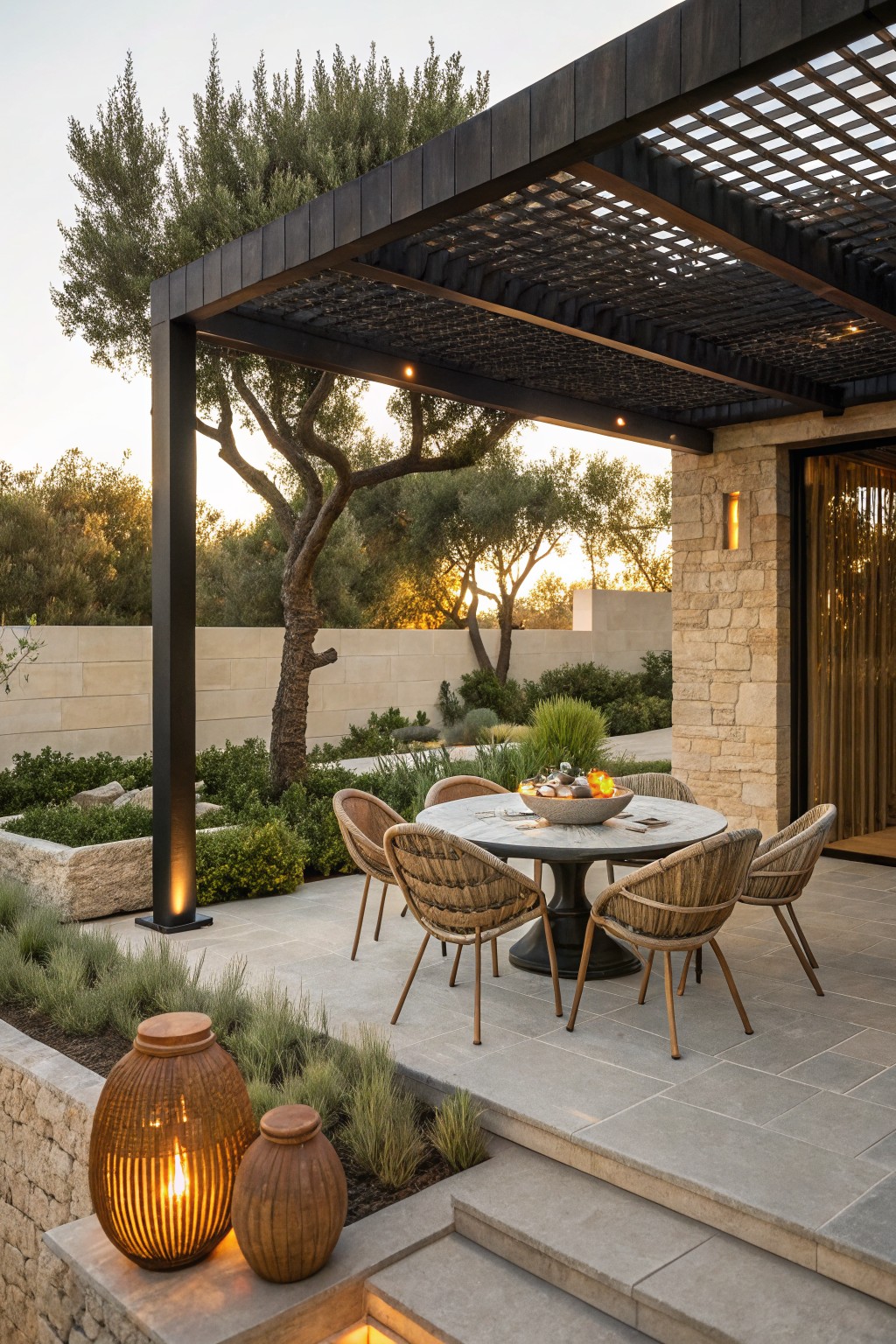
A pergola with an open lattice top gives shade without making the space feel closed in. The grid lets some light through during the day and creates a soft pattern on the ground, which works well over a dining table in a small backyard.
This setup suits stone or concrete patios where you want a clear eating area but still need protection from strong sun. Keep the frame simple and dark so it blends with surrounding trees and plantings instead of competing with them.
Hang Curtains on Your Pergola for Adjustable Shade
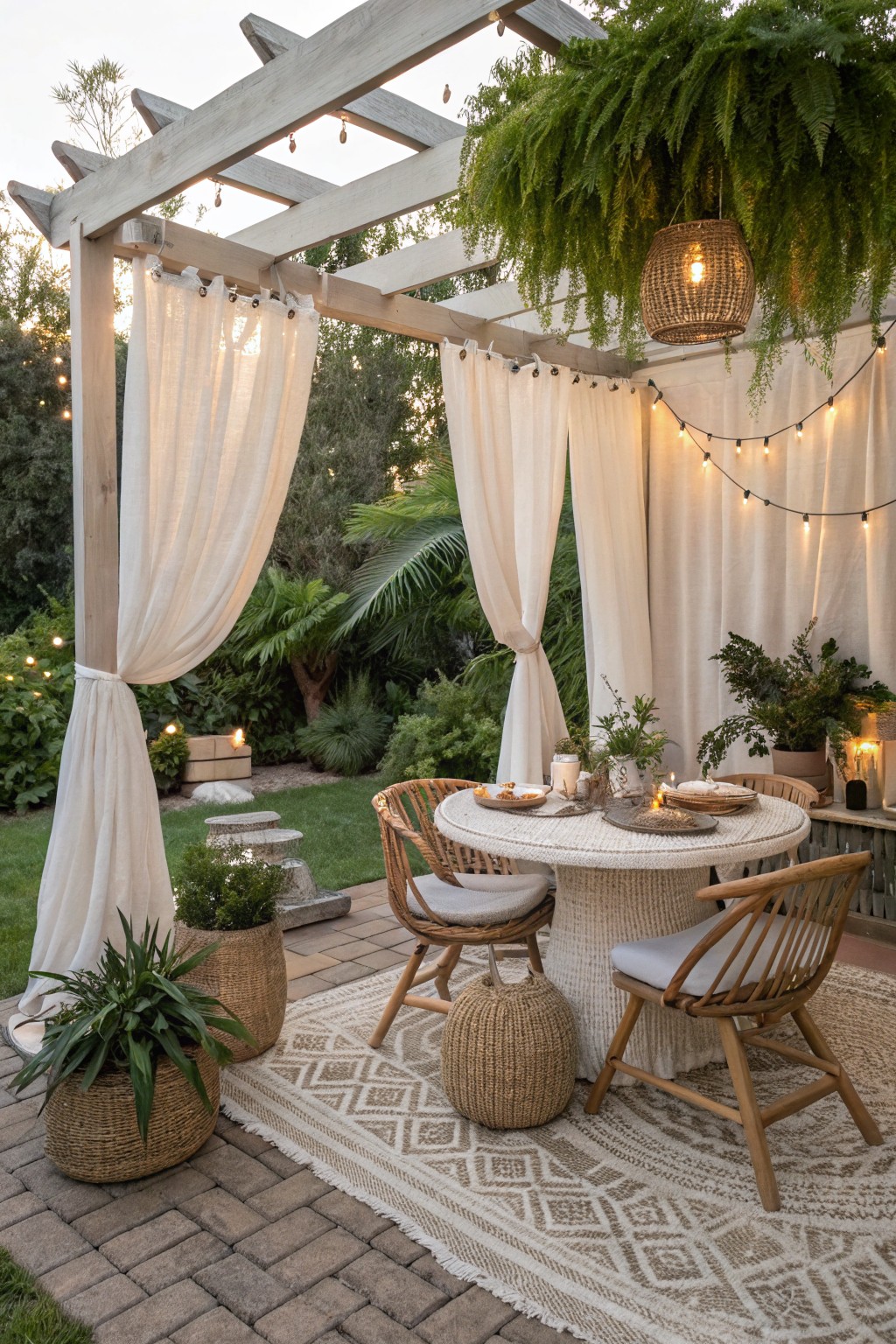
Curtains make a pergola feel more like a real room you can use at different times of day. They block low sun when needed and give a bit of privacy without building solid walls.
This setup works best in small backyards where you want one clear spot for dining. Light fabric panels that slide open and closed keep the space flexible through the seasons.
Grow Vines Over a Pergola for Natural Shade
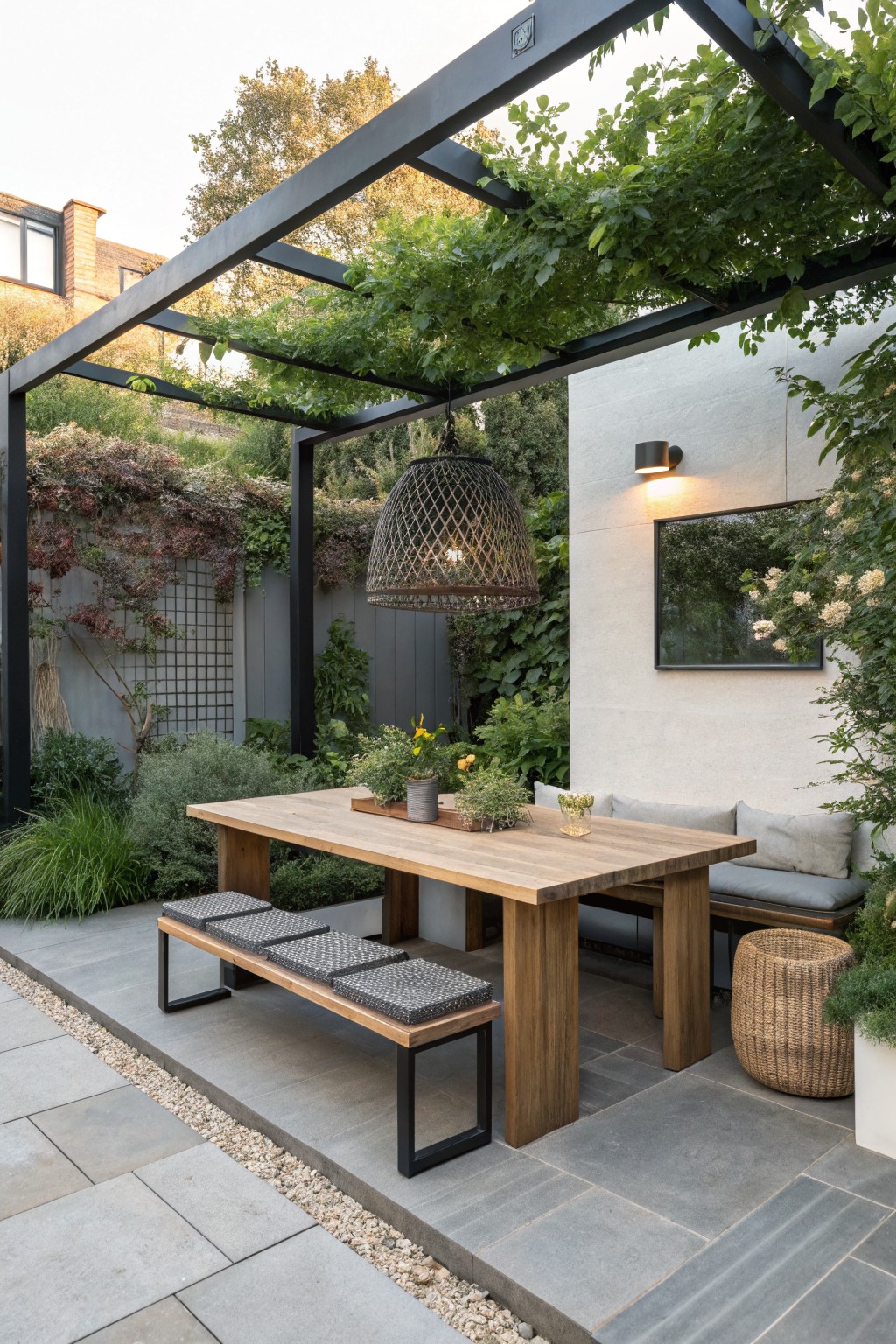
Vines over a pergola give shade without needing a solid roof, and they soften the whole space as they fill in. The plants add cover that gets thicker each year, which works especially well in a small yard where you still want an open feel.
This setup suits a backyard dining area where you want light and air but need some relief from direct sun. Use a strong frame and pick vines that suit your climate so they do not overwhelm the structure or drop too much debris on the table below.
Pergola Shade Over an Outdoor Table
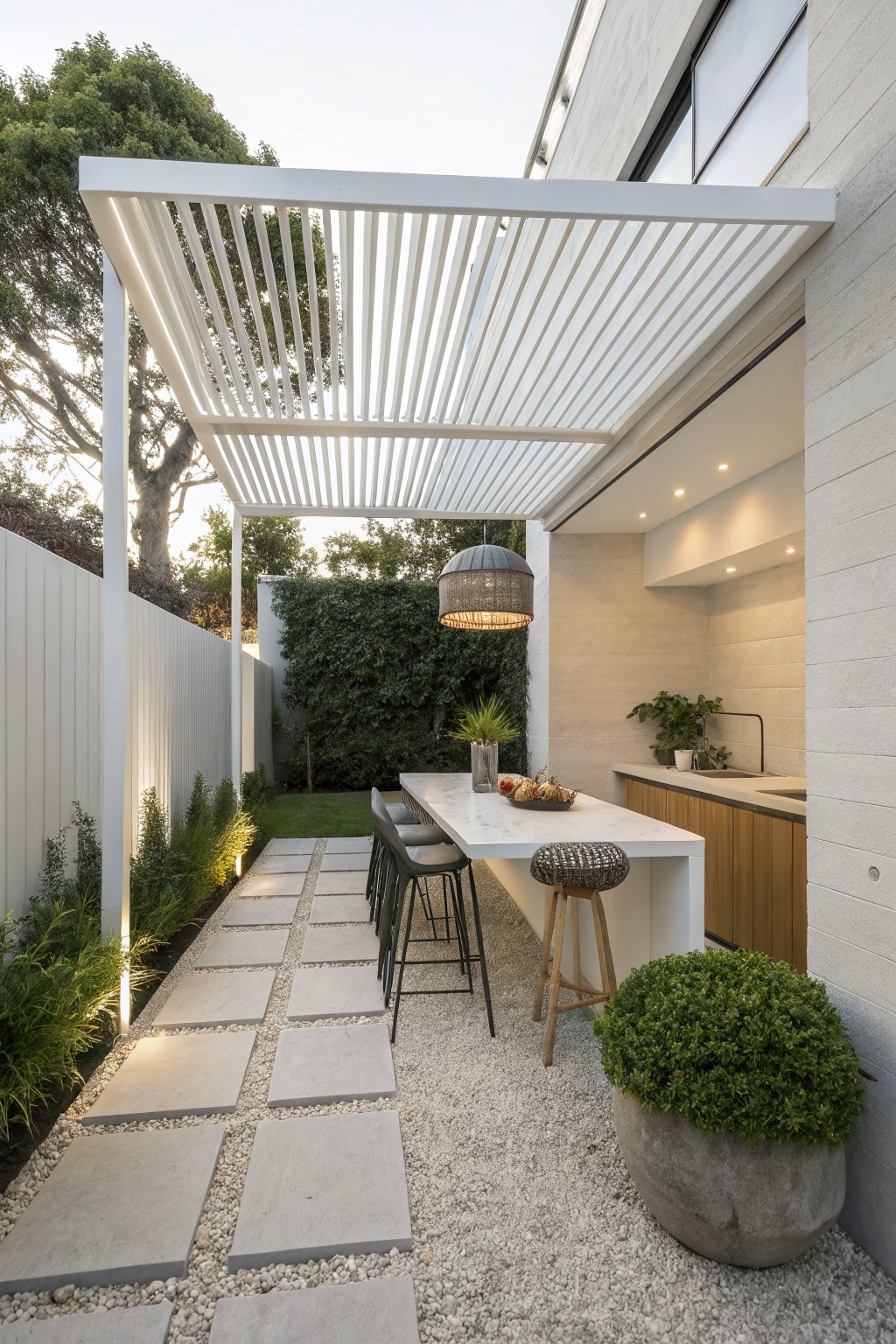
A simple slatted pergola can make a big difference in a small backyard. It lets in some light while cutting down the direct sun, so the space stays usable during the day without feeling too enclosed.
This setup works best when the pergola lines up with a long table or counter. It keeps the dining area comfortable and ties the seating to an outdoor kitchen without needing a full roof.
Thatched Roof Pergola For Small Patio Shade
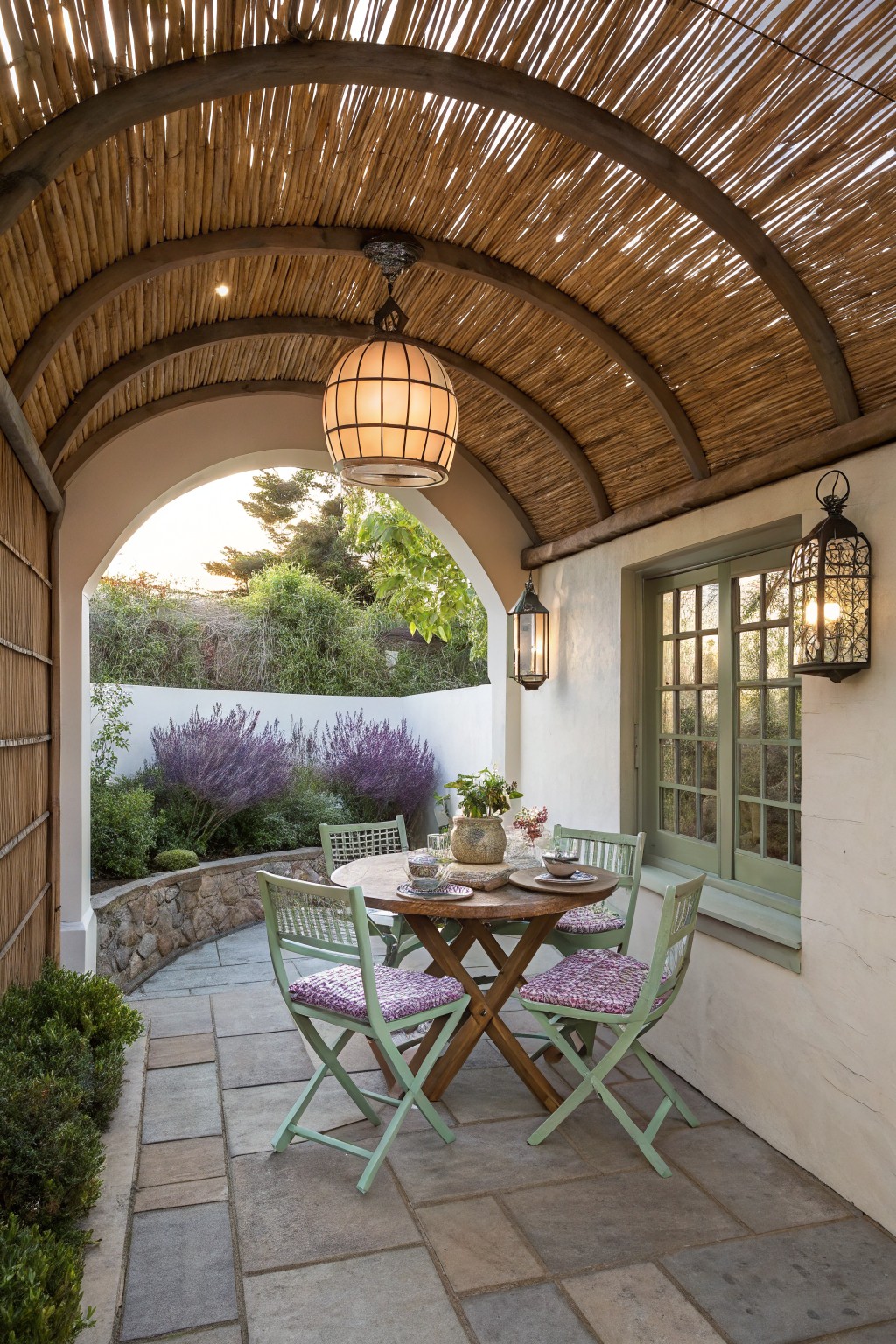
A thatched roof pergola offers steady shade while still letting some light filter through. It works especially well in small backyards where a full roof would feel too heavy and closed in.
This setup fits homes with a relaxed garden style and gives a natural look that pairs easily with simple wood furniture. Just keep the thatch clear of low branches so it lasts longer and stays dry.
Edge The Patio With A Concrete Planter
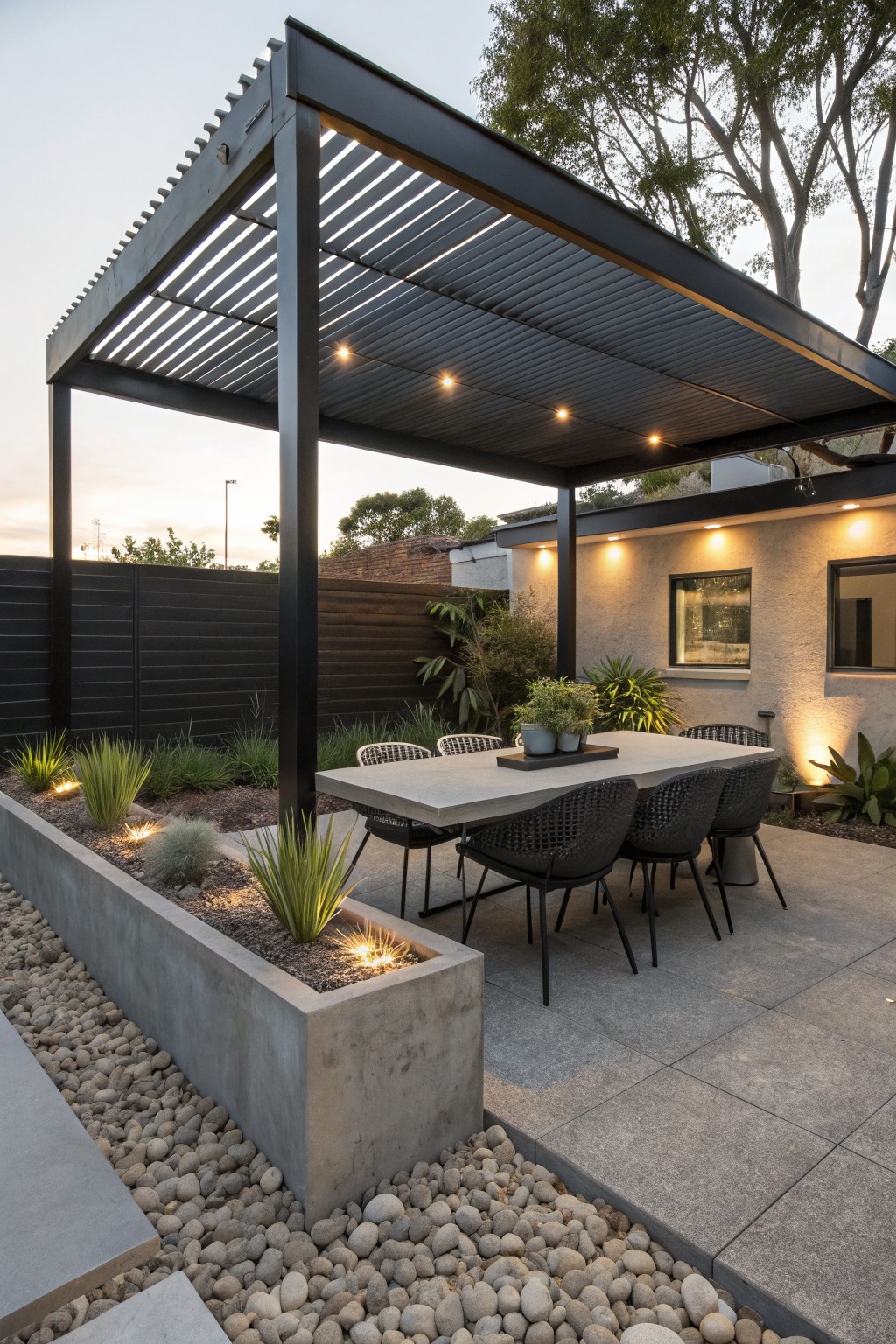
A long raised planter works well when you want to add plants without crowding the seating area. It gives the pergola a clear border, keeps the dining zone defined, and lets you tuck in low lighting at the same time. In smaller yards this setup keeps everything feeling neat instead of scattered.
The planter works best along one side of a paved patio, especially with a simple pergola overhead. It suits modern or minimalist homes where you want greenery but still need room to walk and eat outside. Just make sure the planter height matches the seating so it feels like part of the layout rather than an afterthought.
A Pergola For Shade Over Outdoor Dining
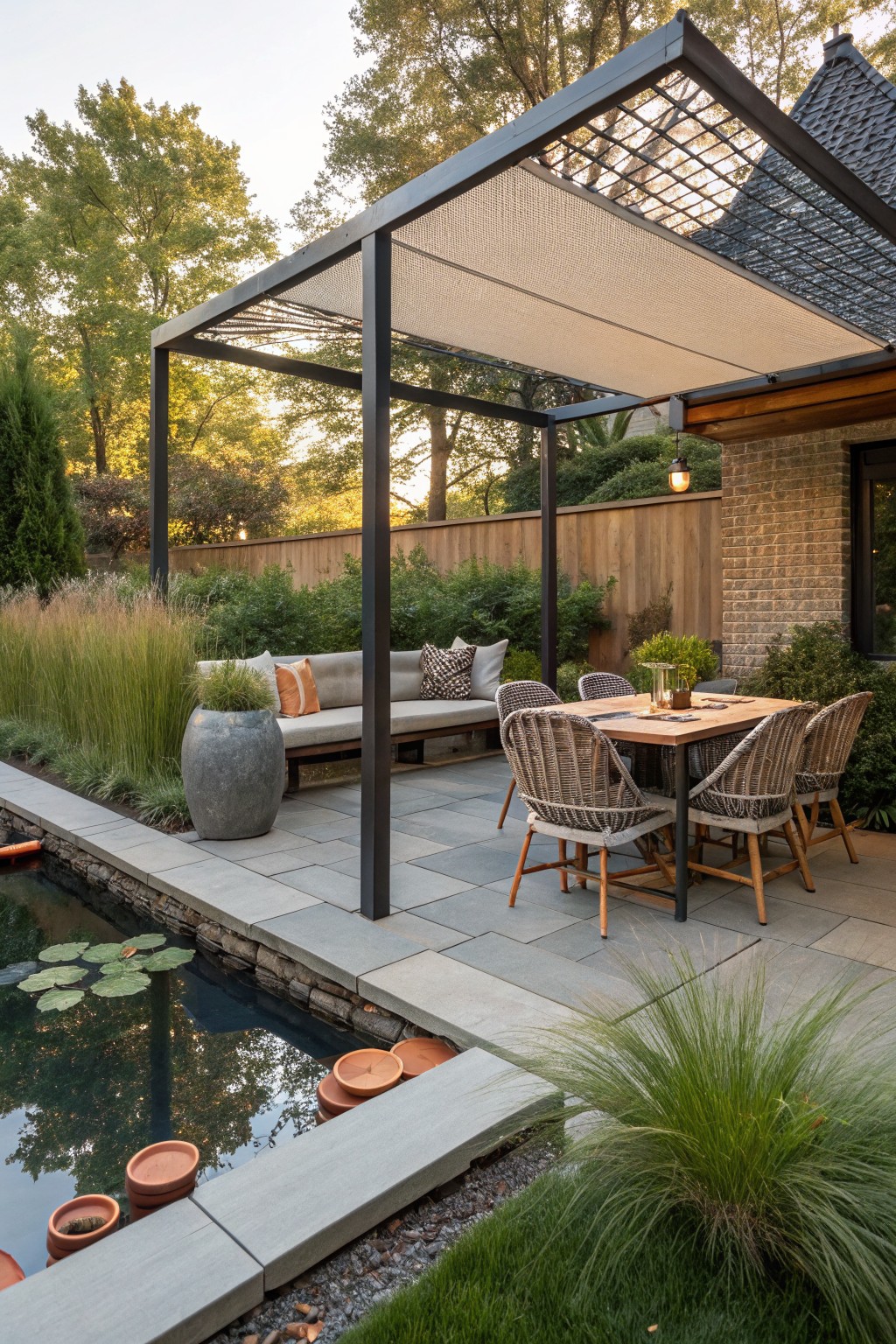
A pergola with a mesh shade panel offers practical cover for a dining table while still letting in some light and air. It creates a clear spot for meals without making the patio feel boxed in or overly heavy.
This approach suits smaller backyards where you want shade but also need the space to connect with the rest of the garden. Keep the sides open and pair it with simple seating so the area stays usable for both dining and relaxing.
Pergolas That Add Shade Over Outdoor Dining Areas
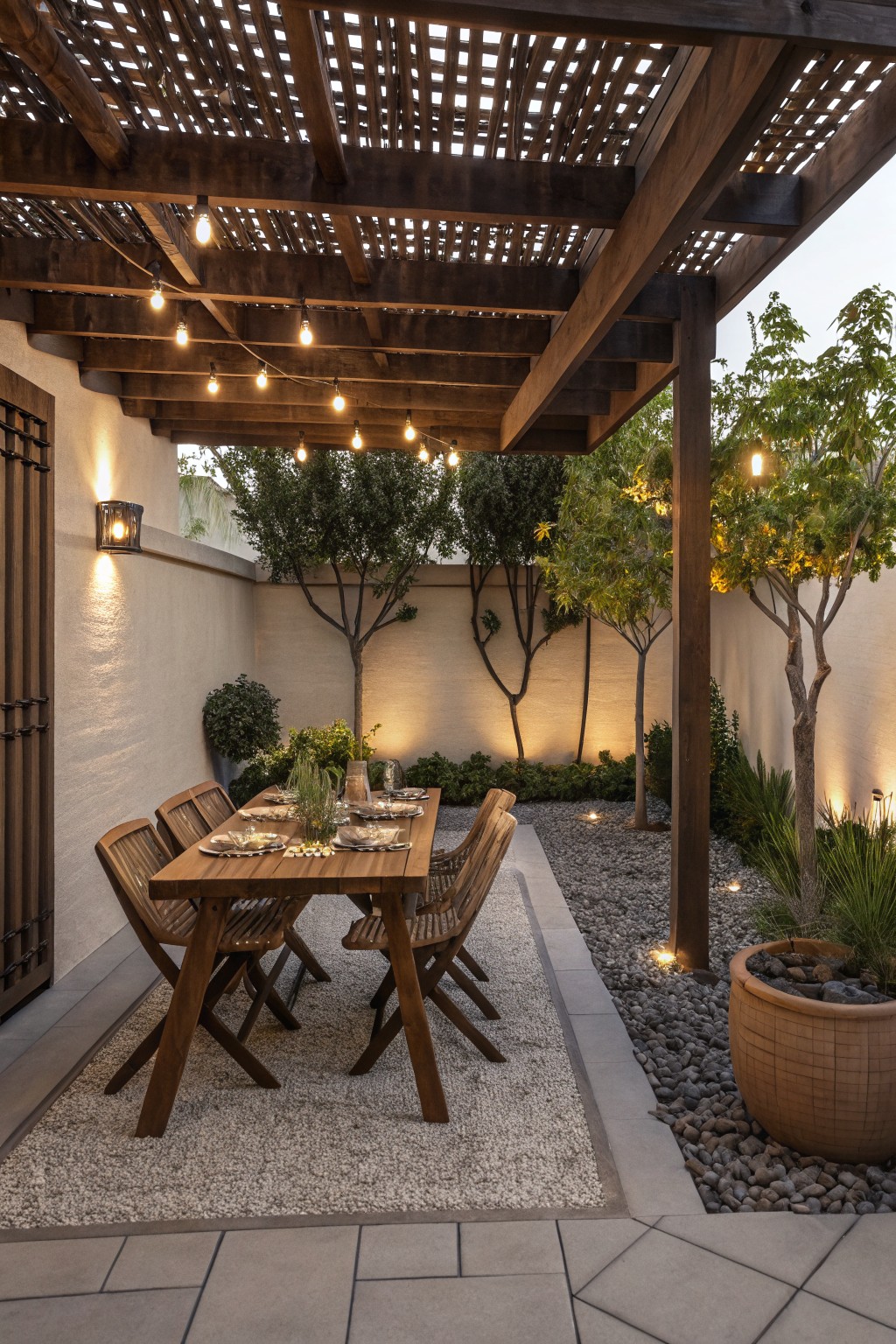
A pergola works well when you want to turn a small patch of yard into a usable dining spot. The overhead beams create shade during the day while still letting in some light, and they give you a place to hang string lights for evening meals without needing a full roof.
This setup suits compact backyards with limited space for separate zones. Keep the base simple with gravel or pavers, place the table directly under the center, and use the posts to mark the edge of the dining area so it feels defined but not closed in.
Cover a Pergola With Vines for Natural Shade
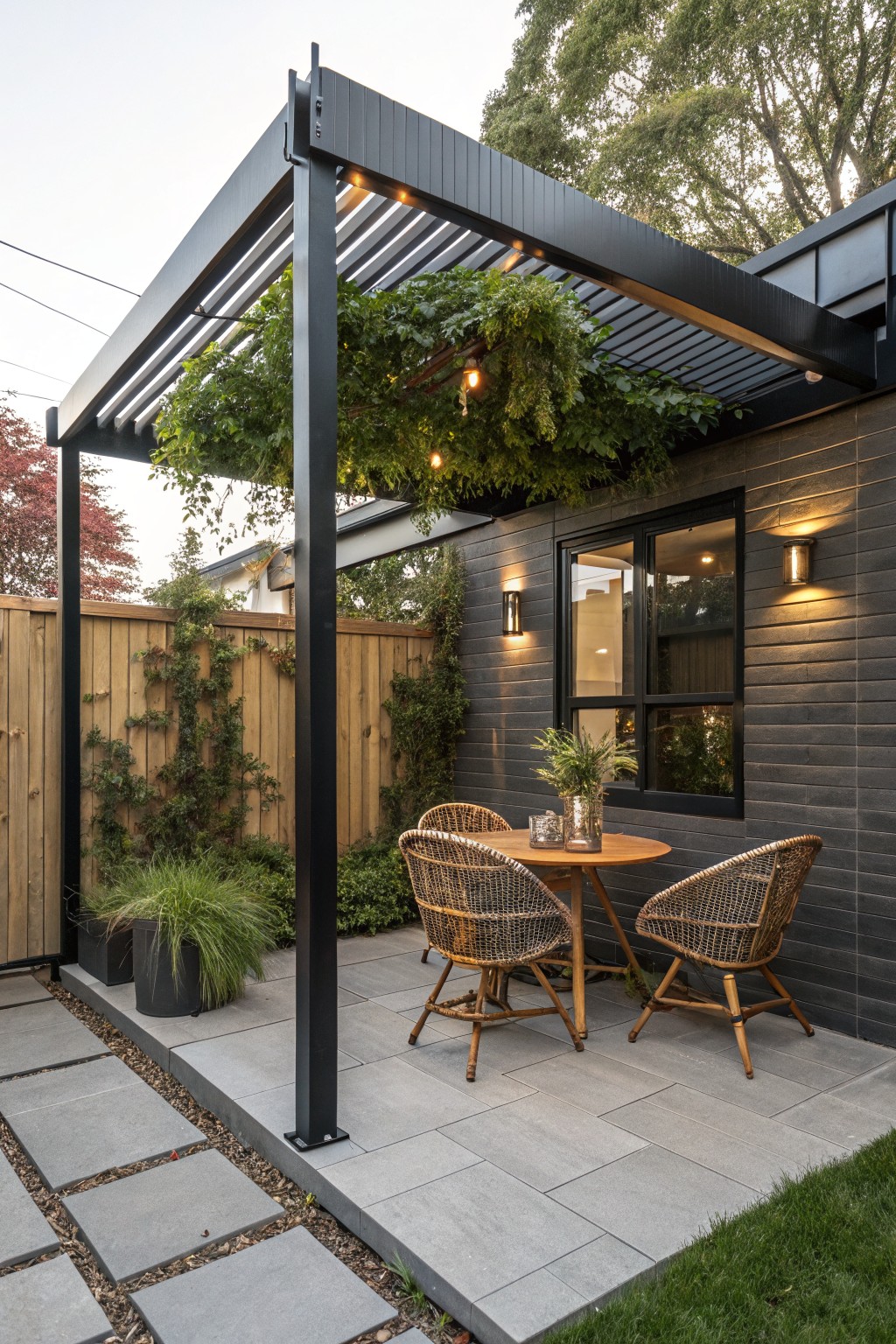
Vines over a pergola give shade that feels softer than a solid roof while still letting some light through. They also add a bit of privacy without closing the space in completely, which works nicely for a small backyard setup.
This approach suits homes with a simple patio or deck where you want to eat outside but need relief from the sun. Pick fast-growing vines that match your climate and check that the frame can handle the weight once they mature.
Frequently Asked Questions
Q: How much shade can I really expect from a small pergola? A: Plant some fast growing vines on the top and sides. They fill in quickly and block the sun better than the frame alone. Position it near trees for extra cover during peak hours.
Q: Which vines stay manageable in a tiny backyard? A: Go with something like jasmine or clematis. They climb nicely but you can prune them back each season without much fuss.
Q: Can I fit a dining setup under these ideas without losing the open feel? A: Choose a narrow table that seats four and tuck it against one side. Add benches instead of chairs to save space. This keeps the area feeling airy while still letting everyone eat comfortably.