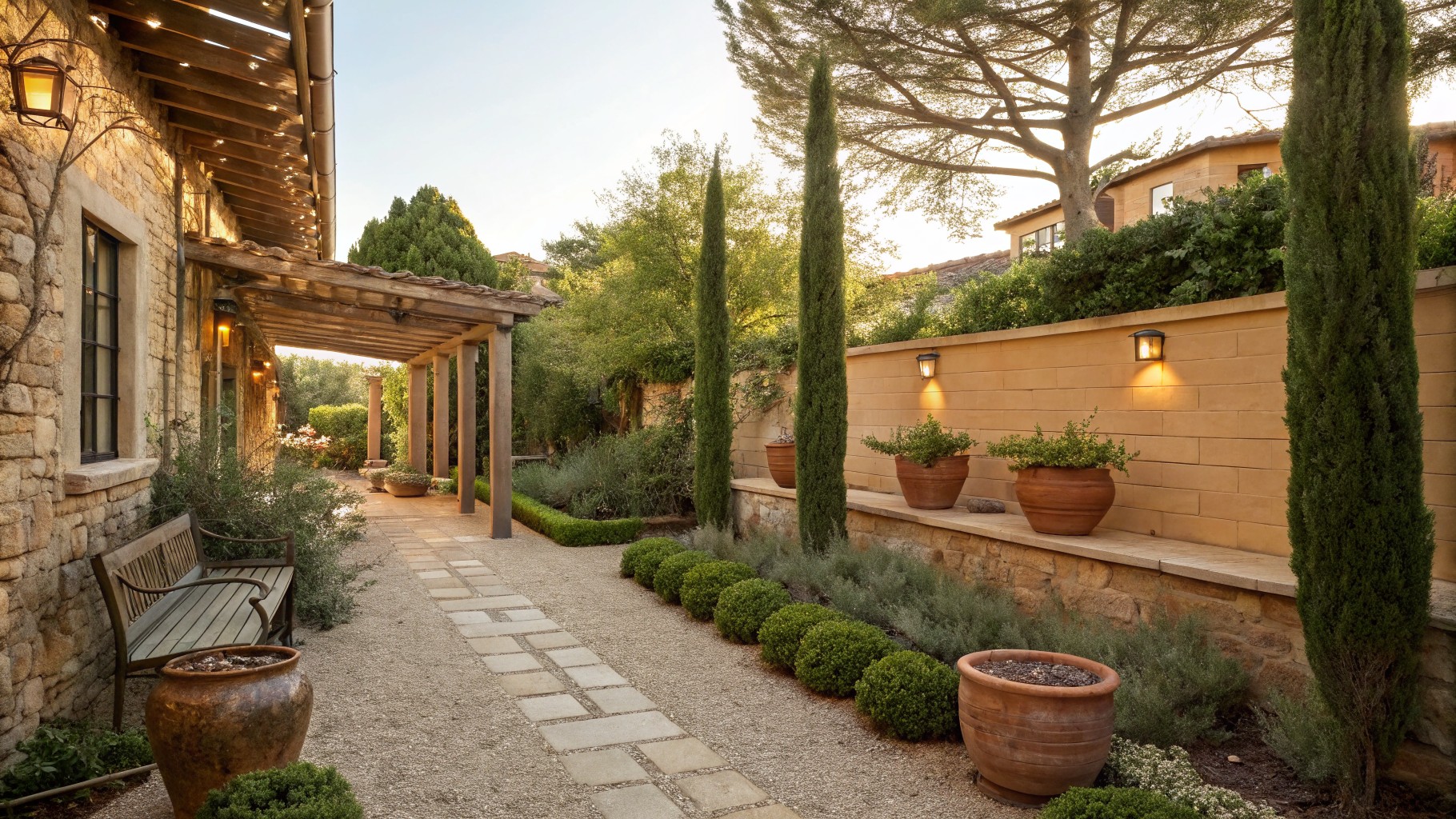
Backyards gain privacy best when the plants follow the existing contours of the land and create layers instead of a single wall.
I have seen how soft borders can make the whole space feel larger even while blocking views from neighbors.
Straight fences often cut the yard into sections that do not match how we actually use the area.
Trying a mix of heights and textures first in one corner lets me see what works before committing to the rest.
The ideas that focus on gradual growth tend to fit real yards better than quick fixes that need constant trimming.
Tall Columnar Trees For Natural Screening
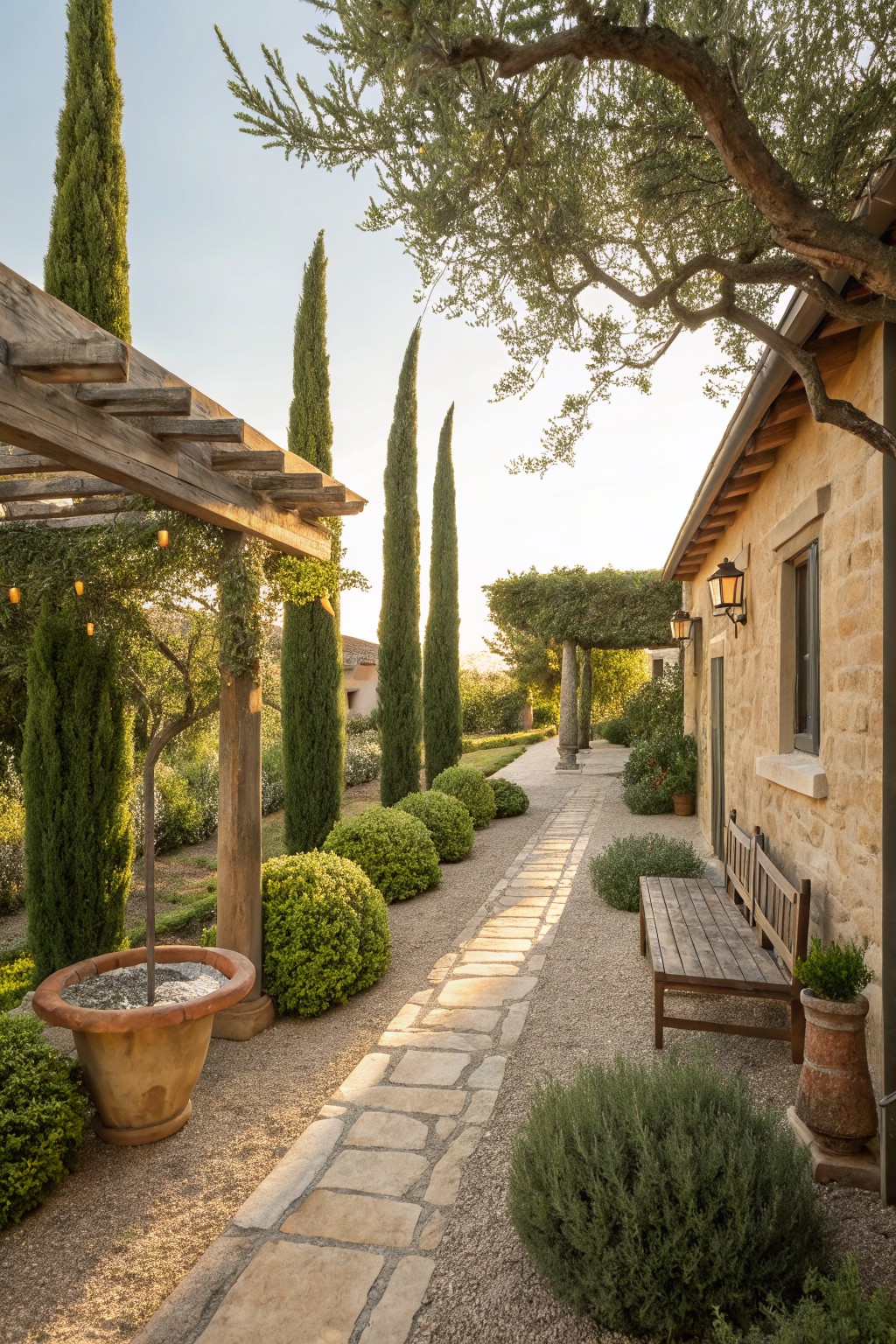
Tall narrow trees give you height and coverage without spreading wide into the yard. They work especially well along paths or property edges where you need a living screen but still want to keep the space feeling open.
These trees suit long straight borders best. Space them evenly and pair them with lower shrubs in front so the whole line fills in from the ground up. They need room to grow tall, so avoid planting them too close to structures.
Layered Plants Along Fences
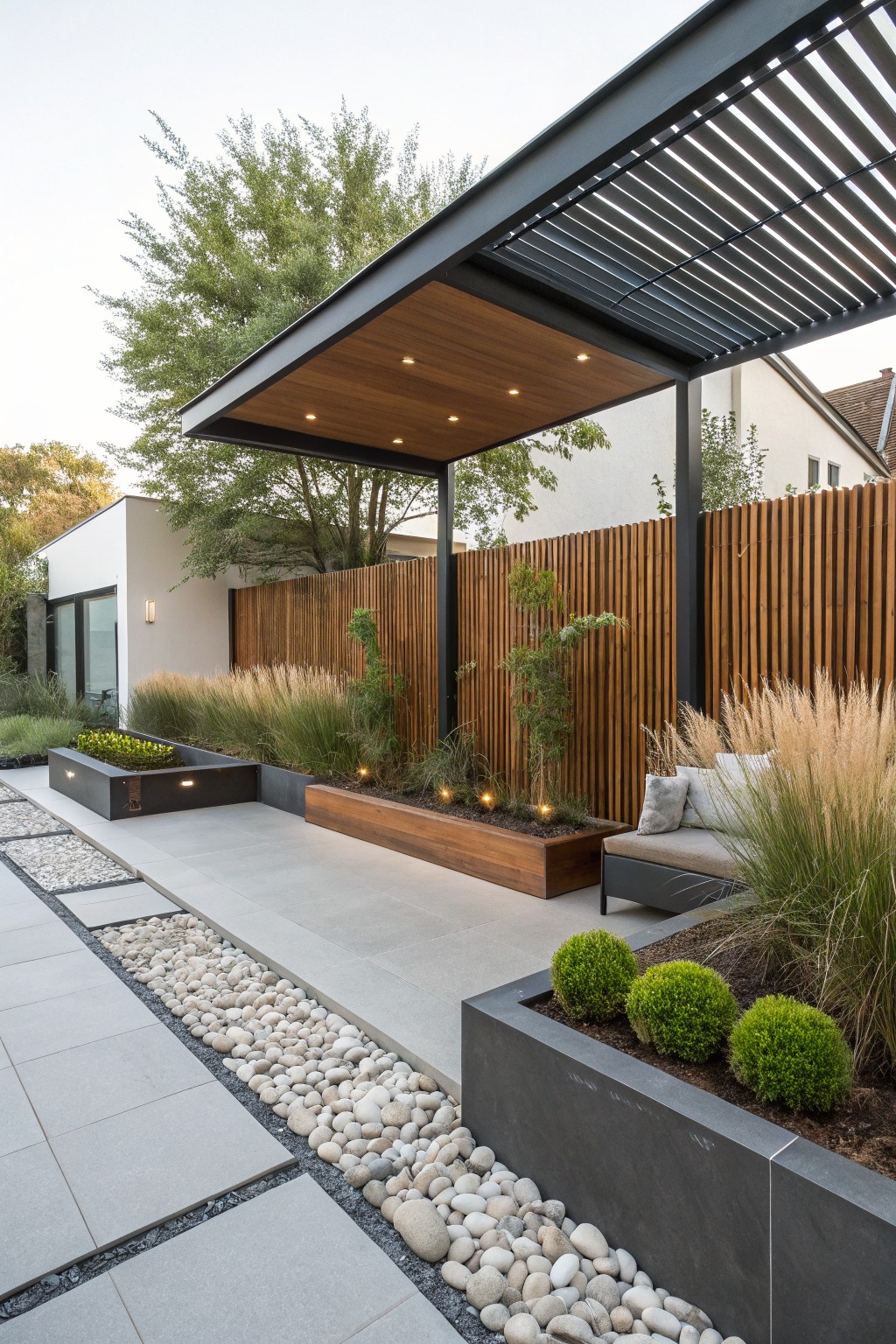
Raised beds filled with a mix of tall grasses and rounded shrubs can turn a plain fence into a softer screen. The plants add height without blocking light completely and help the whole yard feel more enclosed in a natural way. This approach works especially well when the beds run along the property line and vary a bit in depth.
It suits homes with straight fencing that feels too hard on its own. Keep the tallest grasses toward the back and lower shrubs in front so the layers stay visible. Make sure the beds are wide enough for the plants to fill in over a season or two.
Train Climbing Plants Over Brick Walls And Arches
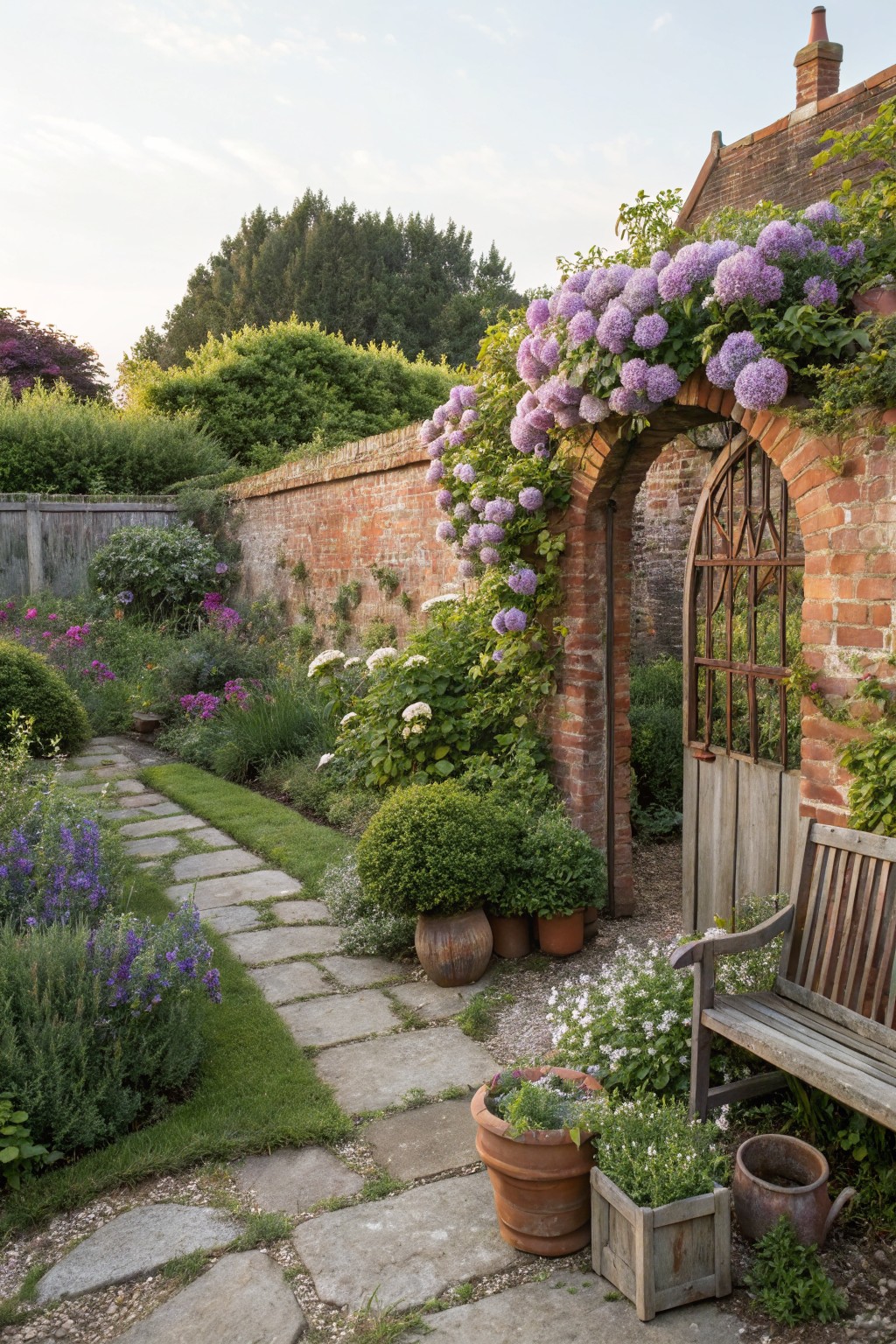
Climbing plants can turn a solid wall into a soft screen that still feels open. The flowers and foliage add height and texture while blocking views gradually instead of all at once.
This works best along property lines or near seating areas where you want some privacy without losing light. Give the plants sturdy support and choose varieties that match your growing conditions so they fill in steadily over a season or two.
Line Fences with Tall Potted Palms
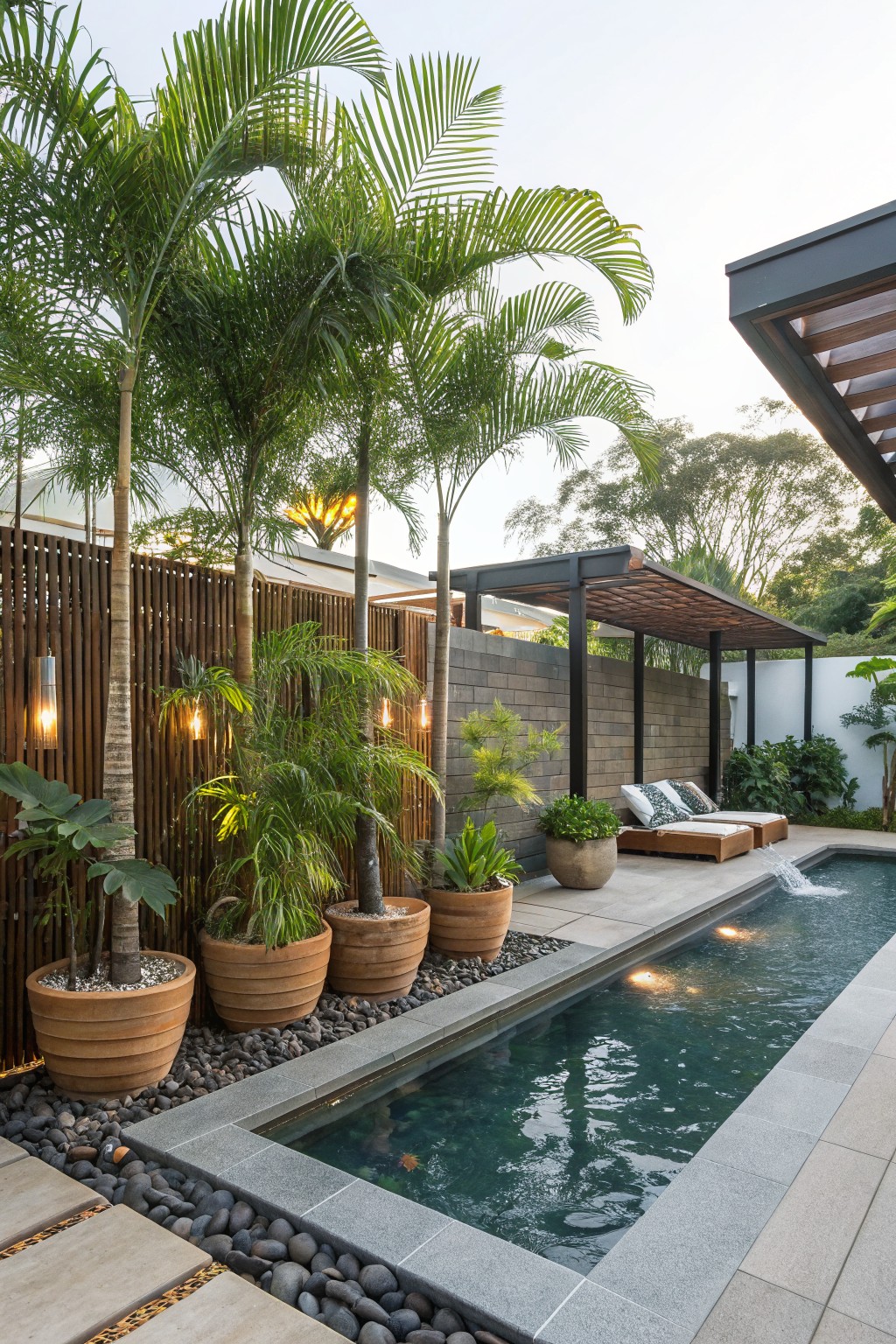
Tall palms in big pots make a simple way to add height and privacy without building anything new. The pots keep things movable, and the palms grow fast enough to fill in gaps along a fence within a season or two. This setup works especially well in smaller yards where you want screening but still need to keep the space open.
It suits homes with existing fences or walls that feel too plain. Place the largest pots first, then add smaller plants in front to fill the base. Just watch the drainage in the pots and give them enough sun so they do not thin out over time.
Layered Hedges For Natural Screening
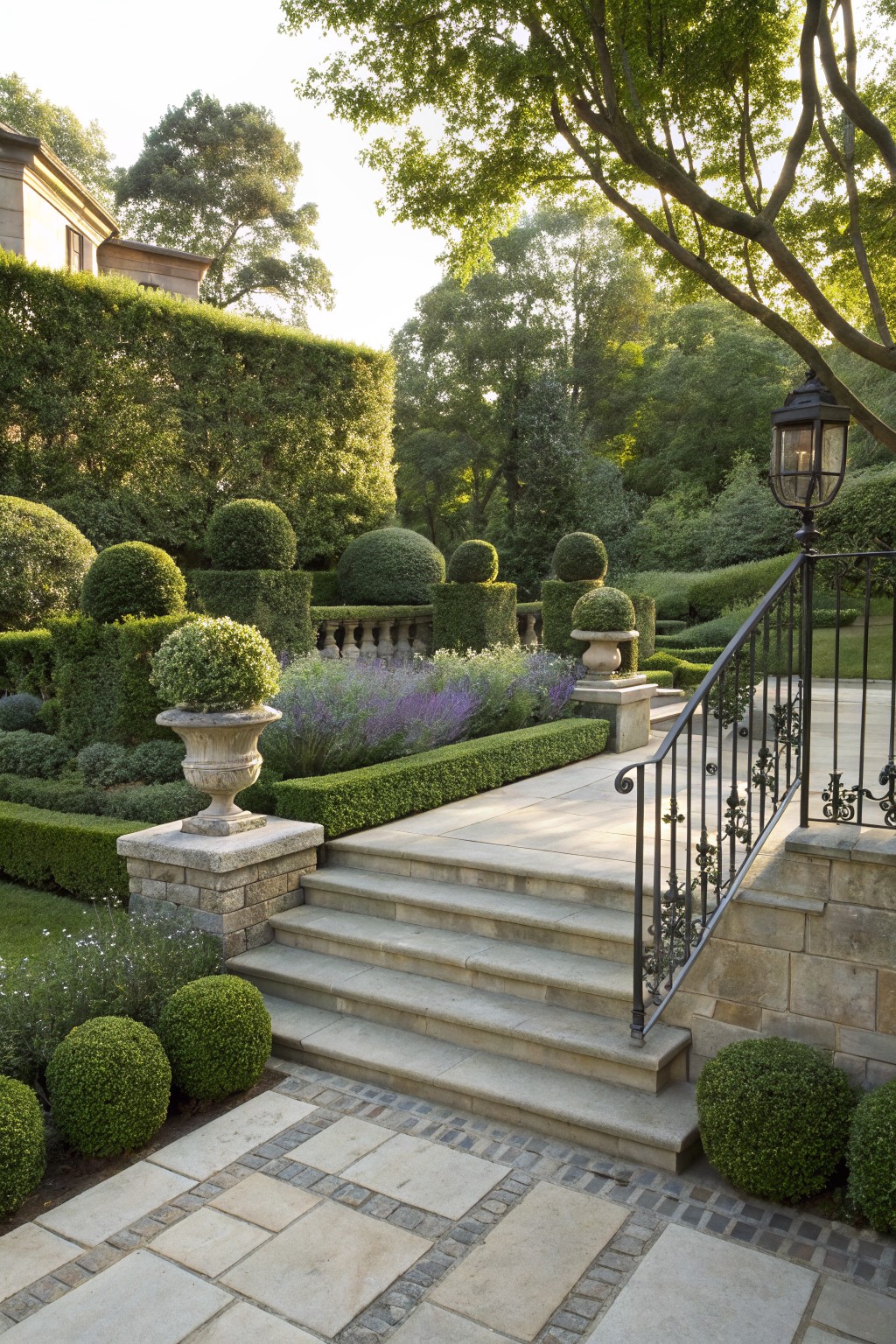
Rows of shrubs at different heights can block views from the side without needing a solid fence. The mix of clipped boxwoods and lower flowering plants creates a border that feels soft but still keeps the space private.
This works best along paths or near the edge of a yard where you want some separation. Stick with evergreens that hold their shape so the screen stays full through the year.
Layer Plants Along Stone Edges For Soft Borders
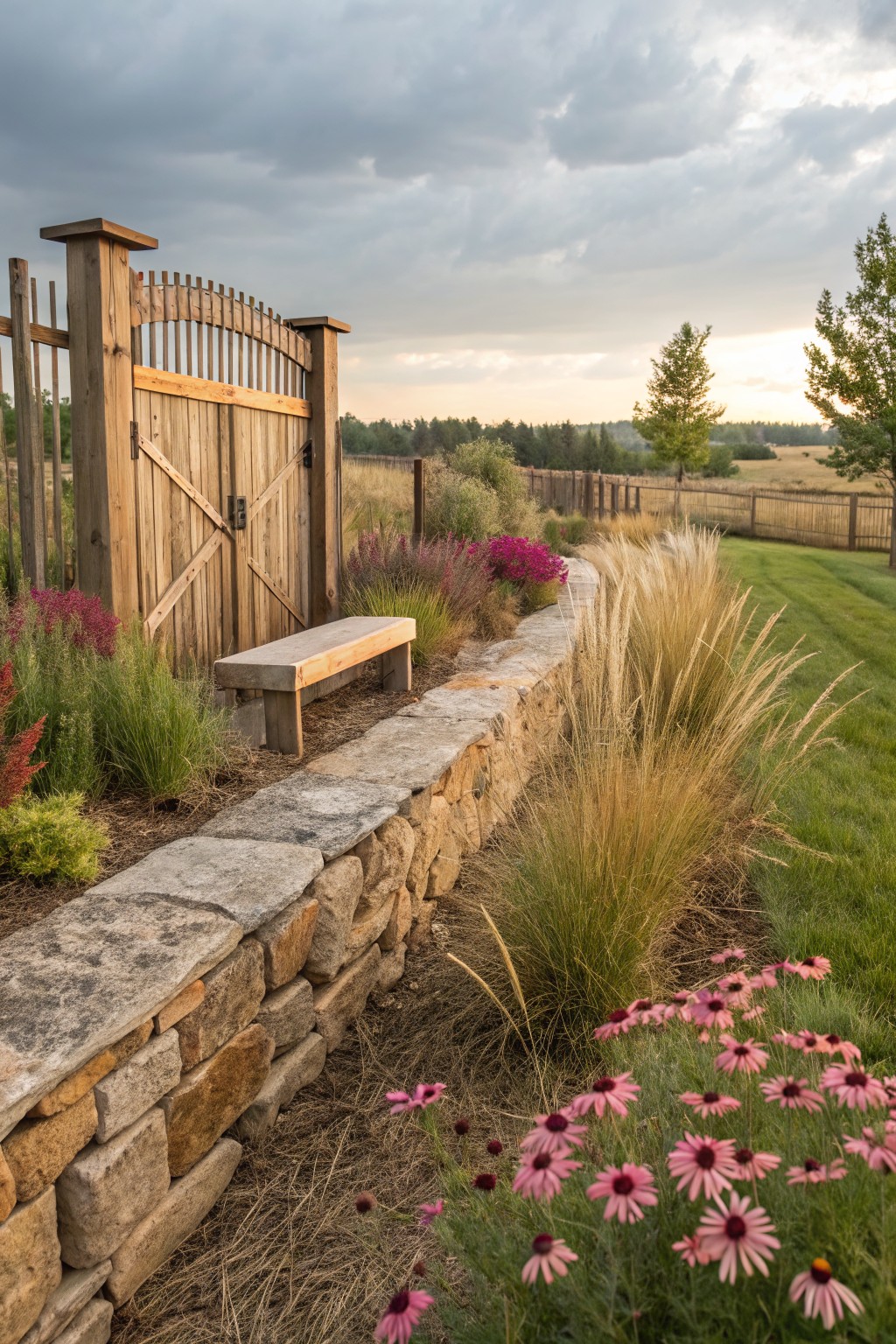
A low stone wall can look a bit stark on its own, but adding a row of tall grasses and flowering plants right along the edge changes that fast. The mix of heights and textures softens the hard surface and gives you a living screen that still feels open.
This works best in side yards or along property lines where you want some separation without a solid fence. Keep the planting simple, with one or two taller grasses mixed in with lower blooms so it fills in without needing constant trimming.
Espalier Fruit Trees Along Your Fence Line
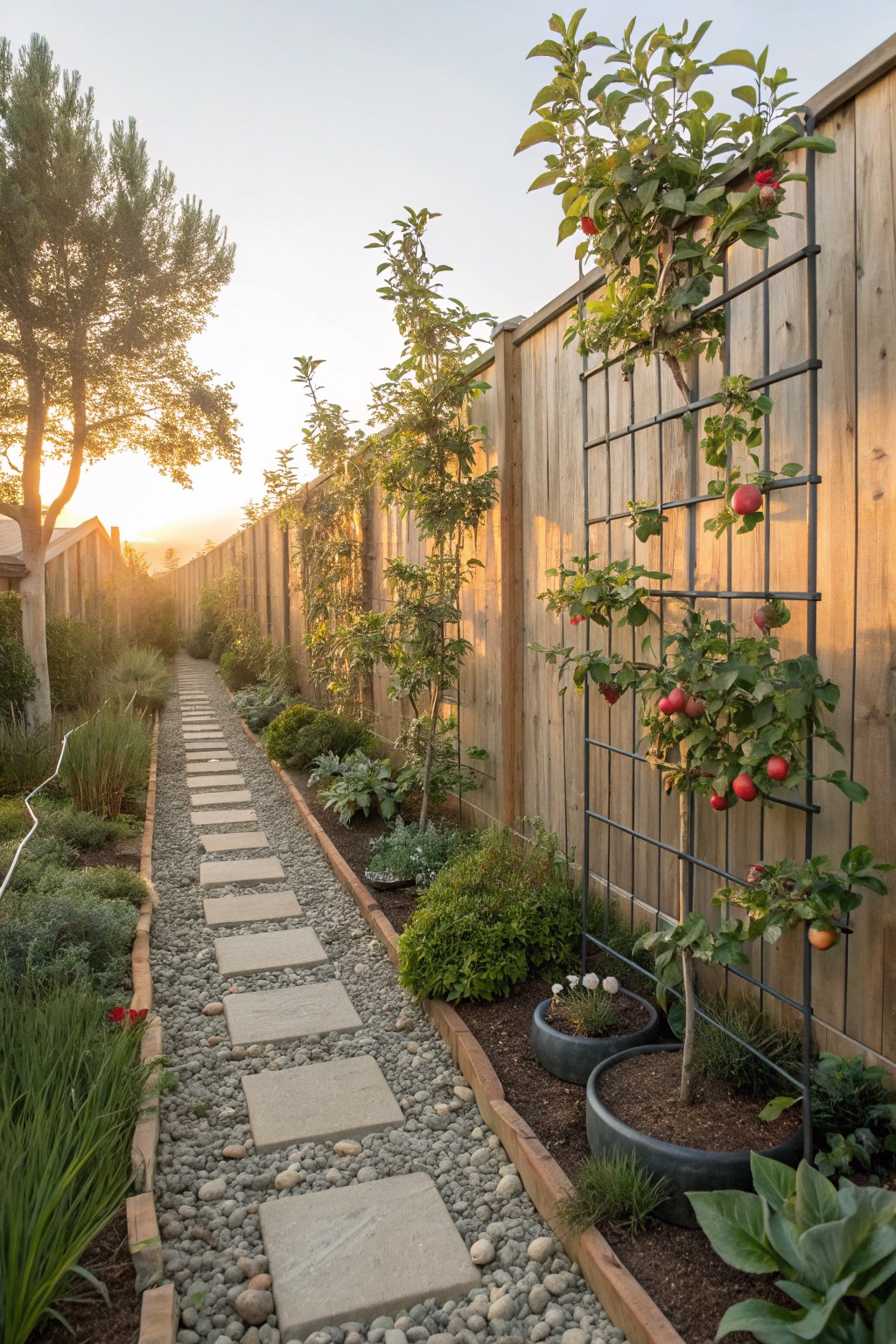
Espaliered trees give you a living screen that stays narrow and productive at the same time. Trained flat against a simple grid, the branches fill in vertically and block views without spreading wide into the yard.
This works best along side fences or property lines where space is tight. Pick a sturdy support, choose varieties suited to your area, and plan on light yearly pruning so the trees stay healthy and keep producing.
Vertical Gardens Create Natural Privacy
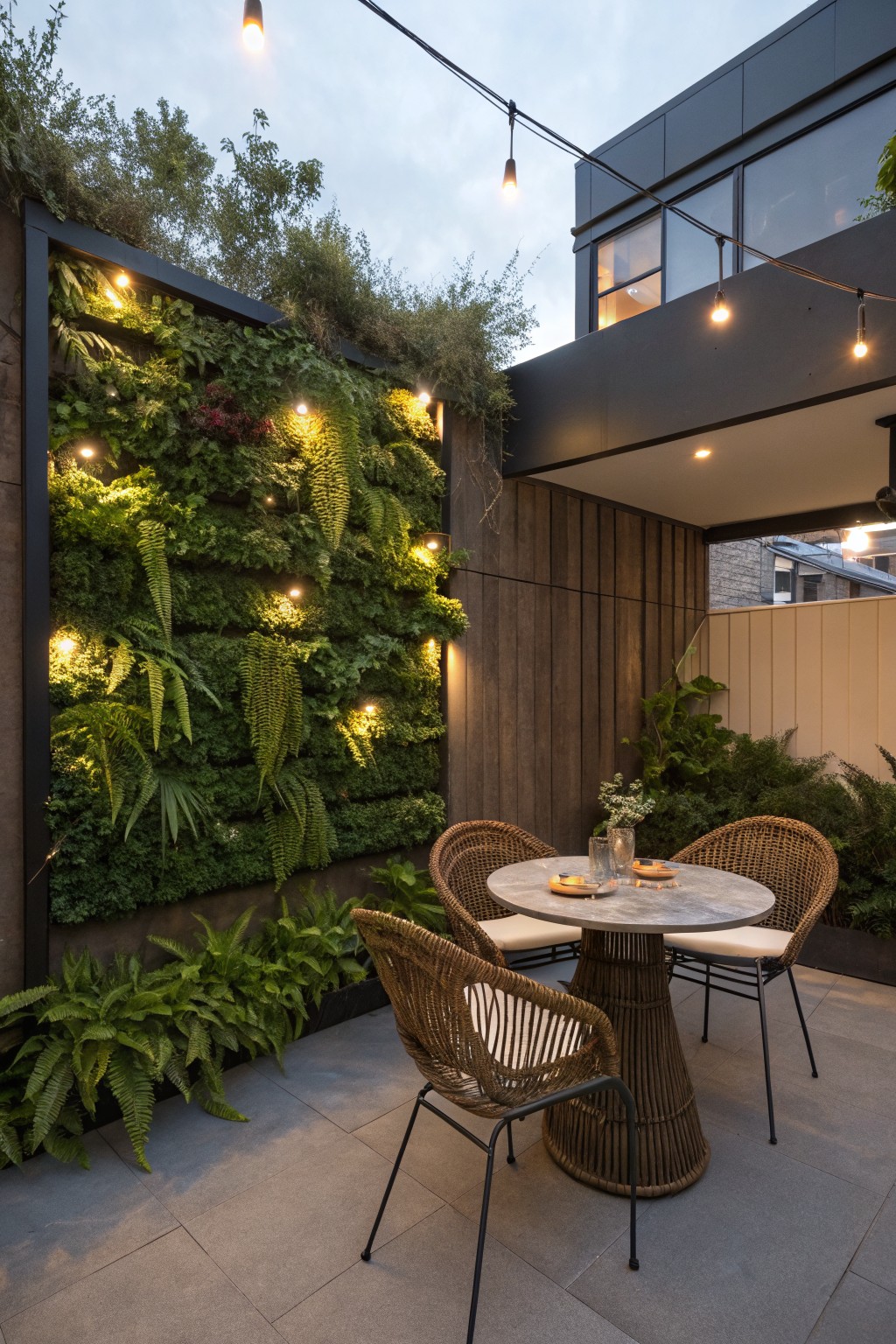
A living wall packed with ferns and greenery gives you a thick, green screen without needing a tall fence or hedge. It softens the edges of a patio while blocking views from neighboring buildings or windows right away.
This works best in smaller yards or side patios where ground space is tight. Keep the wall in a partly shaded spot and choose plants that handle your climate so it stays full and low maintenance over time.
Layer Plants Along Paths For Soft Screening
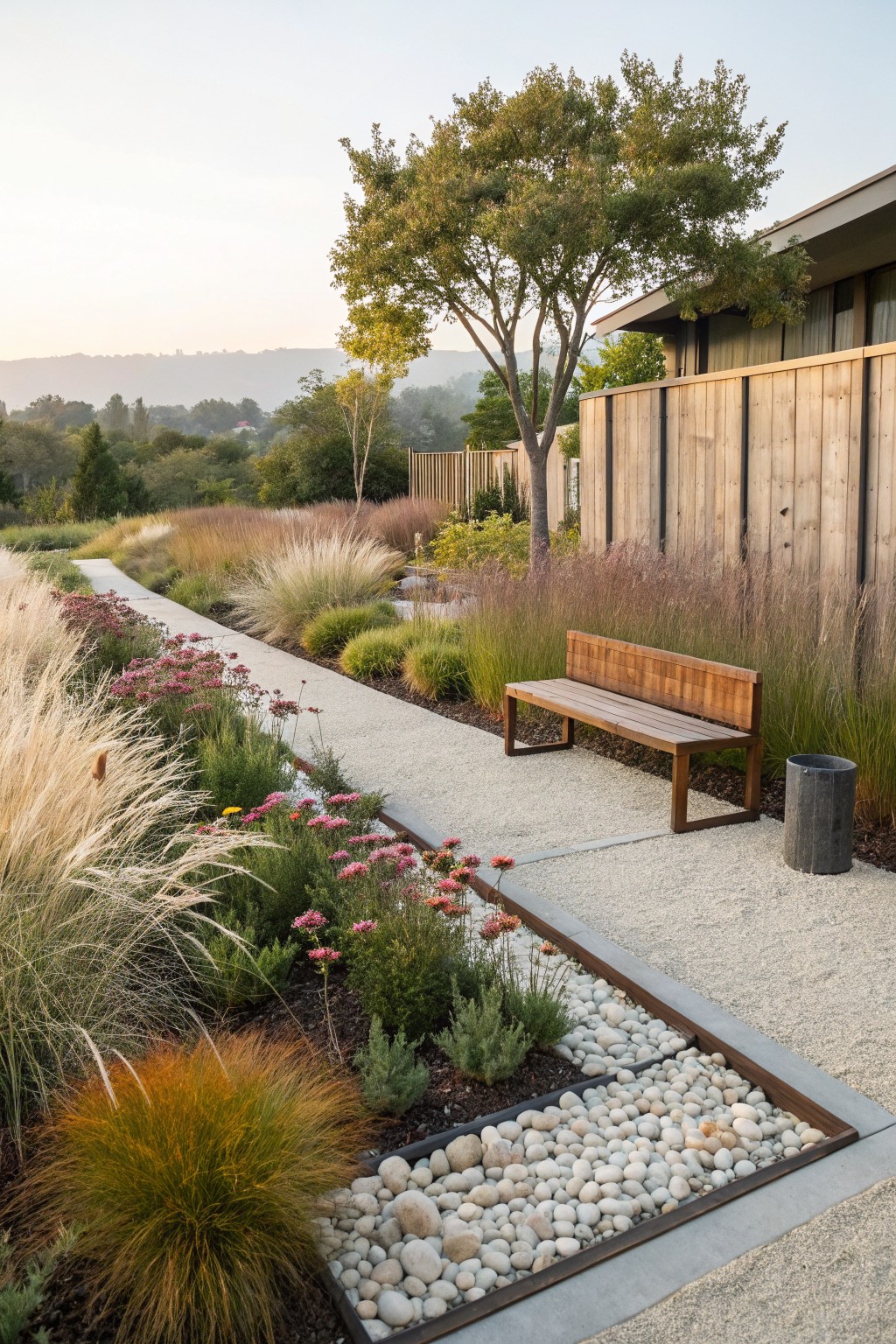
Mixing taller grasses with lower flowering plants along a path gives you a living border that feels private without looking closed in. The different heights and textures break up the view naturally, and the plants move a bit in the wind, which keeps the space from feeling too stiff or formal.
This approach works well on homes where the yard slopes or where you want to guide people along a route without adding more fencing. Keep the plantings a foot or two back from the edge so the path stays easy to walk, and choose varieties that stay mostly in their lane so you are not constantly trimming them back.
Layer Shrubs Along Paths for Soft Privacy
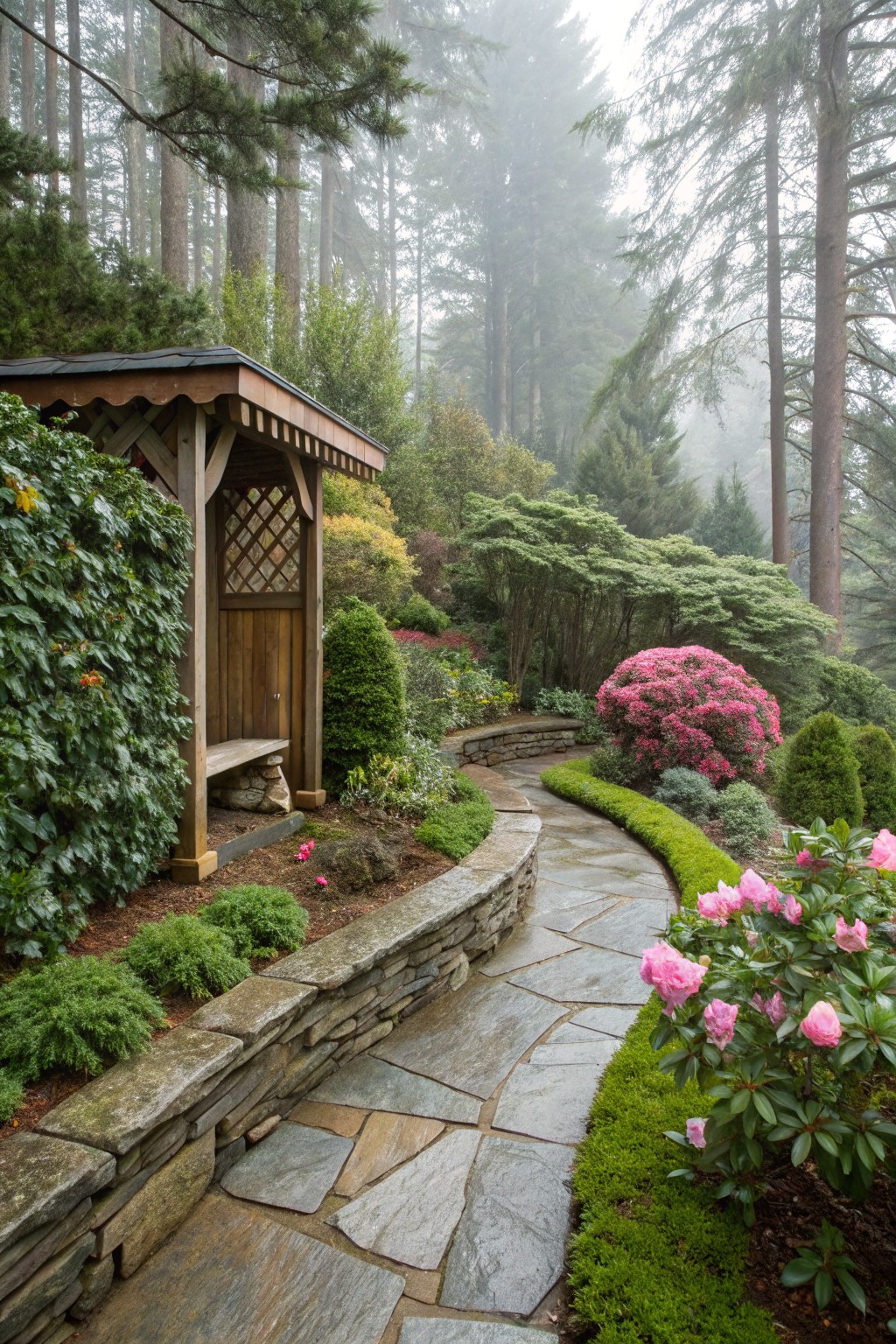
Layering shrubs of different heights next to a path gives you privacy without putting up a fence. The plants fill in the space gradually, so the border feels natural instead of forced. Low ground cover at the edge, mid-size bushes in the middle, and taller evergreens behind them work together to block views while still looking like part of the garden.
This approach works best in wooded or sloped yards where you already have some tree cover. Stick with evergreens mixed with a few flowering shrubs so the screen stays full through the seasons. Keep the bed width at least three feet so the plants have room to grow without crowding the walkway.
Line Paths With Low Shrubs And Grasses
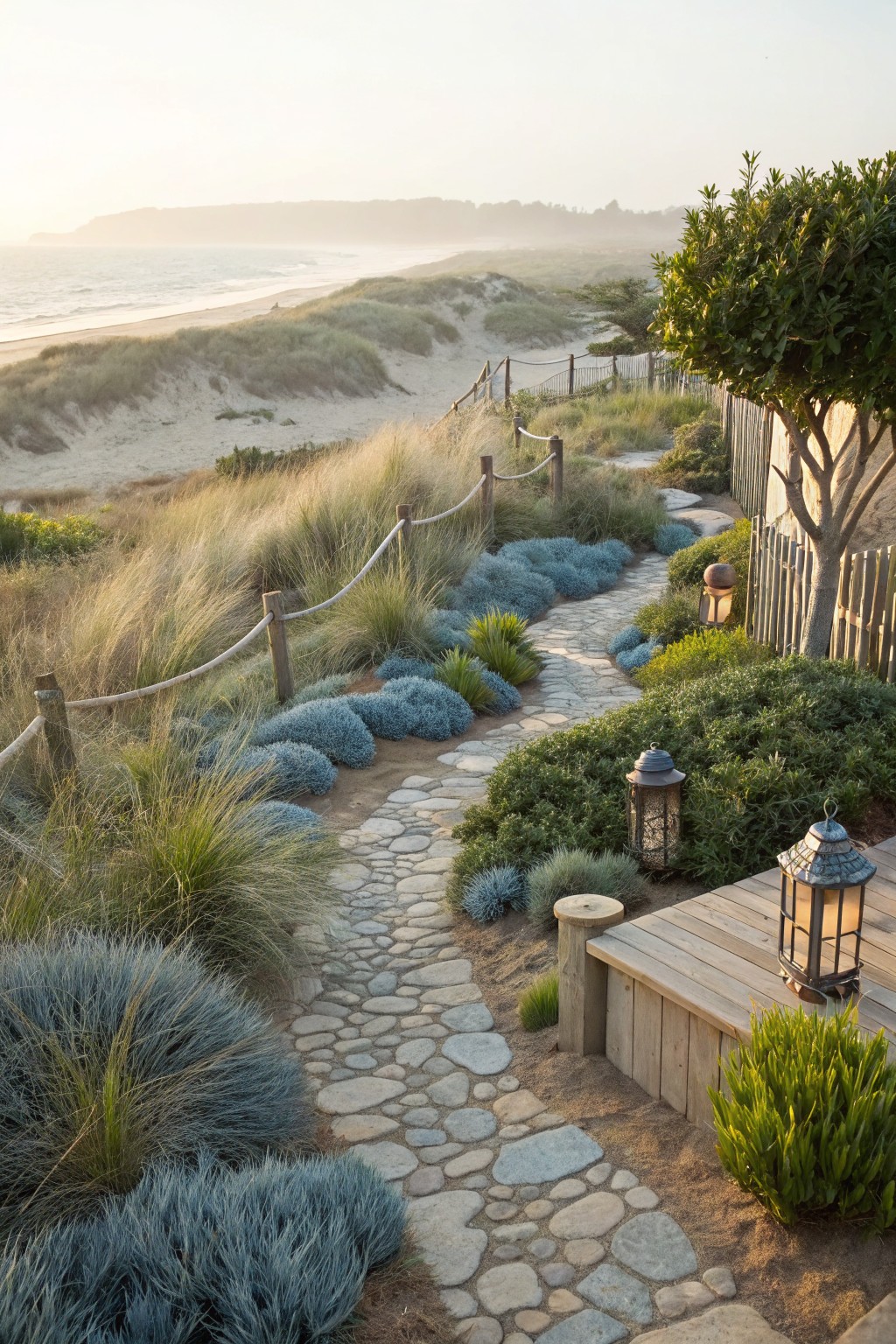
Low plantings along a walkway can give a soft border without cutting off light or views. Grasses mixed with compact shrubs create texture and a gentle sense of enclosure that feels more natural than a solid hedge.
This approach suits coastal yards or open lots where full privacy is not needed. Keep the plants under knee height near the path itself and let taller grasses sit a little farther back so the walkway stays easy to follow.
Layered Planting For Natural Screening Along Paths
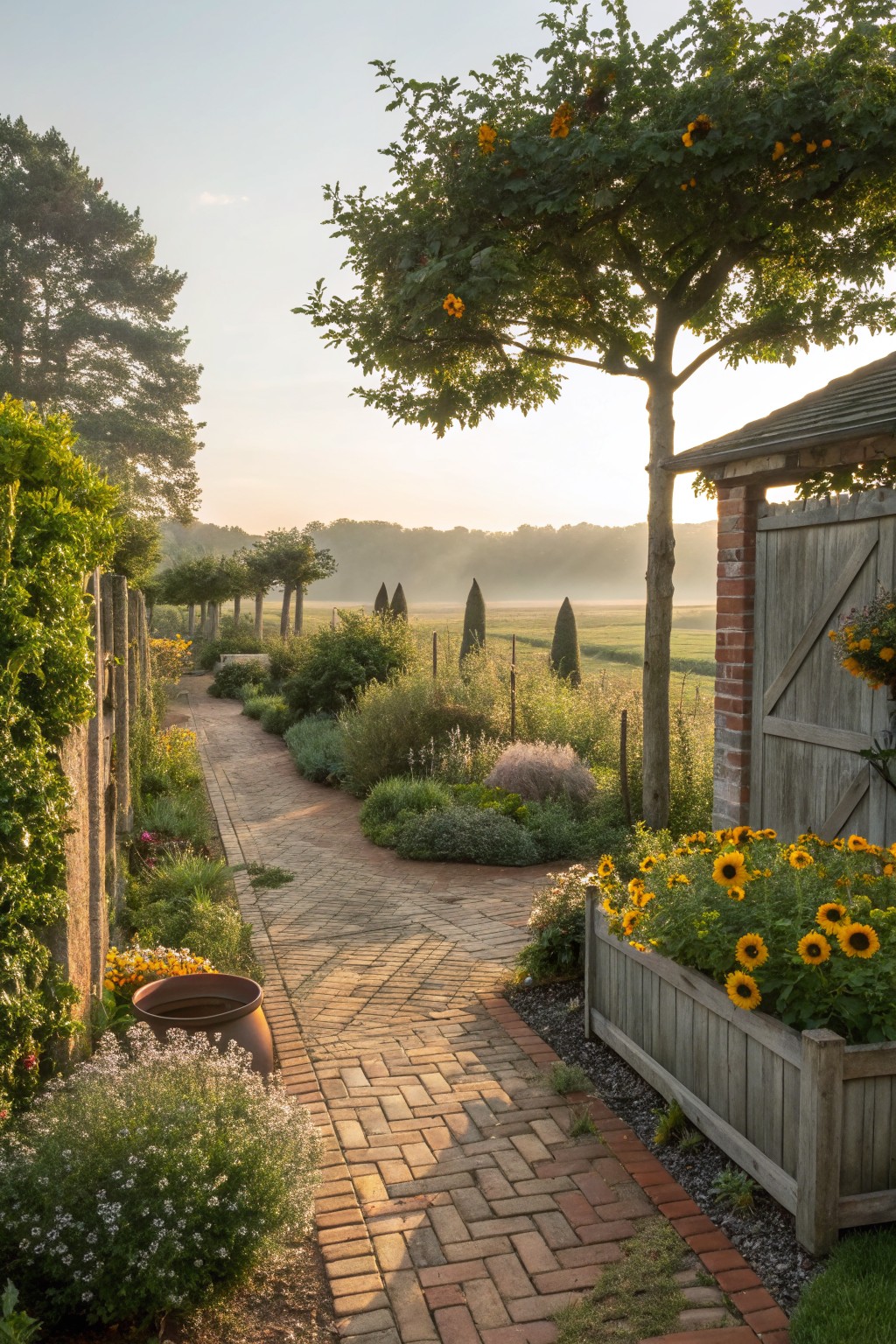
A simple way to get privacy in a backyard is to layer different heights of plants along a path. Taller trees in the back, medium shrubs in the middle, and lower flowers or ground cover in front create a border that feels full and blocks views without looking too stiff.
This works best in open yards where you have room to let plants grow naturally over time. Keep the path clear so the planting still feels welcoming rather than closed in.
Layered Planting Along Walls Gives Natural Privacy

Many backyards feel exposed when a plain fence or wall runs along one side. Adding layers of plants right against that surface softens the look and blocks views at the same time. Climbers that grow up the wall plus shrubs and taller pots in front create depth without needing a lot of width.
This approach works best in narrow side yards or along property edges where you want screening but still need a path. Use a mix of evergreen shrubs at the base and vines that can reach upward so the coverage stays full through the seasons. The large pots and climbing plants in the photo show how simple layers can turn a basic wall into a living screen.
Large Pots Build Soft Property Borders
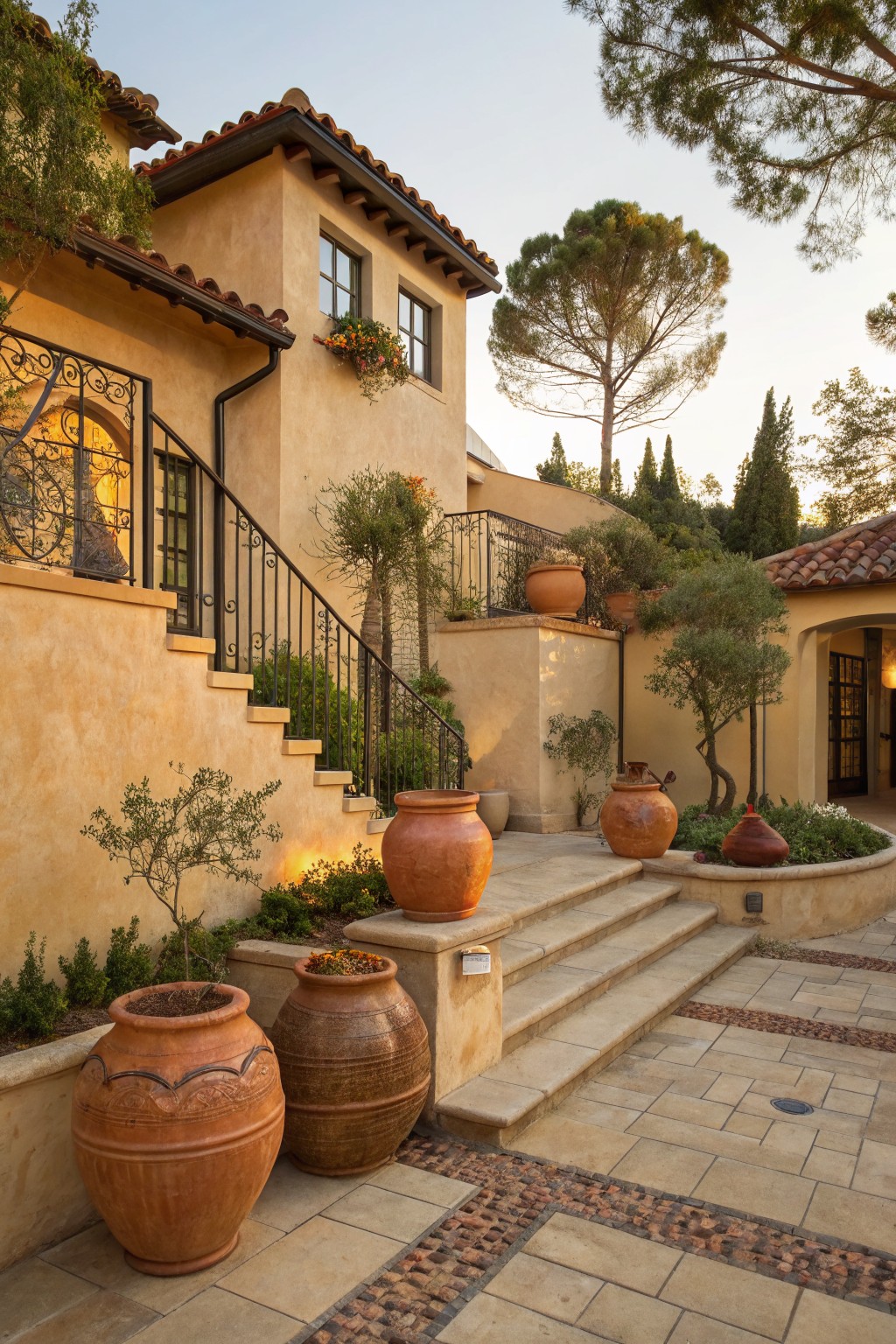
Large clay pots let you add screening and soft edges without permanent structures. They work well along paths and near stairs where you want some separation but still need to keep the space open and easy to move through.
Group them in clusters of two or three at different heights, mixing in small trees for more height. This method suits homes with stucco walls and tile roofs, and it gives you the option to rearrange or replace plants as they grow.
Grow Vines Overhead For Natural Path Screening
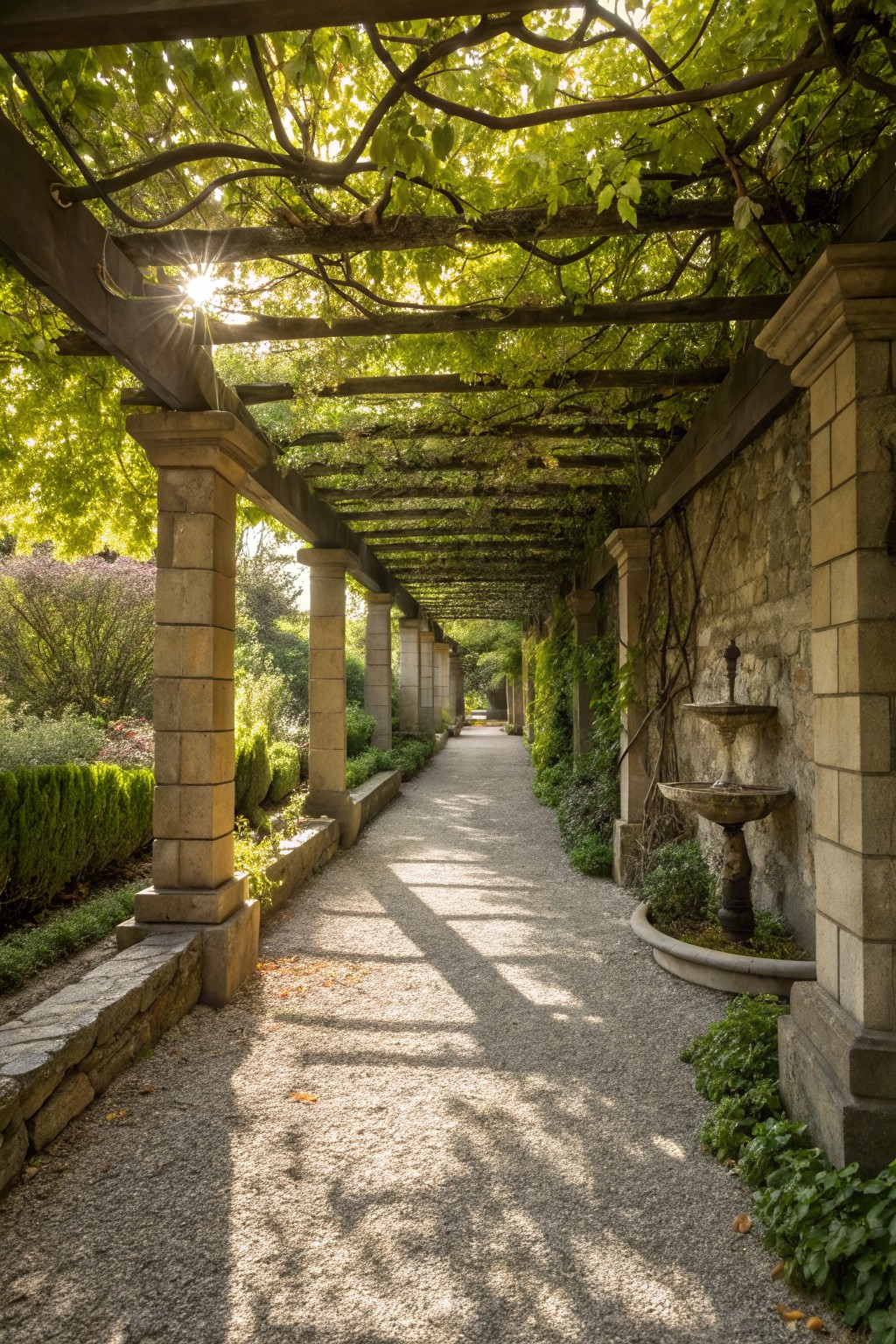
A vine-covered pergola turns an open path into a softer, more enclosed space. The plants create a living ceiling that filters light and gives a sense of privacy without blocking everything off.
This idea works best in backyards with enough room for a long structure. It suits homes that already have garden paths or want to link seating areas. Just make sure the vines get enough sun and choose a variety that will not overwhelm the frame over time.
Raised Planters With Tall Bamboo For Screening
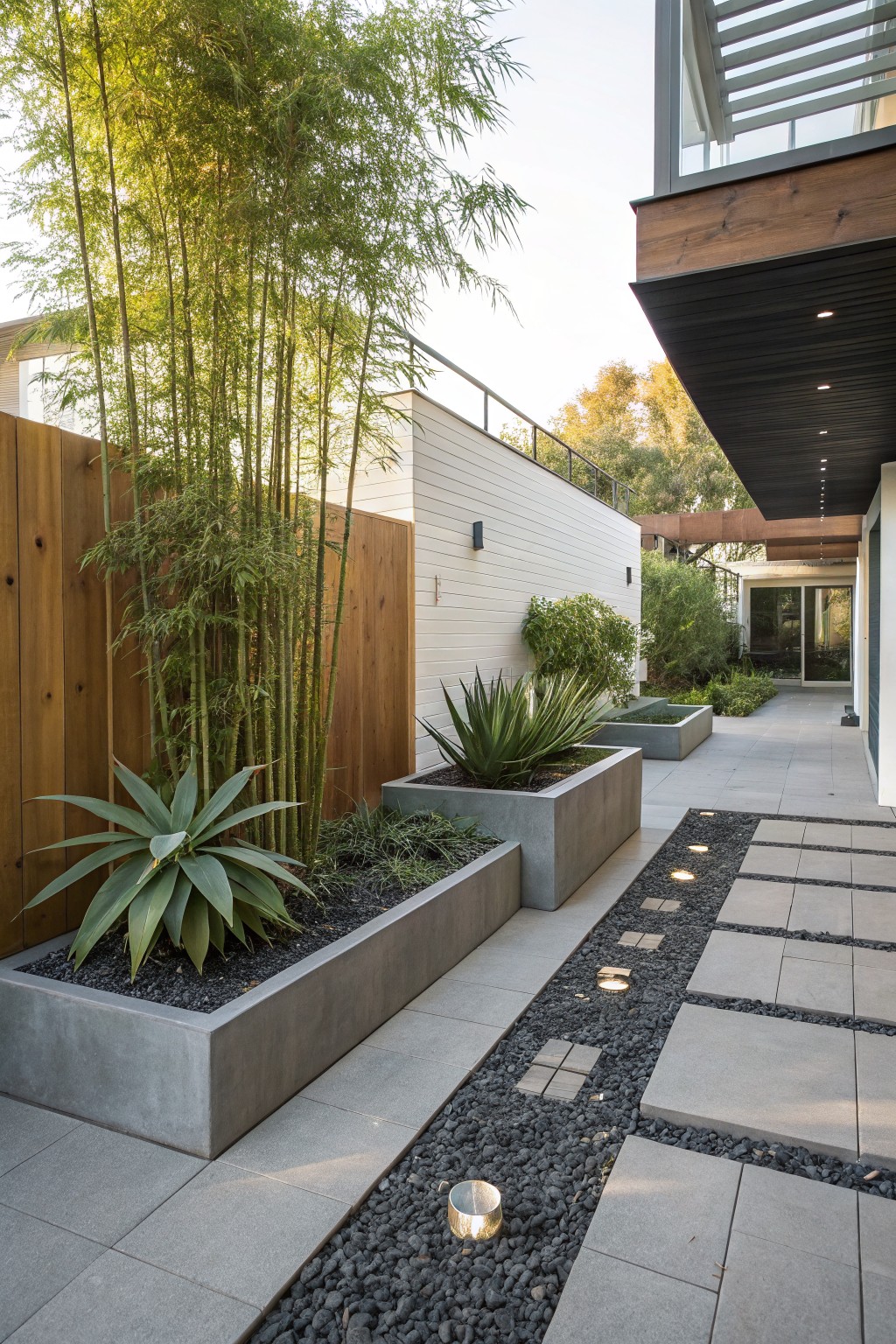
Tall bamboo planted in long concrete boxes makes a quick and effective privacy screen along the side of a house. The height blocks views without needing a solid fence, and the plants add movement and softness that wood or masonry alone cannot match. This setup works especially well on narrow lots where space is tight.
It suits modern homes with clean lines and paved walkways. Place the planters where you need the most coverage, keep the bamboo contained so it does not spread, and choose lower plants like agave in front to add texture without blocking light. Watch the root space if the boxes sit near paving.
Layered Planting For Natural Privacy Screens
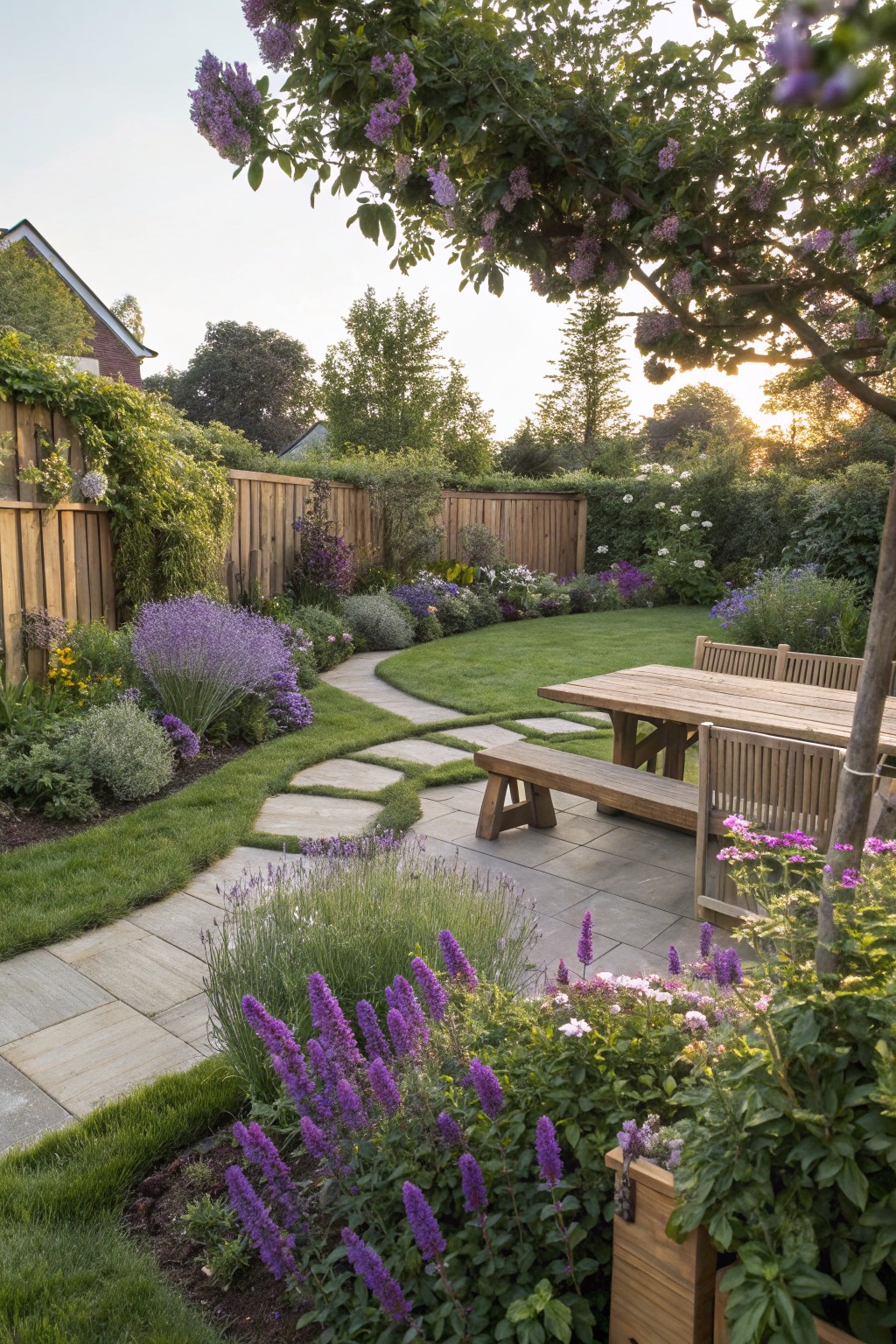
Many backyards rely on a simple mix of trees, shrubs, and lower perennials to form soft screens along the edges. This method gives privacy while still letting light and air move through the space, and it avoids the hard look of a full fence.
It suits homes with curved garden beds or winding paths where you want the planting to feel natural rather than boxed in. Start with taller trees or large shrubs at the back, then step down to mid-height plants and flowers in front so the border stays full without blocking everything at once.
Climbing Vines For Wall Privacy
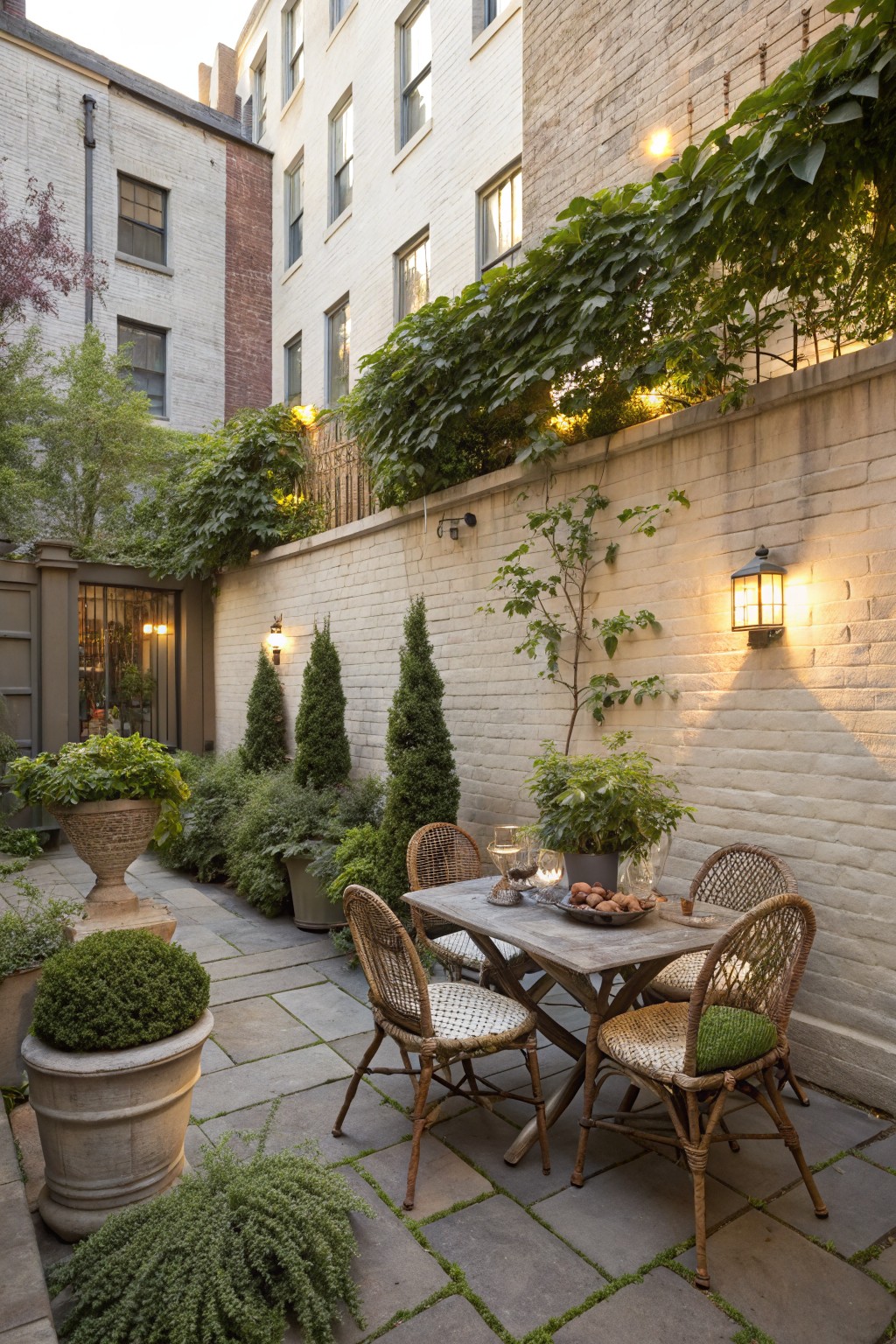
Vines that climb along the top of a wall can turn a plain boundary into a living screen. They soften the hard surface and block sight lines from above without adding bulk or new structures.
This approach works best in tight courtyards or side yards where you need height but have little floor space. Choose a fast grower that suits your climate, then guide the stems along the wall edge so the foliage fills in over time.
Frequently Asked Questions
Q: How often should I water these privacy plants once they are in the ground?
A: Water deeply once a week during the first summer. After that most established plants handle dry spells on their own. Check the soil before you add more.
Q: Can I mix these plants with a fence for extra privacy?
A: Plant them right in front to soften the look. The greenery hides the fence while the structure supports climbing vines. This combo blocks views faster than plants alone.
Q: What plants work if my soil is mostly clay?
A: Choose tough options like willows or certain dogwoods that tolerate wet roots. Amend the planting holes with compost to help them settle in. They will still create a solid screen over time.