I’ve found that patios often end up underused after dark because the lighting never really matches how people actually sit and move through the space.
The right lights can make a patio feel more like part of the house instead of a separate zone that gets ignored once the sun drops.
Small changes tend to work better than overthinking the whole setup.
I usually test one simple option first to see how it holds up before adding anything else.
Over a season or two it becomes obvious which choices keep the area comfortable without creating glare or dark spots.
Mix String Lights With Hanging Pendants
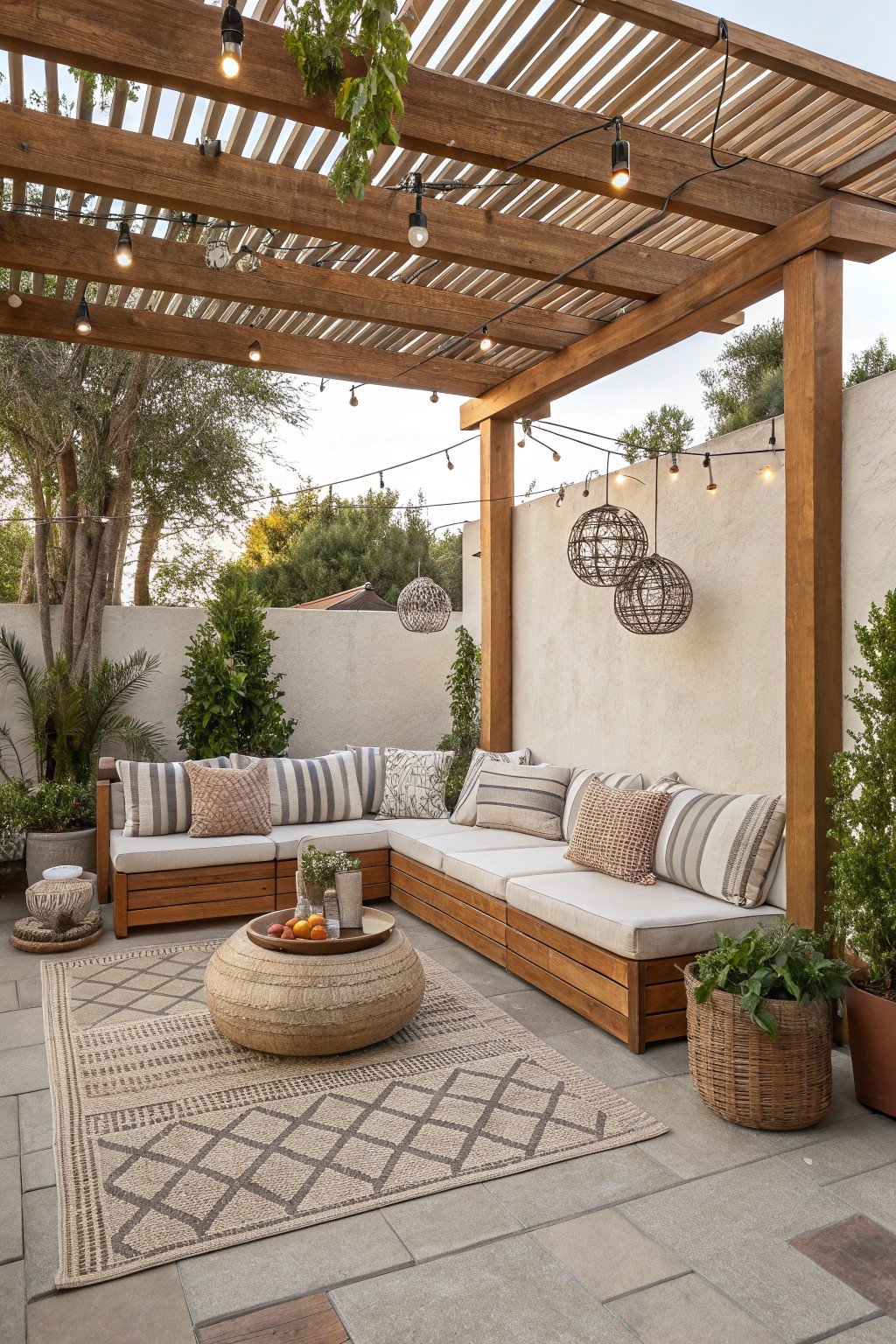
One simple way to make a patio feel finished is to combine string lights with a few hanging fixtures. The strings give a gentle overall glow along the structure while the pendants create a bit more focus right over the seating area.
This approach works especially well on pergolas or covered patios that see evening use. Keep the hanging pieces fairly simple in shape so they do not compete with the wood or the seating below.
Hanging Lanterns For Evening Patio Dining
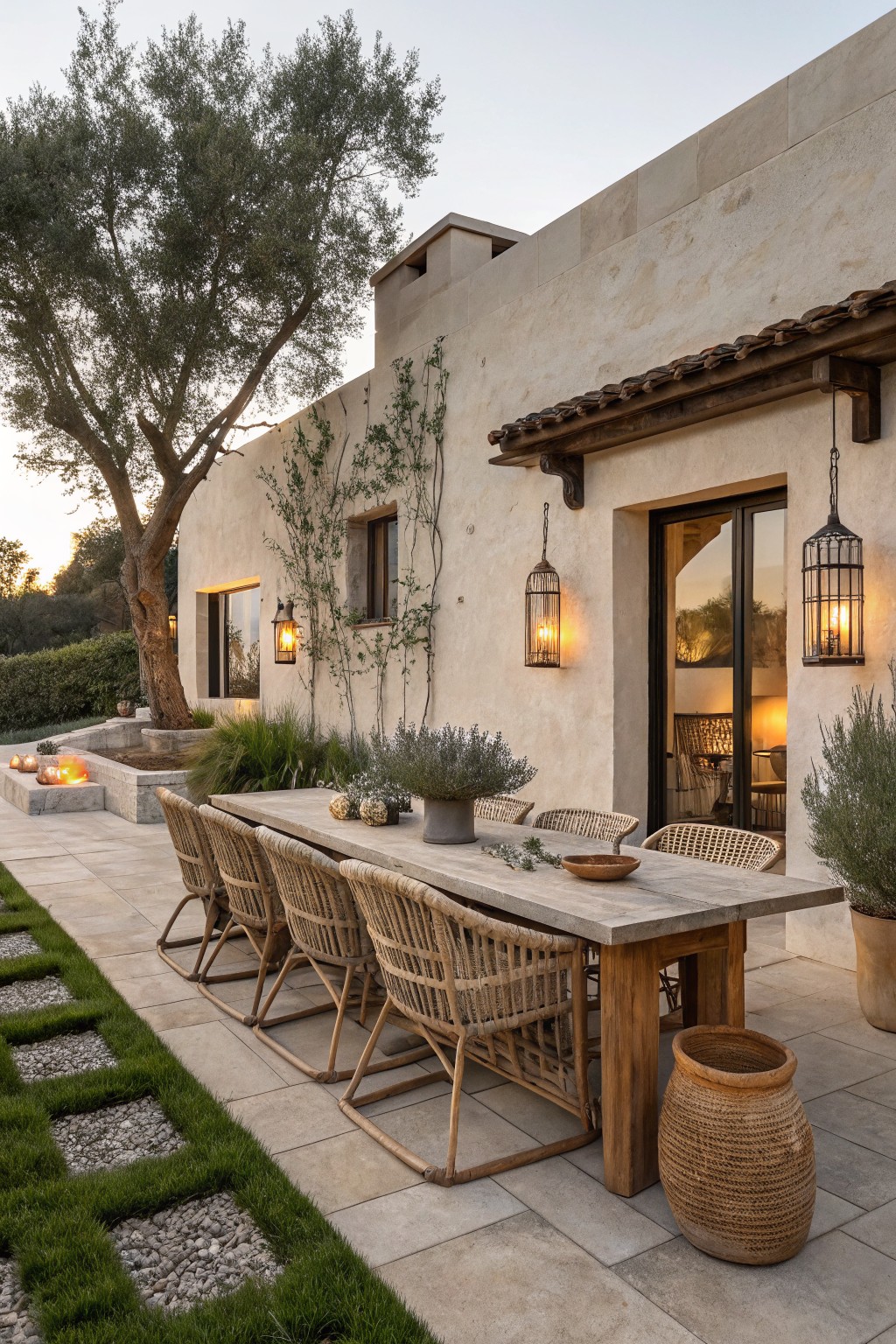
Hanging lanterns give an outdoor dining spot a soft, steady light that feels natural after dark. They sit high enough to stay out of the way but low enough to light the table without needing a big overhead fixture.
This approach works best on patios that already have a solid surface and a few walls nearby. Hang two or three lanterns at slightly different heights so the light spreads gently and does not glare straight down on the table.
String Lights Above Rooftop Seating
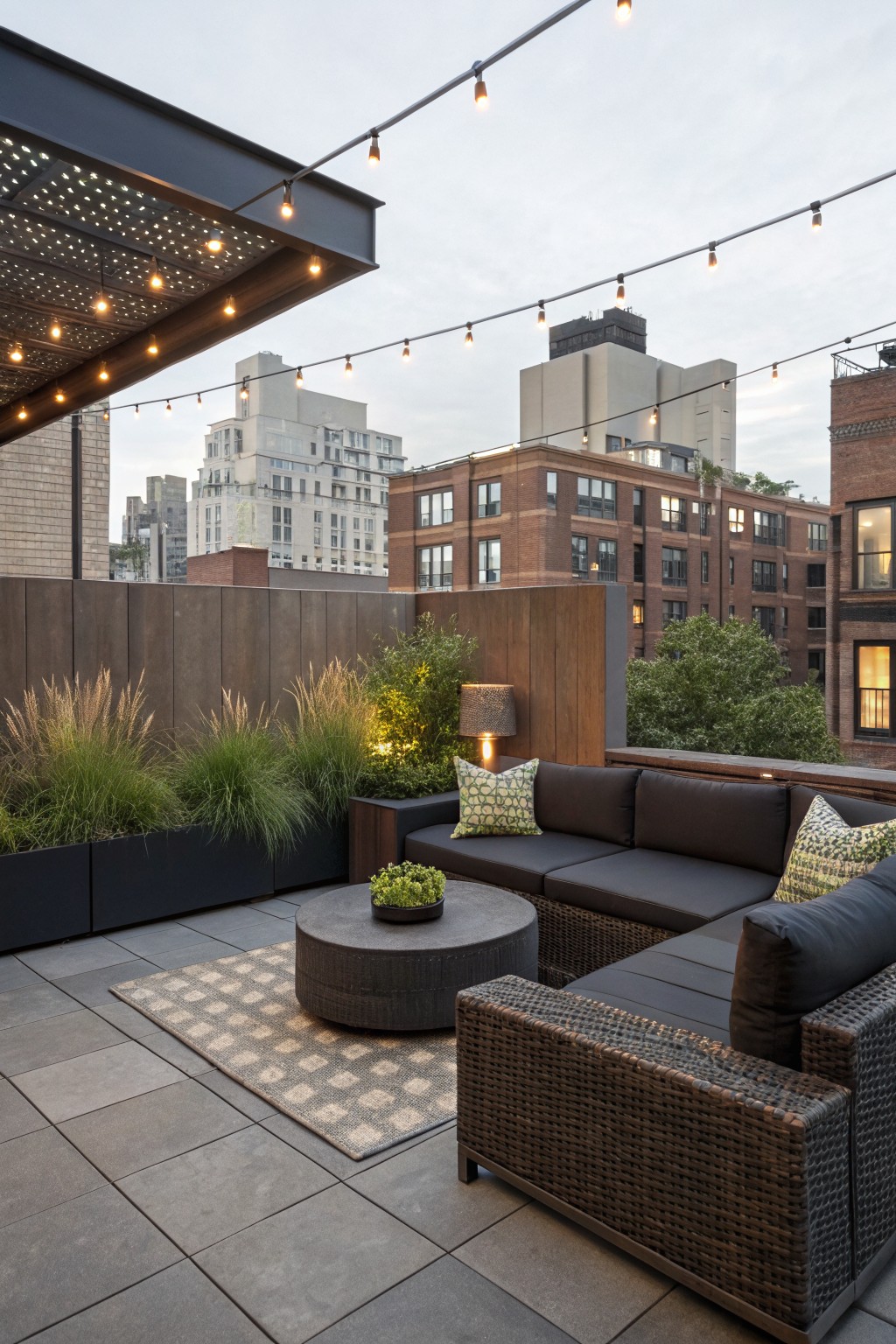
String lights make a patio seating area feel more finished at night. They create a simple overhead layer that softens the space and gives it a gentle glow without needing heavy fixtures or complicated wiring.
Run them from a pergola edge or nearby posts so the light falls across the main seating zone. This works well on rooftops and decks where you want evening use without making the area too bright.
Hang Pendant Lights To Warm Up A Porch

Woven pendant lights give a covered porch the kind of soft overhead glow that makes the space feel finished after dark. They spread light evenly across seating without needing wall sconces or floor lamps that take up room.
These lights work best on porches with decent ceiling height so the fixtures can hang above the main seating zone. Keep the cords simple and choose shades that let some light through rather than blocking it completely.
String Lights Above A Small Patio Dining Area
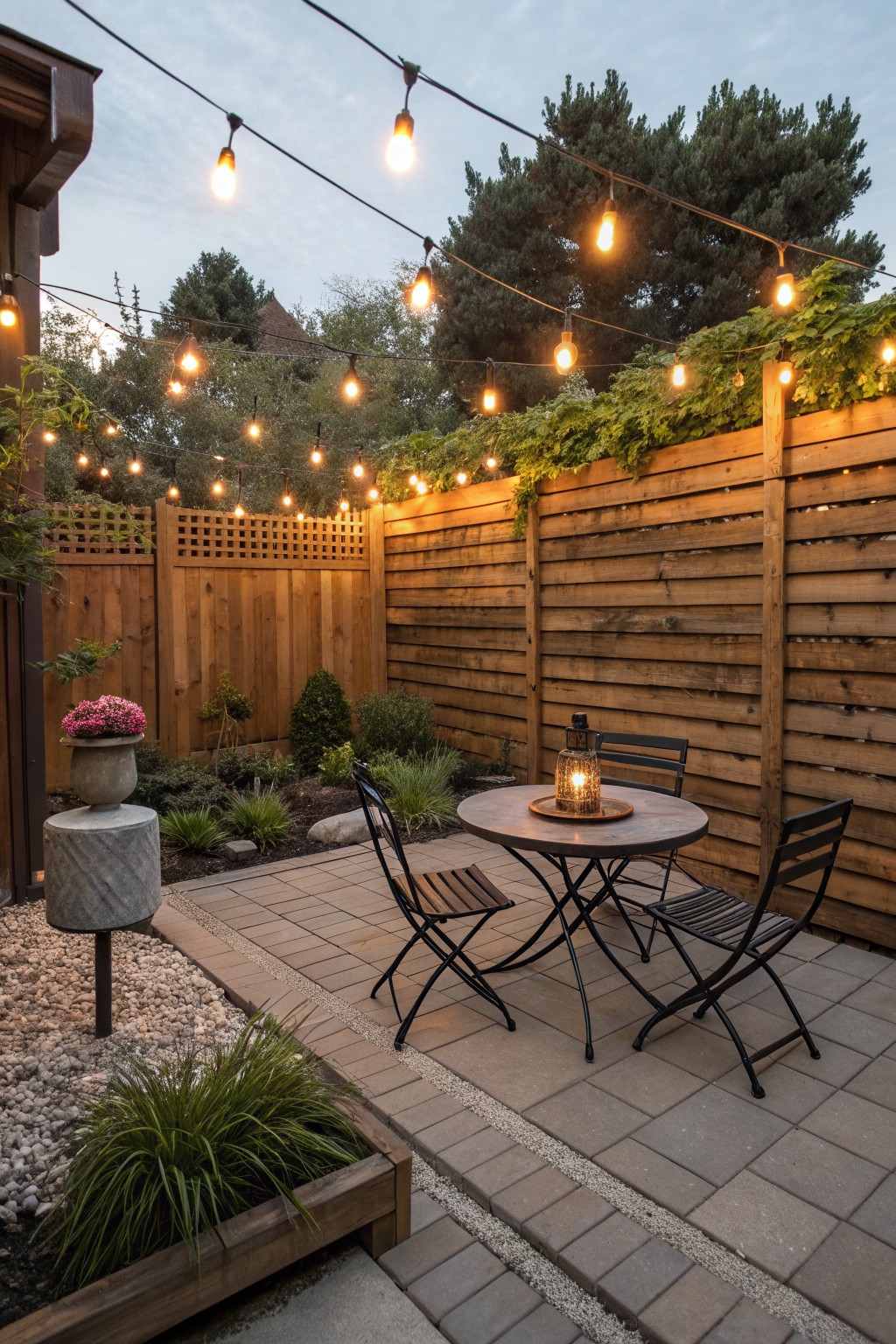
Many patios look a little bare after dark. Running a simple set of string lights across the space gives enough light to use the area in the evening while keeping the feeling relaxed.
This works best over a small seating or dining spot on a deck or patio. Space the lights evenly and keep the bulbs fairly small so the light stays soft rather than harsh.
Hanging Lanterns Over Porch Seating

Hanging lanterns give a porch swing area steady light without needing floor lamps or wall sconces that get in the way. They work especially well on covered spaces where you want the seating to feel set apart from the rest of the deck.
Place the largest lantern right above the swing and add smaller ones on nearby walls or tables. This setup fits homes with wood and stone details and keeps the light warm and even once the sun goes down.
Recessed Lights Under the Overhang

Recessed lights tucked into a patio ceiling give steady light across the whole seating area without adding clutter. They keep the space usable after dark and help it feel like a real extension of the house rather than an afterthought.
This approach works well on homes with a covered outdoor room or deep overhang. Space the lights evenly so the seating and walkways stay evenly lit, and pair them with a fire pit if you want extra warmth on cooler nights.
Mix String Lights With Hanging Lanterns
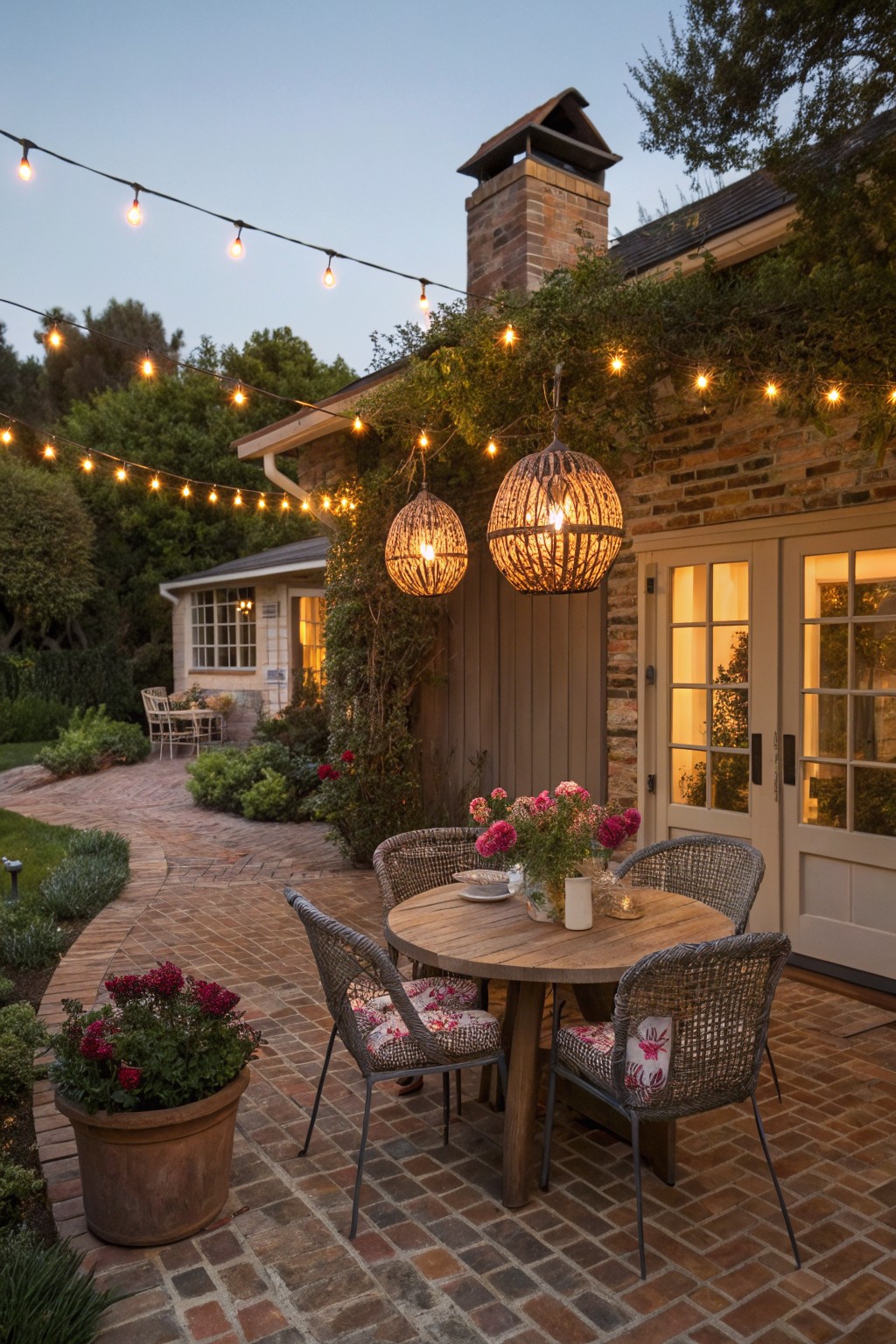
Many people find their patio feels more complete once they add more than one kind of light overhead. String lights give a gentle background glow across the whole space, while a couple of larger hanging lanterns bring warmer light right down to the table where people actually sit and eat.
This approach works best on smaller patios that already have a dining table in place. Hang the lanterns low enough to feel cozy but high enough that no one bumps their head. The mix keeps the area from looking too flat once the sun goes down.
Layer Lanterns Around Built-In Bench Seating

Mixing hanging lanterns with wall sconces around a built-in bench gives the seating area a soft, even glow once the light fades. The different heights keep the light from feeling flat and help the space feel used rather than just decorated.
This approach works best on stone or masonry patios where you already have a solid back wall or archway to mount lights. Keep the number of fixtures modest and focus on warm bulbs so the seating stays comfortable for sitting after dark.
Layer Lanterns And Candles Around Patio Seating
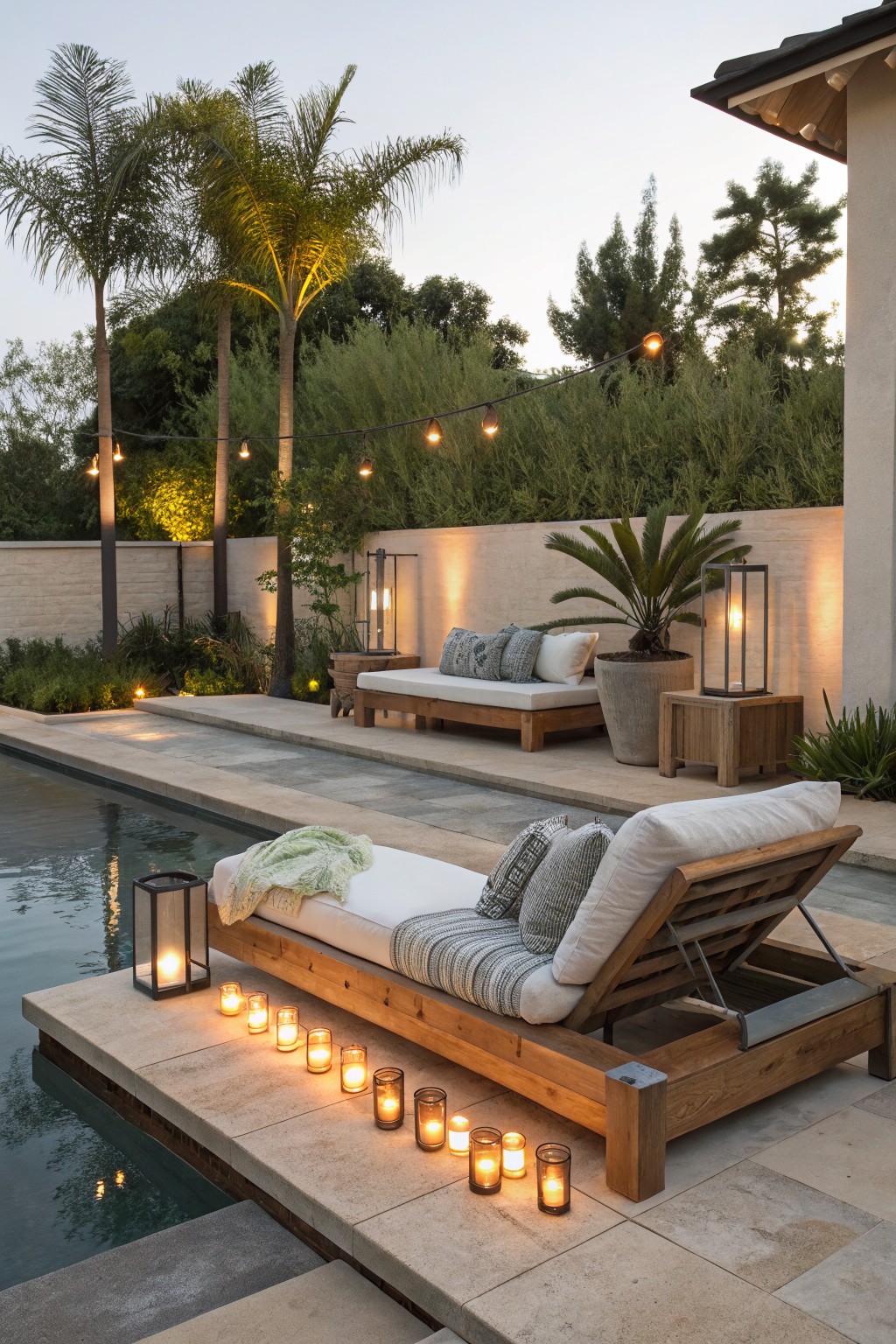
String lights overhead give a soft general glow, but they often need something closer to the seating to feel finished. Adding lanterns and small candles at different heights fills in the lower areas and keeps the space from feeling flat once the sun goes down.
This works best on patios or pool decks where people sit in the evening. Place the lanterns in small groups near the edges of the furniture rather than in one straight line, and keep the string lights simple so the two layers do not compete.
Hang Pendant Lights Over the Island
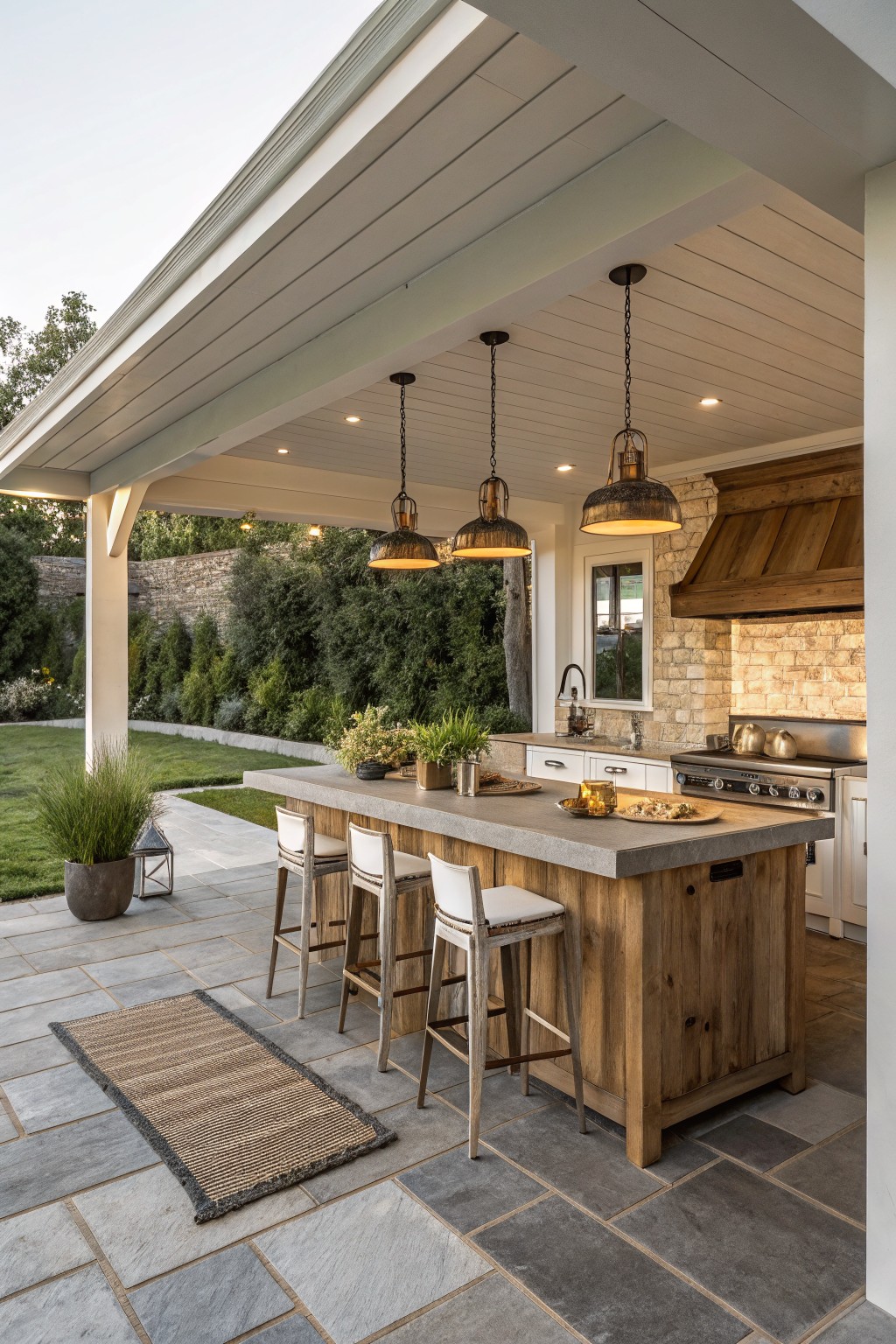
Pendant lights work well over an outdoor island because they create a clear focal point without needing a full ceiling. The light falls exactly where people stand to cook or talk, which makes the whole area feel more finished at night.
This approach suits a covered patio with a solid structure overhead. Keep the fixtures simple and hang them at a height that clears heads but still feels intimate. Avoid overcrowding the space with too many lights if the island is on the smaller side.
Mount Wall Sconces on a Slatted Screen

A simple way to warm up a patio is to mount a pair of wall sconces directly on a vertical wood screen. The screen gives the lights something to attach to and helps bounce the light back into the seating area instead of letting it disappear into the night.
This setup works best on balconies or narrow decks where floor space is tight. Keep the fixtures modest in size and aim them downward so the light stays soft on the seating rather than shining straight out.
String Lights on a Pergola
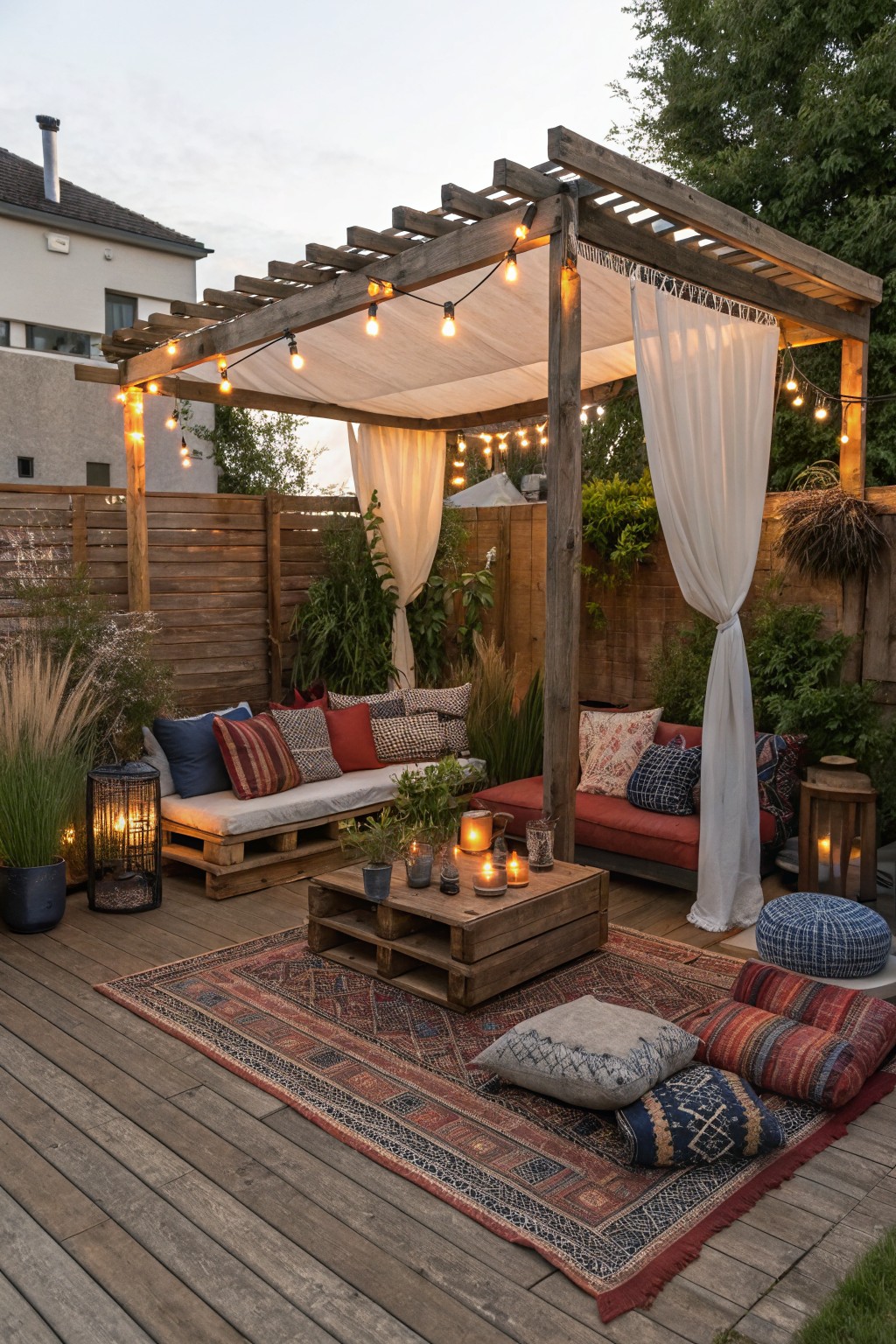
String lights work well when they run across an overhead structure like a pergola. They give the space a gentle glow that makes the seating area feel more settled and ready for use after dark.
This approach suits patios and decks that already have beams or posts in place. Keep the strands simple and even, and add a few low lanterns nearby if you need extra light for reading or meals.
Mount Wall Lanterns Beside Patio Seating

Wall lanterns mounted right on the house give the patio a steady, even light that feels natural after the sun goes down. They keep the seating area usable without adding clutter from floor lamps or too many strings of lights.
This works best on patios or decks that sit against the house. Keep the fixtures simple and place them at a height that lights the chairs without shining directly into anyone’s eyes.
Combine Bench Lighting With A Pergola Pendant
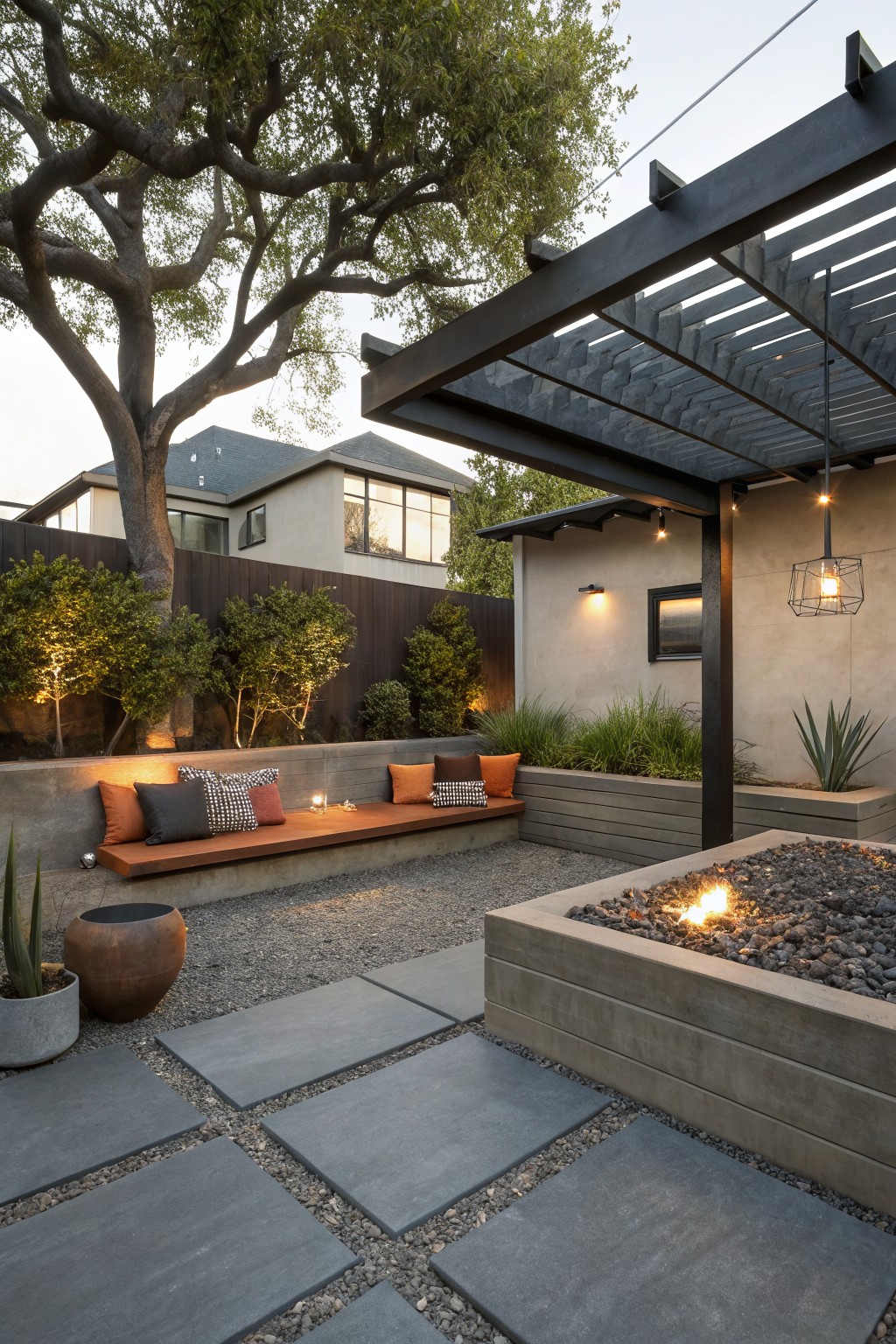
One simple way to make a patio feel finished is to layer lights at different heights instead of relying on one main source. Low lights tucked under a bench create a soft base glow, while a single pendant overhead adds a focal point. The fire pit then brings a moving layer that feels natural after dark.
This works best on patios that already have built-in seating or a pergola. It keeps the space usable in the evening without flooding it with bright light. Keep the fixtures simple and let the different heights do the work.
Hang A Pendant Over The Outdoor Table

A pendant light hung right above the dining table gives an outdoor space a clear center point. It focuses light where people actually sit and eat, which makes the area feel more intentional instead of just lit from the edges.
This works best under a pergola or solid roof where the fixture can hang safely. Use a weatherproof shade in a natural weave and keep the cord length so the light sits low enough to feel warm without getting in the way.
Hang a Large Lantern for Soft Overhead Light
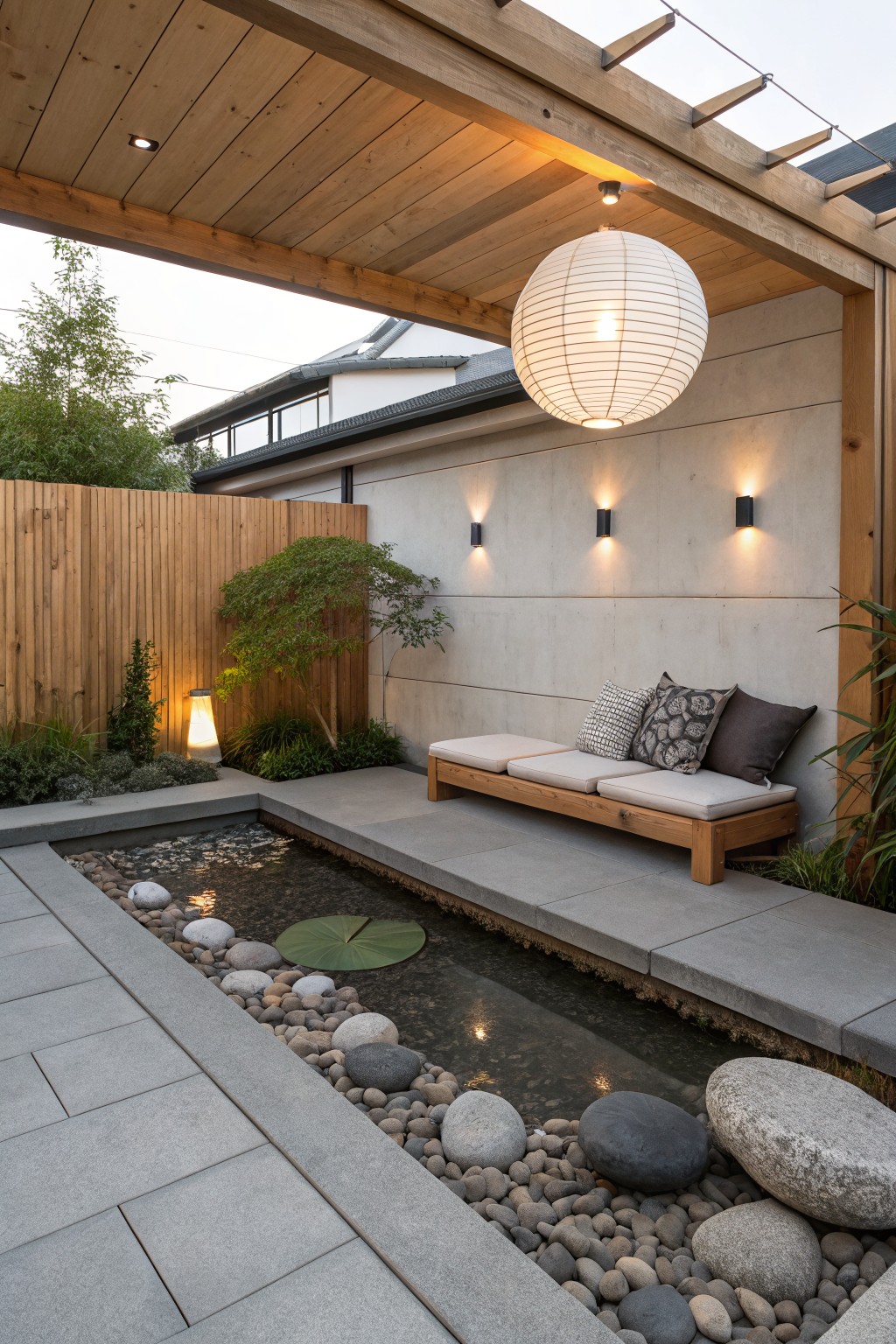
A large hanging lantern gives off a gentle glow that spreads evenly across a seating area without feeling harsh. It works especially well under a pergola or covered patio because the light bounces off the ceiling and softens the whole space. Many people like this approach because it feels finished without needing lots of smaller lights.
This idea suits patios that already have some overhead structure. Place the lantern above the main seating spot and keep other lights lower and dimmer so the lantern stays the focus. It works on both modern and traditional homes as long as the scale feels right for the area.
String Lights Over The Patio Table
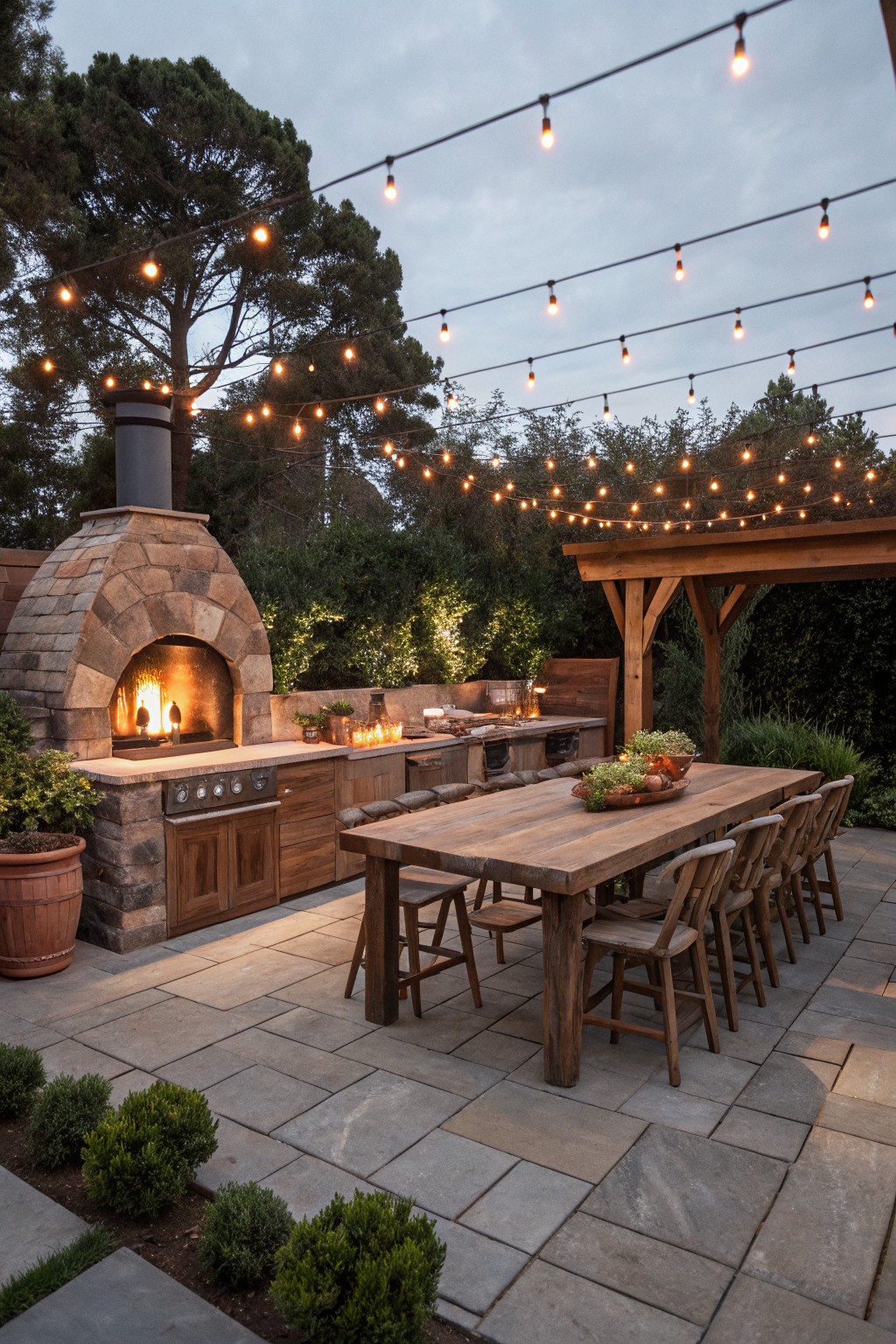
String lights are one of the easiest ways to make an outdoor dining area feel finished. They add a soft overhead glow that works even when the sun is down, and they help tie the whole space together without needing much else.
They work best over a table or seating zone where people gather at night. Keep the strands fairly simple and run them from a pergola, posts, or the house. Just make sure the bulbs are not too bright so the light stays warm rather than harsh.
Low Lights Along Bench Seating

Many patios feel a bit empty once the sun goes down. Small lights placed along the back of a built-in bench give the seating area a soft glow that makes the whole space feel more finished and ready to use.
This approach works best on stone or masonry seating because the lights can tuck into small gaps or sit just under the seat edge. It suits larger yards where you want the main sitting area to stand out without adding tall fixtures everywhere.
String Lights Over the Patio

String lights work well when you want an outdoor living area to feel finished without a lot of extra effort. They add a soft layer of light that helps tie the patio to the house, especially when the doors stay open like they do here.
This approach suits homes with a simple patio or deck right off the main living space. Keep the strands fairly straight and use bulbs that give off a warm tone so the light does not feel too bright at night.
Overhead Lanterns Warm Up Covered Patios

Hanging a few lanterns from the ceiling gives a patio a finished look once the sun goes down. The light sits at the right height to reach the seating area without feeling harsh, and it turns the space into one that people actually want to stay in after dark.
This works best on covered patios or porches with solid ceilings where you can run simple electrical drops. Keep the lanterns fairly large and use two or three so the light feels balanced rather than spotty. Avoid anything too enclosed if you want the glow to spread across the seating.
Combine Hanging Pendants With Low Lanterns
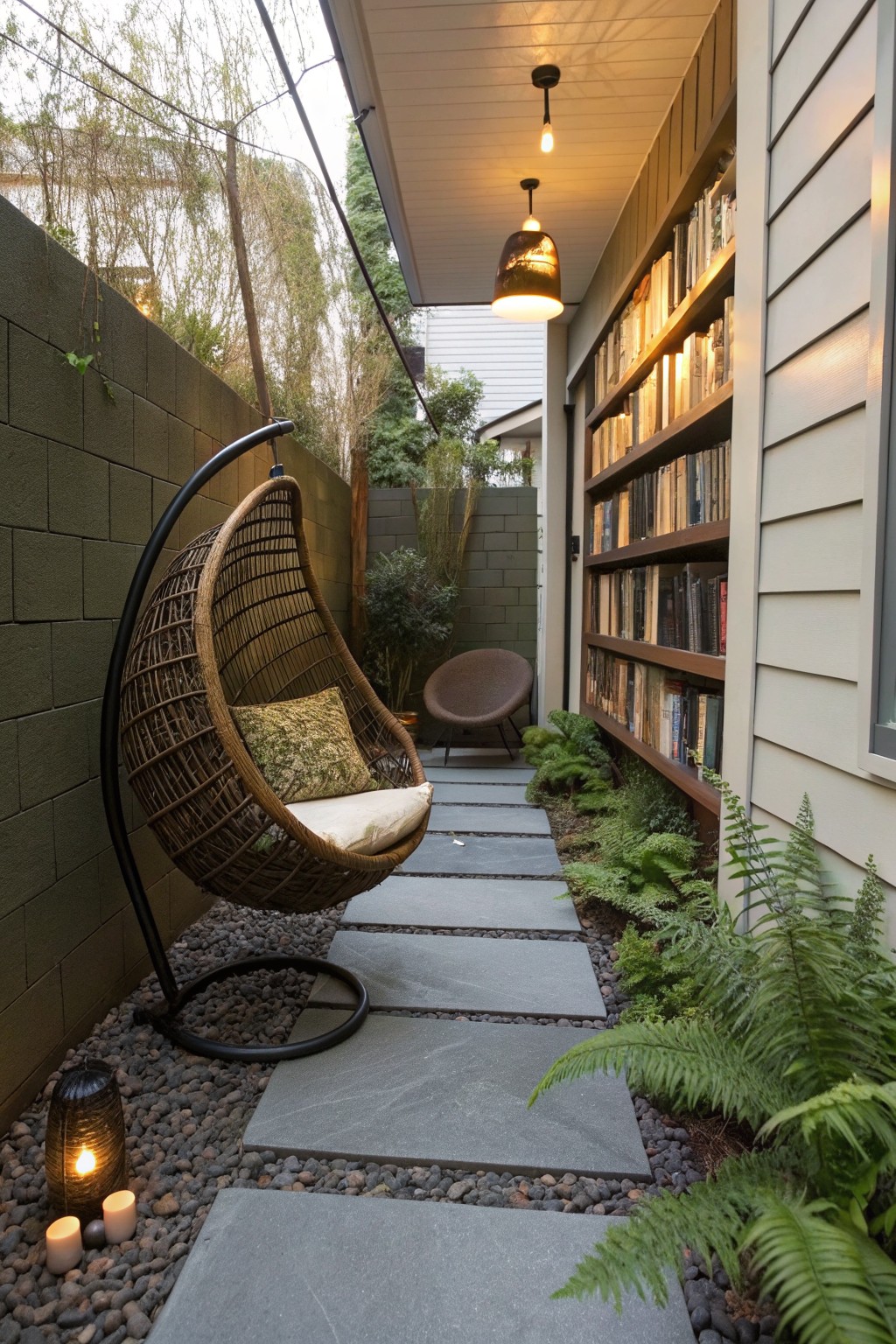
Hanging a couple of pendant lights under a covered outdoor area gives steady overhead light without feeling harsh. Pairing them with lanterns or candles placed low on the ground adds a softer layer that makes the space feel more settled at night. The mix keeps things practical while still feeling relaxed.
This approach works well on narrow side patios or walkways where you need enough light to move around safely but do not want everything lit from one source. It suits homes with simple covered overhangs and works best when the lower lights stay close to seating or the edges of the path.
Hang Lanterns from the Pergola
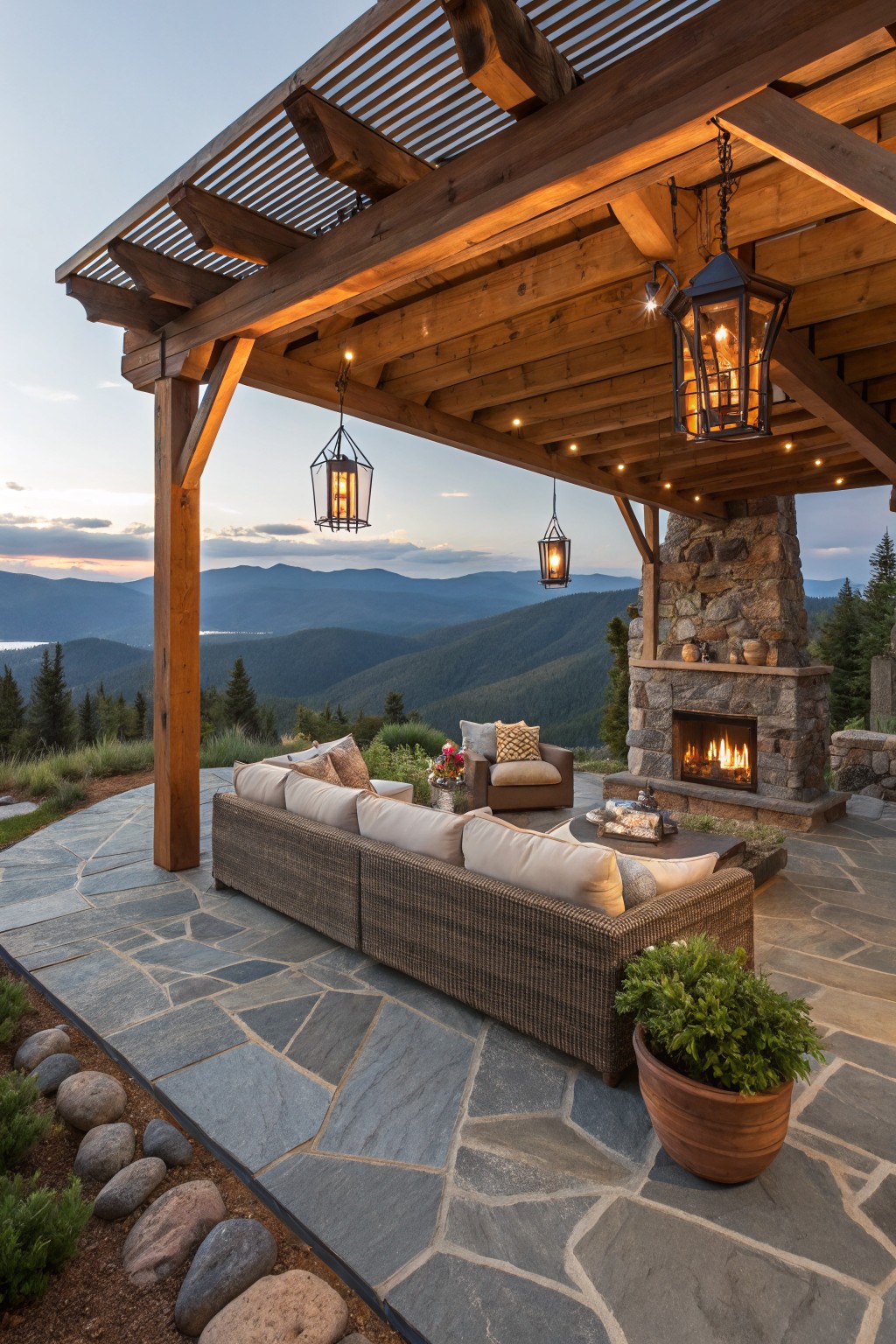
Hanging lanterns work well on a covered patio because they spread light at eye level instead of leaving everything dark overhead. The mix of a few larger lanterns and smaller string lights keeps the glow even without feeling bright.
Try spacing them along the main beams so the light falls over seating areas. This setup suits wood pergolas and stone fireplaces especially, since the lanterns echo the natural materials already in place.
Layer String Lights With A Wall Lantern
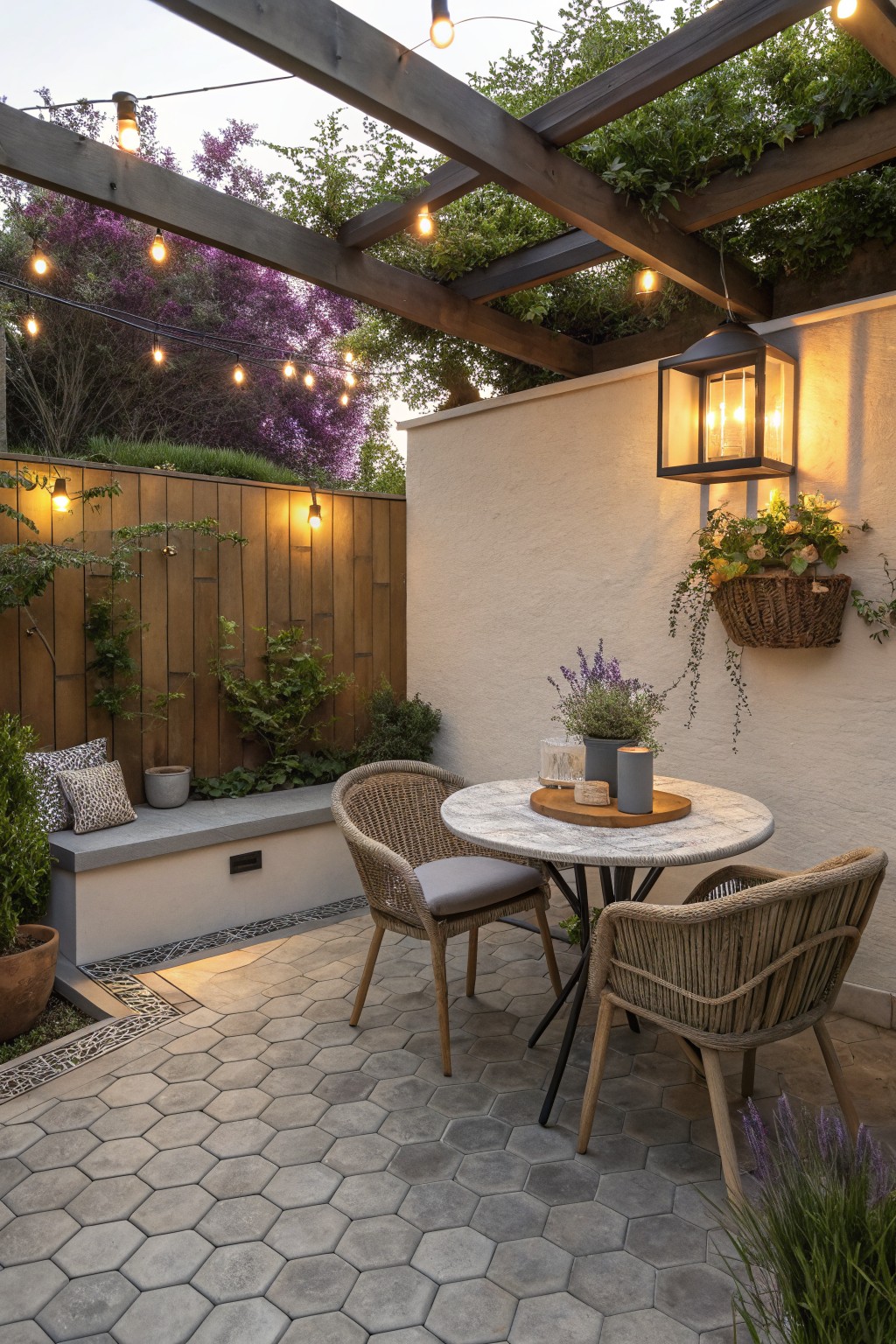
String lights stretched across a pergola give an outdoor space that soft evening glow without needing much else. Pairing them with one larger lantern on the wall adds a steadier light source that feels more finished and helps the whole area look intentional rather than just strung up for the season.
This mix works well on smaller patios where you want light at different heights. Keep the string lights simple and warm, and choose a lantern that sits flat against the wall so it does not take up seating space. It suits most covered patios and works on both wood and stucco surfaces.
Layer Lighting at Different Heights
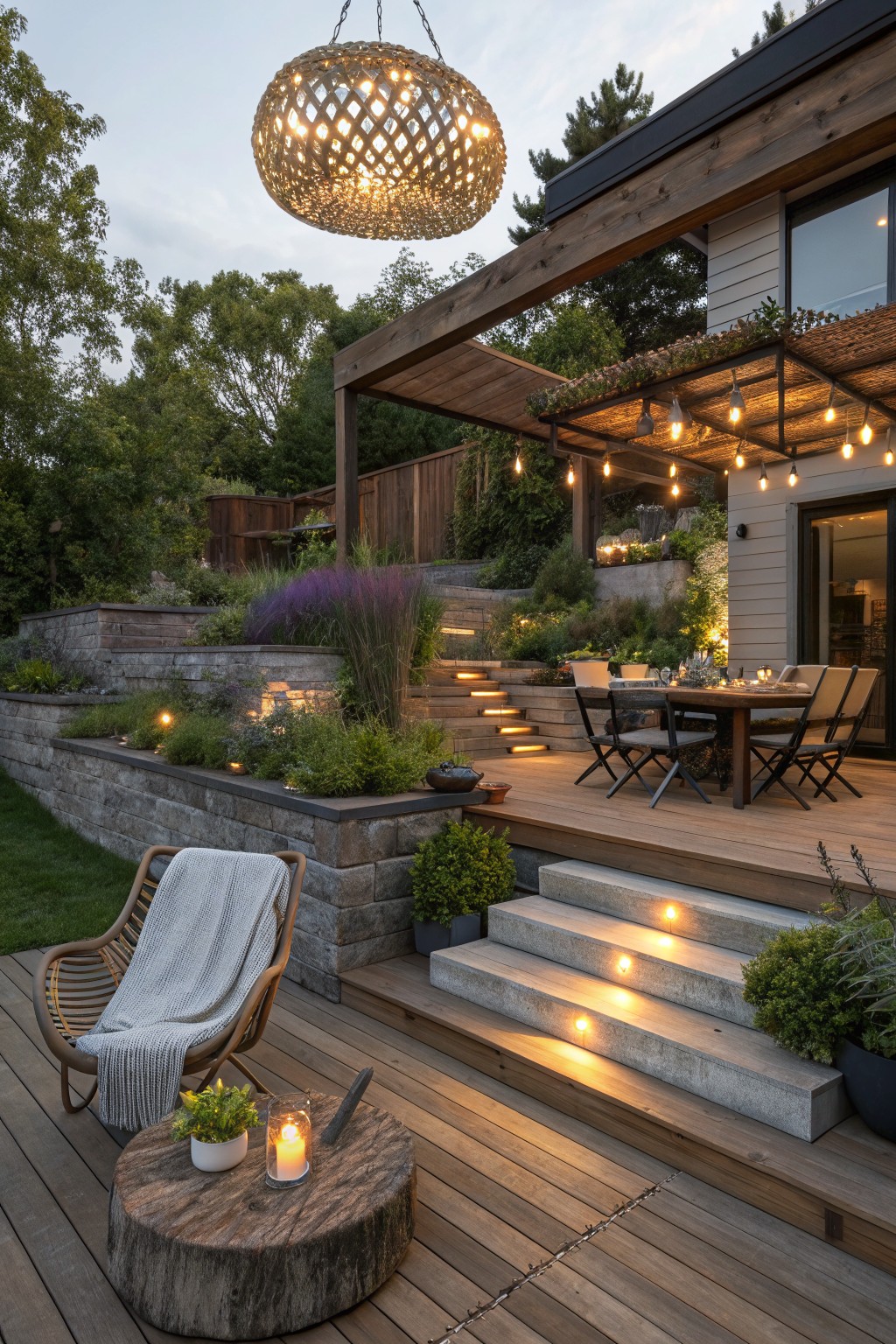
A big overhead light paired with smaller accents along the ground and steps gives a patio that finished evening look without much effort. The mix keeps the space from feeling flat once the sun goes down and makes it easy to use the area for dinner or quiet time outside.
This approach works well on most wood decks or stone patios where you already have some structure overhead. Keep the main light fairly large and centered, then add small fixtures on the stairs and along low walls so people can move around safely while the whole area still feels soft.
Frequently Asked Questions
Q: How do I pick bulbs that give off a warm glow without being too bright? A: Start with soft white LED bulbs around 2700K. They mimic the cozy feel of old incandescent lights. Test one or two first to see how they look on your patio at night.
Q: What if I want to move the lights around for different setups? A: Go with portable options like battery powered lanterns or clip on spotlights. These let you shift things easily as the seasons change. Plug in models work fine if you have a few outlets handy.
Q: How can I light up a table area for evening meals? A: Place a couple of low lanterns right on the table surface. Add a string of lights overhead to spread the light evenly. This setup keeps things functional while staying relaxed.