When I first tried to use my own narrow backyard the length made every step feel like it was leading nowhere in particular.
Simple changes to how paths curve or where a bench sits can turn that tunnel effect into something that actually invites you to slow down and stay awhile.
Flow matters more than I expected.
A few of these adjustments have worked well for me because they create small pauses without crowding the space or blocking light along the sides.
Testing one layout tweak at a time helped me see which ideas really open the yard up instead of just adding more lines to look at.
Lay a Straight Path Through Narrow Yards
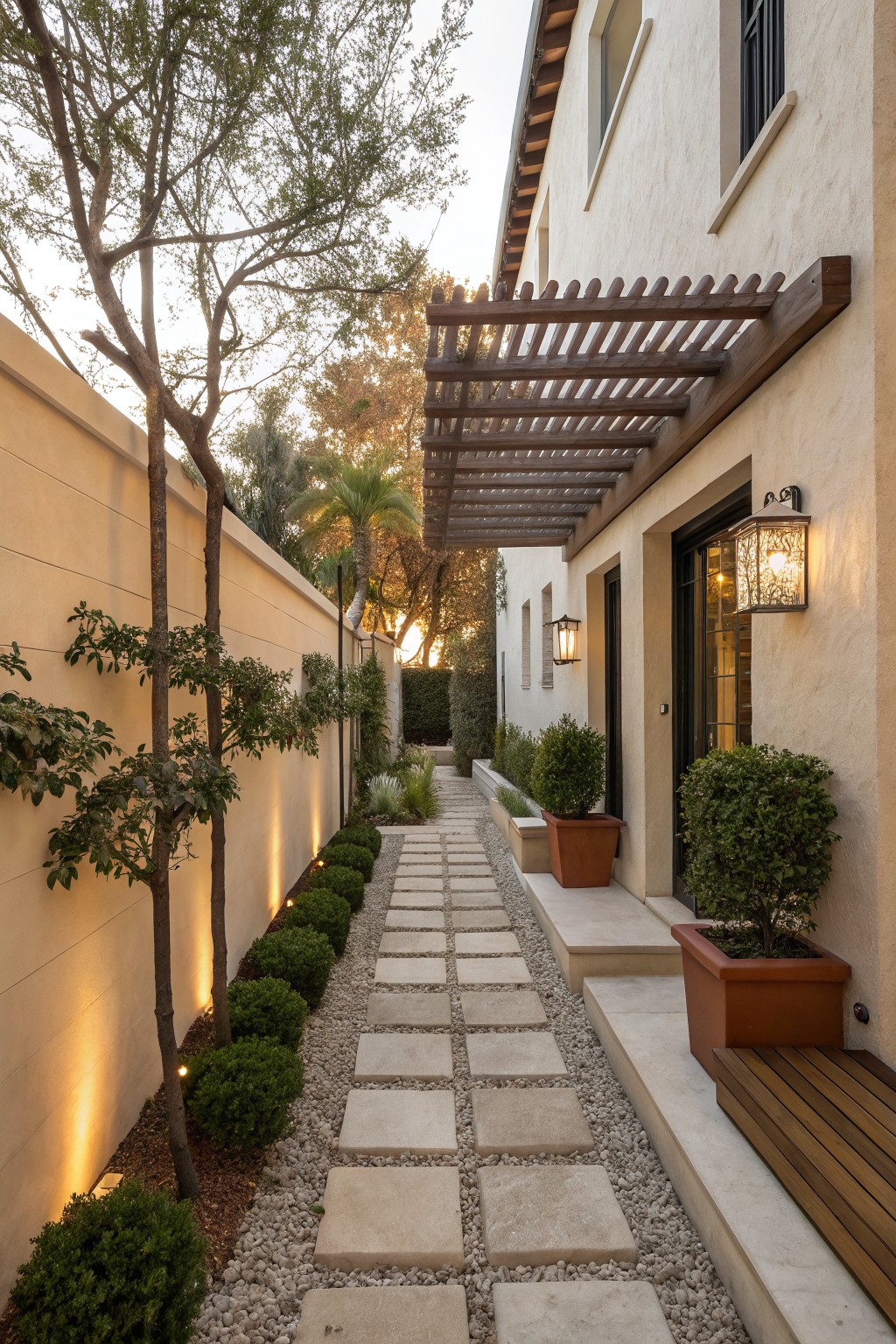
A simple path of pavers set into gravel gives a narrow side yard a clear line to follow. It stops the space from feeling like a leftover strip and turns it into something you can actually walk through without brushing plants or walls.
This layout works best on long, tight lots where you need to move from the front to the back. Keep the pavers wide enough for comfortable steps, hold the plants low along the edges, and add a few lights so the path stays safe at night.
Run Seating Parallel to the Deck
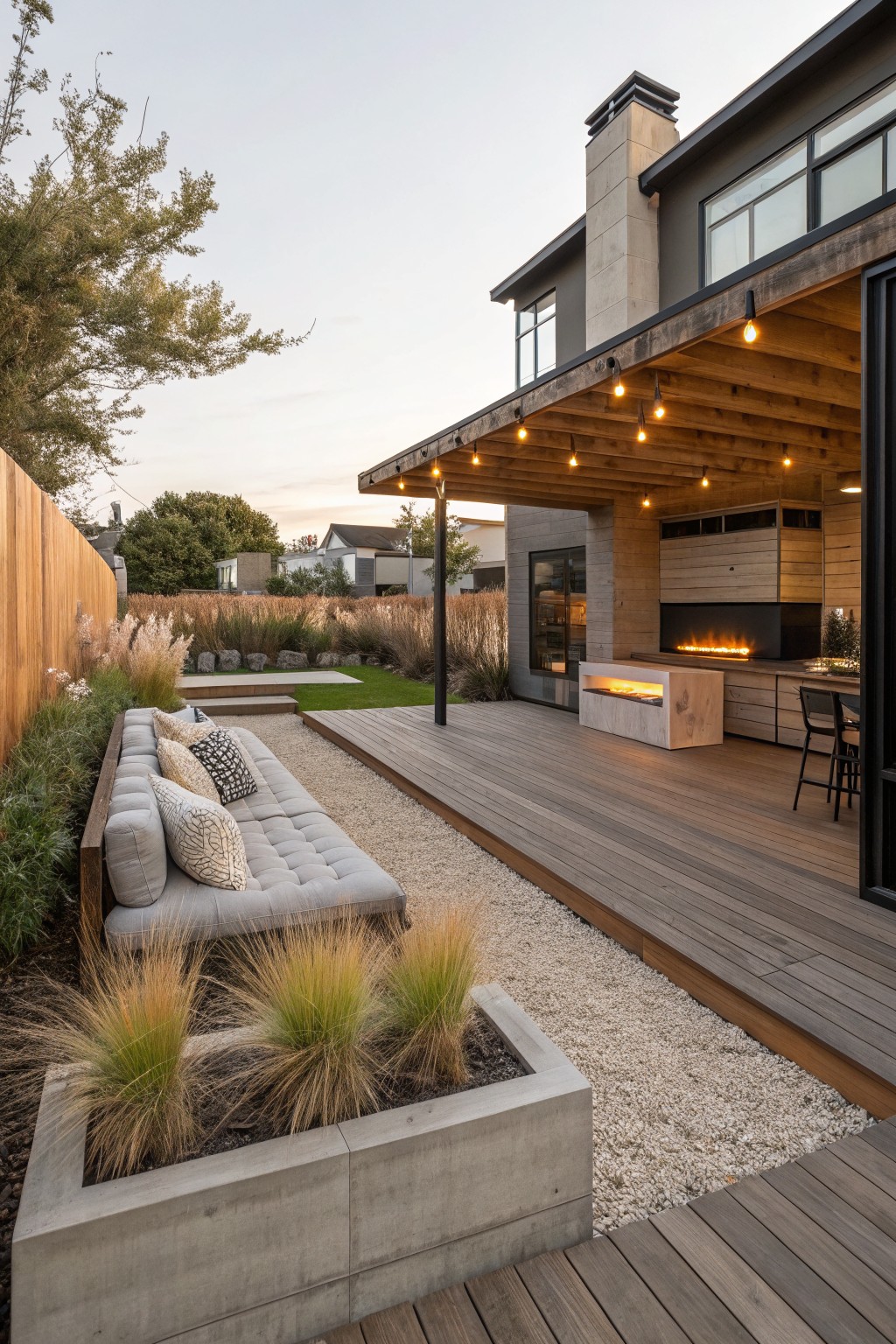
A long, narrow backyard often feels cramped when everything sits in one line. Placing a built-in or sectional bench along one edge, set on gravel or a low planter, keeps the main deck clear for walking and gives the space two distinct but connected zones. The result is better flow without losing seating.
This setup works well on long lots because it stretches the usable area instead of cutting it short with crosswise furniture. It suits homes where the yard runs beside the house rather than straight out from it. Just keep the bench low and the path wide enough for easy movement between the two areas.
Add A Stepping Stone Path Through Gravel
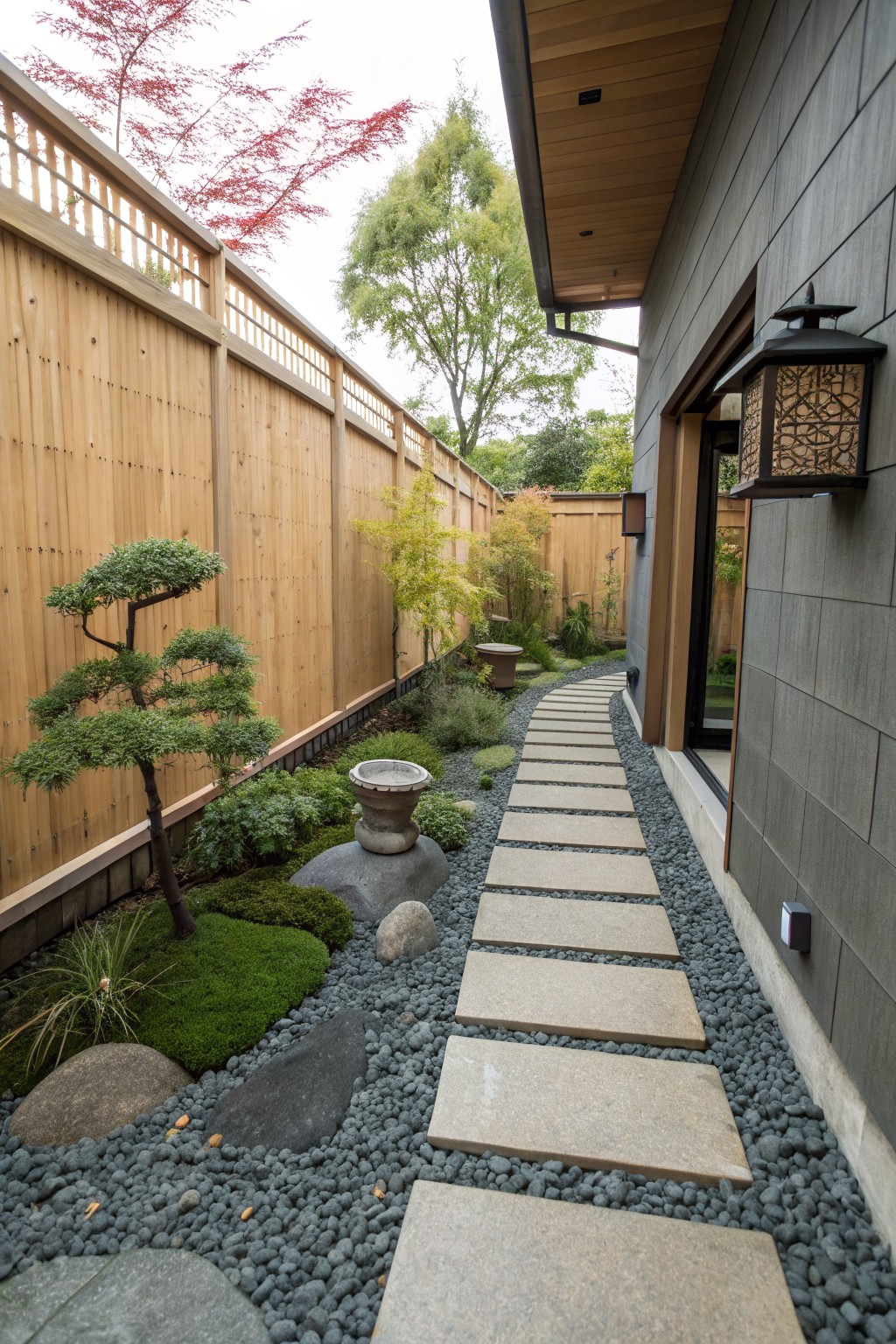
A simple path of flat stones set into gravel gives a clear walking line through a long narrow yard. It keeps the space from feeling closed in because the gravel spreads out on both sides and the stones stay narrow enough to leave room for planting along the edges.
This works best in backyards that run straight behind the house with little width to spare. Space the stones evenly so the walk feels steady, and keep the gravel layer thick enough to stay in place over time.
Add a Long Water Feature Along One Side
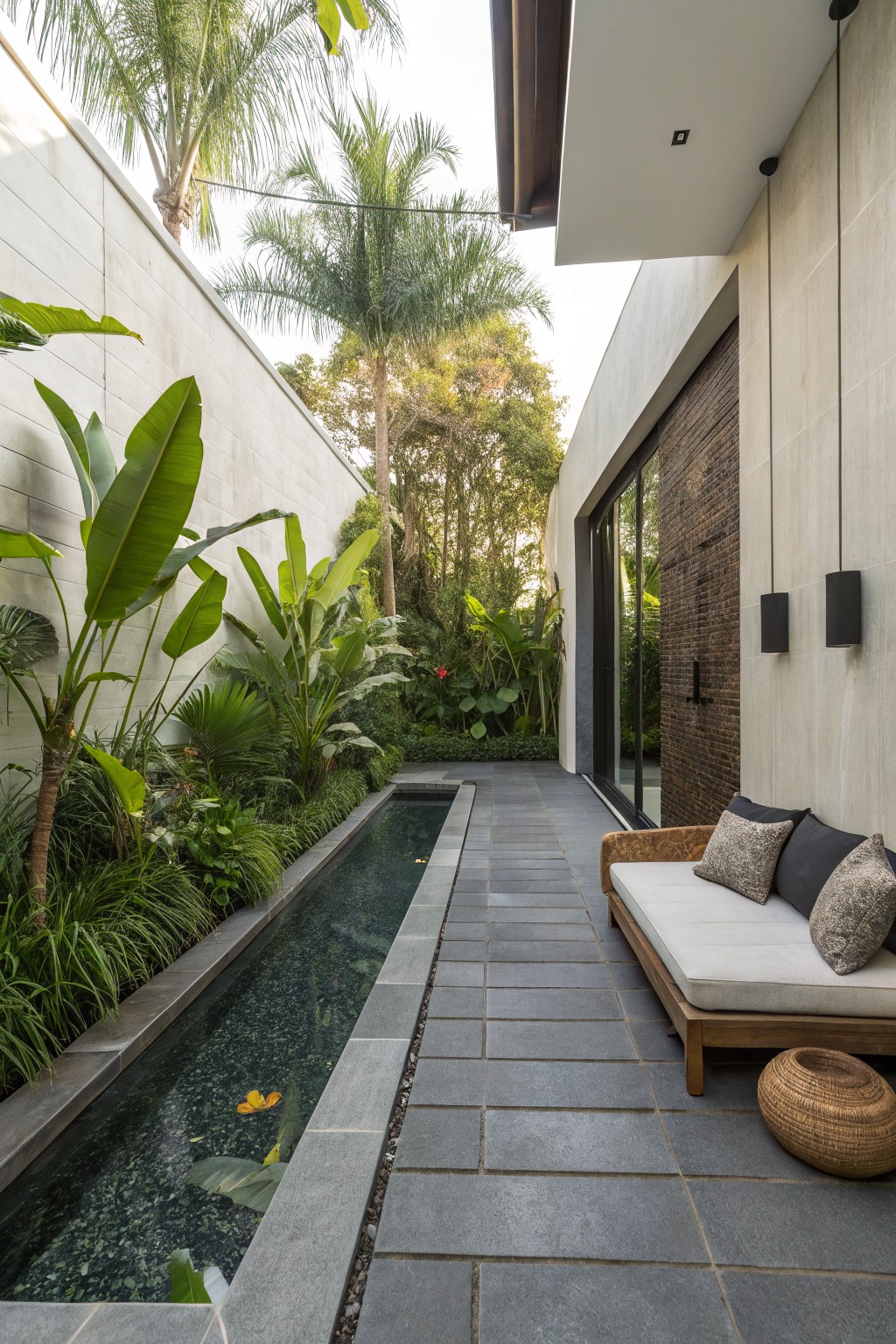
A narrow backyard often feels more open when a long water feature runs the full length. It creates a steady line that guides movement from one end to the other and keeps the space from feeling chopped up.
This approach works best in tight side yards or townhouse lots where width is limited. Keep the channel narrow, use simple edging, and let the planting stay low on the far side so the water does the main work of connecting the space.
Line the Outdoor Kitchen Along One Wall
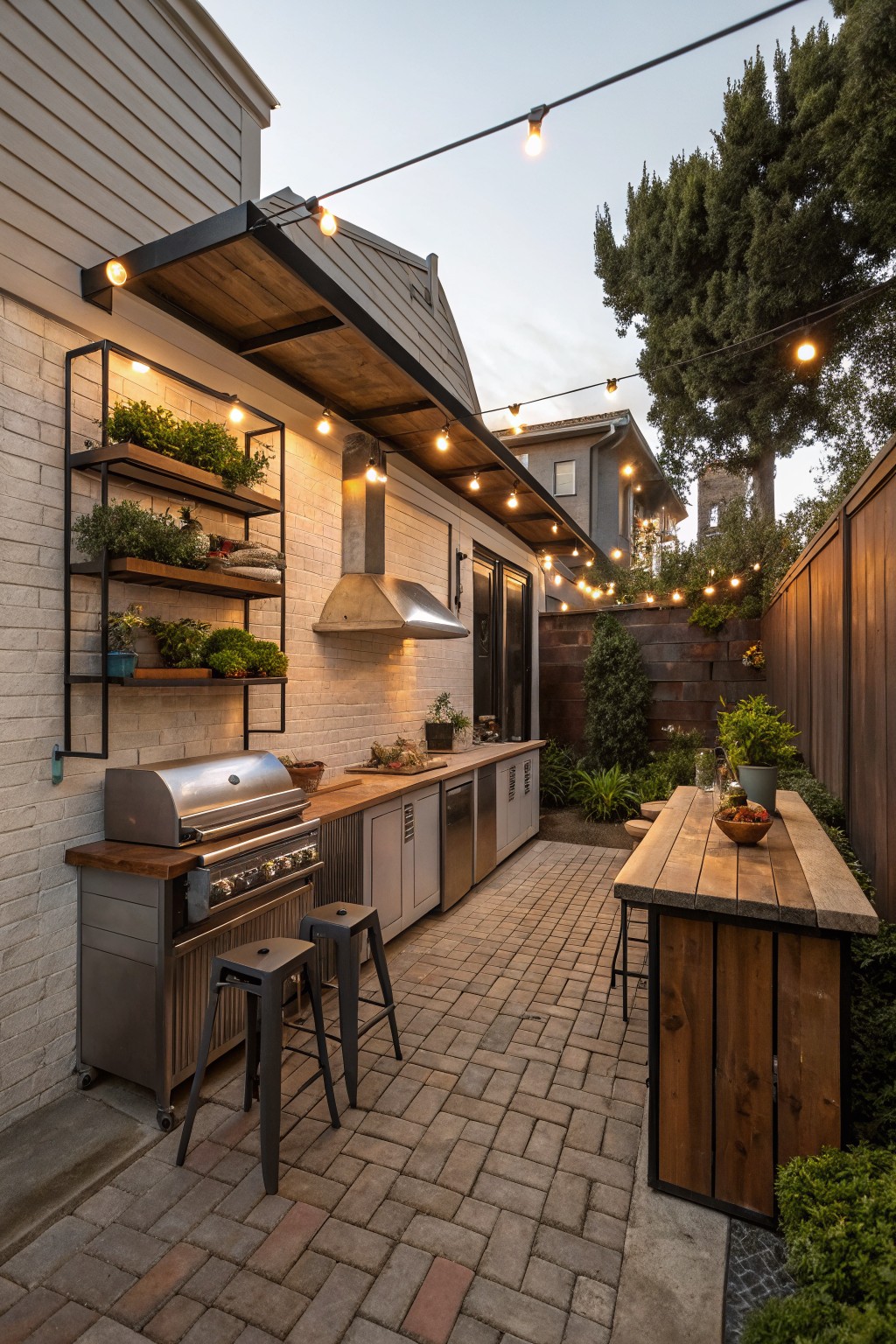
Placing the main cooking area along one long wall helps a narrow backyard feel more open. The counters and grill stay out of the way, so the center stays clear for walking through without bumping into things. This setup works especially well when the space is tight on width but has decent length to work with.
It also makes the yard easier to use day to day. You can add a simple table and stools on the opposite side for eating, which keeps the two zones separate but connected. Just watch the width of the path in the middle so it stays comfortable for two people to pass each other.
Winding Paths Add Flow To Narrow Gardens

A gently curving stone path can make a long narrow backyard feel less like a straight corridor. It breaks the line of sight so the space feels wider and more interesting as you walk through it. The path also gives you a clear route without eating up too much planting room on either side.
This approach works especially well in smaller lots where you want to slow the eye and create a sense of journey. Keep the path a comfortable width for two people and let the garden beds curve along with it so the whole layout feels connected rather than forced.
Create Flow With a Winding Path
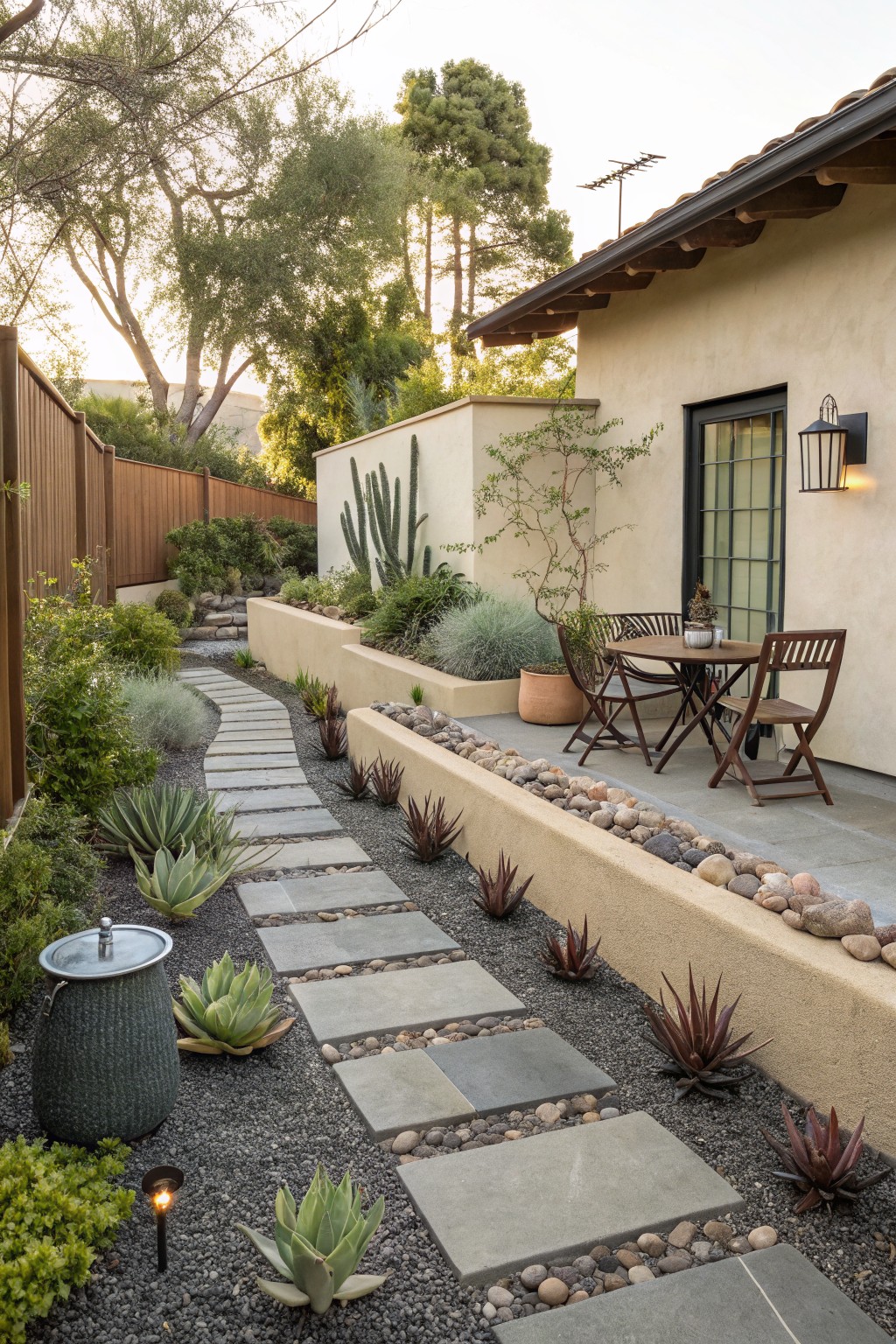
A winding path made of stepping stones set in gravel works well in narrow backyards because it breaks up the straight line of the space without eating up much room. The gentle curve slows the eye and makes the yard feel less like a corridor.
This approach suits long side yards or slim lots where a straight walkway would feel too rigid. Keep the stones fairly large and space them for comfortable steps, then fill the gaps with gravel so water drains easily and weeds stay down.
Run A Straight Path Through The Yard
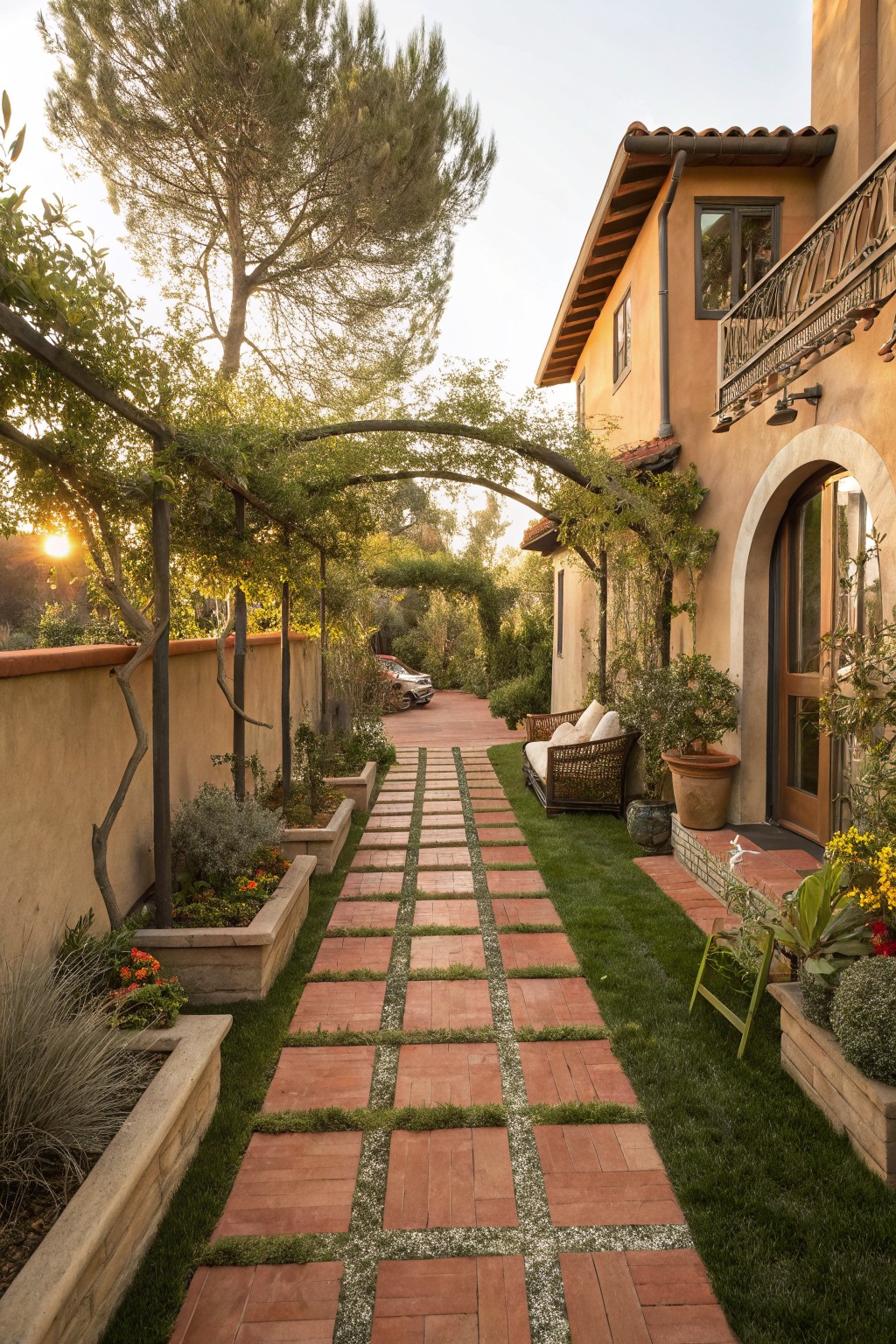
A long straight path helps a narrow backyard feel more open because it gives the eye one clear direction to follow. The grid pattern of pavers with grass in the joints keeps the walkway from looking too heavy while still marking the main route through the space.
This approach works best on long lots where side plantings stay low and simple. Keep the path centered or slightly offset and match the brick color to any nearby hardscape so the whole yard reads as one connected area rather than a series of separate zones.
Stepping Stone Paths Through Gravel
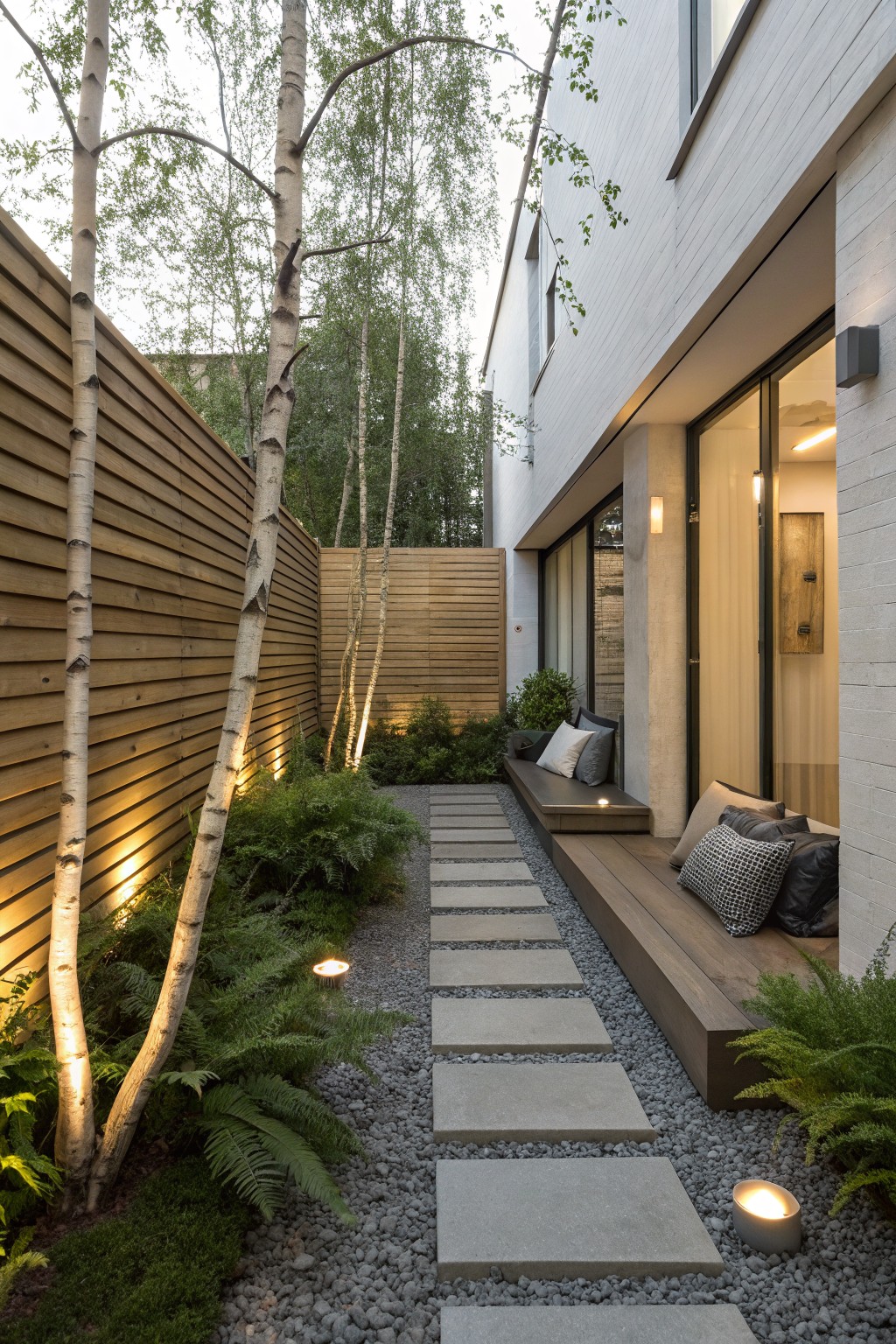
A simple line of stepping stones set into gravel gives a narrow backyard a clear route without crowding the space. The stones sit low and let the eye travel the full length of the yard, which helps the area feel longer and more usable instead of cramped.
This layout works best in side yards or slim lots where you need to move from the house to the back without losing planting room on either side. Keep the stones large and evenly spaced so the path feels steady underfoot, and let low plants or trees soften the edges.
Zone Narrow Yards With a Central Path
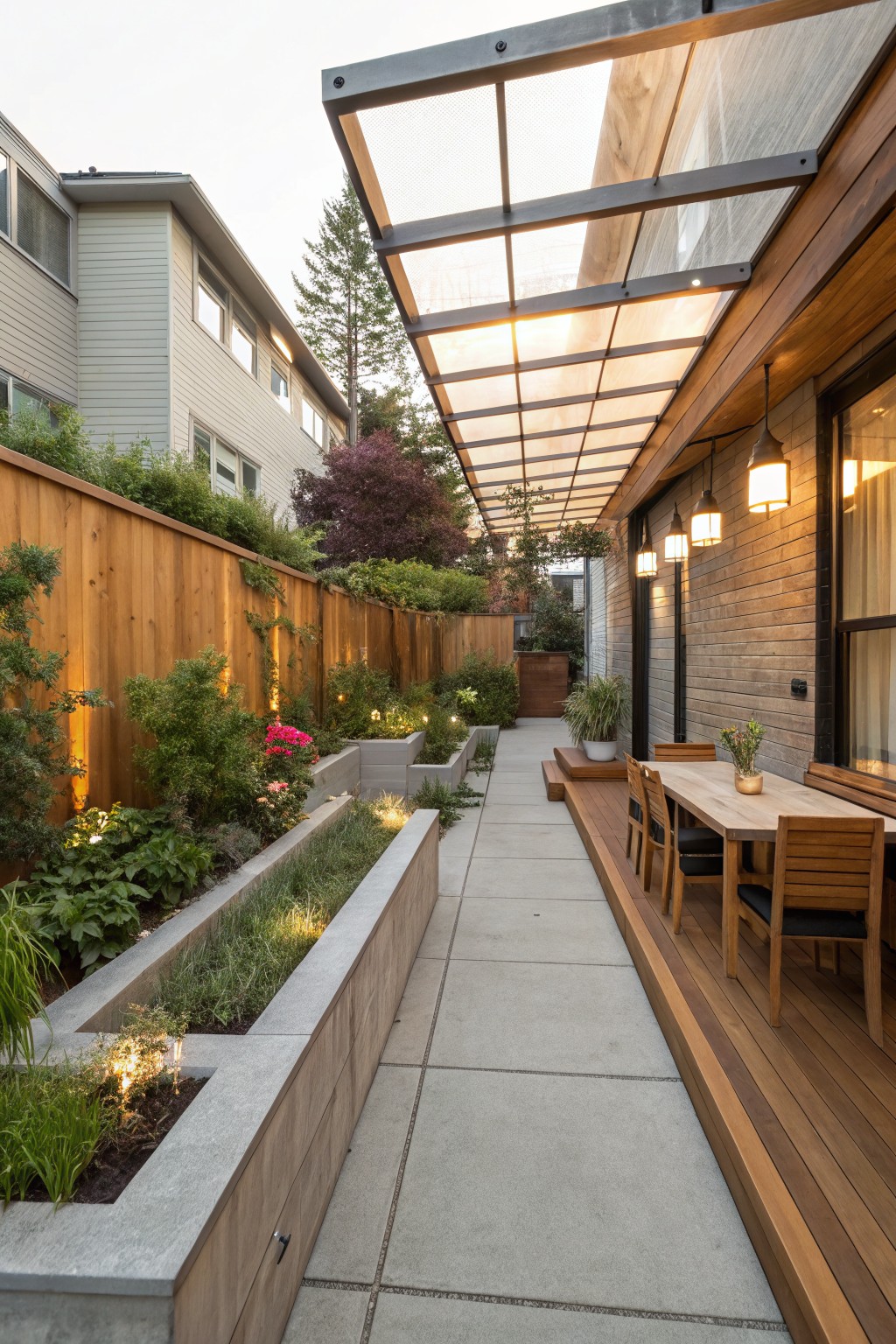
A straight central path works well in long narrow backyards because it keeps movement simple and prevents the space from feeling chopped up. It also gives you room on both sides to add planting and seating without crowding the main walkway.
This setup works best when one side holds low raised beds and the other holds a deck or bench area. Keep the path wide enough for two people to pass and use the same material throughout so the eye travels easily from one end to the other.
Lay a Straight Path Through the Yard
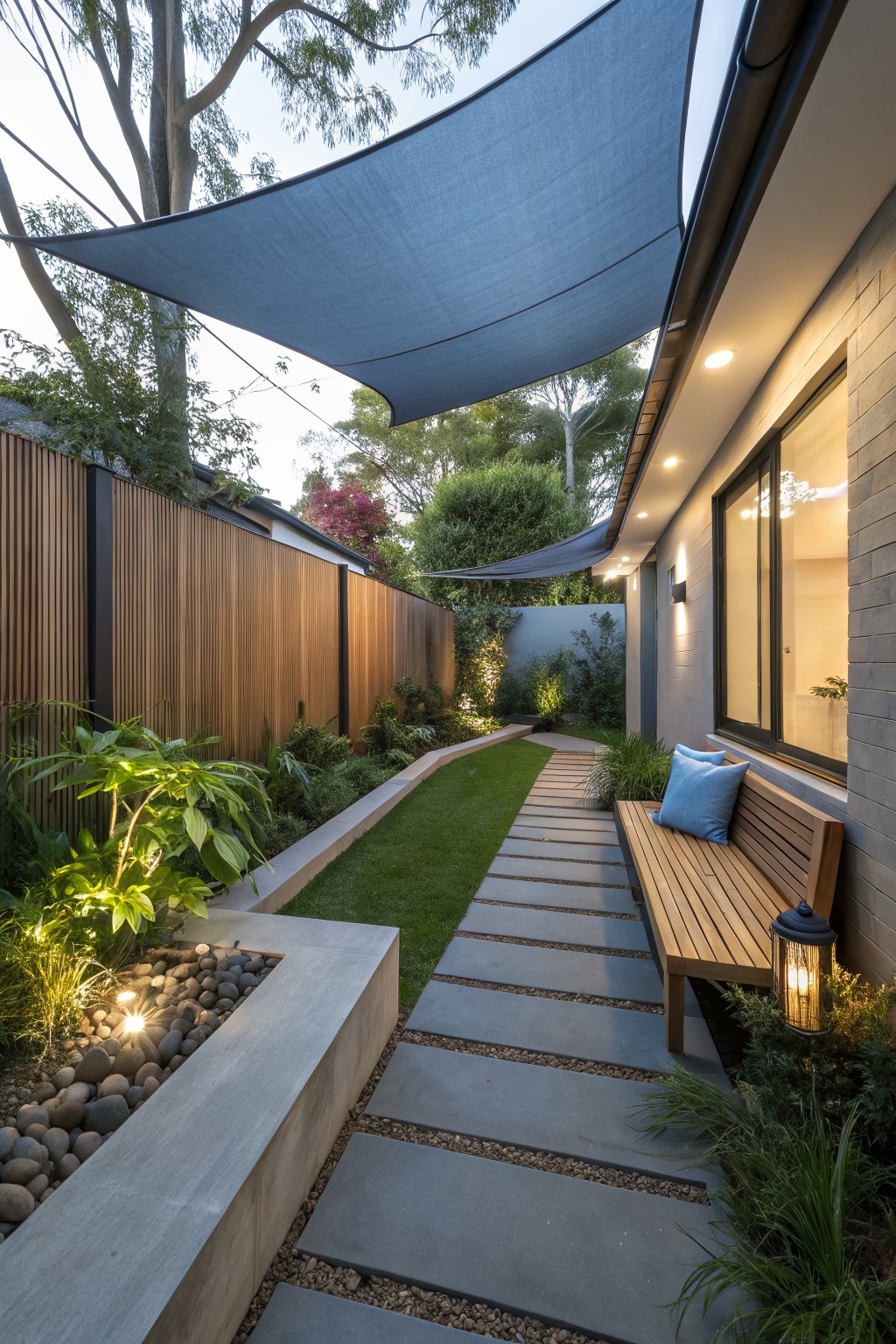
A straight path helps a narrow backyard feel less cramped by giving the eye a clear line to follow. It turns the length into an advantage instead of a problem, so the space reads as usable rather than squeezed.
This layout works best on long, tight lots where you need to move from one end to the other without fighting plants or furniture. Keep the path material simple and let the beds on either side do the softening.
Run a Long Rug Along the Deck
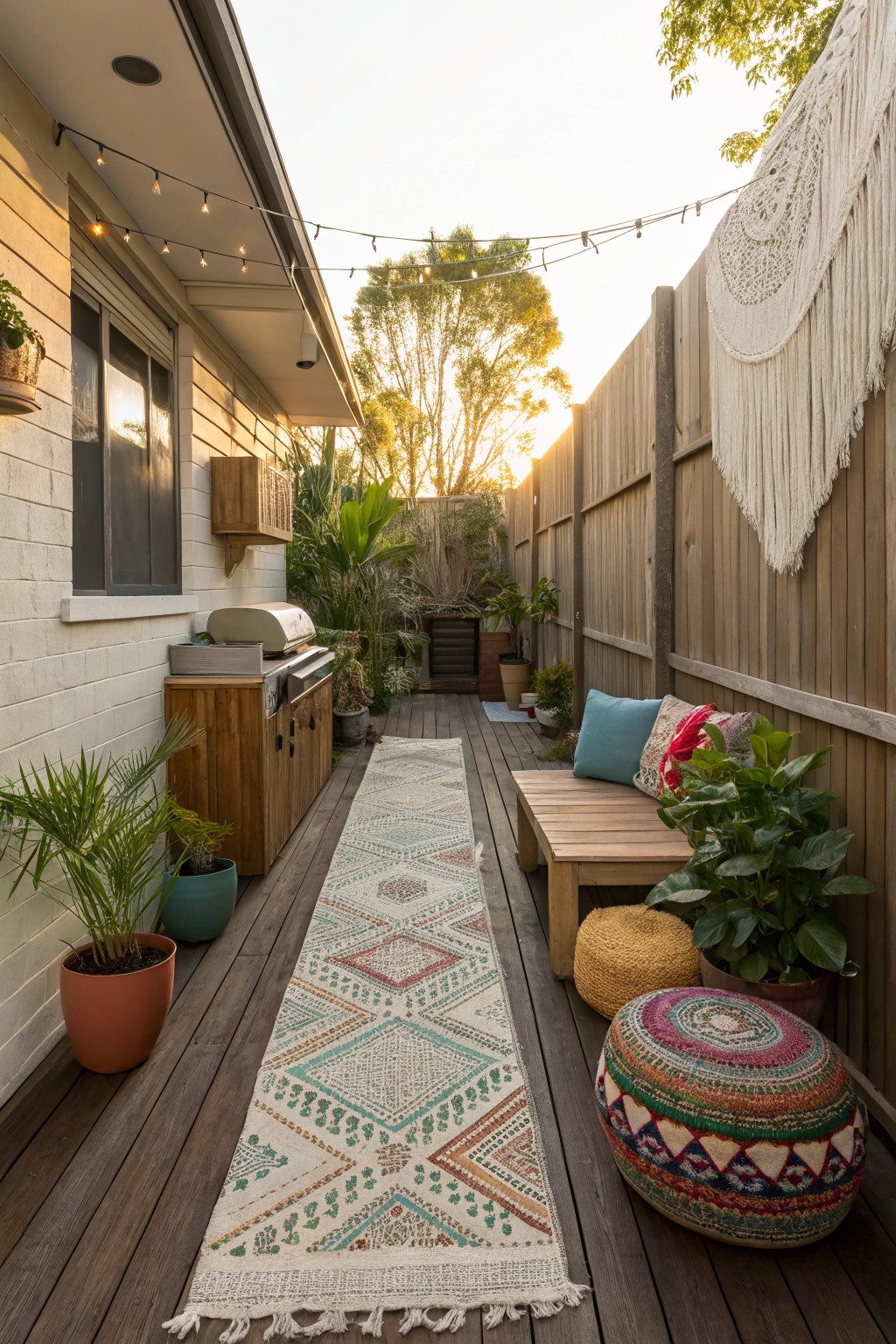
A long runner rug works well in narrow backyards because it creates a clear path that keeps the space from feeling choppy. It pulls the eye forward and makes the whole length feel more connected instead of broken up into separate spots.
This works best on wooden decks or paved areas where you can lay the rug flat without tripping hazards. Keep the rug width narrow enough to leave walking room on both sides, and choose a pattern that holds up outdoors so it does not wear out too fast.
Install a Straight Path for Better Movement
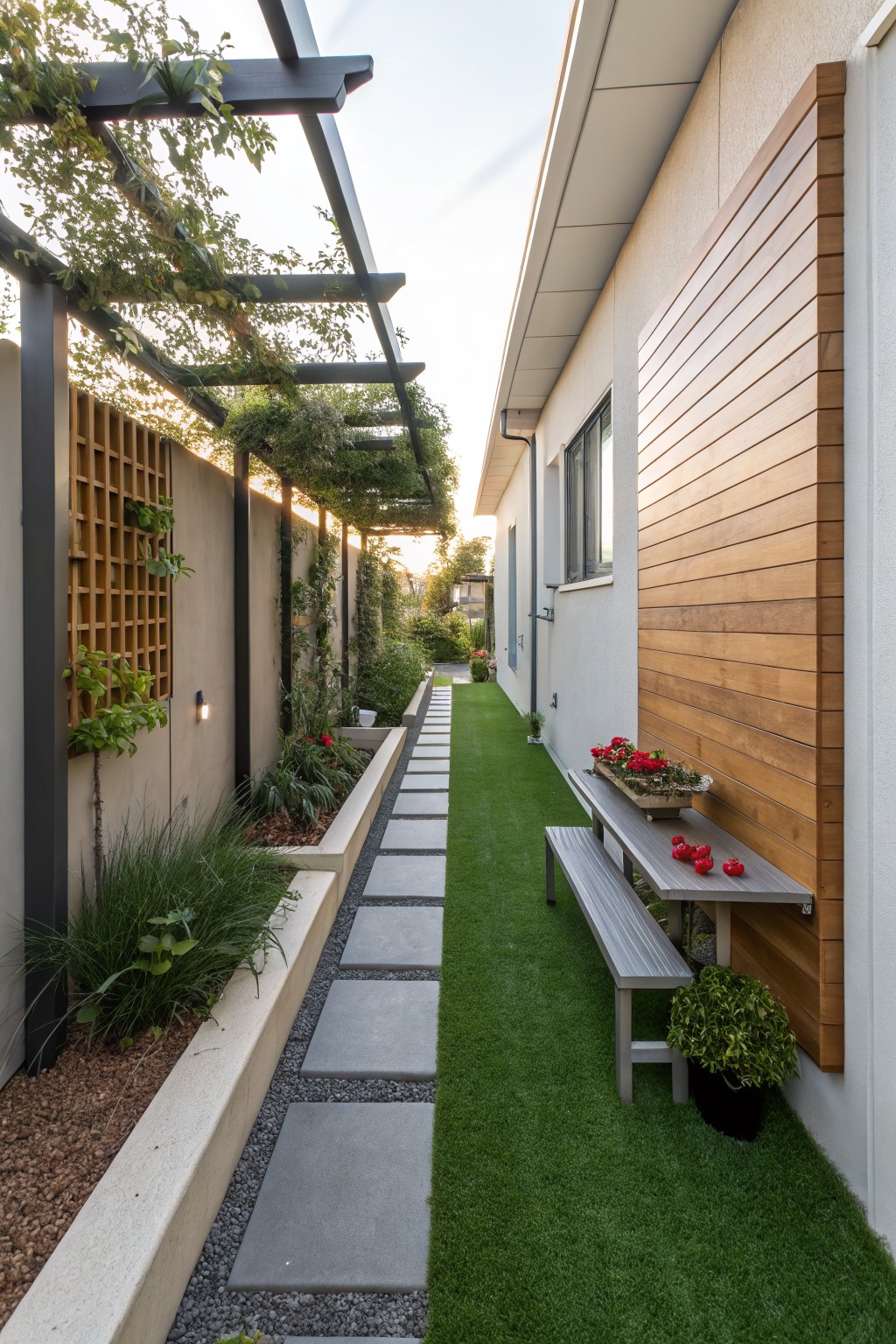
A straight path made of large pavers set in gravel works well in long narrow yards because it gives the eye a clear line to follow. This keeps the space from feeling broken up or cramped even when there is not much width to work with. The path also makes it easy to walk through without stepping on plants or turf.
It works best in side yards or slim backyards where you need a simple route from one end to the other. Keep the path about three feet wide and run it the full length so the yard feels organized rather than crowded. Avoid curves or extra turns since they tend to make the space feel shorter.
Line a Narrow Yard With Raised Beds and a Path
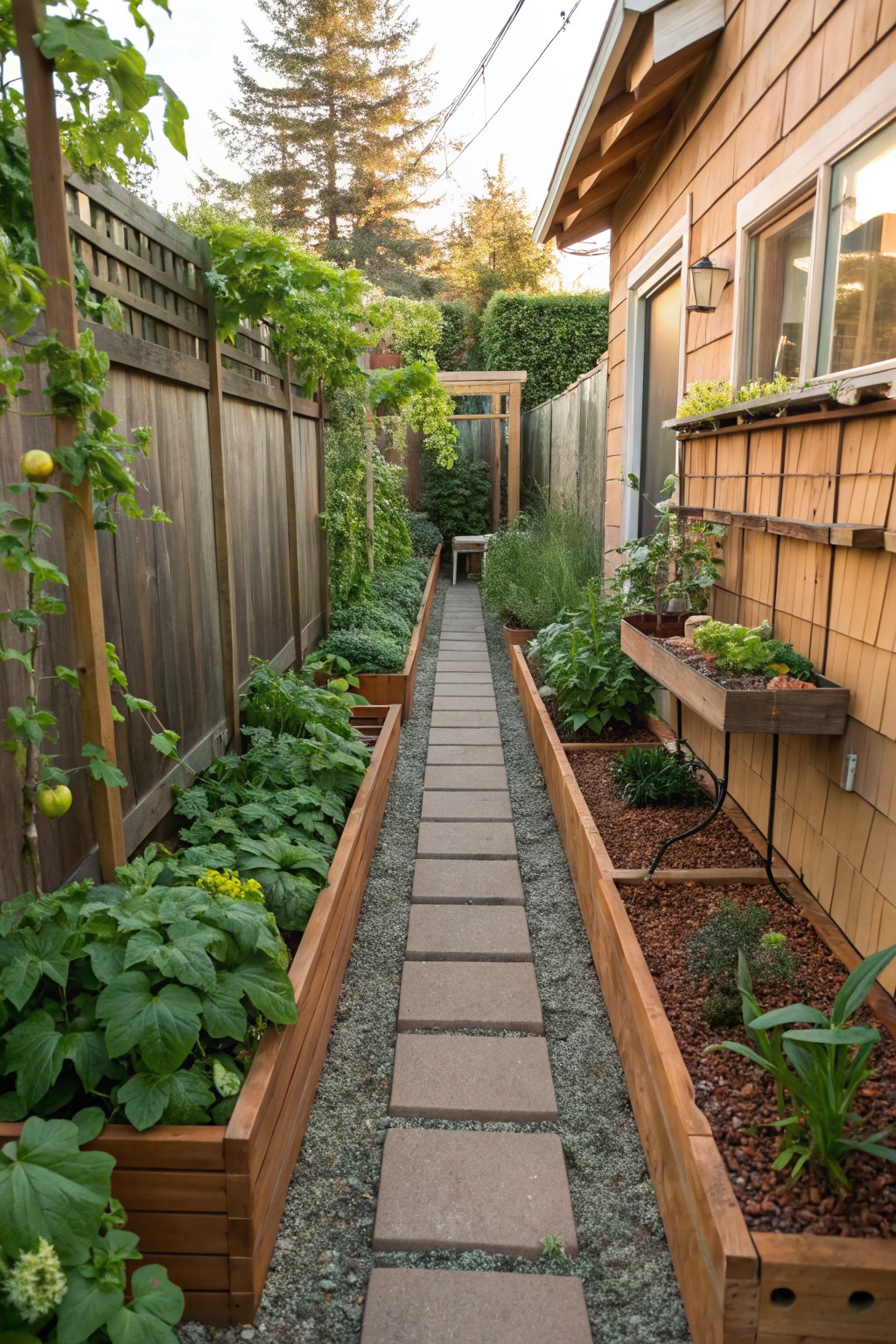
A central path with raised beds on both sides works well in long, narrow backyards because it keeps the space from feeling cluttered while still giving you room to grow. The beds create clear edges so the path stays open and easy to walk through.
This setup suits homes where the yard is mostly a straight corridor. Keep the beds at a comfortable height for reaching plants, and use simple materials like wood so the beds blend with fences or the house. Avoid filling the beds too densely if you want the path to feel open rather than closed in.
Run a Linear Pool Down the Center
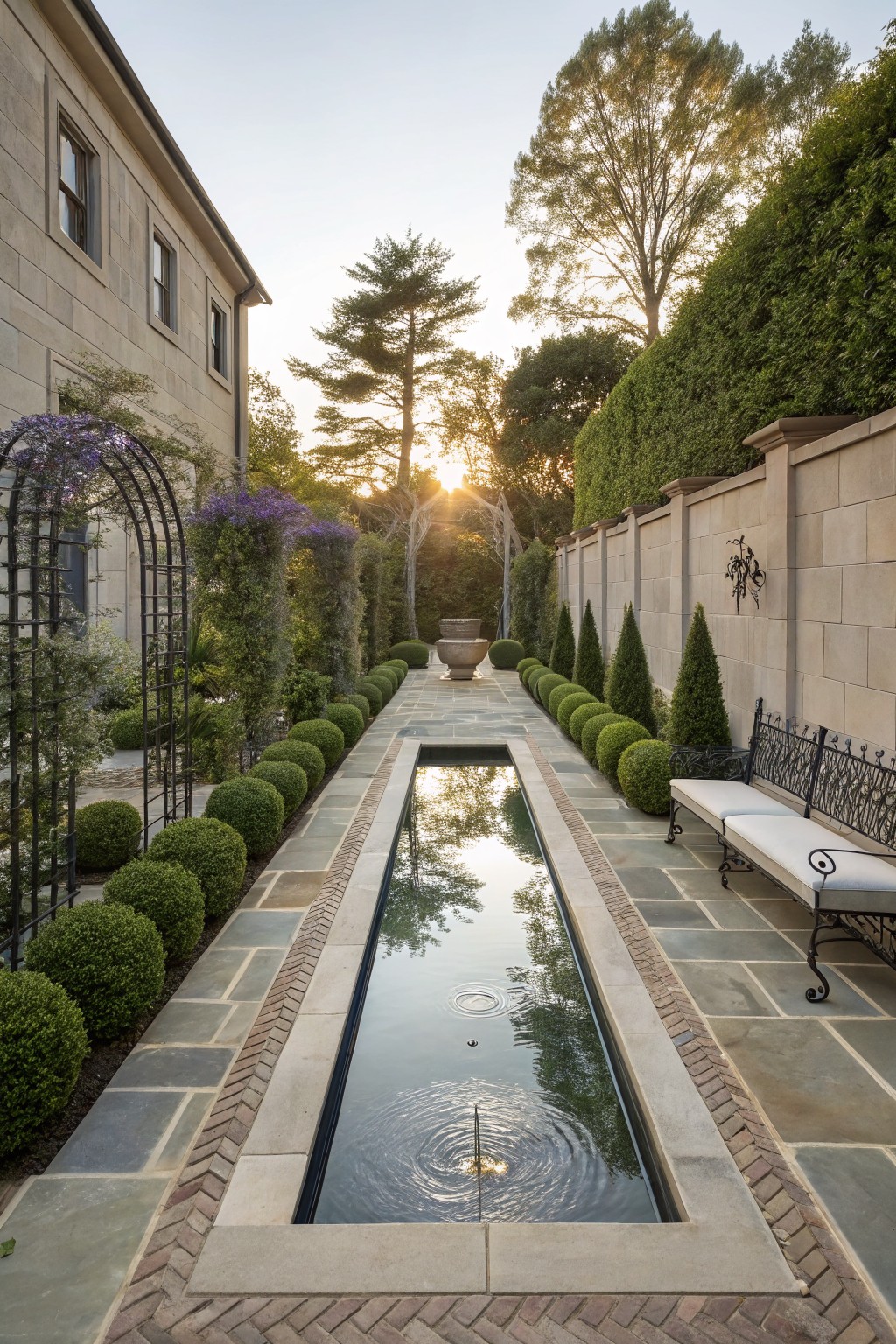
A straight water feature can help a narrow backyard feel more organized and easier to walk through. The long pool acts like a visual spine that pulls the eye forward instead of letting the space feel chopped up by random beds or furniture.
This approach works best in tight side yards or townhouse gardens where you need one strong line to hold everything together. Keep the planting simple on both sides so the water stays the main element and does not compete with too many shapes or colors.
Stepping Stone Paths Improve Flow In Narrow Yards

A simple line of stepping stones set into gravel gives a clear walking route through a tight side yard. It keeps the space from feeling like a dead end and makes the whole length easier to use without crowding the width.
This approach works best in long narrow lots where you need to move from the front to the back or reach a gate. Space the stones evenly and keep the gravel bed narrow so the path stays practical and does not eat into planting room on either side.
Lay A Straight Path Down The Yard
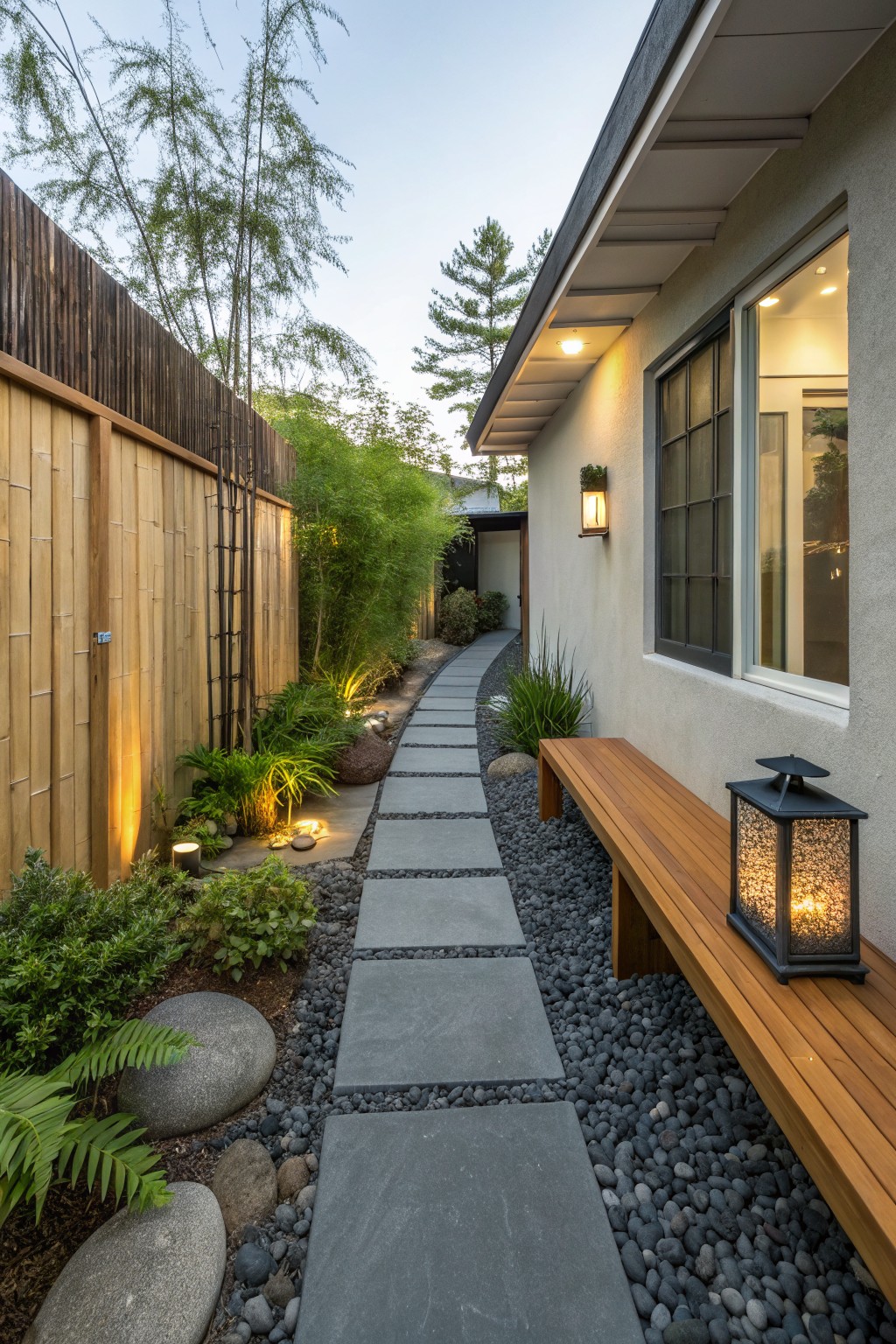
A straight path made of large pavers set in gravel works well in long narrow yards because it gives the eye a clear line to follow. This keeps the space from feeling like a dead end and makes walking through it much easier, especially when you have plants and seating along the sides.
It suits homes where the backyard is mostly a corridor between fences or buildings. Keep the path width consistent and let low plantings and gravel fill in the edges so the whole layout stays simple and low maintenance.
Run a Straight Path Through the Yard
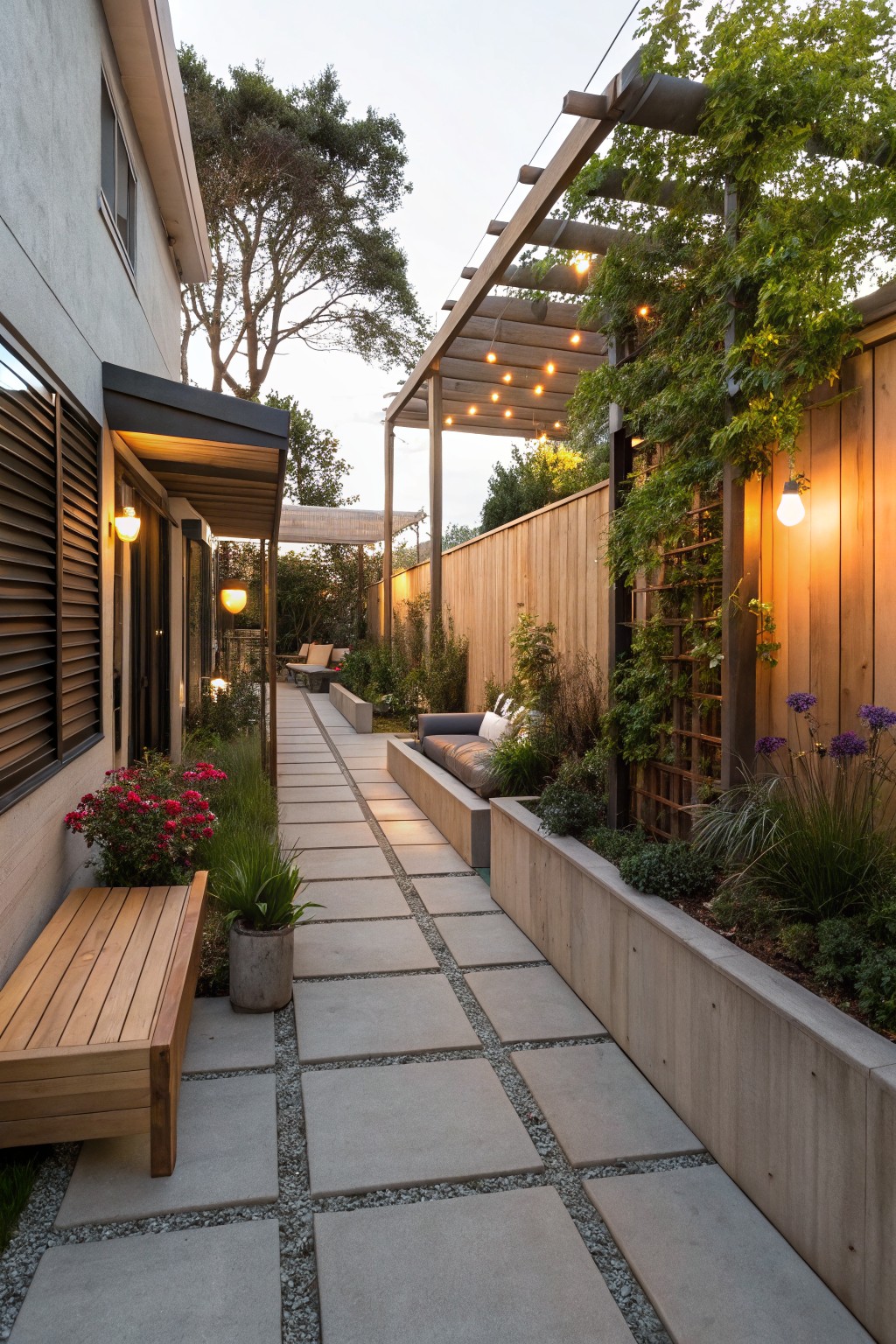
A straight path is one of the simplest ways to make a long narrow backyard feel more open and easy to use. It gives the space a clear direction so people know where to walk instead of cutting across planting beds or squeezing past furniture.
Keep the path fairly wide and use large pavers so it feels solid underfoot. You can add built-in seating along one side without crowding the walkway, which works especially well on lots that are only ten or twelve feet across.
Frequently Asked Questions
Q: What kind of path works best to connect everything without taking up too much room? A: Lay down narrow stepping stones or a slim gravel strip that curves just a bit as it runs the length. This pulls the eye forward and leaves planting space on both sides. Keep the path no wider than two feet so the yard still feels open.
Q: How can I add seating when the yard feels so squeezed? A: Tuck a single bench or two chairs against the fence at the midpoint instead of spreading pieces out. Face them toward the longest view so the space stretches visually. One small side table is plenty for drinks and keeps things from crowding the walkway.
Q: Do I need to worry about drainage when I add layers of plants and hardscaping? A: Slope the ground slightly away from the house before you lay any stone or mulch. Raised beds with open bottoms let water move through without pooling along the narrow run. Check the low spots after a rain and add a simple channel if needed.
Q: What’s a simple way to make the end of the yard feel less like a dead end? A: Place a tall planter or a small tree at the far boundary to draw attention outward. Add a mirror or bright art on the fence behind it so the eye travels farther. This turns the last few feet into a focal point instead of leftover space.