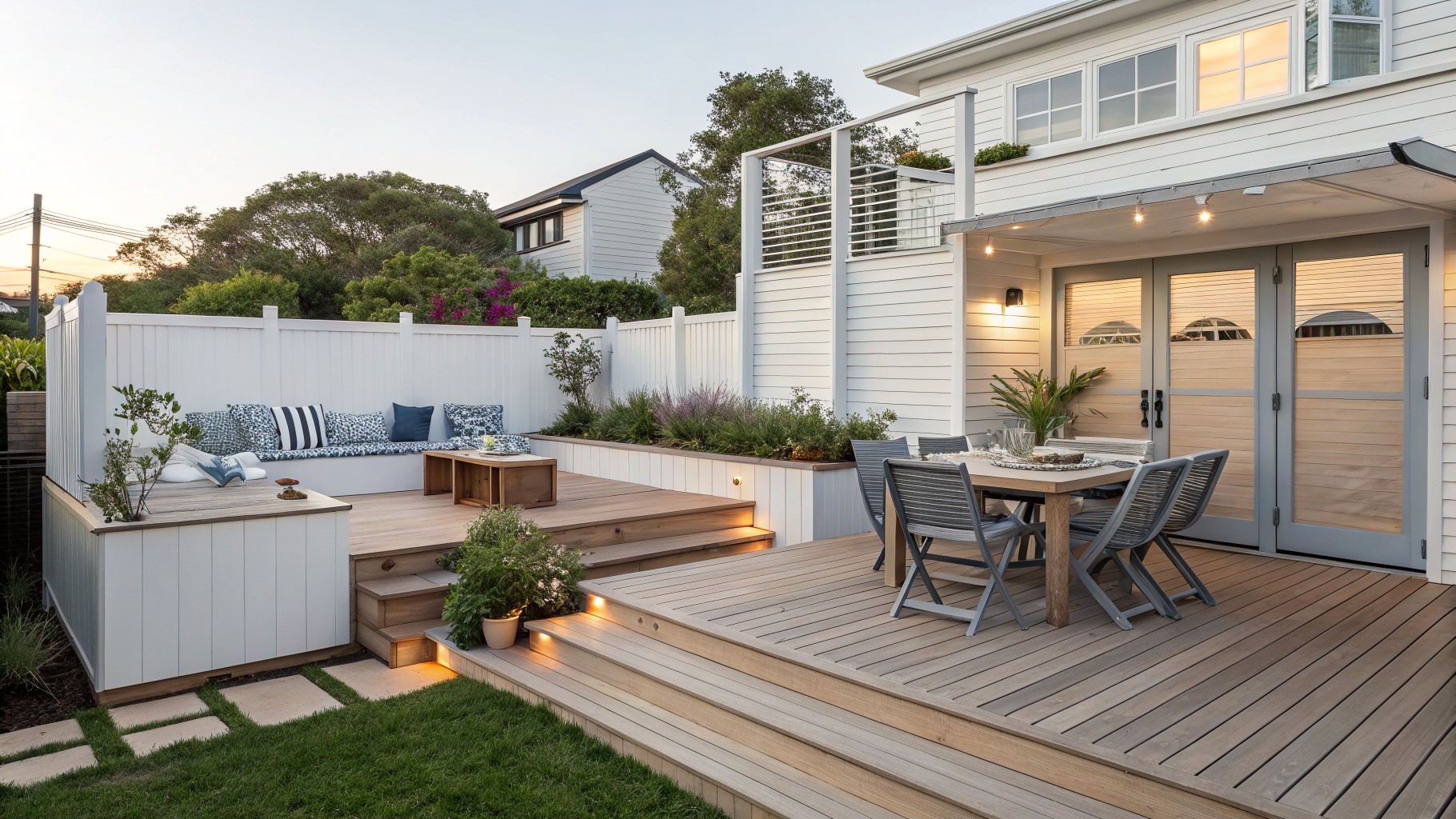
When I look at small backyard spaces the first thing that stands out is whether the deck actually leaves room to move around comfortably or just fills the area with furniture.
Adding levels without crowding the footprint requires thinking through how each tier will be reached and what it will hold day to day.
Otherwise the whole thing starts to feel like an obstacle course.
I tend to test these kinds of changes by walking the space myself and noting where feet naturally land.
That kind of check helps separate ideas that photograph well from ones that hold up in regular use.
Built-In Benches That Add Levels
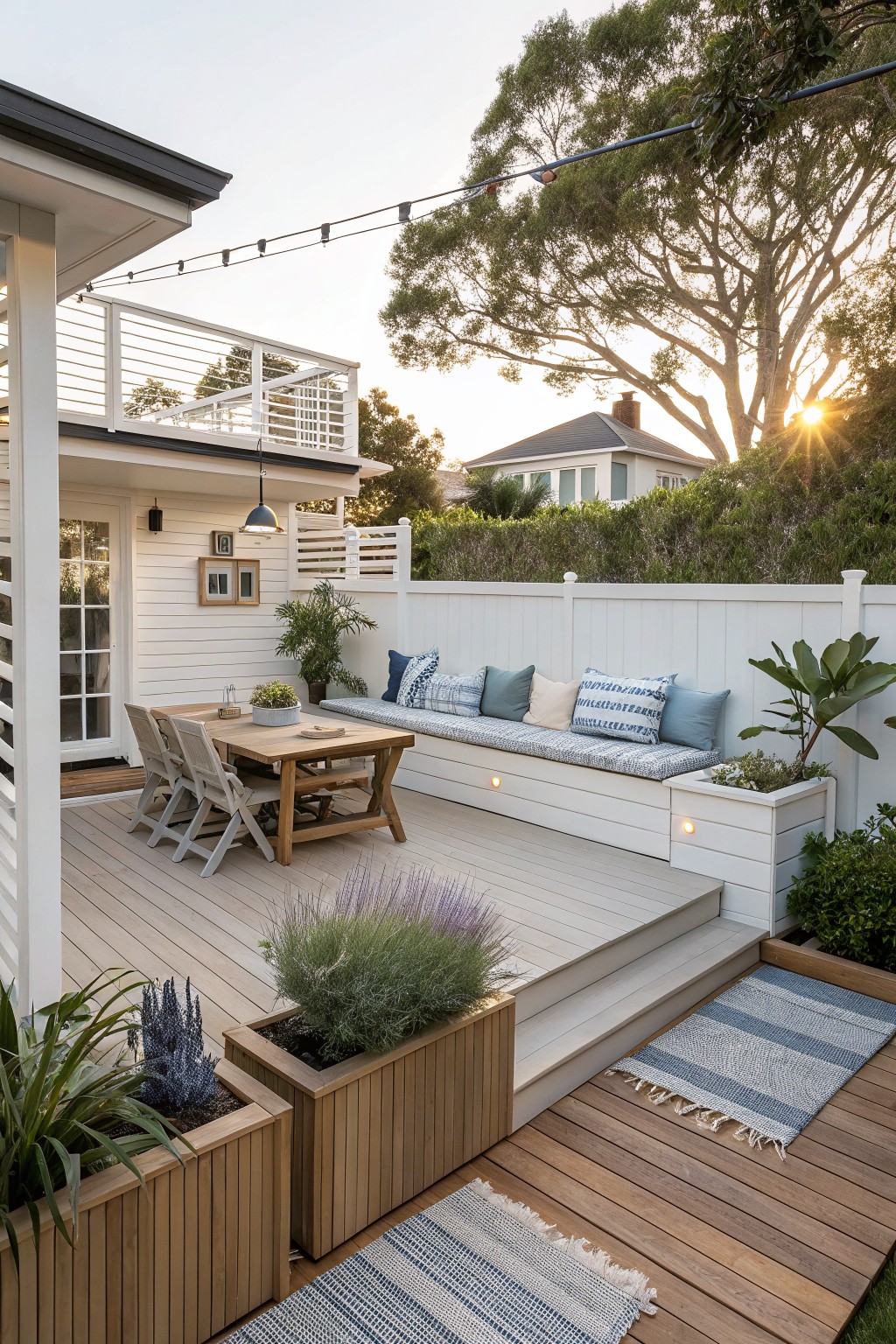
A built-in bench along the edge of a deck can lift part of the space into its own level without eating up floor area. It turns what would be empty perimeter into seating while giving the deck a gentle change in height that makes the whole layout feel more structured.
This approach works best on smaller or narrow decks where you still want room to move around. Keep the bench simple, run it against a fence or railing, and let the lower deck stay open for a table or just walking space.
Add Levels With Steps And Planters
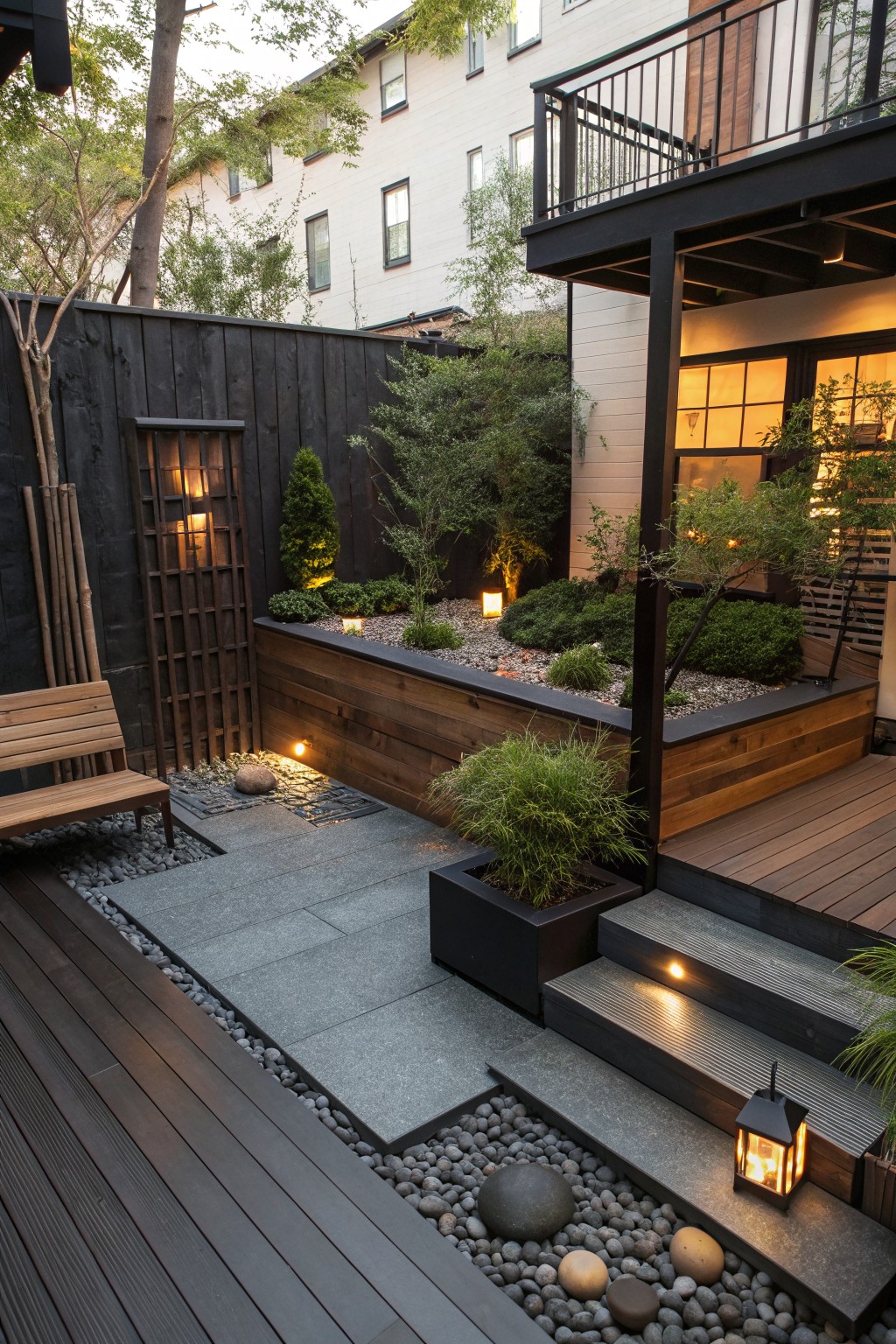
Steps and raised planters give a small deck more dimension without needing a bigger footprint. The change in height breaks up the space and creates natural zones for sitting or plants while keeping everything connected.
This works best in narrow yards where flat decking can feel cramped. Keep the steps wide enough for easy movement and use the planters to hold greenery that softens the edges.
Raise One Section For Built-In Seating
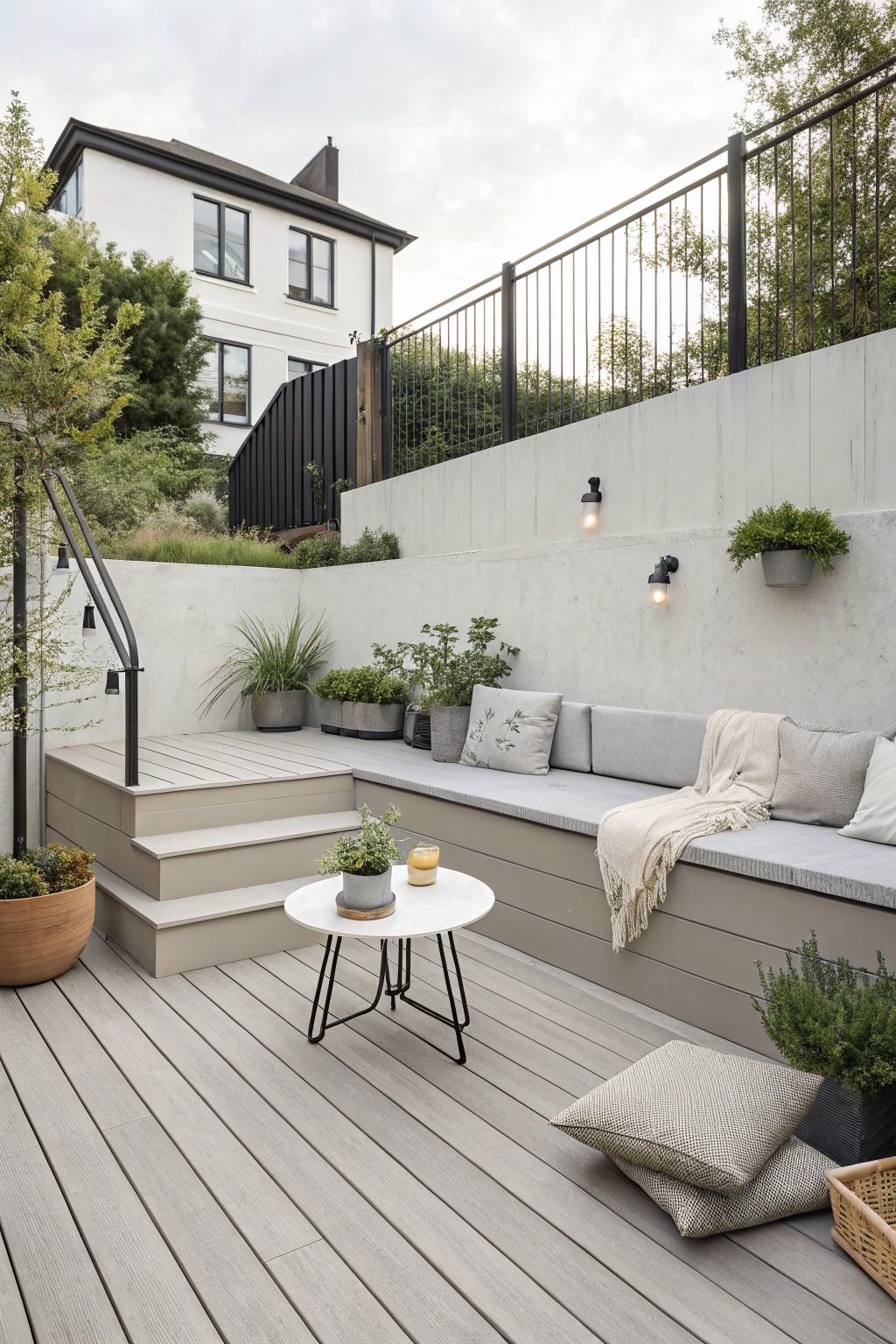
Raising part of a small deck gives you a built-in bench without eating into floor space. The higher platform creates a clear spot for lounging while the lower level stays open for moving around or adding a table.
This setup works best in narrow backyards where every square foot counts. The steps between levels help zone the space naturally, and the bench can double as hidden storage if you build it that way.
Add Levels With Built-In Seating
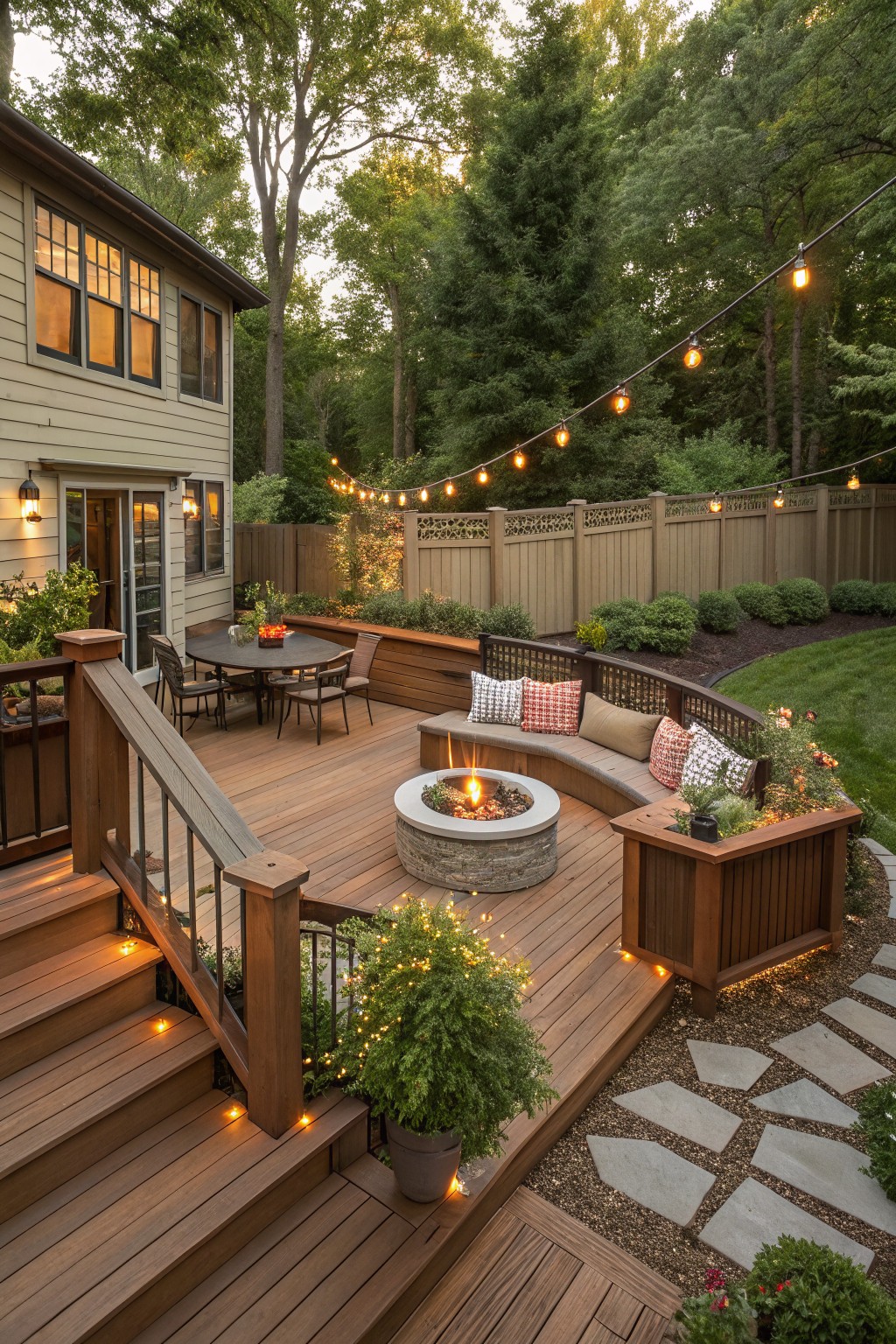
Many small decks run out of room fast once you add a table, chairs, and a fire pit. Building a low curved bench right into the deck edge gives you extra seating while creating a gentle change in level. The bench acts like a natural boundary without eating into the open floor space.
This approach works best on decks that sit above the yard or slope down toward the lawn. Keep the bench height at standard chair level so it stays comfortable, and use the main deck area for walking and the fire pit zone for gathering. It keeps the layout simple and avoids the need for separate furniture that would crowd the space.
Stepped Levels Create Separate Zones
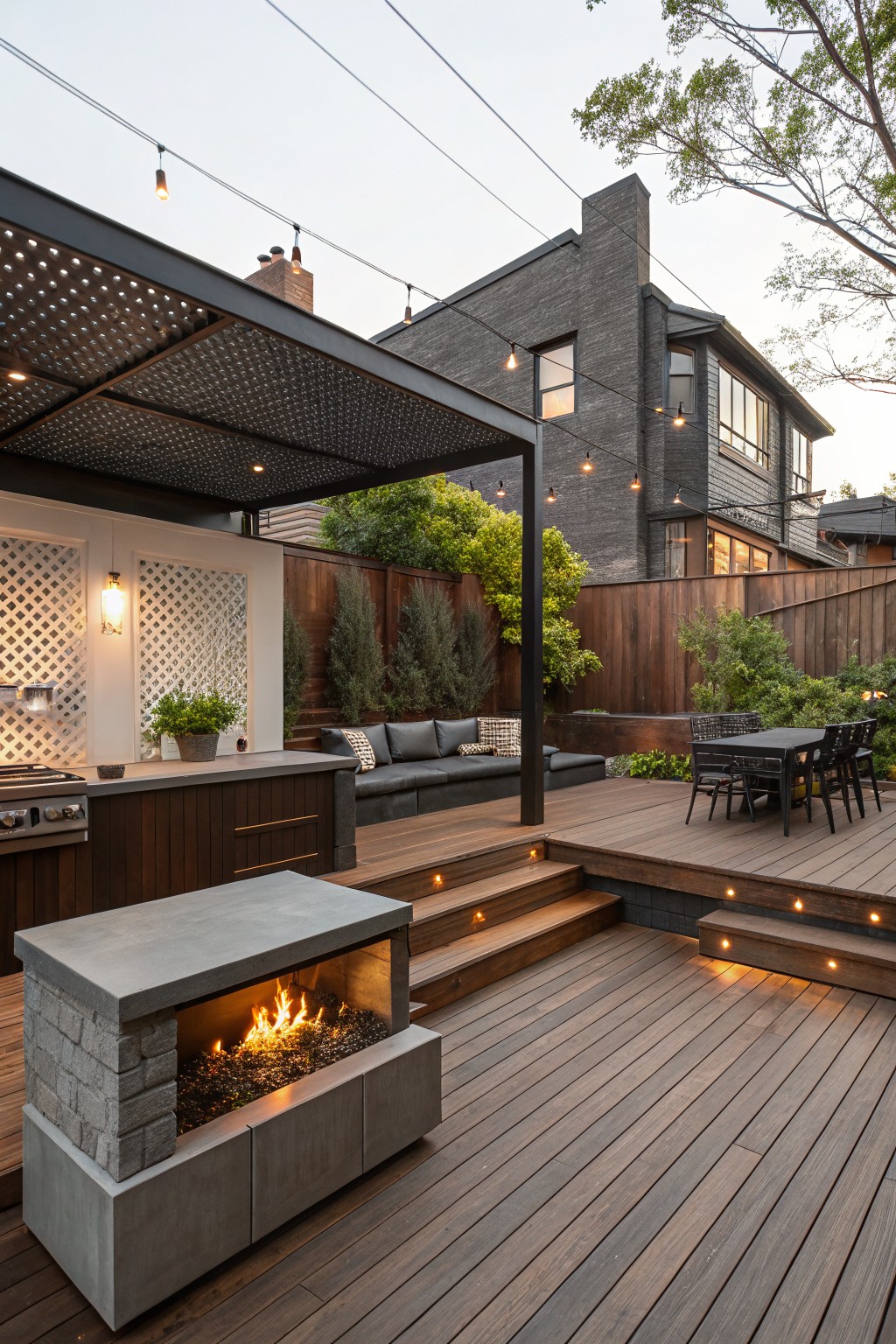
Stepped decks work well when you want to break up a small backyard into different areas without adding extra square footage. The changes in height let you place a fire pit on one level and seating or dining on another so each spot feels distinct even though everything stays connected.
This approach suits narrow yards or homes where the ground already has a slight slope. Keep the steps wide enough for comfortable movement and use the same decking material throughout so the space still reads as one area rather than several separate platforms.
Add Levels To Create Separate Zones
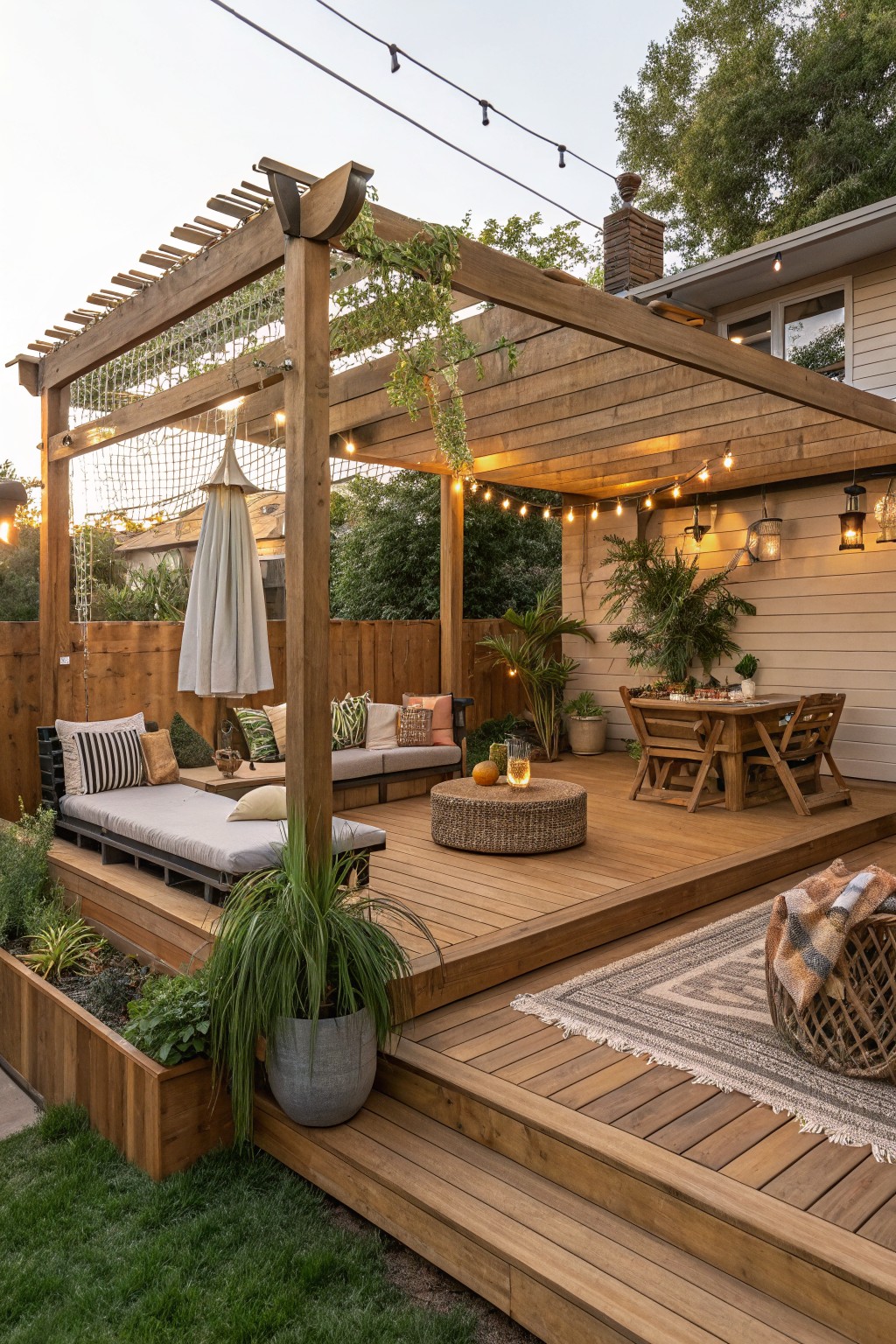
Many small backyards end up with one big flat deck that feels crowded when you try to fit both lounging and dining in the same spot. Raising one section or dropping another creates a natural break so each area can work on its own without eating up more ground space.
The steps between levels can also serve as extra seating or spots for plants. This approach suits tight yards best when the ground already has a slight slope, and it helps keep the main walking area clear. Just keep the height changes modest so the deck stays easy to move around on.
Add Built-In Seating Along The Deck Edge
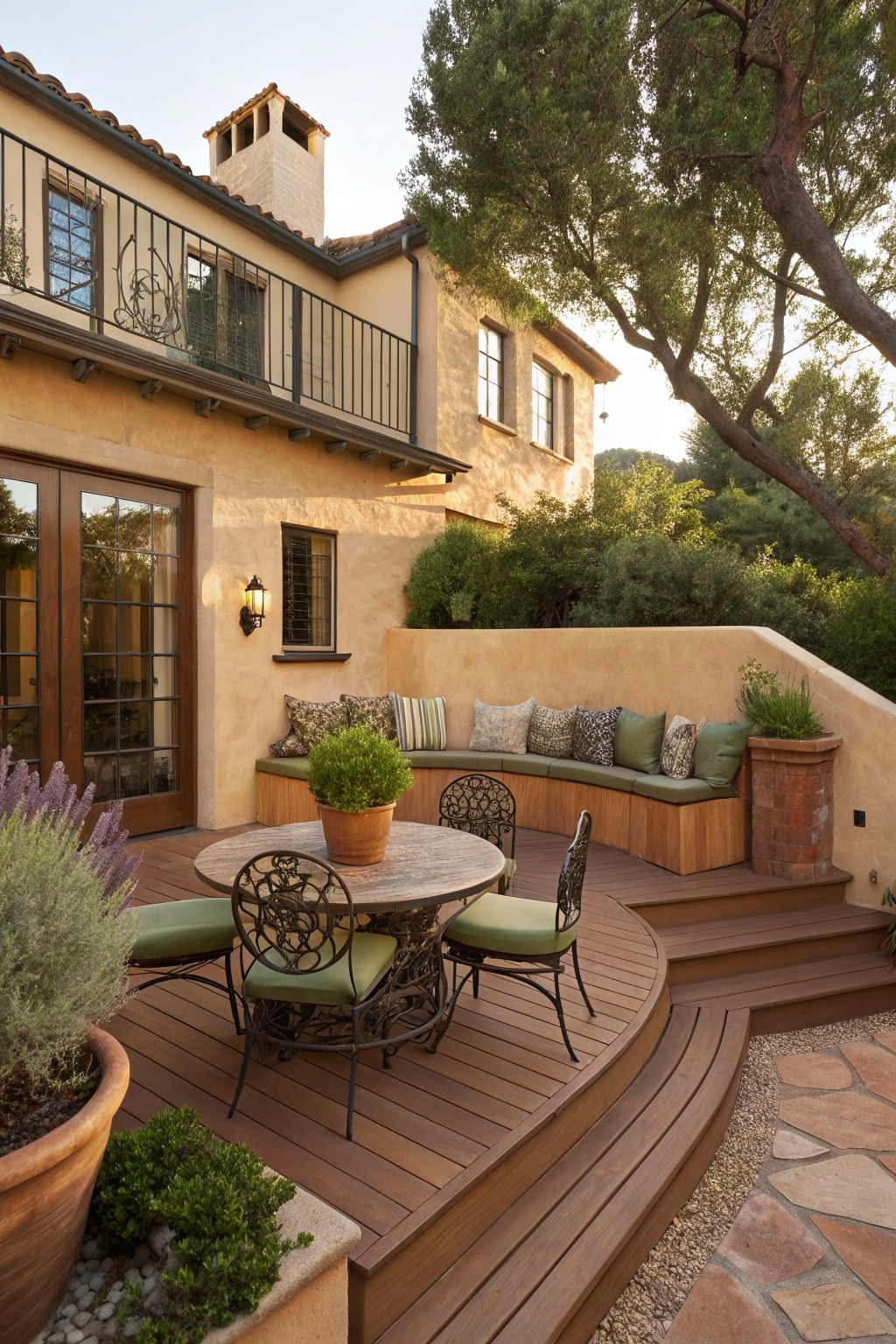
Building seating right into the deck edge keeps the main floor clear for a table and chairs while still giving you plenty of places to sit. This approach works especially well on small backyards where every square foot counts, because the bench takes the place of separate furniture that would otherwise crowd the space.
The same idea can be carried down to a lower level or along a curve so the whole deck feels connected without needing extra railings or dividers. It suits homes with modest yards that already have some change in grade, and it avoids the clutter of too many loose chairs. Just make sure the bench height matches standard seating so it stays comfortable for everyday use.
Add Steps To Create Separate Deck Zones
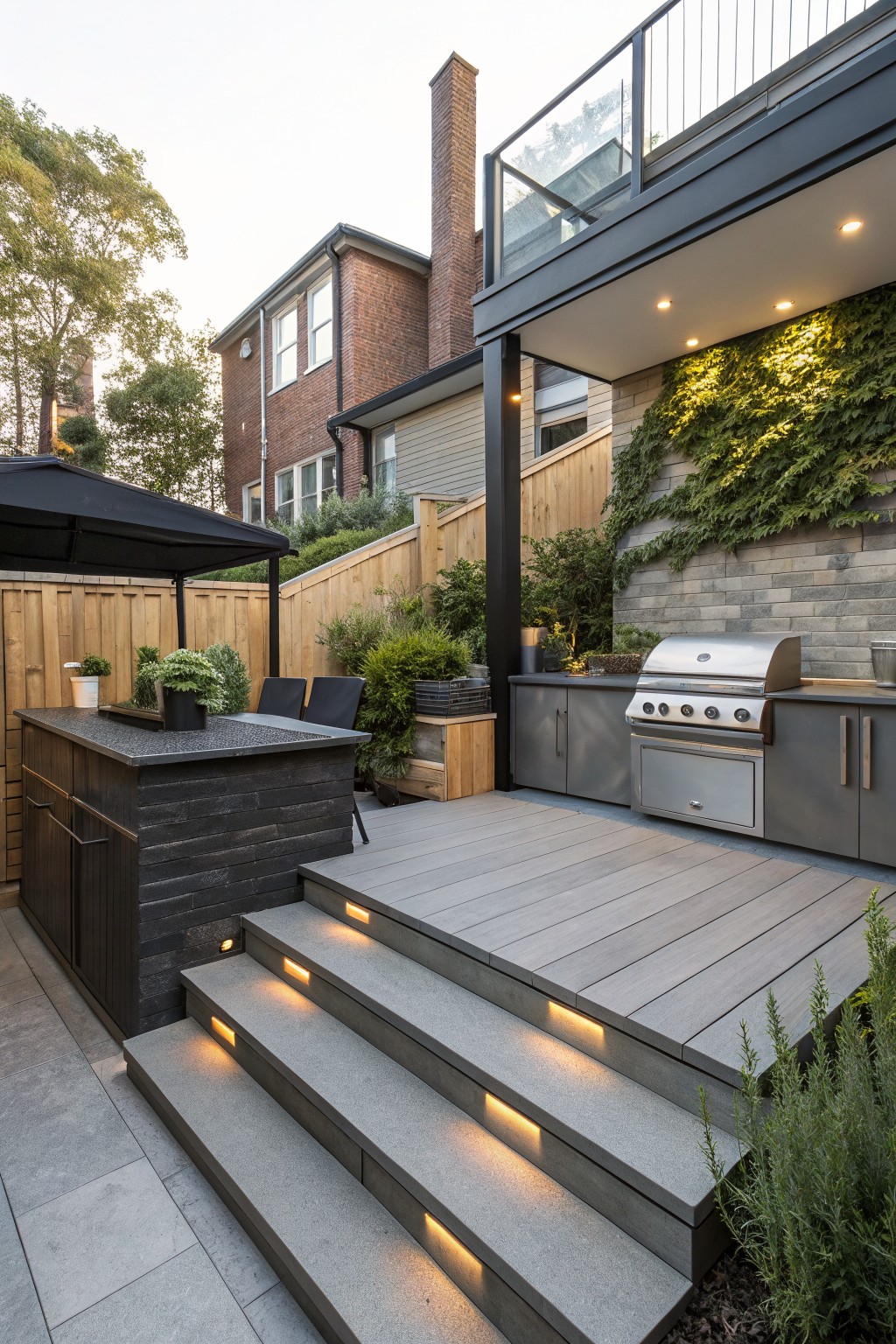
Steps are one of the easiest ways to add levels on a small deck. They break up the space into different areas without needing a lot of extra room, and they make the whole deck feel more useful for everyday living.
Place the steps where you want one zone to sit a little higher than the other, like near an outdoor kitchen or seating area. Keep them wide enough to walk on comfortably and add simple lighting along the edges so they stay safe at night. This works well on narrow backyards where a flat deck would feel too open and plain.
Built-In Seating Defines Deck Levels
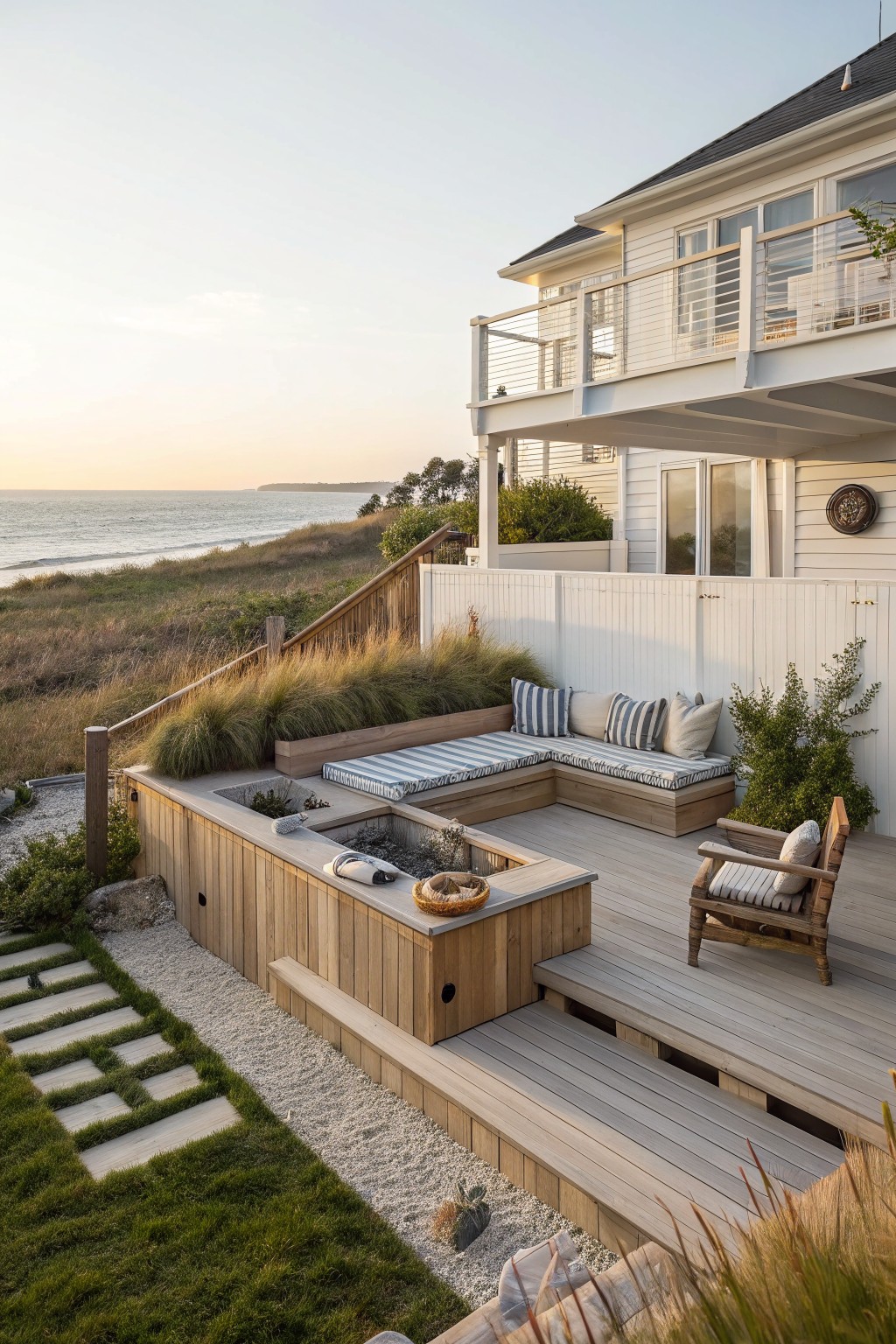
Many small decks gain usable space when benches are built right into the structure instead of added later. This approach lets the seating follow the edges and connect different heights without crowding the floor area.
It suits homes where the deck steps down toward a path or garden. Keep the benches low and wide so they double as both seating and a visual break between levels.
Raise One Section For Separate Zones
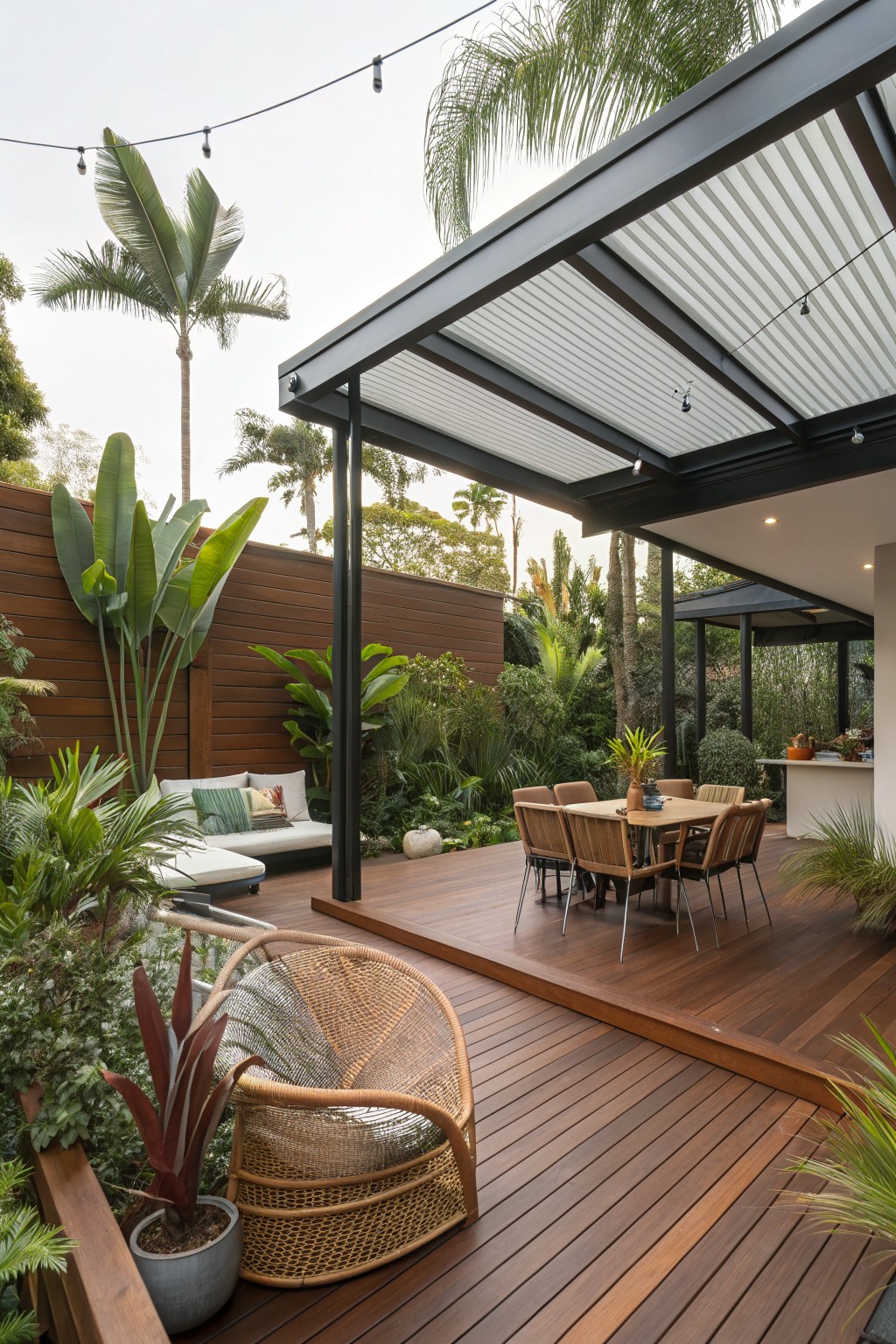
Adding a raised platform on a deck is a simple way to split the space into two clear areas without needing extra square footage. The step up creates a natural division so one part can work for dining while the lower part stays open for lounging or plants. It keeps everything connected but gives each zone its own feel.
This works especially well in smaller backyards where a flat deck can start to feel crowded. Keep the raised area just big enough for a table and chairs, and use the lower level for softer seating or pots. The change in height also helps with drainage and makes the whole deck feel more finished.
Built-In Seating Defines Deck Levels
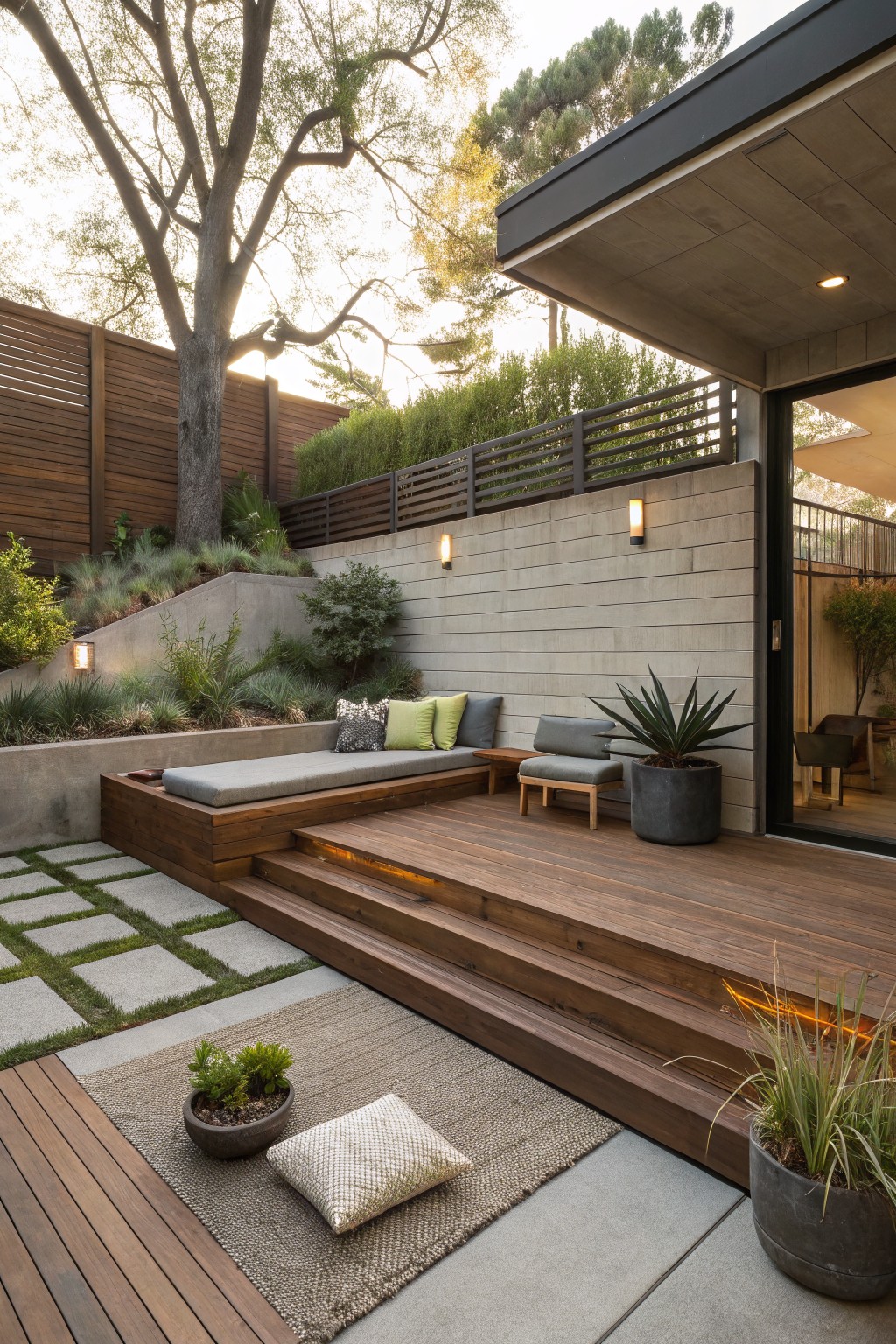
A raised deck section with a long built-in bench makes good use of vertical space in a small backyard. The bench sits right along the edge so it adds seating without eating into the walking area below. Steps connect the levels and keep the whole space feeling open instead of cramped.
This approach works well on sloped yards or tight lots where you need both seating and room to move around. Keep the bench depth simple and match the wood to the deck so the levels read as one clean structure rather than separate pieces.
Build A Bench Into The Retaining Wall
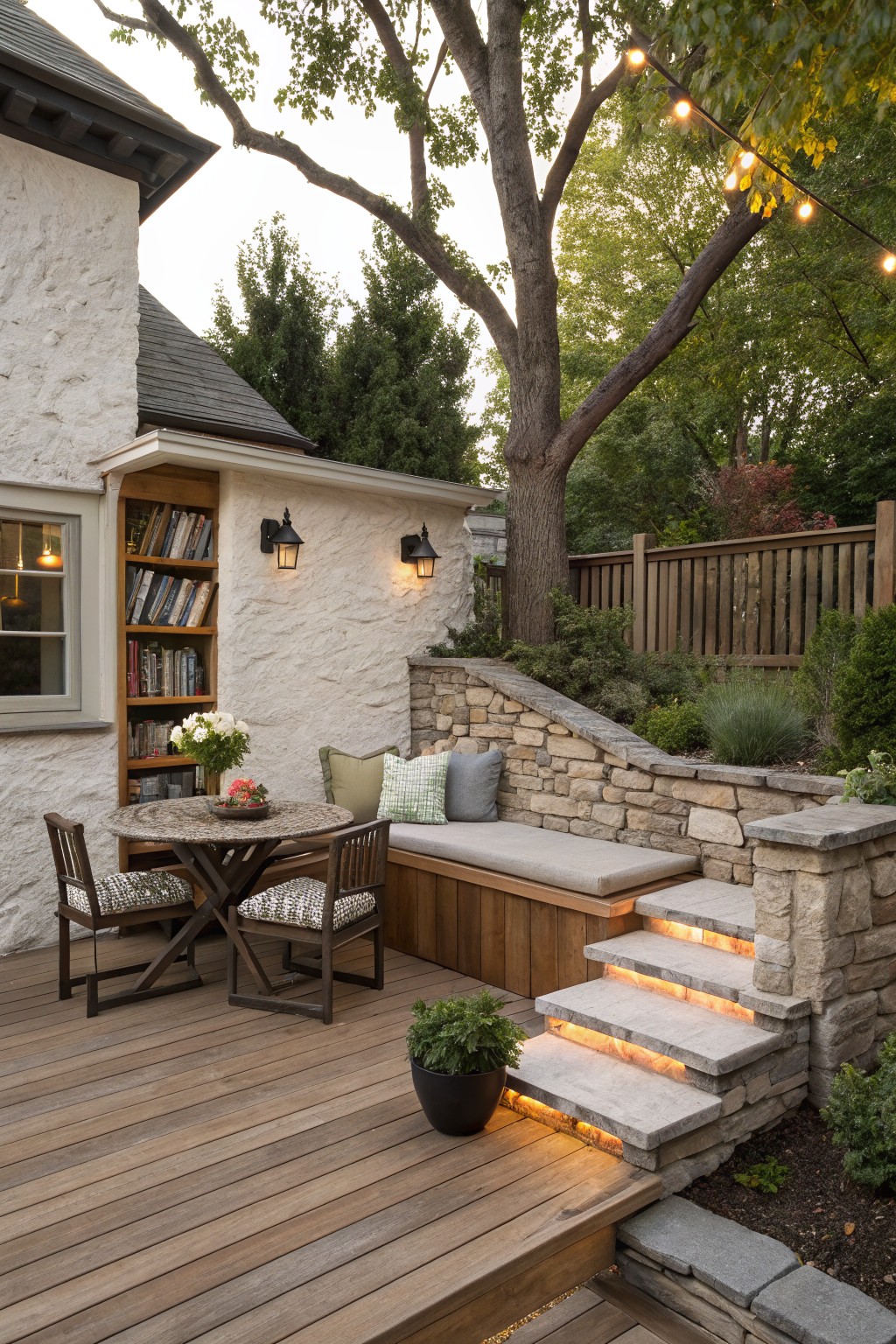
A built-in bench along a low retaining wall gives a small deck two usable levels without eating up floor space. The seating sits higher than the main deck boards, so the area feels divided even though everything stays connected.
This setup works best on backyards that slope or sit against a fence line. Keep the bench depth around 18 inches and add simple cushions so it doubles as extra seating when guests arrive. The lower deck stays open for a table or planters.
Add Steps Between Deck Levels
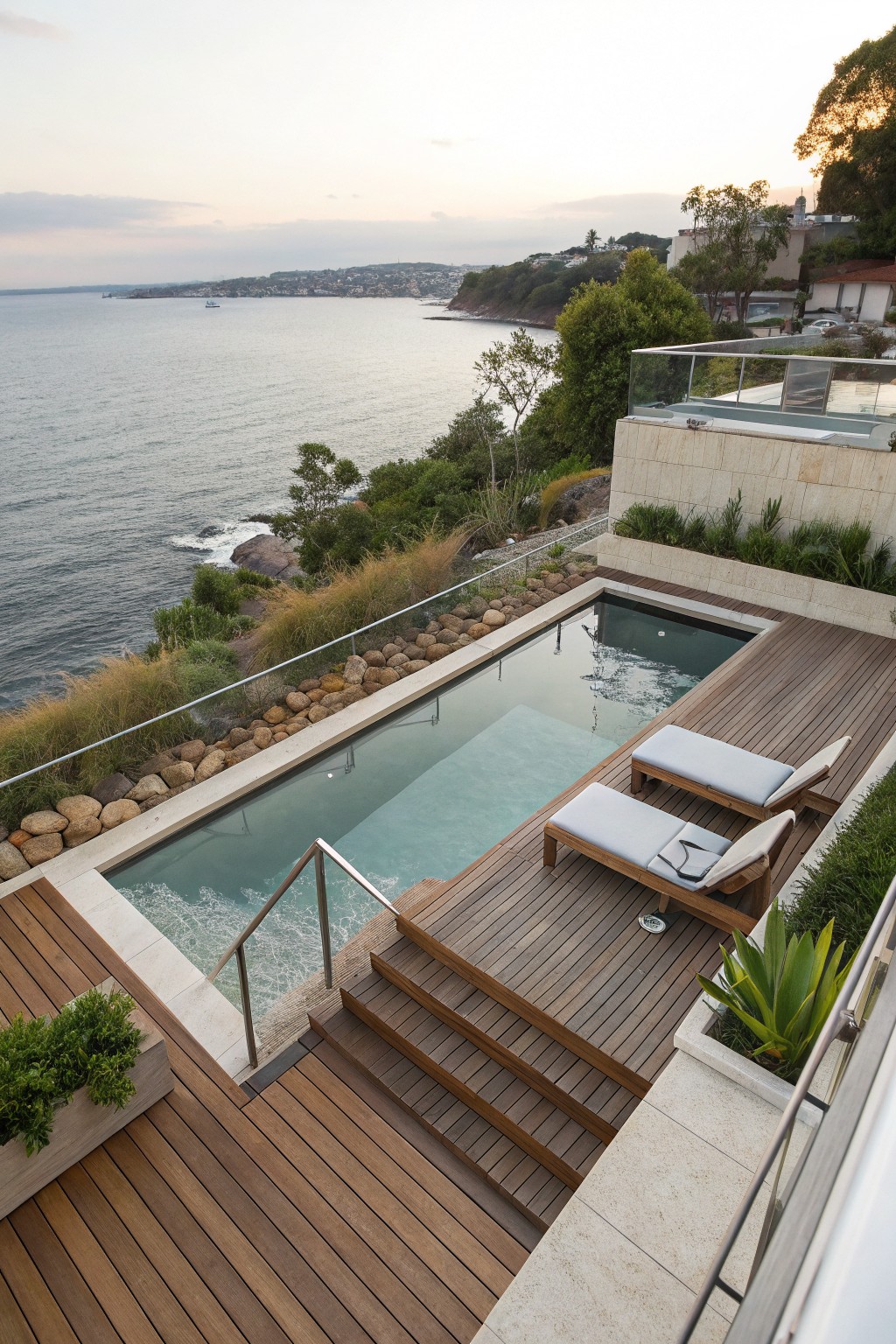
One simple way to give a small deck more function is to build in a few steps that drop down to another level. This creates a natural break between the pool edge and the lounging area so the space feels divided without adding walls or extra flooring.
It works best on yards that already slope a little, since the steps can follow the ground instead of fighting it. Keep the wood the same on both levels and make sure the steps are wide enough to walk down comfortably with wet feet.
Add A Built-In Bench Along One Edge
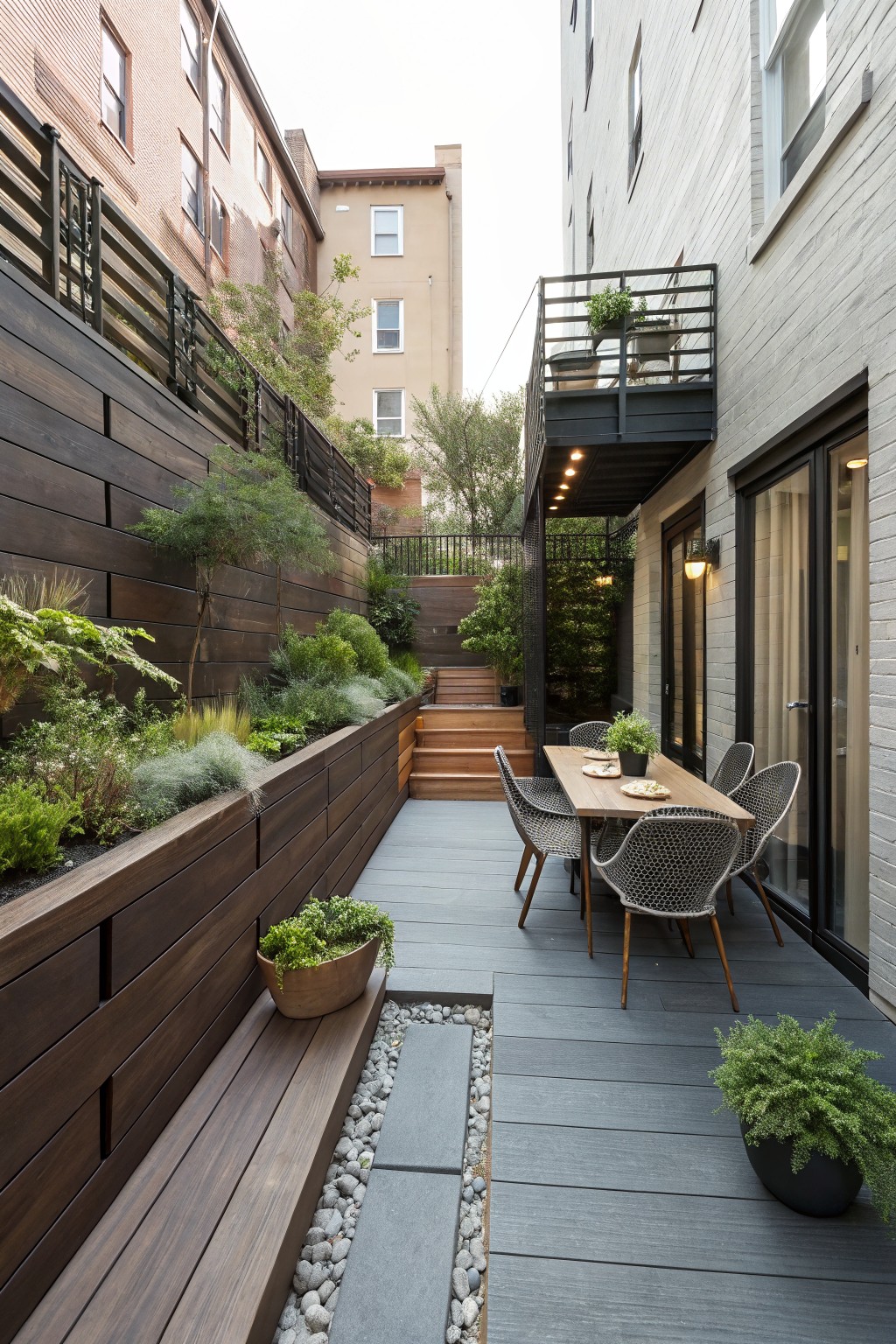
A built-in bench gives you extra seating in a narrow deck without eating into the open floor space. It also creates a gentle change in level that makes the whole area feel a bit more layered even when the actual footprint stays small.
This works best in tight side yards or townhouse backyards where every inch counts. Keep the bench the same width as a standard seat, run a planter box right behind it, and use the same deck boards for both so it reads as one clean structure rather than added furniture.
Raise One Section For Built-In Seating
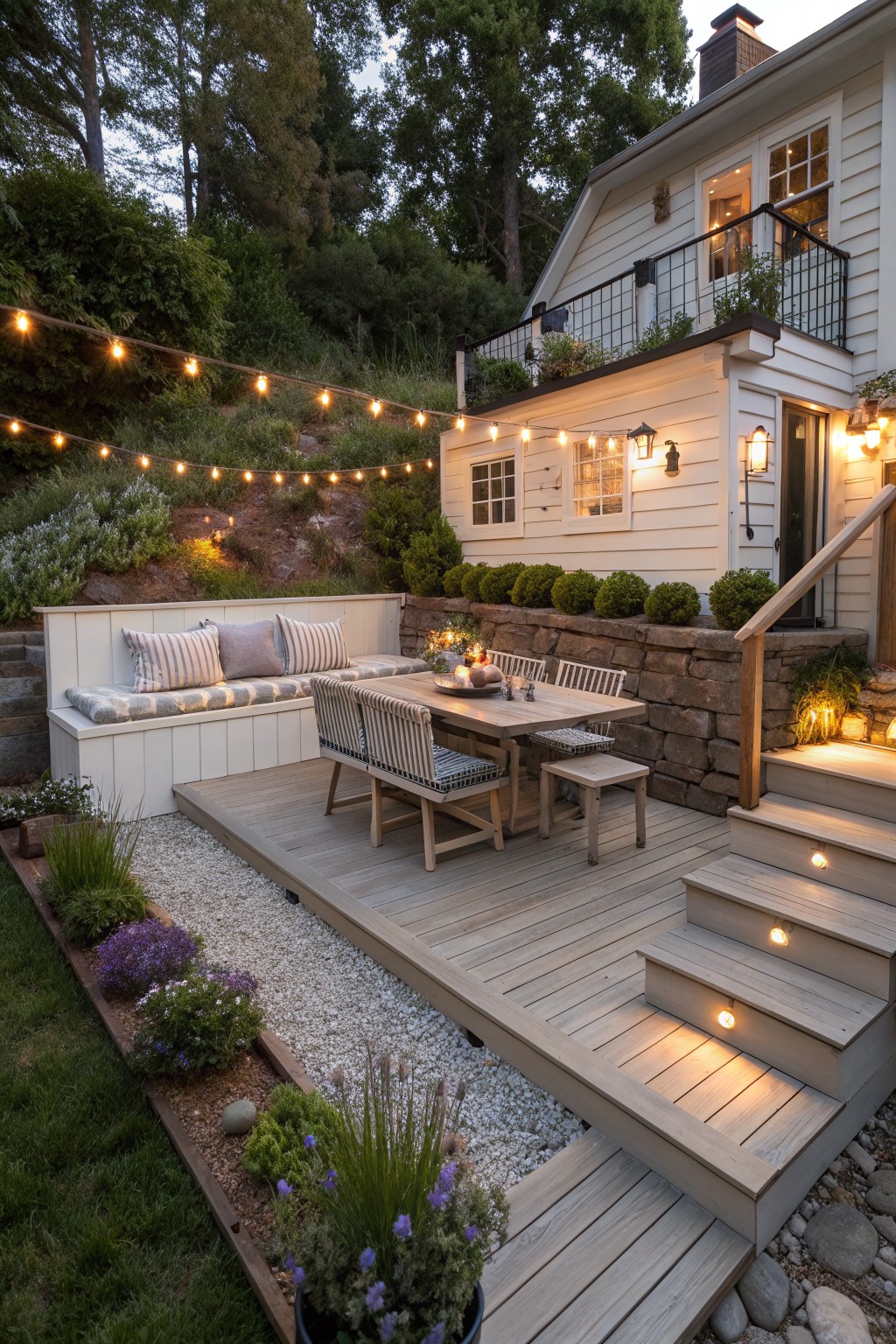
A small deck gains a lot when you lift one edge just enough to add a bench along the back. It creates a second level without eating into the main floor space, and the bench itself becomes both seating and a low wall that keeps the area feeling organized.
This works well on narrow lots or sloped yards where you need to work with the grade instead of fighting it. Keep the bench depth around eighteen inches so it stays comfortable but does not push the table too far forward. The steps in this photo show how the lower level still feels connected rather than cut off.
Built-In Seating Along The Deck Edges
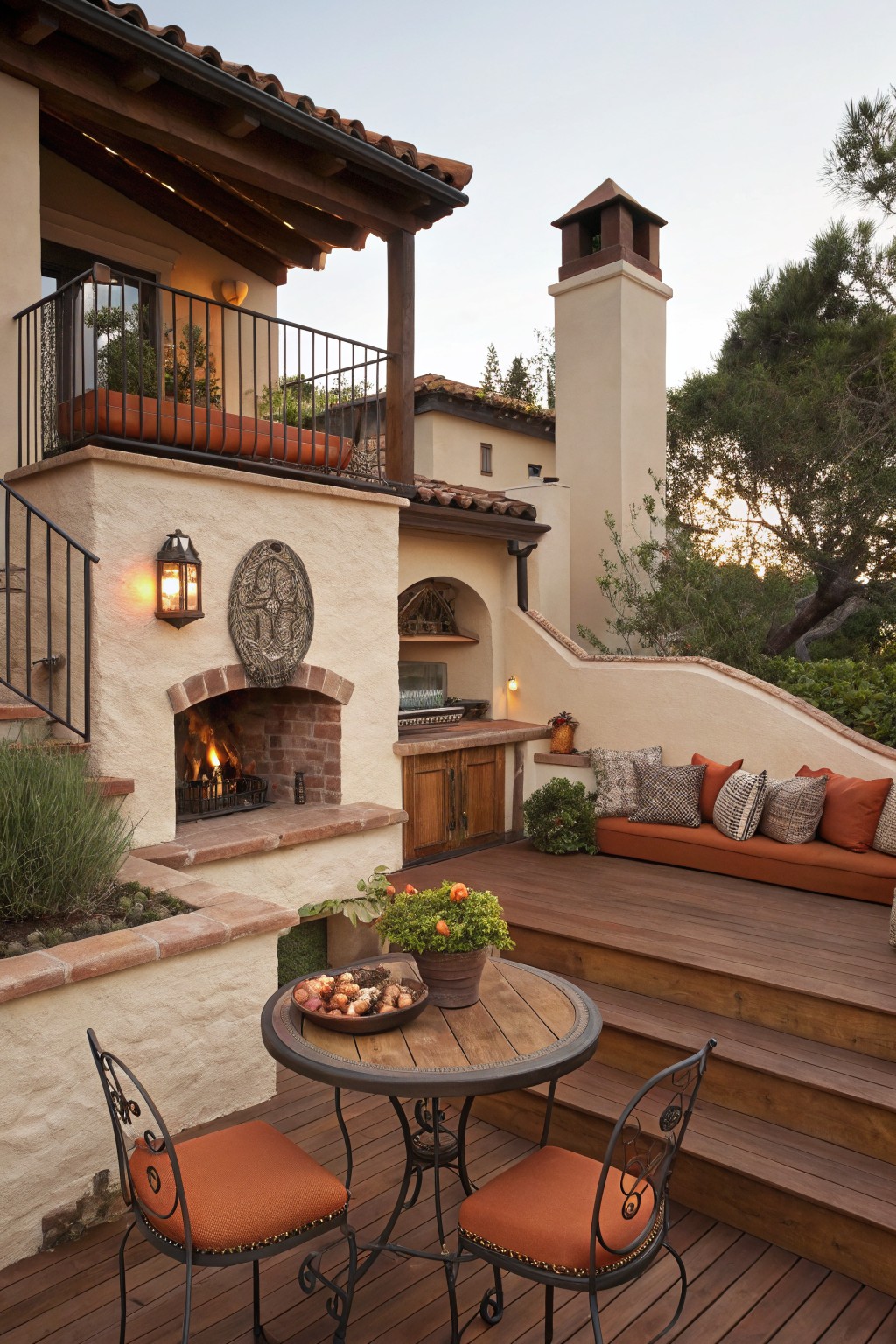
Adding benches right into the deck structure keeps the floor open while giving you plenty of places to sit. This works especially well on smaller yards where loose furniture would crowd the space or block movement between levels. The cushions can be swapped out easily for different seasons or colors.
It suits homes where the deck connects to the house and needs to feel like an extension rather than a separate room. Keep the bench height consistent with the steps so the whole area reads as one clean shape. Avoid making the bench too deep or it starts to eat into walking space.
Add Simple Levels With Deck Steps
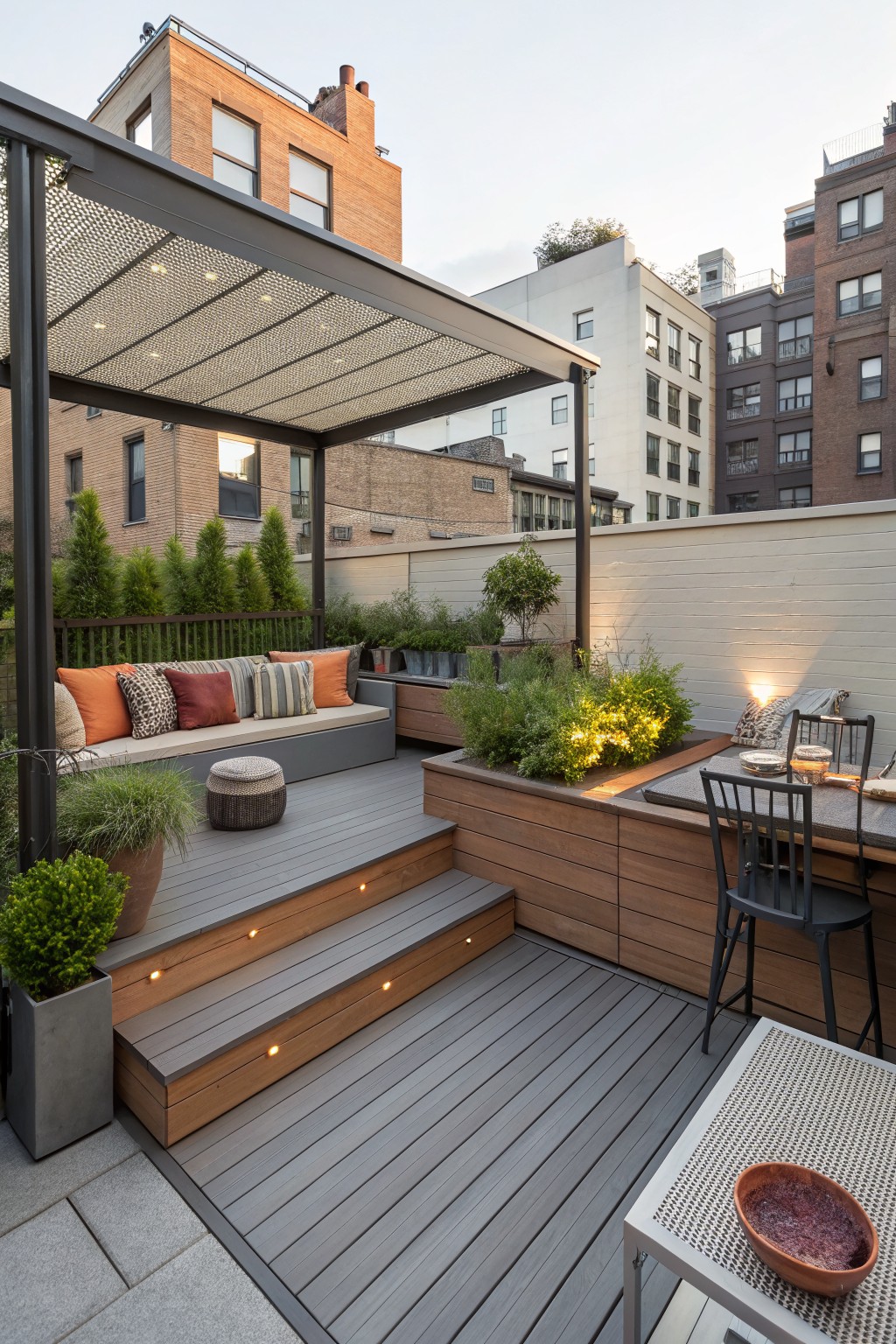
Many small backyards gain a lot from adding just a couple of levels to the deck. The change in height breaks up the space into separate areas for sitting and moving around without taking up extra square footage.
You can run a short run of steps along one edge and use the upper level for built-in seating. This setup works especially well on narrow city decks where flat space feels limited.
Add Levels With Built In Steps
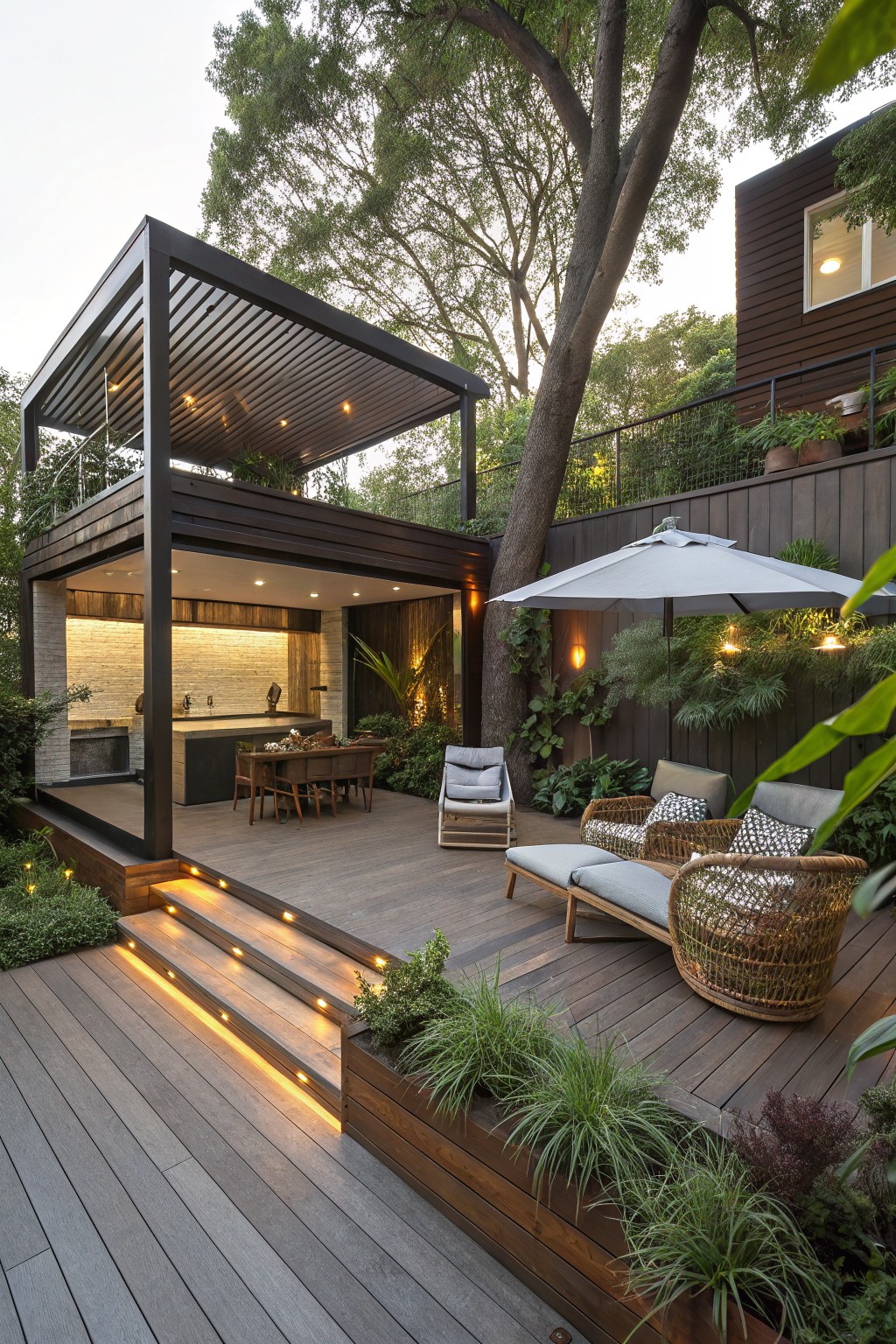
Many small decks stay flat because people worry about losing space. Adding a short set of steps gives you two clear zones instead of one crowded surface, so the cooking area can sit a little higher while seating stays lower and more private.
This works best on backyards with even a gentle slope or on narrow lots where you cannot spread out sideways. Keep the steps wide enough to feel comfortable and add simple lighting along the edges so the change in height stays safe at night.
Built In Planters To Add Deck Levels
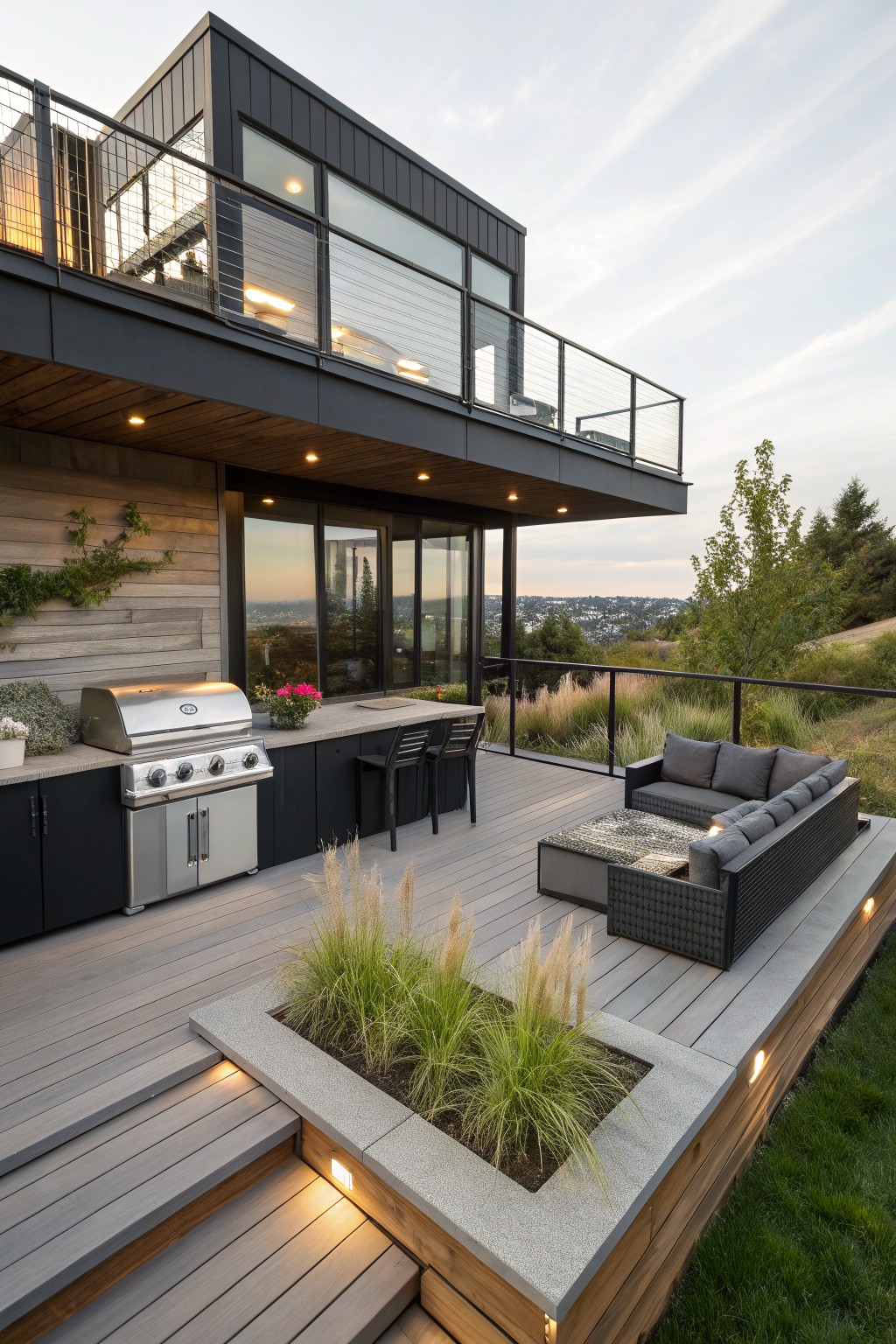
Raised planters built right into the deck structure can help create different levels without needing a lot of extra room. They break up the flat surface and give you a simple way to separate seating from cooking areas while still keeping everything connected.
This approach works best on small backyards where you want to add height and some planting space at the same time. Make sure the planters sit low enough to feel like part of the deck rather than added on later.
Add Levels With Simple Steps
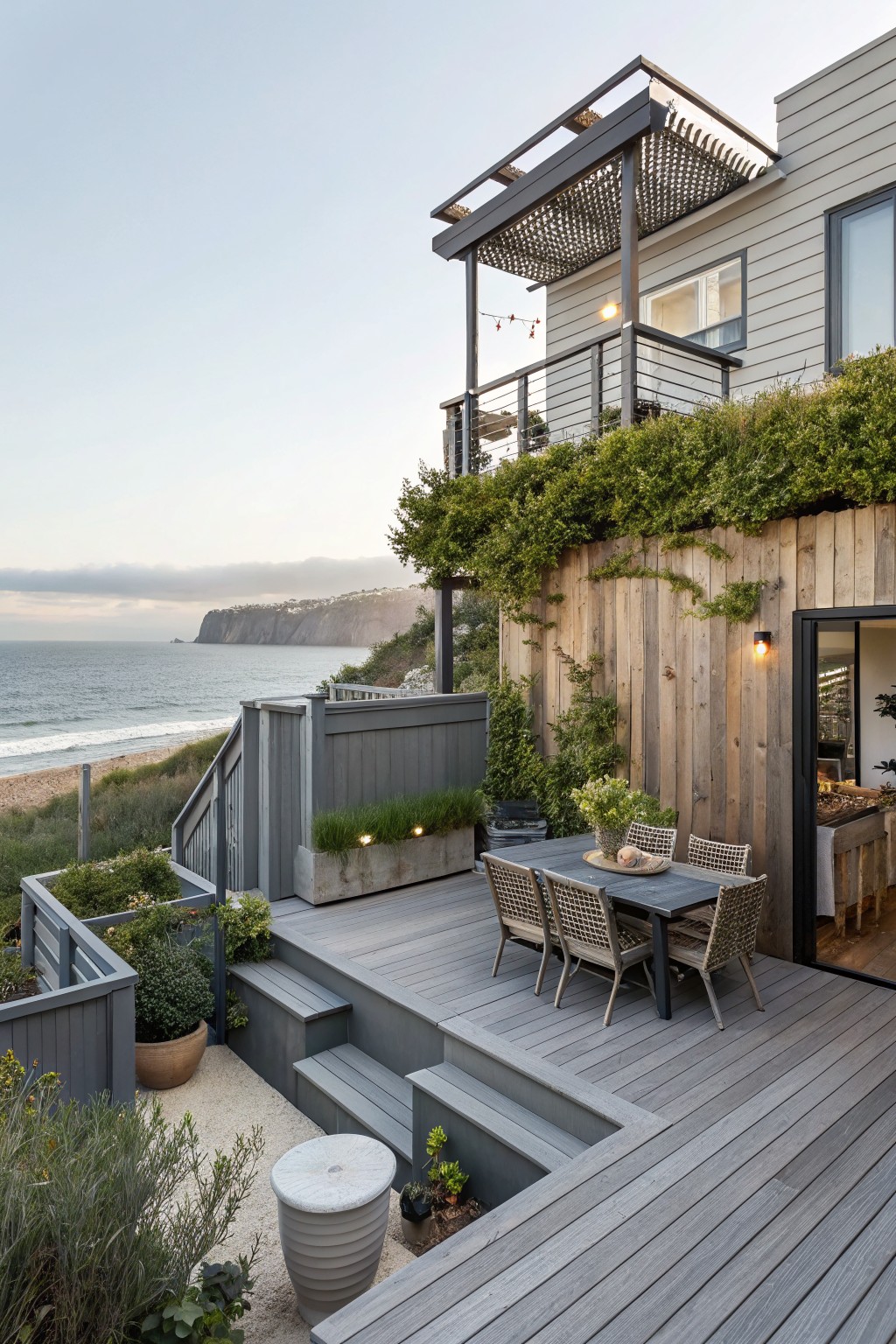
A few wide steps can turn one small deck into two useful areas without taking up extra room. The steps here connect a dining spot on the main level to a lower landing, giving you room to sit and eat while keeping the whole space open and easy to move through.
This works best on a narrow backyard or side yard where a flat deck would feel cramped. Keep the steps the same width as the deck and use the same wood so everything reads as one surface instead of separate pieces. Just make sure the lower level still has enough depth for a chair or two.
Frequently Asked Questions
Q: Will building levels eat into my seating area?
A: Plan the upper level for lounging and keep the lower one narrow for walking through. This way you still have room to spread out without crowding everything together.
Q: How can I connect the levels without adding stairs that take space?
A: Use a gentle ramp made from the same decking material. It blends right in and saves room compared to traditional steps.
Q: What about drainage when you stack levels like that?
A: Slope the surfaces slightly away from the house. Add small gaps between boards so water flows through instead of pooling up.