I have found that small backyards often feel exposed until some kind of screen creates a clearer boundary without making the space feel boxed in.
Most people notice the lack of privacy first when they step outside and realize the yard does not quite function as an extension of daily living.
In my own place I tried a few low options before realizing that height alone rarely solves the problem if the screen blocks light or airflow.
Placement tends to matter more than the material itself because tight layouts leave little room for anything that crowds the main seating area.
A simple screen can shift how usable the whole yard feels.
Tall Potted Plants for Balcony Privacy
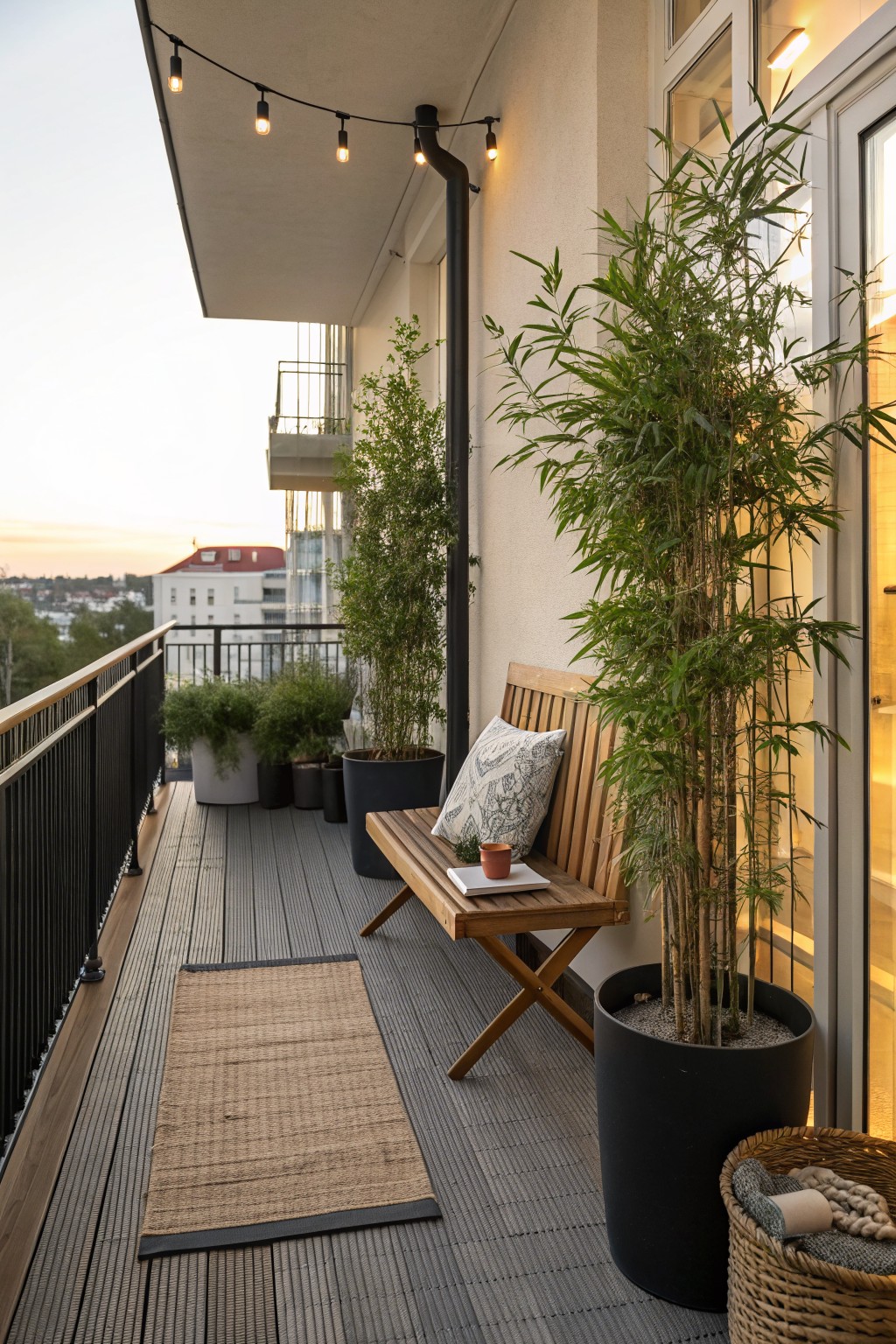
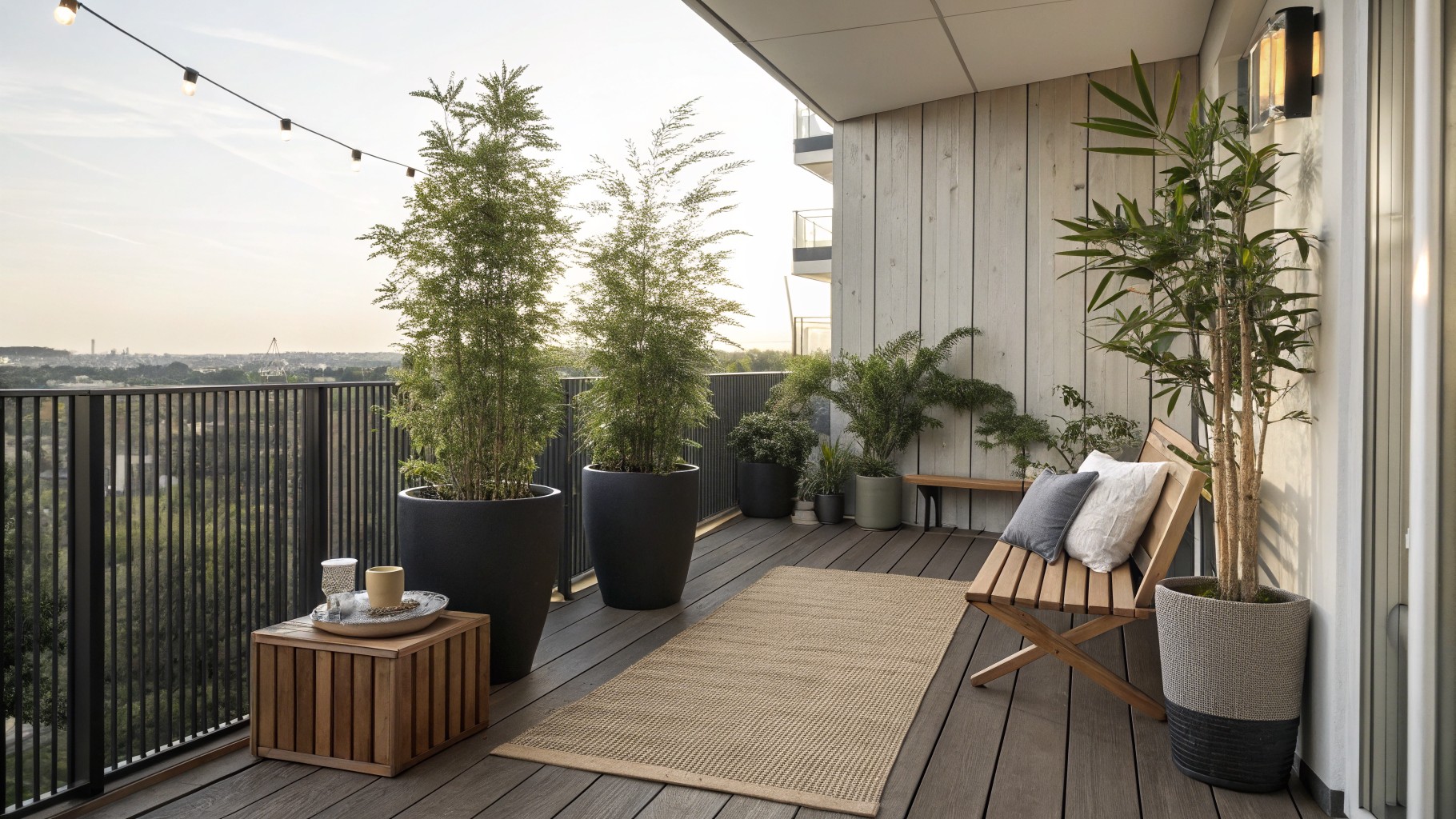
Tall plants in big pots give you a simple way to block views on a small balcony without building anything permanent. The bamboo in the large black container works especially well because it grows dense and reaches high enough to feel like a real screen while still letting in some light.
This approach suits renters and anyone with a tight outdoor space since the pots can move if needed. Place them along the side that faces neighbors or the street, and mix in a few different heights so the screen feels natural rather than like a solid wall.
Horizontal Slat Screens For Backyard Privacy

Horizontal slat screens give you privacy without making a space feel closed in. The even gaps let light and air move through while blocking the direct view from neighbors or the street. This works especially well in small yards where a solid fence would feel too heavy.
Place the screen right behind a seating area to define the space and cut down on outside noise. It suits tight layouts and rental yards because it mounts to posts or an existing fence without major construction. Just keep the slats spaced consistently so the look stays clean and the screen does not trap too much wind.
Use Trellises To Grow Privacy Vines
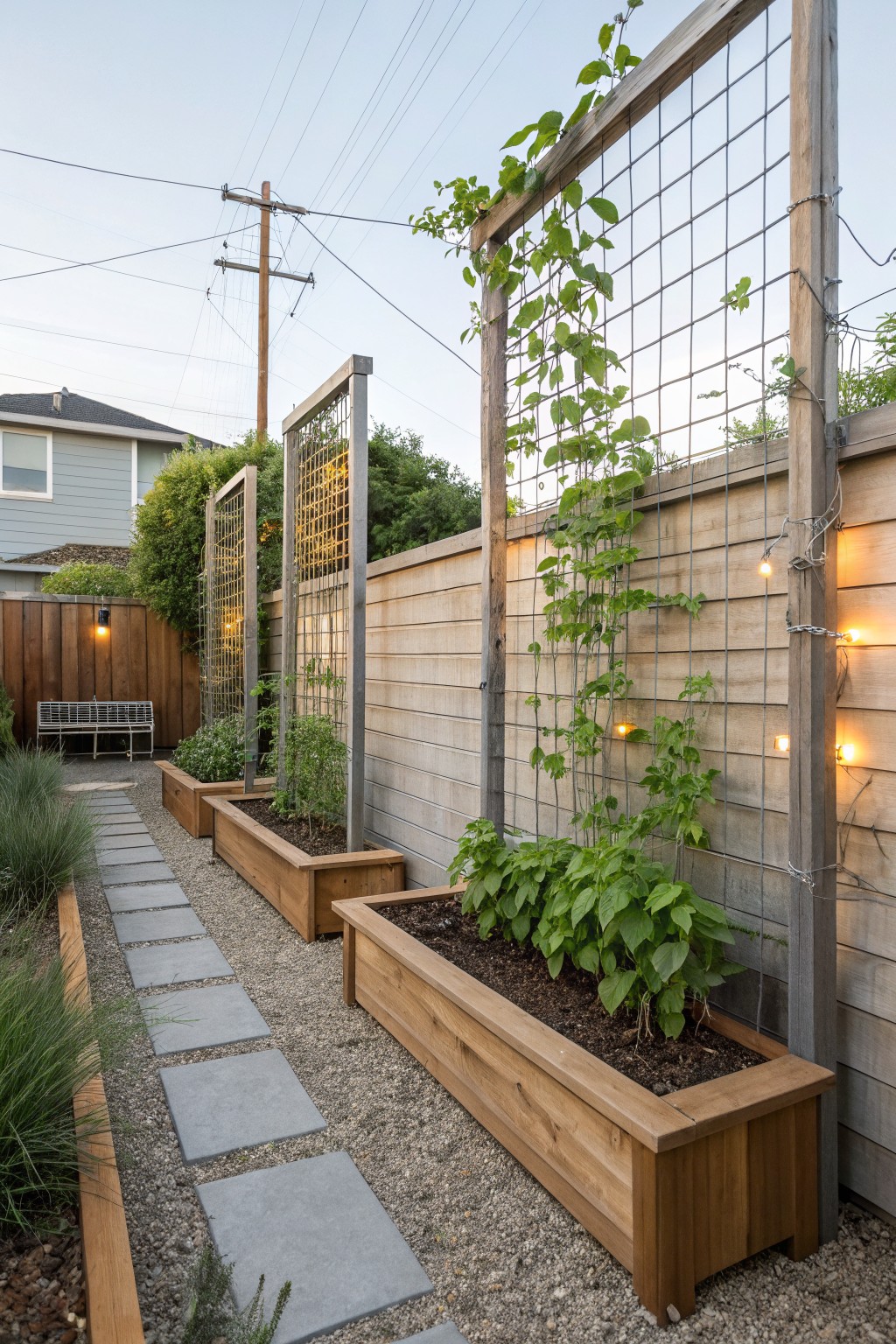
Tall trellises with wire grids give you a living screen without building a solid wall. The vines fill in over a season or two and soften the look while still blocking the view from next door. In a narrow side yard this approach keeps things open and green instead of closing the space in.
This setup works well along a fence line where you already have raised beds. Set the posts into the ground or attach them to the fence, then run the wire so the plants have plenty of room to climb. Just make sure the vines you pick are vigorous enough for your climate and will not overwhelm the structure.
Curtains As Movable Privacy Screens

Many people skip fabric curtains when they need privacy on a small outdoor space. They are simple to hang on a rod and can be pulled open or closed depending on the time of day or how much seclusion you want.
This setup works well on balconies, rooftops, and patios where permanent walls are not an option. Use outdoor fabric so it holds up, and tie the panels back when you want the area to feel more open.
Perforated Metal Screens for Small Yard Privacy

A patterned metal screen gives privacy without turning a small yard into a closed-off box. The cutouts let light pass through, so the space still feels open even when the screen sits right against a wall or fence line. Many homeowners like this option because it avoids the heavy look of solid panels.
Mount the screen on an existing structure or set it between planters to mark a boundary. It works best in tight side yards or rental patios where you cannot add a full fence. Keep the pattern dense enough for real privacy but open enough for airflow.
Frosted Panels That Add Pool Privacy
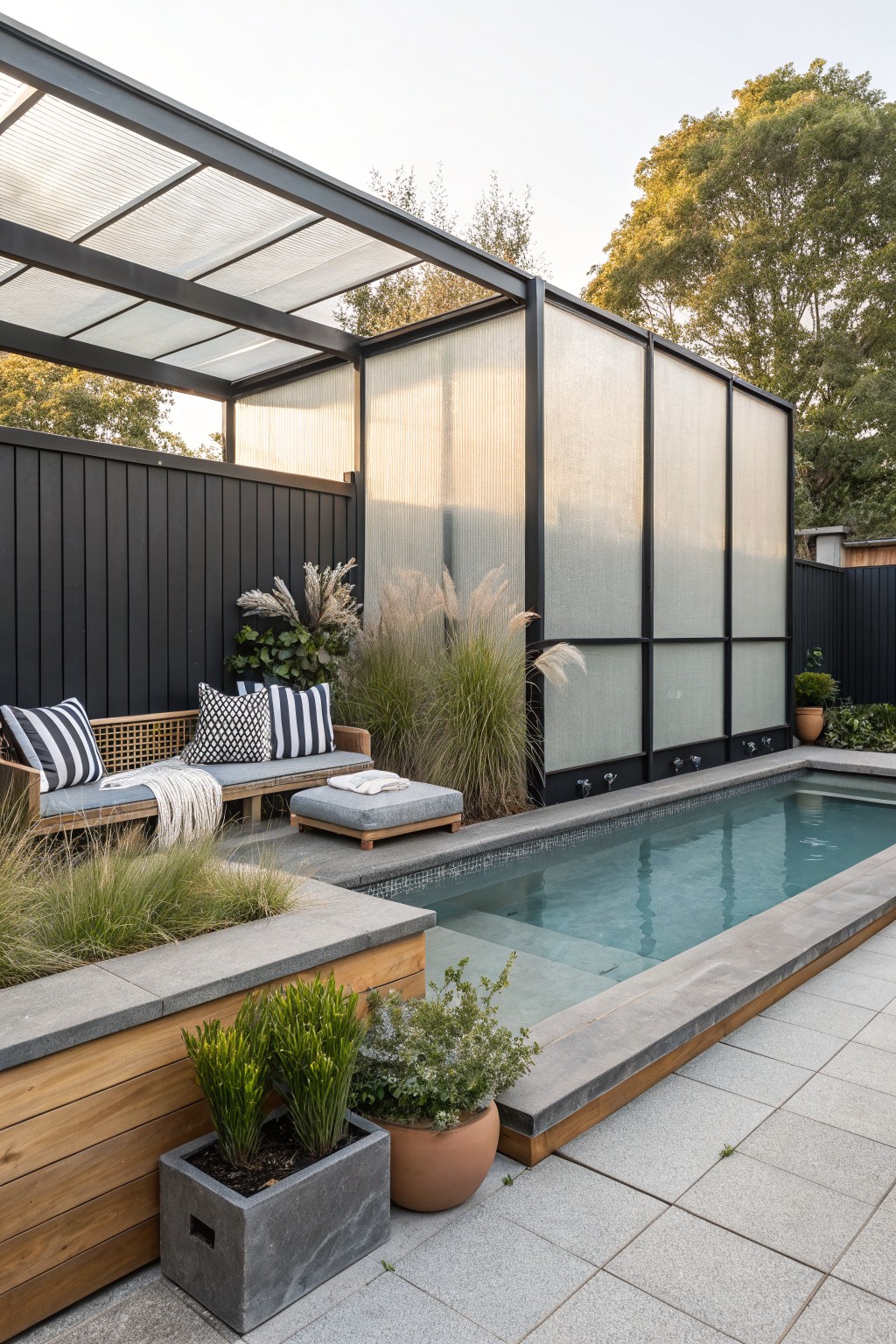
Frosted glass panels work well when you need to block views from one side without making the space feel closed in. They let light pass through while creating a solid screen that feels more finished than fabric or lattice options.
This approach suits small yards or rental situations where a full fence is not possible. Mount the panels on a simple frame at the edge of the seating or pool area, and keep the height just tall enough to cover the main sight lines.
Lattice Panels on Fencing for Light Privacy

Lattice sections built into a fence or gate give you privacy without making the space feel closed in. The open pattern lets air move through and keeps things from looking too heavy, which works well when you only have a narrow side yard or tight lot to work with.
This approach suits renters and homeowners alike because it can be added to an existing fence or built as a simple screen. Keep the solid part low enough for structure and let the lattice handle the upper section so the area still feels open.
Tiered Planters For Backyard Privacy

Tiered planters give you height and screening without putting up a solid wall. The stepped boxes let plants fill in at different levels, which blocks views from above and below while still letting some light through.
This approach works especially well in narrow side yards or along stairs where a regular fence would feel too closed in. Use sturdy wood boxes that can be moved if you rent, and choose evergreen shrubs for the back rows so the screen stays full year round.
Woven Screens For Balcony Privacy
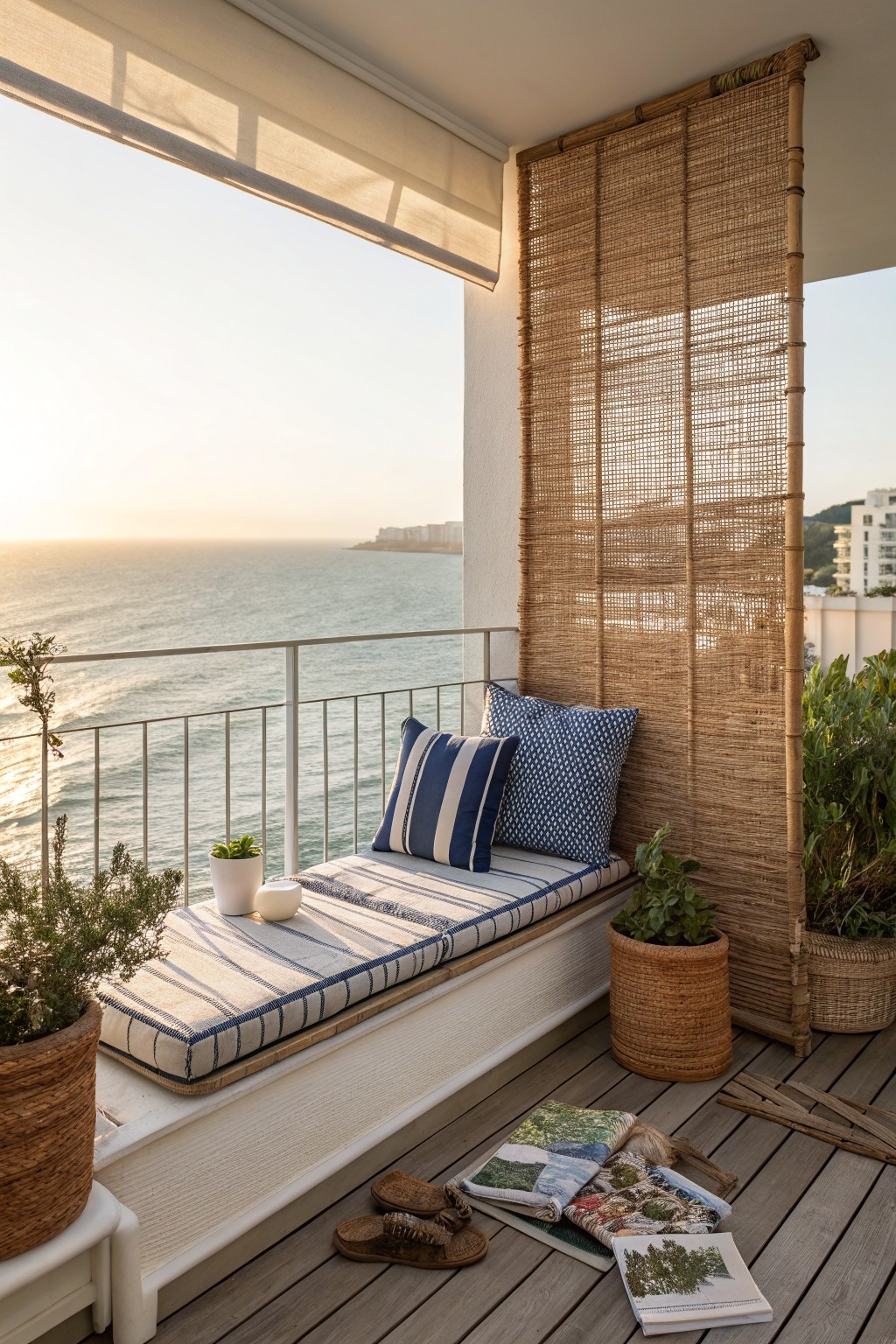
A woven bamboo or reed screen adds privacy on a small balcony by blocking the side view while still letting in light and air. It works especially well when you cannot build a solid wall or fence and need something that feels lighter.
These screens are easy to attach to railings or posts and come in panels that roll up for storage. They suit renters or anyone with a tight layout since they need no permanent construction and can be taken down later.
Vertical Plant Shelves for Small Yards
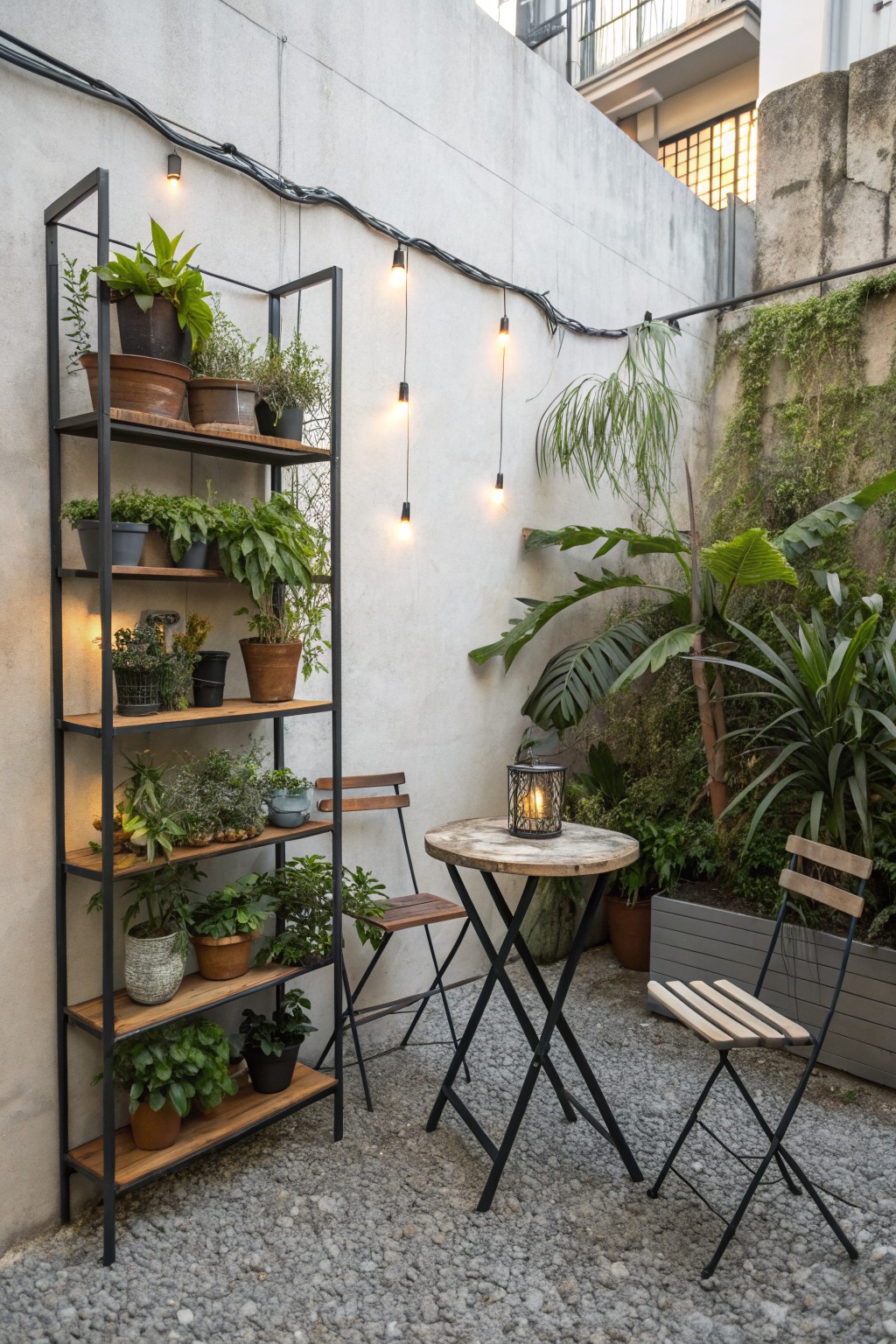
Tall open shelving loaded with plants can work well as a privacy screen in tight outdoor spaces. It adds height and greenery without needing a solid fence or wall extension, and it still lets some light through. The setup feels practical because you can rearrange pots as needed and use the shelves for storage too.
This approach suits renters or small patios where permanent structures are not an option. Place the unit against an existing wall or property line, and fill it with a mix of taller and trailing plants for better coverage. Just watch the weight if the shelves are lightweight, and choose sturdy materials that can handle weather.
Wall-Mounted Planters for Simple Privacy Screens

Wall-mounted planters give you a quick way to block views without putting up a fence or building anything permanent. In tight outdoor spaces they work especially well because they use vertical wall space that often sits empty anyway. A few pots hung at different heights can soften a blank wall and create enough cover to make the seating area feel more private.
This approach suits renters and small yards because the planters can come down when you move. Place them along the side that faces neighbors or the street, and mix in a few larger pots on the ground for extra depth. Just watch the weight on older walls and make sure the brackets are secure.
Shade Sails for Overhead Screening
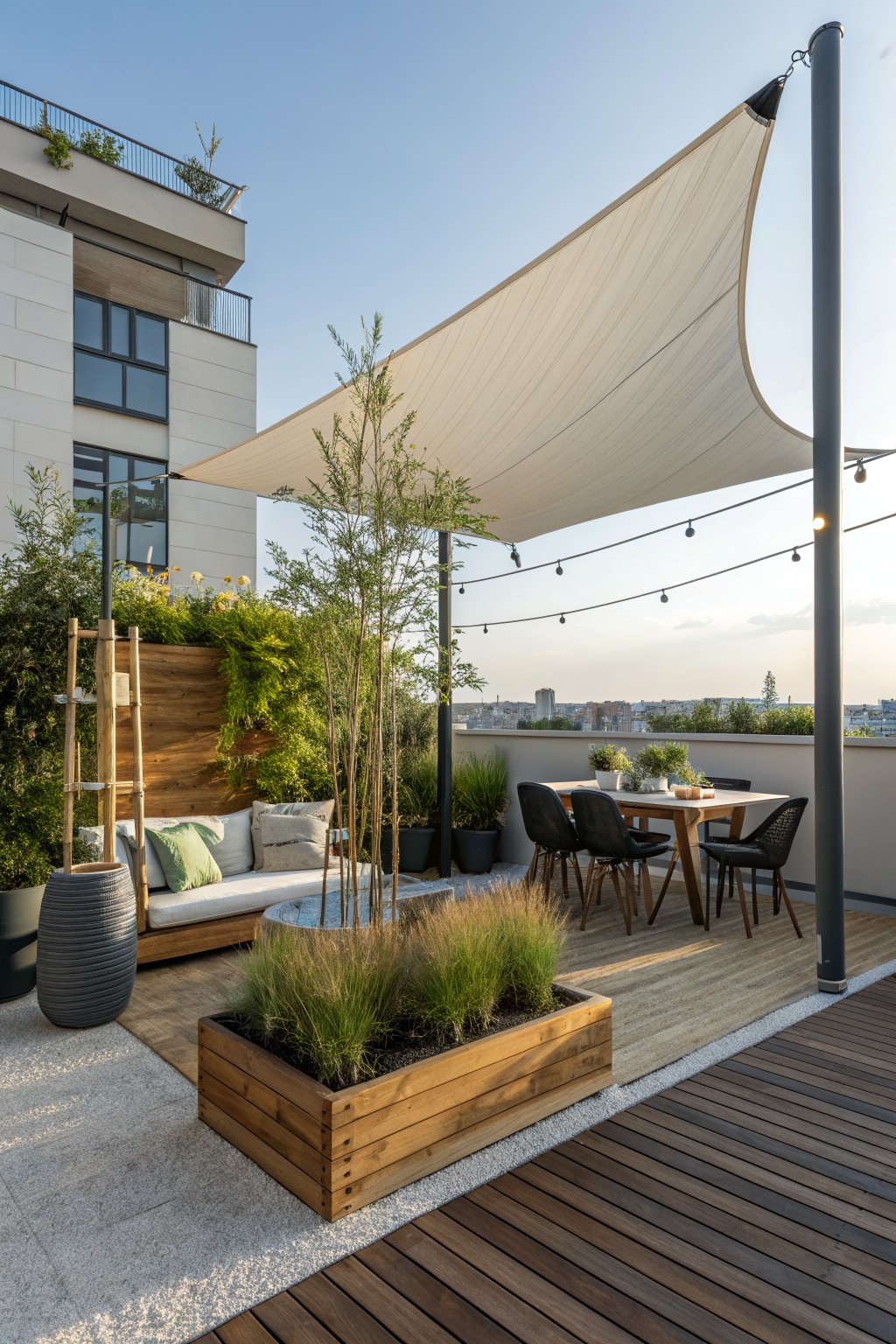
A large fabric shade sail gives you privacy from above without taking up floor space or needing a heavy structure. It works well on rooftops, balconies, and small yards where side fencing alone does not feel private enough.
You can mount it to railings or simple poles and remove it at the end of the season or when you move. It suits renters and anyone dealing with tight layouts who want shade and screening without permanent construction.
Bamboo Screens For Small Yard Privacy

Bamboo screens give you privacy fast without building a solid wall. They block the view from outside while still letting air and some light through, which keeps the space from feeling closed off. Many people like how the natural texture blends with wood decks and simple seating.
These screens work best on a small deck or patio where you need separation from neighbors but do not have much room. You can attach them to posts or a basic frame, and they suit renters since they are easy to take down later. Just make sure the panels are tall enough to give real coverage above seated eye level.
Pair Solid Screens With Tall Grasses
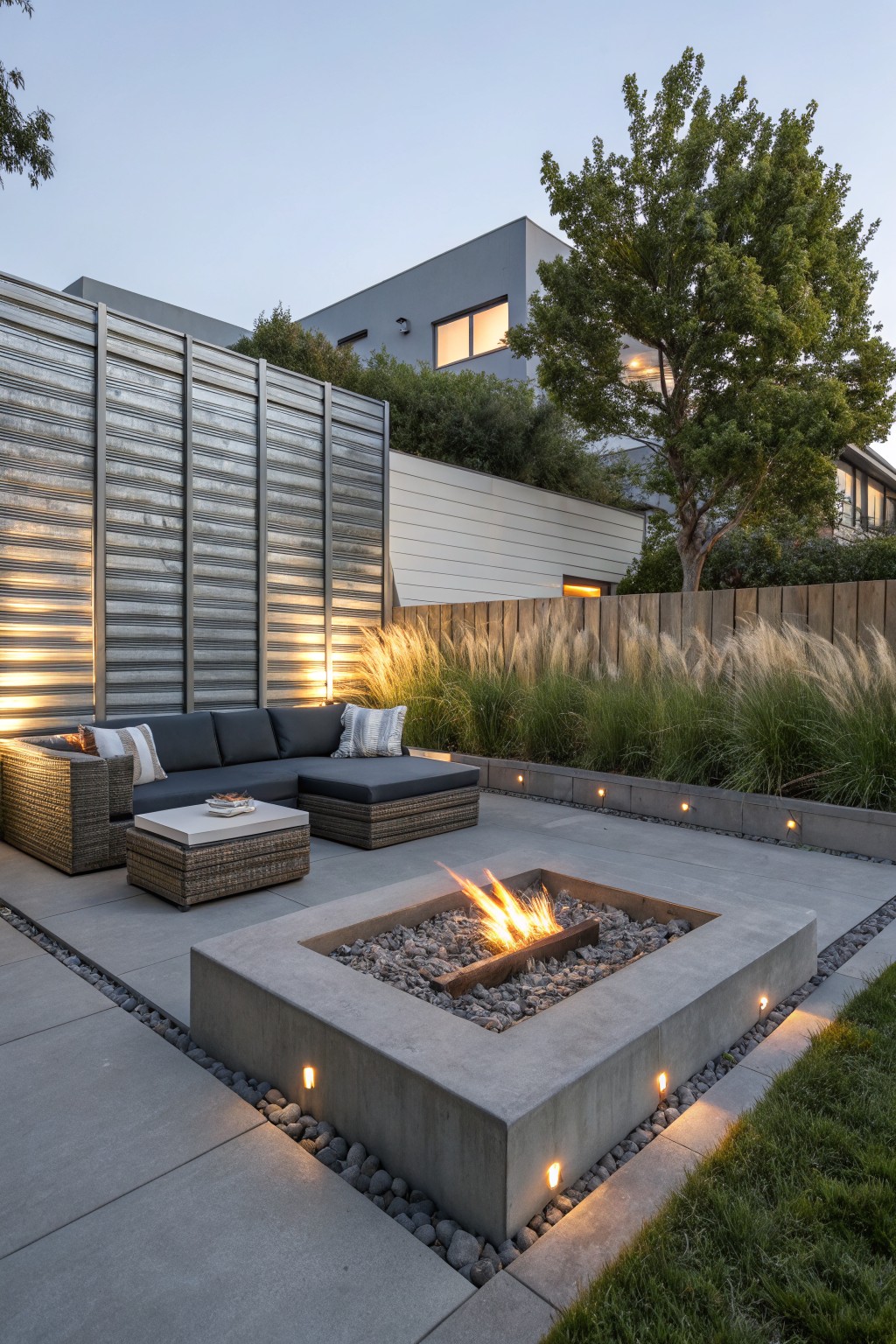
Tall grasses planted right against a fence or wall can turn a basic screen into something that actually feels private. The plants add height and movement without needing a lot of space, and they soften the look of harder materials like metal or wood.
This works well in small yards where you want coverage but do not want everything to feel closed in. Keep the grasses in a narrow bed along the screen so they do not take over the patio area, and choose varieties that stay upright rather than floppy.
Lattice Panels With Climbing Vines
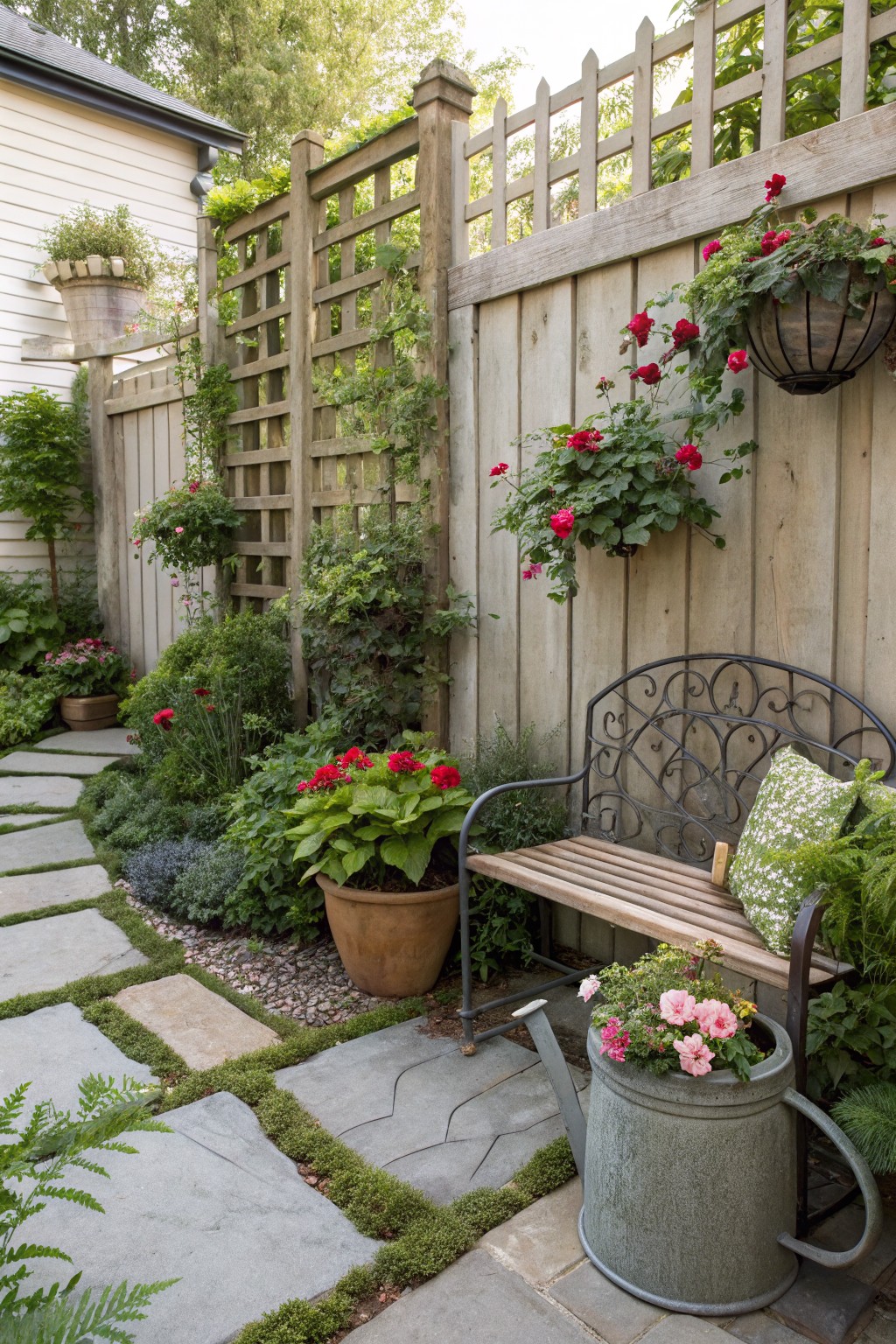
A fence with open lattice sections gives vines room to grow and fill in over time. This creates a living screen that blocks views without making the space feel boxed in, which works well along tight property lines or in small yards.
It suits both homeowners and renters since the lattice can often be added to an existing fence. Choose fast-growing climbers and give them something sturdy to attach to so they cover the gaps steadily through the season.
Tall Potted Trees Offer Easy Privacy on Decks
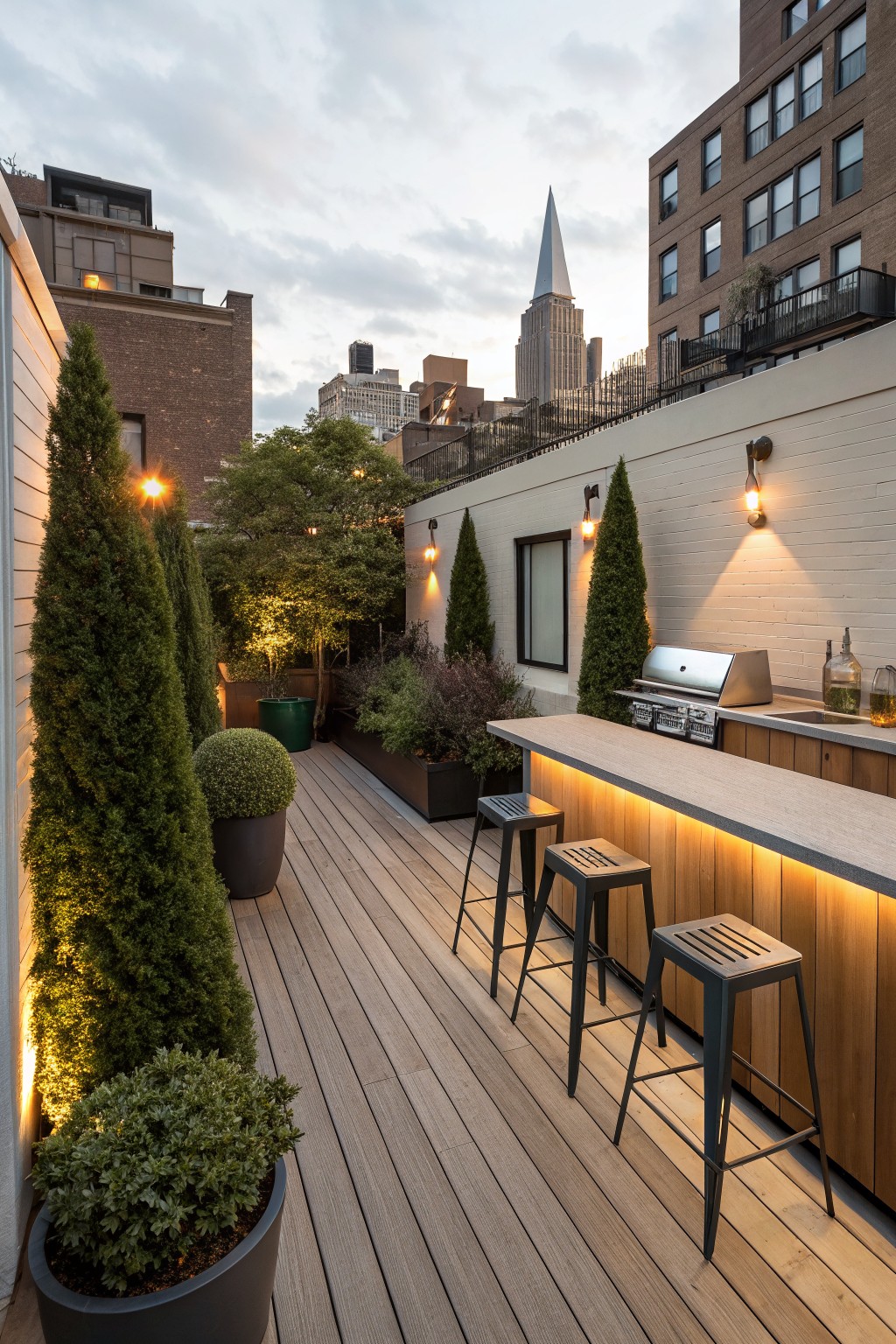
Many people turn to tall evergreens in large containers when they need privacy on a narrow deck or terrace. These plants block side views without requiring permanent construction, which works well in tight urban spaces where options are limited.
The pots can be shifted around as seasons change or when more space is needed for seating. Narrow varieties fit best along the edges, and they stay practical for renters who may need to take them along when moving.
Screen Small Patios With Tall Plants

Tall plants give you privacy without building anything permanent. Here the large pots and thick foliage along the sides create a living wall that keeps the outdoor kitchen area feeling separate from whatever sits beyond.
This approach works especially well in small yards or rentals since you can rearrange the pots as needed. Just choose varieties that grow full and stay healthy in your light conditions so the screen stays dense over time.
Vertical Planters for Balcony Privacy

A vertical planter mounted on the wall gives you a living screen without eating into floor space. It works well on balconies or small outdoor areas where a traditional fence or tall plant would feel too heavy or take up too much room.
Fill the pockets with a mix of herbs and trailing plants to create the coverage you need. This option suits renters since it hangs on simple hooks and comes down without damage when it is time to move.
Frequently Asked Questions
Q: How can I set up a privacy screen as a renter without leaving holes or marks?
A: Start with freestanding panels or tension rods that lean against existing fences. Weigh the bases down with potted plants so wind does not tip them. Take everything down when the lease ends.
Q: My small yard gets blasted with sun. Which screen options last without looking washed out?
A: Pick cedar slats or powder coated metal that resist fading on their own. Wipe them down twice a year to remove dust and pollen. That keeps the color even without extra products.
Q: Neighbors look down from a second floor. Will any of these screens actually block the view?
A: Stack a row of tall planters with fast growing vines along the back edge. Angle the tallest ones toward the house to break the line of sight. Move them slightly each season as the plants fill in.