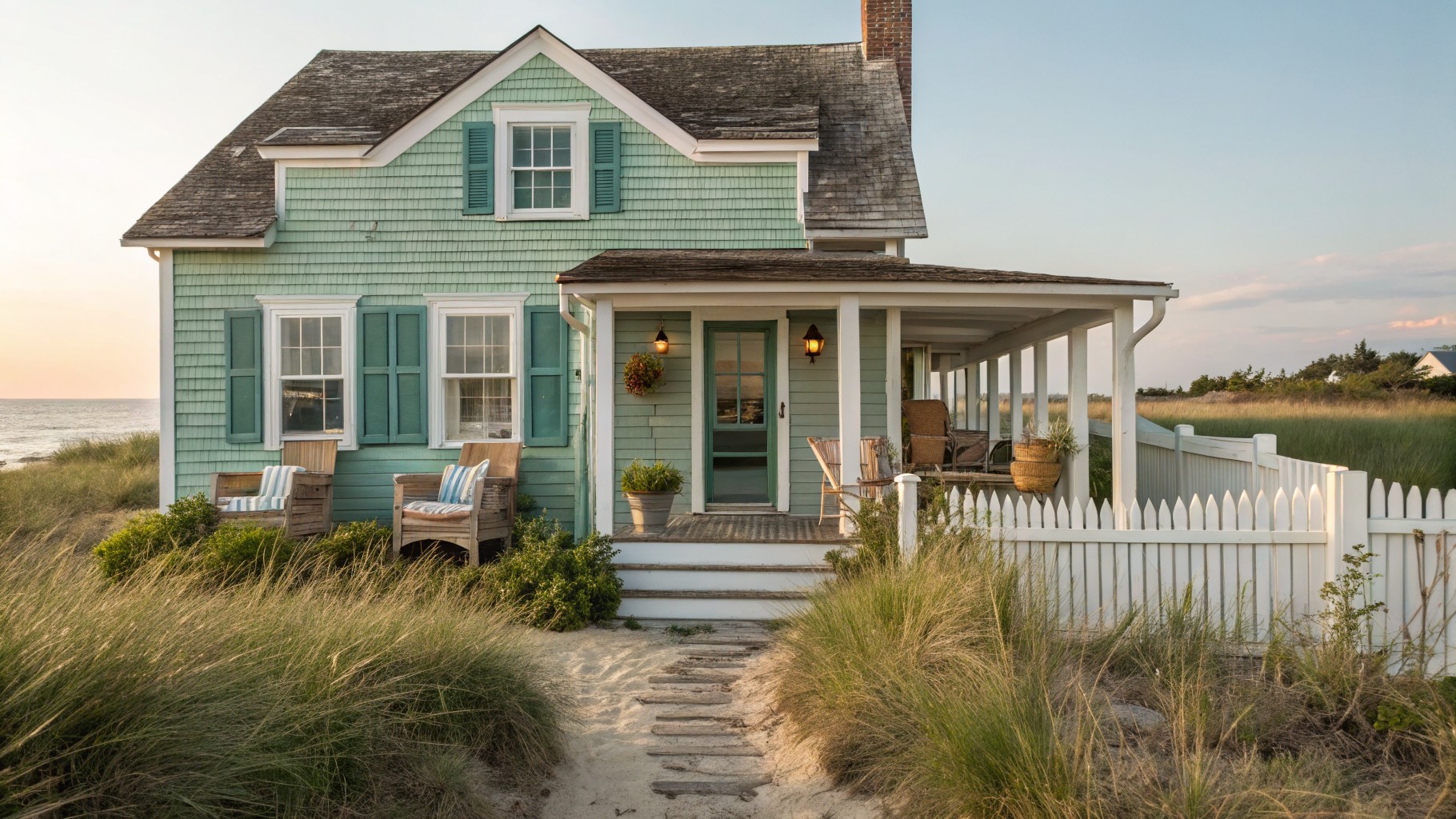
I have always paid attention to how the color on a house sets the tone the moment you pull up to it.
Greens drawn from leaves and moss tend to settle a facade into its setting without making the whole place feel overly styled.
Light changes everything on those surfaces.
It pays to hold samples against the siding at different hours because what looks calm in the morning can shift once the afternoon sun hits the roofline and trim.
I would try one of the mid tone options first on a small section of my own house to see how it ages with the seasons.
A Gentle Green for Homes Near the Water
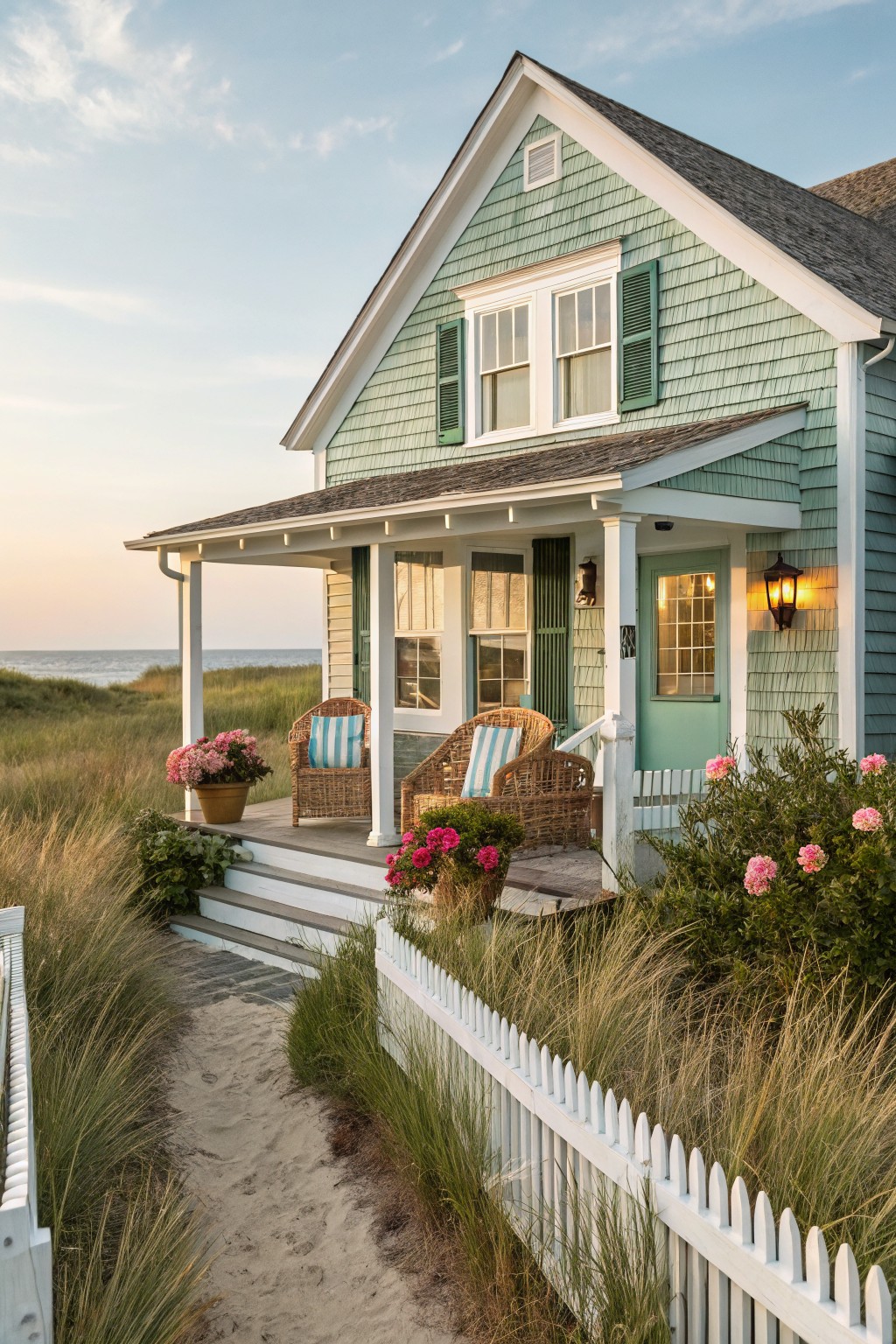
A soft green on the house siding can make the whole place feel calmer and more tied to the land around it. This shade sits nicely against grass and dunes instead of fighting them, which helps the house look like it belongs there from the start.
It works well on simple cottages with white trim and a small porch. Keep the color muted so it stays easy on the eyes, especially if the house gets strong sun or sits close to the water.
Green Exterior Paint That Blends Into Nature
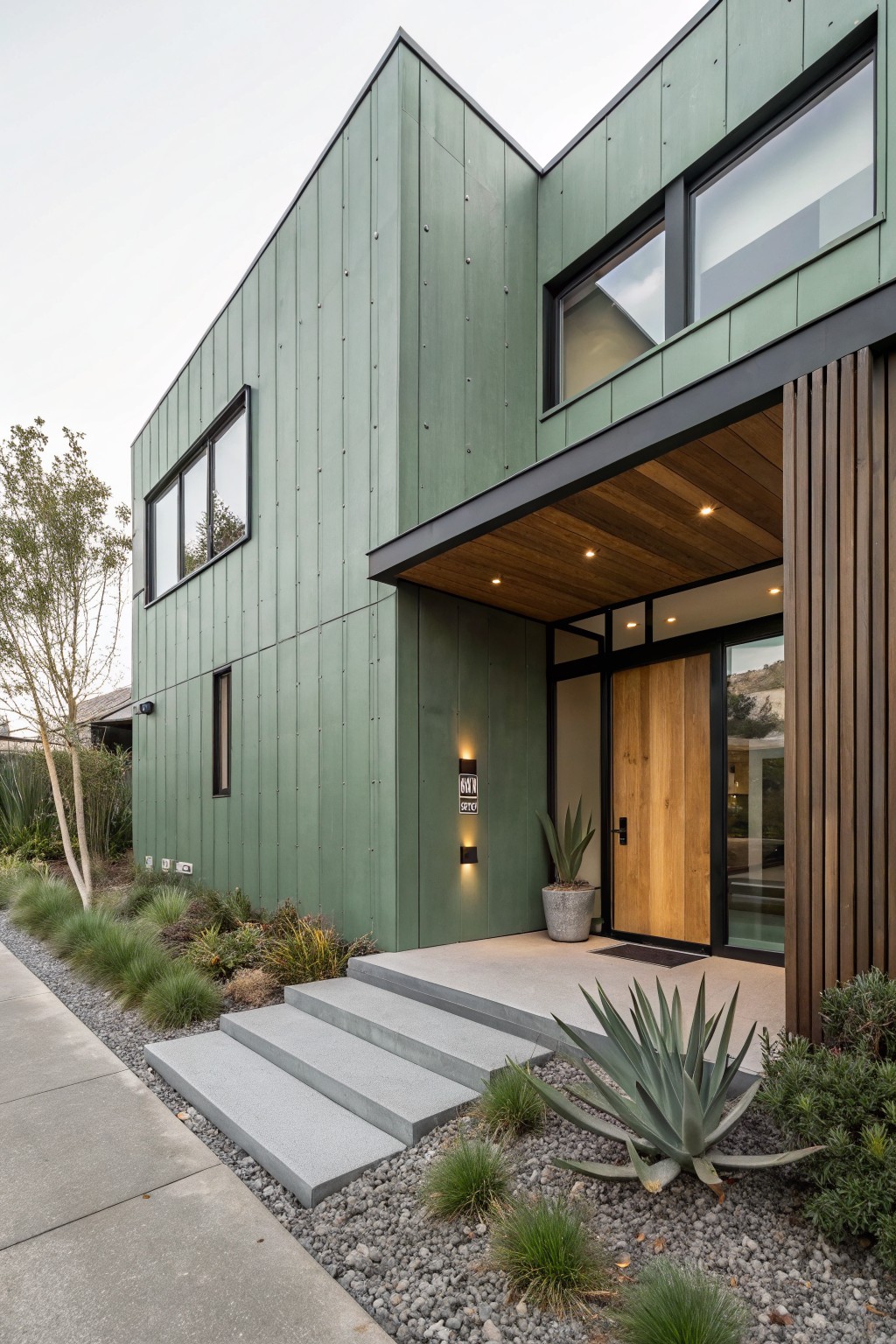
A soft green on the outside walls can make a house feel like it belongs with the trees and plants around it. This shade works because it stays calm and does not fight with the landscape, which is why it shows up often in nature-inspired designs.
It suits homes with clean lines and a bit of garden space in front. Pair the color with simple wood details near the door and keep the planting low and natural so the green stays the main connection to the outdoors.
Soft Green Paint For A Natural Look
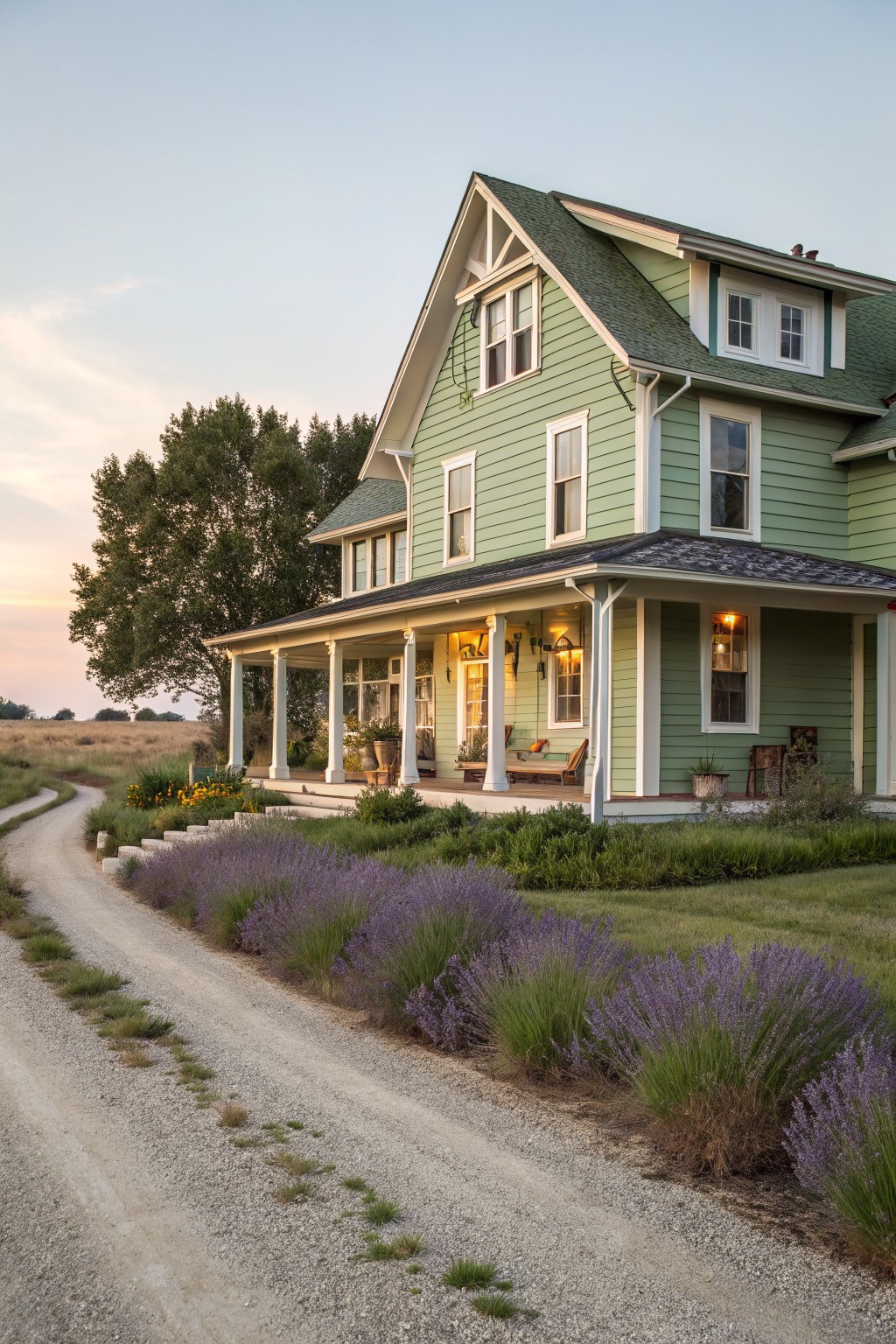
A light green on the house walls can help it sit comfortably with the fields and trees nearby. The color feels calm and refreshing without trying too hard, which is why it shows up often in country settings.
This approach works best on homes that already have a simple shape and a porch. Keep the trim light and let the surrounding plants do the rest. Just check the shade at different times of day so it does not shift too much toward gray.
Soft Green Paint For a Nature-Inspired Exterior
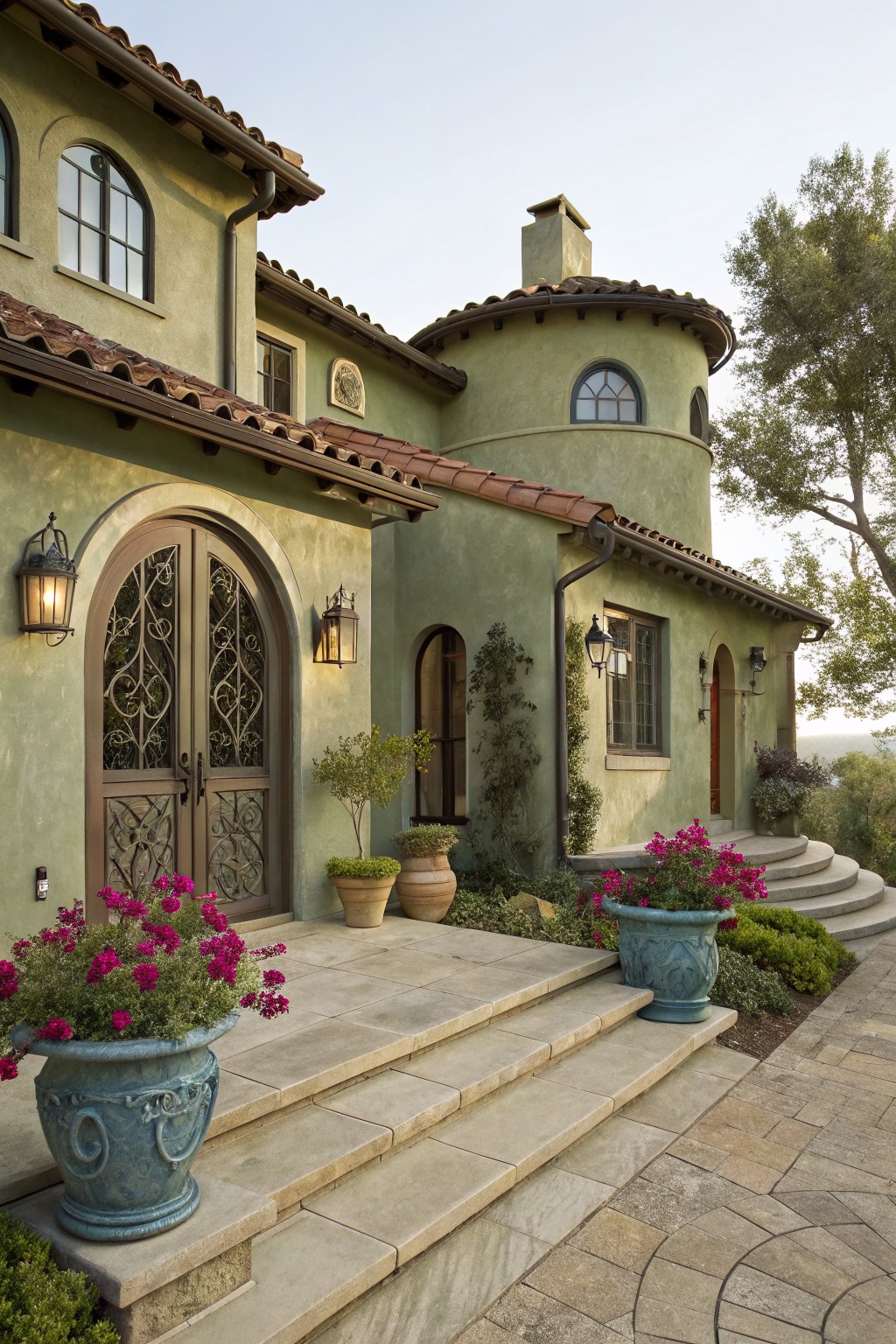
A soft green on the outside walls helps a house sit comfortably with its surroundings instead of standing out too sharply. The color picks up the tones from nearby trees and shrubs so the whole place feels calmer and more settled.
This works best on homes with warm roof tiles and simple shapes. Keep the trim and details in a darker shade so the green stays the main note, and add a few large pots near the door if you want to carry the garden colors right up to the house.
Green Exterior Color That Blends Into the Trees
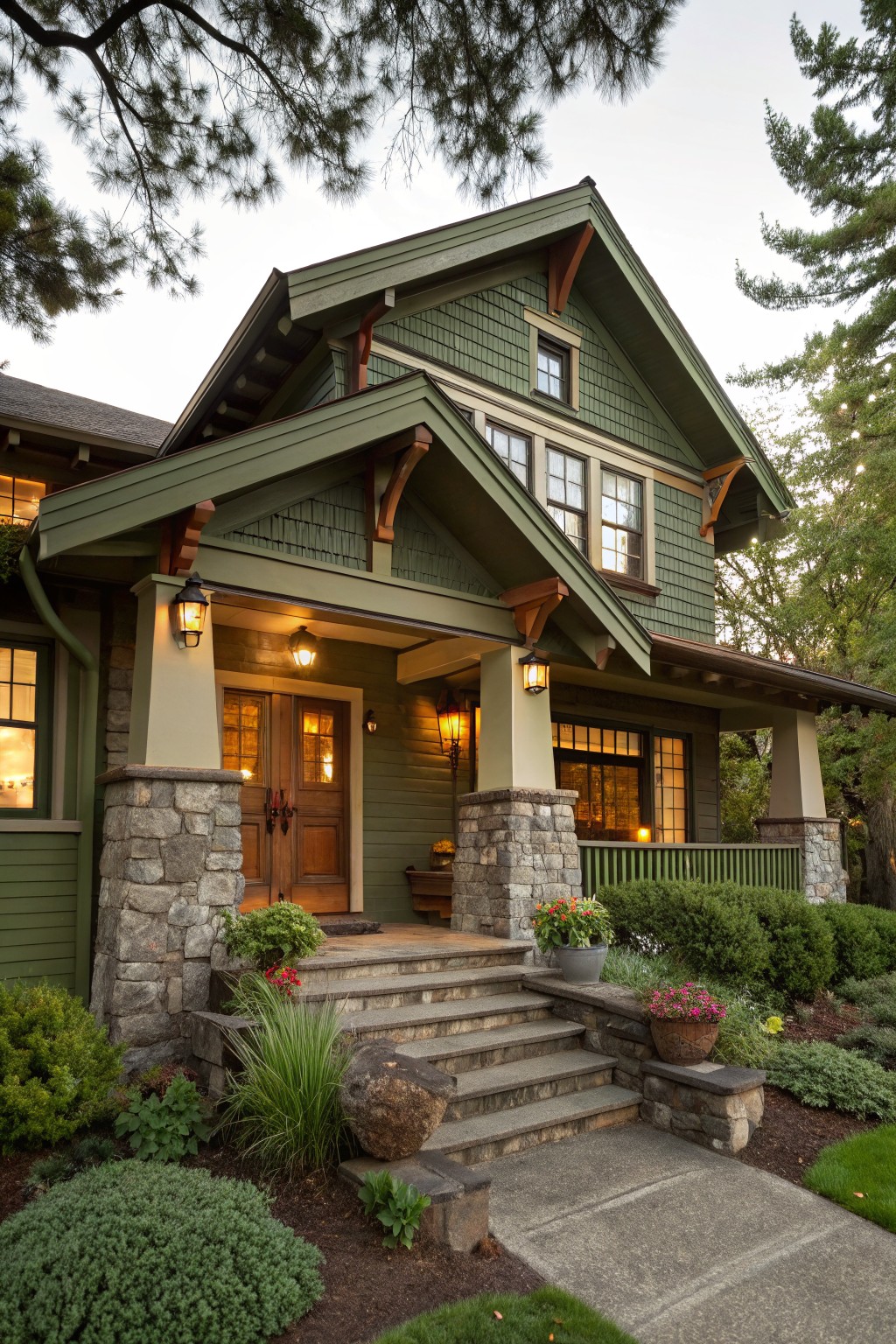
Many homes surrounded by trees look better when the siding color picks up on the greens already growing nearby. A muted green keeps the house from feeling like it was dropped onto the lot and instead makes it look like part of the setting.
This works best on houses with wood siding or shingles and simple trim details. Use a slightly deeper or lighter shade on the trim so the main color stays soft against the plants and does not compete with them.
Deep Green Exteriors That Blend Into Their Setting
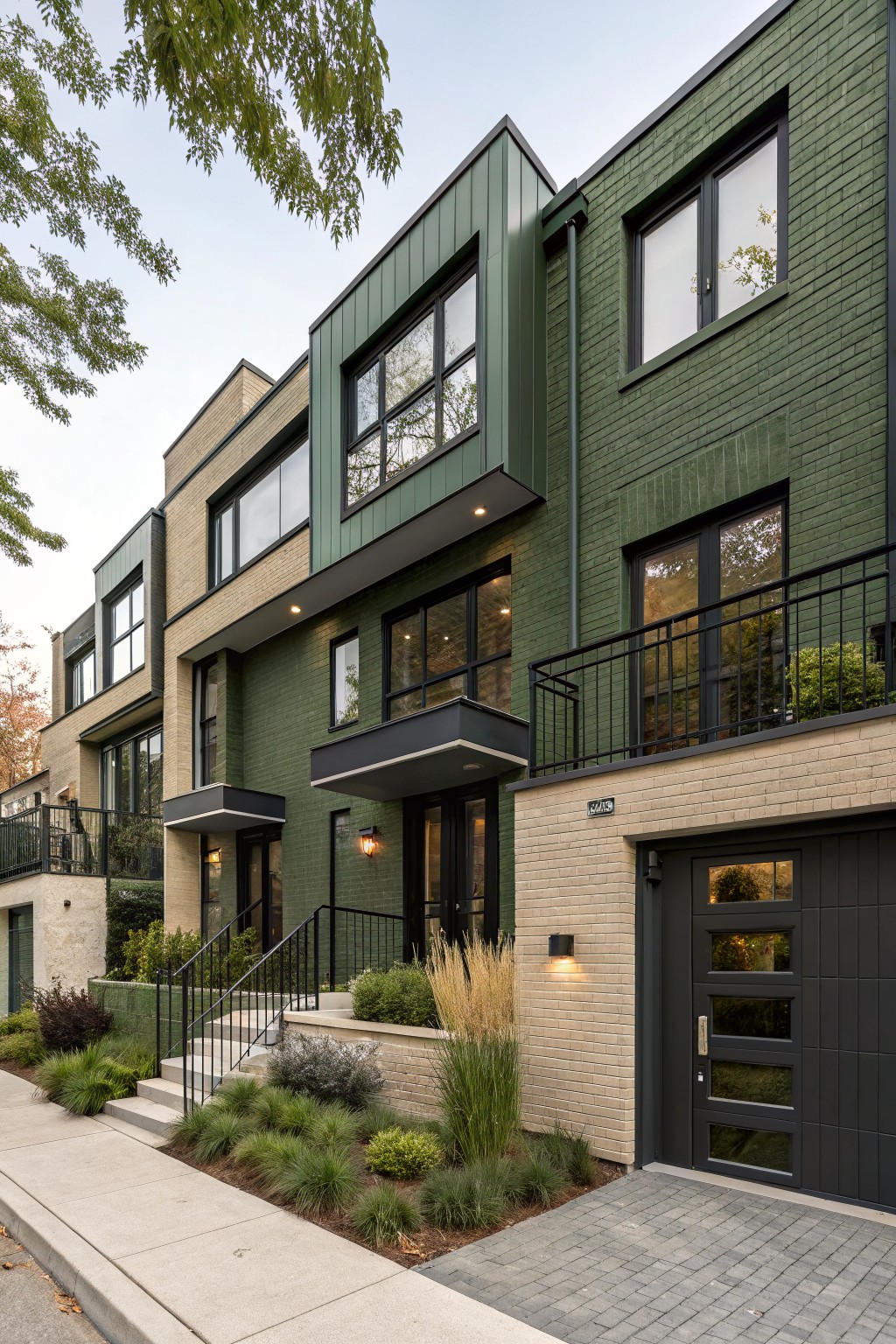
A deep green exterior can make a house feel more connected to its surroundings, especially when the color is used on larger sections of the facade. It stands out without looking artificial, and the shade works well against both brick and natural plantings right out front.
This approach suits modern homes with clean lines and mixed materials. Try it on the main body of the house while keeping the base or accents in a lighter neutral so the green does not overwhelm the whole structure.
Green Paint That Blends With The Trees
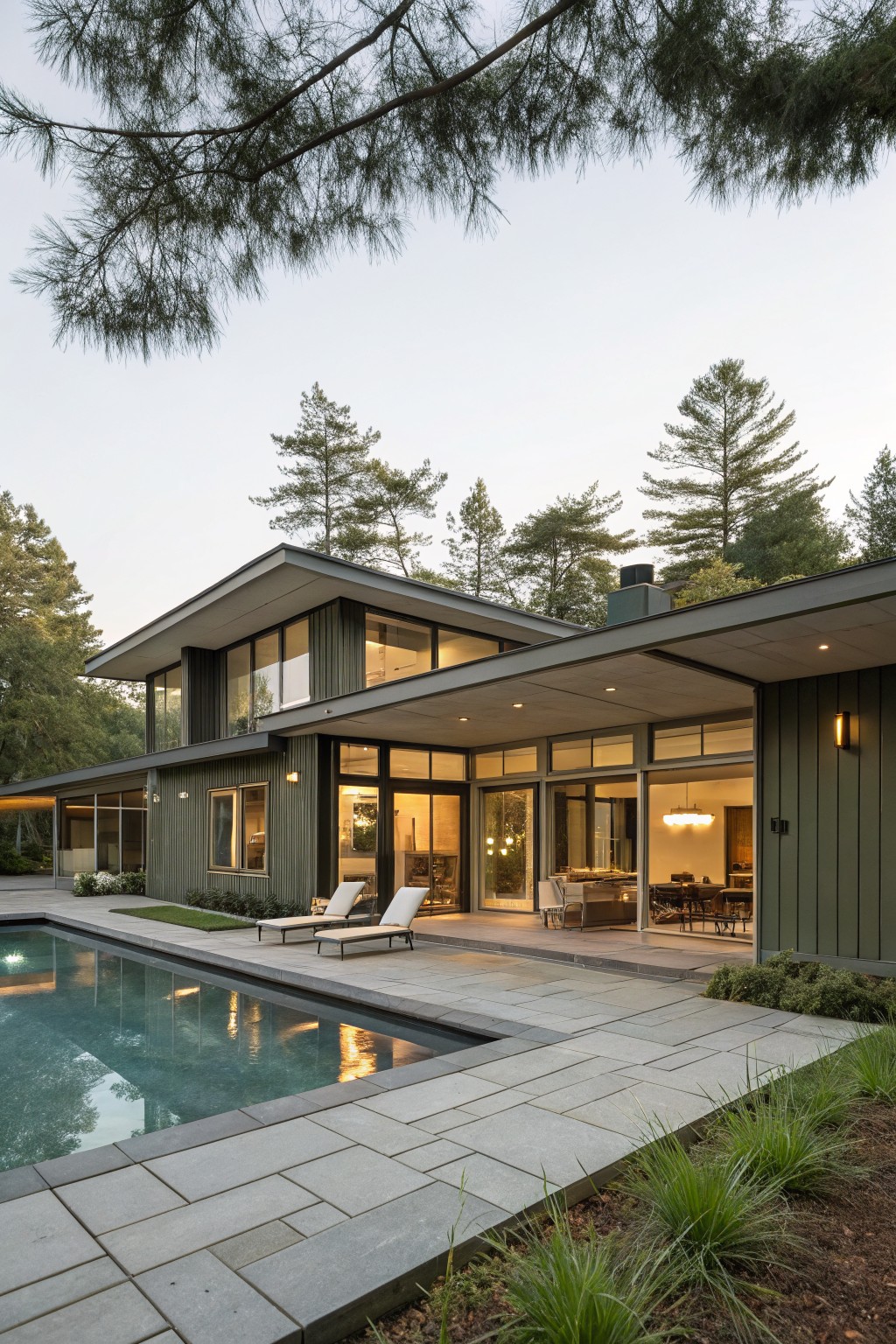
A deep green exterior color can help a house settle into its surroundings instead of fighting them. When the siding picks up the same tones as the nearby pines and foliage, the whole place feels calmer and more grounded.
This approach works best on homes with some tree cover or natural landscaping. Test the color on a large board first, since greens shift a lot depending on the light and the season.
Green Doors That Blend With Climbing Vines
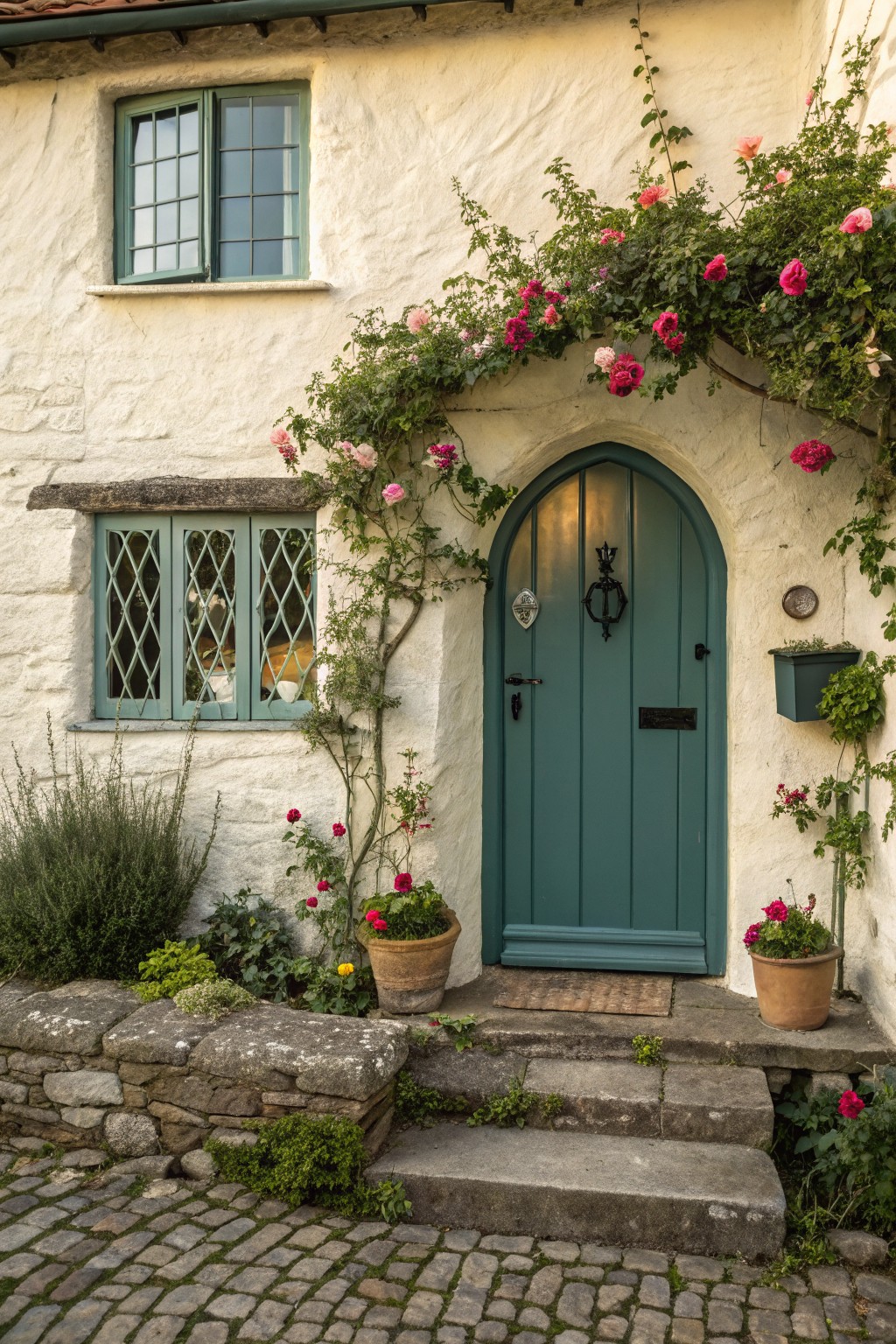
A deep green door stands out in a good way when vines and roses grow right around it. The color picks up on the surrounding plants instead of fighting them, so the whole entry feels more connected to the garden.
This approach works best on homes with textured walls or cottage style details. Pick a green with some blue or gray in it so it holds its own when the roses are in full bloom and the light changes through the day.
Let the Exterior Color Blend With the Landscape
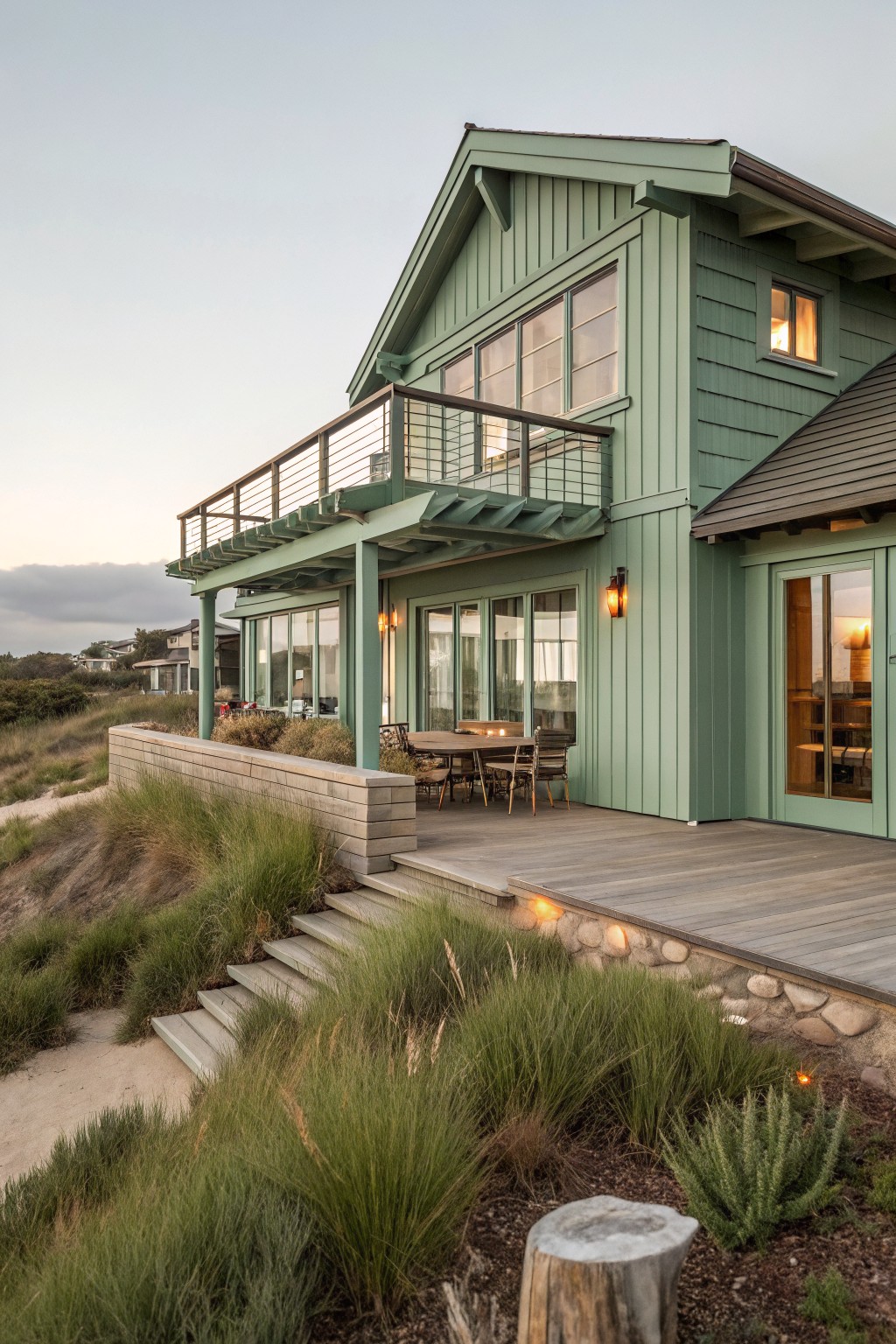
A soft green on the outside walls can make a house feel much more at home in a natural setting. It picks up the tones from the grass and plants around it instead of standing apart.
This works especially well for homes near the coast or in open fields. Try to pick a muted shade that shifts a bit with the light rather than a bright one that might feel too bold.
Muted Green Siding That Blends Into the Landscape
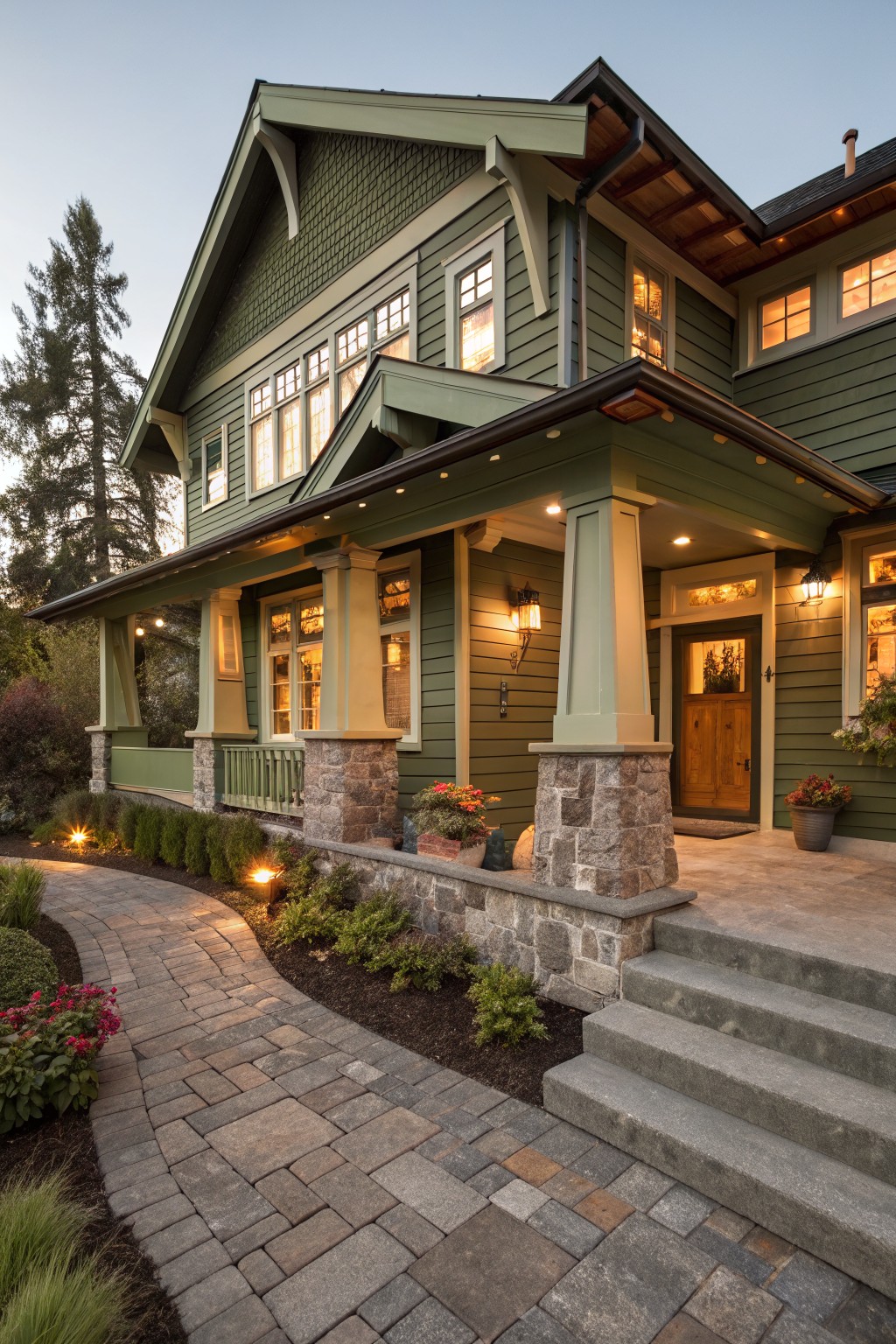
A soft green on the outside walls helps a house feel like it belongs where it sits. It picks up the color of nearby trees and shrubs so the whole place looks settled rather than brand new. The effect is simple and steady, not flashy.
This color works best on homes with wood siding and some stone or brick at the base. Keep trim and doors in a warm neutral so the green stays the main note. Too many competing colors on the same wall can make the look feel busy instead of calm.
Deep Green Siding That Blends Into The Woods
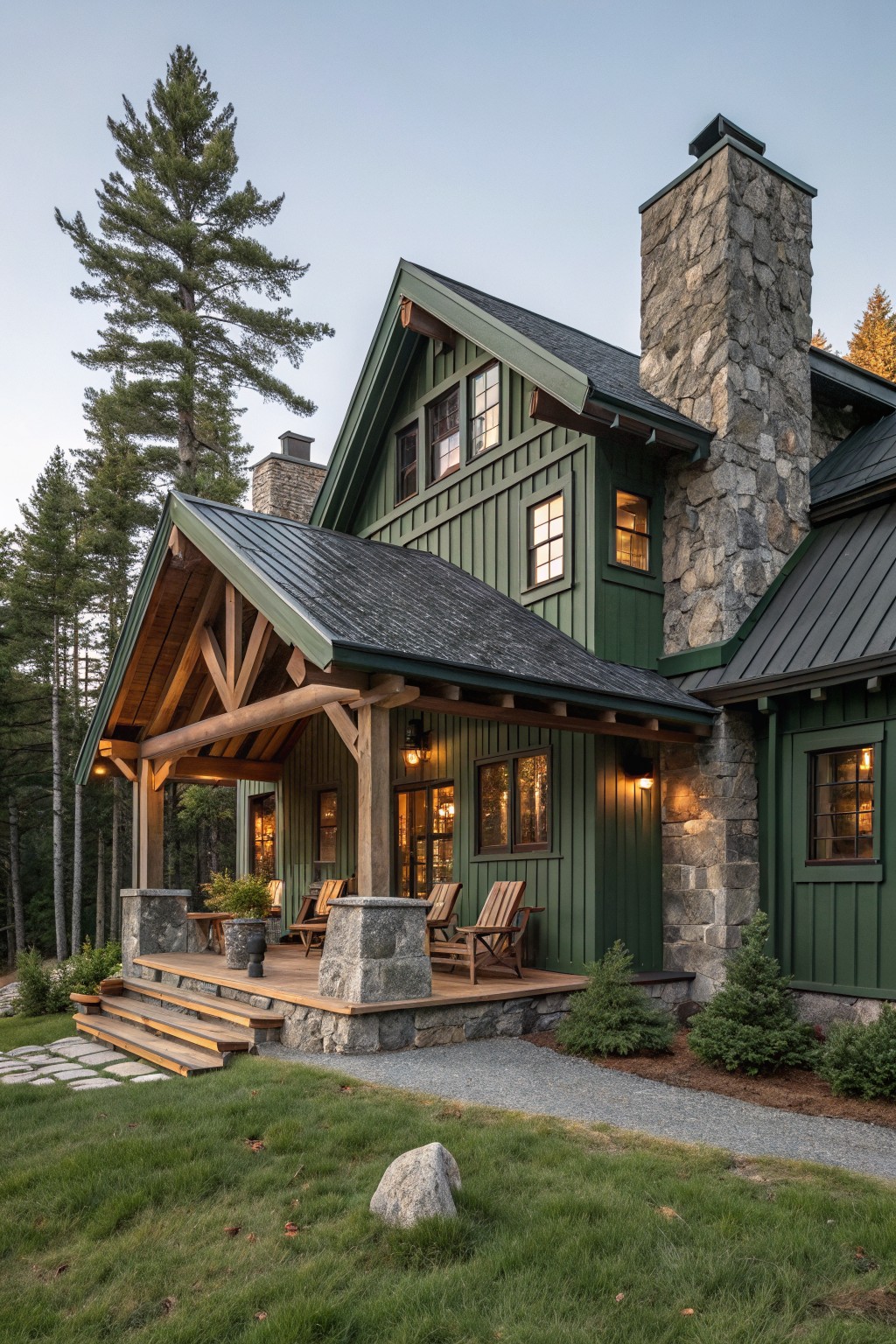
A deep green on the exterior works especially well when the house sits among tall trees. It picks up the color of the pines and shadows instead of fighting them, so the whole place feels settled rather than brand new. Stone around the chimney and dark trim keep the green from looking flat or too bright.
This color choice suits homes with simple shapes and natural materials. On lots with plenty of evergreens it tends to feel calmer year round. Just test the shade in different light first, since greens can shift more than you expect once the sun moves.
Soft Green Exteriors That Feel Natural

A pale green like this one works well because it picks up on the plants and water around the house without trying too hard. It keeps the whole place feeling light and open even on hot days, and the white trim helps the color stay fresh instead of fading into the background.
This shade suits homes in warm, green settings where you already have palms or other big leaves nearby. Use it on stucco or smooth siding and check how it looks at different times of day, since greens can shift more than you expect once the sun moves.
Deep Green on Shutters and the Front Door
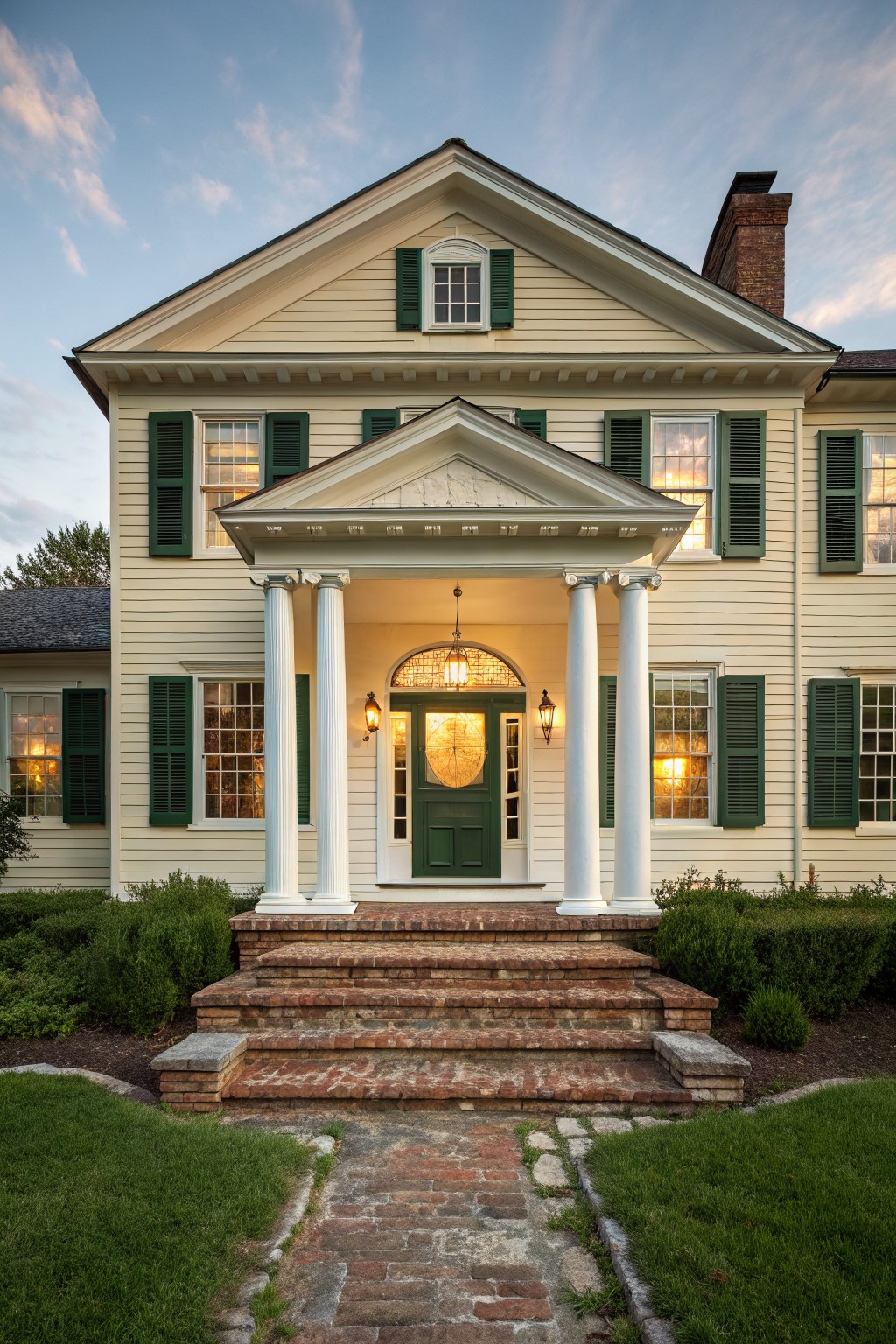
Many homes feel more grounded when the shutters and front door share the same deep green. This single color choice adds contrast to lighter siding and keeps the look simple while still tying the exterior to nearby trees and grass.
It works best on traditional houses that already have white trim and columns. Keep the green rich rather than bright so it holds up in full sun and pairs cleanly with brick steps or stone paths.
Green Paint That Blends With the Landscape
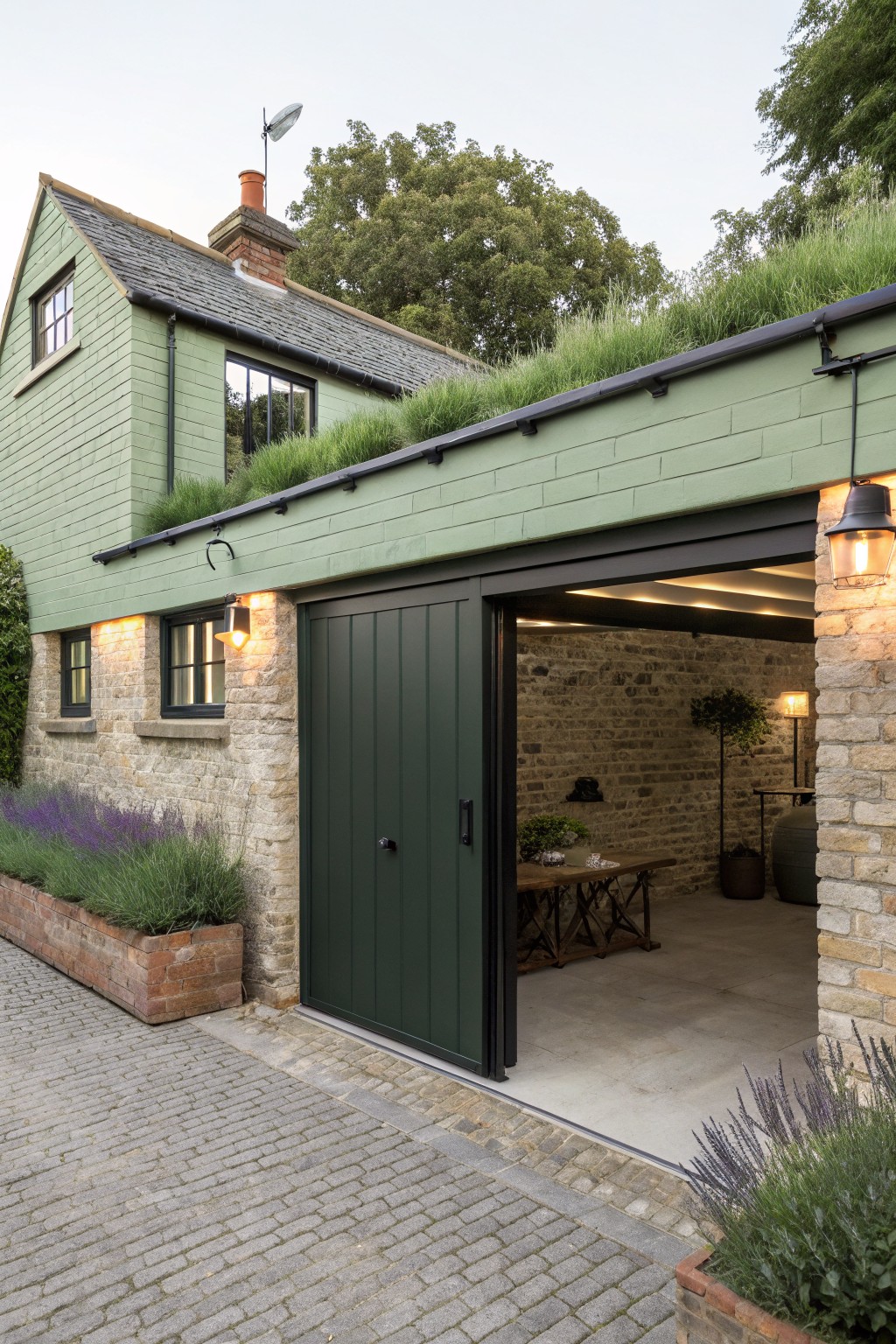
A soft green on the exterior helps a house sit more comfortably among trees and planting. It avoids standing out as a hard block and instead picks up tones from the garden and roof cover. This works especially well when the same green is carried across siding and doors for a quiet, unified look.
This approach suits homes with established greenery or sloped sites where the building needs to feel less dominant. Keep the green muted rather than bright so it ages gracefully, and let stone or brick at the base provide contrast without competing.
Soft Green Paint That Blends With the Trees
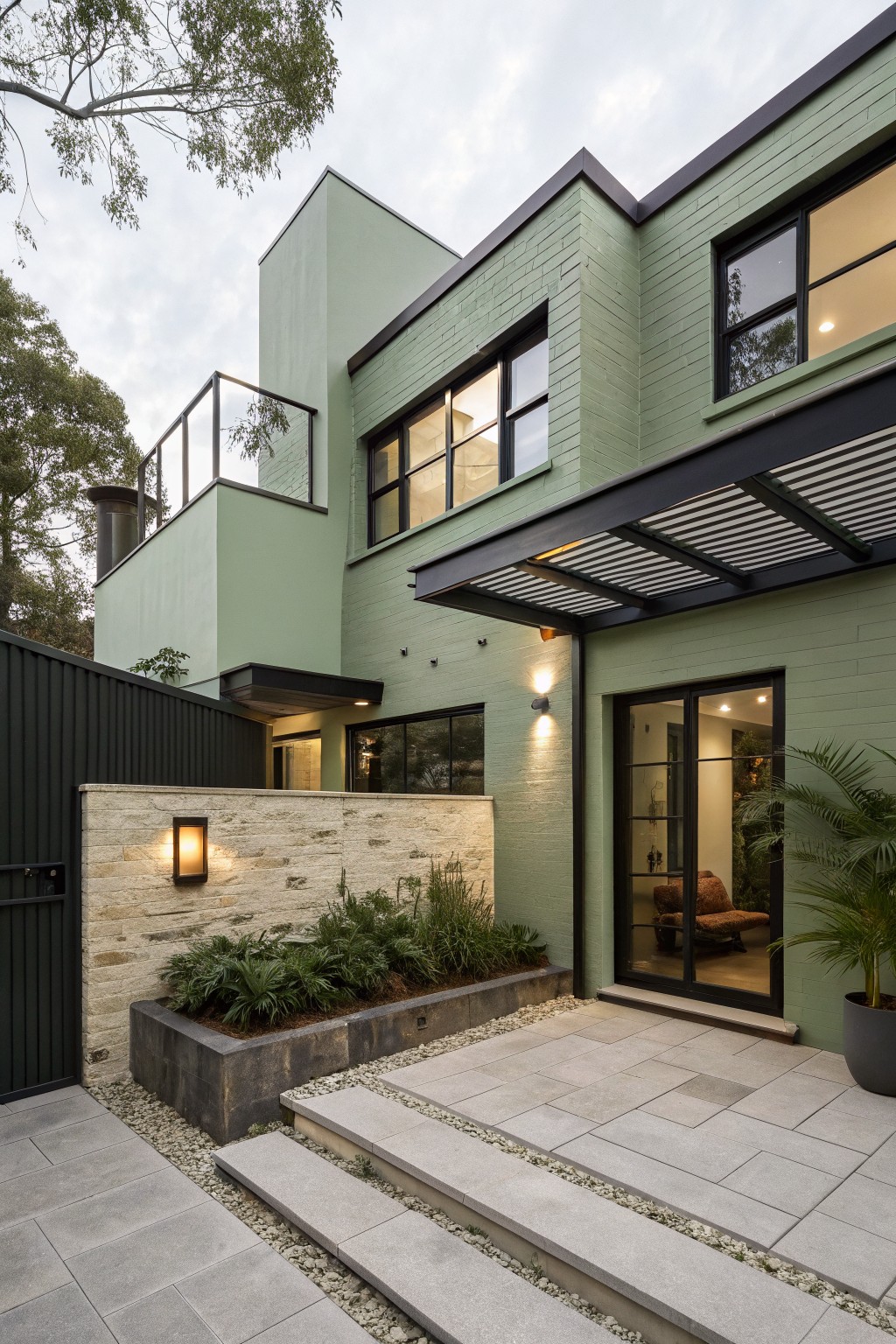
A muted green on the exterior walls helps a house feel settled among plants instead of standing out against them. This color choice works especially well when the home sits near established trees or garden beds, because the shade picks up on the foliage without trying to match it exactly.
It suits homes with simple shapes and dark trim, since the contrast keeps the look clean. Try testing the color on a small section first, because greens shift a lot depending on the light and what grows nearby.
Green Accents Around Doors And Windows
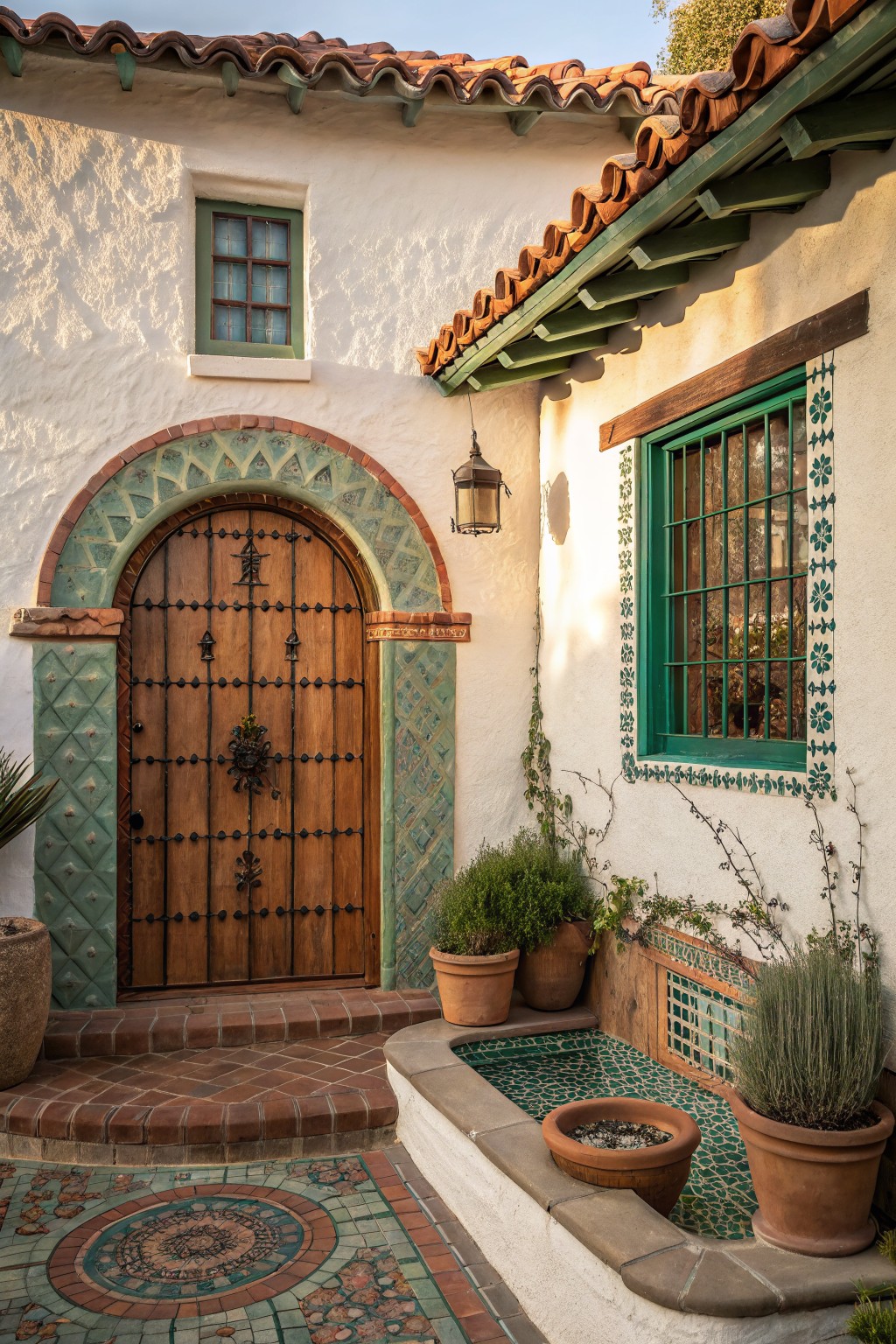
Green accents can make an exterior feel more connected to the garden without needing a full repaint. On homes with light stucco walls, even small touches of green around openings help the house sit more comfortably in its setting.
This works especially well on older or Mediterranean style homes where wood doors and clay tiles already bring warmth. Start with window frames or a tiled arch around the entry if you want to keep the change simple and easy to update later.
Deep Green Paint That Lets a House Blend In
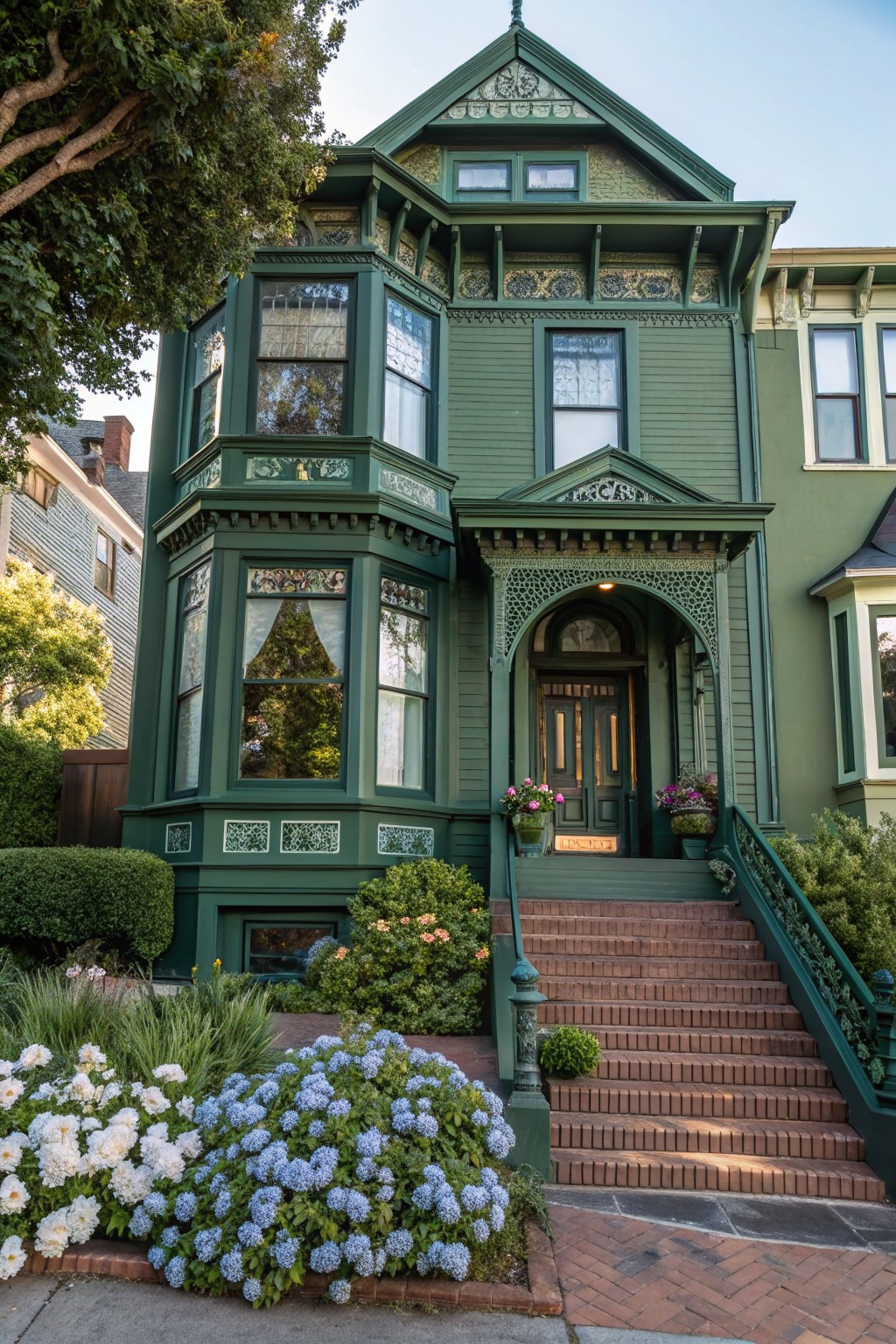
A saturated green on the outside walls helps a house feel like part of the garden instead of sitting on top of it. When the color is this close to the surrounding leaves and shrubs, the whole front feels calmer and more settled.
This choice works best on homes that already have mature planting and some architectural detail to catch the light. Keep the trim a shade or two darker or lighter so the shape of the house stays clear, and let the flowers and greenery do most of the rest of the work.
Green Siding That Blends With the Landscape
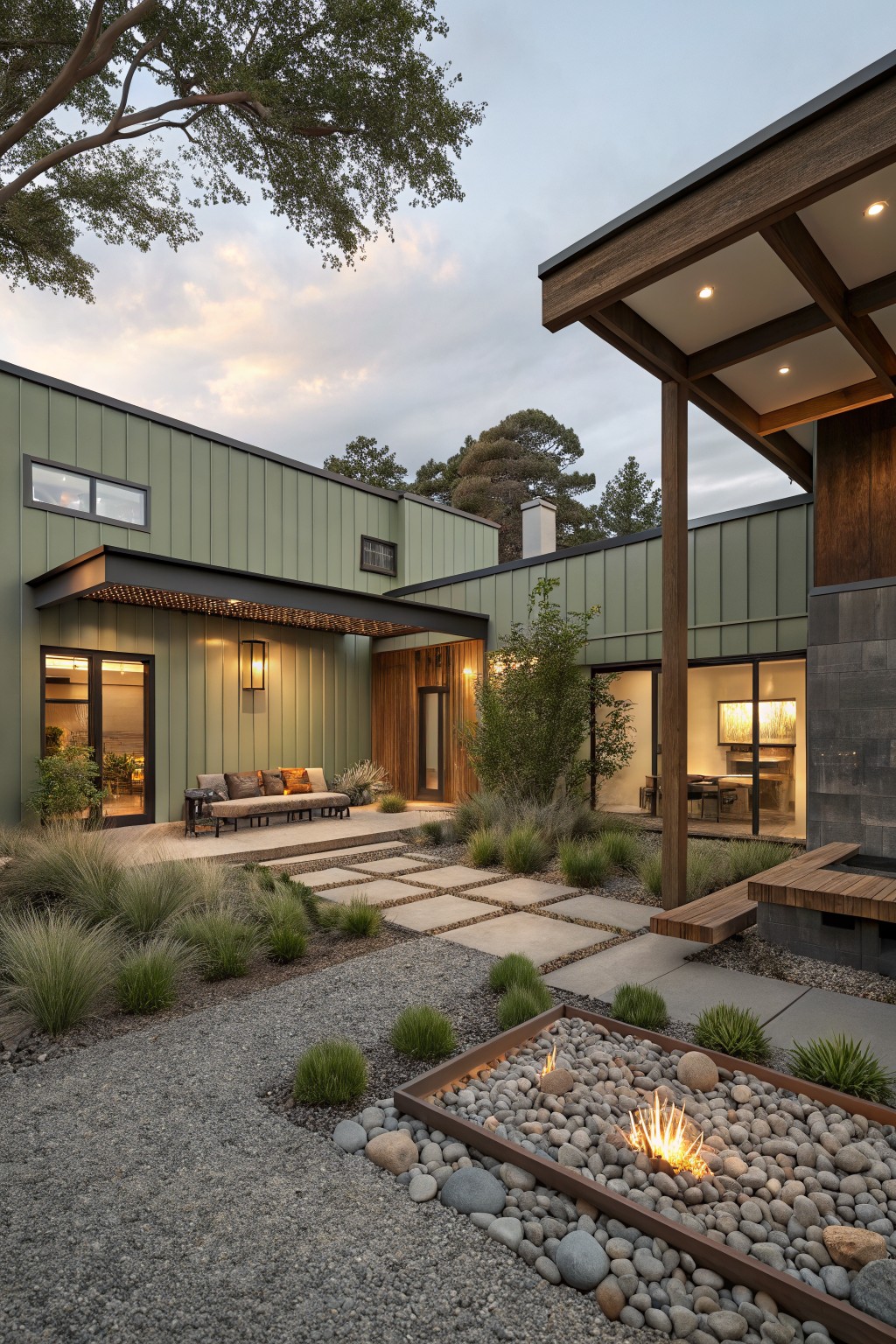
A soft green on the outside of a house can make the whole place feel calmer and more tied to the yard around it. The color here stays quiet enough that it does not fight with the trees or plantings, which helps the home look settled rather than brand new.
This works best on homes with clean lines and natural materials like wood or stone. Keep the shade on the muted side so it still looks good when the seasons change and the light shifts throughout the day.
A Soft Green Door Connects the House to the Garden
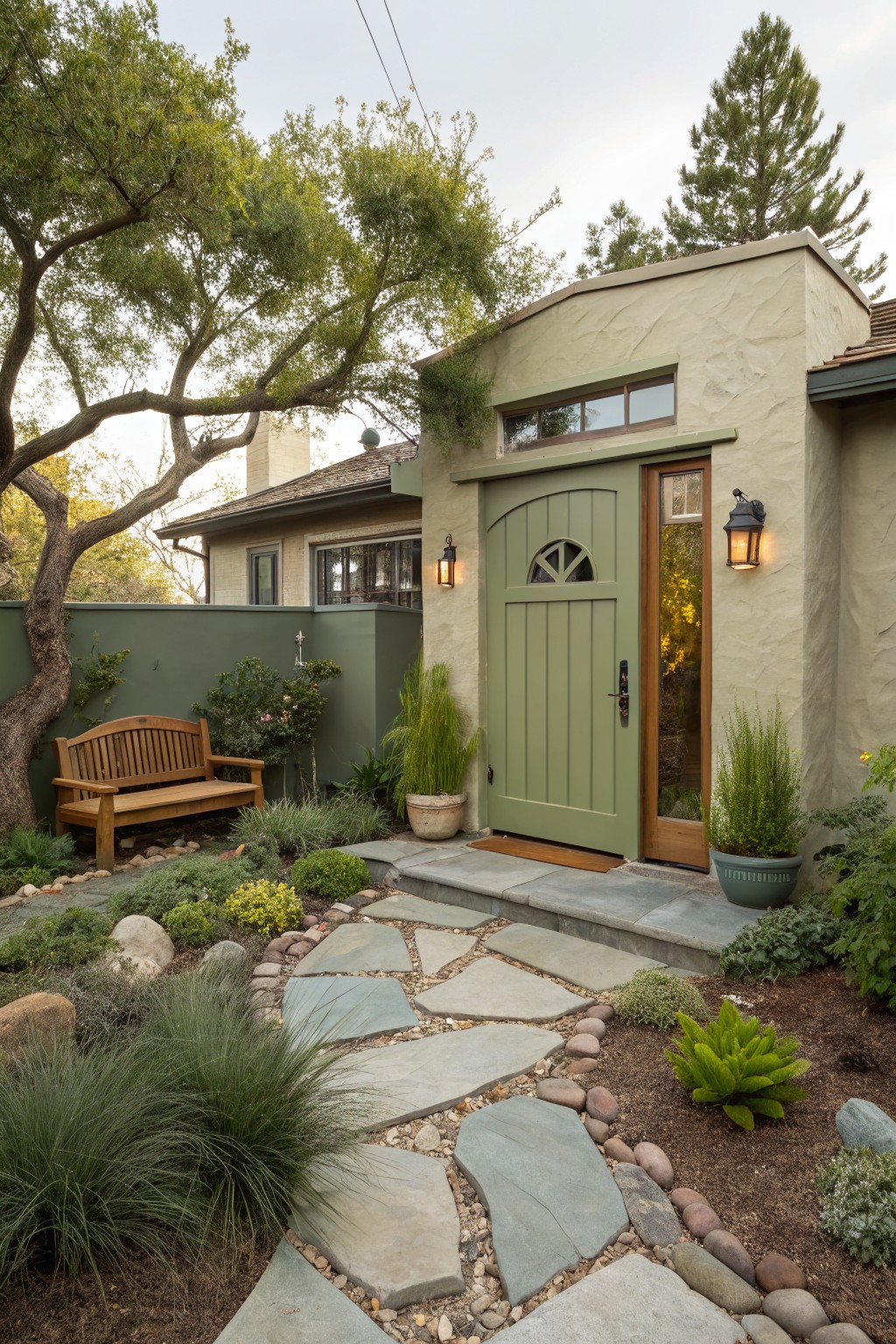
A muted green on the front door helps a house feel more settled among trees and plants. It picks up on the natural colors already in the yard instead of adding a separate accent that fights with them.
This approach works best on homes with simple stucco or wood siding and established landscaping. Keep the green on the gray side rather than bright so it stays calm next to stone paths and foliage.
Soft Green That Blends the House into the Trees
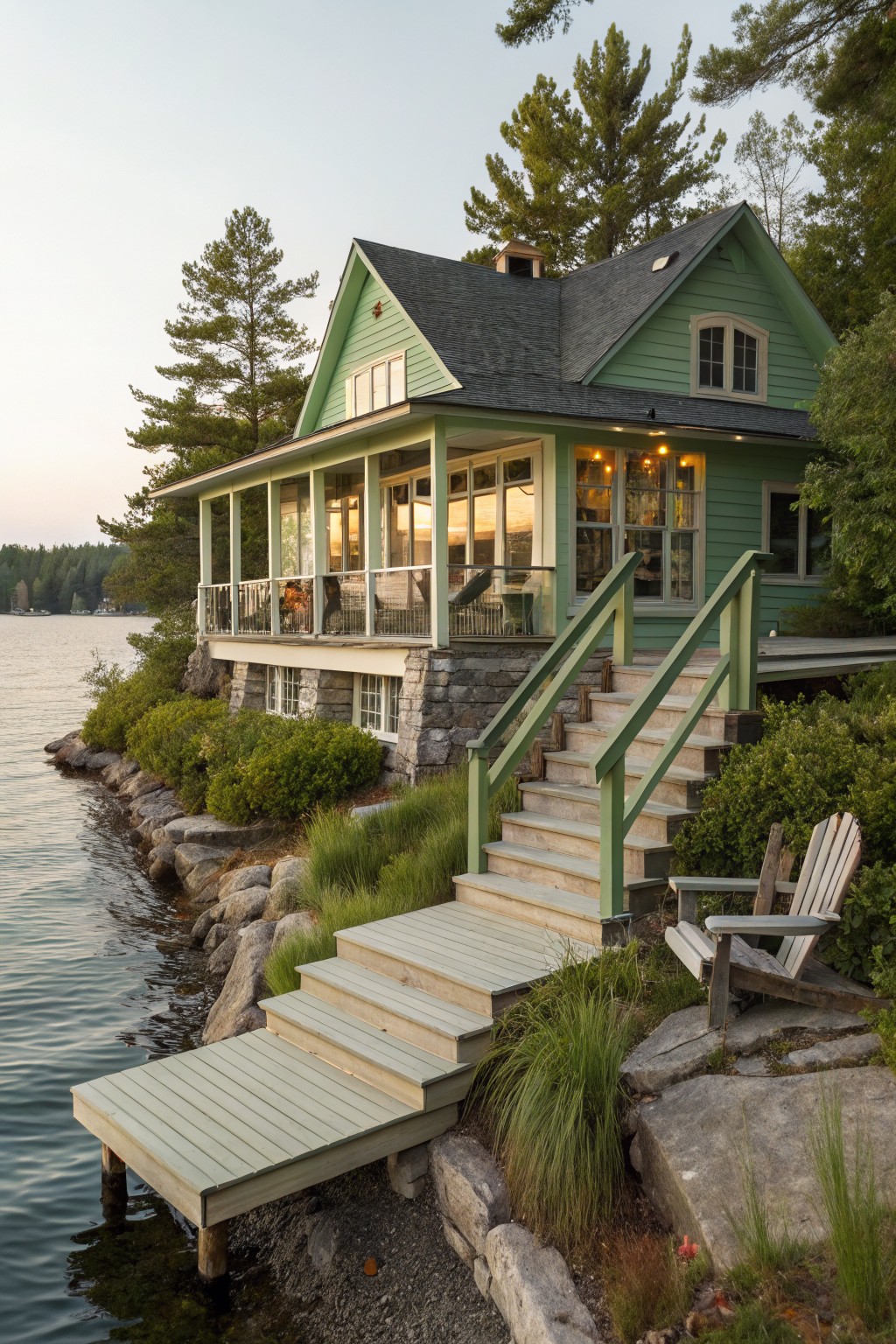
A soft green on the exterior walls helps a house sit more comfortably in a wooded or waterside setting. It picks up the colors already there instead of fighting them, so the whole place feels calmer and less like something dropped onto the land.
This works best on homes with simple trim and natural materials nearby. Keep the shade on the muted side and let the surrounding trees and rocks do most of the work.
Green Siding That Blends Into the Garden
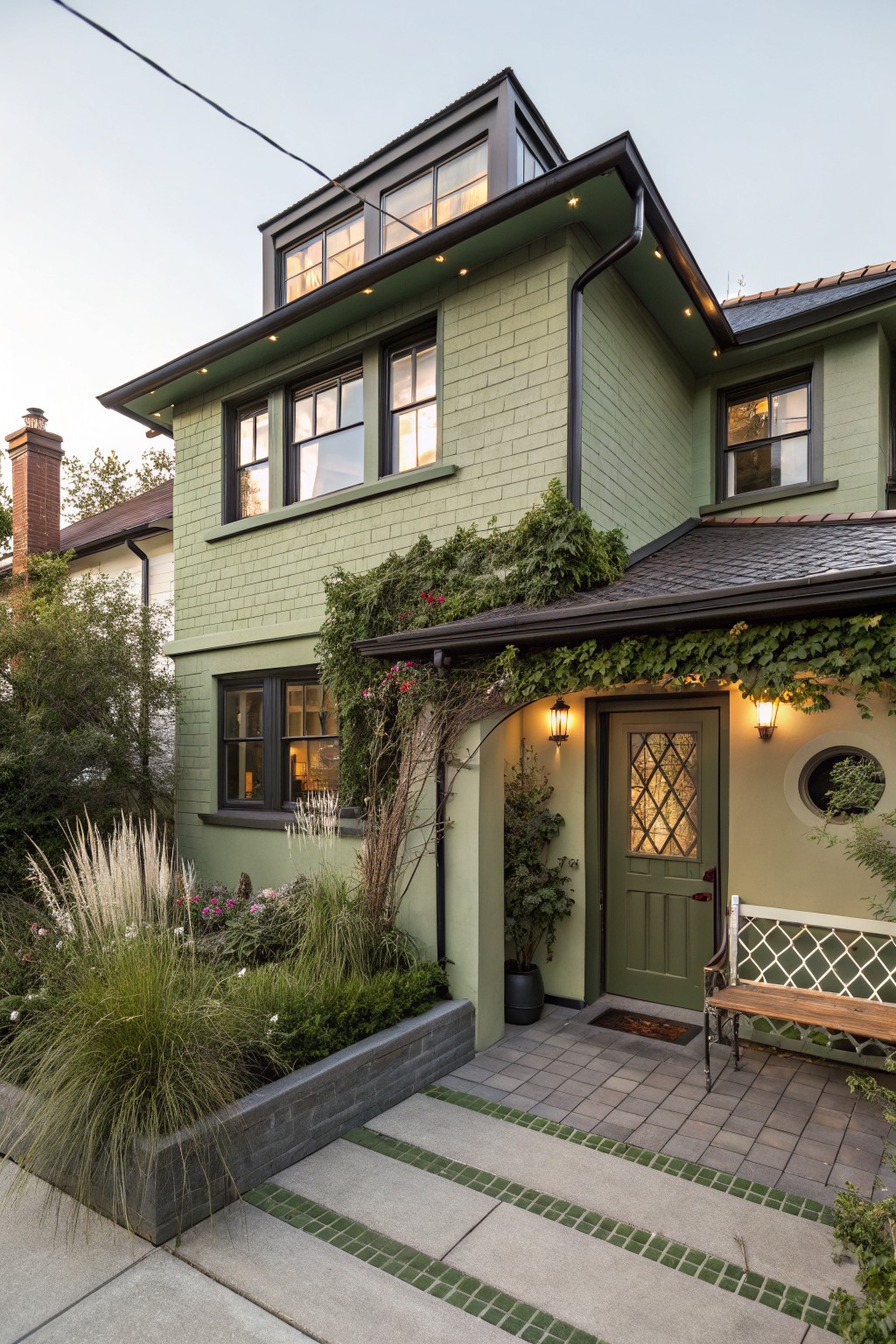
A soft green on the house exterior can make the whole place feel more tied to the plants and trees around it. This shade sits nicely between the climbing vines and the garden beds, so the house does not stand out as something separate from the landscape.
This approach works best on homes that already have some greenery close to the walls. It suits older houses or those with simple shapes, and it keeps the look calm rather than bold. Just make sure the green is muted enough that it does not fight with the natural colors of the plants.
Adding an Outdoor Kitchen to Your Patio
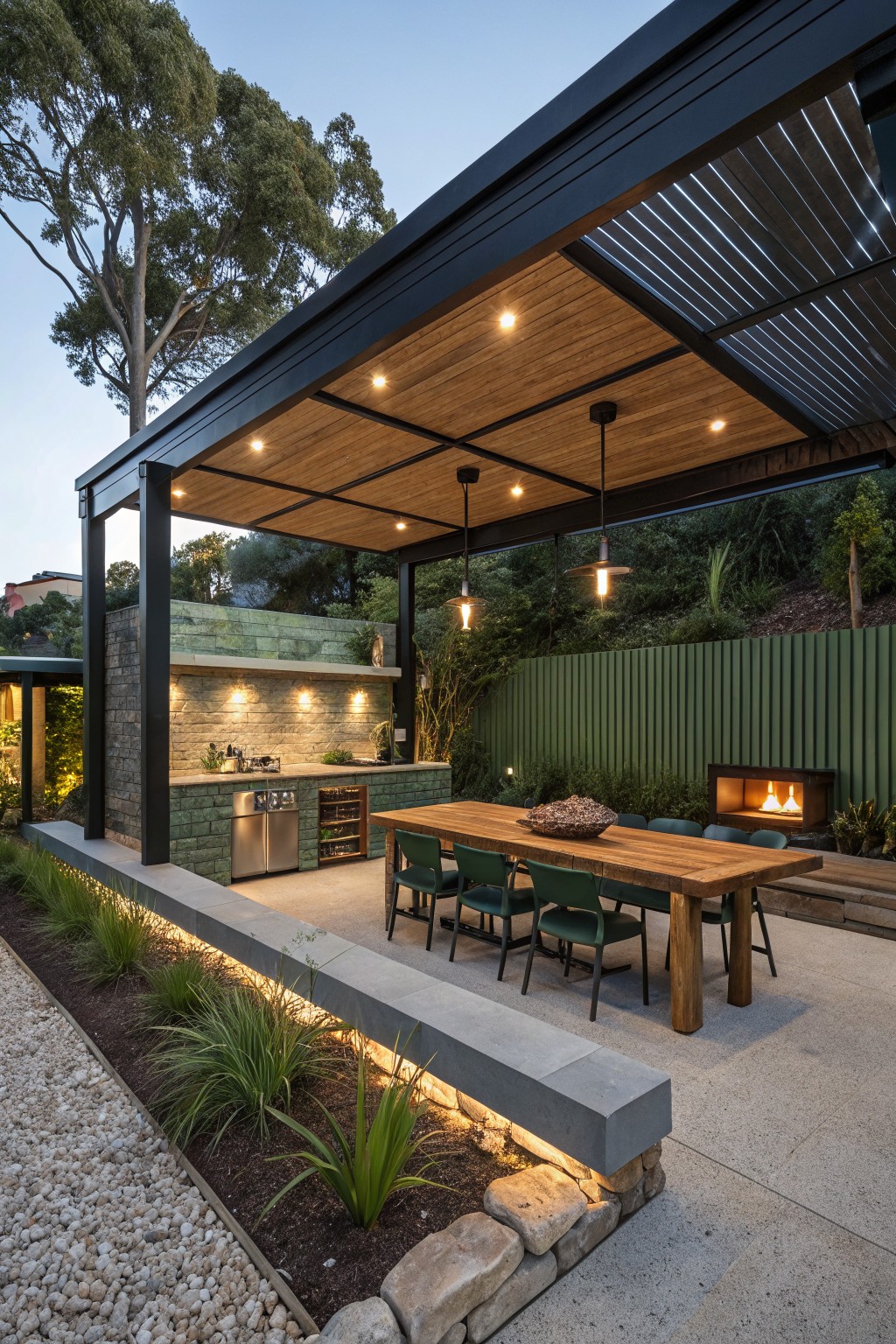
An outdoor kitchen makes the whole backyard feel more usable. You can cook, serve, and eat in one spot without running back and forth to the house, and it turns the patio into a real gathering place instead of just a spot to sit.
This works best on homes with enough room for a covered structure and a solid surface to build on. Keep the materials simple and weatherproof, and think about adding a fireplace nearby if you want to use the space on cooler evenings.
Soft Green Siding That Works With the Garden
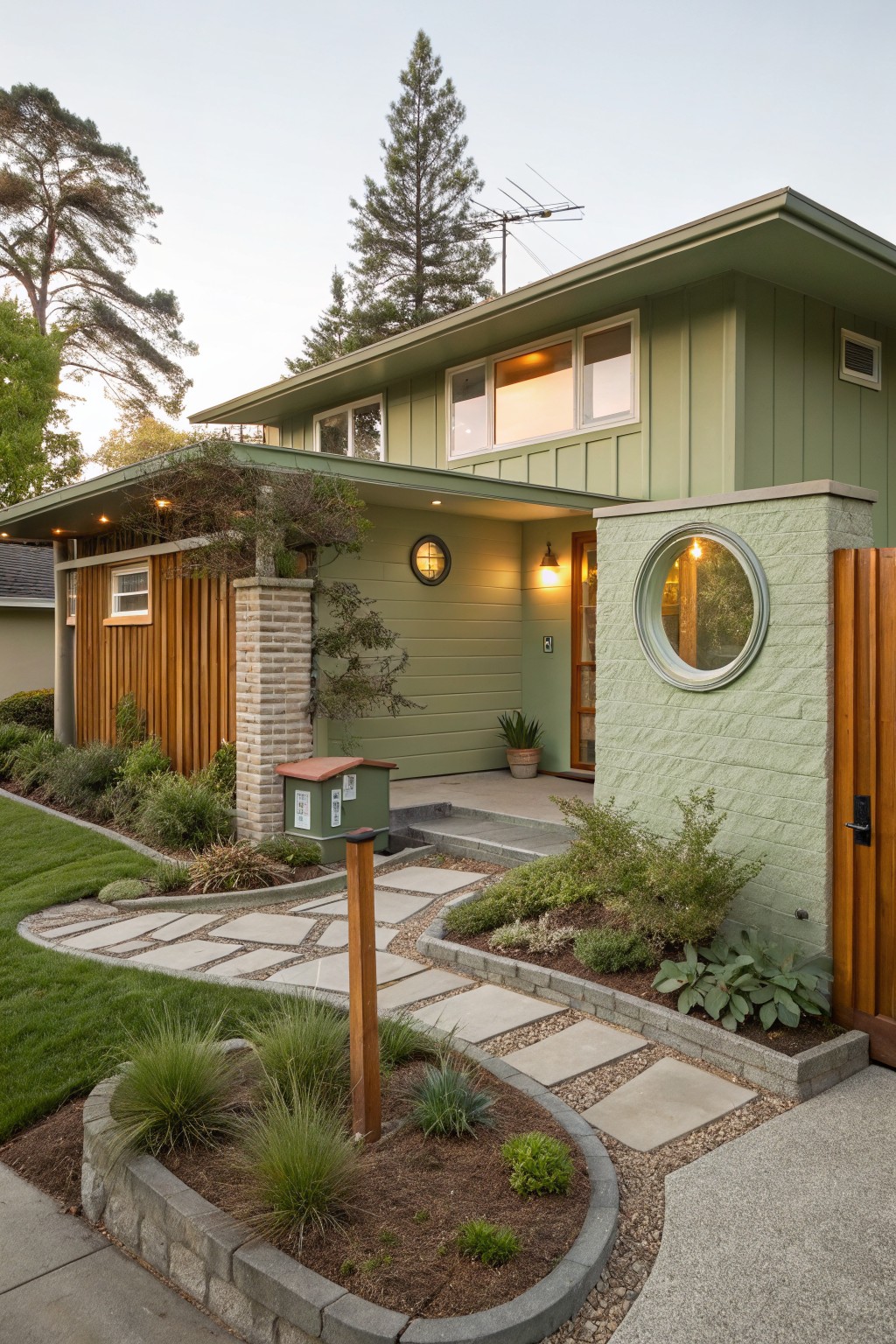
A muted green on the exterior helps a house feel more settled among trees and shrubs instead of standing apart from them. This shade picks up on the surrounding plants without trying to match them exactly, which keeps the look relaxed rather than forced.
It suits homes that already have established landscaping or sit near wooded edges. Test a few samples on the actual siding first because the color shifts with morning light and late afternoon shadows.
Frequently Asked Questions
Q: How do I test a green shade before committing to the whole house?
A: Grab a few sample pots and paint large boards to lean against your exterior. Check them at different times of day to see how the light hits. This helps avoid surprises once the job is done.
Q: Do lighter greens make my house look bigger or smaller from the street?
A: Lighter shades tend to reflect more light so your home feels more open and airy. They blend nicely with surrounding greenery too. Pick one if you want a fresh look without overwhelming the space.
Q: Will a deep forest green fade fast in strong sun?
A: Deep greens hold up better than you might think against fading. Just choose a quality exterior paint with good UV protection.
Q: Should I match the green to my roof color or go for contrast?
A: Go for a bit of contrast to keep things interesting. A warm roof pairs well with cooler greens for that natural balance. It stops the whole look from blending into one flat color.