I’ve noticed over the years that backyards blend best with nature when the layout follows the land’s own contours, using gentle curves for pathways instead of rigid grids.
Those first impressions often come from simple edging with local stones or logs that keep mulch in place while letting plants creep outward naturally.
In my own yard, I started with layered native plantings along one fence line, and now they create real depth that shifts with the seasons.
The structure holds up because it leans on perennials and shrubs that fill in gradually, avoiding the bare spots that plague forced designs.
A few of these ideas nailed that balance so well they made me rethink my next planting round.
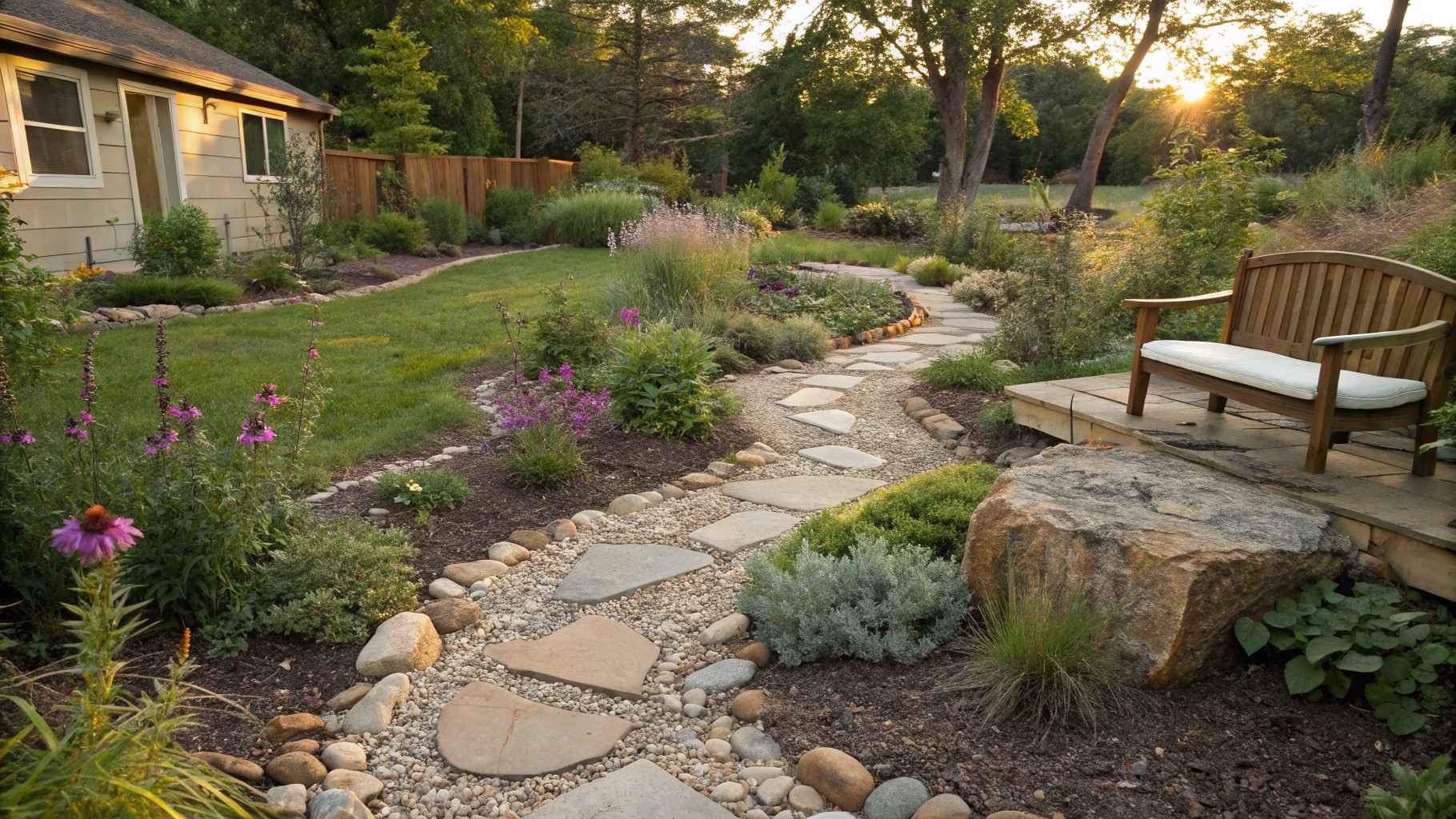
Natural Stone Garden Paths

A winding path like this one uses flat stones set right into gravel mulch. It feels organic, not forced. The irregular shapes fit the landscape, and the gravel softens everything around it. Boulders along the edge add weight without much work. Folks like how it pulls you through the yard slow, letting you notice the plants.
Put one in if your backyard has some slope or curves. It works best with low-water plants tucked in close, like those purple blooms here. Skip straight lines. They kill the natural vibe. Just source local stone and gravel. Drainage matters, so keep it crowned a bit in wet spots.
Terraced Stone Walls for Sloped Backyards

Sloped yards often sit empty or get covered in grass that just slides away. Terraced stone walls fix that by carving out flat beds for plants right into the hill. The natural limestone blocks stack up sturdy, with grasses and low shrubs tucked into every level. It keeps soil in place and turns a tough spot into something usable and pretty without looking forced.
This setup fits homes on hillsides, especially in dry areas where you want plants that don’t need much water. Go for local stone so it blends with the ground. Build wide steps between terraces for easy walking, and add a patio at the bottom if you can. Watch the drainage though… poor setup leads to washouts over time.
Winding Stepping Stone Path Through Woodland Plants

A winding path like this one uses round stone pavers set right into mulch, curving gently between birch trees and clumps of hostas and ferns. It feels organic, like you’re strolling through a forest rather than a planned yard. The irregular spacing keeps it from looking too rigid, and the mulch base ties everything to the ground.
This setup suits sloped backyards with some tree cover already. Start with flat stones about 18 inches across, placed a boot-length apart. Plant low greens around the edges to soften things, and tuck in a bench halfway for pauses. It directs foot traffic without mowing paths, and works year-round once the plants fill in.
Winding Wooden Paths in Native Gardens

One simple way to connect your deck or patio to the yard is with a winding wooden boardwalk. It follows the natural curves of the land, like this path made from weathered wood planks that snake through tall grasses and low succulents. What makes it work so well is how it feels like part of the landscape, not something imposed on it. No harsh straight lines here. It draws you along gently toward the view.
These paths suit coastal spots or dry slopes best, where native plants thrive without much water. Use reclaimed wood or cedar for that soft gray patina over time. Keep plantings loose around the edges, maybe some feather grass and agave. Watch for uneven spots if your ground slopes. It’s low upkeep once established, and it ties the house right into nature.
Winding Stone Paths Along Streams
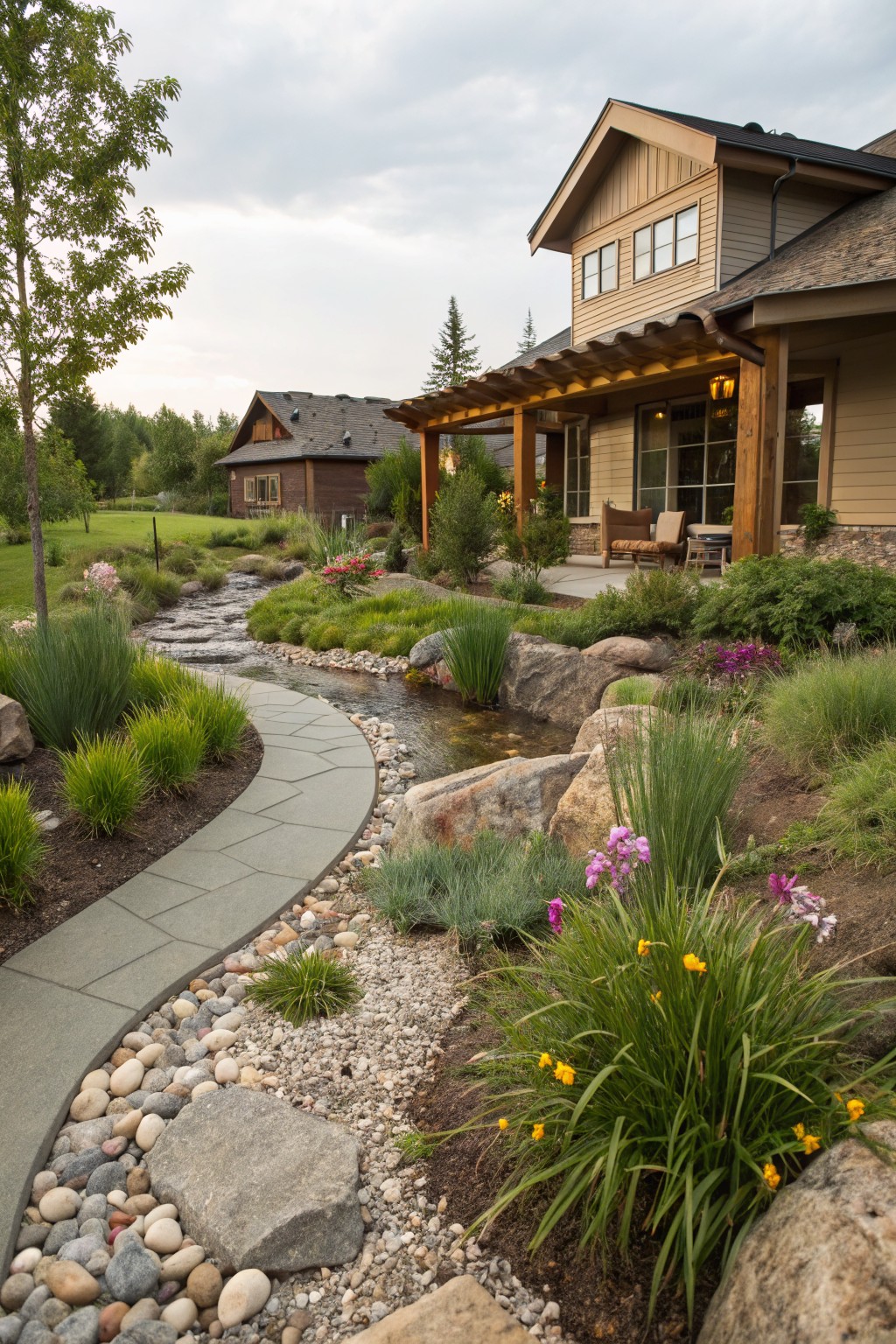
One simple way to make your backyard feel more like a natural retreat is a winding stone path that hugs a gentle stream. The path here uses irregular gray slate pavers set in a soft curve, right next to clear-running water edged with smooth river rocks and boulders. All that greenery around it, like tall grasses and low flowers, keeps everything looking wild but tidy. It pulls you along without trying too hard.
You can pull this off in bigger yards with some slope, where water naturally wants to flow. Start with a recirculating pump for the stream if you don’t have a spring, and pick stones and plants from your region to cut down on upkeep. Just make sure the path stays level enough to walk safely, especially after rain. Works great behind a cabin-style home.
Backyard Pond with Stone Waterfall
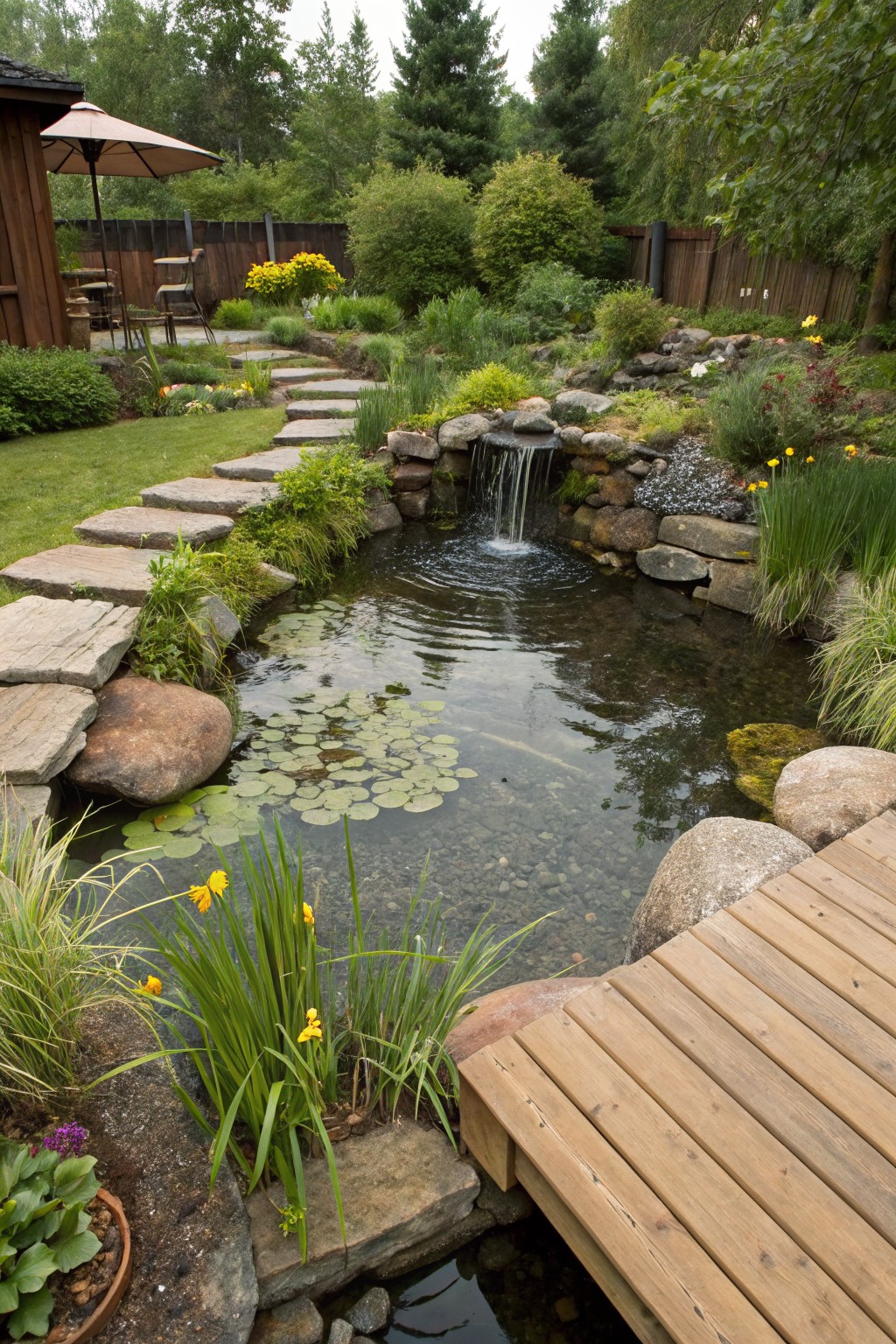
A backyard pond like this one brings a bit of wild nature right to your door. Water cascades gently over stacked rocks into a clear pool with lily pads floating on top. The stone stepping path winds down to it, making the whole spot feel discovered rather than built. It’s low-key relaxing. Birds and frogs show up on their own.
You can pull this off in a shady corner or along a fence line. Pick rocks from nearby if you can, to keep it looking local. Add irises and grasses around the edge for cover. A small pump handles the flow. Skip it if your yard floods easy… just go with plants instead. Fits older homes with wooded lots best.
Built-In Curved Bench Around the Fire Pit
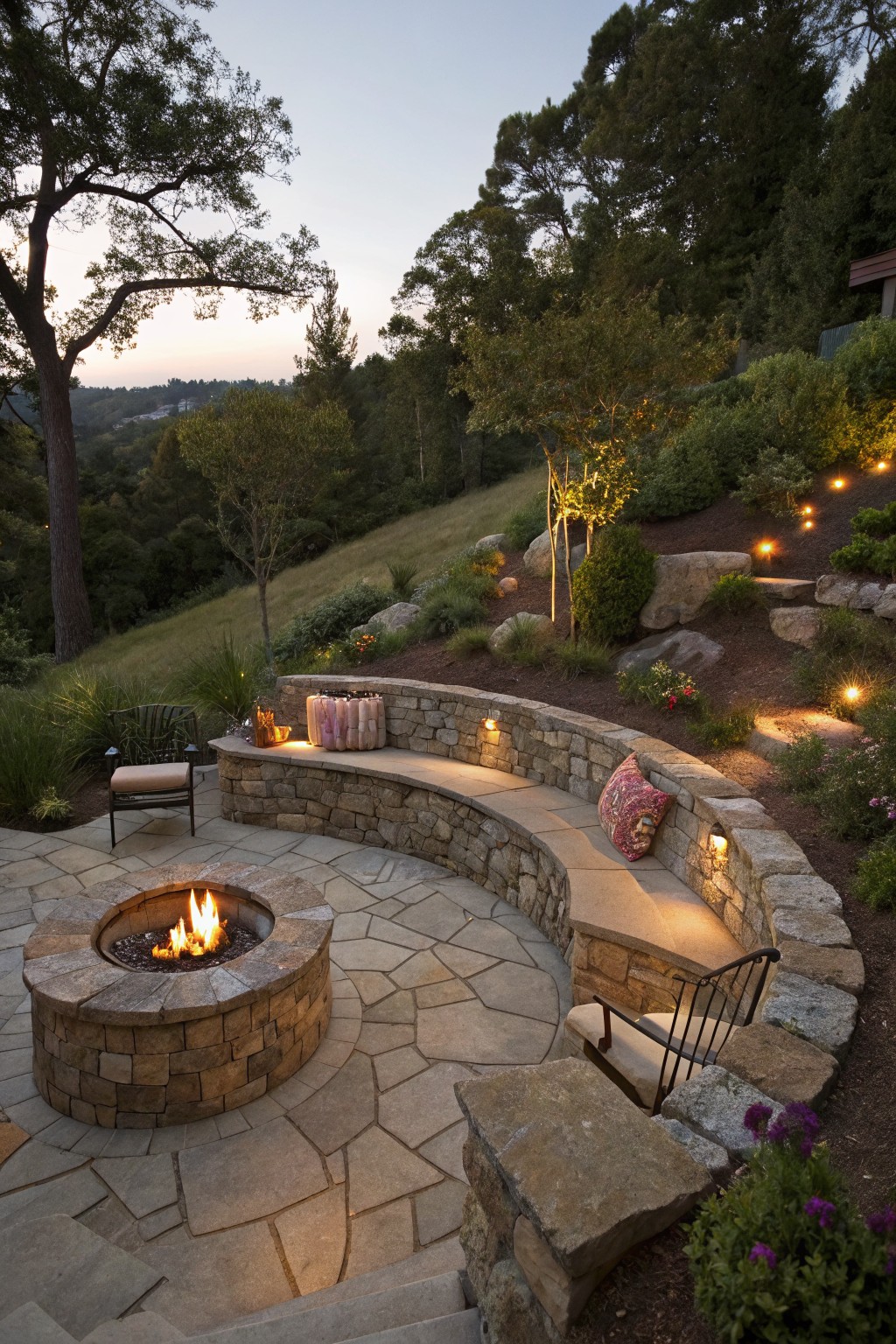
One smart way to set up an outdoor gathering spot is with a curved stone bench built right into a low retaining wall. It wraps neatly around a central fire pit, pulling people in close for talks or quiet evenings. The stone ties into the patio pavers, and simple pillows add a bit of comfort without much fuss.
This works best on a slope or hillside yard where you need to level out space anyway. Build it sturdy with local stone to blend with the landscape, and add wall lights for after-dark use. Skip fancy furniture. It suits casual homes that see a lot of family time outside, but check your local codes for fire pits first.
Layered Plantings Along Retaining Walls

One simple way to make a side path or entryway feel more natural is to build low stone retaining walls and fill the terraces with mixed plants. You see it here with lavender, grasses, and little flower pots tucked in, all rising up next to the house. It pulls the garden right up to the architecture without overwhelming things. The layers add some height and interest as you walk along.
This works best on sloped yards or anywhere you need to manage levels between path and house. Use sturdy stone that matches your home’s style, then plant low growers at the base, medium shrubs higher up, and spillers over the edges. It’s low fuss once established, suits most climates, and hides plain walls nicely. Just pick drought-tolerant stuff if water’s an issue.
Curved Gravel Paths Lined with Succulents
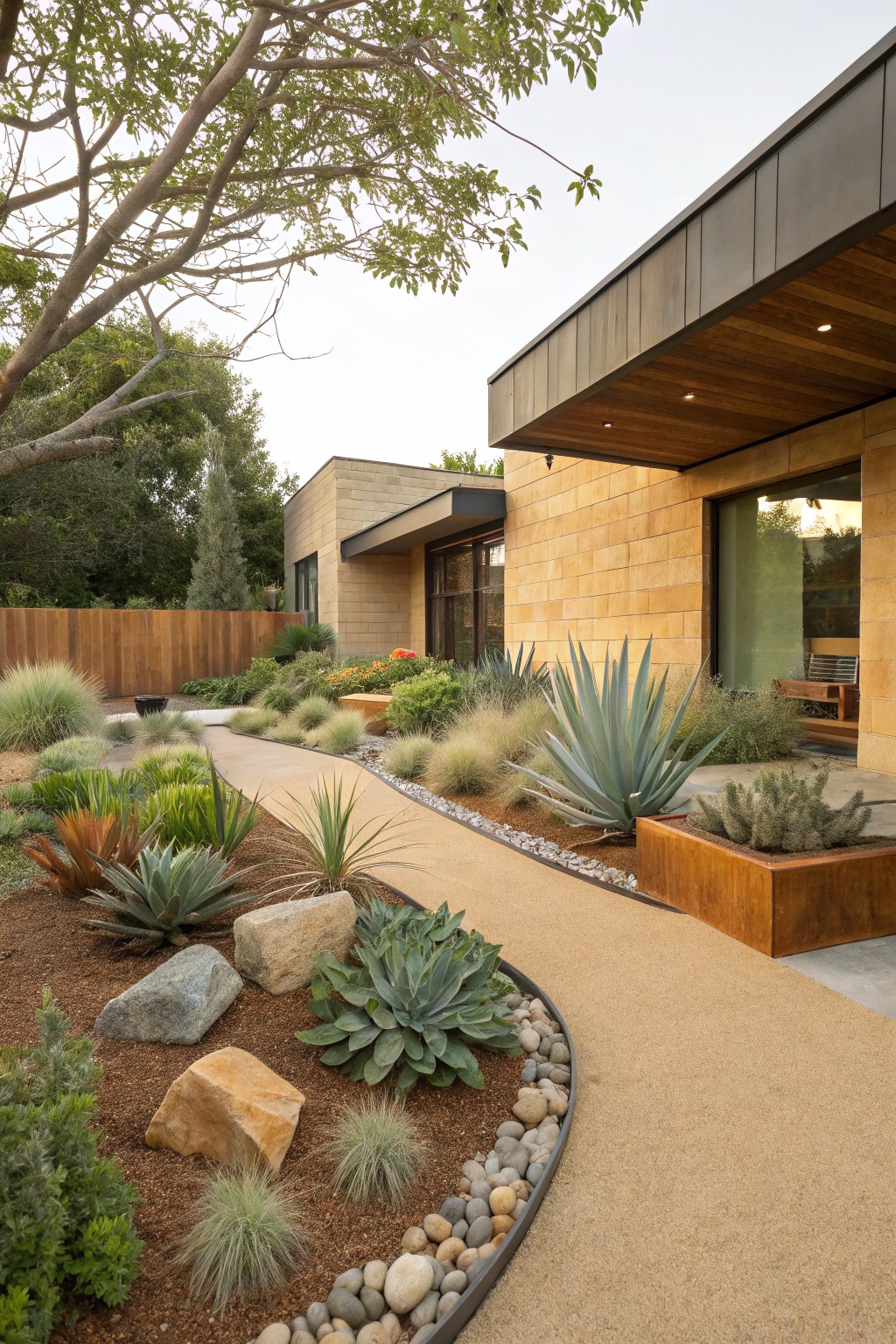
A simple curved path made from decomposed granite draws you right to the door without feeling too rigid. Here, it’s edged with tough plants like agave and grasses, plus a few boulders for texture. This setup keeps things low-maintenance and fits right in with a modern house, making the whole entry feel natural and put-together.
You can pull this off in any backyard with decent sun, especially if water is tight. Pick drought-tolerant stuff that grows where you live, and keep the curve gentle to guide foot traffic. Just space the plants so they don’t crowd the path over time.
Backyard Shed with Green Roof

A green roof turns a plain backyard shed into something that belongs in the garden. Here the wooden structure supports a layer of low-growing plants that echo the surrounding beds and shrubs. It softens the look of the building and helps it blend right in with nature. Plus those rain barrels nearby catch water from the roof.
This works best on small outbuildings like tool sheds or home offices in mild climates where the plants won’t freeze. Pick tough sedums or similar groundcovers that need little care. Add a simple ladder for roof access and gravel paths around the base. Skip it if your area gets harsh winters or high winds.
Rock-Edged Natural Pool
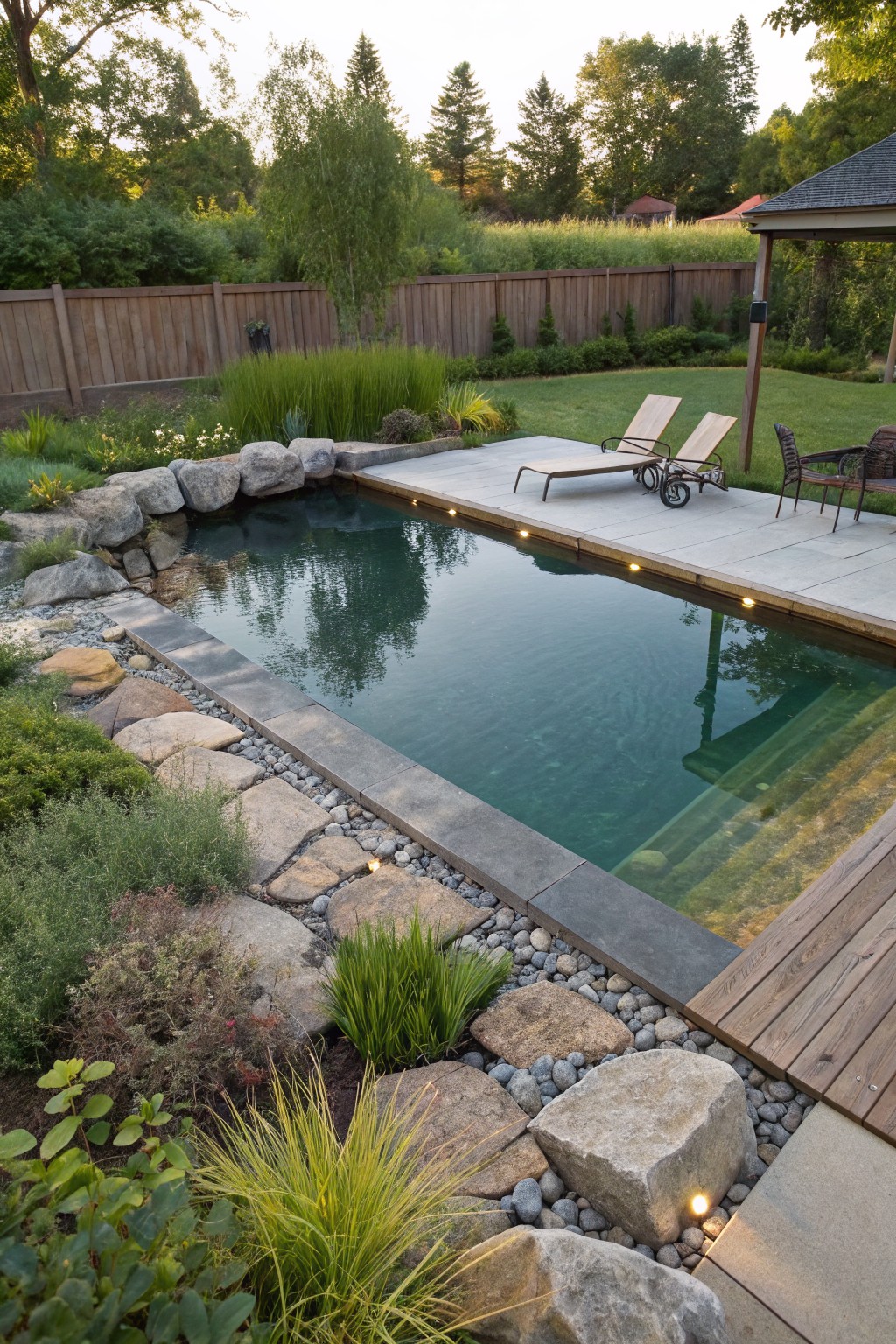
A small pool like this one uses big boulders and gravel around the edges to make it look more like a backyard pond than a typical swimming spot. The dark ledge and clear water reflect the trees, and it sits right next to a simple deck with loungers. That natural tie-in keeps things relaxed and low-key, without feeling too built-up.
This works well in average-sized yards where you want swimming without taking over the space. Pick stones from nearby areas for an easy match, and keep plantings tough like grasses around it. Just make sure the deck material holds up to splashes, since everything flows together here.
Winding Stone Paths Through Raised Beds
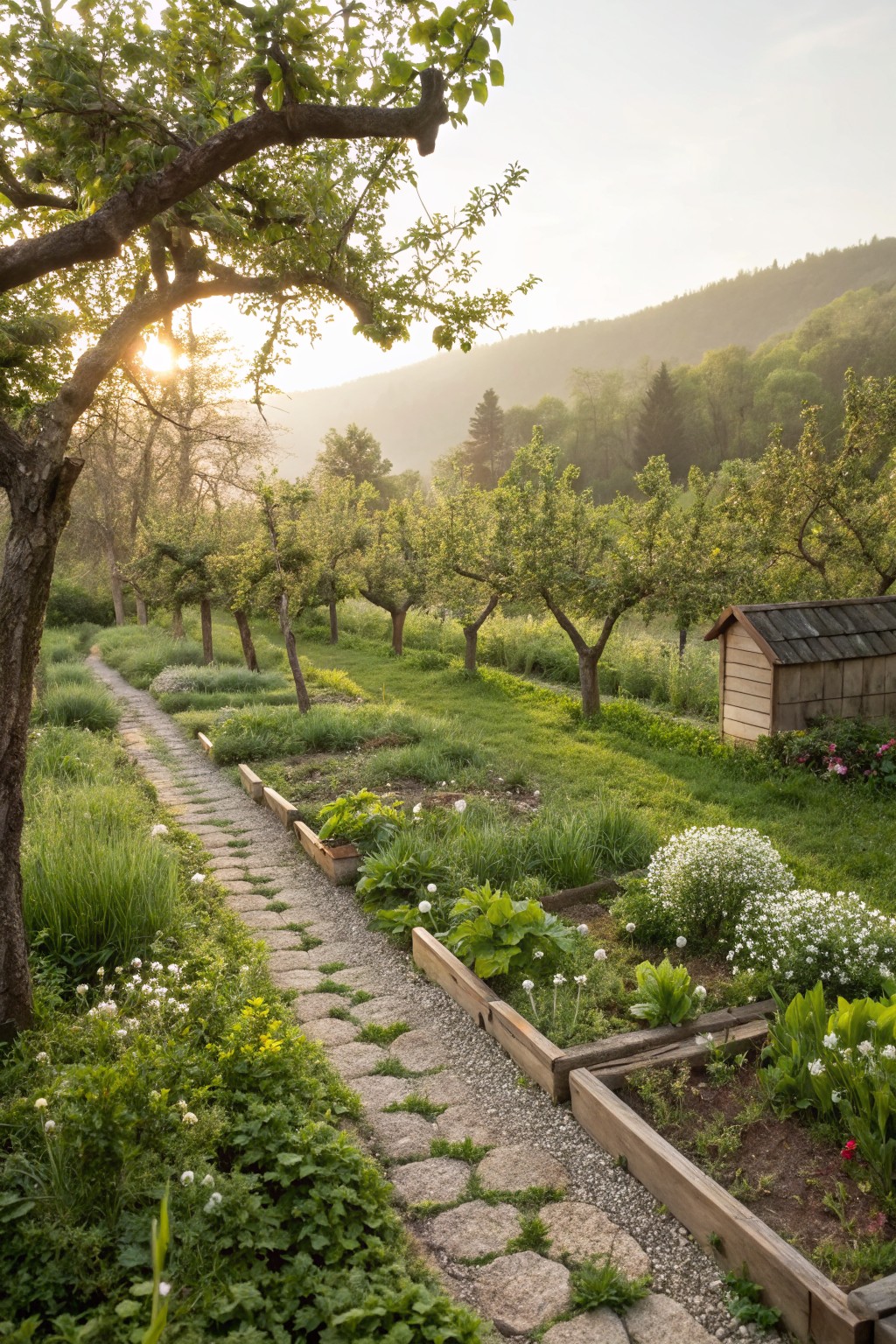
A winding stone path like this one cuts right through wooden raised beds in an apple orchard. It keeps things practical for tending veggies and herbs while letting the natural orchard setting take over. The path draws your eye along without overpowering the plants or trees.
Try this in a sloped backyard or one with mature fruit trees already. Lay flat stones or gravel in a gentle curve between simple raised frames, maybe 2 feet wide. It suits smaller lots… keeps mud off your shoes and makes harvesting feel like a stroll. Just space beds to match your stride.
Rustic Wooden Outdoor Kitchen

One straightforward way to make your backyard more useful is building a kitchen station from weathered wood cabinets. Here you see it tucked against a stone wall, with a shiny grill right in the middle and a few herb pots on shelves. The wood tone picks up on the fence and pergola nearby, so everything feels pulled together without much effort. It turns a plain patio into a spot for real cooking.
This works best in smaller yards where you want to save space, like behind a city rowhouse. Start with sturdy, treated wood planks for the base and doors, then add stone or concrete counters for easy cleanup. Plant herbs or greens right on the shelves to keep it fresh. Just make sure the setup drains well, or rain will warp things quick.
Tiered Wooden Retaining Walls for Sloped Yards

Sloped backyards can feel tricky to use. But tiered wooden retaining walls fix that. They carve out flat spots for plants and paths right into the hill. In this setup, the rough wood boxes hold soil and greenery, while stone steps wind between levels. It keeps everything stable and looks right at home with nature.
These walls work best on moderate slopes where you want low upkeep. Go for cedar or pressure-treated pine to last outside. Build them sturdy, about two feet high per tier, and fill with perennials or herbs. Skip super steep hills unless you add engineering. Fits casual homes that blend into the landscape.
Curved Stone Fire Pit Seating Area
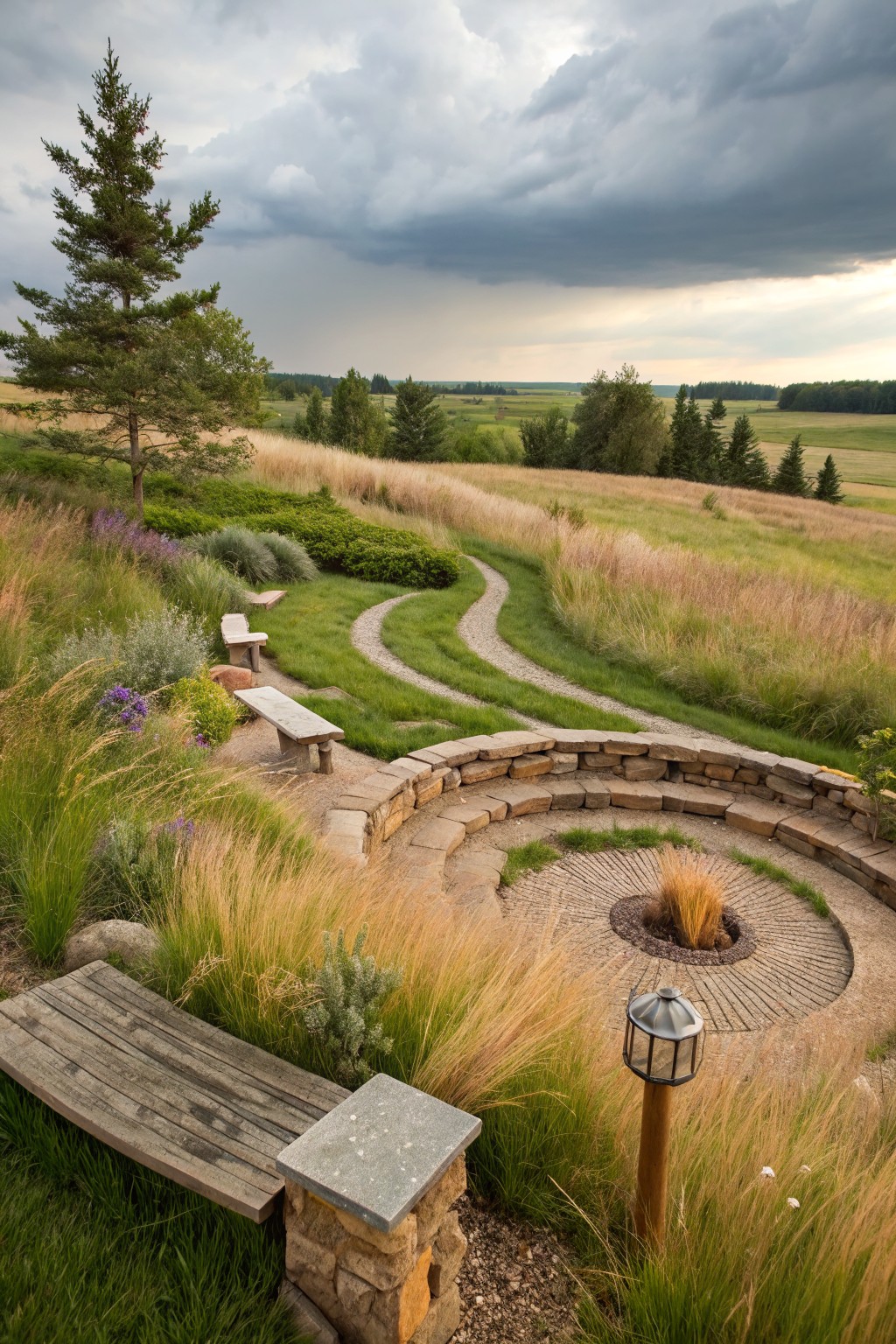
One straightforward way to draw family together outdoors is a curved stone wall that forms both seating and a fire pit enclosure. Here it’s set into gentle slopes with gravel paths winding up to it, all edged by tall native grasses that keep things feeling wild and low-fuss. That circle shape makes room for eight or ten people easy, without needing extra chairs cluttering the space.
Try this in bigger backyards where you have some natural contours, or even level it out with a bit of grading. Local fieldstone holds up best and ties into the surroundings. Skip fancy paving inside the circle, just gravel or pavers let water drain quick. It suits country homes or suburban lots wanting that prairie look… watch for wind if you’re in open fields.
Winding Stone Steps on a Slope

One simple way to handle a steep backyard is with rough-cut stone steps that follow the natural contour of the land. They tuck right into rock outcrops and dry walls, making the climb feel easy and part of the site. Low plants like fuzzy silver mounds and pink sedums fill in around the edges, so it all blends without looking forced.
These steps work best on rocky or hilly lots where you want low upkeep. Use local stone to match the surroundings, and pick tough groundcovers that handle dry spots. Skip anything too fussy. It suits cabins or homes in wooded areas… just make sure the steps are wide enough for safe footing.
Meandering Stepping Stone Paths
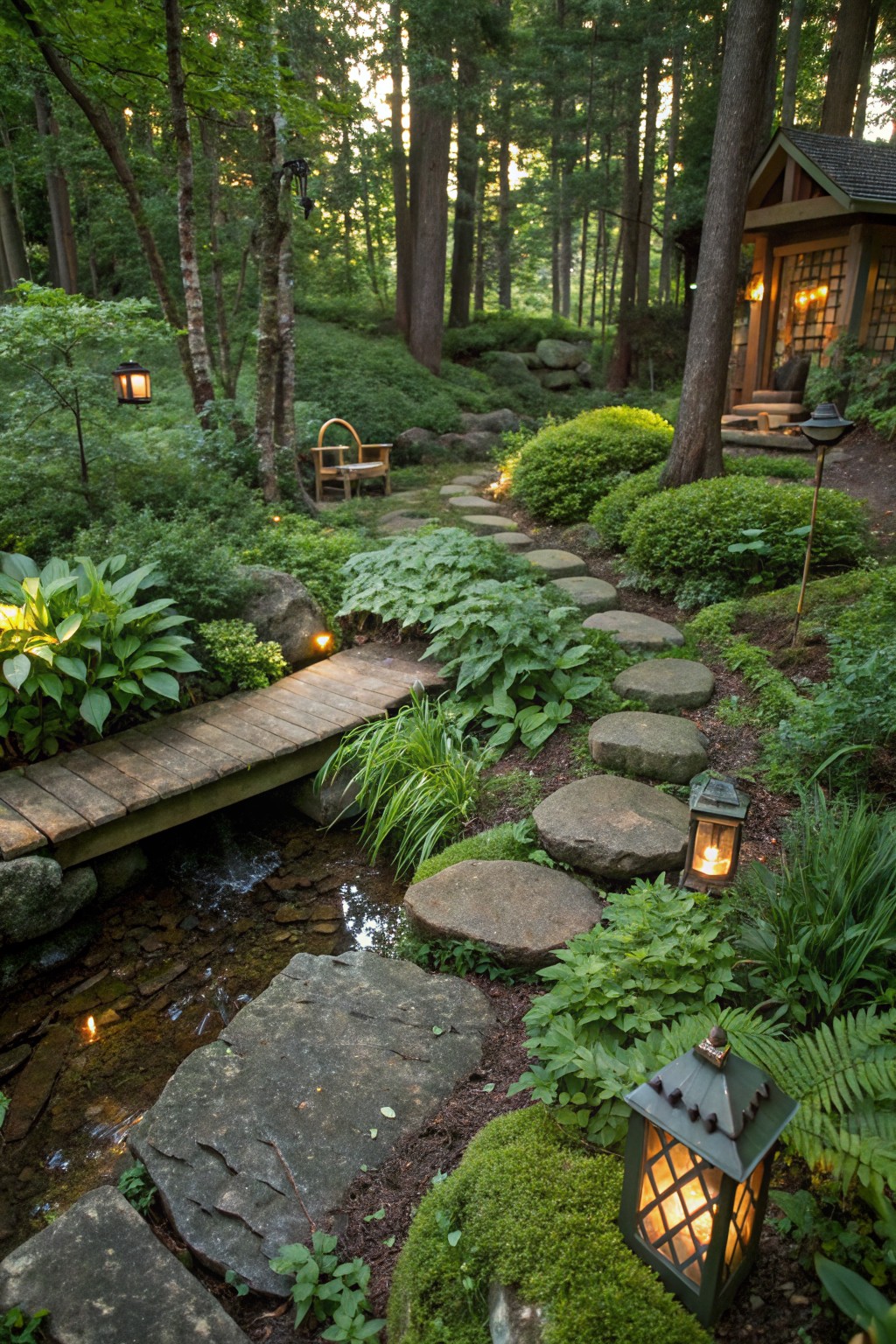
One nice way to move through a backyard garden is with flat stepping stones laid in a loose, winding pattern. They fit right into the ground like they grew there, especially when you add plants around the edges and maybe a short wooden bridge over a trickling stream. It pulls you along without feeling too planned out, and those low lanterns along the way make it work at dusk too.
These paths suit sloped or wooded yards best, where you want to connect different spots without mowing everything flat. Start with larger stones for the main steps, keep gaps filled with moss or groundcover, and check that the bridge sits sturdy on rocks. Skip straight lines. They can feel too park-like in a natural setup.
Rustic Railway Tracks as Garden Paths
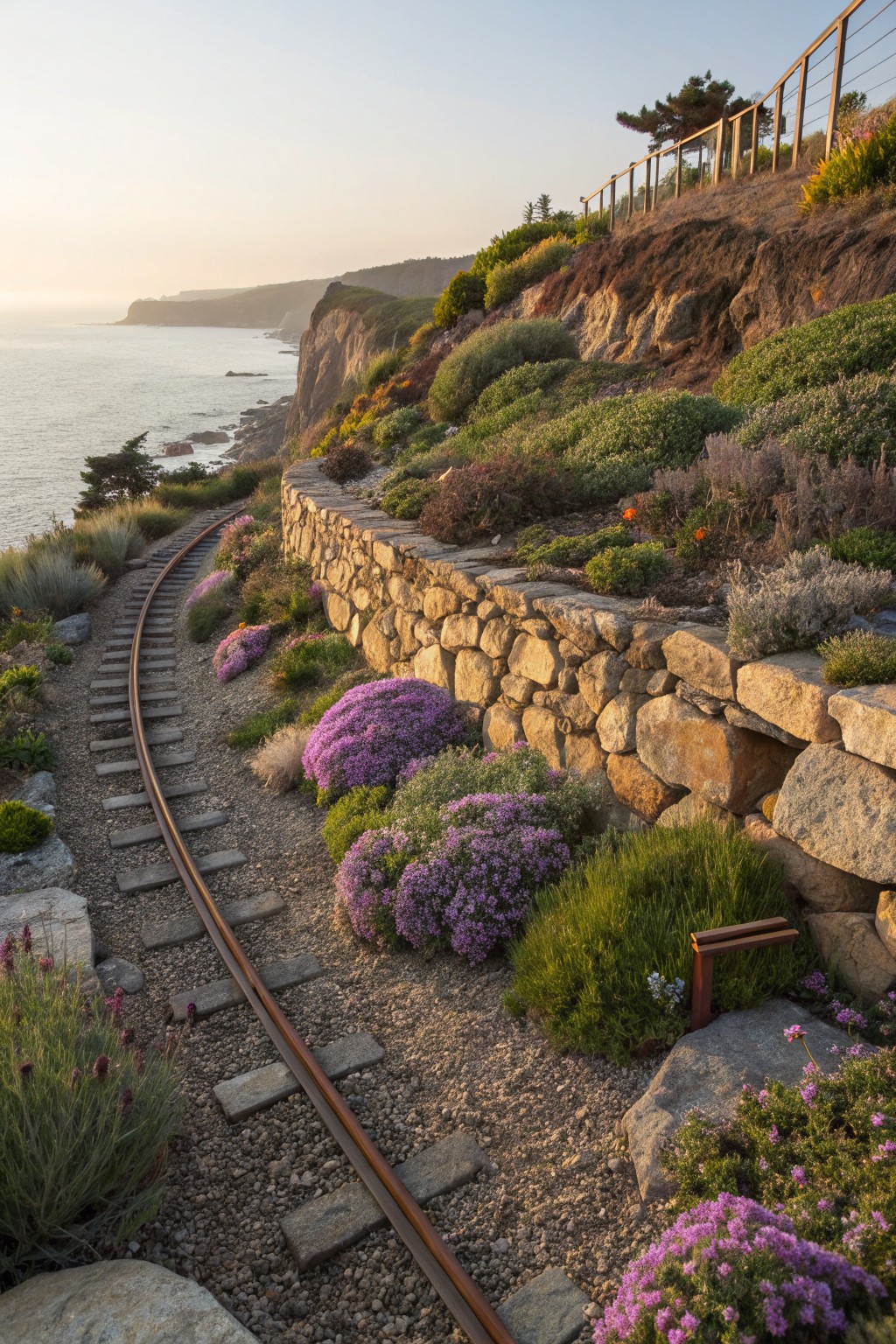
One simple way to handle a steep backyard slope is to lay down old railway tracks for paths. They give you that sturdy, industrial look without much upkeep, and the ties create natural steps that follow the terrain. Here, the tracks curve gently along stone retaining walls, edged with tough coastal plants like ice plants and lavender. It keeps everything from washing away in rain and makes walking easy, even on hills.
This works best in rugged spots like cliffsides or uneven lots where you want paths that blend right into the landscape. Use tracks on anything from 10 to 30 feet of drop, pairing them with dry-stacked stone for walls. Skip super formal yards though. Just make sure the tracks are secure so no one trips, and add gravel between ties for better footing.
Stepping Stone Paths Across Streams
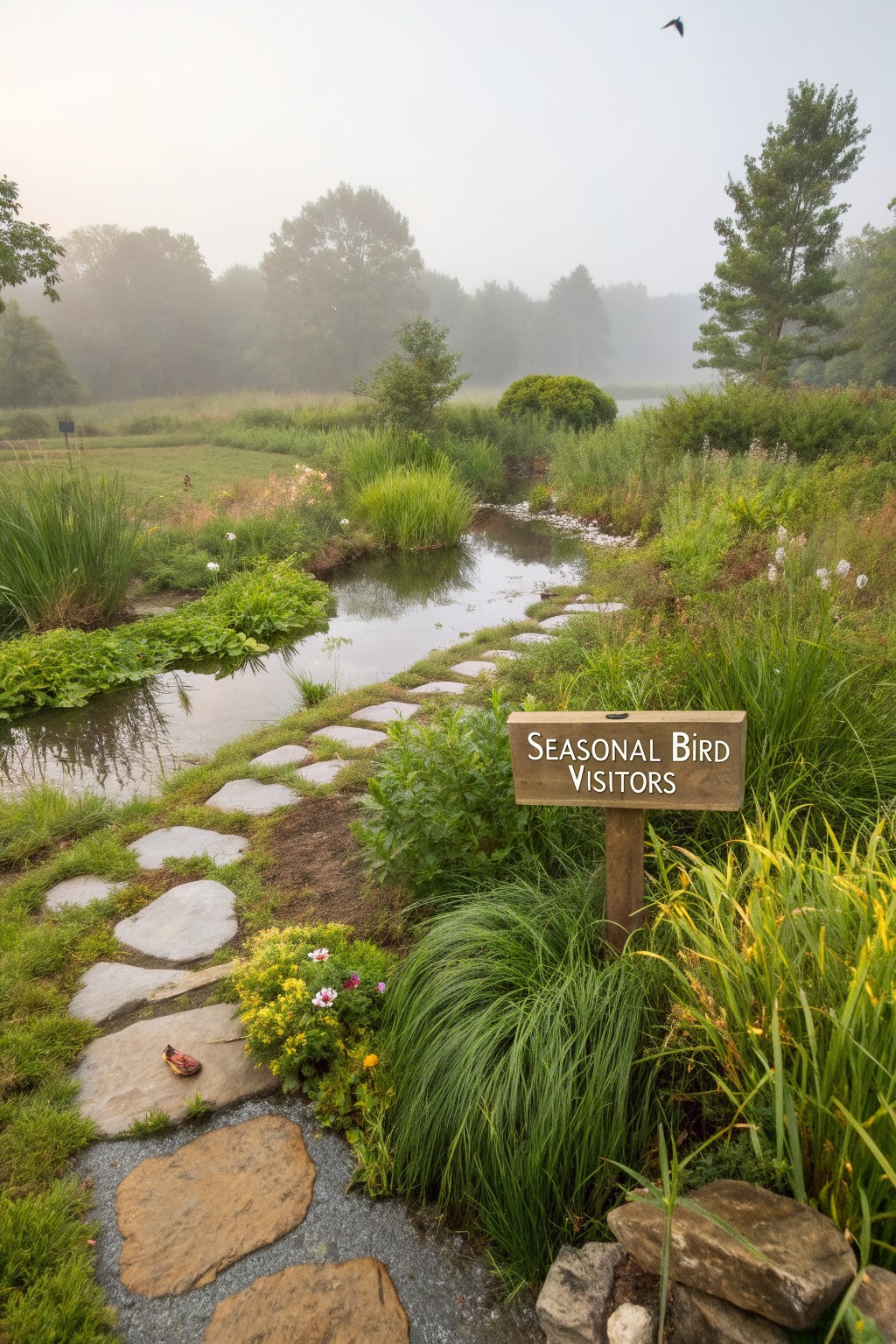
One simple way to move through a wet backyard spot is laying flat stones right across a shallow stream. It keeps the natural flow going while giving you a dry path to follow. You see it here with those rough-edged stones stepping over clear water, edged by ferns and tall grasses. Folks like how it pulls you deeper into the garden without big construction.
Put this in low-lying areas or where runoff gathers, especially on wooded lots. Pick stones from nearby to match the surroundings, space them for easy steps. It suits casual nature yards best, watch for slippery moss after rain though.
Linear Water Channel Along a Garden Path

A narrow water channel running right beside a stone walkway brings a quiet flow to the backyard. It’s simple, with smooth concrete edges, smooth pebbles inside, and just enough water to reflect the birch trees overhead. That gentle ripple and the soft sound make the path feel more peaceful without taking up much space.
This works best in slim side yards or along a house wall, where you want to connect seating areas to the garden. Go for a shallow design under two feet wide, line it with local stone, and plant tall grasses or trees nearby to tie it to nature. Skip fancy pumps if you can, let gravity or a small recirculator handle it for low upkeep.
Central Fire Pit on Flagstone Patio
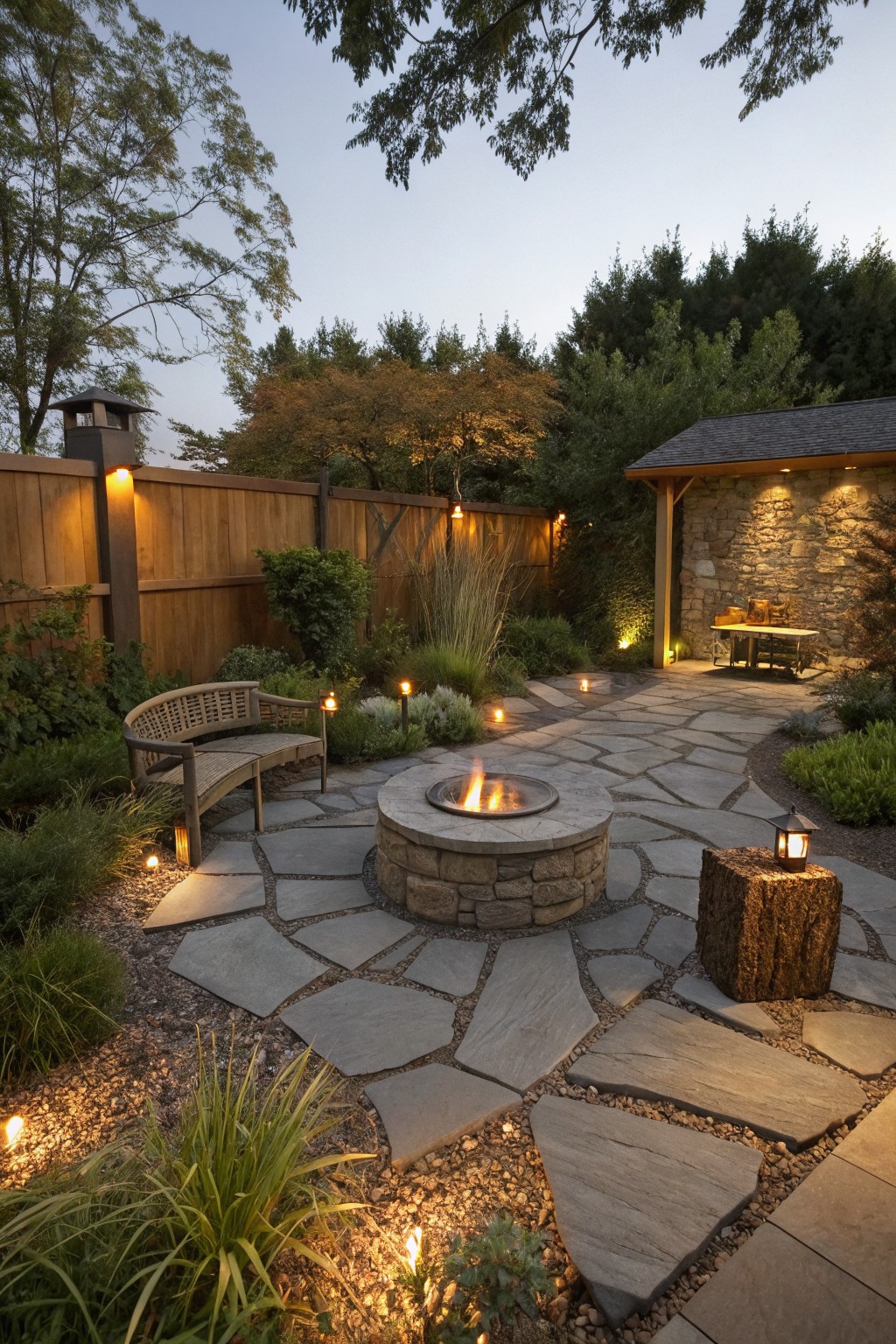
A simple stone fire pit right in the middle of a flagstone patio pulls everyone together for backyard evenings. The irregular pavers fit right into the surrounding grasses and shrubs, so it doesn’t look like some fancy install. That curved bench nearby keeps it casual, and the low path lights make it easy to find your way after dark.
This works best in yards with a bit of privacy from fences or trees. Pick flat or local stone to match your ground, leave space around the edges for plants to grow in. Skip it if your space is too small or windy, but otherwise it’s a solid way to get more time outside without much upkeep.
Frequently Asked Questions
Q: How do I start turning my plain grass yard into a natural one?
A: Pick a small spot first, like along the fence. Smother the grass with layers of cardboard and mulch, then tuck in tough native plants that spread on their own.
Q: What if my yard gets mostly shade?
A: Lean into ferns, hostas, and wild ginger—they thrive without full sun. Layer moss around them for that forest floor vibe, and skip anything sun-hungry.
Q: Can renters pull off these ideas without permanent changes?
A: Go for pots crammed with natives and movable stones for paths. Hang bird feeders or drape vines over temporary trellises. Your landlord stays happy, and you take the best pieces when you move.
Q: How do I stop weeds from taking over my new setup?
A: Mulch thick right after planting—it blocks light and starves them out. Pull any stragglers by hand weekly at first, and soon your plants crowd them out naturally.