I’ve spent time trying to make my backyard feel like a place we actually use instead of just walking through on the way to the garden.
Concrete slabs paired with wood accents hold up better than I expected once the furniture stays low and simple.
The real test comes when rain hits or the kids start playing out there.
Clean lines help everything stay organized without constant rearranging.
I usually start by checking how the seating faces the main view before committing to any layout.
Concrete Fire Pits That Zone The Patio

A long concrete fire pit set into the patio floor can do a lot to break up a big outdoor space. It gives you a natural line that separates the main seating from other areas without adding walls or extra structures. The material also ties in easily with concrete paving and simple wood furniture.
This setup works best on medium to large patios where you need a bit of order. Keep the pit low so the fire stays at seating height, and use gravel or pavers around the edges to keep the look clean. It suits homes that already lean modern and want to keep the materials simple.
Concrete Planters Built Into Deck Steps

Many people like the way a concrete planter can act as both a garden bed and a structural part of the deck. It creates a natural division between the pool and the seating area without needing extra walls or screens. The wood decking still feels open, but the concrete gives it weight and keeps the layout clear.
This works well on homes with flat or gently sloped yards where you want to add levels without a big construction project. Keep the planter low so it does not block views, and choose simple wood loungers that match the deck tone. Avoid overcrowding the planter with too many plants or it can start to feel busy.
Wood Ceilings Over Outdoor Seating Areas

A wood ceiling on a covered patio helps an outdoor space feel more like an actual room. It adds warmth and structure without closing things in, and it works especially well when the rest of the materials stay simple and natural.
This approach suits homes with existing wood tones or stone details. Keep the furniture low and clean, use neutral cushions, and let the ceiling do most of the work. Just make sure the space has good drainage and enough height so it does not feel cramped.
Built-In Seating Along The Balcony Edge
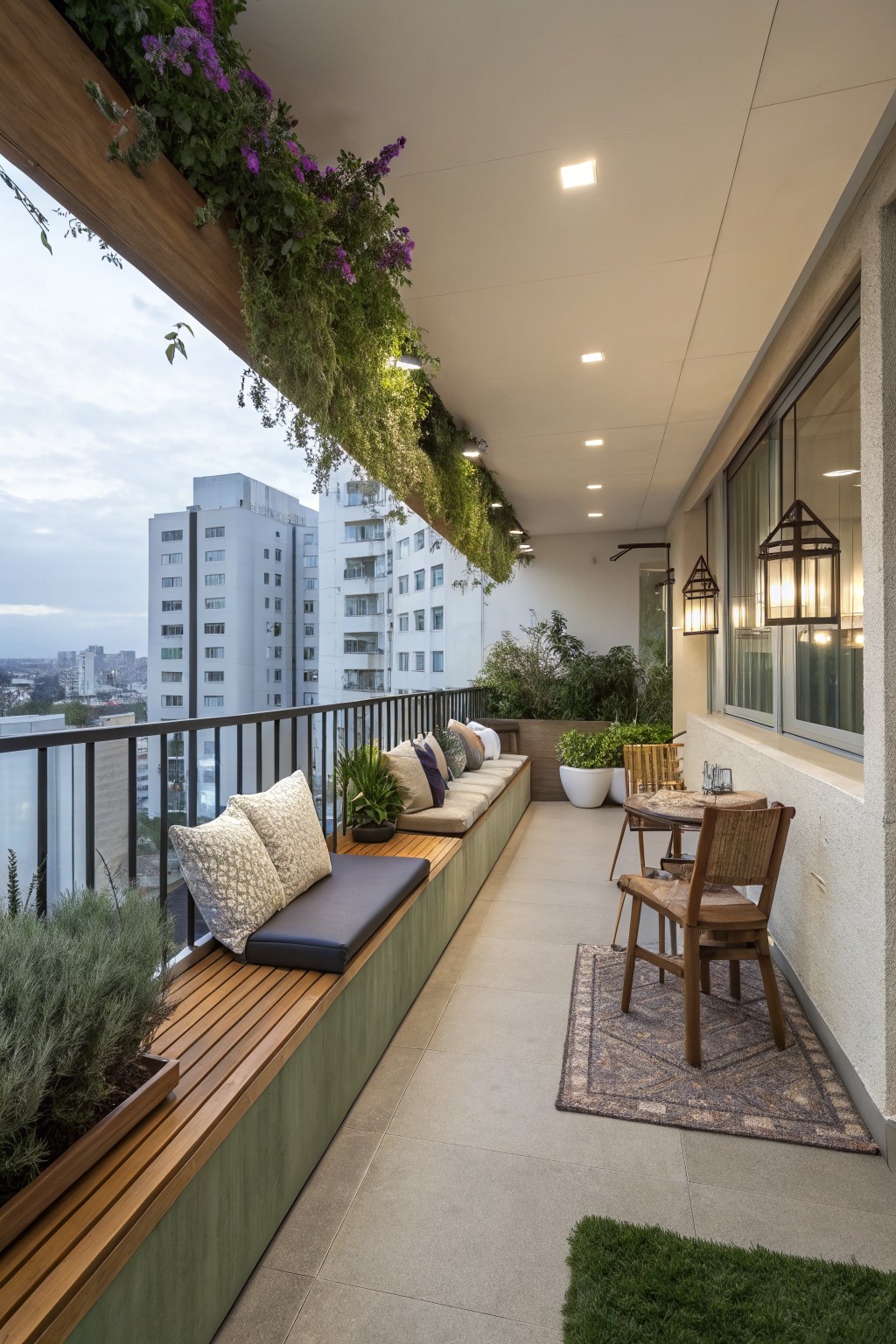
A built-in bench makes good use of the long narrow shape many balconies have. It turns the side wall into usable seating without crowding the walkway and pairs the wood with a simple painted base that holds up outside.
This setup suits apartments or townhomes where floor space is tight. Keep cushions in solid colors and add a small rug and table at one end if you want room to eat outside too.
Mix Concrete And Wood For Outdoor Dining

A concrete patio gives you a solid, low-maintenance base that stands up to weather and heavy use. Adding a long wood table and bench keeps the space from feeling too hard or cold while still letting the concrete do the practical work.
This approach suits homes with a fairly flat backyard or side yard where you can place the dining area next to a simple outdoor kitchen. Stick to clean lines on the furniture so the whole zone stays open and easy to move around in.
Concrete Flooring For Open Outdoor Rooms

Concrete makes a good base for outdoor living because it handles sun, water, and daily use without much work. It also gives a flat, open surface that lets seating and plants feel connected rather than scattered.
This approach works best on homes with a pool or larger yard where you want the space to feel simple and usable. Keep the furniture low and clean so the concrete stays the main surface instead of getting covered up.
Concrete Islands For Outdoor Kitchens
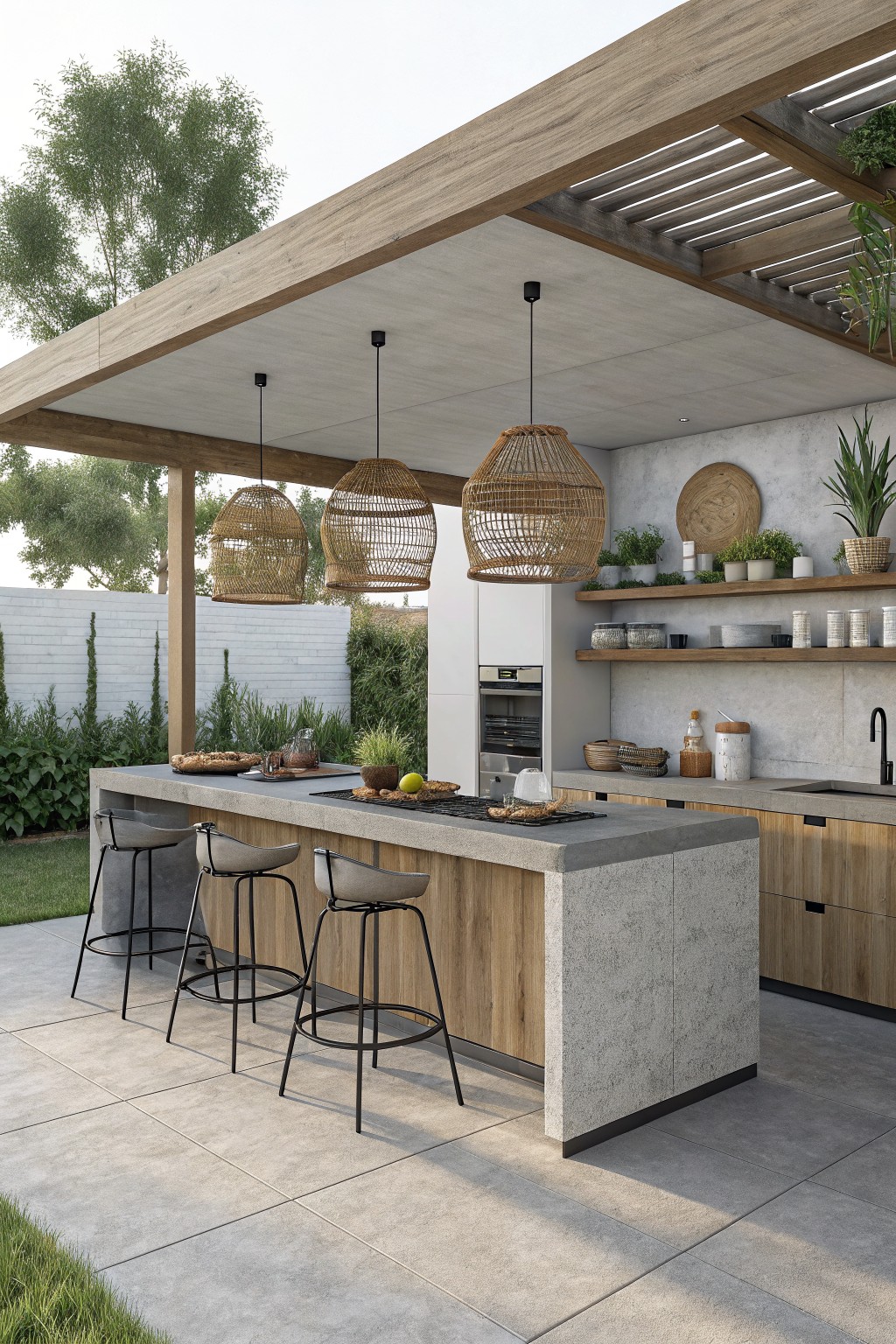
A concrete island gives an outdoor kitchen a solid work surface that holds up to weather and heavy use. It pairs naturally with wood cabinetry and overhead beams, which keeps the whole setup grounded without looking too heavy.
This works best in spaces where you want room for seating on one side and cooking on the other. Keep the concrete simple and let the wood add warmth so the area stays practical rather than overly styled.
Adding A Water Feature To Concrete Patios
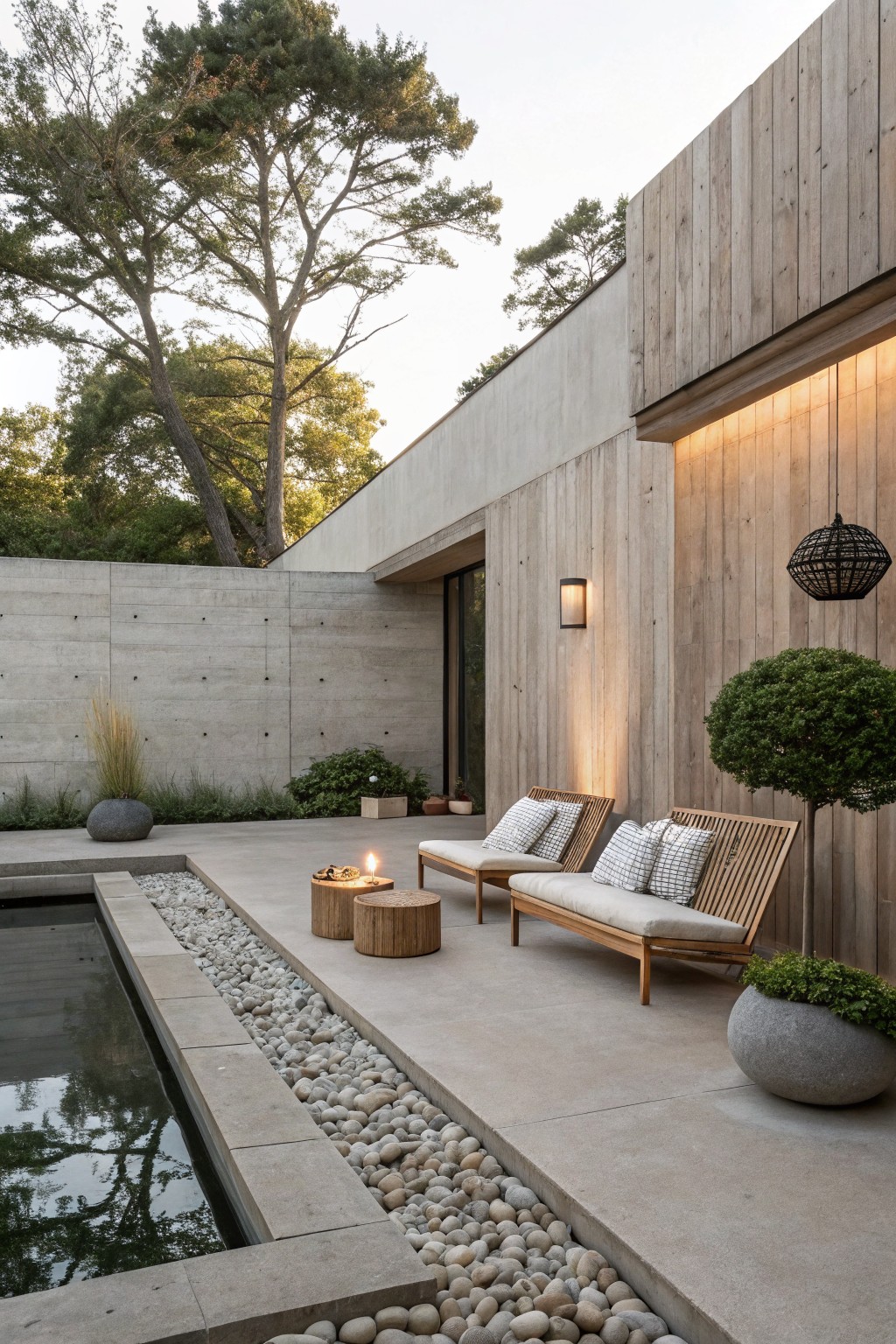
One way to make a concrete patio feel more settled is to run a narrow water feature along the edge. The water adds a quiet sound and breaks up the flat surface without adding clutter or extra furniture.
This setup works best on homes with clean modern lines where you want the outdoor area to feel calm and connected to the house. Keep the seating low and simple so the water stays the main point of interest.
Built-In Benches With Loose Chairs
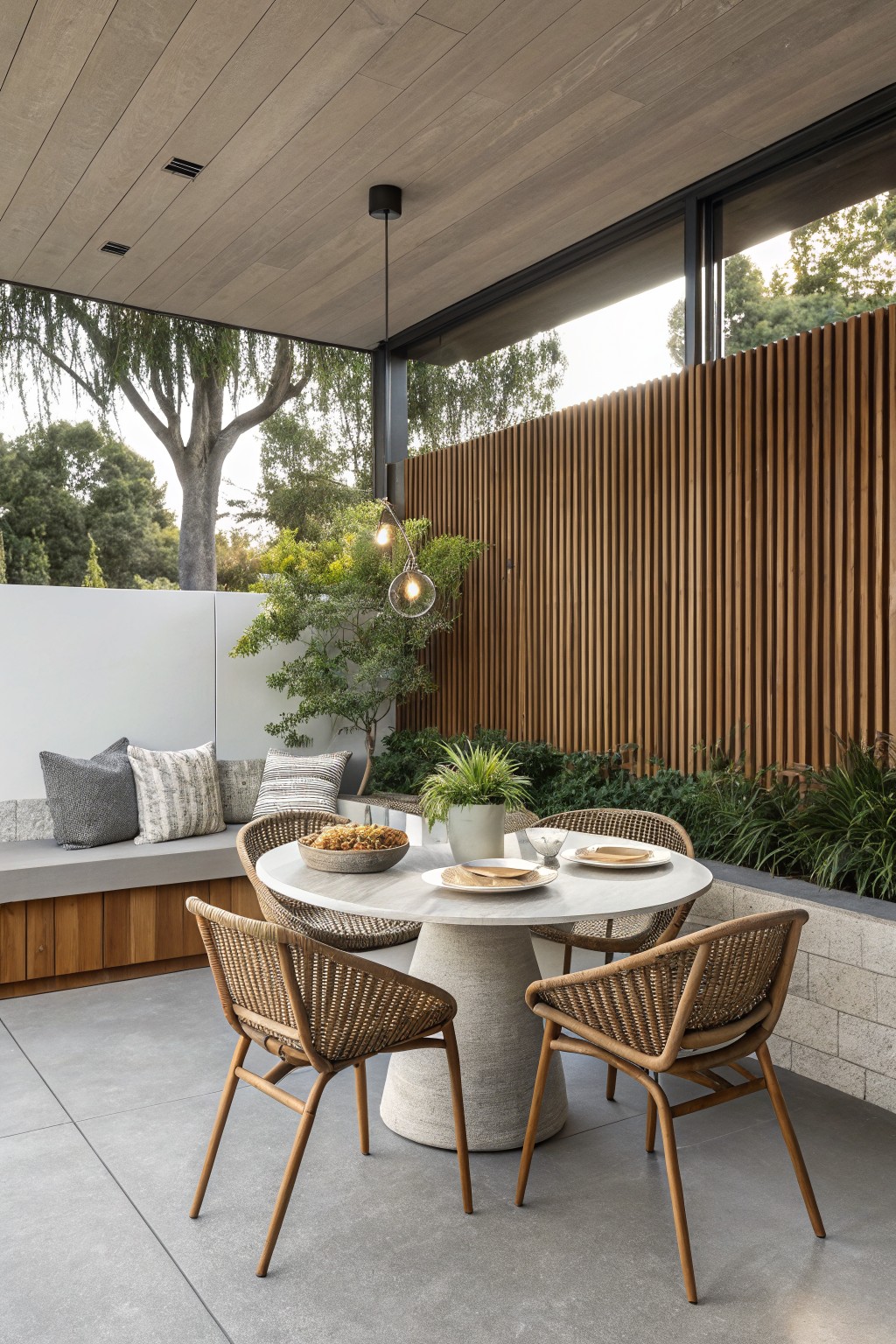
A built-in bench along one side of an outdoor table gives you extra seating without crowding the space with more chairs. It works especially well when the bench ties into the surrounding walls or planters, so the whole area feels like one clean zone rather than a collection of separate pieces. The mix of fixed and movable seating also lets the table handle different group sizes without looking empty or cramped.
This setup suits covered patios or decks that already have some architectural structure to build against. Keep the bench low and simple so it does not compete with the table, and choose chairs that can tuck in easily when fewer people are using the space. Just watch the depth of the bench so it does not push the table too far from the edge.
Concrete Fire Pits As The Patio Focal Point
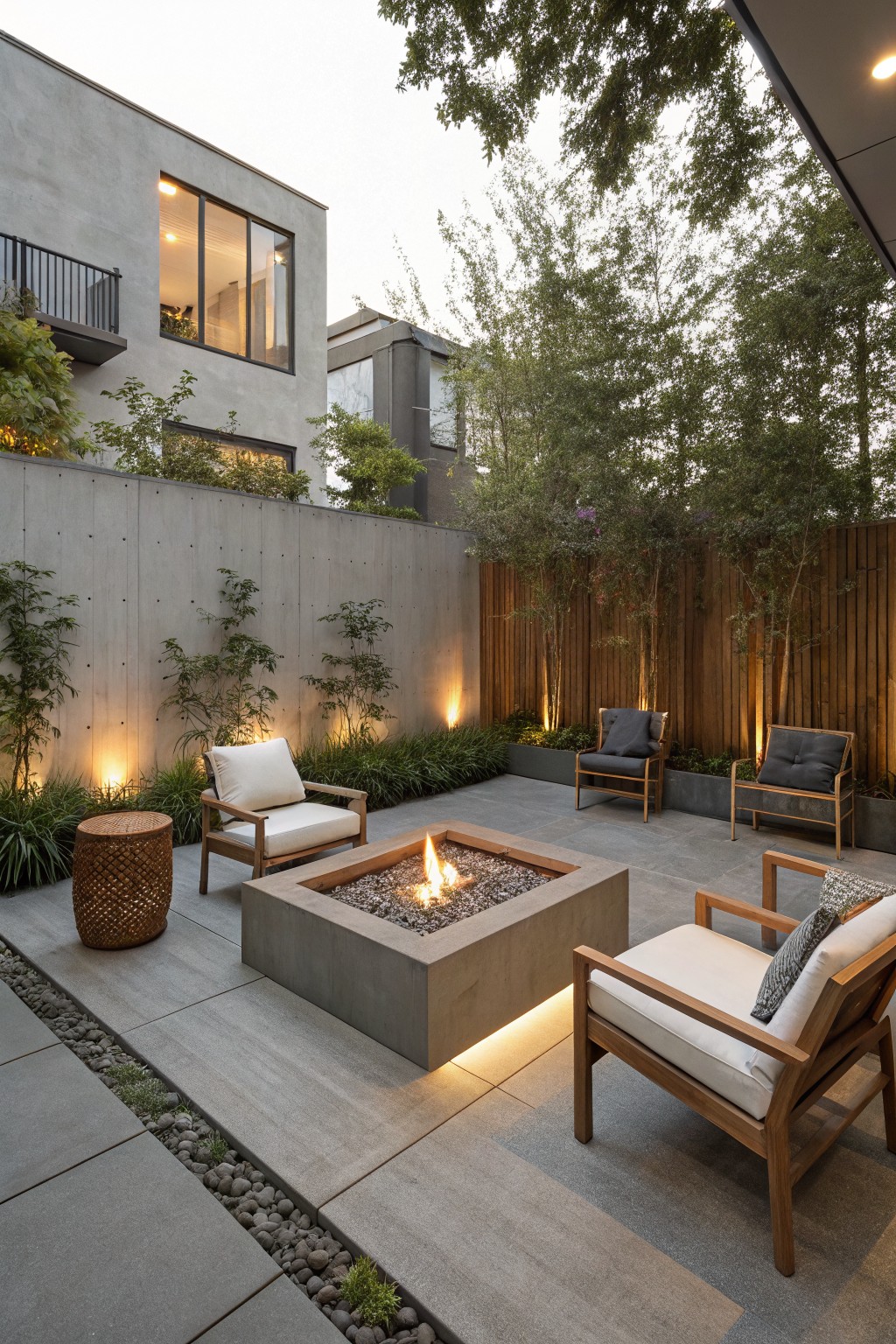
A concrete fire pit gives an outdoor space a clear center without needing much else. It works especially well when the rest of the area stays simple, with clean-lined wood chairs and open paving around it.
This approach suits homes with existing concrete hardscaping or modern fencing. Keep the seating low and the layout open so the fire pit stays easy to gather around and does not crowd the walking paths.
Slatted Pergola Roofs Over Concrete

A slatted wood roof overhead gives an outdoor space some structure without blocking all the light. The gaps let sun and shadows move across the floor during the day, which keeps the area from feeling too heavy or closed in.
This works best on larger patios where you want a clear living zone but still need some sun control. It pairs well with concrete floors because the wood softens the look while the concrete stays easy to clean and maintain.
A Wood Table in a Concrete Outdoor Kitchen

A long wood table gives an outdoor kitchen area something solid to gather around. When the rest of the space uses concrete for walls, counters, and built-ins, the wood keeps things from feeling too cold while still fitting the clean modern look.
This setup works well on covered patios or backyard spaces that already have some overhead structure. Stick with simple stools and let the table take up most of the floor space so the concrete elements stay in the background rather than competing for attention.
Create Shade With a Simple Wood Structure Over Concrete

A wood cover over a concrete patio gives you a clear outdoor living zone without making the space feel closed off. It works especially well next to a pool because the solid base stays cool underfoot while the wood overhead cuts the sun. The mix keeps things simple and modern without extra decoration.
This layout suits homes where you want a spot for lounging that connects directly to the water. Stick with low, clean-lined chairs and let the materials do the rest. Just make sure the wood is sealed well if rain is common in your area.
Built-In Bench Seating Along A Wall
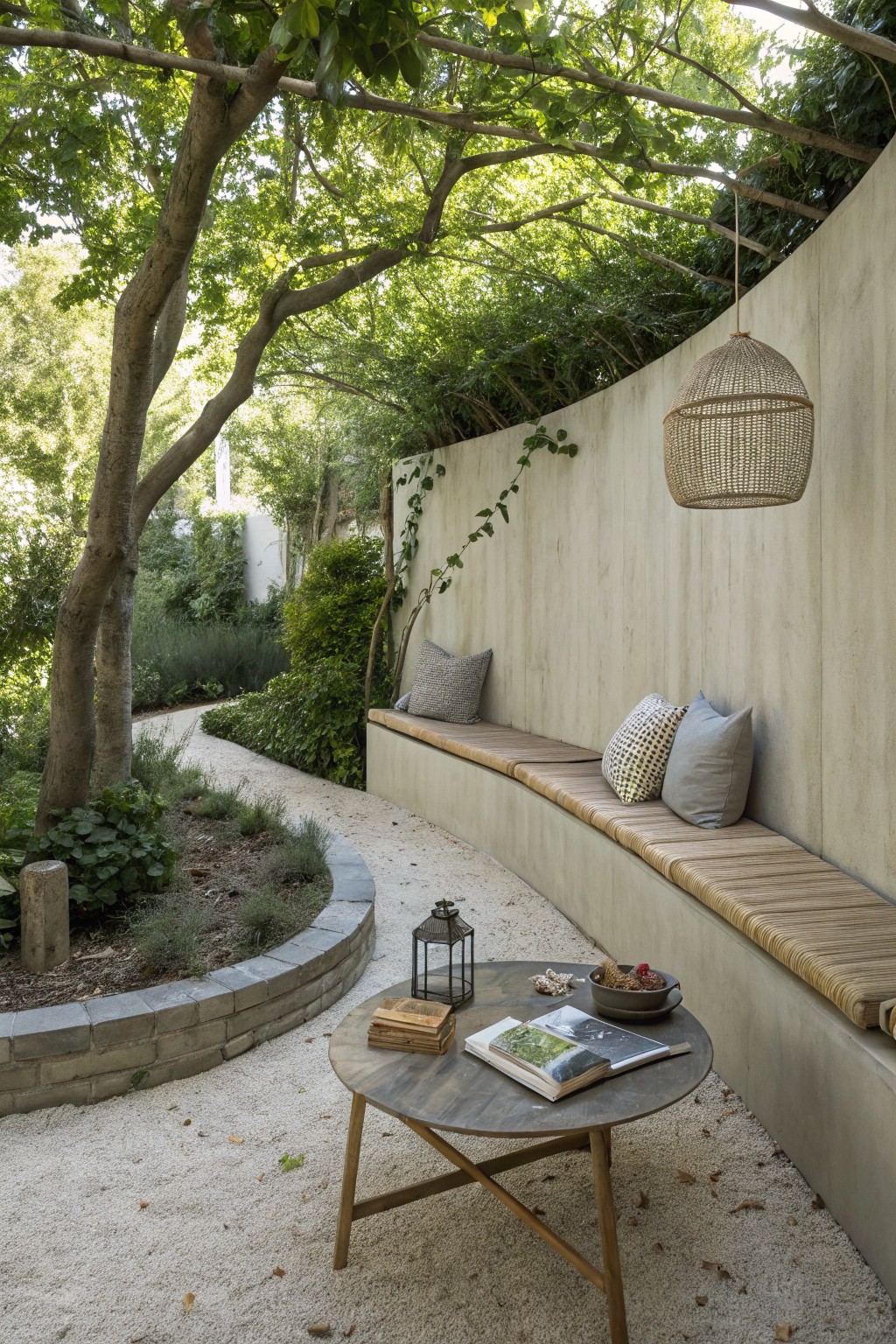
A built-in bench turns an empty wall into useful seating without crowding the space. The concrete base keeps things sturdy while the wood slats add warmth and comfort.
This setup works best in smaller yards or along a garden path where you want seating but still need room to move. Keep the cushions simple and add a low table nearby so the whole area feels relaxed rather than crowded.
Built-In Seating For Outdoor Spaces
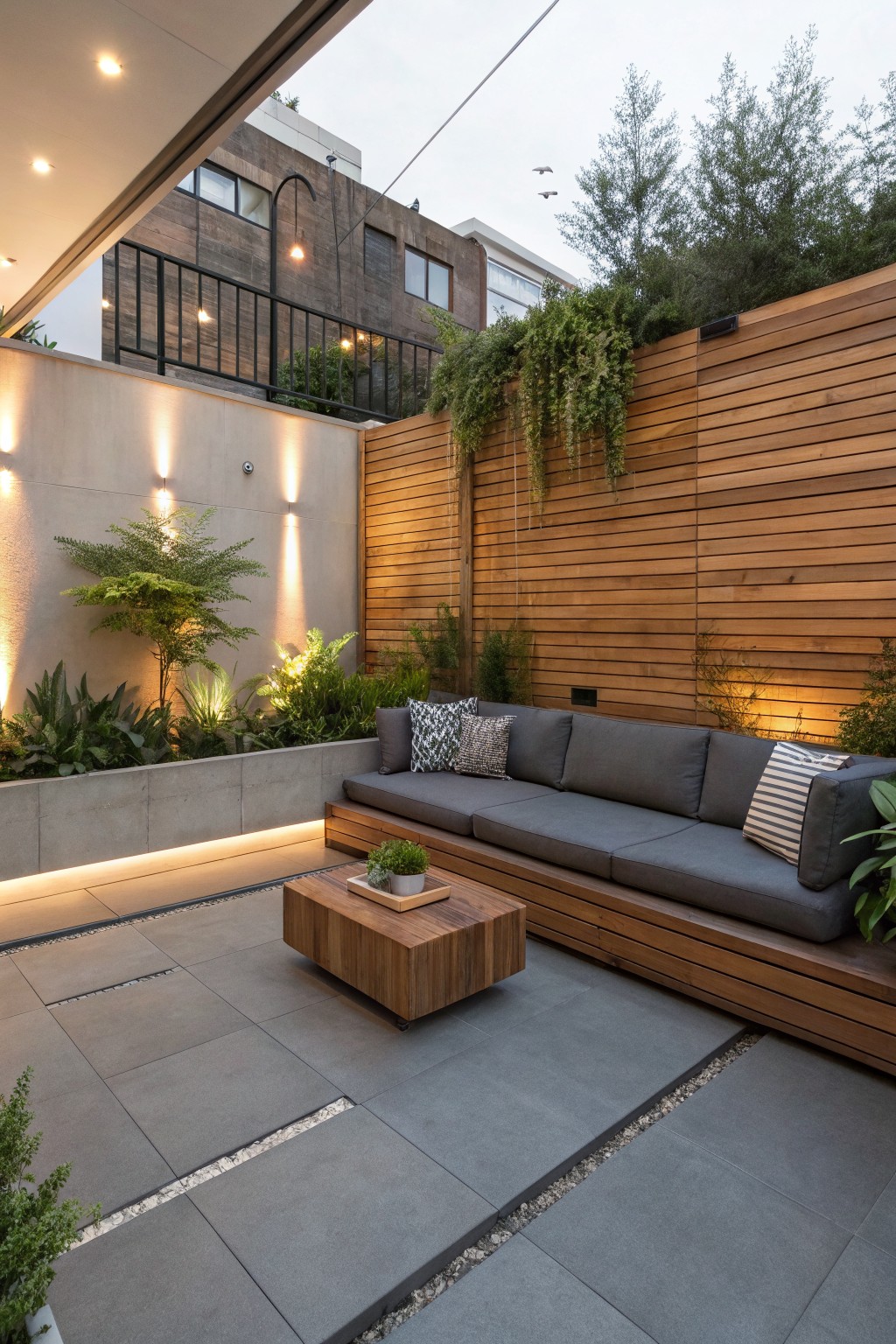
Built-in seating works well when you want a patio to feel finished without crowding it with separate chairs. The wood platform here runs along the wall and gives plenty of room for people to sit while keeping the floor clear for walking around.
This setup suits homes with smaller yards or modern styles where you want clean lines and easy maintenance. Use the same wood tone for the bench and any nearby fencing so the whole area feels connected, and keep cushions simple so the focus stays on the structure itself.
Defining An Outdoor Dining Area With A Pergola
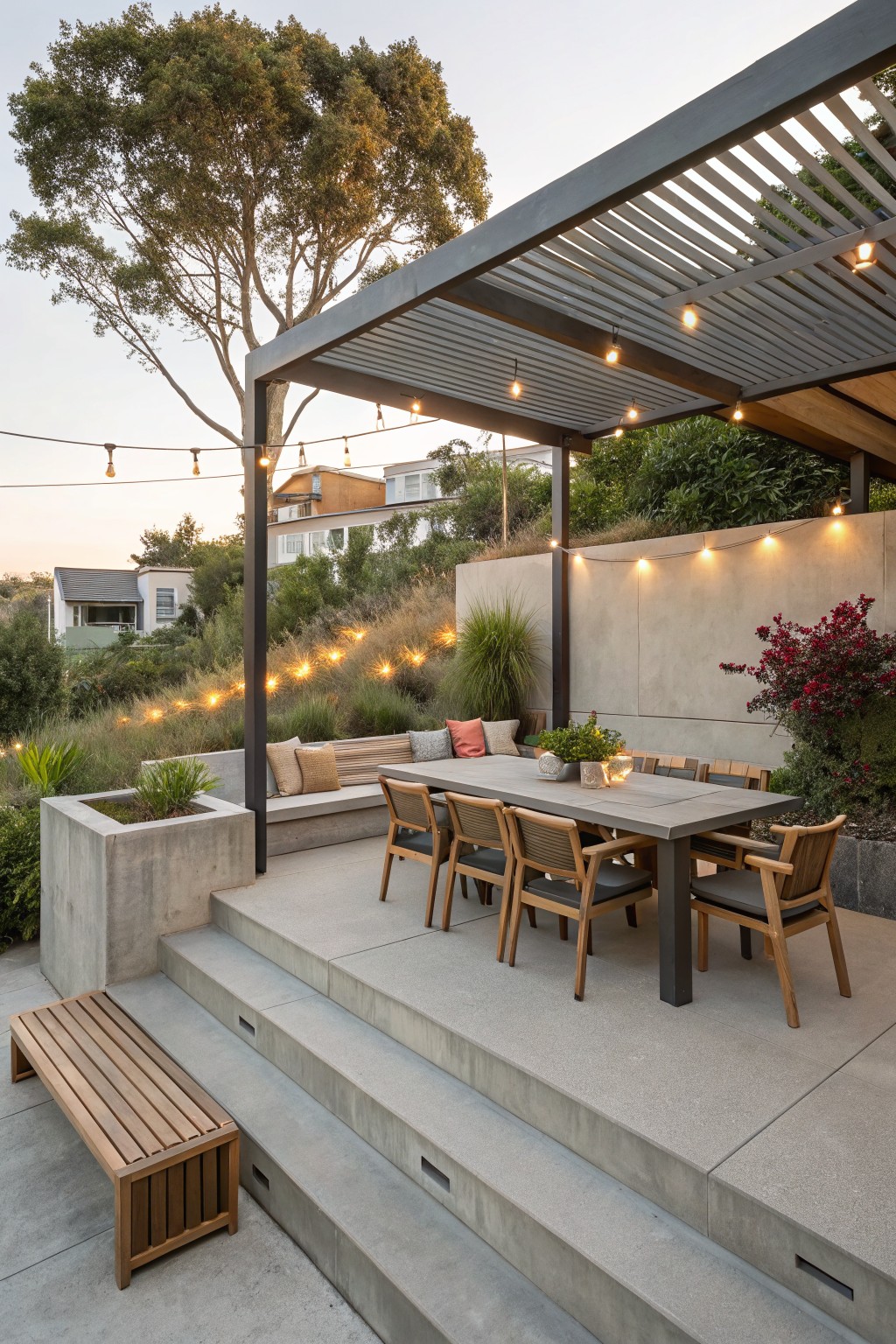
A pergola overhead can turn a plain patio into a spot that feels set aside for meals. It gives just enough cover to hang lights and mark the space without making it feel closed in.
This setup works on a concrete base because the material stays simple underfoot while the wood chairs and built-in bench add warmth. It suits most homes with a level yard where you want the table to become the main gathering place rather than letting the whole patio stay open and undefined.
Wood Decks With Gravel For Simple Seating Zones

A low wooden deck next to gravel gives you a solid place to set furniture without covering the whole yard in hard surfaces. The wood feels warm underfoot and the gravel keeps things open and low maintenance.
This works well in backyards that already have some water or planting nearby. Keep the furniture to one or two clean pieces so the space stays open and easy to use year round.
Built-In Fireplaces Anchor Outdoor Dining Spaces
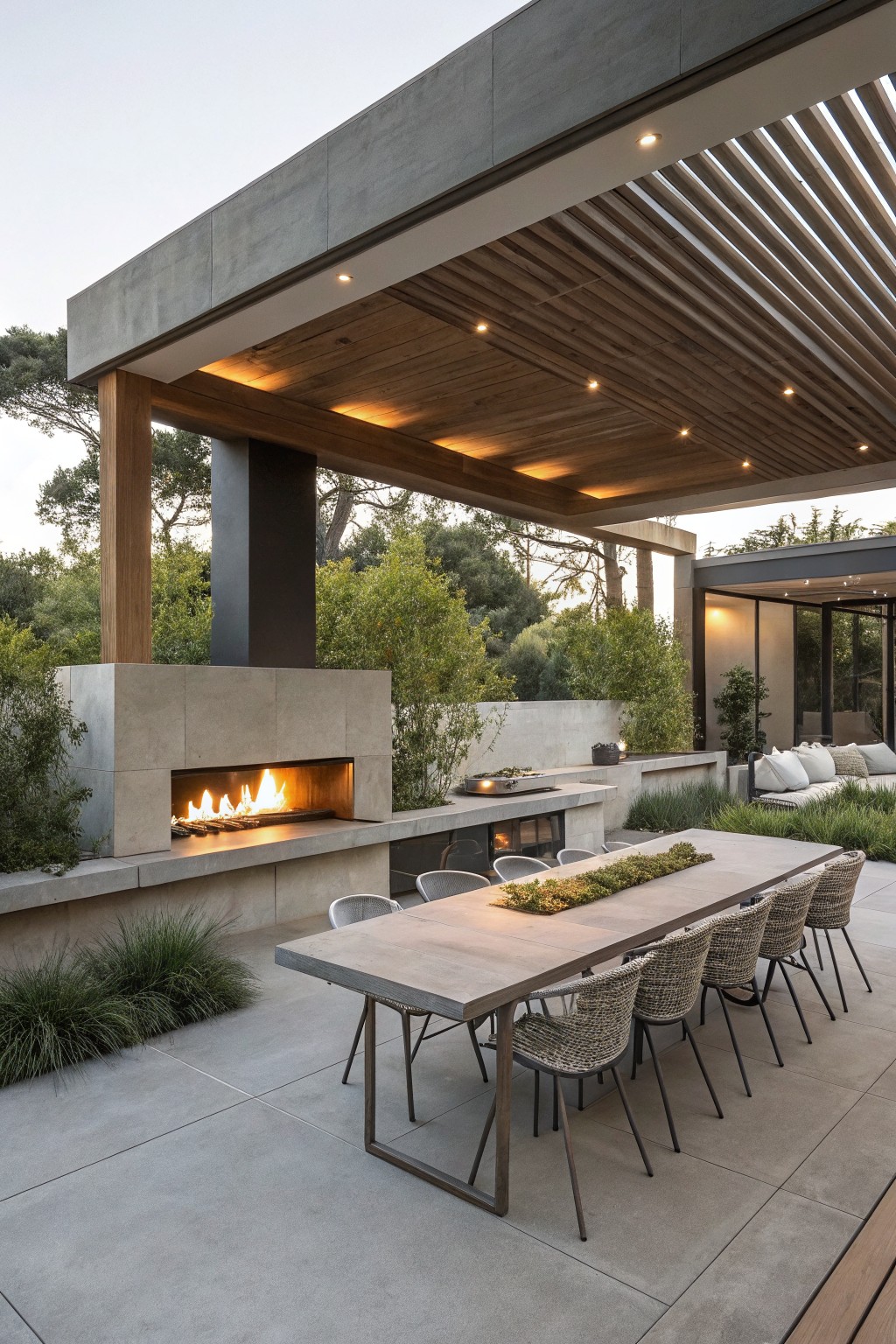
A built-in fireplace gives an outdoor dining area a clear focal point that furniture alone cannot provide. It turns the space into something more permanent and usable across more months, especially when the seating stays close to the fire.
This setup works best on covered patios or terraces where you can run a long table parallel to the fireplace. Stick with matching concrete and wood finishes so the whole area feels like one connected room rather than separate pieces added over time.
Built-In Bench Seating For Patios
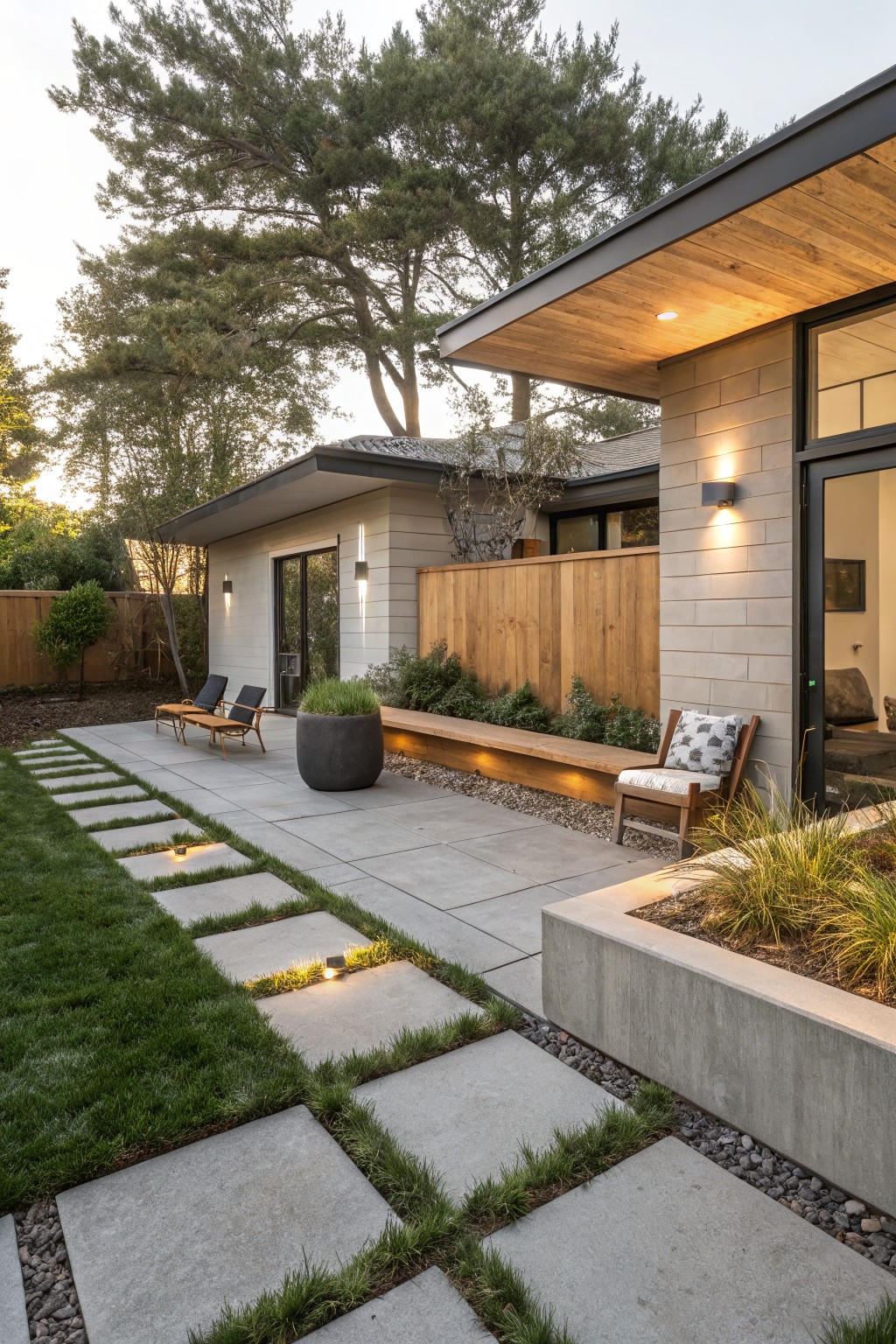
A built-in bench makes good use of the space right against the house. It gives you seating without adding extra furniture that can crowd a patio, and the wood ties in nicely with the ceiling and other details while the concrete keeps the floor simple and easy to maintain.
This setup works best on a mostly flat patio where you want a clean edge and some extra places to sit. Keep the bench low and fairly deep so it feels comfortable, and make sure the materials match the rest of your outdoor space rather than standing out too much.
Add a Projector Screen to an Outdoor Concrete Wall
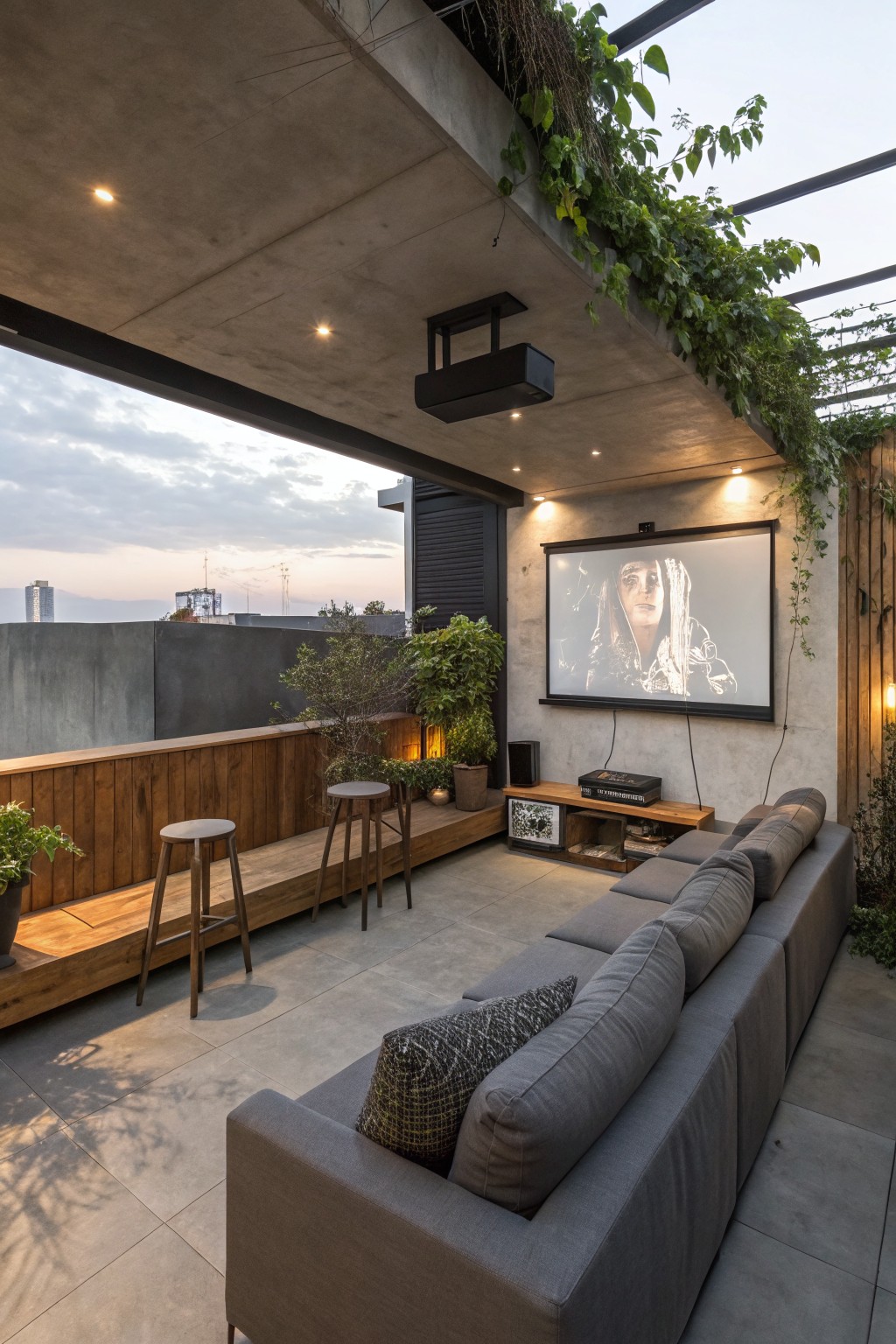
Mounting a screen on a plain concrete wall turns a basic patio into a real evening gathering spot. The hard surface gives a clean backdrop that stays weatherproof, while the open layout keeps the space from feeling closed in. A simple media console below holds the gear without taking up much room.
This setup works best on covered terraces or rooftops where you already have solid walls and some shade. Keep the seating low and deep so everyone can relax without blocking the view, and add a few wood platforms nearby for extra surface space. Just watch the evening light and angle the screen away from any direct glare.
Frequently Asked Questions
Q: How do I protect the wood pieces from rain without hiding their natural grain? A: Wipe on a clear outdoor oil every spring before the wet season hits. It sinks in fast and leaves the surface matte. Reapply only where water beads up less.
Q: What works best to keep concrete stools from feeling cold during evening hangs? A: Lay thin cedar planks across the tops as removable covers. The wood warms up quickly from body heat and matches the other clean lines you already have. Store the planks stacked when not in use.
Q: Can I add a concrete fire bowl without the whole setup looking too heavy? A: Keep the bowl low and pair it with slim wooden side tables. The contrast keeps the space light. Position the bowl off-center so traffic flows around it easily.