Covered patios often end up as the spot where we spend the most time once they actually keep out the elements.
I have noticed that many designs look appealing in photos but fail when you try to use them during a sudden shower.
That gap between appearance and function shows up fast.
Thinking about year-round use has me paying more attention to drainage and sturdy roofing choices that hold up over time.
Some of the simpler additions, like integrated lighting or flexible seating, feel like they could make a real difference in how often we head outside.
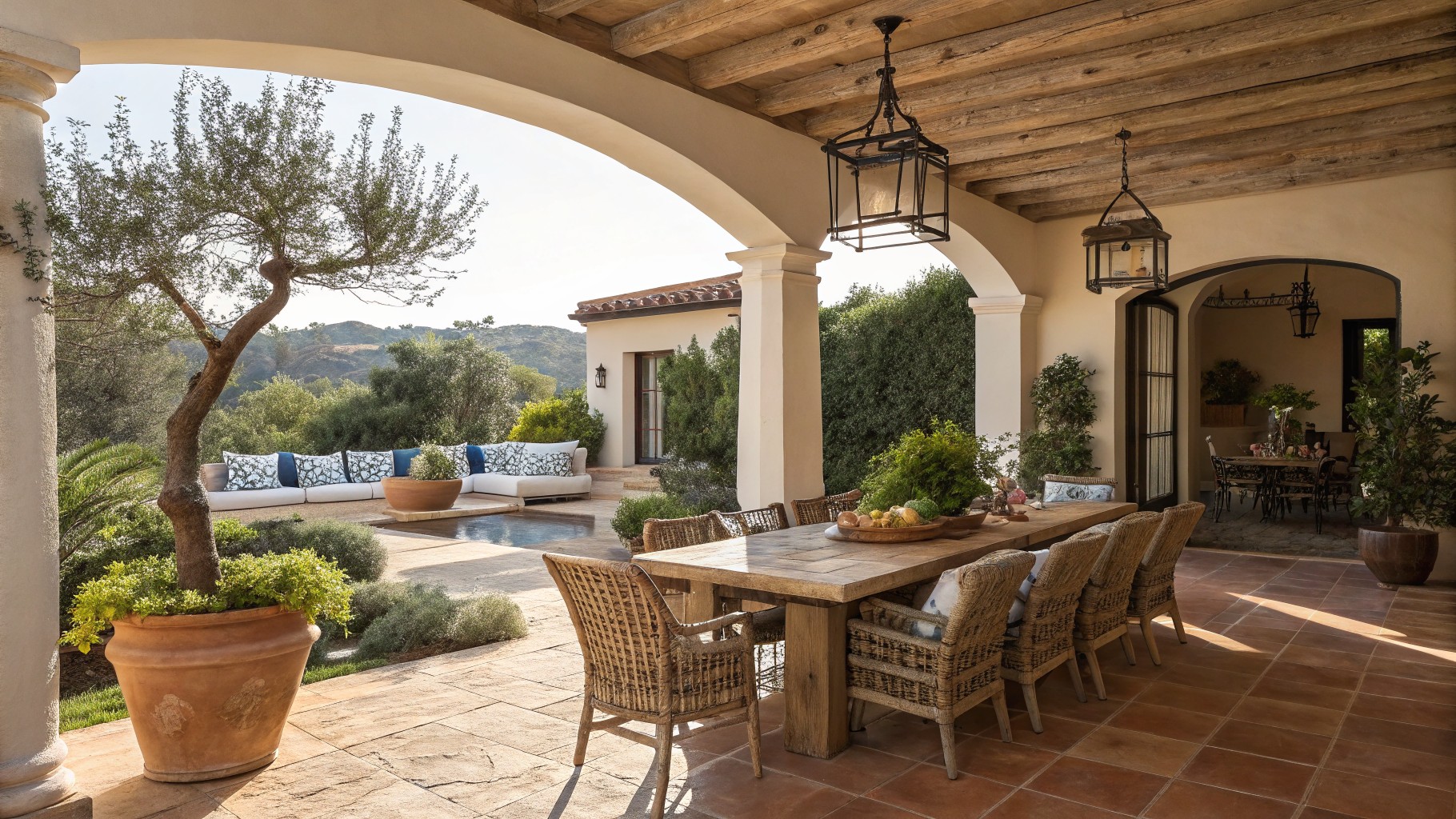
Covered Patios With Exposed Beams

A solid roof overhead with exposed wood beams gives an outdoor dining space real staying power. It blocks sun during the day and keeps rain off the table, so meals can happen without constant weather checks. The structure also adds weight and character that open patios often lack.
This setup works best on homes with enough wall space to tie the roof into the existing architecture. Keep the table long and the seating simple so the area feels ready for groups rather than just decoration. Watch the beam height though. Too low and the space starts to feel closed in.
Add a Fireplace to Your Covered Patio
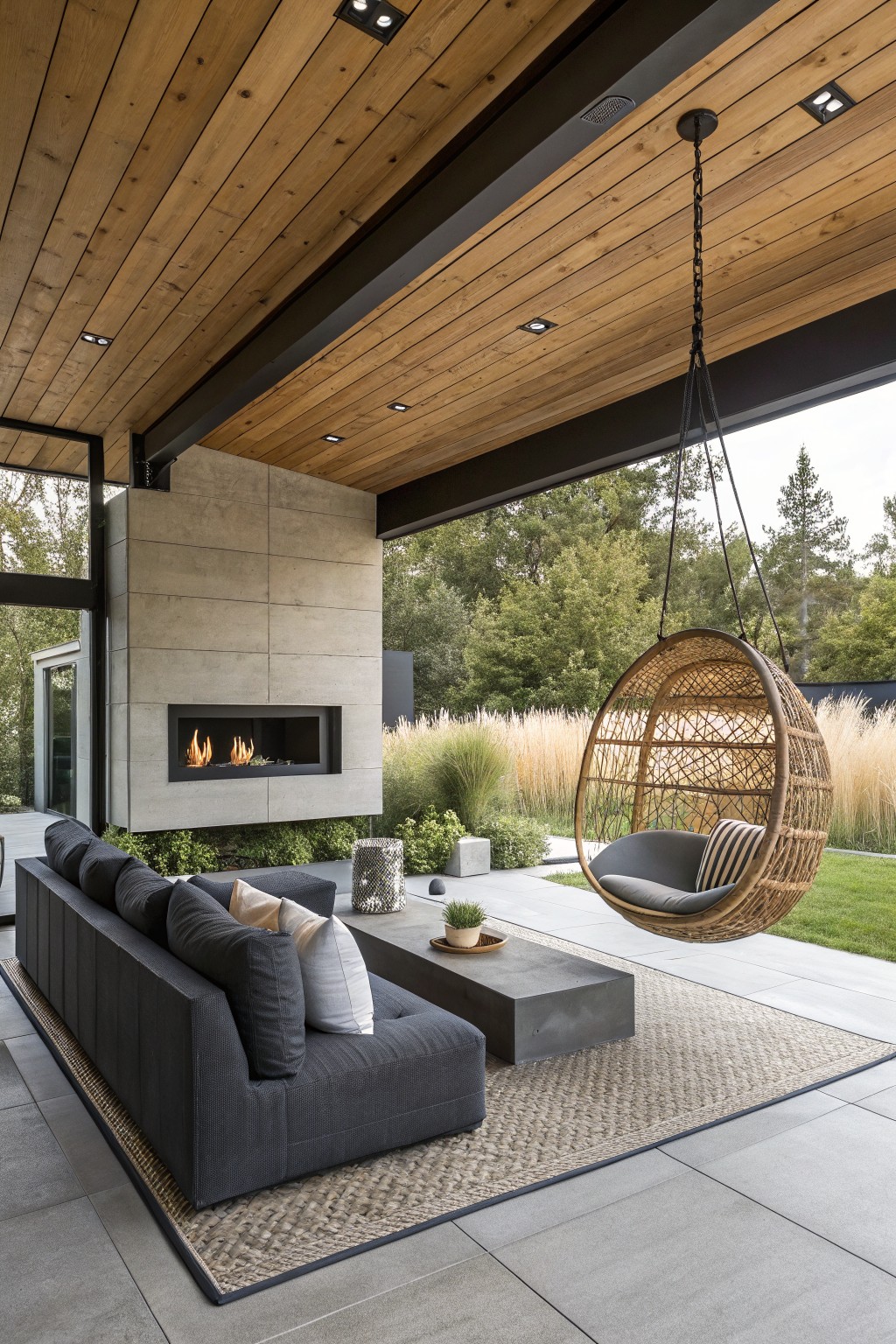
A fireplace built into the patio cover turns the space into something you can use most of the year. It gives heat when evenings cool off and keeps the area dry enough to sit out during light rain.
This works best on homes where the patio sits right off the main living area. Keep the seating close to the fire and use sturdy pieces that can stay outside without much fuss.
Hang a Pendant Over the Outdoor Table
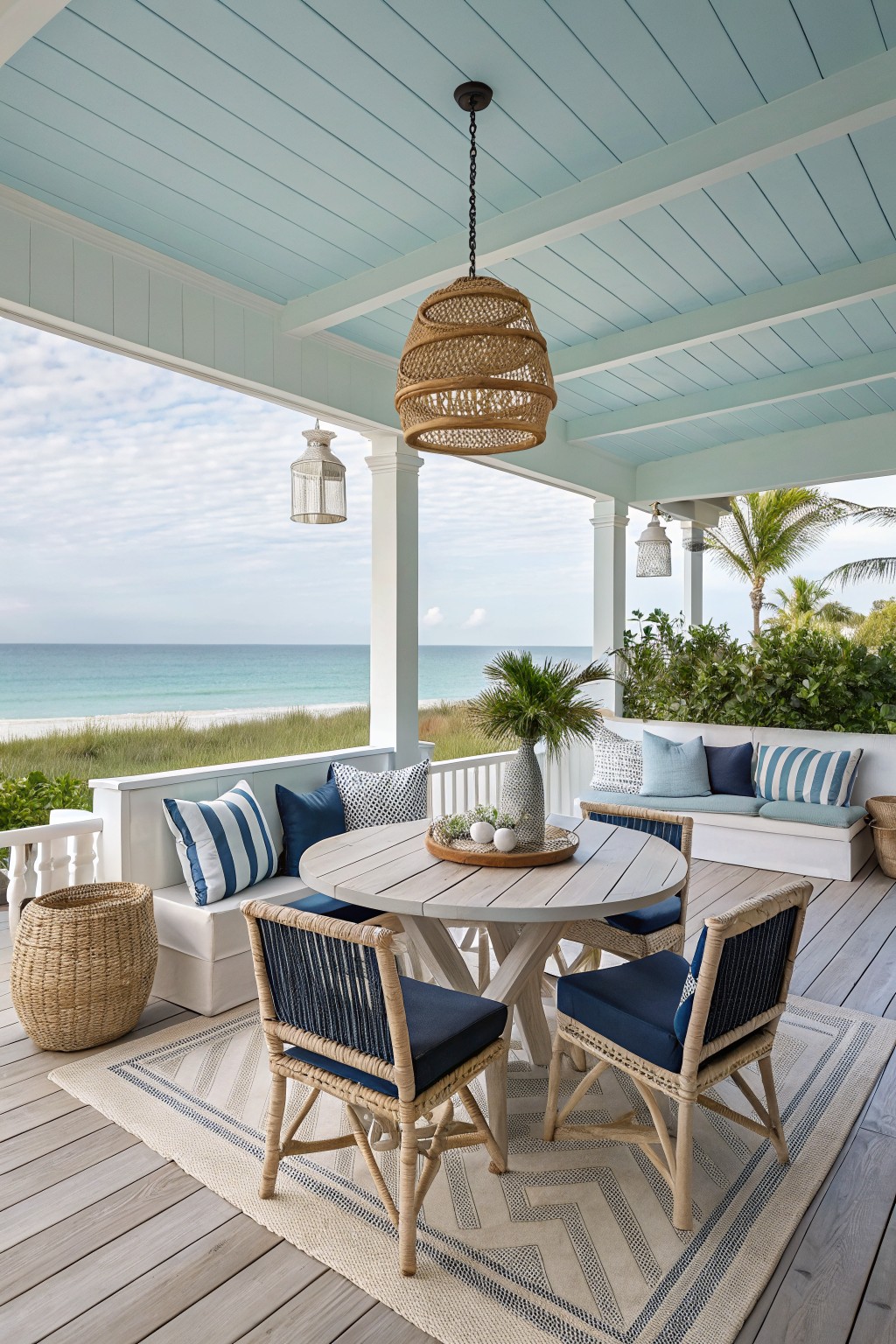
A large hanging light over the table gives an outdoor dining spot a clear center point. It makes the area feel more like a real room instead of just furniture set out on a deck, and it works especially well when the space needs to be used after dark.
This setup suits covered patios that already have some overhead structure. Pick a fixture that can handle moisture and keep the size in proportion to the table so the light actually reaches the seating area without feeling too small or too heavy.
A Covered Roof for Year-Round Use

A solid roof over the patio makes outdoor dining practical in any weather. Thick wooden beams and a metal covering block rain and harsh sun while still letting the space feel open and connected to the yard.
This approach suits homes with existing stone walls or natural materials. Place a long table and simple seating underneath so the area stays usable through different seasons. Keep the roof edges wide enough to handle wind-driven rain.
Extend the Roof for Better Patio Coverage

A good roof overhang turns an ordinary patio into a space that works in more weather. It blocks harsh sun and light rain without needing a full enclosure, so the furniture stays usable for longer stretches of the year.
This approach fits homes that already have clean rooflines or want to add shade without separate structures. Keep the sides open so air and views stay connected to the yard, and add simple lighting underneath if you plan to use the space after dark.
Thatched Roofing For Simple Outdoor Shade
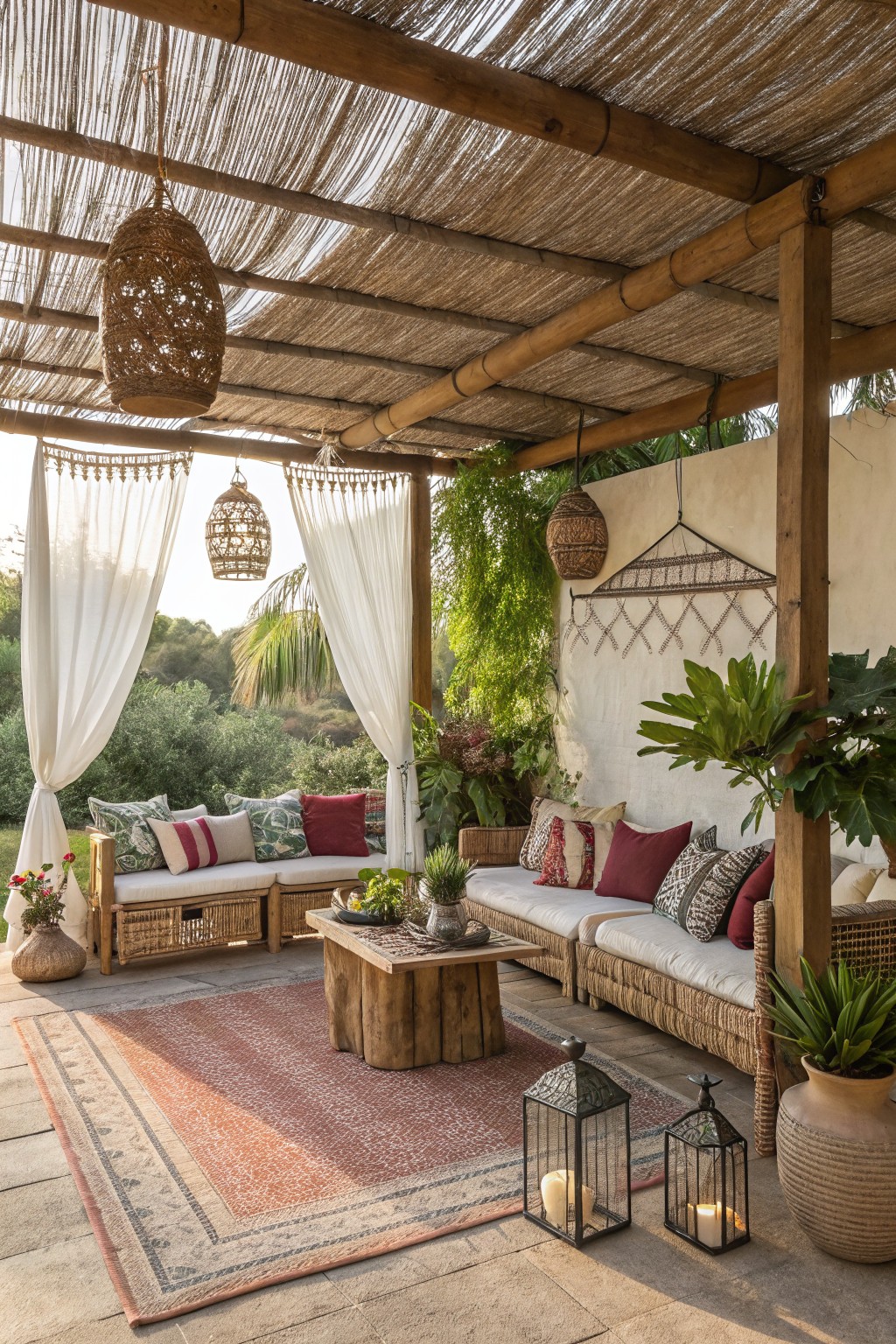
A thatched roof overhead makes a patio feel more like an actual room. It blocks strong sun without cutting off all the light and air, so the space stays comfortable even in warm weather or light rain.
This approach works best on homes that already lean natural or relaxed. Use basic wood or bamboo supports and keep the floor open so you can move furniture around as needed.
Connect An Outdoor Kitchen To Covered Dining

One practical way to get more use from a patio is to place the cooking area right beside the dining table under the same roof. This keeps everything in one zone so meals can move from prep to table without extra steps or weather worries.
It works especially well on homes that already have a large opening to the yard. Choose durable seating and simple overhead lighting so the space stays comfortable from spring through fall.
Add a Fireplace for Year-Round Use

A fireplace turns a covered patio into a space that stays comfortable when temperatures drop. It creates a focal point for seating and gives off enough warmth to keep people outside longer without needing to head indoors.
This setup works best on patios with solid roofing and at least one protected wall. Tuck the fireplace along that wall with built-in seating close by so the heat stays contained and the layout stays practical for groups.
Cover Your Patio to Create an Outdoor Dining Room

A covered patio with a long table turns the space into something you can actually use every day. The roof keeps rain and sun off the table, so meals happen without checking the weather first. Exposed beams and open arches keep it from feeling closed in while still giving real shelter.
This setup works best on homes with enough wall space to support a solid roof structure. Place the table where it lines up with doors to the kitchen or living room so carrying food stays simple. Just watch the scale. A table this size needs room around it for chairs to pull out without crowding the edges.
Add a Reed Ceiling for Built-In Shade
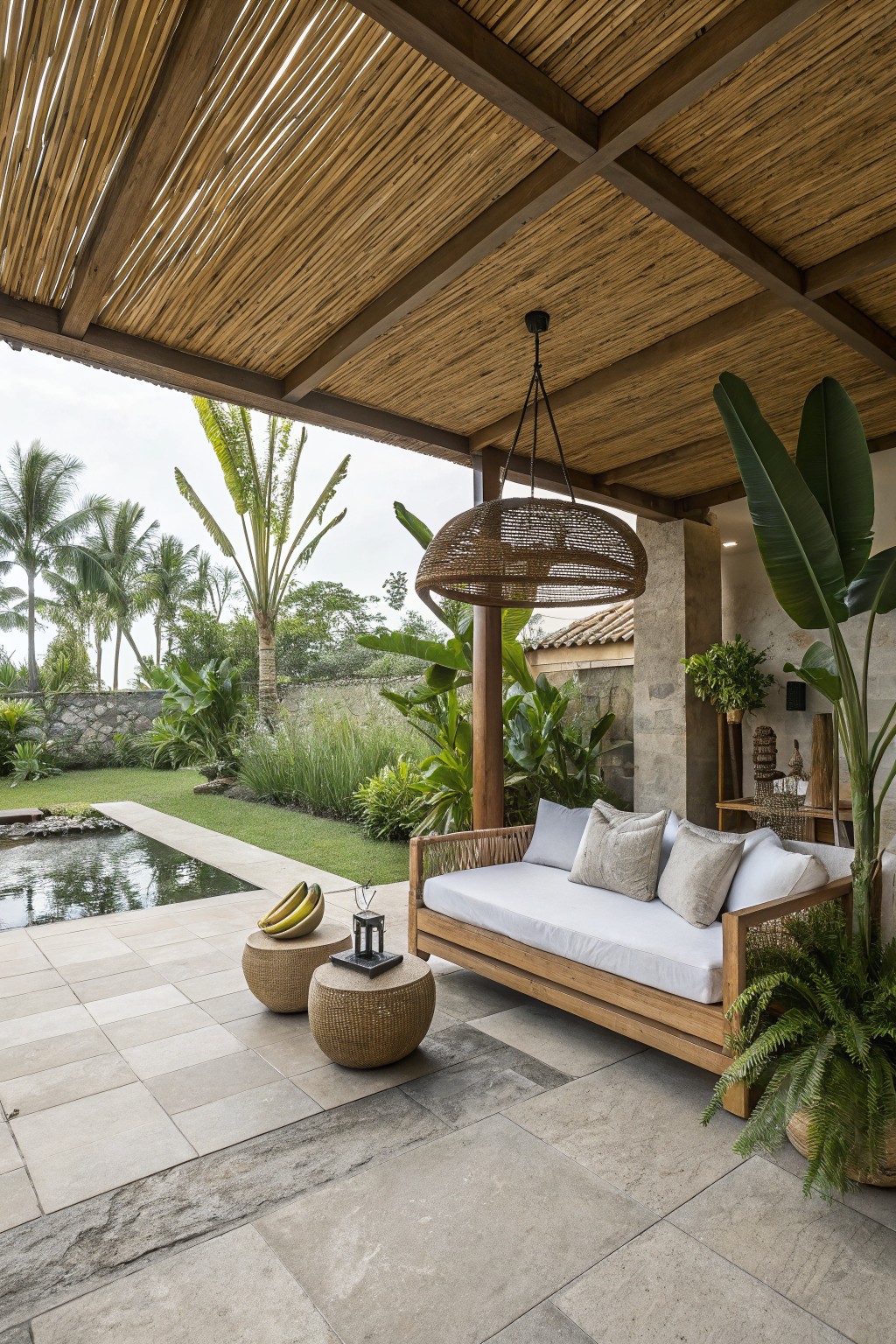
A reed ceiling like this one gives real shade without blocking the open feel of a patio. The natural slats let some light through while keeping rain off the furniture, which makes the space usable more months of the year. It also pairs well with wood furniture and stone floors, so the whole area feels relaxed rather than formal.
This works best on patios that already have a solid frame or posts in place. Keep the roof structure simple and let the reed do the main job. Just watch how low you hang lights or fans so they do not interfere with the open look.
Adding a Fireplace to a Covered Patio
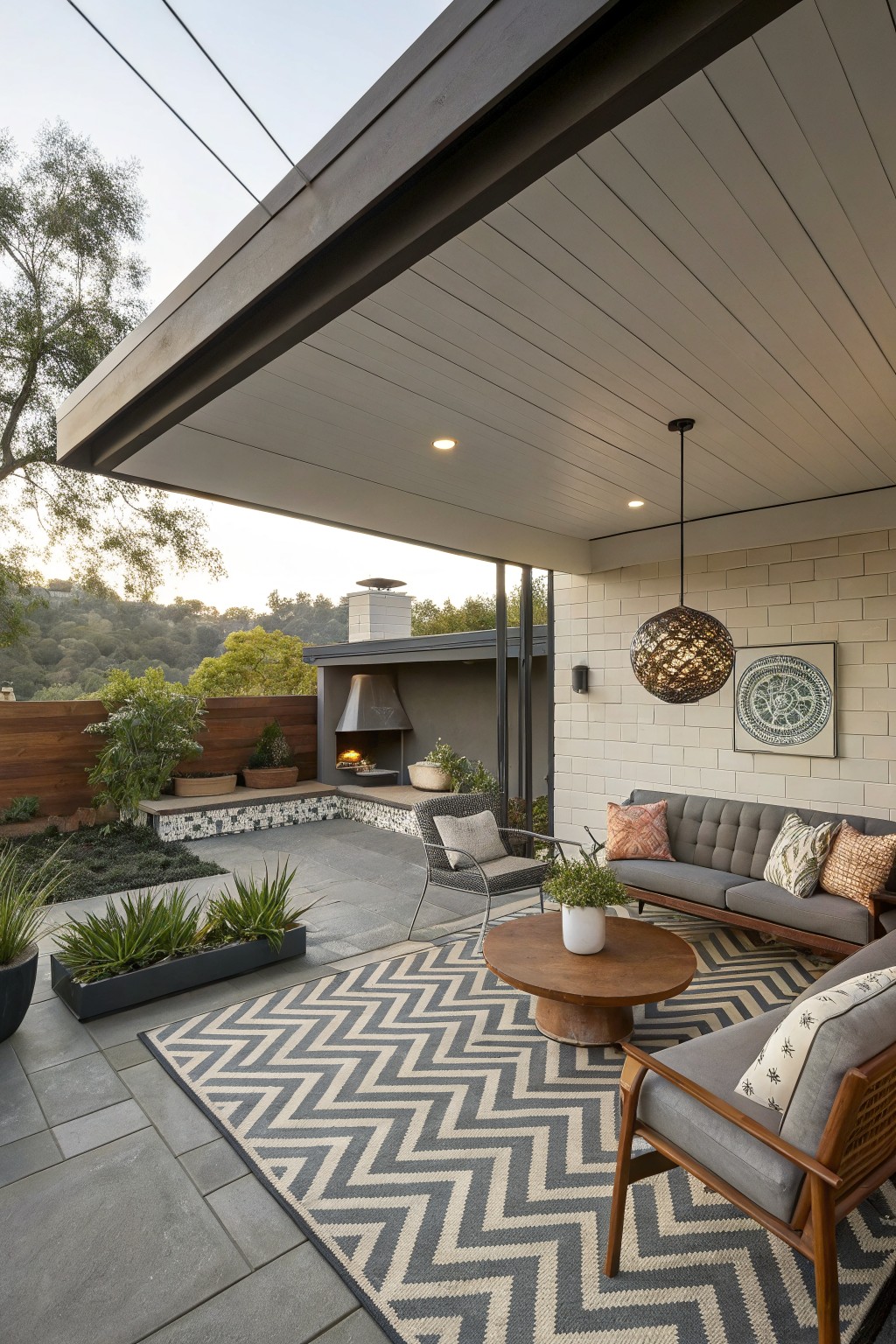
A fireplace under a solid roof turns a patio into a space that works in more seasons. It gives warmth on cooler evenings and keeps the seating area protected from light rain while still feeling open to the yard.
This setup suits homes where the outdoor area gets regular use but the weather changes often. Keep the seating simple and add a large rug to define the zone so the fireplace stays the main draw without crowding the space.
A Large Dining Table Centers the Covered Patio
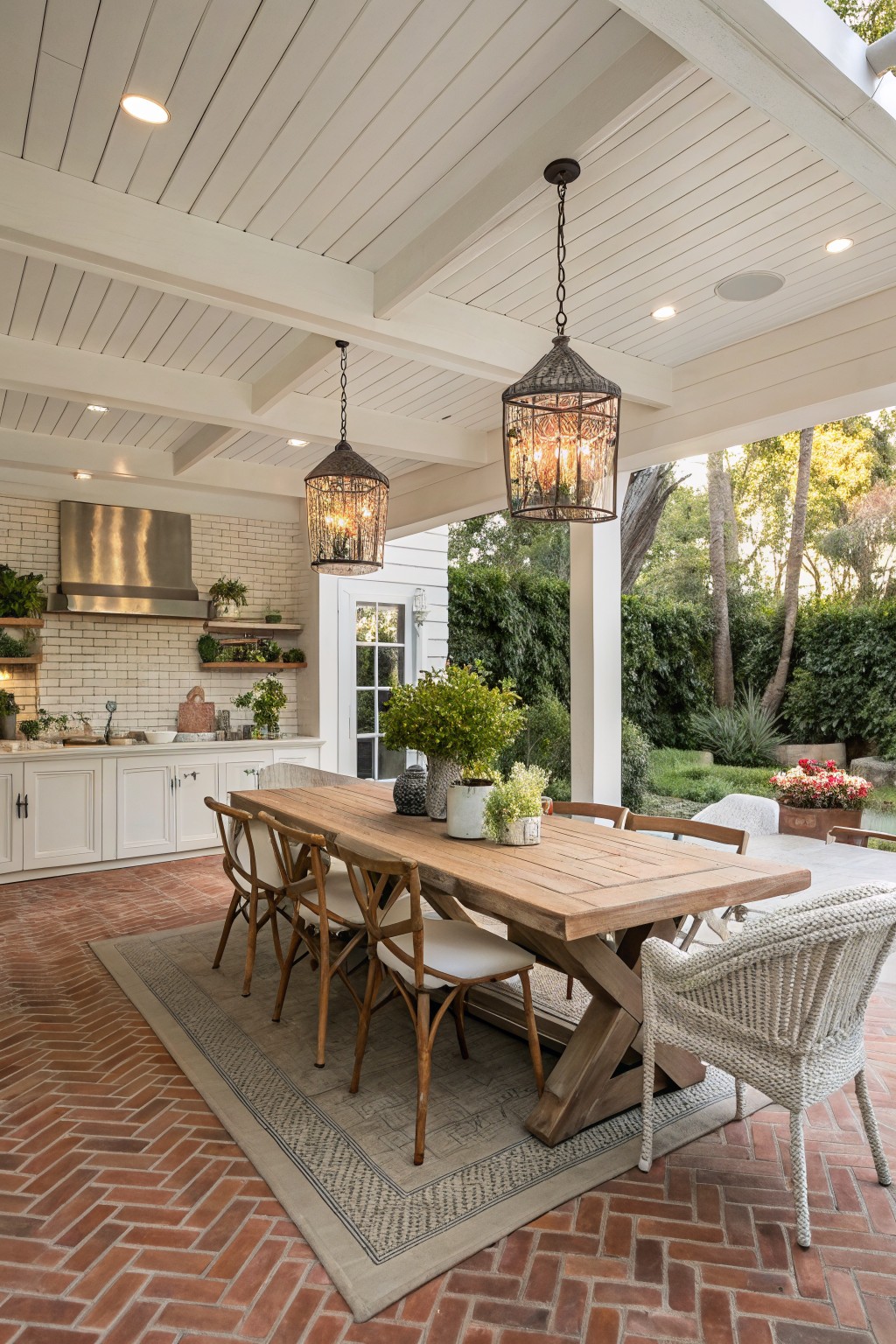
A covered patio works better for regular use when it has a real dining table as the main feature. This approach turns the space into an outdoor room where meals can happen comfortably in shade or light rain, without needing to move everything inside.
Place the table where it gets good light from hanging fixtures, and choose seating that mixes wood and woven pieces for longer stays. It suits homes that already have some outdoor structure and want to add everyday entertaining without major changes.
Add A Covered Roof Over Your Patio Seating
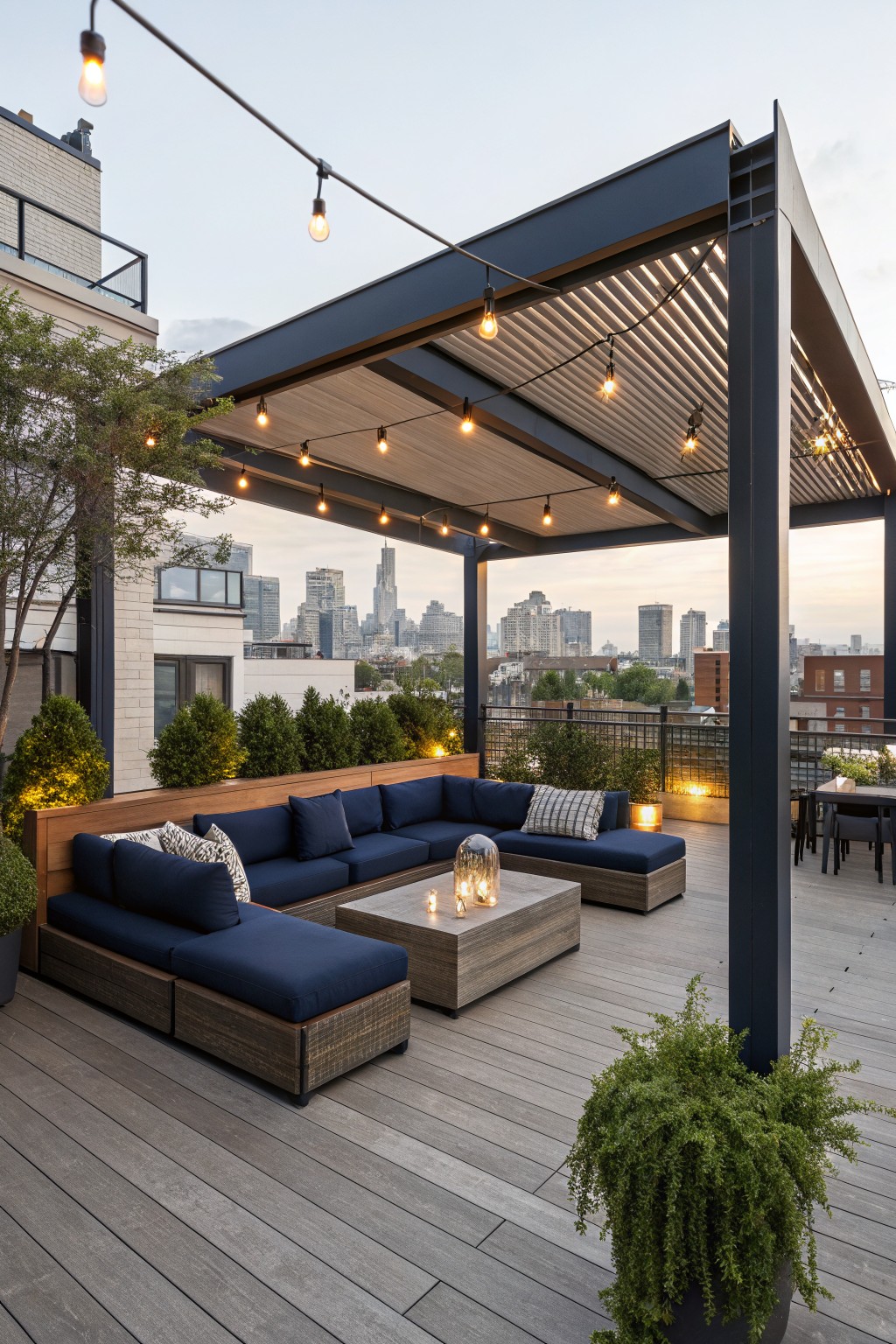
A covered roof over your patio seating makes the space usable in more kinds of weather. It blocks rain and strong sun while still keeping the open feel that makes outdoor rooms nice to sit in.
This setup works well on rooftops or decks where you want one clear area for relaxing or eating. Match the roof material to your house and keep the sides fairly open so the space does not feel closed in.
Built-In Seating for Covered Patios
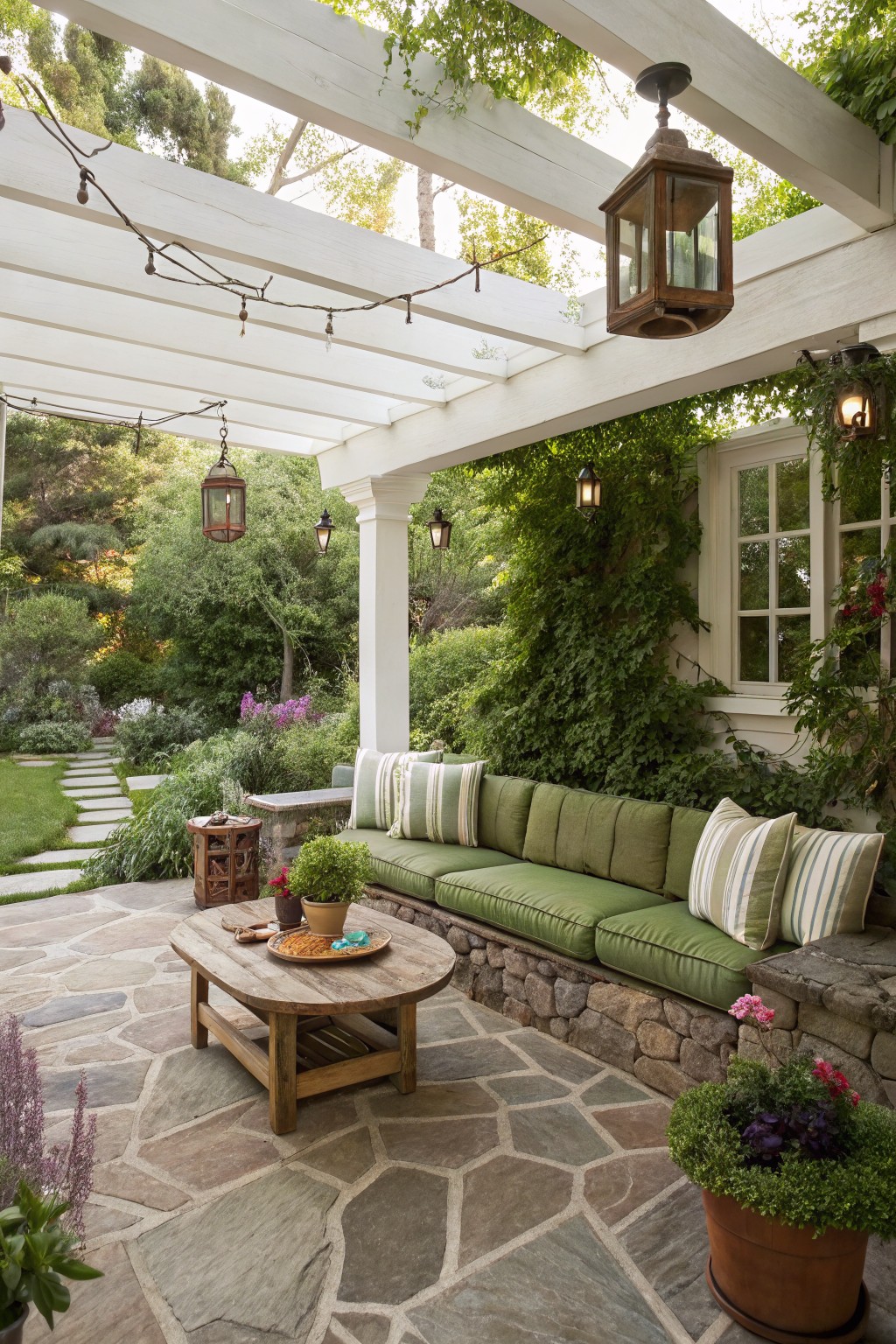
Built-in seating works well on a covered patio because it turns an open space into something that feels finished and usable all year. It gives you a solid place to sit without adding extra furniture that can get in the way or take up too much room.
This setup works best on patios that already have a low wall or raised edge. Add thick cushions in a durable fabric and a low table nearby, and the area stays comfortable even when the weather shifts.
Add An Outdoor Screen To Your Covered Patio

A covered patio gains a lot when you plan it around a large screen. The structure keeps the area usable in rain or strong sun, and it turns the space into a spot for evening gatherings without needing to move everything indoors.
This works well on homes with a flat backyard area near the house. Run power for the screen and lights early, and keep the seating simple so people can face the screen without crowding the walkway.
Add an Outdoor Kitchen to Your Covered Patio
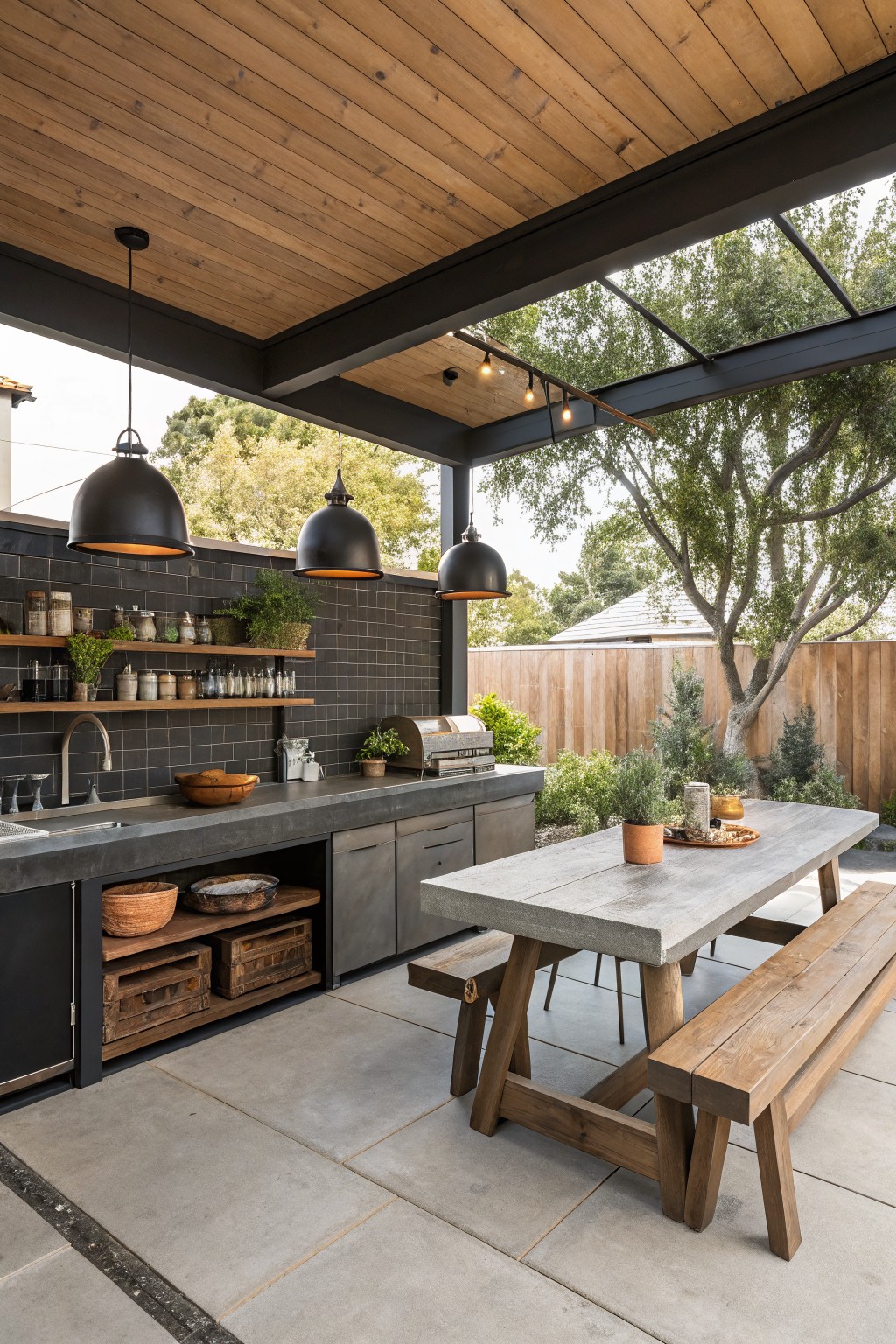
An outdoor kitchen under cover makes it easy to cook and serve food without running back inside every time the weather changes. The solid roof overhead keeps the space usable on hot days or in light rain, so the patio becomes more than just a place to sit.
This idea works well on patios that already have good structure and enough room for both cooking and seating. Choose durable counters and appliances made for outdoor conditions, and leave clear paths around the table so the space stays practical for groups.
Glass Roof Over an Outdoor Lounge

A glass roof works well on a patio because it blocks rain and harsh sun while still letting in natural light. This keeps the space usable through more of the year without making it feel closed in or dark.
It fits homes that already have some outdoor seating and want to add simple protection. Make sure the frame can handle the weight and check how the panels will affect heat on warmer days.
A Concrete Table for Covered Patio Dining

A concrete table gives you a surface that stays put through changing weather. It does not warp or need constant care, so the dining area can stay ready without much fuss.
This works especially well under a partial roof like a pergola, where the table can handle light rain but still gets airflow and shade. It suits homes that want a simple outdoor spot for meals without bringing everything inside every time the weather shifts.
Built-In Bench Seating for Covered Patios
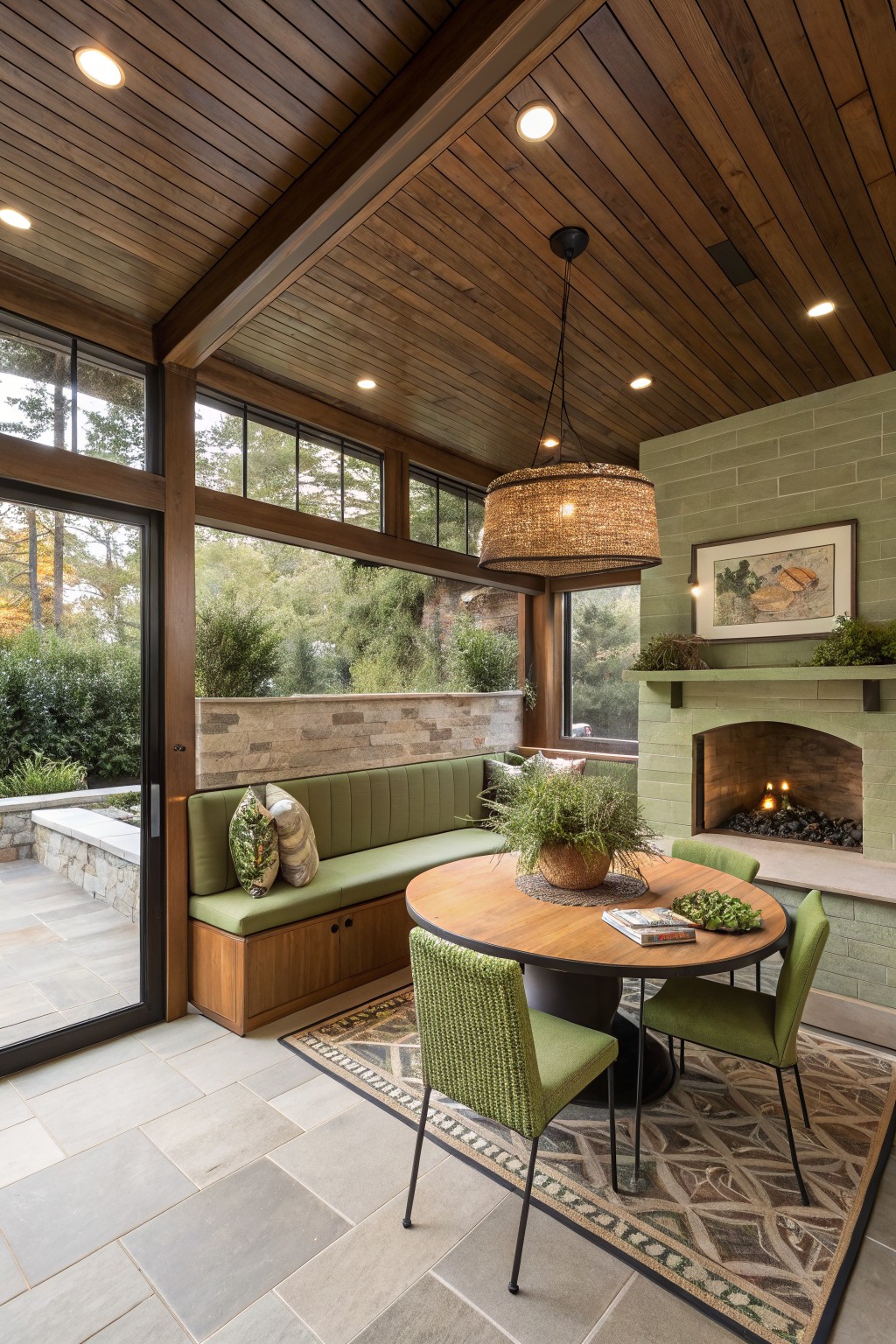
A built-in bench gives you steady seating without crowding the floor space. It works well along one wall of a covered patio, where it can hold several people at once and still leave room for a table in the middle.
This setup suits homes that want a fixed dining area that stays usable through different seasons. Just add cushions for comfort and keep the bench depth around 18 to 20 inches so it does not feel too deep for everyday meals.
Extend the Roof Overhang for More Usable Outdoor Space

A deep roof overhang can turn a patio into a space that works in different weather. The wood ceiling and built-in lights in this example keep the area shaded during the day and comfortable after dark without needing separate fixtures.
This approach suits homes where the patio sits right off the main living area. It works best when the overhang lines up with the house roofline so the whole thing feels like one structure. Just make sure the height still lets in some light and air.
Frequently Asked Questions
Q: How can I keep rain from blowing in under my patio cover on windy days? A: Add roll-down mesh screens along the sides that you pull out only when needed. They block most of the spray while letting air move through so the space does not feel stuffy.
Q: What works best for staying warm enough to use the patio once temperatures drop? A: Place a portable propane heater near the seating area and keep a basket of throws close by. The heater warms people quickly without heating the whole open space.
Q: How do I stop the floor from getting slippery after a storm? A: Choose textured outdoor tiles or sealed wood that grips better when wet. Give the surface a quick sweep with a push broom right after the rain stops.