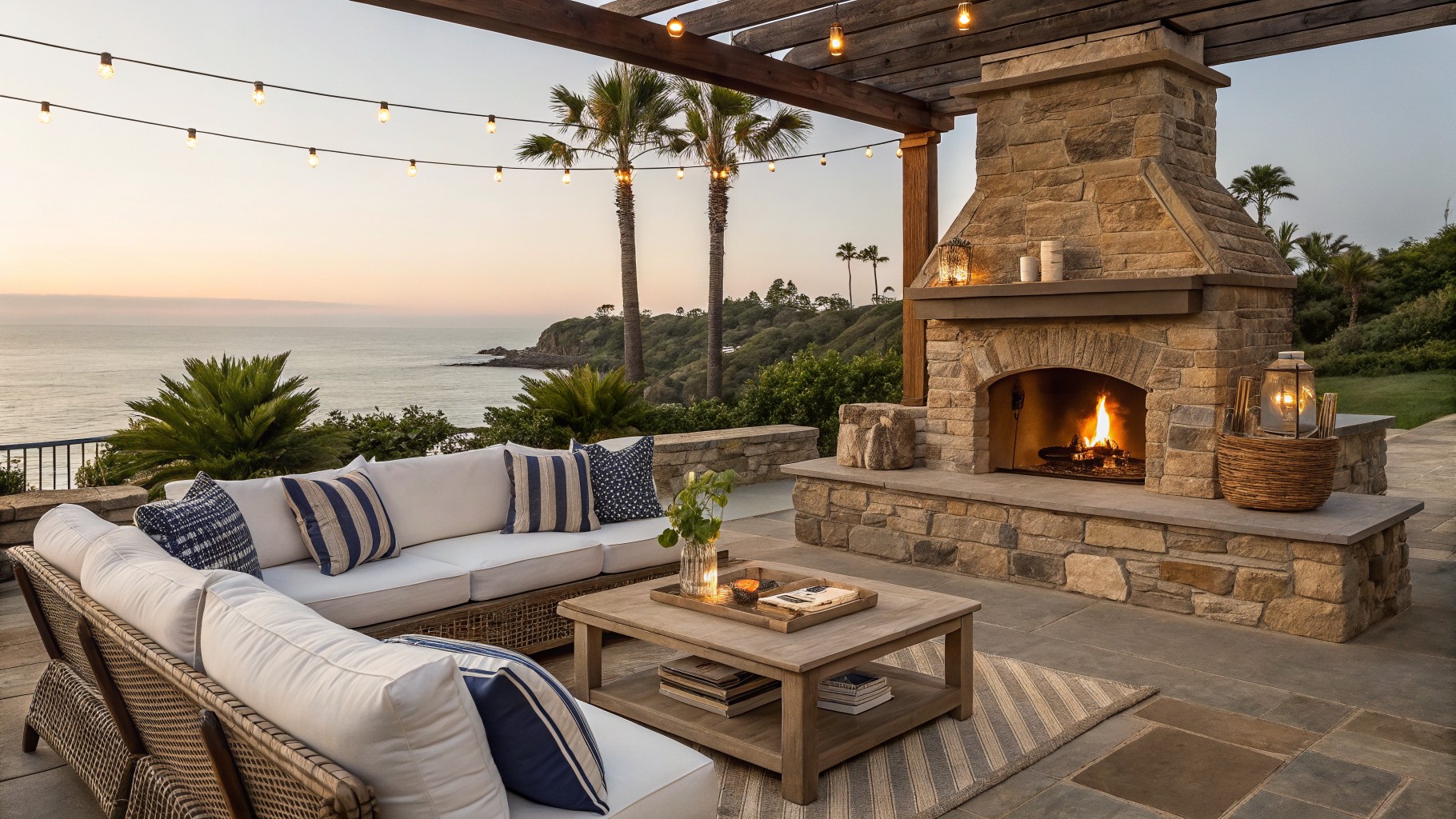
I have found that outdoor spaces often stay underused unless there is a clear spot that pulls people in once the evening cools down.
Many patios I have walked through look finished on the surface yet feel empty because nothing anchors the seating area in a practical way.
A fireplace changes that dynamic more than most people expect.
It helps to study how different designs sit with the existing layout before committing to materials or placement.
I usually test ideas against how the space gets used on ordinary weekends rather than special occasions.
Add a Stone Fireplace to Your Patio
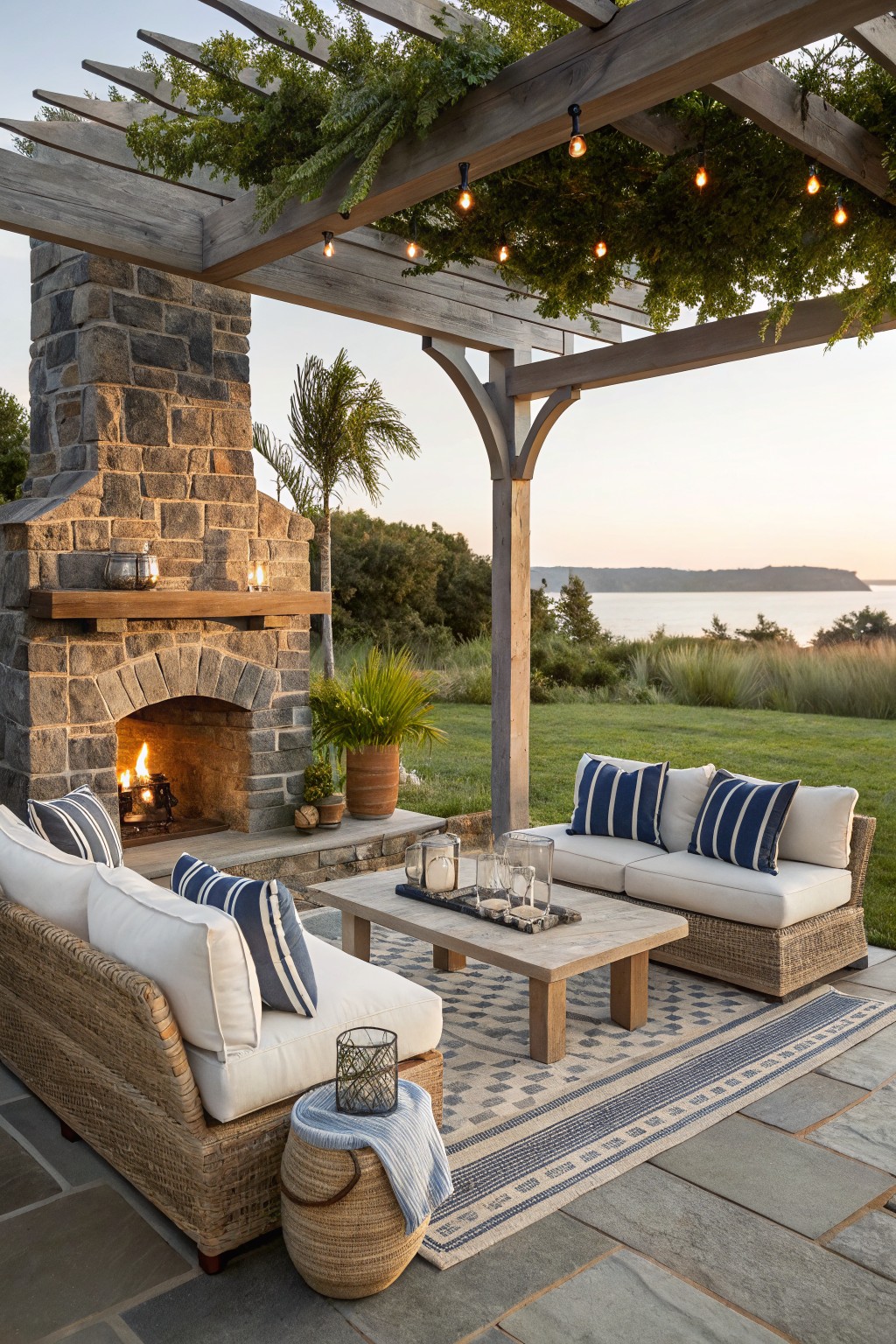
A stone fireplace gives an outdoor seating area real presence without needing walls or a roof. It creates a natural spot for people to gather, and the material holds up well to weather while blending with grass and trees nearby.
This approach works best on larger patios that already have a solid base and some shade structure. Keep the fireplace height in scale with the seating so the fire feels reachable rather than distant, and leave enough open space in front for a coffee table and foot traffic.
Wrap Seating Around an Outdoor Fire Pit

Placing the fire pit in the center and building the seating around it makes the whole patio feel more connected. The fire becomes the obvious spot to gather, and the layout keeps people close without needing extra tables or side arrangements.
This setup works best on a flat raised pad where you can fit an L-shaped sofa on three sides. It suits homes with a medium backyard that already has some privacy from fences or plantings. Just make sure the path around the pit stays wide enough for easy movement.
Anchor Patio Dining with a Fireplace

An outdoor fireplace works especially well when it sits close to the dining area. It gives off steady heat and creates a natural spot for people to gather without needing extra heaters or blankets on cooler evenings.
This approach suits homes with enough patio space to keep the table a few feet away from the firebox. Keep the scale in mind so the fireplace does not overpower the seating or block views from the house.
Stone Fireplace on a Covered Deck
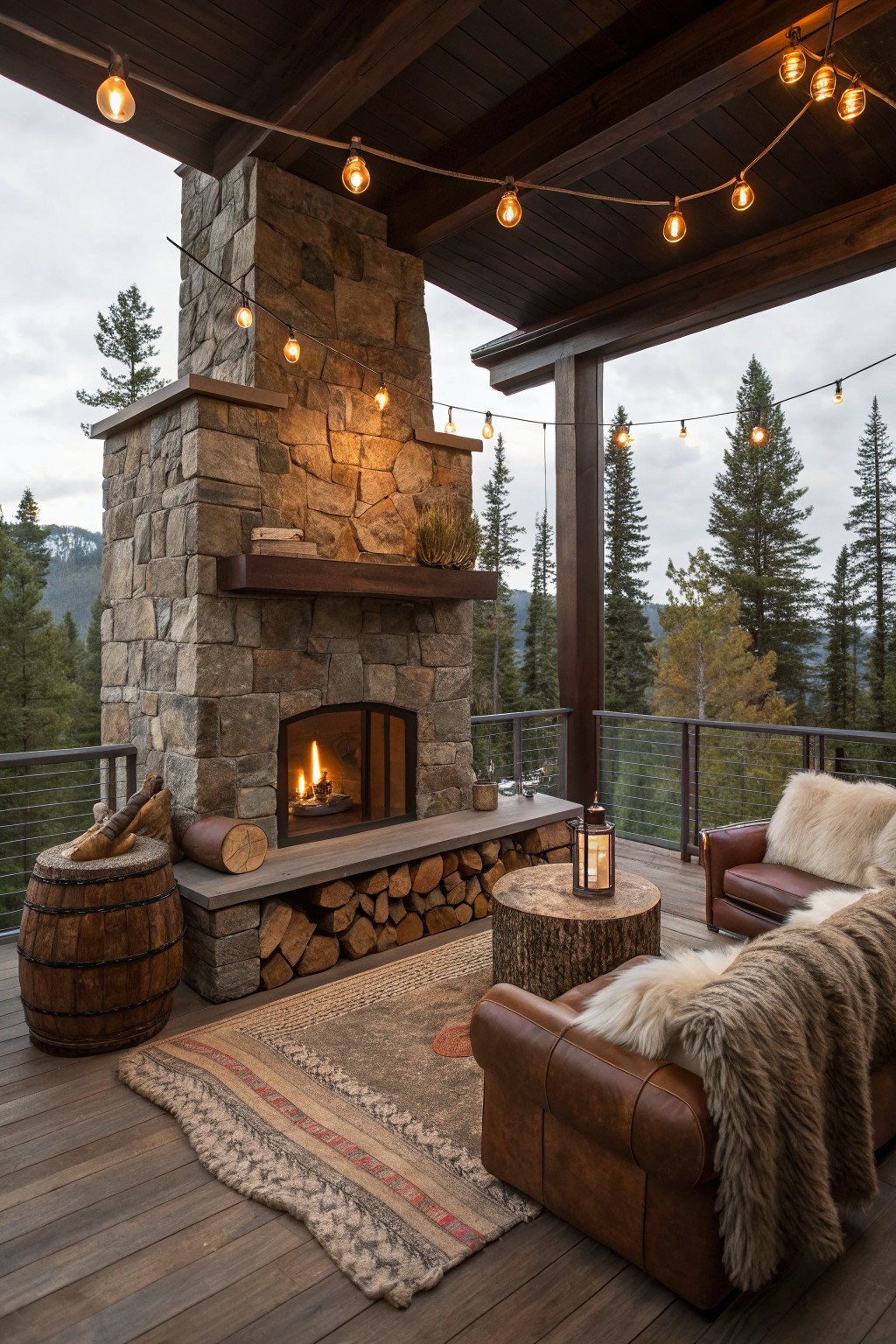
A stone fireplace built right into a deck gives the space a solid center that makes it feel more like an extension of the house. It works especially well when the deck is covered, since the roof protects the seating area and lets you use the fireplace on cooler evenings without worrying about rain.
This setup suits homes that already have a deck or porch with a view. Keep the surrounding furniture simple so the fireplace stays the main feature, and leave open space in front for chairs or a small table.
Building Fireplaces Into Outdoor Walls
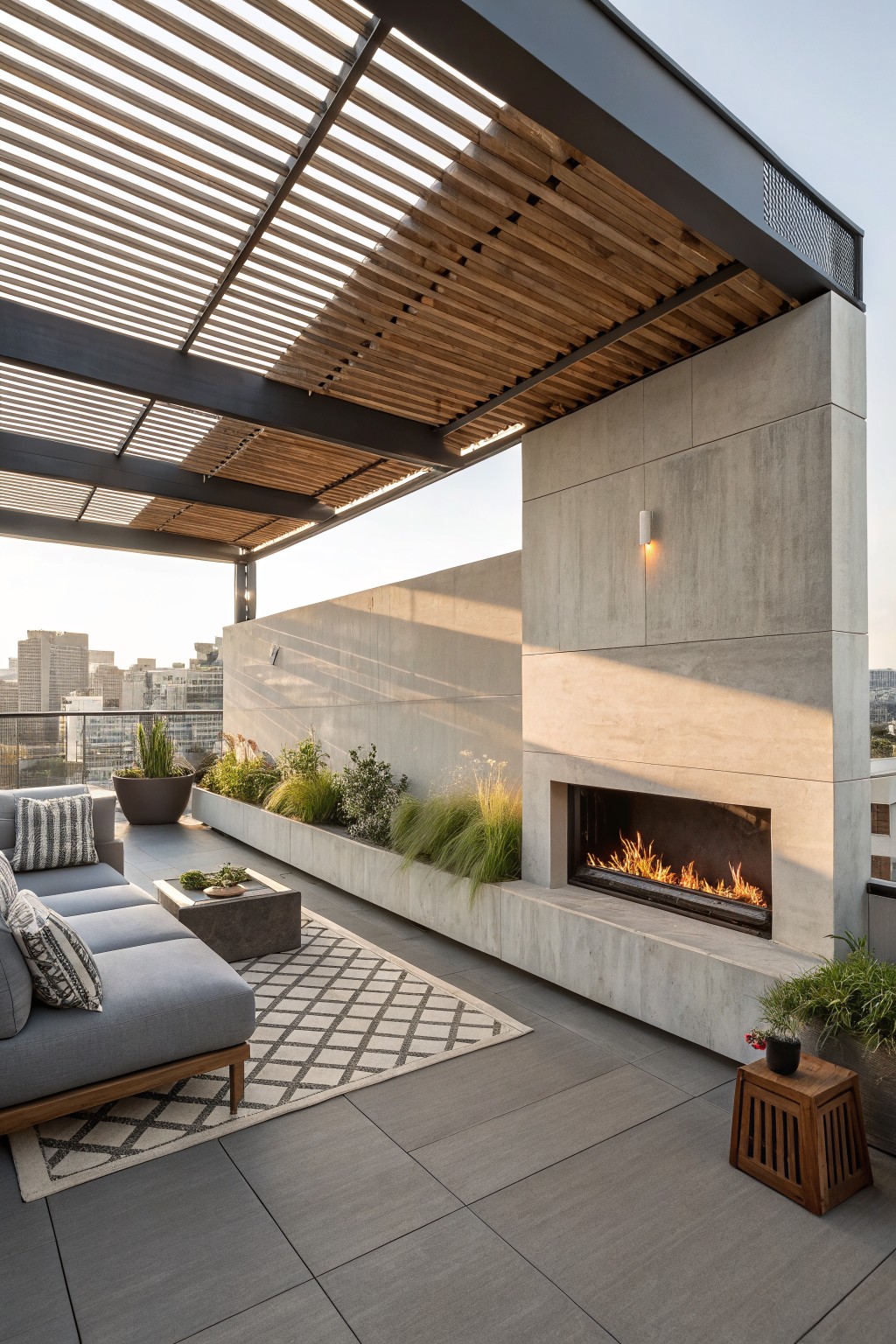
A fireplace set right into the wall gives an outdoor space a more finished and lasting feel. It turns the wall into the main feature instead of just a boundary, and it leaves the floor area open for seating and movement.
This setup works best on rooftops, terraces, and patios where you already have solid walls or can build one. Check local codes for clearance and venting, and pair it with simple overhead screening so the space stays usable in different seasons.
Anchor Your Patio With a Stone Fireplace

A big stone fireplace gives an outdoor space a clear center and makes it feel like an actual room. It draws people in, provides heat on cooler evenings, and works especially well when the seating is arranged to face it directly.
This approach suits covered patios or pergola structures where you want year-round use without the space feeling empty. Keep the fireplace scaled to the seating area so it does not overwhelm the furniture, and choose a material like natural stone that blends with the surrounding hardscape.
Tall Fireplaces That Organize An Outdoor Patio
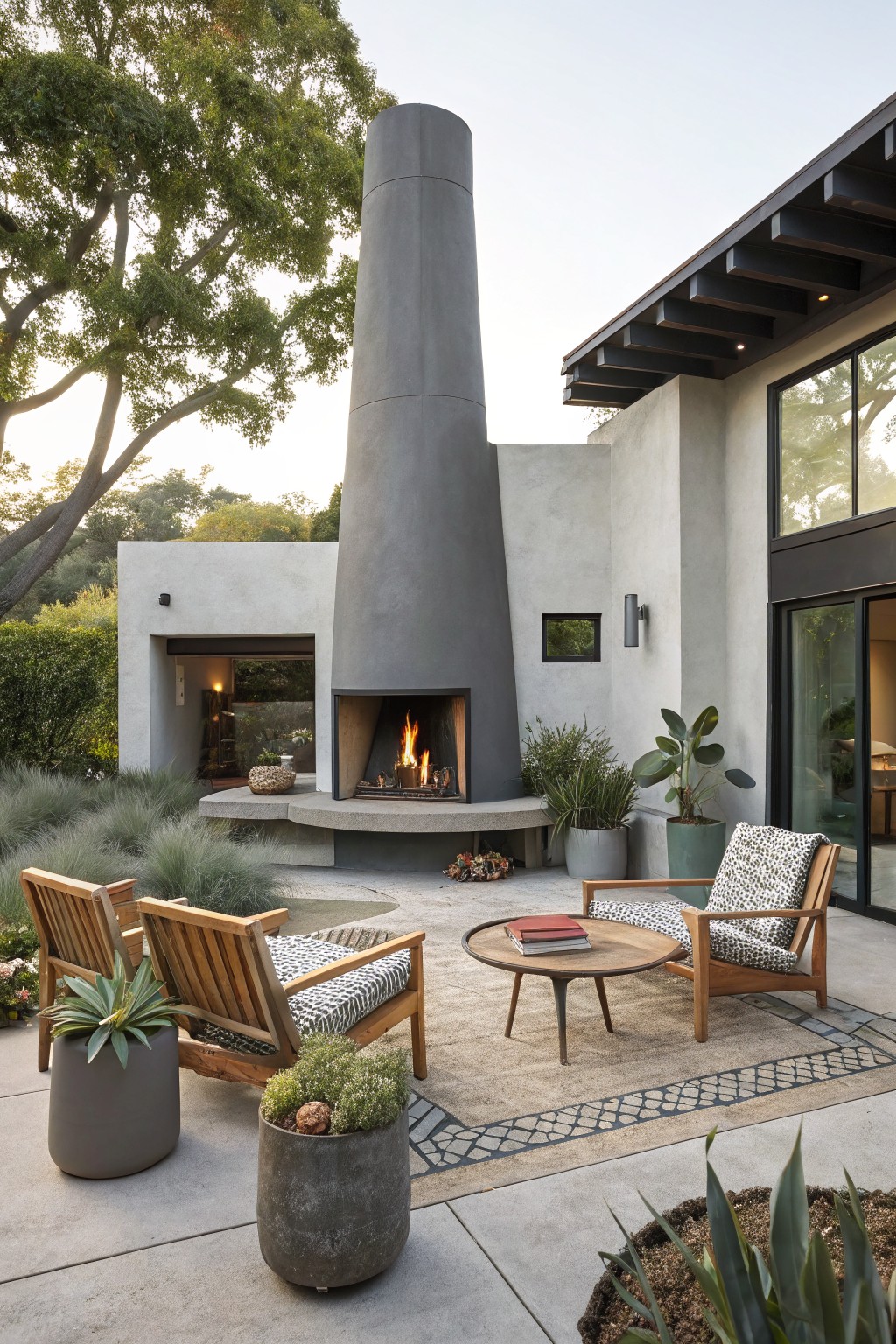
A tall fireplace gives an outdoor space a clear center without any extra walls or dividers. The height draws the eye upward and makes the seating area feel more settled and purposeful.
This approach works best on open patios where you can arrange chairs in a loose half-circle around the base. Keep plantings and side tables low so the fireplace stays the main vertical element and the whole setup stays easy to walk around.
Brick Fireplaces on the Patio

A brick fireplace gives a patio a solid center that feels permanent. It works because the material holds up outside and pairs naturally with paved surfaces, so the whole space reads as one complete area rather than a collection of separate pieces.
This setup suits larger patios attached to traditional or transitional homes. Build the chimney tall enough to clear nearby roofs, keep the mantel low and wide, and arrange seating so it faces the opening without crowding the brick base.
Concrete Fireplaces Built into Outdoor Walls
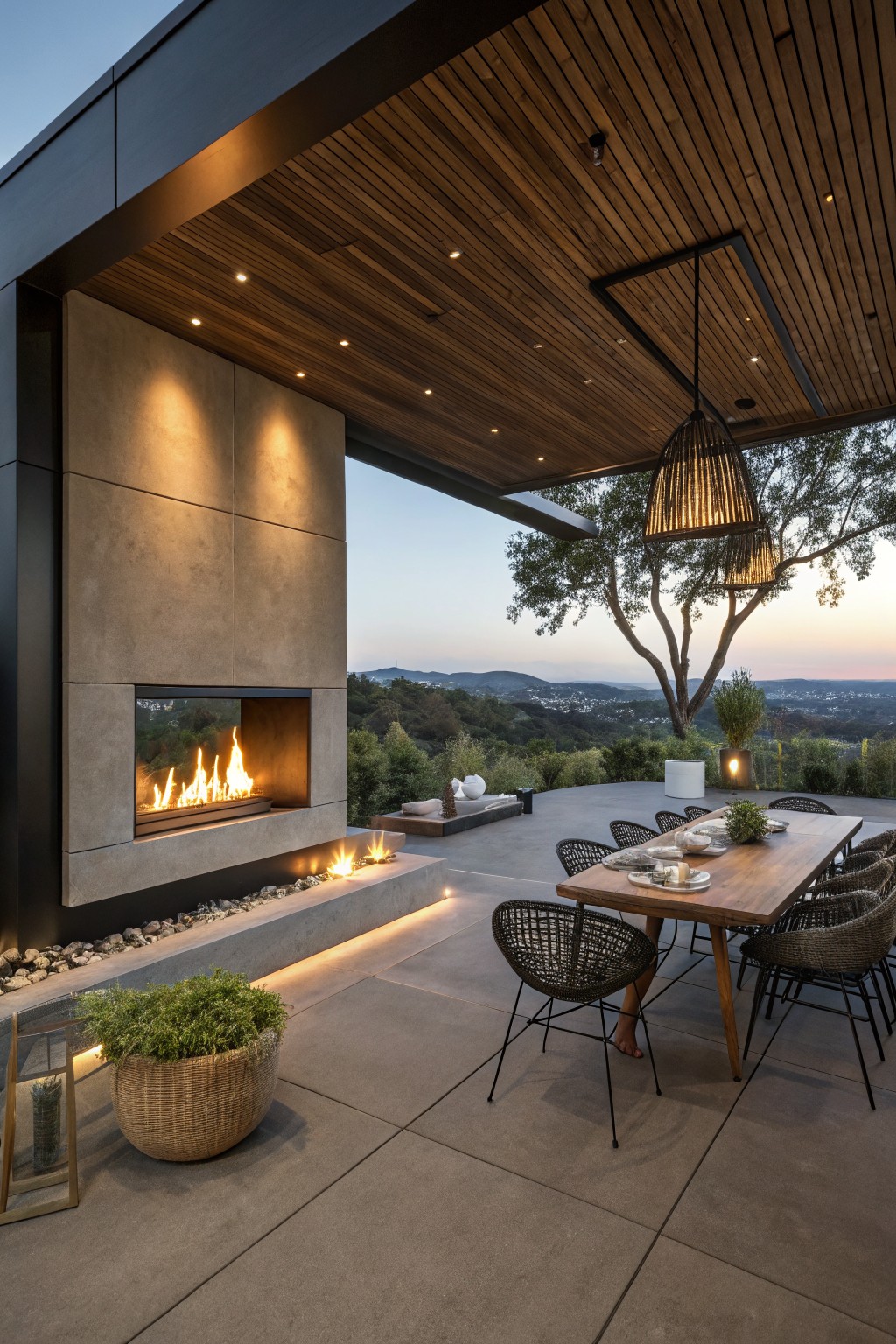
A concrete wall with a fireplace set into it gives an outdoor space a solid anchor. The material holds up well outside and creates a strong visual base that ties the seating and dining areas together without needing lots of extra furniture.
This setup works best on patios that get regular use in cooler months. It suits homes with a modern or simple style, though you need enough room so the wall does not feel too heavy for the space.
Add a Fireplace Into the Patio Wall
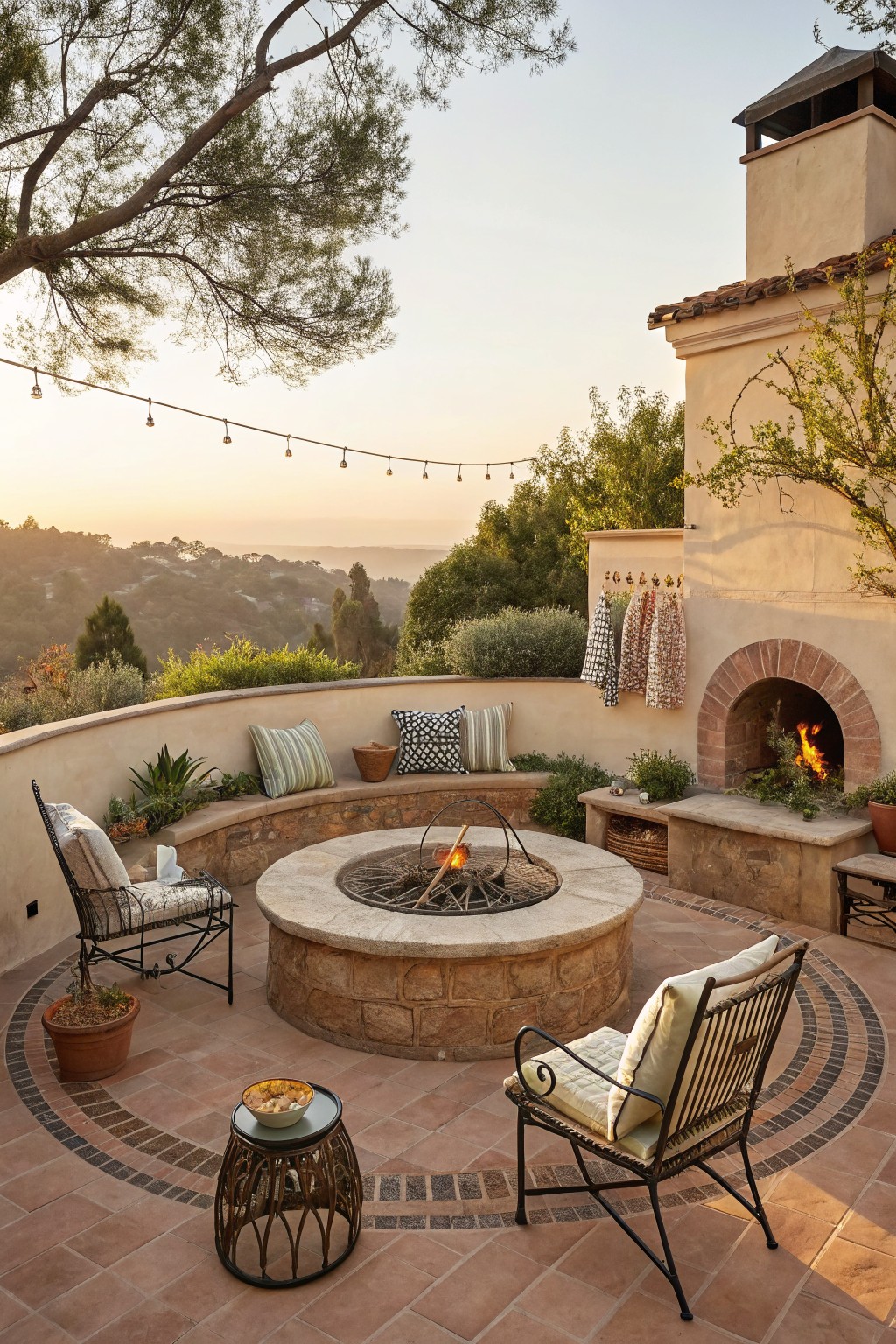
Many patios feel unfinished without a solid focal point. Building a fireplace right into the wall gives the space a clear center and helps the seating area feel more intentional.
This approach works best on larger outdoor spaces where you need something to balance the open layout. Keep the fireplace proportions in line with your seating so it does not overwhelm the rest of the patio.
Place the Fireplace as the Focal Point of the Patio
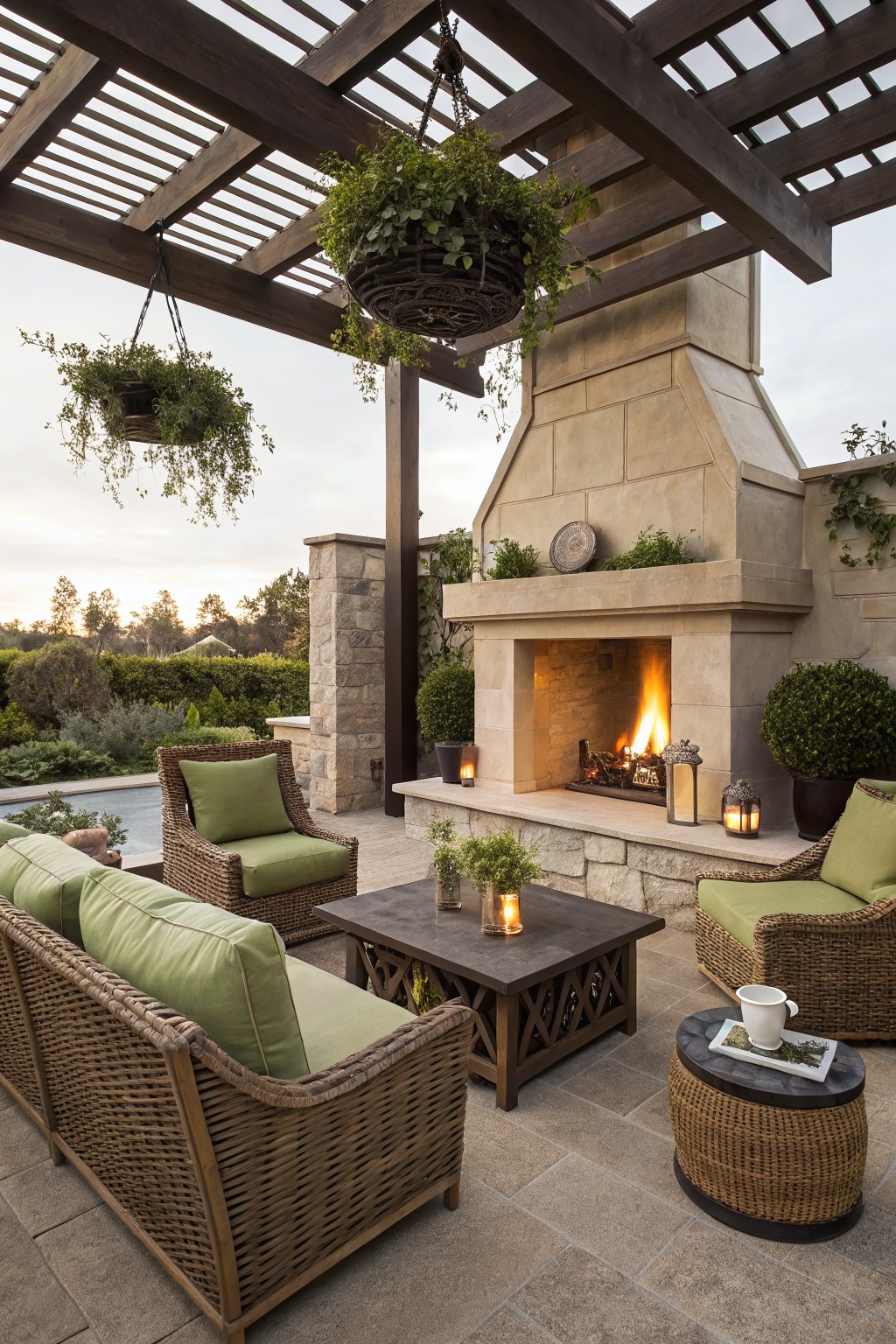
Many people build an outdoor fireplace first and then arrange the seating around it. This creates a natural gathering spot that feels useful even when the evenings turn cooler. The covered structure overhead helps keep the area comfortable without closing it in completely.
This setup works best on a patio or deck where you can leave room for chairs on three sides and still move around easily. It suits homes that already have a solid outdoor surface and some protection from wind or rain. Keep the scale of the fireplace in mind so it does not overwhelm a smaller space.
Build The Fireplace Into An Outdoor Kitchen Wall

Putting the fireplace right into the same stone structure as the grill and counters keeps the whole area feeling connected. It turns the fireplace into more than just a heat source. It becomes the center of a space people actually use for cooking and sitting.
This works best on a patio where you want one main zone instead of separate spots for fire and food. Keep the seating close but not in the direct path of the grill so the area stays comfortable when both are in use.
Porch Fireplaces Turn The Space Into A Real Living Area

A fireplace built into the porch gives the whole area a clear center. It turns what might otherwise feel like just a deck or walkway into a place where people actually want to sit for hours, even when the air cools down. The stone construction helps it blend with the house while still standing out as the main feature.
This setup works best on homes that already have a wide covered porch or deck. Keep the seating simple and close to the fire so the space feels connected rather than spread out. Just watch that the mantel stays low enough not to block views when people are seated.
Anchor A Patio With A Substantial Fireplace

An outdoor fireplace works best when it is big enough to serve as the main focal point rather than just a decorative touch. In this setup the tall stucco structure draws the seating into a natural half-circle, which makes the whole area feel more like a room than an open deck.
This approach suits homes with mild winters or shoulder seasons where people want to stay outside longer. Keep the surrounding furniture low and simple so the firebox stays the main feature, and make sure there is enough paved space in front for chairs to pull up close without crowding the hearth.
Anchor The Patio With A Built-In Outdoor Fireplace

A built-in fireplace made of stone gives an outdoor space a clear center point. It turns an open deck into something that feels more like a room, especially on sites where wind or views can make the area feel a bit empty.
This approach works best on larger patios or terraces that can handle the scale. Set the main seating to face it, keep the material simple, and add a smaller fire pit if the layout allows. It suits homes that already have strong natural surroundings and just need one solid element to tie the furniture together.
Outdoor Fireplaces With Built-In Cooking Areas
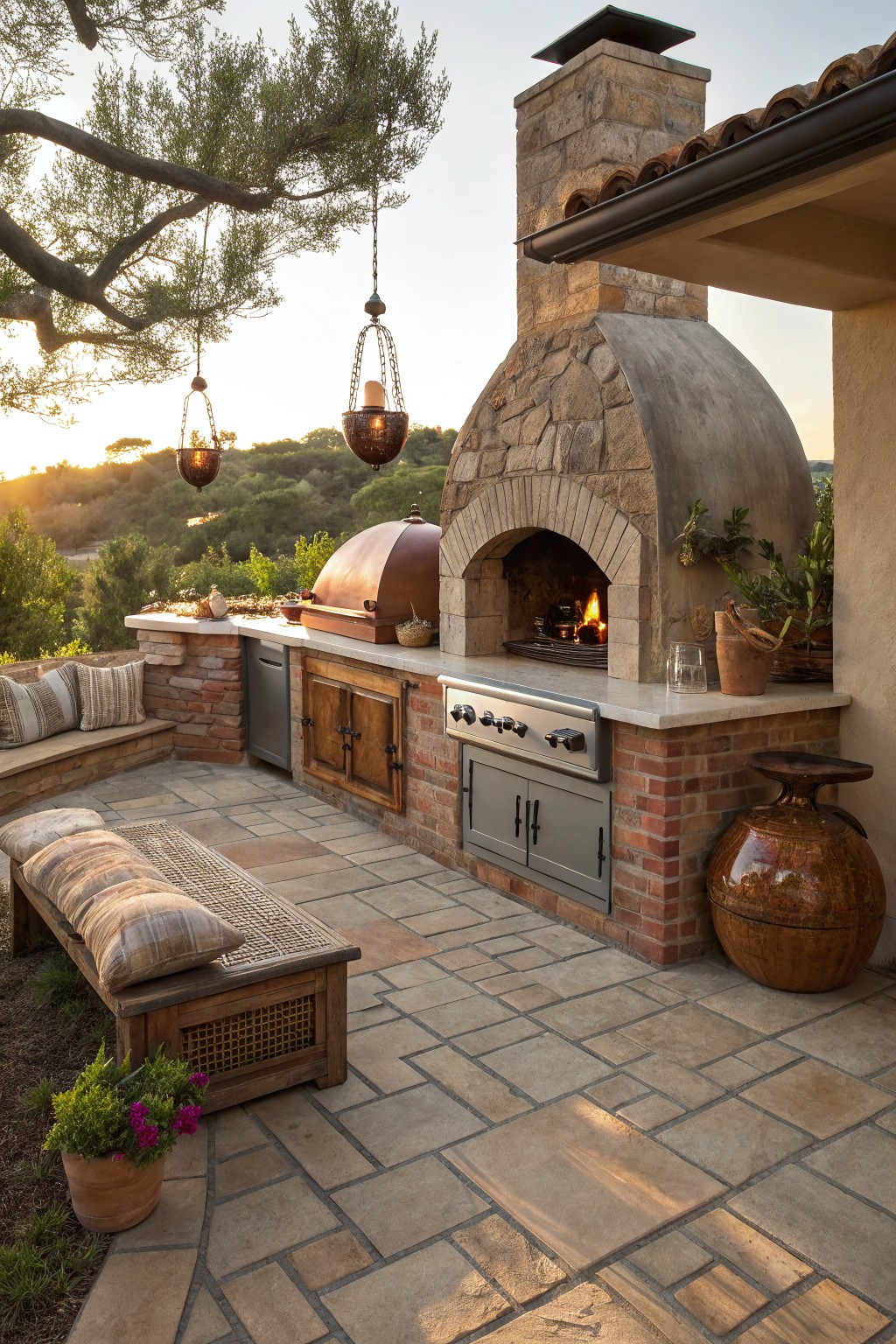
Many people like the idea of a fireplace that also handles cooking. A tall stone structure can include an oven dome and a grill station at counter height, so the fire becomes part of meal prep instead of sitting off to the side.
This setup works best on larger patios where you already have room for seating and storage. Just make sure the chimney draws well and the cooking surface sits at a comfortable height for whoever uses it most.
Stone Fireplace For The Patio

A tall stone fireplace gives an outdoor space a clear center without much extra effort. It creates height and a natural gathering spot that works day or night.
This setup suits covered patios or pergola areas where you want a solid focal point. Keep the hearth wide enough for seating or setting things down and make sure the chimney clears the roofline for good airflow.
Anchor Your Outdoor Living Area With A Stone Fireplace

A stone fireplace works well as the main feature in an outdoor space because it gives the area a clear center. People tend to gather around it naturally, and it turns an open patio into something that feels more like a room. The material also holds up outside without much extra care.
This setup fits homes with a decent sized patio or deck that gets used in cooler months. Keep the seating close so the heat reaches people easily, and make sure the fireplace is built to match the scale of the space rather than floating off to one side. Avoid placing it too near the pool edge if you want the seating zone to feel separate and contained.
Build Planting Into The Fireplace Structure

An outdoor fireplace already draws people in, but adding plants right into the structure takes it further. The stone becomes less stark and the whole area feels more connected to the surrounding greenery. It works especially well when the fireplace is tall, giving you vertical space to work with without crowding the floor.
This approach suits rooftops and terraces where you want life and color without adding lots of separate pots. Keep the planting simple so it does not compete with the fire itself, and choose hardy varieties that can handle the heat and wind. It is an easy way to make the fireplace feel like part of the garden rather than just a built element.
Terracing Slopes With Stone Walls
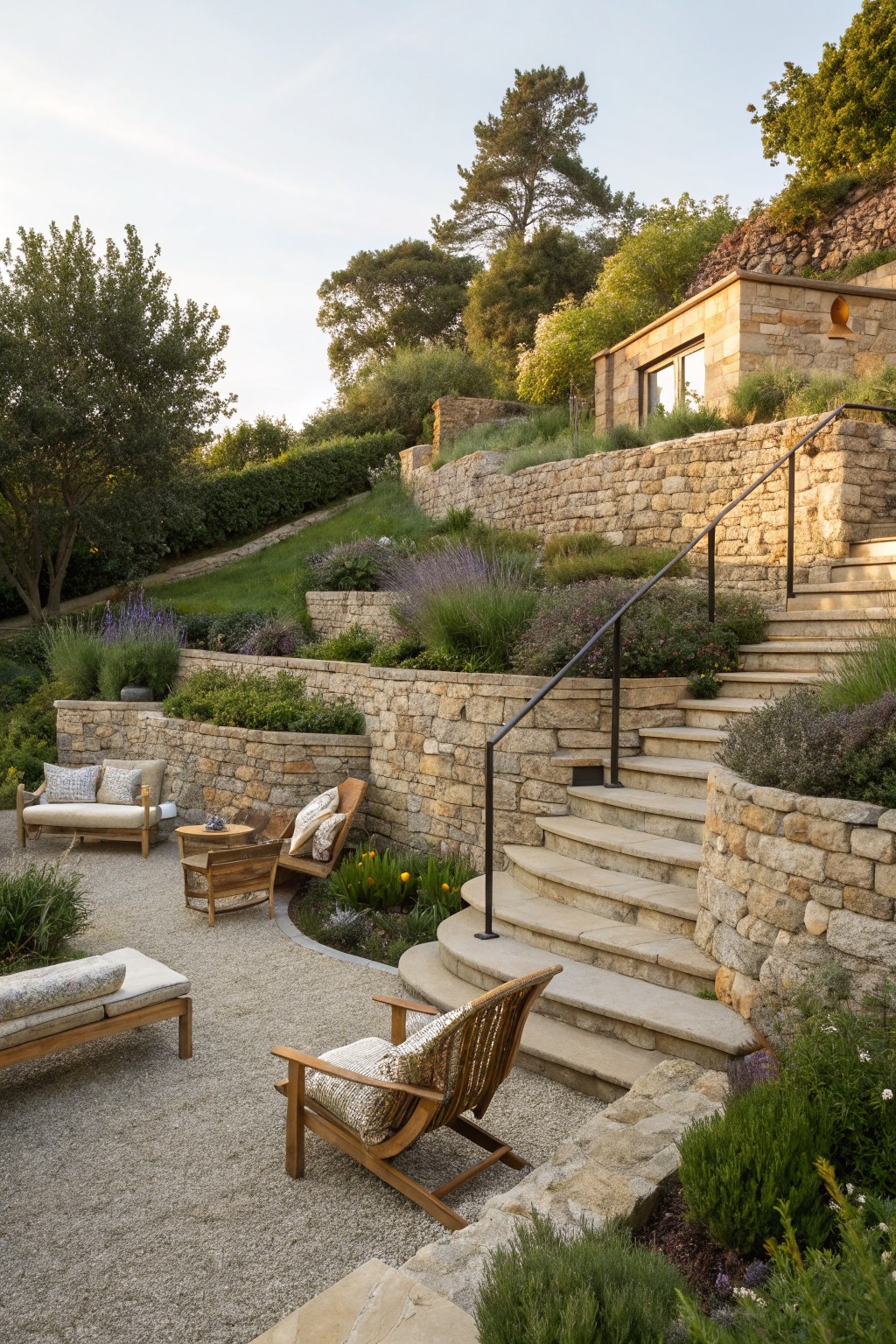
Sloped yards often go unused because flat space is limited. Stone retaining walls solve this by carving out level terraces that hold seating areas, small plantings, and paths without fighting the natural grade.
This works best on moderate hills where you want usable outdoor rooms rather than one big open slope. Keep the walls low enough to feel connected to the garden and choose a material that matches the house so the whole setup looks like it belongs there.
Concrete Bench Seating Built into the Fireplace

A long concrete bench that runs right along the base of the fireplace wall gives the whole area a settled, permanent feel. It anchors the seating without adding separate chairs or sofas that might shift or weather poorly over time.
This setup works best on a fairly flat patio where you want low-maintenance seating that stays comfortable through the seasons. It suits homes that already lean toward simple materials and clean lines, though you will want to check the bench height so it feels easy to sit on for more than a few minutes.
Stone Fireplaces For Covered Patios

A fireplace built from stone gives an outdoor space a solid center that feels permanent. It turns a basic patio into something that works through cooler evenings without needing to move everything inside.
Place it along one wall under a roof or pergola so smoke has a clear path out. This setup suits homes with existing garden areas and room for seating around the fire. Keep the surrounding floor simple so the stone stays the main feature.
Frequently Asked Questions
Q: How much space should I leave around the fireplace for seating? A: Keep at least three feet clear on all sides so people can pull up chairs without getting too warm. This also leaves room for side tables and easy movement. Measure your patio first to see what fits comfortably.
Q: Will rain ruin my outdoor fireplace? A: Cover the opening with a tarp when storms roll in. This keeps moisture out of the firebox and chimney.
Q: Can I tuck a fireplace into a corner of my yard? A: Corners work well because they anchor the space without taking over the whole area. Just angle the opening toward your main seating so the heat reaches everyone. Make sure the chimney has clear space above for smoke to escape.