I have found that green paint in a kitchen often shifts more than expected once the cabinets and countertops are in place.
The undertones can turn muddy or too cool depending on the light that comes through the windows at different times of day.
I always test a few samples on the actual wall before committing because what looks calm in the store rarely stays that way at home.
Some shades hold their freshness better when they sit next to warm wood or white trim while others pull too gray once the furniture is added.
Try the samples in morning light first.
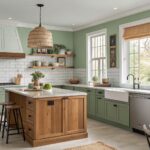
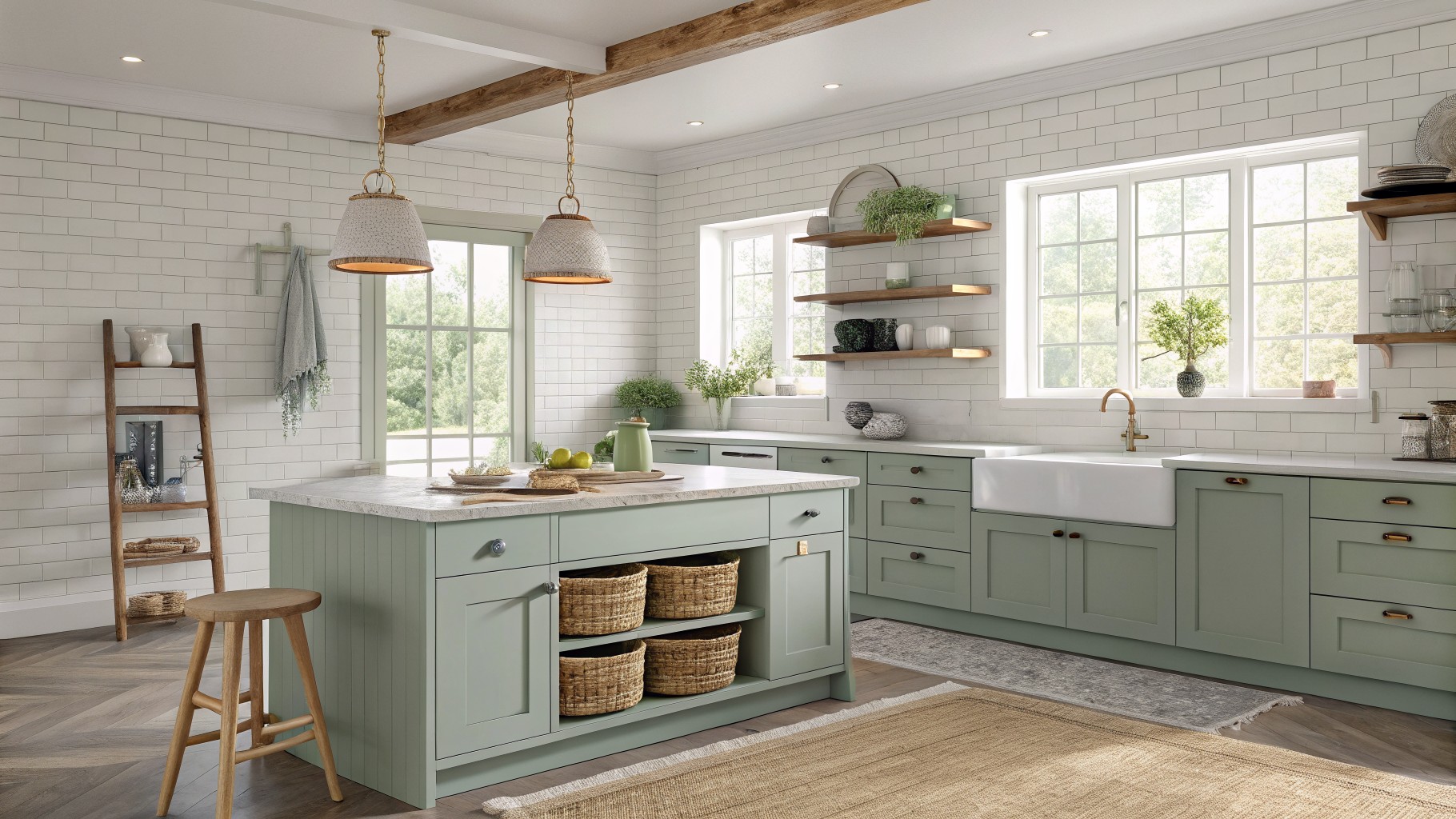
Soft Sage Kitchen Island
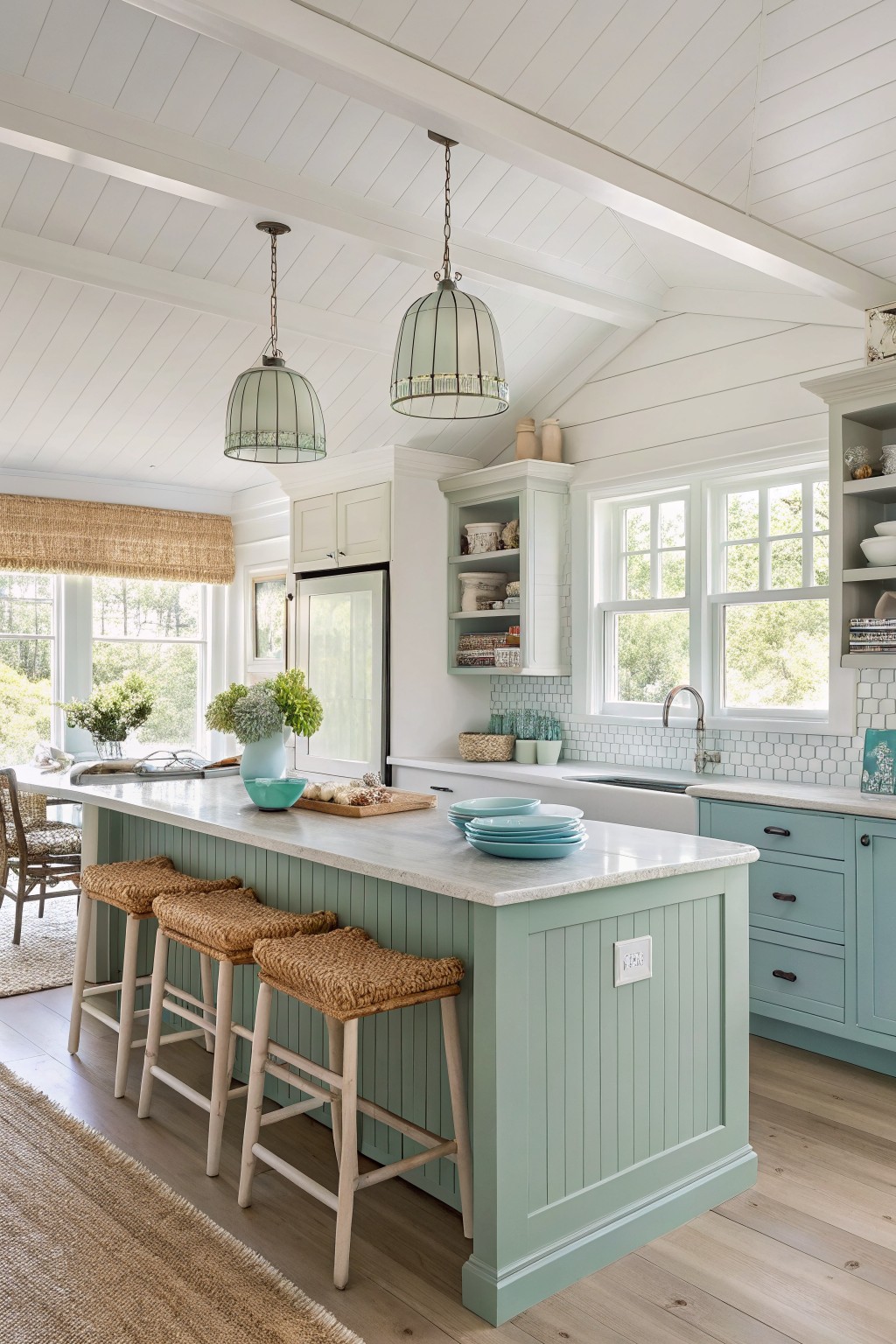
This soft sage green brings a gentle color to the kitchen without feeling bold or busy. It sits right in that middle ground between blue and green, giving the space a fresh look that still feels calm and livable. The color reads very close to Sherwin Williams Jadeite, Benjamin Moore Saybrook Sage, and Behr Aloe.
It has a light, slightly cool undertone that keeps the room bright even with all the white around it. The shade works especially well on an island because it stays interesting next to wood floors and white countertops without competing with them.
Warm Olive Green Cabinets
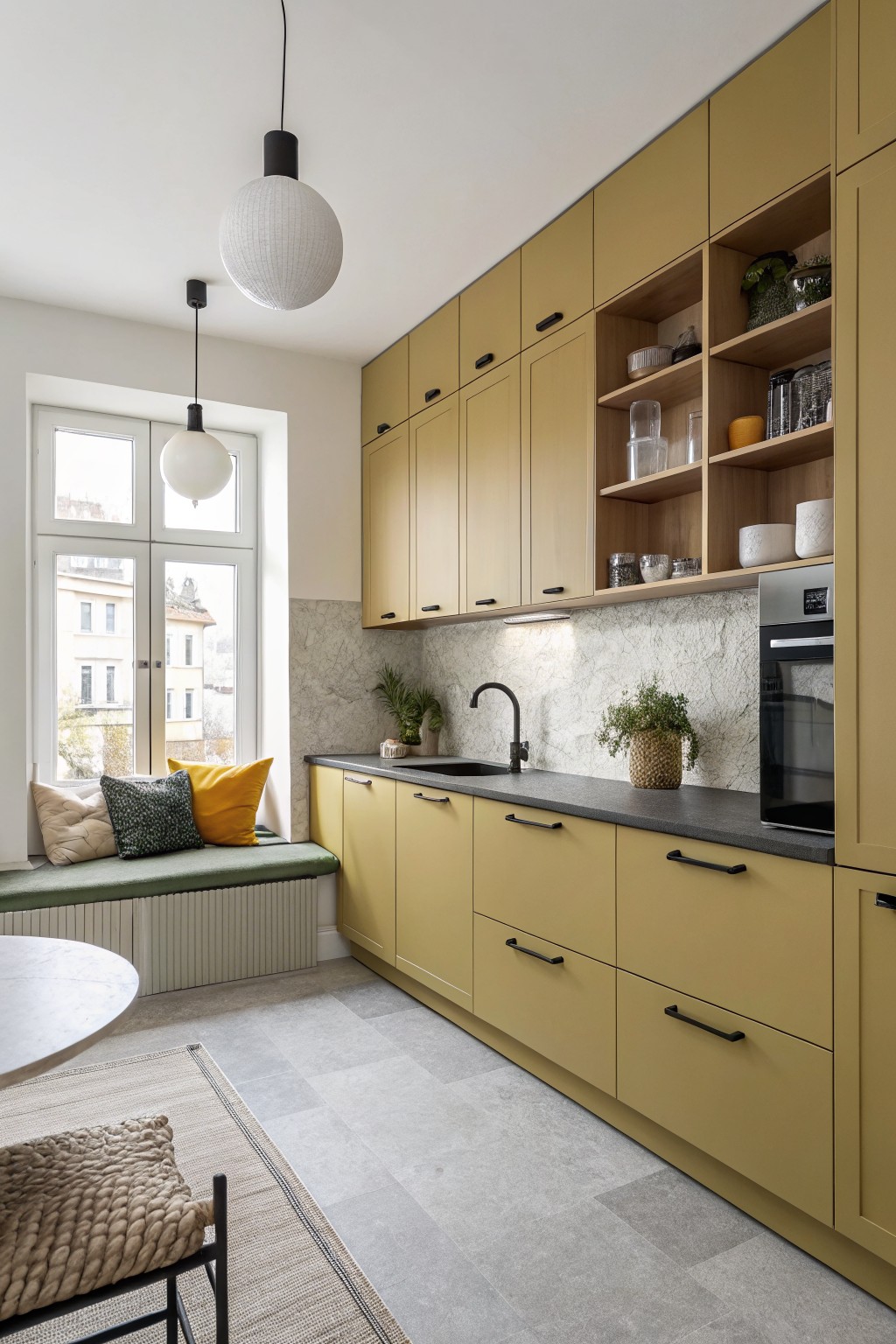
A warm olive green gives kitchen cabinets a soft, natural look that feels fresh without standing out too much. This color sits between yellow and green, so it reads earthy and calm rather than bold.
It has a gentle golden undertone that works with wood tones and dark counters. The shade suits rooms with steady daylight and pairs easily with black hardware or simple stone surfaces.
Soft Green Cabinets

This kitchen shows a soft sage green on the cabinets. It is a muted, slightly grayed green that feels fresh and calm rather than bright or trendy. Colors in this range keep a kitchen looking light without turning it into a statement. Sherwin Williams Clary Sage sits close, as do Benjamin Moore Saybrook Sage and Behr Green Tea.
The color has a touch of blue in its undertone, which helps it blend with wood and stone. It works best in rooms with decent natural light and pairs easily with warm wood tones or simple tile. Too much of it in a dark kitchen can start to feel flat, so it is often best used on upper cabinets or a single run of cabinetry.
Muted Sage Green Cabinets
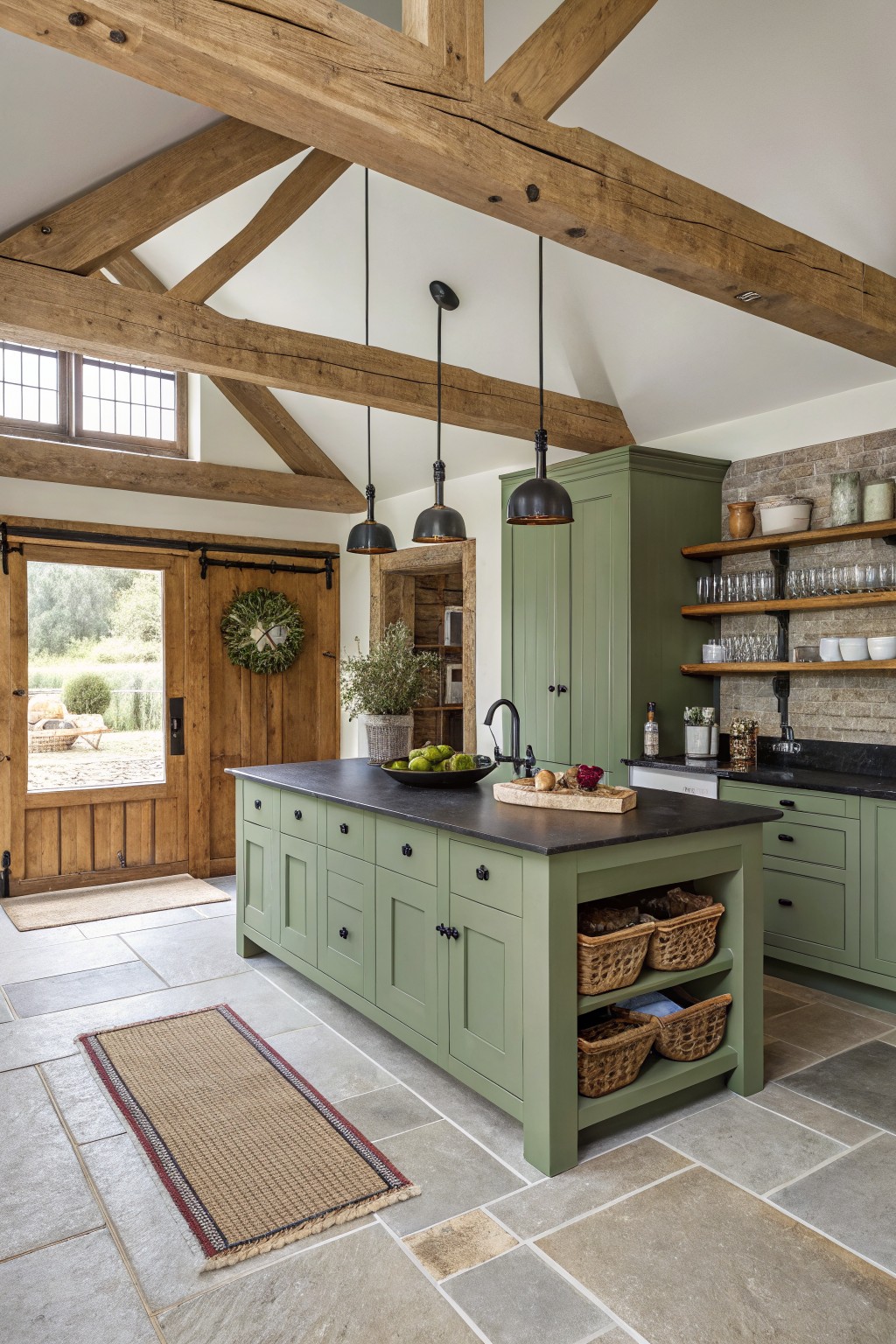
This kitchen uses a soft sage green on the cabinets and island. It is a muted green that sits comfortably between gray and green, giving the room some color without making it feel busy or overwhelming.
The shade has a cool undertone that reads well next to warm wood beams and stone floors. It works best in kitchens with plenty of natural light, and pairs easily with black hardware, dark counters, or simple wood tones.
Lime Green Kitchen Cabinets

This lime green on the lower cabinets sits in the chartreuse family. It carries a soft yellow undertone that keeps the color fresh but still grounded enough for daily use.
It pairs easily with the darker green on the uppers and the wood tones nearby. Try it with gray stone counters or simple black hardware so the green stays the main focus without feeling too bold.
Deep Green Kitchen Cabinets
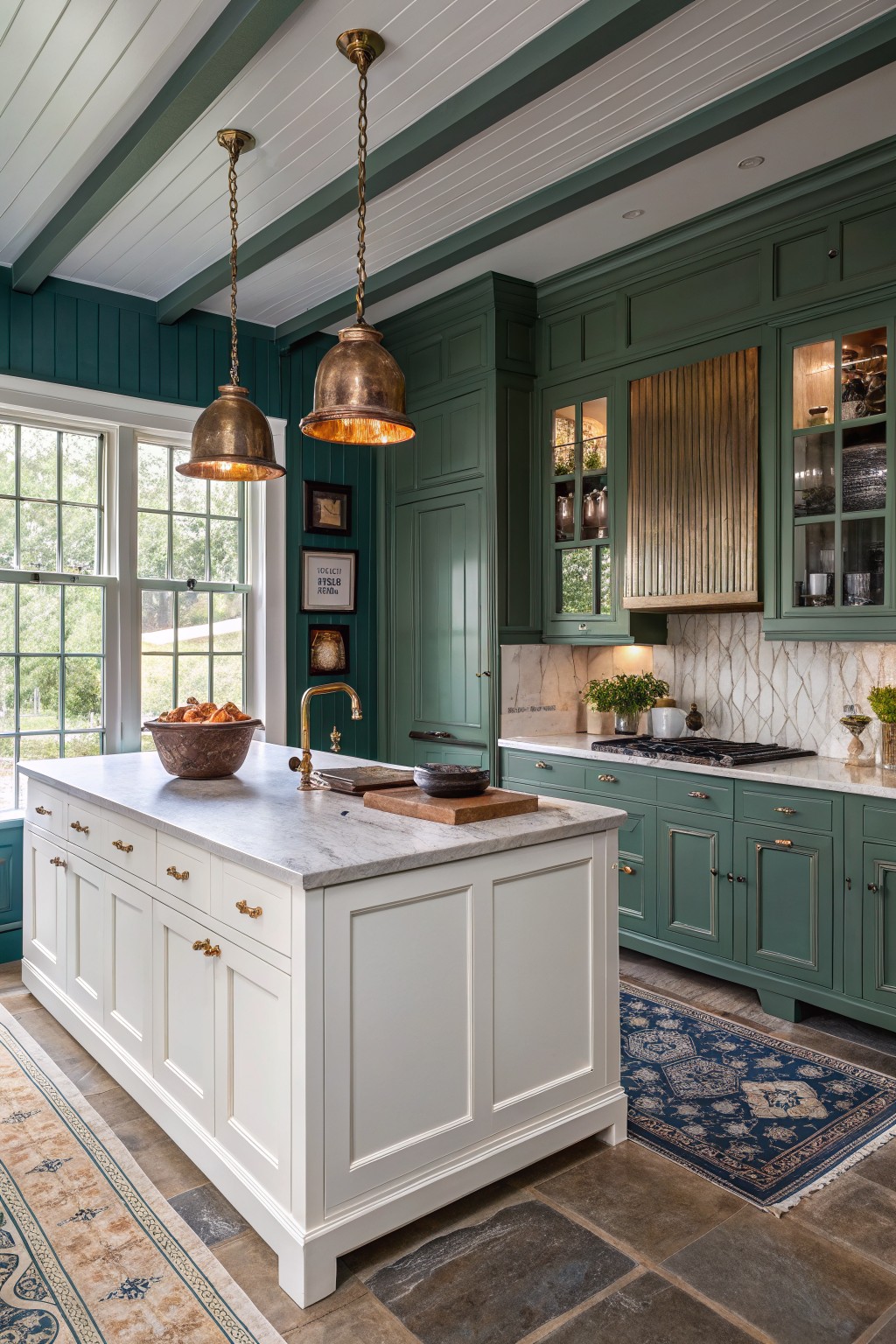
This deep green on the cabinets is a rich forest shade that feels solid and grounded. It reads closest to Benjamin Moore Hunter Green, Sherwin Williams Forestwood, or Farrow & Ball Hunter. The color adds fresh interest without turning the whole room dark.
It works best with white trim and lighter countertops, which keep the space from feeling heavy. The green has a slight blue undertone that plays well with stone and wood, though it can look cooler in low light so test it on a sample board first.
Soft teal green cabinets
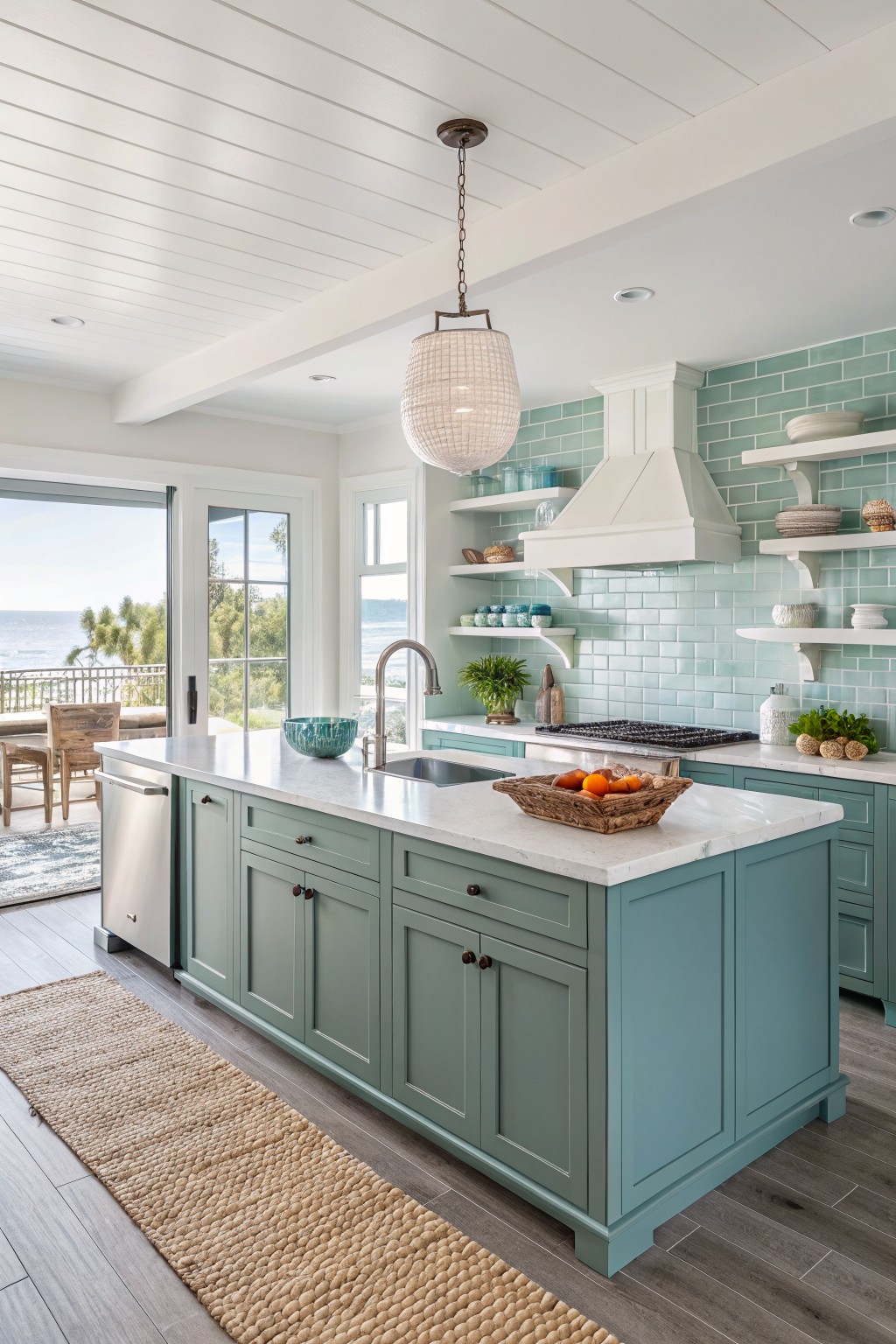
This soft teal green on the cabinets gives the kitchen a fresh look that still feels calm. It sits right in the middle of blue and green, so it reads as a gentle color rather than something bold or bright.
The shade has a light gray undertone that keeps it from feeling too sharp. It works best with white counters and warm wood floors, though it can look a little cool if there are no warmer accents nearby. Closest matches include Sherwin Williams Rainwashed, Benjamin Moore Wythe Blue, Behr Coastal Mist, and Farrow & Ball Dix Blue.
Soft Sage Green Cabinets

A muted sage green gives kitchen cabinets a calm, fresh look without feeling too bold. It sits somewhere between gray and green, which keeps the color easy to live with and helps it blend into the room rather than stand out.
This shade has a slight gray undertone that pairs well with stone counters and warm wood. It works best in kitchens that get decent natural light, since it can lean cooler in dimmer spaces. Similar colors include Benjamin Moore Saybrook Sage, Sherwin Williams Evergreen Fog, and Farrow & Ball Pigeon.
Soft Sage Green Cabinets With Open Shelving
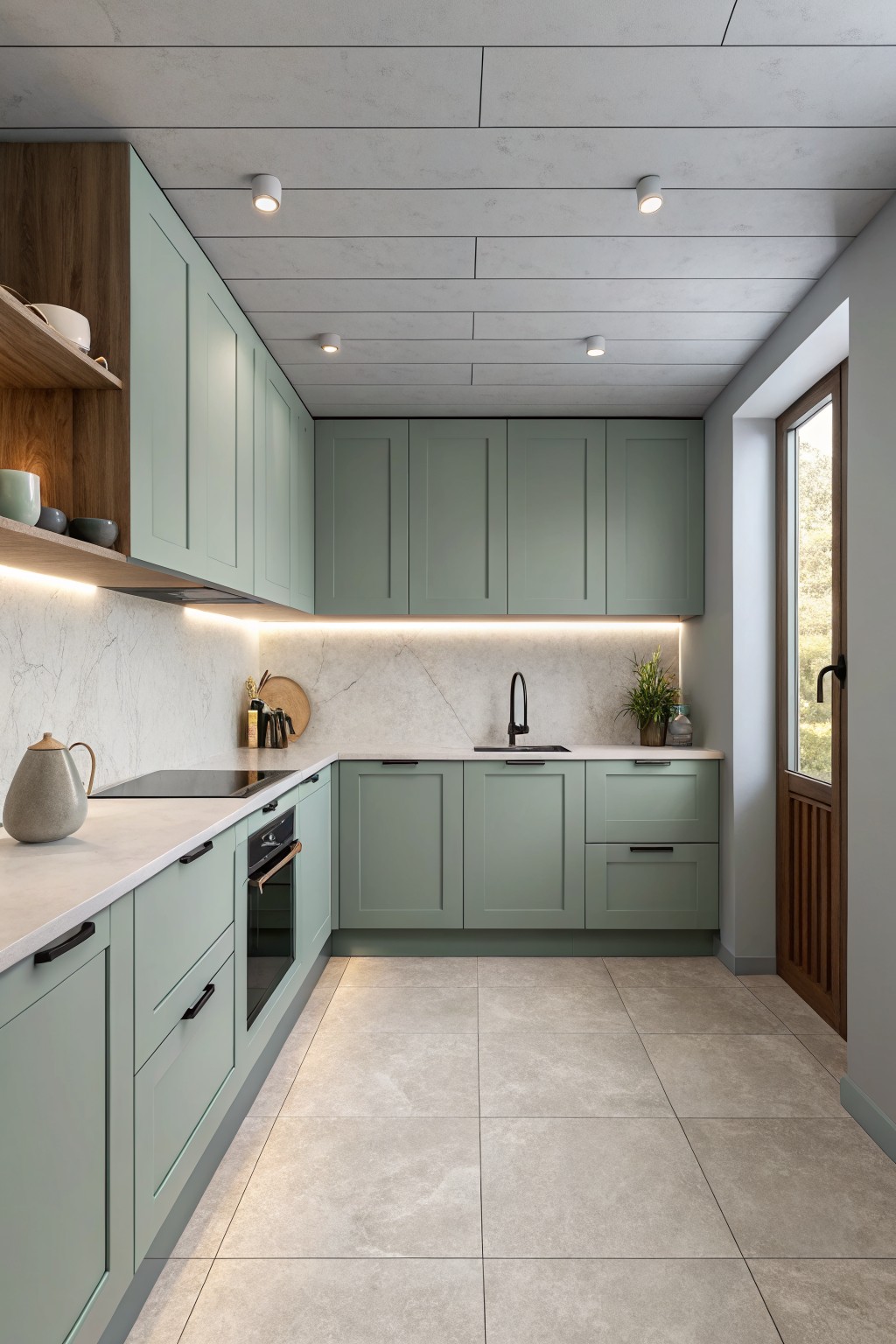
This soft sage green gives kitchen cabinets a fresh but quiet look without taking over the room. It sits in that middle ground between gray and green, with a cool undertone that feels calm next to wood tones and white stone. Colors like this work well when you want something a little different from plain white or beige but still easy to live with every day.
It pairs nicely with natural wood shelves and simple black hardware. In brighter light the color can lean a touch more green, while in softer light it reads almost gray. Try it in kitchens that already have wood accents or light stone, and test a sample on the cabinet door first since the finish changes how the shade settles.
Sage Green Cabinets

A soft sage green on kitchen cabinets adds color without making the space feel busy. This muted shade sits between gray and green and looks closest to Sherwin Williams Clary Sage, Benjamin Moore Saybrook Sage, or Farrow & Ball Mizzle.
It has a quiet gray undertone that helps it blend with wood counters and stone tile. The color works well in kitchens that get steady daylight and pairs easily with both warm wood and simple black hardware.
Deep Green Cabinets
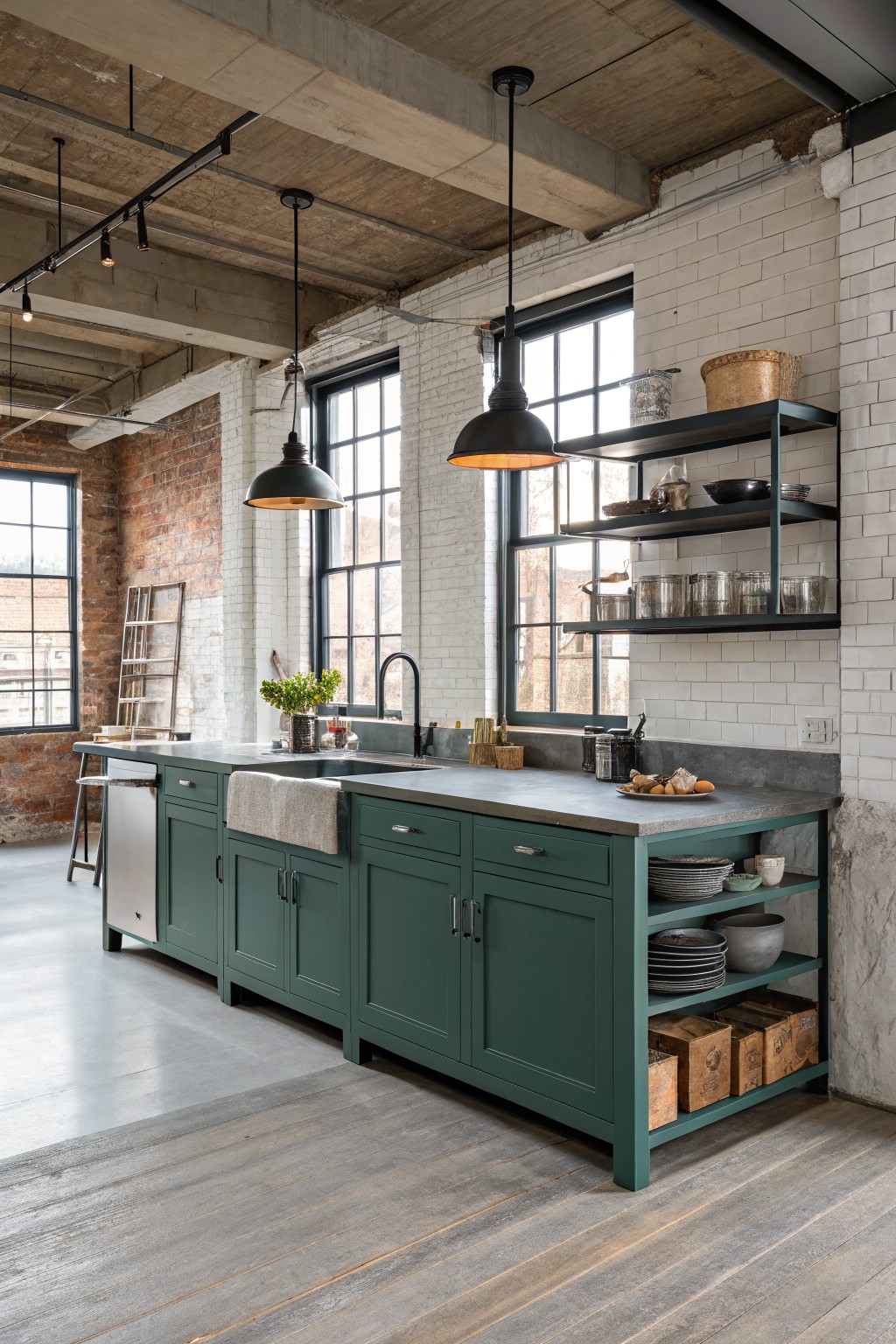
A deep green like the one on these cabinets brings a solid, grounded feel to a kitchen without making the room feel heavy. It sits somewhere between forest and teal, and it holds up well against the mix of wood floors, concrete counters, and brick walls that often show up in older homes. Colors in this range tend to read a bit more interesting than plain gray or beige while still staying calm enough for daily use.
It works best in rooms with decent natural light and pairs easily with warm wood tones or simple black hardware. Watch the undertone though, since some versions lean more blue and can shift cooler under certain lights. Good matches in this family include Benjamin Moore Salamander, Farrow & Ball Studio Green, Sherwin Williams Forestwood, and Behr Botanical.
Soft Sage Green Cabinets With Marble Counters
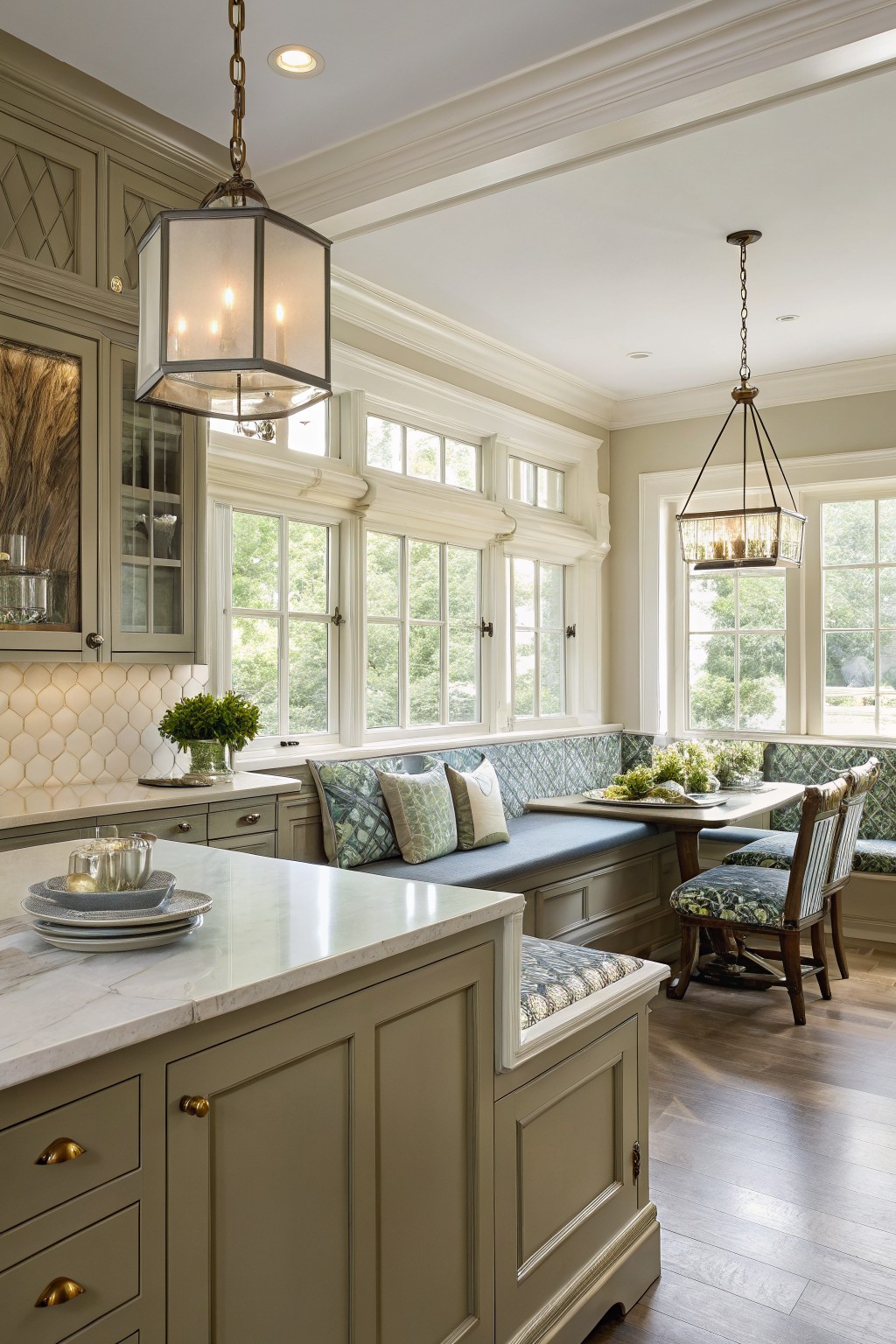
This kitchen uses a soft sage green on the cabinets. It is a muted green with gray undertones that feels calm and a little earthy. The color works well because it adds interest without making the space feel busy or too bold. It pairs easily with white trim and marble surfaces.
The green sits nicely next to warm wood floors and brass hardware. It looks best in rooms with plenty of natural light. Watch the undertone though. In cooler light it can lean more gray than green, so test a sample on the actual cabinet before committing.
Muted Sage Green Cabinets With Dark Stone Counters
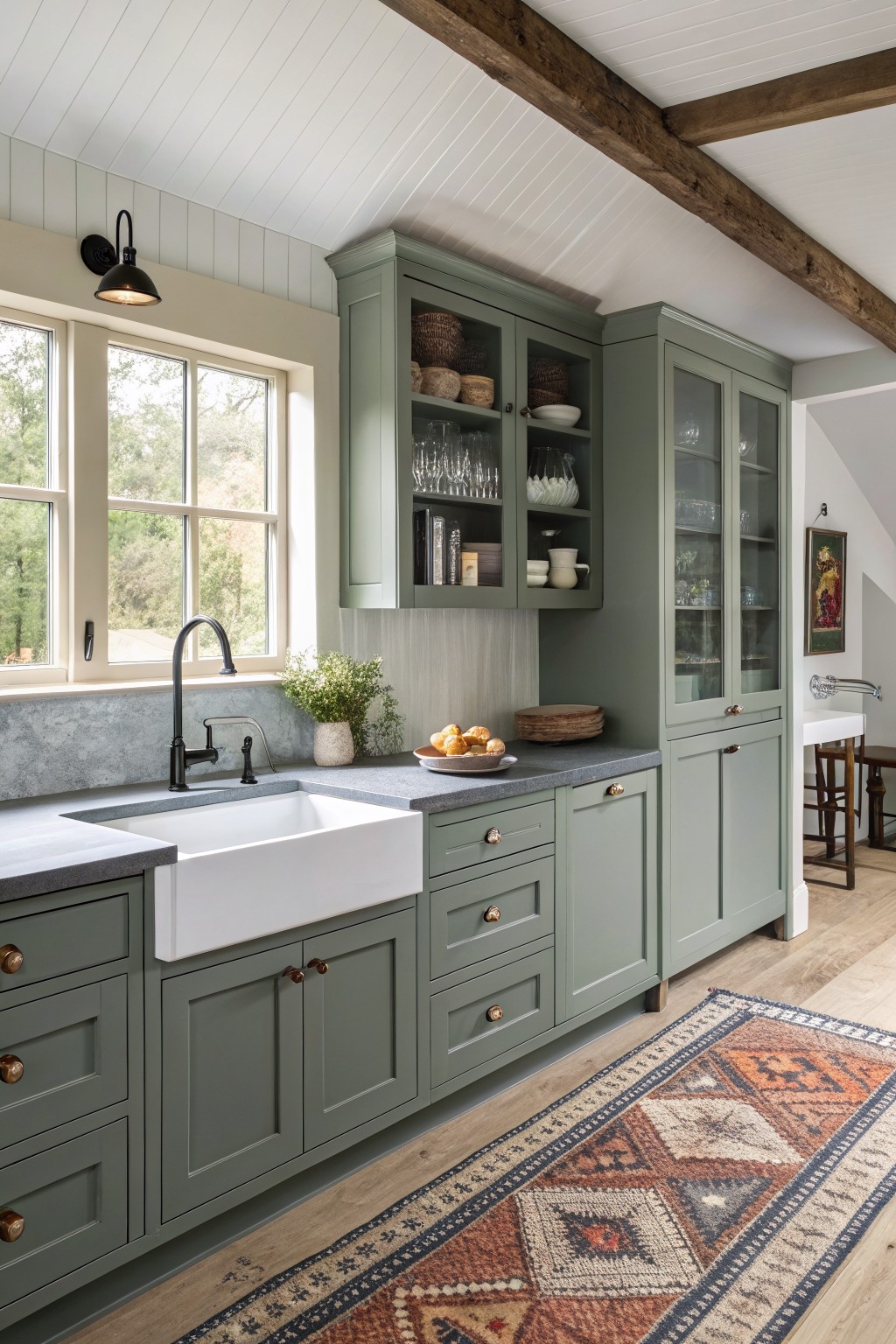
This muted sage green on the cabinets gives the kitchen a quiet, steady look that feels fresh without trying too hard. It leans more gray than bright green, which keeps it from overwhelming the space. It reads close to Sherwin Williams Clary Sage, Benjamin Moore Saybrook Sage, or Farrow & Ball Pigeon.
The color holds up well next to dark stone counters and warm wood floors. It can shift a little cooler in low light, so it helps to test a sample on the actual cabinets before committing.
Teal green cabinets
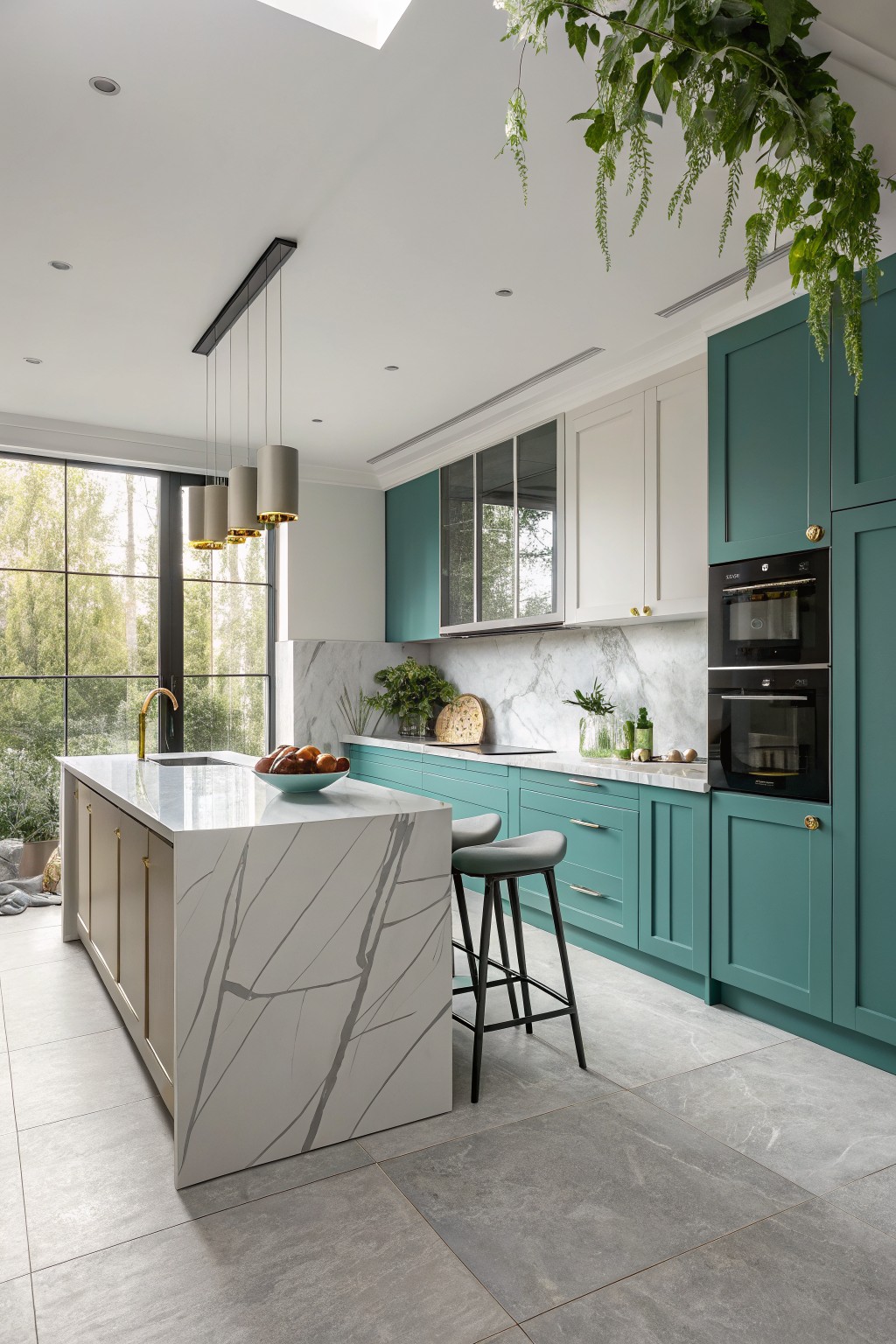
This teal green brings a fresh feel to the kitchen while staying easy to live with. It sits in the medium range with cool blue undertones that keep it from looking too bright or too dark.
It reads best next to white marble and light wood tones. Try it with brass hardware or black stools if you want a bit of contrast. The color works in most kitchens that get steady daylight.
Soft Sage Green Cabinets With Warm Wood Counters

This muted sage green on the cabinets gives the kitchen a calm, lived-in feel without looking too bold. It sits somewhere between gray and green, with cool undertones that keep it from feeling too earthy or bright. Many people like this shade because it works well with both older homes and newer ones, and it pairs easily with wood tones and simple tile.
It shows up best in rooms with decent natural light, where the color stays soft rather than turning flat. Try it with warm wood counters or brass hardware if you want a little contrast, but watch that it does not get too cool next to stark white surfaces.
Soft Sage Green Cabinets With Brass Hardware

This soft sage green on the cabinets gives a kitchen a calm, updated feel without pushing too hard. It sits between gray and green, so it feels fresh but still grounded.
The color has a slight gray undertone that helps it sit nicely next to marble and wood. It works well with black accents or brass hardware, and it holds up in both daylight and warmer evening light. Try Sherwin Williams Clary Sage, Benjamin Moore Saybrook Sage, or Farrow & Ball Lichen if you want something close.
Soft Mint Green Cabinets
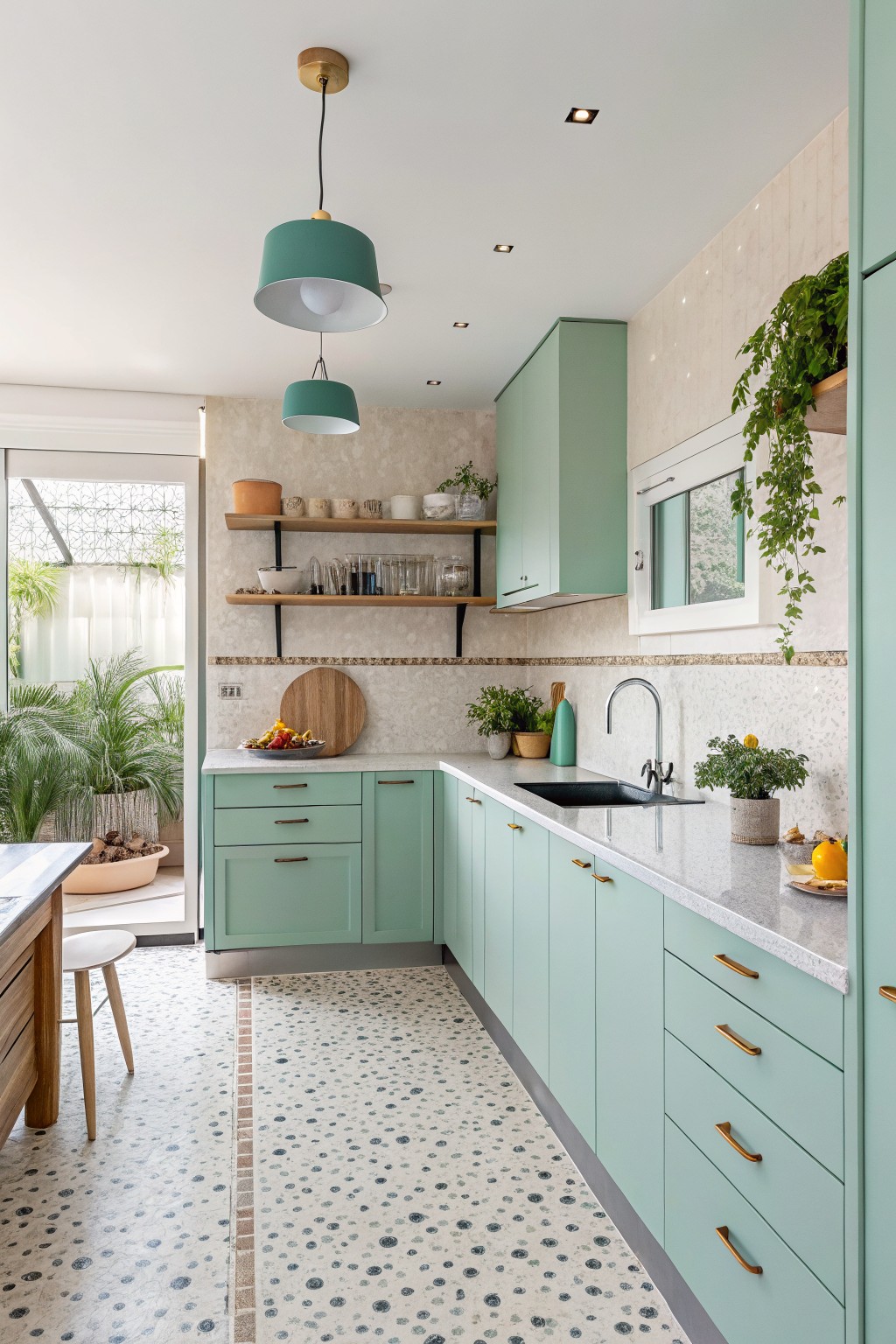
This soft mint green gives kitchen cabinets a light, fresh look that stays easy on the eyes. It sits in that middle range between blue and green, with a gentle cool undertone that keeps it from turning too sweet or too gray.
It works best in rooms with good natural light and pairs cleanly with white countertops or pale stone. Darker woods or brass hardware can help ground it if the space starts to feel too cool overall. Likely matches include Sherwin Williams Sea Salt, Benjamin Moore Palladian Blue, Farrow & Ball Pale Powder, and Behr Breezeway.
Sage Green Kitchen Cabinets
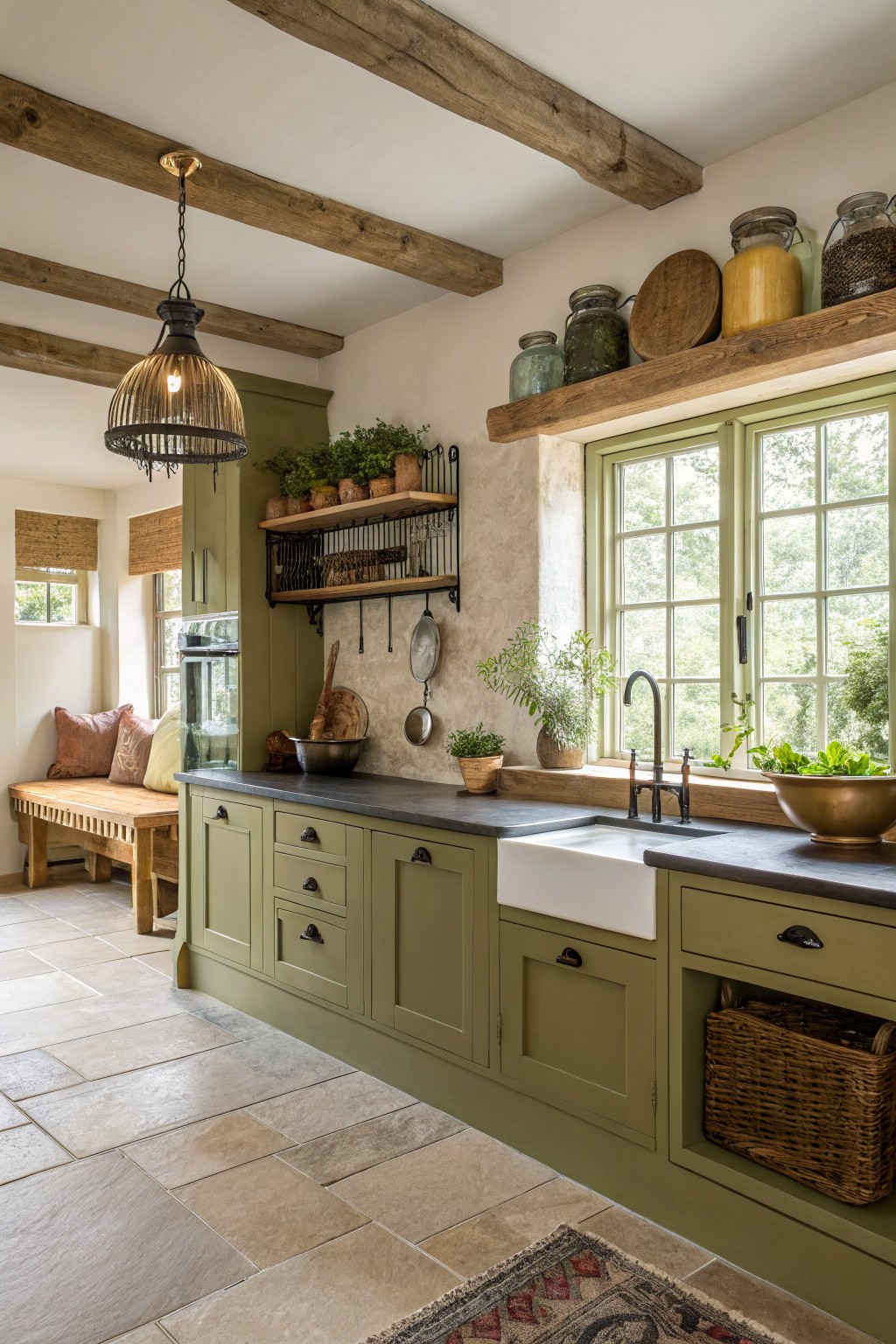
This muted sage green works well on cabinetry because it brings in a soft natural tone without making the room feel heavy. It sits somewhere between gray and green, with a slight earthy warmth that keeps things grounded even in a space with lots of wood and stone.
It pairs easily with dark counters and natural wood tones, though it can look a bit flat if the light is very cool. Try it in kitchens that already have warm wood floors or beams. Closest matches include Sherwin Williams Clary Sage, Benjamin Moore Saybrook Sage, Behr Dried Thyme, and Farrow & Ball French Gray.
Gray Leaning Soft Sage Green Cabinets
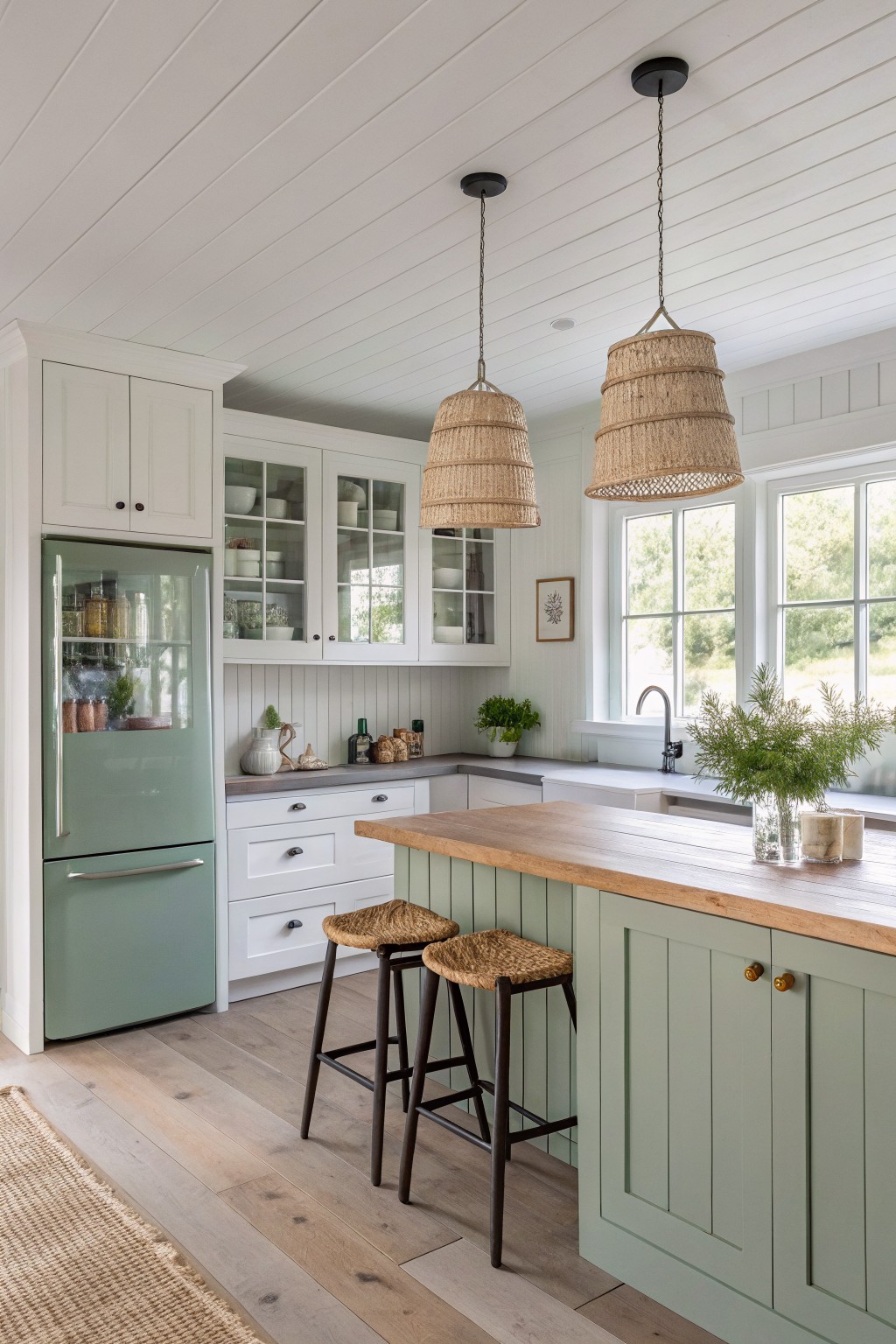
This soft sage green reads as a muted, gray-leaning green that stays calm in a kitchen. It gives just enough color to feel fresh while still blending with the white walls and wood tones around it. Similar shades show up as Sherwin Williams Evergreen Fog, Benjamin Moore Saybrook Sage, Farrow & Ball Pigeon, or Behr Aloe.
The gray undertone helps it stay steady in both natural and indoor light. It works best with white trim, light wood floors, and simple hardware so the color stays relaxed rather than competing. Watch how it shifts if your lighting leans warm.
Deep teal kitchen cabinets
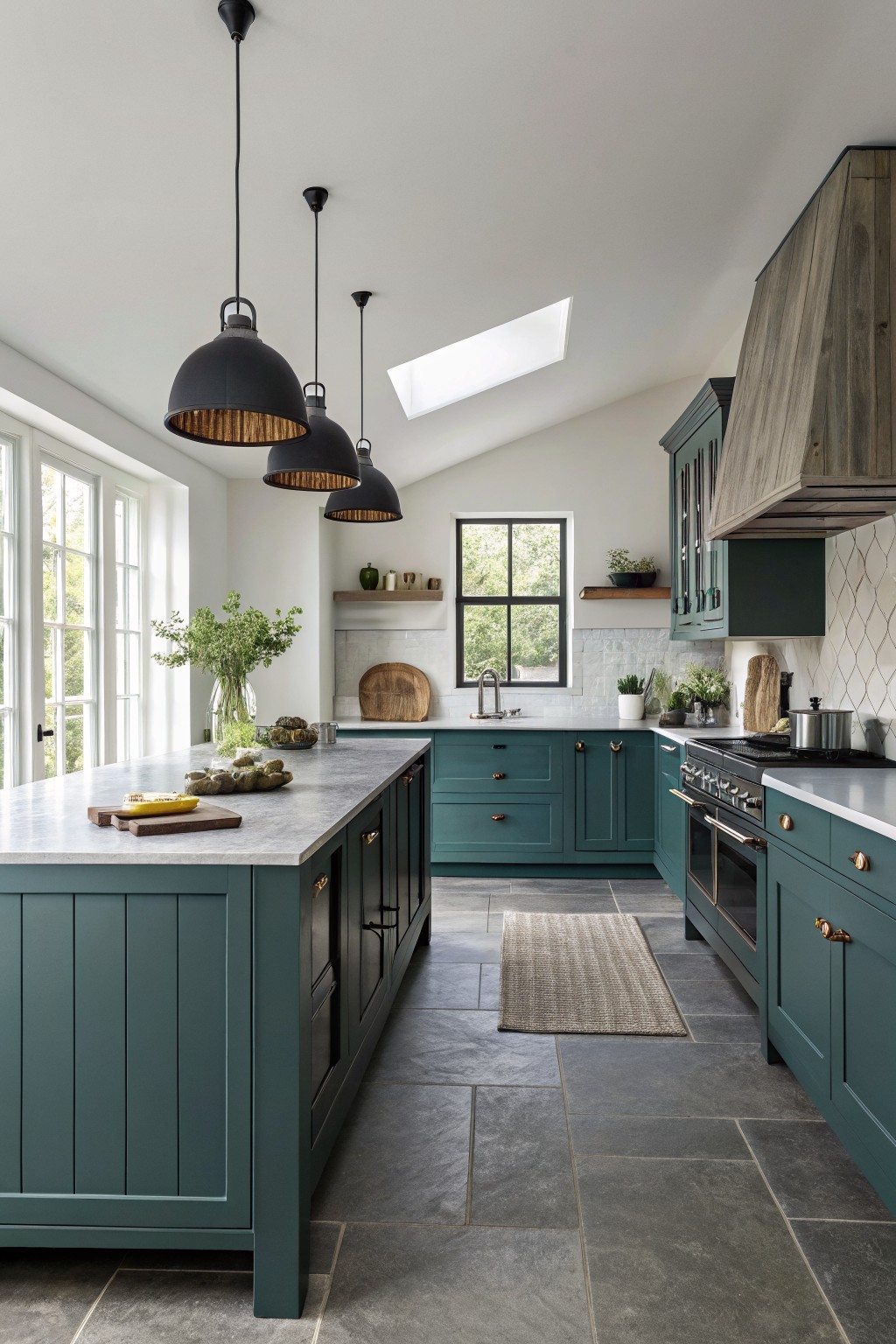
This deep teal green works nicely on kitchen cabinets because it adds color without taking over the whole room. It sits right between blue and green, giving a fresh but grounded feel that suits both older homes and newer builds. You will often see shades like this from Farrow & Ball Vardo, Benjamin Moore Aegean Teal, Sherwin Williams Hunt Club, or Behr Peacock Feather.
The color leans slightly cool, so it looks best next to gray stone counters and warm wood tones. It handles brass hardware well and still feels calm when paired with black accents or simple white walls. Just watch the lighting, since low light can make it read darker than expected.
Frequently Asked Questions
Q: How do I pick one green without it feeling too bold next to my cabinets?
A: Hold paint samples against your cabinet doors and counter edges in the actual room. Move them around during morning and evening light to see which shade stays calm and fresh.
Q: What if my kitchen has only a small window?
A: Choose a soft sage or muted olive that reflects light instead of soaking it up. Test the color on a large board propped near the darkest corner first.
Q: Can these greens work with wood floors or open shelves?
A: They balance warm wood tones well and keep the space from looking flat. Pick one with a hint of gray so the green recedes behind your everyday items.
Q: How do I keep the color from showing every fingerprint and splash?
A: Use a satin or eggshell finish that wipes clean without losing its soft look. Touch up the areas around the sink and stove every year or two as needed.