I spent a whole summer rearranging my backyard because the existing fence made the space feel smaller than it really was.
Privacy matters but it should not come at the cost of making the area less pleasant to spend time in during the warmer months.
Some solutions blend into the layout better than others.
Layered elements like taller shrubs mixed with lower plantings tend to create a natural screen that still feels open overhead.
Testing a few of these options in person shows which ones actually hold up once the seasons change and the plants fill in.
Built-In Seating Along The Fence
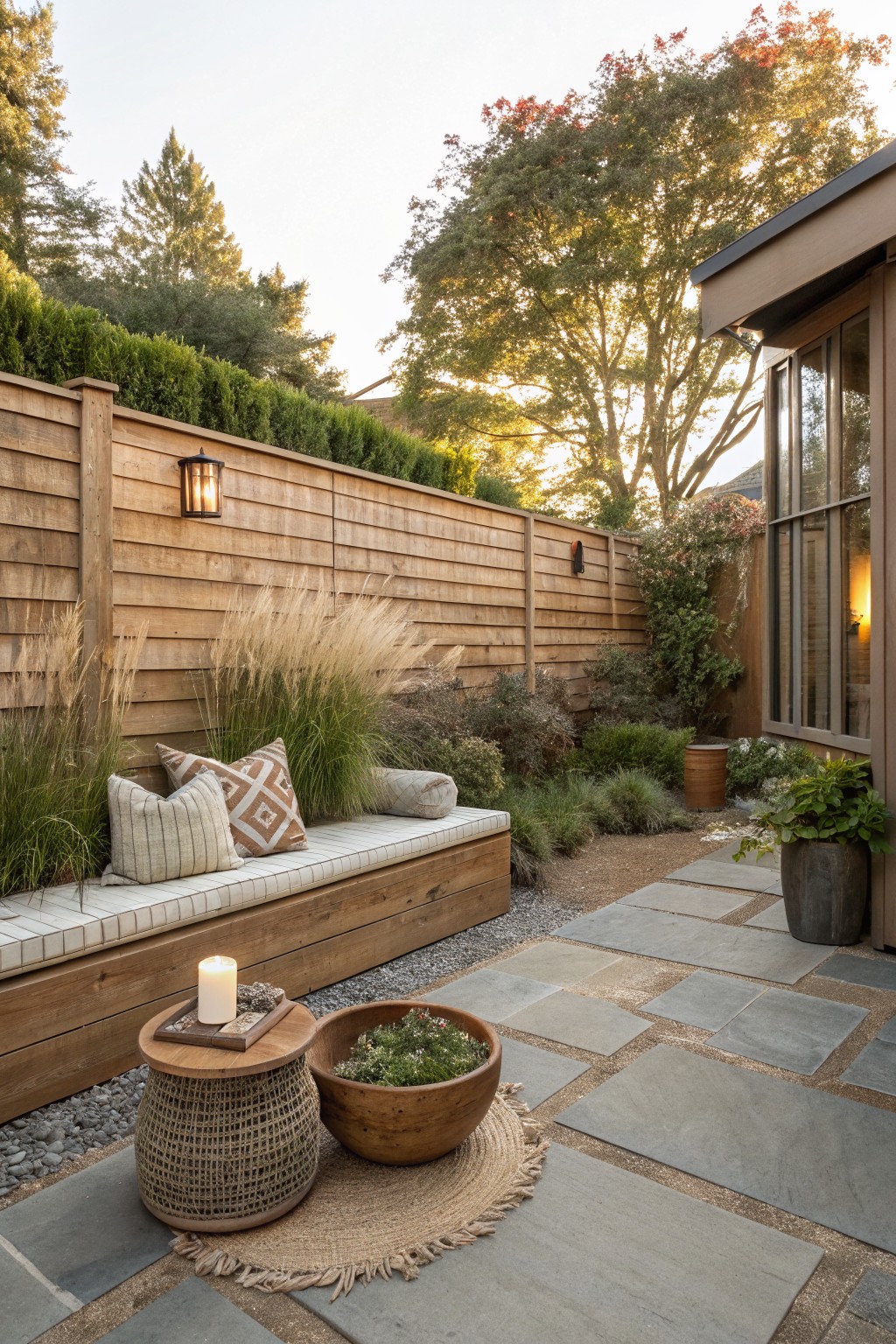
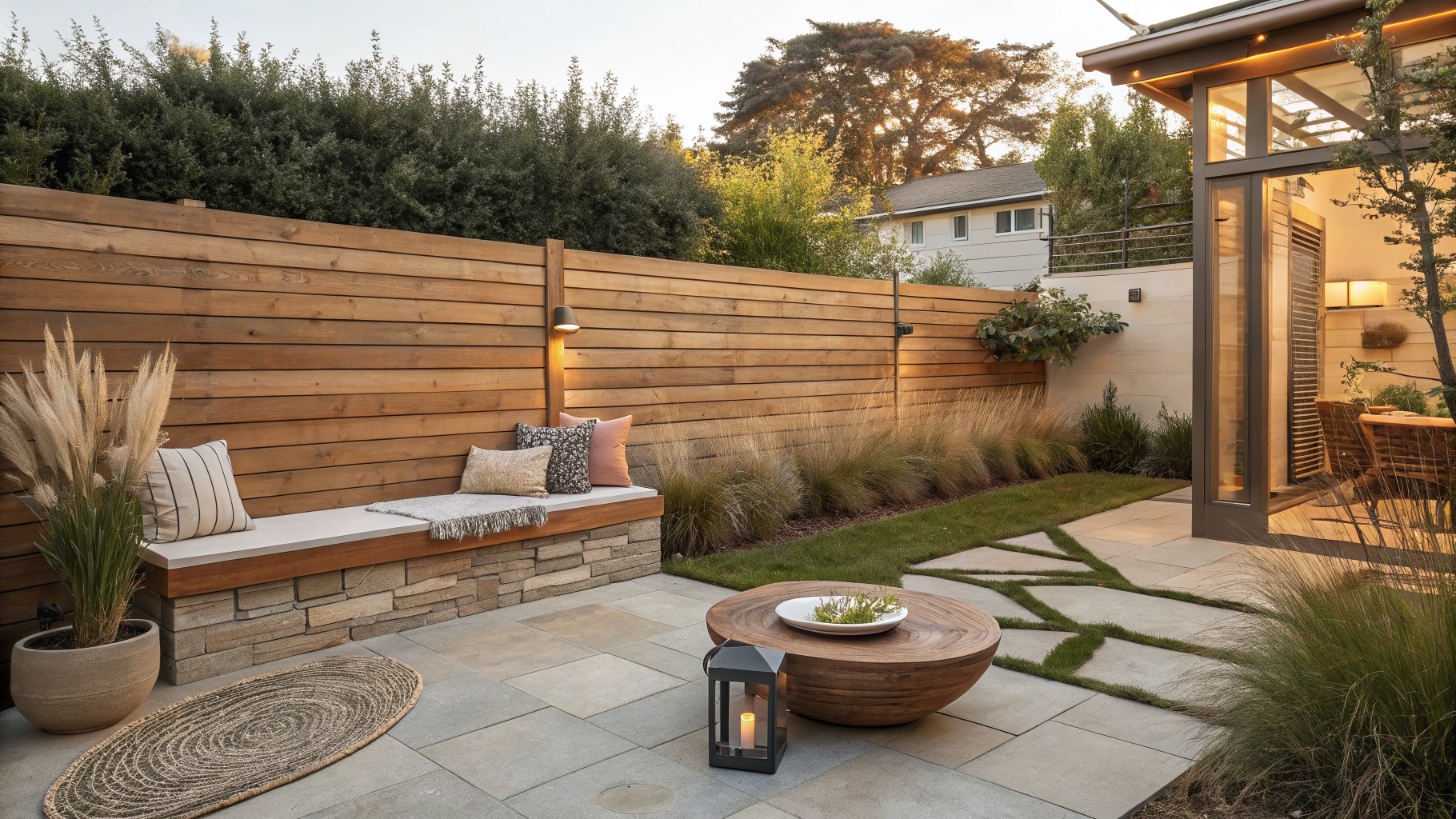
A bench built right into the fence line gives you a private spot to sit without needing extra furniture or walls. It turns the fence into something useful while still letting light and air move through the rest of the yard.
This idea works best in narrow side yards or along property edges where you want privacy but not a fully enclosed feel. Keep the bench simple and add a few taller plants in front so the area feels softer instead of boxed in.
Add A Pergola With Hanging Vines

A pergola with a light fabric shade and vines growing down the sides gives you privacy without boxing in the space. The overhead cover blocks views from above while the plants soften the edges and let air move through.
This setup works best on a deck or patio that sits close to other houses. Choose vines that trail easily and keep the structure simple so the area still feels open during the day.
Perforated Screens For Gentle Privacy

A perforated wood screen gives you privacy without turning the yard into a closed box. The holes let light and breezes pass through while blocking most direct views from outside, which keeps the space feeling open even when it is screened.
This approach works best along side or back property lines where a solid fence would feel heavy. It suits homes with smaller yards or close neighbors. Keep the pattern tight enough at seated eye level so the screen actually does its job.
Bamboo Fencing With Layered Planting
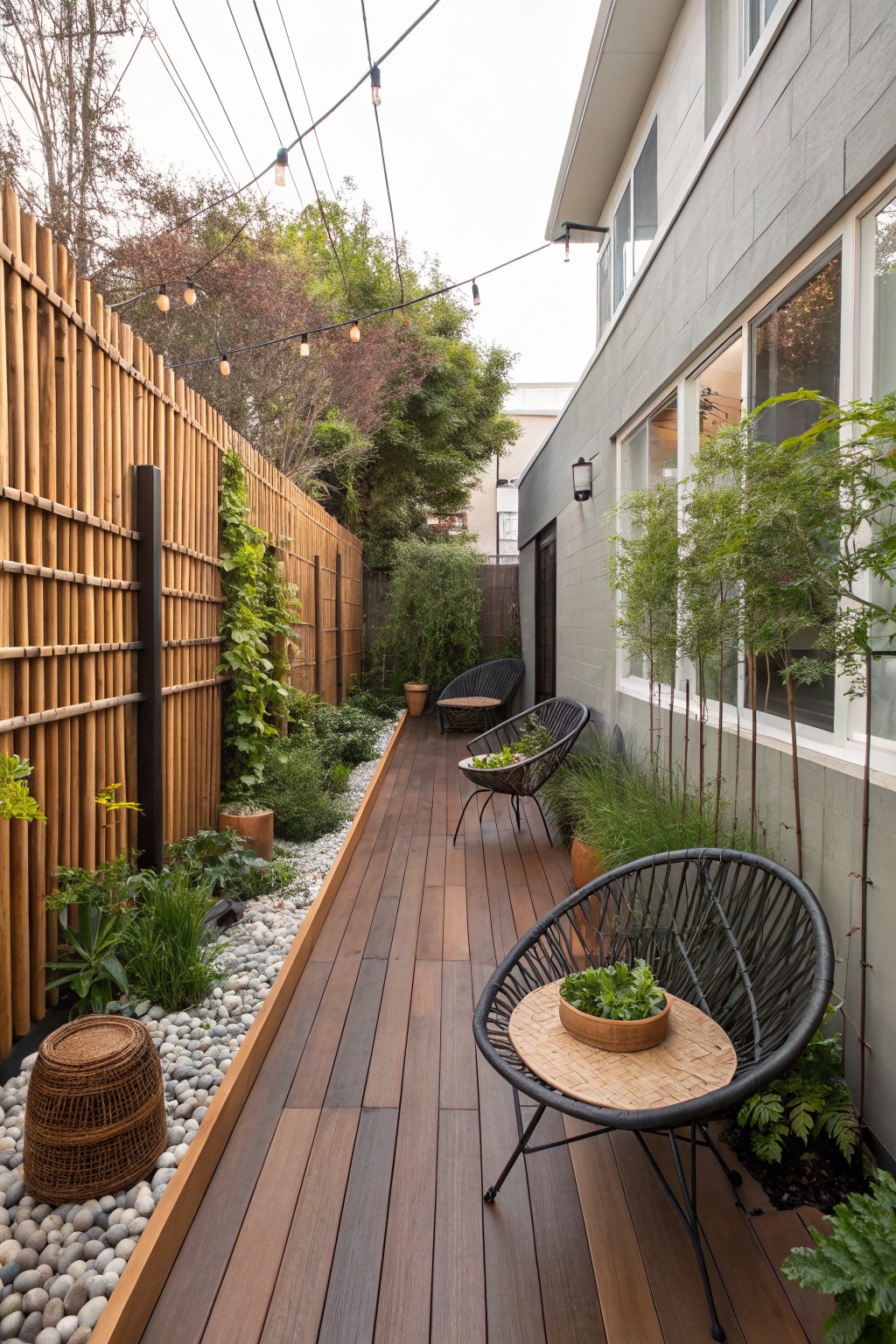
A bamboo fence works well when you want privacy along a deck or side yard without making the space feel boxed in. The vertical slats let some light and air move through, while the plants growing up and around the base add coverage where it is needed most.
This approach suits narrow outdoor areas next to a house or fence line. Keep the planting mixed with different heights so it fills gaps naturally over time, and avoid crowding the deck itself with too many pots.
Use Tall Grasses for Soft Privacy Screens
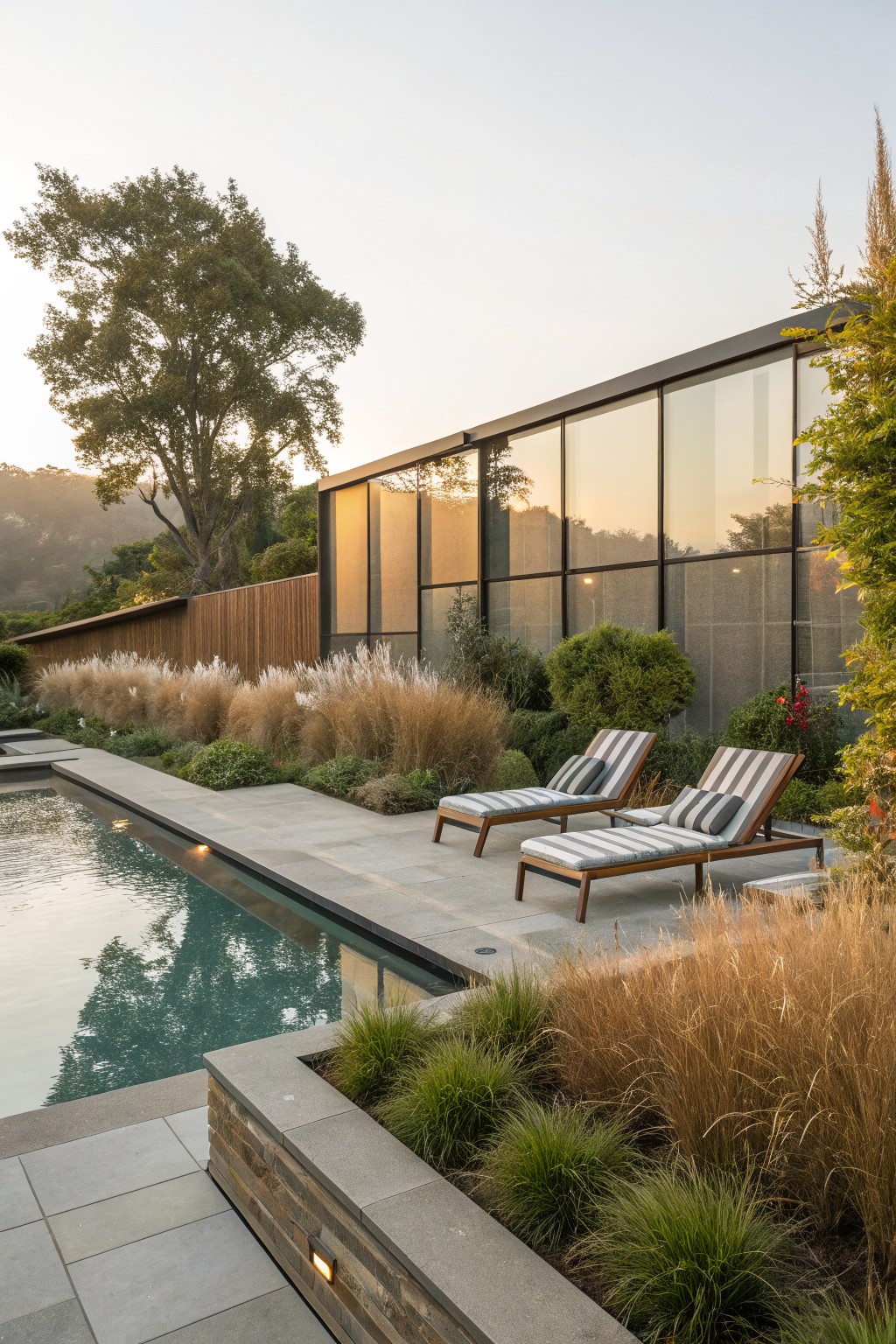
Tall grasses give you a natural way to block views without putting up a solid wall. They grow high enough to hide the space from neighbors while still letting light and air move through the yard. The layered look of grasses mixed with lower shrubs keeps things feeling open rather than boxed in.
Plant them along the edges of a patio or pool where you need the most screening. They work especially well next to glass walls since the soft shapes balance the clean lines of the house. Just make sure you pick varieties that stay upright and do not flop over paths.
Add A Patterned Screen For Privacy
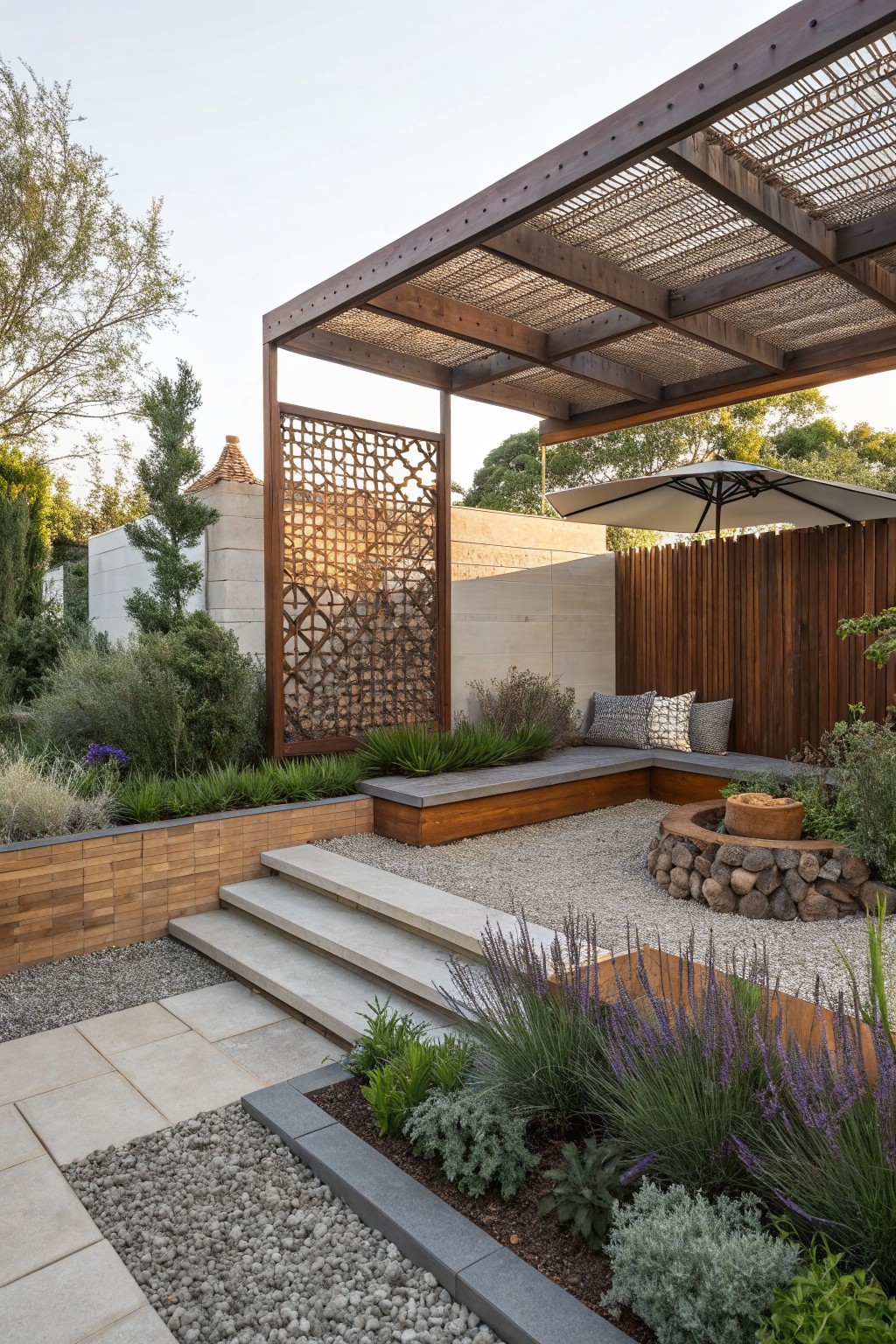
A wooden screen with a repeating cutout pattern works well when you want to block the view from neighbors but still let light and air move through the space. It creates separation without turning the patio into a solid wall, which keeps the area feeling open rather than boxed in.
This approach works best on smaller patios or side yards where a full fence would feel too heavy. Place the screen along one edge of the seating area and pair it with a simple overhead structure so the whole zone stays usable in different seasons. Just make sure the pattern is not too dense or the light will get blocked anyway.
Stone Walls With Built-In Lighting
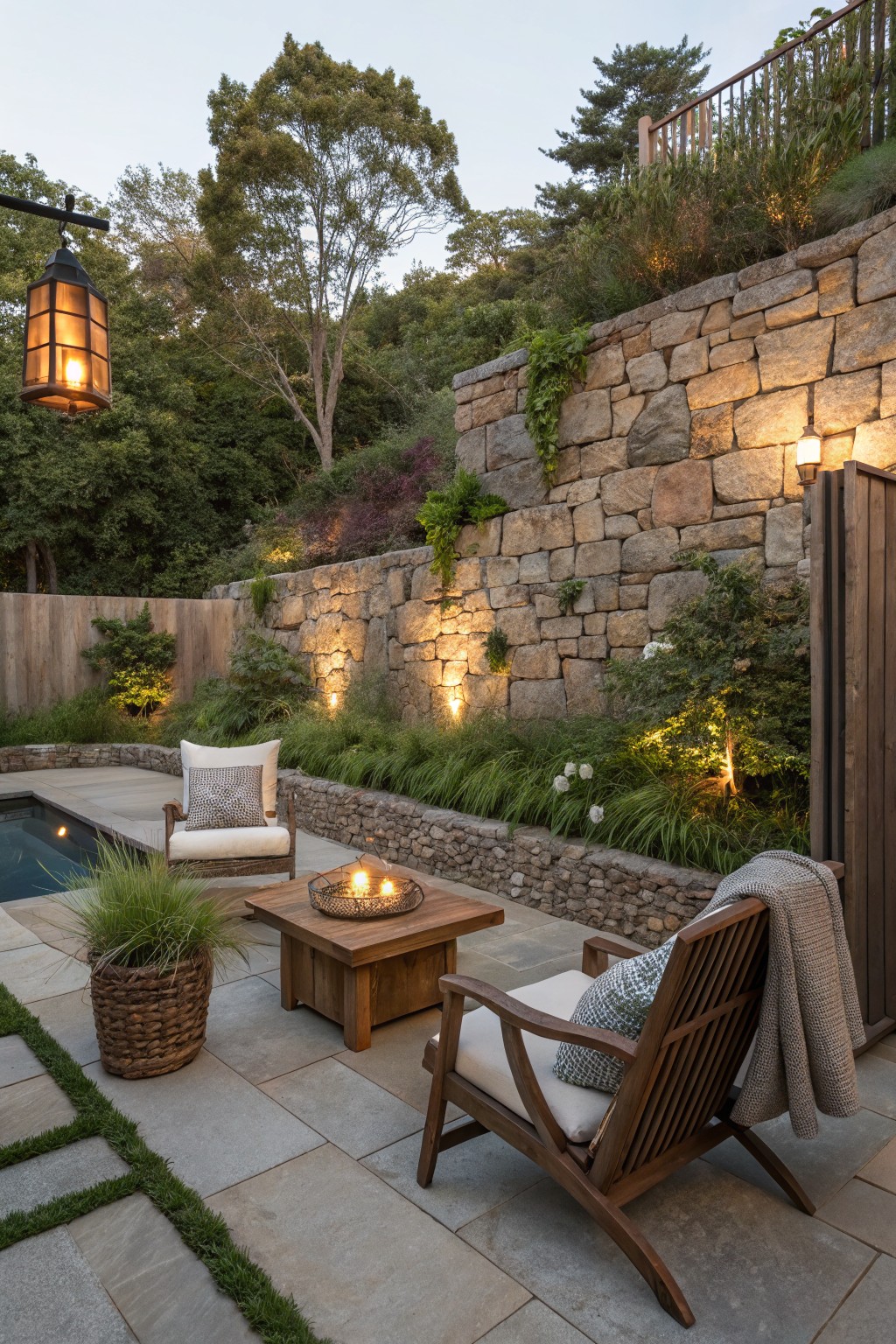
A stone wall can block views from above or behind without making the patio feel boxed in. The lights set into the wall keep the space usable at night and add just enough brightness to soften the height.
This approach works best on sloped yards where a retaining wall is already needed. Tuck low plants into the gaps so the wall reads more like part of the garden than a solid barrier.
Pergola With Border Plantings

A pergola over an outdoor table gives the space some shape without making it feel boxed in. The open roof lets in light and air, while plants along the edges help block side views from neighbors or the street.
Set the pergola above a dining area and use a mix of pots and low beds to soften the sides. This setup works on most decks or patios attached to the house and keeps the area feeling open during the day.
Layer Planting on Retaining Walls
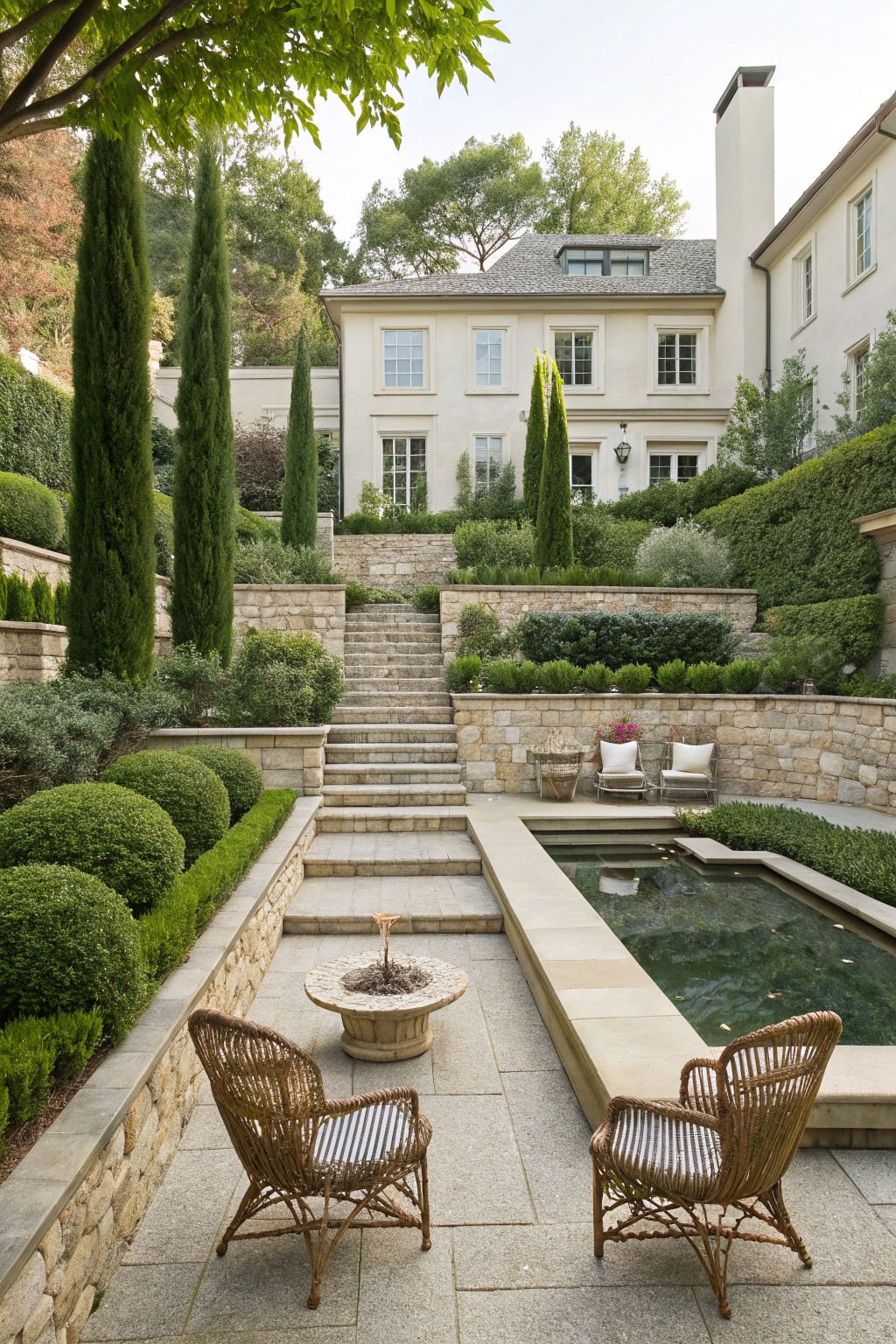
One simple way to gain privacy is to use the natural slopes in a yard and plant along the edges at different heights. The stone walls here hold rows of shrubs that sit above eye level from the patio, while taller trees fill in behind them. This blocks the view from neighboring properties without putting up a solid fence that would shrink the space.
It works especially well on lots that already have changes in elevation. Keep the lower plantings full but not too wide so the area still feels open, and choose evergreens that hold their shape year round. Avoid planting everything at the same height or the screen can start to feel heavy.
Wood Trellis Panels With Plants
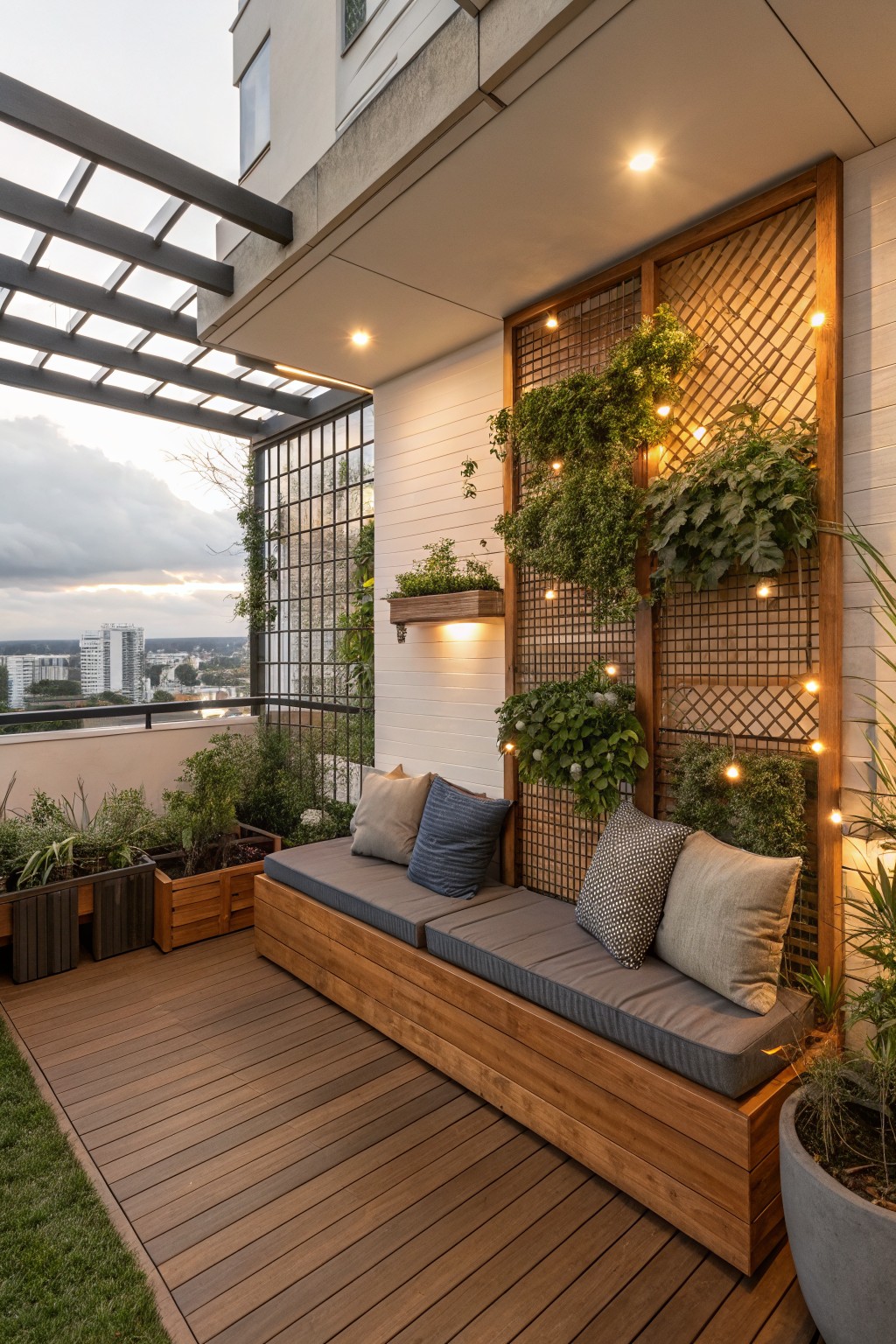
A wood trellis with a grid pattern gives you privacy without blocking all the light or air. The open structure lets some view through while the plants soften the look and fill in the gaps over time. It works especially well on balconies or decks that sit close to other buildings.
This setup suits homes with limited space since the plants grow upward instead of taking up floor room. Use it along one side of a seating area and keep the rest of the railings open so the space still feels connected to the view beyond.
Grow Climbing Vines Along The Walls

Vines trained along walls give you privacy without building anything heavy. They soften the edges of the space and let light and air move through while cutting off the view from above or next door.
This approach works best in tight courtyards or side yards where a full screen would feel cramped. Run simple wires or a basic trellis and pick a variety that grows well in your area so the coverage fills in over a season or two.
Layer Planting Along Fences
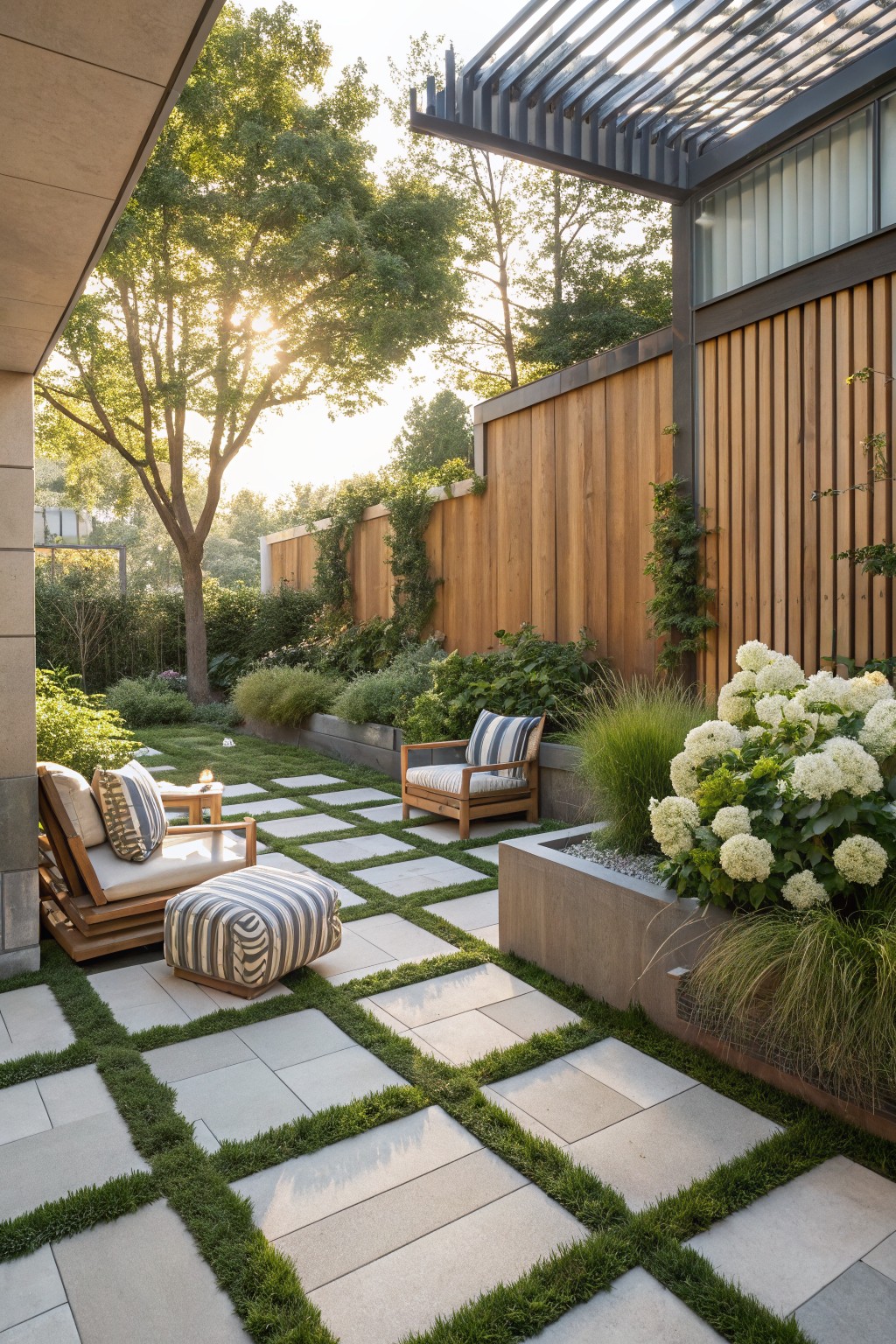
A solid fence can block views fast, but it often feels too stark on its own. Adding a mix of shrubs, grasses, and vines in front softens the barrier while still keeping the yard private. The different heights and textures let light and air through, so the space stays open instead of boxed in.
This approach works best along side or back property lines where you need screening but do not want a heavy wall. Keep taller plants toward the fence and lower ones in front so the border stays natural. It suits most suburban yards and needs little more than regular watering once the plants settle in.
Grow Flowering Vines on an Open Pergola

Climbing vines work well when you want privacy around an outdoor seating spot without building solid walls. They grow up the frame and fill in over time, which softens the look and still lets air and light move through the space.
This approach fits best on patios or decks that already have some kind of overhead structure. It works especially well near a daybed or lounge area where you want a bit of screening but still like seeing the view beyond. Just give the plants room to spread and choose a sturdy frame that can handle the weight as they mature.
Slatted Wood Screens For Privacy
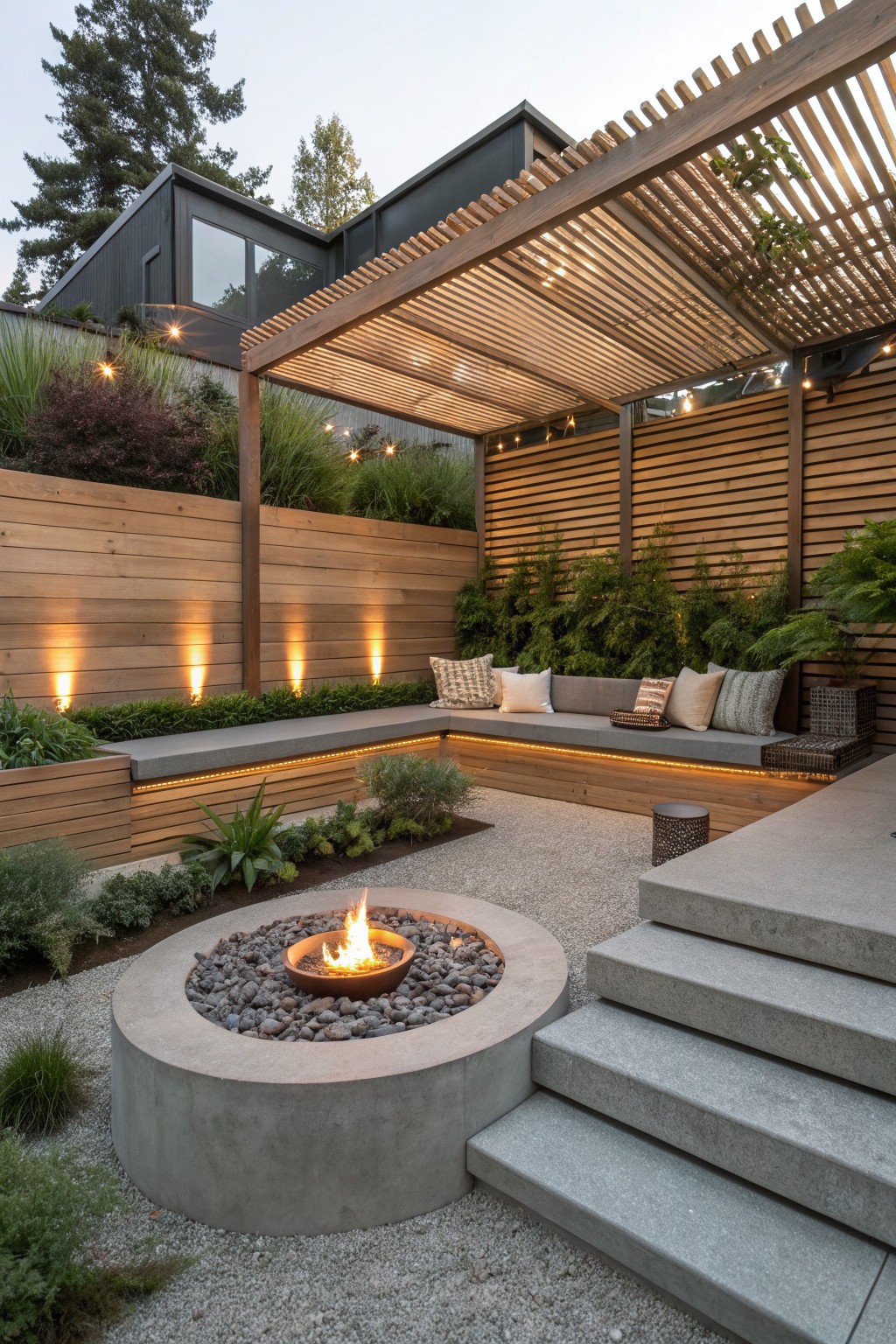
Slatted wood screens give you a way to block views from outside without making the space feel boxed in. The gaps let light and air move through, so the area stays open even though neighbors cannot see straight in.
This approach works especially well on side yards or back patios that sit close to other homes. Place the screens along the property line and add a few taller shrubs behind them for extra coverage. The wood ages nicely and pairs with most outdoor materials.
Layer Plants Against a Tall Fence

A tall fence on its own can feel too solid, but pairing it with a row of layered plants softens the look and still blocks the view from outside. Grasses and small trees planted close to the fence create depth without crowding the space, and the path running alongside keeps everything feeling open rather than boxed in.
This approach works well on narrow side yards or along property edges where you want privacy but still need light and air. Keep the plants mostly vertical and vary the heights so the screen feels natural instead of like a wall. Watch the spacing though, since dense planting right against the fence can make the area harder to maintain over time.
Rope Railings On A Deck Fence
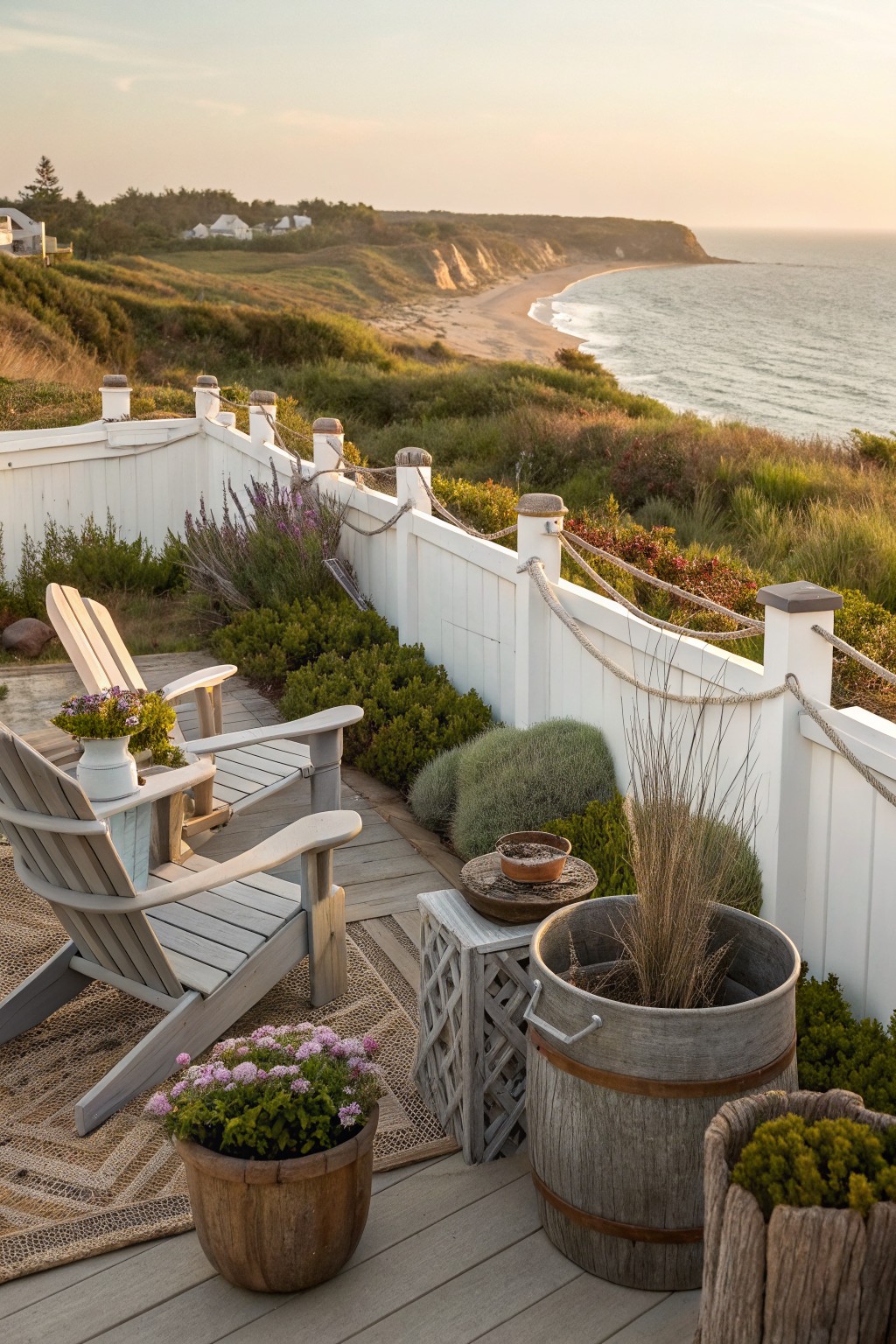
A fence with rope between the posts gives just enough separation on an outdoor deck without cutting off the view. It feels lighter than a solid panel and still marks the edge of the space.
This works best on decks or patios that face open land or water. Keep the rope simple with two or three lines and match the posts to your existing railing so the whole thing stays easy and low key.
Let an Outdoor Bar Create a Natural Boundary

An outdoor bar counter can help mark off part of the yard without the need for solid fencing. The length and height give a sense of separation while still letting light and air move through the space.
Place low planters along the front edge to add a layer of greenery that softens the line and blocks views at seating height. This setup works best on patios that sit near property lines or shared spaces where you want privacy during meals or gatherings.
Plant In Layers Beside A Fence
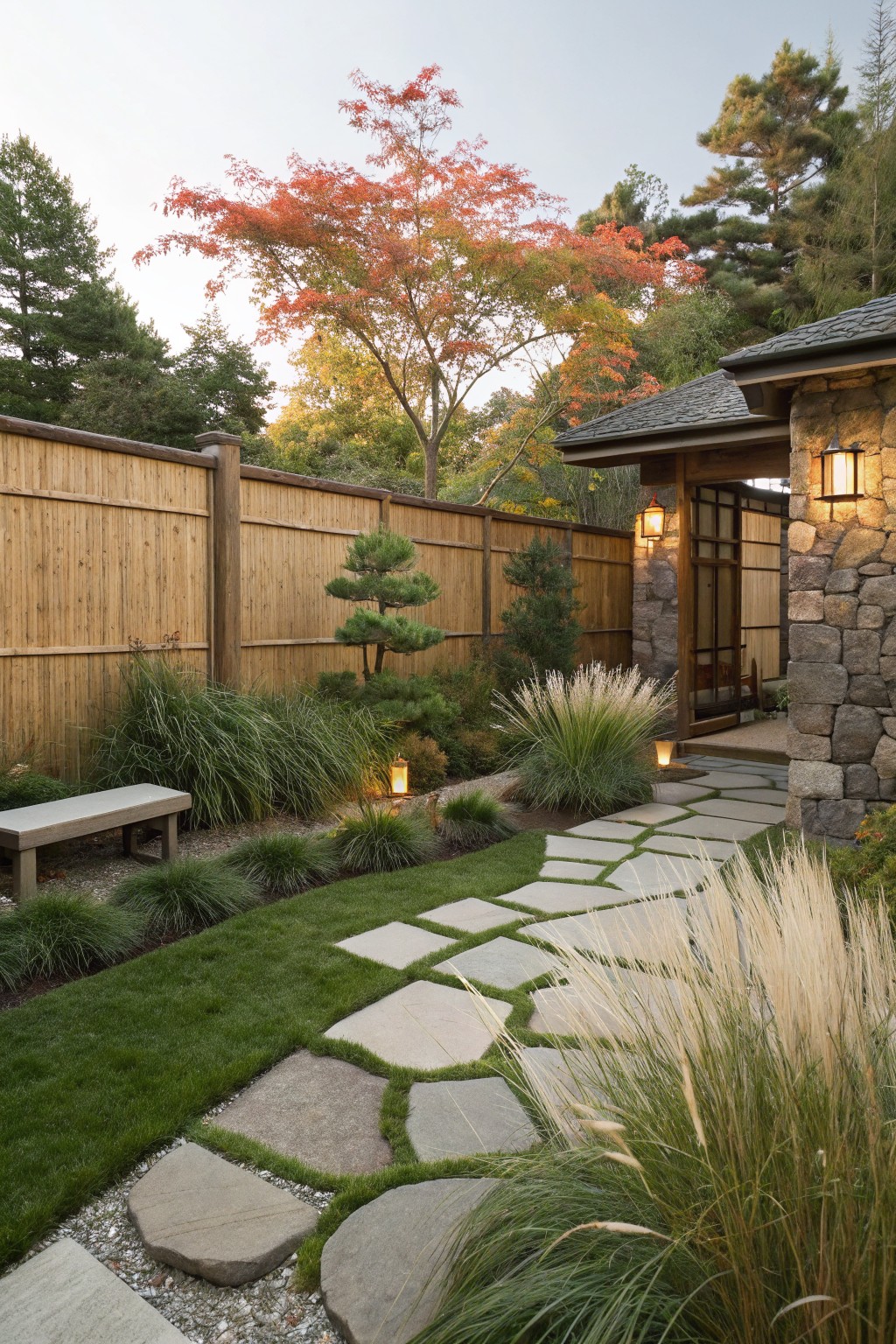
A fence alone can feel too solid and closed off, especially in a smaller yard. Adding plants in different heights right in front of it softens the line and still keeps the view blocked from the outside. Grasses, low shrubs, and a few taller evergreens work together to create depth without crowding the space.
This approach suits homes where the yard sits close to neighbors or a street. Keep the planting loose rather than packed tight so air and light still move through. The wooden fence in the photo shows how the layers sit comfortably against a simple boundary without making the area feel boxed in.
Perforated Metal Panels For Filtered Privacy

Perforated metal panels give you privacy without turning the space into a solid wall. The cutouts let light pass through and keep the area from feeling boxed in, which makes them useful along a patio edge or property line.
They work well on homes with some existing structure to mount against, and they pair easily with planting in front. Just watch the hole size if you want stronger screening from the street or neighbors.
Layer Plants Along Curved Paths
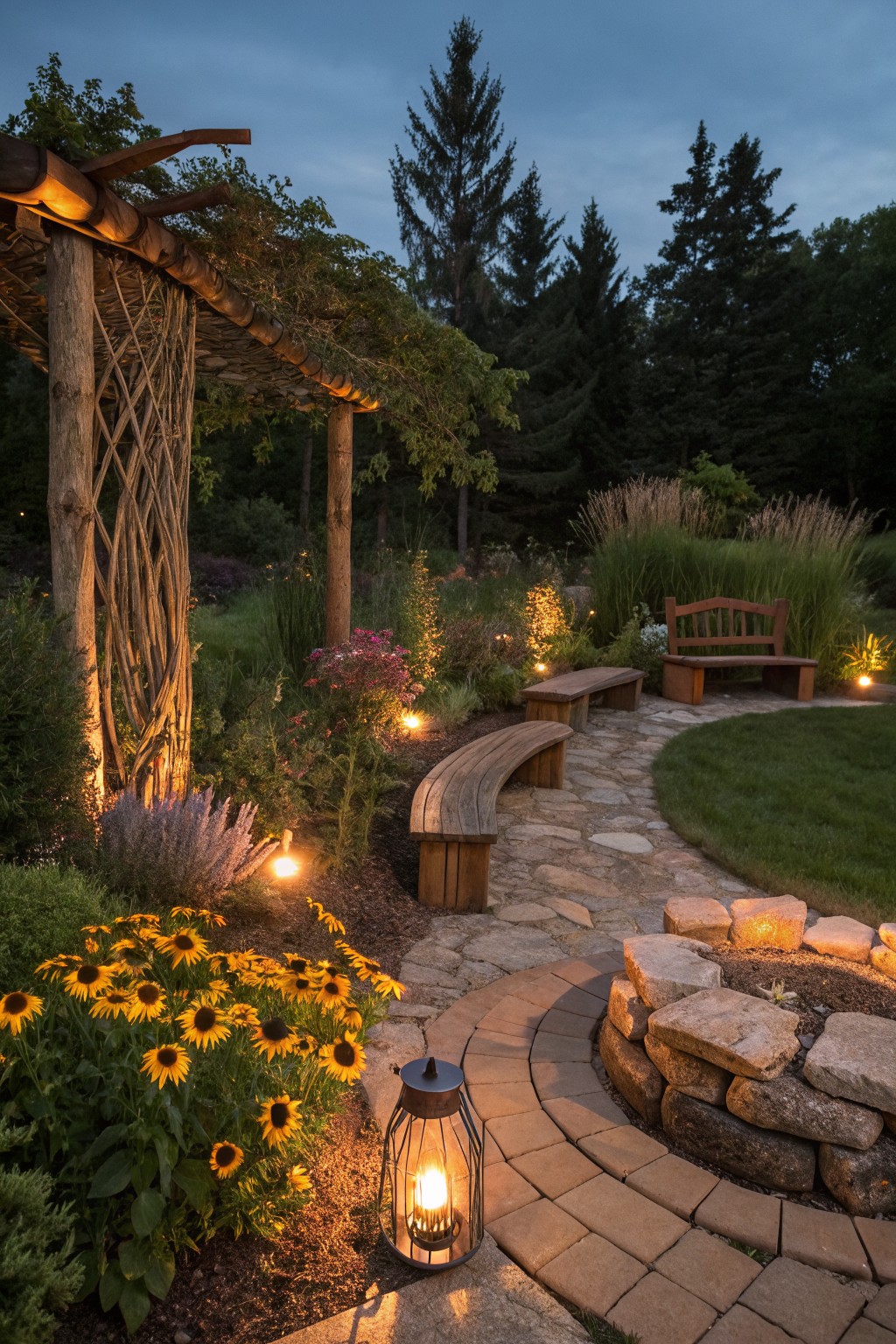
Layered plantings work well for privacy because they block views at different heights without creating a solid wall. In this garden the mix of low flowers, mid-height shrubs, and tall grasses softens the edges while still letting light and air move through the space.
Place the tallest plants toward the back of each bed and step heights down toward the path. This approach suits homes with open backyards where you want screening but do not want to lose the feeling of the larger landscape. Keep a few gaps so the path still feels welcoming rather than boxed in.
Frequently Asked Questions
Q: Which plants give privacy quickest without taking over the yard? A: Fast options like clumping bamboo or arborvitae fill gaps within a season or two. Space them a few feet apart and water deeply the first year so they establish strong roots.
Q: How do I handle a nosy second floor window next door? A: A tall trellis covered in vines blocks the line of sight at that height. Tilt it a little to add shade while keeping the lower space open and airy.
Q: What works if my yard is mostly shade? A: Ferns and certain hollies thrive in low light and still create a living screen. Cluster them near the property line for steady coverage that feels natural rather than forced.