I have noticed that many patios and decks end up sitting empty because there is no real sense of separation from the rest of the yard or from neighbors.
When privacy is handled well, the space starts to feel like an actual room you want to use instead of just a spot that looks okay from the house.
Some setups look finished on paper but end up blocking light or airflow in ways that make the area less comfortable day to day.
I tend to try smaller changes first to see how the layout actually works before making bigger adjustments.
Finding the right approach can shift a backyard seating zone from something you pass by to a place that draws you outside more often.
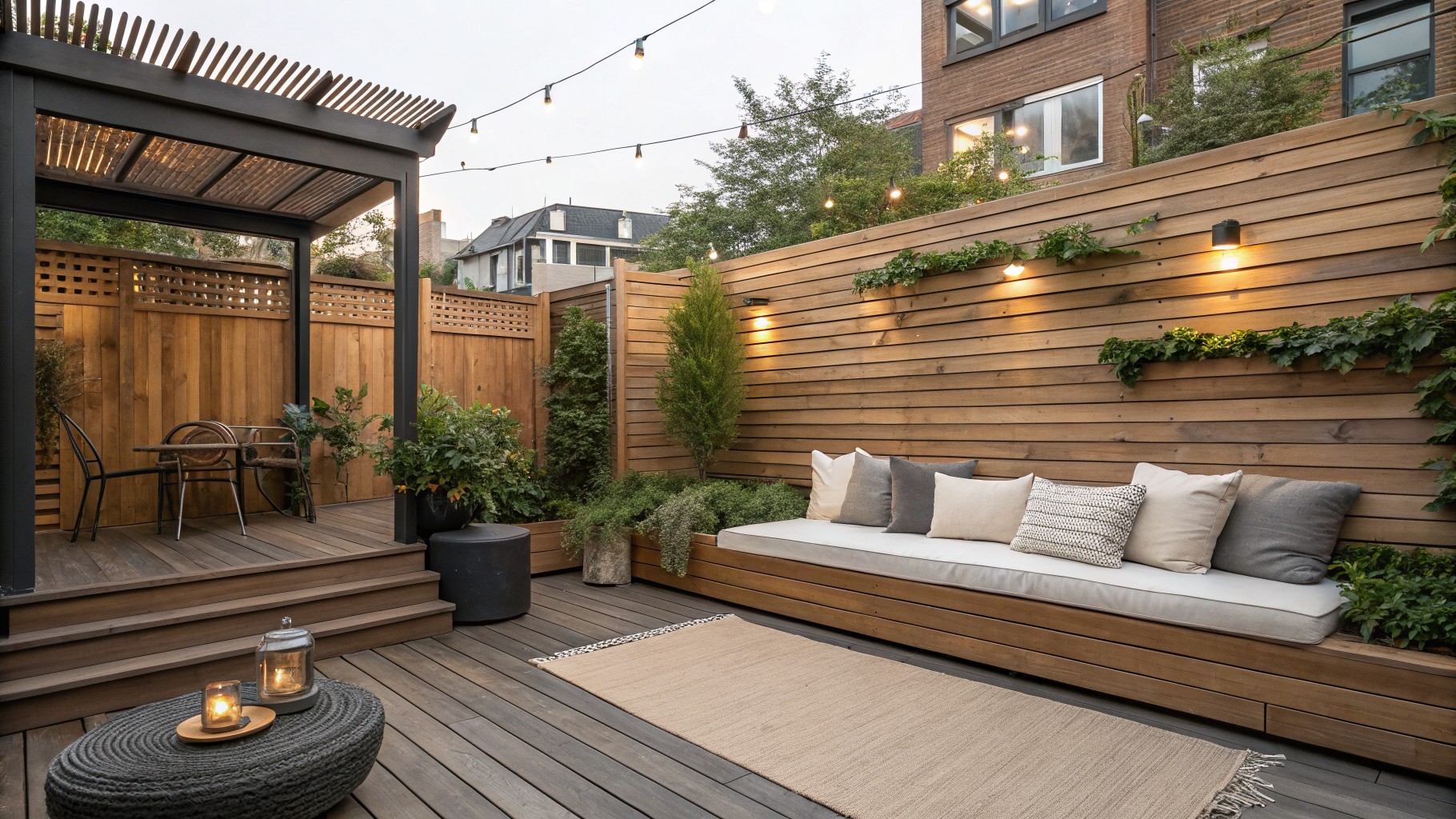
Add Horizontal Slat Fencing For Patio Privacy

A row of horizontal wood slats makes a simple and effective screen that blocks the view from nearby buildings while still letting air move through. Many homeowners turn to this look when they want privacy without closing off the space too much.
It works well on decks that sit close to other homes or apartments. Run the fence along the back or side edge and let a few plants trail over the top so the wood feels softer over time.
Lattice Trellis with Climbing Vines
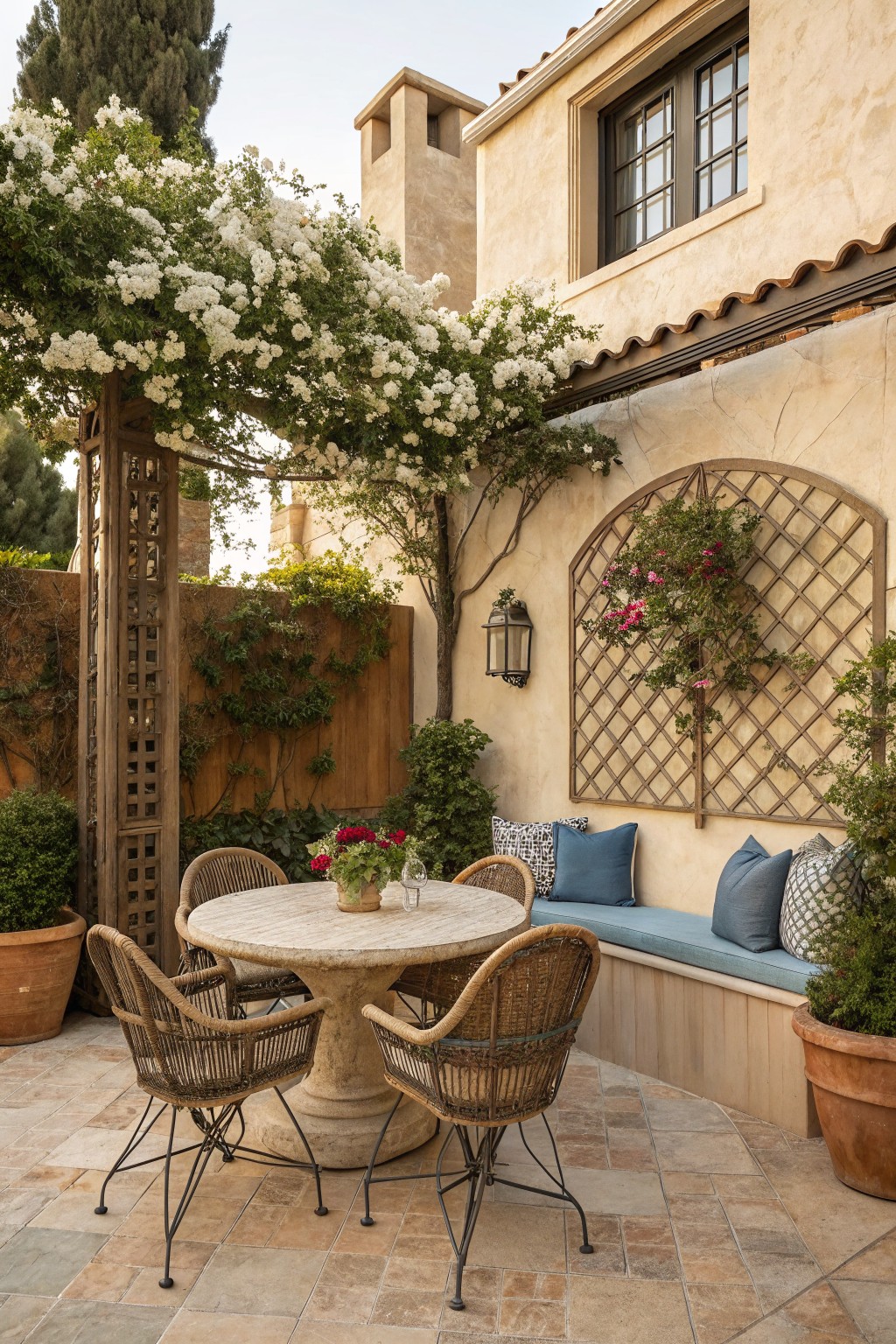
A lattice trellis mounted on an exterior wall gives you privacy without making the space feel closed in. The open grid lets some light and air through while the vines fill in over time and create a natural screen.
This approach works best along side walls or property lines where you need to block a direct view. Use a sturdy frame and pick vines that grow well in your area. It also pairs easily with a built-in bench so the seating feels more sheltered.
Lattice Screens for Side Privacy
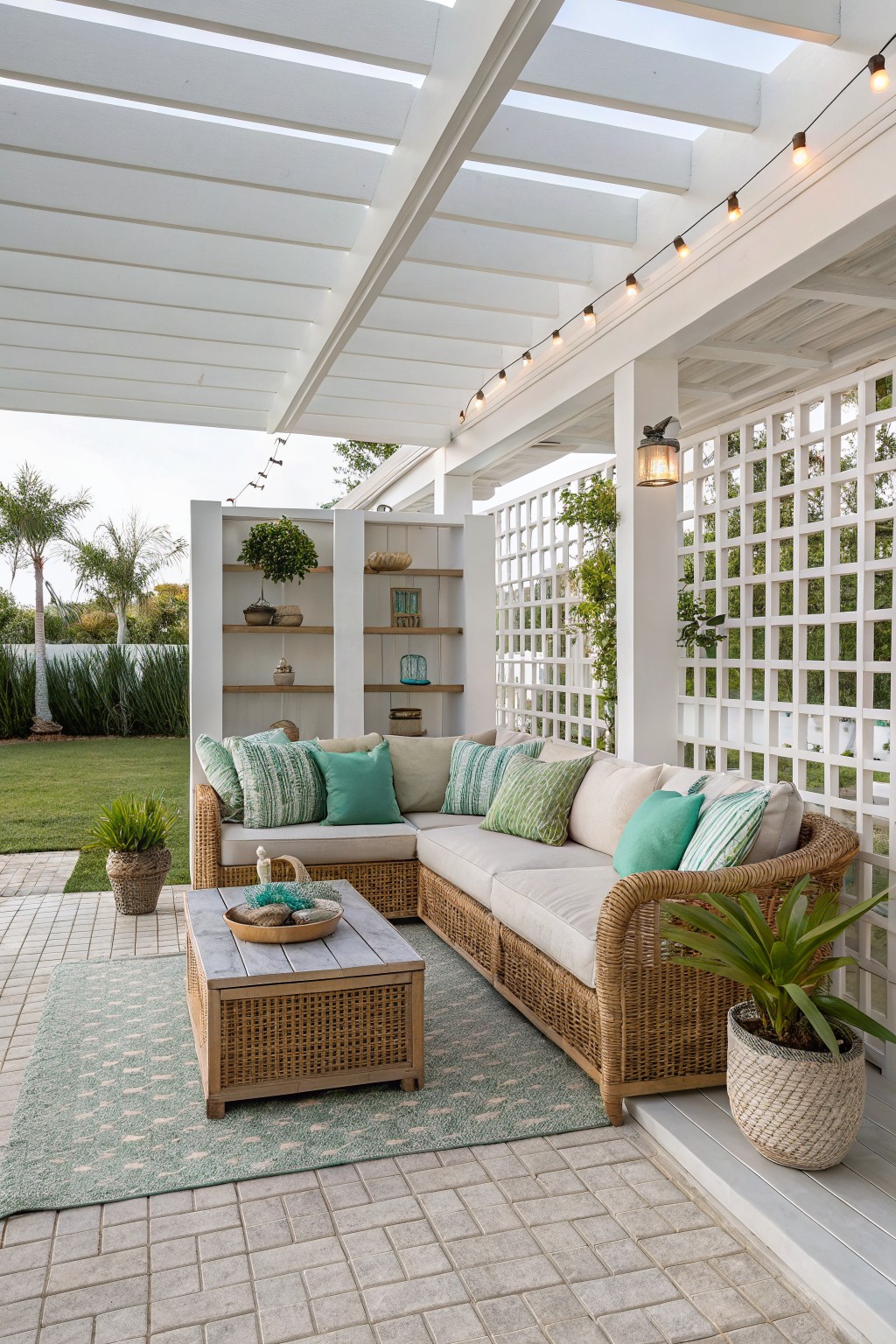
A simple lattice screen can turn an open patio into a more private spot without making it feel closed in. The white grid pattern lets light and air through while blocking views from neighbors, which works especially well on the sides of a seating area.
This approach suits homes with close lots or shared yards where full walls would feel too heavy. Place the screen where it lines up with existing posts or railings, and let vines grow on it if you want extra coverage over time.
Metal Privacy Screens

Metal screens give an outdoor seating area a clear sense of privacy without making it feel closed in. The patterned panels let light and air move through while blocking direct views from outside, which works well on patios that sit close to neighboring homes or open yards.
They suit most styles of houses and can be added to existing walls or used as freestanding gates. Just be sure the pattern is not too open if full seclusion is the goal, and check that the material holds up to weather in your area.
Add a Pergola Against a Tall Fence for Privacy

One simple way to get privacy on a deck is to run a pergola right up against a tall wood fence. The fence blocks the view from behind while the overhead structure adds shade and makes the whole area feel more contained.
This setup works best on side yards or back decks that sit close to neighboring homes. Keep the fence solid and at least six feet high, and use a pergola with a fabric canopy so the space feels sheltered without going fully closed in.
Slatted Wood Screens For Side Privacy
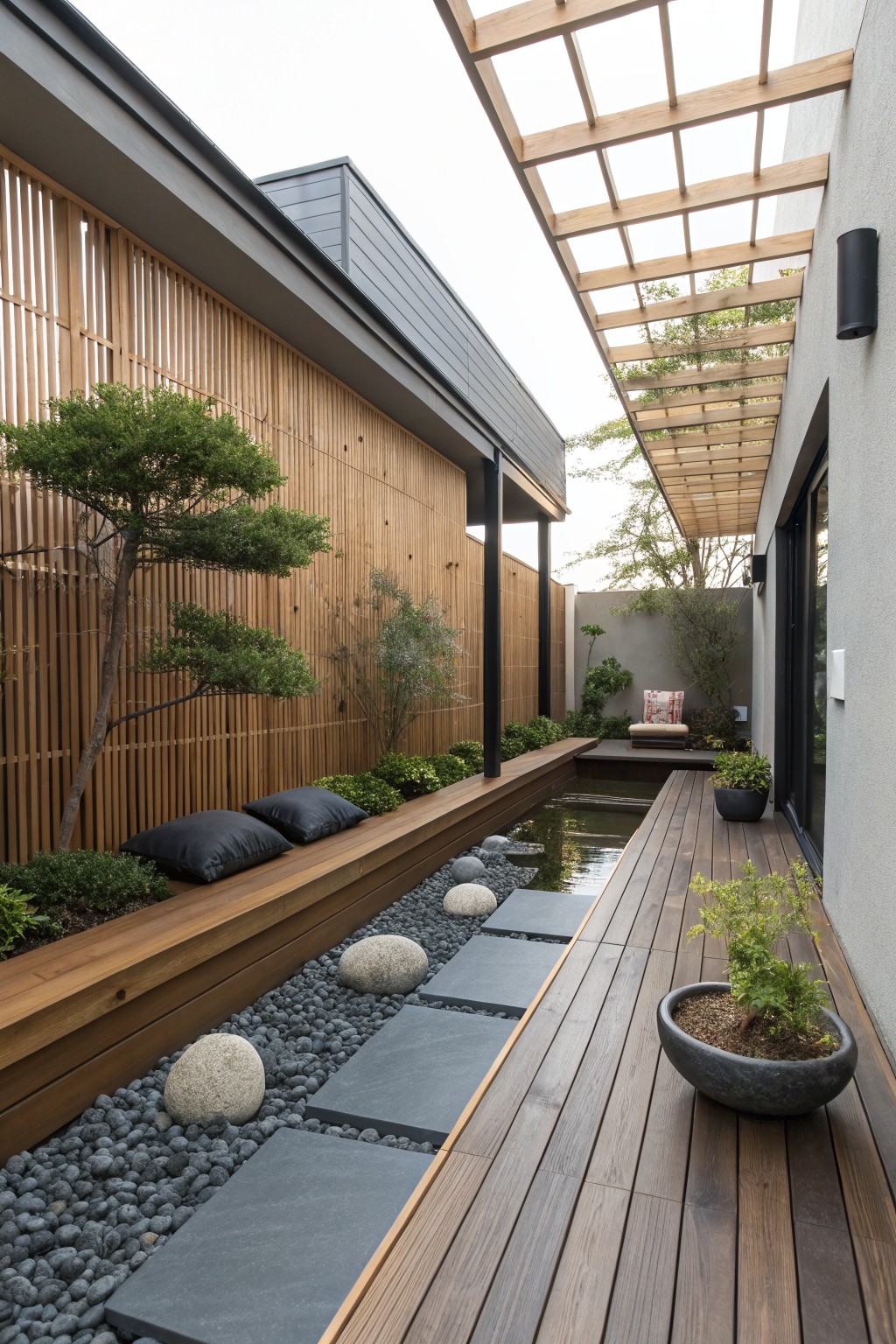
A tall slatted wood screen along one side of a deck or patio gives solid privacy without making the space feel boxed in. The gaps let air move through and keep the area from going dark, which works well on narrow side yards or townhouse lots where neighbors sit close.
Place the screen where the main sight line runs, then add a few low plants in front so the wood does not stand alone. This setup suits most deck sizes and pairs easily with simple seating or a narrow water feature.
Vertical Wood Screens Backed By Plants

Vertical wood screens work well for outdoor seating areas because they create a solid barrier without making the space feel boxed in. The clean lines of the panels give structure while still letting some air and light through.
Planting dense layers of greenery right in front of the screen adds softness and fills any gaps over time. This approach suits homes with patios or poolside zones where you need separation from neighbors or the rest of the yard.
Tall Fences Create Private Outdoor Rooms
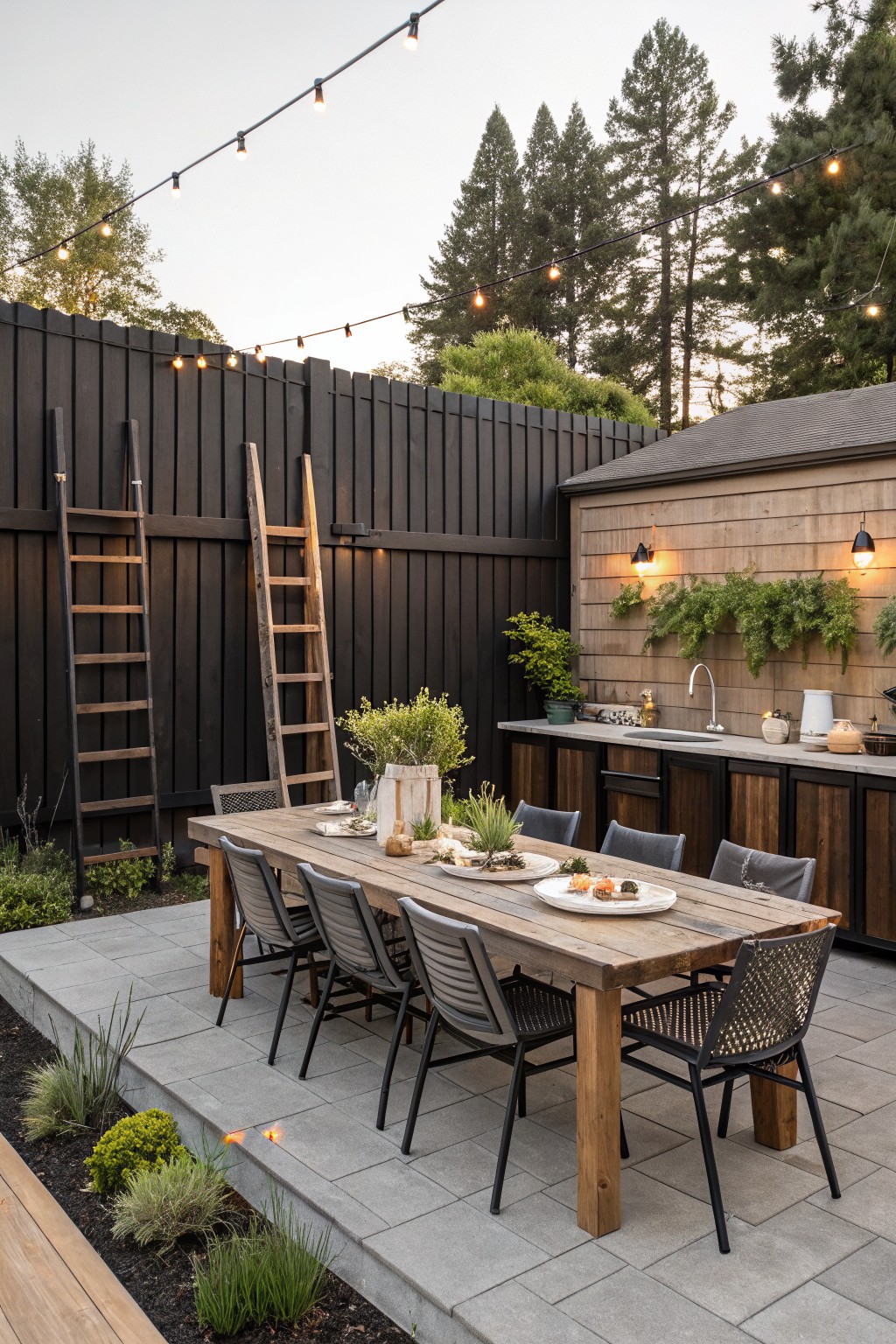
A tall fence is one of the simplest ways to make an outdoor dining area feel more private. The dark wood fence in this space wraps around the patio and dining table, cutting off views from the sides and giving the whole area a more enclosed feel without needing extra screens or curtains.
This approach works best in side yards or backyards where neighbors sit fairly close. Use a solid material and keep the height consistent so the fence actually blocks the line of sight. Just make sure the fence color and style match the house so it does not stand out too much.
Combine Tall Plants And Curtains For Privacy

Many decks and patios feel too open because there is nothing to block the view from nearby buildings. A row of tall plants placed right behind the seating creates a solid green screen that feels natural instead of closed off. Adding a curtain on one side gives you the option to pull it closed when you want more privacy without making the whole space feel boxed in.
This setup works especially well on rooftops or upper-level decks in the city. The plants handle most of the screening while the curtain lets you fine-tune how much light and air still come through. Just make sure the plants are in deep enough beds so they stay full and healthy over time.
Add A Natural Arbor For Private Backyard Seating
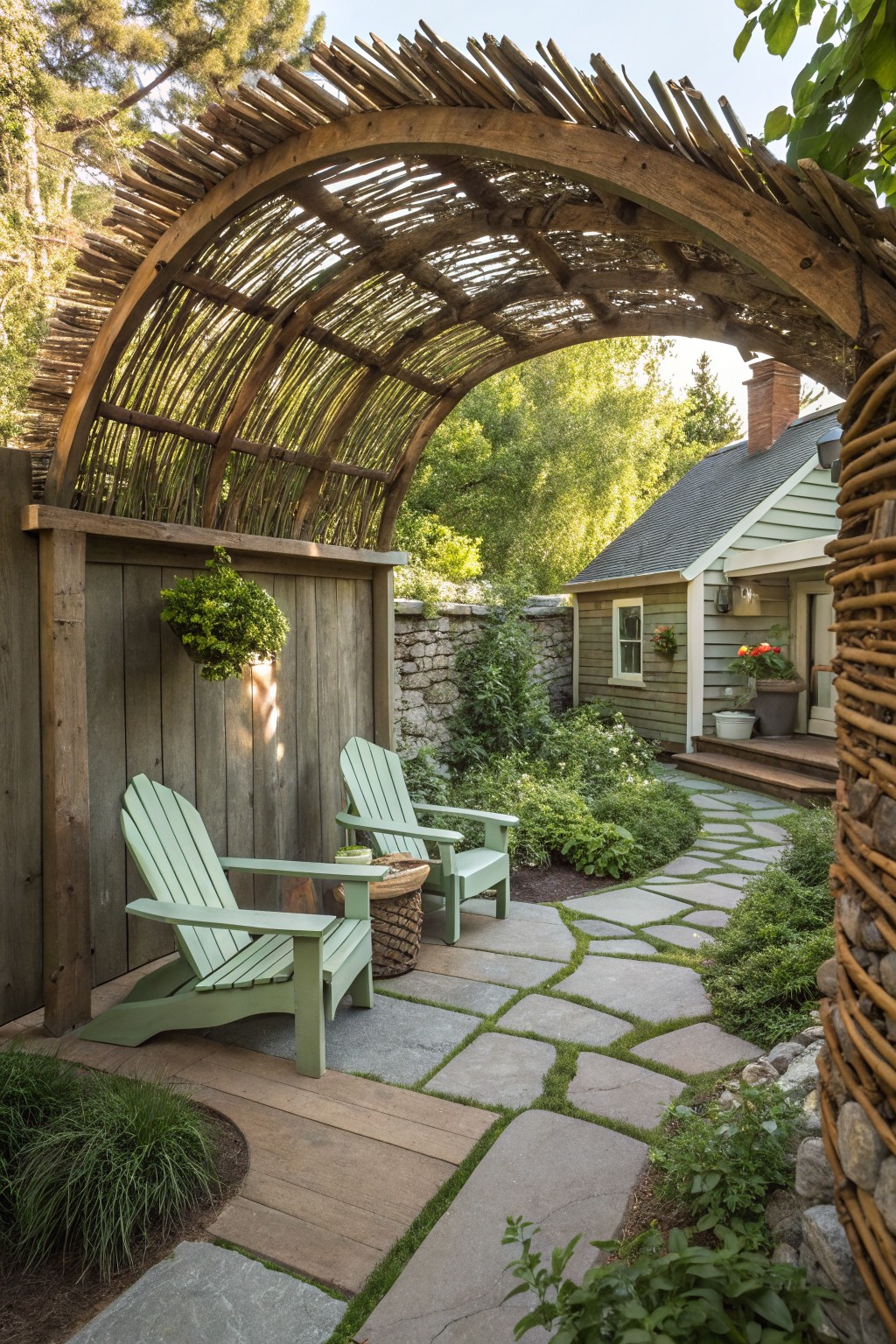
An arbor built from branches or rough timber gives a seating area a simple overhead screen. It blocks some of the view from above without making the space feel boxed in, and it works especially well when you want privacy but still need light and air.
This idea suits small patios or side yards where a full roof would be too much. Keep the base open with low planting and a clear path so the spot stays easy to use every day.
Wood Slat Screens For Side Privacy

A wood slat screen gives a balcony or small patio privacy from the side without turning the space into a box. The gaps between the slats let air and some light through, so the area still feels open while blocking the main sight line from next door.
This works best on upper floor balconies or tight decks where neighbors sit close. Mount the screen to the railing or wall and keep the rest of the space simple with just a table and chairs. Check that the wood is sealed for outdoor use so it lasts through rain and sun.
Screen a Swing with Tall Grasses

A swing feels more private when tall grasses sit on both sides. The plants block side views without closing the space in, and they soften the look of the deck edge.
This setup works on any porch or deck that faces a neighbor or a walkway. Keep the grasses at least four feet high and centered so the swing stays the main focus.
Wood Screens For Side Privacy

Many patios sit too close to neighbors or walkways, which makes them feel exposed. Wood screens placed along the sides block the view while still letting light and air move through the space.
They work especially well on pergolas or covered seating areas where you want some enclosure without building full walls. Try them on one or two sides first and keep the pattern open enough that the area does not feel closed off.
Pergola and Stone Wall for a Private Seating Nook

A pergola set against a low stone wall gives a seating area real enclosure without making it feel boxed in. The overhead structure adds shade and a sense of ceiling, while the wall blocks sight lines from the rest of the yard. Together they turn an open patch of gravel into a spot that feels set apart.
This setup works well in medium to large gardens where you want a defined seating zone that still feels connected to the landscape. Keep the planting simple along the wall so the structure stays the main privacy element. It suits older homes or any yard with existing stonework, and it avoids the need for tall fencing that can feel harsh.
Use a Fireplace Wall for Built-In Privacy

A solid wall with a built-in fireplace can turn an open patio into a more private spot without adding extra screens or fencing. The wall blocks views from one side while the fire gives the area a natural reason to gather in the evening.
This setup works well when the patio sits right against the house. Keep the wall height in line with the main sight lines you want to block, and choose a material that matches the house so it feels like part of the structure rather than an add-on.
Use Potted Plants To Frame Outdoor Seating

Large pots with shrubs or small trees can help turn an open bench into a more private spot. They add height and greenery on the sides, which blocks some sight lines from outside without needing full walls or screens. This setup works especially well on porches or decks that already have some structure.
It suits homes where you want a quiet seating area but still like the open feel and views. Place the pots at the ends of the bench or along the edges so they create a loose border. Keep the plants in scale with the space so they do not crowd the seating.
Lattice Screens For Outdoor Privacy

Lattice screens give a patio a sense of enclosure without making it feel boxed in. The open pattern lets light and air move through while cutting off direct sight lines from outside.
They work best on side yards or back patios that sit close to neighboring homes. Mount the panels to existing posts or walls, then set a few tall planters in front to soften the look and add another layer of coverage.
Tall Shelving for Outdoor Privacy

Tall shelving works well when you need to block a direct view without closing off the whole space. It adds height along one side of a seating area and turns an open corner into something that feels more contained and private.
Set the unit on the side that faces the neighbor or the street and keep the other sides more open. This setup works best on patios or decks that already have at least one solid wall or fence behind it.
Layer Tall Plants Along Fences for Privacy

Adding a row of tall narrow plants in front of a fence is one of the simplest ways to make an outdoor seating area feel more enclosed. The plants soften the hard lines of the fence and create a living screen that blocks views without making the space feel closed in.
This approach works best along property lines or shared walls where you need height but want to avoid a solid barrier. Pick upright evergreens or slender shrubs that stay narrow, and space them evenly so they fill in over time without crowding the seating.
Vines Overhead Create Natural Privacy

Growing vines across a pergola is one of the simplest ways to add privacy to an outdoor dining area. The plants form a soft ceiling that blocks views from above while still letting in light, and they work especially well when the space is already partly enclosed by walls or fencing.
This approach suits homes with existing brick or wood structures where you want a natural screen rather than a solid roof or tall fence. Start with fast-growing climbers in large pots or planted beds, and let them spread across the beams. Just watch how much shade they create once they fill in, since some vines can get quite dense.
Slatted Pergolas For Patio Privacy
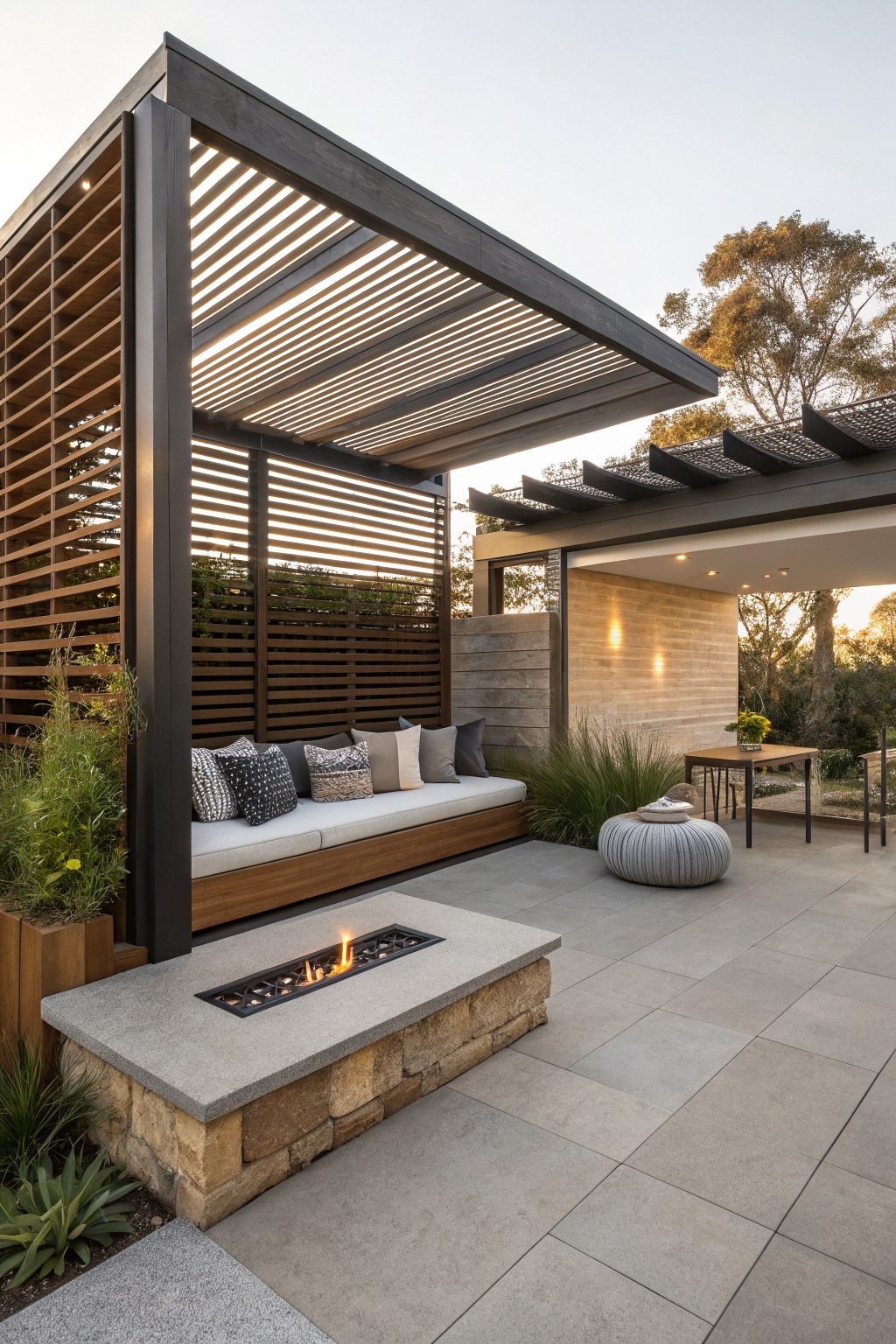
A slatted overhead structure paired with side screens gives you privacy without making the space feel closed in. The gaps let light and air through while blocking views from nearby windows or neighboring yards, which makes the seating area feel more like a separate room.
This setup works especially well on smaller patios or decks where you need a defined zone for a bench and fire pit. It suits homes with modern or clean-lined architecture and pairs nicely with simple plantings along the edges to soften the look. Just keep the slat spacing even so the shade feels balanced rather than patchy.
Mount Living Walls on a Fence for Privacy

One simple way to make a patio feel more private is to cover sections of the fence with living walls. These planted panels add greenery at eye level without eating up floor space, and they turn a basic wood wall into something that actually blocks the view from outside.
They suit smaller yards especially well, where you want a seating spot to feel tucked away. Group a few different sizes together on the wall behind your table, and keep the plants low maintenance so the setup stays easy over time.
Frequently Asked Questions
Q: How do I block the view from a neighbor’s upstairs window without building anything tall? A: Set a row of large planters with evergreen shrubs along the edge of your patio. Position them so the tops reach the sight line from above. Shift the planters slightly each season as the plants grow.
Q: Will fabric curtains for privacy last through summer storms? A: Pick outdoor canvas or mesh that breathes and dries fast. Tie them to sturdy hooks or rods so you can roll them up quick when wind picks up. Store them indoors over winter to avoid tears.
Q: What if my deck railings are too low for most screen ideas? A: Mount narrow lattice panels right on the railings and let vines climb them. The vines fill in the open spaces over one season. This keeps the deck open while adding cover where you sit.
Q: How can I make a cheap pallet screen look finished instead of rough? A: Sand the wood smooth first and add a coat of exterior stain in a color that matches your furniture. Lean two pallets together in an L shape behind your chairs. Tuck a few potted flowers at the base to soften the edges.