I often find that choosing paint for the outside of a house comes down to seeing how it sits against a black roof in real daylight.
The roof color tends to deepen shadows along the eaves so the wall paint needs enough warmth or saturation to stay visible without clashing.
I usually tape up large samples and check them at different hours because the same color can look flat by noon and almost too bright by dusk.
Landscaping and any stone or brick details also pull the overall look together in ways that are hard to predict from a fan deck alone.
Testing first saves a lot of regret later.
Deep Teal Siding
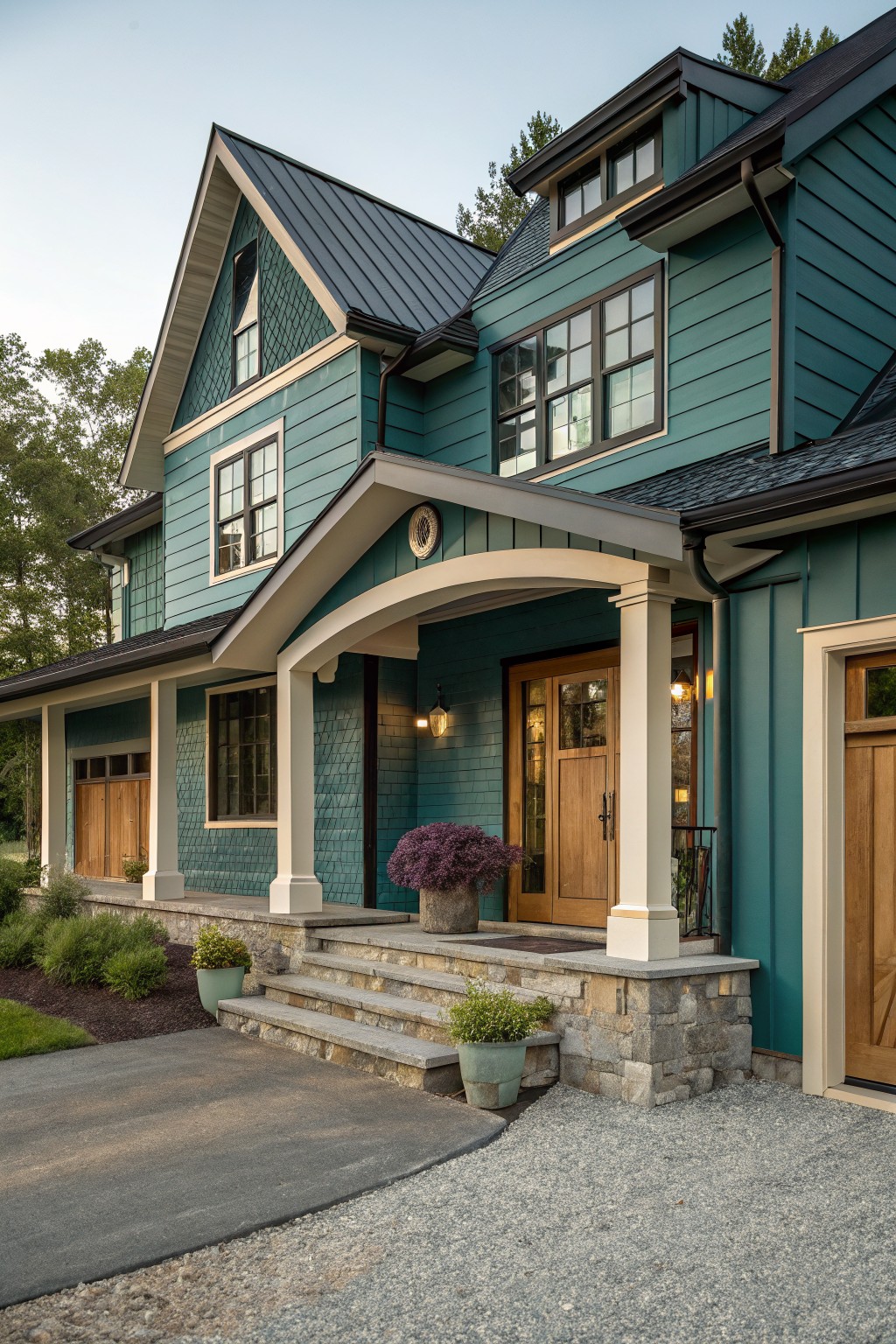
This deep teal works well on exteriors that need a bit more color without going too bright. It sits somewhere between green and blue, giving the siding a rich look that still feels grounded. The color reads very close to Sherwin Williams Teal Trust, Benjamin Moore Deep River, or Behr Oceanic Teal.
It holds up nicely against a black roof because the contrast keeps the whole house from feeling flat. The teal also pairs easily with wood doors and stone details, though it can look a little stark if the trim is too bright white. Many homes in wooded or coastal settings use shades like this for that reason.
Coral Pink Siding

This coral pink brings a soft warmth to the whole house without feeling too sweet. It sits right between peach and salmon, which gives it enough depth to stand out against a black roof. Colors in this range often read closest to Benjamin Moore Coral or Sherwin Williams Coral Reef, with Behr Coral Cloud and Farrow & Ball Red Earth as other close options.
The color works best on simple shapes where the roof can do the heavy contrast work. It tends to pick up a bit of orange in strong sun, so it helps to test a large patch on the actual siding before committing.
Bold Blue Siding
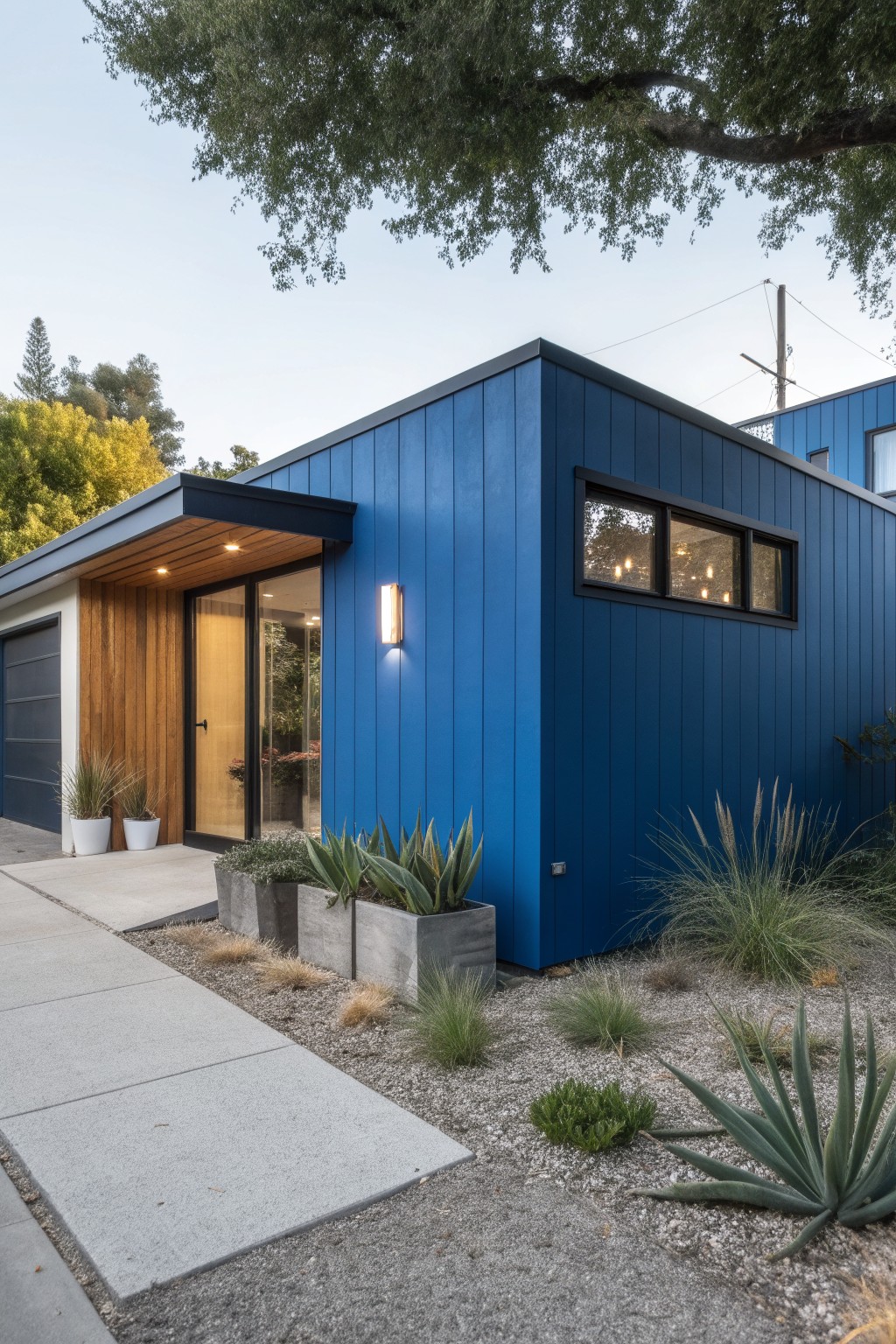
This bold blue paint gives the house a strong, modern feel right away. It falls into the deep saturated blue family and holds its own next to a black roof without looking too heavy.
The color stays cool and clean in bright light. It works best on simple shapes where the blue can stand out, and it pairs easily with wood accents or light concrete. Just watch how it shifts in full sun, since some blues can lean greener than expected once they are up on the walls.
Soft Green Siding
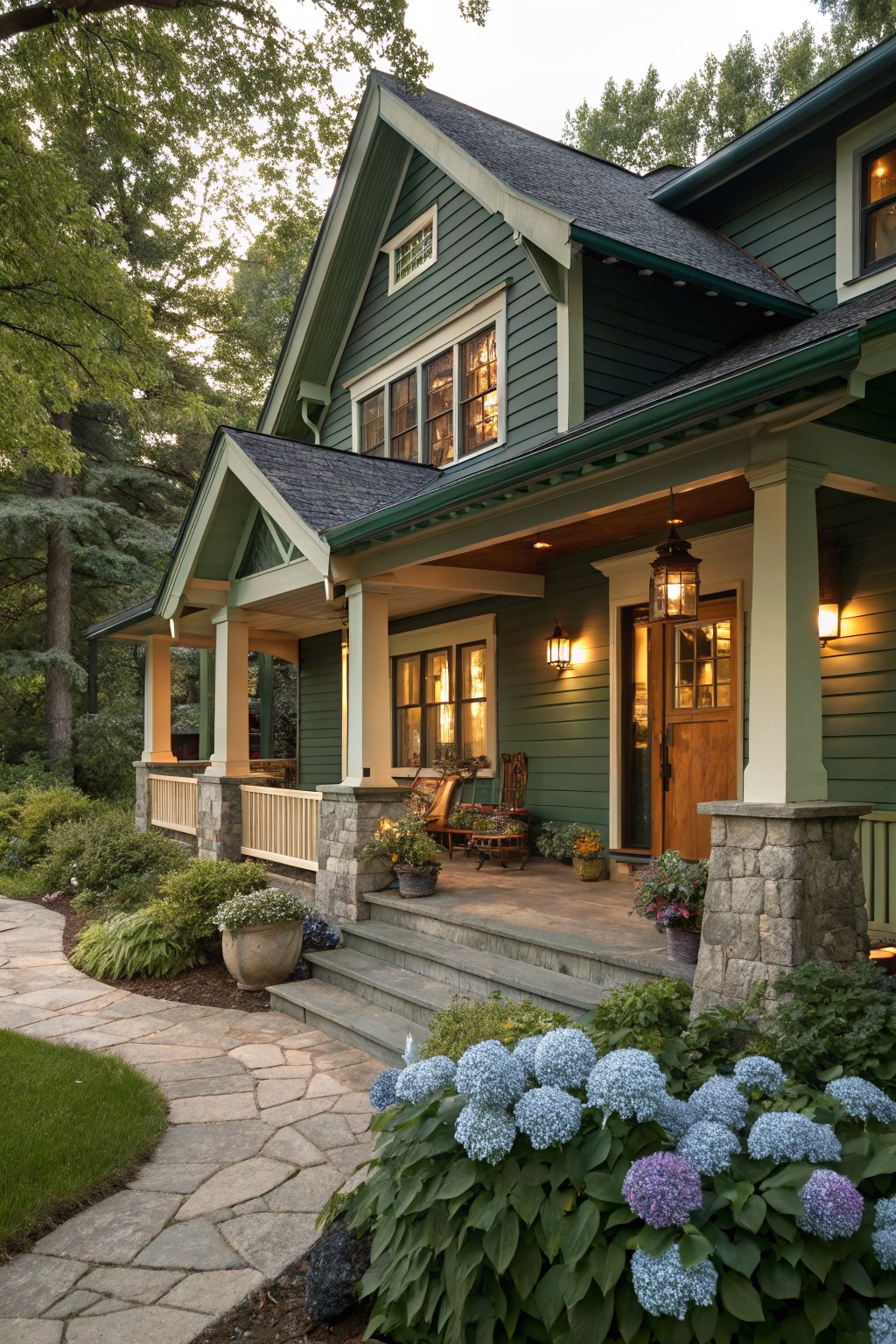
A deep muted green on the siding gives this house a solid, settled look that holds its own next to a black roof. The color sits in that cool green family with just enough gray to keep it from feeling too bright or leafy outside.
It works best on homes that already have stone or wood details because the undertones stay calm next to those materials. Stick with warm white trim and avoid adding too many other strong colors if you want the green to stay the main feature.
Bold Turquoise Siding
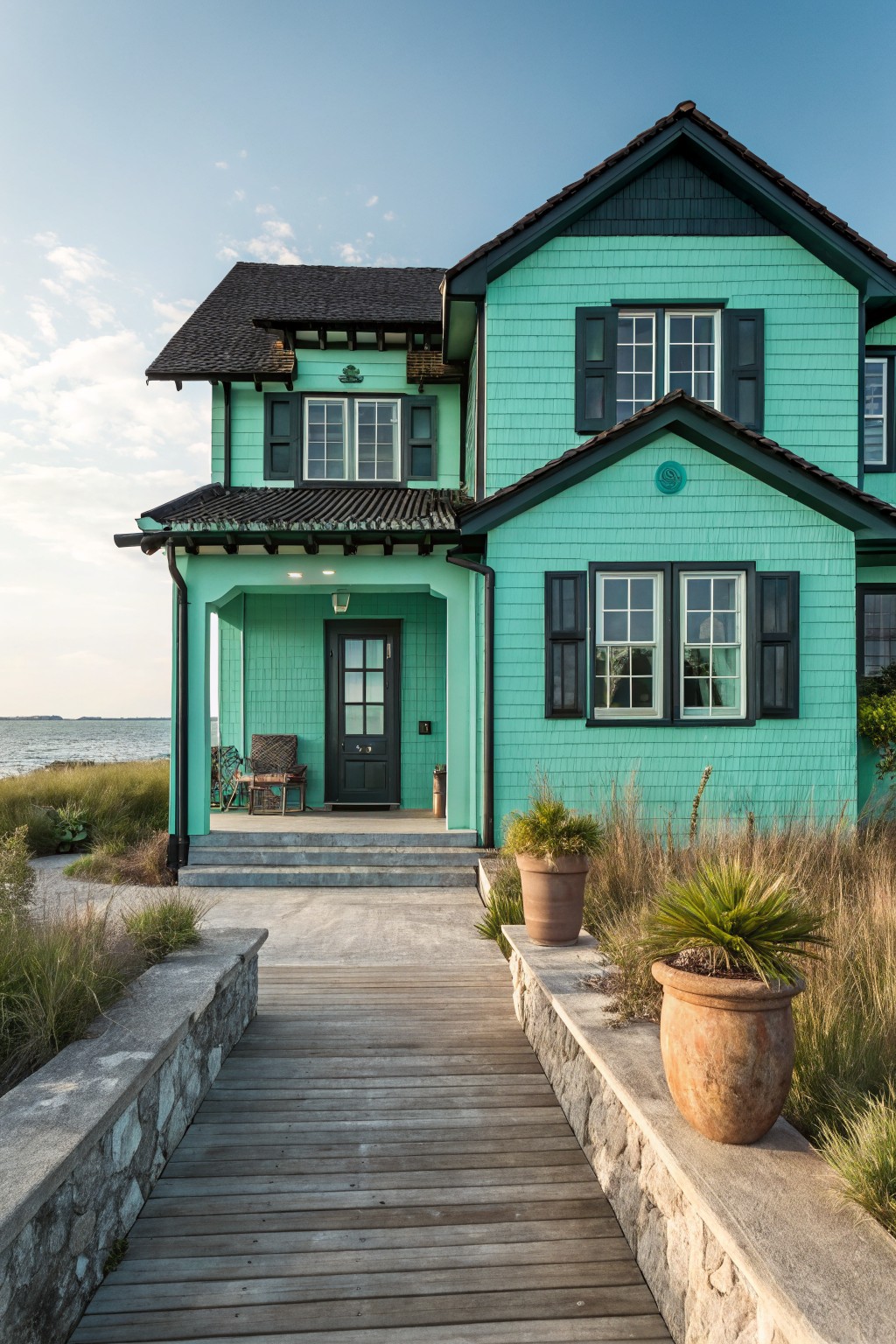
A bold turquoise green works well on this house. It has that clear, slightly cool tone that feels fresh without going too bright or too pale. The color stands out nicely against the black roof and keeps the whole exterior looking crisp.
It has a hint of blue in the mix so it reads cooler in bright light. This kind of turquoise pairs best with dark roofs and simple trim. It suits coastal homes or any place that gets plenty of sun. Watch for strong yellow undertones in other shades if you want the same clean look.
Warm Terracotta Siding
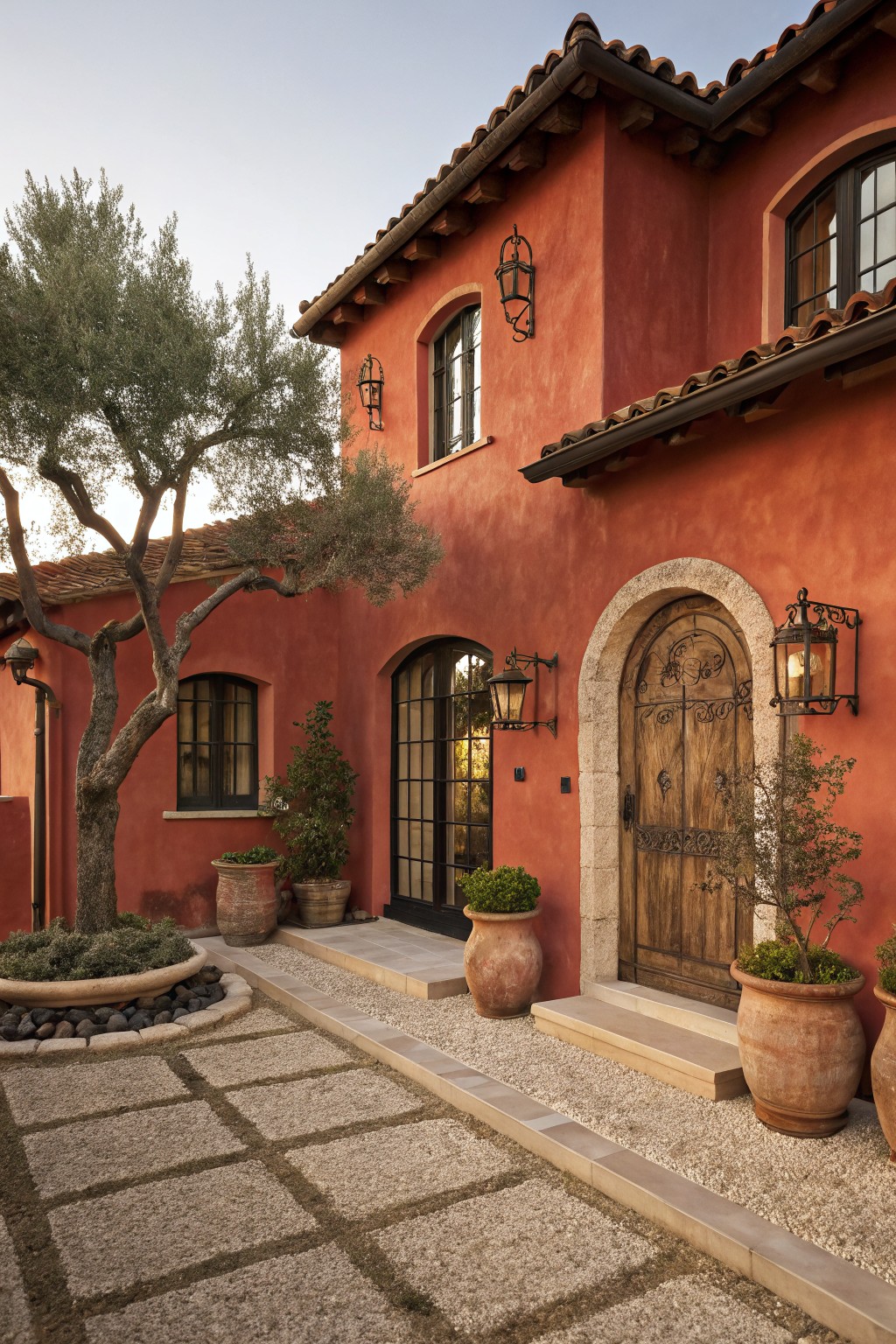
This warm terracotta red gives an exterior real presence without feeling harsh. It sits in that earthy orange-red family and brings out the texture of stucco or plaster nicely. The color holds up well next to a dark roof because the warmth balances the deep tones overhead. Matches that come close include Benjamin Moore Caliente, Sherwin Williams Rookwood Red, Behr Moroccan Spice, and Farrow & Ball Red Earth.
It carries a soft orange undertone that shifts a bit depending on the light, so it can look more golden in full sun. This shade works best on homes with stone or wood accents and pairs cleanly with black or dark brown windows and doors. Just watch the finish, since a flat paint can make it feel softer while a satin version will show more depth.
Warm Golden Yellow Siding

This golden yellow on the siding gives the house a strong but friendly look. It is a bold warm color that holds its own next to a black roof without feeling too bright or harsh.
The shade has a touch of orange in it that keeps it from looking lemony or cool. It works best on traditional homes and pairs easily with white trim and brick details.
Deep Indigo Purple Siding
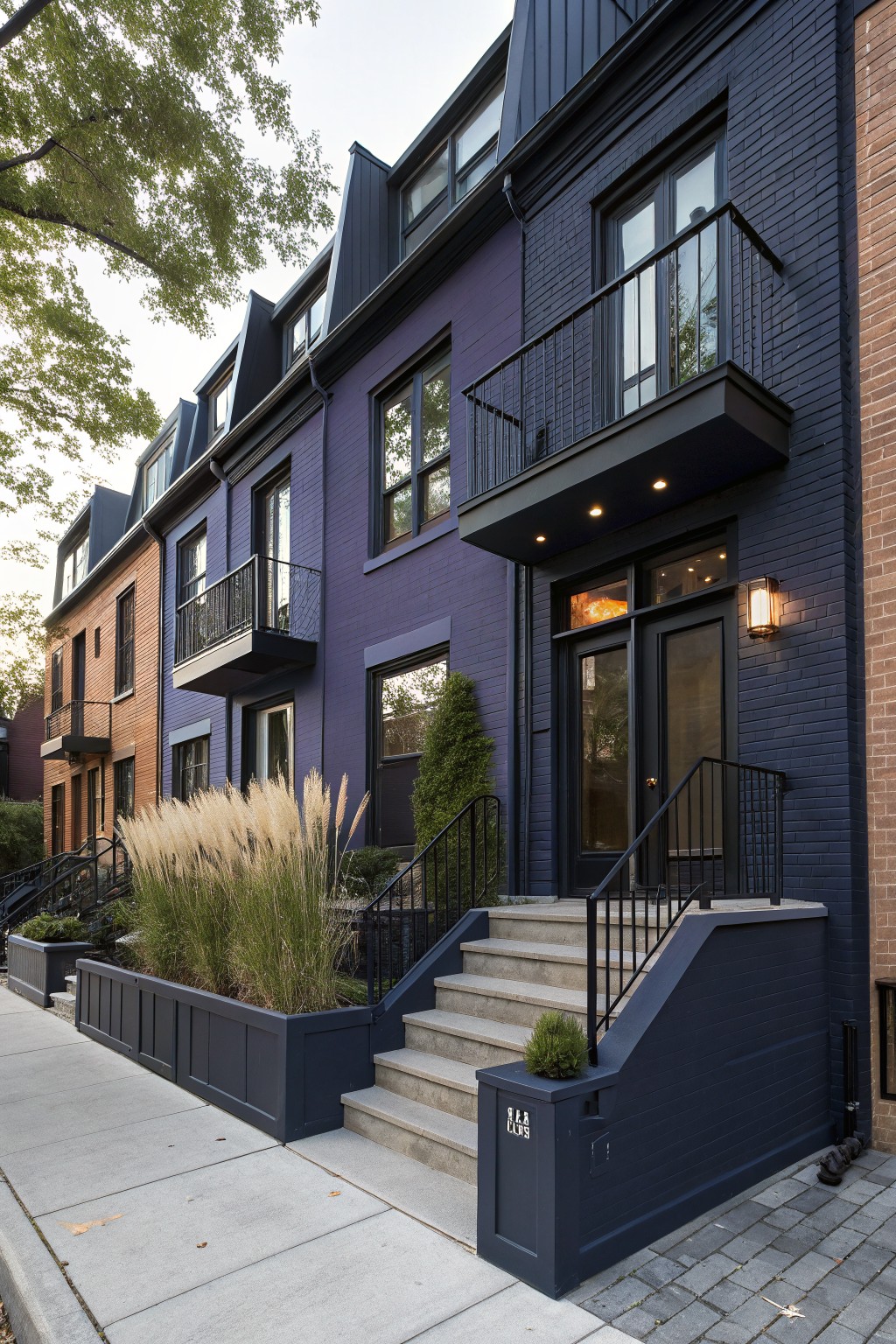
This deep indigo purple brings a bold but steady look to the outside of a house. It has enough richness to hold its own next to a black roof, yet it still feels calm rather than loud.
The color sits on the cooler side with blue undertones that come through in natural light. It works best on homes with clean lines and pairs easily with black trim and windows. Just watch the finish, since a flat one can make it feel heavier than a satin or eggshell.
Deep Purple Siding
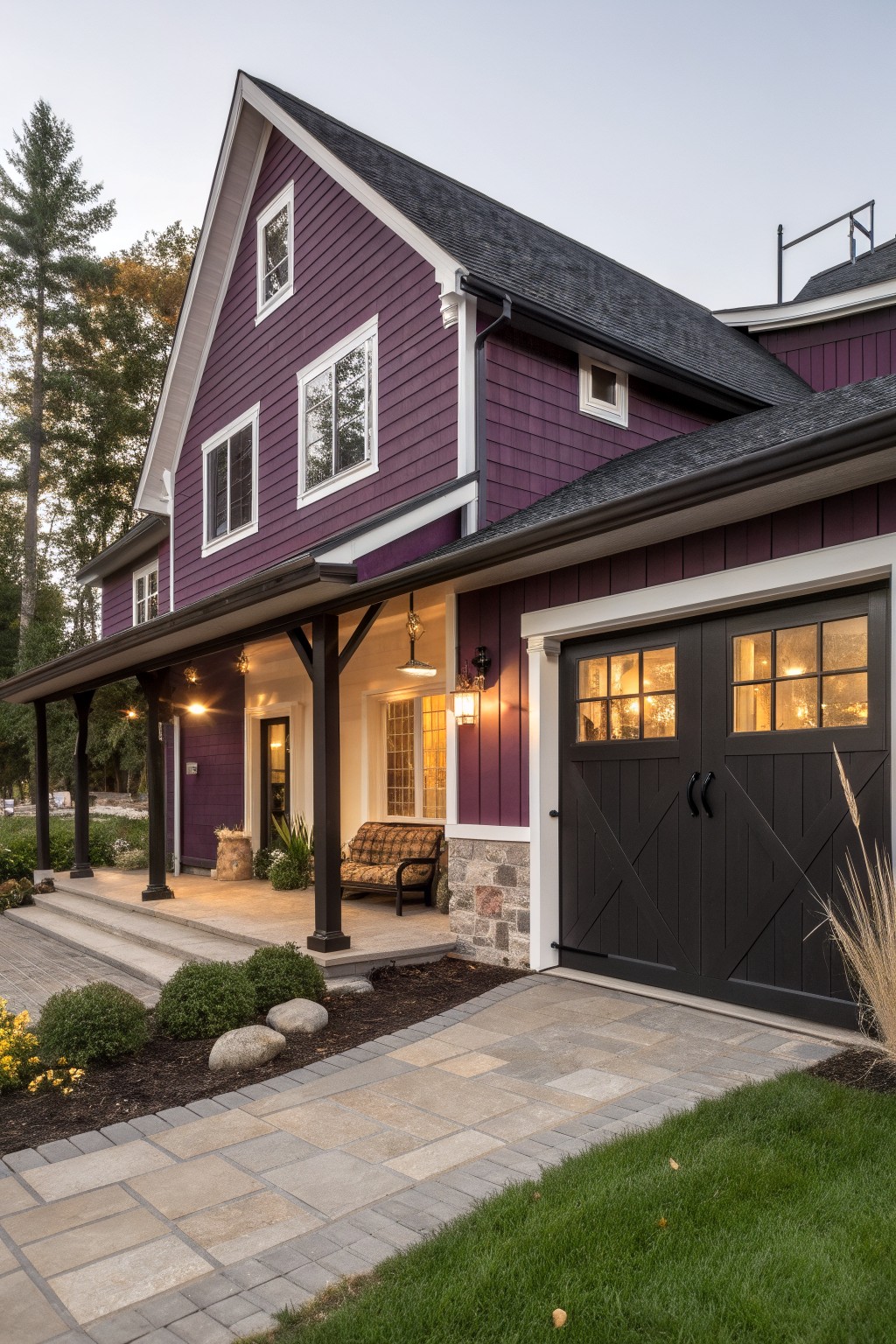
A deep purple like the one on this siding brings a bold feel to the whole exterior. It falls into that rich purple color family that feels strong without turning too bright, which helps it hold its own next to a black roof.
The shade carries cool undertones that read steady in daylight. It pairs cleanly with white trim and dark accents like garage doors or windows, and it works best on homes that can handle a bit of color without looking too busy.
Bold Lime Green Siding
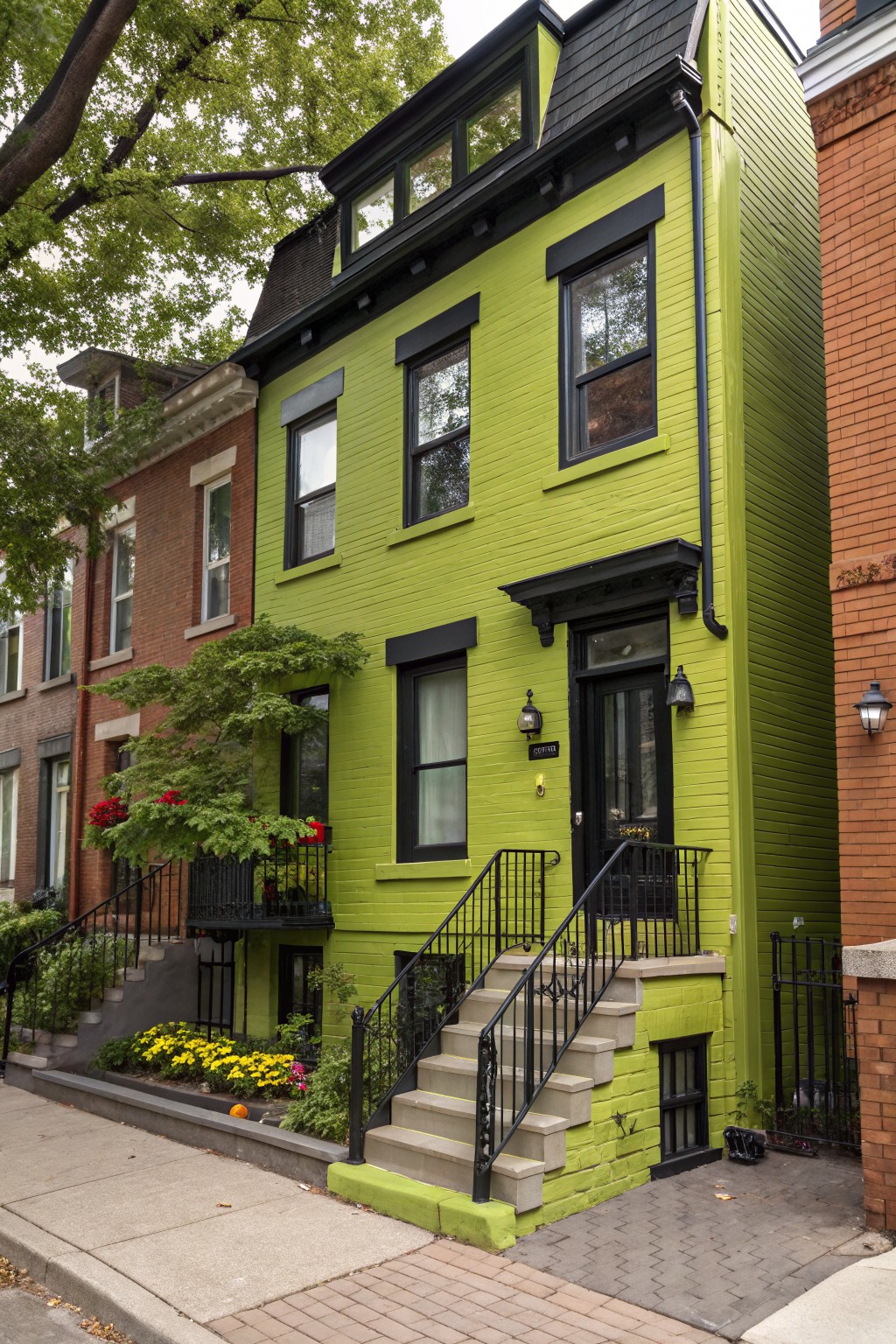
This bright lime green brings a strong pop to exterior walls. It is a vivid chartreuse shade that feels fresh and energetic, especially when paired with a black roof.
The color has cool undertones that keep it from reading too yellow outdoors. It works well on homes with black trim or windows, though it can look harsh if the surrounding landscaping stays too sparse or the light stays flat most of the day.
Dark Sage Green Siding
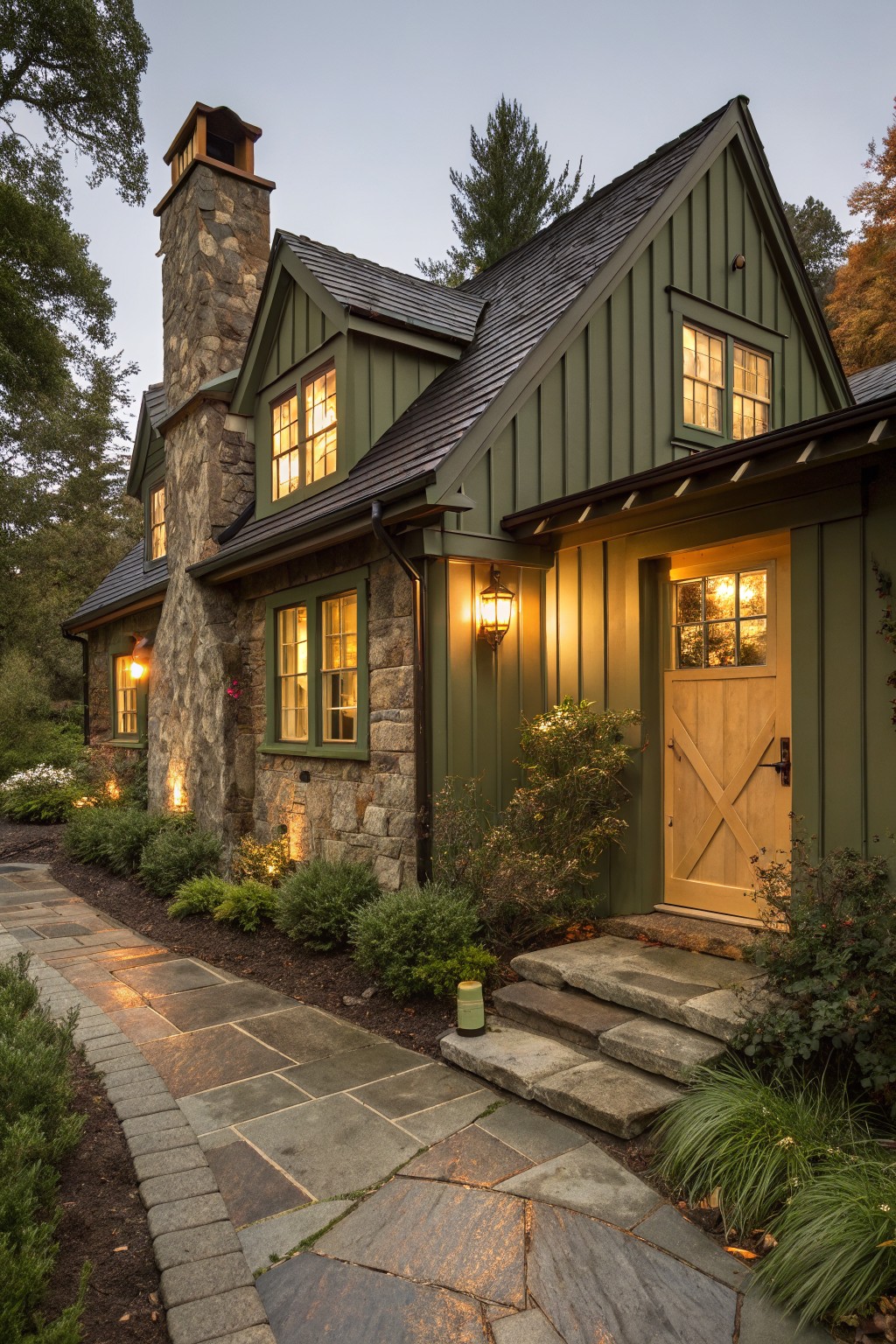
This dark sage green works well on exterior siding when paired with a black roof. It reads as a muted olive green with some gray in the mix and feels closest to Sherwin Williams Evergreen Fog or Benjamin Moore Saybrook Sage.
The color stays steady in different light and pairs easily with stone or wood accents. It suits older homes or cottages best and looks clean when the trim stays light.
Bold Teal Siding
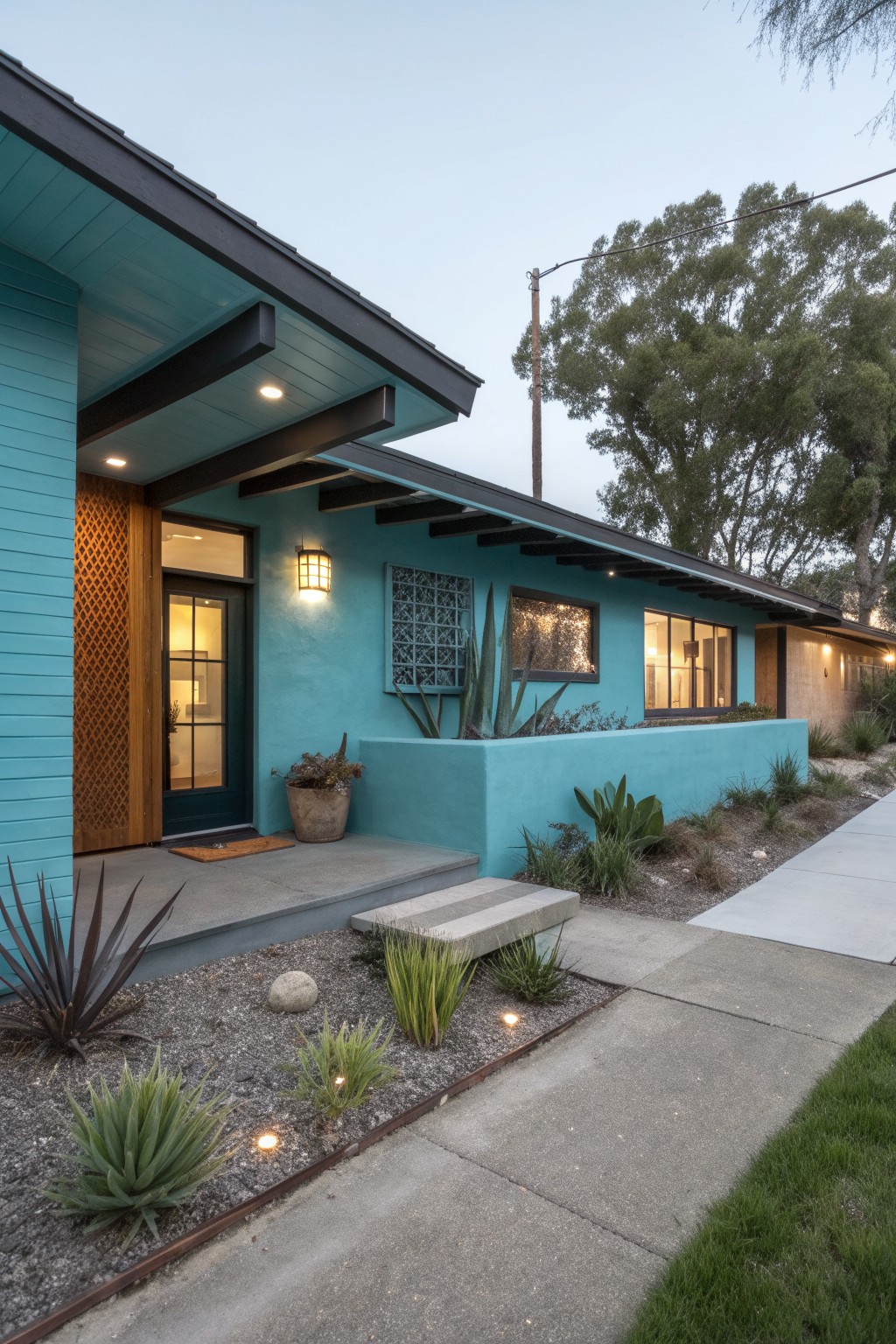
This turquoise shade gives the house a clean and lively look that works especially well with a black roof. It is a cool blue-green that feels fresh without being too loud. Homeowners often choose it when they want something bolder than a standard blue but still easy to live with on the outside.
The color sits a little on the green side and can look slightly deeper when the light fades. It pairs nicely with wood accents and simple concrete areas. Just test it on a large patch first since turquoise can shift depending on the time of day and surrounding greenery.
Red Brick Siding
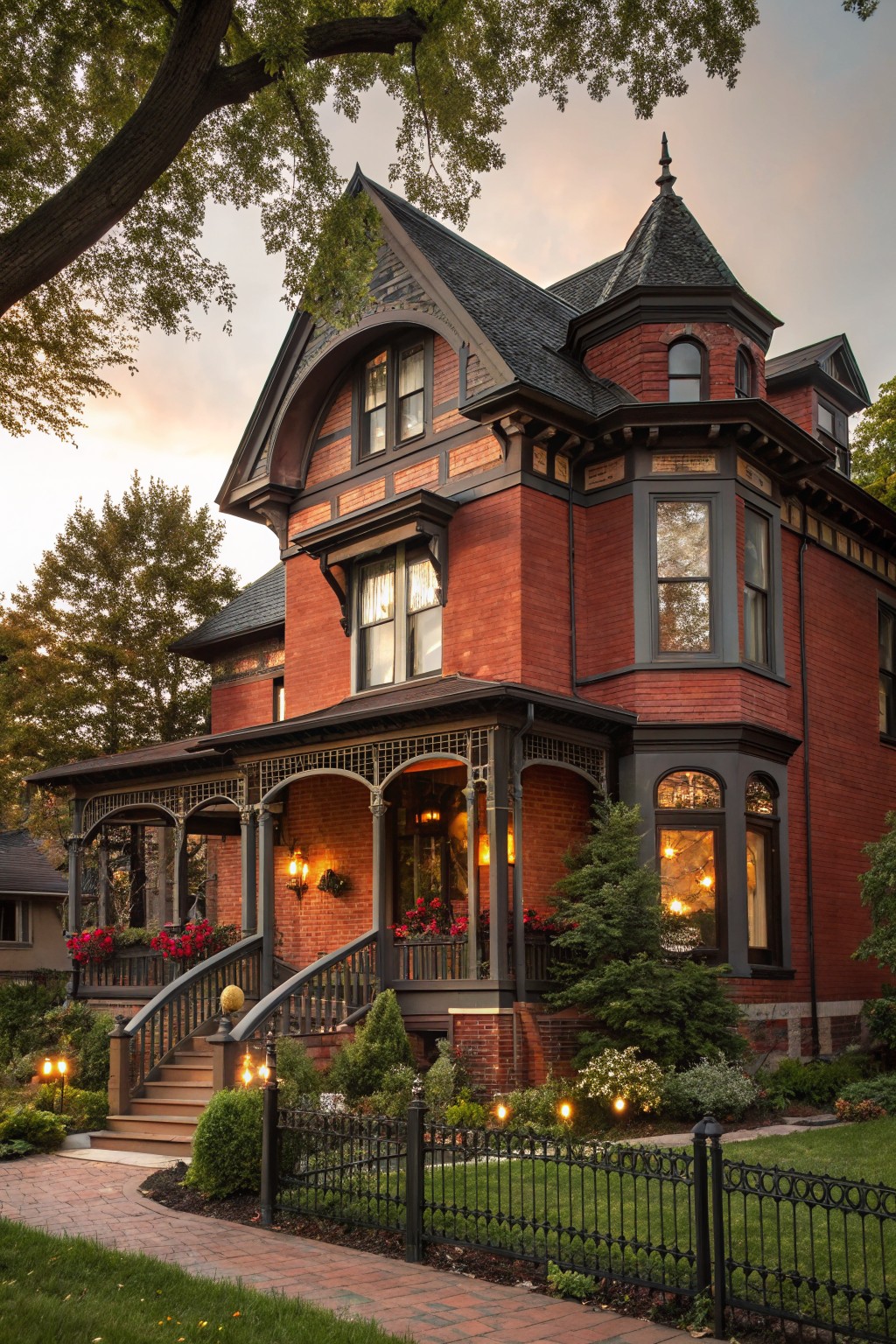
A rich red brick color gives an exterior real presence without feeling too modern. It reads as a deep, saturated red that still keeps the classic brick look many older homes rely on.
This shade sits on the warmer side with some orange undertones that show up more in full sun. It works especially well with black roofs and trim because the contrast keeps the house from looking flat or heavy. Test samples on the actual siding first since brick paint can shift quite a bit once it is up.
Golden Mustard Yellow Siding

This siding is a bold golden yellow with warm undertones that keep it from looking too bright. It stands out nicely against the black roof while still feeling grounded next to the wood and stone.
The color has a slight orange lean that helps it blend with natural materials rather than fight them. It suits modern homes in open settings where you want something cheerful but not overpowering.
Earthy Terracotta Orange Siding

This house uses a warm terracotta color on the exterior walls. It is a rich, earthy orange-red that feels grounded and a little bold at the same time. The color sits nicely against the black roof and gives the whole place a Mediterranean feel without looking too bright or modern.
Terracotta like this usually has some red and brown undertones, so it reads warmer in morning light and a bit deeper when the sun is low. It pairs well with natural wood doors, stone trim, and black ironwork. Just watch the depth if your house gets full sun all day, since a lighter version can start to look washed out next to dark roofing.
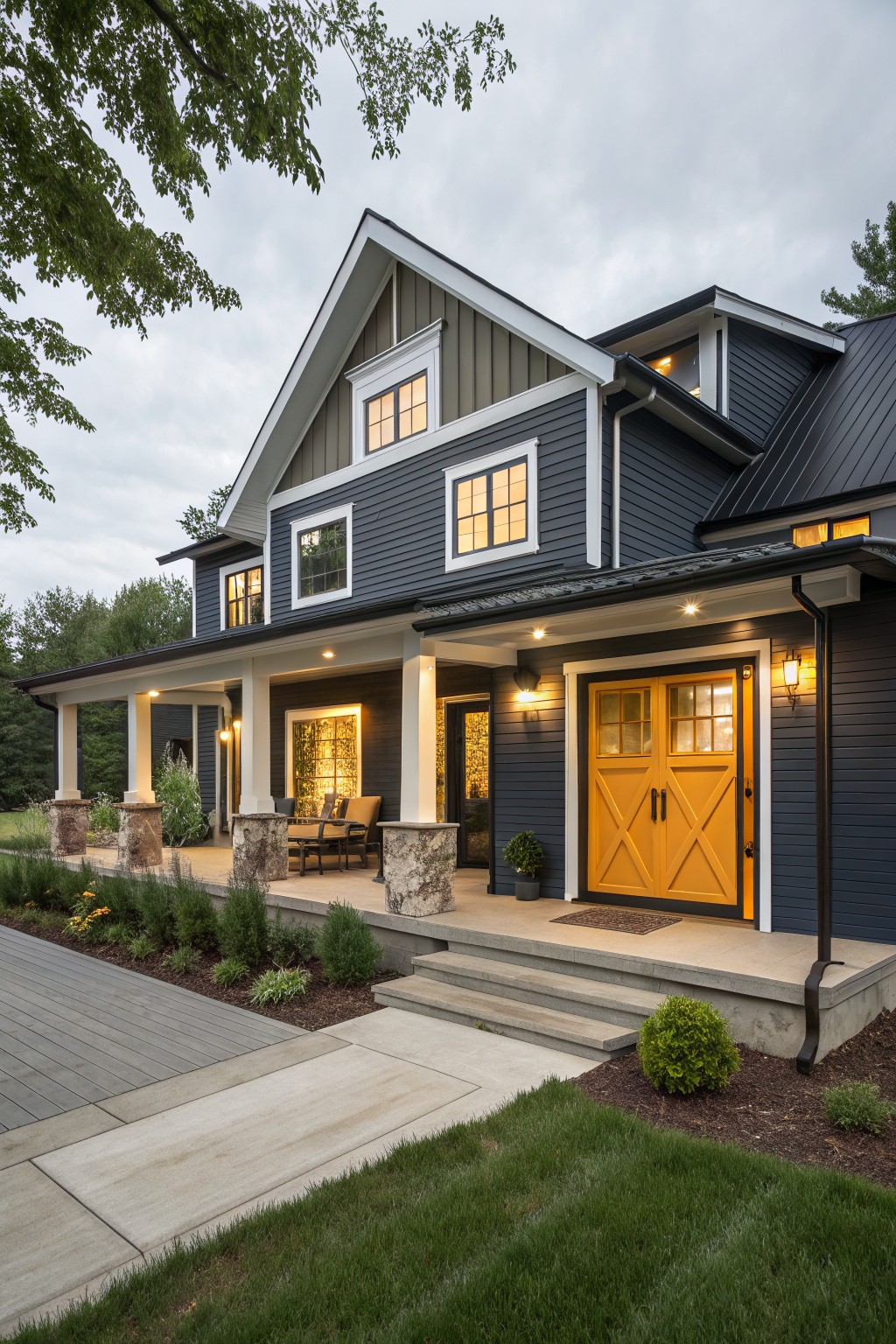
This deep navy blue siding works well with a black roof because it gives the house a strong but balanced look. It reads as a cool, slightly grayish navy rather than a bright blue. Shades like Sherwin Williams Naval, Benjamin Moore Hale Navy, or Behr Deep Blue Sea sit close to this color.
It holds up nicely next to white trim and keeps the whole exterior from feeling too heavy. Navy like this can shift a bit darker in low light, so testing a sample on the actual wall helps make sure it still shows enough blue during the day.
Classic Deep Blue Siding
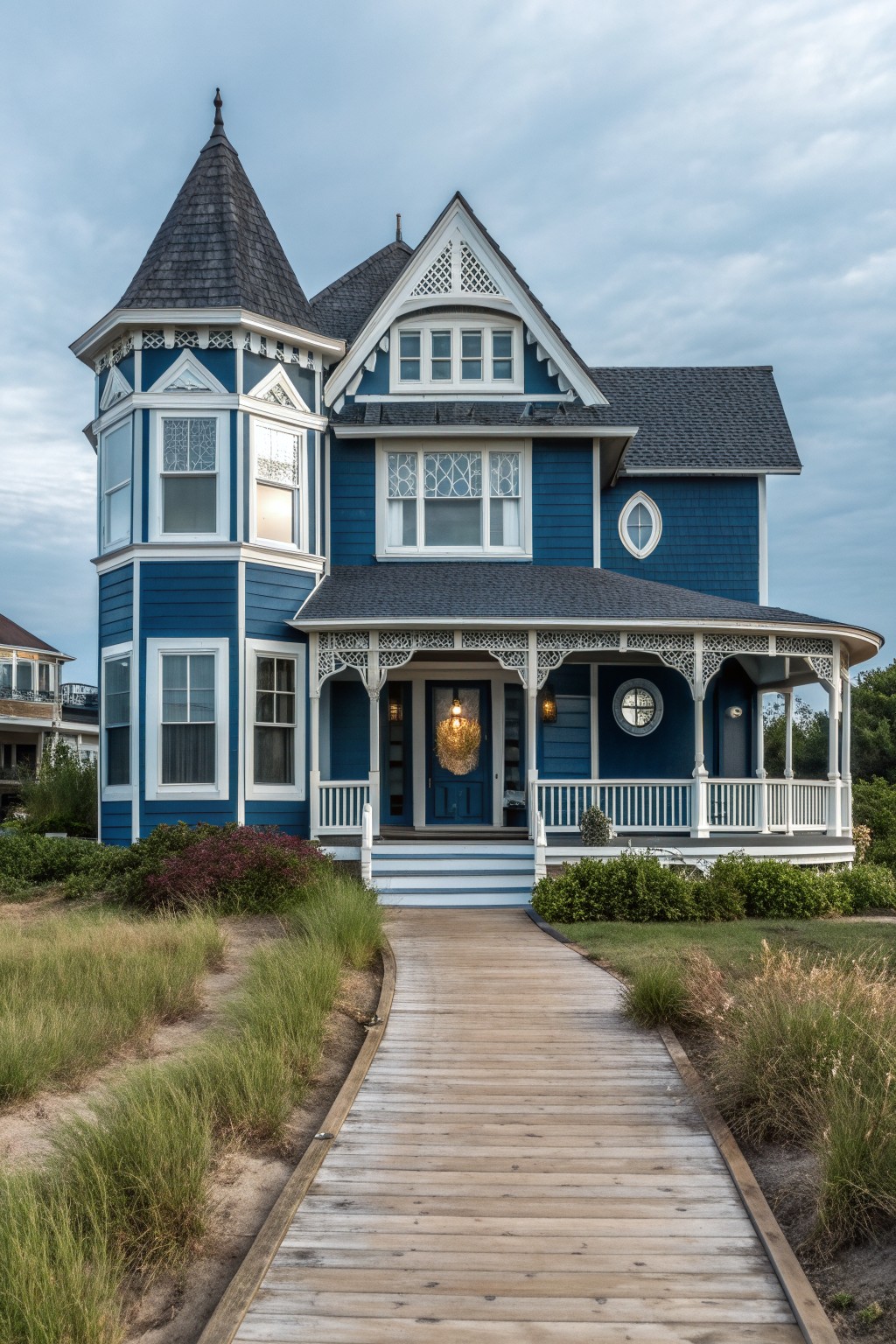
A deep blue on the exterior siding makes a strong statement while still working with a black roof. This color family brings depth without turning too dark or heavy. It has enough saturation to stand out against lighter trim and natural surroundings.
The shade sits somewhere between a classic navy and a brighter blue. It reads very close to Benjamin Moore Hale Navy or Sherwin Williams Naval. Behr Midnight Blue and Farrow & Ball Stiffkey Blue are also close in feel. The cool undertone helps it stay crisp outdoors.
Rich Berry Purple Siding
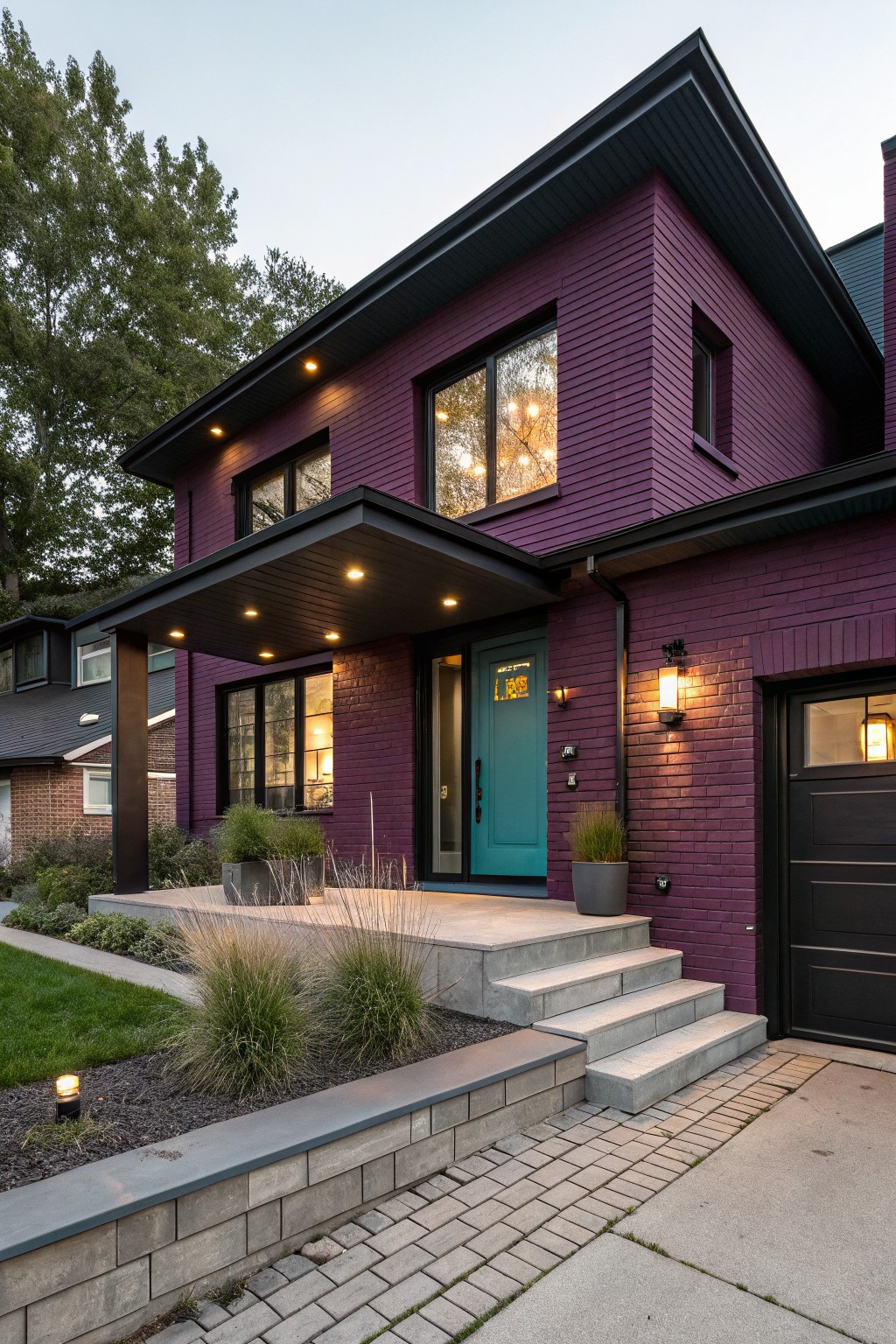
A deep purple like this one brings real boldness to an exterior without feeling too loud. It sits in a rich berry family that holds its own next to black roofing and gives the house a strong but still livable look. Many people like this kind of color because it feels fresh on newer builds while still working on older homes that need a bit more personality.
The shade carries a slight red undertone that keeps it from looking flat in different lights. It pairs nicely with black windows and trim, and it can handle a bright door color if you want extra contrast. Just watch how it reads next to any brick or stone on the house so the overall palette stays balanced.
Frequently Asked Questions
Q: How do I test one of these bold colors without wasting time and paint? A: Grab a few sample pots and paint large boards or patches on the siding. Check how the color shifts in morning light versus afternoon shade next to that black roof. This shows you exactly what you will live with once it covers the whole house.
Q: What if my windows and doors already have their own colors going on? A: Pull one shade from those existing details to guide your main wall pick. It keeps the bold look grounded instead of fighting everything else. A quick walk around the house usually points you to the right match.
Q: Do these deeper tones hold up okay in direct sun? A: They fade slower than you might expect if you choose paints labeled for exterior use. Touch up the south side every few years and the whole place stays looking fresh.