Blue exterior colors often shift quite a bit once they cover actual siding and face direct sunlight or late afternoon shadows.
They also have to sit comfortably next to the roof, trim, and any brick or landscaping without clashing as the seasons change.
I always test a patch on the house first.
Some blues stay balanced through rain and bright days while others pick up unexpected green or gray undertones that only show up outdoors.
Checking how a shade reads against the full setting at different times helps avoid surprises once the painting is done.
Soft Blue-Gray Siding
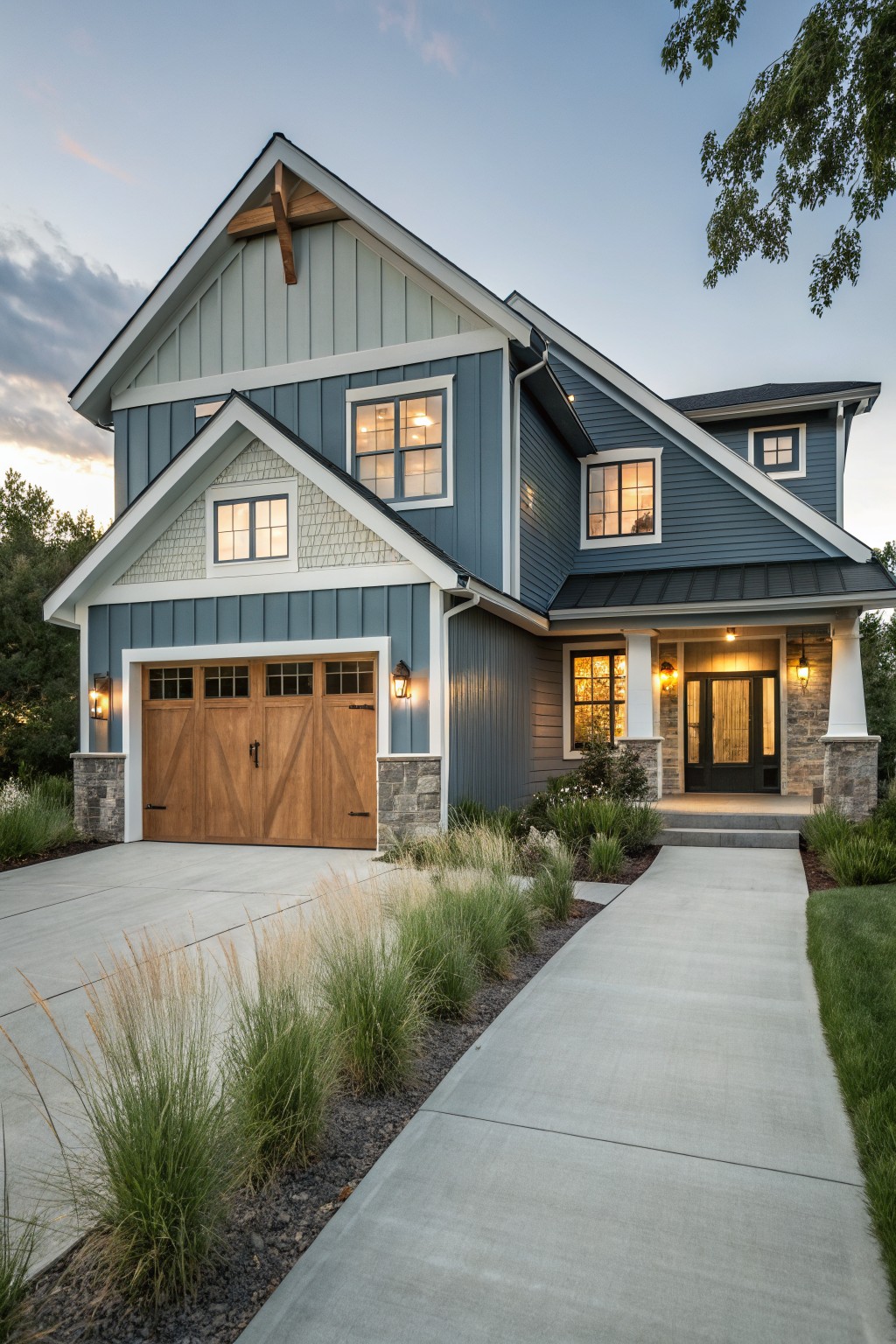
This house uses a soft blue-gray on the main siding. It is a muted blue that leans slightly toward gray, which keeps the color from feeling too bright or cold on a large surface.
The gray undertone helps it sit nicely next to stone and wood without clashing. It works well on homes with simple trim and pairs easily with white or off-white accents, though it can look flat if the light is very harsh or if there is no contrast at all.
Classic Blue Gray Cottage Siding
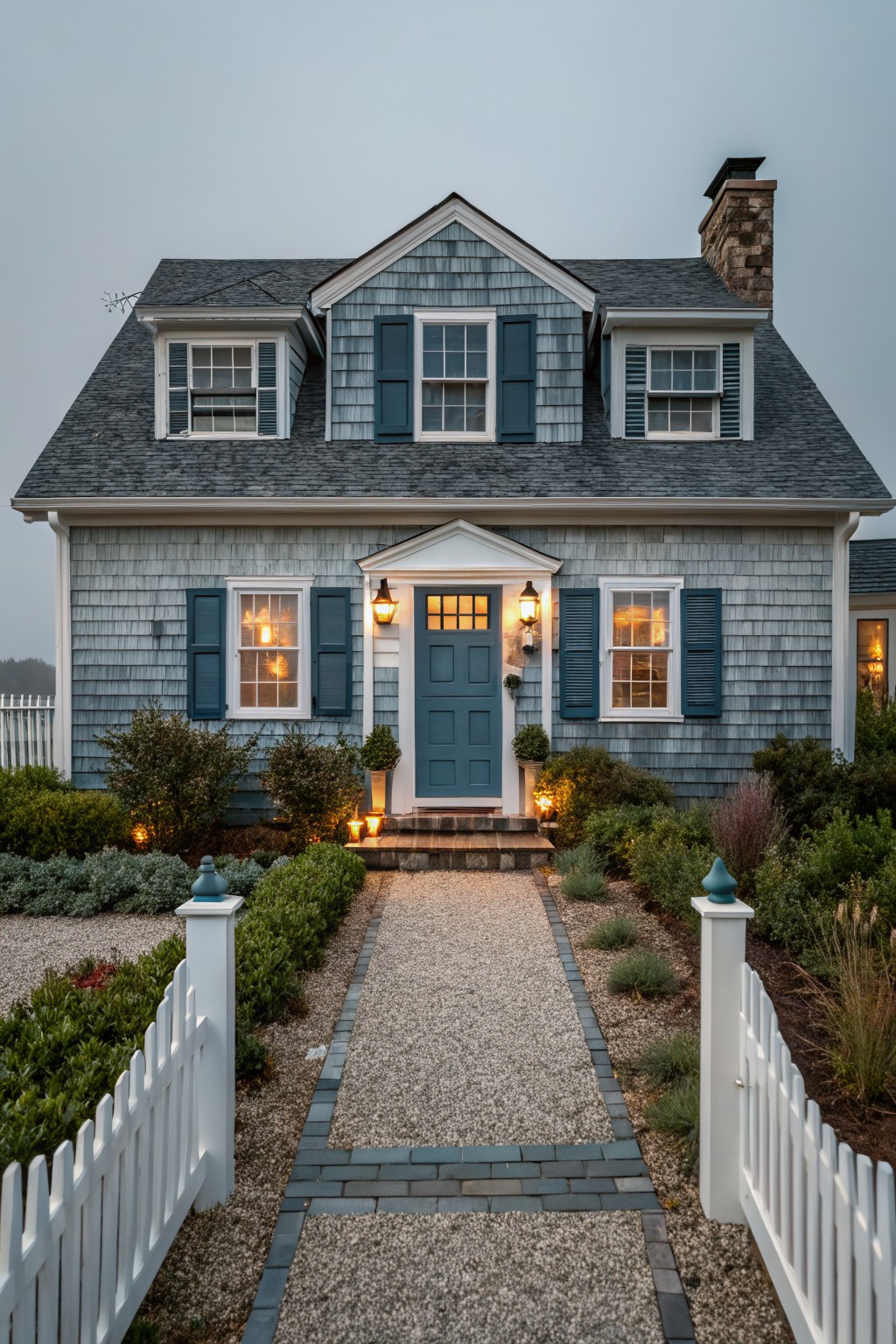
A soft blue gray on the siding gives this house a calm and steady look. The color family is a muted blue gray that sits somewhere between gray and blue. It reads very close to Sherwin Williams Rainwashed, Benjamin Moore Wythe Blue, Behr Silver Blue, and Farrow & Ball Pigeon.
This shade has cool undertones that keep the house from feeling too warm or too stark. It works best on homes with white trim and darker roofs, and it pairs well with stone or brick accents. Just watch the lighting since the color can shift toward gray in shade and pick up more blue in full sun.
Deep Blue Siding
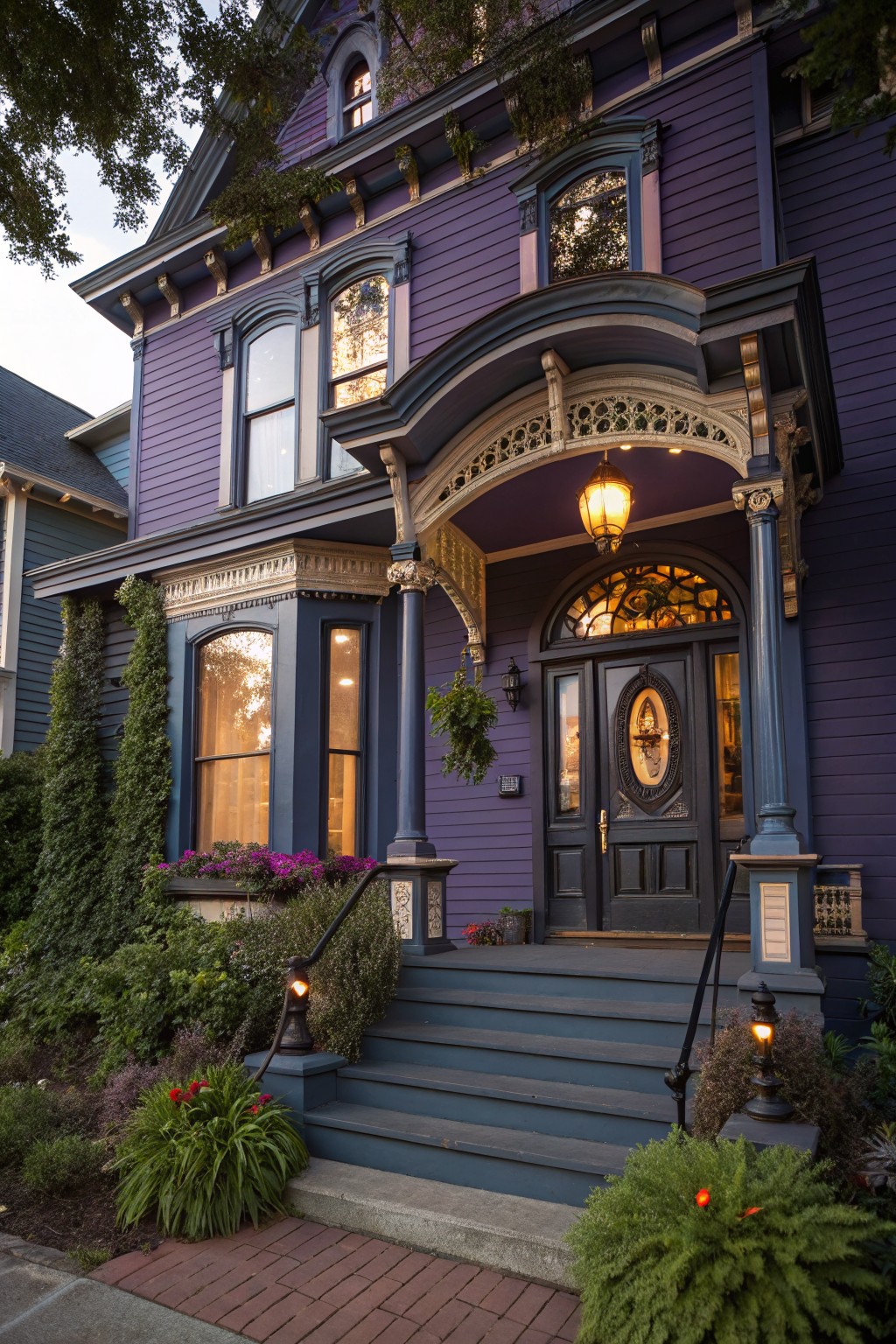
This house uses a deep blue with noticeable purple undertones. It reads as a rich, slightly moody color that still feels welcoming on an older home. The depth gives the siding presence without making the whole place feel heavy or dark.
It works best with cooler gray or charcoal trim and pairs nicely with brick steps or stone paths. Watch how it shifts in different light though. Colors like Sherwin Williams Indigo Batik, Benjamin Moore Midnight Blue, Behr Deep Sea, or Farrow & Ball Stiffkey Blue sit in the same range.
Soft Blue Green Siding With Gray Undertones
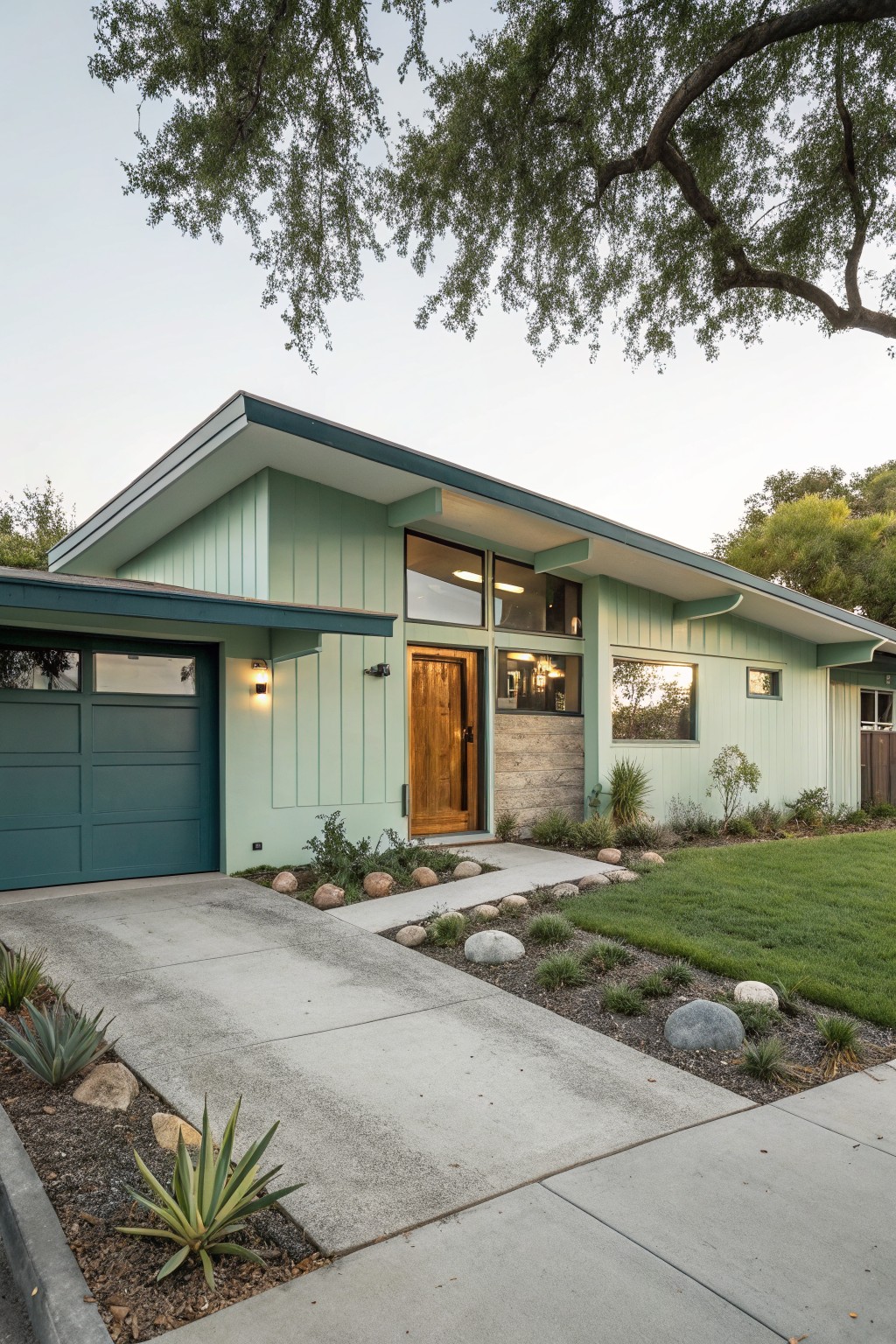
This soft blue green on the siding gives the house a quiet, relaxed look that still feels fresh. It sits right between blue and green with a slight gray cast that keeps it from turning too bright or too earthy. It reads very close to Sherwin Williams Rainwashed or Benjamin Moore Wythe Blue.
The cool undertones help it sit nicely next to dark trim and natural wood accents. It works best on simpler homes where you want the color to feel easy with the surrounding greenery rather than fight it.
Soft Teal Siding for Coastal Homes
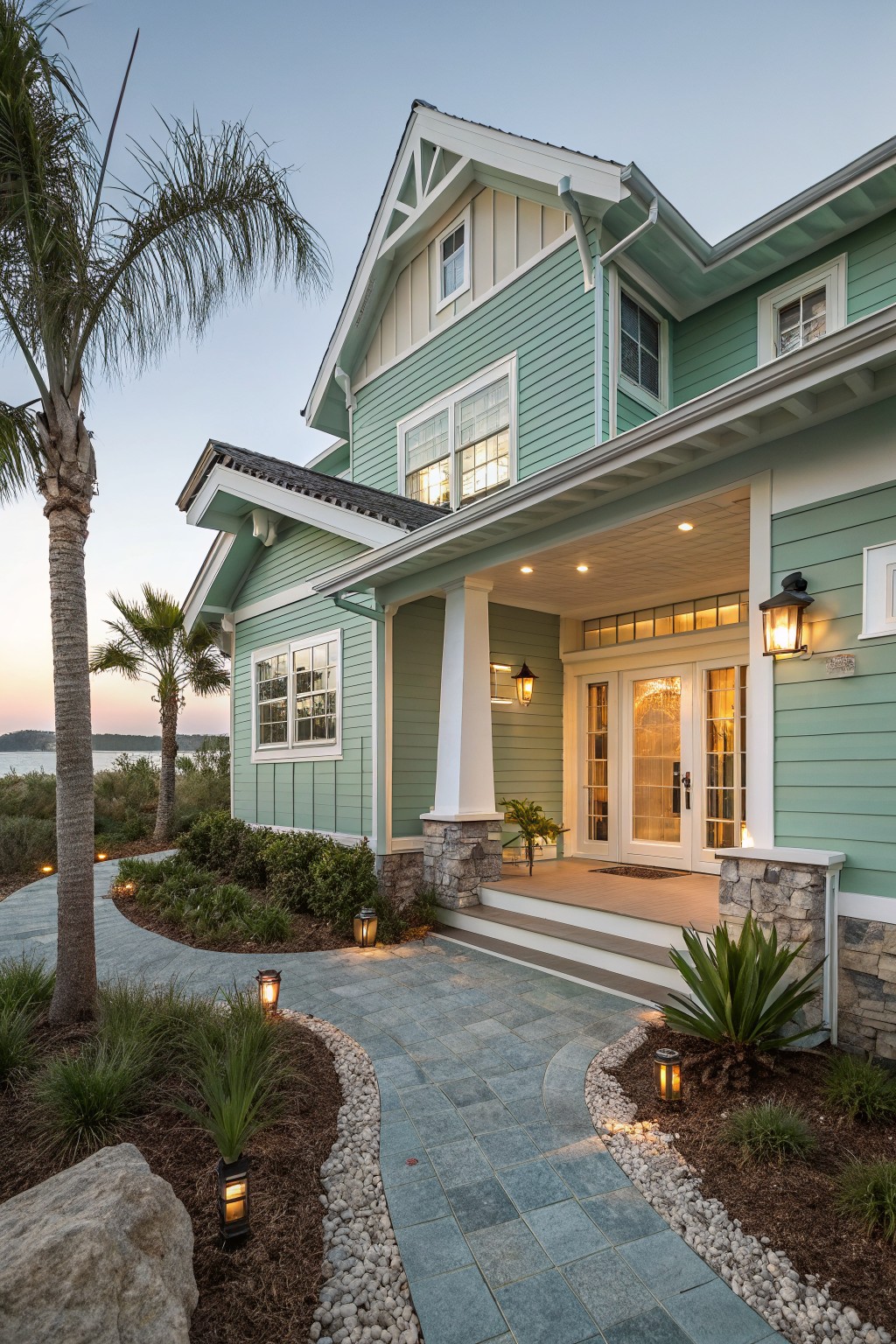
This soft teal blue-green works well on exterior siding because it feels calm without looking washed out. It has enough color to stand out against sky and water but stays easy on the eyes in bright sun.
The tone leans slightly green so it blends nicely with stone foundations and white trim. It suits coastal homes or any place that gets steady light, though it can look a bit flat on very shady sides of a house.
Traditional Blue Gray Exterior Paint
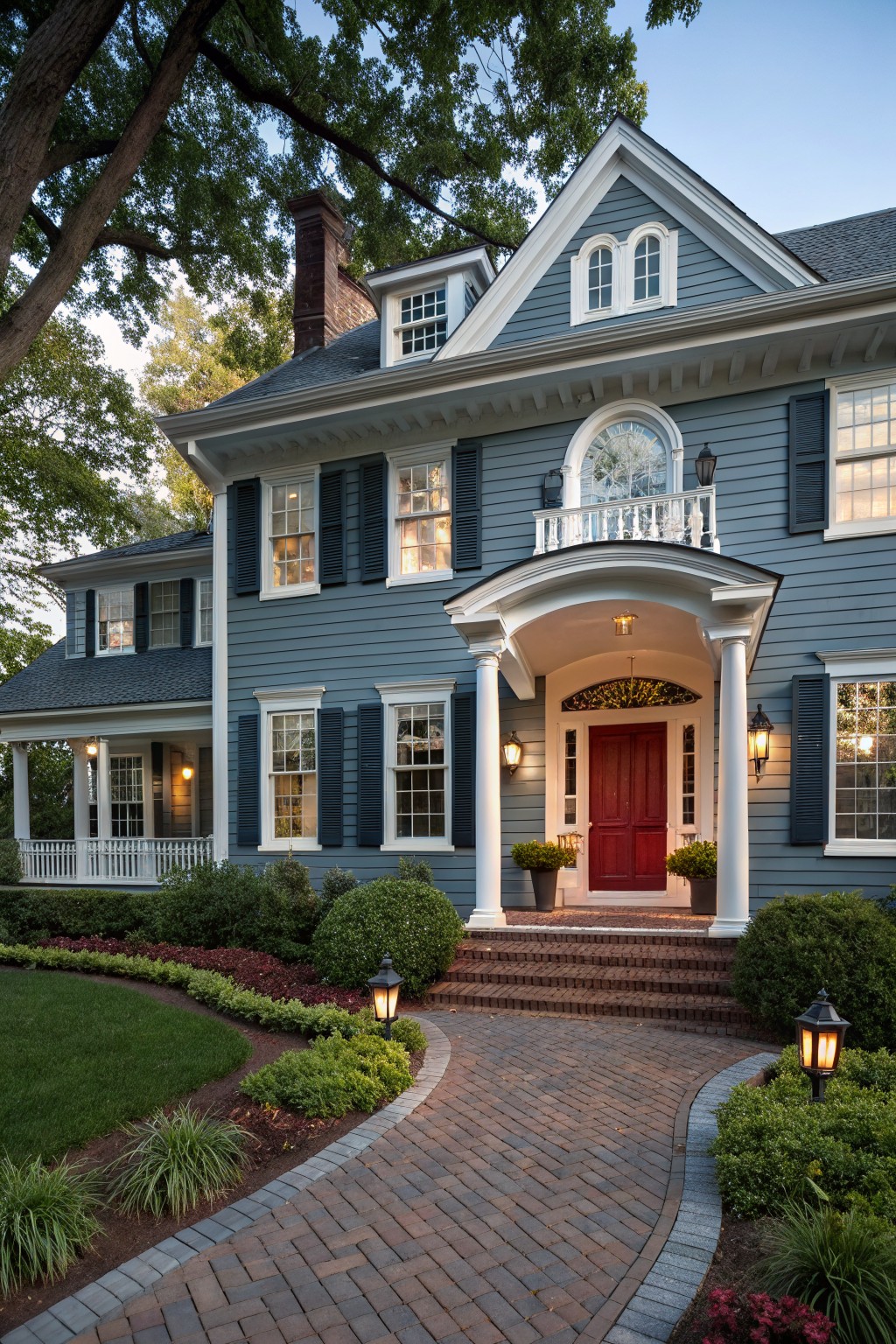
This muted blue gray on the siding is a calm, slightly cool color that gives the house a classic look without feeling too bold. It sits right in the middle of blue and gray, so it reads as blue from farther away but stays soft up close. Similar shades show up often in Sherwin Williams Pewter Blue, Benjamin Moore Harbor Gray, Behr Silver Strand, and Farrow & Ball Pigeon.
The cool undertones can lean more gray in low light, which makes it a good fit for homes with white trim and brick or stone accents. It works especially well on traditional styles where you want the color to feel settled rather than bright.
A Muted Blue Front Door
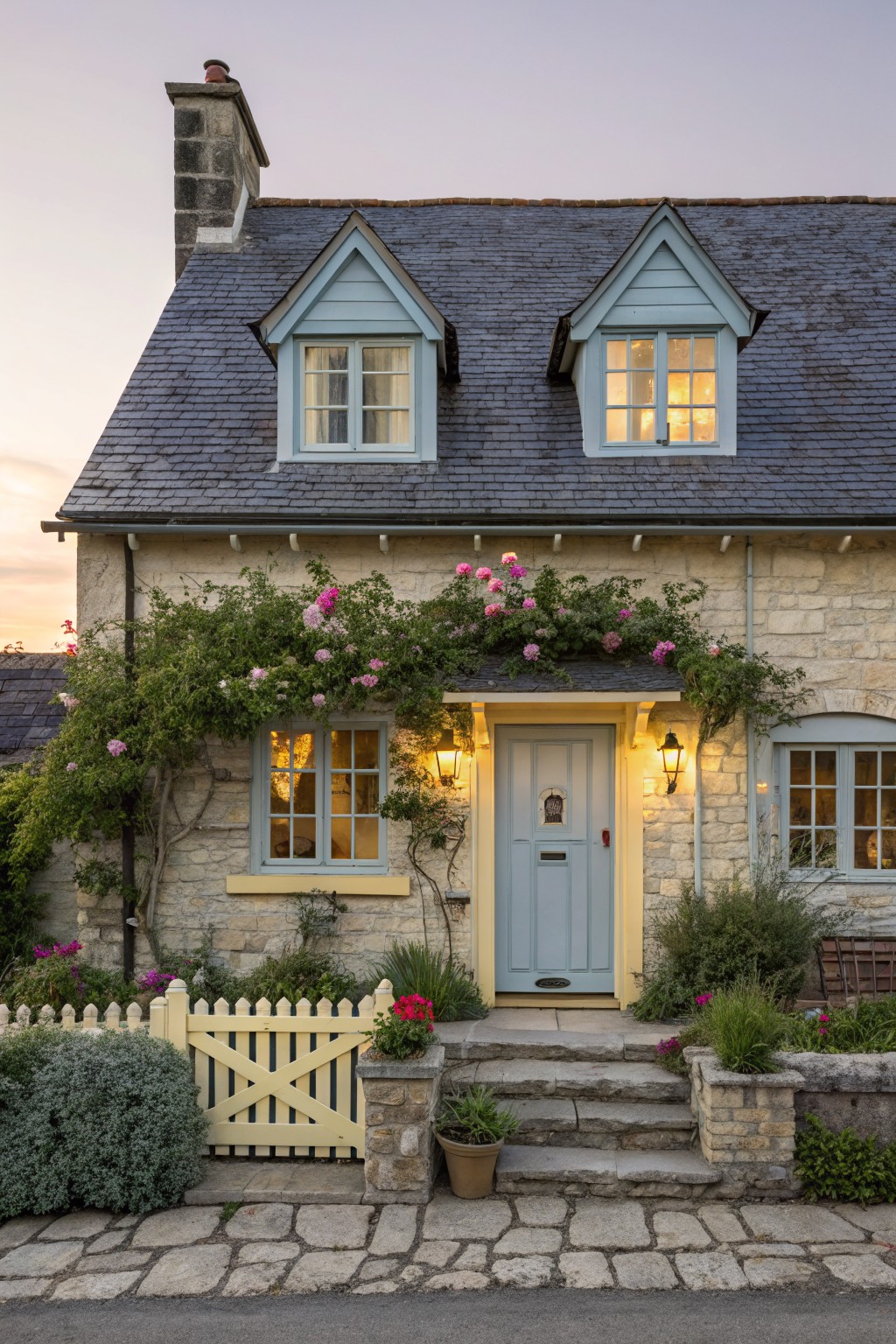
This soft blue-gray works well on the door and window trim because it stays calm next to the stone walls without competing for attention. It has that slightly cool feel that still reads warm enough in changing light, and it gives the entry a friendly but not too bold look. Colors like this often come across as Farrow and Ball Light Blue, Sherwin Williams Rainwashed, or Benjamin Moore Wythe Blue.
It pairs nicely with natural stone and a lighter surround color, though the gray undertone can look a bit flat if the house gets very little sun. Try it on homes with similar masonry or wood trim that leans warm so the blue stays balanced.
Bright Teal Exterior Siding With Stone Accents
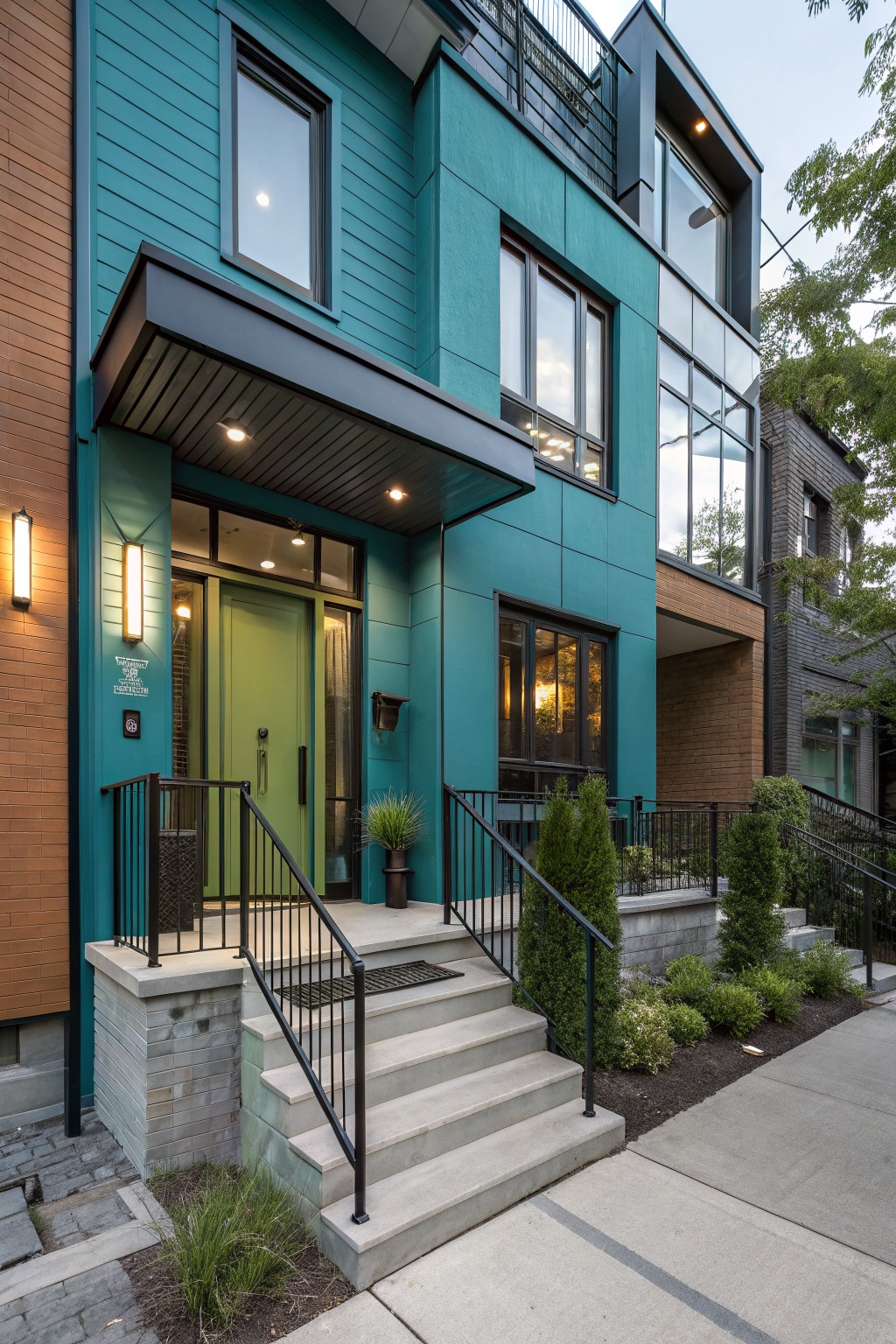
This teal color on the siding gives the house a clean and lively look. It is a cool blue-green that feels bright but still grounded. It reads closest to Sherwin Williams Aegean or Benjamin Moore Pacific Teal.
The slight green undertone helps it sit nicely next to brick and stone details. It pairs well with dark windows and simple black railings. This shade works best on updated homes where you want something cheerful without going too bold.
Blue Gray Farmhouse Siding
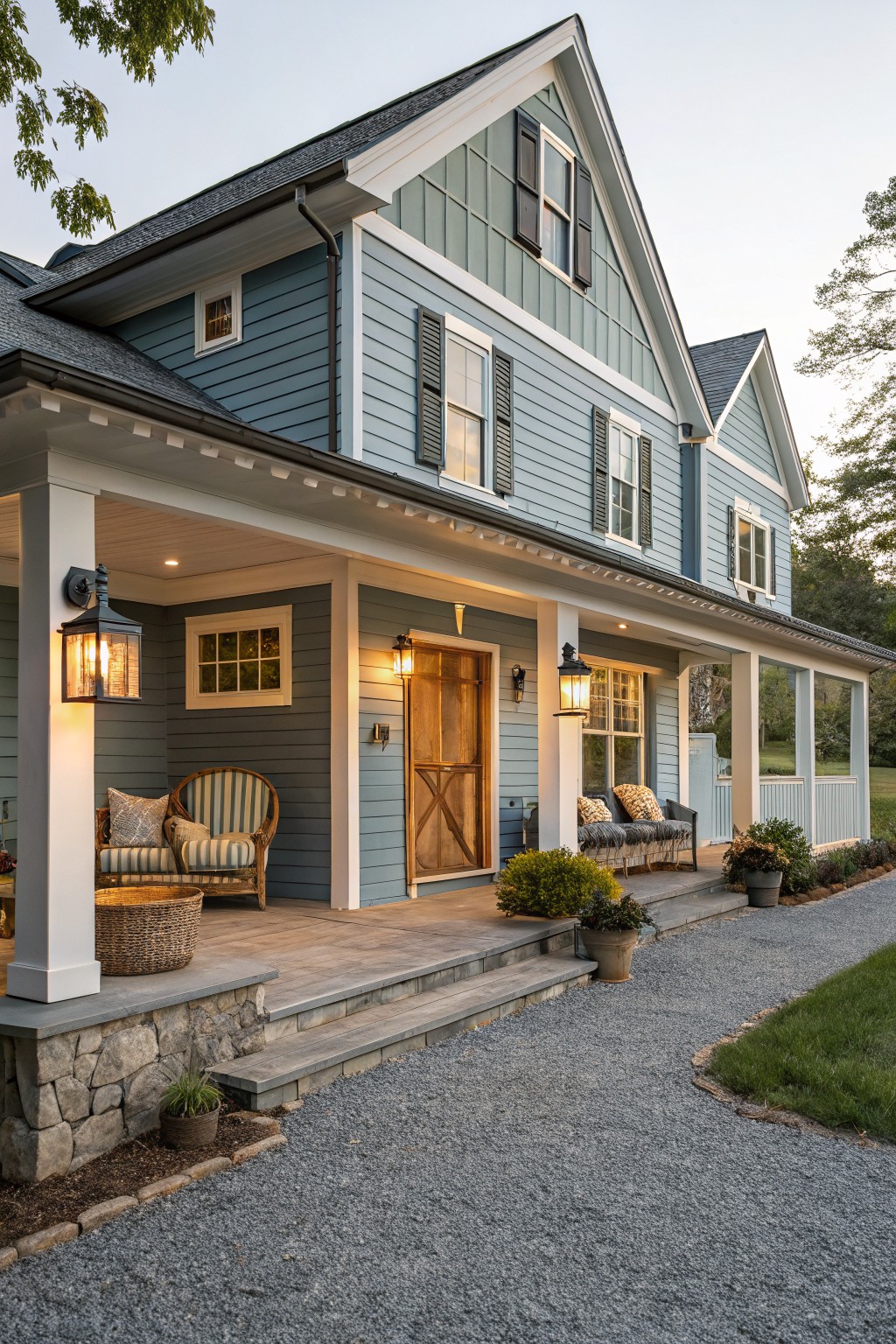
This soft blue gray on the siding gives the house a calm look that still feels welcoming. It sits right between blue and gray, so it reads as gentle rather than bright or cold.
The color has a cool undertone that works best with white trim and a warm wood door. It suits older homes or simple farmhouses, though it can look a little washed out if the roof is too dark or the light is very strong all day.
Turquoise Blue Siding
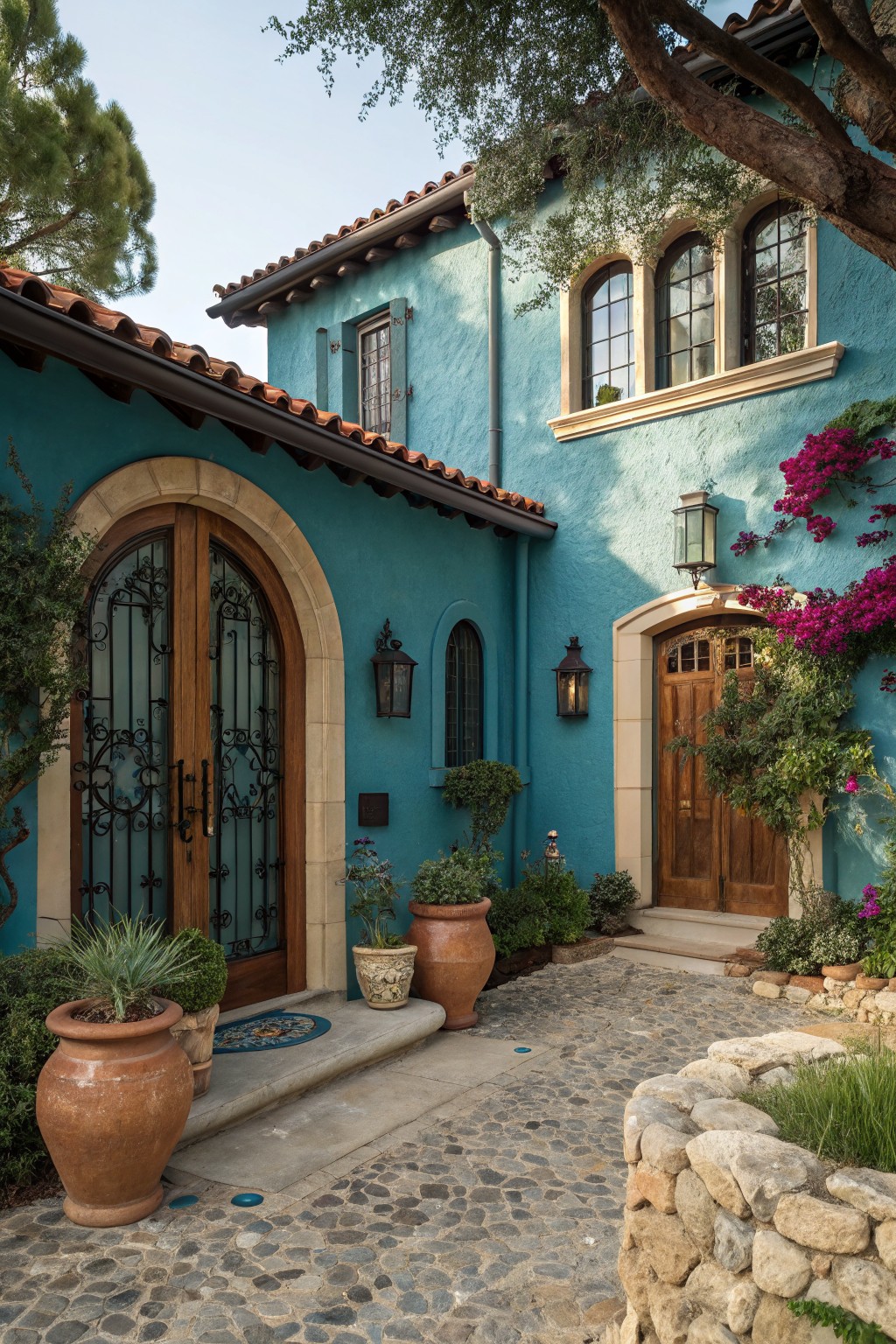
This turquoise blue brings a cheerful but grounded look to an exterior. It sits somewhere between blue and green, with enough warmth to feel welcoming rather than stark. Homeowners often like it because it stands out without trying too hard and works well with natural materials like wood and stone.
The color has a slight teal undertone that shows up more in full sun. It pairs nicely with terracotta roofs and wood doors, and it tends to suit older homes or cottages that already have some texture on the walls. Just watch how it shifts in different light before committing to the whole house.
Deep Slate Blue Siding
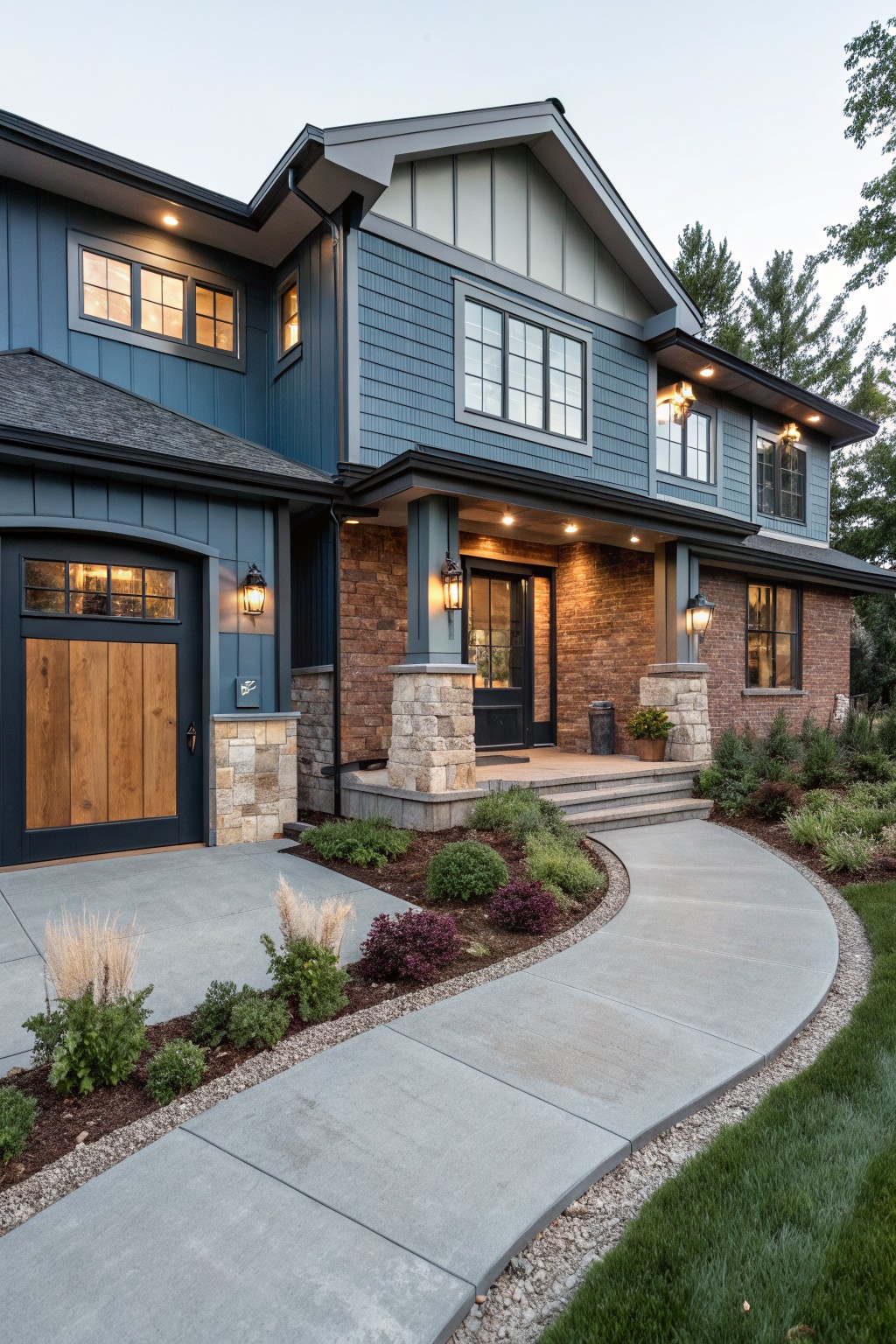
A deep slate blue works well on this house because it feels solid without being too dark. The color sits somewhere between navy and gray, which keeps it from looking too bright or too heavy on larger surfaces. It gives the home a clean, settled look that holds up against the mix of stone and brick below it.
This shade has cool undertones, so it reads best in natural light and pairs nicely with warm masonry or wood accents. It suits traditional or craftsman styles and looks good with both black and white trim. Just watch that it does not go flat next to too much gray stone.
Muted Blue Gray Painted Brick Exterior
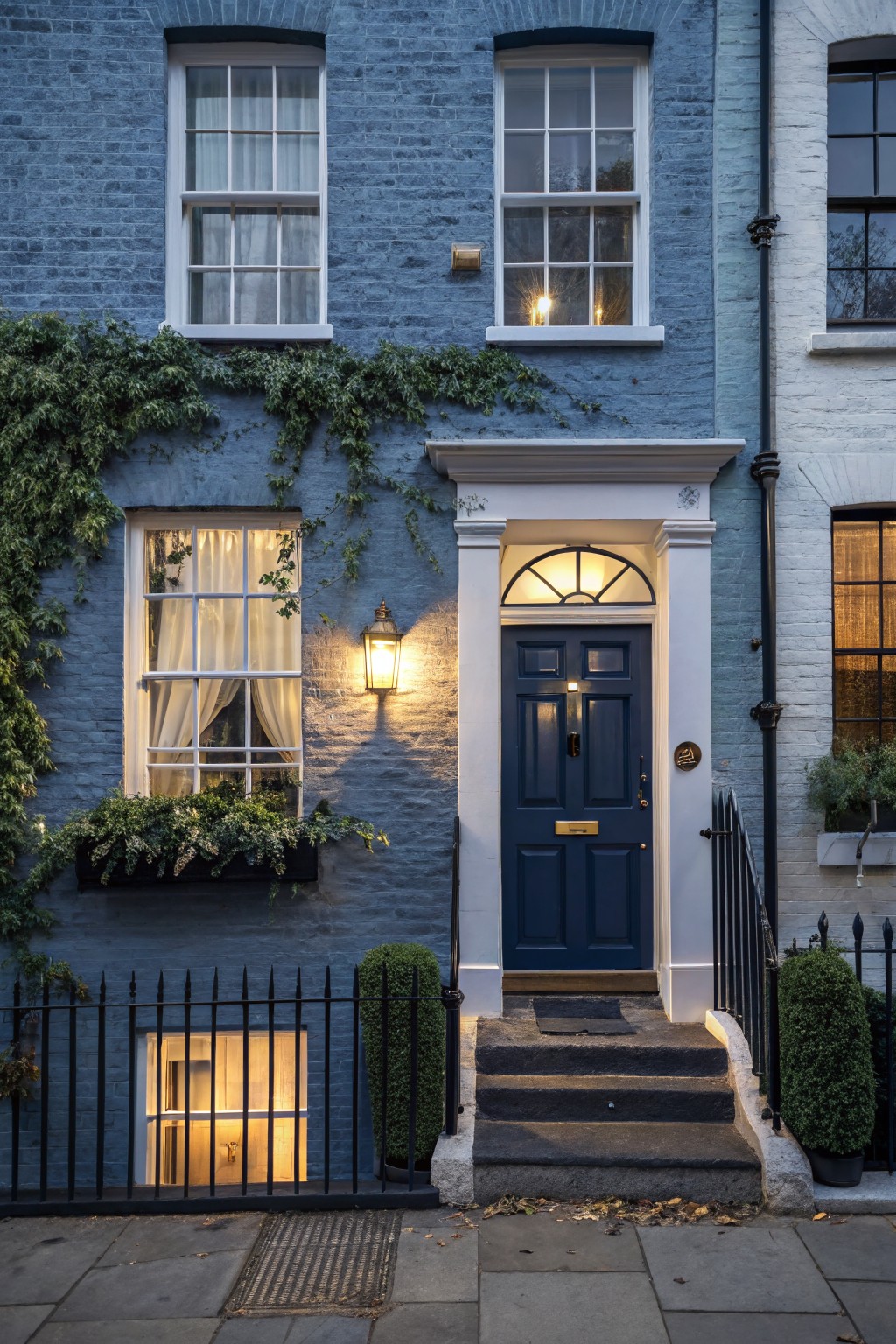
This muted blue gray gives brick exteriors a calm and steady look without feeling too cold. It sits somewhere between gray and blue, so it reads soft rather than bold, and it tends to work on older homes where you want a bit of color but still need it to feel grounded. Colors like this often look closest to Sherwin Williams Rainstorm, Benjamin Moore Wythe Blue, Behr Dusk Blue, or Farrow & Ball Mizzle.
The cool undertone shows up more in bright light, so it pairs best with warm white trim and simple black or dark navy accents. It can start to feel flat if the surrounding hardscaping is all cool gray, so a little warm stone or wood nearby helps keep the balance.
Coastal Blue Green House Siding
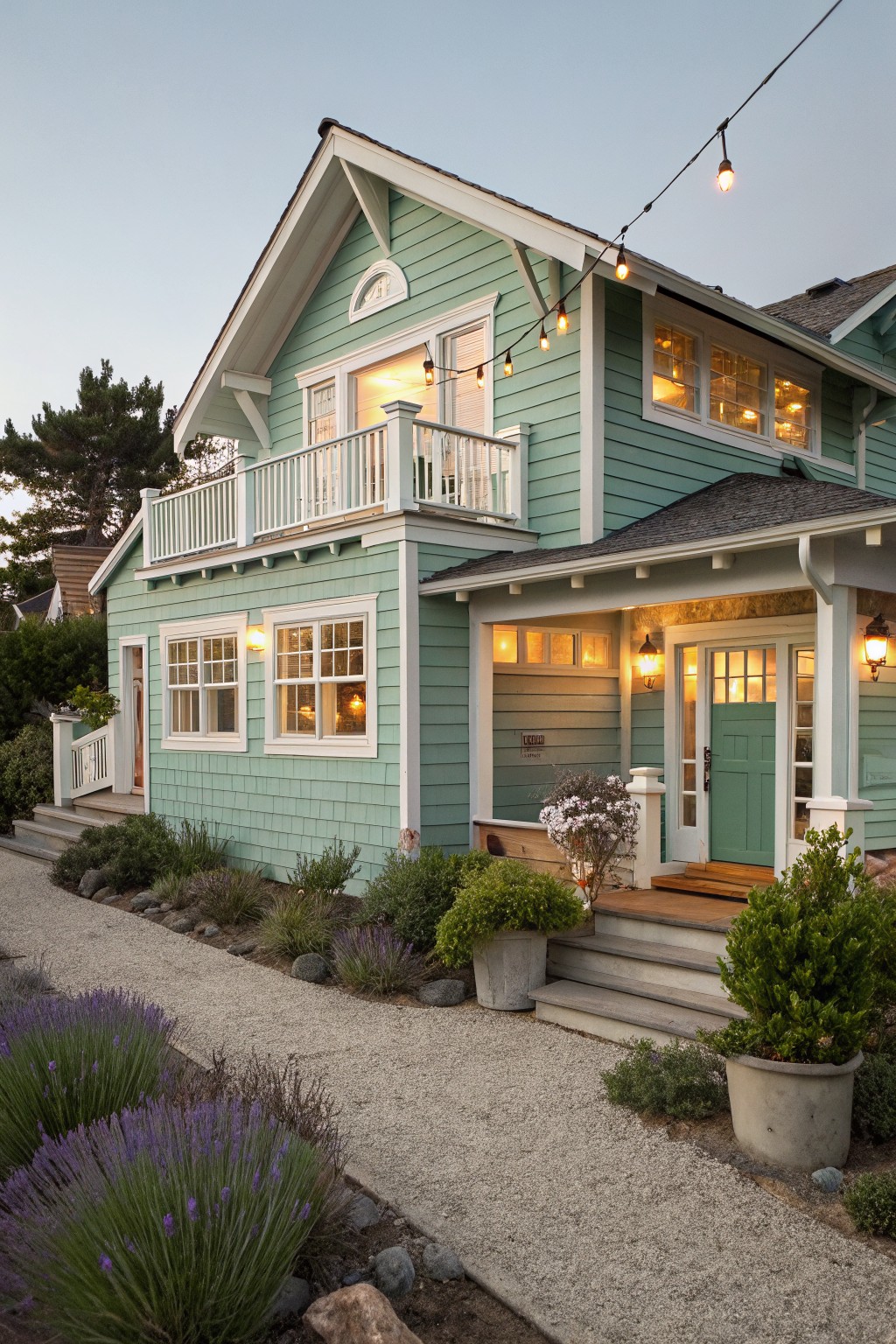
This soft blue green siding brings a calm, slightly coastal feel to the whole house. It sits between blue and green without leaning too hard either way, which is what makes it easy to live with on an exterior.
The color has a muted gray undertone that helps it stay quiet next to white trim. It works best on homes with some natural wood or stone nearby, and it holds up well in changing light without looking washed out.
Blue Gray Painted Brick Exterior
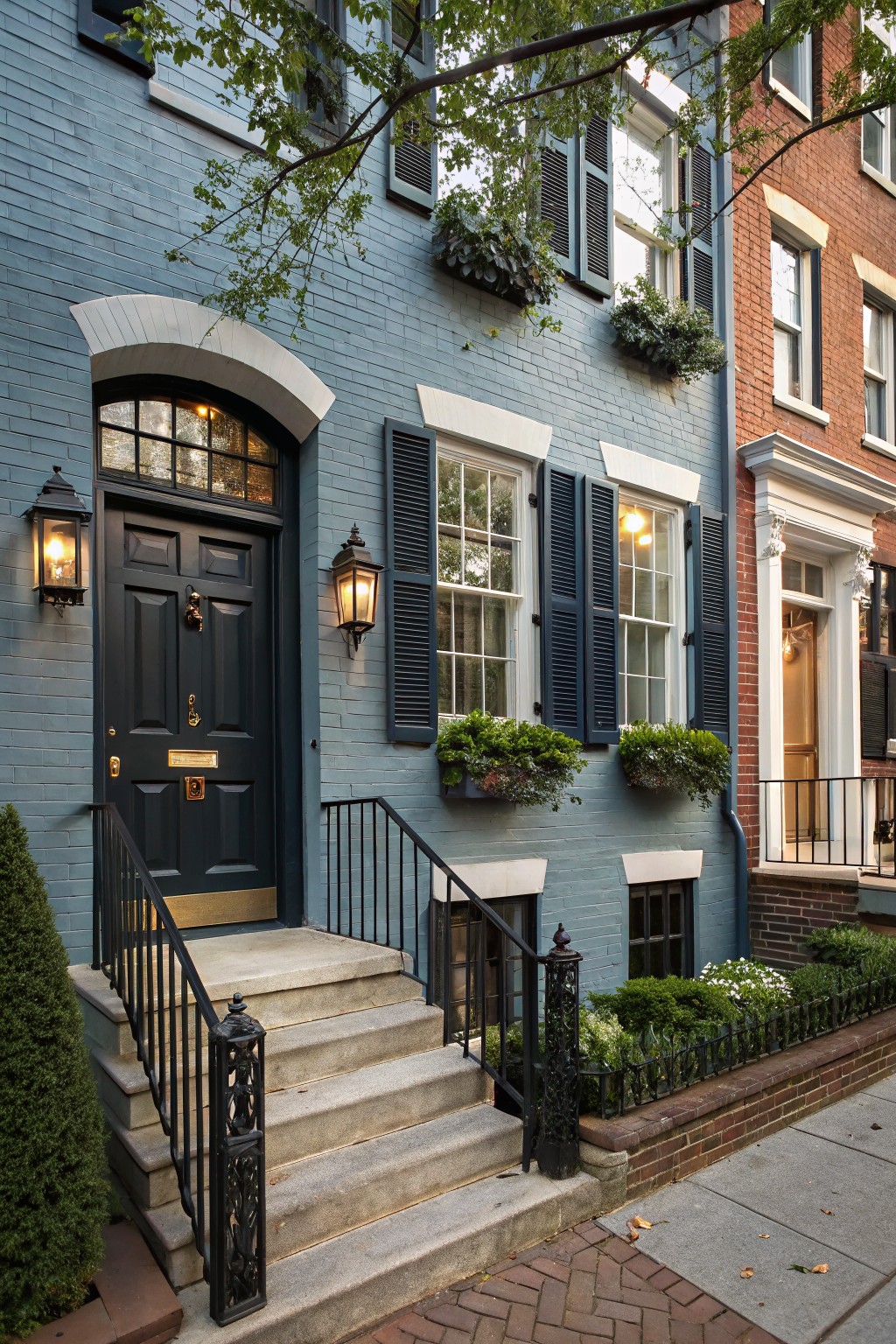
This soft blue gray on the siding gives the house a calm, slightly historic feel without looking too bold. It has a cool base with just enough gray to keep it from feeling too bright or coastal. The color works especially well on brick because it lets the texture show through while still reading as a clear blue from the street.
It pairs nicely with white trim and darker accents like the door and railings here. On overcast days or in full sun it stays even and doesn’t shift too much, which makes it a safe choice for homes that get changing light. If you like this look, try Benjamin Moore Wythe Blue, Sherwin Williams Rainwashed, Behr Soft Willow, or Farrow & Ball Light Blue.
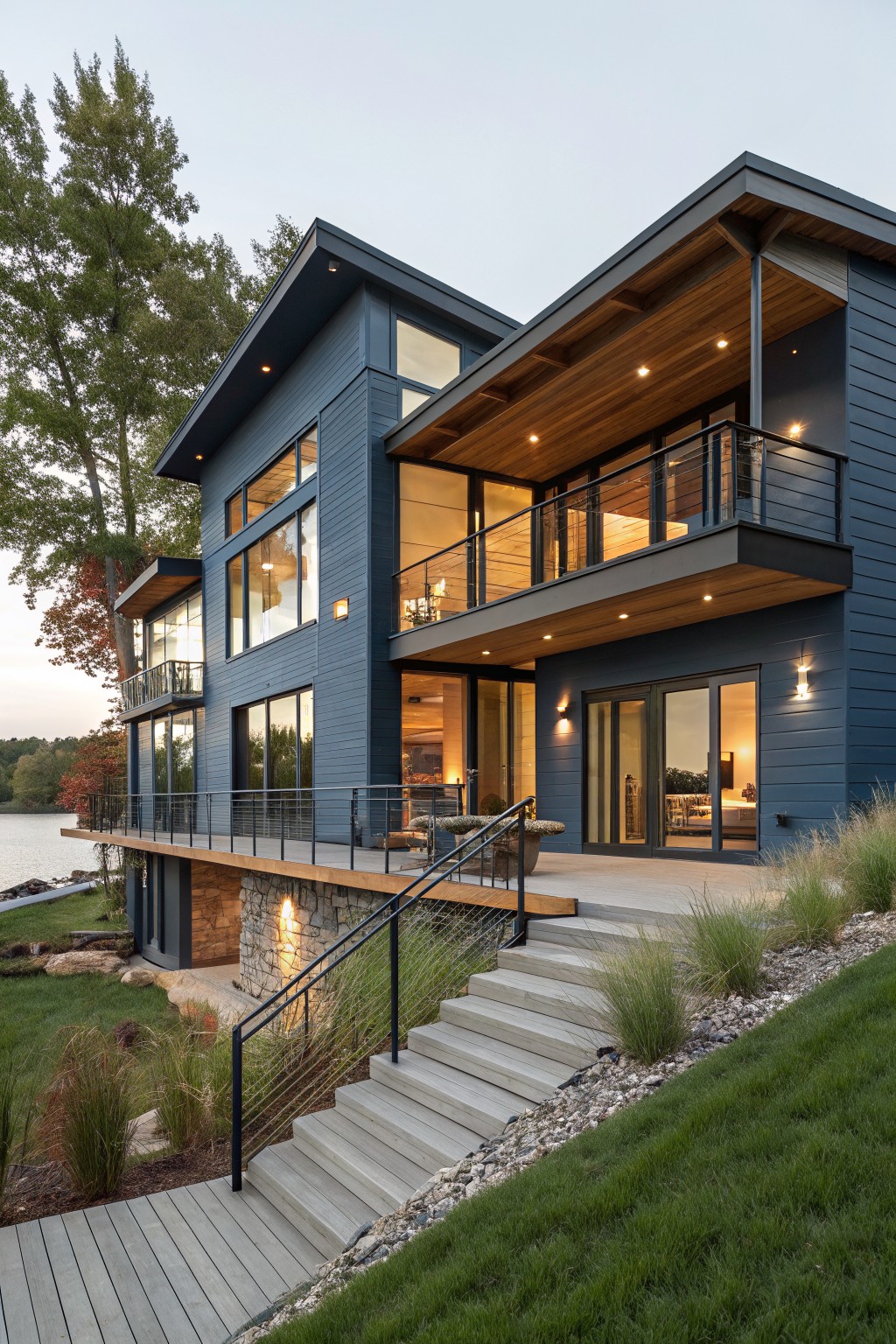
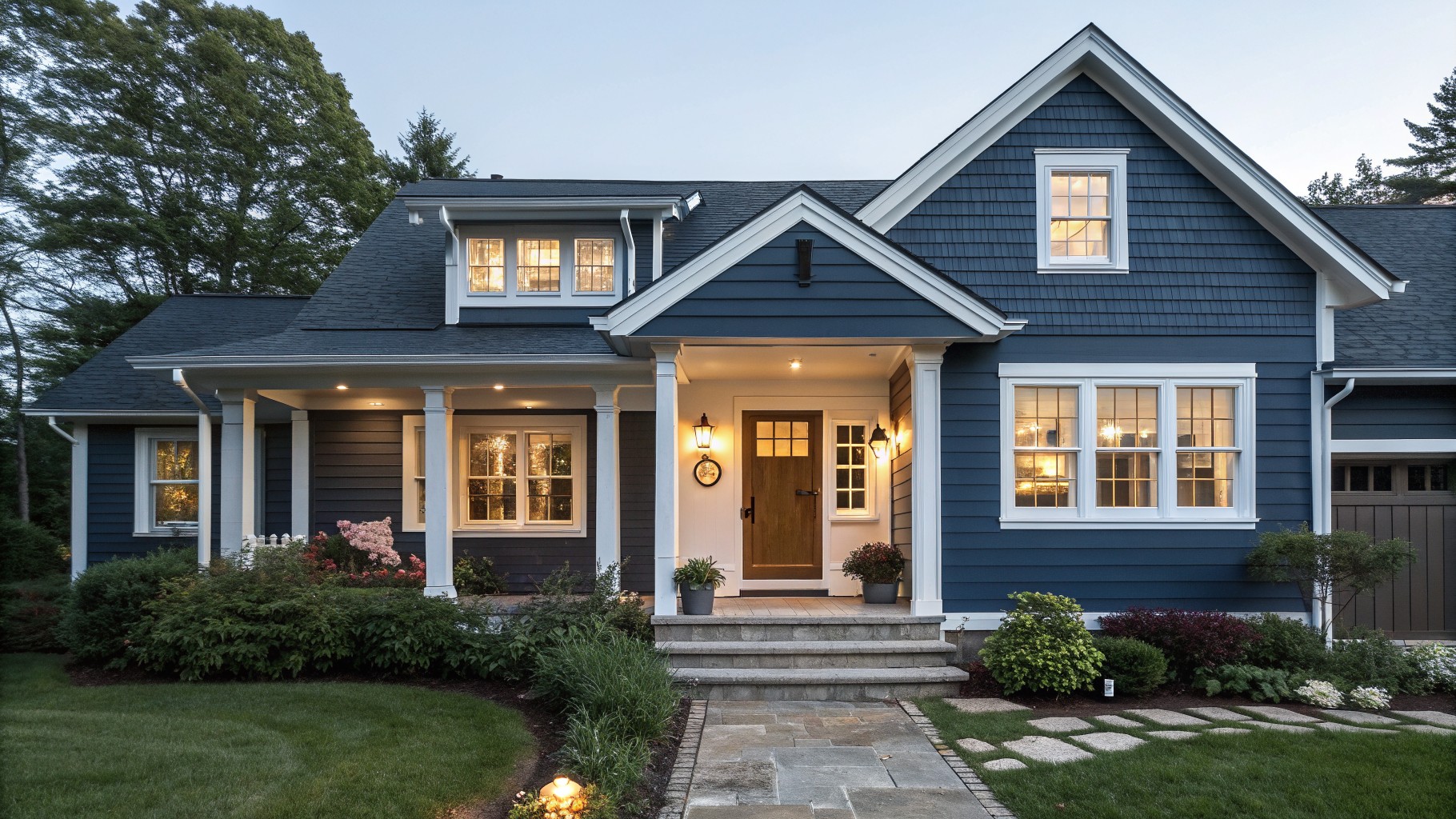
A deep navy blue like this one gives a house a solid, grounded look without going too dark. It reads as a cool navy with just enough depth to stand out against lighter surroundings and pairs naturally with wood ceilings and decks.
The undertone stays fairly true in most light, though it can pick up a slight gray cast in shade. It works best on modern or updated homes where you want contrast with warm wood tones and simple stone bases. Try it with white or light gray trim to keep the whole thing feeling balanced.
Muted Blue Gray Exterior With Warm Wood Accents
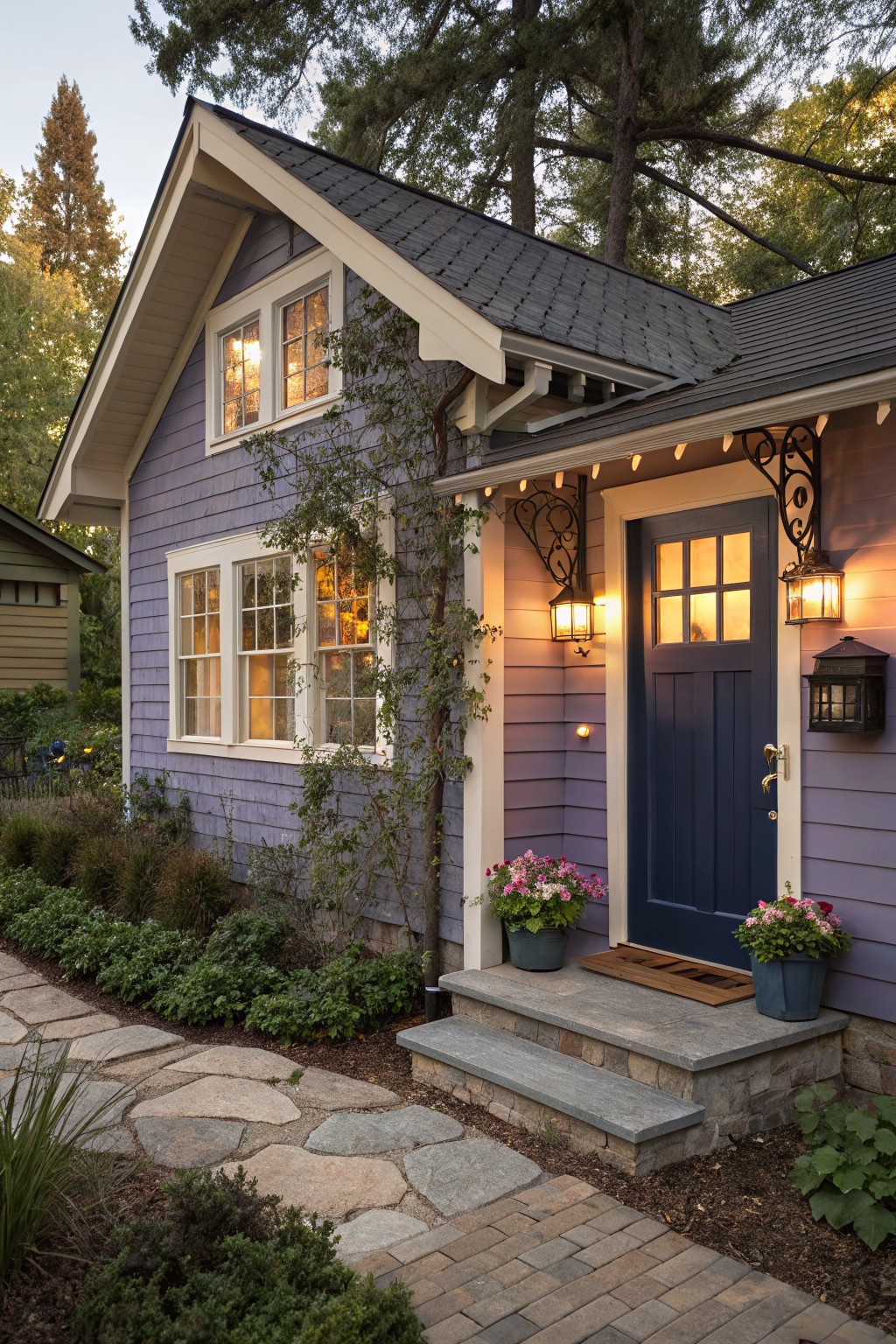
A muted blue-gray on house siding gives the exterior a calm, slightly cool tone that still feels welcoming. This color family reads soft and understated rather than bright, which makes it easy to live with on many styles of homes. It looks closest to Sherwin Williams Rainwashed or Benjamin Moore Wythe Blue.
The cool lean shows up more once the light fades, so warm white trim and a natural wood door help keep it from feeling flat. Stone or brick at the base also grounds it nicely without much extra effort.
Muted Teal Farmhouse Siding
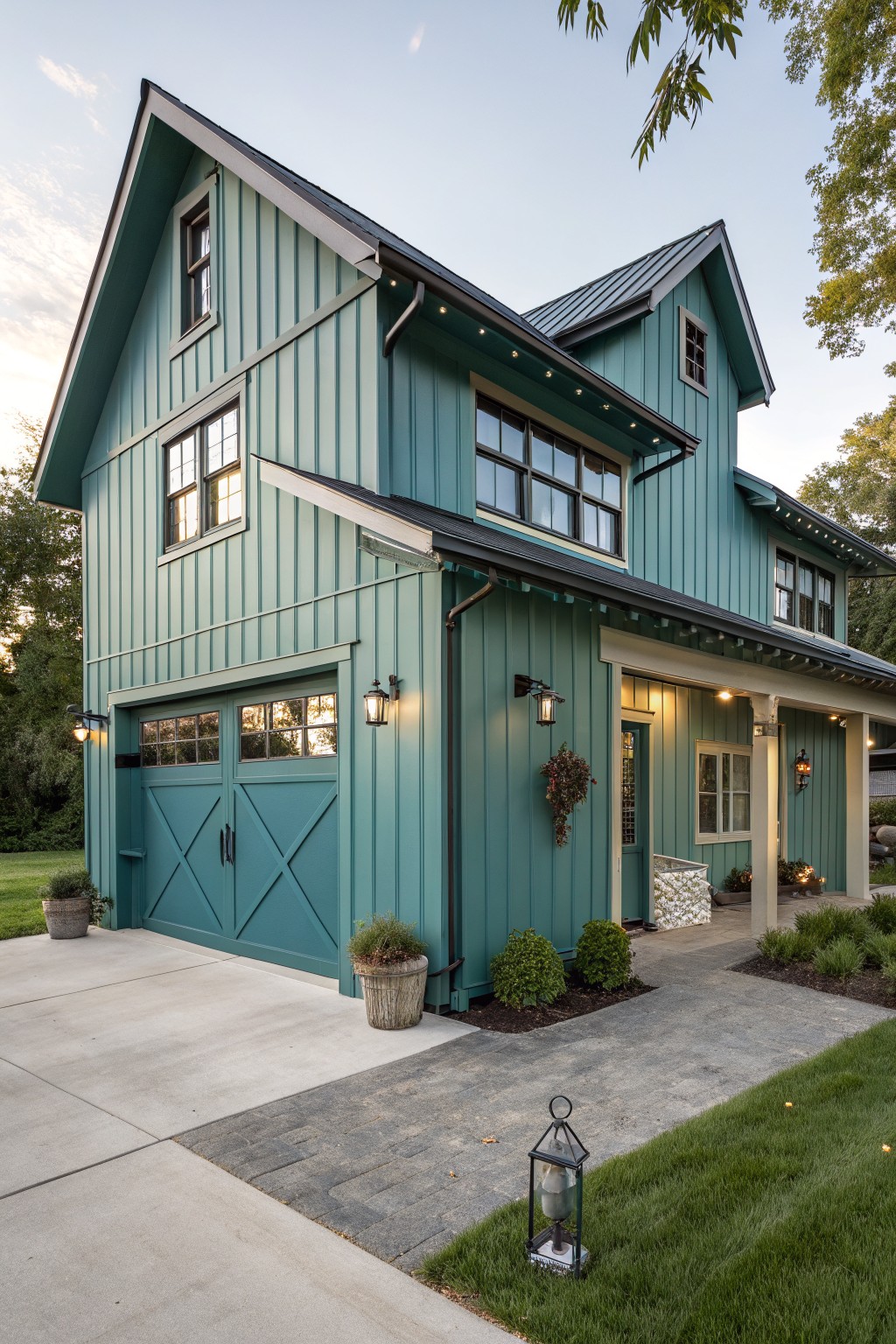
This muted teal exterior paint gives the house a calm, welcoming look that still feels current. It is a blue-green with some gray in it, which keeps it from reading too bright or too cool on a large surface like siding.
The color works well with dark roofing and simple trim. It suits traditional or farmhouse styles and looks good in most kinds of daylight. Pair it with warm white trim and avoid anything too stark if you want the teal to stay soft.
Teal Blue Siding With Warm Wood Details
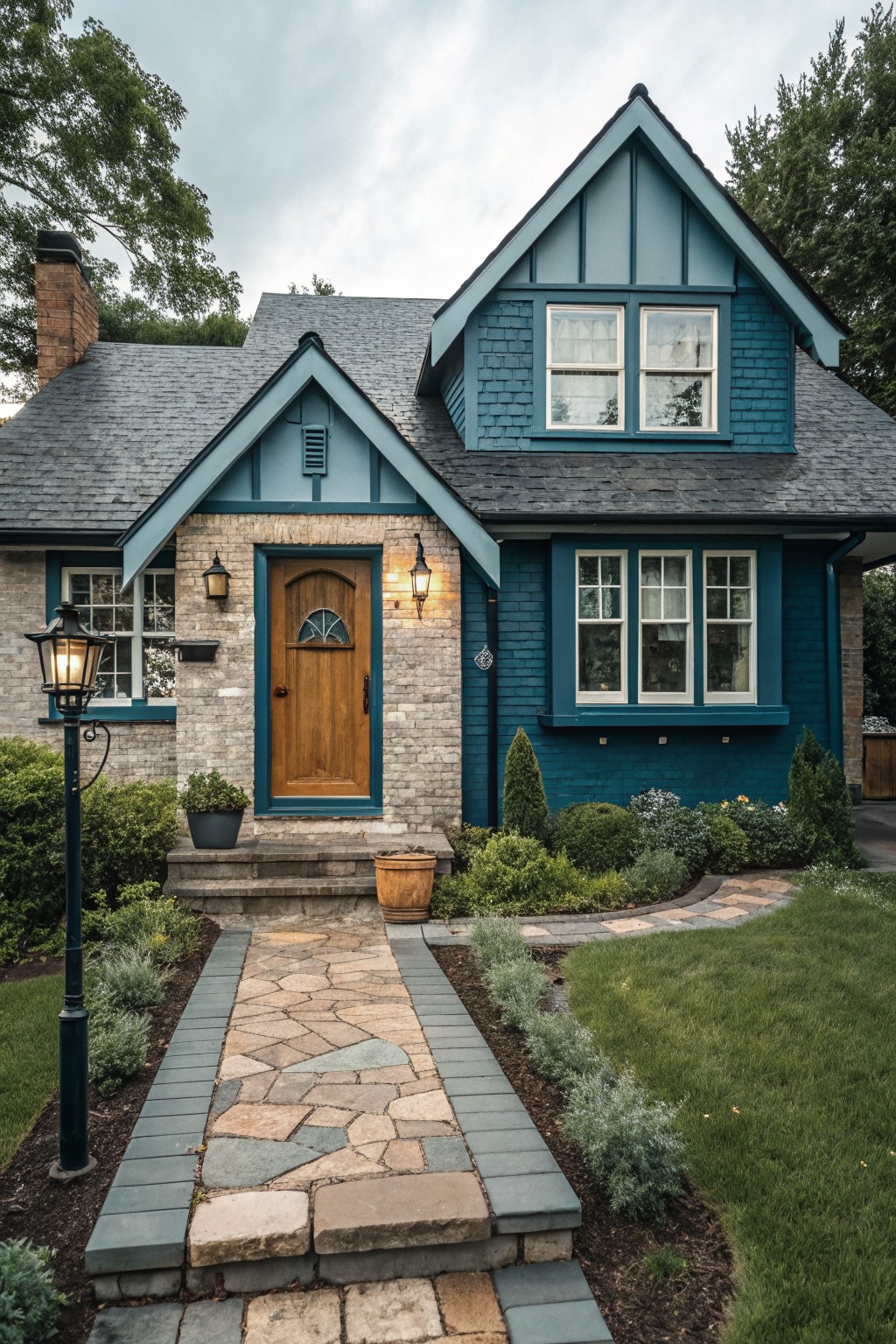
A teal blue makes a nice choice for house siding. This one sits right in the middle of blue and green, which helps it feel fresh without looking too bright or too dark on the outside.
It tends to look best with warm wood doors and simple stone or brick bases. Try Sherwin Williams Riverway or Benjamin Moore Aegean Blue if you want a close match. Just watch how it shifts in full sun before you commit to the whole house.
Soft Teal Blue Siding With Dark Trim
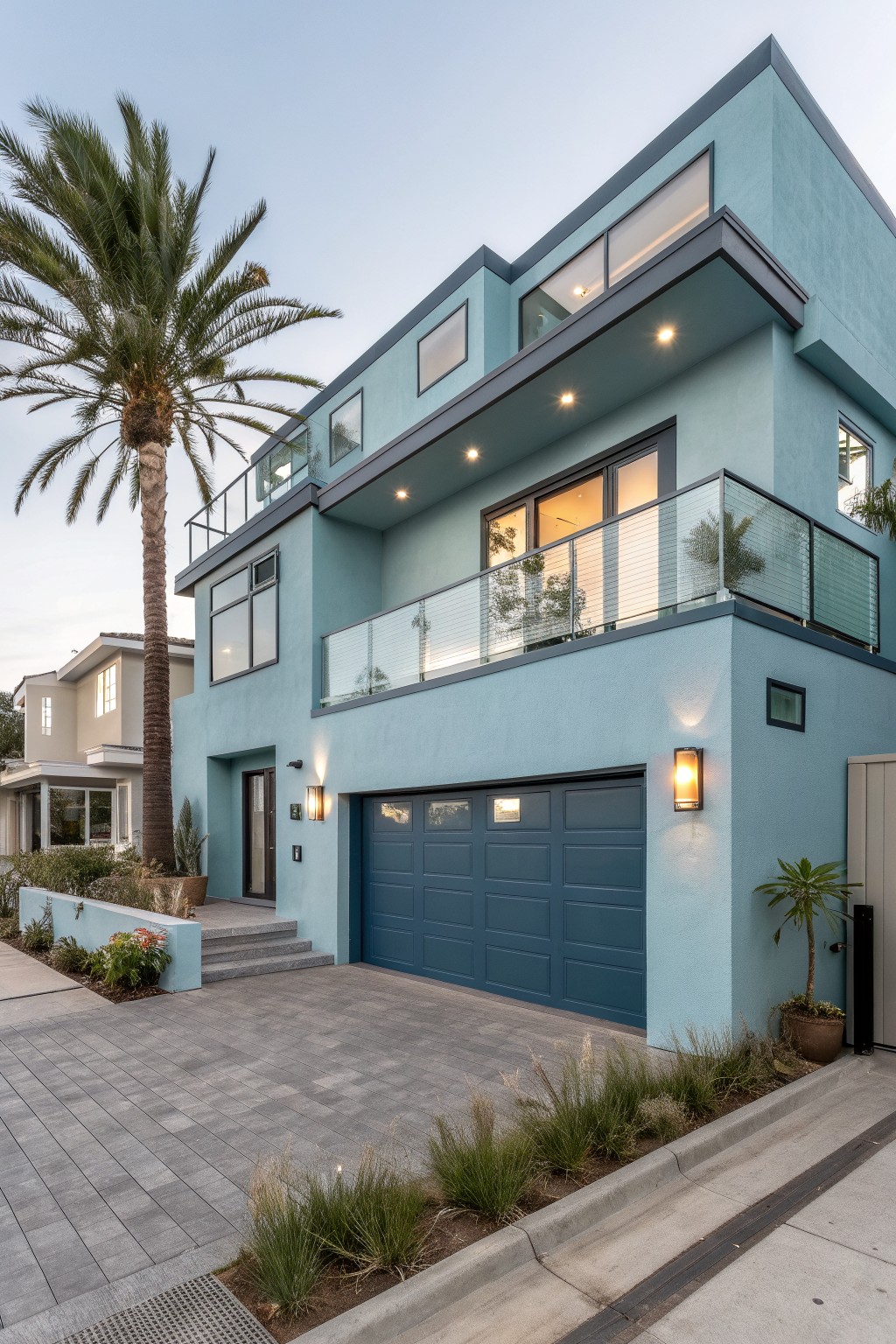
This house shows a soft teal blue that sits right between blue and green. It feels calm and a little coastal without looking too bright or trendy.
The color has cool undertones that hold up well next to dark trim and a deep blue garage door. It works best on homes with simple lines and pairs easily with warm white accents or light stone details.
Muted Blue Gray Siding With Natural Wood Trim
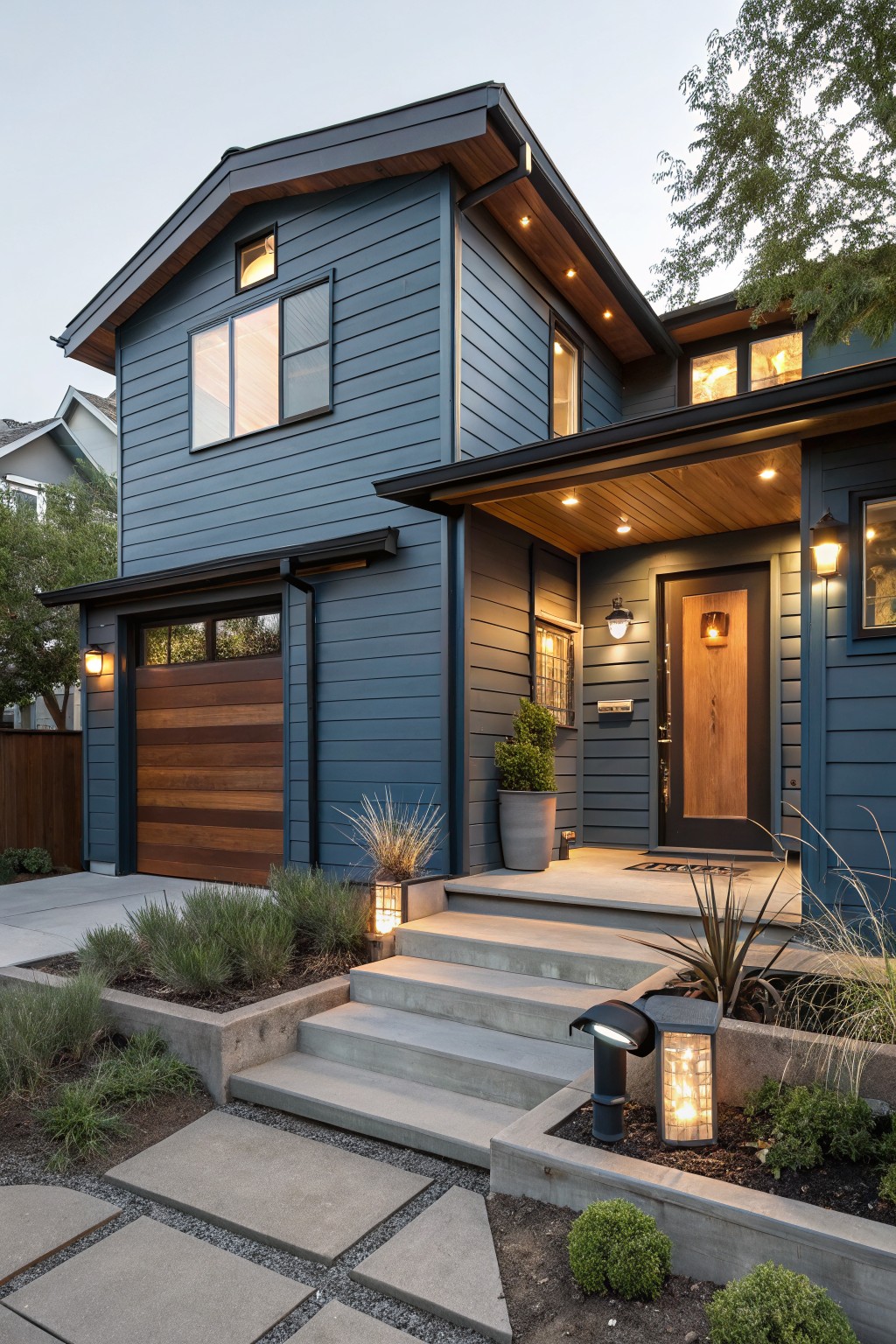
A muted blue gray covers most of the siding here and gives the house a steady, calm look. This color sits in that cool blue family with enough gray to keep it from feeling too bold or bright on an exterior wall. It works well because it still lets the wood trim and door stand out without competing.
The gray undertone shows up more in softer light and helps the color blend with concrete paths and natural wood accents. It suits homes that have clean lines and some greenery around the base. Pair it with warm wood doors or simple black fixtures to keep the whole front from feeling flat.
Soft Blue Green Siding With White Trim
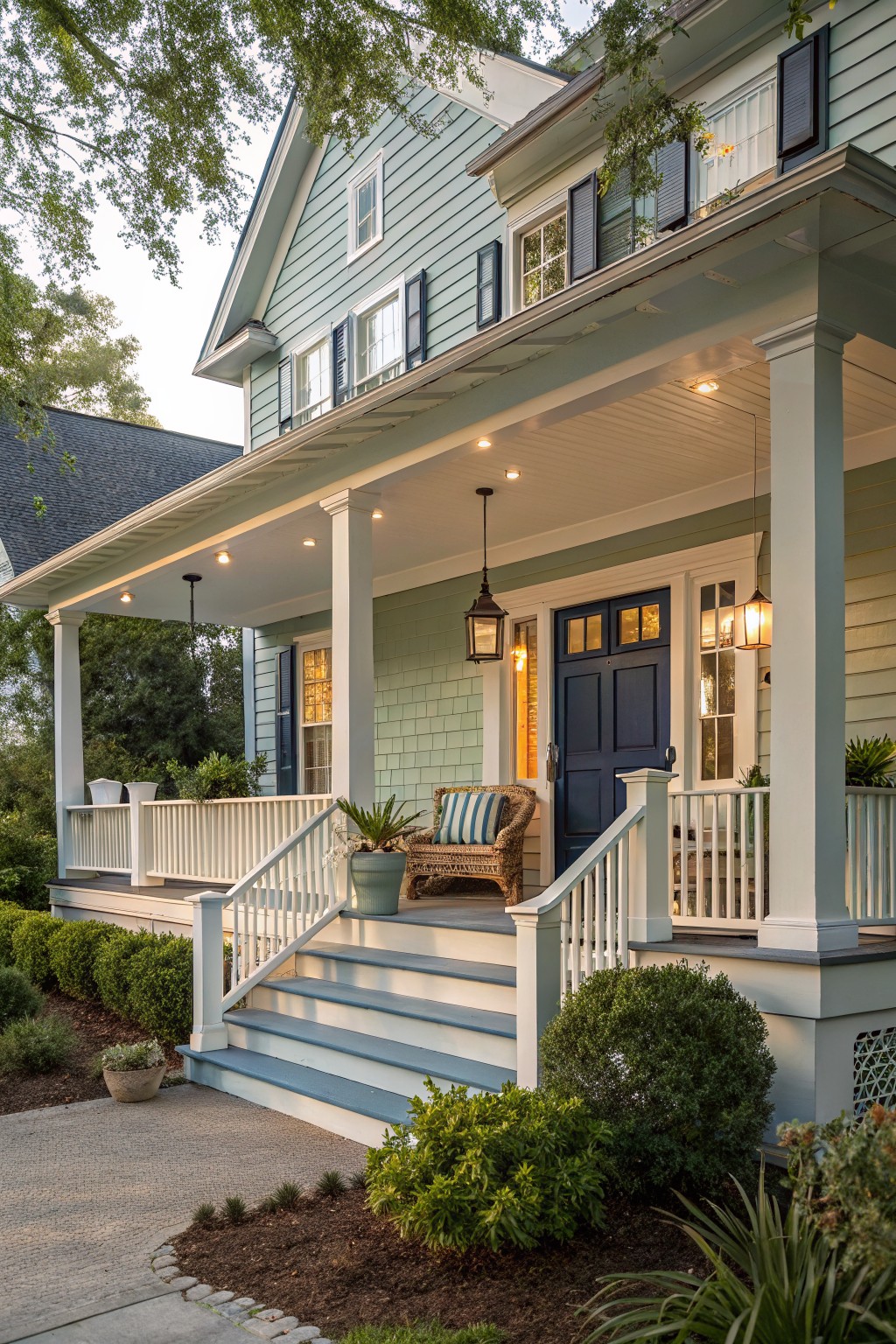
This soft blue-green on the siding gives the house a calm look without feeling too bold. It reads closest to Benjamin Moore Palladian Blue or Sherwin Williams Sea Salt, with a touch of that same gentle quality found in Behr Soft Aloe.
The color carries a light cool undertone that sits nicely next to white trim. It works well on homes with porches and pairs easily with darker doors or simple landscaping.
Deep Teal Blue Siding With Light Stone Accents
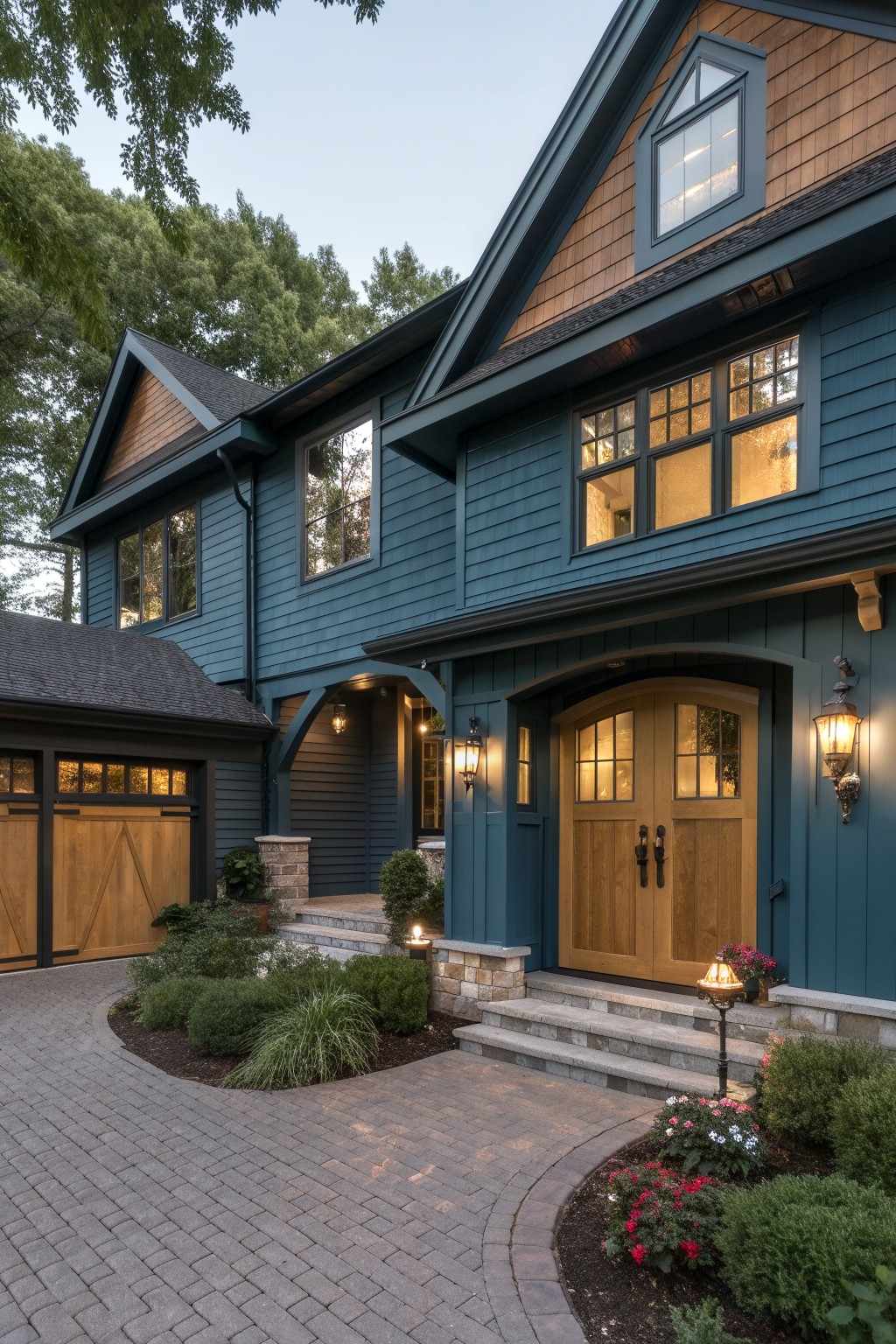
This deep teal blue brings a nice balance to an exterior. It sits between blue and green without leaning too far either way. The color feels fresh on a larger house but still reads as calm rather than bold.
It has a slight green undertone that helps it work with trees and natural light. Try pairing it with warm wood doors and light stone accents so the blue does not feel too cool. A soft white or light gray trim keeps the whole look clean.
Frequently Asked Questions
Q: My house sits in full sun most of the day. Which blue shade from the list will keep its color without fading fast?
A: Choose a mid-tone blue with a touch of gray in it. These hold up better under strong light and still look fresh after a few seasons. Paint a test patch on the sunny side first to watch how it settles.
Q: I have a small front porch. How can I add one of these blues without making the space feel closed in?
A: Paint just the main body of the house and leave the trim white or cream. The contrast keeps things open while the blue still brings that inviting feel from the curb.
Q: My roof is a warm gray. Will any of these blues clash with it?
A: Soft blue tones with cool undertones blend right in. They pick up the gray without fighting it and give the whole house a calm look.