I’ve learned that exterior colors rarely stay exactly as they appear on a sample once the sun hits them at different angles throughout the day.
Choosing shades that stay serene next to brick, stone, or roofing requires paying close attention to how undertones behave in real outdoor conditions rather than indoor light.
I usually put up larger test patches on the actual siding and check them morning and evening because many soft tones shift in unexpected ways once they meet the landscape.
A few hold up better than others.
That step always shows me which colors create lasting calm without clashing when the weather changes.
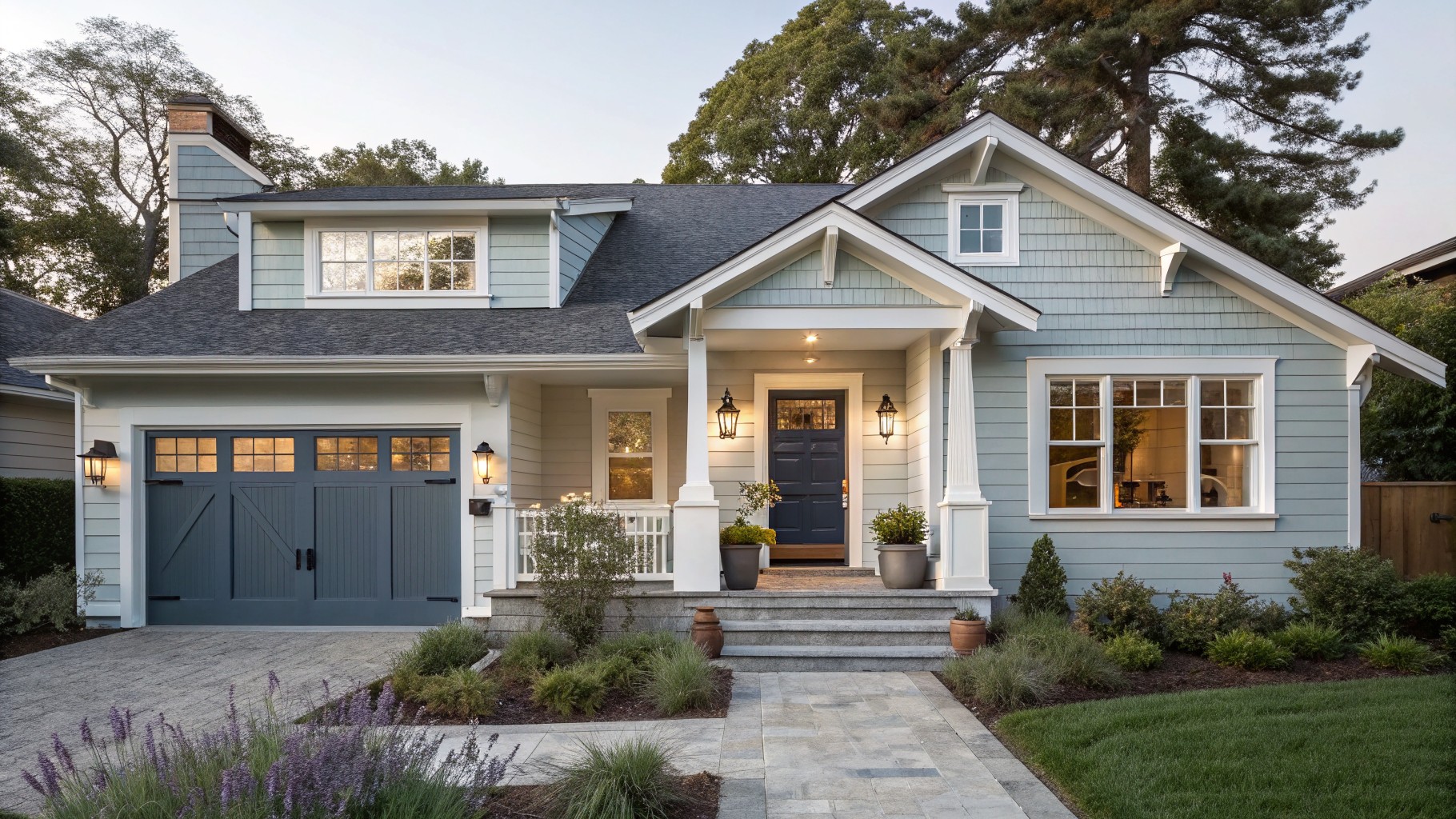
Soft Blue Gray Siding

A soft blue gray works nicely on exterior siding because it stays calm and steady without looking flat. This color sits between gray and blue, which gives the house a quiet presence that still feels fresh.
It carries cool undertones that come through more in shade, so it pairs best with white trim and a deeper navy door. The shade suits homes with clean lines and holds up well next to natural stone or simple landscaping.
Soft Greige Siding
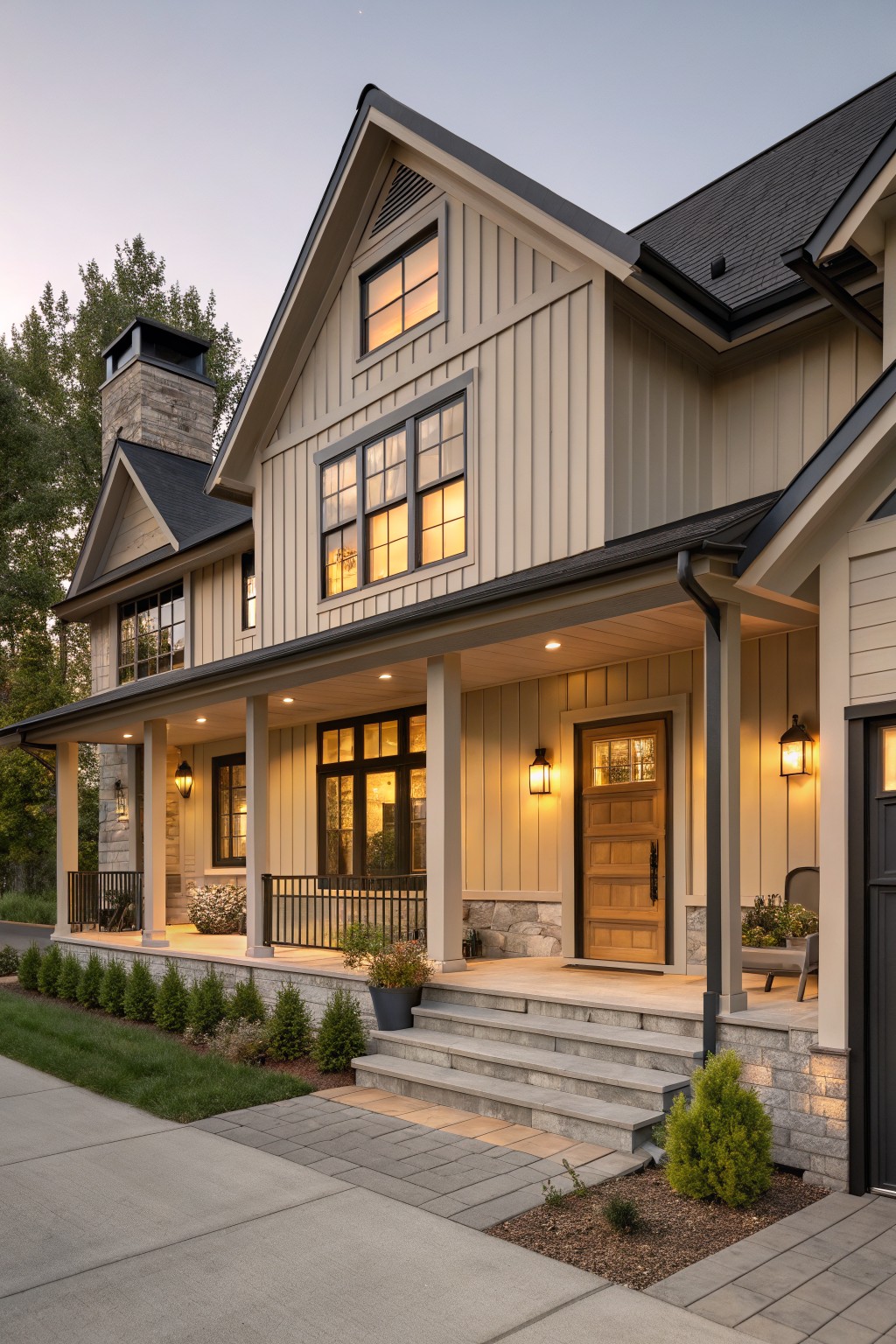
This soft greige siding gives the house a calm and steady look without feeling too stark or too beige. It sits right in that middle ground between gray and warm neutral, which makes it easy on the eyes and simple to live with over time. The color reads a little warmer in the evening light but stays fairly cool overall.
It pairs nicely with stone bases and dark trim. Colors like this tend to work best on homes that have some texture already, whether that is wood accents or natural masonry. Good matches in this range include Sherwin Williams Repose Gray, Benjamin Moore Revere Pewter, and Behr Silver Strand.
Deep Blue Gray Siding
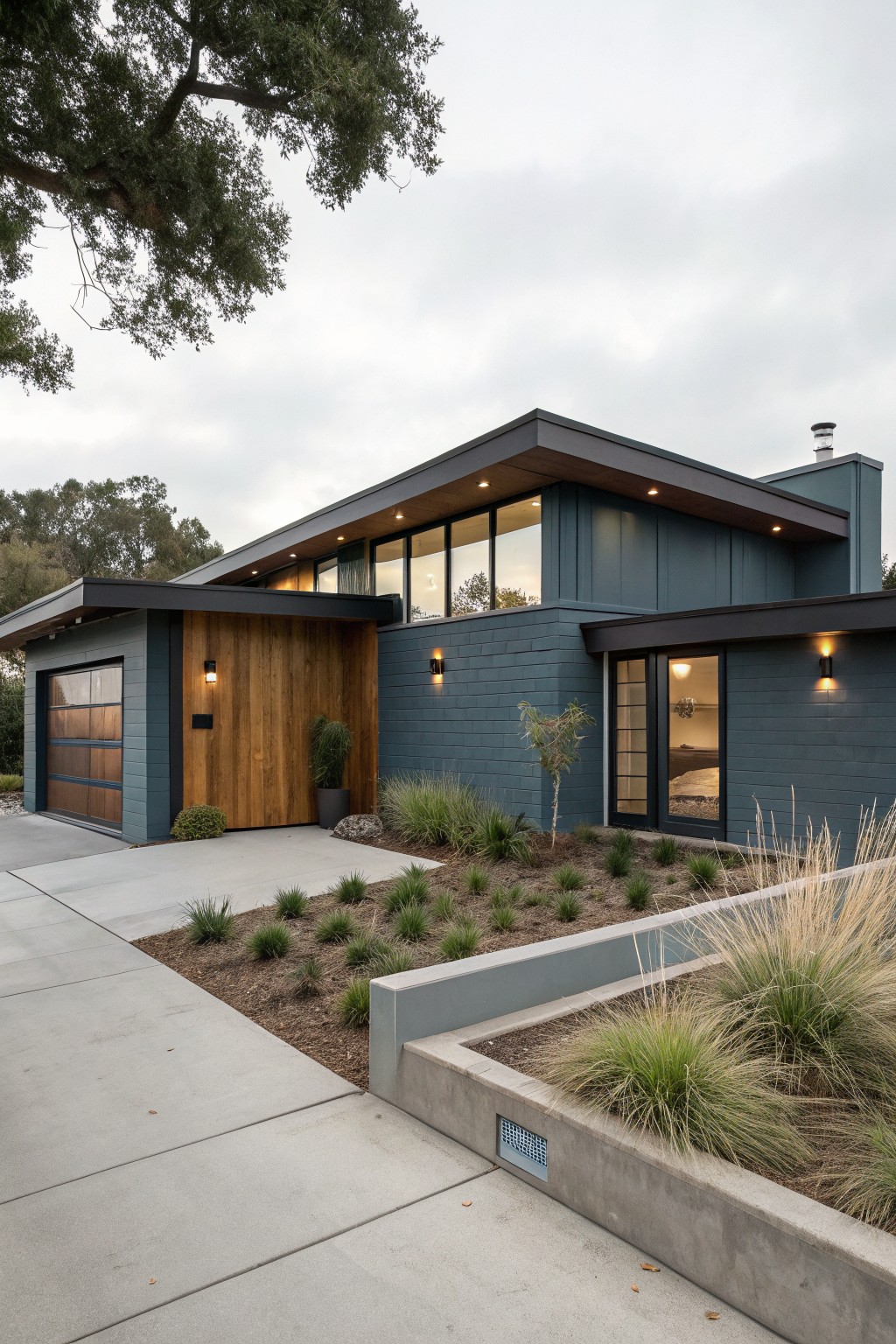
A deep blue gray like this one gives the house a calm, solid presence without feeling heavy. It sits between navy and charcoal but reads cooler and a bit softer, which helps it blend nicely with natural wood and simple concrete details.
This shade works best on modern or updated homes where you want the color to feel quiet rather than bold. It holds its tone well next to black windows and warm wood accents, though it can look flatter if the roof or trim pulls too warm.
Soft Blue Green Siding
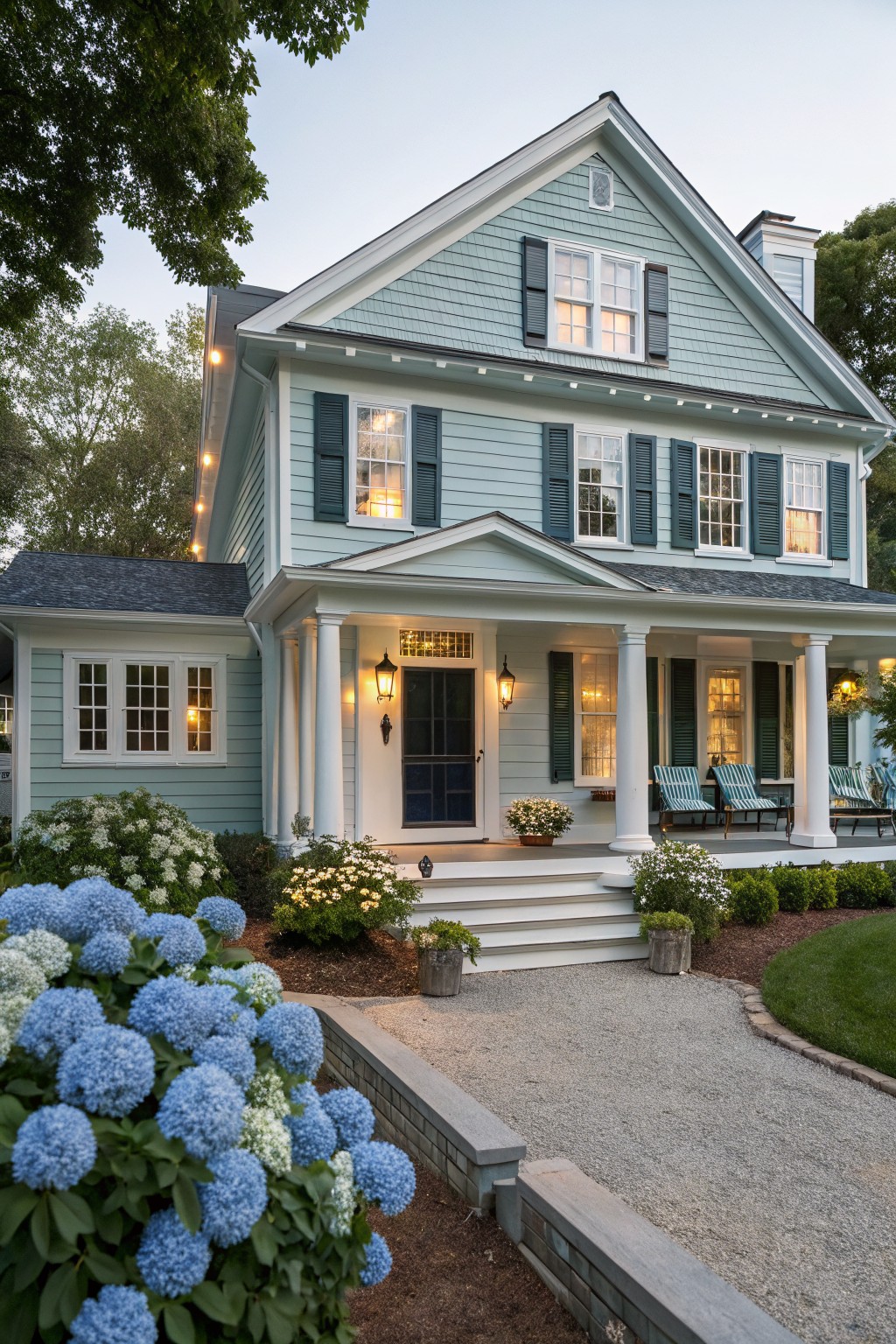
A soft blue green like this one brings a quiet feel to the whole house. It sits between blue and green with a light gray undertone that keeps the color calm rather than bold.
This shade works best on homes with white trim and simple details. It pairs well with most roof colors and holds up nicely in changing light. Try something close to Sherwin Williams Rainwashed or Benjamin Moore Wythe Blue if you want a similar result.
Soft Sage Green Siding

This soft sage green works well for exteriors that need a calm but natural feel. It sits somewhere between green and gray, with a bit of cool undertone that keeps it from looking too bright or too dull outside. Colors like Sherwin Williams Clary Sage, Benjamin Moore Saybrook Sage, or Behr Aged Green give a similar effect.
The color looks good next to stone foundations and wood trim without competing with them. It suits craftsman or traditional homes best and holds up nicely in changing daylight. Just watch that it does not pull too gray in strong sun.
Crisp White Siding

This crisp white on the house siding gives a calm, open feel that works well on modern exteriors. It reads as a clean neutral with almost no warmth, which keeps the whole look light even when the sun hits it directly.
The color sits nicely next to black window frames and a natural wood door. It works best on homes with simple lines and holds up well against green landscaping or gravel paths.
Soft Greige House Siding
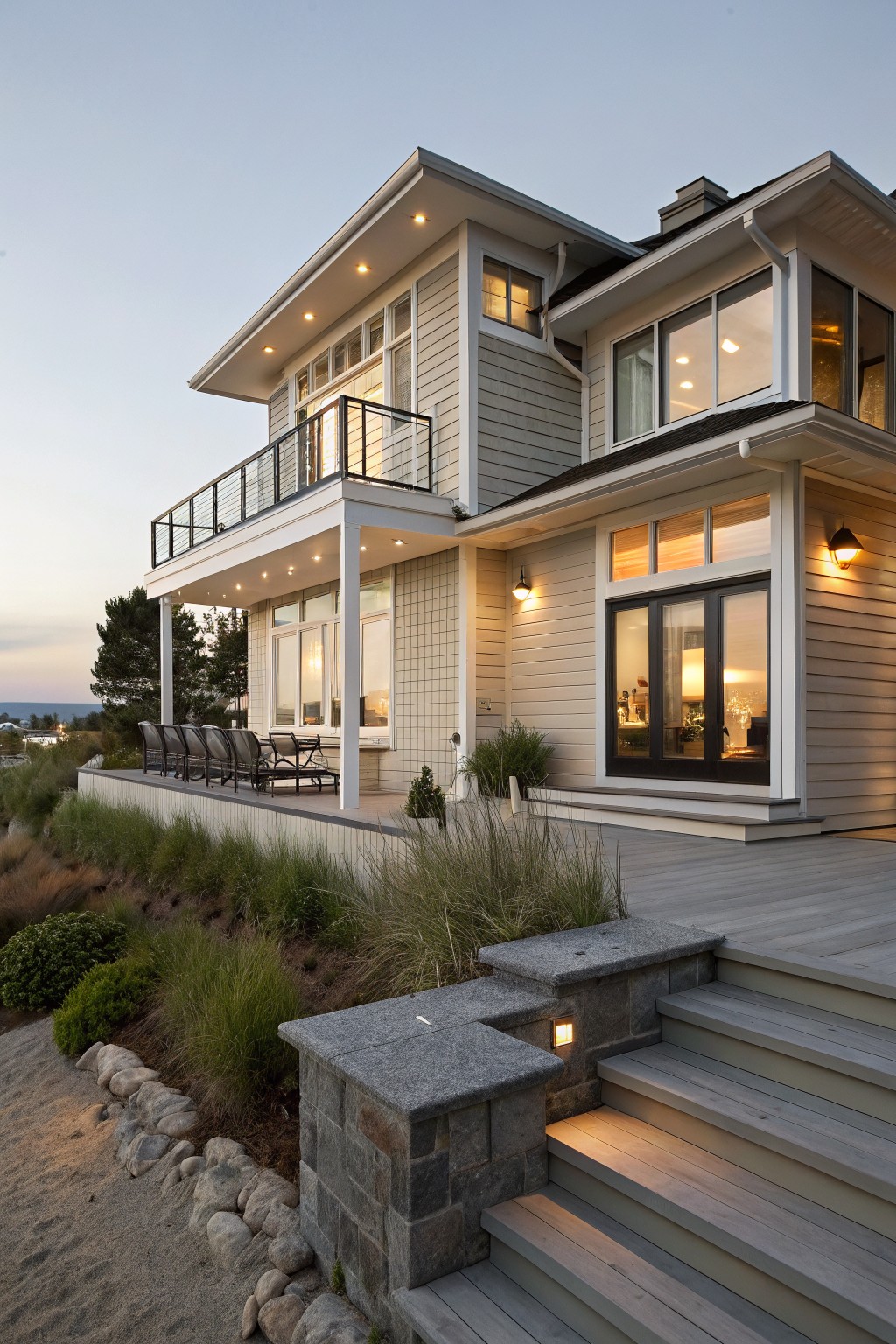
A soft greige works well on this kind of siding because it sits right between gray and beige. It gives the house a calm look without feeling too stark or too plain, and it holds up nicely against the wood deck and stone base. The color has a light depth that still reads clean from a distance.
It carries a gentle warm undertone, so it never goes cold even in the evening light. This shade pairs easily with white trim and natural wood tones, and it tends to suit homes that want a quiet, coastal feel without standing out too much.
Deep Charcoal Siding
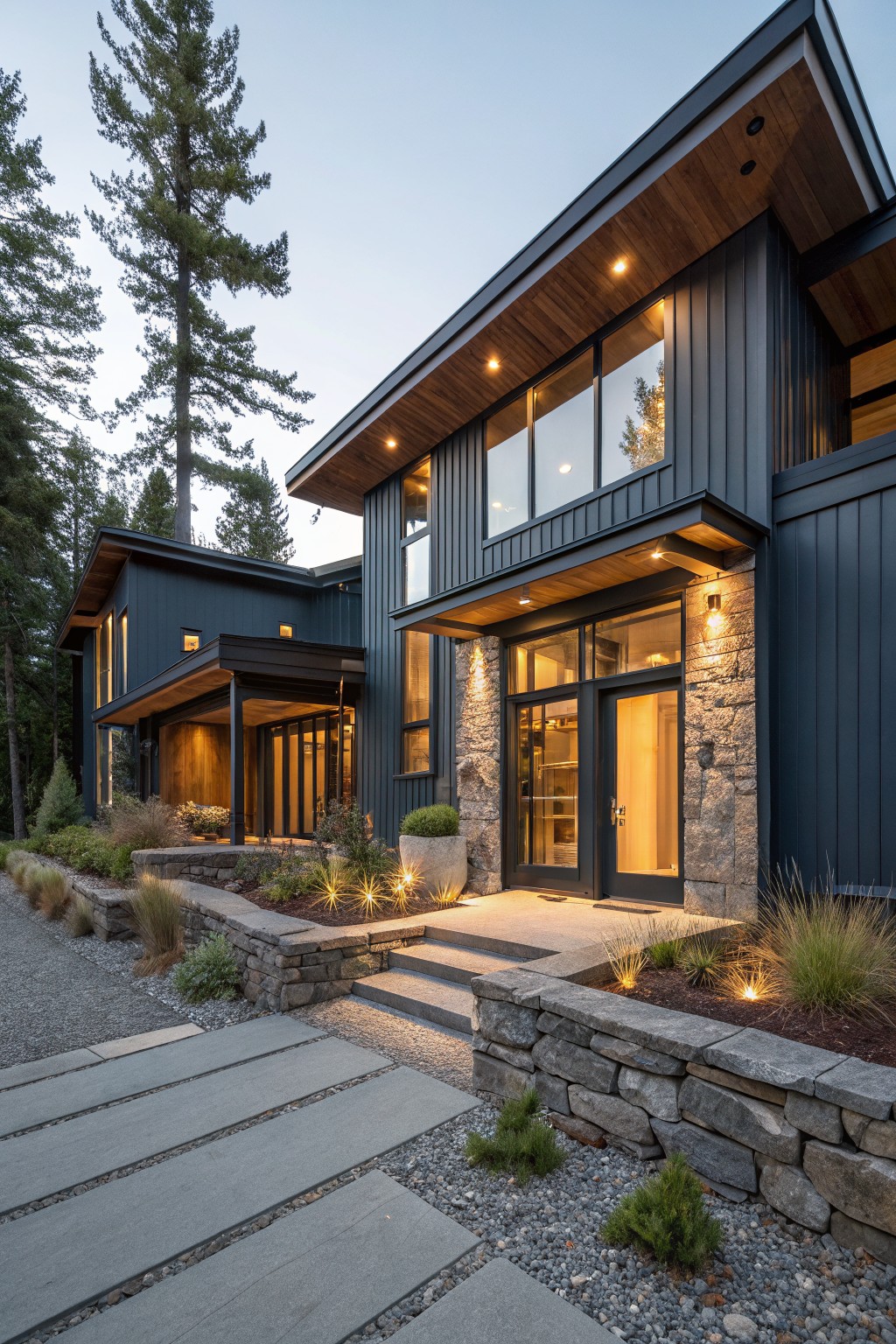
This house uses a deep charcoal paint on the siding. It is a cool gray with a slight blue undertone that feels calm and solid rather than harsh. Many people like this color because it blends into wooded settings without disappearing completely.
It works best with warm wood tones and stone details to keep the overall look balanced. Watch how it reads in full sun since the cool undertones can look a bit flatter in bright light. Good matches include Sherwin Williams Iron Ore, Benjamin Moore Kendall Charcoal, Behr Blackout, or Farrow & Ball Railings.
Warm Greige Siding With Brick And Stone

This house uses a soft warm greige on the siding that feels calm and easy to live with. It sits somewhere between beige and gray, with just enough warmth to keep the whole exterior from looking flat. You see similar shades in Sherwin Williams Agreeable Gray, Benjamin Moore Edgecomb Gray, and Behr Creamy Mushroom.
The color holds up well next to brick steps and a stone path. It works best on homes with some natural texture around them, like wood or masonry, and it stays looking clean even when the light changes through the day. Pair it with a soft green door or shutters if you want a bit more personality without losing the quiet feel.
Sage Green Siding With White Trim

This house uses a soft sage green on the main siding. It is a muted green with gray undertones that feels calm and blends easily into a yard. The color works well on larger surfaces because it does not fight with the roof or surrounding trees. Popular matches for this look include Sherwin Williams Clary Sage, Benjamin Moore Saybrook Sage, Behr Aloe Vera, and Farrow and Ball Lichen.
The green sits nicely next to white trim and a dark roof. It tends to read a bit cooler in bright sun and a touch warmer in shade, so test a sample on the actual wall before committing. Pair it with simple landscaping and avoid strong reds or oranges nearby if you want the calm effect to stay.
Sage Green Cottage Style Siding
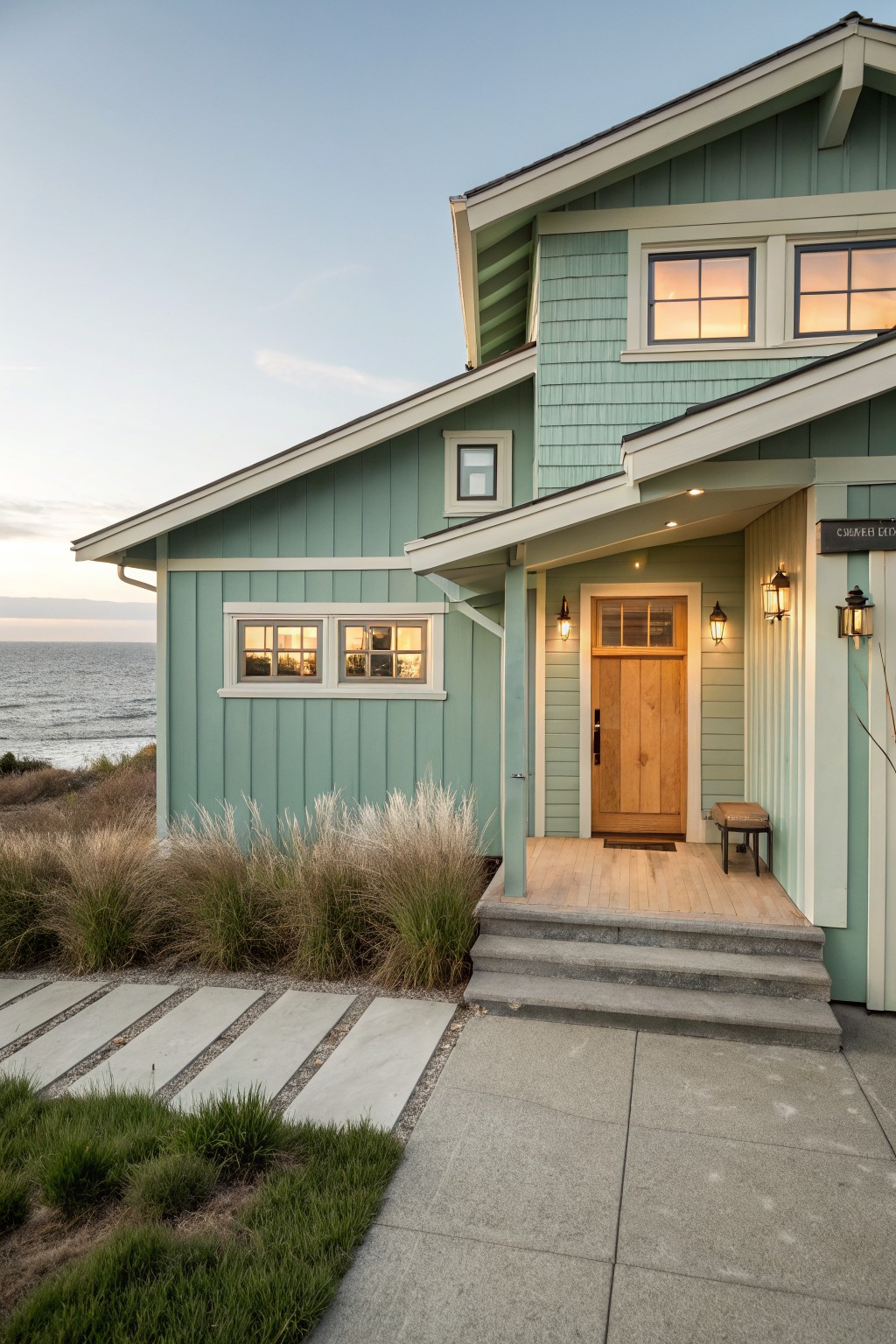
This house uses a soft sage green on the siding. It is a muted green with some blue in it that feels calm and easy on the eyes. The color sits nicely next to the warm wood door and keeps the whole exterior from feeling too stark. People often like this shade because it blends well with outdoor settings without disappearing.
It has a gentle cool undertone that shows up more in bright light. Pair it with white or off-white trim and natural wood accents to keep the look balanced. It works best on homes that want a quiet coastal or cottage feel. Just watch how it shifts in strong afternoon sun, since the green can lean a little grayer in certain lights.
Warm Sandy Beige Stucco
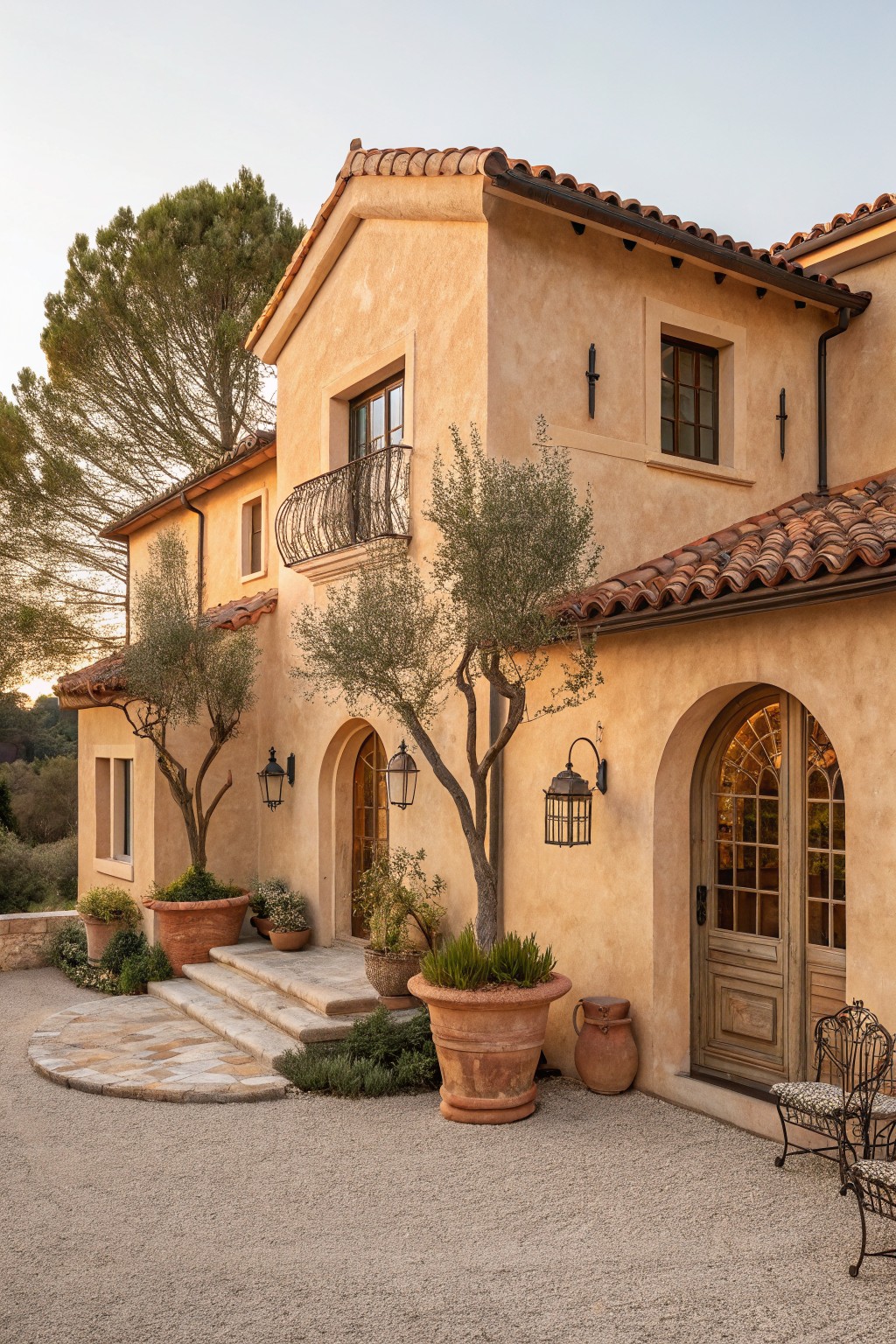
This warm sandy beige gives the house a soft, grounded look that feels easy and natural. It sits in that middle ground between cream and light brown, with just enough warmth to keep the whole exterior from feeling stark. Many people like this type of color because it works on different house styles without demanding too much attention.
The slight peach undertone shows up more in bright light, which helps it blend with terracotta roofs and stone details. It pairs best with simple trim in a soft white or light gray. Try Sherwin Williams Biscuit, Benjamin Moore Lenox Tan, or Behr Toasted Almond if you want something close.
Blue Gray Siding For Traditional Homes

A soft blue gray gives this house a calm look without feeling flat. The color sits somewhere between blue and gray, and it reads nicely against the roof and any stone details around the base. It works especially well on older homes where you want something a little different from plain gray but still quiet.
This shade has a slight cool undertone, so it looks best with warm white trim and maybe a dark door to keep it grounded. It pairs easily with green landscaping too. Just watch how it changes in different lights, since blue grays can shift more than you expect once the sun moves.
Sage Green Siding With Wood And Stone
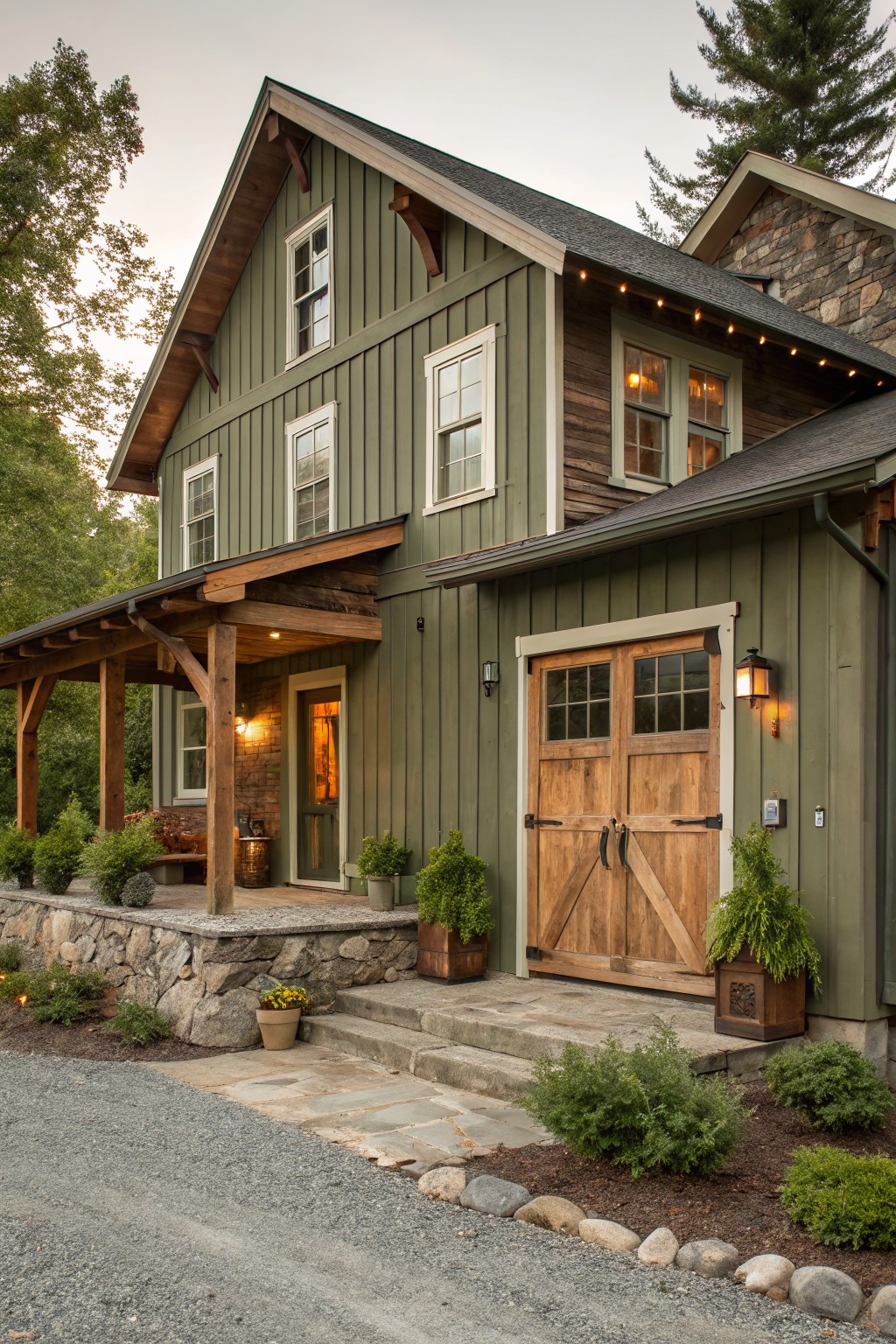
A soft sage green like this one often reads closest to Sherwin Williams Evergreen Fog or Benjamin Moore Saybrook Sage. It is a quiet color with gray undertones that feels steady and easy to live with on a whole house.
This shade sits well against wood trim and stone foundations without looking too bright or too dull. It works best on homes with natural materials nearby and pairs nicely with warm wood doors or simple white windows.
Cool Gray Sage Exterior Siding

This soft sage green on the house siding creates a calm look that feels natural rather than bold. It leans more gray than bright green, which keeps the color quiet and easy to live with on a larger surface.
The undertone stays cool enough to work with wood accents and darker windows. It suits homes that want a gentle connection to the outdoors without looking too coastal or too earthy.
Soft Gray Siding
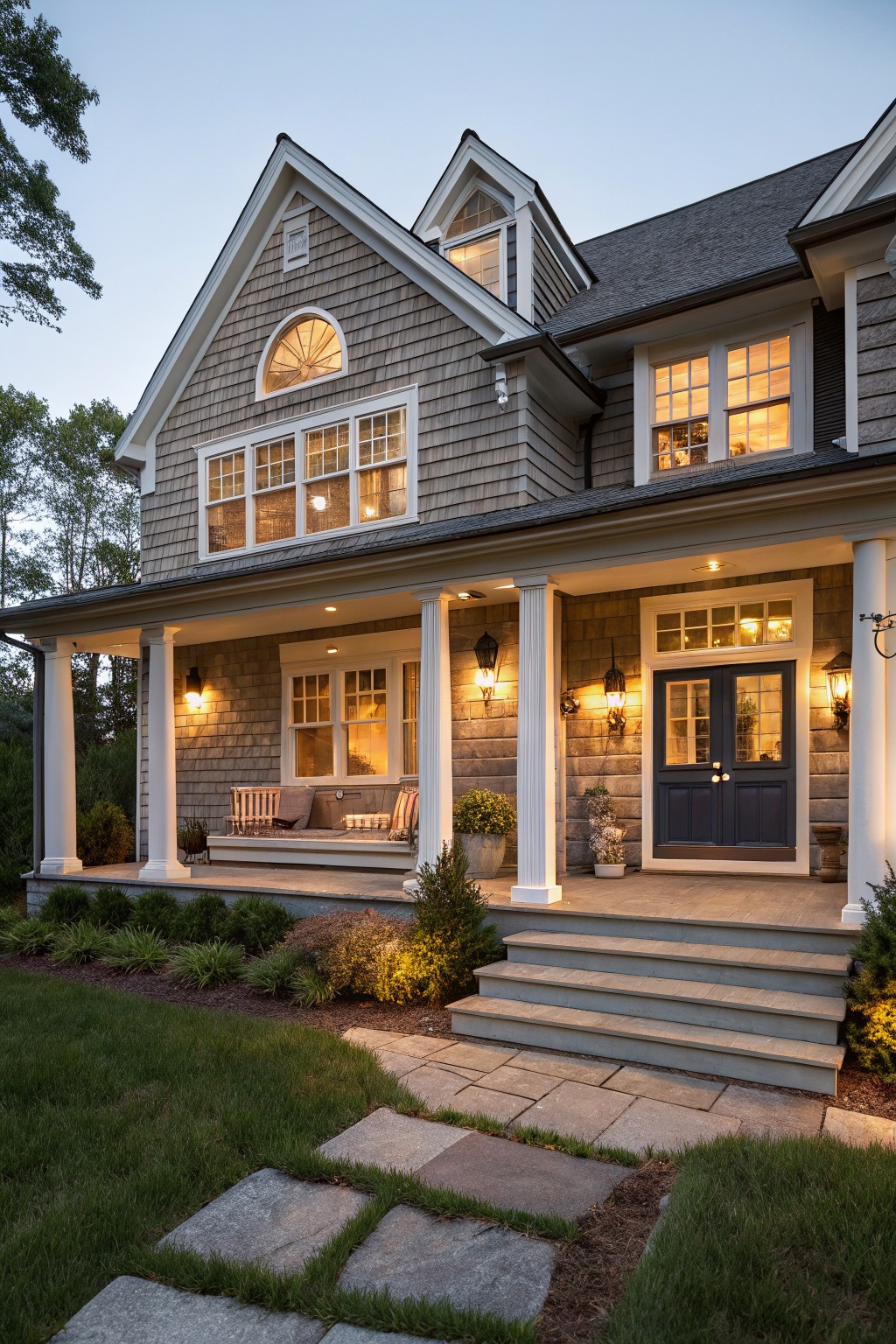
This soft gray siding color gives the house a calm, settled look without feeling flat. It reads as a muted gray with slight cool undertones that keep the exterior feeling balanced and quiet rather than stark or overly modern.
It works especially well on shingle exteriors where the texture softens the color a bit. Pair it with white trim and a darker roof to hold the look together. Just check the undertones against any stone or wood details on site, since this shade can shift depending on the light.
Charcoal Gray Siding

This deep charcoal gray brings a calm, steady feel to the whole house. It reads as a cool neutral with just enough depth to keep the exterior from looking flat or washed out.
It sits close to Sherwin Williams Iron Ore and Benjamin Moore Kendall Charcoal. The color works best on larger siding areas where it can contrast softly with wood accents and lighter concrete paths. Keep the trim simple and let the gray do the quiet work.
Soft Pink Beige Exterior Walls
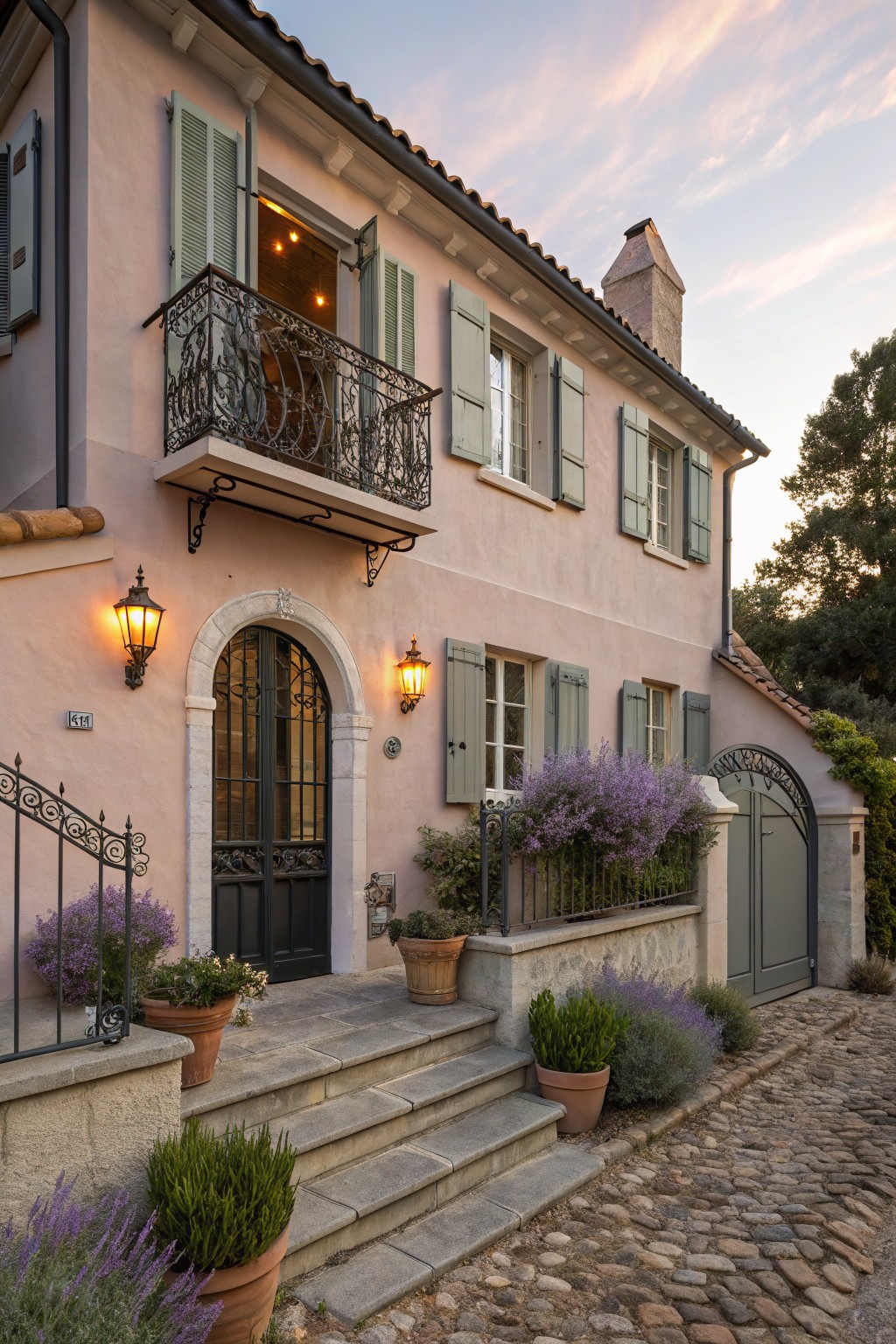
This warm pink beige works well on stucco or plaster homes because it feels soft without turning too sweet. It sits in that nice middle ground between pink and beige, giving the house a calm look that still has some warmth to it. Colors like this often read best in natural light where the pink undertone can show up gently instead of feeling flat.
It pairs nicely with green shutters or gray trim and holds up against stone or gravel paths without competing. Watch how it shifts in different lighting though, since the pink can lean a bit more peach in strong sun. A few close matches are Farrow & Ball Setting Plaster, Benjamin Moore Misty Rose, and Sherwin Williams Rosebud.
Soft Green Front Doors

A soft sage green works nicely on exterior doors when you want something calm but still visible. This shade feels like a gentle nod to nature without going too bright or bold, and it sits comfortably against light siding and white trim.
It carries a touch of gray in the undertone that helps it stay even in changing light. Try it with warm wood elements or simple black hardware, and it tends to suit coastal or cottage style homes best.
Sage Green Brick House Exterior

This muted sage green works well on exterior walls because it feels calm and blends into the surroundings without disappearing. It has a soft green-gray tone that keeps the house looking settled rather than stark, especially next to brick.
It pairs easily with warm white trim or dark doors and suits older homes or city rows. Just check how the green reads in shade, since it can lean more gray depending on the light.
Soft Teal House Siding

This soft teal green on the siding gives the house a calm, settled look that feels right at home near the water. It is a muted color with just enough green to keep it from reading too blue, and it stays peaceful even in changing light.
It has cool undertones that sit nicely next to the wood trim and stone base without fighting them. This shade works well on coastal homes or any place where you want the color to blend with the surroundings rather than stand out. Pair it with natural wood doors and simple trim to keep the whole exterior feeling relaxed.
Frequently Asked Questions
Q: How do I pick a color that still feels calm next to a dark roof?
A: Choose a soft gray or greige for the walls. It tones down the contrast and keeps the whole look relaxed instead of busy. Try a couple of samples on the siding to see how they sit together in real light.
Q: What if my house has a lot of windows and trim already?
A: Use one muted blue or green on the main body. This pulls everything together without adding extra contrast that could feel jarring.
Q: Will light serene colors show every mark on the exterior?
A: They can pick up dust and pollen faster than deeper tones. A quick wash a few times a year keeps them looking fresh.