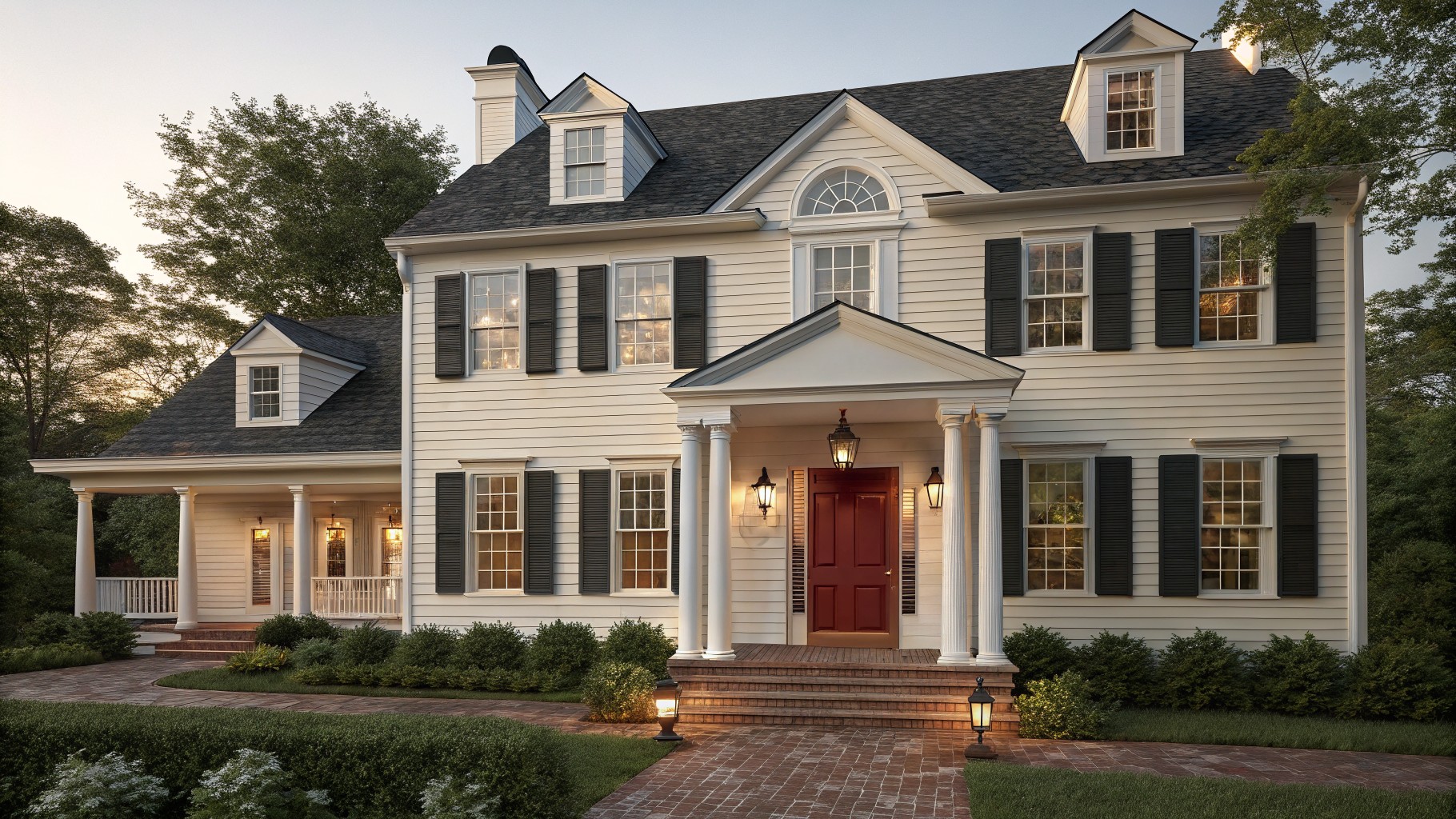
I’ve found that exterior colors shift more than expected once sunlight moves across them and they sit next to roofing or brick.
What looked calm on a fan deck can turn chalky or overly bright by mid afternoon when the landscaping casts shadows against it.
Testing on the actual siding shows the real behavior.
I tend to watch how each option reads at both sunrise and dusk before ruling anything out because that tells me which ones will hold up without fighting the rest of the house.
Over time I have learned to favor shades that stay steady next to stone and trim rather than ones that need perfect light to feel right.
Warm Cream Siding
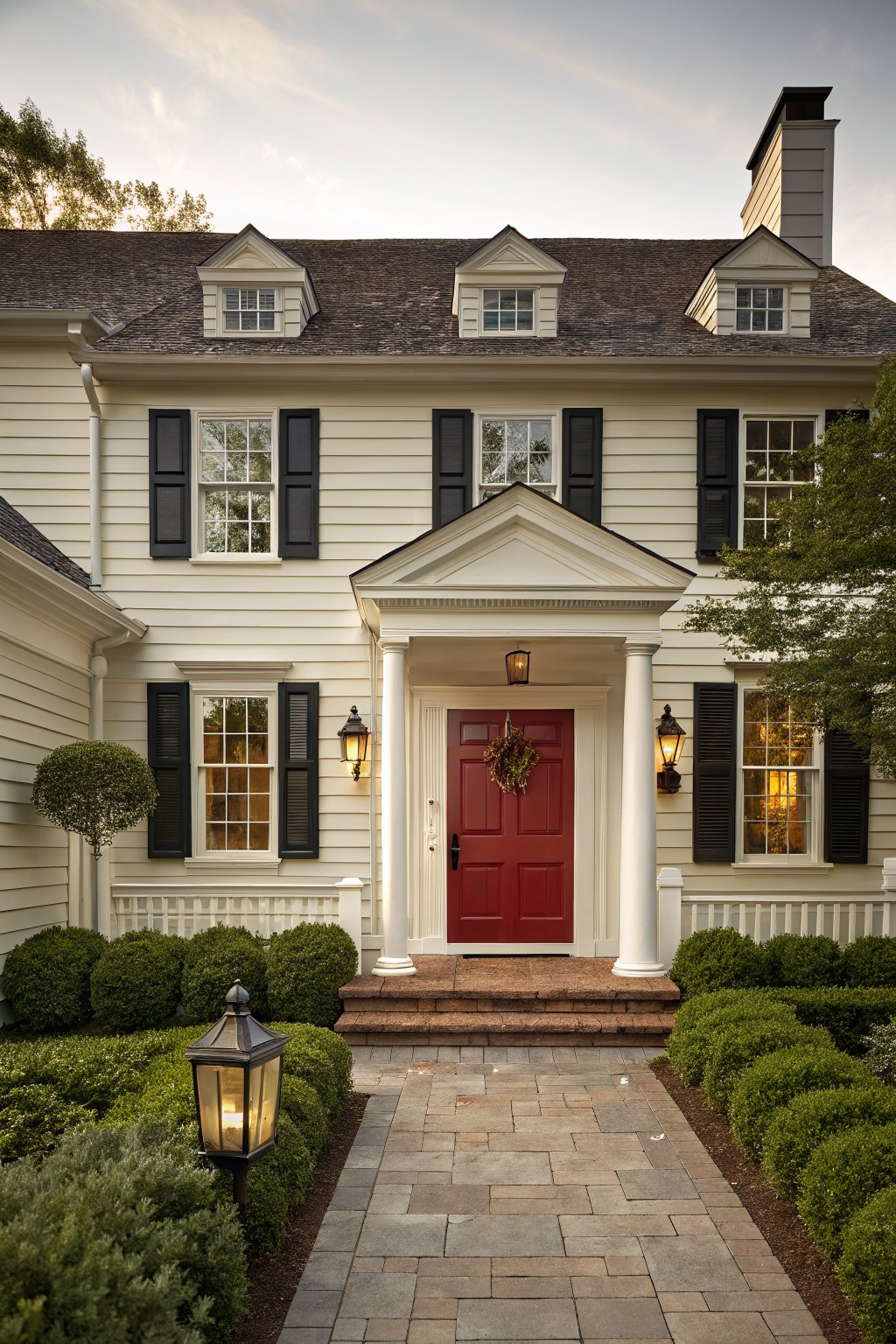
This house uses a warm cream white on the siding. It has a soft tone that feels inviting without looking too bright or cold next to the roof and darker accents.
The color carries a gentle yellow undertone that helps it stay consistent through the day. It works well on traditional homes and pairs easily with black trim or natural stone details at the base.
Soft Sage Green Siding
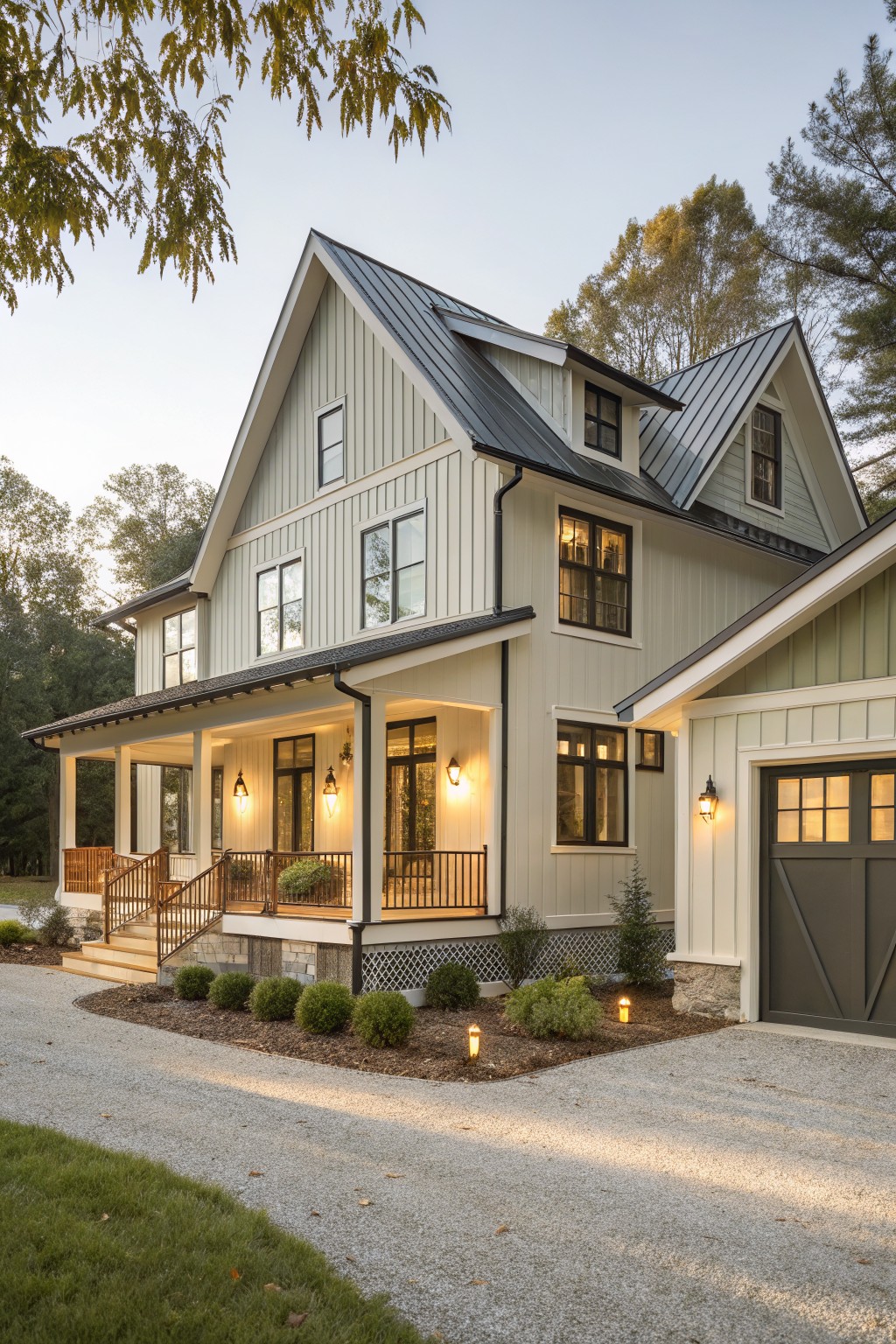
This soft sage green gives the house a quiet, lived-in look that still feels polished. It sits in that gray-green range and looks closest to Sherwin Williams Rainwashed, Benjamin Moore Saybrook Sage, Behr Aged Sage, or Farrow & Ball Light Blue.
The color stays fairly cool with a hint of gray, so it pairs cleanly with dark roofing and white trim. It works best on homes that have some natural surroundings, where the green can feel like part of the landscape rather than fighting it.
Soft Blue Gray Siding

This muted blue gray works well on exterior siding because it stays calm without fading into plain gray. The color has a light cool tone that feels easy and a bit coastal. It reads close to Sherwin Williams Rainwashed, Benjamin Moore Wythe Blue, or Behr Soft Periwinkle.
The gray undertone helps it blend with white trim and natural wood accents around the house. It suits older homes or beach settings where you want something gentle that still looks a little different from standard neutrals. Just test it in full sun first since cool blues can shift more than you expect.
Charcoal Trim On Brick
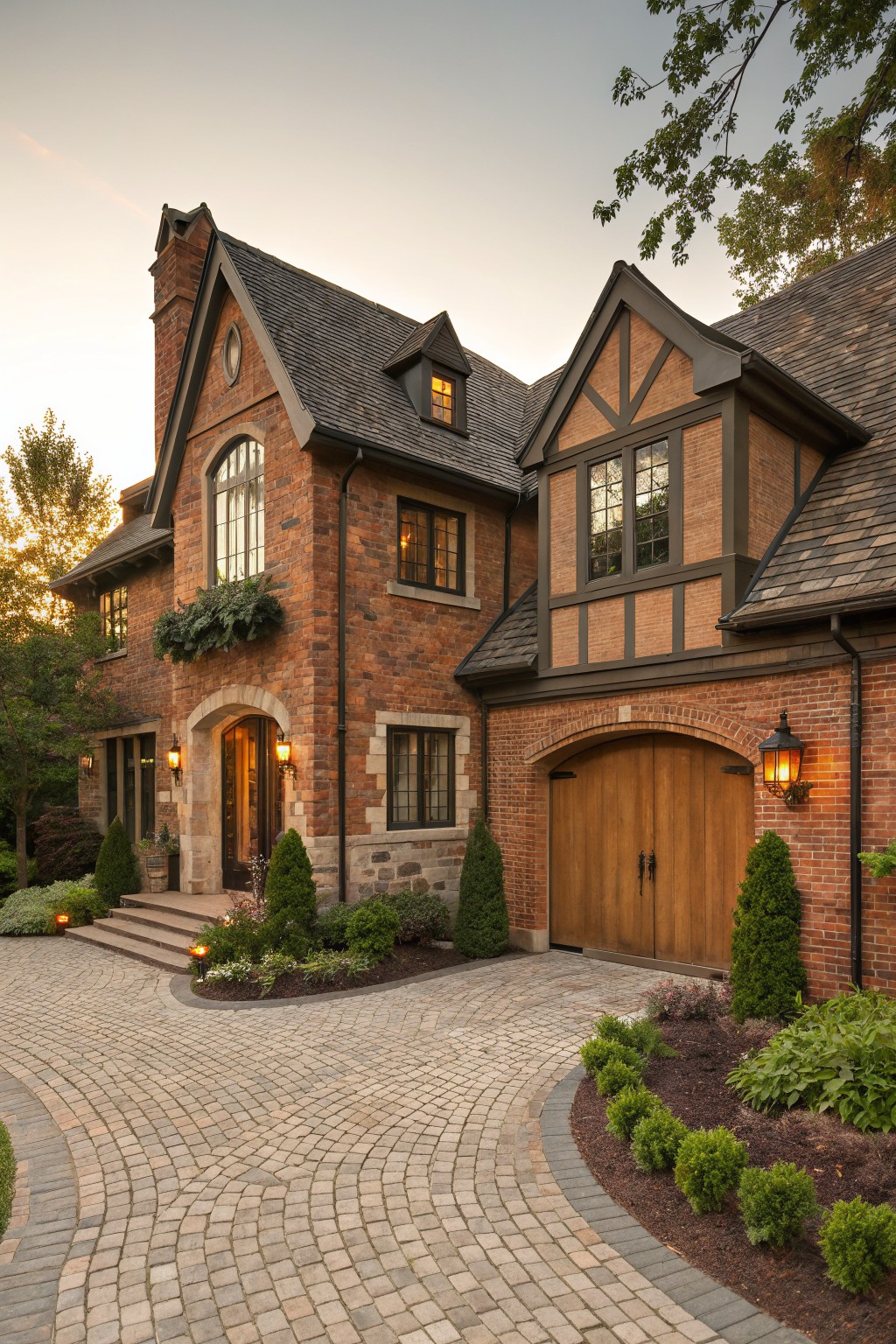
This deep charcoal gray on the trim and gable work reads as a strong neutral that holds its own against the brick. It gives the house a clean, settled look without feeling heavy or overly modern. The color sits well with the warm tones in the brick and the natural wood on the garage door.
It has a slight cool lean that keeps things from turning too muddy in daylight. Use it on similar details like window frames or half timbering if you want that same crisp contrast. Just test it on a few boards first since it can shift depending on how much sun the house gets.
A Soft Greige Exterior
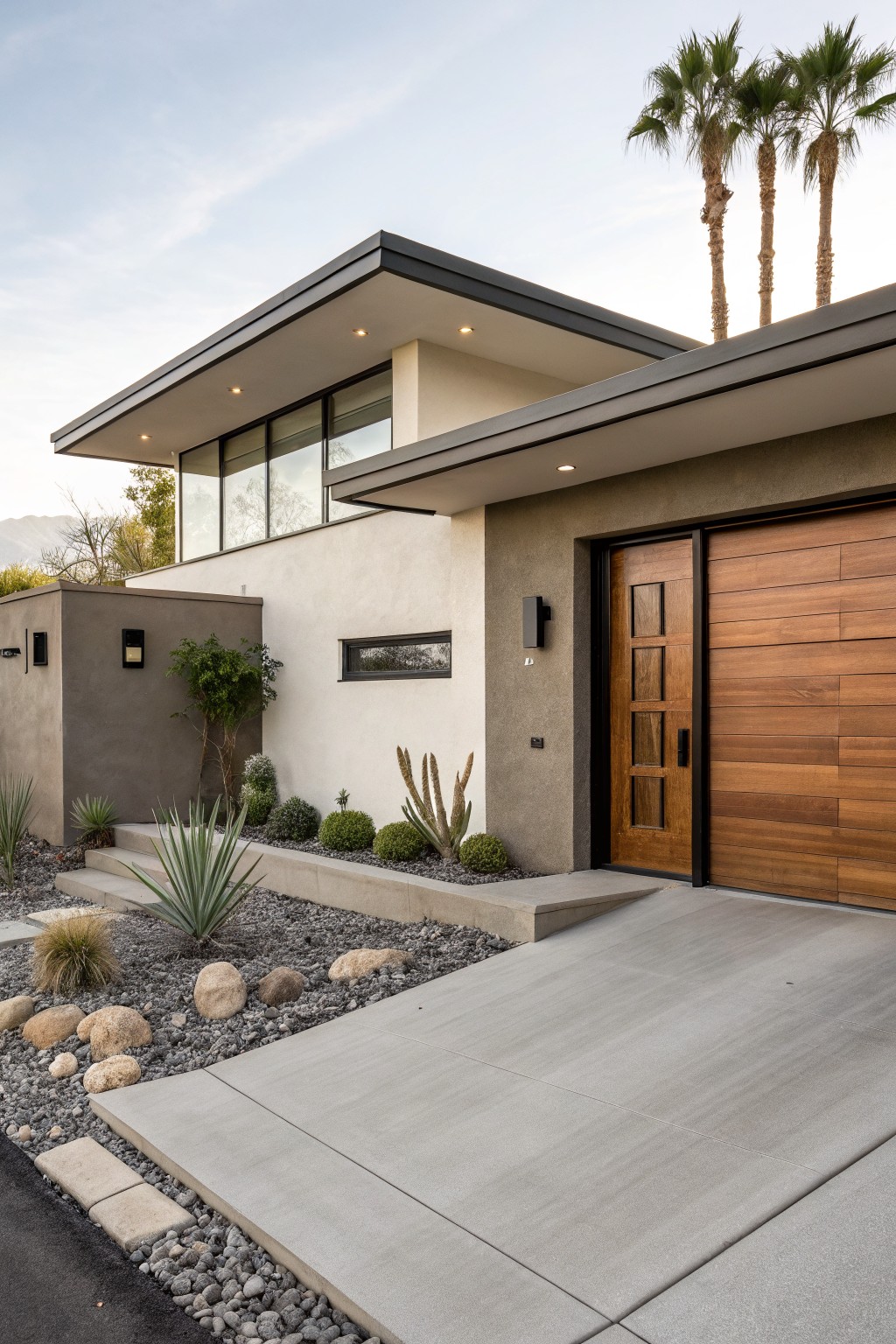
This house uses a soft greige on the main walls that sits right between beige and gray. It gives a clean modern look that still feels grounded and easy to live with. The color stands out because it picks up a bit of warmth from the wood accents without turning too yellow or flat.
The undertone runs slightly warm, which helps it work with natural materials like cedar or stone. It suits contemporary homes in dry climates and pairs well with black windows or dark trim. One thing to check is how it shifts in strong sunlight before committing.
Warm Beige Stucco
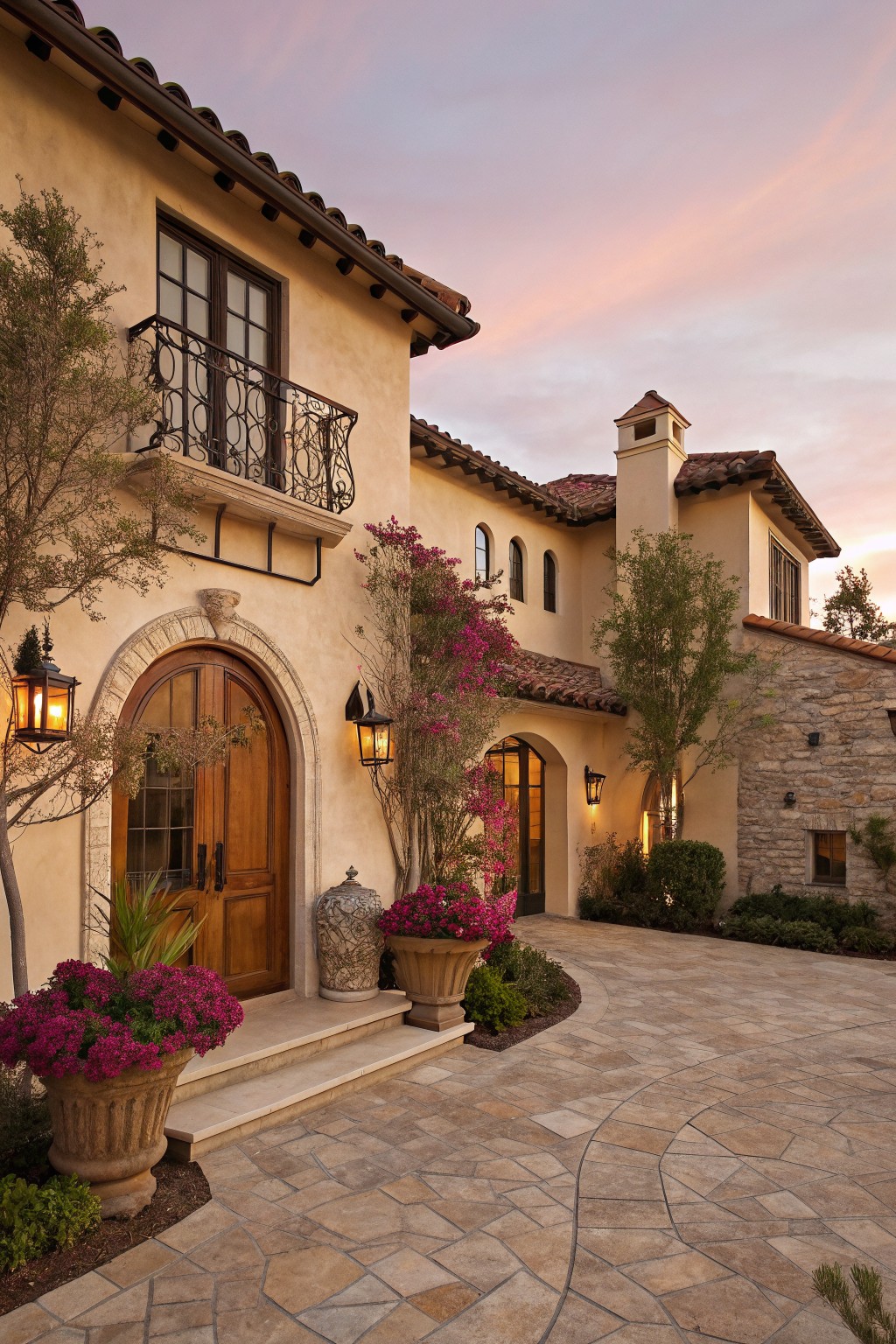
This warm beige on the stucco walls feels like a safe but still interesting choice for an exterior. It sits in that soft neutral range that does not fight with other materials and keeps the house from looking too stark or too plain. Many people like it because it works across different lighting without shifting too much.
It carries a light golden undertone that shows up more in warmer sun and softens a bit toward evening. The color pairs easily with stone, wood doors, and darker roofs, though it can look a little flat if the trim is the exact same shade. Good matches include Sherwin Williams Bungalow Beige, Benjamin Moore Manchester Tan, Behr Toasted Almond, and Farrow & Ball String.
Muted Sage Green With White Trim
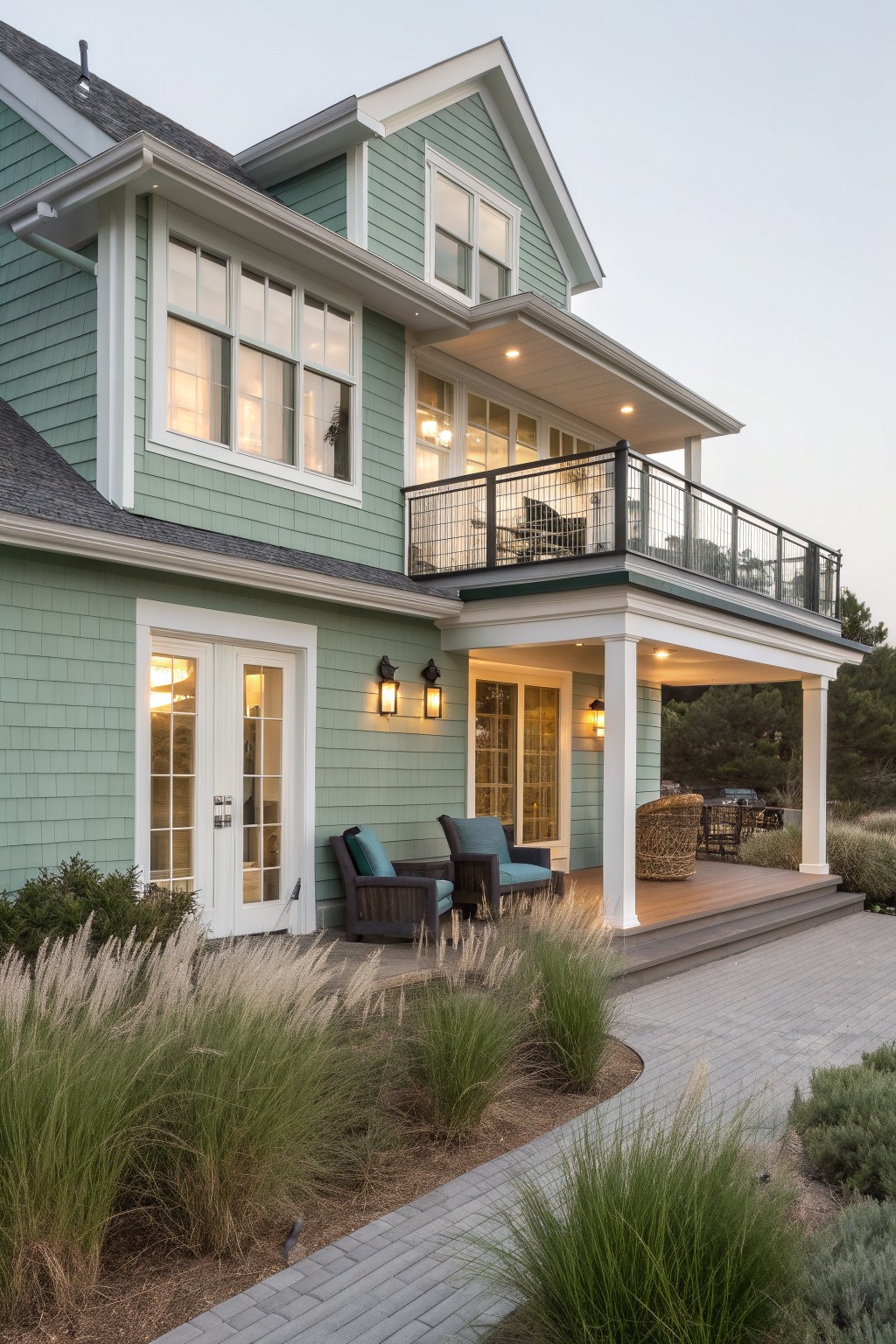
This soft sage green gives the house a calm, lived-in look that still feels polished. It is a muted green with just enough gray in it to keep the color from feeling too bright or trendy on a big exterior.
The shade works best on homes with white trim and natural wood details because the contrast keeps things clean. It holds up well in different lights and pairs nicely with stone or gravel paths without needing a lot of extra color around it.
Warm Neutral Brick

A warm neutral brick like the one on this house gives a soft, grounded feel to the whole exterior. It sits somewhere between beige and light taupe, with just enough warmth to keep the look friendly rather than stark.
That warmth helps it blend with greenery and stone without fighting them. It works especially well on traditional homes where you want the brick to feel settled instead of new. Try pairing it with crisp white trim or a deep green door to keep the contrast gentle.
Buttery Yellow Siding
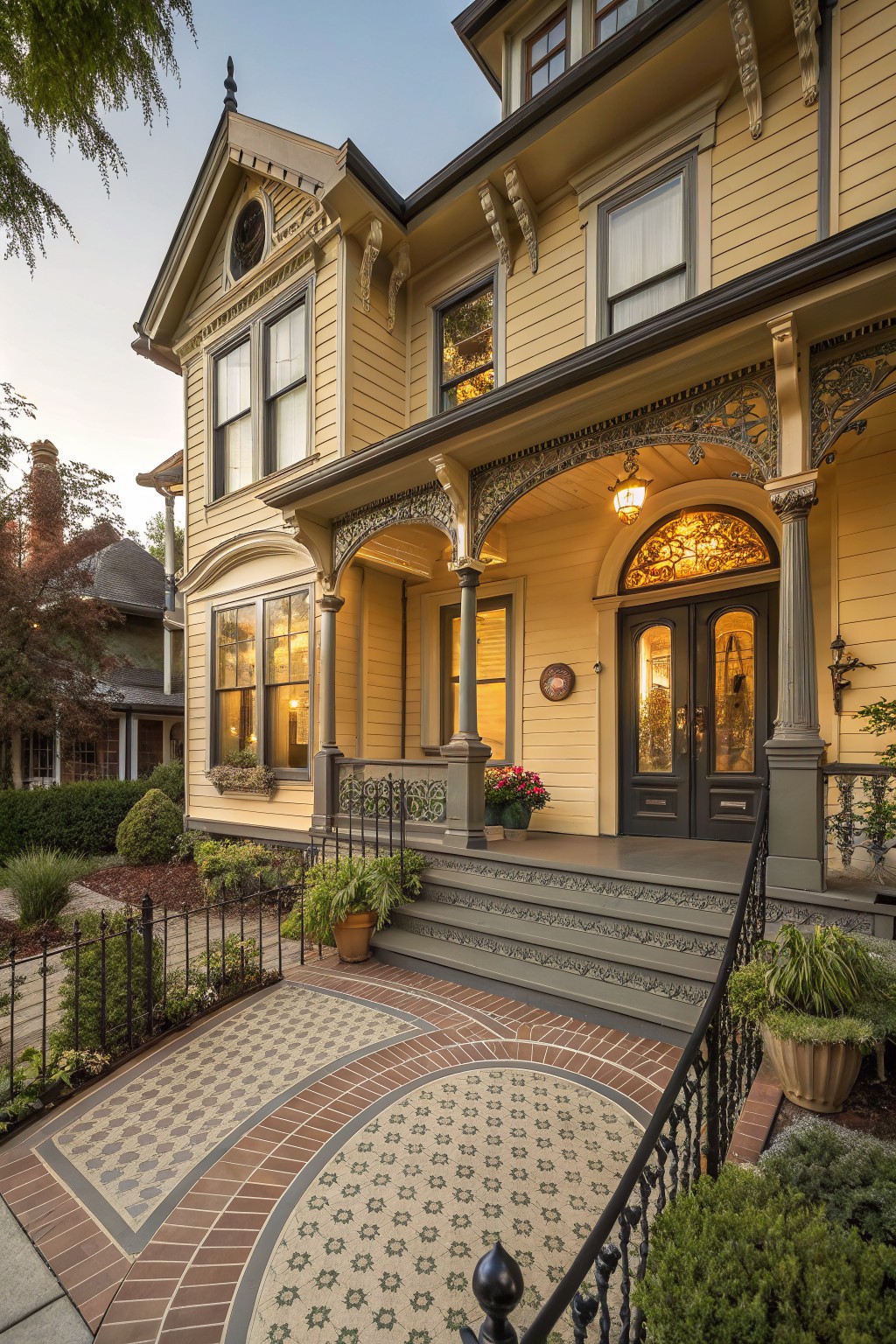
This warm buttery yellow gives the house a soft glow without feeling too bright or childish. It sits right between cream and yellow, which helps older homes look friendly and well cared for. Many people like it because the color still feels calm next to darker trim and natural wood details.
It carries a gentle golden undertone that shows up more in afternoon light. This shade works best on traditional homes and pairs easily with gray or off-white accents. Just keep an eye on how it looks next to very bright white trim, since that can make the yellow feel a bit stronger than expected.
Soft Green Siding

This soft sage green siding brings a calm, easy feel to the whole house. It sits in that gentle middle ground between gray and green, so it never feels too bold or too washed out. Homeowners often like it because it works on many styles of older homes and still looks current without much effort.
The color has a light cool undertone that pairs cleanly with white trim and stone details. It holds up well in both sun and shade, though it can lean a bit cooler in strong afternoon light. Try it with natural wood accents or a darker front door if you want a bit more contrast.
Dark Charcoal Blue Gray Siding
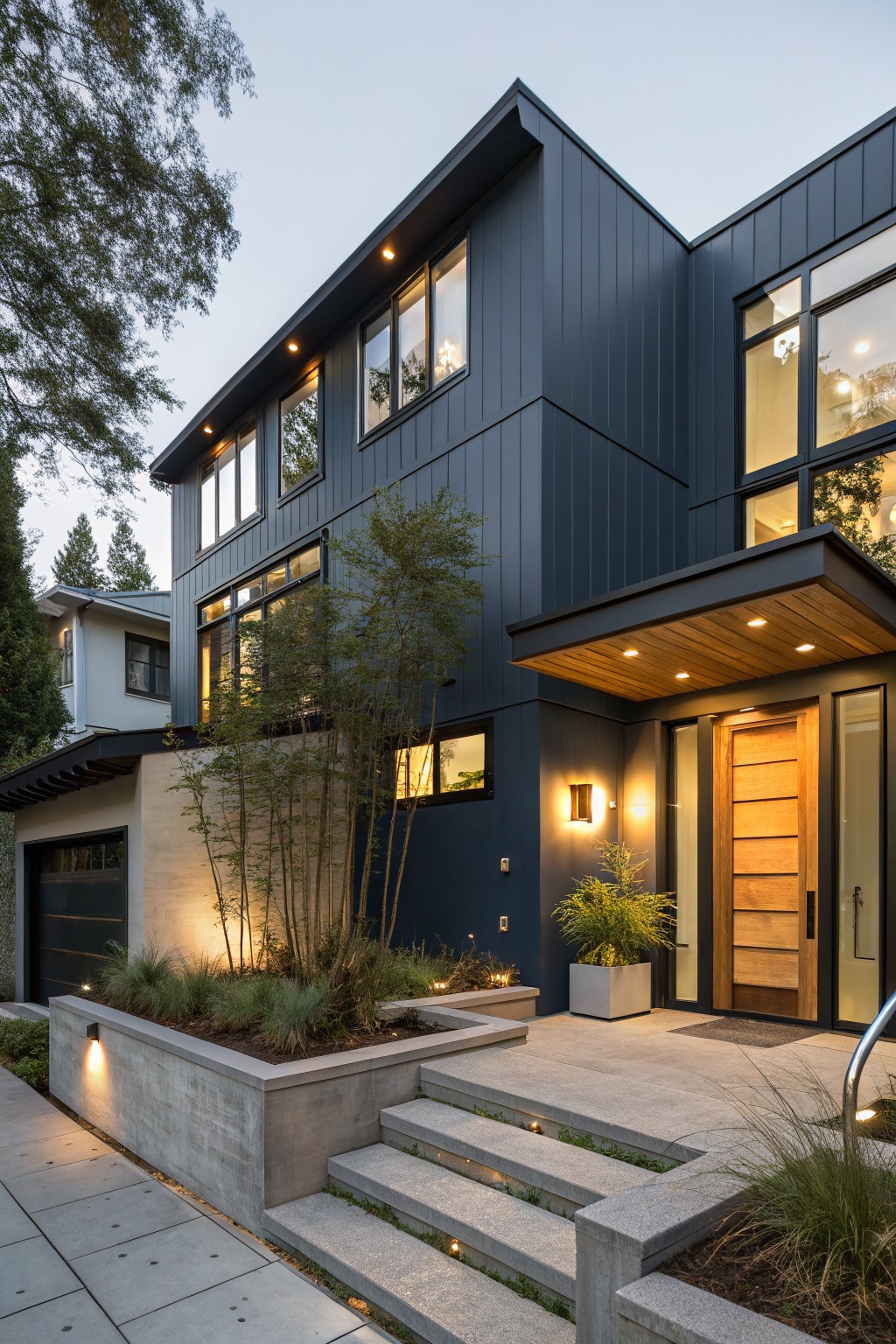
This deep blue gray on the siding gives the house a solid, modern look without feeling too heavy. It sits right between charcoal and navy, and it looks closest to Sherwin Williams Naval or Benjamin Moore Hale Navy. The color holds up well in different lights and makes the whole exterior feel pulled together.
It has cool undertones that keep it from reading flat next to wood and concrete. This shade works best on homes with clean lines and pairs nicely with natural wood doors or light stone details. Just watch how it shifts at dusk since the blue can come through more then.
Sage Green Siding With Stone Base
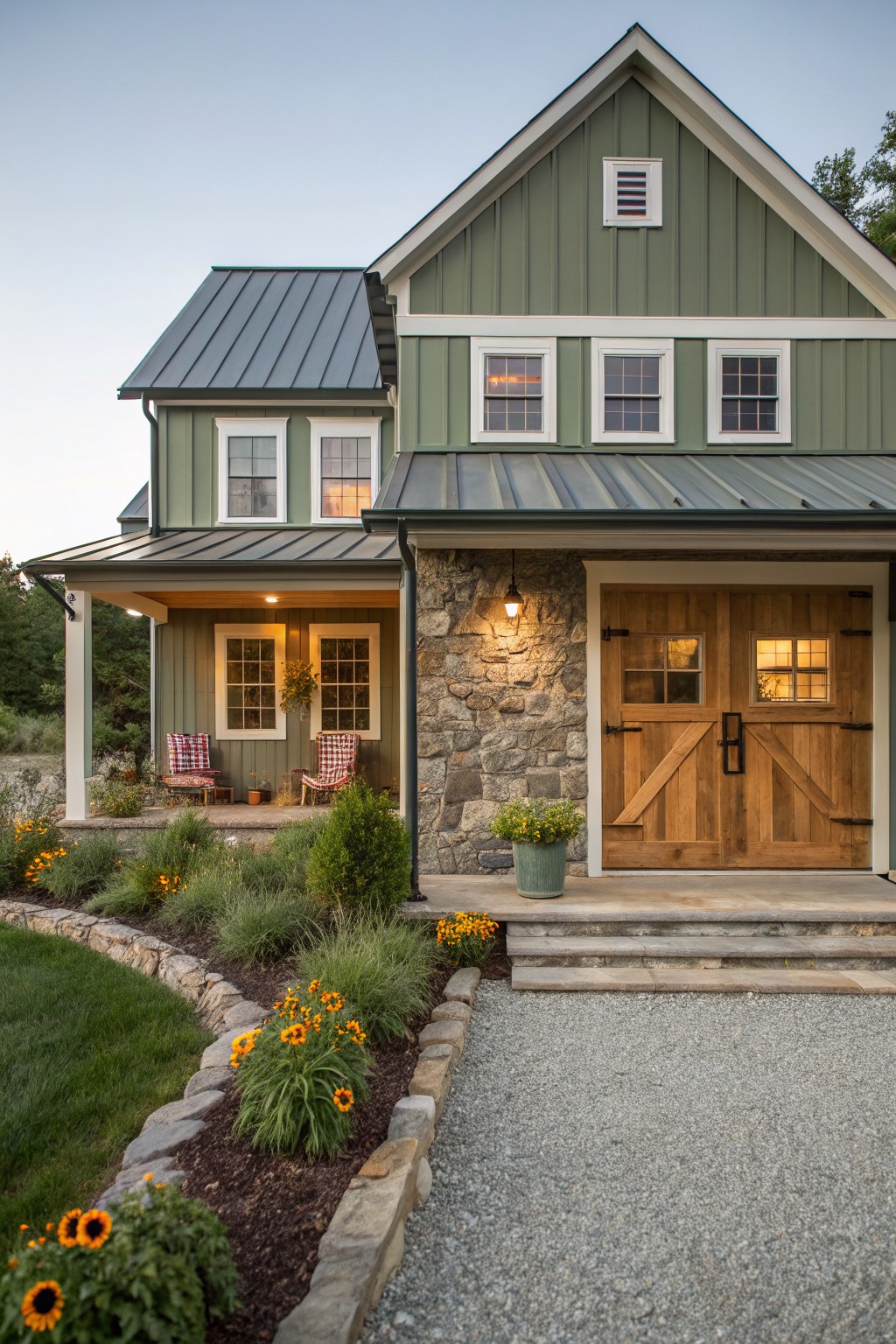
Sage green siding like this gives a house a quiet, steady presence. It sits in that soft middle ground between green and gray, which keeps it from looking too bright or too dull against the stone base.
This shade tends to pick up a bit of cool tone once the light shifts, so it works best with warm wood doors and simple white trim. It suits older homes or simpler builds where you want some color but still need it to feel relaxed year round.
Refined Blue Gray Exterior
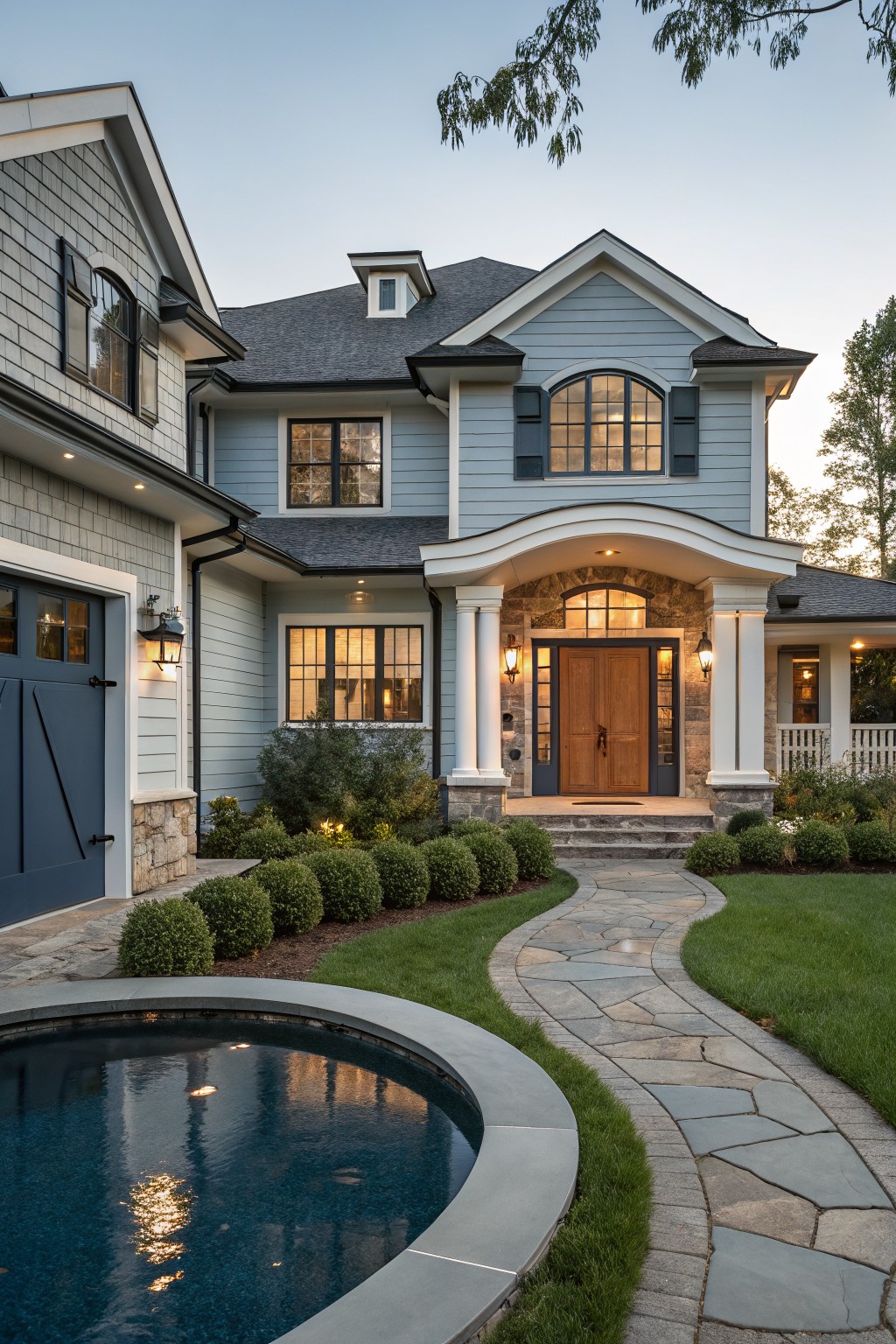
This soft blue gray on the siding gives the house a calm and polished look without feeling cold or flat. It sits right between gray and blue, which helps it read as refined but still approachable on an exterior. The color family works well for this kind of traditional home. It comes close to Sherwin Williams Silver Strand, Benjamin Moore Harbor Gray, or Behr Silver Blue.
The undertone stays cool so it holds up nicely next to white trim and stone details. It suits homes with decent natural light and pairs best with warm wood doors or dark accents to keep the whole look balanced. Too much shade can make it feel a little flat.
Coastal Sage Green Siding
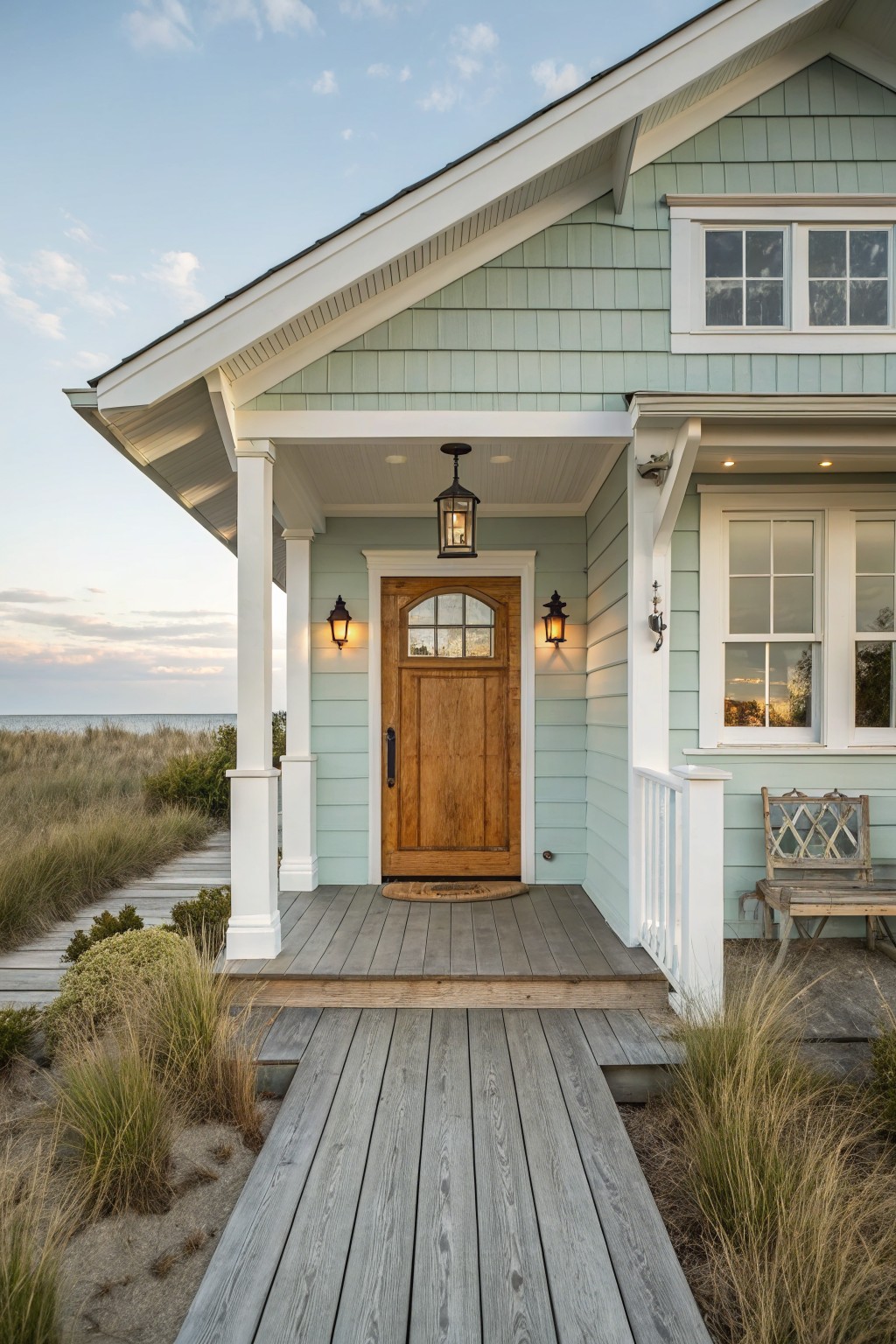
This soft sage green on the siding is one of those colors that feels easy and relaxed on an exterior. It has a light gray-green tone that sits back nicely against the landscape instead of pushing forward.
The color works best with crisp white trim and natural wood details like a front door. It suits coastal or cottage style homes where you want a touch of color without making the house look too bold or trendy.
Deep Charcoal Siding
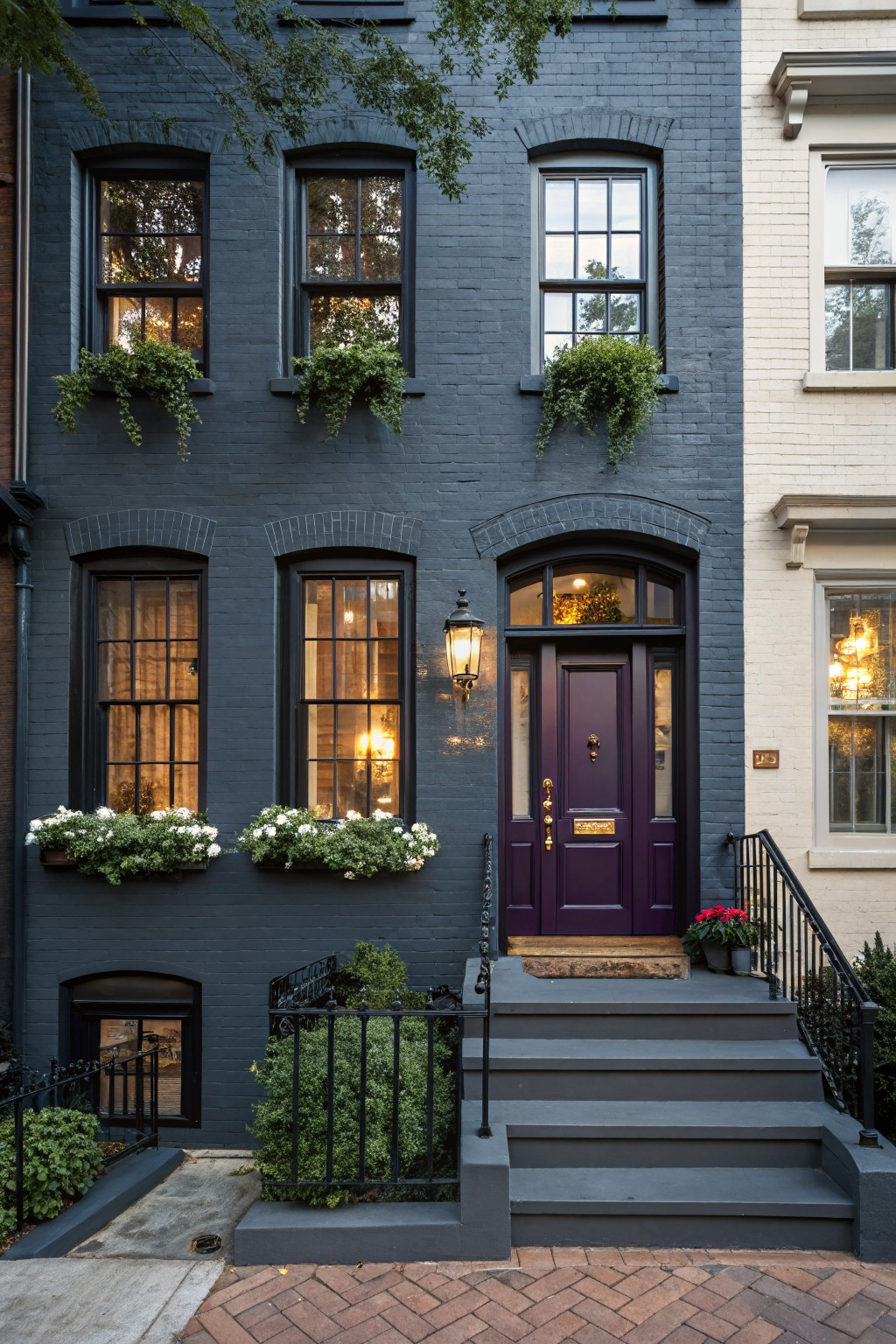
This deep charcoal gray gives the brick a solid, grounded look that feels classic on older homes. It sits on the cooler side of gray and holds its depth even when the light changes throughout the day.
It works best with simple trim and a few strong accent colors like the purple door here. Just keep an eye on how it reads next to lighter neighboring houses, since the contrast can make it feel even darker than expected.
Soft Greige Siding
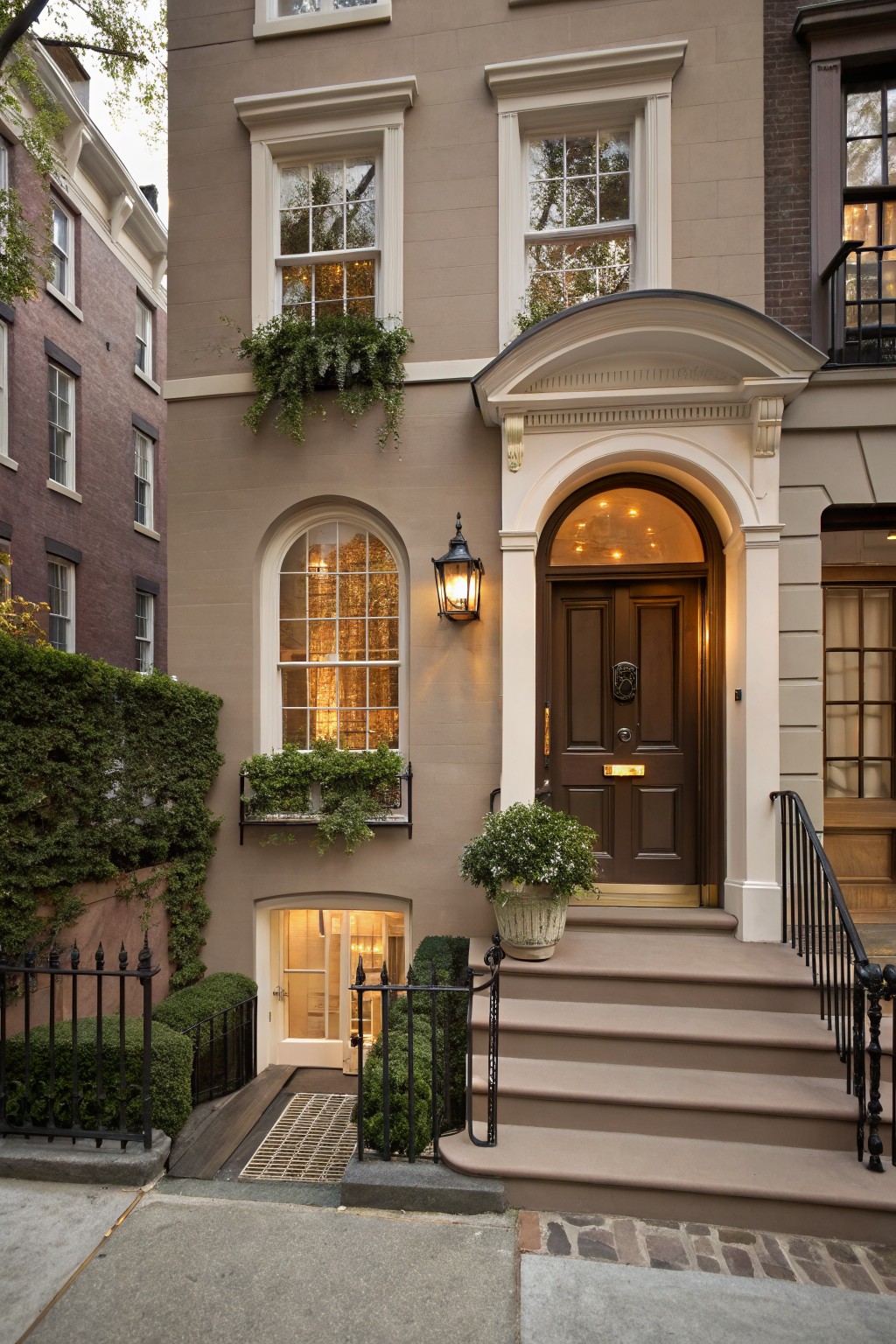
This warm greige works well on exterior walls because it sits right between gray and beige without leaning too far in either direction. It gives the house a clean but not stark look that still feels grounded next to stone and brick.
The color has a light brown undertone that shows up more in natural light and pairs nicely with dark trim or doors. It suits older homes or row houses where you want something polished but not too bold. Good matches to consider are Sherwin Williams Accessible Beige, Benjamin Moore Revere Pewter, or Behr’s Greige.
Frequently Asked Questions
Q: How do I test these colors on my own house before committing?
A: Grab a few sample pots and paint large boards to lean against your siding. Check them at different times of day to see how the light hits. That way you avoid any surprises once the whole house is done.
Q: What if I want a color that stands out without looking too bold?
A: Pick one of the softer neutrals and pair it with crisp white trim. This keeps things polished while adding just enough contrast for curb appeal. Your neighbors will notice the difference right away.
Q: Do these polished colors require special maintenance?
A: Not really. Just wash the walls once a year with a hose and mild soap to keep them looking fresh.