When picking colors for the outside of a house, I pay close attention to how they sit against the roof and any brick or stone details.
Light changes everything once the sun moves across the sky, so shades that look good in the morning can shift by afternoon.
Testing samples on the actual walls saves a lot of regret later.
Landscaping and trim colors also play a bigger role than most people expect when the whole combination comes together.
I have seen plenty of promising pairs fall flat once they face real weather and changing conditions outside.
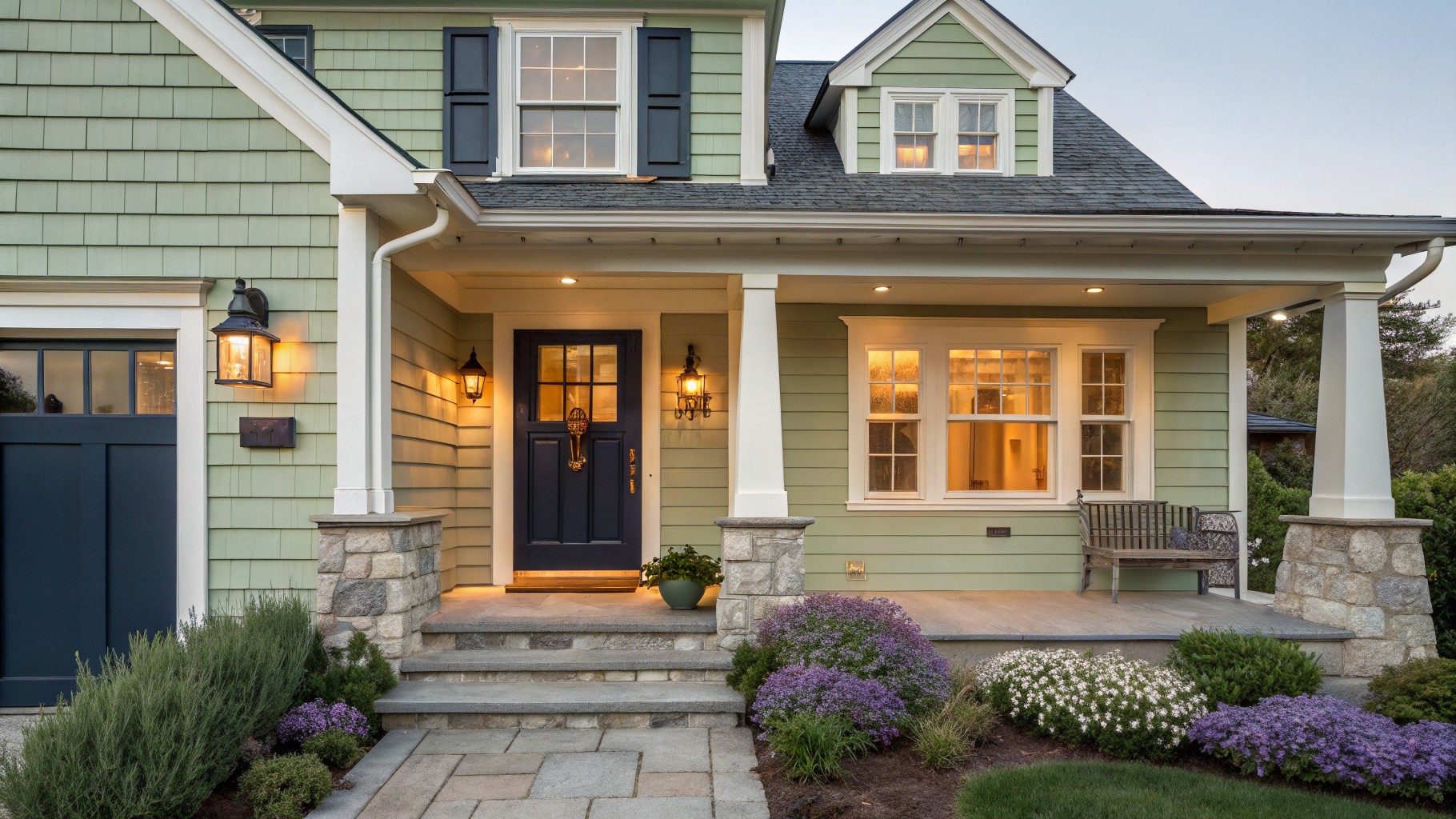
Soft Sage Green Siding

This house uses a soft sage green on the siding. It is a muted green with gray undertones that feels calm and blends easily with trees and natural surroundings. The color gives the house a relaxed look without standing out too much.
It works best on homes with white trim and darker accents like shutters or doors. You could try something like Sherwin Williams Evergreen Fog, Benjamin Moore Saybrook Sage, or Behr Green Tea for a close match. Just watch how it reads in full sun since the gray side can shift a bit.
Warm beige on stone exteriors

A soft warm beige covers the main walls here and gives the house a clean, settled look. This kind of color works because it feels natural against real stone and does not fight with the roof or landscaping. It reads close to Sherwin Williams Creamy, Benjamin Moore White Dove, Behr Almond Wisp, or Farrow & Ball Pointing.
The beige sits a little warmer than a true white, so it stays friendly even when the light shifts. It pairs easily with deep green on the shutters and door, and it leaves room for simple white trim if you want more contrast. Just watch that it does not go too pink in strong afternoon sun.
Soft Blue Green Siding

This siding is a muted blue green with a cool gray undertone. It reads soft rather than bright and gives the house a calm look that still stands out against the sky and landscape.
The color pairs easily with white trim and warmer accents like a red door. It works best on homes with simple lines and can look a bit flat if the light is very harsh or if there is not enough contrast from the trim or roof.
Warm Golden Brown Siding
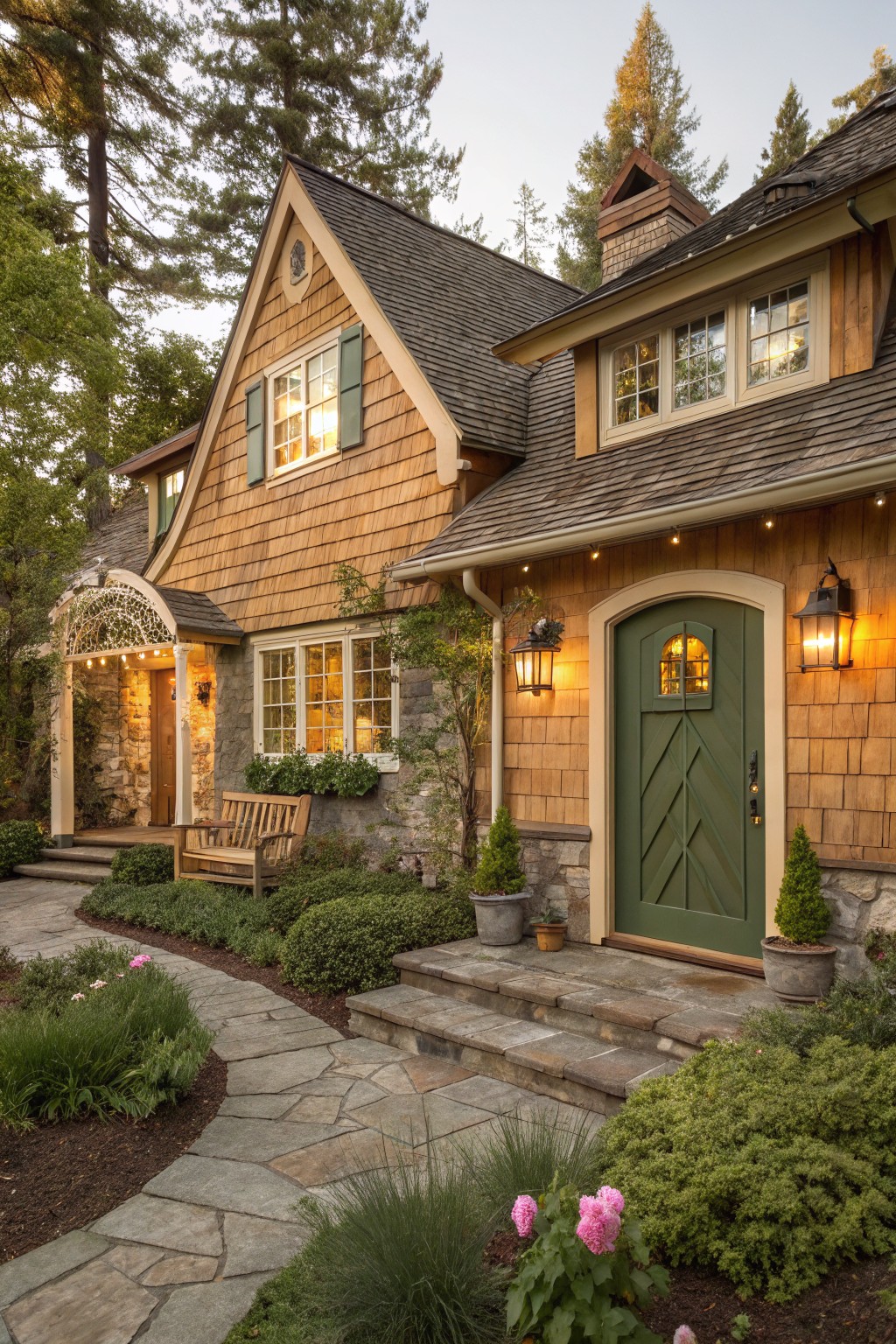
A warm golden brown on wood siding gives the house a simple, lived-in look. This color sits right between beige and light brown, with a soft golden undertone that feels natural rather than stark. It works especially well on shingle exteriors where you want the house to blend into a wooded setting without disappearing.
The tone stays steady in both sun and shade, which helps it look consistent all day. It pairs cleanly with green doors, stone foundations, and darker roofs. Just watch that the finish does not get too orange in strong light, since that can shift the whole feel of the house.
Soft Warm Gray Siding

This house uses a soft warm gray on the main exterior walls. It sits between gray and greige, which keeps the look modern but still grounded next to the wood and stone.
The color has a light beige undertone that helps it feel less cool outdoors. It works well on contemporary homes and pairs easily with black window frames or natural wood doors. Popular matches include Sherwin Williams Repose Gray, Benjamin Moore Coventry Gray, Behr Silver Satin, and Farrow & Ball Elephant’s Breath.
Warm Beige Siding

A warm beige works well on this house because it sits between tan and greige. The color has enough depth to hold its own against the dark trim and stone without looking too pale or washed out. It feels classic on homes with traditional details and gives the whole exterior a settled look.
This shade leans slightly golden in its undertone, which keeps it from going cold next to gray stone or dark wood. It pairs best with charcoal roofing and simple white or brown trim. Try Sherwin Williams Accessible Beige, Benjamin Moore Edgecomb Gray, or Behr Greige if you want something close.
Soft Sage Gray Siding

This soft sage gray works nicely on shingle siding because it feels calm without looking flat. The color sits right between green and gray, which helps it blend with both coastal and wooded settings.
It carries a light cool undertone that shows up best in natural daylight. White trim keeps it clean, and it pairs easily with blue doors or simple stone details without needing much else.
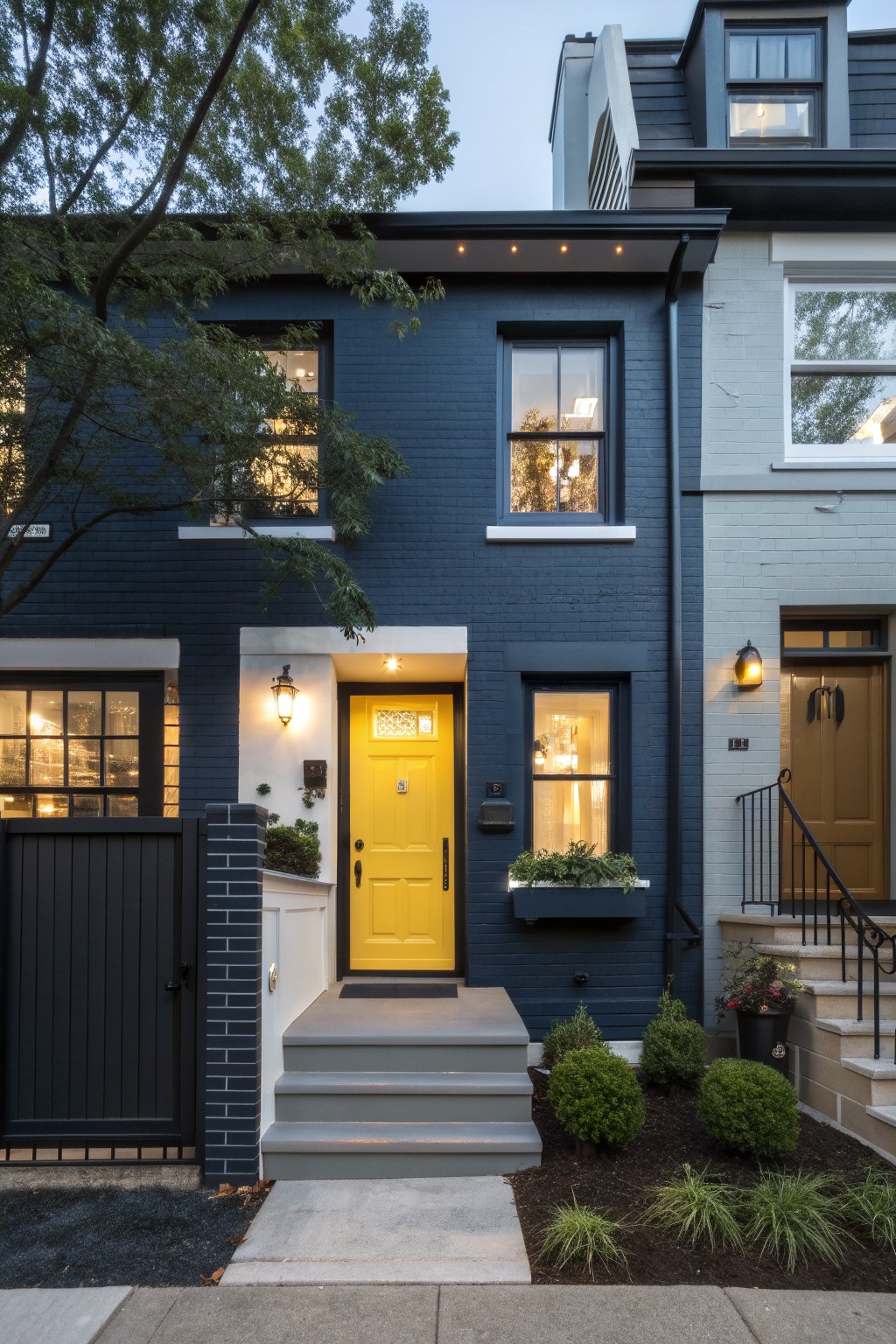
A deep navy blue works well on brick homes when you want something darker than a standard gray but still classic. This shade has a cool undertone that makes the brick texture stand out without feeling flat, and it reads especially nice next to lighter trim or a bold door color.
It pairs best with warm white or soft gray accents and holds up in both sunny and shaded spots. Just watch how it shifts in late afternoon light, since navy can pull a bit greener or black depending on the house orientation.
Warm Terracotta Walls

A warm terracotta color like this gives an exterior a simple, grounded feel that holds up well in bright light. It sits between orange and brown with enough depth to keep the house from looking washed out. The tone feels natural next to stone and clay roof tiles.
It works best on stucco or similar rough surfaces and pairs easily with warm neutrals or darker trim. Try something close to Sherwin Williams Rustic Adobe, Benjamin Moore Terra Cotta, or Behr Canyon Clay if you want a similar result.
Muted Sage Green Siding With Stone Accents
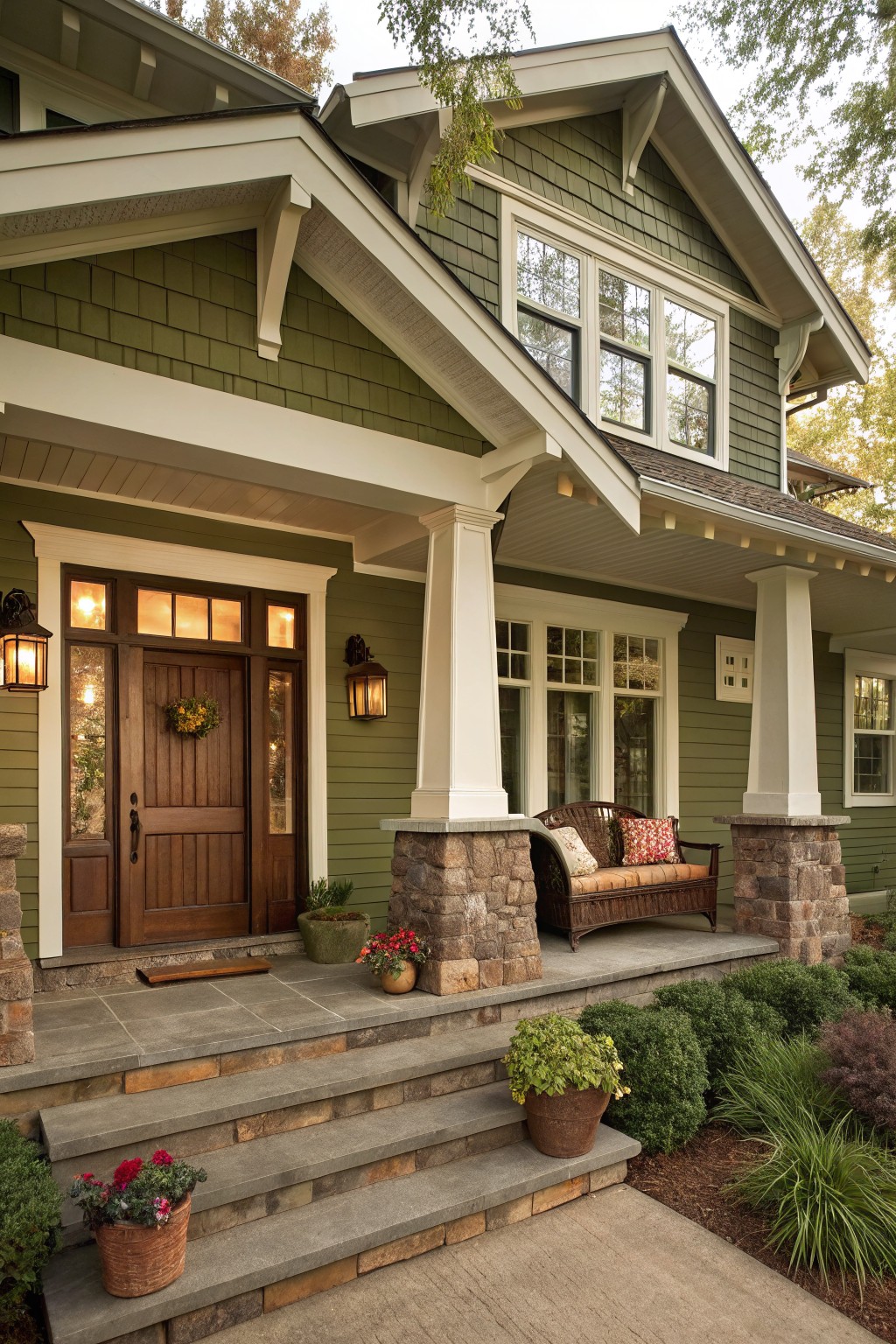
A muted sage green makes a good choice for house siding when you want something that feels calm and grounded. This color sits between gray and green, so it stays soft rather than bright and works well on larger surfaces like this one.
It reads closest to Sherwin Williams Clary Sage, Benjamin Moore Saybrook Sage, or Behr Aged Eucalyptus. The cool undertone keeps it from feeling too warm next to stone and white trim, though it can look a bit flat if the light is very harsh.
Soft Teal Front Door

A soft teal works well on an exterior door when the rest of the house stays light and simple. This one reads as a gentle blue green with a touch of gray that keeps it from feeling too bright or toy like. It sits nicely against the white siding and gives the entry a bit of personality without taking over the whole look.
The color has cool undertones but still feels approachable in daylight. It pairs easily with black hardware and dark shutters, though it can look a little washed out if the surrounding trim is too stark or the light gets very harsh. Try it on homes with clean lines where you want just one small pop of color at the door.
Warm Greige Stone Exteriors

This light greige on the stone gives the house a soft, lived-in feel without looking washed out. It has just enough warmth to keep the whole exterior balanced and easy to look at from the street.
The tone works best with dark roofs and simple wood doors. It can handle black window frames without turning cool, though it looks a little flat if the trim gets too bright white.
Soft Blue Gray Siding

A blue gray like this one gives the house a calm and steady look that still feels fresh. Colors in this range sit between gray and blue, so they change slightly with the light and work with many roof colors and masonry tones.
It has a soft cool undertone that keeps the whole exterior from feeling too stark. This shade suits traditional homes especially well when paired with white trim and darker shutters. Try something close to Sherwin Williams Silver Strand, Benjamin Moore Harbor Gray, or Behr Silver Bullet if you want a similar effect.
Classic White Siding

This house uses a crisp white on the siding that keeps the whole look light and simple. It is a clean white with almost no warm undertone, which helps it stay bright even when the roof and trim are quite dark.
White like this pairs well with navy or black accents and works on most traditional homes. Just test it in full sun first since it can read a little stark on some houses.
Soft Sage Green With Warm White Trim
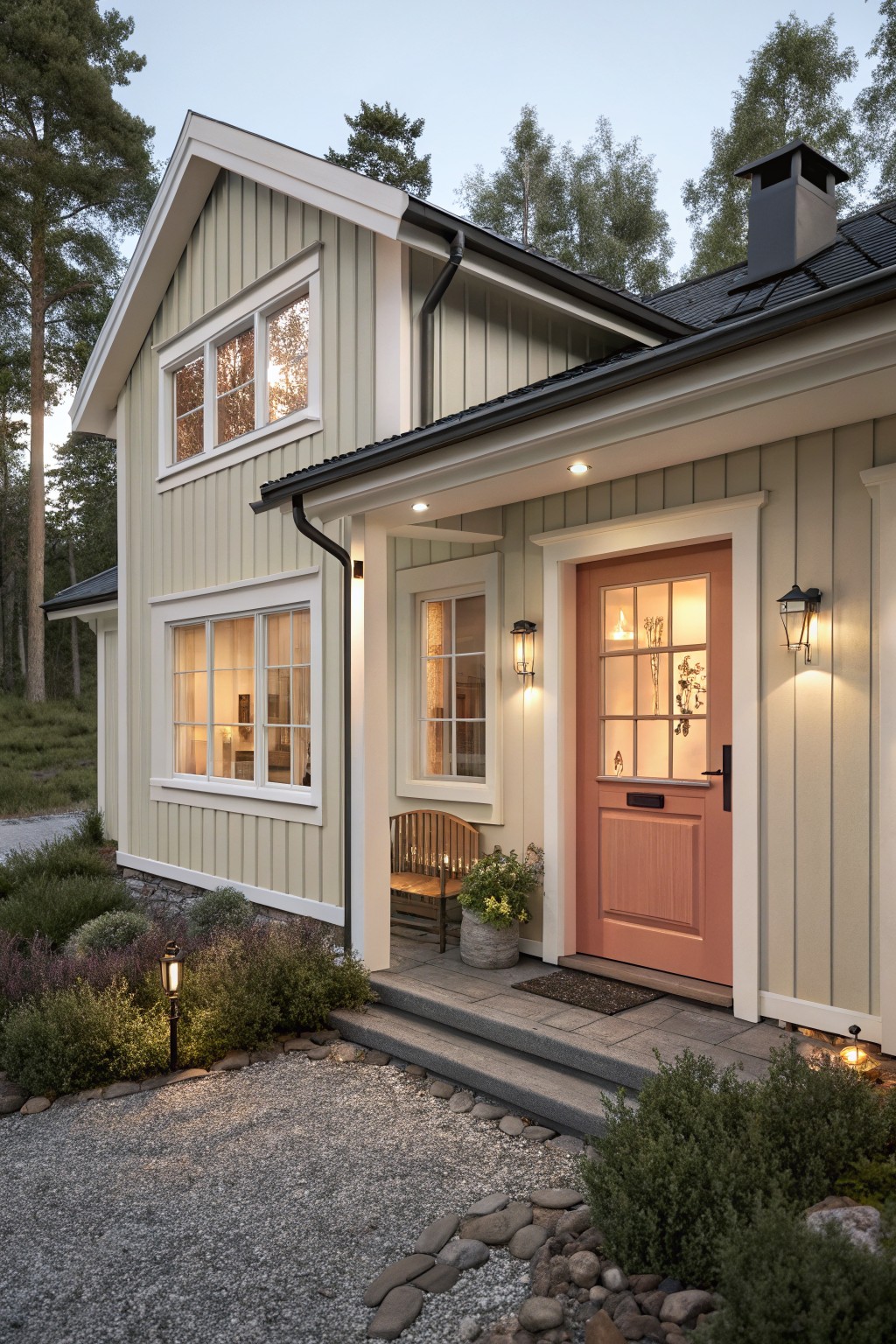
A soft sage green like this gives the house a calm, lived-in look that still feels fresh. It sits somewhere between gray and green, so it never looks too bright or too dull against trees or gravel. Most people like it because it works with all kinds of trim colors and roof tones without fighting them.
The color has a slight gray undertone that keeps it steady in changing light. It pairs well with warm white trim and a bolder door color if you want contrast. Just watch how it reads next to any stone or brick on the lower part of the house, since those can pull more warmth out of it than you expect.
Warm Brown Siding

This deep warm brown on the siding gives the house a solid, grounded look. It feels like a natural extension of the wood itself rather than a bold statement color, which is why it works so well on homes that already have stone or timber details.
The brown carries a slight red undertone that shows up more in morning light. It pairs best with gray stone and simple trim, and it tends to hold up nicely against trees or other greenery around the property. Just watch that it does not get too dark if your home sits in shade most of the day.
Soft Beige Siding
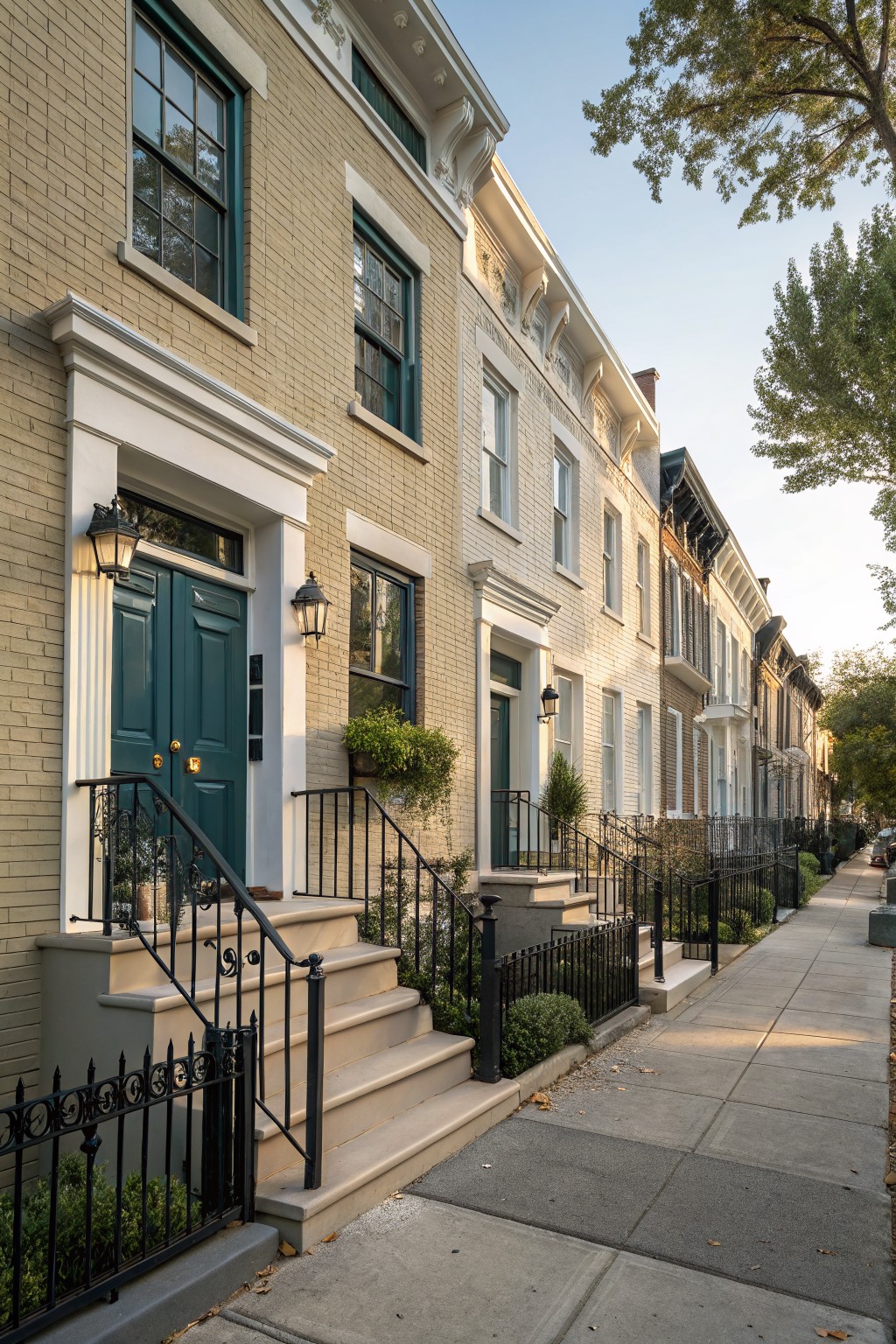
This warm beige works nicely on exterior brick and siding because it feels calm and timeless. It reads closest to Sherwin Williams Accessible Beige or Benjamin Moore Edgecomb Gray, with Behr Almond Wisp as another solid option.
The color has a gentle yellow undertone that keeps things from looking too cool next to white trim. It pairs well with darker doors and holds up nicely in older neighborhoods where you want something soft but still grounded.
Deep Red Siding
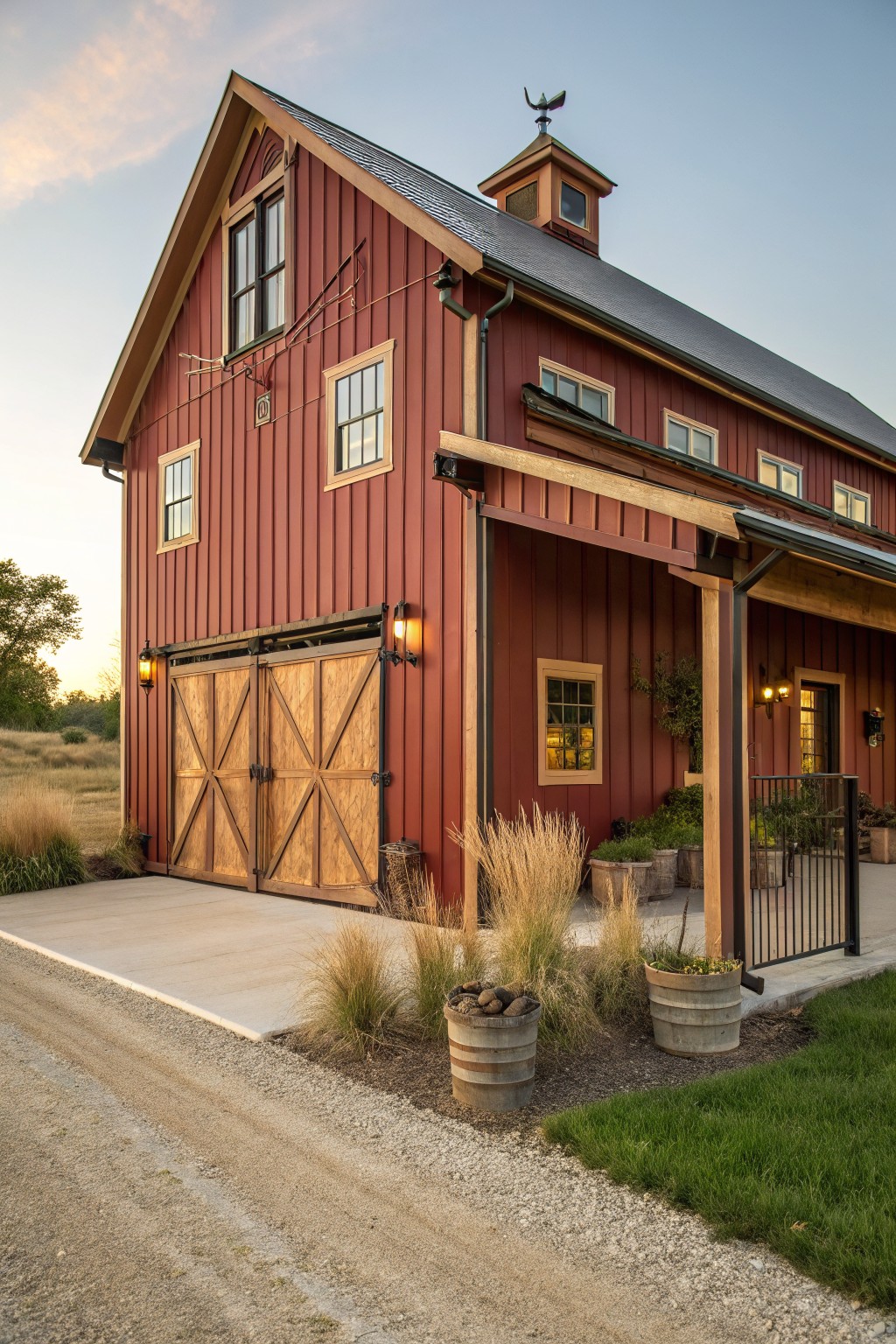
This deep red siding gives the house a classic barn feel that still looks fresh. It is a warm, slightly earthy red that holds its own against natural wood and open surroundings.
The color works best when paired with wood doors and dark trim. Try shades close to Sherwin Williams Barn Red, Benjamin Moore Heritage Red, or Behr Red Barn if you want something similar that holds up outside.
A soft blue exterior

This blue on the house is a mid-tone that sits nicely between gray and true blue. It has a cool base with enough depth to feel grounded rather than bright. Colors like Benjamin Moore Wythe Blue, Sherwin Williams Rainstorm, Behr Blue Danube, or Farrow & Ball Stiffkey Blue all come close.
The shade holds up well against white trim and dark metal details. It works on brick or siding and gives a clean look without feeling stark. Just watch how it shifts in full sun, since the cool undertone can read a bit stronger outdoors than it does in a paint chip.
Soft Blue Gray Siding With White Trim
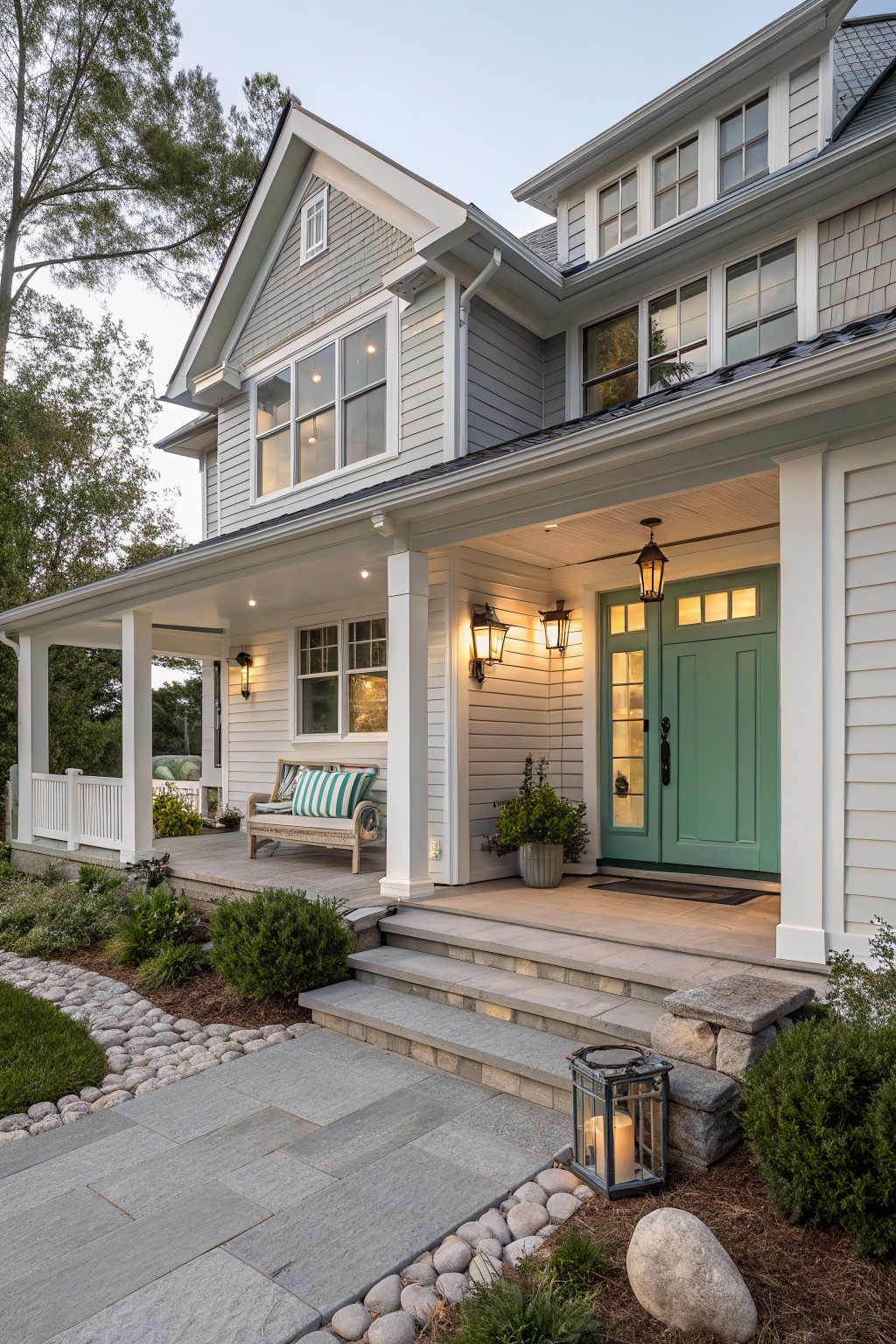
This house uses a soft blue gray on the siding. It is a cool neutral that feels calm and works well with white trim on many traditional homes.
The color has a slight blue undertone that keeps it from looking too flat in natural light. It pairs nicely with stone details and simple landscaping, though it can look a bit stark if the trim is not kept bright.
Frequently Asked Questions
Q: How do I know which combo will look good on my brick chimney?
A: Treat the brick as its own color and pick one shade from the article that sits next to it on the color wheel. This avoids clashes without much guesswork. A soft gray or warm cream often pulls everything together nicely.
Q: What about painting just the shutters and front door instead of the whole house?
A: That works great for a quick update. Choose a bold color from one of the combos for the door and a matching lighter tone for the shutters. You still get that fresh look without a full repaint.
Q: My yard has lots of trees so the house stays shaded most of the day. Which colors should I avoid?
A: Skip deep greens or browns that might disappear into the trees. Lighter shades with a pop of contrast on the trim help the house stand out. The article combos with white or cream accents handle shade really well.