I often find that exterior paint looks entirely different once it covers the whole house and meets the roof and trim in changing daylight.
Choosing a shade means thinking about how it will look beside the brick or stone and against the landscaping through every season.
Samples help more than you expect.
I usually paint a large board and move it around the yard to see how the color behaves at different times of day.
This approach keeps surprises to a minimum when the full project is underway.
Soft Warm White Siding
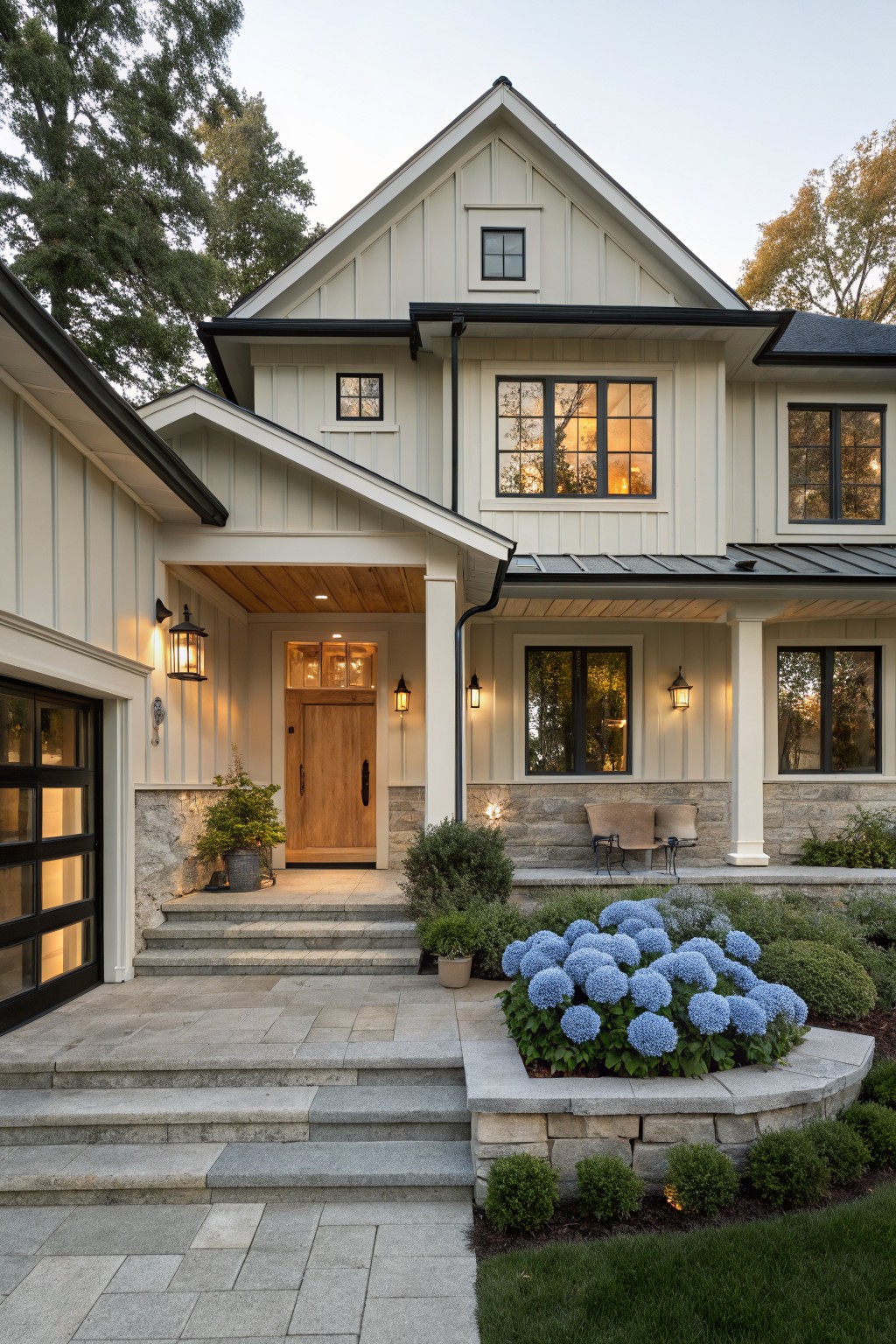
This house shows a warm off-white on the main siding that feels updated without going too bright or stark. It sits somewhere between a true white and a light greige, with enough warmth to keep the whole exterior looking soft and current. Colors like Sherwin Williams Alabaster, Benjamin Moore White Dove, or Behr Swiss Coffee give a similar effect.
The undertone helps it blend nicely with the stone base and wood porch ceiling. It works best on homes that want a clean look but still need to feel grounded next to natural materials. One thing to watch is how it shifts in different light, since the warmth can read stronger in the evening.
Soft Sage Green Siding
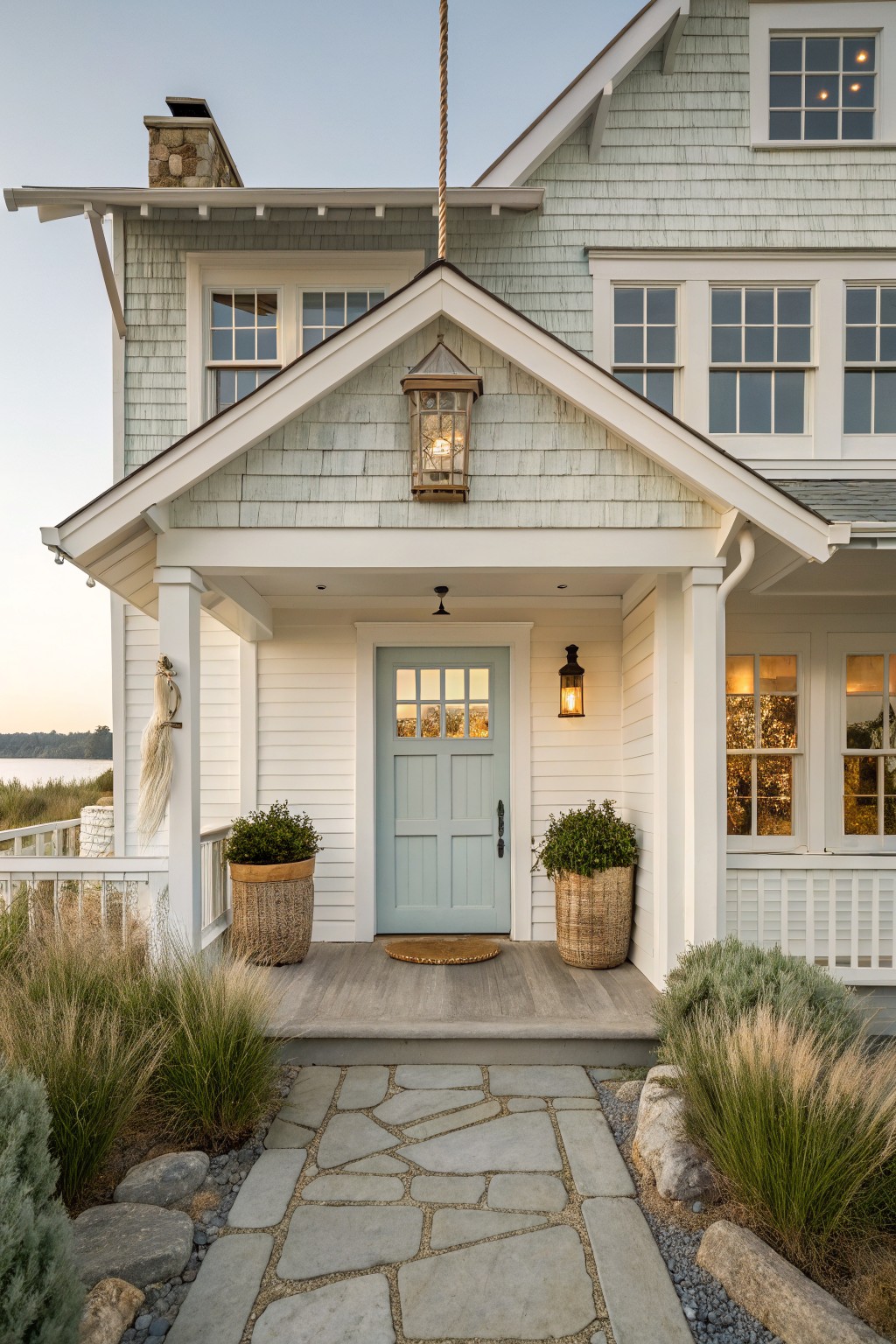
A soft sage green like this one gives the house a calm, updated look without feeling too bold. It sits somewhere between gray and green, which helps it blend with natural surroundings while still standing out enough to feel fresh.
The color has a slight blue undertone that shows up more in the shade, and it pairs easily with white trim and light stone paths. It works best on homes with simple architecture where you want something easy to live with year after year.
Muted Gray Green Siding

This house uses a muted sage green on the siding. It feels like a gray-leaning green that stays calm and modern without looking too bold or too traditional.
The color has cool undertones that sit nicely next to the dark trim and stone details. It works well on homes with natural materials and looks best in settings where the light shifts throughout the day.
Cool Sage Green Exterior
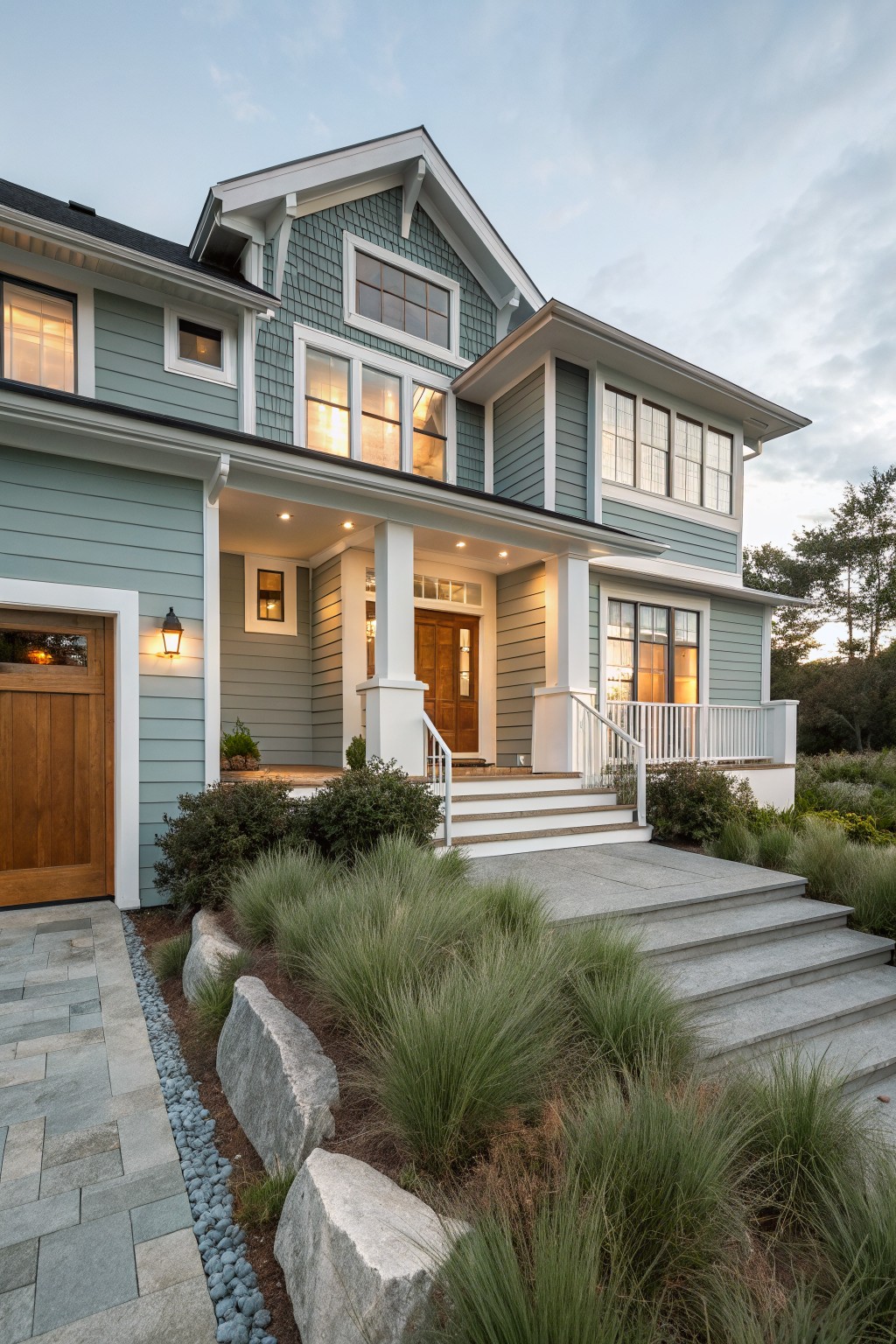
A soft sage green works well on this house because it feels fresh without being too bright. The color sits in that nice space between gray and green, giving the siding a calm look that still reads modern.
It has cool undertones that hold up nicely next to white trim and natural wood. This kind of green suits homes with clean lines or a bit of coastal influence, and it pairs easily with stone and simple landscaping.
Deep Teal Siding

This deep teal on the siding brings a solid updated feel to the whole house. It is a saturated blue-green that sits between navy and green without tipping too far either way.
It reads very close to Sherwin Williams “Jasper” or Benjamin Moore “Deep Teal”, with Behr “Oceanic” as another close option. The color holds up well against white trim and red brick steps, though it can look cooler in strong afternoon light so testing a large sample first helps.
Warm Beige Siding
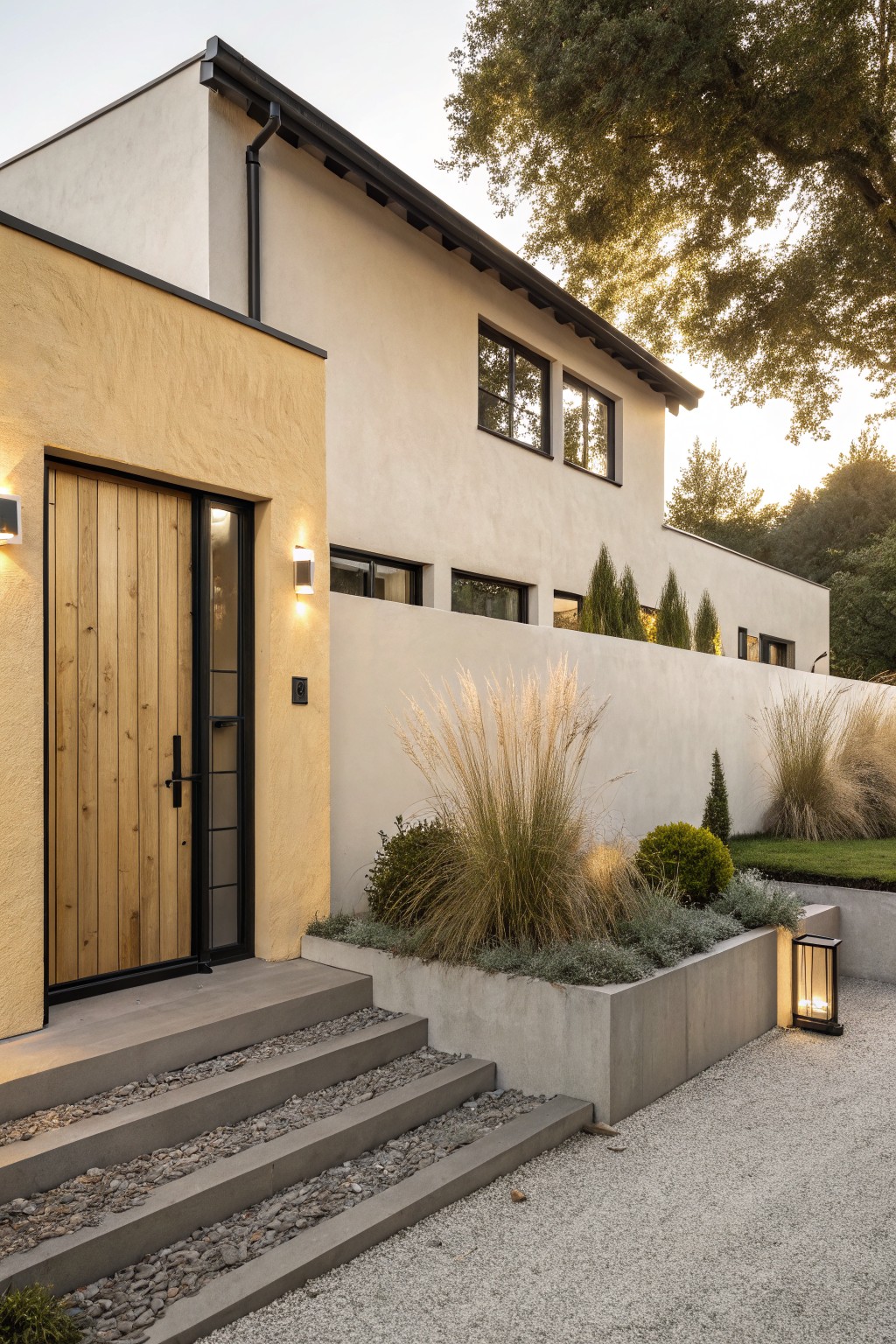
A warm beige like this one gives exterior walls a soft, grounded feel without looking too stark or cold. It has enough depth to hold up next to black windows and a natural wood door, yet it still feels light and current on a modern house.
This shade carries a gentle yellow undertone that reads warmer in afternoon light. It works especially well with concrete, gravel, and simple landscaping, though it can start to feel flat if the trim is not kept crisp and dark.
Warm Greige Siding
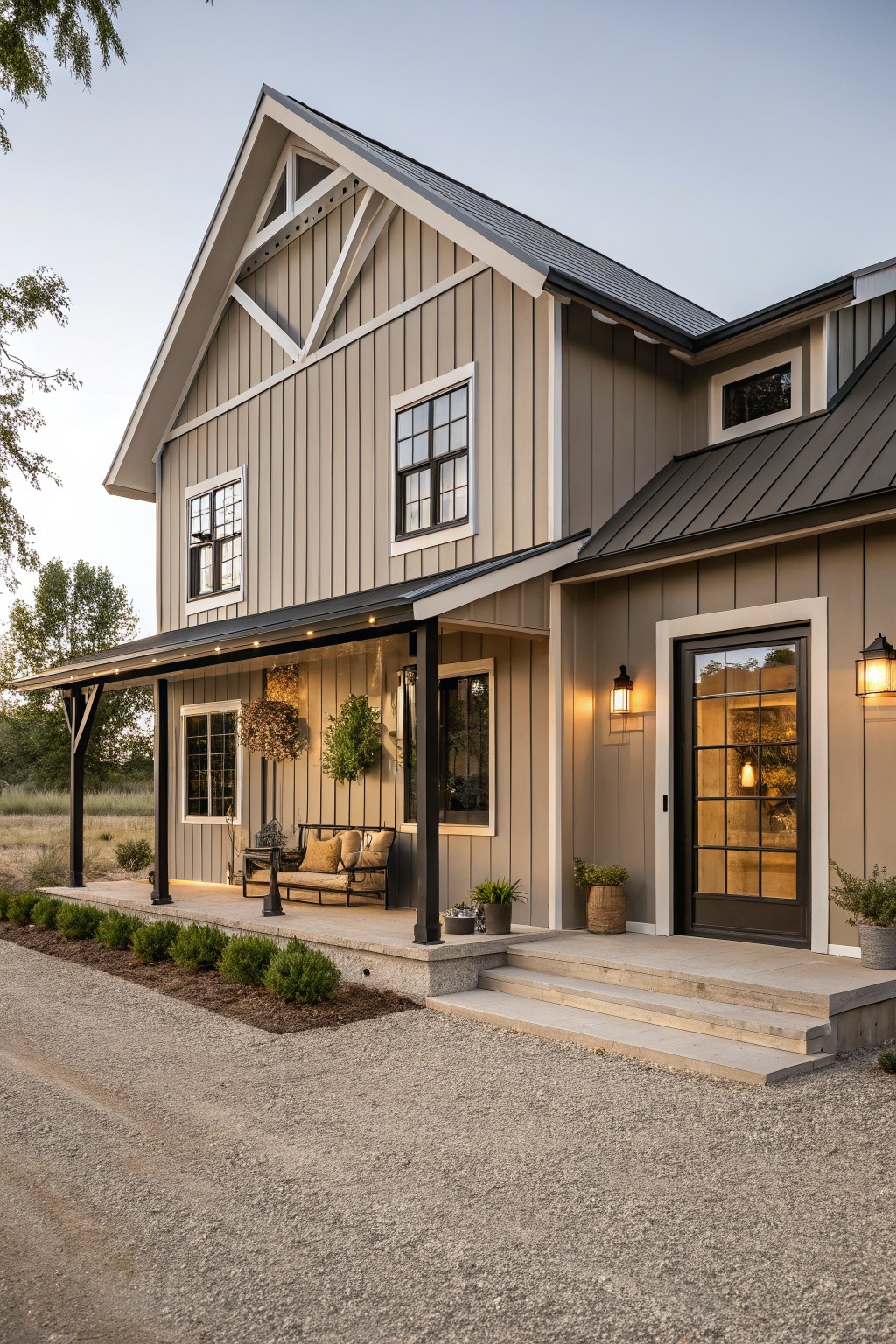
A warm greige like this gives an exterior a clean updated look without feeling stark or cold. It sits somewhere between gray and beige, and the best matches would be Sherwin Williams Accessible Beige, Benjamin Moore Edgecomb Gray, or Behr Silver Satin.
The soft warmth in the undertone helps it blend nicely with dark roofing and black trim. It works especially well on modern farmhouses or simpler homes where you want the color to feel current but still easy to live with year after year.
Warm Beige Exterior Walls

This warm beige gives the house a clean and updated feel without looking too stark against the brick. It sits in that soft neutral range that feels current but still works with older architecture. Colors like this often read closest to Sherwin Williams Accessible Beige or Benjamin Moore Grant Beige.
The undertone stays warm enough to keep the facade from feeling cold in shade. It pairs well with dark trim and natural brick, though it can start to look flat if the lighting is very gray. Try testing a large sample on the wall first since the color shifts a bit depending on the time of day.
Soft off-white siding
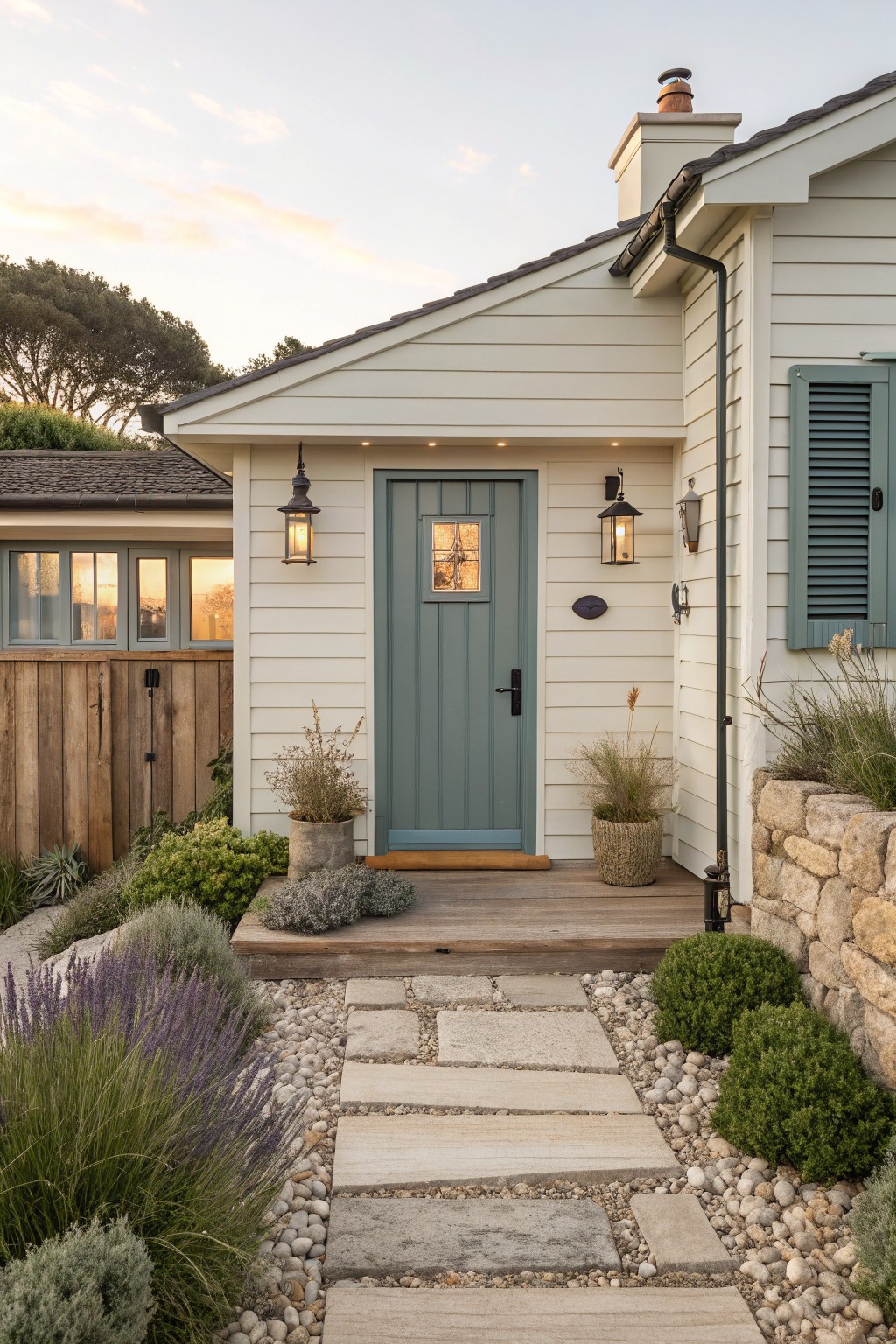
This soft off-white siding feels like a safe but updated choice for a modern exterior. It sits in that light greige family with a touch of warmth that keeps the house from looking too stark against the roof and surrounding stone.
It works well with a deeper door color and natural wood accents because the slight warmth prevents the whole look from going cold. Just watch how it shifts in strong afternoon light since it can read a little brighter than you expect on larger surfaces.
Soft Blush Painted Brick
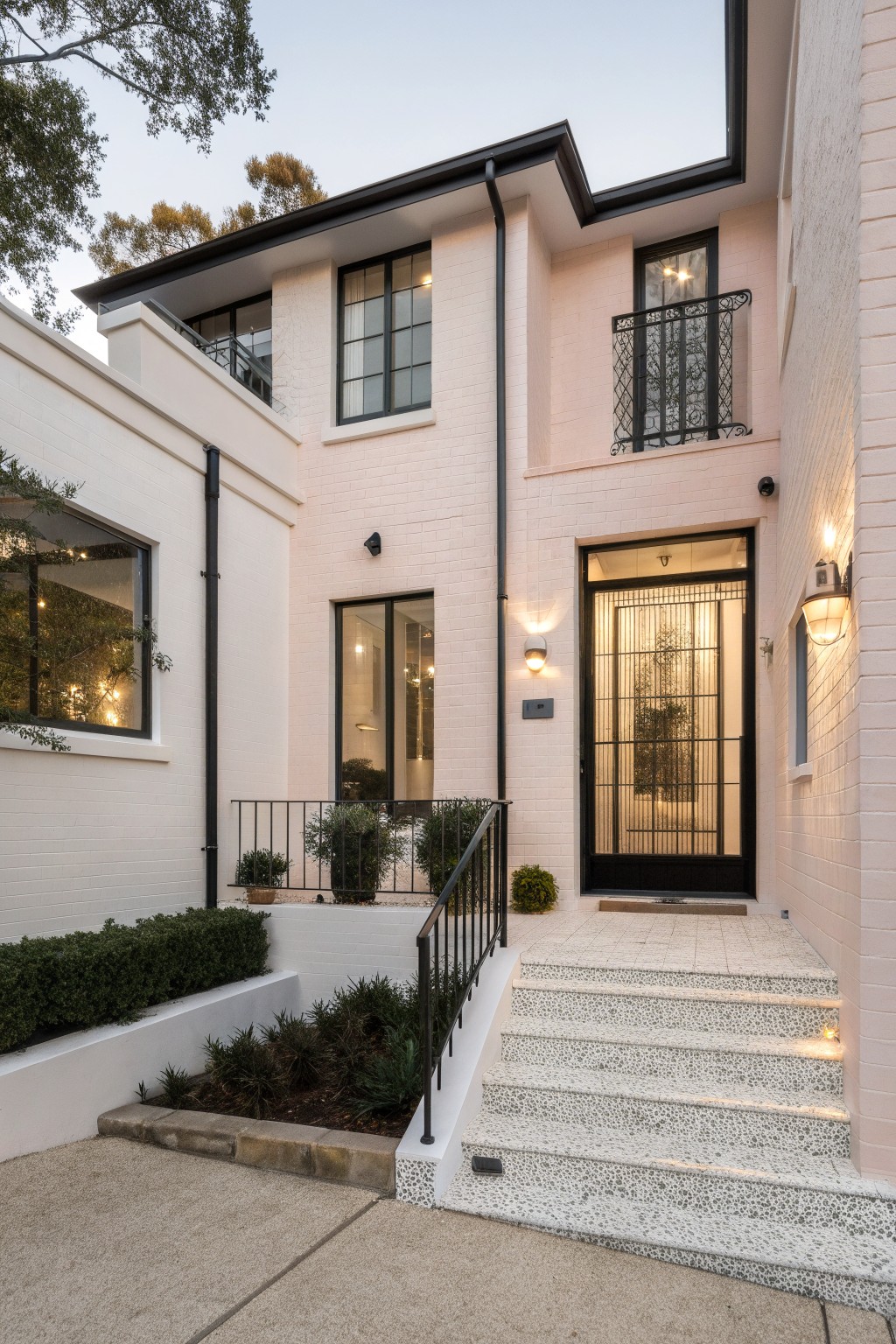
This house uses a soft blush pink on the brick. It is a light warm neutral that feels updated without going too bold or trendy.
The color carries a gentle rose undertone that reads nicely next to black frames and dark trim. It works best on homes with clean lines and pairs well with crisp white details or simple landscaping.
Soft Dusty Rose Siding
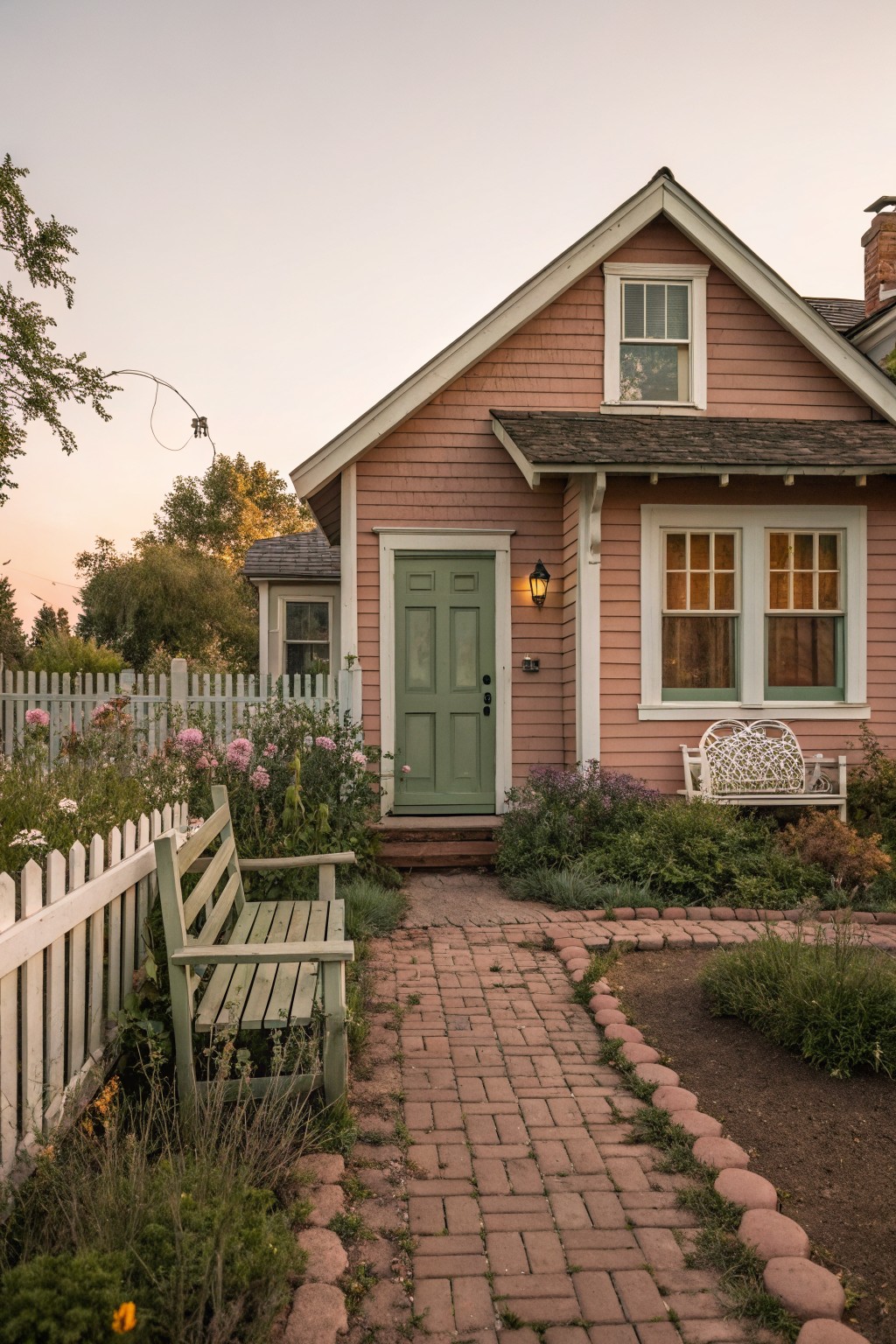
This siding shows a soft dusty rose that sits right between pink and warm beige. It feels updated because the tone stays gentle instead of leaning too sweet or too orange. The color works well on older homes that already have some texture in the wood.
It has a light warm undertone that shows up more when the sun hits it directly. White trim keeps it looking clean, and it sits nicely next to brick paths and simple garden beds without fighting them. Just test it on a large board first since the pink can shift a little depending on the time of day.
Soft teal siding
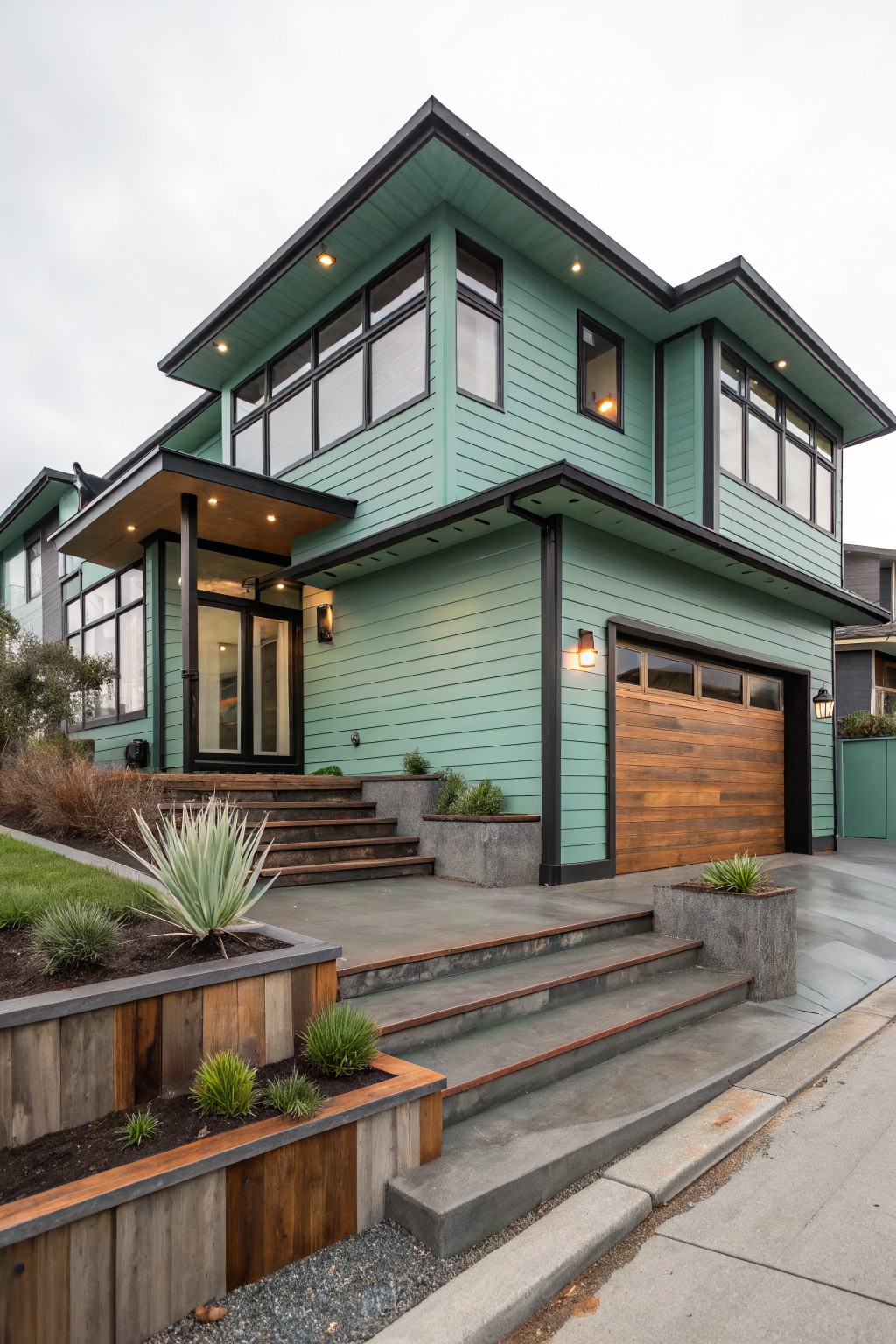
A soft teal green works well on modern house exteriors because it sits between blue and green without leaning too hard in either direction. This muted shade feels updated and calm at the same time. Colors like Sherwin Williams Rainwashed, Benjamin Moore Wythe Blue, Behr Soft Teal, or Farrow & Ball Inchyra Blue give a similar look.
The gray undertone keeps it from feeling too tropical and helps it sit nicely with wood doors and dark trim. It suits homes with clean lines and simple landscaping, though it can shift cooler in shade or warmer in full sun, so testing a sample on the actual siding is worth doing.
Earthy Sage Green Siding
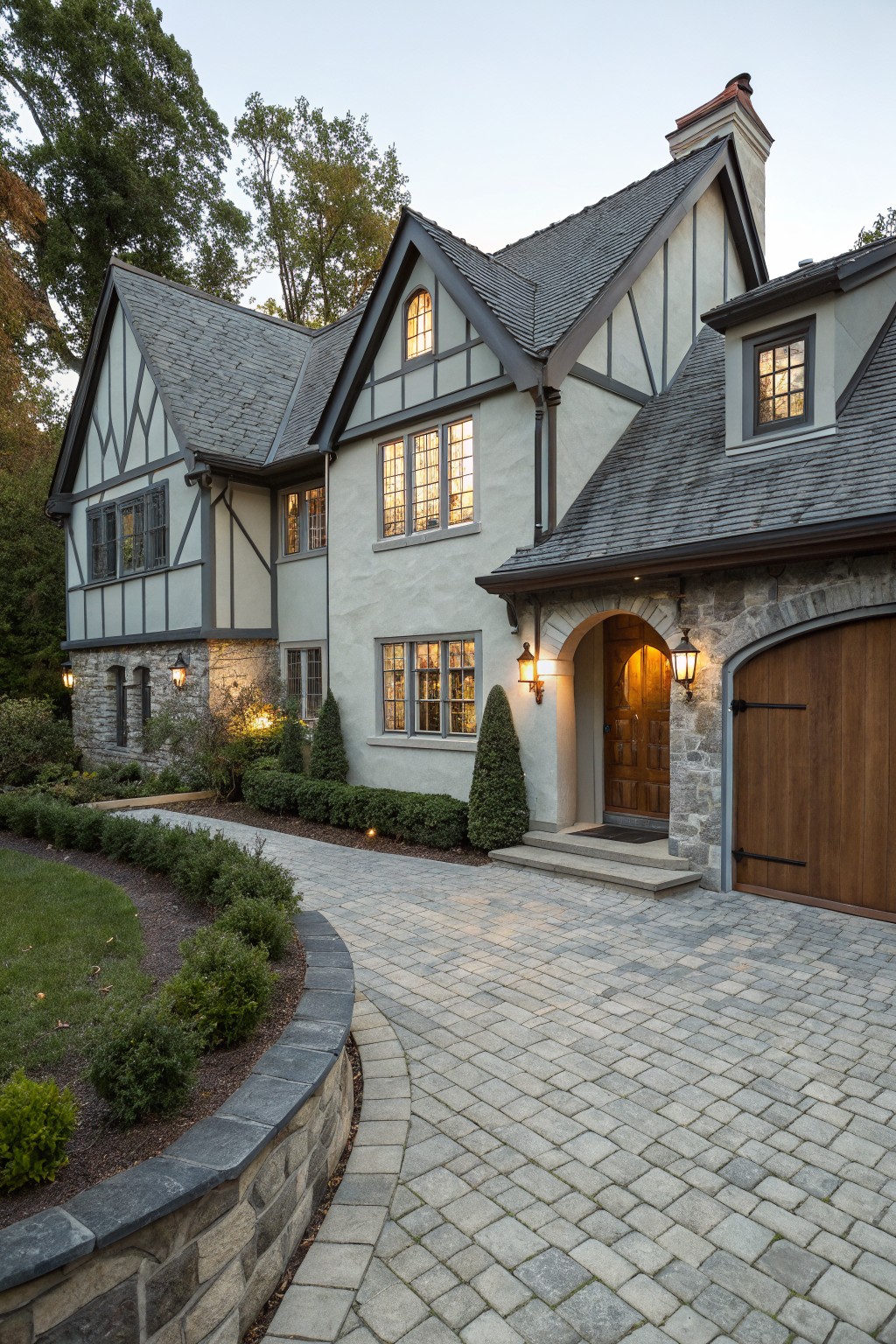
This soft sage green reads as a quiet, slightly muted gray-green that feels updated without trying too hard. It sits nicely between cool and warm, which helps it look fresh next to stone and dark trim on many older homes.
The color has a gentle earthy undertone that shows up more in afternoon light. It works best on homes with natural materials like wood or stone, and it pairs cleanly with charcoal roofs and simple black or dark brown accents.
Dark Charcoal Siding
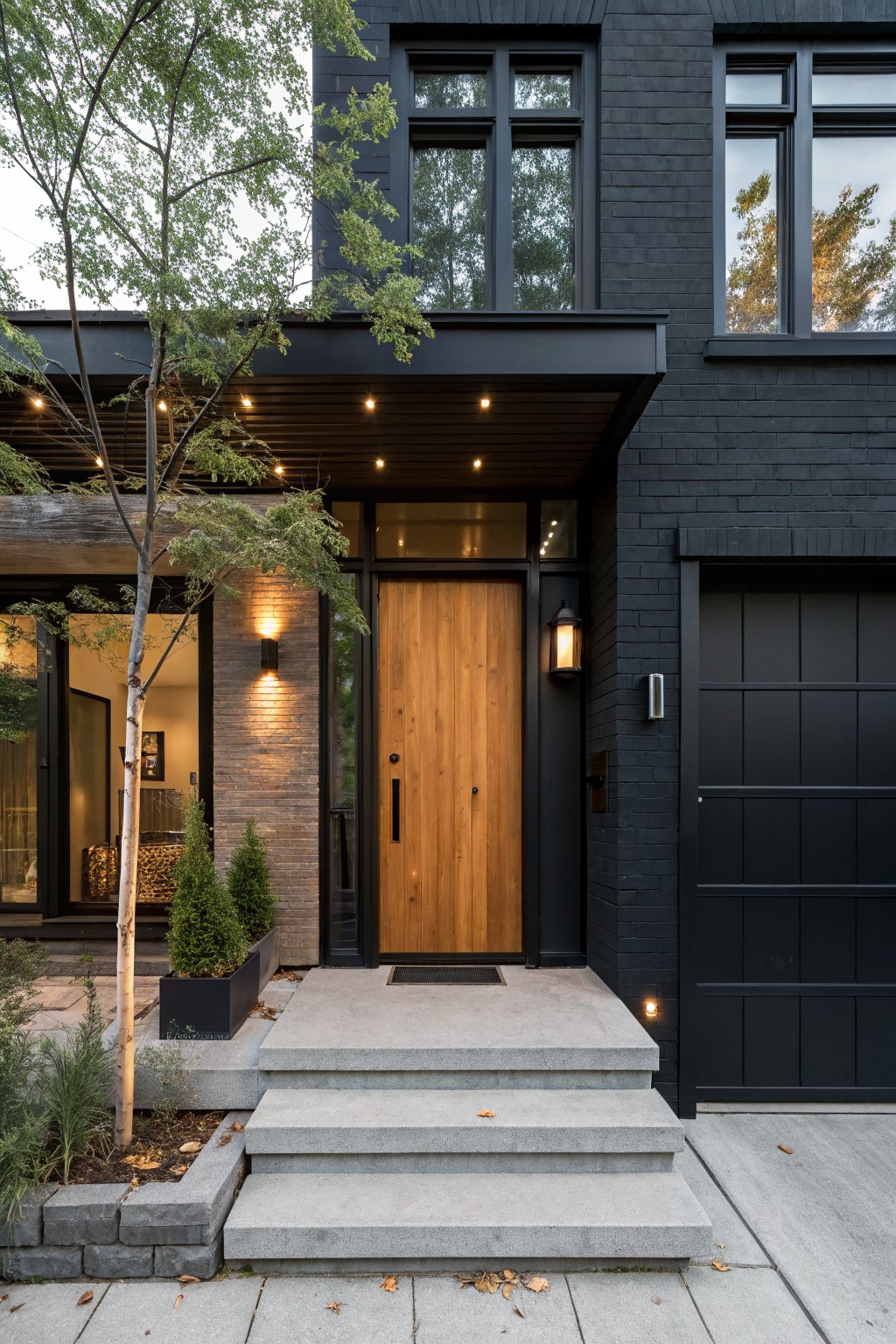
A deep charcoal black like the one on this house gives the exterior a strong modern edge. It feels solid and current without looking too stark, and it works especially well on brick because the texture keeps it from feeling flat.
This shade has cool undertones that pair cleanly with wood doors and concrete steps. It suits homes with simple lines and holds up nicely against changing light through the day. Just watch how it reads next to any lighter masonry so the contrast stays balanced.
Soft Greige Siding

This house uses a warm greige on the siding that reads as a soft neutral rather than a true beige. It has enough warmth to feel welcoming but still looks fresh next to the roof and stone details. Many people like this kind of color because it updates an older home without making it feel too stark or cold.
The undertone leans slightly yellow, which helps it sit nicely with wood doors and natural stone. It works best on homes that get decent sunlight, and it pairs well with white trim or dark gray roofing. If your house has a lot of shade, test it first because it can lean a touch greener in low light.
Soft Gray Siding
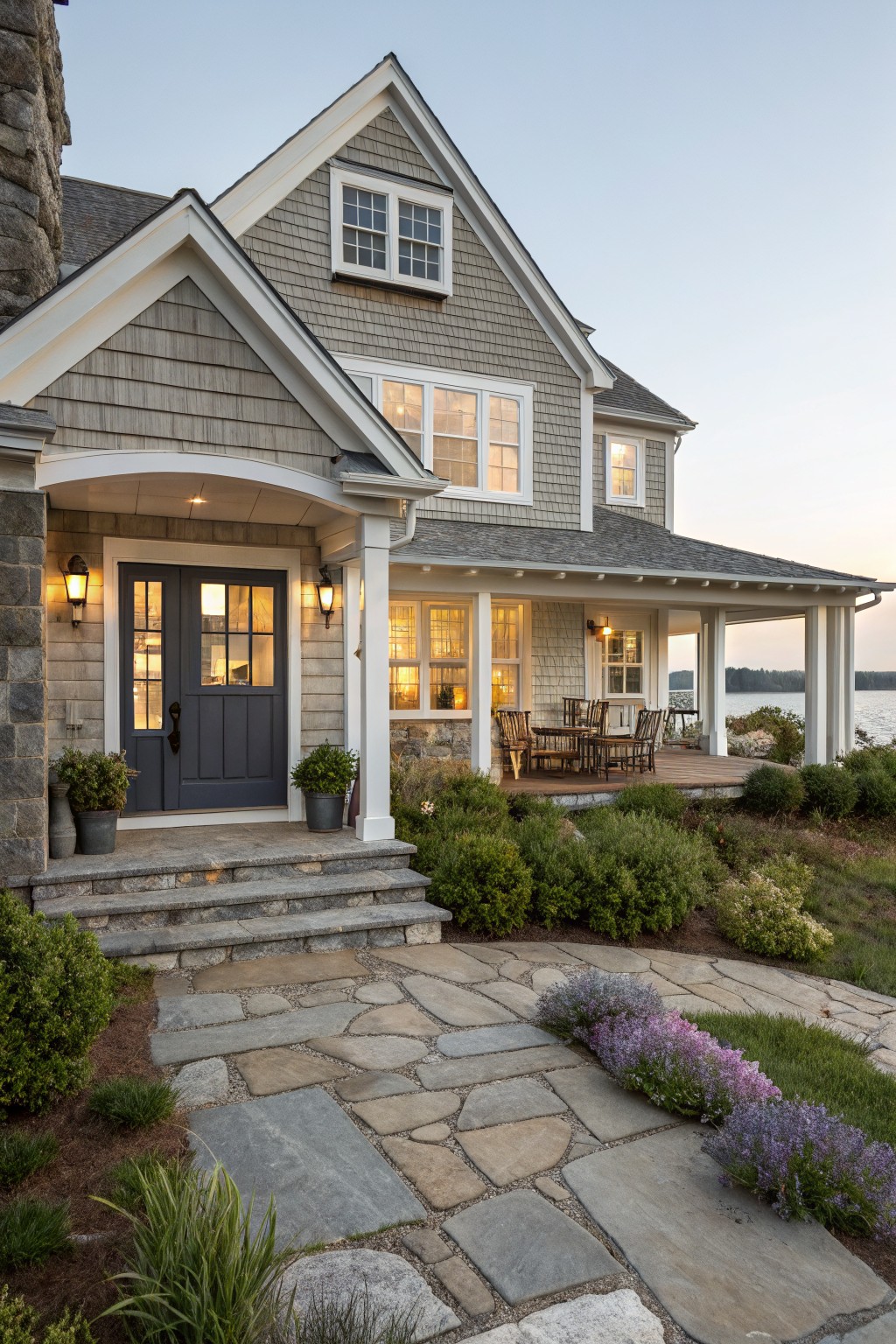
A soft gray like the one on this house siding gives an exterior a clean and current look without feeling cold or stark. It sits in the middle of the gray range, so it reads as calm rather than flat, and it pairs naturally with lighter trim and natural stone.
The color has a slight cool lean that shows up more in bright light, which helps the house feel a little fresher against greenery and water views. It works well on shingle or clapboard homes and looks good with white trim or a darker roof. Try Sherwin Williams Repose Gray, Benjamin Moore Stonington Gray, Behr Silver Satin, or Farrow & Ball Pavilion Gray if you want something close.
Soft Terracotta Stucco
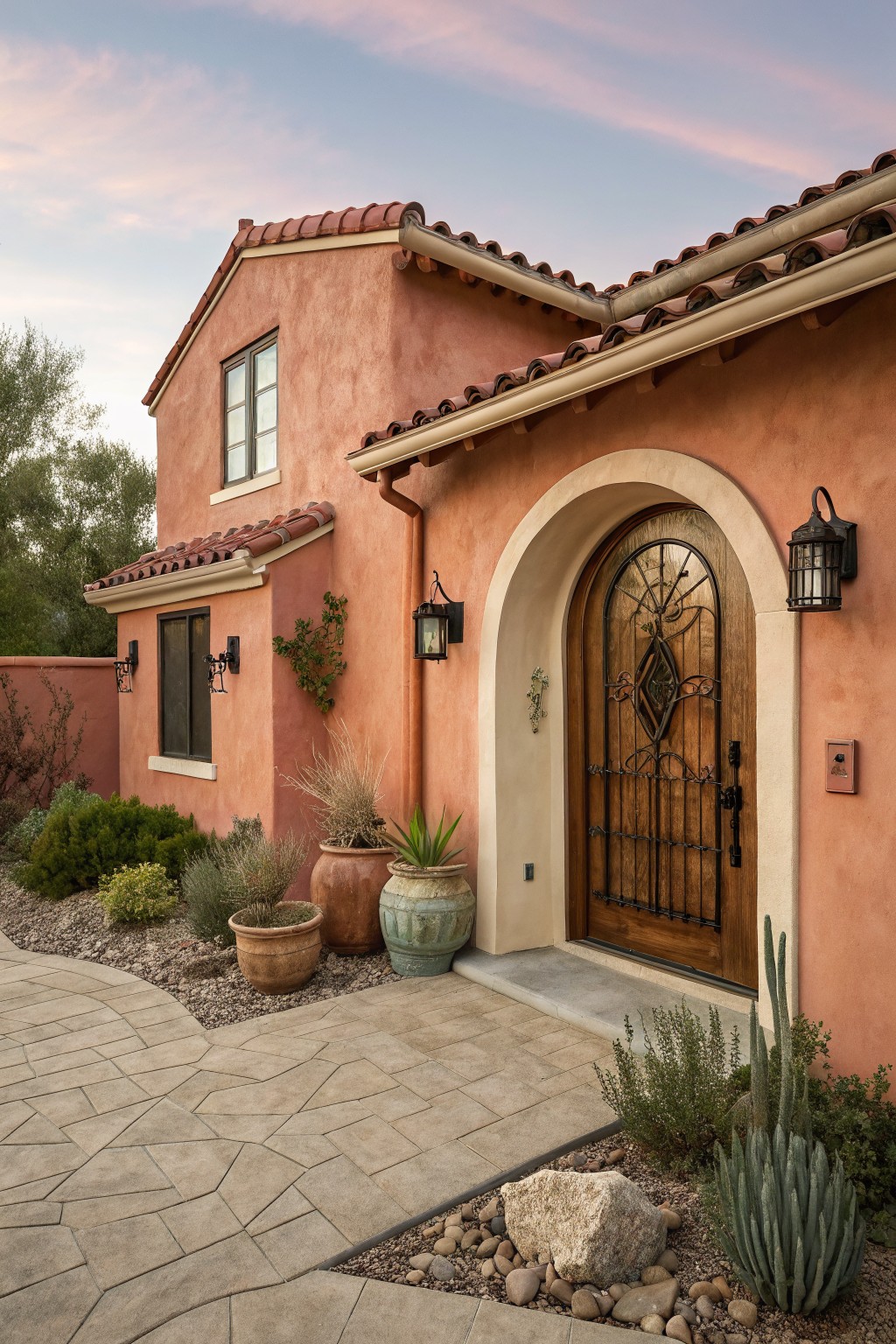
This house uses a warm terracotta color on the stucco walls. It sits in that soft peach-orange range that feels earthy but still bright enough to look updated. The tone works well because it has enough warmth to pair nicely with the red roof tiles and wood accents without feeling heavy.
It has a gentle orange undertone that shows up more in direct sun. This color suits homes with simple architecture and natural materials like stone or wood doors. It can look a bit flat if the lighting is too gray, so it helps to test a sample on the actual wall first.
Deep Green Siding

This deep green siding gives an exterior a solid, grounded look that still feels current. It reads as a true forest green with just enough depth to hold up against changing light. Colors like this often sit closest to Sherwin Williams Forest Green, Benjamin Moore Hunter Green, or Behr Forest Floor.
It pairs cleanly with stone bases and warm wood doors. The color stays steady outdoors and works well on homes that have simple trim and darker roofing. Watch how it shifts in full sun, since the green can lean slightly cooler once the light hits it straight on.
Frequently Asked Questions
Q: My house gets strong afternoon sun. Will any of these modern colors fade fast?
A: Choose shades with a bit of warmth like greige or soft sage. They hold up better under harsh light than pure cool tones. Repaint the south side first if you want to test real wear before doing the rest.
Q: Should I match the new paint to my existing stone foundation?
A: Pull a color that echoes the stone’s lightest flecks rather than its darkest ones. This creates a clean lift without clashing. Walk around the block at different times of day to see how the pair looks from the street.
Q: What if I rent and can only paint the front door and shutters?
A: Start with a fresh color on those smaller areas for instant update. Deep navy or clay tones feel current against most siding. Keep the change reversible so you can switch back when you move.