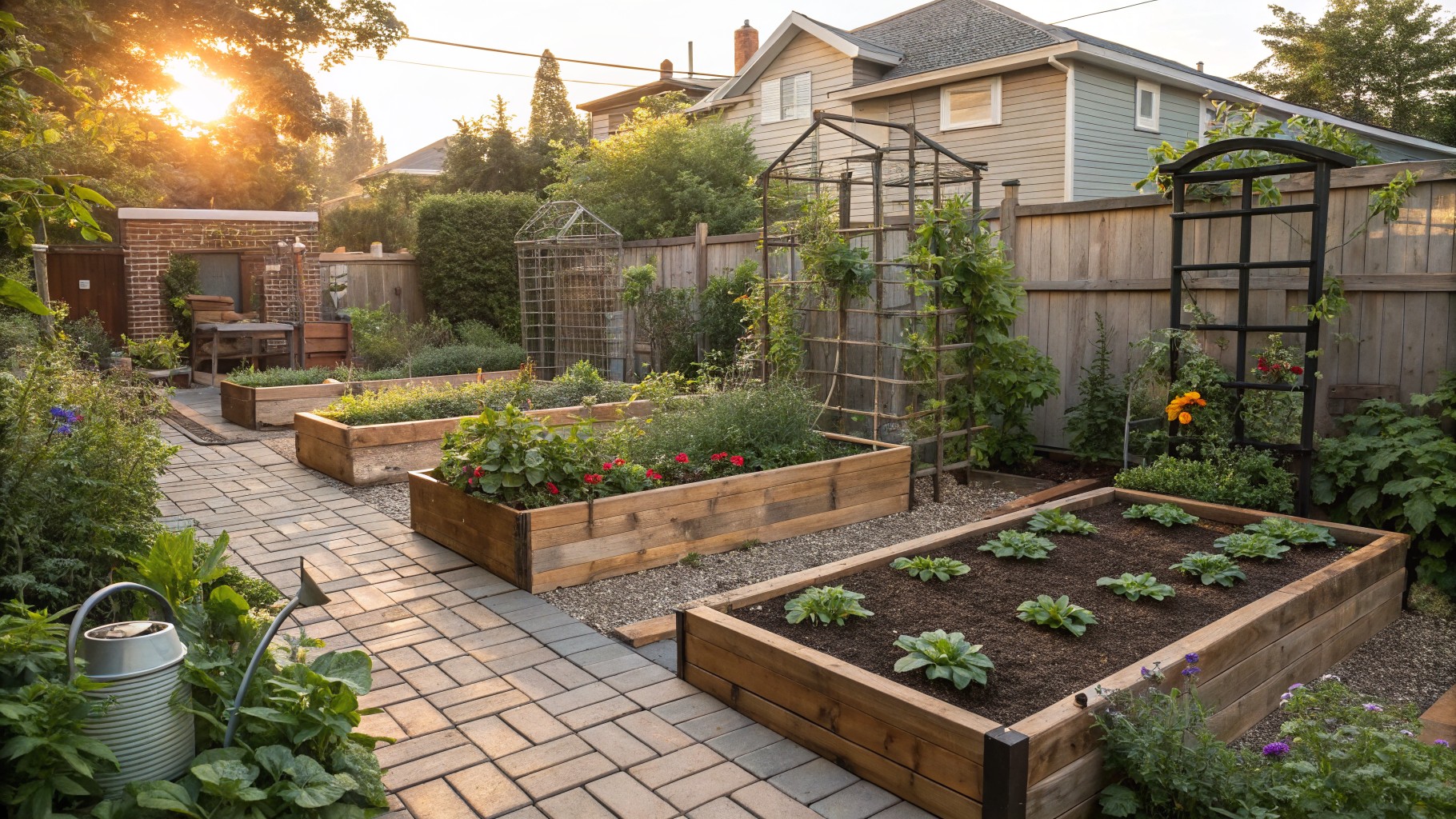
I’ve always thought raised garden beds work best in backyards when they follow the natural contours of the yard and create clear pathways between plantings. They anchor the layout so everything grows with purpose instead of sprawling everywhere. People usually notice the edging and bed heights first because those details make the space feel tended and easy to move through. In my own yard, I tested a few arrangements along the fence line and saw how they opened up room for seating without crowding the whole area. Simple changes like that build a garden that shapes up nicely over the years.
Raised Wooden Beds with Stepping Stone Path
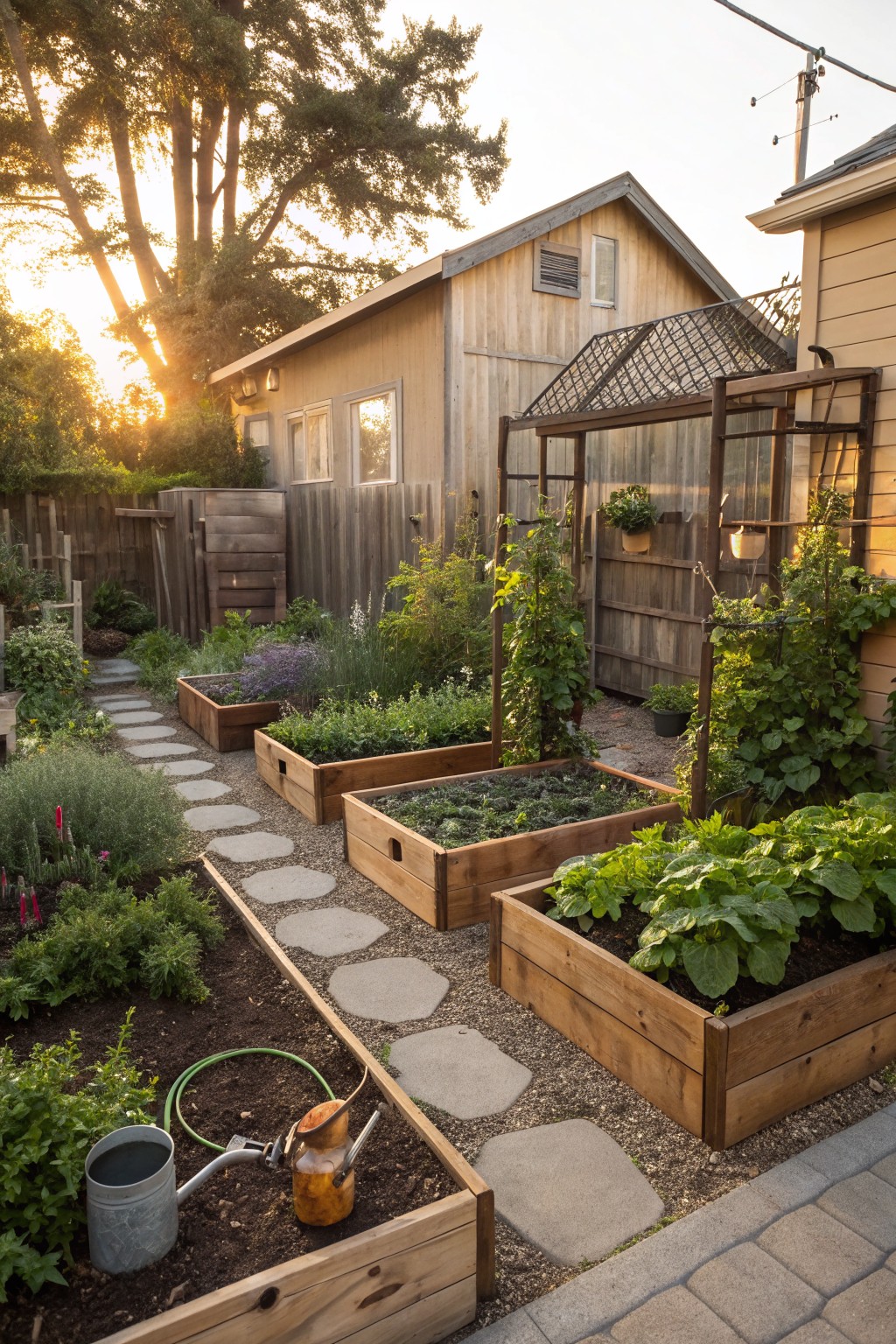
One straightforward way to organize a backyard garden is with a row of wooden raised beds set along a simple stepping stone path. The beds here are basic rectangles, filled with veggies like potatoes and herbs, and the path wanders just enough to guide you through without compacting the soil. It keeps things tidy and practical, especially in a space backed by a fence and shed.
This layout suits smaller yards or spots with decent sun. Build the beds from cedar planks for durability, space them a foot or so apart, and lay gravel between the stones to cut down on weeds. Skip fancy edging. Just focus on easy access for weeding and harvesting. It fits right next to a garage or house without crowding.
Linear Raised Beds Flanking a Walkway
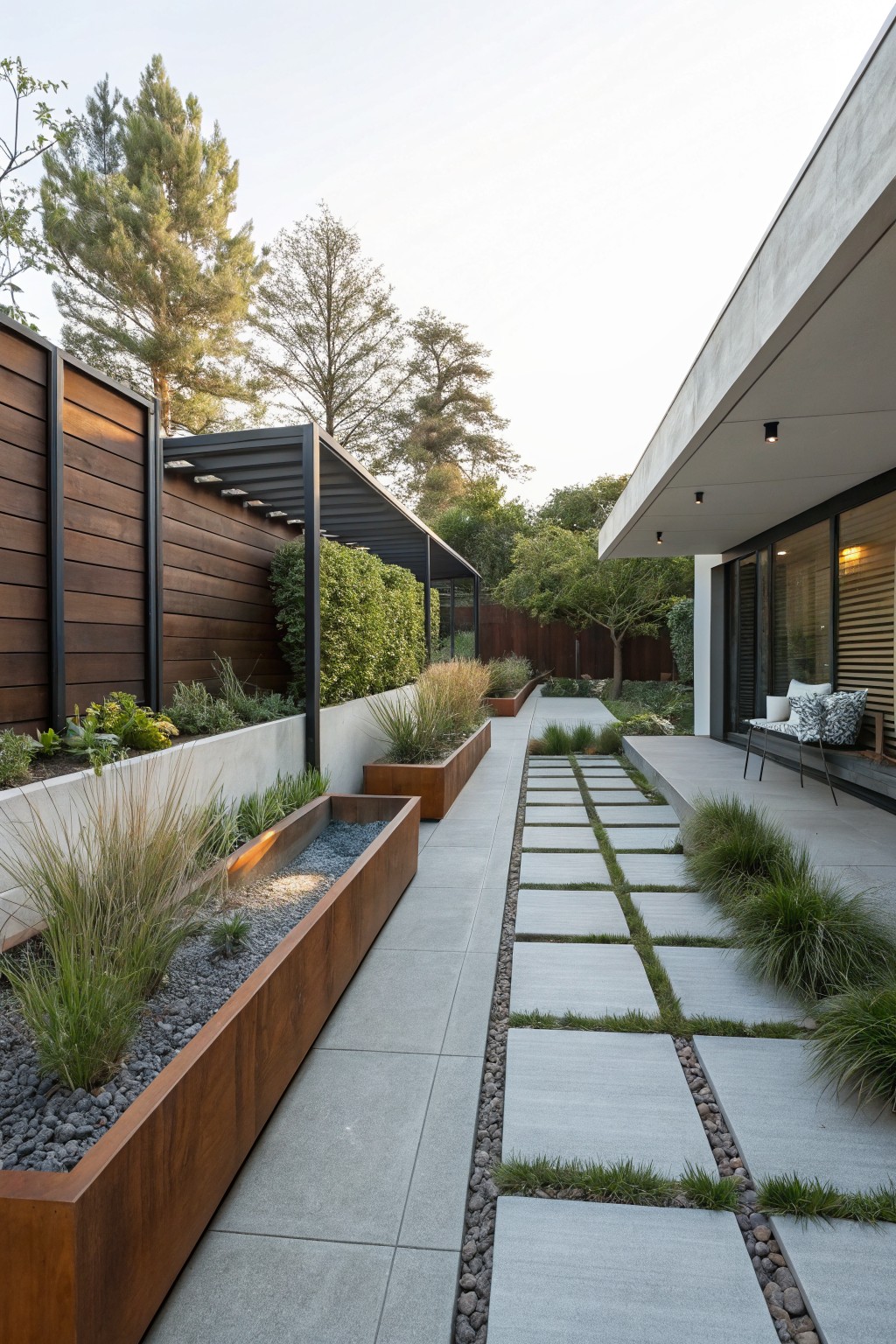
One straightforward way to organize a backyard path is with long, narrow raised beds running along both sides. Here, corten steel planters hold grasses and pebbles, creating clean lines that guide your steps toward the house. It keeps the planting contained and neat, without spilling over.
This works best in side yards or narrow spaces where you want definition without crowding. Pick tough, upright plants like these grasses for low upkeep. It suits modern homes with concrete hardscaping, but scale it down for smaller spots.
Raised Brick Beds Along Stone Paths

Raised brick beds like these hug a simple stone path, turning a plain walkway into the backbone of your backyard garden. The brick ties right into the path’s edges without overpowering the plants. You get neat planting zones that make tending herbs or veggies straightforward. That low curve at the corner… it just flows nice.
Try this in smaller yards or along a side path where space is tight. It suits sunny, dry spots best, especially if you like Mediterranean plants. Keep beds about knee-high for easy reach, and fill gaps with gravel to cut down on weeds. Works on most ground, but level it first.
Raised Beds Along a Stone Path
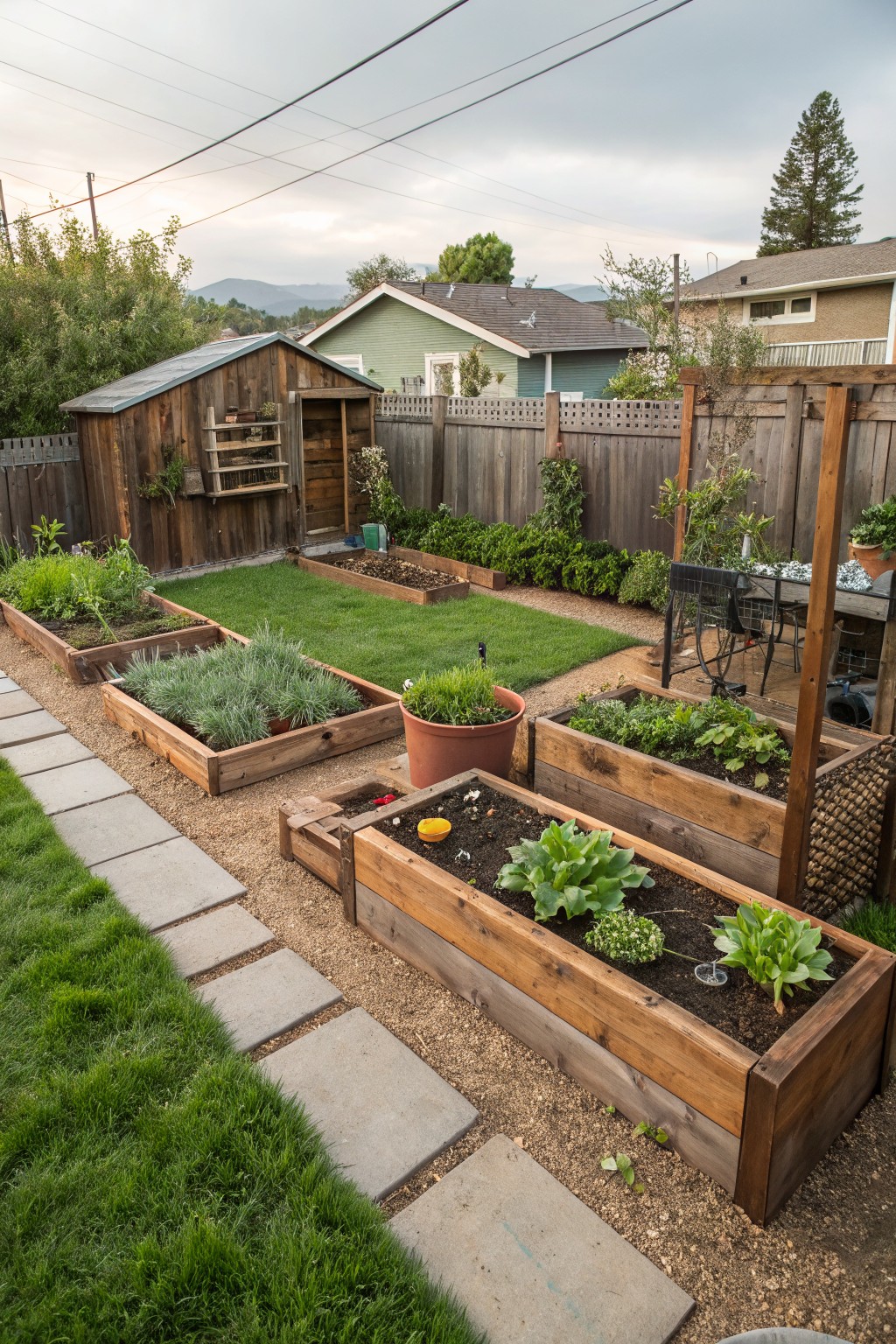
One straightforward way to organize a backyard garden is lining up raised beds right along a simple path. These wooden boxes hold herbs, greens, and flowers, keeping everything off the ground and easy to tend. The path in between lets you walk up to each bed without compacting the soil or getting muddy. It turns a plain yard into a working garden that feels put together.
You can set this up in any sunny backyard corner with decent space. Build the beds from rough-cut lumber for that natural look, space them a foot or so apart, and lay flat stones for the path. It’s practical for veggies or perennials, especially if you want low bending. Just make sure the wood lasts by treating it now and then.
Terraced Raised Beds for Sloped Yards
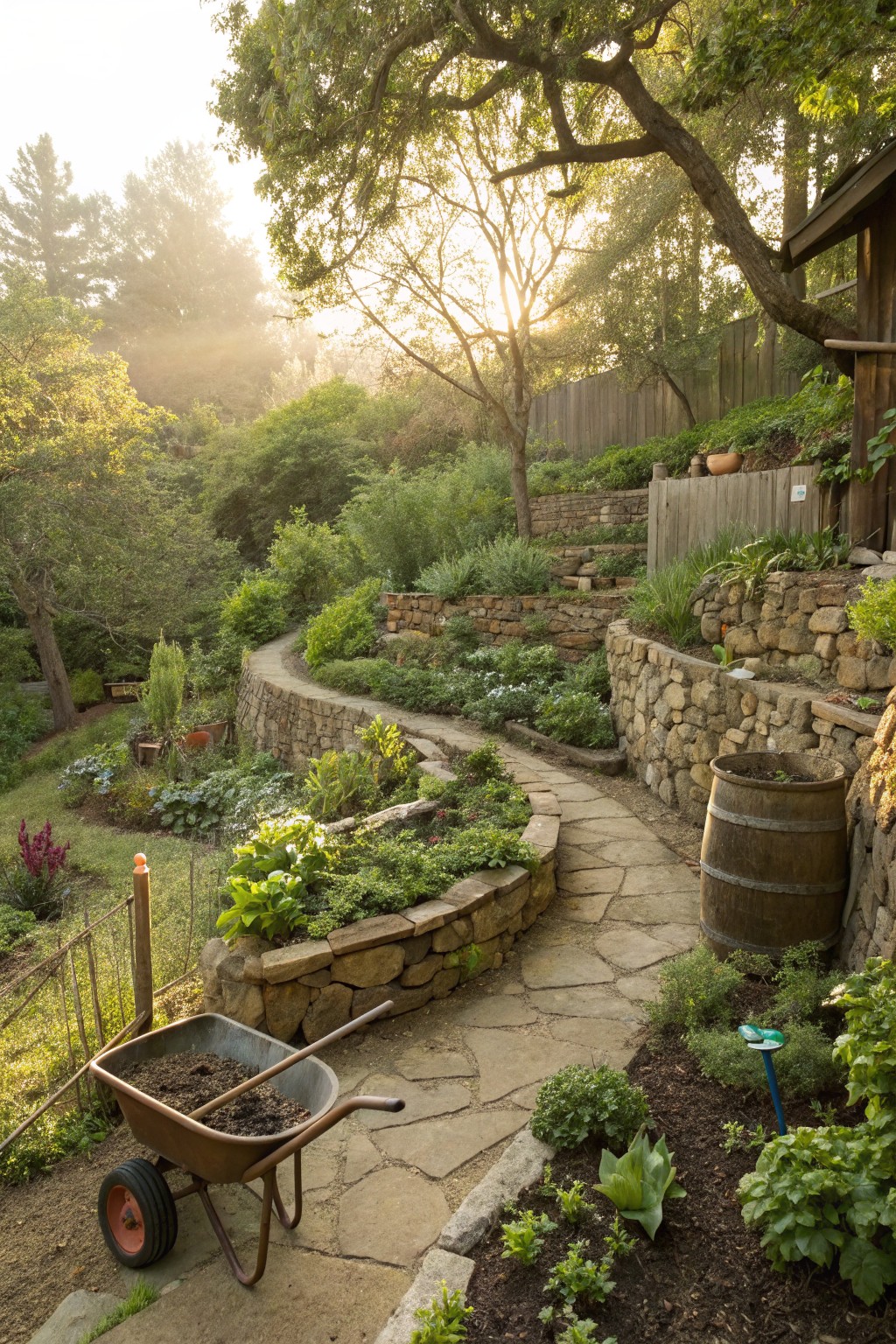
Sloped backyards often go unused because they’re hard to plant on. These terraced raised beds solve that by stacking stone walls right into the hill. Each level holds soil for herbs, veggies, and flowers, making flat growing space where there wasn’t any before. A simple winding path ties it all together for easy access.
This setup works best on moderate slopes with good sun. Stack local stone without mortar for a natural look that lasts. Start small if you’re building yourself. Just plan for drainage so water moves down the tiers without pooling.
Raised Wooden Beds Shape the Yard
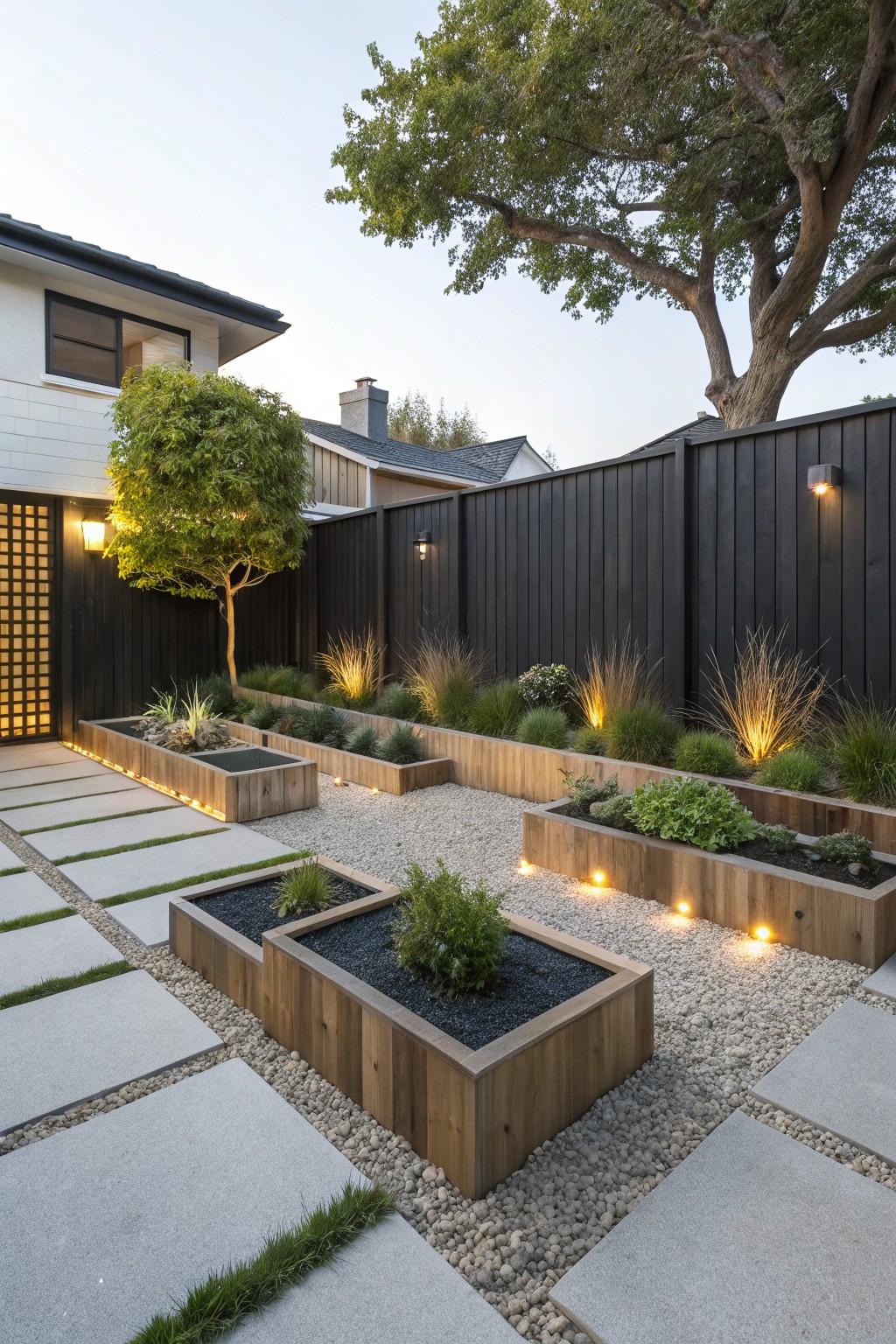
Raised wooden beds like these give your backyard a clear structure without much fuss. They line up neatly along the fence and step out into open gravel areas, holding plants at eye level so everything feels organized. The wood keeps it warm and natural against stone paths, and those low built-in lights make it usable at night too.
You can pull this off in smaller yards where flat ground gets muddy or boring. Build the beds from reclaimed wood for that rugged look, fill them with grasses and low shrubs that don’t need constant trimming. Just keep the heights varied a bit… it adds rhythm without trying too hard. Works best behind modern homes with clean lines.
Raised Brick Beds Edging Garden Paths
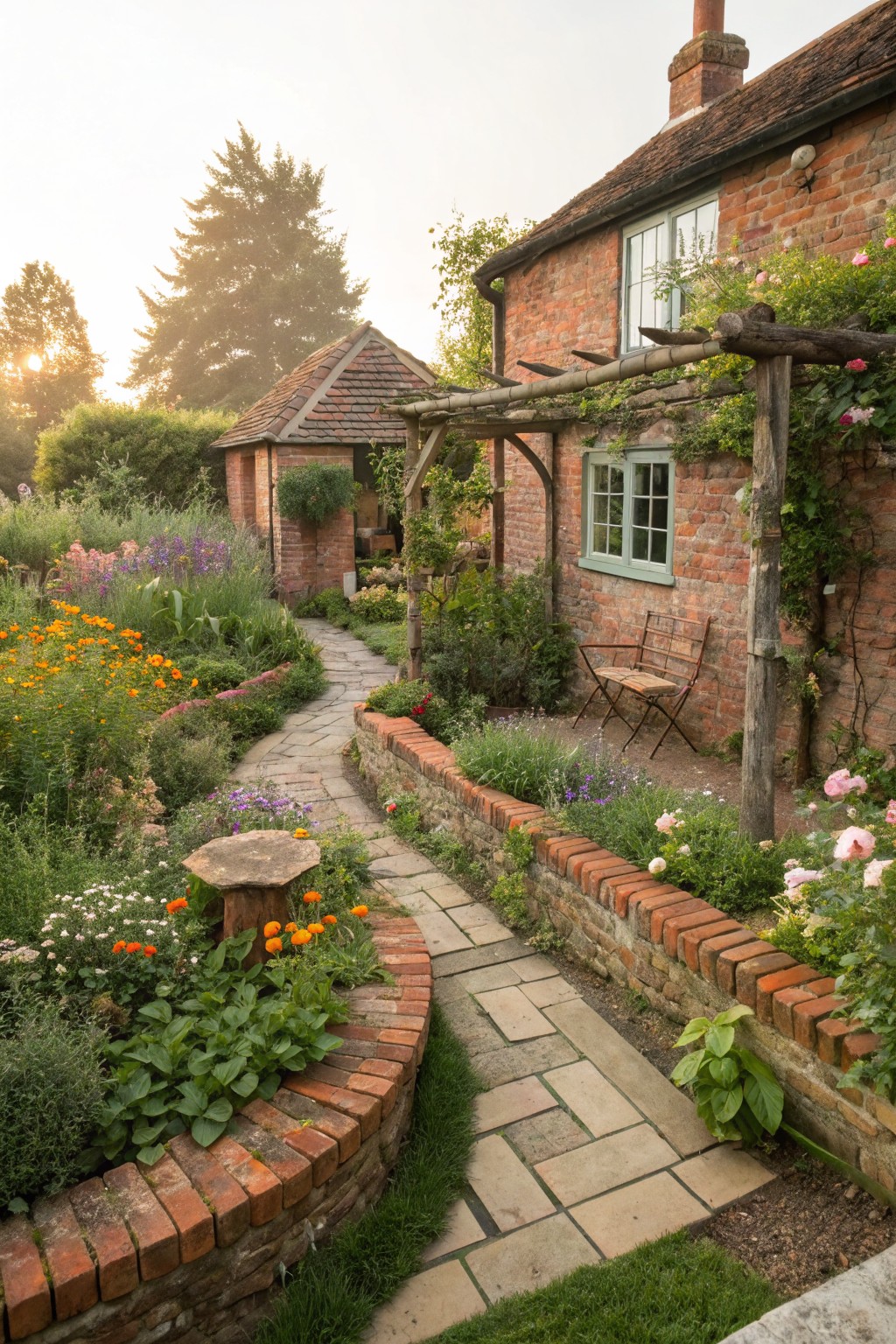
Low brick walls make perfect raised beds when they curve right along a winding stone path like this. They keep everything tidy and contained but let flowers like marigolds and roses tumble over the edges in a casual way. That mix of structure and softness is what gives cottage gardens their charm without much upkeep.
You can pull this off in most backyards, especially ones with a bit of slope or uneven ground. Stack reclaimed bricks two or three courses high for that aged look, fill with perennials and annuals, and let the path lead folks through. Just watch the drainage so roots don’t sit wet. It suits older homes or any spot wanting defined planting zones that feel natural.
Raised Beds Built into Retaining Walls
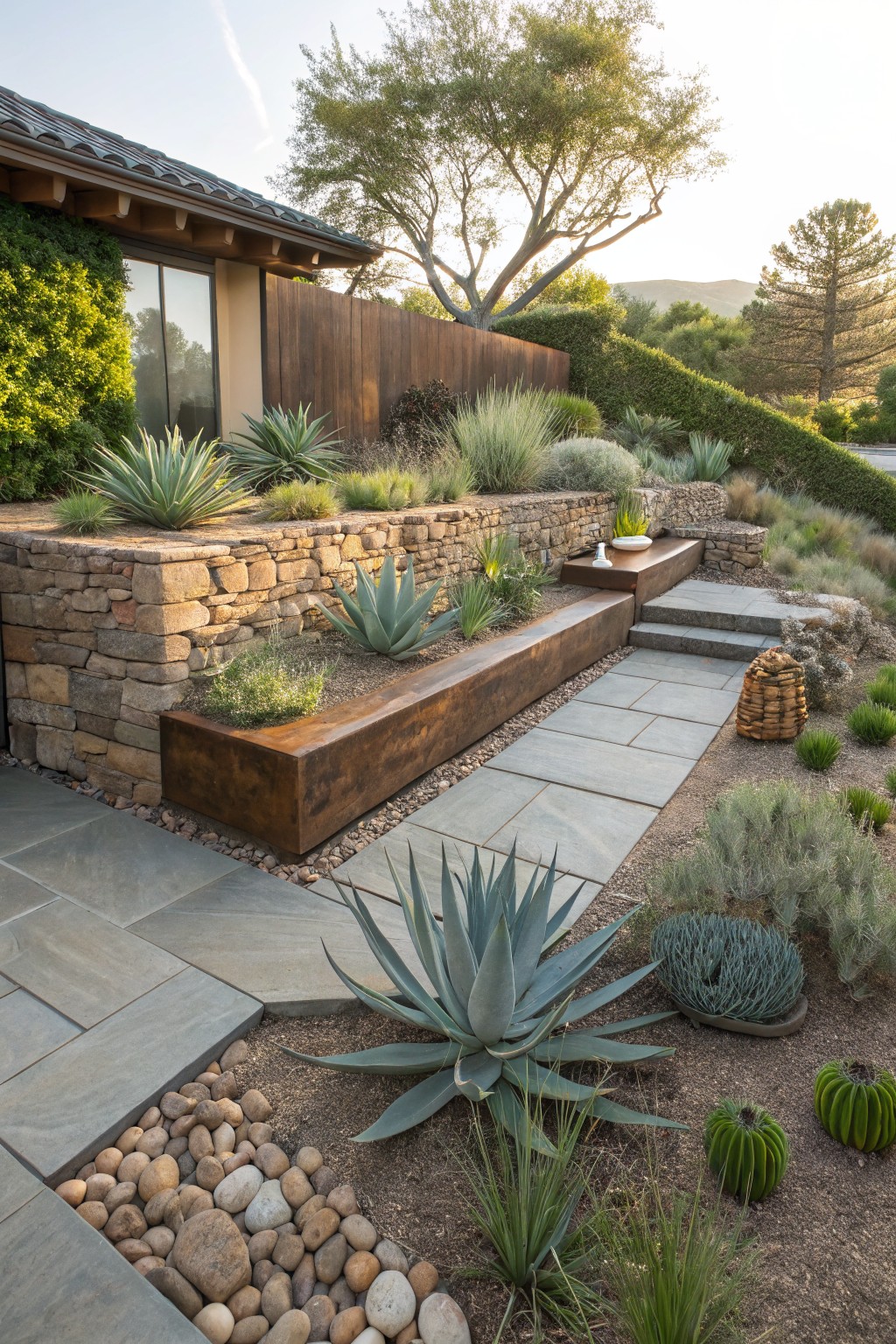
Sloped backyards can be tricky, but using stone retaining walls as raised beds solves that nicely. The natural rock walls here create flat planting pockets right into the hill, filled with sturdy agaves and other succulents that thrive in tough spots. It turns a challenging slope into layered garden space without much flat ground needed.
Pair the stone bases with corten steel planters on top for more room and a bit of modern edge. This setup fits dry climates best, keeps maintenance low, and works alongside a flagstone path to guide you through. Just pick plants that handle poor soil, and it stays looking good year-round.
Vertical Raised Beds Against Fences
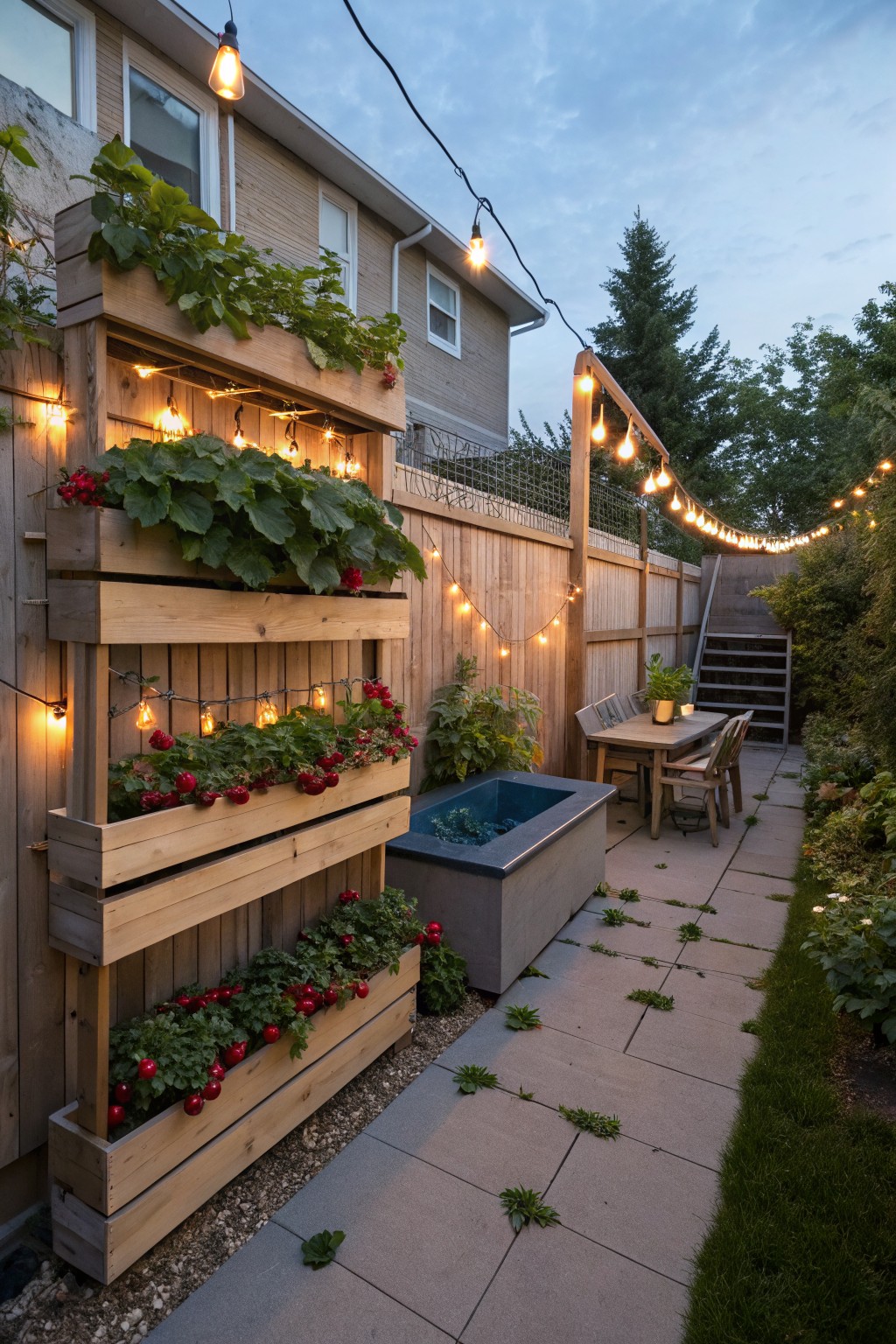
One smart way to fit more plants into a backyard is stacking raised garden beds right up against the fence. These wooden tiers hold strawberries and greens, making use of that vertical space without eating into the yard. The string lights draped around add a cozy glow at night, turning a plain fence into something useful and pretty.
You can build these with simple lumber and brackets, filling them with soil that drains well for edibles like berries. They work best in narrow lots or spots with poor ground soil. Just keep an eye on weight so the fence stays sturdy, and water from the top down.
Raised Stone Beds with Boxwood Edges

Raised beds built from stone give a backyard that clean, formal look without needing fancy upkeep. Here the low walls edge boxwoods clipped into balls and hedges, set against gravel paths. It pulls the garden together neatly, right up to the house.
This setup works best in courtyards or smaller backyards where you want structure. Use local stone to blend with your home, fill beds with tough evergreens, and gravel for easy walking. Just keep beds low if space feels tight.
Raised Beds Flanking Stone Paths

Raised garden beds like these hug the edges of a simple stone path. Made from plain wood planks, they’re packed with tall grasses and a few tough succulents. This setup adds planting space without crowding the walkway. It keeps things neat and guides you right through the yard to the deck.
You can pull this off in most backyards, especially sloped ones or spots near the coast. Use untreated cedar for the frames so they weather nicely. Space the beds parallel to your path, maybe 18 inches high. Stick to low-water plants that match your climate. Watch the drainage though. Too much water buildup kills the roots quick.
Winding Raised Bed Pathways
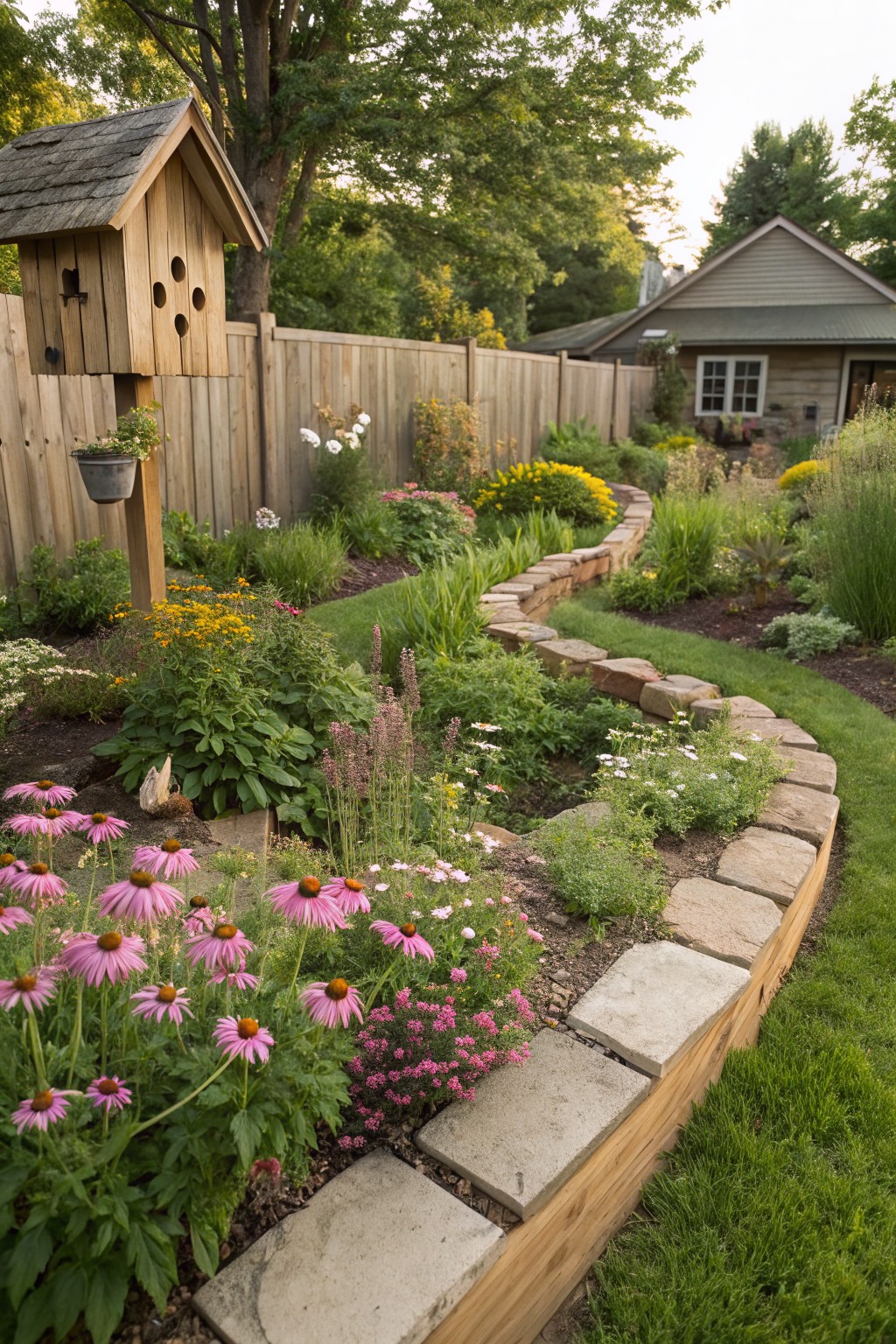
One nice way to shape a backyard garden is with raised beds that curve into a path. You build up the edges with stone or wood, then fill them with plants that spill over just a bit. It pulls you along the route without straight lines taking over. Those clusters of pink coneflowers here show how color pops right at eye level.
This works best in average yards where you want flow over fuss. Line it with tough perennials and grasses for low upkeep. Fits most backyards, especially if you have some slope. Just make sure the stones match your fence or shed so it all ties together.
Raised Planters Line the Path
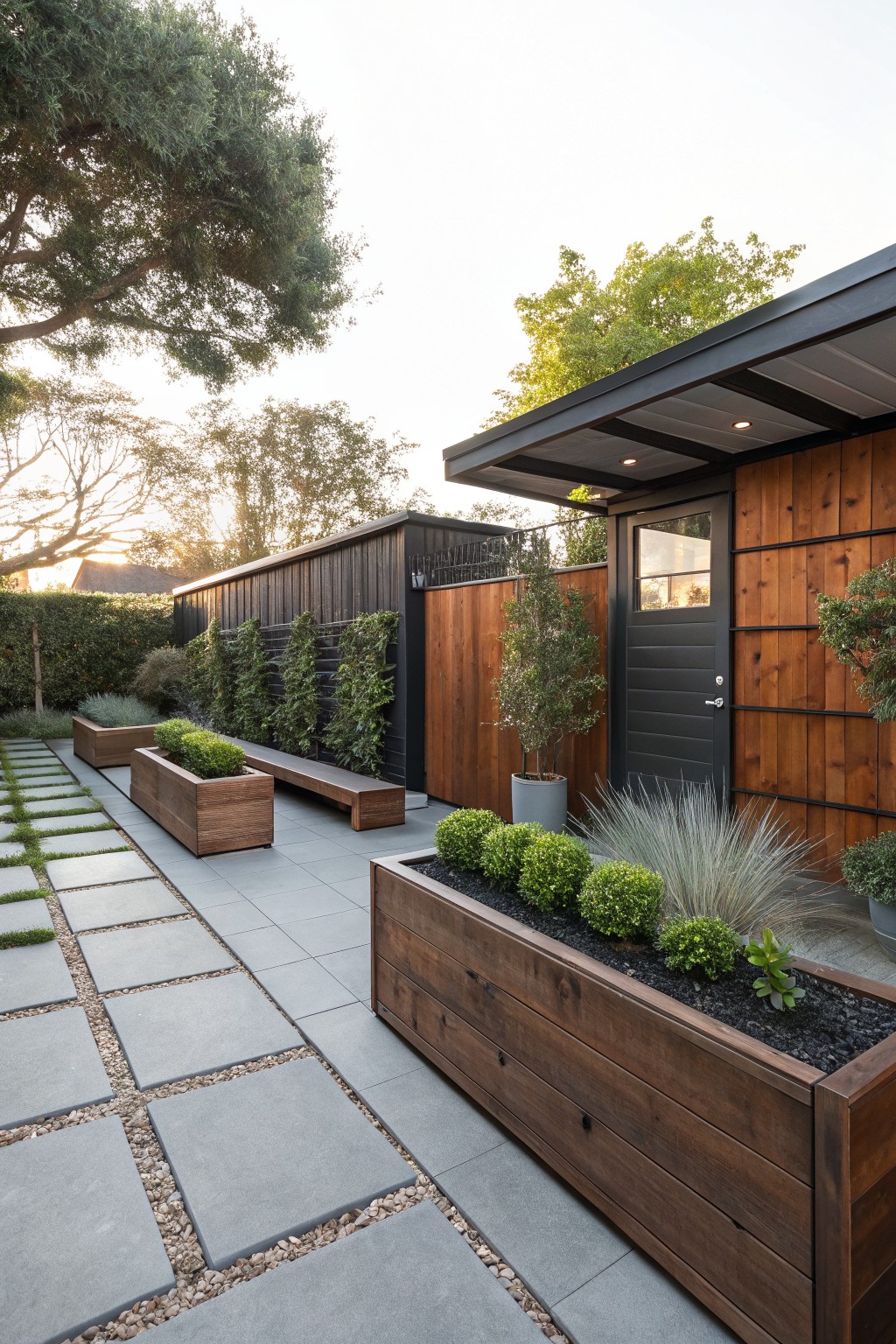
One straightforward way to organize a backyard walkway is with matching wooden raised planters on both sides. Here they run along simple gray pavers, filled with tidy boxwoods and grasses. The beds give the path some weight and draw your eye straight back to that sleek wooden shed or studio. It keeps the planting off the ground and makes the whole strip feel put together without much fuss.
This works well in side yards or narrower back areas where you want to connect the house to a farther spot. Go for rot-resistant wood like cedar, and pick low-growing plants that won’t flop over the edge. Keep the path wide enough to walk comfortably, maybe four feet. Skip it if your space floods easy, since raised beds handle drainage better anyway.
Whiskey Barrel Raised Garden Beds

Whiskey barrels turned into raised beds give a backyard garden that easy rustic feel. You see them here lined up with herbs and greens spilling over the edges. They hold plenty of soil without needing fancy frames and fit right into a natural yard setup.
Put them along a winding path or near a potting shed for quick access. They work best in spots with decent sun and good drainage… add rocks at the bottom if water pools. Suits cottage-style yards or anywhere you want low-fuss veggie growing.
Raised Beds Around the Outdoor Kitchen

One smart way to use raised garden beds is to tuck them right up against your outdoor kitchen or grill setup. In this backyard, the wooden beds are built straight into the cabinet bases, holding herbs and greens that are steps from the cooking burners. It keeps everything practical and green without crowding the space. Fresh picks for meals, just like that.
These work best in smaller yards where you want plants close but not sprawling. Build them to match your cabinets in wood tones, maybe 18 inches high for easy tending. Fill with low growers like basil or chives. Skip it if your spot gets too shady. Fits most patios with a cooking zone.
Gravel-Edged Raised Garden Beds

Raised garden beds like these use simple stacked wood blocks filled partway with gravel. That bottom layer helps with drainage so plants don’t sit in soggy soil. The gravel edging around the beds keeps paths clean and gives the whole setup a tidy backyard look without much upkeep.
Line these beds along a walkway near your patio or back door. They work best in smaller yards where you want veggies close at hand. Go for rough-cut wood to match a casual style, and pick herbs or lettuces that thrive in raised spots… just watch for rabbits if you’re out in the open.
Terraced Stone Steps for Sloped Yards
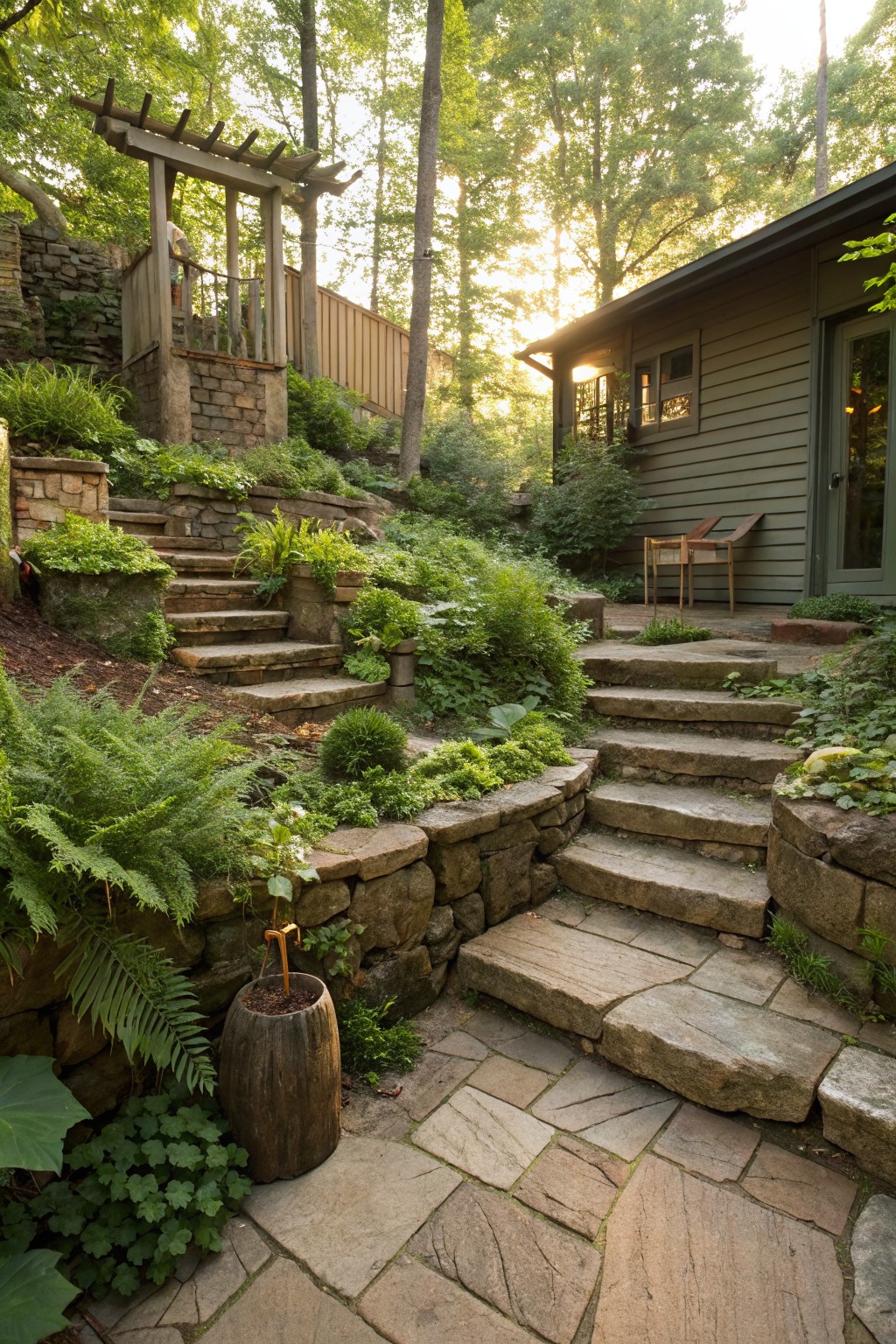
Sloped backyards can be tricky, but building terraced steps out of local stone turns the hill into a series of raised garden beds. The rough walls hold soil in place while plants like ferns tuck right into the crevices, making everything feel natural and lush. It’s a practical fix that adds usable levels without flattening the whole slope.
This setup suits homes on hilly lots where you want low-maintenance greenery. Stack the stones dry or with minimal mortar for drainage, and plant tough stuff that thrives in shade. Watch the steps for stability over time… a little gravel fill helps.
Raised Beds Lining Narrow Yards
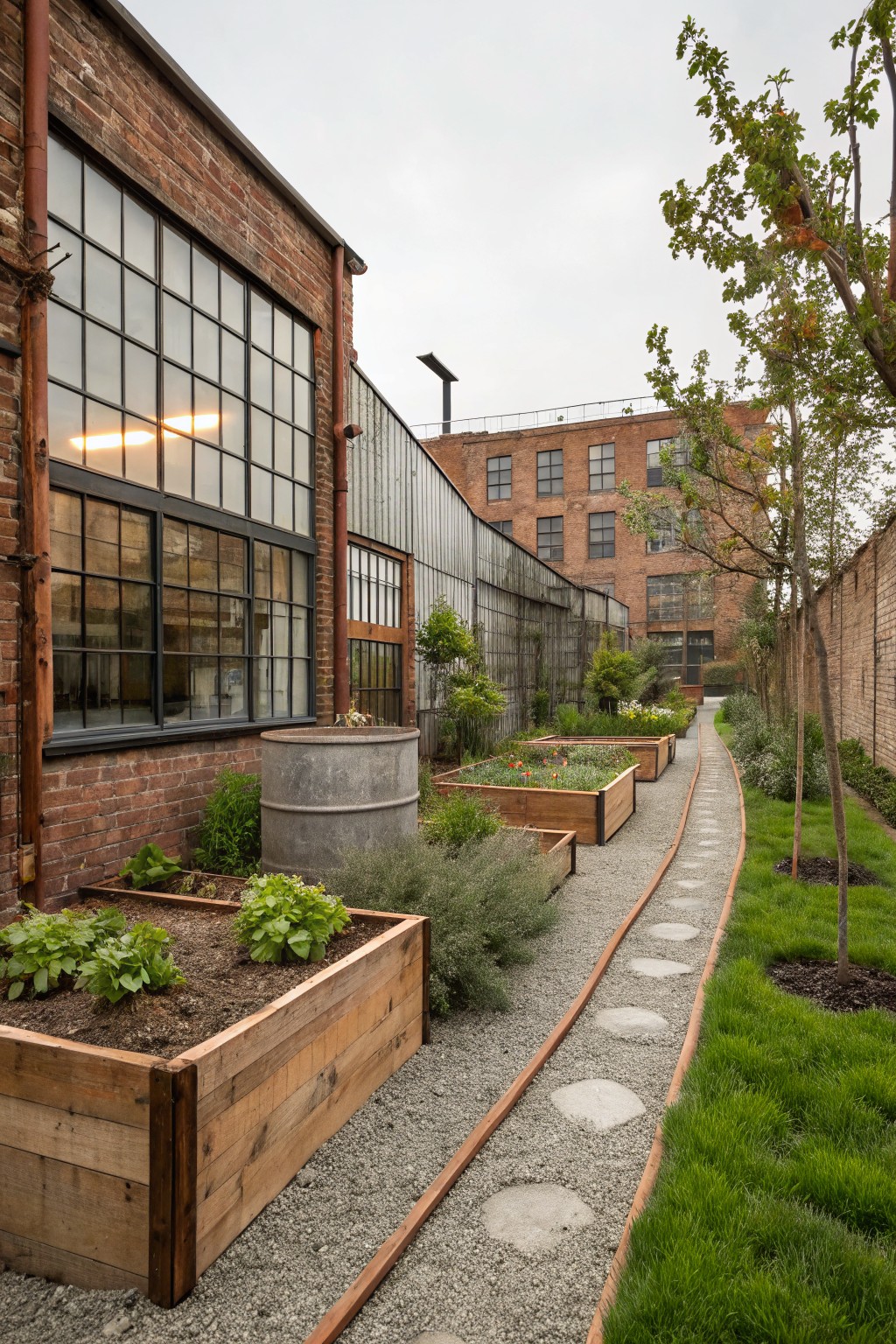
Raised wooden garden beds work great in tight backyard spaces like this one between brick buildings. They hug the walls and fill the area with plants, veggies, and herbs without wasting any room. A simple gravel path runs through with stepping stones for easy walking.
Try this in urban lots or skinny side yards where space is limited. Build the beds from reclaimed wood for a sturdy look that matches old brick. Keep paths edged neatly so everything stays contained and low fuss. It suits renters too since it’s straightforward to set up.
Wooden Raised Beds Along a Path
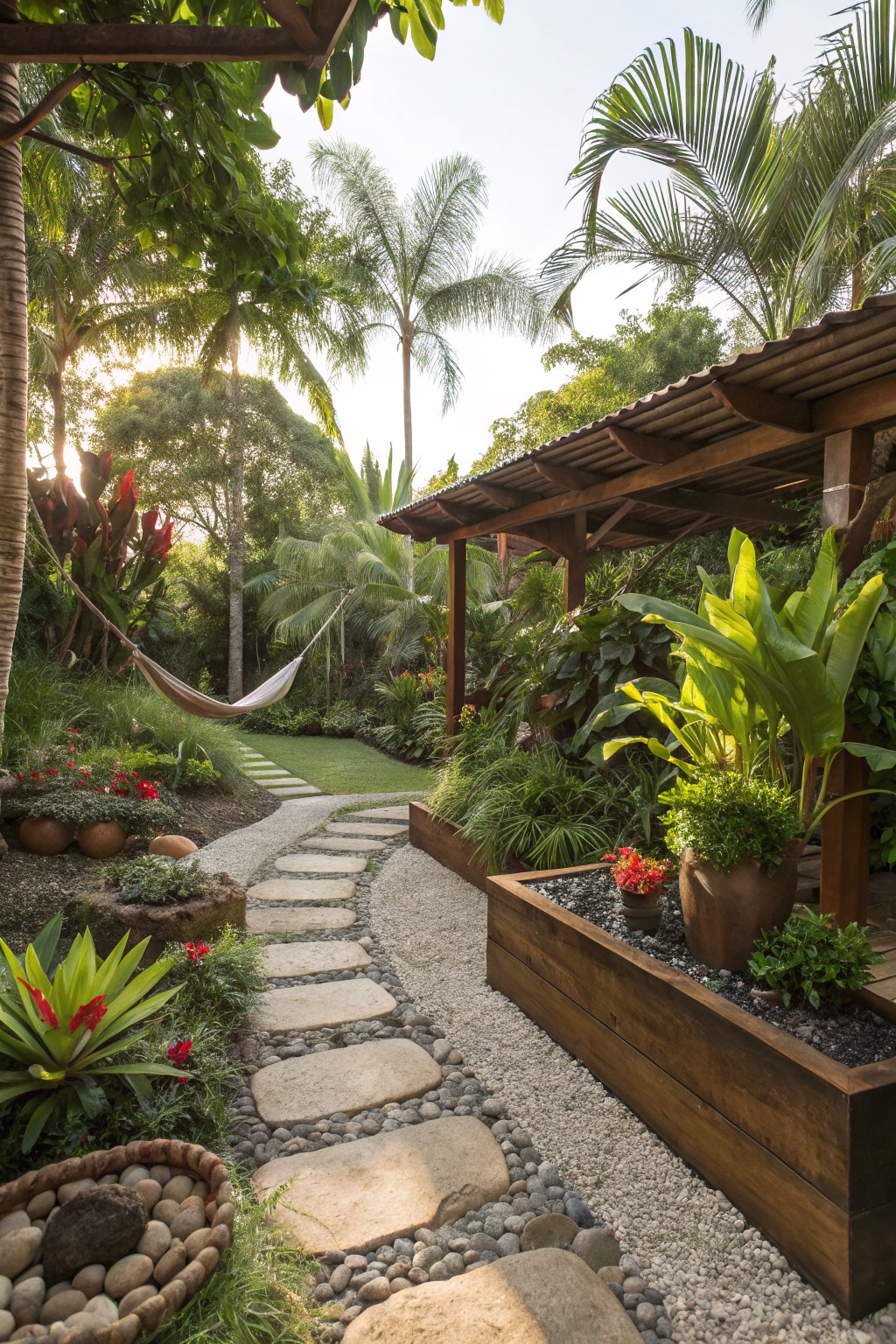
One simple way to organize a backyard garden is with wooden raised beds that run right alongside a stone path. These beds keep plants contained and make it easy to walk through without stepping on soil. In this setup, the wood boxes hold gravel mulch topped with colorful blooms like red geraniums, which adds neat definition without much upkeep.
You can build these in any sunny backyard spot, especially where you want a casual trail from house to hammock or seating area. They suit sloped yards too, since the raised edges prevent washout. Just use sturdy cedar or redwood for the frames to last through wet seasons, and skip overcrowding with too many plants.
Frequently Asked Questions
Q: How deep should I make my raised garden beds?
A: Go for at least 12 inches deep for most veggies and flowers. That gives roots room to spread without hitting hardpan. Deeper beds, around 18 inches, work great for potatoes or perennials.
Q: What’s a cheap way to fill these beds without buying tons of soil?
A: Start with layers of cardboard or newspaper at the bottom. Mix in your yard’s soil with compost and leaves. You save money and build soil that worms love over time.
Q: Can raised beds fix my crappy backyard soil?
A: They totally bypass bad soil underneath. Fill with a fresh mix you control, and plants thrive right away. Just make sure good drainage with gravel or holes in the base.
Q: How do I keep weeds from taking over my new beds?
A: Lay down landscape fabric or thick mulch right after planting. Pull any stragglers weekly before they root deep. And water at the base to starve weed seeds.