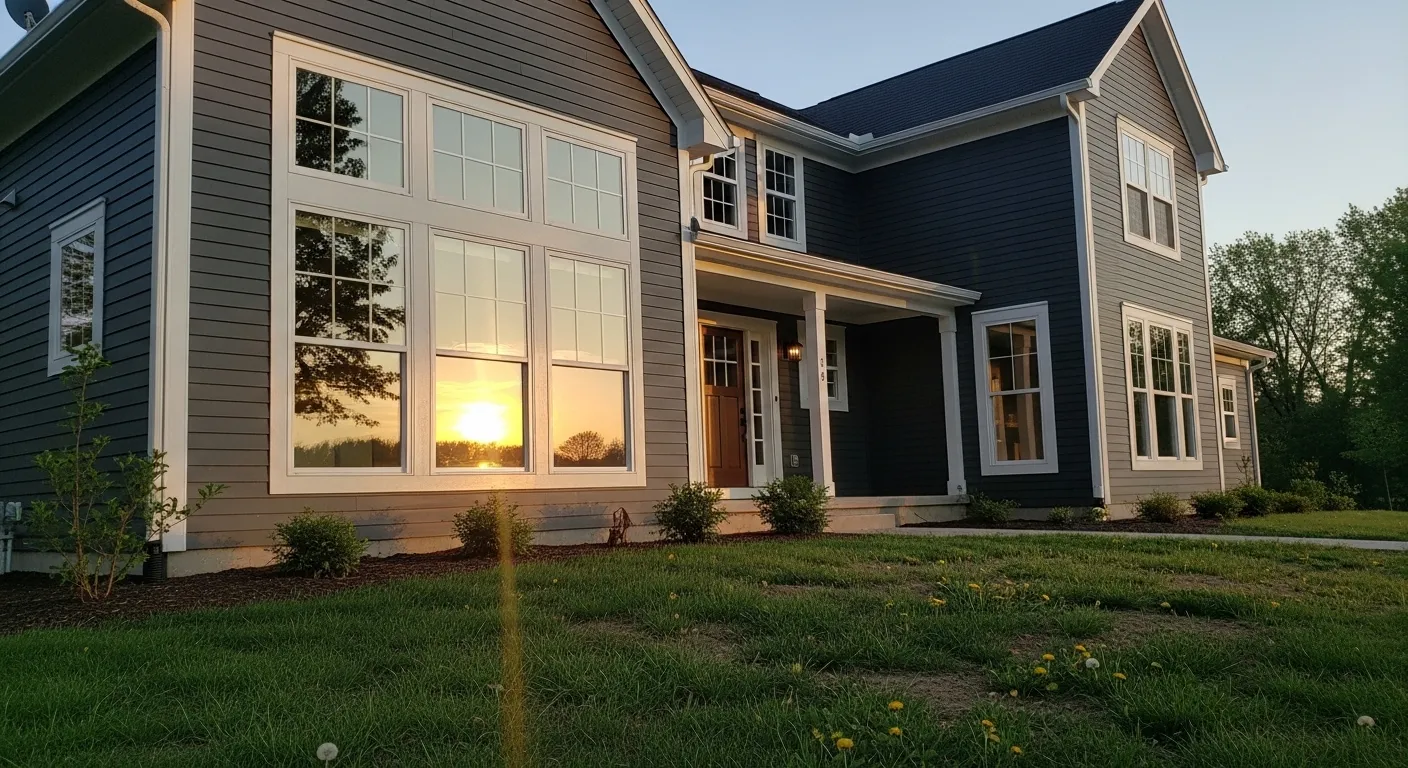
I’ve always had a soft spot for rustic farmhouse exteriors, especially the kind that feel simple, a little weathered, and completely lived in.
There’s just something about the right paint color that can make a house feel warm and welcoming before you even step inside.
I put this list together because I kept coming back to the same question while planning my own projects. What colors actually work on a farmhouse without feeling too trendy or too plain?
These Benjamin Moore shades are the ones I keep seeing again and again, and honestly, they just feel right.
If you’re into soft whites, muted greens, or those in between grays that never look boring, you’re going to find a few favorites here.
Soft White Farmhouse Exterior
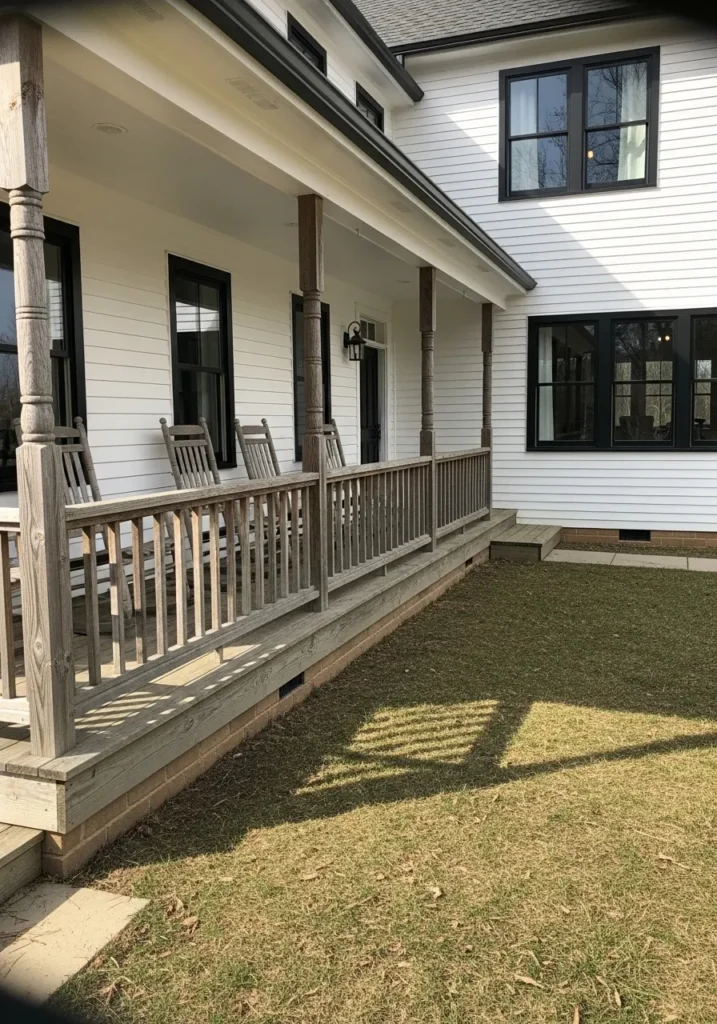
This reads like a warm soft white, very close to Benjamin Moore White Dove. It’s not a stark bright white. It has a gentle creaminess that shows up nicely on the siding, especially next to the black window trim and natural wood porch posts. That mix gives it a relaxed farmhouse feel without looking too clean or sharp.
The undertone leans slightly warm, which helps it sit well beside weathered wood and darker accents. It works best in natural light where it won’t turn too flat or gray. I’d keep the trim crisp and the wood elements a bit raw, just like here, so the color doesn’t start to feel plain.
Light Greige Farmhouse Siding
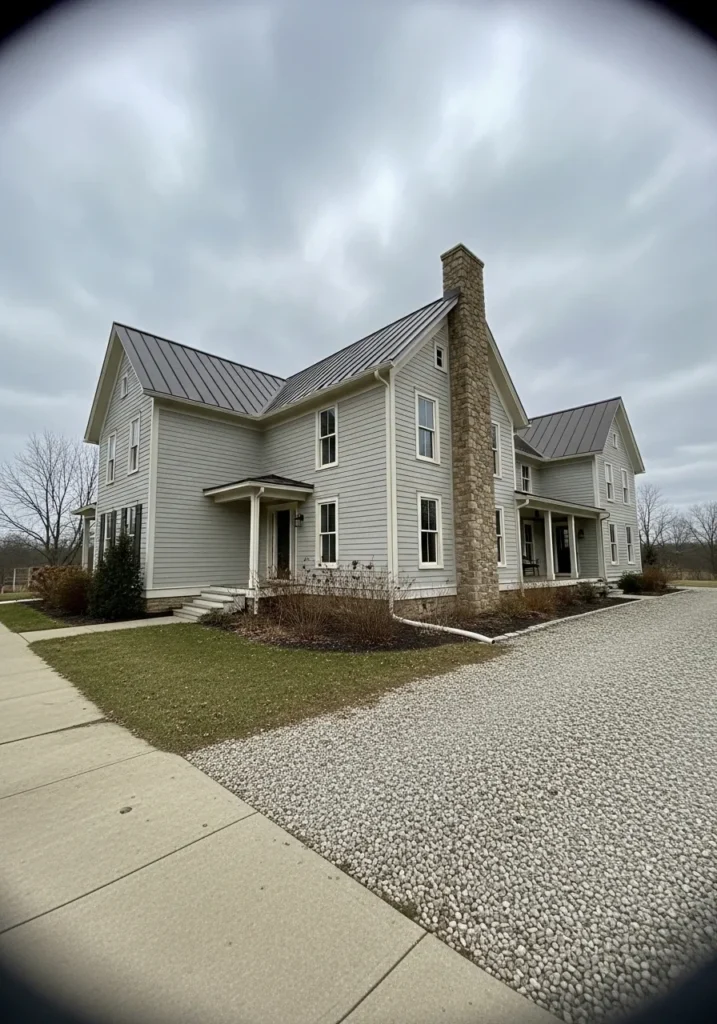
This looks like a soft light greige, and it reads very close to Benjamin Moore Edgecomb Gray. It sits right between beige and gray, which is why it feels easy on the eyes. You can see how it works next to the stone chimney and white trim without feeling too cool or too warm.
The undertone leans slightly warm, but not enough to turn yellow. That makes it a good choice for larger farmhouse exteriors where you want something calm but not plain. It tends to look better with natural materials like stone or gravel, and I’d keep the trim clean and simple so the color stays the focus.
Deep Blue Farmhouse Siding
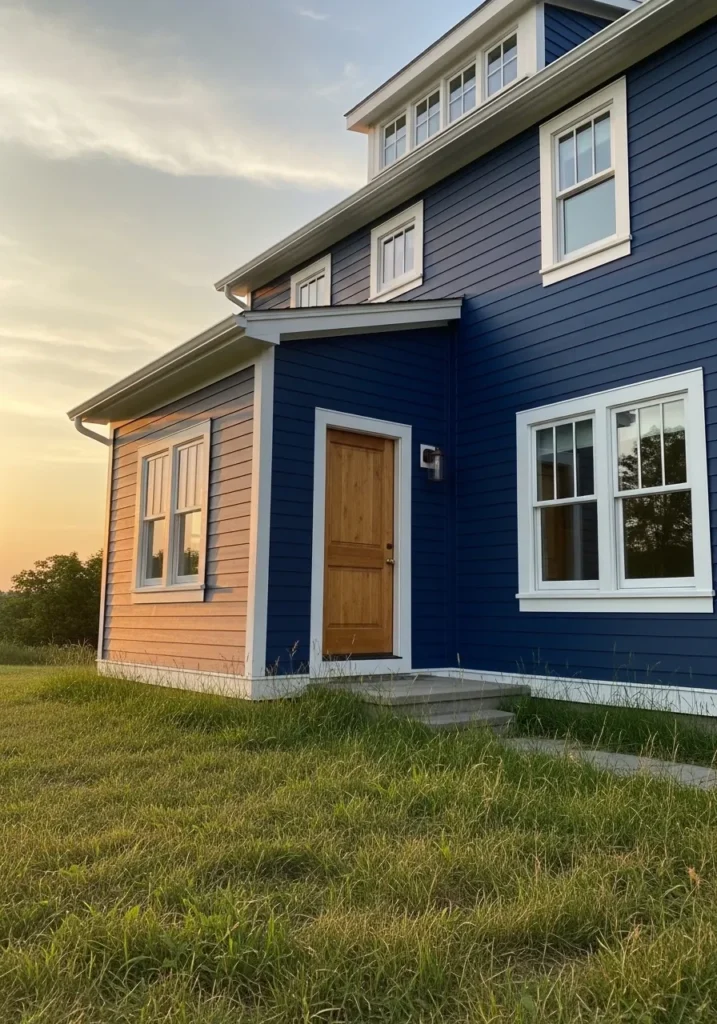
This looks like a rich navy blue, and it feels very close to Benjamin Moore Hale Navy. It’s a deep, classic blue that still feels grounded, especially next to the white trim and that natural wood front door. It gives the house a bit more presence without going overly dark or harsh.
The undertone leans slightly warm for a navy, which helps it sit nicely with wood tones and simple landscaping. It works best when you keep the trim crisp and bright so the color doesn’t feel heavy. I’d use it on a full exterior like this or even just an accent section if you want something a little bolder but still familiar.
Creamy White Farmhouse Siding
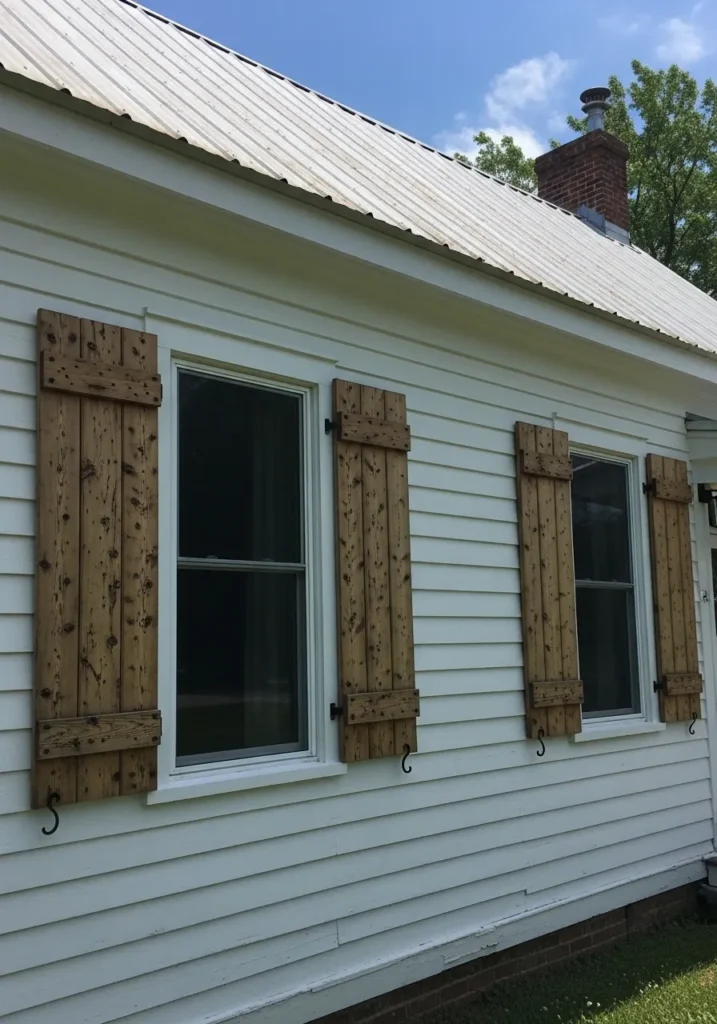
This reads like a soft creamy white, and it feels very close to Benjamin Moore Swiss Coffee. It’s not a bright white at all. It has a gentle warmth that shows up clearly next to the natural wood shutters, which keeps the whole exterior from feeling too sharp or cold.
The undertone leans warm, slightly yellow but still subtle, so it works well on older-style siding like this. It tends to look best when paired with raw wood, brick, or even a light metal roof. I’d avoid pairing it with very cool grays, since that can make the color feel a bit off.
Warm Beige Farmhouse Exterior
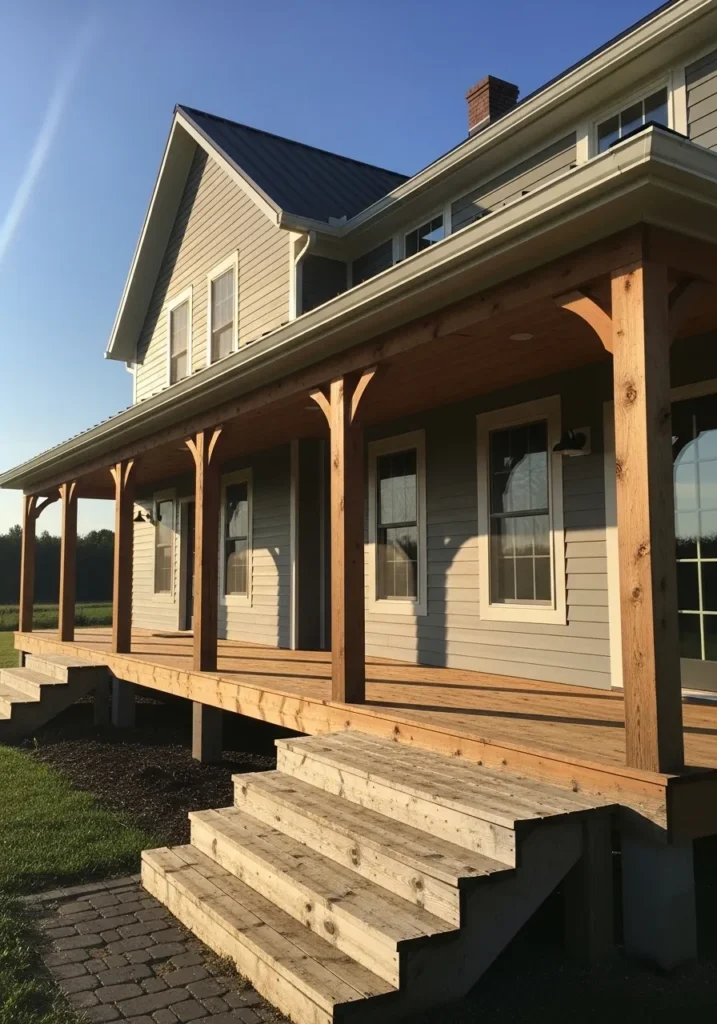
This looks like a soft warm beige, and it comes very close to Benjamin Moore Shaker Beige. It’s one of those easy colors that doesn’t lean too gray or too yellow. You can see how it sits comfortably against the natural wood porch, which helps it feel relaxed and not overly finished.
The undertone stays gently warm, which works well on larger farmhouse exteriors where a cooler gray might feel a bit flat. It tends to look best with wood tones, simple white trim, and even darker roofs. I’d keep everything around it fairly natural so the color doesn’t start to feel too polished.
Soft Taupe Gray Exterior
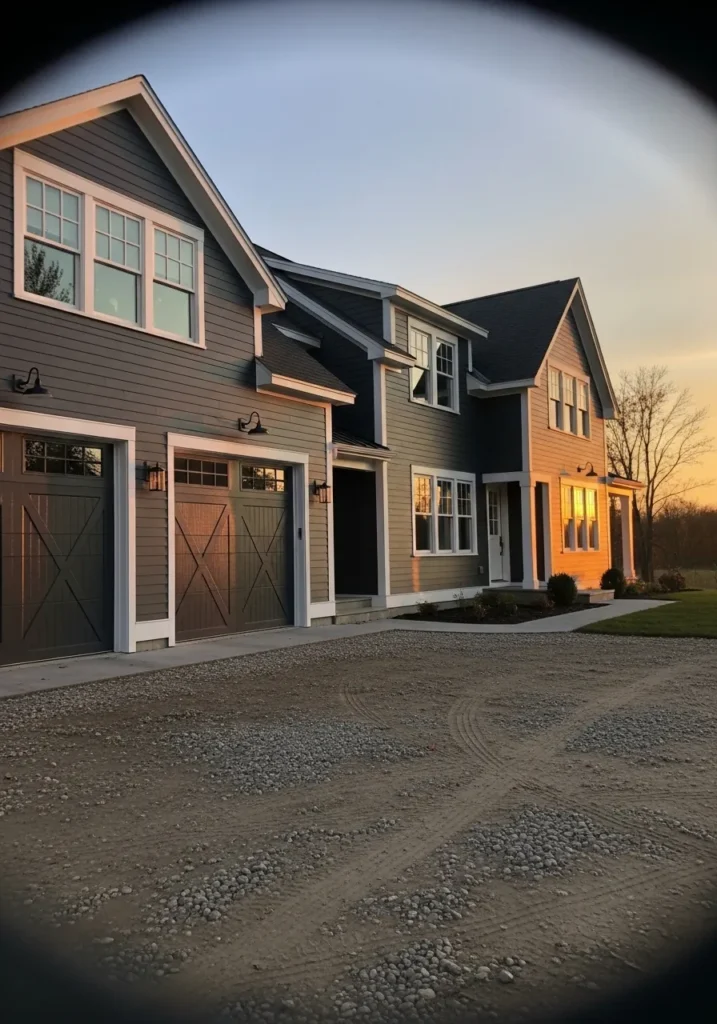
This looks like a soft taupe gray, and it comes very close to Benjamin Moore Revere Pewter. It sits right in that middle range where it feels warm but still has a bit of gray to keep it from going too beige. You can see how it works against the white trim and those darker garage doors without feeling too light or too heavy.
The undertone leans warm, with a slight earthy feel that works well on larger farmhouse exteriors. It tends to shift a bit depending on the light, sometimes reading more gray, sometimes more beige. I like it best when paired with simple white trim and darker accents, just to keep it from blending in too much.
Soft Sage Neutral Exterior
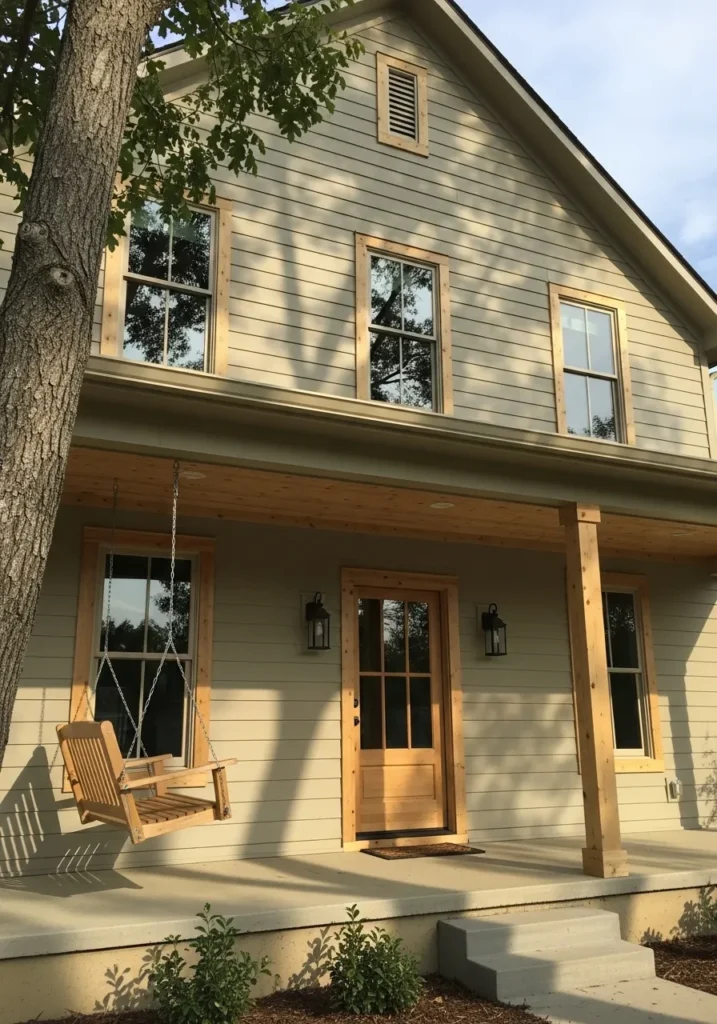
This reads like a muted sage green, and it feels closest to Benjamin Moore Saybrook Sage. It’s not a strong green. It leans soft and slightly gray, which makes it easy to live with on a full exterior. You can see how it works nicely beside the natural wood trim and simple porch details without feeling too colorful.
The undertone has a gentle earthy base, so it pairs well with wood tones and black or bronze lighting. It tends to shift a bit depending on light, sometimes looking more green, sometimes more like a warm gray. I’d keep the trim light and the accents simple so the color doesn’t start to feel too busy.
Clean Soft White Exterior
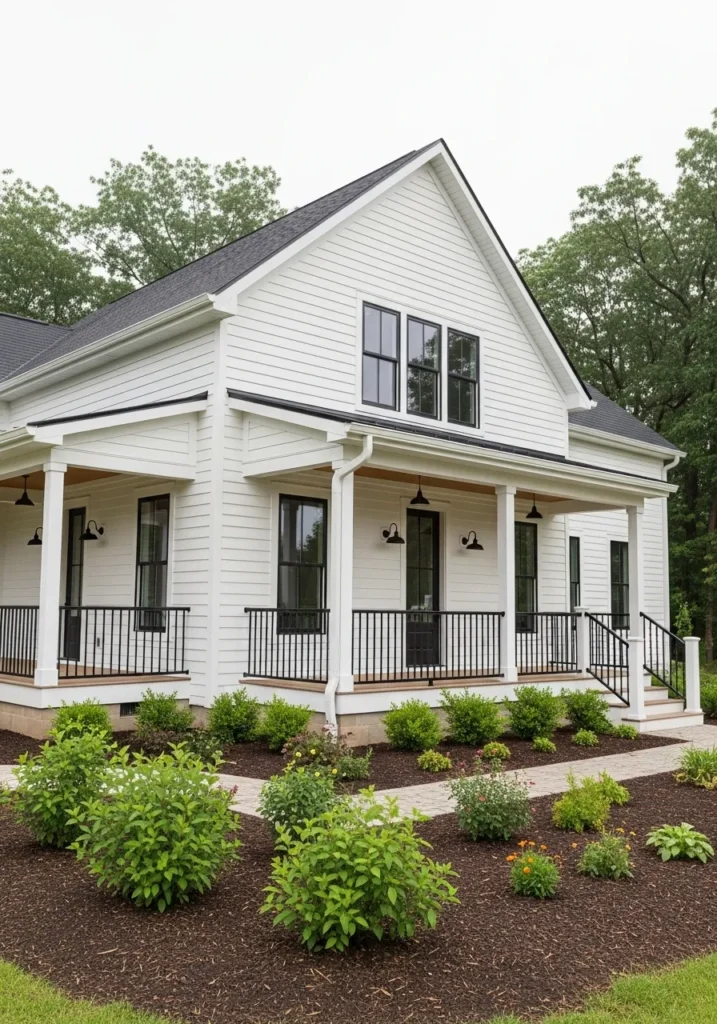
This reads like a clean soft white, and it feels closest to Benjamin Moore Simply White. It’s brighter than a creamy white but still has a bit of warmth, so it doesn’t look stark. You can see how it works with the black window trim and railings, which gives it that classic farmhouse contrast without feeling too sharp.
The undertone is lightly warm, just enough to keep it from turning cold or bluish. It tends to look best in open light where it stays fresh and not flat. I’d pair it with black or dark bronze accents and simple landscaping so the color keeps that easy, lived-in feel.
Muted Olive Green Siding
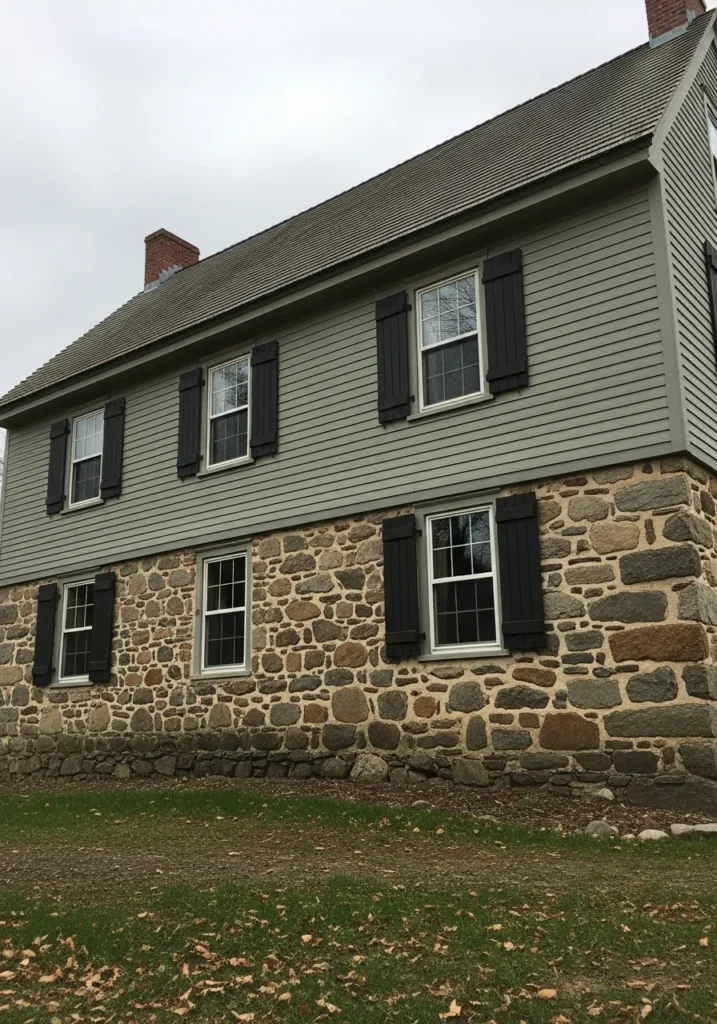
This reads like a muted olive green, and it feels closest to Benjamin Moore October Mist. It’s a soft green with a bit of gray mixed in, which keeps it from looking too fresh or bright. You can see how it sits nicely above the stone base, giving it that older farmhouse look without feeling dated.
The undertone leans earthy and slightly warm, which helps it blend well with natural materials like stone and dark shutters. It can shift a little depending on light, sometimes looking more green, sometimes more gray. I’d keep the trim light and the accents simple so the color stays easy to live with.
Deep Charcoal Farmhouse Exterior
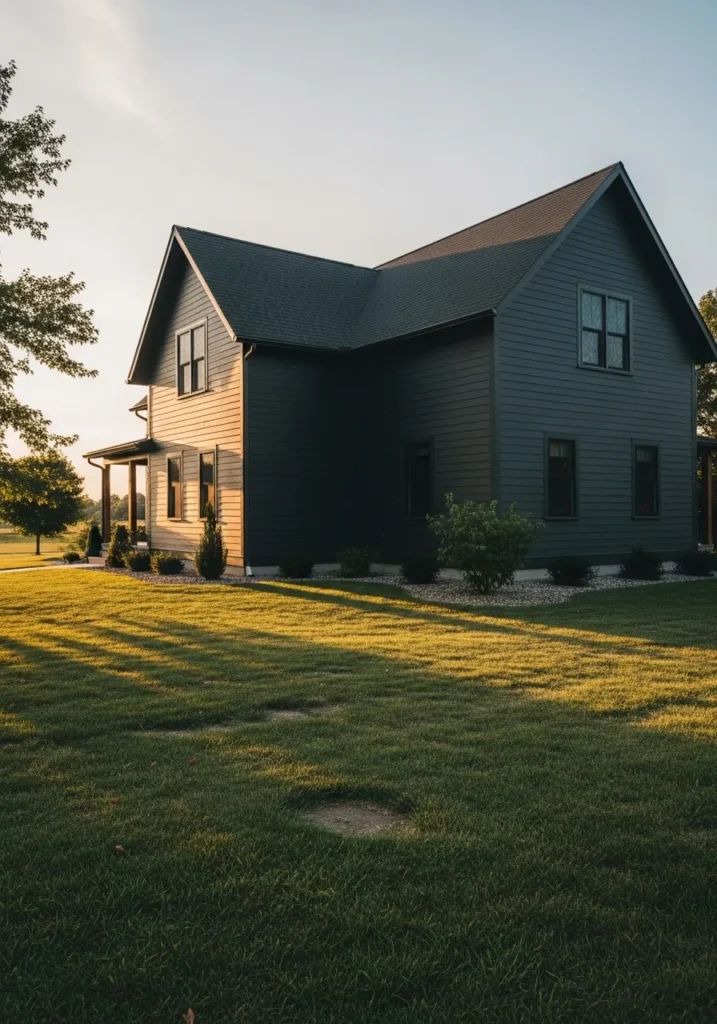
This reads like a deep charcoal gray, and it feels closest to Benjamin Moore Kendall Charcoal. It’s dark, but not quite black, so it still shows a bit of softness on the siding. You can see how it works across the full exterior without feeling too heavy, especially with the simple window trim breaking it up.
The undertone leans slightly warm, which keeps it from going too cool or flat. It works well on larger farmhouse shapes where you want something darker but still approachable. I’d keep the trim light or slightly off-white so the color doesn’t feel closed in.
Weathered Blue Gray Siding
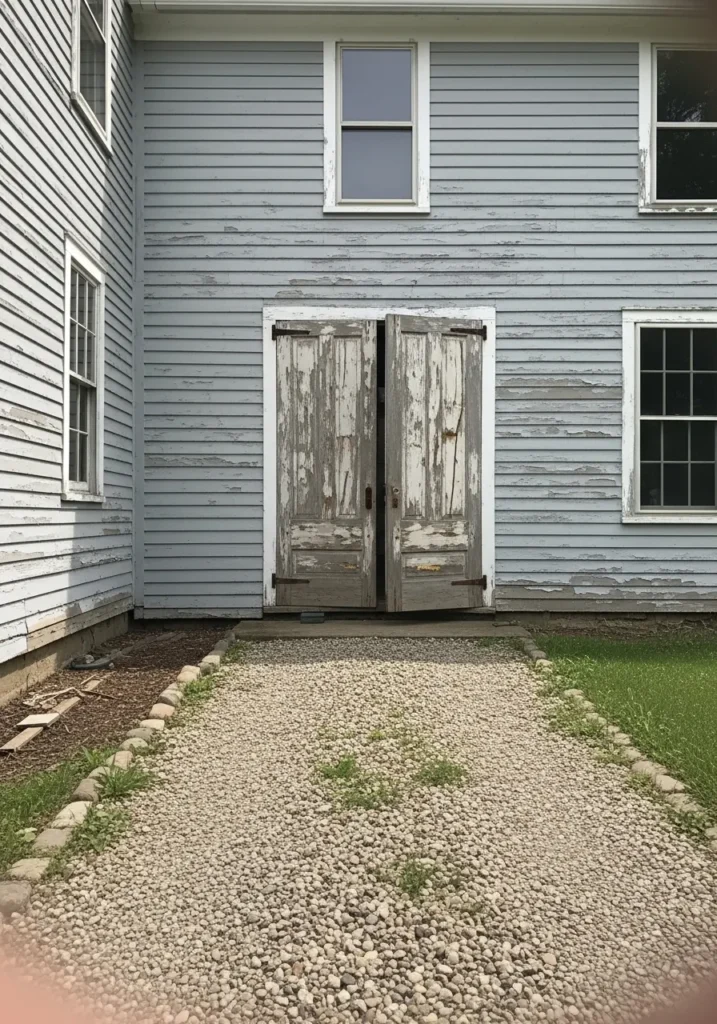
This reads like a faded blue gray, and it feels closest to Benjamin Moore Boothbay Gray. It has that slightly washed look that shows up on older siding, where the color isn’t crisp anymore but still holds its tone. You can see it against the worn wood doors, which makes the whole palette feel quiet and a bit aged.
The undertone leans cool with a soft blue cast, but it’s muted enough that it doesn’t feel bright. It works well on farmhouse exteriors where you want something subtle and a little imperfect. I’d keep the trim simple and avoid pairing it with very warm tones, since that can make the color feel dull.
Soft Green Gray Exterior
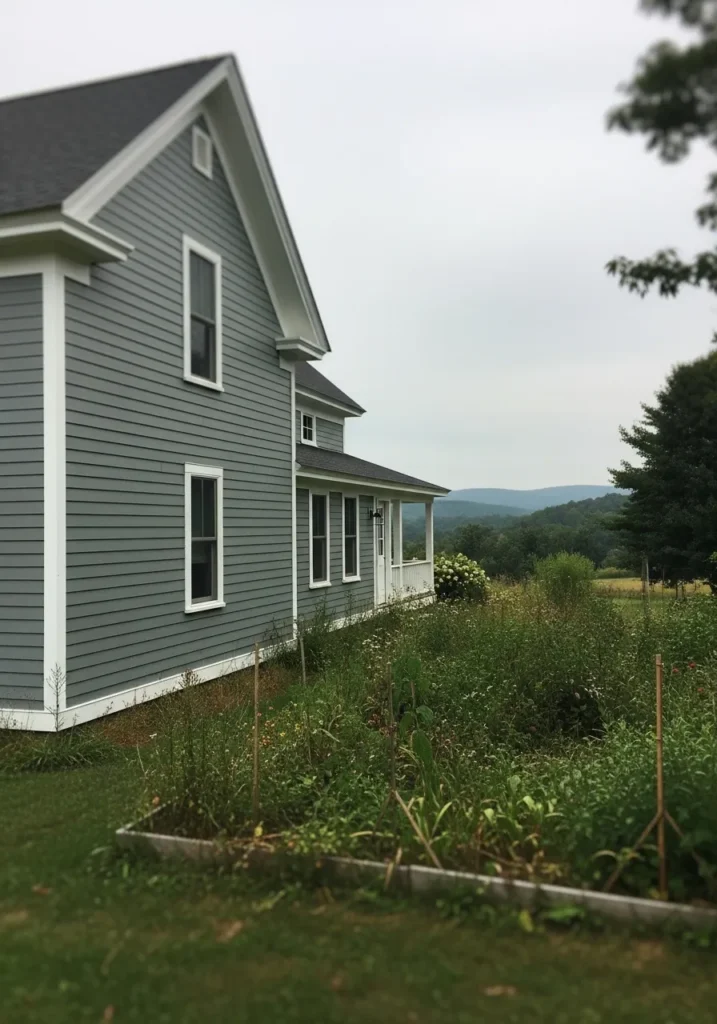
This reads like a soft green gray, and it feels closest to Benjamin Moore Saybrook Sage. It’s a muted color that leans slightly green but has enough gray to keep it from looking fresh or bright. You can see how it sits quietly against the white trim, which helps it feel calm and easy to live with.
The undertone is a mix of green and gray, with a subtle earthy feel that works well in natural settings. It tends to shift a bit depending on light, sometimes reading more gray than green. I’d pair it with simple white trim and keep the surrounding materials natural so the color stays balanced.
Warm Off White Exterior
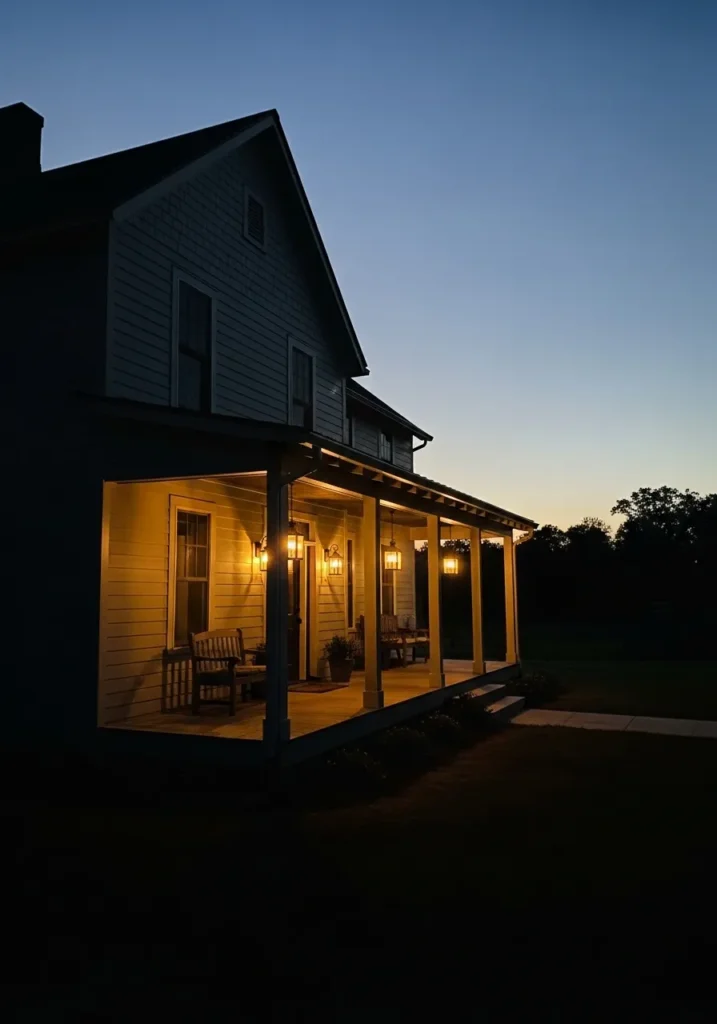
This reads like a warm off white, and it feels closest to Benjamin Moore Cloud White. It’s softer than a bright white and has just enough warmth to show up nicely under porch lighting. You can see how it works along the siding and columns without looking too crisp or stark.
The undertone leans creamy but still light, which helps it stay comfortable in both daylight and evening light. It pairs well with simple wood furniture and darker accents, and it tends to look best when the trim stays in the same soft range rather than going too bright.
Crisp White Farmhouse Exterior
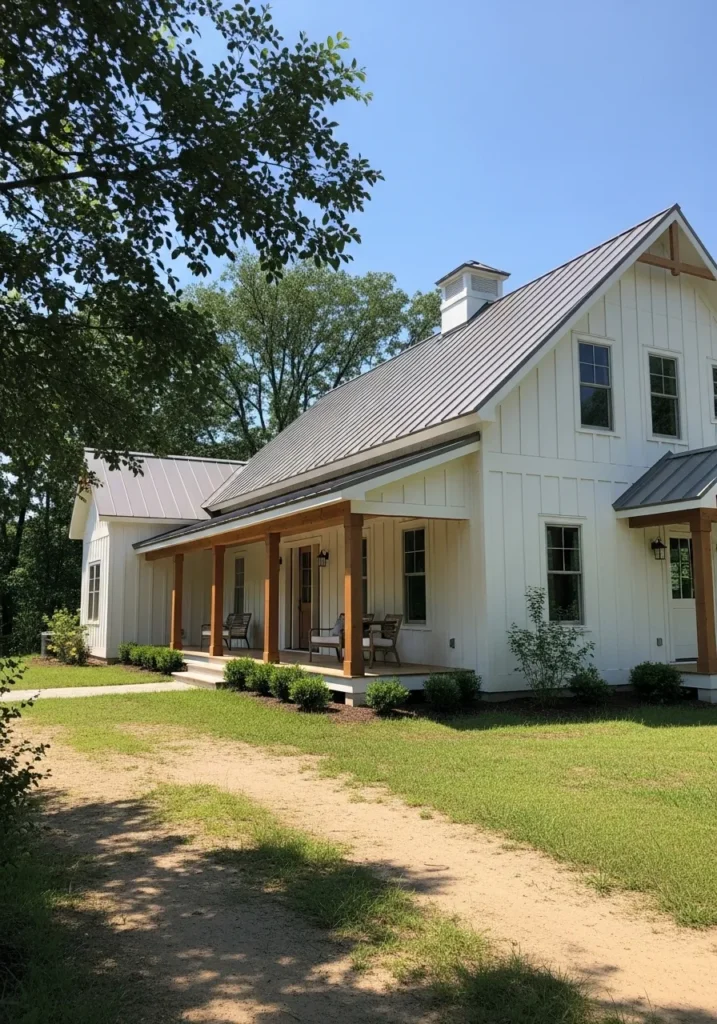
This looks like a clean, slightly warm white, and it feels closest to Benjamin Moore Chantilly Lace. It’s brighter than a creamy white but not icy, so it still works well on a farmhouse exterior. You can see how it pairs with the natural wood porch posts, which keeps it from feeling too sharp.
The undertone stays fairly neutral with just a hint of warmth, which helps it hold up in full daylight without turning harsh. It works best when you mix in wood or darker roof tones so the color has something to balance against. Too many bright whites around it can make it feel a bit flat.
Deep Forest Green Exterior
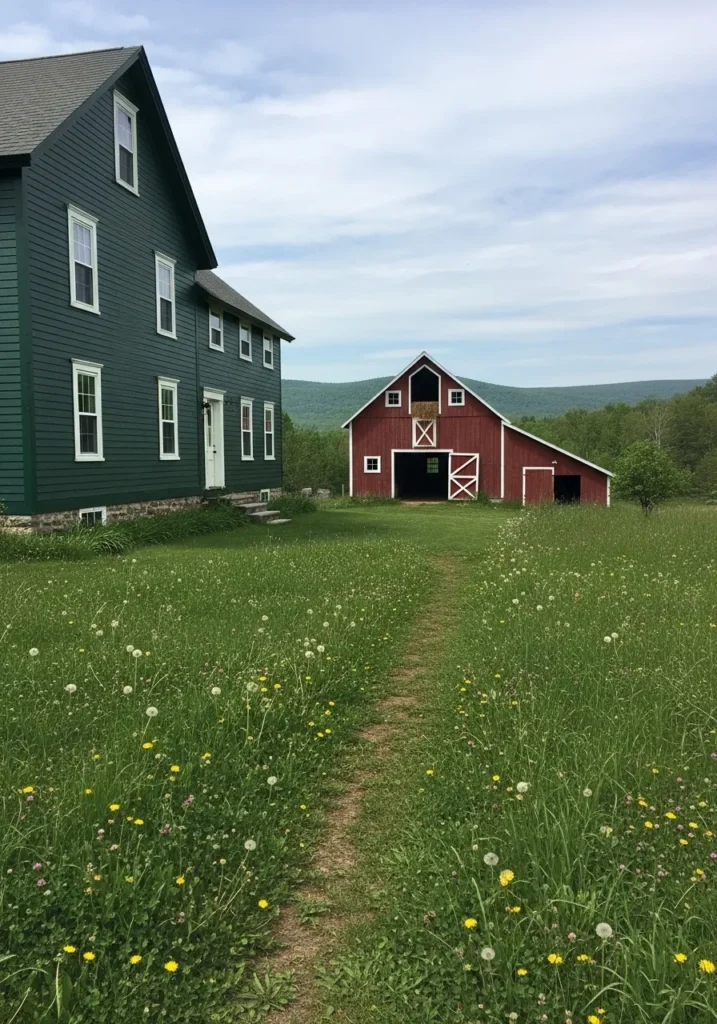
This reads like a deep forest green, and it feels closest to Benjamin Moore Essex Green. It’s a rich, grounded color that leans dark without turning black, which works well on a full farmhouse exterior. You can see how it contrasts with the white trim and even holds its own next to that classic red barn in the distance.
The undertone leans cool with a slightly earthy base, which helps it blend into natural surroundings instead of standing out too much. It tends to look best when paired with simple white trim and natural stone or wood nearby. I’d keep the accents clean so the color doesn’t start to feel too heavy.
Soft Creamy White Exterior
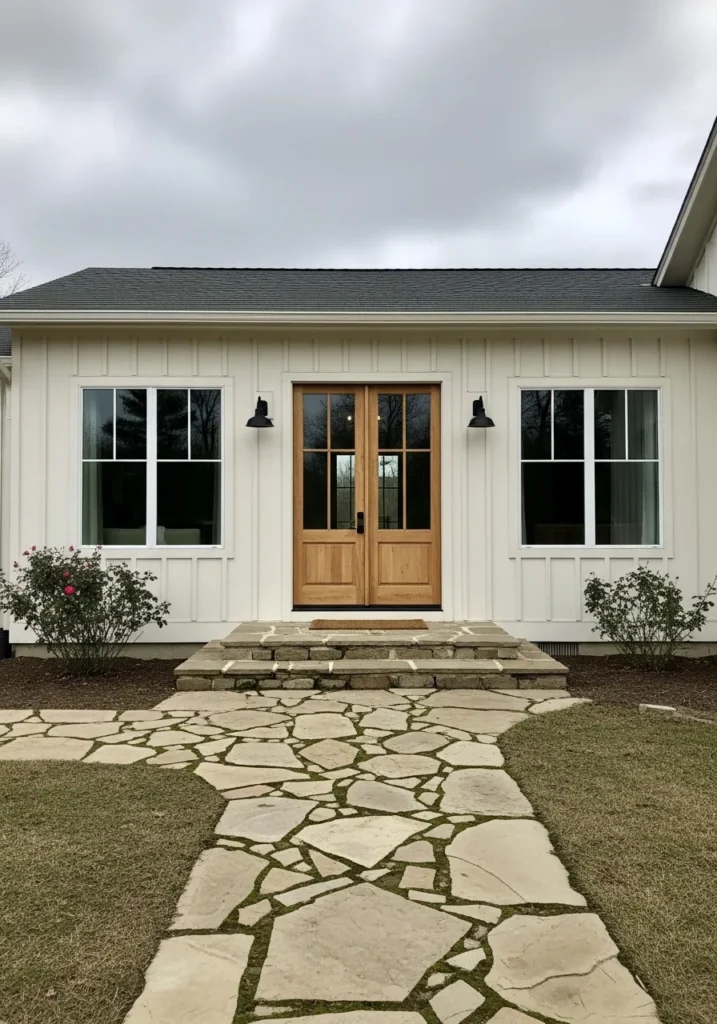
This reads like a soft creamy white, and it feels closest to Benjamin Moore White Dove. It’s not a bright white. It has a gentle warmth that shows up nicely across the siding, especially next to the natural wood front door and simple black lighting.
The undertone leans warm without going yellow, which helps it stay easy to live with on a full exterior. It works well with stone paths, wood accents, and darker fixtures. I’d avoid pairing it with very cool whites since that can make it feel a bit off.
Classic Warm White Exterior
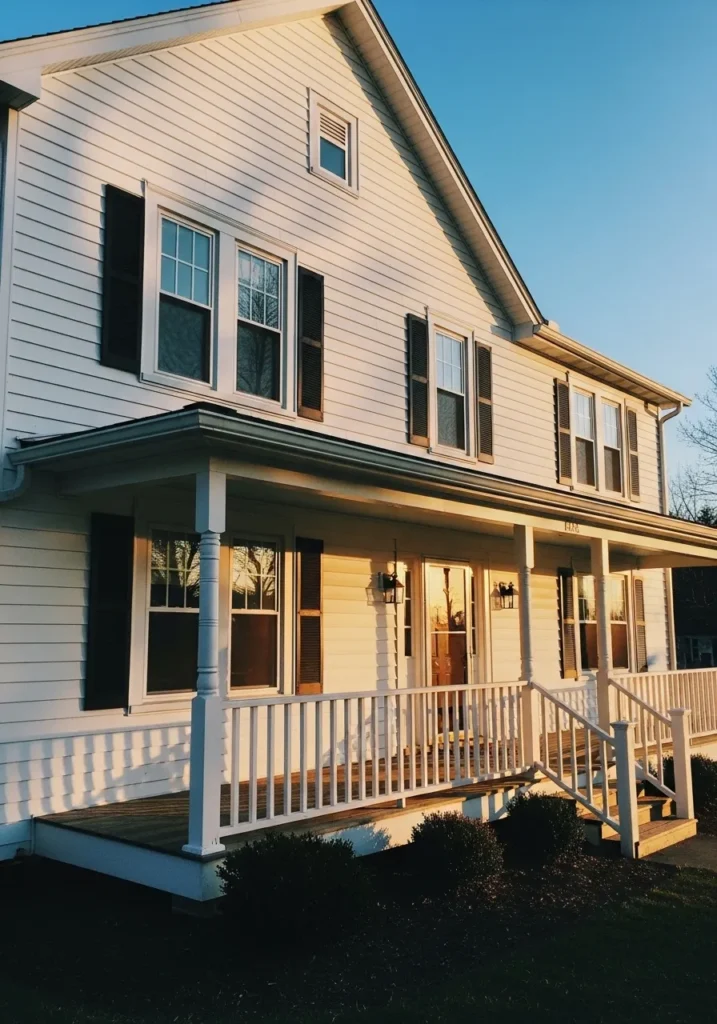
This reads like a classic warm white, and it feels closest to Benjamin Moore Navajo White. It has more warmth than a crisp white, which shows up clearly across the siding, especially next to the darker shutters and wood front door. It gives that familiar farmhouse look without feeling too bright.
The undertone leans creamy and a bit golden, which helps it look comfortable in both sun and shade. It works well with darker accents like black or deep brown, and it pairs nicely with wood details. I’d avoid pairing it with cooler whites since that can make the color feel slightly yellow.
Muted Green Gray Exterior
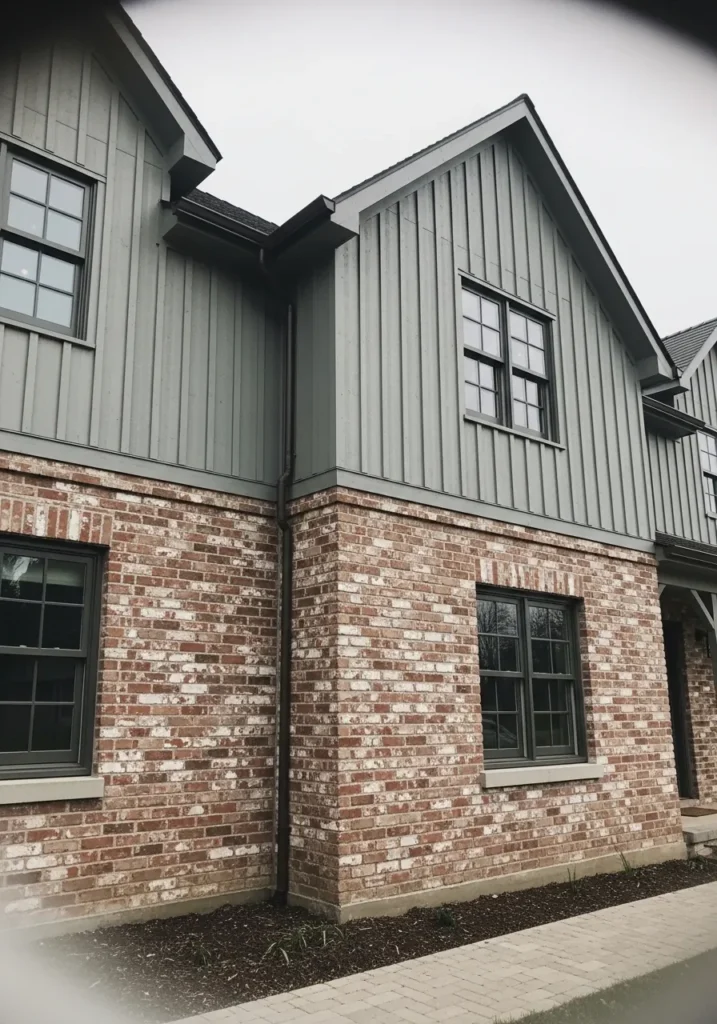
This reads like a muted green gray, and it feels closest to Benjamin Moore October Mist. It has that soft, dusty look that sits somewhere between sage and gray, which makes it easy to use on a full exterior. You can see how it works against the brick, letting both materials stand out without competing.
The undertone leans slightly cool with a natural, earthy feel. It tends to shift depending on light, sometimes reading more gray than green. I’d pair it with darker window trim and textured materials like brick or stone so the color doesn’t feel too flat.
Earthy Sage Green Exterior
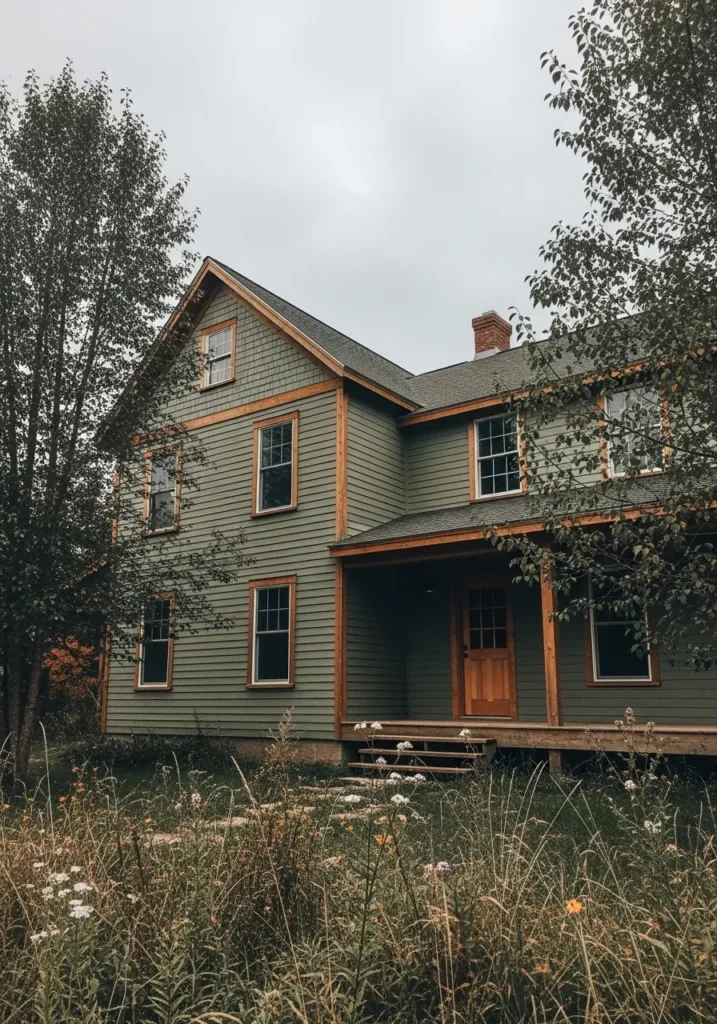
This reads like an earthy sage green, and it feels closest to Benjamin Moore Saybrook Sage. It’s a muted green with a bit of gray mixed in, which keeps it from looking too fresh or bright. You can see how it works alongside the natural wood trim, giving the whole exterior a more relaxed, lived-in feel.
The undertone leans warm and slightly earthy, which helps it blend into natural surroundings without standing out too much. It tends to shift depending on light, sometimes looking more green, sometimes more gray. I’d keep the trim and accents simple so the color stays easy to work with.
Pale Warm Gray Exterior
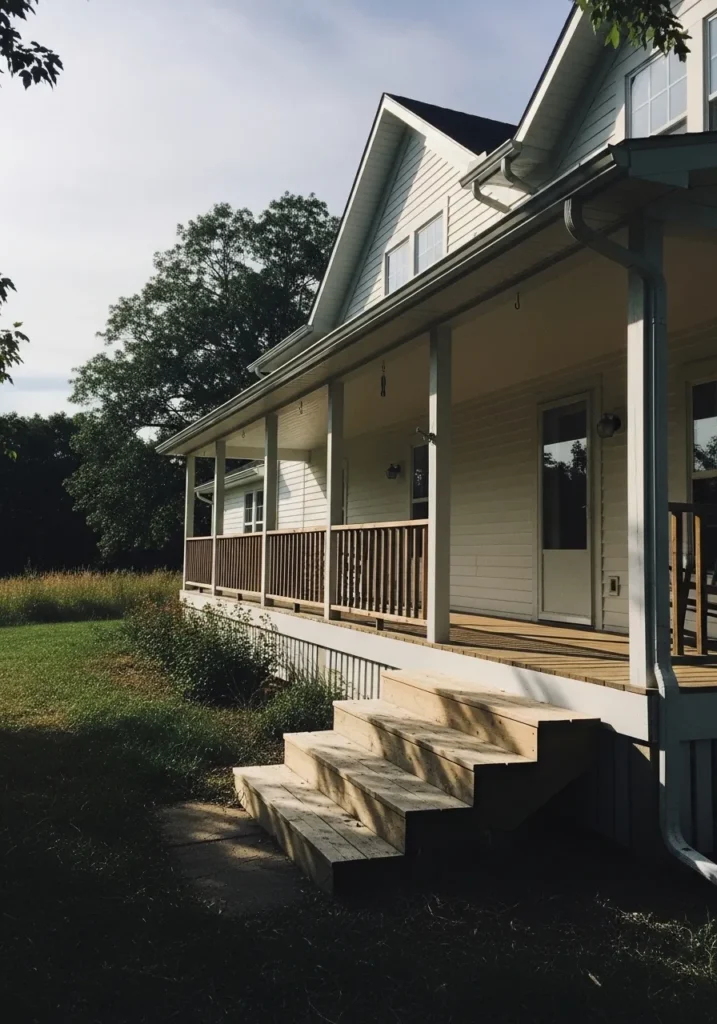
This reads like a pale warm gray, and it feels closest to Benjamin Moore Classic Gray. It sits right between white and beige, with just enough gray to keep it from looking creamy. You can see how it works along the siding next to the natural wood porch, which helps the color feel relaxed and not too clean.
The undertone leans warm and slightly soft, so it doesn’t turn cold or flat. It works well on farmhouse exteriors where you want something light but not stark. I’d keep the trim simple and let wood accents stay natural so the color holds onto that easy, lived-in look.


