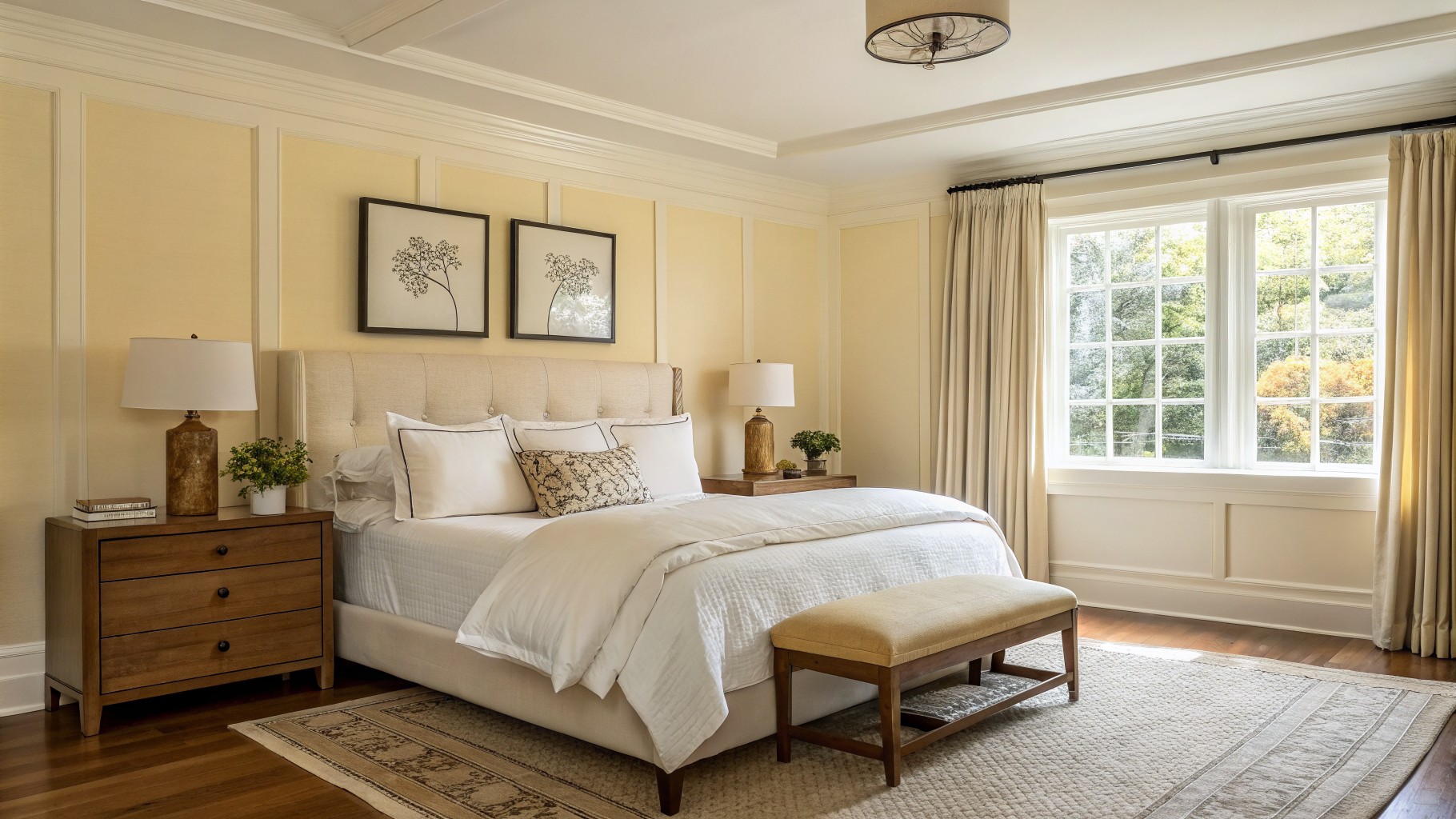
I’ve learned that bedroom neutrals rarely stay exactly as they appear on a small swatch once they cover four walls.
Light shifts throughout the day and often pulls out undertones that clash with trim or wood furniture.
A small test patch on the wall helps more than any online photo.
I usually compare the color against the actual bedding and flooring at different times to see if it stays calm or starts to feel flat.
Shades that hold steady without turning pink or green tend to feel more reliable in the long run.
Soft Warm Cream Walls
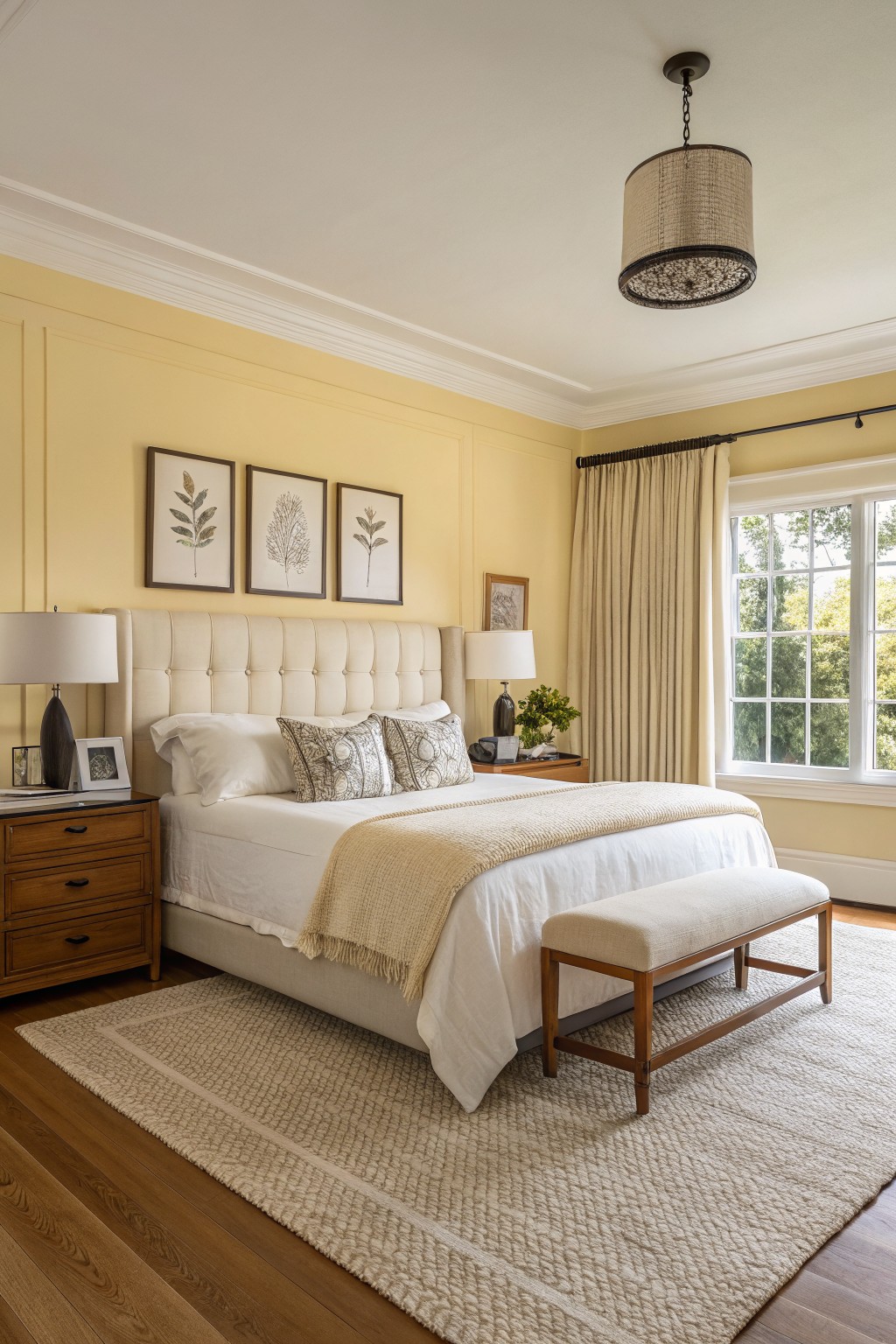
This bedroom uses a soft warm cream with gentle yellow undertones on the walls. The color feels light and steady without turning too pale or stark next to wood tones.
It reads best in rooms with steady daylight and works well with natural wood furniture or simple white textiles. Colors in this range can shift slightly warmer under different bulbs, so testing a sample on the wall helps avoid surprises.
Soft Blue Gray Walls

A soft blue gray works well in bedrooms because it stays neutral without feeling flat. This color has a cool undertone that reads calm next to white trim and light wood floors. It gives the room a quiet, steady feel that still leaves room for warmer textiles and natural materials.
It pairs easily with black metal accents or linen bedding and holds up in both morning and afternoon light. Watch the depth though, since too much blue can start to feel chilly if the room gets little sun. Sherwin Williams Silver Strand, Benjamin Moore Gray Owl, Behr Silver Drop, and Farrow & Ball Light Blue all sit close to this shade.
Soft blush beige walls

This bedroom uses a soft warm beige with gentle pink undertones. The color feels quiet and slightly rosy without turning fully pink, which makes it easy to live with in a bedroom.
It has a light dusty quality that keeps the space calm and works best with white trim and natural wood tones. In cooler light it can lean a little more neutral, so testing a sample on the wall is worth doing before committing.
Warm Beige Bedroom Walls
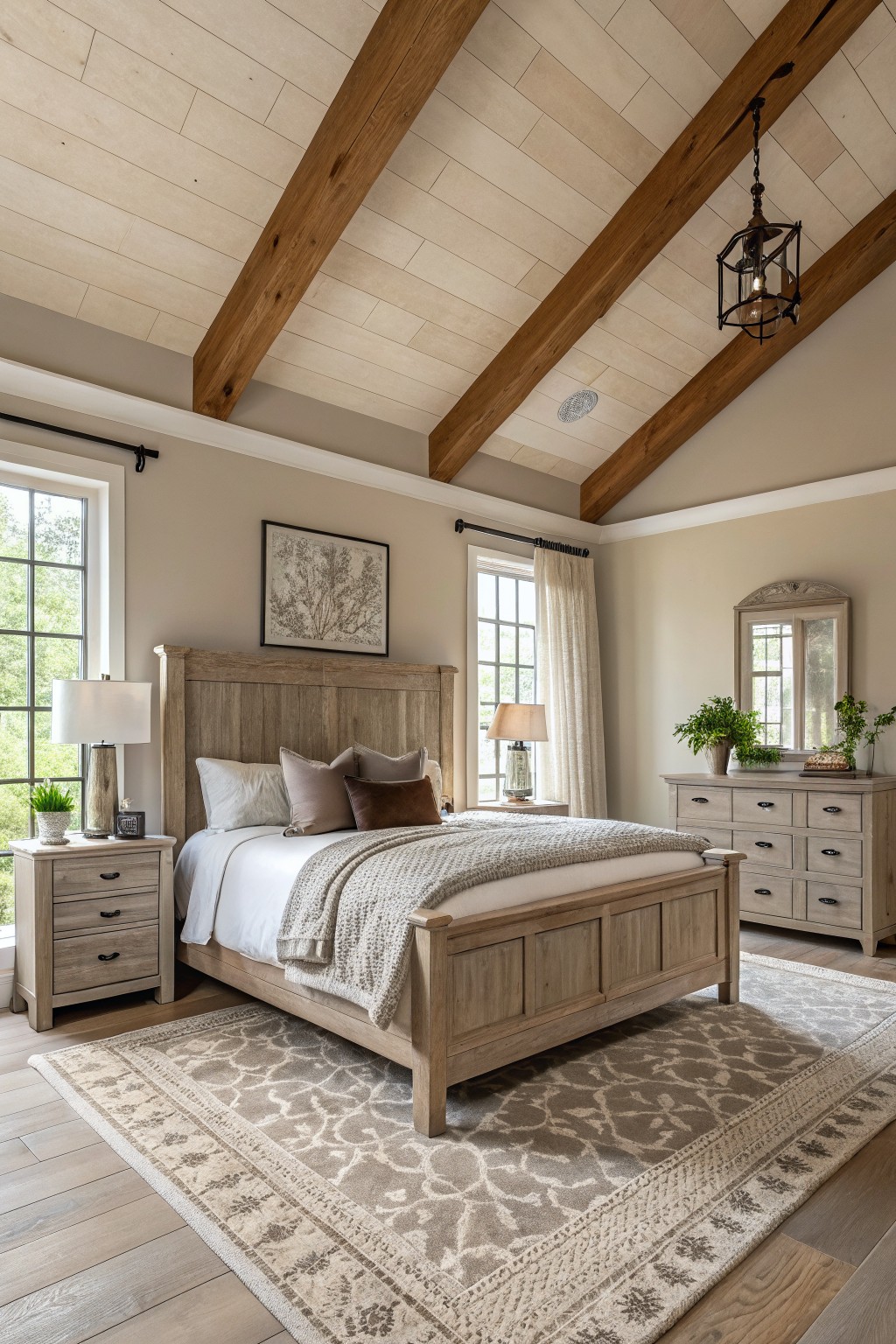
This bedroom has a soft warm beige on the walls. It sits right in the middle of the neutral range and feels easy to live with because it never goes too cool or too yellow.
The color has a light tan undertone that helps it blend with wood tones. It looks good next to both light and medium wood floors and trim. Try Sherwin Williams Accessible Beige, Benjamin Moore Edgecomb Gray, or Behr Almond Wisp if you want something close.
Creamy White Bedroom Walls
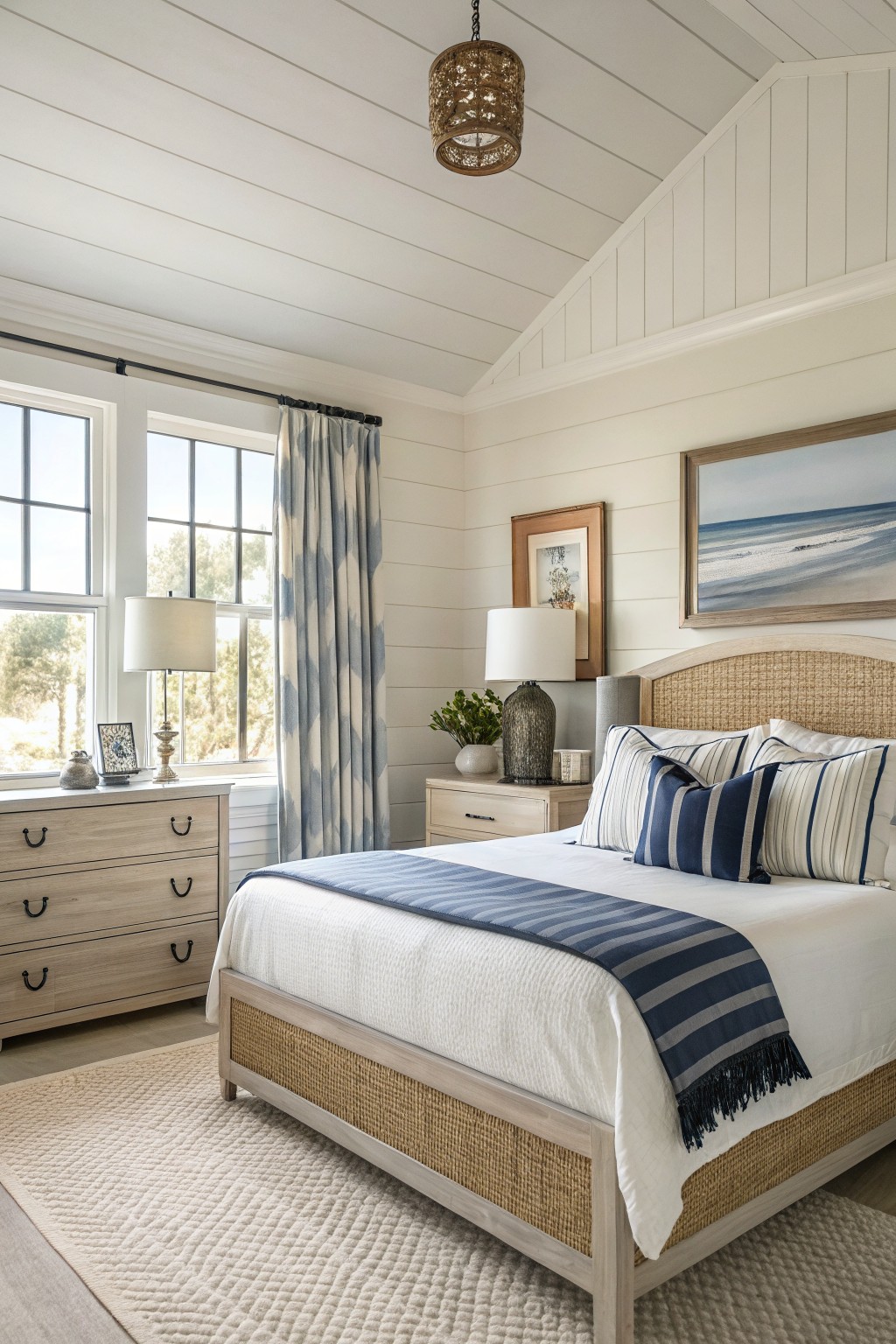
This bedroom shows a soft cream on the walls that sits between white and beige. It has a gentle warmth that keeps the space feeling calm and open without looking stark or cold.
The color works especially well with light wood furniture and white trim. It can look a little brighter in strong daylight, so test it on a large patch first if your room gets lots of sun. Good matches often include Sherwin Williams Alabaster, Benjamin Moore Cloud White, or Behr Swiss Coffee.
Light Neutral Beige Walls
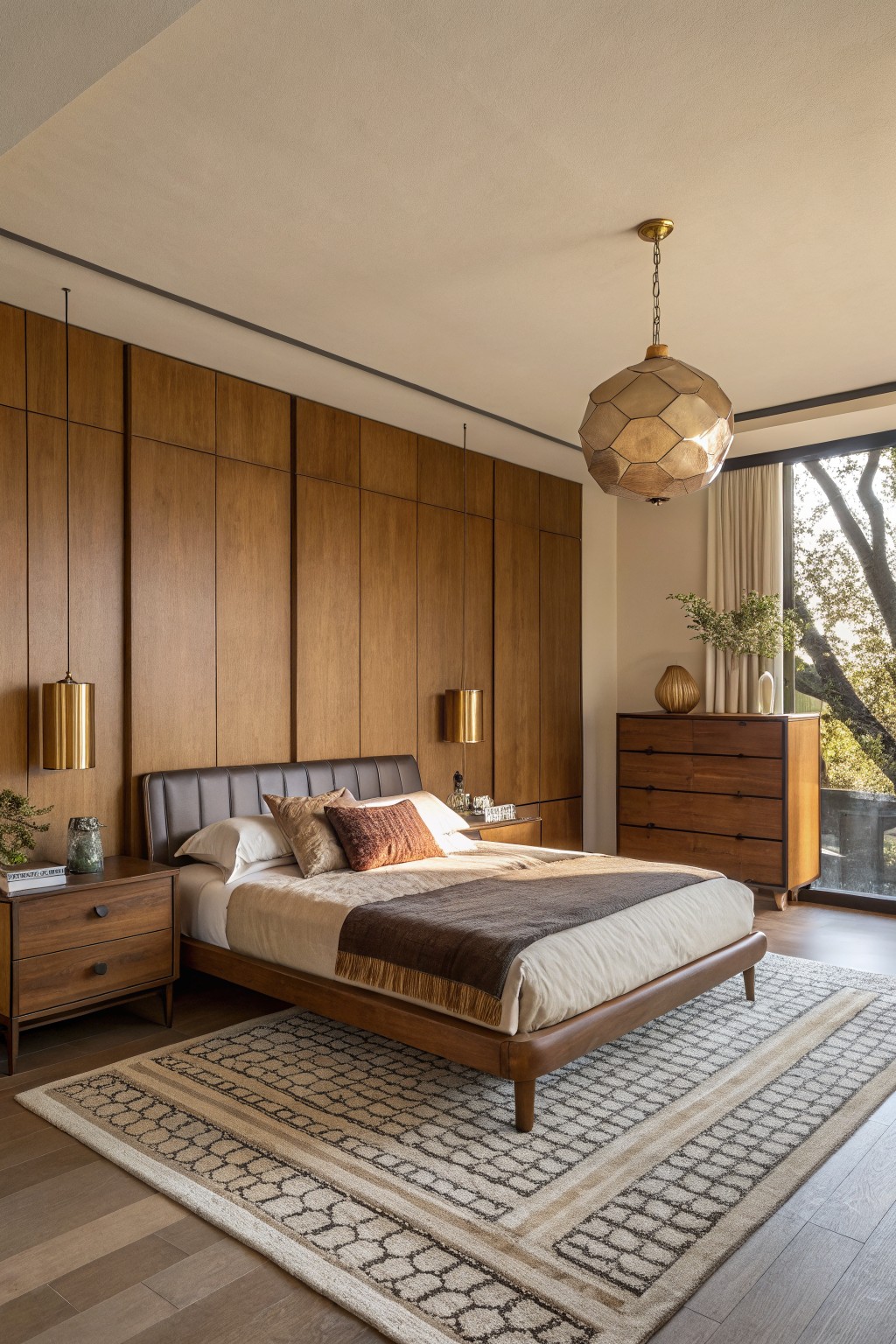
This bedroom uses a soft warm beige on the upper walls. It is a light neutral that stays calm next to the wood tones and gives the room a quiet, settled look without feeling stark.
The color has a gentle warmth that reads well in daylight and works best with natural wood furniture and simple textiles. Something close would be Sherwin Williams Accessible Beige, Benjamin Moore Edgecomb Gray, or Behr Creamy Mushroom.
Warm Cream Bedroom Walls
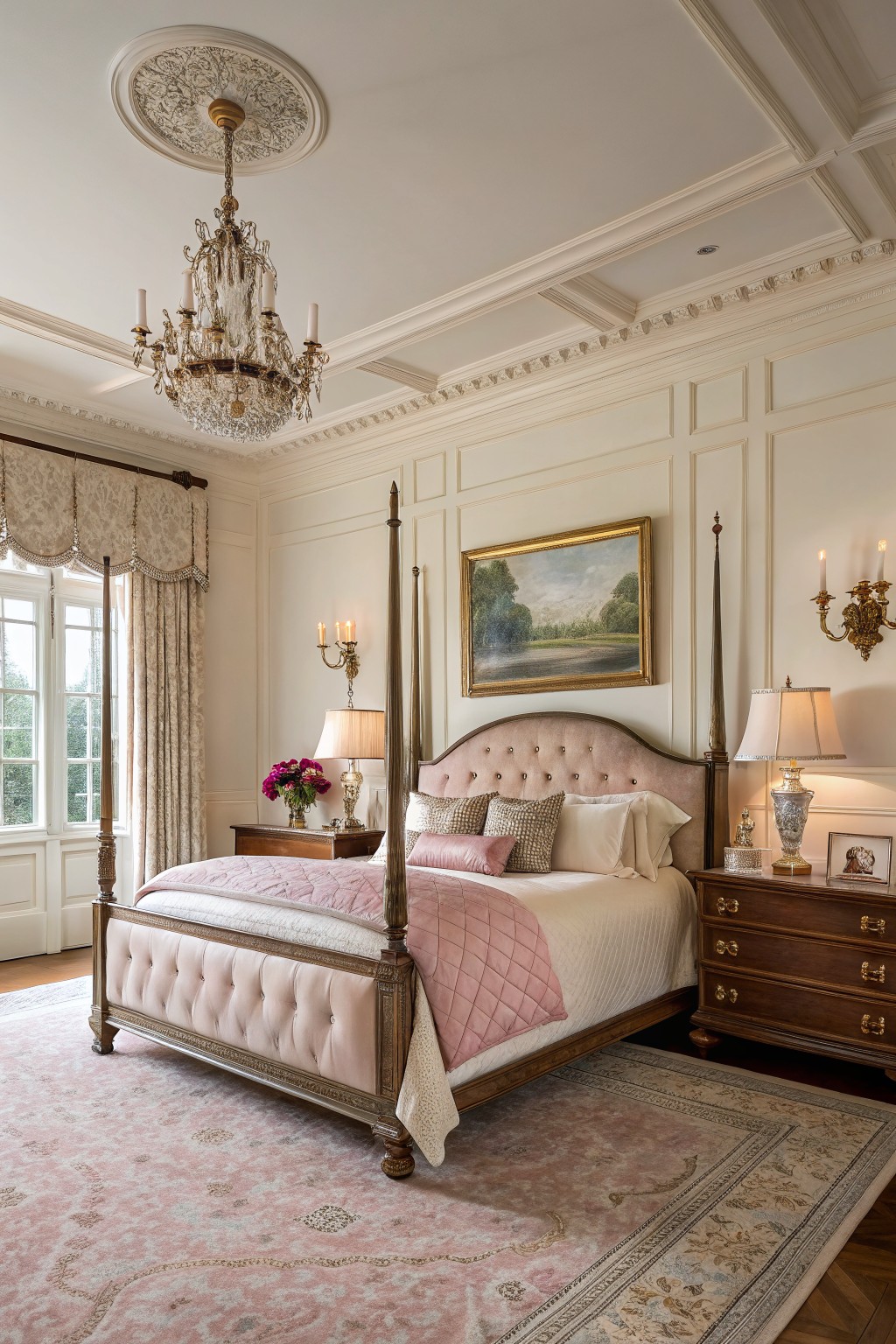
This bedroom uses a warm cream on the walls. It is a soft neutral that feels light without going stark, and it works well in traditional rooms with wood trim and molding.
The color has a gentle yellow undertone that keeps the space from feeling cool or flat. It pairs nicely with darker wood furniture and layered textiles, and it holds up in both natural daylight and warmer lamplight. Good matches include Benjamin Moore Cloud White, Sherwin Williams Alabaster, Behr Swiss Coffee, and Farrow & Ball Pointing.
Soft Gray Walls

This bedroom shows a soft gray on the walls that feels quiet and steady. It sits in the cool neutral range and keeps the space from feeling too heavy even with the dark floor and black bed frame.
The tone has a slight blue-gray cast that holds up well with warm wood and simple black accents. It works best in rooms with decent natural light and pairs easily with linen or cotton bedding in similar shades.
Soft Taupe Bedroom Walls
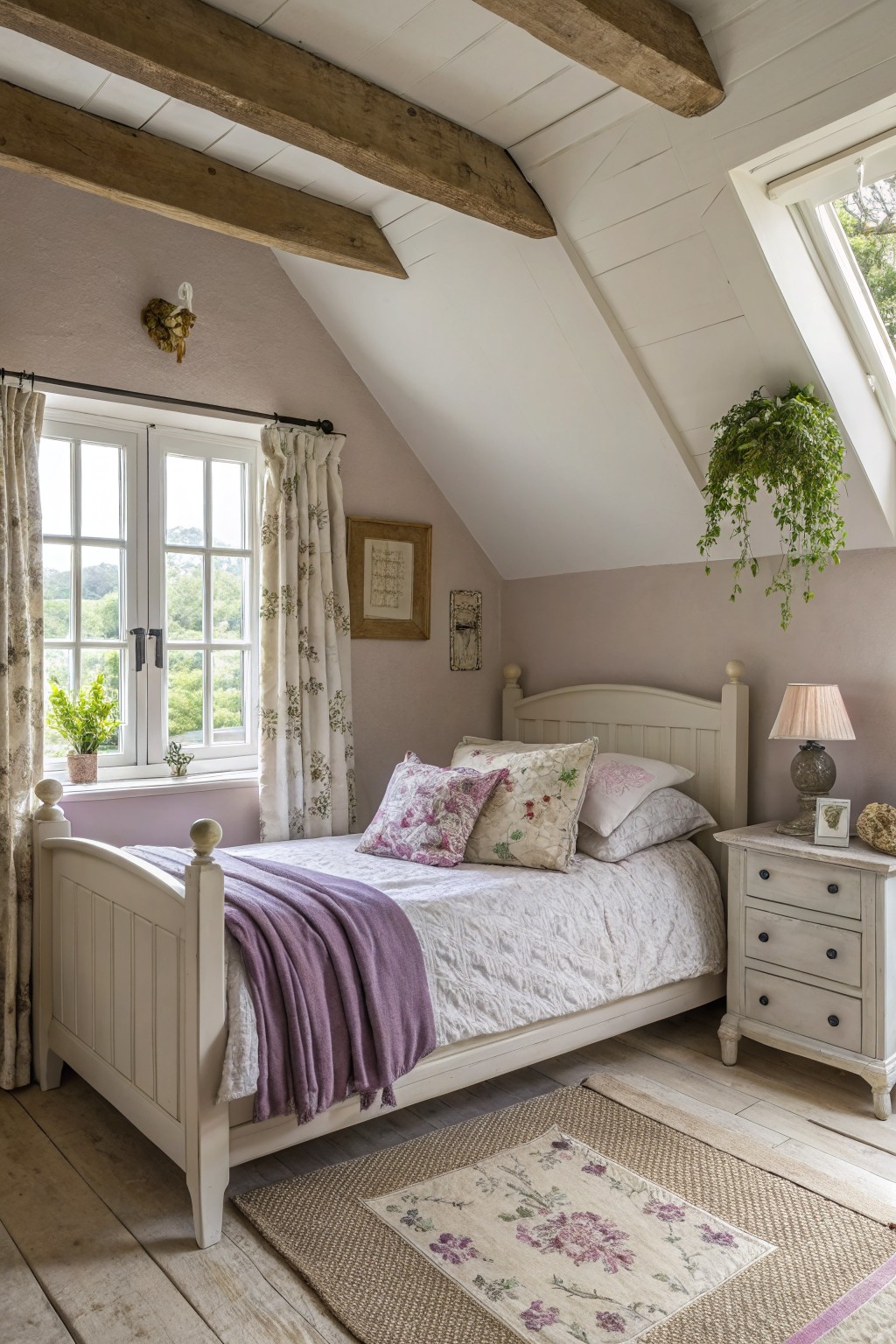
This bedroom shows a soft taupe on the walls that sits right between beige and gray. It feels warm without turning yellow and gives the room a quiet, settled look that works with the white trim and wood beams overhead.
The color has a light pinkish undertone that stays subtle most of the time. It looks good with natural wood floors and simple bedding in other neutrals. Try it in rooms with decent daylight since it can read cooler in low light.
Soft Sage Green Walls
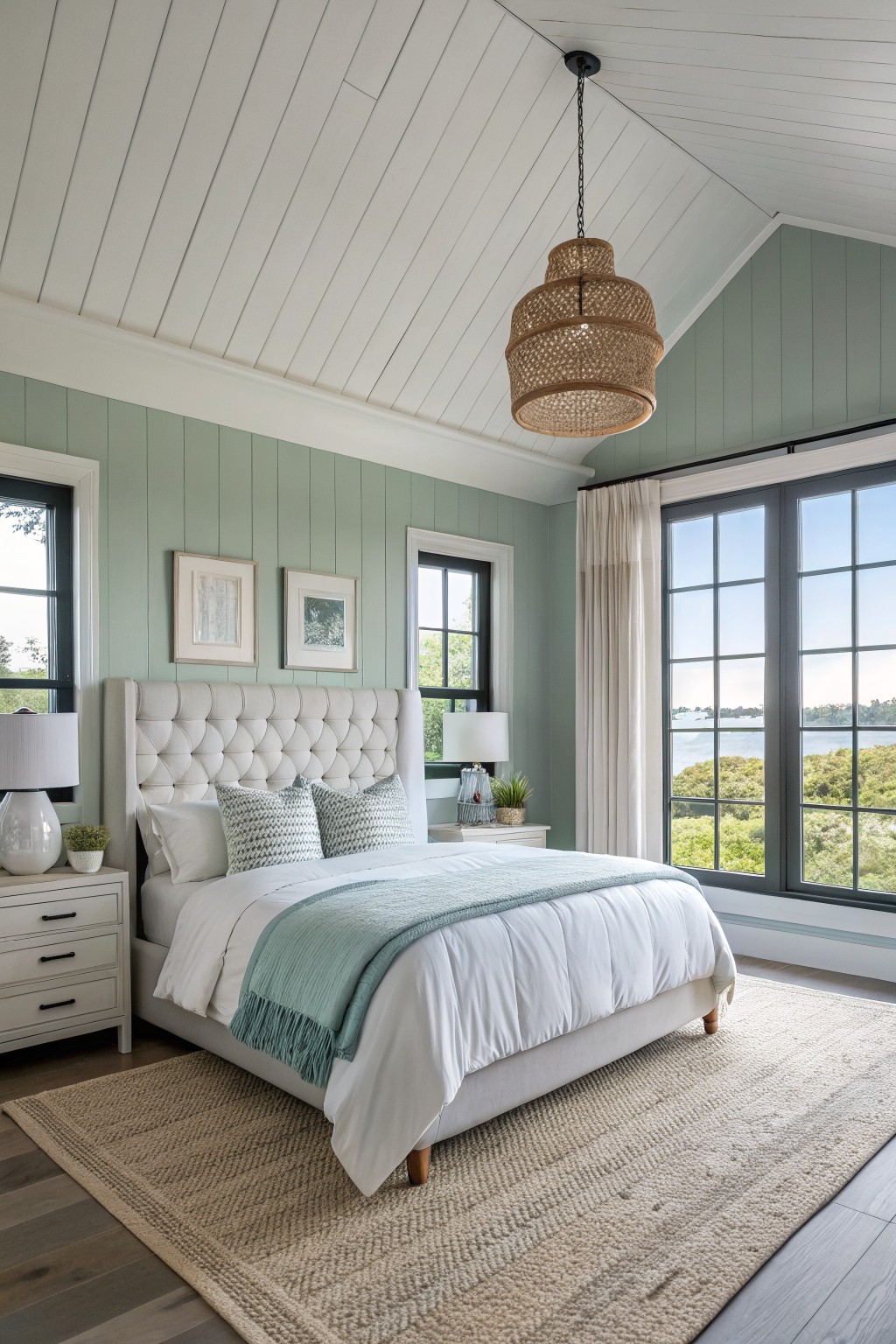
This bedroom uses a soft sage green on the walls that sits right between gray and green. It feels calm without going flat and works as a gentle neutral that still adds a bit of life to the room. The color has a muted tone that keeps things airy while giving the space a little depth.
It pairs easily with white trim and warm wood floors. The green undertone shows up more in natural light, so it can lean cooler in shaded spots. Try it in bedrooms that get decent daylight and keep the rest of the palette light and simple.
Golden Beige Bedroom Walls
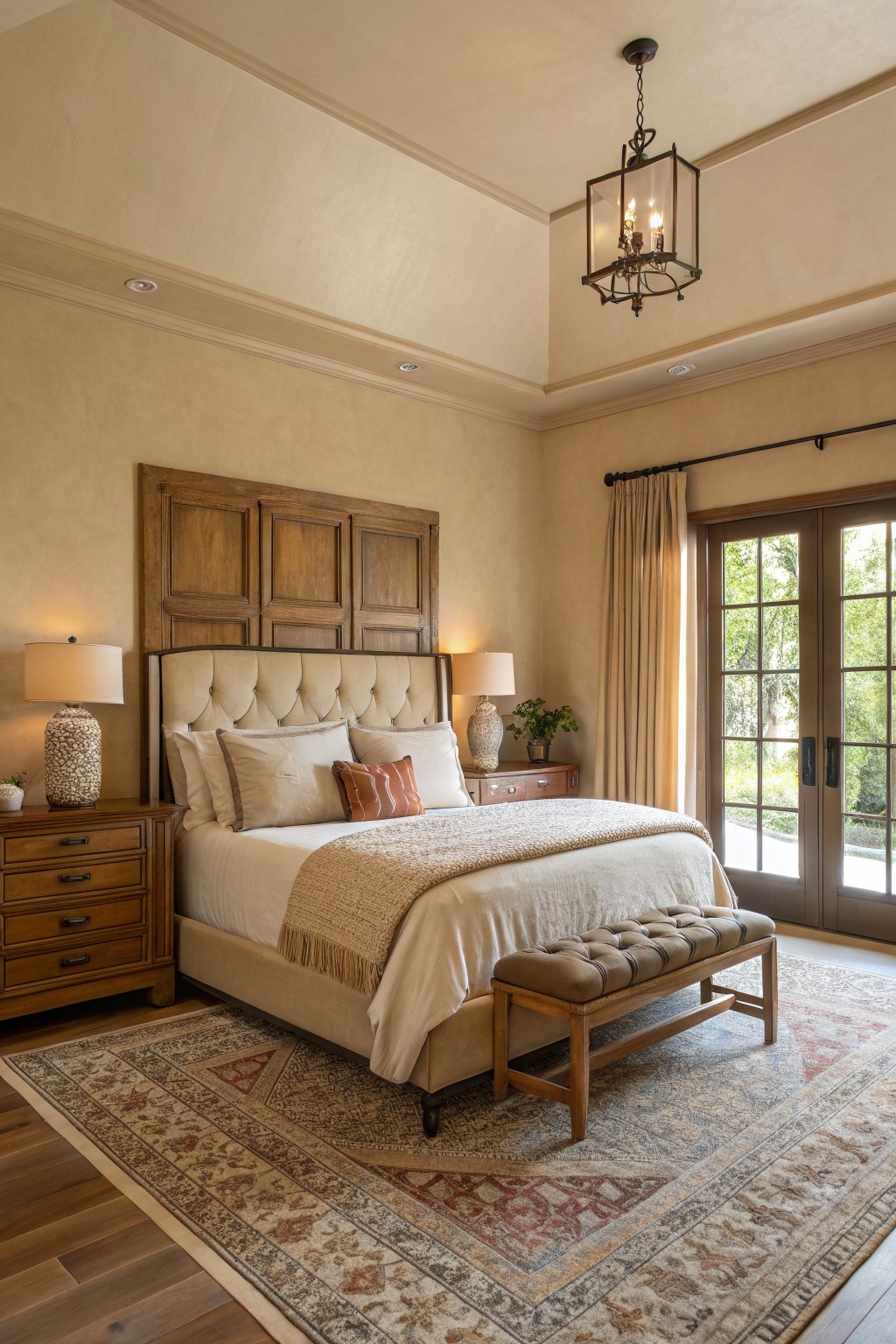
This warm beige sits right in the middle of the neutral range. It has enough depth to feel cozy but stays light enough to keep the room open. The color works well with wood furniture and layered textiles without fighting them. It reads closest to Sherwin Williams Accessible Beige, Benjamin Moore Edgecomb Gray, Behr Creamy Mushroom, or Farrow & Ball Elephant’s Breath.
The undertone leans slightly golden rather than gray, which helps it stay warm next to oak floors and darker wood pieces. It suits bedrooms that get decent daylight but can still feel balanced in softer light. Pair it with cream or off-white trim and avoid anything too stark.
Cream and Beige Blend Walls
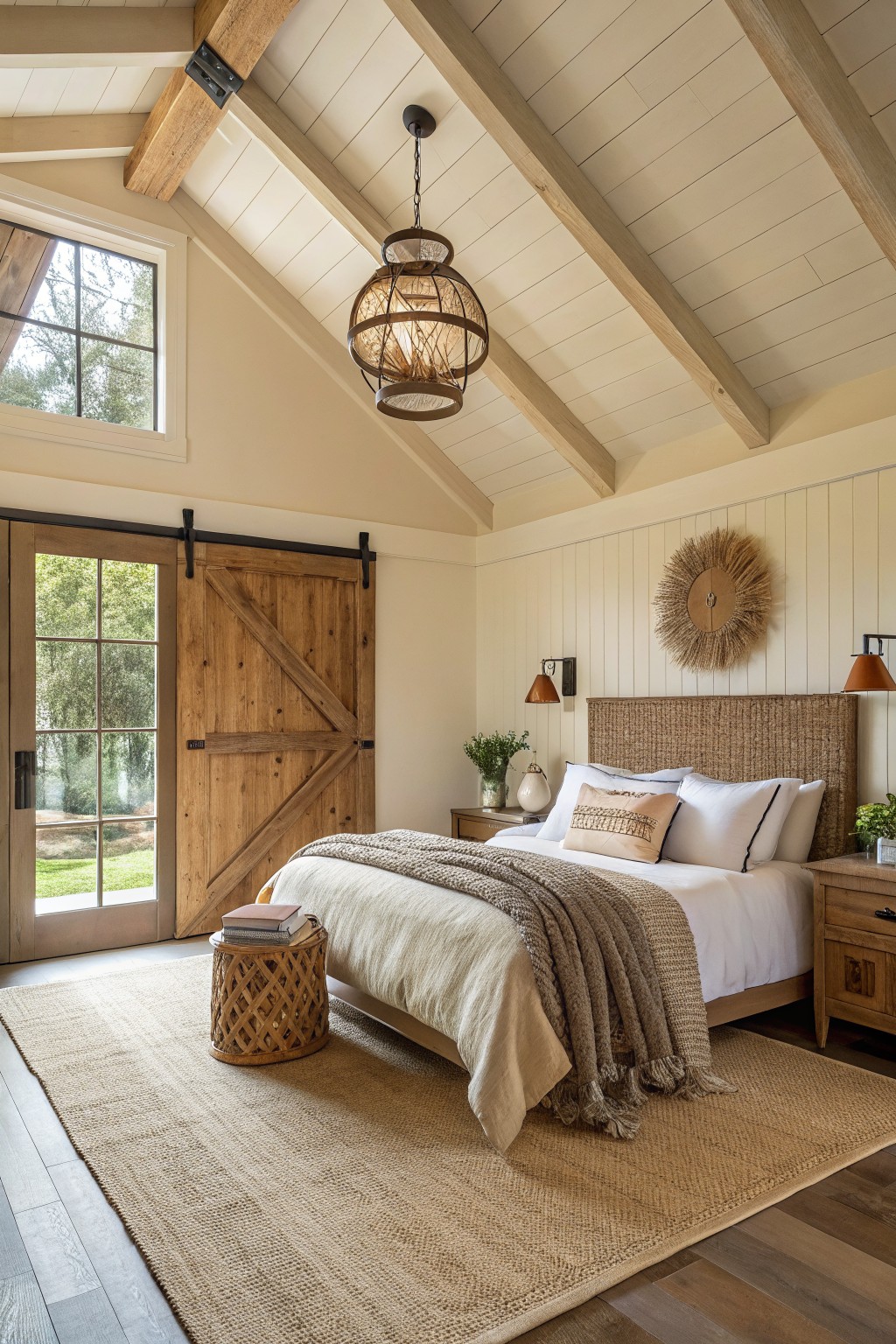
This warm cream paint color gives the walls a soft, light look that feels calm without going flat. It sits right in the middle of cream and beige, picking up just enough warmth from the wood beams and flooring to feel inviting rather than stark.
The undertone stays gentle and slightly yellow, so it works best in rooms with good natural light and pairs easily with natural wood, linen, and soft textiles. It can start to feel a bit dull if the room gets very little daylight or if everything else in the space is also beige.
Soft Taupe Gray Walls

This bedroom shows a soft gray taupe on the walls. The color sits between gray and taupe with a bit of warmth that keeps the space feeling calm rather than stark.
It has a muted, slightly earthy undertone that works well with wood floors and brass details. Try it in rooms with similar warm lighting and avoid pairing it with anything too cool or bright white.
Classic Cream Bedroom Walls
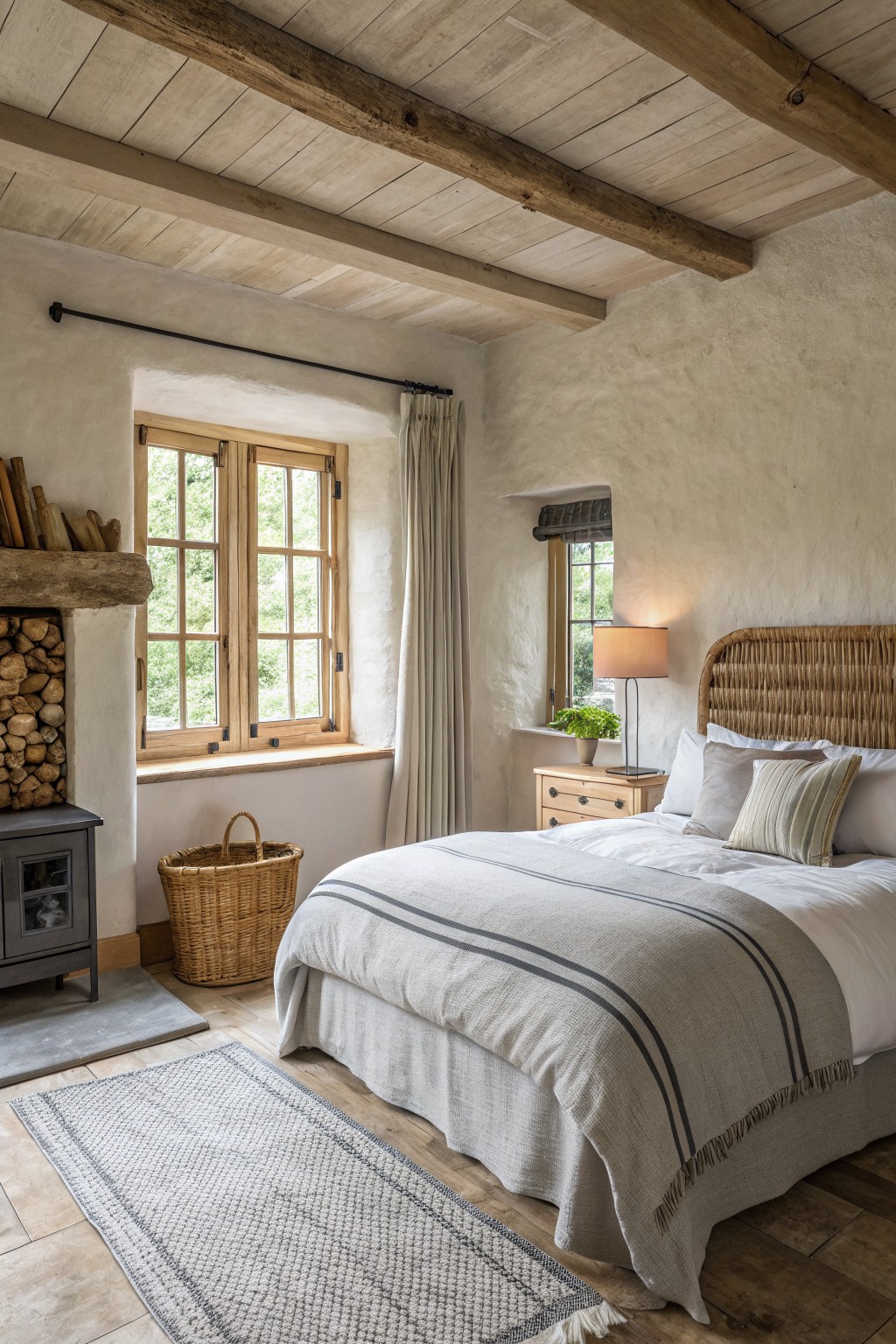
This bedroom shows a soft warm cream on the walls that keeps things light without going stark. It has a gentle beige undertone that feels easy with wood and stone, which is why it works well in older homes or spaces that already have texture and natural materials.
The color reads best in rooms with decent daylight and pairs simply with white trim or unfinished wood. It can look a little flat if the lighting stays too dim all day, so most people use it where there is at least some natural light coming in.
Cool Gray Bedroom Walls

This bedroom uses a soft gray on the walls that leans cool and slightly blue. It keeps the space feeling calm and balanced without turning flat or cold.
The color sits nicely against white trim and works well with both light wood floors and darker furniture. It suits bedrooms that get decent daylight and pairs best with simple neutrals rather than anything too busy.
Beige Taupe Bedroom Walls
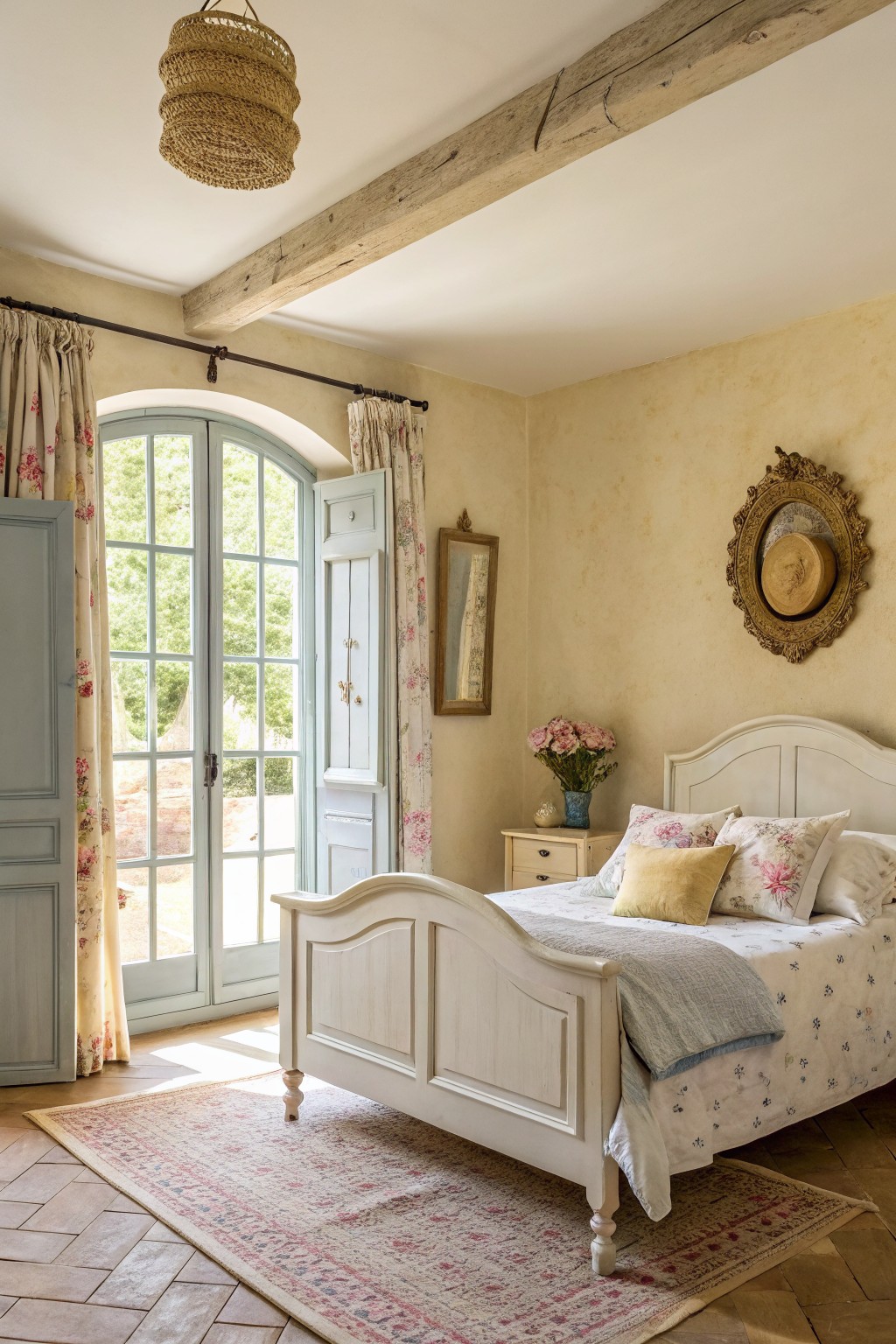
This bedroom uses a soft warm beige on the walls that sits right between cream and a light taupe. It feels calm and steady without looking flat or too yellow. Colors like this often read close to Sherwin Williams Accessible Beige or Benjamin Moore Manchester Tan, and sometimes Farrow & Ball Elephant’s Breath depending on the light.
The beige works well here because it keeps the wood beam and tile floor looking natural instead of fighting with them. It suits older homes or rooms with mixed textures. Just check the undertone in your own light since it can shift a little cooler in north-facing spaces.
Beige Walls with Green Wainscoting

This bedroom uses a warm beige on the upper walls that feels soft without turning too pale. It has enough depth to sit comfortably next to wood furniture and the green wainscoting below.
The color carries a light yellow undertone that shows up more in daylight. It pairs easily with natural textures and wood tones, but it can look washed out if the room gets little natural light.
Soft Sage Green Bedroom Walls

This soft sage green brings a quiet, natural feel to a bedroom without turning it overly cool or gray. It sits somewhere between green and gray, with enough warmth from the wood floor to keep the room from feeling flat.
It works best with crisp white trim and simple wood tones. In rooms with limited natural light the color can shift a little cooler, so a sample on the wall is worth the extra step.
Peach Beige Bedroom Walls

This wall color is a soft warm beige with a light peach undertone that keeps the room feeling calm and lived in. It sits nicely between cream and taupe without leaning too cool or too pink. Many people like it because it lets wood furniture and layered textiles stand out without competing.
The undertone can shift a bit depending on the light, so it works best in rooms that get steady natural light. It pairs easily with darker wood pieces and cream or white bedding. Try testing a few samples like Benjamin Moore Grant Beige, Sherwin Williams Accessible Beige, or Behr Toasted Almond before committing.
Soft Cream White Bedroom Walls
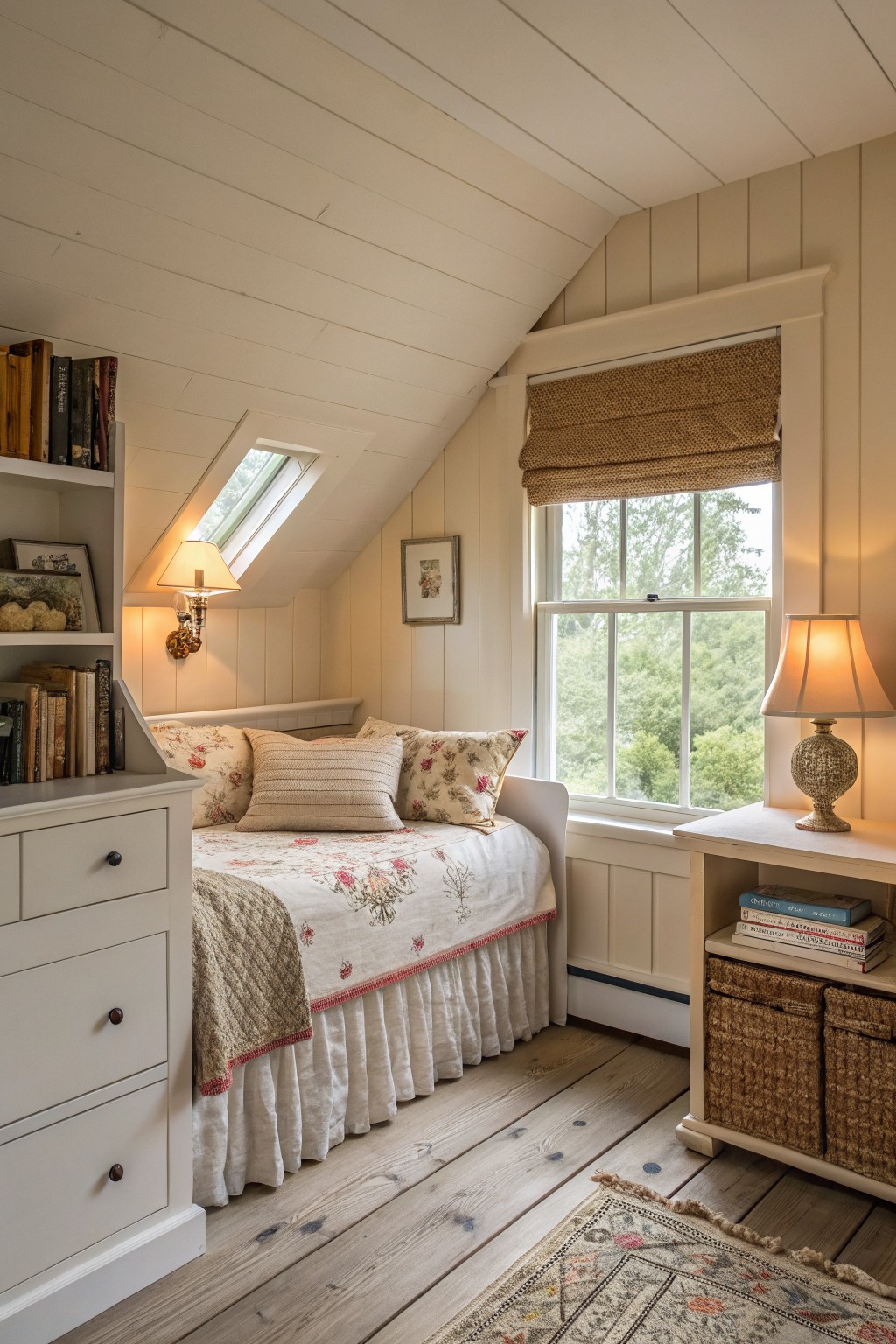
This warm cream color on the walls feels calm and easy in a bedroom. It belongs to the cream family and looks closest to Sherwin Williams Alabaster or Benjamin Moore Cloud White.
The soft warmth helps it sit nicely next to wood floors and white trim. It works best in rooms with decent natural light and stays flexible with most neutral bedding and furniture.
Soft Warm Beige Bedroom Walls
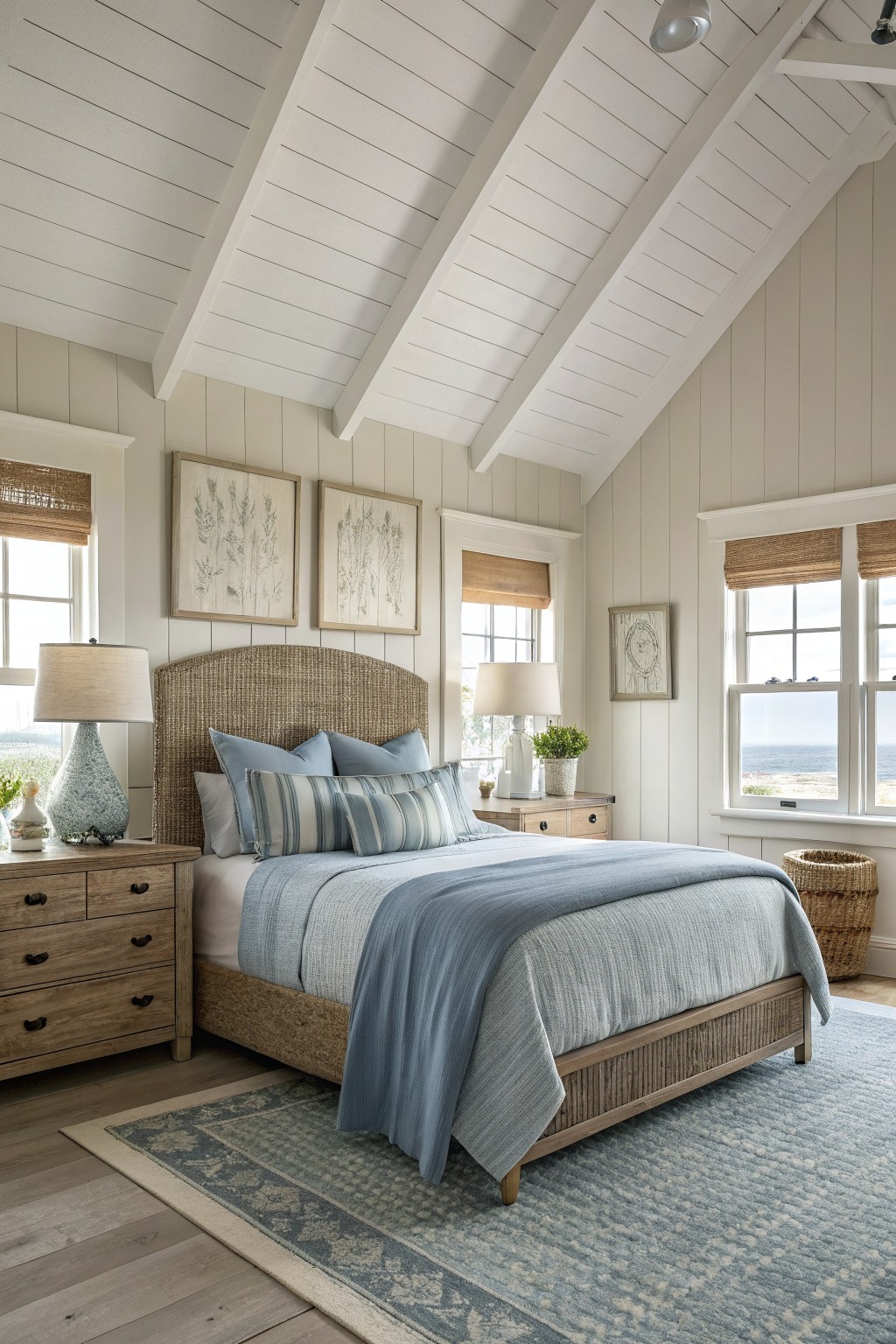
This bedroom uses a soft warm beige that sits between cream and light taupe. It has a gentle depth that feels calm without looking flat, and it works especially well in spaces with wood tones and white trim. Colors like this often read as a light greige, with close matches including Sherwin Williams Accessible Beige, Benjamin Moore Edgecomb Gray, and Behr Canvas Tan.
The warmth in the undertone keeps the room from feeling stark, even when the light changes. It pairs best with natural wood furniture and soft textiles, though it can start to look washed out if the room gets very little daylight.
Warm Taupe Bedroom Walls

This bedroom uses a warm taupe on the walls. It sits right between beige and gray and gives the room a soft, grounded feel without looking flat.
The color has a gentle brown undertone that makes the dark wood trim and paneling look richer. It works best in spaces with both daylight and layered lighting, and it pairs easily with cream bedding, linen curtains, and natural wood furniture. Closest matches would be Sherwin Williams Taupe Tone, Benjamin Moore Manchester Tan, Behr Toasted Almond, or Farrow & Ball Elephant’s Breath.
Taupe Beige Bedroom Walls
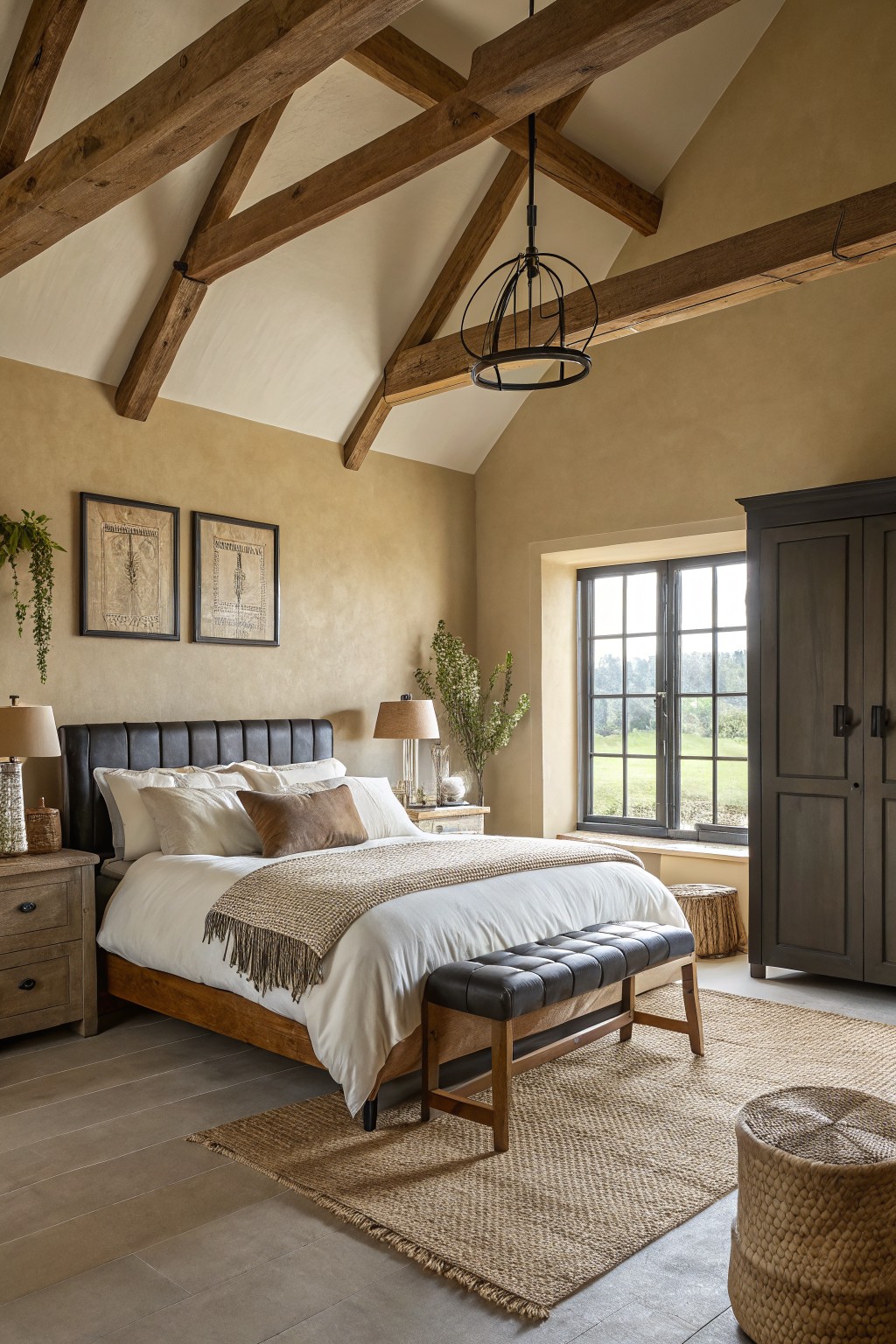
This is a soft warm beige with a light taupe undertone. It gives the walls a quiet, lived-in feel that works well in bedrooms and does not fight with wood or darker furniture.
The color sits nicely next to natural wood beams and black accents without looking too cool or washed out. It pairs best with cream textiles and medium wood tones, though it can look a bit flat in very low light.
Soft White Bedroom Walls

This soft white paint color keeps the room feeling light and open without going stark. It has a clean quality that works well on both flat walls and vertical paneling, especially in spaces with wood floors and built-in shelves. Colors like this tend to read as fresh while still feeling calm enough for a bedroom.
It sits nicely next to warm wood tones and natural textures without fighting them. Benjamin Moore Cloud White, Sherwin Williams Snowbound, and Farrow & Ball All White all have that same soft, slightly warm feel and hold up well in rooms with changing daylight.
Frequently Asked Questions
Q: How do I test a paint color before committing to the whole room? A: Grab a few sample pots and paint large squares on different walls. Check them at morning and evening light to see how the shade shifts. This step saves you from surprises once the furniture goes back in.
Q: What if my current bedding and rugs pull too warm against a cool taupe wall? A: Swap in a throw or pillow in a soft gray to balance the tones without repainting. The contrast keeps the space from feeling flat while still reading neutral overall.
Q: Should I go lighter or darker when my bedroom has only one small window? A: Pick the lightest cream or soft gray from the list so the room does not close in. Darker beige or taupe works better if you add plenty of lamps and a big mirror to bounce light around.