I often notice how a bedroom paint color shifts once the furniture arrives and daylight moves across the walls at different hours.
Undertones become obvious when the shade sits next to white trim or sits across from a simple wood headboard.
Testing in the actual room is the only way to know for sure.
A color that seems neutral on the fan deck can pull warmer or cooler once it covers four walls and meets the flooring.
I have learned to tape up large samples and watch them through morning and evening light before making a final choice.
Crisp White Bedroom Walls
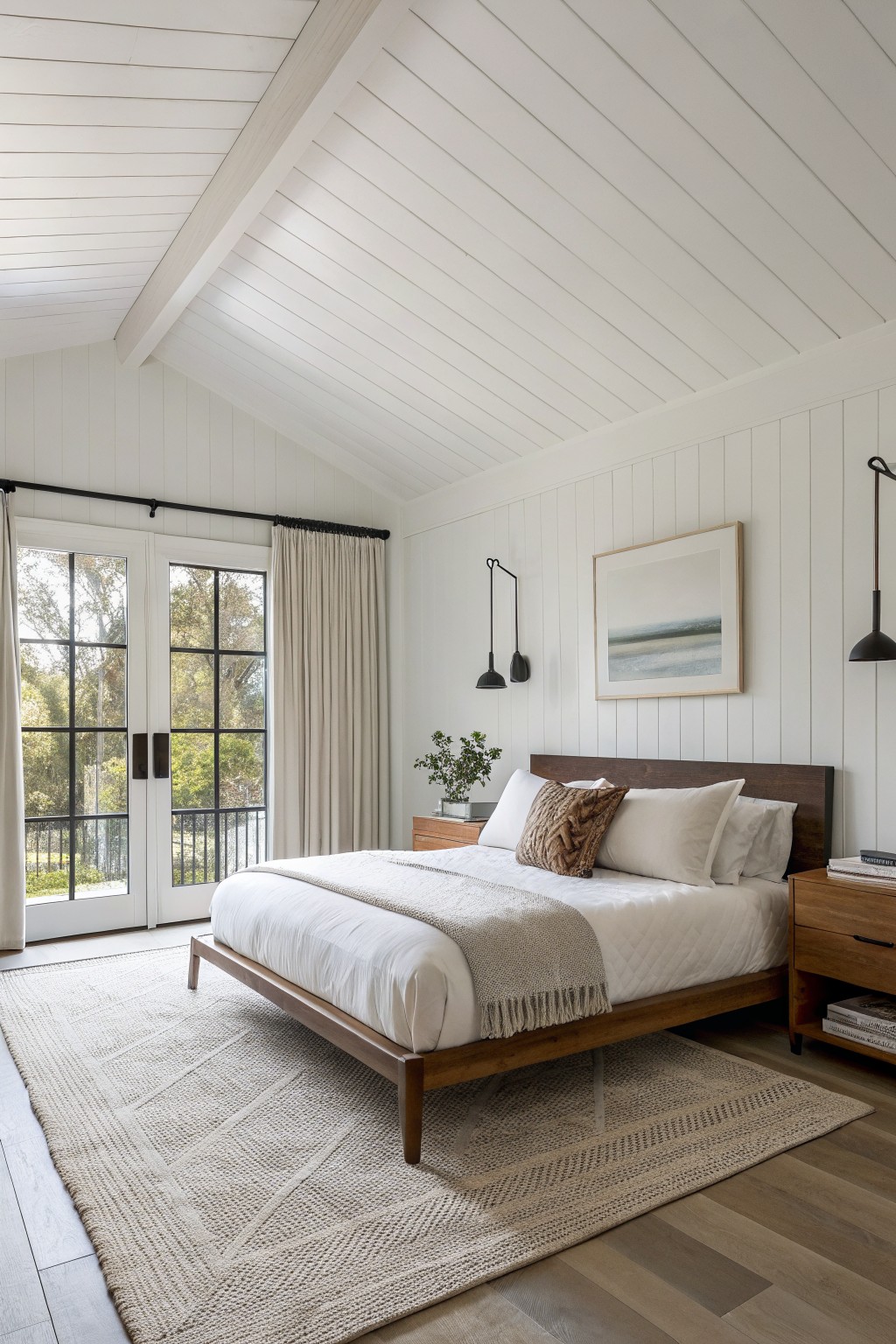
This bedroom uses a bright white on the walls that stays clean and simple. It is the kind of white that feels fresh without looking stark, which works well in modern rooms that keep furniture and decor minimal.
The color has a slight warm lean that pairs nicely with wood tones and natural textures. It suits spaces with good natural light and looks best when kept consistent across walls and ceiling so the room stays feeling open and uncluttered.
Soft Greige Bedroom Walls
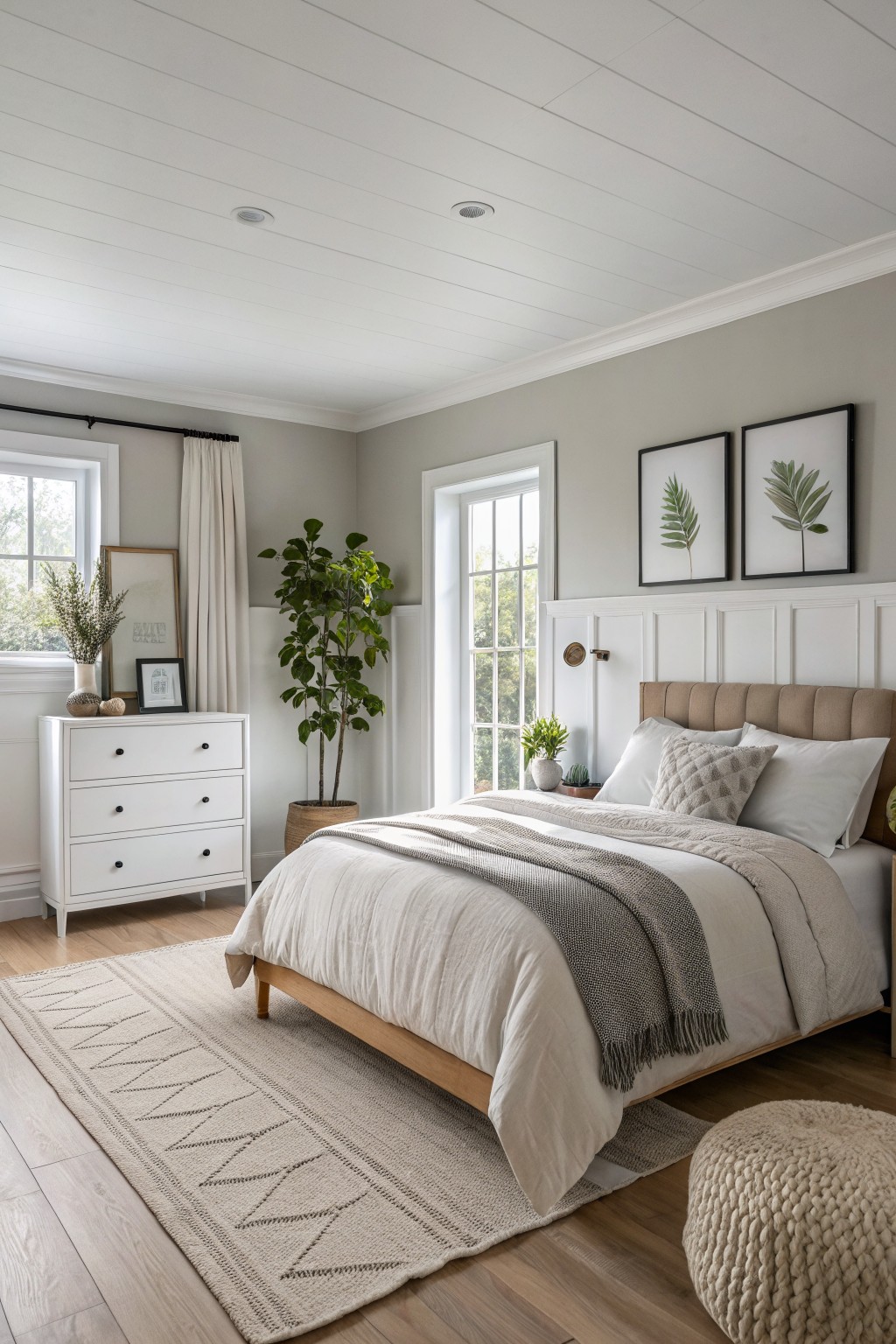
This bedroom uses a soft greige on the walls. It is a warm neutral that sits between gray and beige, giving a calm background that still feels a little cozy rather than stark.
The color has a gentle warmth that keeps the space from feeling cold next to white trim and wood floors. It works well in modern bedrooms because it stays quiet and lets simple furniture and textiles do the talking. A few good matches are Sherwin Williams Agreeable Gray, Benjamin Moore Edgecomb Gray, Behr Silver Satin, and Farrow & Ball Elephant’s Breath.
Soft Purple Gray Walls

This bedroom uses a soft purple gray on the walls. It is a cool neutral that feels calm and a little moody without turning dark.
The color sits somewhere between gray and muted lavender. It works nicely with warm brass fixtures and light wood floors. Try it in rooms that get steady daylight and keep the trim simple so the walls stay the focus.
Muted sage walls
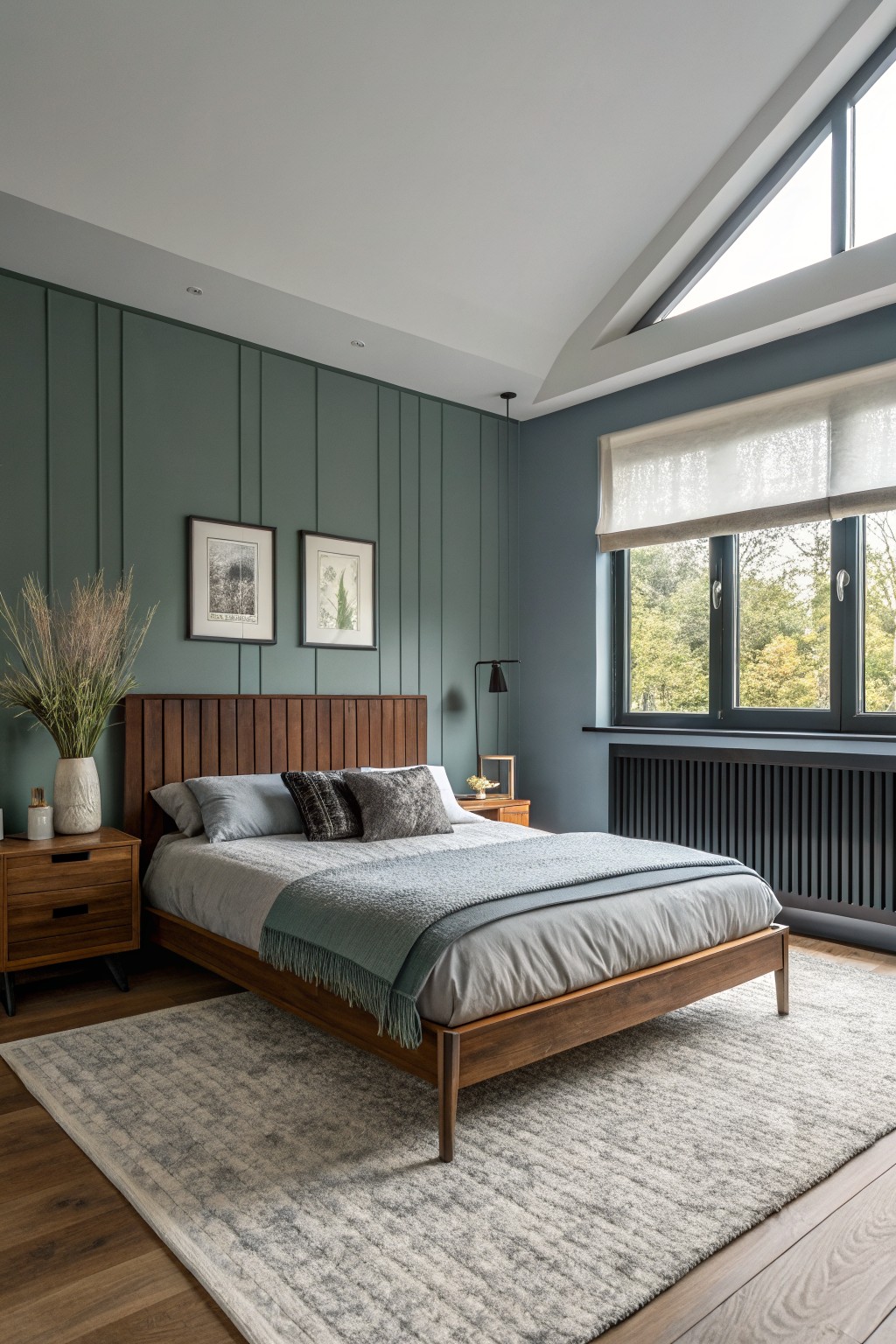
This bedroom uses a muted sage green with cool blue undertones. The color sits somewhere between green and gray, which keeps it from feeling too bright or too heavy in a modern space. It works especially well with warm wood furniture and floors.
The undertone stays fairly consistent even when the light changes. Pair it with natural wood tones and simple textiles if you want the same balanced look. It can start to feel cold in rooms with very little natural light, so check a sample on the wall first.
Soft Blue Gray Walls
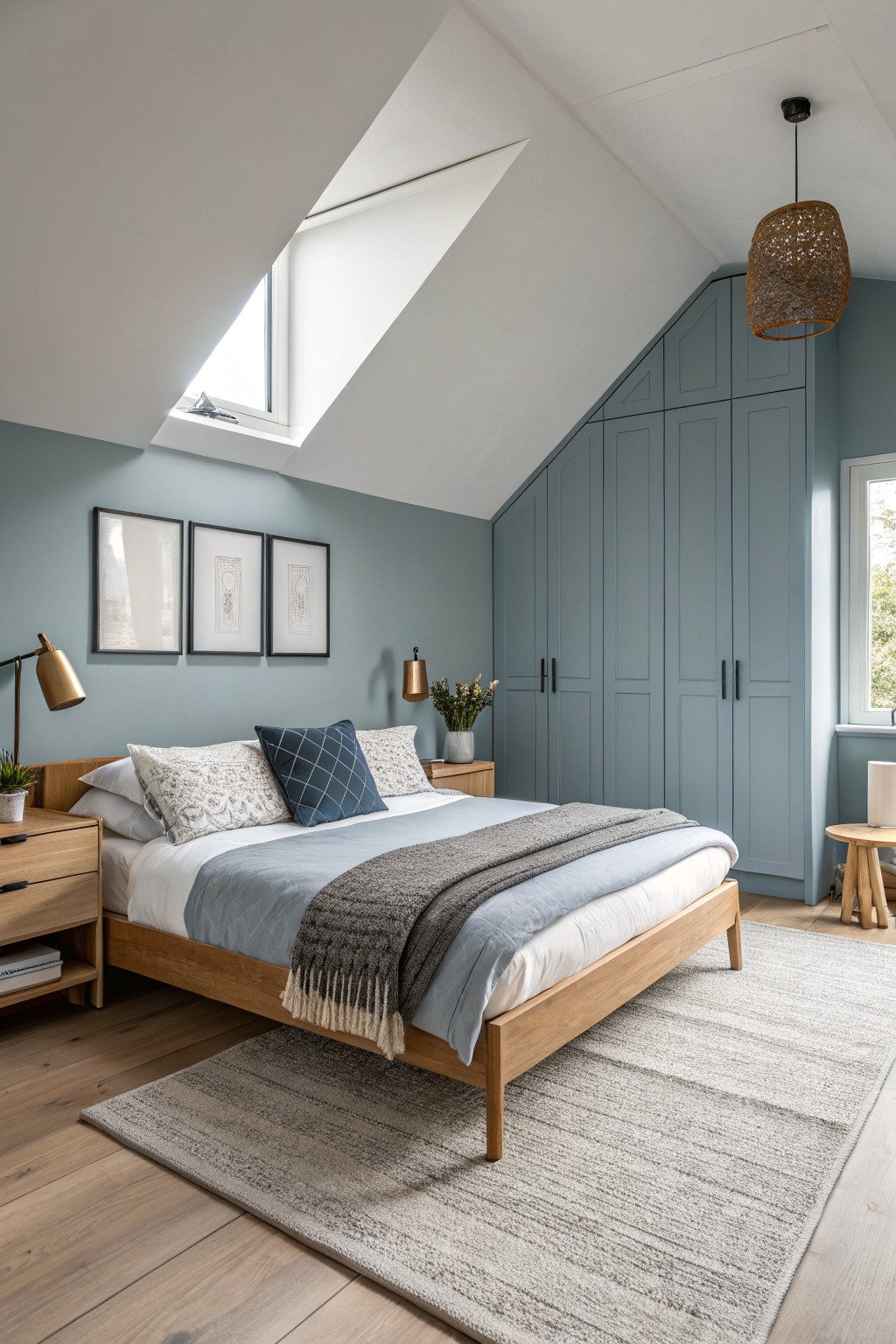
A soft blue gray like this keeps a modern bedroom feeling calm and open. It sits right between gray and blue with cool undertones that work nicely next to warm wood furniture. Colors in this range often read closest to Benjamin Moore Palladian Blue, Sherwin Williams Silver Strand, Farrow and Ball Light Blue, or Behr Soft Cloud.
The cool tone can look a little flat in low light, so it suits rooms with good natural light and pairs best with natural wood or simple white textiles. Avoid pairing it with too many cool metals if you want to keep the space from feeling chilly.
Soft Sage Green Walls

This bedroom uses a soft sage green on the walls. It is a muted green with gray undertones that feels calm and a little earthy without turning too cool or dull.
The color pairs nicely with warm wood and simple furniture because the gray keeps it from feeling too bright or leafy. It works best in rooms with decent natural light and looks good next to light floors or linen textiles.
Deep Sage Green Walls
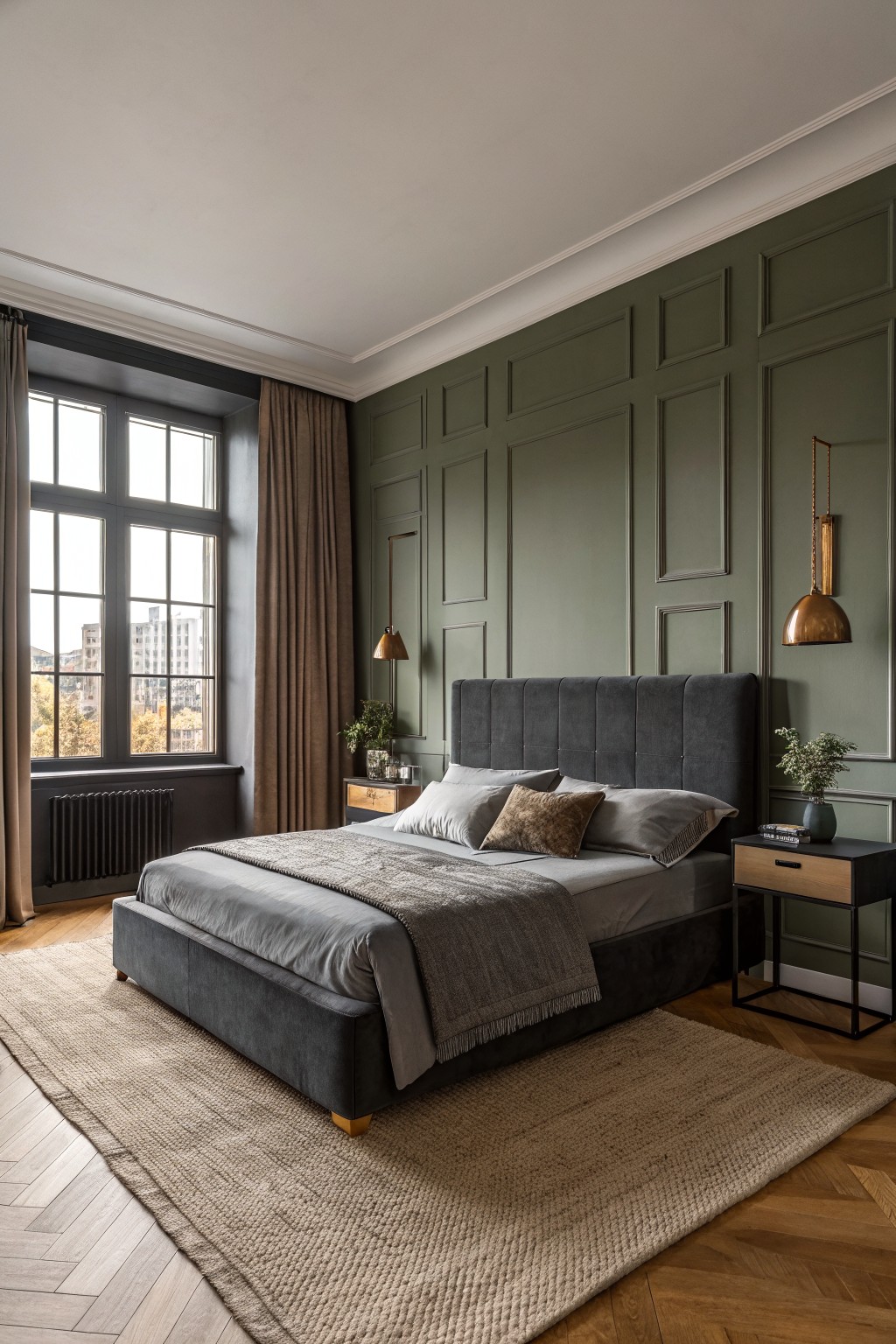
This deep sage green brings a calm, grounded feel to a bedroom without making the space feel heavy. It sits in that useful middle ground between gray and green, so it reads as a soft neutral rather than a bold color. The tone works especially well with wood floors and simple gray bedding because it keeps the room looking quiet and put together.
The color has a slight gray undertone that helps it stay cool even in rooms with warm wood. It pairs nicely with black metal accents or natural linen, but it can look flat if the lighting is very dim. Most people like it best in modern or traditional homes where they want something a little different from plain gray or beige.
Warm Terracotta Bedroom Walls

This bedroom uses a warm terracotta paint on the walls. It is a soft clay color with gentle orange undertones that adds quiet warmth while still feeling calm and grounded.
It pairs naturally with wood tones and tile floors, and works best in rooms with decent natural light. Try it with lighter textiles and simple wood furniture so the color stays relaxed rather than heavy. Colors like this often read close to Benjamin Moore Canyon Peach, Sherwin Williams Spiced Cider, or Farrow & Ball Red Earth.
Soft Blush Bedroom Walls
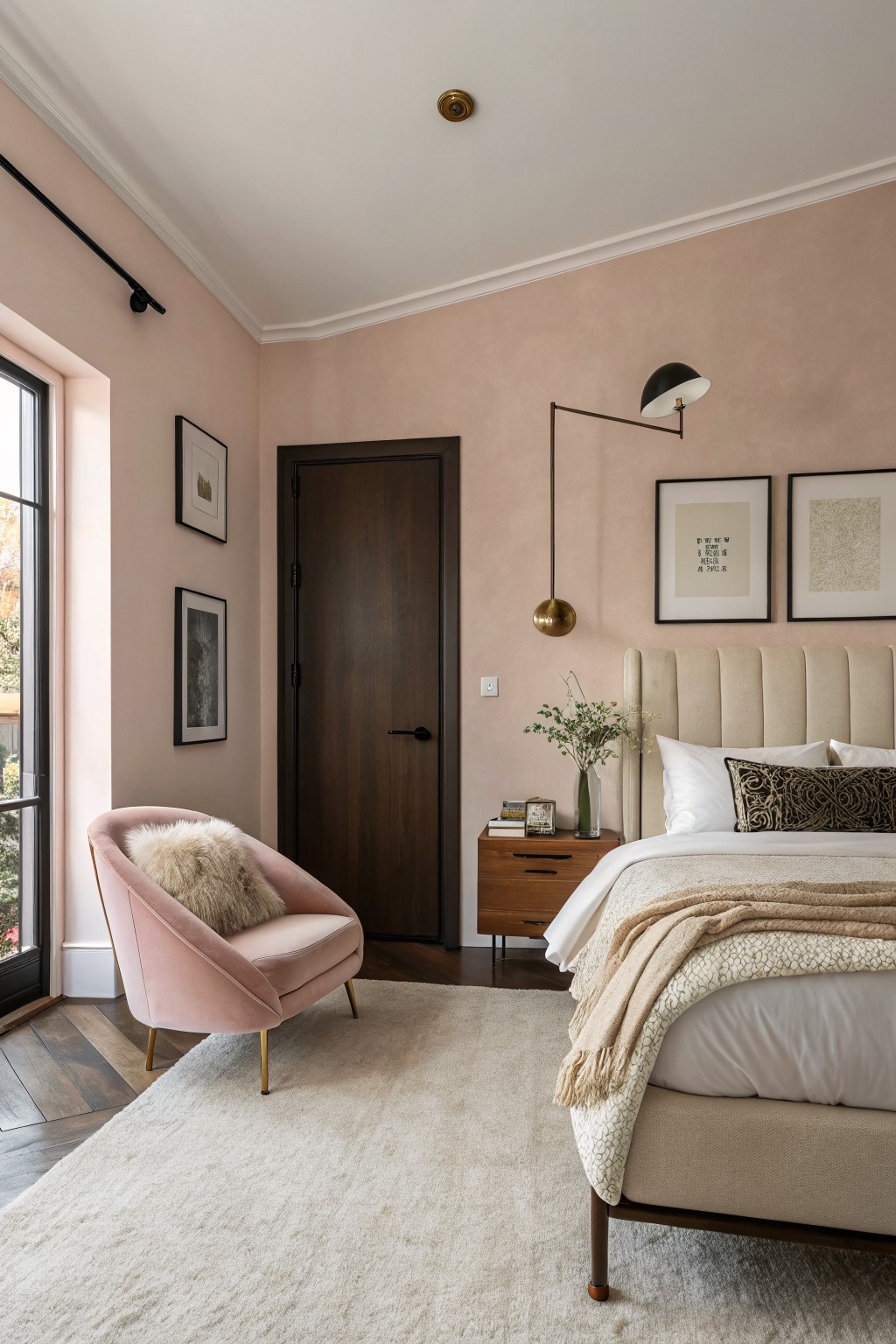
This soft blush beige gives the walls a gentle warmth without feeling too sweet. It sits in that nice middle ground between pink and neutral, so the room still feels calm and modern even with the wood tones and simple furniture around it.
The color has a light warm undertone that plays nicely with darker wood doors and trim. It works best in bedrooms that get decent natural light, and it pairs easily with cream bedding, brass accents, or a bit of black for contrast. Just watch that it does not pull too pink in very cool lighting.

This deep navy blue gives a bedroom a grounded, modern look that still feels calm. It is a cool, saturated navy that can read almost black in lower light but still shows its blue side when the sun hits it.
The color works especially well with white bedding and warm wood floors. It also looks good on paneled walls, where the slight texture keeps the space from feeling flat. Pair it with simple trim in the same color or a soft off-white if you want a bit more contrast.
Deep teal bedroom walls

A deep teal like this one gives the bedroom a calm, slightly moody backdrop that still feels fresh. The color sits between green and blue, which helps it read as both grounded and a little cool depending on the light.
It pairs especially well with warm wood floors and simple gray bedding. Try Sherwin Williams Teal Trust, Benjamin Moore Aegean Teal, or Farrow & Ball Inchyra Blue for a similar depth. Keep trim light so the walls stay the main focus.
Muted Teal Green Bedroom Walls

This muted teal green gives a bedroom a calm but slightly richer feel than a plain gray or sage. It sits somewhere between green and blue without leaning too hard either way. The color looks closest to Benjamin Moore Aegean Teal, Sherwin Williams Rainwashed, or Farrow & Ball Inchyra Blue.
It has a soft blue undertone that keeps the room from feeling too warm or too cold. The shade works well with light wood floors and simple white trim. In lower light it can read a little deeper, so it is worth testing on a sample board before committing.
Soft Lavender Gray Walls

This bedroom uses a soft lavender gray on the walls. It is a muted color with a hint of purple that feels calm without turning cold. The shade sits nicely next to warm wood tones and keeps the room feeling light and open.
It has cool undertones that show up more in bright light, so it works best in rooms with good natural light. Pair it with white trim and simple wood furniture to keep the look clean. Avoid pairing it with too many strong colors or it can start to feel flat.
Warm Greige Bedroom Walls
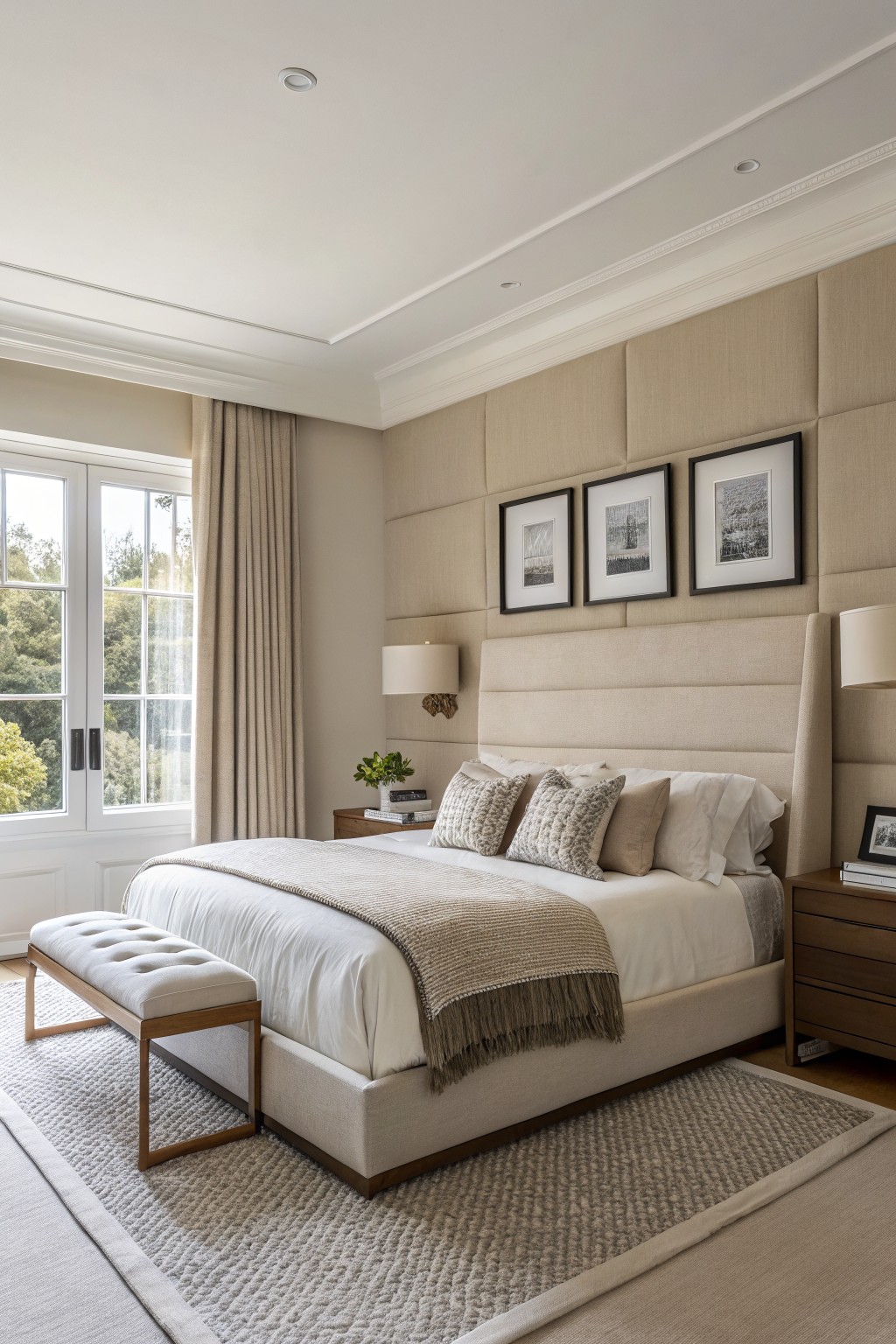
This color is a soft warm greige that sits between beige and gray. It gives the walls a quiet presence without feeling flat, and it works well when you want the room to feel calm but still grounded.
The undertone leans slightly yellow, which helps it stay cozy next to wood furniture and white bedding. It pairs easily with both light and dark accents, though it can look a little dull if the room gets very little natural light.
Dark Charcoal Walls

This bedroom uses a deep charcoal gray on the walls. The color has a cool undertone that feels grounded next to the wood floor and the lighter gray bedding.
It works best in rooms with plenty of natural light or strong contrast from wood and metal. Pair it with black frames or hardware to keep the look sharp, and test a sample first since the shade can shift depending on the time of day.
Warm Beige Bedroom Walls
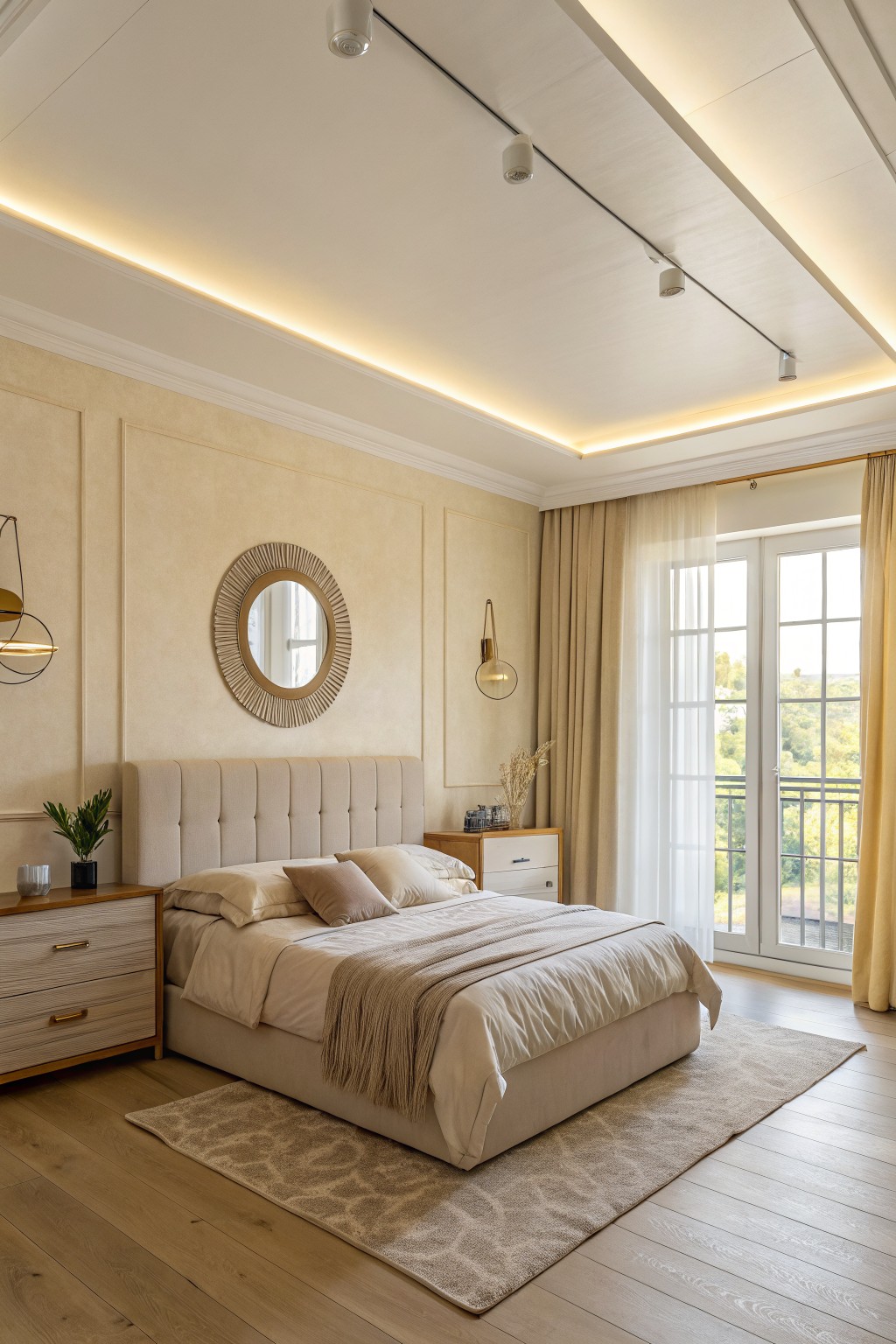
This wall color is a soft warm beige with a light yellow undertone. It gives the room a calm background that feels neither too cool nor too stark, which makes it easy to live with in a bedroom.
The color sits nicely next to light wood floors and keeps the space from feeling washed out. It can shift a little depending on the light, so samples on the actual wall are worth doing. Close matches include Sherwin Williams Accessible Beige, Benjamin Moore Edgecomb Gray, Behr Creamy Mushroom, and Farrow & Ball Skimming Stone.
Modern Greige Walls With Black Metal Accents
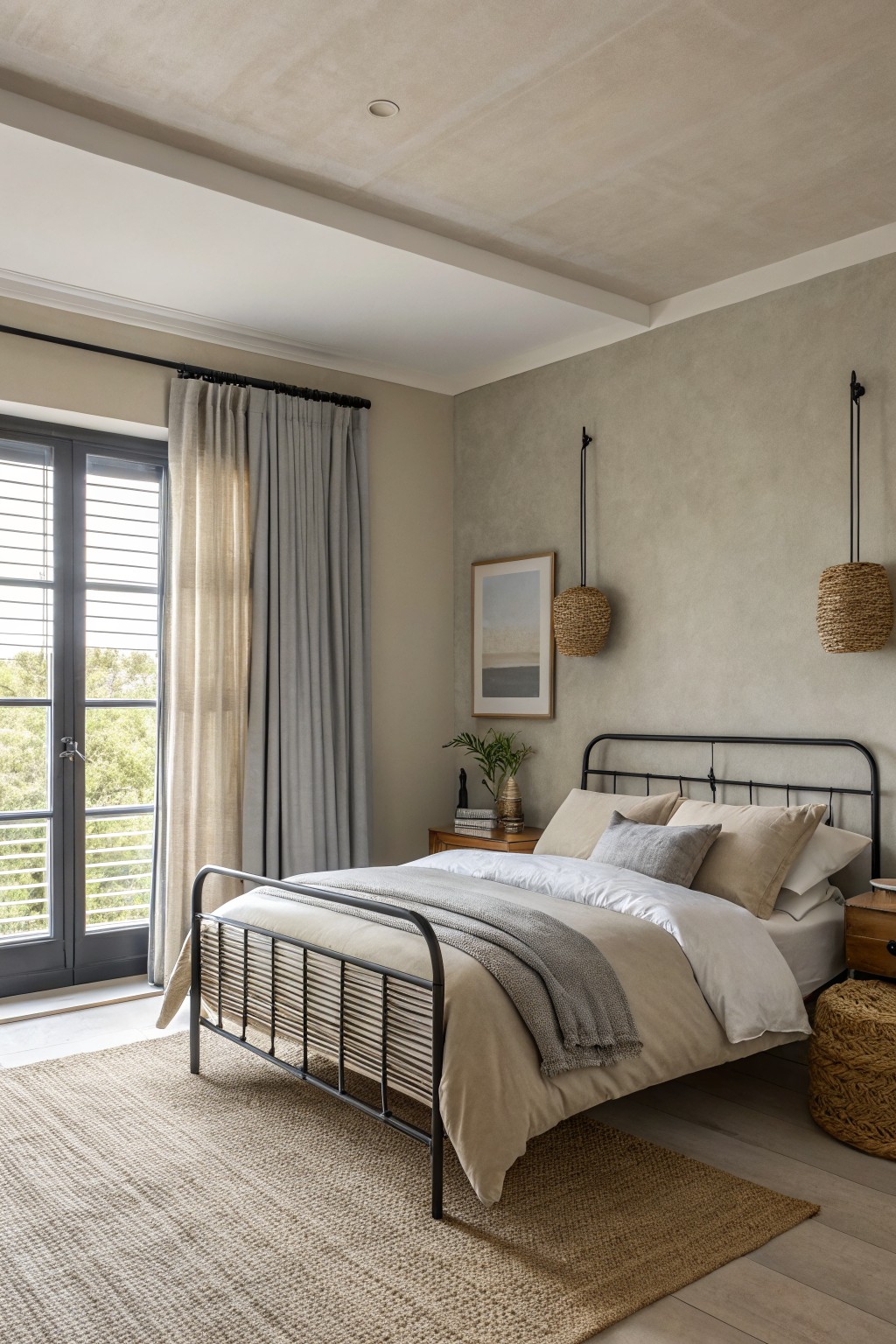
This bedroom uses a soft greige on the walls. It is a muted neutral that leans slightly warm and sits between beige and gray.
The color has enough gray in it to feel calm next to black metal, while the warmth keeps the wood tones from looking cold. It suits simple modern rooms where you want the walls to stay quiet and let the furniture do the work.
Evergreen Fog Sage Accent Wall

This bedroom uses a deep muted sage green on the wall behind the bed. It is a cool green with gray undertones that feels steady and a little earthy.
The color sits nicely next to warm wood tones like the bed frame and floor. It works best in rooms with good natural light and pairs easily with simple white linens or natural textiles. Try Sherwin Williams Evergreen Fog, Benjamin Moore Quietude, Behr Eucalyptus Leaf, or Farrow & Ball Lichen for similar shades.
Muted Teal Bedroom Walls
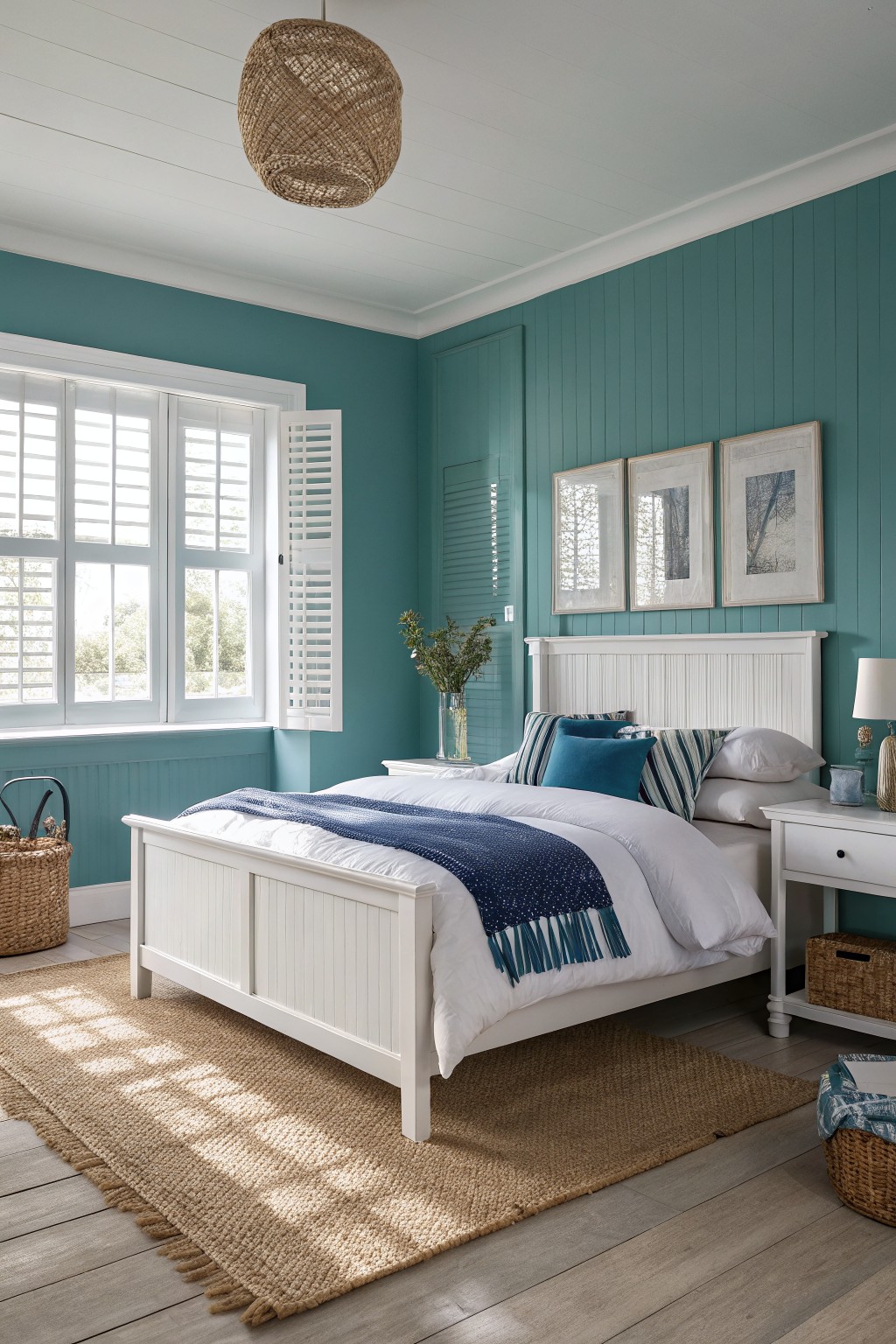
This bedroom shows a muted teal on the walls. It is a cool blue-green that feels fresh without being too bright or overpowering. The color works well in modern rooms because it stays calm while still adding some life to the space.
Teal like this often has a slight blue lean, which keeps it from turning too green in low light. It pairs nicely with white trim and light wood floors. Try it in bedrooms that get decent daylight, and test a sample first since the shade can shift a bit depending on the time of day.
Dusty Mauve Bedroom Walls

A muted mauve like this one brings a gentle color to sleek modern bedrooms. It sits between purple and gray, giving the walls some depth without making the room feel heavy.
The gray undertone keeps it calm and helps it work with wood furniture and simple textiles. It suits spaces with steady daylight and pairs best with warm neutrals on the trim or ceiling. Likely matches include Sherwin Williams Mauve Magic, Benjamin Moore Smoky Mauve, Behr Dusty Lilac, or Farrow & Ball Brassica.
Muted Teal Walls and Built-In Cabinetry
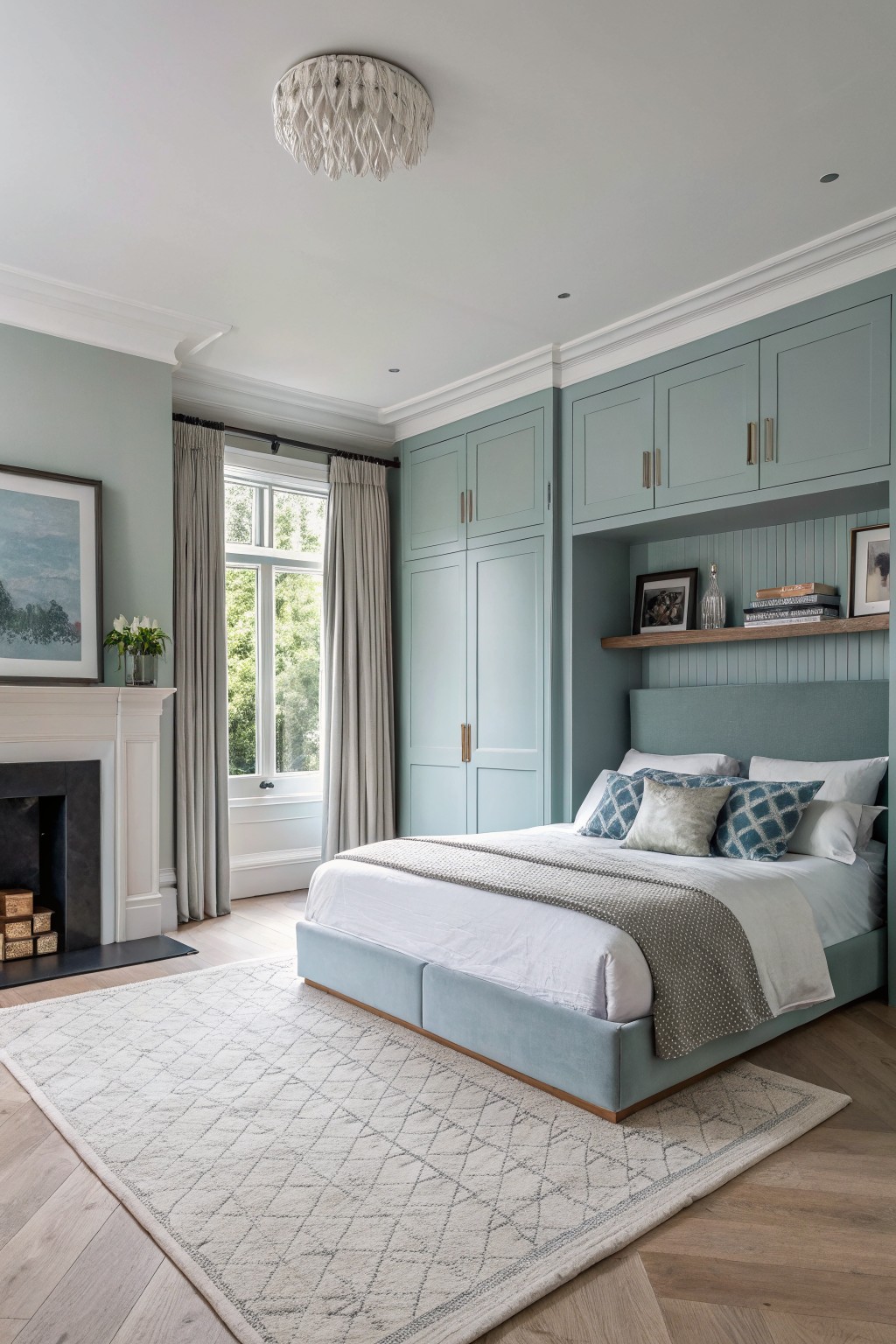
This muted teal is a soft blue-green that feels calm and a little coastal. It covers both the walls and the built-in cabinetry, so the color becomes the main feature without needing much else. Shades like Sherwin Williams Rainwashed, Benjamin Moore Wythe Blue, or Behr Soft Rain all sit close to this tone.
The cool undertone keeps it from feeling too warm next to light wood floors. It works well in bedrooms with white trim and simple furniture, though it can look flat if the room gets very little daylight.
Frequently Asked Questions
Q: How do I pick just one color from all those options? A: Start with the ones that match your current bedding and rugs. Narrow it down by how much light your windows let in. The right shade will feel like it belongs right away.
Q: Will these paints work if my room has low ceilings? A: Yes, the lighter options on the list can make the space feel taller. Avoid anything too dark on all walls though. But try a small test patch anyway to check the effect.
Q: Can I paint just one wall with a bolder color? A: Sure, pick a deeper tone from the suggestions for that accent. It adds interest without overwhelming the minimal setup. Keep the other walls neutral to hold the clean lines.
Q: What about matching trim and doors? A: Use the same paint line in a semi-gloss for those surfaces. This ties everything together smoothly. The modern feel comes through when details match the main color.