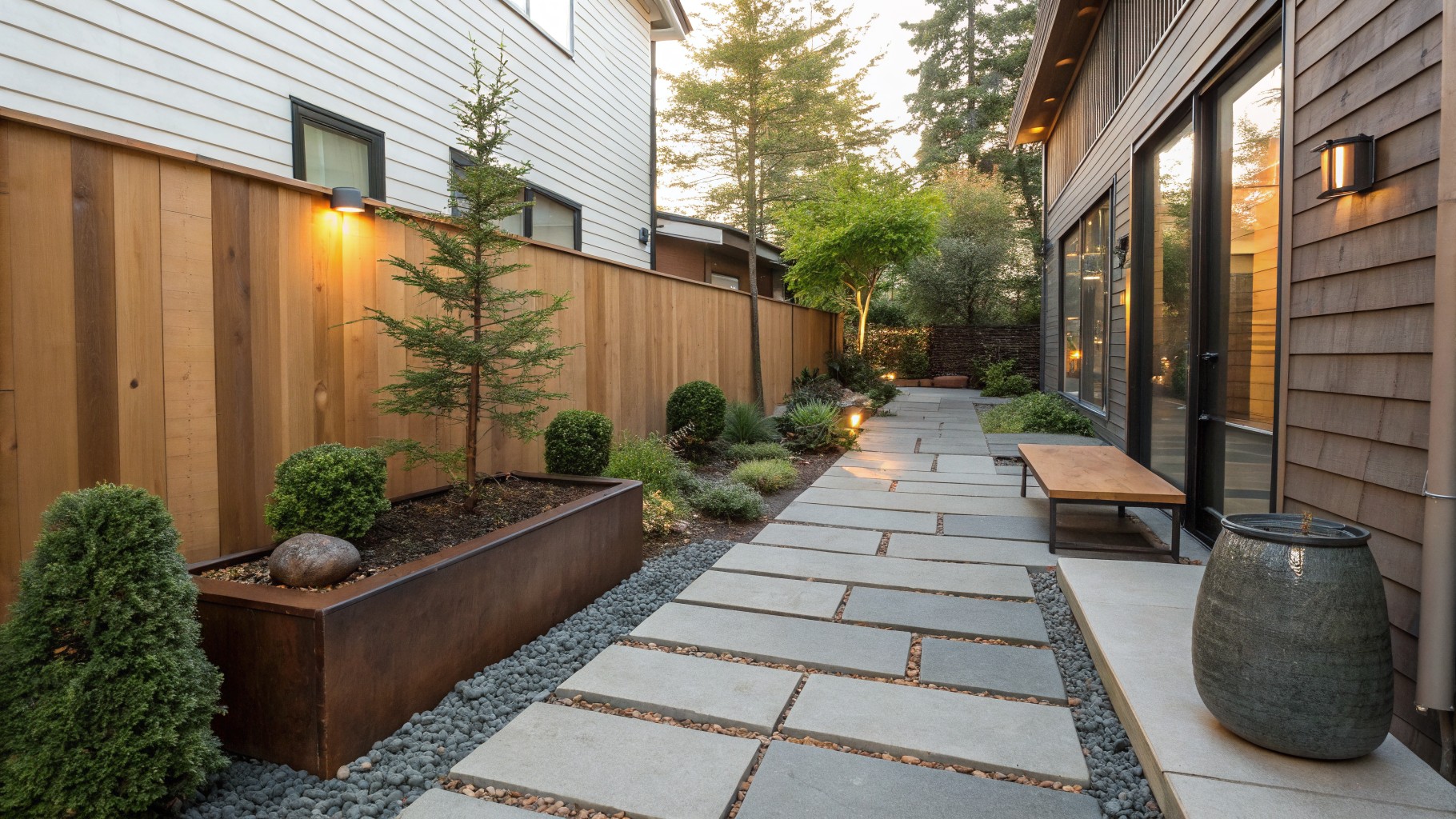
When I look at a small backyard the first thing I notice is whether the ground surfaces and plants create any clear layout or if the space just feels scattered.
Using mulch and gravel to separate beds from paths helps the whole area hold its shape with far less work once everything settles in.
Evergreens keep the structure visible even when other plants go dormant.
I tend to test edging details first because they stop the materials from drifting after heavy rain or foot traffic.
Over time these choices shape how the yard feels to walk through and how little upkeep it actually needs.
Gravel Paths With Paver Stepping Stones

A path made from large concrete pavers set right into gravel works well in narrow side yards where a full walkway would feel too heavy. The gravel fills the gaps, drains easily, and keeps weeds down without constant work, while the pavers give you solid footing.
This setup suits homes with tight passages between the house and fence. Keep the pavers spaced evenly and line the edges with low evergreens in raised beds so the whole area stays neat with very little trimming or watering.
Gravel Paths Edged In Brick
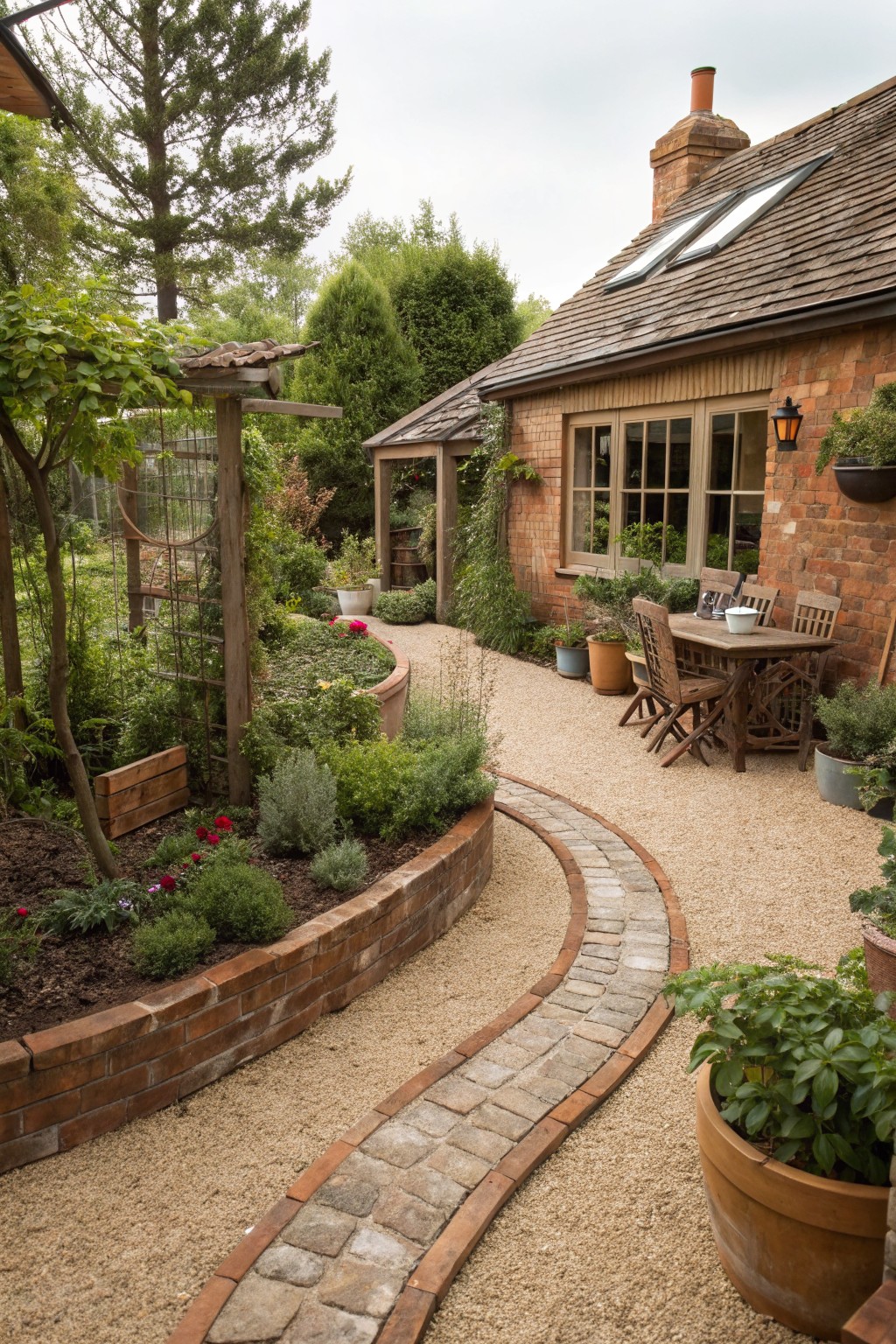
Gravel paths with brick edging offer a simple way to handle foot traffic in a small backyard without constant upkeep. The brick keeps the gravel contained and gives the beds a tidy shape that holds mulch and plants in place over time.
This approach works best on fairly flat lots where drainage is decent. It pairs easily with evergreens and low ground covers so the whole space stays green with minimal mowing or trimming.
Gravel Paths Linking Garden Zones
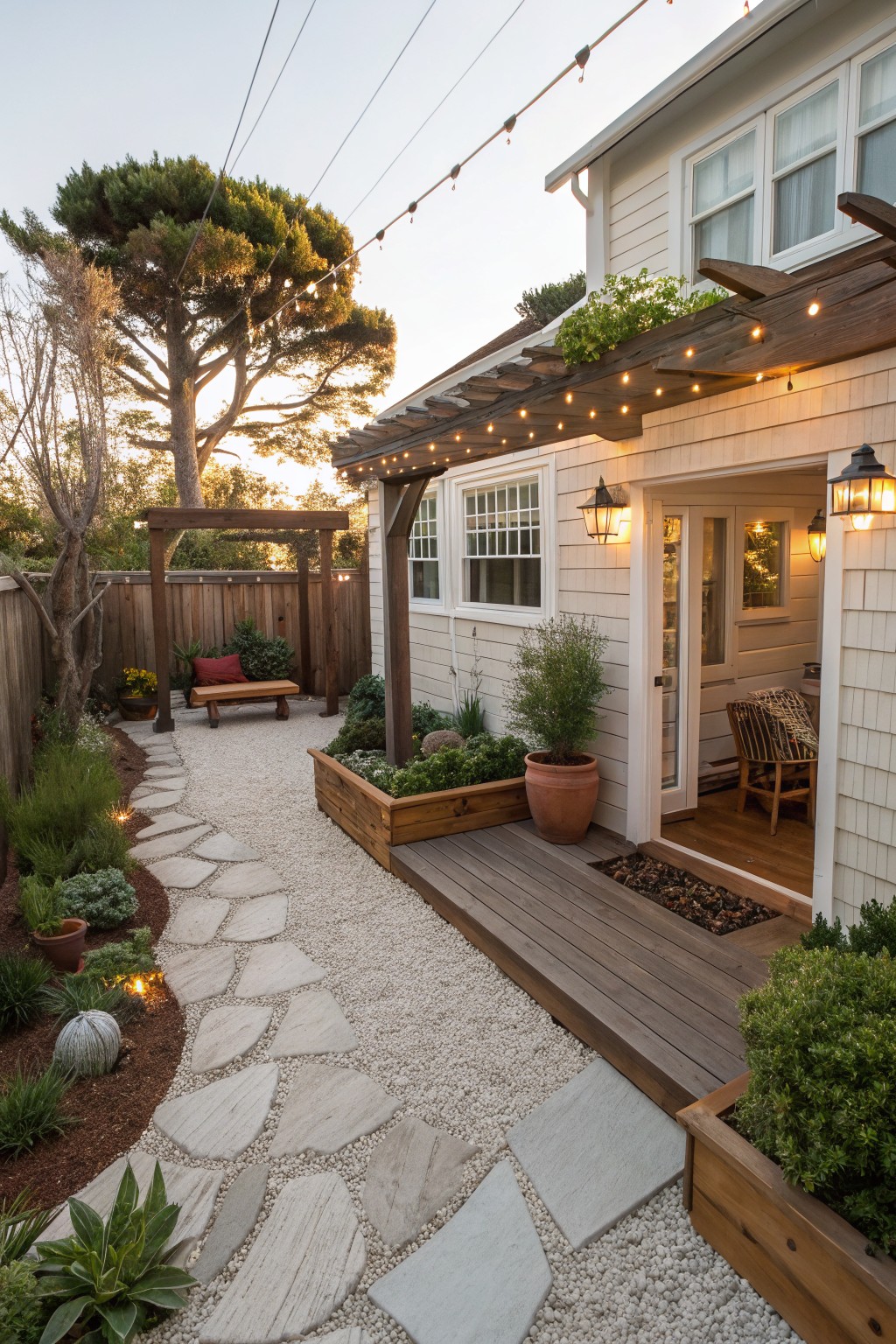
Gravel paths mixed with larger stepping stones give small backyards a practical route that stays low maintenance. The loose fill drains well and weeds rarely take hold when the area is kept simple.
This approach works best in compact yards where you want to link a deck or seating spot to the rest of the garden. Raised beds planted with evergreens along the edges help keep the path looking neat without constant trimming or replanting.
Stone Edging Keeps Mulch Beds Neat
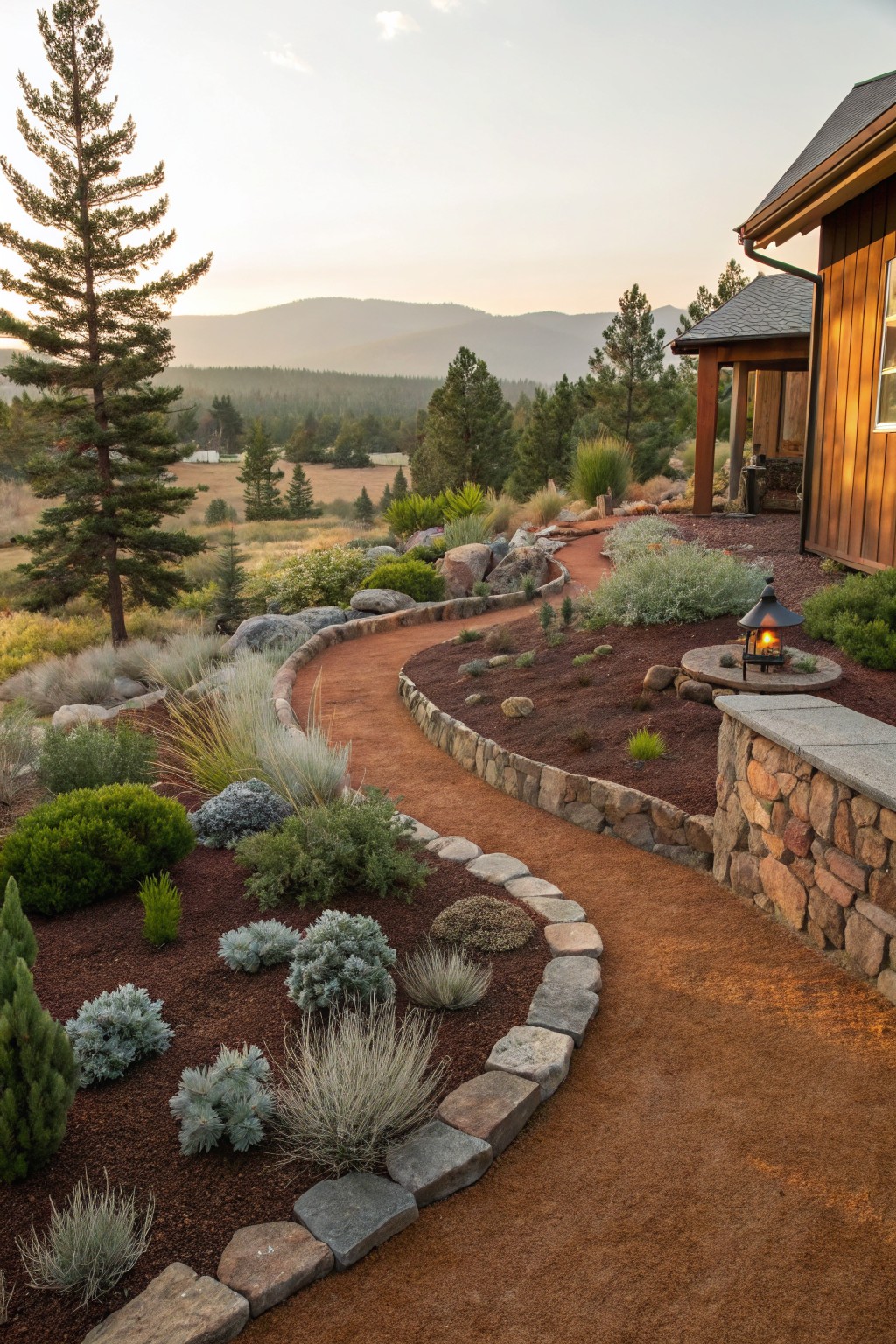
Stone edging gives mulch beds a clear shape and stops the material from drifting onto paths or grass. It adds structure without needing constant trimming or adjustments.
This works especially well on sloped yards where beds need to follow the land. Fill the beds with evergreens and gravel paths between them for a low maintenance setup that still feels put together.
Large Stepping Stones In Gravel Walkways
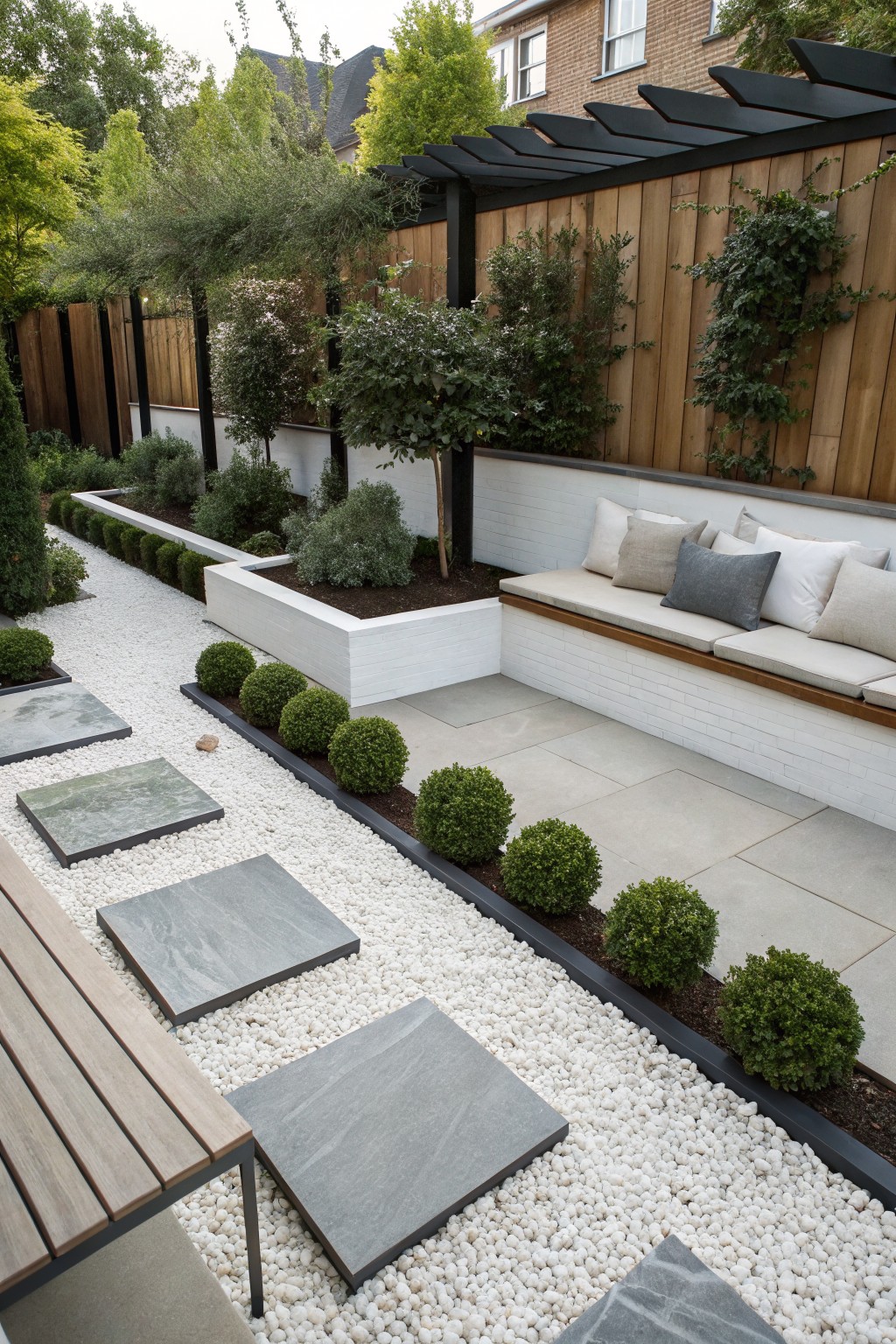
Gravel paths with large stepping stones offer a simple way to handle foot traffic in a small backyard without constant upkeep. The gravel drains well and needs little more than occasional raking, while the stones keep the surface firm and prevent it from shifting underfoot.
This approach works best in compact yards where you want clear routes but do not want the cost or work of full paving. Line the edges with low evergreen shrubs to hold the gravel in place and add year-round structure.
Timber Steppers In Gravel Suit Narrow Side Yards

A gravel base with spaced wooden stepping stones gives a clean walking route without the cost or upkeep of a full paved path. It drains well after rain and stays looking tidy with just a bit of raking now and then.
This layout works best in tight spaces between a house wall and a fence where grass would struggle. Line the edges with evergreens in mulch beds to add height and year-round cover while keeping the whole area low maintenance.
Gravel and Evergreens Keep Small Yards Simple

Gravel and evergreen shrubs make a small backyard feel neat without constant work. The gravel covers open areas and paths so weeds have less room to grow, while the rounded evergreens add year-round shape that stays green with little watering or trimming.
This approach suits homes with limited space where you want defined beds but no high-maintenance lawn. Use low brick or stone edging to hold the gravel in place, and pick compact shrubs that stay in scale with the yard.
Gravel Works Well Around Fire Pit Areas
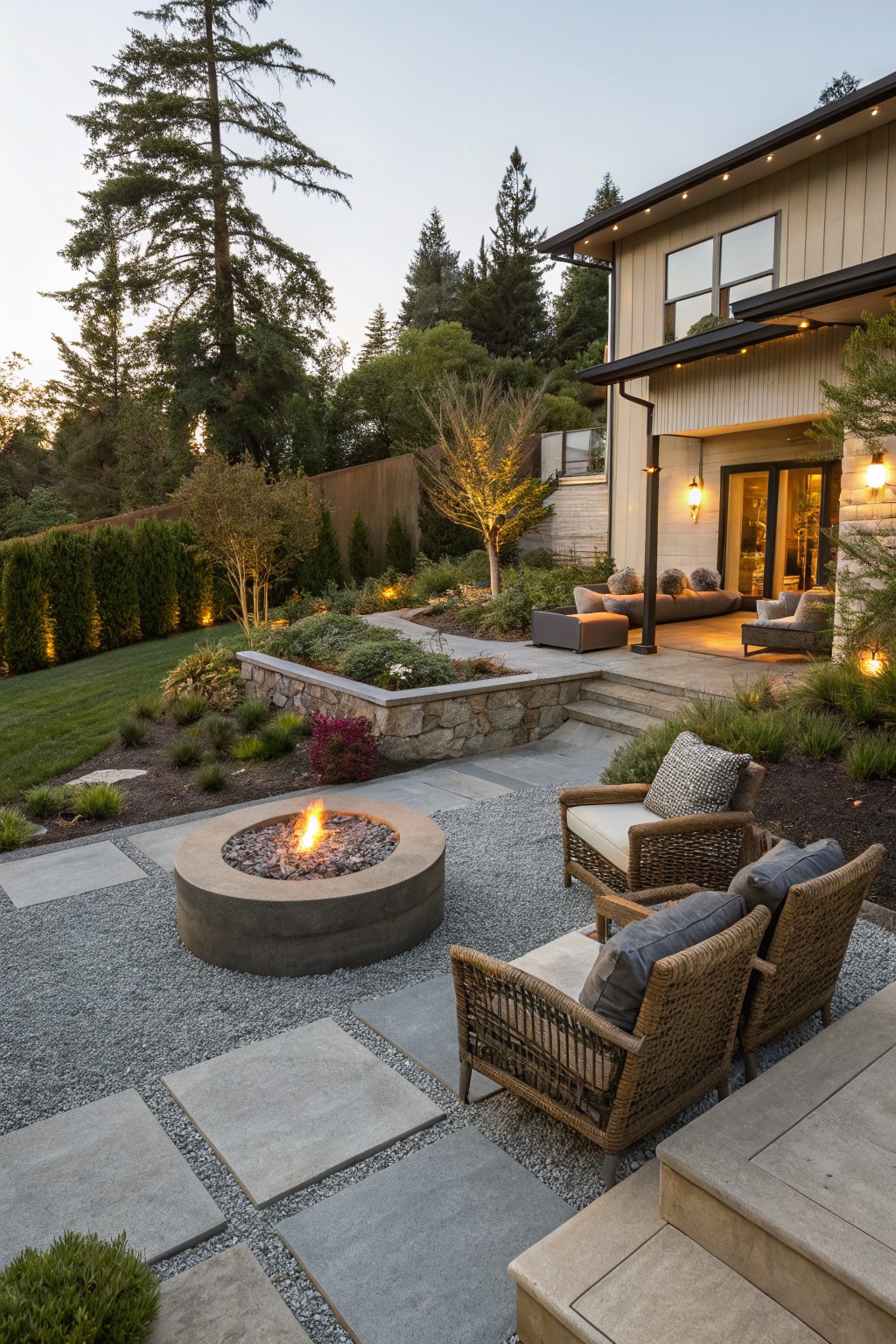
Gravel gives you a clean surface that stays neat with almost no work. It drains well, keeps mud away from seating, and lets you skip the weekly mowing that a lawn would need. The evergreens planted around the edges add structure without demanding constant trimming.
This setup suits small backyards where you want a usable spot for evenings outside but do not have time for high upkeep. Lay the gravel thick enough to block weeds, add a few pavers for stepping, and keep the plantings simple with low evergreens. Avoid piling too many small details into the space or the low-maintenance benefit disappears.
Terraced Retaining Walls Simplify Sloped Yards
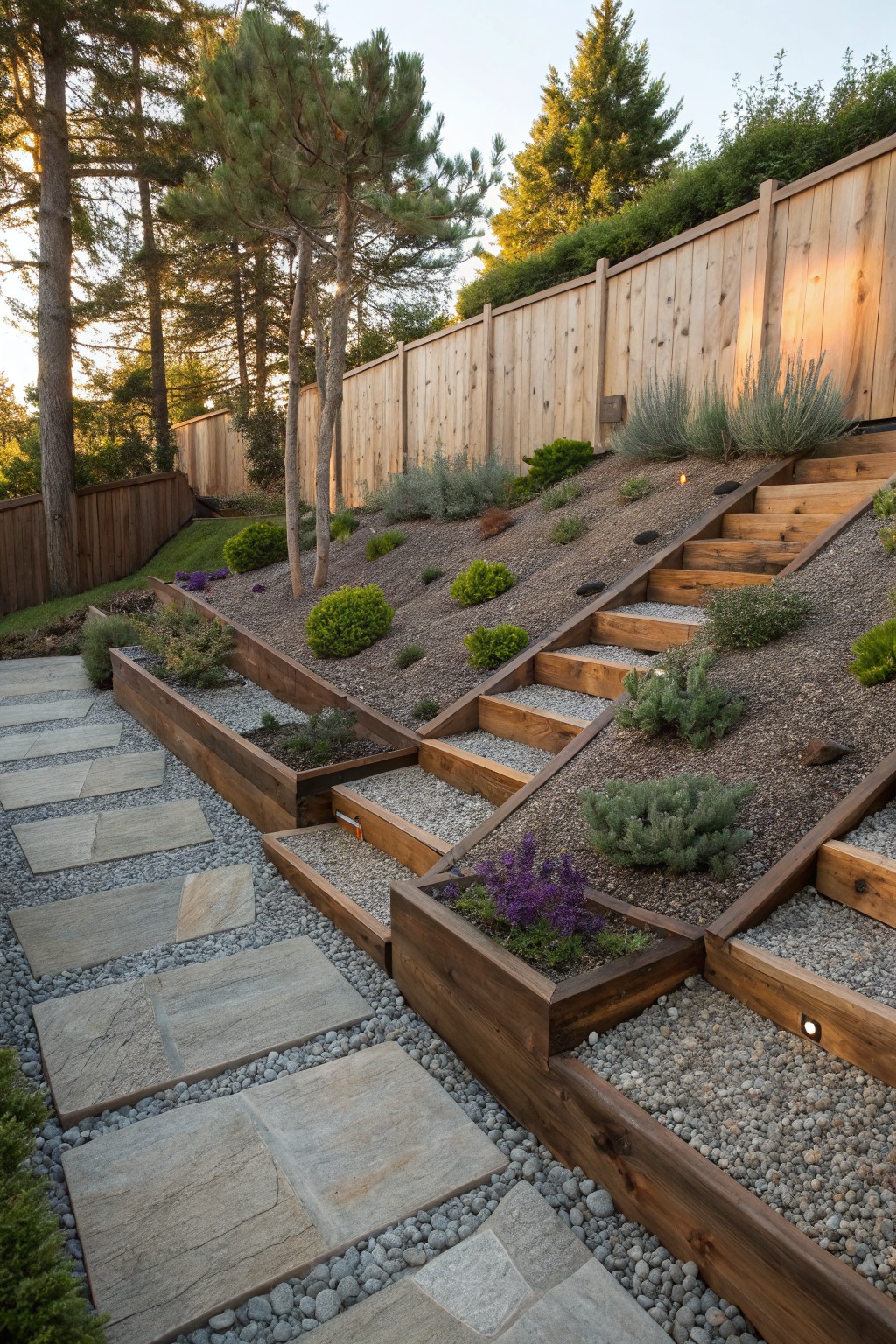
Sloped backyards often turn into problem areas where grass fails and weeds spread fast. Terraced retaining walls fix this by turning the slope into a series of flat beds that stay neat with little work.
Wood walls work well because they blend into the garden and hold gravel in place. Add evergreens in each level so the beds stay green year-round without constant replanting or heavy watering.
Gravel Beds With Repeated Evergreens

Gravel paired with a row of clipped evergreens gives a narrow backyard clear structure without much work. The gravel suppresses weeds and needs little more than occasional raking, while the shrubs stay green through every season and only require light trimming once or twice a year.
This layout suits tight side yards or fenced areas where you want order but cannot spend hours on upkeep. Keep the shrubs spaced evenly and let the gravel run right up to the house or deck edge so the whole space reads as one calm, low-maintenance zone.
Gravel Paths Framed With Brick Borders
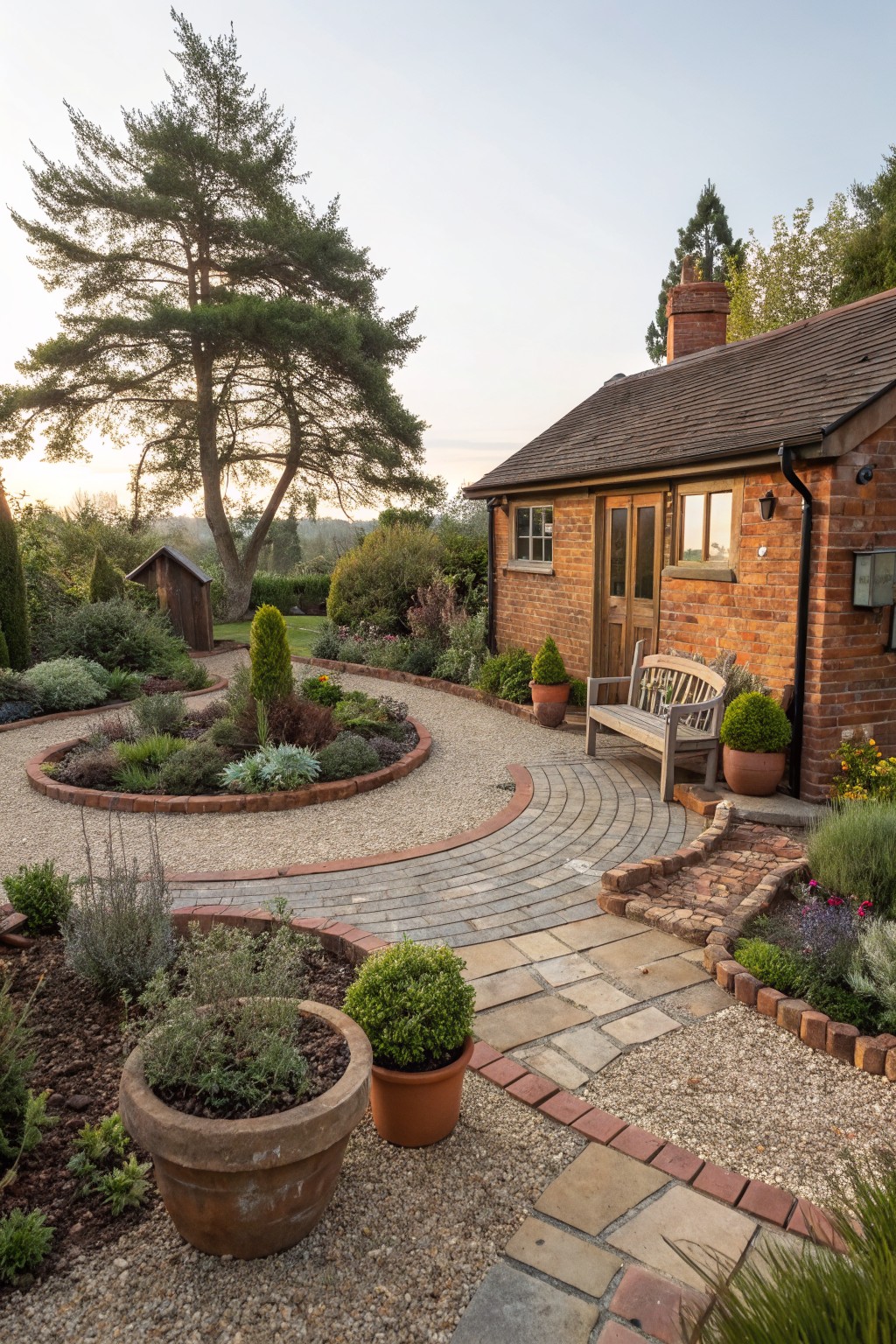
Gravel paths work well in small backyards because they stay simple to manage once they are in place. The brick edging holds the gravel in line and gives the garden a clean shape without needing constant trimming or weeding along the edges.
This setup suits homes where you want clear routes through the yard but do not want to deal with large paved areas. Place low evergreens in pots near the path to add year round structure while keeping the overall care low.
Gravel And Pavers Create Low Maintenance Paths

Gravel works well for small backyards because it cuts down on weeding and watering while still giving the space a clean look. Pairing it with square pavers set in a loose grid keeps the surface walkable and gives the eye something structured to follow without needing constant upkeep.
This setup works best in compact yards where you want defined routes but do not want to install full paving. Place the pavers where foot traffic is heaviest, such as from the house to a seating area or water feature, and let low shrubs and evergreens fill in the edges.
Rock Borders Around Mulch Beds

Rock borders make a big difference in small backyards because they keep mulch and gravel from mixing while giving the beds a finished look. The setup works well with evergreens because those plants stay neat year round and do not drop much debris that would need constant cleanup.
This approach suits homes where people want to cut down on weeding and mowing. Place larger rocks along the edge of the mulch beds and let the gravel fill the open ground between them. It holds up in most climates and keeps the whole area looking tended without daily work.
Gravel Ground Cover With Structured Evergreen Beds
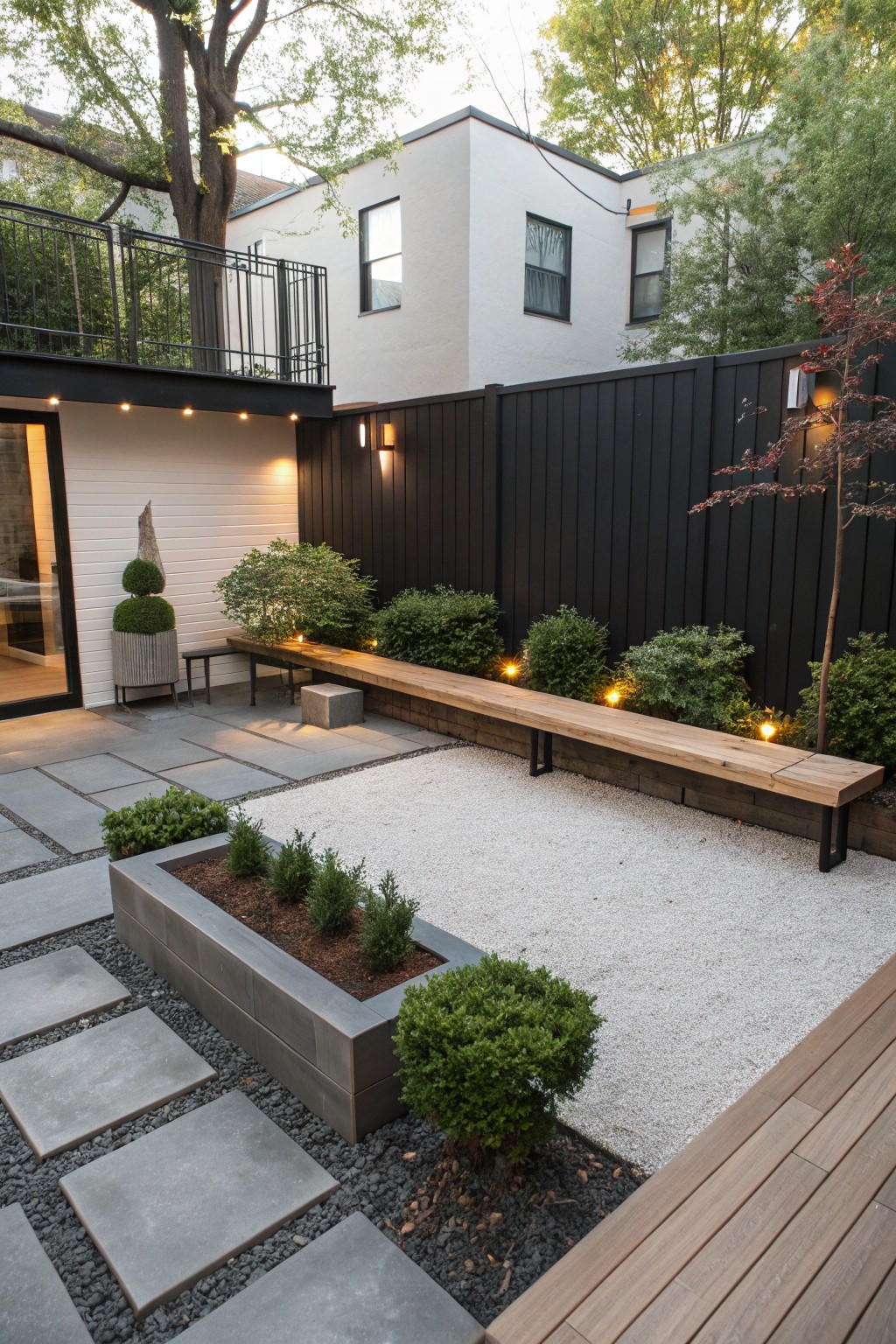
Gravel works well as the main surface in a small backyard because it drains quickly and keeps the space from turning muddy after rain. Pairing it with raised beds filled with mulch and low evergreen shrubs adds structure and year-round green without needing frequent mowing or replanting.
This layout suits compact urban yards where you want a tidy appearance that holds up with minimal effort. Use simple edging around the beds and let the gravel cover the open areas so the plants stay the focus.
Natural Stepping Stone Garden Paths
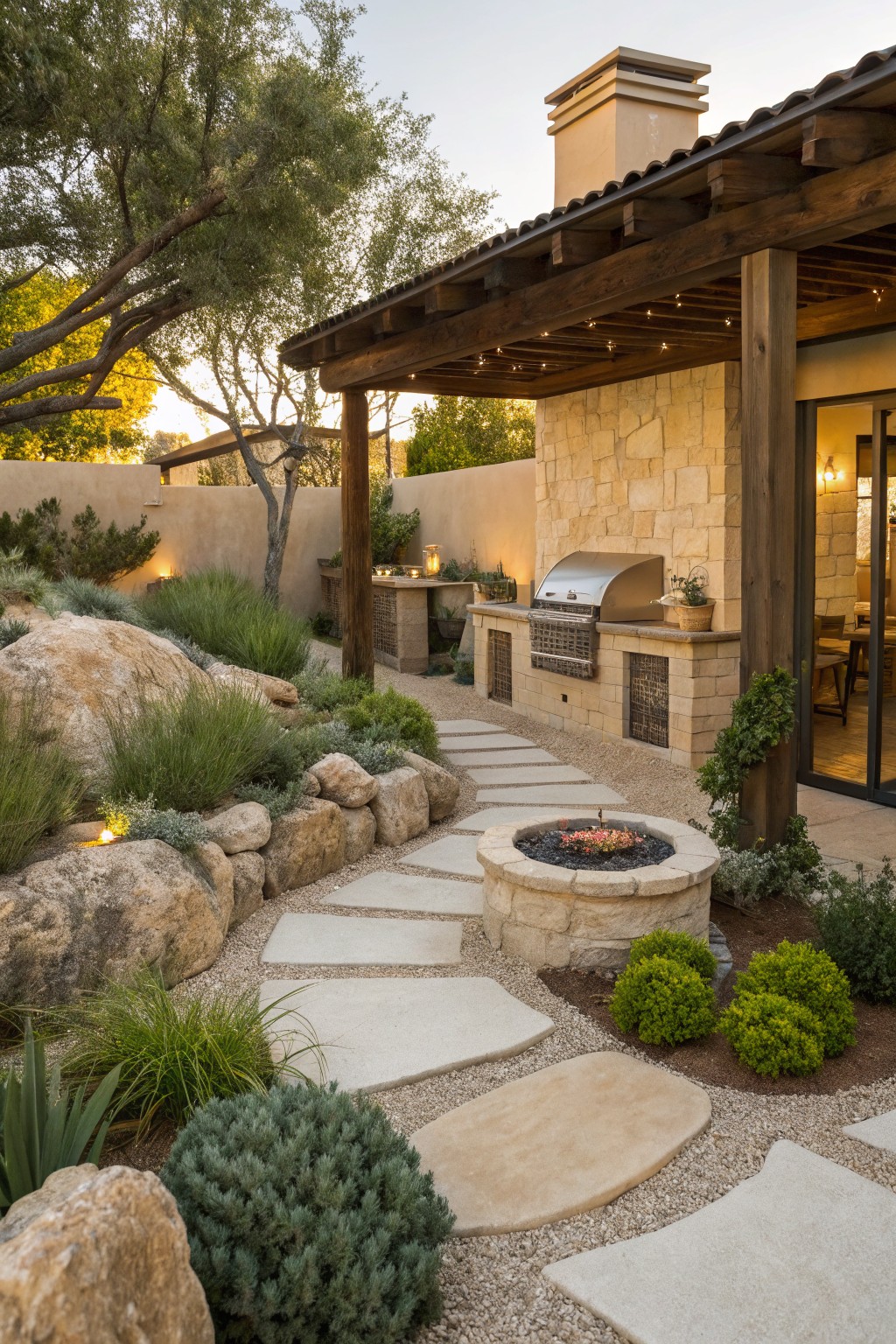
Gravel and stepping stones make a practical path choice for small backyards. The surface drains well, needs little watering, and stays low maintenance once the gravel is in place. It pairs easily with evergreens and shrubs that fill in around the edges without much fuss.
Set the stones slightly uneven so the path feels natural rather than formal. This works best in yards where you want to limit lawn area and keep foot traffic dry after rain. Add a thin layer of mulch in the planted beds nearby to help control weeds.
Gravel And Raised Beds Simplify Small Yards

Gravel works well in small backyards because it drains quickly and cuts down on weeding and mowing. Raised wooden beds give you clear planting zones while leaving the rest of the space open and simple to maintain. Evergreens along the edges add steady structure that stays green without constant care.
This approach fits homes with limited outdoor space, especially where you want a tidy look year round. Keep the gravel layer a few inches deep over landscape fabric, and choose compact evergreens that need little pruning. Avoid overcrowding the beds so the gravel stays the main low-effort surface.
Curved Gravel Walkways Through Mulch Beds

Gravel paths cut down on lawn care and still give you a clear way to move through the yard. They drain quickly after rain and pair easily with mulch beds and evergreens that stay green all year. The stepping stones add just enough solid footing without turning the path into a big paved surface.
Set the path on a gentle curve so it feels natural rather than straight and rigid. Keep the gravel layer thin over landscape fabric and edge the beds with larger stones or logs to hold the mulch in place. This works best in smaller yards where you want to reduce grass but still need easy access to seating or garden zones.
Gravel Paths With Evergreen Borders
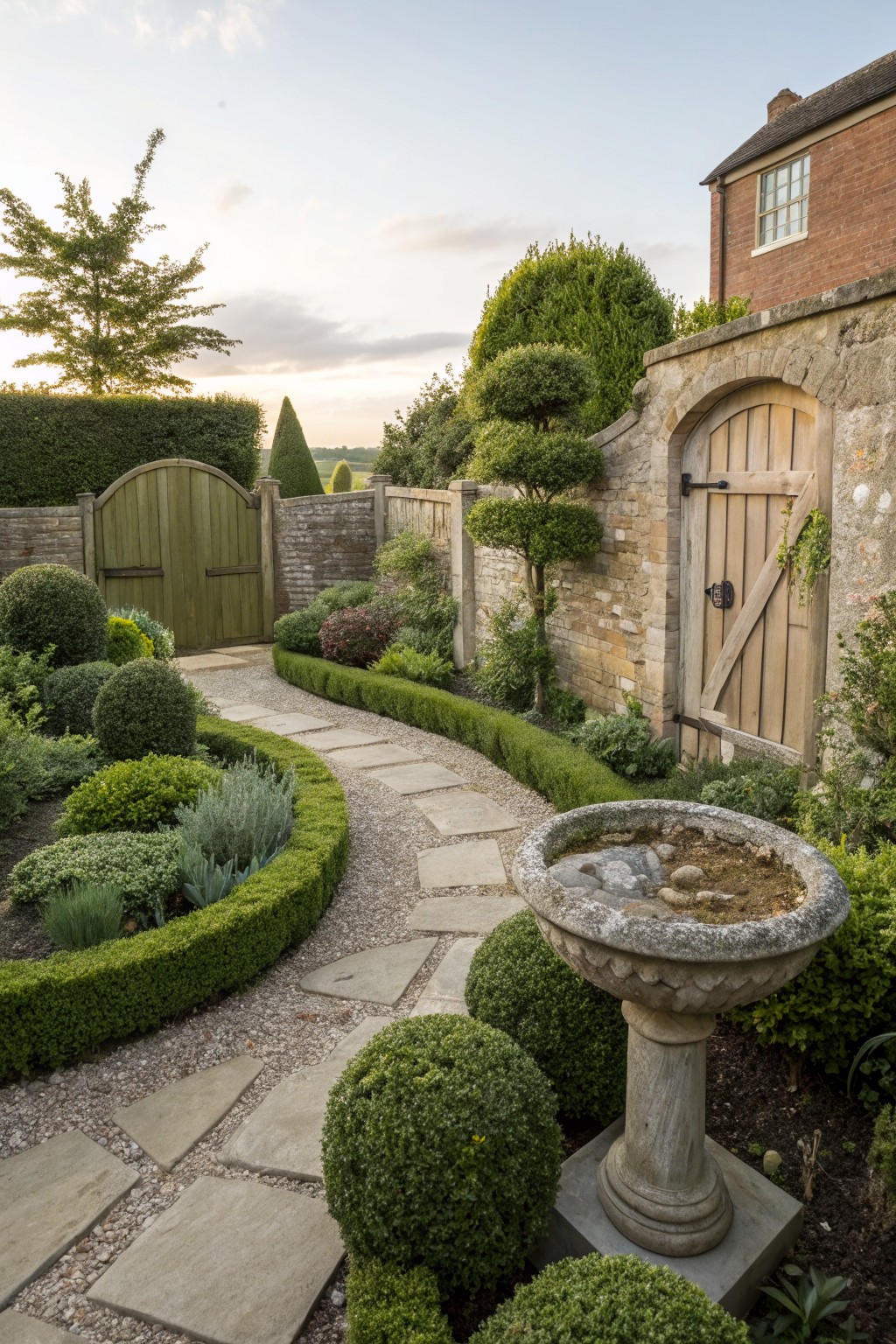
Gravel paths cut down on maintenance in small yards because they do not need mowing or frequent weeding. Pairing them with evergreen shrubs gives steady green structure that stays neat after a couple of trims each year.
This approach works best in compact spaces where you want a clear route without large lawn areas. Keep the beds narrow so the path does not feel squeezed, and choose gravel that packs down well for easy walking.
Concrete Pavers Set In Gravel
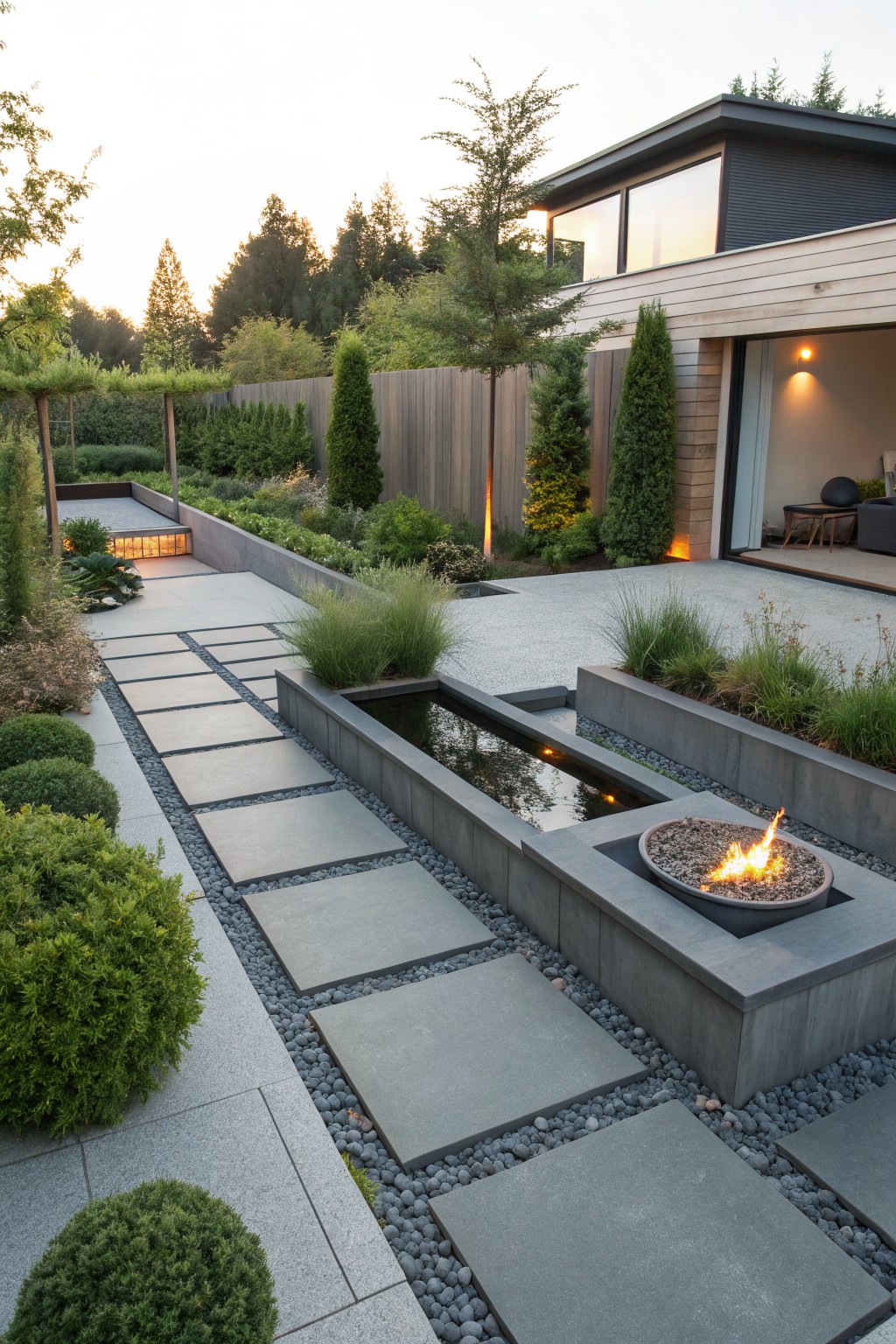
Gravel works well as a ground cover because it stays in place, drains easily, and does not need mowing or frequent weeding. Pairing it with large concrete pavers creates a clear path that feels solid underfoot while still letting the overall space look open and simple. Evergreens planted along the edges give structure that lasts through every season.
This approach suits small backyards where you want defined routes without adding a lot of hard surfaces. Place the pavers where people actually walk, keep the gravel layer even, and choose slow-growing evergreens so the beds stay neat with only occasional trimming. Avoid overcrowding the plantings or making the path too narrow.
Gravel Paths With Raised Beds
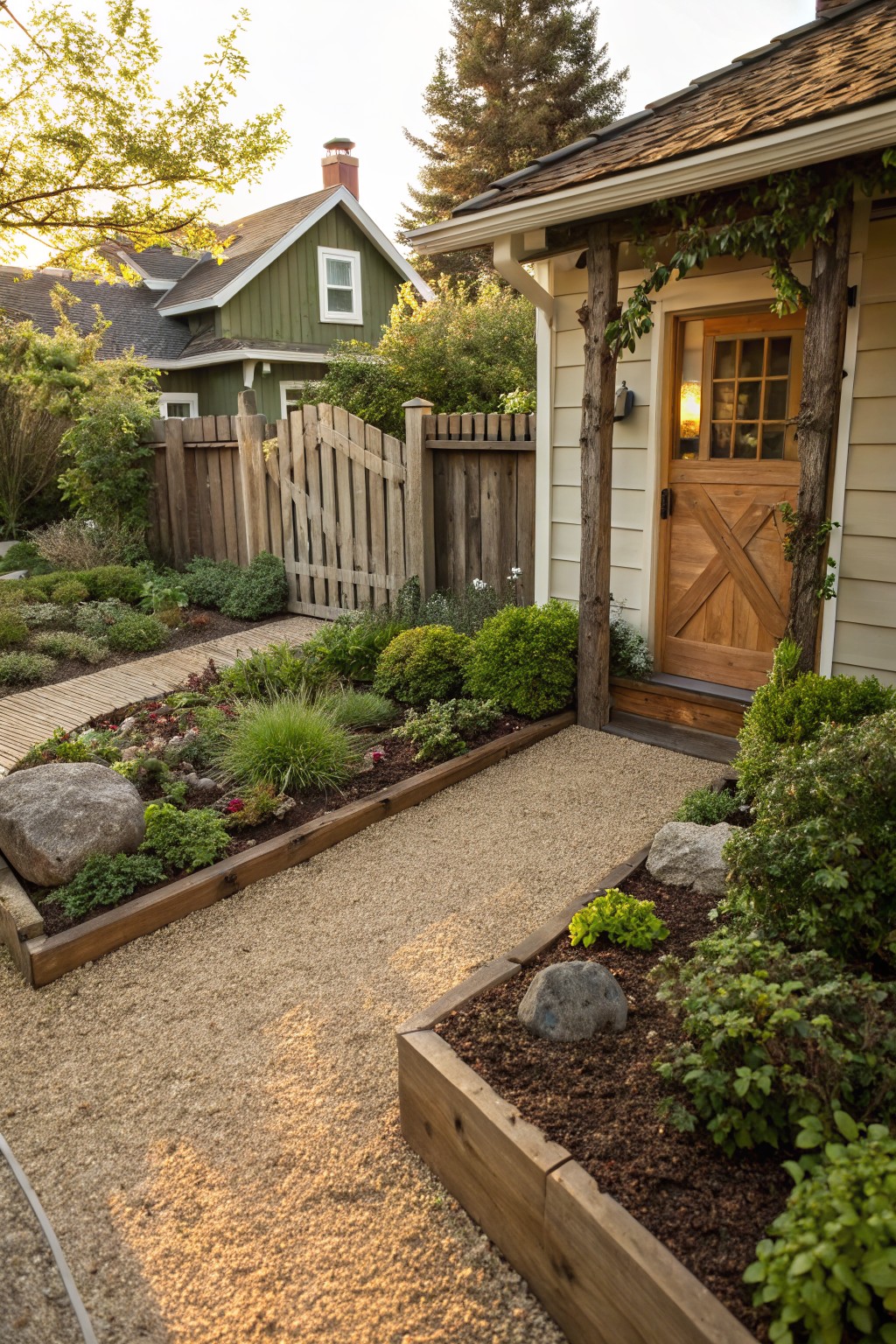
Gravel paths keep a small backyard looking neat without much work. They cut down on mud, weeds, and the need for regular mowing in tight spaces.
Raised beds help contain soil and plants so everything stays organized. This approach works well with evergreens and low shrubs that need little trimming over time.
Gravel Mulch Around Trees And Shrubs

Gravel works well as a mulch in small yards because it stays put and does not need replacing every season. It covers the soil cleanly, cuts down on weeds, and pairs nicely with evergreens that stay green all year.
This setup works best in compact spaces where you want low upkeep. Use it in simple beds edged with stones or in large containers around a tree, and keep the planting simple with a few shrubs. Just check drainage first so water does not pool.
Stepping Stone Paths Connecting Backyard Spaces

Gravel paths with stepping stones give a small backyard an easy structure without a lot of upkeep. The gravel fills the spaces between the pavers, so weeds have less room to grow, and the stones keep the path firm underfoot. Evergreens planted along the edges add year-round shape and cut down on seasonal trimming.
This layout works best in compact yards where you want to connect different areas like a fire pit or seating spot without adding large paved surfaces. Keep the path width consistent and choose low shrubs that stay compact so the gravel stays visible and the whole space feels open.
Frequently Asked Questions
Q: How do I keep weeds from taking over the gravel sections?
A: Put down landscape fabric first and then add the gravel on top. Pull any stray weeds by hand every few months before they spread. This keeps things tidy without much effort.
Q: Do the evergreens need watering once they are settled in?
A: Water them well the first year to help roots take hold. After that they usually manage on their own unless you hit a long dry spell. A quick check with your finger in the soil tells you if they need a drink.
Q: Will mulch around the plants wash away during heavy rain?
A: Use a thicker layer and gently slope it away from the house. The mulch stays put better once plants grow in and hold it with their roots. Replenish spots that thin out after a big storm.