When I first tried planning an outdoor kitchen, the biggest surprise was realizing how much the prep area needs to connect directly to the grill or everything ends up feeling scattered during actual meals.
Many patios look fine on paper but turn out awkward once people start moving around with plates and tools.
I learned that the hard way after one summer of constant back and forth.
The setups that hold up best seem to treat the whole space as one working zone rather than separate stations.
A couple of the approaches in this article look like they could fix that exact problem without requiring a full rebuild.
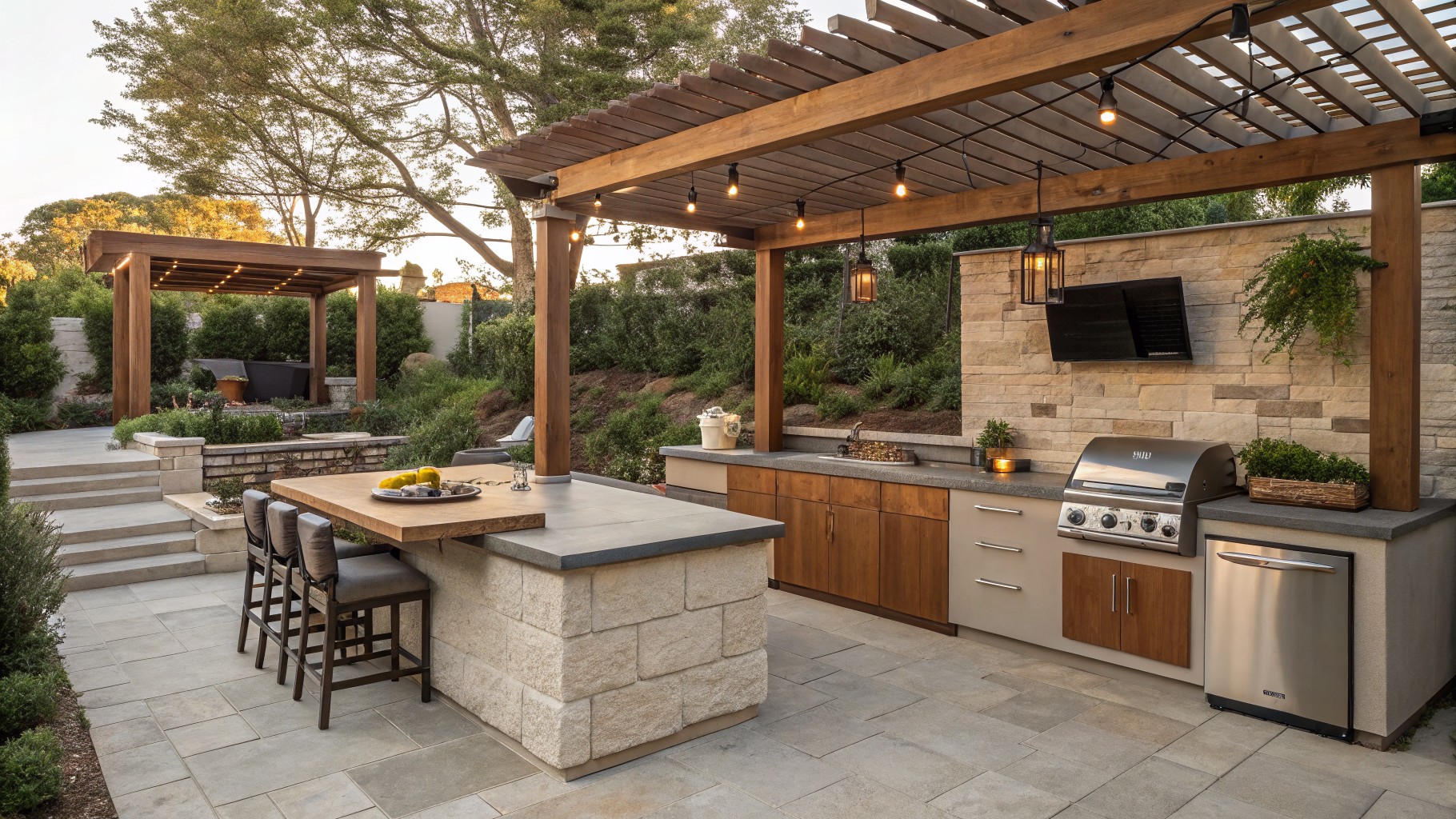
Add Seating To Your Outdoor Kitchen Island

A big island gives you room to prep food and still stay part of the conversation when guests arrive. The seating on one side turns the island into a natural spot for people to gather without crowding the cooking area.
This setup works well in a medium to large patio where you want one main surface to handle both tasks and casual dining. Keep the island height comfortable for standing work and add sturdy stools that can stay outside year round.
Use A Long Outdoor Kitchen Island For Larger Gatherings
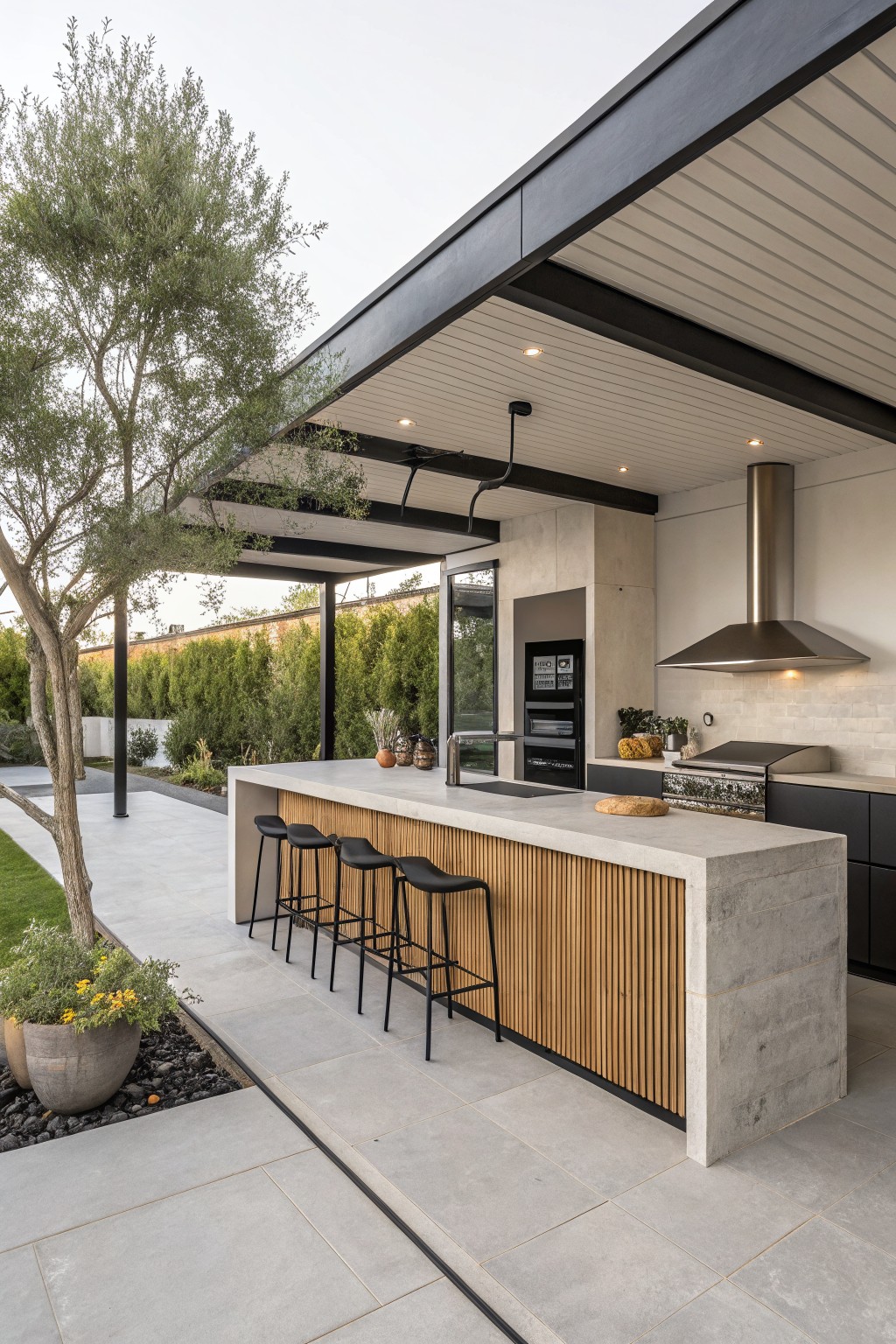
A long island gives you plenty of room to prep food while still staying part of the conversation. The bar seating on one side lets guests sit comfortably without crowding the cooking area, which makes the whole setup feel more relaxed during gatherings.
This works best on covered patios where you have the space to run the island parallel to the house. Keep the front simple with a material like vertical wood slats so it does not feel too heavy, and make sure the height lines up with standard bar stools for easy use.
Create A Social Hub With Island Bar Seating
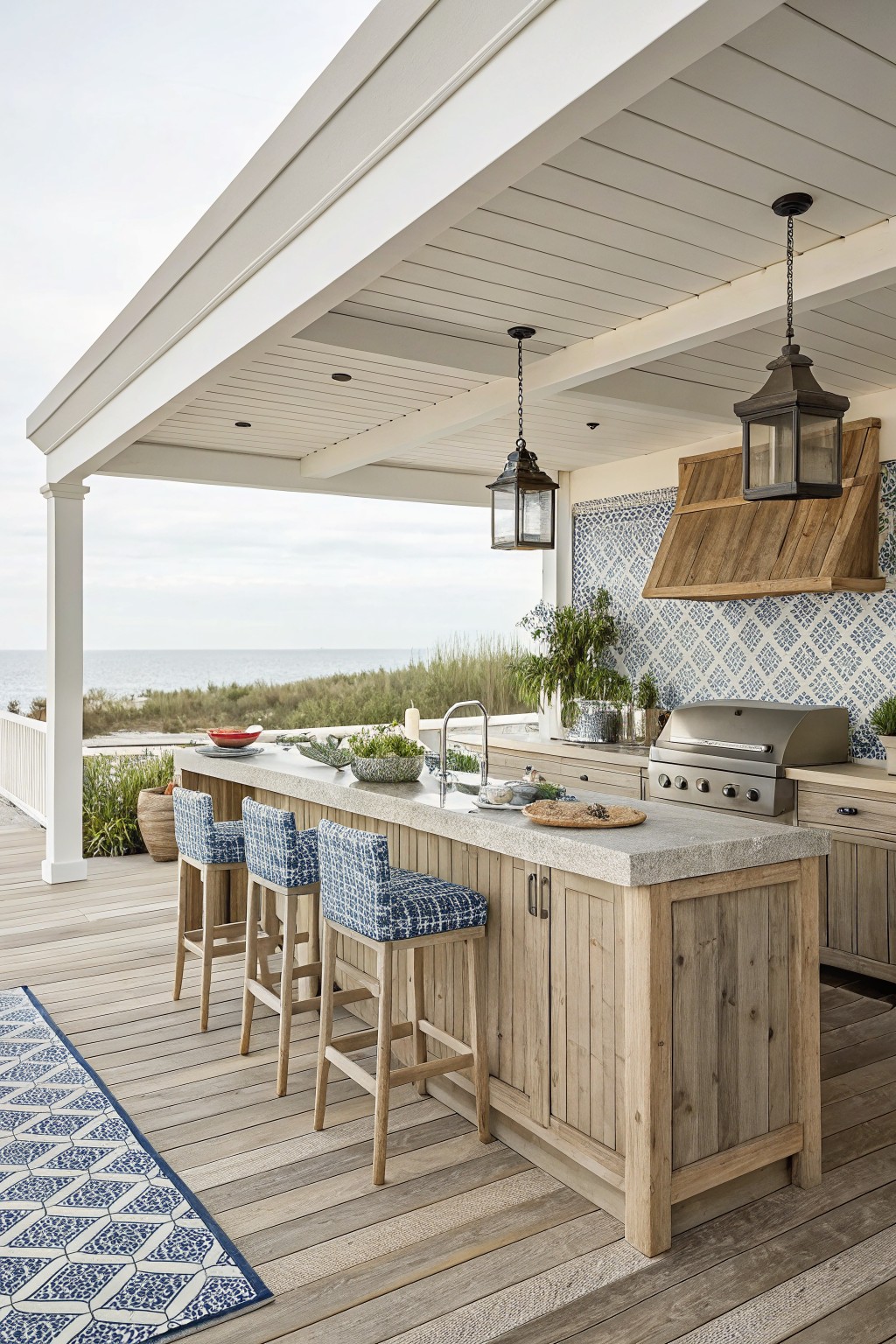
Placing bar stools along one side of an outdoor kitchen island turns the cooking area into a place where people can actually sit and talk. The setup works especially well when the island faces the rest of the patio or yard, so guests stay close without getting in the way of the grill or prep space.
This layout suits homes with decent deck or patio room and a casual entertaining style. Keep the stools simple and weather-resistant, and make sure there is enough clearance behind them so people can move around easily when the space gets busy.
A Straight Line Kitchen Fits Narrow Patios
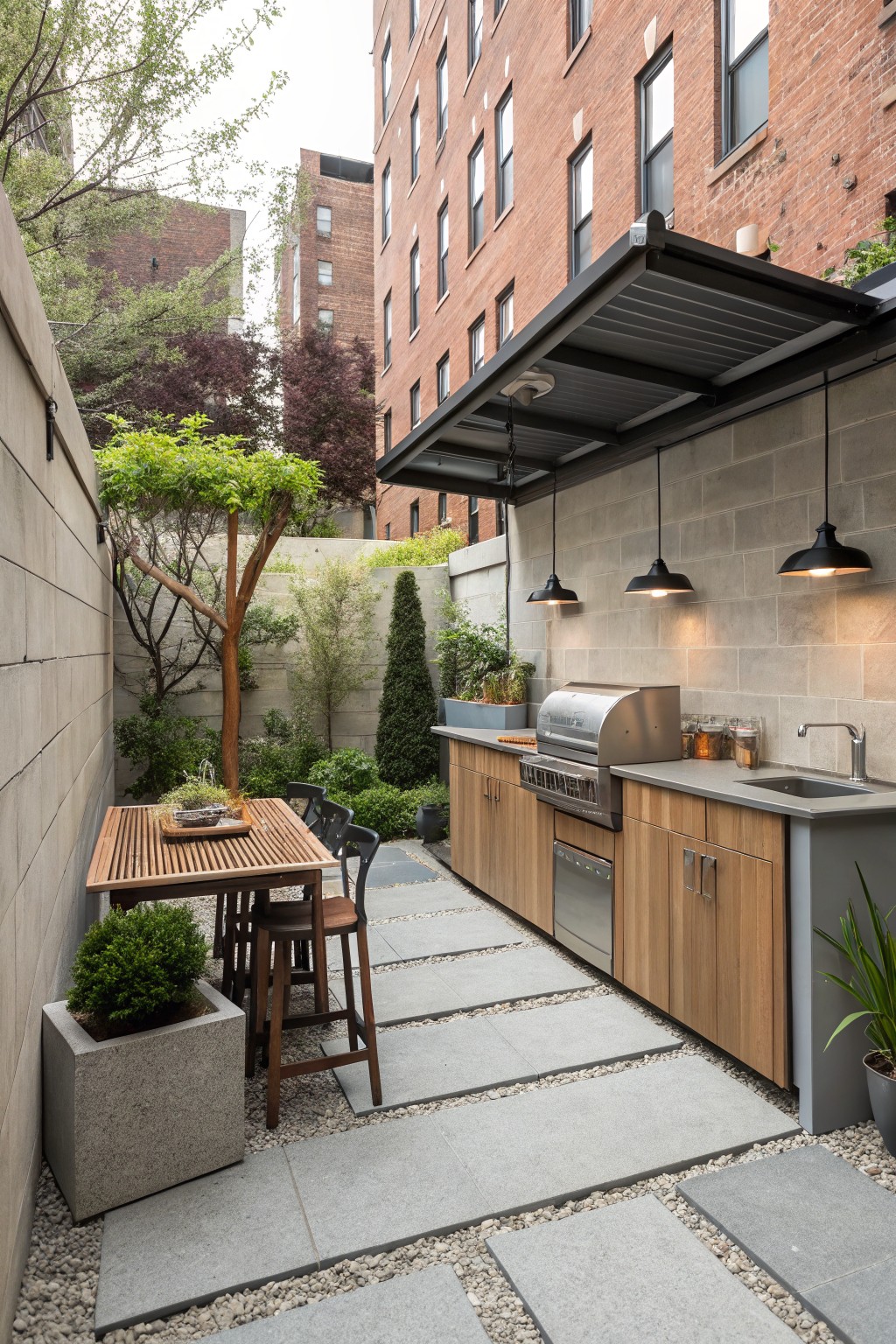
An outdoor kitchen set along one wall keeps the whole space open and easy to move through. In tighter yards this layout leaves room for a small table and chairs without crowding the cooking area. The overhead cover and simple lights above the counter make it practical for evening use too.
This approach works well on urban patios or side yards where space runs long and narrow. Place the grill, sink, and storage in one row and keep everything else minimal. It avoids the clutter that comes with an island and still gives you solid prep and serving space.
Build A Dedicated Outdoor Kitchen Bar Area

A long bar counter right next to the cooking area gives guests a place to sit and talk without getting in the way. It keeps the cook connected to everyone while still letting them handle the grill or prep work. Stone construction helps the counter hold up to weather and daily use.
This setup works best on patios that already have some size and a natural flow toward the house or pool. Keep the stools simple and the counter height comfortable for both standing and sitting. Avoid crowding the space with too many extra pieces of furniture.
Add Woven Lights Over An Outdoor Kitchen

Woven pendant lights work well over an outdoor kitchen because they give off a soft glow that feels warm at night without overpowering the space. The natural texture also ties into the wood cabinets and ceiling above, so the whole area reads as one relaxed zone rather than a separate cooking station.
This setup suits homes that already have a covered patio or pergola and want simple lighting that does not require much wiring. Just hang two or three lights at different heights above the main counter so the grill and prep area stay evenly lit. Watch the scale though. Too many lights can start to crowd the open feel.
Add Drawers and Open Shelves to Your Outdoor Kitchen
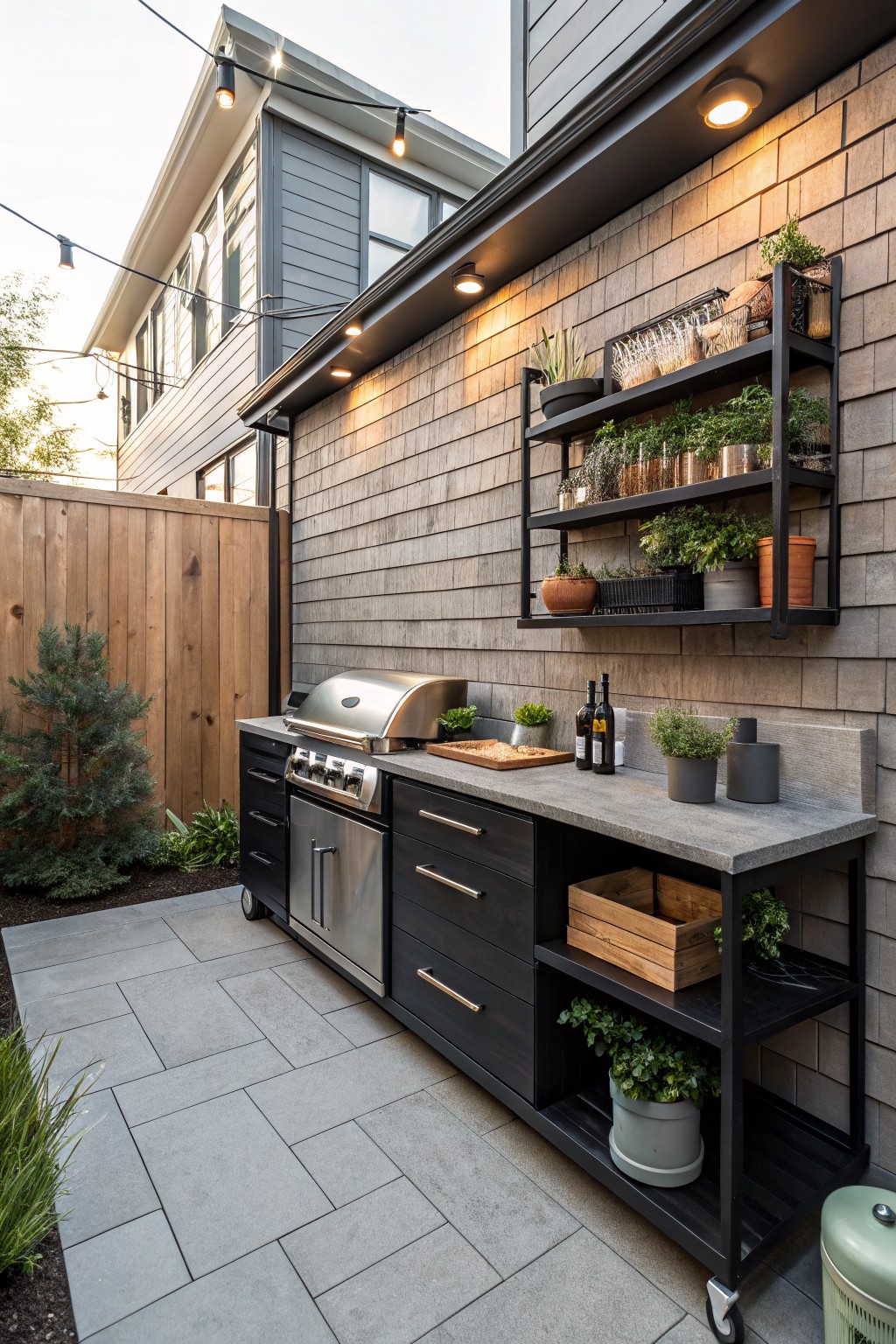
Storage makes a big difference when cooking outside. Drawers keep tools and supplies close at hand, while open lower shelves hold crates or plants without taking up counter space.
This kind of setup works best on a paved patio right beside the house. It suits homes that grill often and need room to prep and serve without extra trips indoors.
Extend Your Outdoor Kitchen With A Casual Bar Counter

An outdoor kitchen feels more useful when you add a bar counter with stools along one side. Guests can sit and talk while food is being prepped or grilled, and the cook stays part of the group instead of working alone.
This layout works well on a medium to large patio where people already gather for meals. Keep the counter height standard for both standing work and seated use, and leave enough room behind the stools for easy movement.
Add A Long Counter Run To Your Outdoor Kitchen
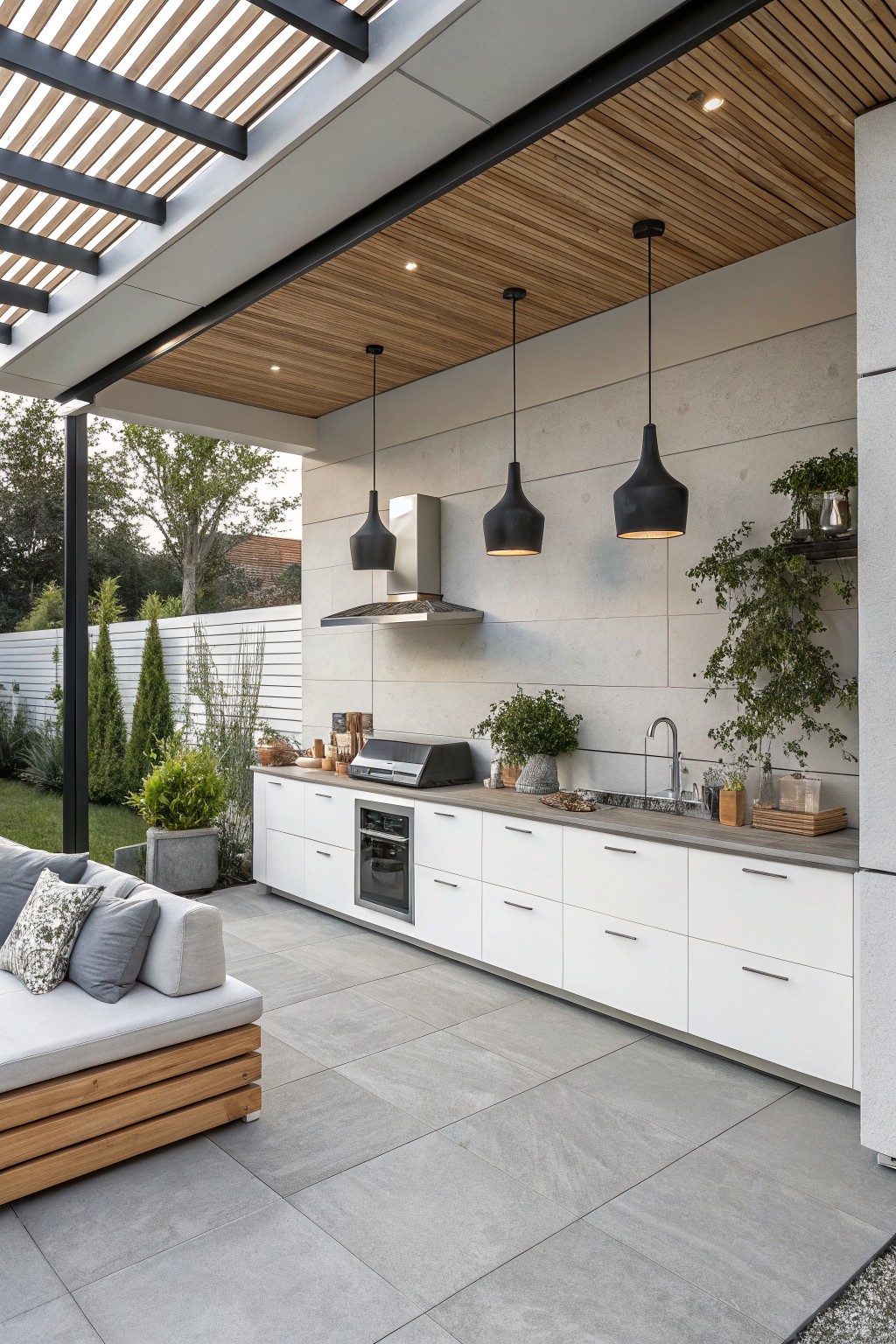
A long counter gives you room to spread out during prep and keeps serving dishes close at hand when guests arrive. It turns the kitchen into a single work zone instead of a scattered setup.
This layout suits patios that already have seating nearby. Choose cabinets and counters rated for outdoor use so the whole run holds up through the seasons.
Design An Outdoor Kitchen Bar For Everyday Meals

A bar counter with stools right next to the cooking area makes the space feel more social. Guests can sit and talk while someone preps or grills, which keeps everyone together instead of splitting the group.
This works best on a covered patio where the counter can run along one side. It suits homes that use their outdoor space often for meals and casual get-togethers. Just keep the stool count modest so the area does not feel crowded.
Use Island Seating To Keep Guests Nearby
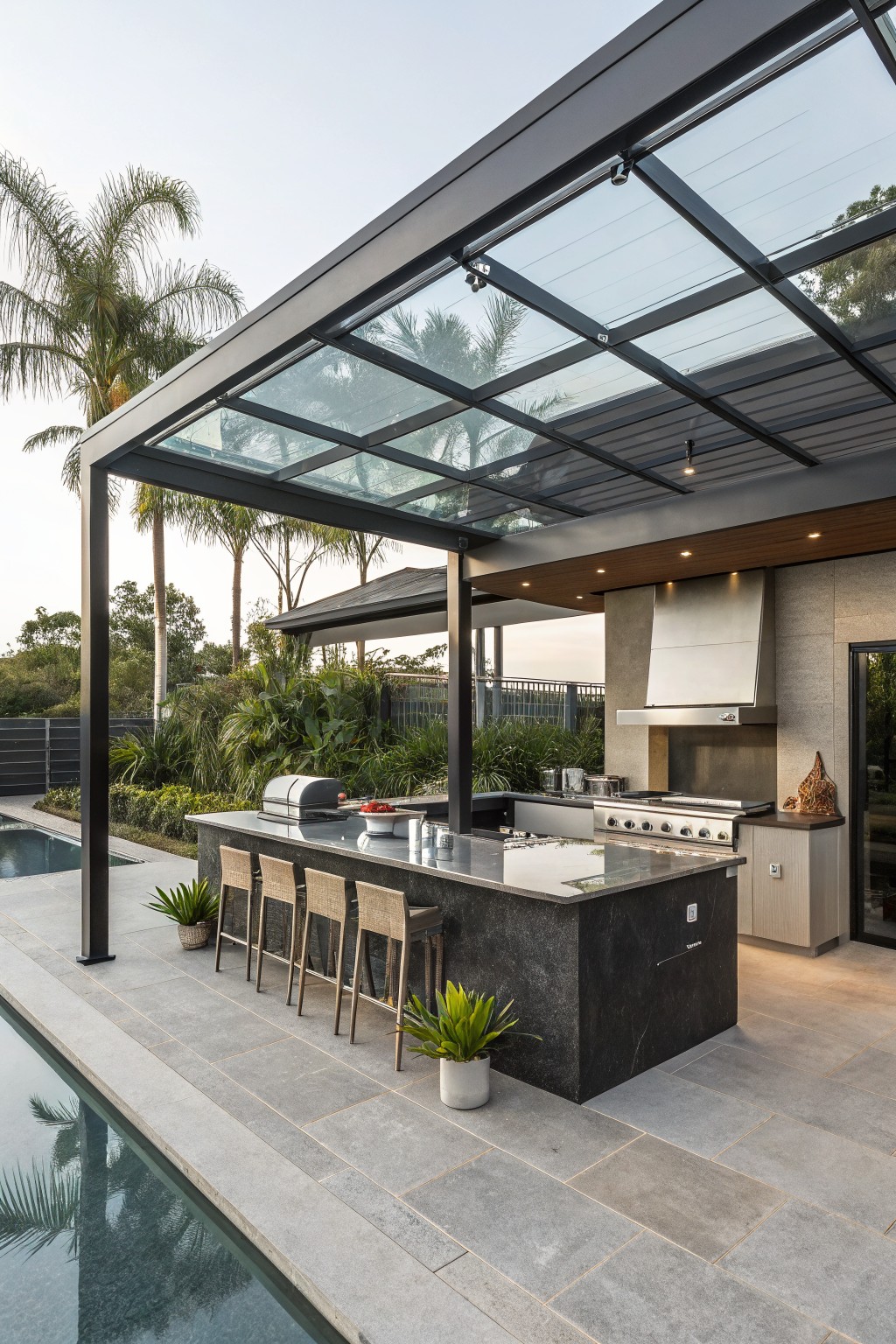
An island with stools on one side turns the kitchen into a natural gathering spot. Guests can sit and talk while the cook works, and the layout keeps everyone together without crowding the prep area.
This setup suits homes with a pool or open yard nearby, since the seating faces outward and keeps the flow easy. Just check that the island height works for both cooking and casual sitting before you build.
Add Storage Cabinets To An Outdoor Kitchen

A cabinet base gives an outdoor kitchen real workspace and places to tuck away tools and supplies. It turns a simple counter into something that handles daily use without clutter building up fast.
This works best on a covered patio where the wood top and painted cabinets stay out of constant rain. It suits homes that already have some garden structure and need a spot for prep that feels connected to the yard.
Create Seating With A Compact Outdoor Kitchen Counter
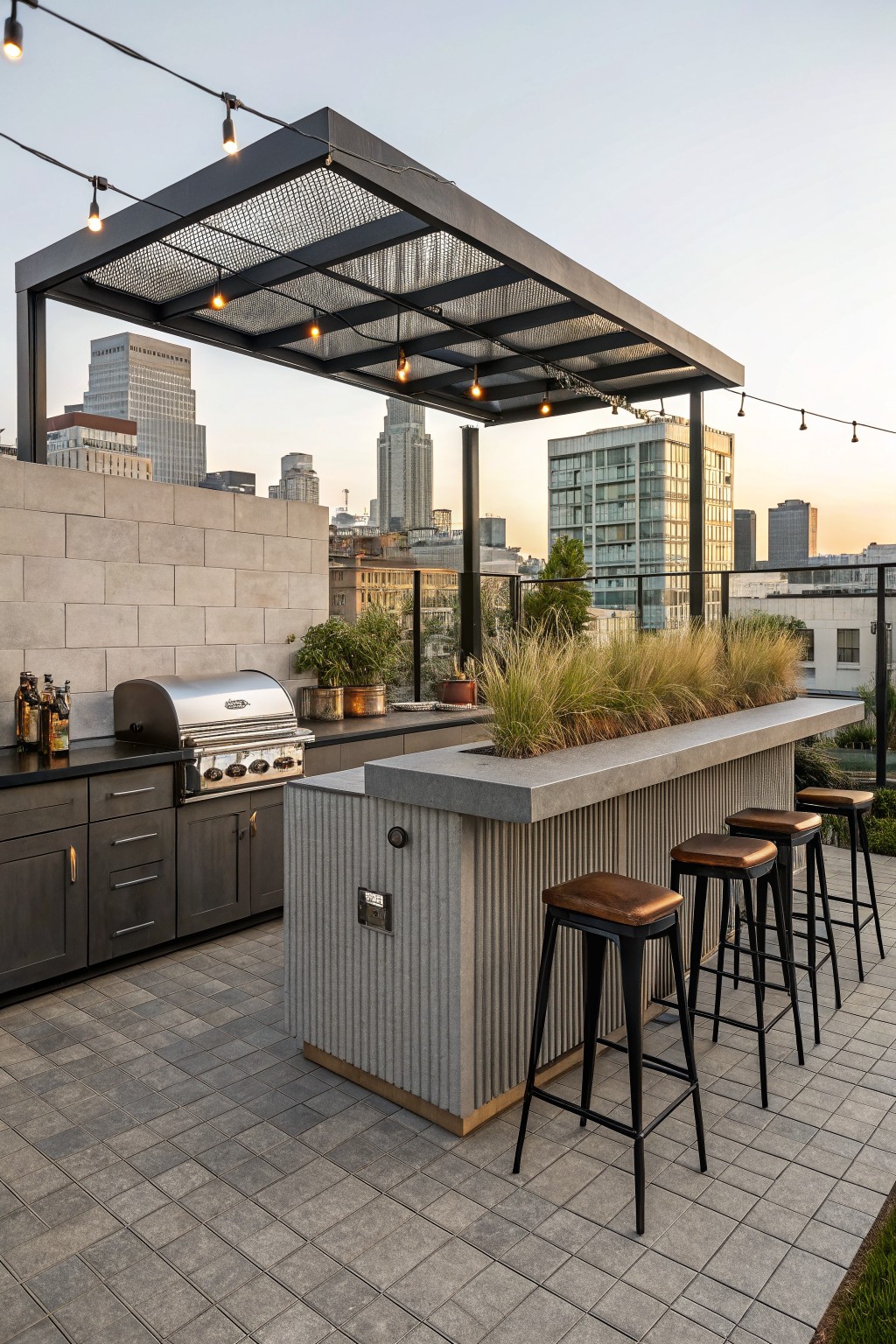
A bar counter gives guests a place to sit and talk while the food is cooking. It turns the grill area into a spot where people naturally gather instead of just standing around waiting.
This works best on patios or rooftops that need to serve both cooking and seating without taking up too much space. Keep the counter height at standard bar level and leave room for people to move behind the stools.
Run a Long Counter for Prep and Serving

A long built-in counter gives an outdoor kitchen real function without crowding the patio. It creates a clear work zone for the grill and sink while doubling as a place to set out food right where guests are sitting. The straight layout keeps the cook facing the dining area instead of turning away from everyone.
This works well on a flat rectangular space with a fence or wall along one side. Place the dining table close enough to reach across the counter for easy passing. Just make sure the counter height matches standard bar seating so people can use it comfortably without stools getting in the way.
Use A Large Central Island For Cooking And Serving
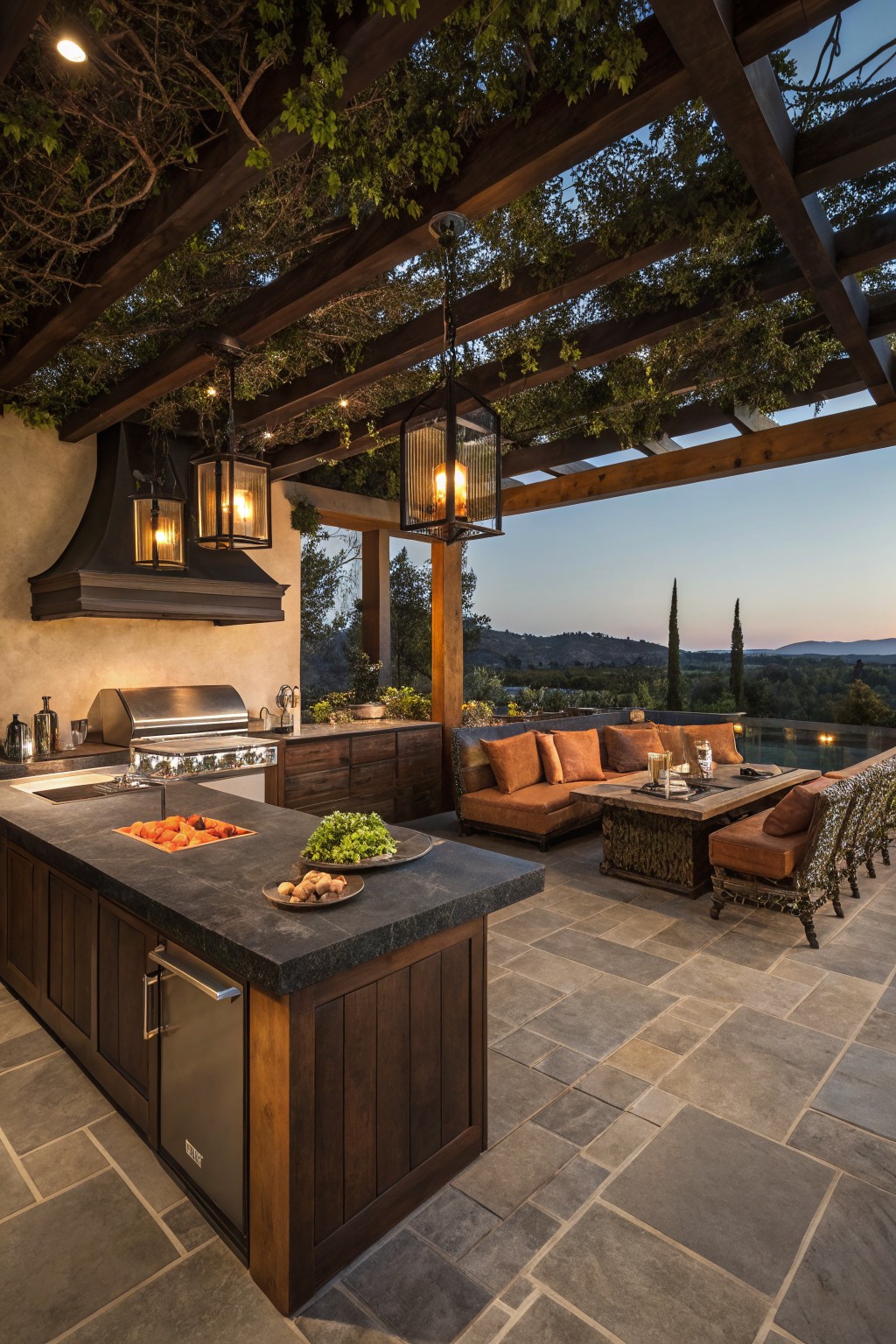
A big central island gives you room to prep, plate, and serve without running back and forth to the grill. It also creates a natural spot where people can stand or pull up a seat while food is being finished.
This layout works best on patios that see frequent use for meals. Choose a durable top like stone or concrete and add storage underneath so everyday items stay within reach.
Keep The Outdoor Kitchen Close To The Dining Area

Many people find it helpful to place the dining table right next to the cooking zone. This layout cuts down on walking back and forth with plates and keeps the cook part of the conversation instead of stuck behind the grill.
It works best on patios that have a solid cover overhead, like a pergola, so the kitchen stays usable even on warm afternoons or light rain. Just make sure the seating does not block the counter space when the space is in full use.
Built-In Cabinetry For Outdoor Kitchens

Outdoor kitchens often feel more useful when they include real cabinet space along the counters. Cabinets give you room to store tools, dishes, and supplies without leaving everything out in the open.
This approach works well on a covered patio where the space sees regular use for grilling and prep. Choose finishes that hold up to weather and make sure the layout leaves enough room to move around the grill and sink area.
Add Bar Stools Under The Outdoor Kitchen Counter
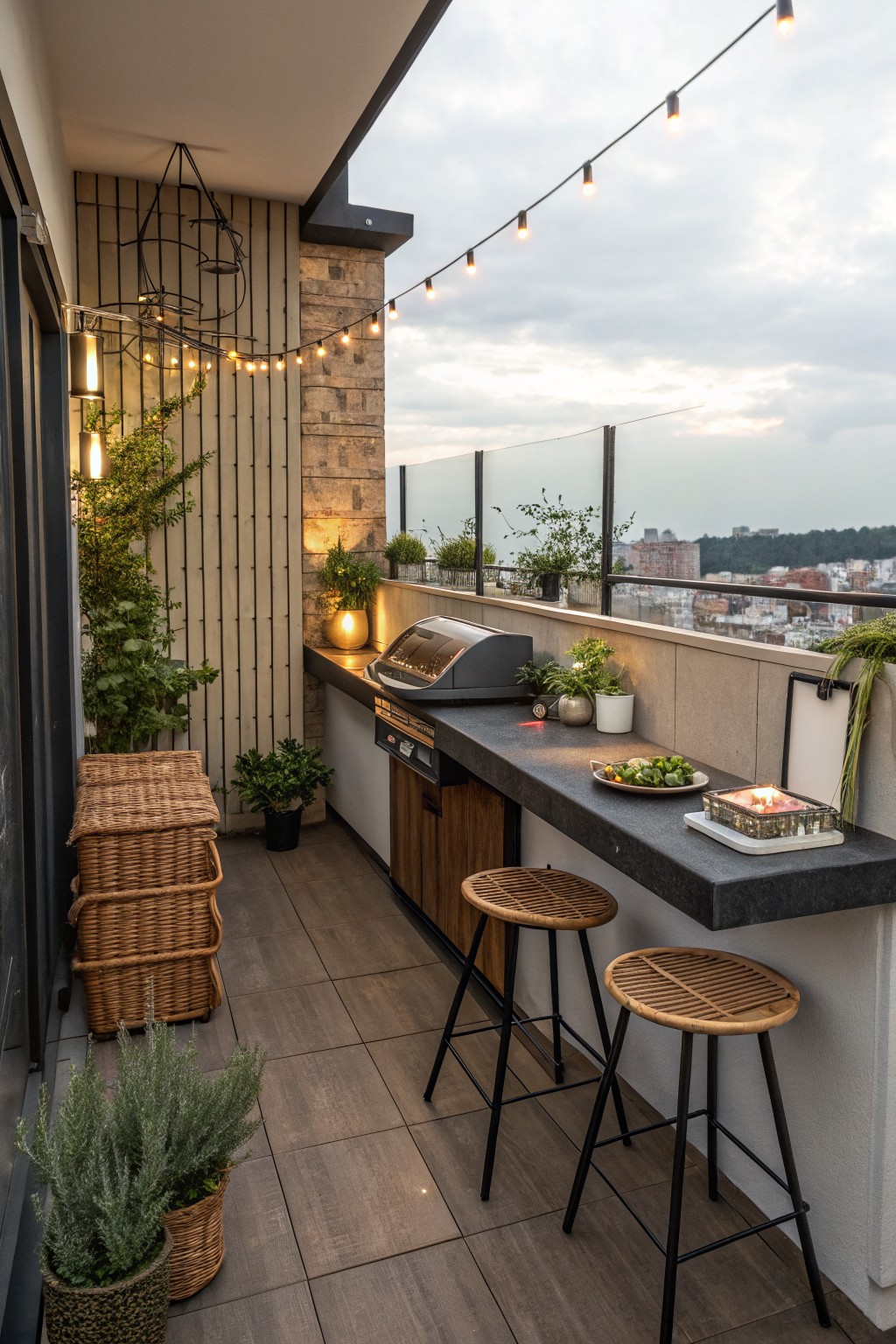
One simple way to make an outdoor kitchen more useful is to add a couple of bar stools that tuck right under the counter. This turns the prep space into a casual spot where people can sit and talk without needing a separate table or extra chairs.
It works best on balconies or smaller patios where every inch counts. Just check the stool height so they fit comfortably and can be pushed in when not in use.
Anchor Your Outdoor Kitchen With Plenty of Storage
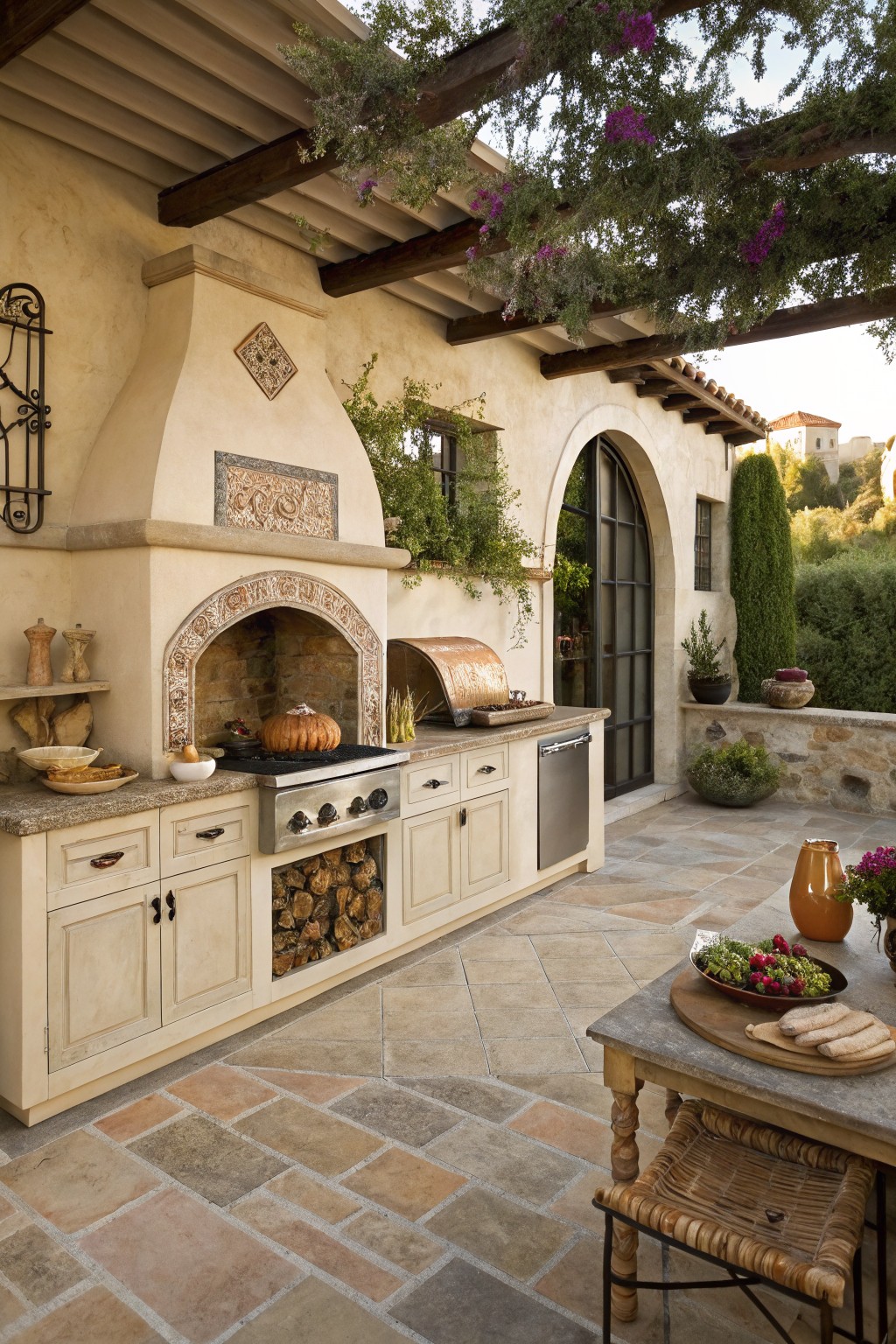
Storage cabinets below the counters turn an outdoor kitchen into a space you can actually use every weekend. They keep serving pieces, utensils, and even firewood right where you need them instead of forcing trips back into the house.
This setup works best on larger patios where the kitchen can stretch out along one wall. Weatherproof materials and simple door styles help the cabinets hold up while still matching the house.
A Long Straight Counter for Grill and Prep

A long straight counter gives you one solid work area that handles both grilling and food prep without extra steps. The cabinets underneath keep tools and supplies close at hand, so you spend less time running back inside.
This layout works best along a wall or fence on a patio that already has decent shade. It suits homes where the outdoor space is used often for casual meals and lets guests stand nearby without crowding the cook.
Placing a Fire Pit Near Your Outdoor Kitchen
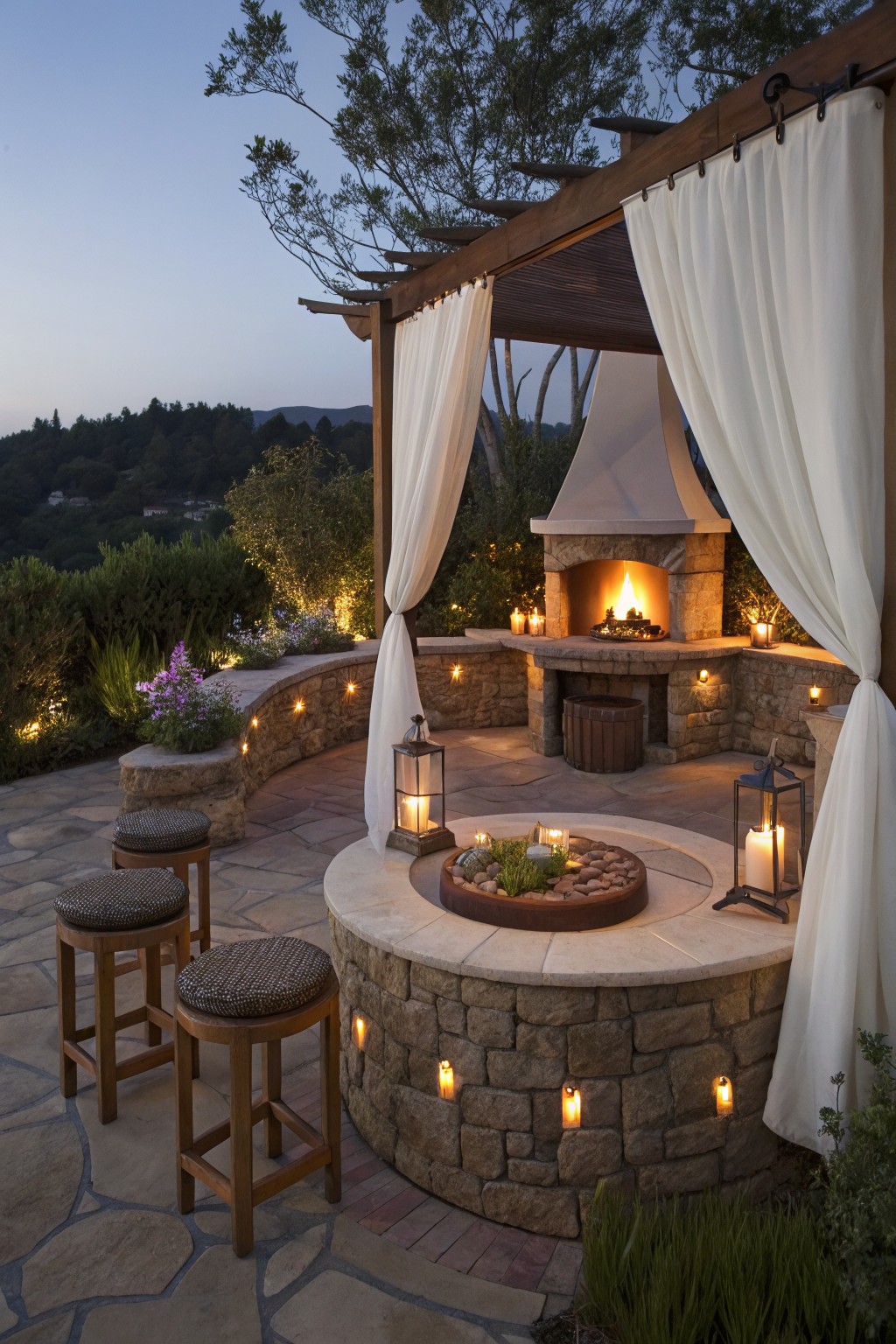
A fire pit set right beside the cooking area gives guests a place to gather without crowding the grill or prep counter. The low stone surround creates a natural boundary that keeps the space organized while still feeling connected.
This setup works best on patios that already have some size to them. Make sure the fire pit sits far enough from the kitchen to avoid smoke drifting over the food, but close enough that people can move easily between both spots.
Add Dining Space Right Next to Your Outdoor Kitchen
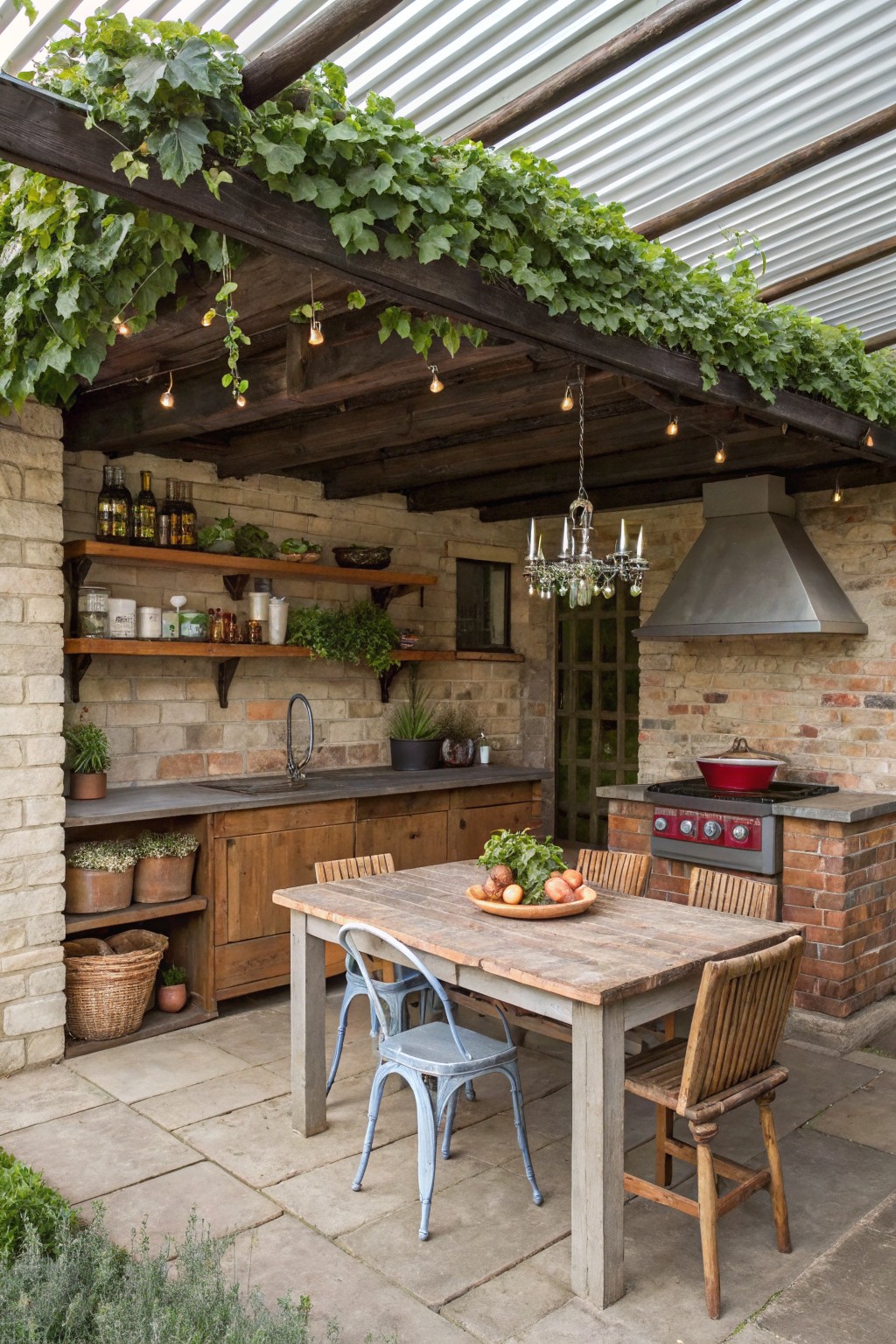
An outdoor kitchen feels more useful when the table sits close by. Guests can talk to the cook without anyone running back and forth, and the whole space works as one zone instead of two separate areas.
This setup works best under a covered roof or pergola where vines and simple lights keep things comfortable. It suits homes with a decent sized patio and a mild climate, though the main thing is making sure the table does not block the cooking path.
Stone Bar Bases For Outdoor Kitchens
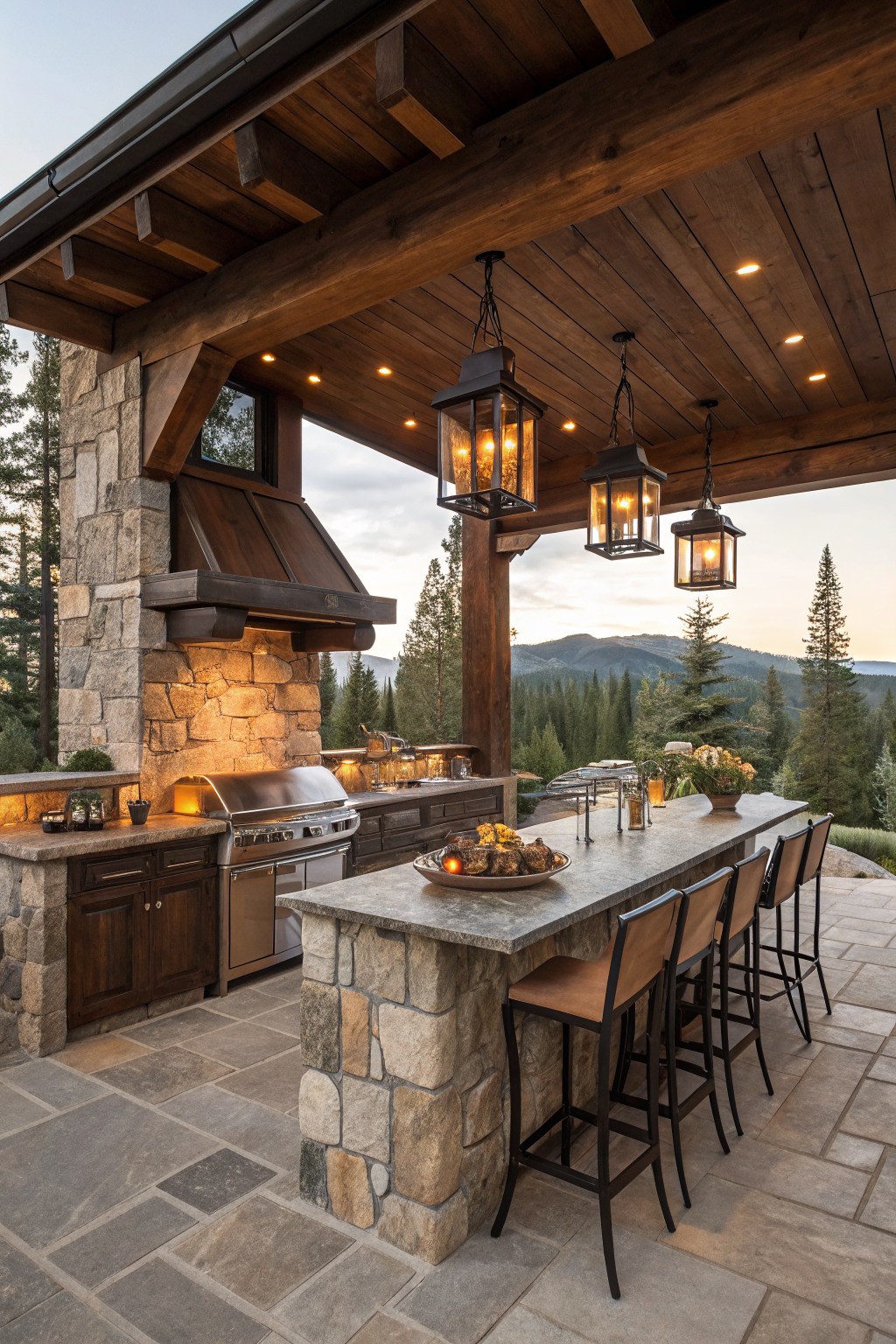
A stone base under the bar counter gives an outdoor kitchen real weight and makes the whole space feel more permanent. It turns the bar into the main spot for prep work and for guests to gather without needing extra tables or furniture scattered around.
This setup works best on larger patios where you want one solid zone for both cooking and sitting. Keep the stone simple and match it to any other masonry on the house so the kitchen feels like part of the structure rather than something added later.
Frequently Asked Questions
Q: How much counter space should I plan for if I want to prep and serve at the same time?
A: Give yourself at least four feet of counter next to the grill. That leaves room for cutting boards and plates without crowding the cook. Guests can grab food easily too.
Q: What if my patio gets full sun all day?
A: Pick materials that handle heat well like concrete or stone for counters. Add a pergola or umbrella to shade the main work area. Your food stays cooler and you avoid burning yourself on hot surfaces.
Q: Do I need to run plumbing out there for a sink?
A: A simple outdoor sink makes cleanup way faster after big meals. You can connect it to a hose if full plumbing feels like too much.