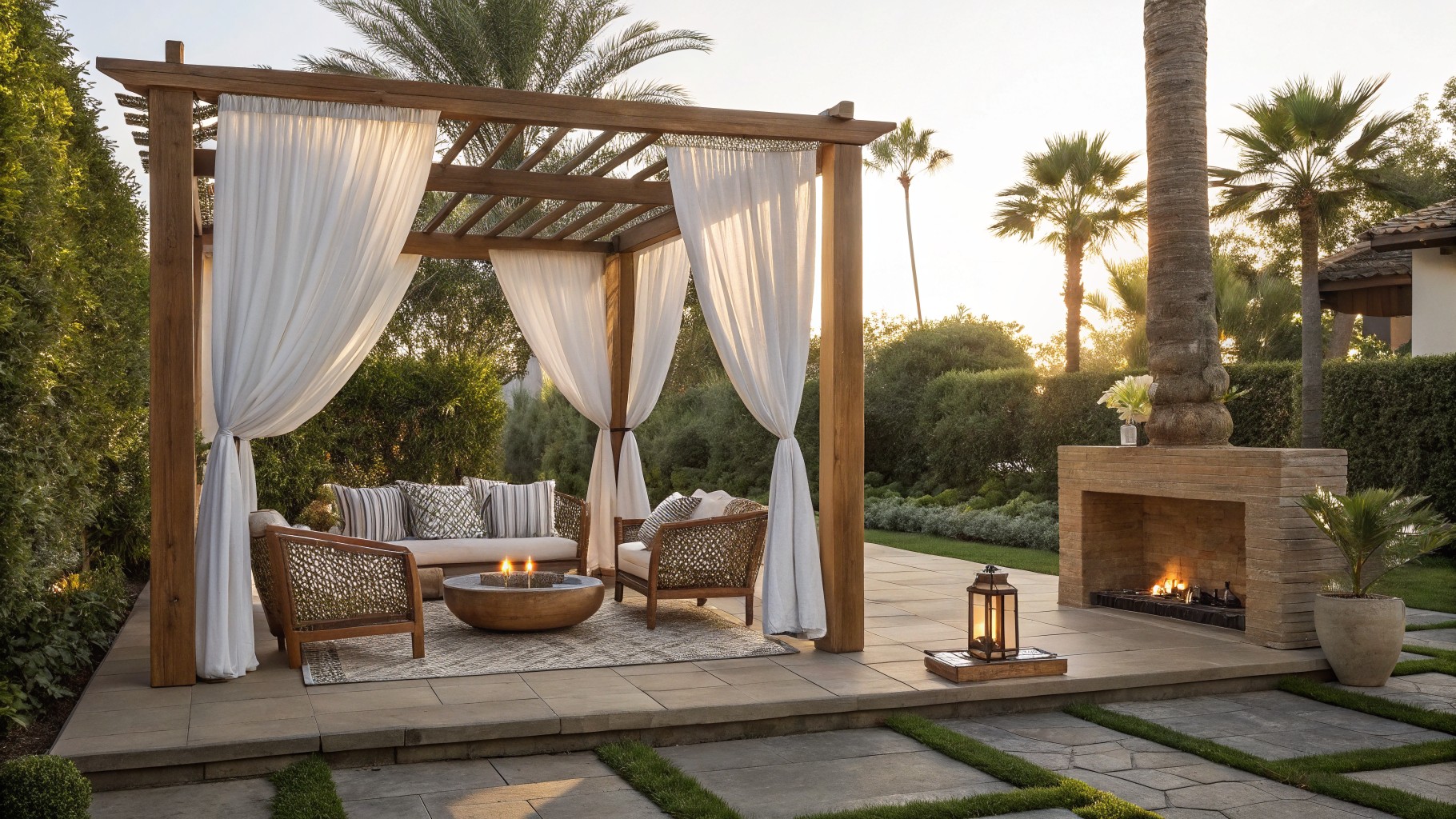
I have found that backyard patios often sit empty when the layout ignores how families actually move through the space during the day.
Shade placement and seating height matter more than most people expect once the sun shifts and meals happen outside.
I usually try any new arrangement by spending a full weekend in it before making permanent changes.
Simple additions like side tables near the main chairs or a low screen for wind can shift how often the area gets used.
The rest comes down to what fits the yard you have.
Hang Curtains On A Pergola For More Privacy
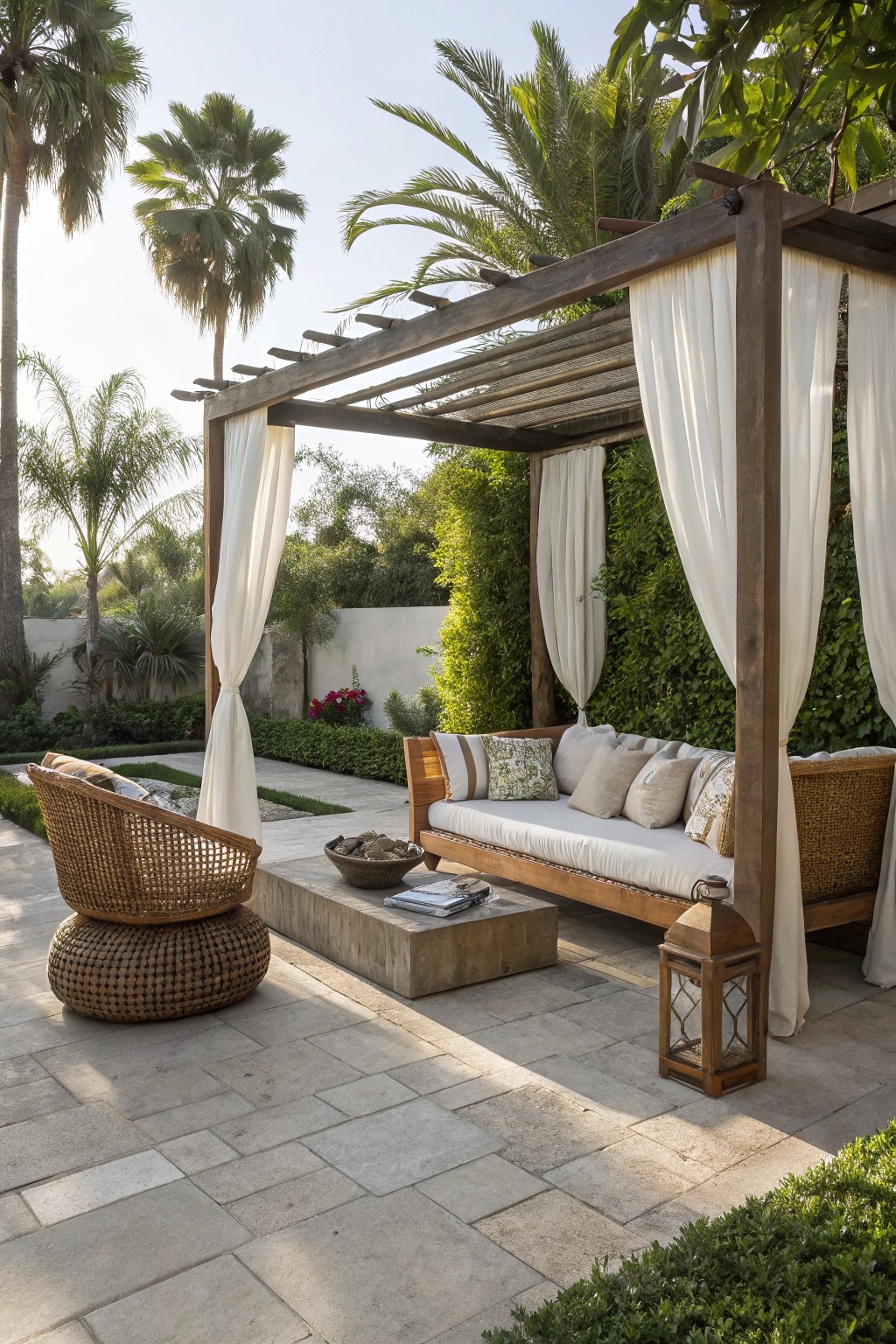
Many backyard patios feel too open, even when they have a roof overhead. Curtains give you a simple way to soften the edges and block views from outside without losing the outdoor feel.
This approach works best on patios that sit close to other houses or get strong sun from one side. Use weather-resistant fabric and hang the panels so they can be pulled back on nice days or closed when you want more shelter.
Built-In Seating Along The Fence
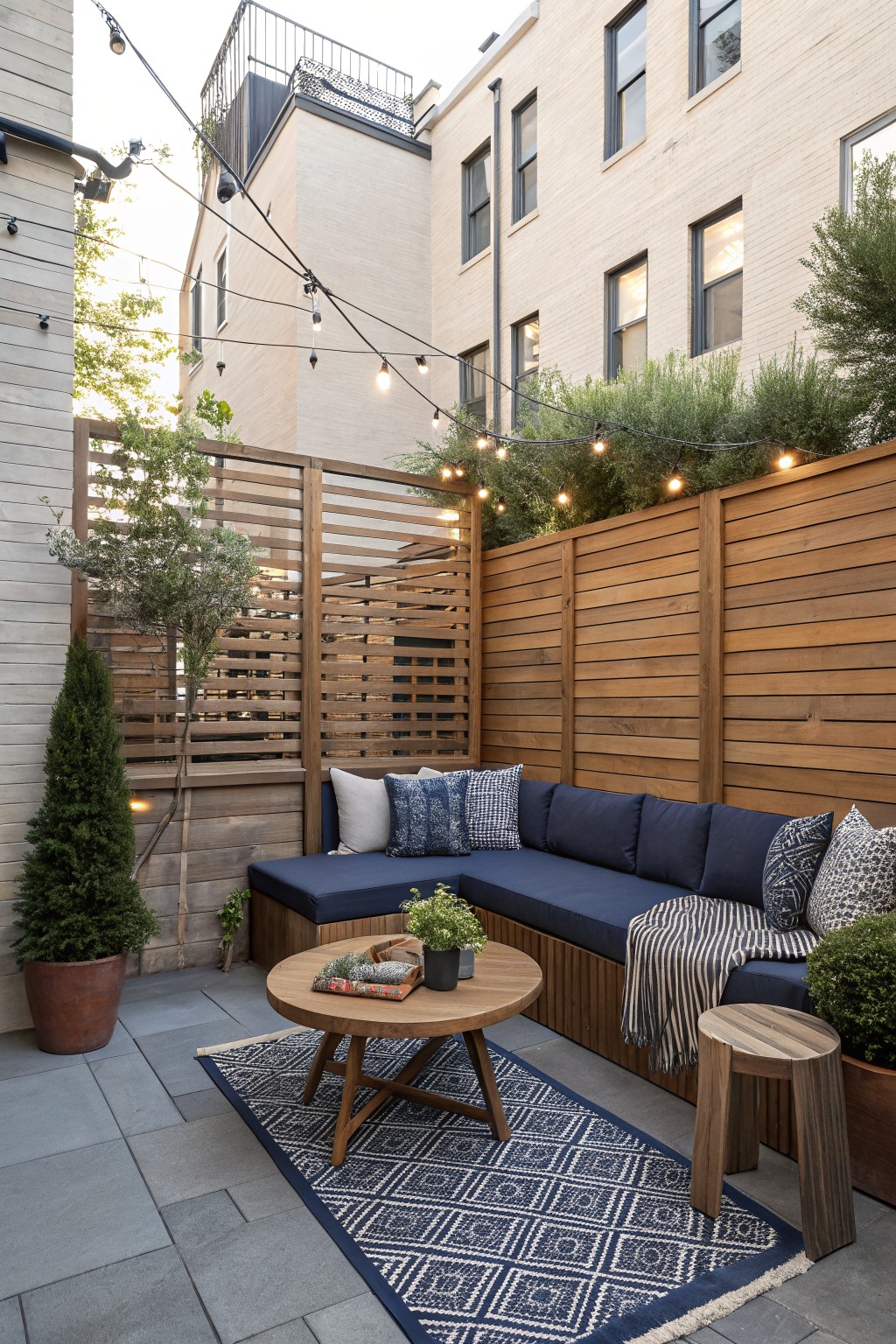
Built-in seating along a fence turns a small or narrow backyard into a usable lounge without taking up extra floor space. It creates a natural boundary that feels enclosed and comfortable, which is why many people like it for a relaxed outdoor setup.
This layout works best in city yards or tight lots where privacy matters. Keep the bench depth around 18 to 20 inches so it stays comfortable, and choose cushions in one solid color to keep the look simple. A low table in the middle finishes the space without crowding it.
Hang Lanterns from a Pergola for Evening Ambiance

A pergola already gives some cover, but adding hanging lanterns on simple ropes brings a softer light that works well after dark. The woven style keeps things casual and lets a little breeze through, which helps the whole seating area feel more like a spot you would linger in.
This setup works best over a main lounge zone on a patio that gets used at night. Keep the lanterns at different heights so the light spreads out instead of creating one bright spot, and choose sturdy rope if your area gets wind.
Add an Outdoor Daybed for Easy Lounging

An outdoor daybed gives you one solid spot to stretch out without crowding the patio with extra chairs or tables. It works especially well when you want a resort feel but still need the space to feel open and usable most of the year.
Set it under a simple overhead structure and keep the cushions neutral so the surrounding plants and any water feature stay the focus. This setup works best on patios that already have some shade and a bit of greenery nearby.
Add A Pergola For Everyday Shade
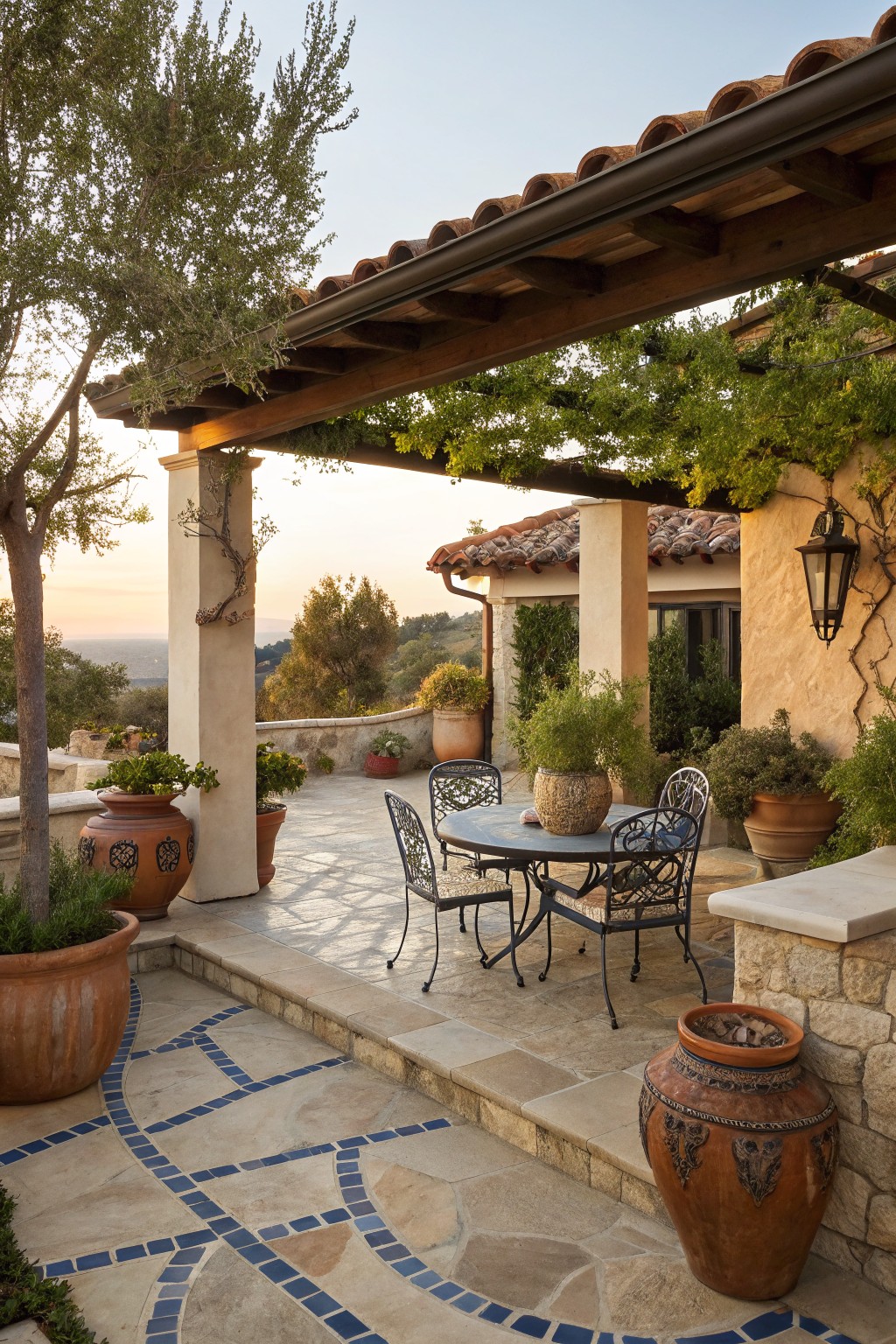
A pergola gives an outdoor dining spot real structure without closing it in. The wooden beams create a clear ceiling over the table, which makes the space feel settled and usable even on hot afternoons or light rain days.
This setup works best on patios that get strong sun or sit next to the house. Keep the frame simple, let vines grow along the top, and place a few large pots nearby so the whole area feels anchored. Just watch the scale so the posts do not crowd the seating.
Add a Fire Pit by the Pool
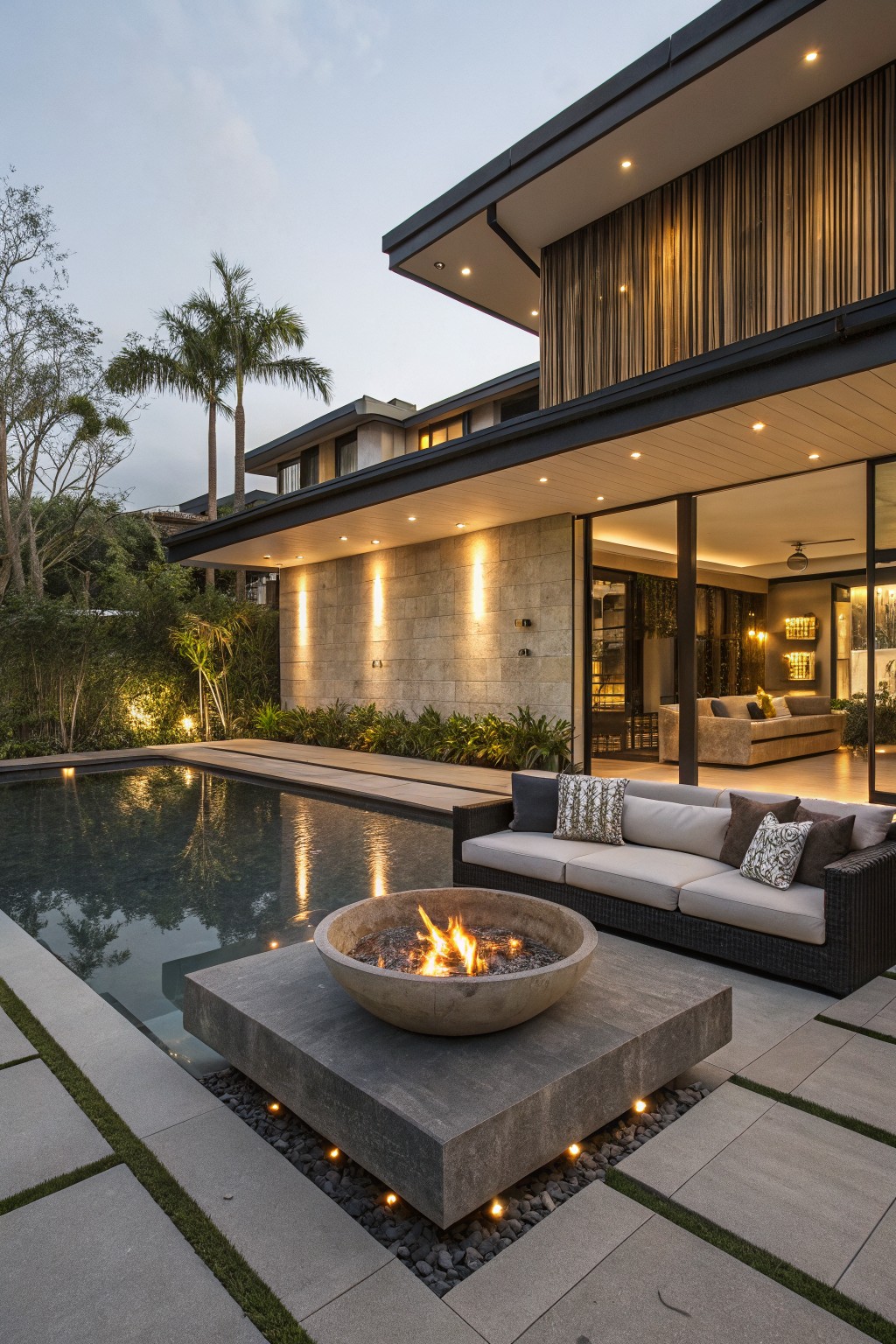
A fire pit placed right next to the pool gives the patio a natural spot to gather after dark. It turns the water into a backdrop instead of the only feature, and people tend to stay outside longer when there is a warm center to sit around.
Keep the pit low and simple in shape so it does not block the view of the water. Concrete works well because it handles weather and pairs with most patio materials. Just leave enough paved space around it for chairs without crowding the pool edge.
Hang Curtains on Your Pergola
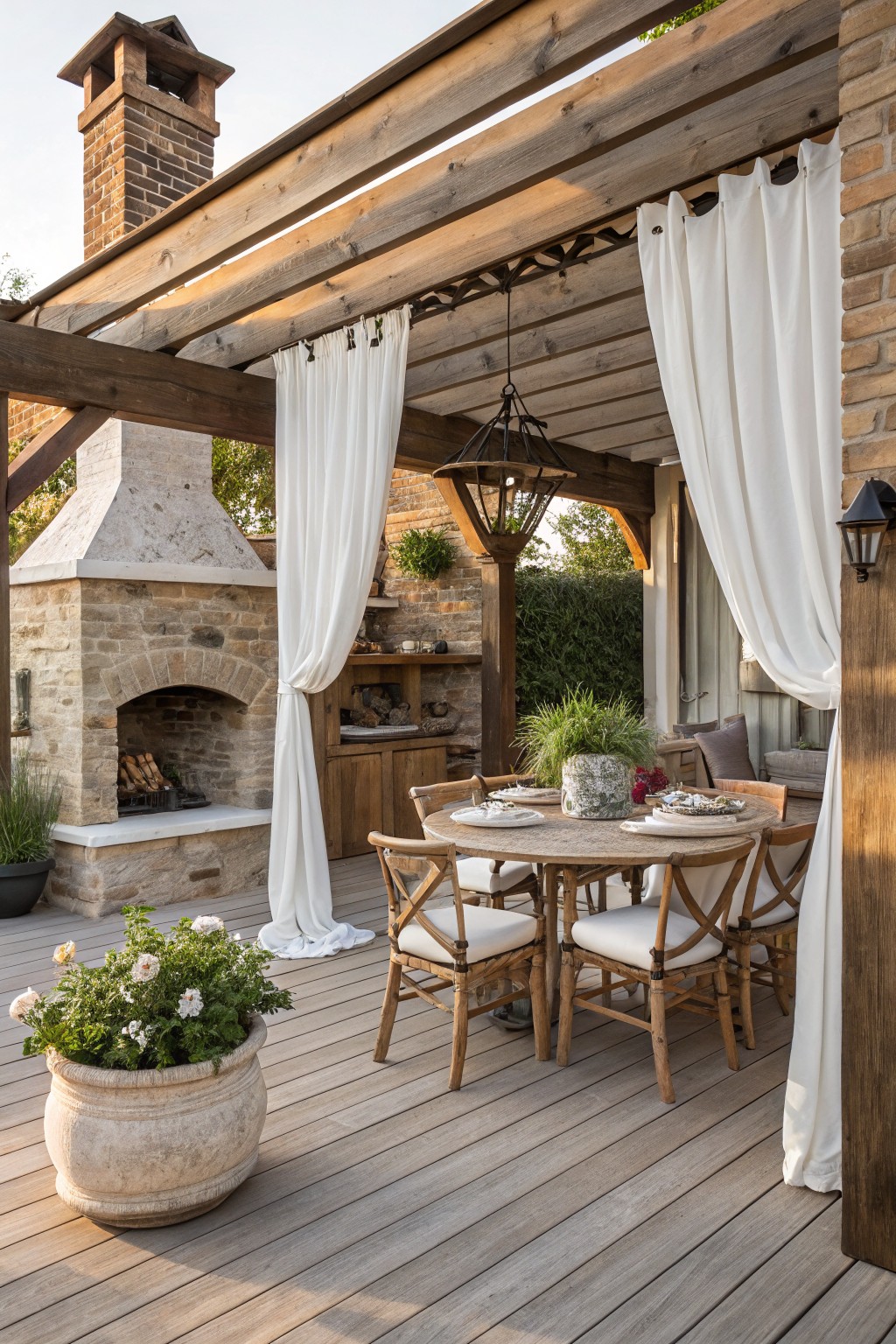
Hanging light white curtains from a pergola is a simple way to make an outdoor dining area feel more enclosed and private. The fabric softens the heavy wood beams and lets some light through while still giving the space a gentle boundary.
This works best on patios that sit close to neighboring yards or need a bit of shade on one side. Pick outdoor fabric that can handle weather, and choose a length that just brushes the floor so it moves nicely in the breeze without getting in the way.
Set a Bench Right by the Pond

A simple bench placed along the edge of a small water feature gives the whole space a quiet, settled feel. It turns the pond from something you just look at into something you can sit beside without any extra furniture or fuss. The low height and natural wood keep it from competing with the water or the surrounding gravel and plants.
This works best in smaller backyards where you want one clear spot to pause rather than a full seating area. Use it on a modest patio or deck extension where the bench can sit on stone or concrete and stay level with the water. Keep the bench plain and let the pond and surrounding gravel do the rest.
Outdoor Curtains Create Private Lounging Areas
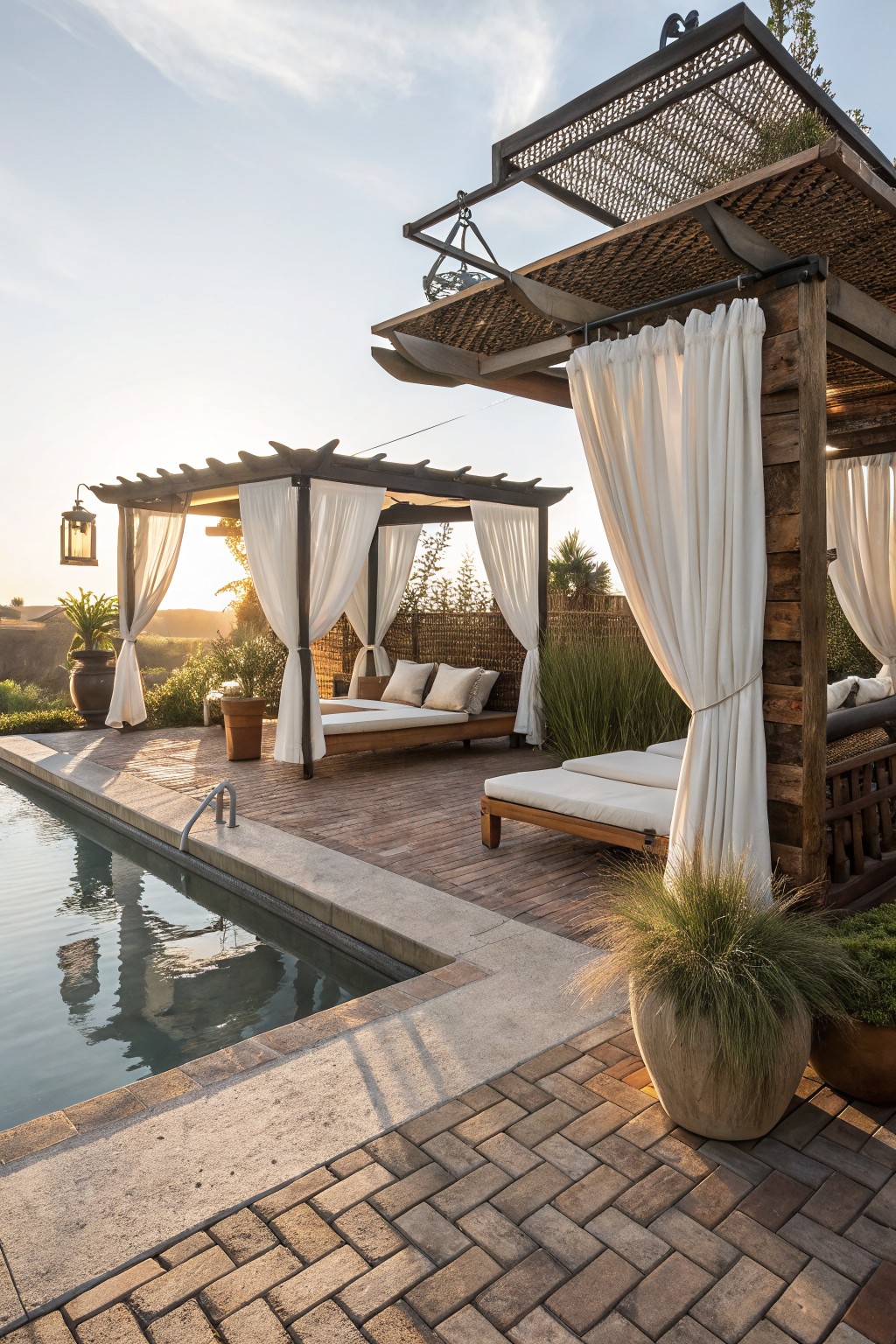
Curtains on pergolas or cabanas give an outdoor space a way to feel more enclosed without building walls. They block sun when needed and can be pulled back on nice days, which makes the seating area feel more usable through different times and weather.
This works especially well around pools or larger patios where you want a few defined spots instead of one big open deck. It suits homes that already have a wood structure in place, since adding fabric is a simple change that does not require major construction.
Use a Fabric Canopy for Simple Shade

A fabric canopy overhead gives a patio real structure without needing a full roof. It blocks sun during the day and creates a clear boundary for the seating area, which makes the space feel more intentional and comfortable to use.
This works especially well on decks or rooftops where a permanent roof is not an option. Keep the frame simple and add string lights underneath so the area stays usable after dark. Just make sure the fabric is secured well in windy spots.
Built In Bench Seating Along The Patio Wall

A built in bench gives the patio a settled, finished look without taking up extra floor space. It turns an empty wall into a place where people can actually sit and stay awhile. The simple wood top and low profile keep things relaxed rather than fussy.
This works best on a side wall or along the house where you want seating but do not want to crowd the middle of the patio. It suits smaller yards or homes with stucco or brick exteriors. Just add a few cushions and you have seating ready for morning coffee or evening drinks.
Anchor Your Patio With A Fire Pit

A fire pit gives the whole patio a clear reason to spend time outside once the sun goes down. It creates a natural center point that draws people in without needing extra furniture or decoration.
This setup works best on patios that have a bit of space and some surrounding greenery. Keep the seating low and arranged in a loose circle so the fire stays the main focus and the space still feels open.
Built-In Bench Seating For Outdoor Comfort

A built-in bench along one wall turns a small courtyard into a place where people actually want to sit and stay. It gives you plenty of seating without adding extra furniture that can crowd the space. The cushions make it feel finished and ready to use right away.
This setup works best in enclosed patios or side yards where you have a solid wall to build against. Keep the cushions simple to clean and add a few lanterns nearby if you plan to use the space after dark. Avoid filling the bench with too many pillows if you want it to stay practical for everyday use.
Pergolas That Define Outdoor Dining Zones
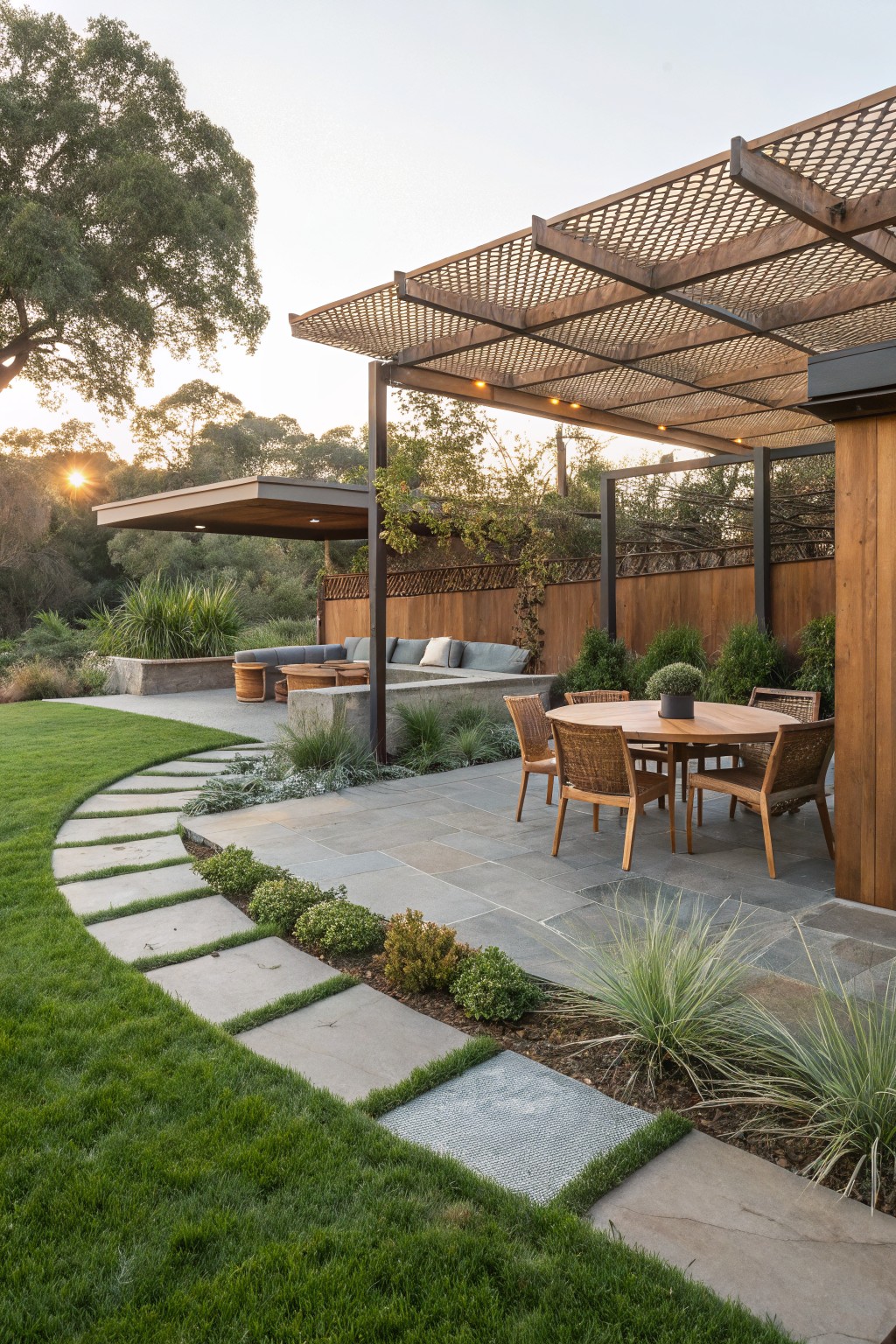
A pergola gives an outdoor patio a clear sense of place without making it feel boxed in. It marks where the dining area sits while still allowing light and breeze to pass through the open roof.
This approach works best on larger patios that sit next to a lawn or garden. Keep the surrounding paving simple so the covered table and chairs read as the main gathering spot rather than competing with other features.
Build Seating Around a Central Fire Pit
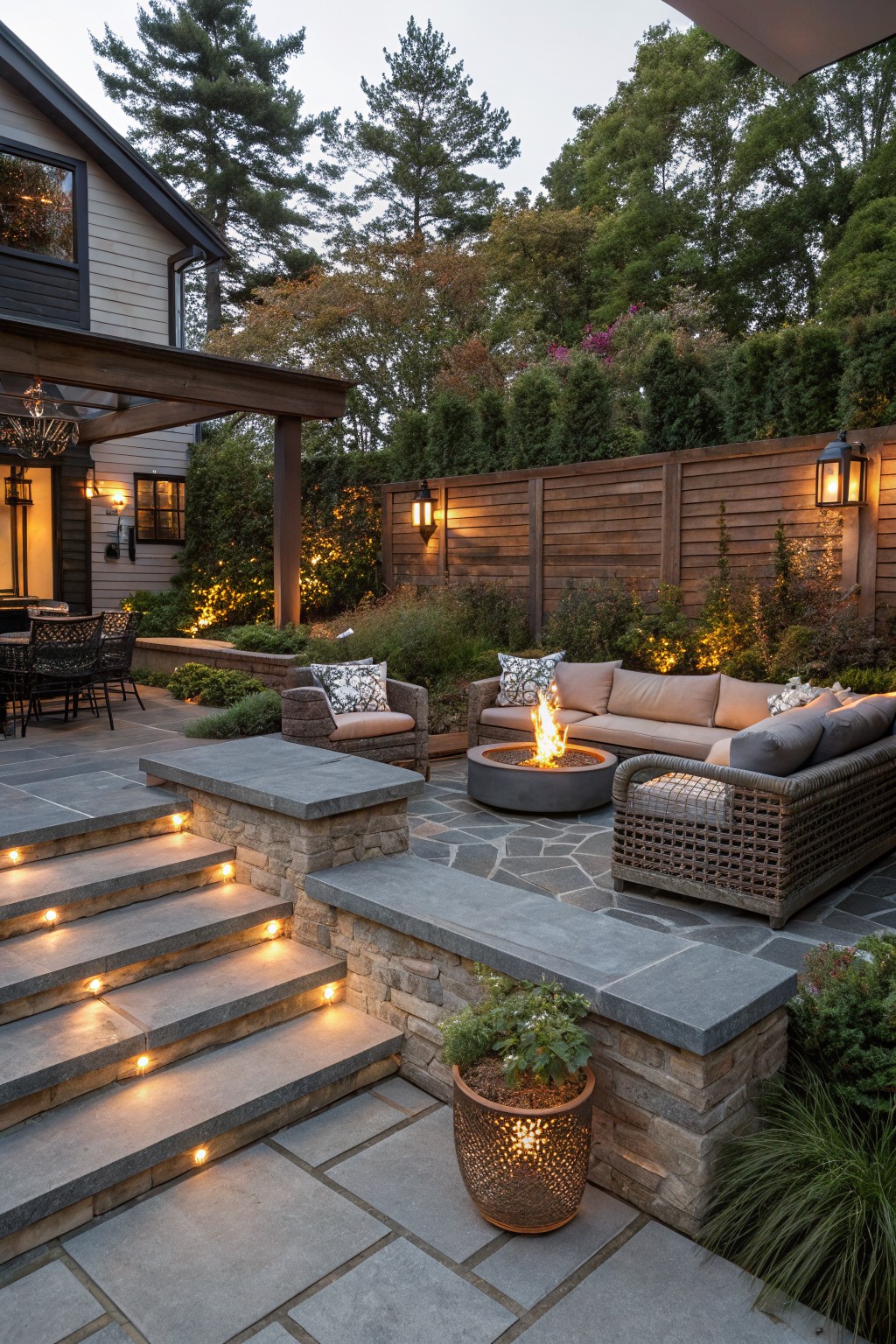
A fire pit works well when you place it right in the middle of the seating instead of off to the side. This layout keeps everyone close to the warmth and makes the space feel like one connected area rather than separate pieces of furniture scattered around.
It suits a medium to large patio best, especially if you already have a flat stone or concrete surface. Keep the surrounding chairs and sofas low and deep so people stay comfortable for longer stretches, and add simple path lights along any steps leading in and out.
Pergolas That Cover Both Kitchen And Lounge Areas

A pergola over the main patio area gives you shade where you need it most. When the same structure covers both seating and an outdoor kitchen, the space feels like one complete room instead of separate zones. People use the area longer because the cooking stays close to the seating without anyone standing in full sun.
This setup works best on larger patios next to a pool or in warm climates where shade matters every day. Keep the kitchen simple with a built-in grill and basic counter space so it does not crowd the lounge furniture. Make sure the pergola posts leave enough room for chairs to pull out comfortably around the table.
Stone Fireplaces For Covered Patios
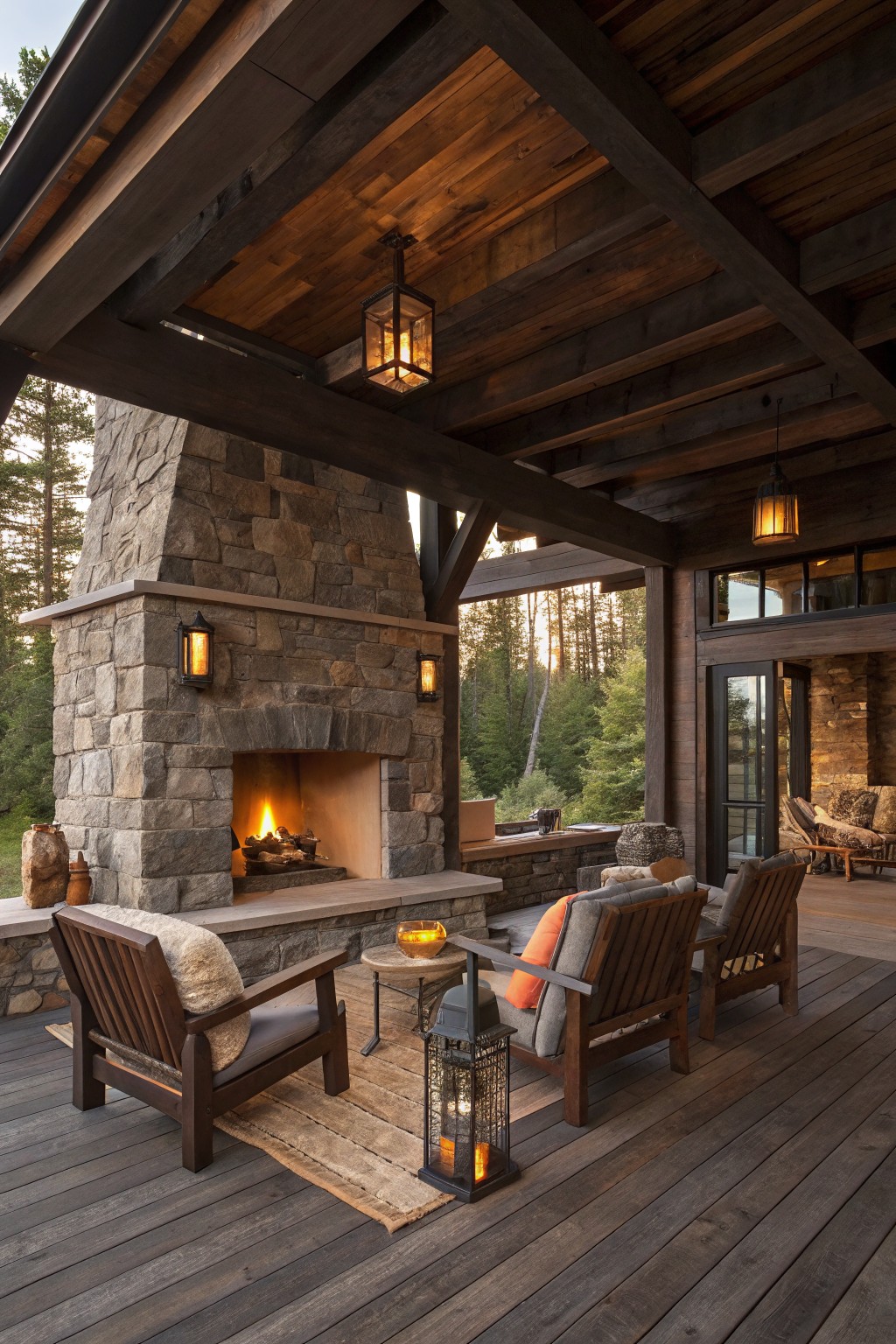
A large stone fireplace changes how a patio feels once the sun goes down. It gives off steady heat and creates a natural spot for people to gather without needing to huddle around a small fire pit. The solid structure also helps define the space so the seating area feels more like an actual room.
This works best on decks or patios that already have some kind of roof or overhang. It suits homes in cooler climates where evenings get chilly but people still want to stay outside. Make sure the fireplace sits far enough from the main seating so the heat does not overwhelm the chairs.
Curved Decking for a Natural Fit

A curved deck edge lets the seating area follow the shape of the yard instead of fighting it. That simple bend keeps the space from feeling boxed in and helps it sit more comfortably next to gravel, rocks, and planting.
This layout works best on lots that slope or open toward a view. Use the same light wood tone for the deck and keep the furniture low and woven so the whole area stays easy to move through and simple to maintain.
Pergola Covered Seating Zones
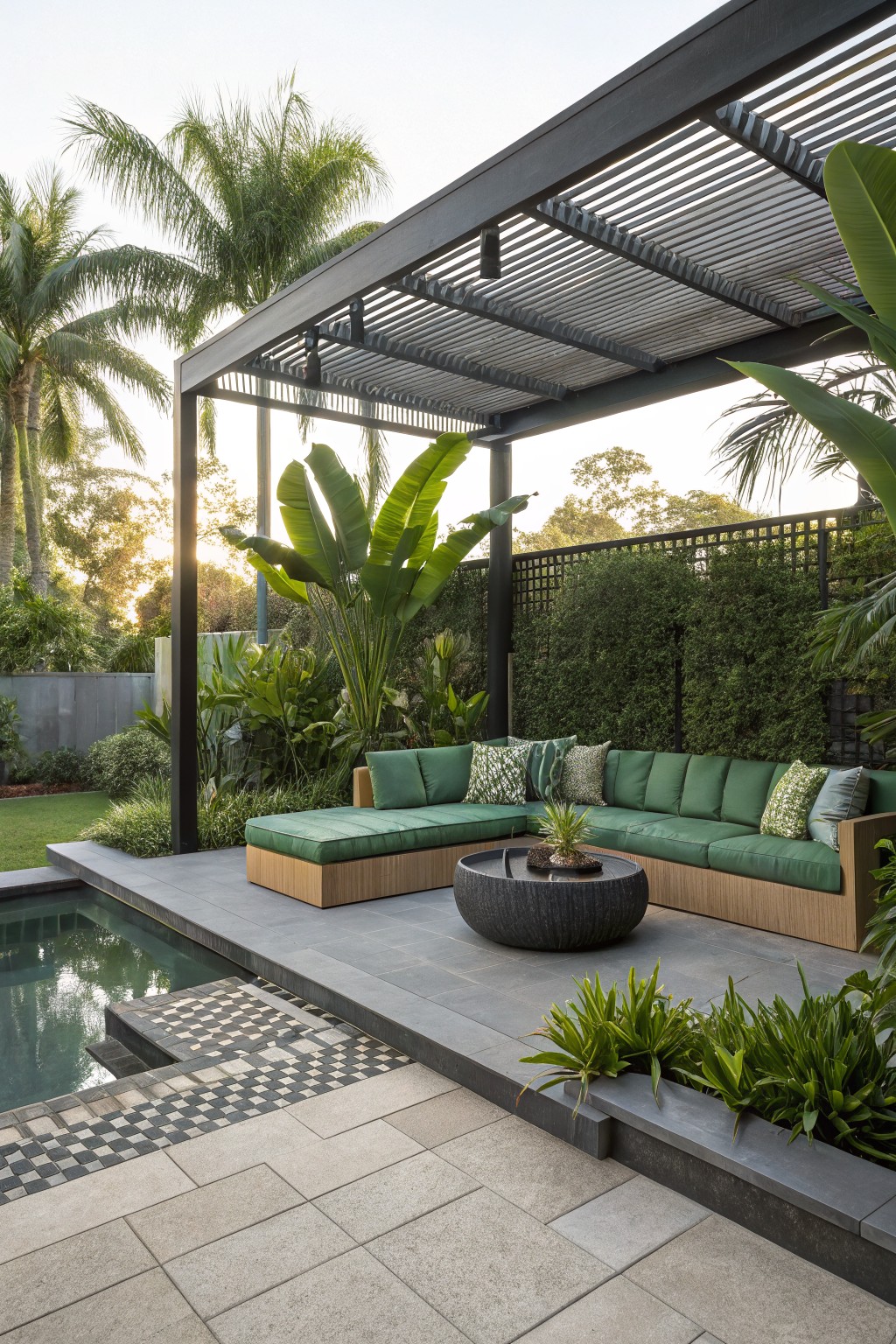
A pergola adds useful overhead structure to an outdoor seating area without closing it in. The slatted roof gives shade during the day while still letting in light and air, which helps the space feel comfortable for longer stretches of time.
This setup works well on patios next to pools or in backyards where you want a clear lounge zone. Keep the seating low and simple so the pergola remains the main feature, and add plants around the edges if you need more privacy.
Geometric Tiles Give The Patio A Resort Feel
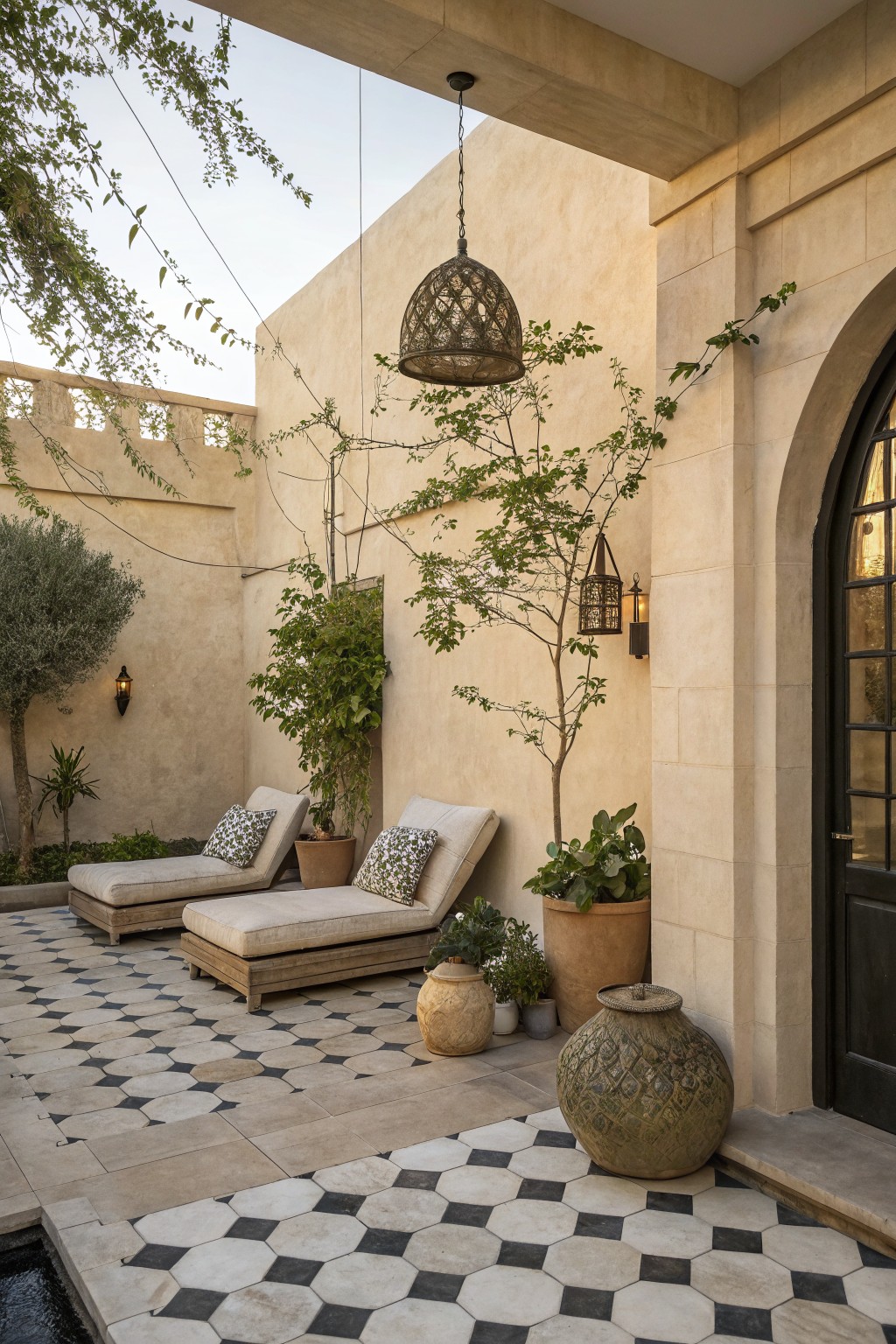
A simple geometric tile pattern on the patio floor can make the whole space feel more finished and a little more like a resort without needing lots of extra pieces. The neutral colors keep it from feeling busy, while the shape adds just enough interest to make the area look intentional rather than plain concrete or basic pavers.
This works especially well in sunny backyards where you want the floor to carry some of the visual weight. Keep the furniture light and low, add a few large pots, and let the pattern do most of the work. It suits homes with warm stucco or stone walls and pairs nicely with both modern and traditional styles.
Hang a Shade Sail for Quick Coverage
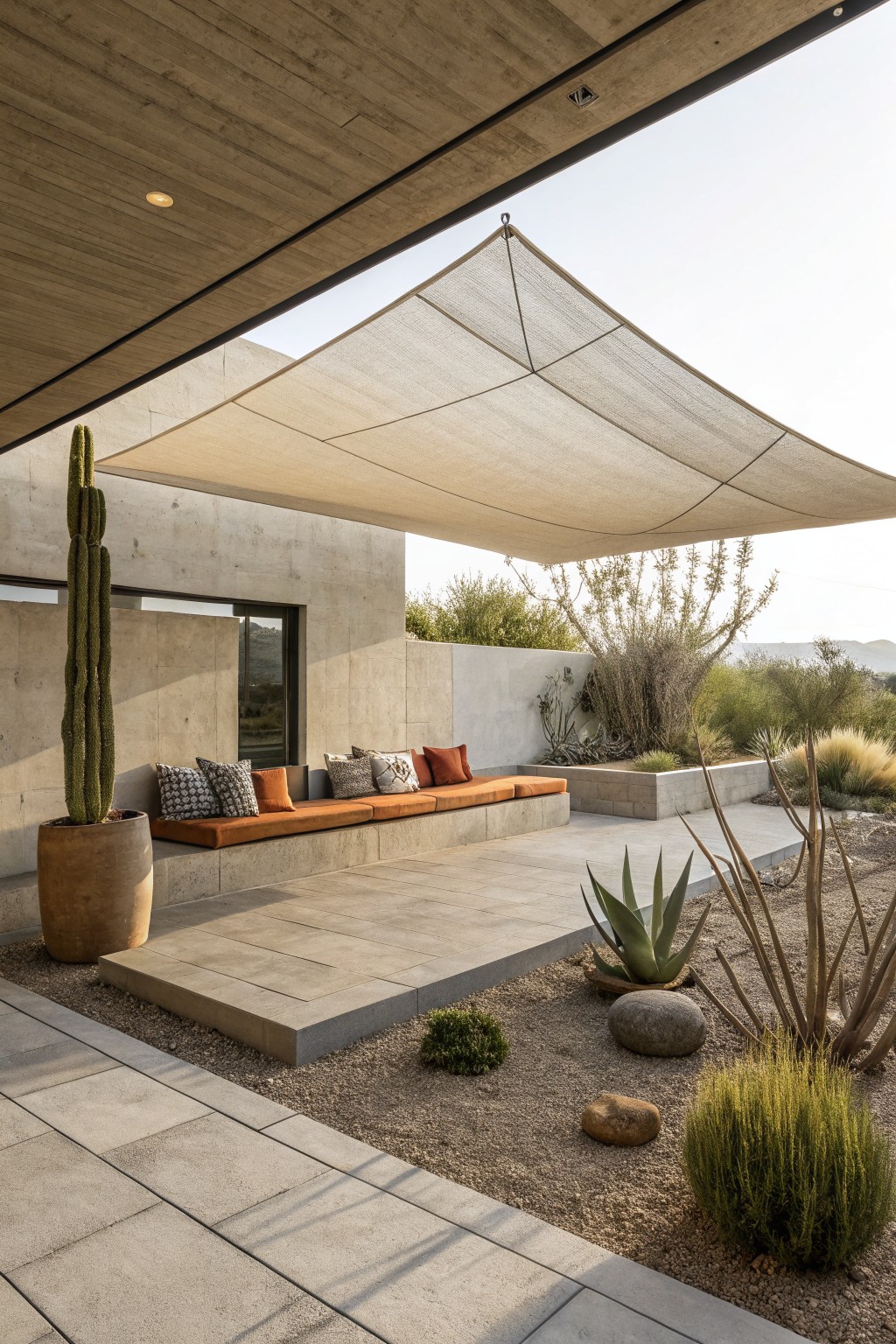
A shade sail gives an outdoor seating area real protection from the sun without boxing it in. It creates a usable spot even in the middle of the day and keeps the space feeling open to the surrounding yard.
This works best on patios that get strong afternoon light. Attach it to the house wall and a couple of posts, then angle it slightly so rain runs off. It suits homes in dry or sunny regions and pairs easily with built-in benches.
Frequently Asked Questions
Q: What kind of seating works best to get that lounge chair resort feeling? A: Go for deep cushions and weatherproof fabrics in soft colors. Arrange them around a low table so it feels inviting for long chats. This setup lets you sink in and unwind just like at a hotel pool.
Q: My concrete patio feels too hard. How can I soften it for bare feet? A: Lay down some outdoor rugs in natural weaves or add sections of deck tiles over the concrete. Both options feel nicer underfoot and help define different zones for relaxing. Choose ones that drain well after rain.
Q: Is there a simple way to add the sound of water without installing a full fountain? A: Try a small tabletop water feature or even a recirculating bowl near your seating area. The gentle trickle creates that peaceful resort atmosphere right away. Keep it on a timer so it does not run all night.