Blue paint in a bathroom rarely looks the same at noon as it does under evening lights, and the wrong undertone can clash with white tile or wood trim.
I have seen colors that seemed perfect in the store turn muddy once applied around a bathtub.
Testing a few samples in the room itself shows how they actually perform.
The better blues tend to stay crisp without pulling too green or purple against typical bathroom surfaces.
In my own space I always check how the color reads next to the floor and vanity before committing.
Soft Blue Green Walls
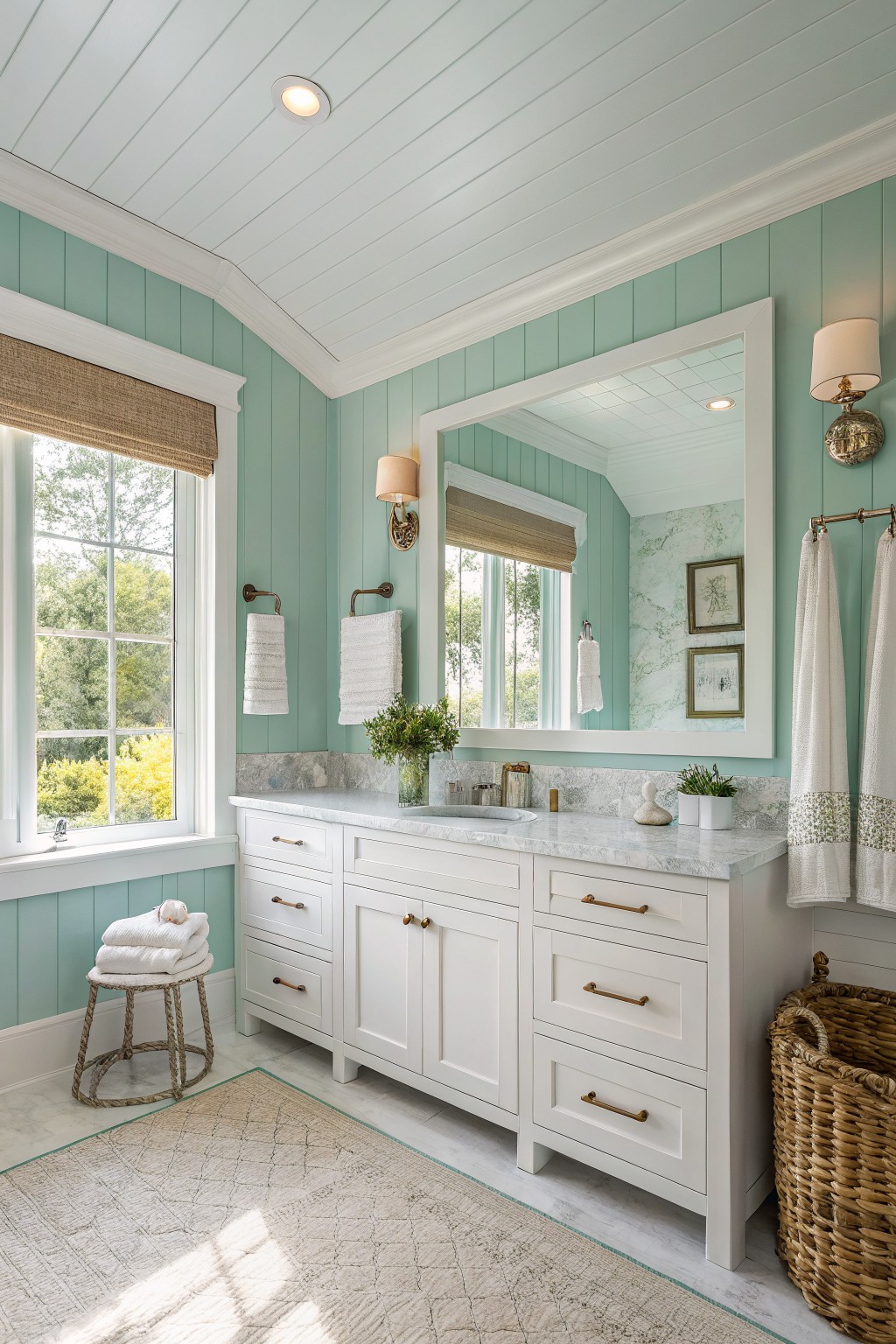
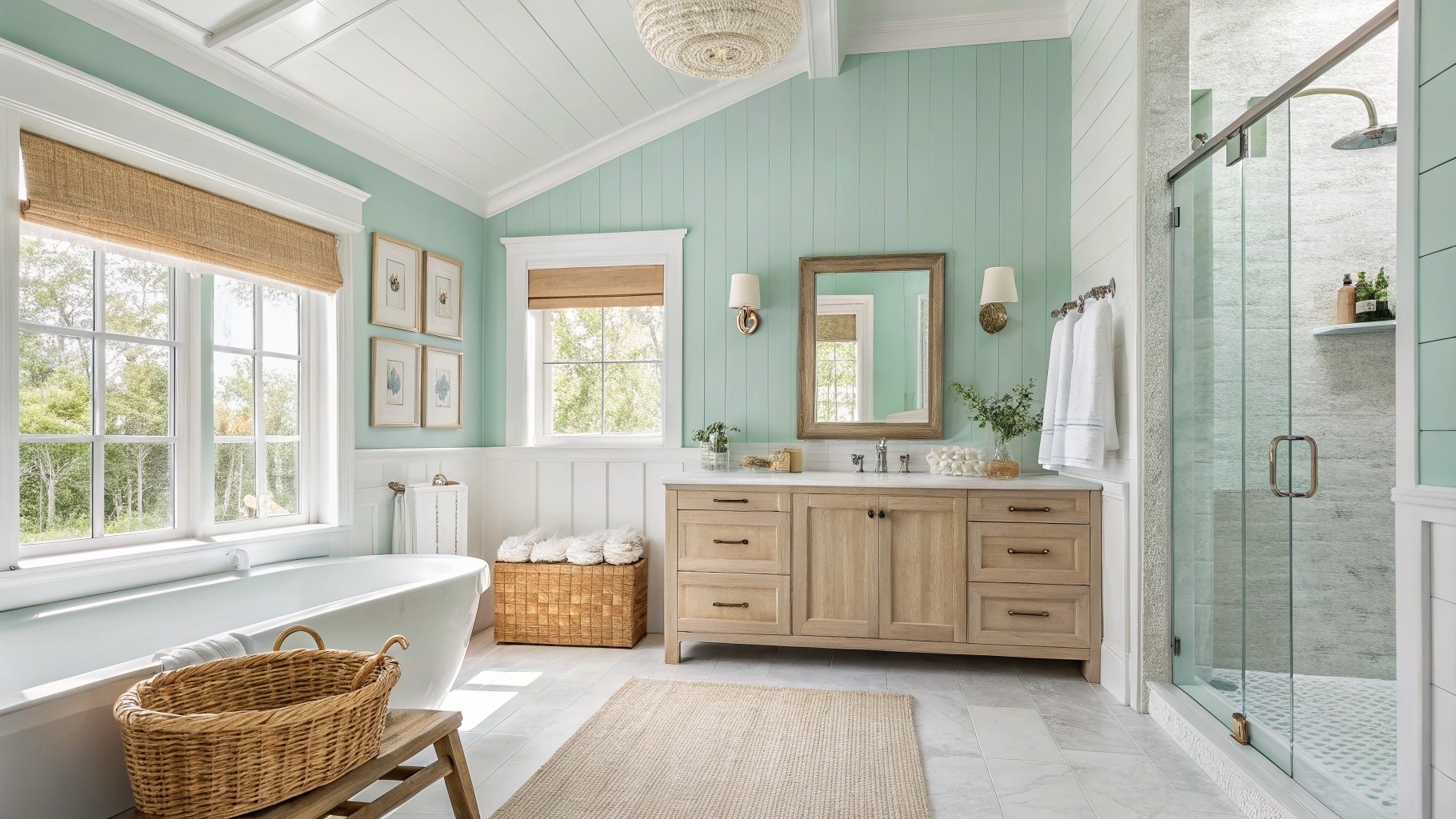
This soft blue green works well in bathrooms because it stays light and calm without feeling flat. It has that gentle mix of blue and green that feels fresh and easy to live with day to day.
The shade carries a slight green undertone that keeps it from turning too cool next to white trim and marble. It pairs best with warm wood accents or simple white fixtures and looks its best in rooms that get steady daylight.
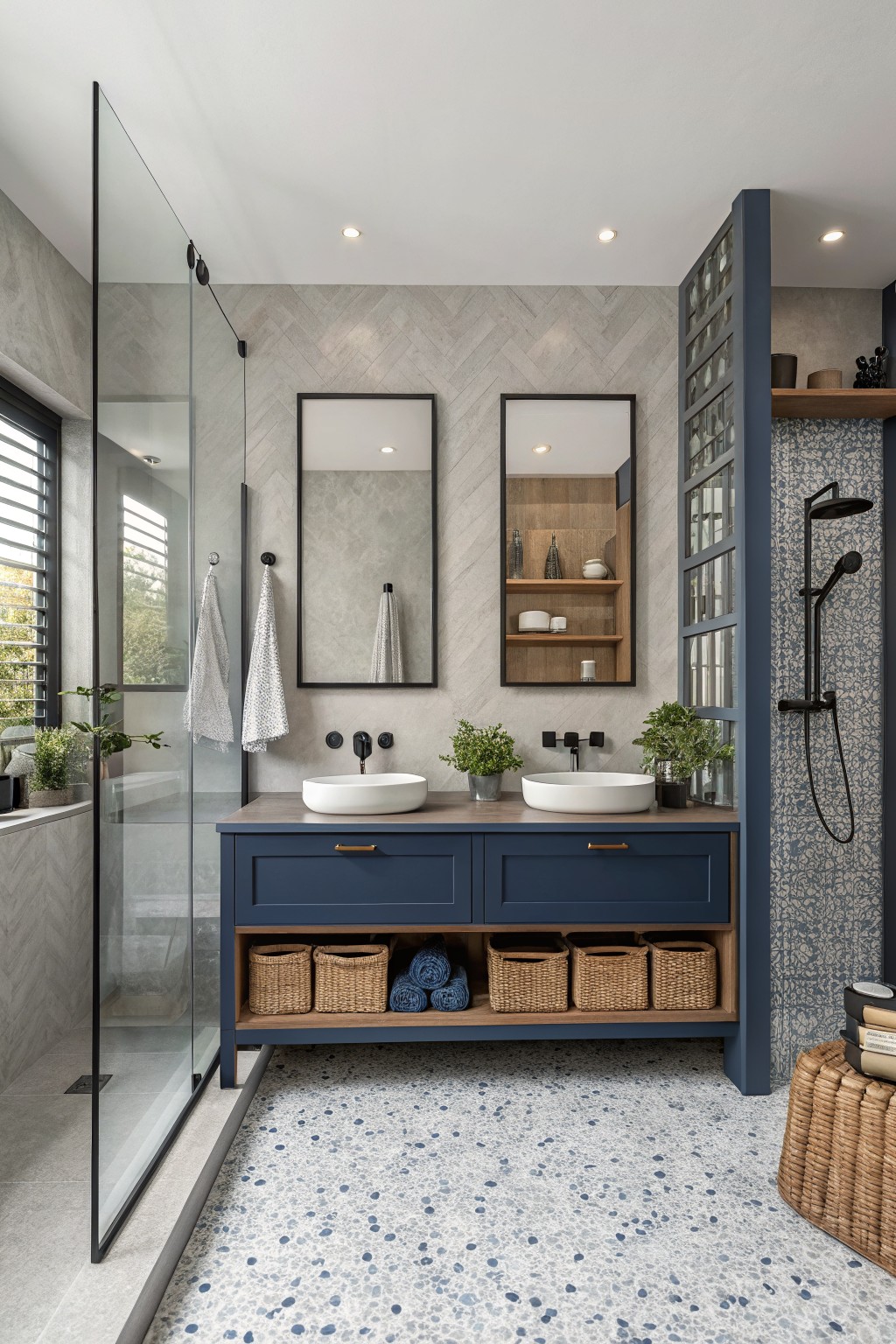
This deep navy blue on the vanity is a strong choice for bathrooms. It is a cool, saturated blue that adds weight and definition while still feeling calm. The color reads closest to Sherwin Williams Naval or Benjamin Moore Hale Navy, with Behr Midnight showing up similar in some lights.
It works especially well against light tile and wood accents because the navy stays grounded rather than drifting cool or flat. Pair it with white fixtures and simple storage so the blue stays the main focus without needing extra layers.
Soft Blue Green Bathroom Walls
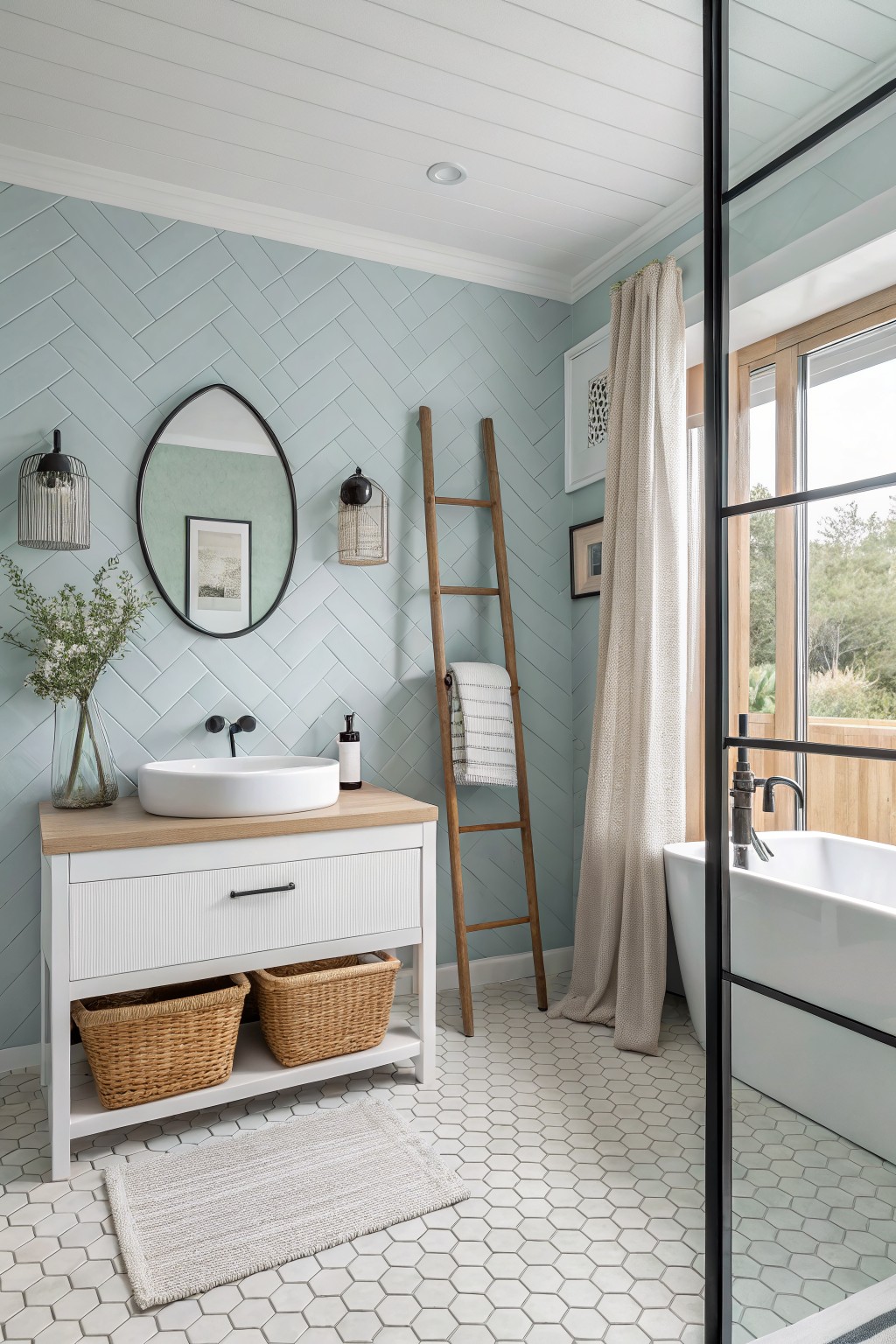
This soft blue green sits right in that calm middle ground between blue and aqua. It feels light without looking washed out and gives the room a quiet, spa-like feel. It looks closest to Sherwin Williams Rainwashed, Benjamin Moore Wythe Blue, or Behr Soft Aqua.
The cool undertone shows up more against the white vanity and pale floor tile, so it stays fresh rather than chilly. It pairs well with natural wood and simple black fixtures without needing much else to feel finished.
Soft Blue Gray Walls
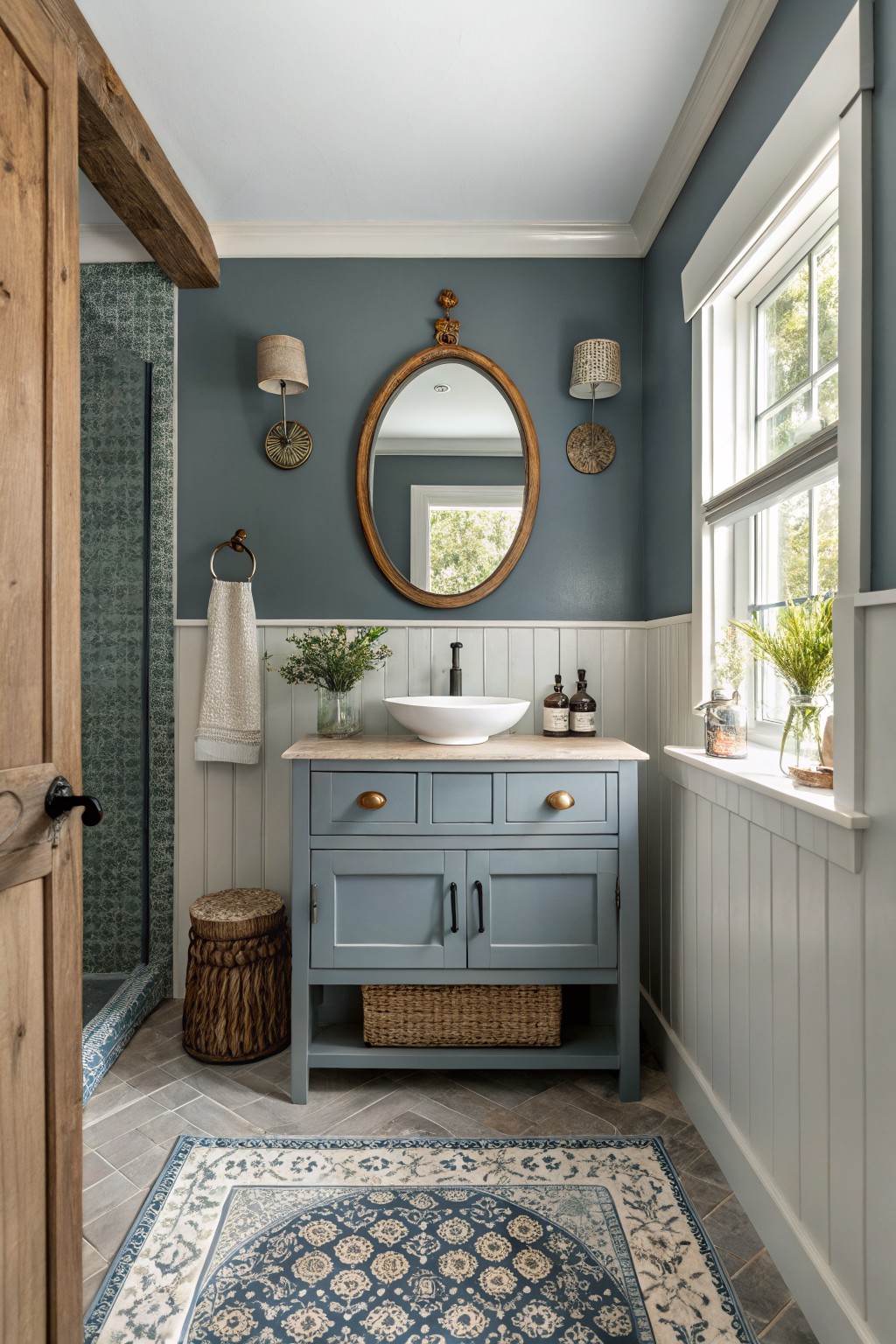
This blue gray sits in a quiet middle ground between blue and gray. It feels calm without turning cold, which is why it works so well in bathrooms. The color reads closest to Sherwin Williams Rainwashed, Benjamin Moore Wythe Blue, or Behr Silver Drop.
It has a soft cool undertone that stays steady next to white trim and wood cabinetry. In low light it can lean a little more gray, so it helps to test a sample on the wall before committing.
Soft teal bathroom walls
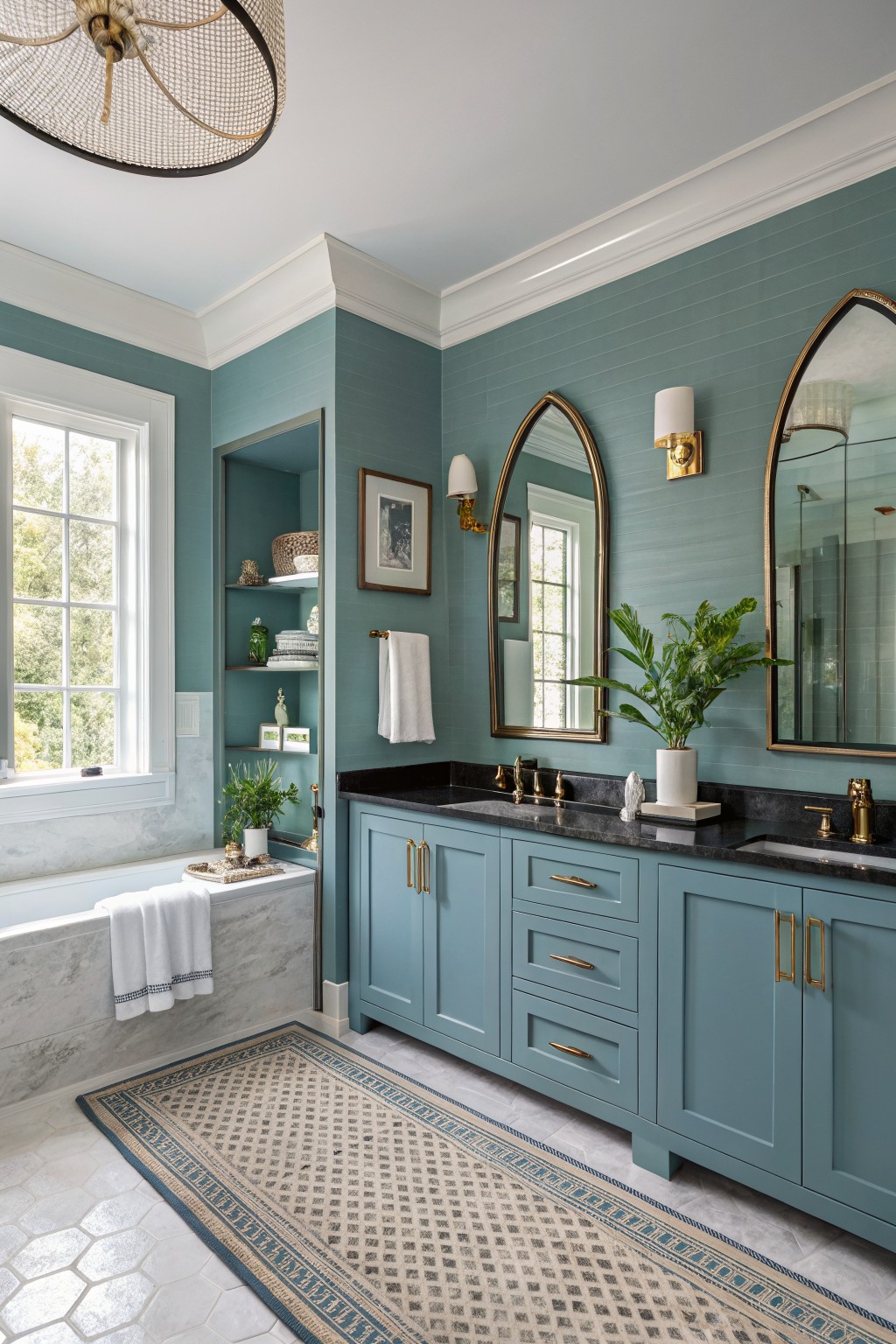
This bathroom shows a soft teal on the walls. It is a muted blue-green with cool undertones that feels calm and steady rather than bright or bold.
The color sits nicely next to dark counters and brass hardware. It works best in spaces with steady daylight, and it pairs well with white trim or pale stone without turning too cold.
Soft Blue Gray On Bathroom Walls
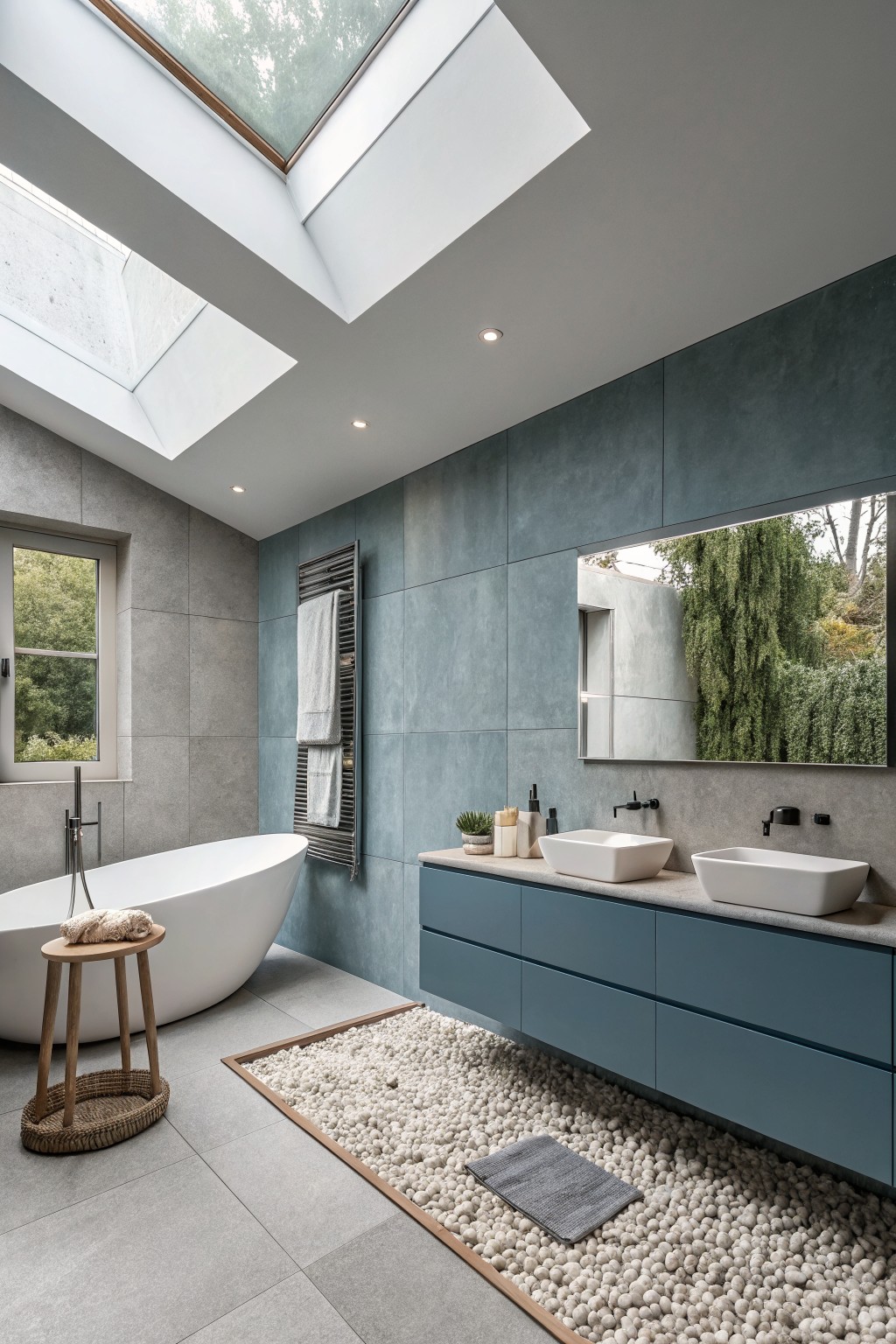
This bathroom shows a muted blue gray that leans slightly cool and green. The color keeps the space feeling calm and open even with the large tiled surfaces and concrete floor.
It pairs easily with wood tones and white fixtures but can pick up more green depending on the light. Try it in rooms that get steady daylight and test a few samples because the undertone shifts more than you might expect.
Deep Teal Walls
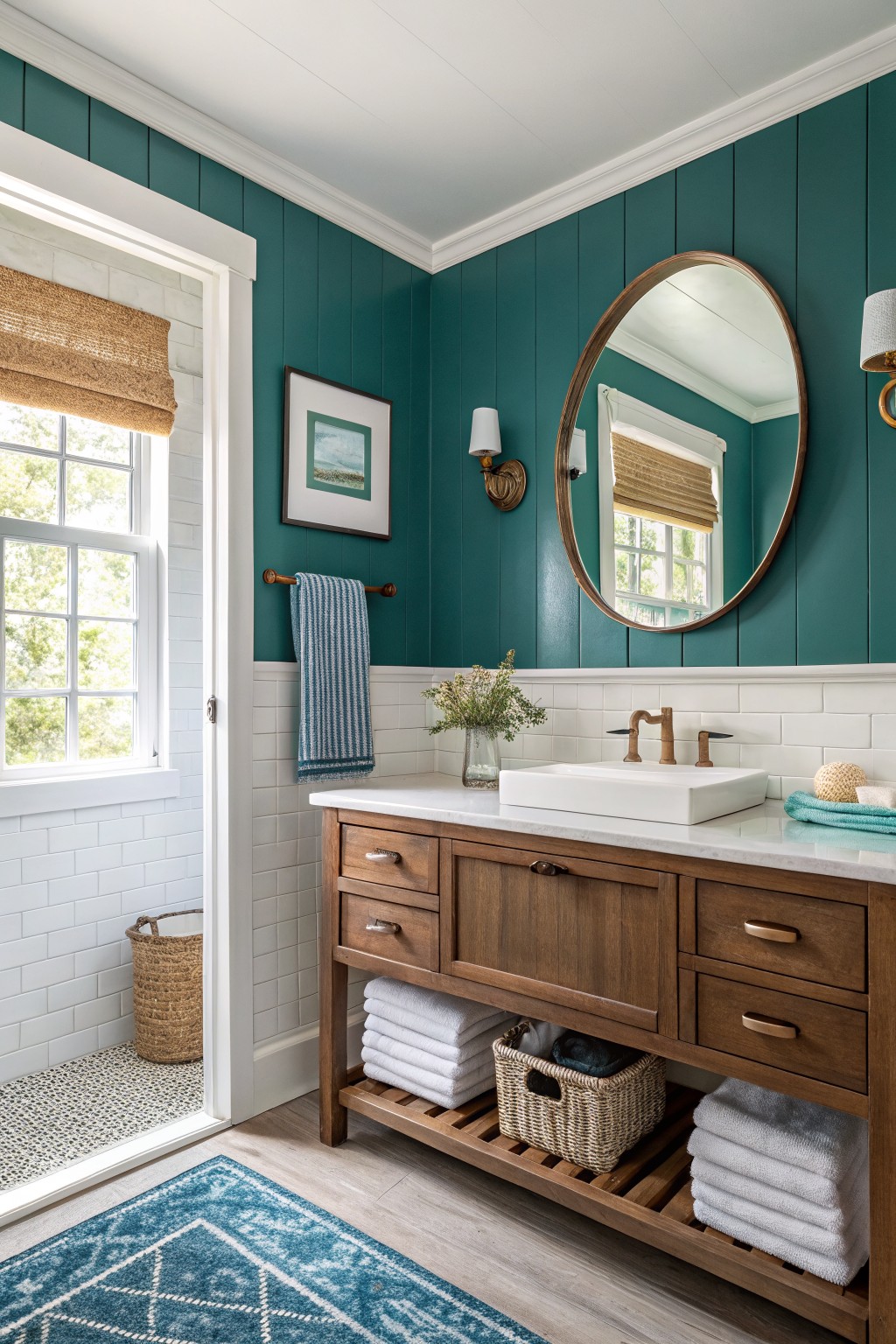
A deep teal brings real presence to a bathroom without feeling heavy. This color sits right in the blue-green range and gives the space a calm, steady look that pairs nicely with white tile and wood tones.
It has cool undertones that can read a little greener in certain lights. The best matches tend to be Sherwin Williams Breezeway, Benjamin Moore Teal Lake, Behr Ocean View, and Farrow & Ball Vardo.
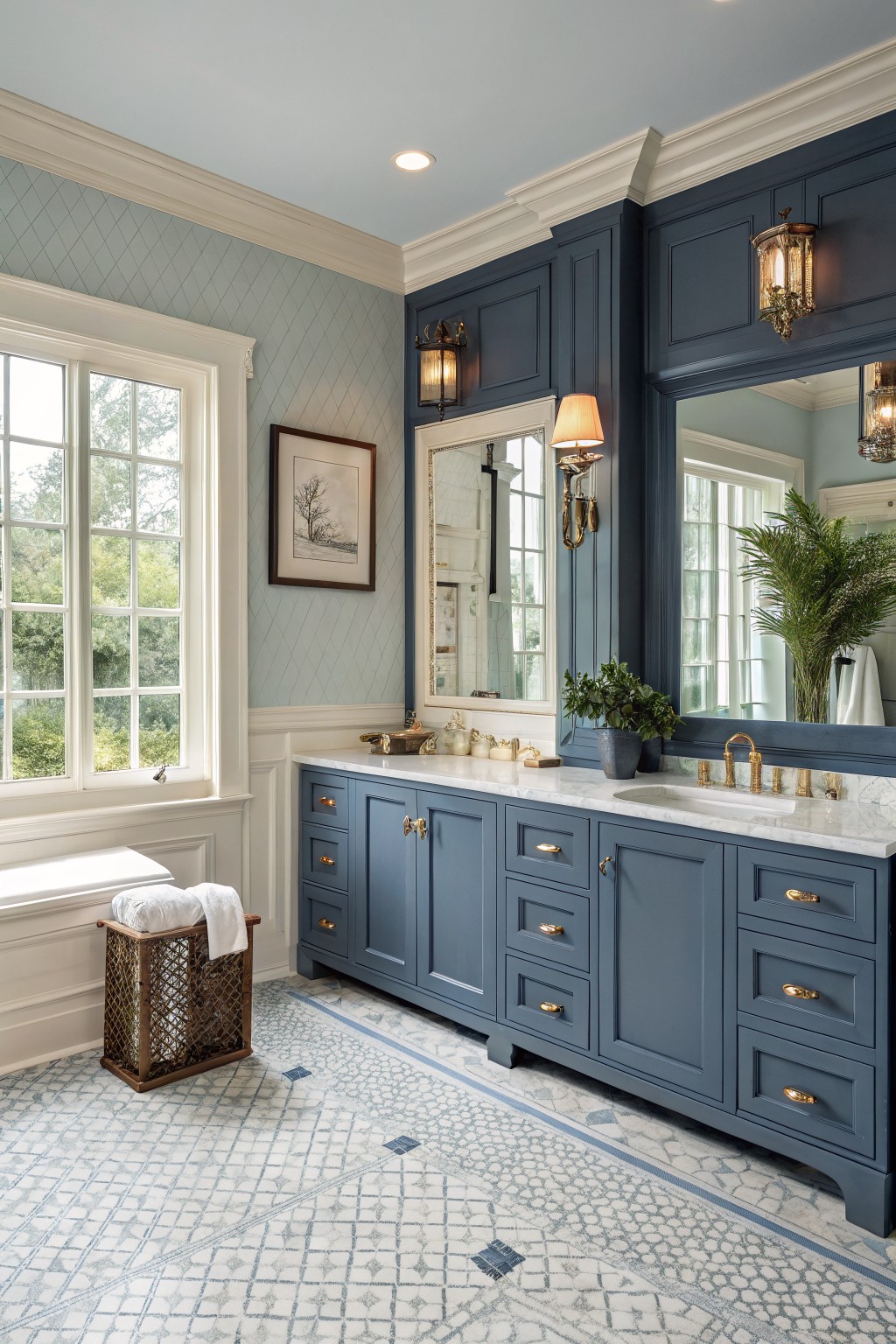
This deep navy reads as a cool, slightly gray blue on the vanity and built-in cabinetry. It gives the room a grounded feel without turning heavy, and it works especially well against white marble and light walls.
The color has a muted tone that pairs nicely with brass hardware and wood accents. It suits bathrooms that get decent natural light, though it can look a bit flat in very dim spaces.
Soft Blue Gray Bathroom Walls
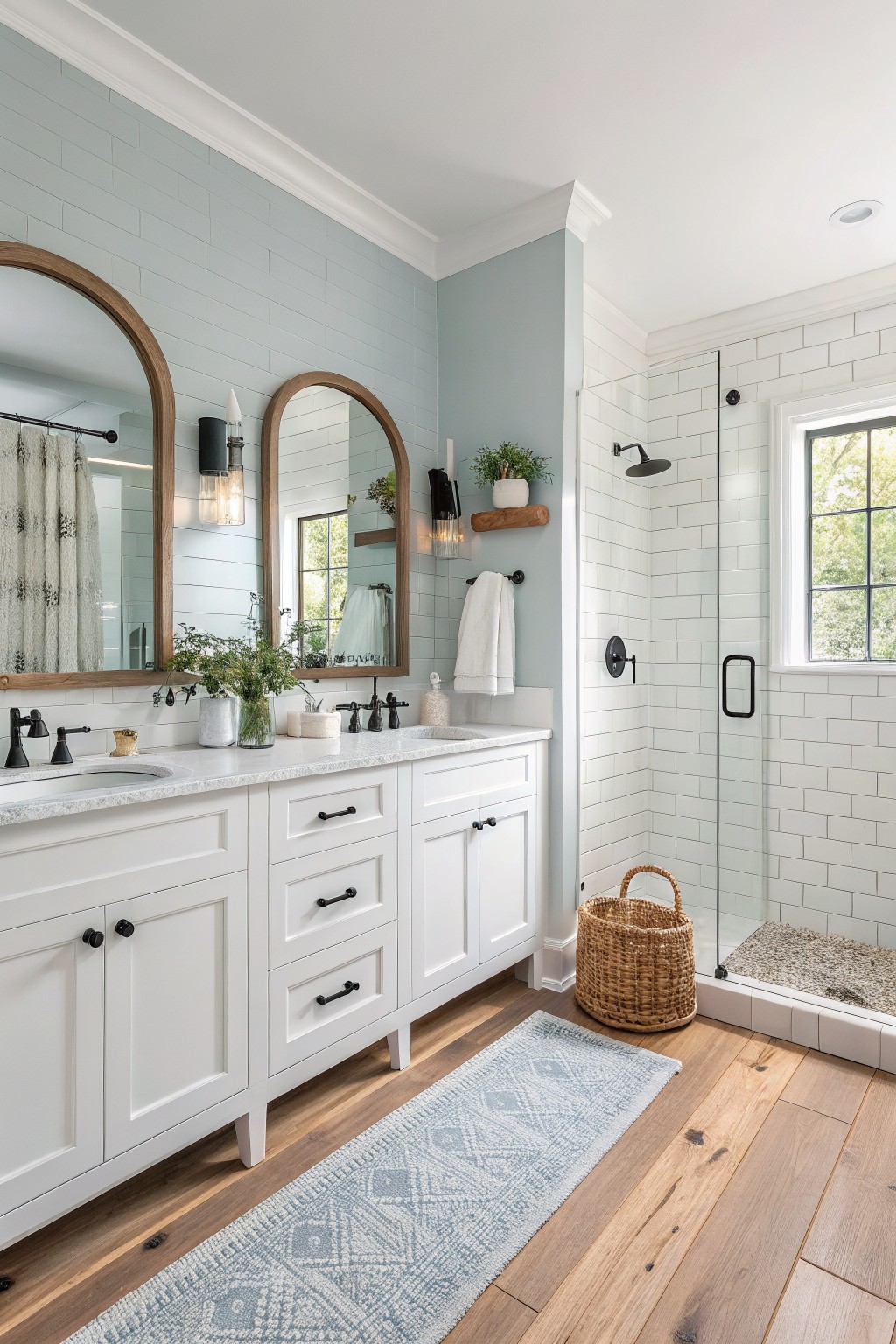
This soft blue gray on the walls gives the bathroom a quiet, steady feel without trying too hard. It sits right in the middle of blue and gray, so it reads cool but still feels livable next to white cabinets and warm wood floors.
The slight gray undertone keeps it from looking too bright or pool-like, which makes it work well in bathrooms that get steady daylight. It pairs easily with white trim and simple black hardware, though it can look a bit flat in low light if you skip a warm wood or woven element somewhere.
A Muted Sage Green Bathroom
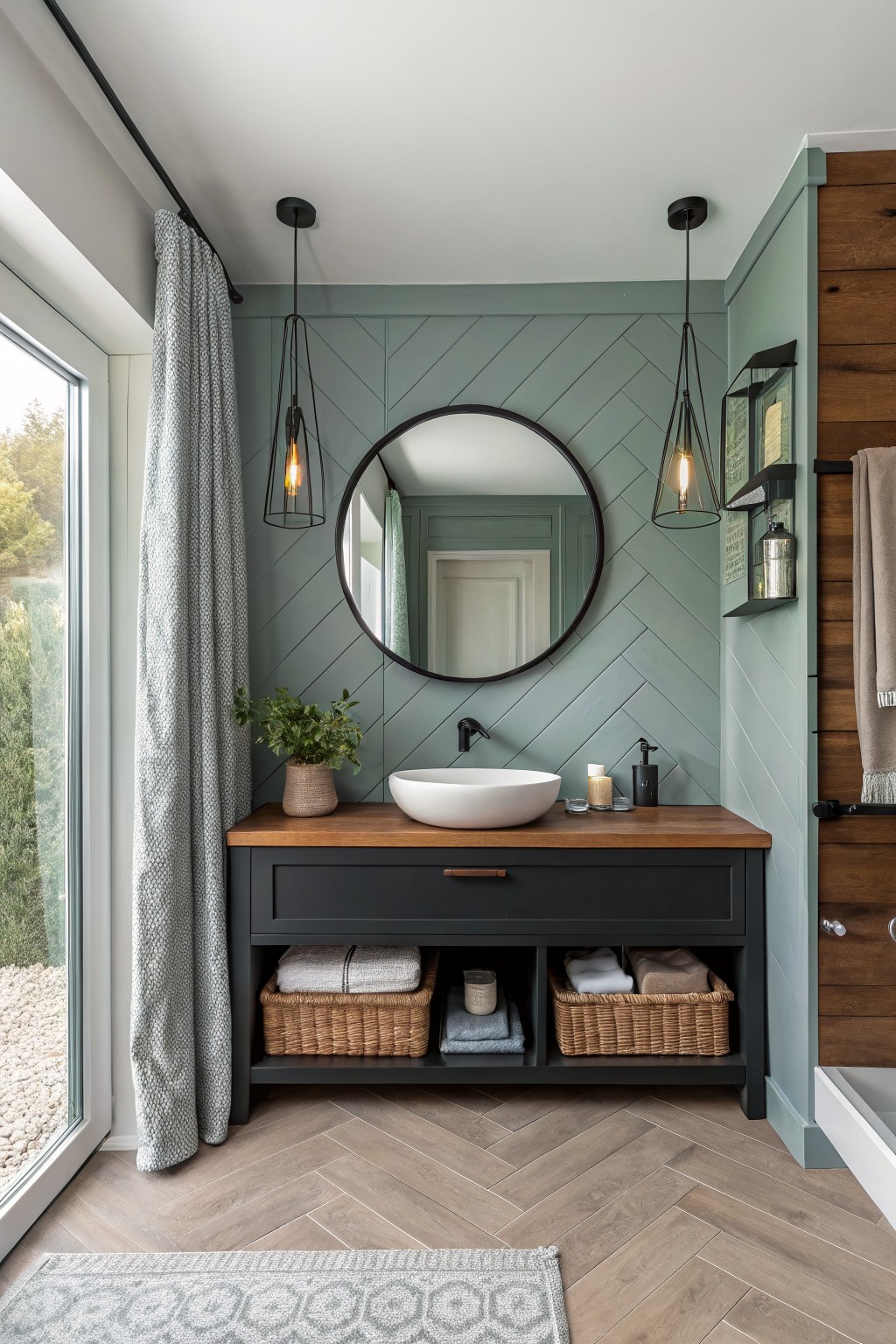
This bathroom uses a muted sage green on the walls that sits between green and blue. It gives the space a calm, spa-like feel without leaning too bright or too gray.
The color has cool undertones that pair well with dark wood and black fixtures. It works best in rooms with decent natural light, and it can look a little dull if the space stays dark most of the day.
Muted Teal Blue Walls
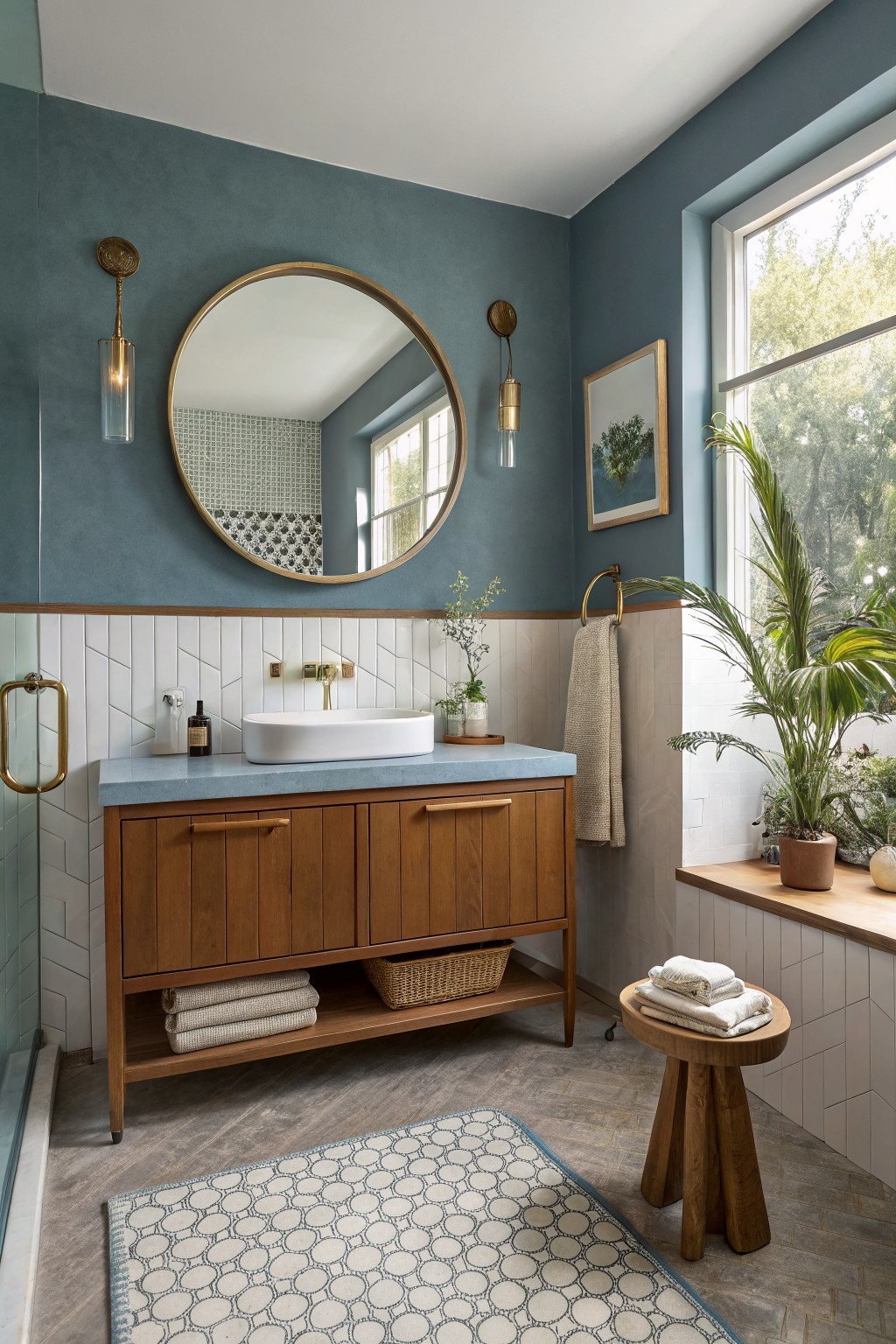
This muted teal blue brings a calm feel to bathrooms without looking too bold. It has some gray in the mix so the color stays soft rather than bright, and it works especially well above white wainscoting or with wood vanities. Colors like Sherwin Williams Rainwashed, Benjamin Moore Wythe Blue, Farrow & Ball Oval Room Blue, or Behr Bali Bliss sit in the same range.
The undertone stays cool but not icy, so it holds up nicely next to warm wood tones and brass fixtures. It suits smaller baths best where you want a bit of color without making the space feel closed in. Too much direct sun can push it greener than expected.
Soft Teal Bathroom Walls
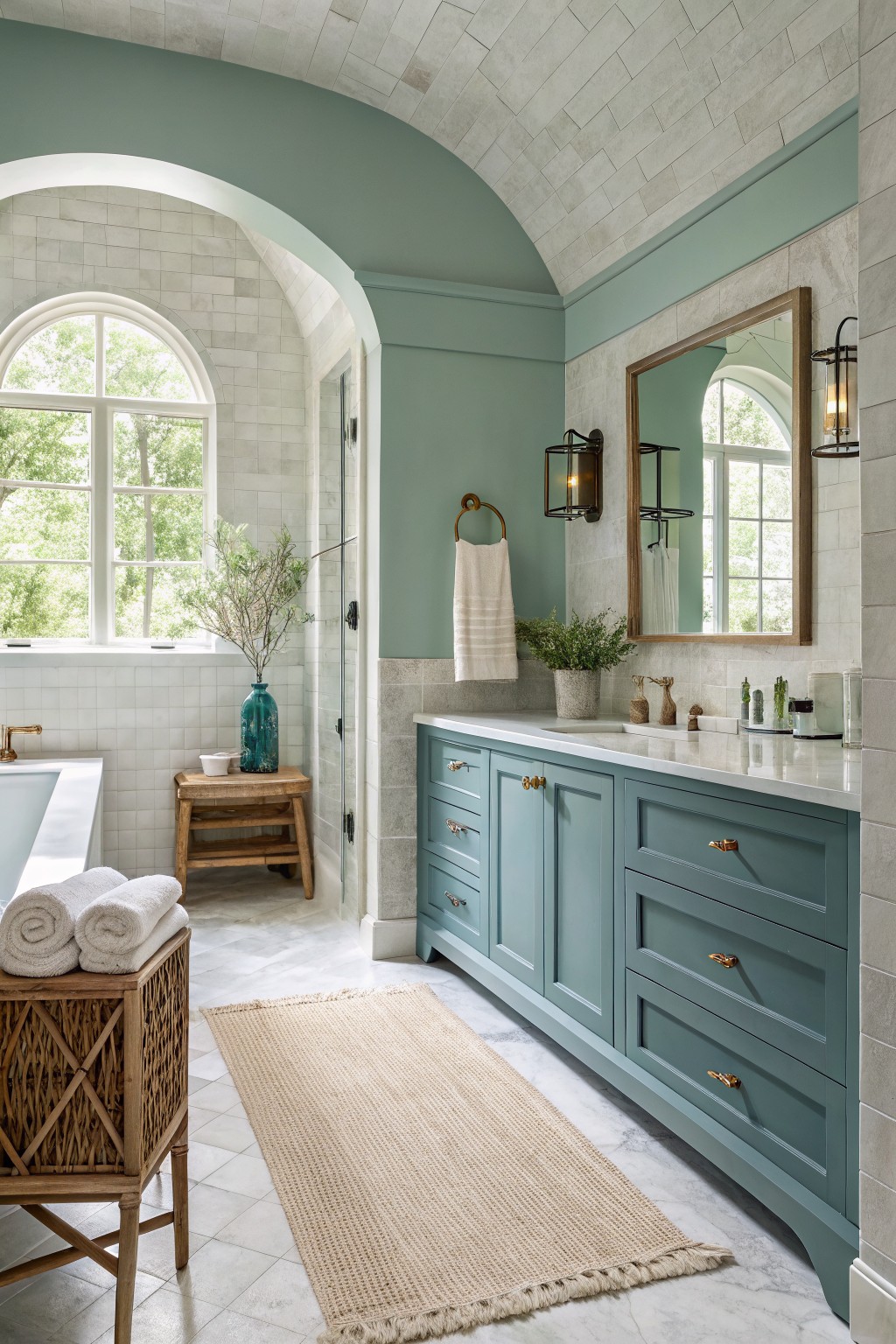
This muted teal has a soft blue green tone that feels calm and easy to live with in a bathroom. It sits nicely on both the walls and the vanity because the color has enough depth to hold its own next to white tile without feeling stark.
The undertone stays cool and slightly gray so it works best with warm wood tones and simple brass or nickel fixtures. In lower light it can shift a little cooler, so it is worth testing a sample on the wall first.
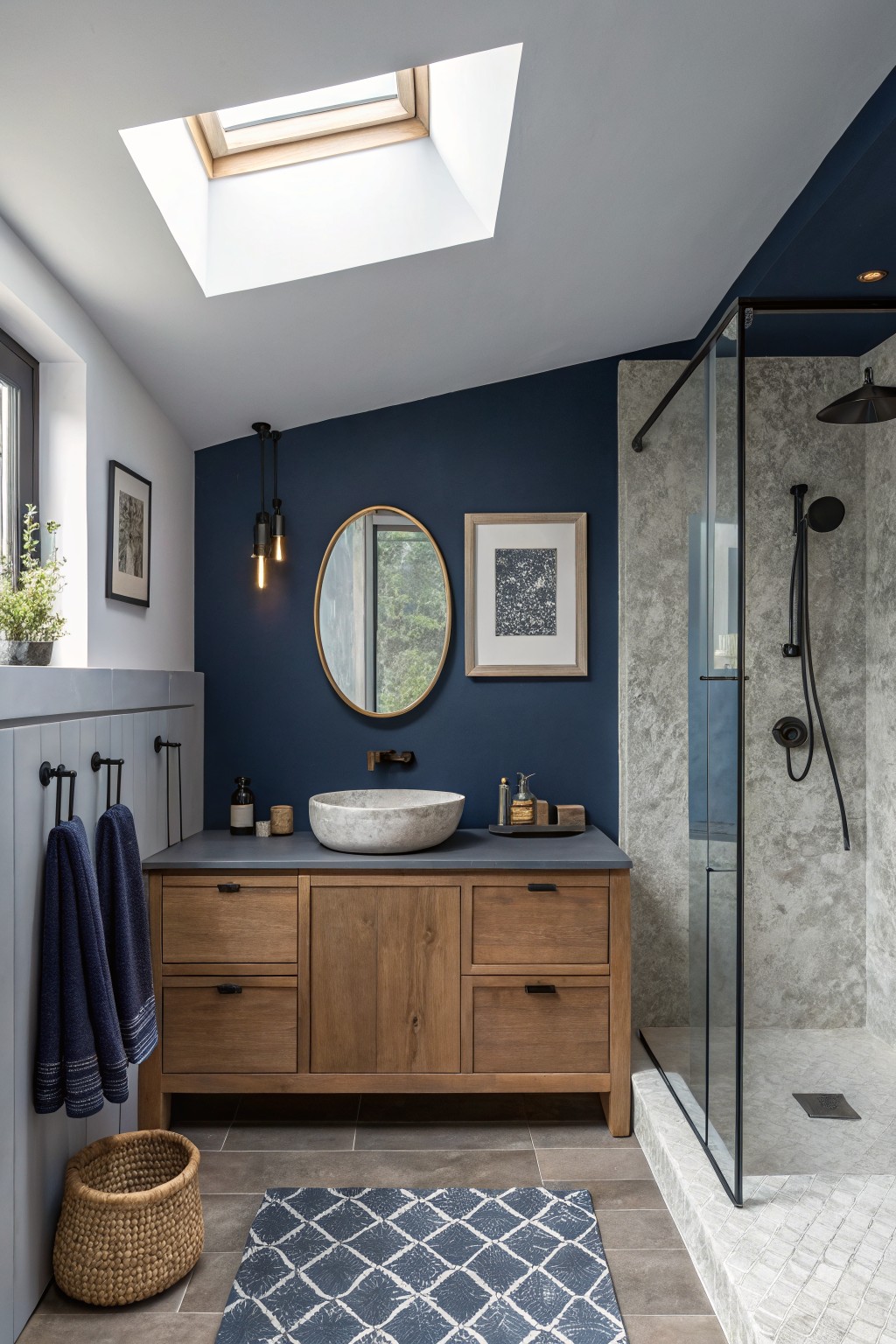
This deep navy blue gives the walls a solid, grounded feel that works nicely in a bathroom. It reads as a true navy with a touch of cool undertone, and it holds its own next to warm wood cabinets without looking too stark.
The color shows best with plenty of natural light and pairs cleanly with gray counters or black fixtures. It suits smaller baths that need a bit of depth, though it can feel heavy if the room has little daylight or very dark flooring.
Soft Blue Green Walls With Marble Accents
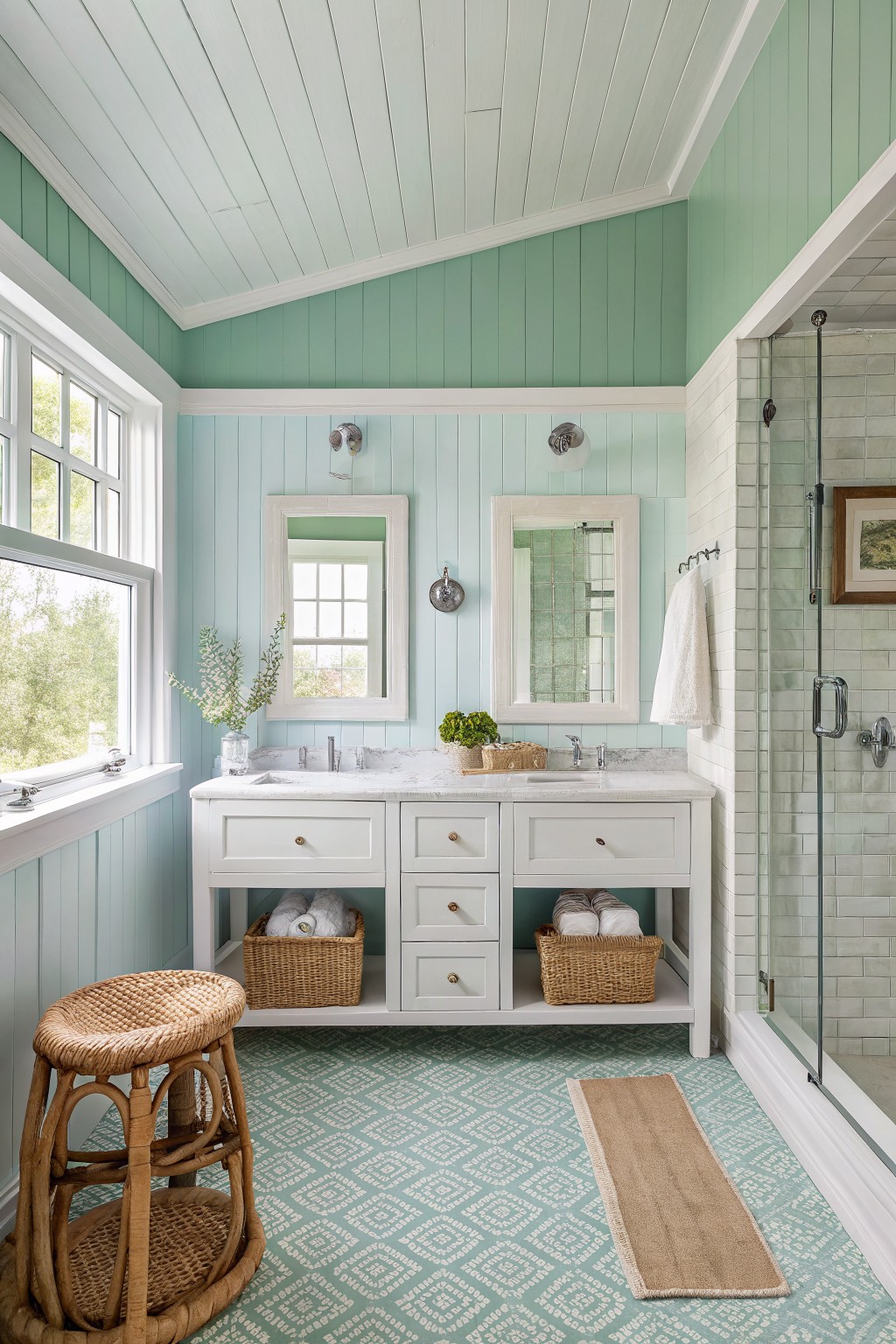
This bathroom uses a soft blue green on the walls that sits right between a pale aqua and a light mint. It gives that calm spa feeling without turning too bright or too cool. Shades like Sherwin Williams Sea Salt or Benjamin Moore Water’s Edge read very close to what is shown here.
The color has a gentle cool undertone that stays fresh next to white trim and marble. It works best in rooms with decent natural light and pairs easily with simple wood accents or woven textures. Too little light can make it feel a bit flat.
Soft Teal Walls With Dark Cabinetry
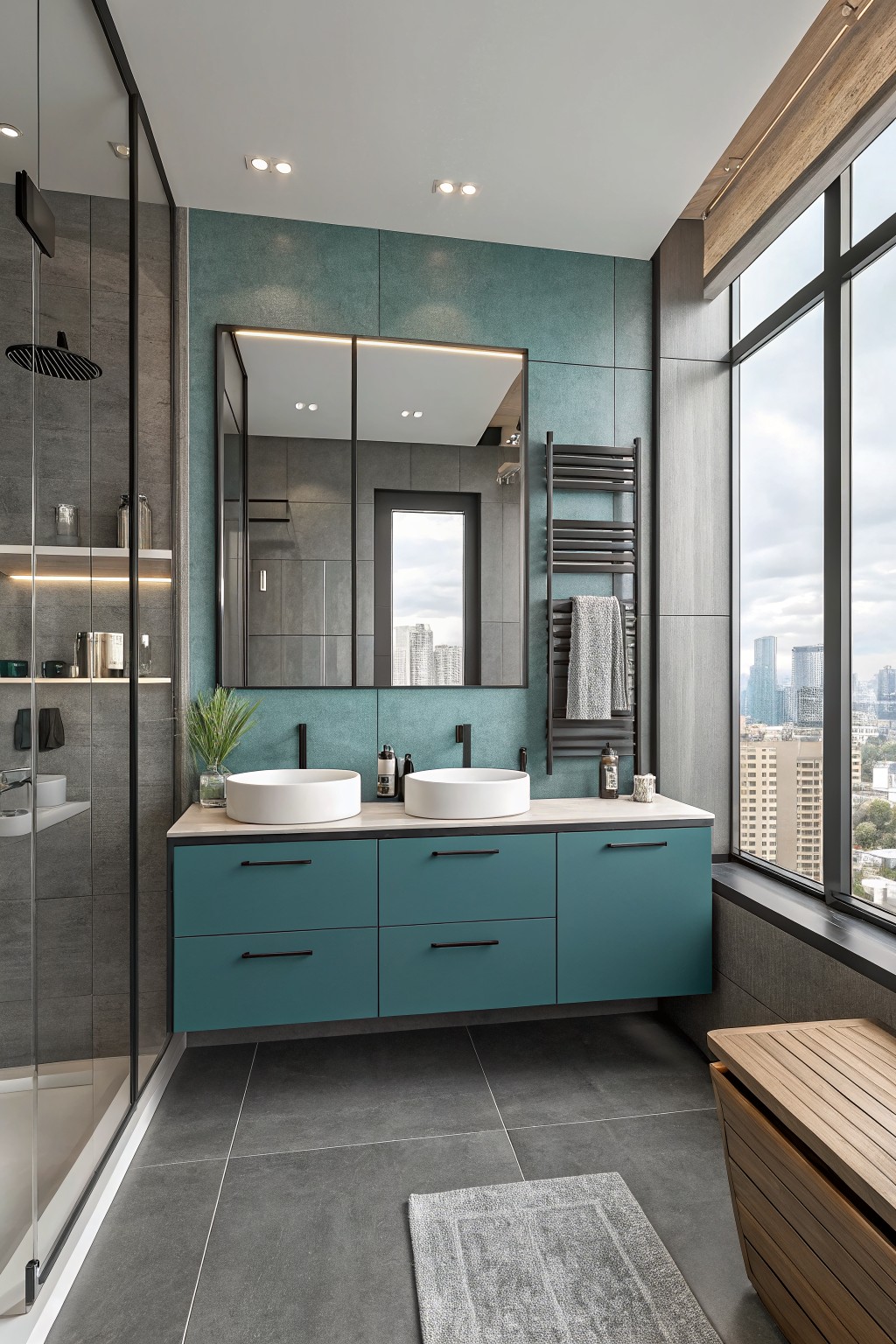
This muted teal brings a calm, spa-like feel to bathrooms without going too bright or cold. It sits in the blue-green family with a touch of gray that keeps it from feeling too bold, and it works nicely on larger wall areas where you want color but still need the space to feel open.
The color has a soft, slightly cool undertone that pairs well with dark teal cabinetry, gray tile floors, and wood accents. It holds up in both natural light near windows and under artificial lighting, though it can read a little greener in very warm light, so testing a sample is worth it.
Rich Deep Teal Bathroom Walls
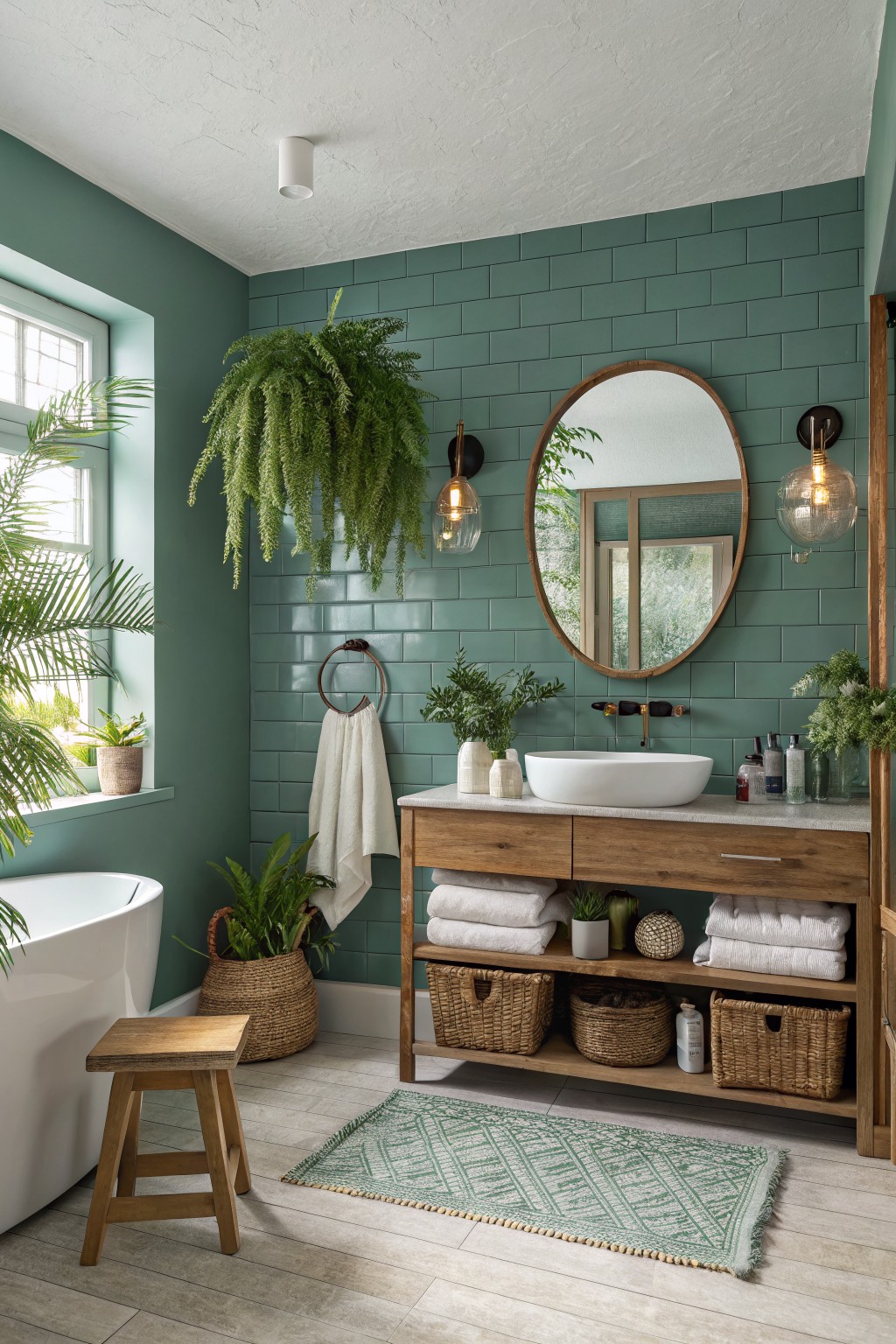
This deep teal color family gives bathrooms a calm, steady feel that still reads fresh. It sits between blue and green and works especially well on tile or painted walls when you want something a little richer than a standard light blue. Shades like Sherwin Williams Teal Trust, Benjamin Moore Blue Green, Behr Ocean Boulevard, or Farrow & Ball Vardo all land close to this tone.
The color holds up nicely next to wood vanities and light stone counters because the slight green undertone keeps it from feeling cold. It can look a touch darker in low light, so it helps to test it on a larger patch first if your bathroom does not get much natural light.
Soft Blue Bathroom Walls
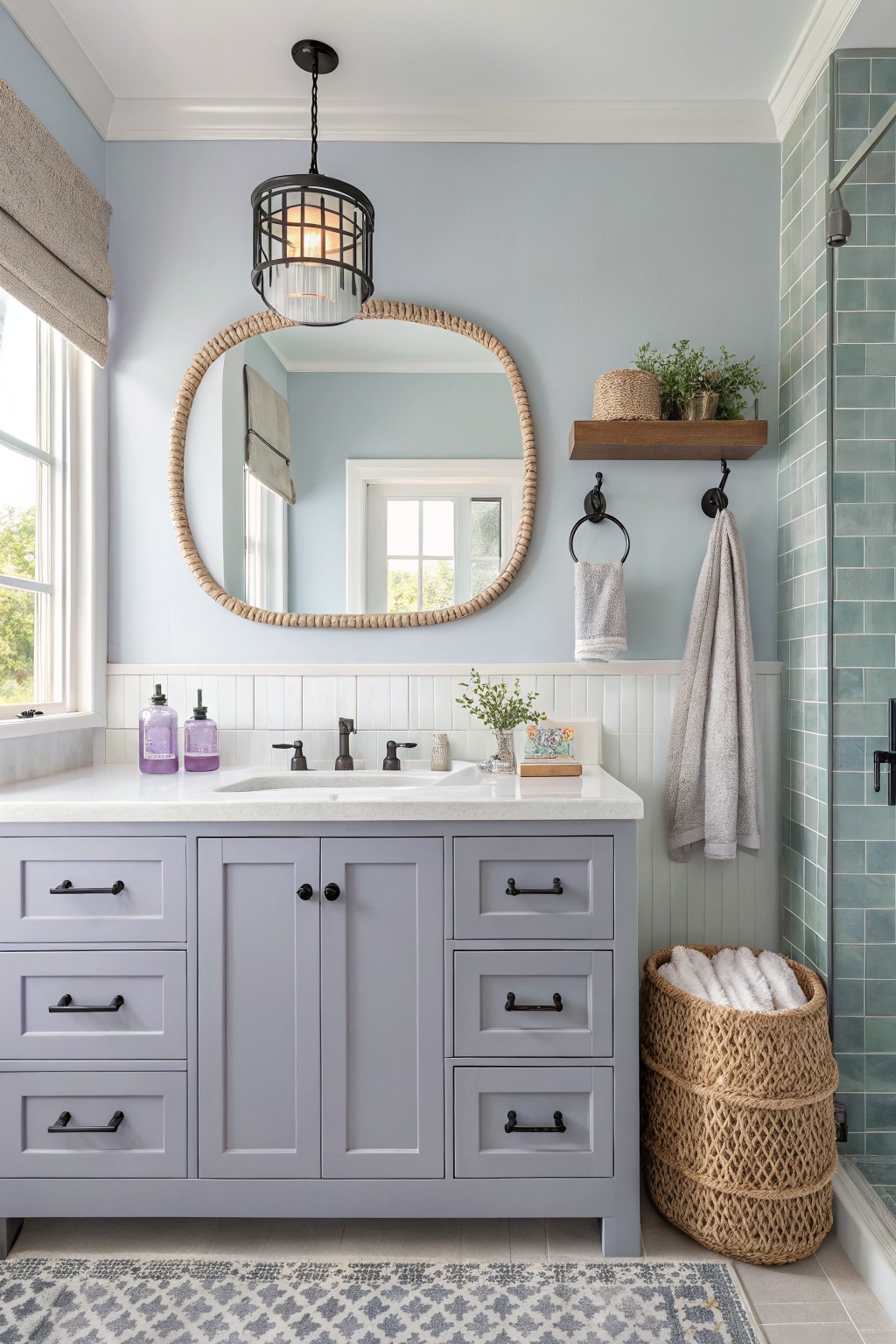
This light blue wall color gives a bathroom that quiet, spa-like feel without trying too hard. It is a soft, muted blue with a touch of gray in it, so it reads calm and a little cool rather than bright or bold.
The color sits well next to white trim and gray cabinetry. It works best with plenty of natural light and pairs easily with wood tones or stone. Try Sherwin Williams Rainwashed, Benjamin Moore Palladian Blue, or Behr Breath of Fresh Air if you want something close.
Soft Teal Green Bathroom Walls
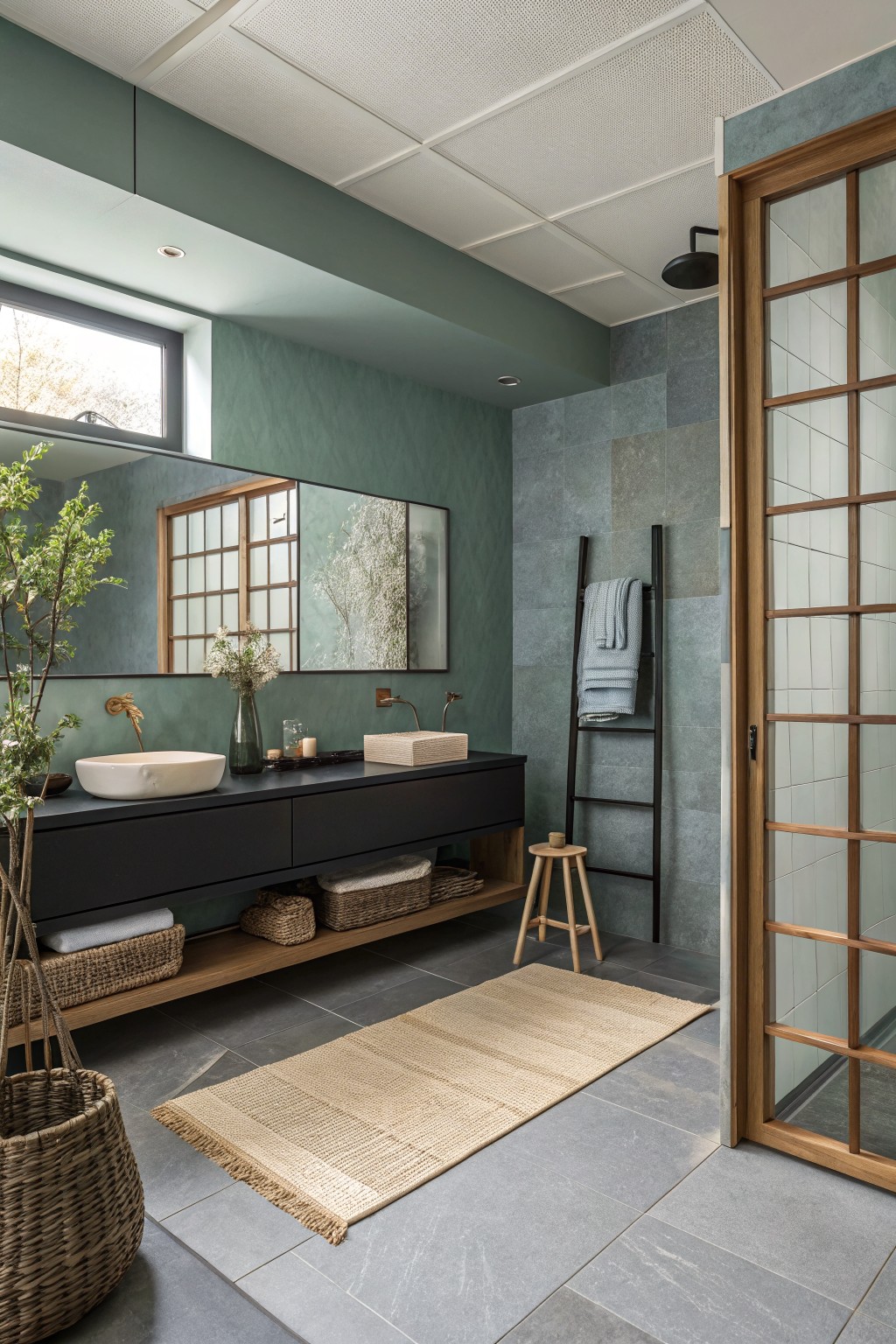
This bathroom uses a soft teal green on the walls that sits somewhere between blue and green. The color has a muted, slightly gray feel that keeps the room calm without looking cold. It works especially well with the dark vanity and wood tones below it.
The undertone leans cool, so it pairs best with warm wood, black fixtures, and simple tile. It suits smaller bathrooms that need a spa-like feel but still want some depth. Watch the lighting though, since it can shift greener in low light.
Soft Blue Gray Walls With Wood Accents
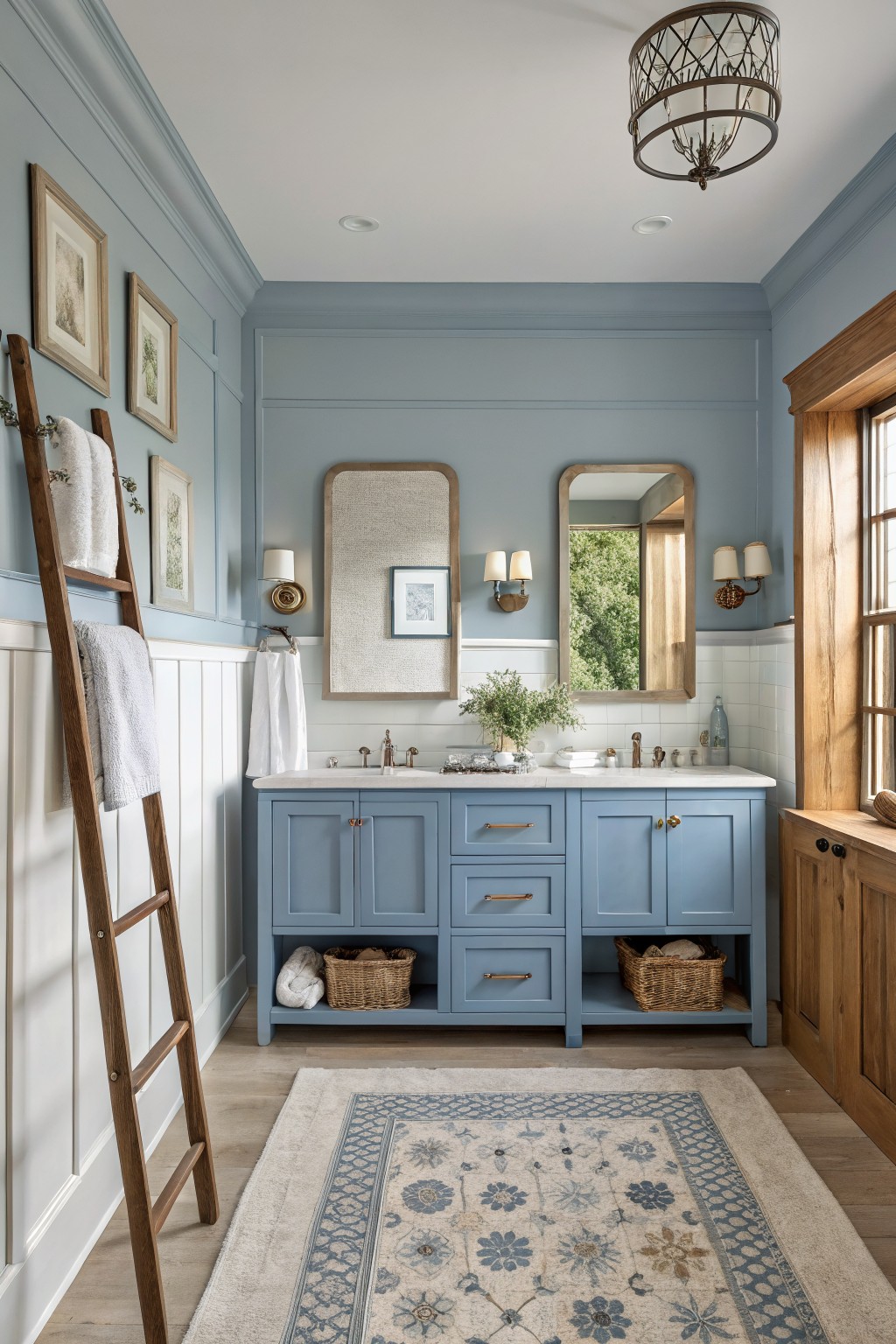
This soft blue gray makes a good choice for bathrooms because it stays calm without feeling too cold. It has that slightly muted tone that works well with white trim and wood elements.
The color sits on the cooler side with gray undertones, so it can look a touch deeper depending on the light. It pairs nicely with both painted vanities and natural wood tones, though it can feel flat if the room gets very little natural light.
Teal Bathroom Walls
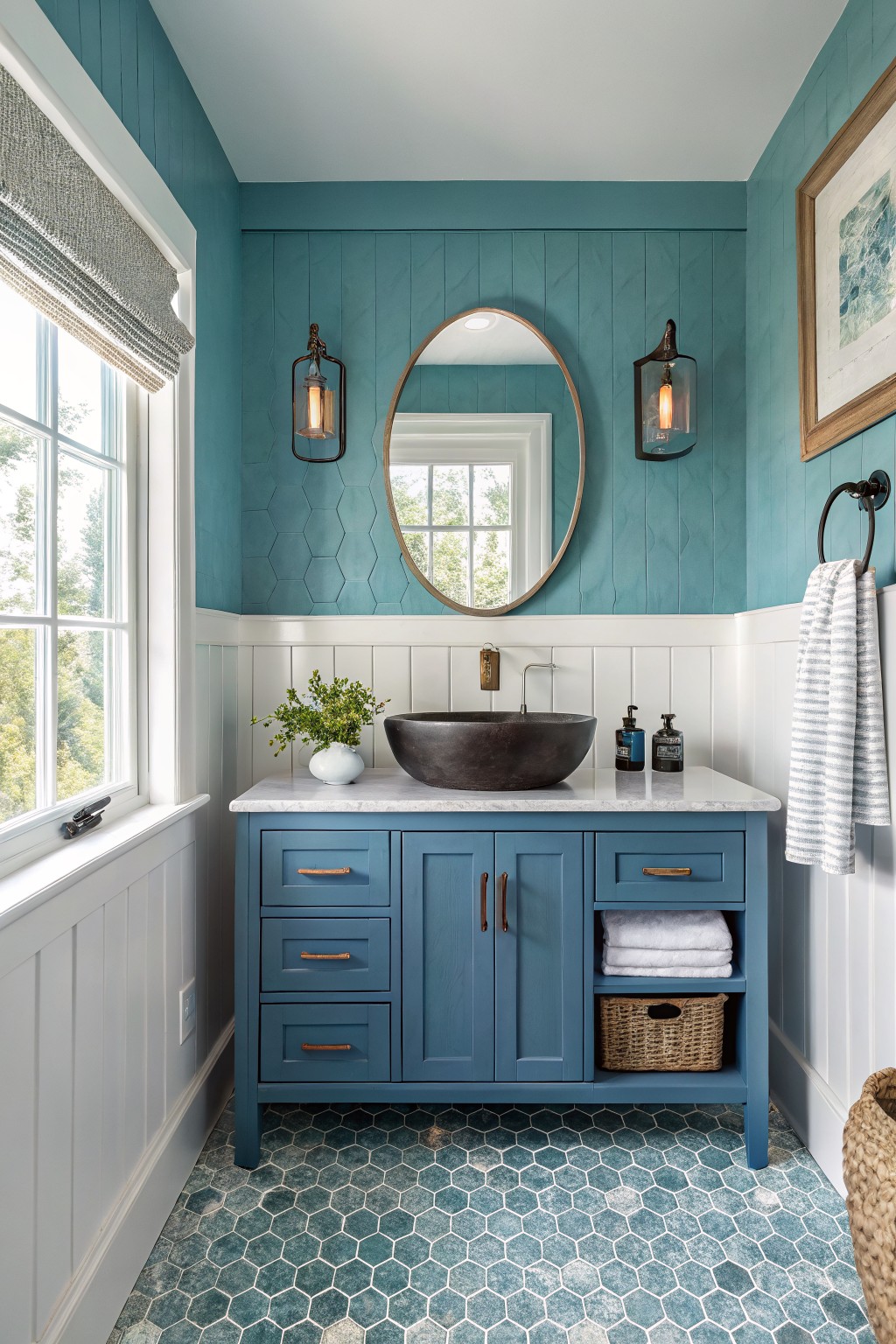
This bathroom uses a medium teal on the upper walls that sits right between blue and green. It has a cool tone without feeling icy, and it works especially well with the white wainscoting below. The color reads closest to Sherwin Williams Riverway, Benjamin Moore Aegean Teal, or Farrow & Ball Vardo.
The teal pairs nicely with the painted blue vanity and stone counter, and it stays calm even with the natural light coming in from the window. It suits bathrooms that want a bit of color without going too dark or too bright. Just watch the finish, since a flat or eggshell version keeps it softer than a glossy one.
Spa Inspired Teal Bathroom Walls
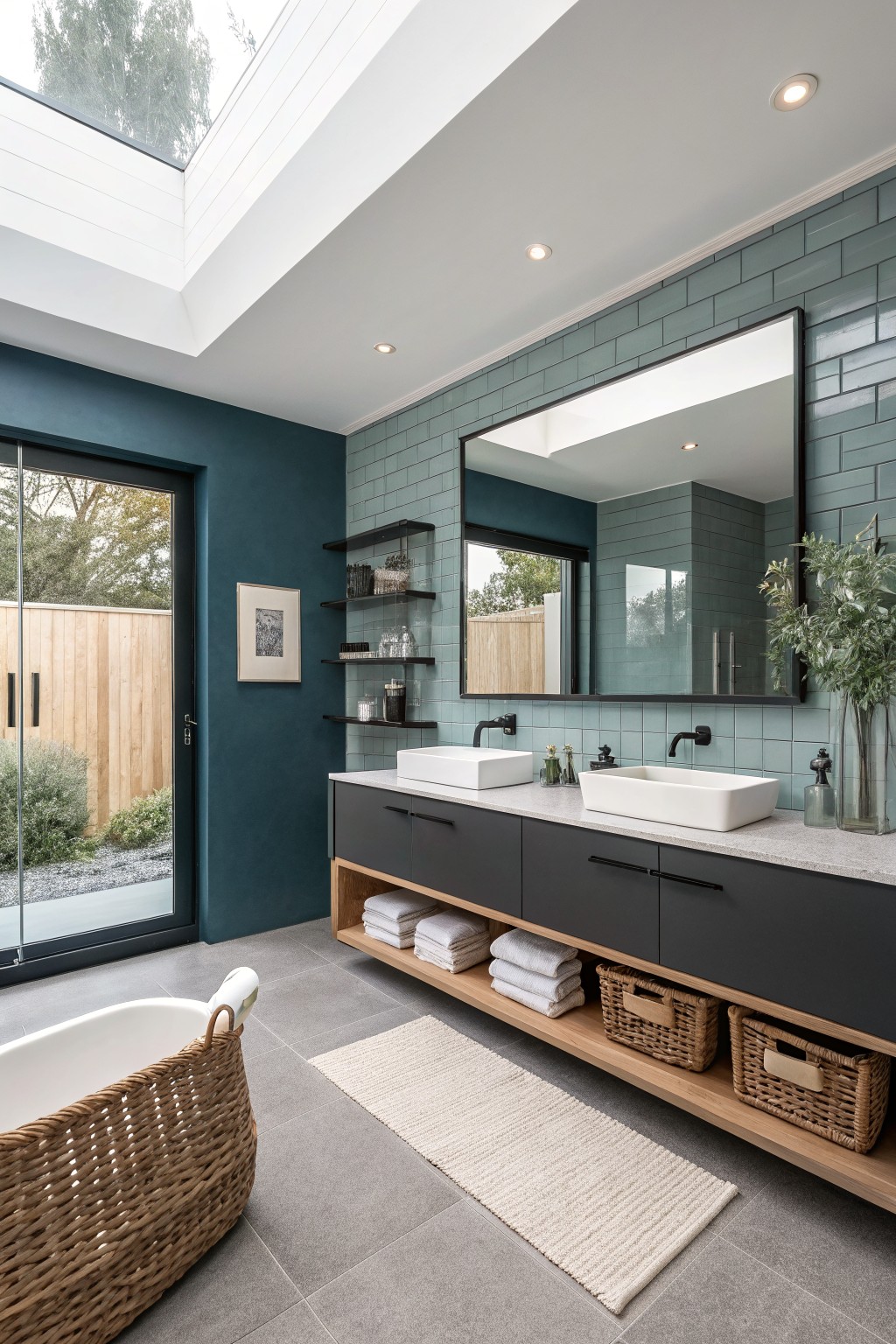
A teal like this one gives bathrooms a calm, spa-like feel without going too bright or cold. It sits in the blue-green range and looks closest to Sherwin Williams Breezeway, Benjamin Moore Wythe Blue, Behr Tranquil Teal, or Farrow & Ball Inchyra Blue.
The color holds up well next to white fixtures and wood vanities. It can read a bit deeper in low light, so test a sample on the wall first if your bathroom does not get much natural light.
Soft Sage Green Walls
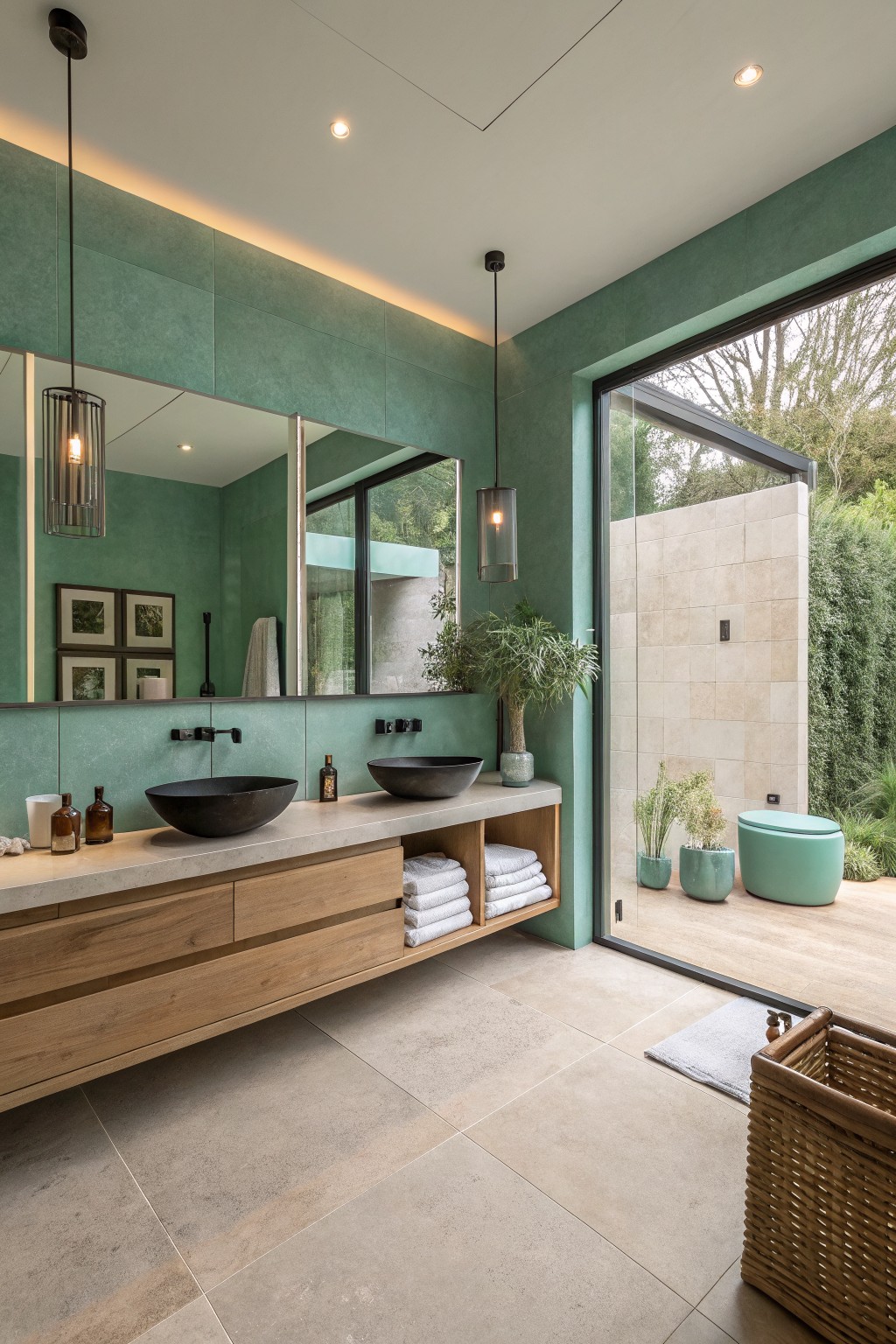
This bathroom uses a muted sage green on the walls. It is a cool green with a touch of teal that keeps the room feeling calm and grounded. The color sits nicely next to the wood vanity and stone floor without competing with them.
It works best in spaces with decent natural light and pairs easily with black hardware or light stone. Watch the undertones if your lighting is cool, since they can shift the green a little more blue gray. Good matches include Sherwin Williams Evergreen Fog, Benjamin Moore Saybrook Sage, Farrow & Ball Green Smoke, and Behr Aged Eucalyptus.
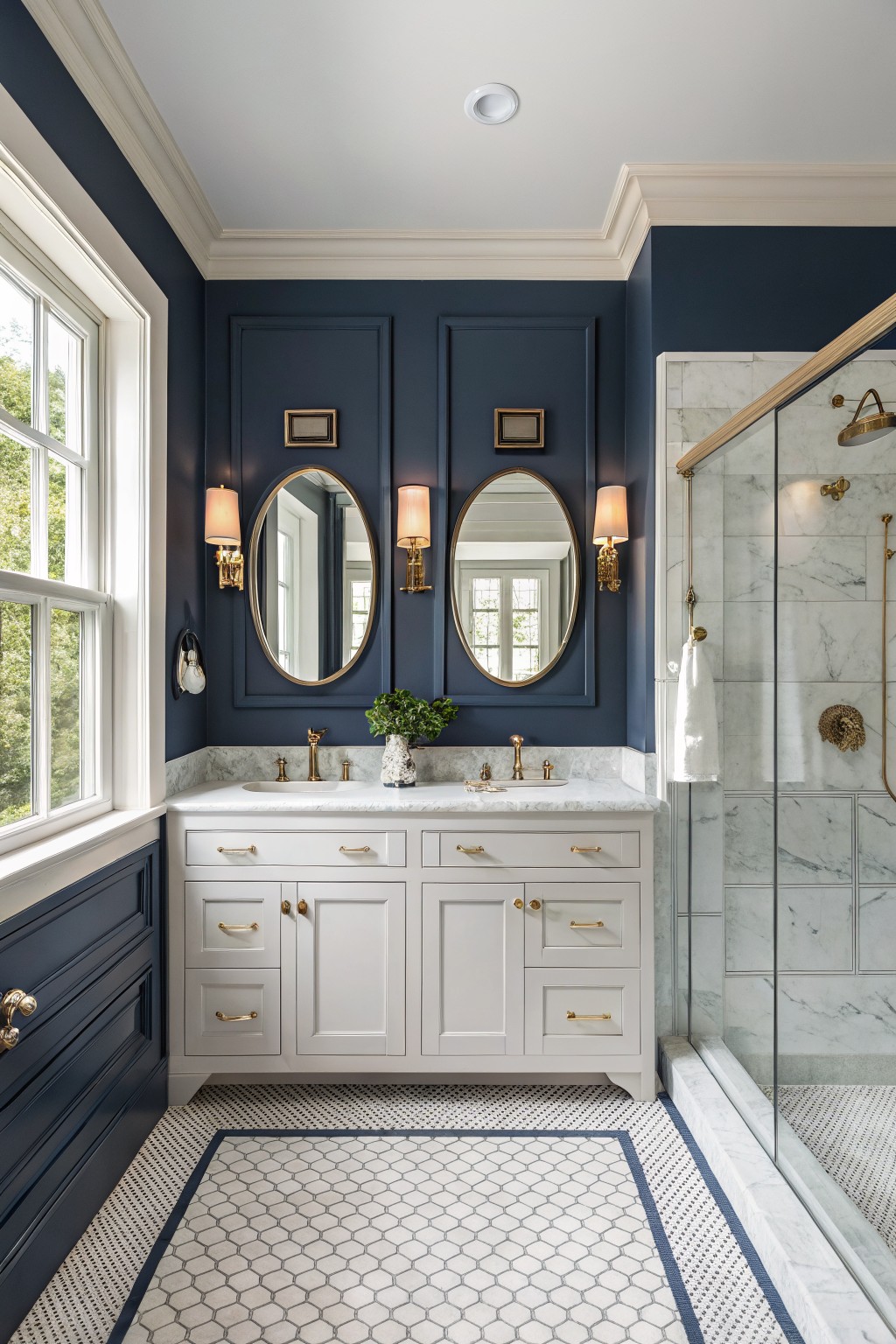
This deep navy brings a rich, saturated blue to the walls that feels solid and a bit moody. It has cool undertones that make the white vanity and trim stand out without competing.
The color works well in bathrooms with decent natural light so it stays balanced. Pair it with brass hardware or marble to keep things from feeling too dark.
Light Blue Bathroom Walls
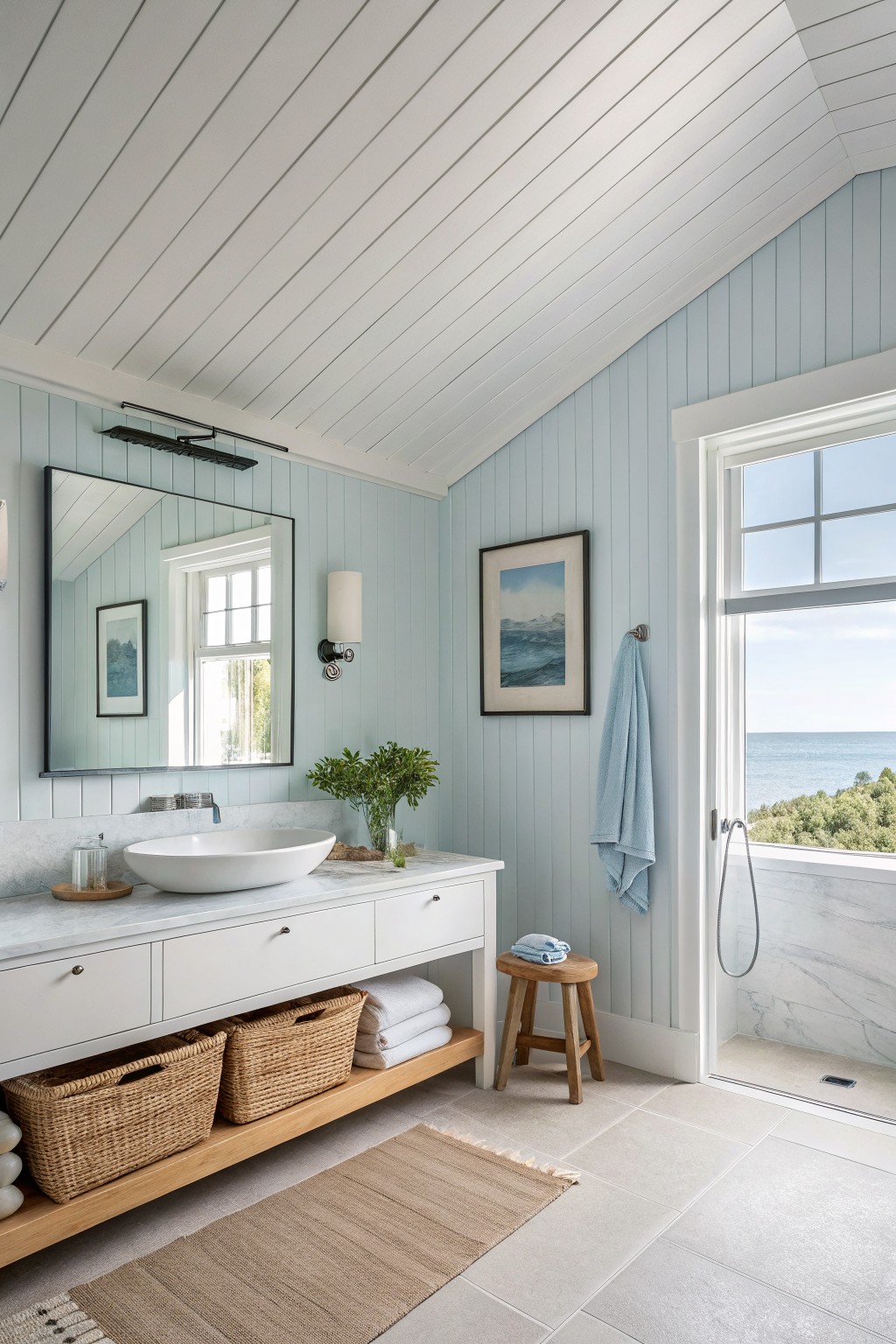
This light blue on the walls is a soft, cool shade that sits between blue and gray. It gives the room a calm feeling without turning it too cold or stark, which is why it works well in bathrooms meant for relaxing.
The color has a slight green undertone that shows up more in daylight. It pairs easily with white trim and wood accents, and it stays looking fresh even when the light changes through the day. Try it with natural stone or simple tile if you want the walls to stay in the background.
Frequently Asked Questions
Q: How do I pick a blue that still feels bright if my bathroom gets little natural light? A: Go for a pale blue with slight gray undertones instead of a true aqua. It bounces what light you have without turning dull. One wall in that shade often makes the whole room feel airier.
Q: Will these spa blues work with my existing chrome fixtures? A: They pair easily since most of the shades lean cool. Stick to a satin finish on the walls so the metal stands out without clashing. A single test patch near the faucet shows you right away if the tones match.
Q: What happens if the color looks too bold once the room is painted? A: Cut it with a lighter tint on the ceiling or trim. That pulls the eye up and softens the impact without repainting everything. Many people end up glad they kept the original blue after living with it a few days.